PathMap
☰
Curation Policy
FAQ
About
Contact
Legal
GitHub
PathMap Literature Based Discovery Engine
Share your Discovery:
Guaranteed to find unpublished literature based discoveries.
Clear Search
Experiment #00000141
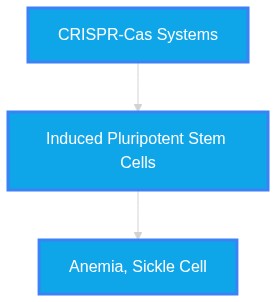
Hypothesis: Repurposing IVF screening tools to verify CRISPR-corrected induced pluripotent stem cells (iPSCs), combined with in vitro gametogenesis, may potentially create disease-free germlines that could eradicate heritable hematological mutations in future generations, such as sickle cell disease.
CRISPR-Cas Systems
_gates_from_crispr_cas_systems
Induced Pluripotent Stem Cells
_gates_to_induced_pluripotent_stem_cells
_gates_from_induced_pluripotent_stem_cells
Anemia, Sickle Cell
_gates_to_anemia__sickle_cell
View Results
Experiment #00000069
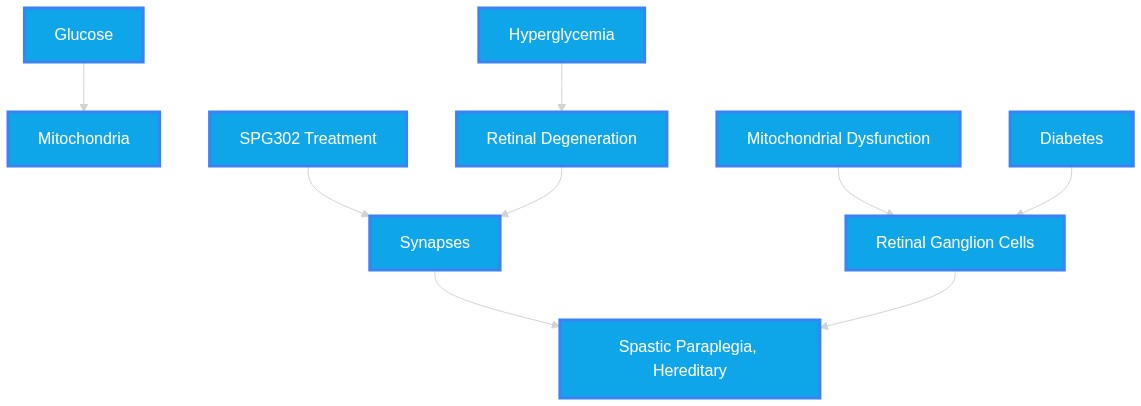
Keyword Analysis: diabetes; retinal diabetic neuropathy; ganglion cells; synapses; SPG302; tazbentetol; visual function; synaptic regeneration; neuroprotection; blindness; glaucoma
Glucose
_gates_from_glucose
Mitochondria
_gates_to_mitochondria
Mitochondrial Dysfunction
_gates_from_mitochondrial_dysfunction
Retinal Ganglion Cells
_gates_to_retinal_ganglion_cells
SPG302 Treatment
_gates_from_spg302_treatment
Synapses
_gates_to_synapses
Hyperglycemia
_gates_from_hyperglycemia
Retinal Degeneration
_gates_to_retinal_degeneration
_gates_from_retinal_degeneration
_gates_from_synapses
Spastic Paraplegia, Hereditary
_gates_to_spastic_paraplegia__hereditary
Diabetes
_gates_from_diabetes
_gates_from_retinal_ganglion_cells
+13 more
View Results
Experiment #00000065
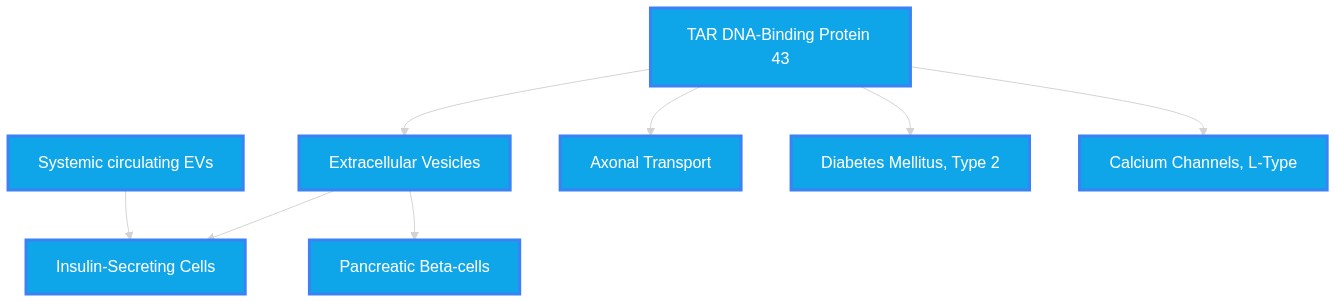
Does pathologically seeded TDP-43 exit the retina via anterograde axonal transport along the optic tract to midbrain hubs, enter the systemic circulation inside extracellular vesicles, and subsequently traffic into pancreatic beta-cells to accelerate type 2 diabetes phenotypes?
TAR DNA-Binding Protein 43
_gates_from_tar_dna_binding_protein_43
Extracellular Vesicles
_gates_to_extracellular_vesicles
Systemic circulating EVs
_gates_from_systemic_circulating_evs
Insulin-Secreting Cells
_gates_to_insulin_secreting_cells
Axonal Transport
_gates_to_axonal_transport
_gates_from_extracellular_vesicles
Diabetes Mellitus, Type 2
_gates_to_diabetes_mellitus__type_2
Pancreatic Beta-cells
_gates_to_pancreatic_beta_cells
Calcium Channels, L-Type
_gates_to_calcium_channels__l_type
+7 more
View Results
Experiment #00000064
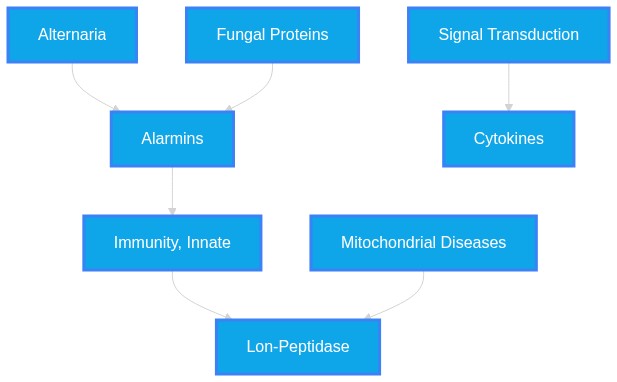
Lon Protease, Alternaria; IL-33; TSLP; alarmins; asthma; chronic rhinosinusitis; fungal allergen; innate lymphoid cells
Alternaria
_gates_from_alternaria
Alarmins
_gates_to_alarmins
_gates_from_alarmins
Immunity, Innate
_gates_to_immunity__innate
_gates_from_immunity__innate
Lon-Peptidase
_gates_to_lon_peptidase
Fungal Proteins
_gates_from_fungal_proteins
Signal Transduction
_gates_from_signal_transduction
Cytokines
_gates_to_cytokines
Mitochondrial Diseases
_gates_from_mitochondrial_diseases
+8 more
View Results
Experiment #00000023
Does misfolded TDP43 affect Retinal Ganglion Cell STMN2 ability to repair in a similar way as what how it was shown to affect motor neurons with cryptic mis-splicing?
TDP-43 pathology
_gates_from_tdp_43_pathology
RNA Splicing
_gates_to_rna_splicing
_gates_from_rna_splicing
Stathmin 2
_gates_to_stathmin_2
Vitreous Body
_gates_to_vitreous_body
DNA-Binding Protein-43
_gates_from_dna_binding_protein_43
Retinal Ganglion Cells
_gates_to_retinal_ganglion_cells
Cell Nucleus
_gates_from_cell_nucleus
_gates_from_stathmin_2
Axonal Degeneration
_gates_to_axonal_degeneration
Axons
_gates_to_axons
_gates_from_axons
+11 more
View Results
Experiment #00000020
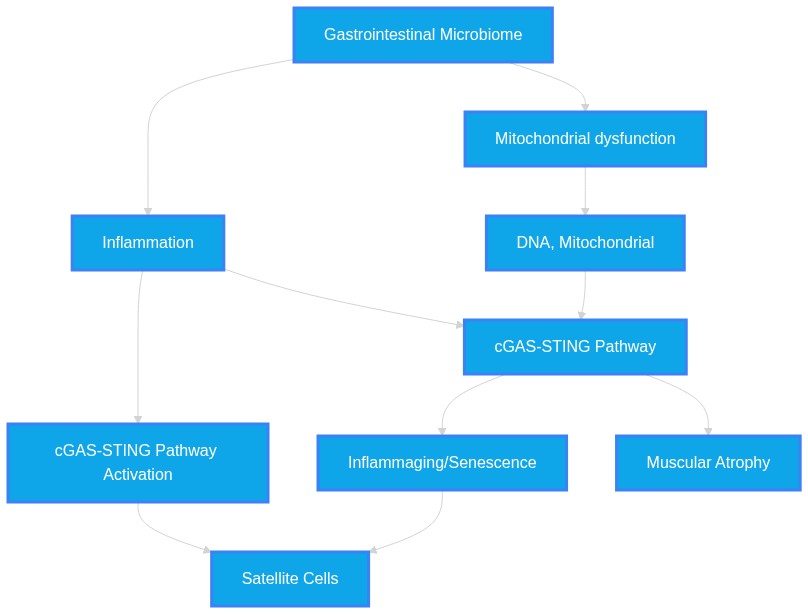
Does age-related gut dysbiosis drive sarcopenia by activating the cGAS-STING inflammatory pathway to suppress satellite cell renewal?
Gastrointestinal Microbiome
_gates_from_gastrointestinal_microbiome
Inflammation
_gates_to_inflammation
_gates_from_inflammation
cGAS-STING Pathway Activation
_gates_to_cgas_sting_pathway_activation
_gates_from_cgas_sting_pathway_activation
Satellite Cells
_gates_to_satellite_cells
Mitochondrial dysfunction
_gates_to_mitochondrial_dysfunction
_gates_from_mitochondrial_dysfunction
DNA, Mitochondrial
_gates_to_dna__mitochondrial
_gates_from_dna__mitochondrial
cGAS-STING Pathway
_gates_to_cgas_sting_pathway
_gates_from_cgas_sting_pathway
Inflammaging/Senescence
_gates_to_inflammaging_senescence
_gates_from_inflammaging_senescence
Muscular Atrophy
_gates_to_muscular_atrophy
+14 more
View Results
Experiment #00000016
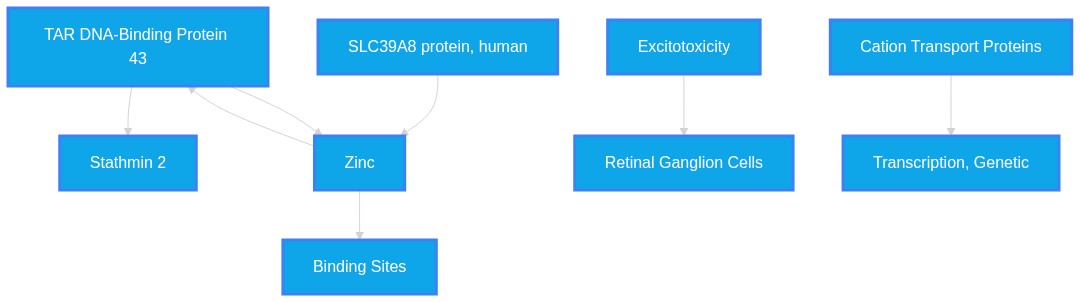
Analyze the potential for zinc-binding competition between synaptic transporters (e.g., SLC39A8, ZnT3) and ALS-associated proteins (RGNEF, TDP-43) in the RGC-thalamic axis. Can this competition explain the coexistence of RGC excitotoxicity and STMN2 depletion in clinical samples?
TAR DNA-Binding Protein 43
_gates_from_tar_dna_binding_protein_43
Stathmin 2
_gates_to_stathmin_2
SLC39A8 protein, human
_gates_from_slc39a8_protein__human
Zinc
_gates_to_zinc
Excitotoxicity
_gates_from_excitotoxicity
Retinal Ganglion Cells
_gates_to_retinal_ganglion_cells
Cation Transport Proteins
_gates_from_cation_transport_proteins
Transcription, Genetic
_gates_to_transcription__genetic
_gates_from_zinc
Binding Sites
_gates_to_binding_sites
_gates_to_tar_dna_binding_protein_43
+10 more
View Results
Experiment #00000015
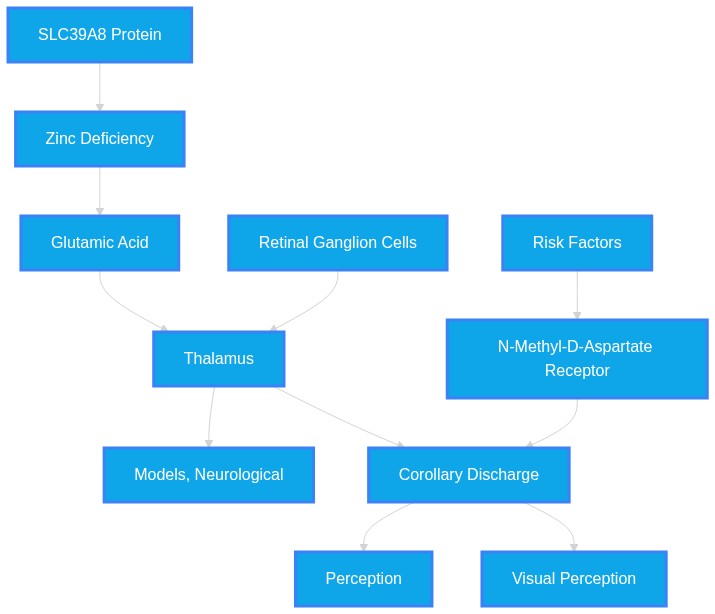
Given that schizophrenia is characterized by a deficit in the attenuation of sensory input via corollary discharge, how might pathologically elevated RGC signaling—potentially caused by synaptic glutamate overflow without zinc modulation—interfere with the thalamic integration of extra-retinal CD signals to effectively reverse the predictive timing of visual stability?
SLC39A8 Protein
_gates_from_slc39a8_protein
Zinc Deficiency
_gates_to_zinc_deficiency
_gates_from_zinc_deficiency
Glutamic Acid
_gates_to_glutamic_acid
_gates_from_glutamic_acid
Thalamus
_gates_to_thalamus
_gates_from_thalamus
Models, Neurological
_gates_to_models__neurological
Retinal Ganglion Cells
_gates_from_retinal_ganglion_cells
Corollary Discharge
_gates_to_corollary_discharge
_gates_from_corollary_discharge
Perception
_gates_to_perception
Risk Factors
_gates_from_risk_factors
N-Methyl-D-Aspartate Receptor
_gates_to_n_methyl_d_aspartate_receptor
_gates_from_n_methyl_d_aspartate_receptor
Visual Perception
_gates_to_visual_perception
+17 more
View Results
Experiment #00000014
Under certain conditions, can hyperexcited retinal ganglion cells misfire corollary discharge(s) unexpectedly?
Oculomotor Motor Command
_gates_from_oculomotor_motor_command
Corollary Discharge
_gates_to_corollary_discharge
_gates_from_corollary_discharge
Sensory Processing, Sensory
_gates_to_sensory_processing__sensory
Retinal Ganglion Cells (RGCs)
_gates_from_retinal_ganglion_cells__rgcs_
Visual Perception
_gates_to_visual_perception
Retinal Ganglion Cells
_gates_from_retinal_ganglion_cells
Retinal Diseases
_gates_from_retinal_diseases
Hyperexcitability
_gates_to_hyperexcitability
_gates_from_hyperexcitability
Nonspecific
_gates_to_nonspecific
Neural Conduction
_gates_to_neural_conduction
_gates_from_neural_conduction
+13 more
View Results
Experiment #00000013
Can BMAA, a known glutamate mimic, cause hyperexcited retinal ganglion cells and cause them to "misfire" corollary discharge?
Amino Acids, Diamino
_gates_from_amino_acids__diamino
Retina
_gates_to_retina
_gates_from_retina
Corollary Discharge
_gates_to_corollary_discharge
NMDA receptors
_gates_to_nmda_receptors
NMDA receptor activation
_gates_from_nmda_receptor_activation
Reactive Oxygen Species
_gates_to_reactive_oxygen_species
_gates_from_reactive_oxygen_species
Cell Death
_gates_to_cell_death
_gates_from_cell_death
Receptors, N-Methyl-D-Aspartate
_gates_to_receptors__n_methyl_d_aspartate
_gates_from_receptors__n_methyl_d_aspartate
Retinal Ganglion Cells
_gates_to_retinal_ganglion_cells
+12 more
View Results
Reference Abstract
Loading...
Source: PubMed
View on PubMed