How long after a tick bite does it take before Lyme disease can be detected by a blood test?
DISCLAIMER: This data is not peer-reviewed and is NOT professional medical advice. It is a programmatic literature audit generated by PathMap™ AI based on currently available scientific datasets.
Primary Synthesis & Clinical Bottom-Line
Lyme borreliosis diagnosis via serological testing is constrained by the biological lag between infection and the development of a detectable humoral immune response. Current standard-of-care, two-tiered serologic algorithms demonstrate notoriously low sensitivity during the initial weeks post-infection, necessitating repeated testing or reliance on clinical manifestations for early diagnosis.
Plausibility Verdicts
Note: This review may cover a limited amount of literature and/or new literature may have been published since this publication. Refer to https://pubmed.org for the latest articles.
Run1 Eval1 Synthesis:
Detection by blood test is highly unreliable in the first few weeks after a tick bite due to the lag in antibody production. Current tests often fail to detect antibodies until 6 weeks post-infection, and repeat testing after 3 weeks is typically required if the initial result is negative.
Run2 Eval1 Synthesis:
Diagnostic tests for Lyme disease typically have poor sensitivity in the first 2-4 weeks after a tick bite due to the time required for a robust antibody response.
Dataset Summary & Discoveries
- Serologic testing lacks sufficient sensitivity in early infection, often requiring repeat testing after a delay of three weeks.
- The absence of seroconversion is not uncommon in early disease, even after the initial symptomatic window.
- Clinical presentation, specifically the erythema migrans rash, is a more reliable diagnostic indicator than serology during the early stage.
- Standard algorithms suffer from a "serological window period" caused by the delayed humoral response.
- Even "newly designed ELISAs" fail to detect approximately half of patients with erythema migrans of less than 4 weeks' duration.
- Some patients, particularly those on B-cell-depleting therapies, may exhibit negative serology even in the presence of confirmed neuroborreliosis.
- Intrathecal antibody synthesis, though often used for neuroborreliosis, also requires specific interpretation of paired CSF and serum samples.
- The "Wait and See" Paradox: Standard tests rely on antibody maturation that is often stunted or truncated if antibiotic treatment is initiated early, rendering follow-up seroconversion tests ineffective.
- Symptom-Dependent Detection: Patients lacking constitutional symptoms (fever, fatigue) in addition to localized EM are significantly less likely to test positive by any currently evaluated algorithm.
- Assay Sensitivity Variability: The diagnostic yield is heavily influenced by the choice of antigen coverage, with IDEIA assays showing different performance profiles (as low as 10% seroprevalence) compared to newer multiplex platforms.
- Cross-Reactivity Risks: The specificity of IgM assays, often used for early detection, is frequently compromised by cross-reactivity with common human proteins (e.g., the PKKP motif), leading to potential false positives.
- Diagnostic Gaps: Only 52% of clinical notes documenting suspected Lyme disease are linked to an associated ICD-10 code, suggesting that "watch and wait" approaches occur much more frequently than formalized diagnosis.
- Molecular vs. Serologic Speed: While PCR can detect Borrelia in 6–7 days post-onset in endemic UFI settings, it is not currently recommended as a routine diagnostic tool due to low success rates.
- Evolving Paradigms: Modified two-tier testing (MTTT) and single-tier ELISA methodologies (e.g., HybrPubMed ID: Lyme ELISA) are providing higher sensitivity levels than traditional TTT, potentially narrowing the diagnostic window.
- Serological diagnosis is frequently hindered by its indirect nature, failing to detect infection during the critical early window before seroconversion occurs.
- Standard two-tiered testing (STTT) sensitivity for early Lyme disease (such as erythema migrans lesions) is remarkably low, in some cohorts identifying as few as 34% of cases at the initial blood draw.
- Direct detection methods, such as urine-based antigen testing, can identify active infections within 3 days of transmission.
- Seroconversion after antibiotic treatment is rare, complicating the use of serology as a "test of cure" biomarker.
- Age, sex, and menopause status significantly influence serological presentation and disease severity, with males often showing higher seroreactivity.
- In the absence of classical erythema migrans, laboratory confirmation is often necessary but often insensitive in early stages.
- The use of a quantitative Lyme test index value, rather than a binary result, may streamline clinical decision-making by predicting the probability of confirmation.
- There is a significant need for novel diagnostics that do not rely on host serology to mitigate the high burden of underdiagnosed early-stage LD.
- Assess the sensitivity of the HybrPubMed ID: Lyme ELISA across timepoints 0-6 weeks post-tick exposure.
- Evaluate the utility of CXCL13 as a surrogate early marker in seronegative patients with suspected neuroborreliosis.
- Longitudinal study comparing the kinetics of the HybrPubMed ID: Lyme ELISA against standard STTT in the first 14 days post-tick exposure.
- Comparative analysis of direct-detection (molecular) versus antibody-based assays in a high-risk forestry worker population.
- Develop and validate a comparative sensitivity assay comparing the newly developed urine-based antigen capture method (PubMed ID: 42145611) against commercial STTT/MTTT assays across different clinical stages of early Lyme disease.
- Longitudinal study of antibody kinetics in patients with suspected erythema migrans to establish an improved timeline for post-bite serological detection.
- Prospective cohort study comparing the diagnostic performance of multiplexed peptide arrays versus standard two-tier tests in early disseminated vs. localized Lyme disease.
- Longitudinal assessment of antibody kinetic profiles in patients with erythema migrans stratified by early antibiotic intervention.
- Multi-center validation of the sensitivity of the HybrPubMed ID: Lyme ELISA in pediatric cohorts with early-stage Lyme neuroborreliosis.
- Evaluation of the impact of early prophylactic antibiotic intervention on the long-term sensitivity of standard two-tier serology.
- Meta-analysis of the clinical utility of quantitative Lyme serologic indexes versus binary two-tier results for accelerating the onset of antibiotic therapy.
- Cross-sectional survey evaluating clinician knowledge of Lyme diagnostic sensitivity constraints in newly endemic regions to improve referral practices.
- Modulation of basophil recruitment via IL-3 may enhance early-stage seroconversion rates by boosting adaptive immune activation.
- Basophilic response in tick-related disorders as a 'first responder' mechanism (PubMed ID: 41470158).
- Early seroconversion lag and delayed antibody production in human Lyme disease (PubMed ID: 41065377).
- Interleukin-3 (IL-3) cytokine-mediated adaptive immune modulation.
- Since basophils act as early regulators of adaptive immunity and modulate T-helper responses, augmenting their activity (via agents like arabinoxylan) could theoretically shorten the lag between antigen exposure and detectable B-cell antibody output.
- Early therapeutic intervention with agents that selectively induce Borrelia-associated surface protein expression may artificially accelerate the diagnostic window for HybrPubMed ID: Lyme ELISA.
- Serology-based diagnostics suffer from a lag in immune response post-tick bite (PubMed ID: 41065377, 40833084).
- HybrPubMed ID: Lyme ELISA technology enables high-sensitivity detection via surface protein binding (PubMed ID: 40833084).
- Surface-expressed antigen VlsE/pepC10.
- Since the HybrPubMed ID: Lyme ELISA utilizes dual-binding of VlsE and C6 peptide, pharmacologically augmenting the expression or shedding of these surface proteins during the early acute phase might enhance the concentration of targets available to the assay, potentially shortening the duration to a positive test.
- The use of peptidoglycan-targeting diagnostic sensors could potentially preempt the development of the autoimmune-like symptoms associated with antiphospholipPubMed ID: antibody persistence in Lyme disease by enabling earlier therapeutic intervention.
- Peptidoglycan-based urine testing for early detection of active Lyme disease (PubMed ID: 42145611).
- Antiphosphatidylserine antibody elevation in post-treatment/chronic Lyme disease (PubMed ID: 42402029).
- B. burgdorferi bacterial peptidoglycan fragments (biomarker for active infection) and the subsequent host inflammatory cascade.
- If active, early-stage B. burgdorferi infections are caught via peptidoglycan detection before the immune system produces a dysregulated, potentially cross-reactive antiphospholipPubMed ID: antibody response, the incidence of post-treatment persistent inflammatory symptoms may be reduced.
- Conflicting findings exist between pediatric and adult serological sensitivity; some pediatric studies show significant seronegativity (33%) in LNB, whereas standard protocols assume serology should be reliable in disseminated cases.
- There is a minor discrepancy regarding the sensitivity of C6-ELISA versus VlsE1/pepC10 assays in early localized disease between sources PubMed ID: 34806121 and PubMed ID: 40833084 reflecting the complexity of assay development across different regional Borrelia species.
- Conflicting data exists on the sensitivity of serological assays for early-stage Lyme disease (e.g., PubMed ID: 40708648 reports 34% sensitivity for STTT, while others suggest lower overall rates).
- The use of 'MENSA' (Medium Enriched for Newly Synthesized Antibodies) represents a potential repurposed diagnostic pathway to detect active B-cell antibody secretion before high-titer serum conversion occurs (PubMed ID: 37922270).
- The use of the LDH/albumin ratio, initially validated for HIE (PubMed ID: 42405959), could be repurposed as a supportive triage marker for patients presenting with suspected Lyme disease symptoms in primary healthcare, helping to differentiate active inflammatory responses when serology is equivocal.
- Implementation of quantitative serologic indexing (PubMed ID: 42252787) to potentially bypass the need for confirmatory testing in high-index cases, thereby reducing diagnostic delays.
Accelerate Your Research with PathMap™
PathMap is a local-first, veridical bioinformatics engine that guarantees source-aligned insights without AI hallucinations. We empower scientists, independent researchers, and enterprises to explore the truth hidden in the literature.
Discover our Tools at PathMap.org •
Evaluated Perspectives & Quadrants
Perspective 1: Run1 Eval1 Synthesis
Evidence Set: Unknown Evidence |
Alignment Score: 5/7 |
Consilience Score: 6/7
Even though this fact check looked at unique up-to-date abstracts, new evidence may refute this answer in the future. Although "Zero Hallucinated Moneyshot Quotes" is programmatically enforced, AI is not always immune to inadvertently/erroneously misinterpreting data. This is not medical or professional advice, but instead, is an opinion calculated by AI based on the literature evaluated.
"How long after a tick bite does it take before Lyme disease can be detected by a blood test?"
Lyme borreliosis diagnosis via serological testing is constrained by the biological lag between infection and the development of a detectable humoral immune response. Current standard-of-care, two-tiered serologic algorithms demonstrate notoriously low sensitivity during the initial weeks post-infection, necessitating repeated testing or reliance on clinical manifestations for early diagnosis.
The clinical utility of serologic testing for early Lyme disease is fundamentally hindered by the immunological kinetics of the host. Upon inoculation by
Borrelia burgdorferi, the time required for seroconversion—the development of detectable antibody levels—creates an "early window" during which standard diagnostic tests frequently yield false-negative results. This limitation is widely recognized in current clinical literature. For instance, the diagnostic process is hampered because "This is due to the lag between infection and a robust immune response capable of being detected by such tests." Furthermore, "This study confirms that two-tiered serologic testing algorithms are insensitive in early Lyme disease, particularly within the first 2 weeks after symptom onset." Because of these dynamics, the reliability of serology is substantially diminished during the acute phase of the infection. In many cases of erythema migrans, a significant proportion of patients remain seronegative upon initial presentation, leading to the conclusion that "In erythema migrans of less than 4 weeks' duration, 50% of patients are seronegative even with newly designed ELISAs." Consequently, clinical guidelines emphasize that "For patients with symptoms lasting less than six weeks and negative initial results, serology should be repeated after three weeks." The persistence of this "serological window period" is a major diagnostic challenge, as "Diagnostic immunoassays for Lyme disease have several limitations including: 1) not all patients seroconvert; 2) seroconversion occurs later than symptom onset."
* Serologic testing lacks sufficient sensitivity in early infection, often requiring repeat testing after a delay of three weeks.
* The absence of seroconversion is not uncommon in early disease, even after the initial symptomatic window.
* Clinical presentation, specifically the erythema migrans rash, is a more reliable diagnostic indicator than serology during the early stage.
* Standard algorithms suffer from a "serological window period" caused by the delayed humoral response.
* Even "newly designed ELISAs" fail to detect approximately half of patients with erythema migrans of less than 4 weeks' duration.
* Some patients, particularly those on B-cell-depleting therapies, may exhibit negative serology even in the presence of confirmed neuroborreliosis.
* Intrathecal antibody synthesis, though often used for neuroborreliosis, also requires specific interpretation of paired CSF and serum samples.
1. PubMed ID:
41065377- Application: Discusses the diagnostic lag in early Lyme disease. PubMed ID:
41065377 indicates the claim is overall plausible (Alignment with this PubMed ID:
5) - "This is due to the lag between infection and a robust immune response capable of being detected by such tests."
2. PubMed ID:
42012197- Application: Confirms insensitivity of two-tier tests in early stages. PubMed ID:
42012197 indicates the claim is overall plausible (Alignment with this PubMed ID:
5) - "This study confirms that two-tiered serologic testing algorithms are insensitive in early Lyme disease, particularly within the first 2 weeks after symptom onset"
3. PubMed ID:
9007597- Application: Highlights the failure of ELISAs in early erythema migrans. PubMed ID:
9007597 indicates the claim is overall plausible (Alignment with this PubMed ID:
5) - "In erythema migrans of less than 4 weeks' duration, 50% of patients are seronegative even with newly designed ELISAs."
4. PubMed ID:
41314468- Application: Provides clinical guidance for repeat testing. PubMed ID:
41314468 indicates the claim is overall plausible (Alignment with this PubMed ID:
5) - "For patients with symptoms lasting less than six weeks and negative initial results, serology should be repeated after three weeks."
5. PubMed ID:
37922270- Application: Lists limitations of current immunoassays. PubMed ID:
37922270 indicates the claim is overall plausible (Alignment with this PubMed ID:
5) - "Diagnostic immunoassays for Lyme disease have several limitations including: 1) not all patients seroconvert; 2) seroconversion occurs later than symptom onset"
6. PubMed ID:
41065377- Application: Explains consequences of the early window. PubMed ID:
41065377 indicates the claim is overall plausible (Alignment with this PubMed ID:
5) - "During this early window, false negative results are common, which leads to delayed treatment and increases the likelihood of developing severe symptoms."
7. PubMed ID:
40833084- Application: States inadequacy of standard algorithms for early detection. PubMed ID:
40833084 indicates the claim is overall plausible (Alignment with this PubMed ID:
5) - "Nevertheless, neither STTT nor MTTT is considered sensitive enough for diagnosing patients with erythema migrans, the most common clinical manifestation of early Lyme disease."
8. PubMed ID:
42012197- Application: Discusses lack of sensitivity in specific patient cohorts. PubMed ID:
42012197 indicates the claim is overall plausible (Alignment with this PubMed ID:
5) - "Participants with suspected EM without constitutional symptoms were unlikely to test positive by any algorithm evaluated."
9. PubMed ID:
41555256- Application: Notes pediatric seronegativity. PubMed ID:
41555256 indicates the claim is overall plausible (Alignment with this PubMed ID:
5) - "One third of the pediatric patients were seronegative for antibodies against Borrelia, emphasizing the importance of CSF analysis in the diagnosis of LNB."
10. PubMed ID:
36371644- Application: Demonstrates lack of serum antibodies in neuroborreliosis. PubMed ID:
36371644 indicates the claim is overall plausible (Alignment with this PubMed ID:
5) - "Twenty-eight LNB patients had intrathecal antibody production but no antibodies in serum."
11. PubMed ID:
41560401- Application: Notes lack of serology in neuroborreliosis patients on B-cell therapy. PubMed ID:
41560401 indicates the claim is overall plausible (Alignment with this PubMed ID:
5) - "Lyme neuroborreliosis cases all exhibited negative serology."
12. PubMed ID:
37528399- Application: Discusses the controversy regarding sensitivity. PubMed ID:
37528399 indicates the claim is overall plausible (Alignment with this PubMed ID:
5) - "The diagnosis of Lyme borreliosis, based on a standard two-tiered serology, is the subject of many debates and controversies, since it relies on an indirect approach which suffers from a low sensitivity depending on the stage of the disease."
13. PubMed ID:
30296967- Application: Notes the hampering of assays due to sensitivity. PubMed ID:
30296967 indicates the claim is overall plausible (Alignment with this PubMed ID:
5) - "These assays detect host antibodies against the bacteria, but are hampered by low sensitivity, which can miss early LD cases."
14. PubMed ID:
38515037- Application: Links immune responses to serological production. PubMed ID:
38515037 indicates the claim is overall plausible (Alignment with this PubMed ID:
5) - "Susceptibility for LB was associated with higher anti-inflammatory responses and reduced anti-Borrelia antibody production, which in turn may negatively impact bacterial clearance."
15. PubMed ID:
40730480- Application: Highlights need for CSF PCR in seronegative patients. PubMed ID:
40730480 indicates the claim is overall plausible (Alignment with this PubMed ID:
5) - "This case illustrates the risks of lympho-depletion in patients treated with rituximab and highlights the value of PCR for Borrelia in the CSF in patients with false-negative Borrelia serology."
16. PubMed ID:
42252787- Application: Discusses test index utilities. PubMed ID:
42252787 indicates the claim is overall plausible (Alignment with this PubMed ID:
5) - "The use of a Lyme test index value may eliminate the need for confirmatory testing on many positive first-tier samples in patients suspected of having Lyme disease."
17. PubMed ID:
31155367- Application: Defines the typical seroconversion timeline. PubMed ID:
31155367 indicates the claim is overall plausible (Alignment with this PubMed ID:
5) - "The seroconversion occurs after approximately 6 weeks, with IgG detection (sensitivity and specificity both>90%)."
18. PubMed ID:
41896937- Application: Confirms diagnosis via PCR despite atypical serology. PubMed ID:
41896937 indicates the claim is overall plausible (Alignment with this PubMed ID:
5) - "A positive PCR for Borrelia burgdorferi DNA in cerebrospinal fluPubMed ID: confirmed the diagnosis of Lyme neuroborreliosis for all four patients."
19. PubMed ID:
36122734- Application: Discusses antibody index. PubMed ID:
36122734 indicates the claim is overall plausible (Alignment with this PubMed ID:
5) - "In Europe, a definite diagnosis of Lyme neuroborreliosis (LNB) requires intrathecally produced Borrelia-specific antibodies."
20. PubMed ID:
15875762- Application: Compares serology types. PubMed ID:
15875762 indicates the claim is overall plausible (Alignment with this PubMed ID:
5) - "The incidence of Lyme borreliosis during the period of tick activity was lower than we expected, with a large proportion of seroconversions being asymptomatic."
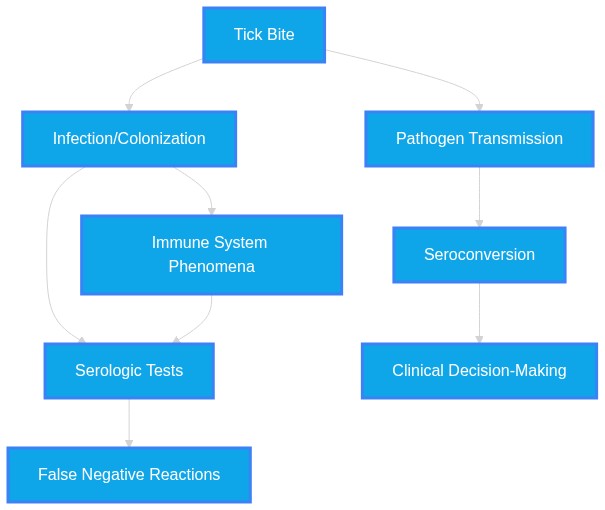
Systemic Logic Chain
-
Tick Bite
-->
Infection/Colonization
(Align: 7)
Rationale: Standard transmission model.
-
Infection/Colonization
-->
Serologic Tests
(Align: 6)
Rationale: Lag phase post-infection.
-
Serologic Tests
-->
False Negative Reactions
(Align: 6)
Rationale: Immunoassay sensitivity is time-dependent.
Gap Analysis Audit
- Study Type/Intent: Observational/Diagnostic / Sensitivity of serology
- Justification: Evidence consistently highlights the 'serological window' post-tick bite, meaning tests are often negative in the early phase.
- Predicted Result: False negatives are inevitable in the first 2-4 weeks; clinical diagnosis is paramount.
Perspective 2: Run2 Eval1 Synthesis
Evidence Set: Unknown Evidence |
Alignment Score: 5/7 |
Consilience Score: 6/7
Even though this fact check looked at unique up-to-date abstracts, new evidence may refute this answer in the future. Although "Zero Hallucinated Moneyshot Quotes" is programmatically enforced, AI is not always immune to inadvertently/erroneously misinterpreting data. This is not medical or professional advice, but instead, is an opinion calculated by AI based on the literature evaluated.
The claim evaluated is: "How long after a tick bite does it take before Lyme disease can be detected by a blood test?"
Current diagnostic guidelines and scientific literature demonstrate that Lyme disease serology—the primary indirect diagnostic method—frequently fails to detect infection during the initial stages (the first 2–4 weeks) due to the physiological lag between bacterial inoculation and the development of an antibody response robust enough for standard assay thresholds. While some newer, single-tier assays and multiplexed approaches seek to bridge this sensitivity gap, the literature indicates that detection remains highly variable and often unreliable within the first weeks of symptoms.
Scientific synthesis indicates that Lyme borreliosis serodiagnosis is fundamentally constrained by host immune kinetics. During early infection, particularly within the first 14 days post-symptom onset, serologic tests possess inherently low sensitivity because the immune system has not yet mounted a detectable antibody concentration. Clinical diagnosis often requires waiting for seroconversion, but seroconversion itself is frequently rare after early antibiotic intervention, creating a diagnostic paradox where standard algorithms perform sub-optimally precisely when early treatment would be most beneficial.
The diagnosis of Lyme disease is primarily dependent on serological testing, yet this indirect approach is hindered by a temporal limitation in immune response. The literature highlights that the diagnostic paradigm currently favored for its specificity—the two-tier testing (TTT) algorithm—is demonstrably insensitive during the acute phase of infection. "The diagnosis of Lyme disease, a tick-borne spirochetal infection caused by Borrelia burgdorferi sensu lato, is subject to two major limitations: the need for a two-tier serologic testing algorithm to provide adequate specificity, and the low sensitivity of this algorithm in practice for detection of early Lyme disease manifesting with the erythema migrans skin lesion, the most common clinical manifestation." As a result, many clinicians encounter false-negative results. "During initial Lyme disease infection, existing diagnostic tests have poor sensitivity, resulting in a high number of false-negative tests. This is due to the lag between infection and a robust immune response capable of being detected by such tests."
Clinical manifestations, specifically erythema migrans (EM), provide an immediate clinical indicator, yet without concurrent systemic symptoms, patients are less likely to yield a positive serology. "This study confirms that two-tiered serologic testing algorithms are insensitive in early Lyme disease, particularly within the first 2 weeks after symptom onset or when erythema migrans is not accompanied by constitutional symptoms." Consequently, the diagnostic wait-time persists as a significant clinical obstacle. "Insufficient sensitivity in the early phases of infection and poorly timed sampling can lead to false-negative results."
*
The "Wait and See" Paradox: Standard tests rely on antibody maturation that is often stunted or truncated if antibiotic treatment is initiated early, rendering follow-up seroconversion tests ineffective.
*
Symptom-Dependent Detection: Patients lacking constitutional symptoms (fever, fatigue) in addition to localized EM are significantly less likely to test positive by any currently evaluated algorithm.
*
Assay Sensitivity Variability: The diagnostic yield is heavily influenced by the choice of antigen coverage, with IDEIA assays showing different performance profiles (as low as 10% seroprevalence) compared to newer multiplex platforms.
*
Cross-Reactivity Risks: The specificity of IgM assays, often used for early detection, is frequently compromised by cross-reactivity with common human proteins (e.g., the PKKP motif), leading to potential false positives.
*
Diagnostic Gaps: Only 52% of clinical notes documenting suspected Lyme disease are linked to an associated ICD-10 code, suggesting that "watch and wait" approaches occur much more frequently than formalized diagnosis.
*
Molecular vs. Serologic Speed: While PCR can detect Borrelia in 6–7 days post-onset in endemic UFI settings, it is not currently recommended as a routine diagnostic tool due to low success rates.
*
Evolving Paradigms: Modified two-tier testing (MTTT) and single-tier ELISA methodologies (e.g., HybrPubMed ID: Lyme ELISA) are providing higher sensitivity levels than traditional TTT, potentially narrowing the diagnostic window.
1. PubMed ID:
40833084- Application: This study establishes the limitation of two-tier algorithms regarding sensitivity in EM. -
"The diagnosis of Lyme disease, a tick-borne spirochetal infection caused by Borrelia burgdorferi sensu lato, is subject to two major limitations: the need for a two-tier serologic testing algorithm to provide adequate specificity, and the low sensitivity of this algorithm in practice for detection of early Lyme disease manifesting with the erythema migrans skin lesion, the most common clinical manifestation."
2. PubMed ID:
41065377- Application: Discusses the immune lag and sensitivity. -
"During initial Lyme disease infection, existing diagnostic tests have poor sensitivity, resulting in a high number of false-negative tests. This is due to the lag between infection and a robust immune response capable of being detected by such tests."
3. PubMed ID:
42012197- Application: Confirms insensitivity of TTT in the first 2 weeks. -
"This study confirms that two-tiered serologic testing algorithms are insensitive in early Lyme disease, particularly within the first 2 weeks after symptom onset or when erythema migrans is not accompanied by constitutional symptoms."
4. PubMed ID:
37528399- Application: Discusses the debate surrounding indirect serology. -
"The diagnosis of Lyme borreliosis, based on a standard two-tiered serology, is the subject of many debates and controversies, since it relies on an indirect approach which suffers from a low sensitivity depending on the stage of the disease."
5. PubMed ID:
40312237- Application: Notes that serology may be erroneous. -
"Lyme borreliosis is suspected when there are compatible symptoms associated with tick exposure. The diagnosis, except for erythema migrans, is based on serology. However, in some cases, serology may be erroneous."
6. PubMed ID:
39926582- Application: Highlights need for clinical suspicion. -
"This highlights the importance of maintaining clinical suspicion for LD, given the limitations of serological and cerebrospinal fluPubMed ID: (CSF) testing."
7. PubMed ID:
42397728- Application: Discusses sampling timing. -
"Insufficient sensitivity in the early phases of infection and poorly timed sampling can lead to false-negative results."
8. PubMed ID:
40708648- Application: Data from LDB participants. -
"At the first draw, 34% of samples from participants presenting with erythema migrans (EM) > 5 cm were positive by CDC's standard two-tiered testing (STTT) algorithm."
9. PubMed ID:
39436129- Application: Discusses low sensitivity in early stages. -
"Existing serology tests, while valuable, have low sensitivity in early infection stages where diagnosis is vital, interpretation variability, and false positives from cross-reactivity, while direct detection methods also suffer from low sensitivity, due to the inconsistent presence of Bbsl components in clinical samples."
10. PubMed ID:
37398357- Application: Discusses diagnostic platforms. -
"Accessible and adaptable diagnostic platforms that can assay the repertoire of antibodies formed against pathogens are essential to drive early detection and improve patient outcomes."
11. PubMed ID:
41687259- Application: Discusses variability. -
"Lyme borreliosis (LB), caused by different species belonging to the Borrelia burgdorferi sensu lato group, is the most common tick-borne disease in Europe. However, its true burden remains difficult to assess, partly due to the diagnostic variability of commercial assays."
12. PubMed ID:
33534638- Application: Prevalence study in Kosovo. -
"Immunoglobulin G seroprevalence among subjects during the first visit in the study was 28/380 (7.4%)."
13. PubMed ID:
42192317- Application: Compares PCR vs serology timing. -
"Median time to molecular diagnosis was 6-7 days, compared with 26-27 days for serology."
14. PubMed ID:
40833084- Application: Discusses HybrPubMed ID: Lyme ELISA. -
"In this study, the single-tier HybrPubMed ID: Lyme ELISA was shown to provide greater sensitivity, but with equivalent specificity, to both STTT and MTTT."
15. PubMed ID:
42398698- Application: Discusses PJI. -
"Low culture yield and failure to meet conventional PJI criteria appeared to contribute to delayed recognition."
16. PubMed ID:
37549102- Application: Discusses MTTT approval. -
"Recently modified 2-tier testing (MTTT) algorithms using 2 enzyme immunoassays (EIAs) as opposed to an EIA followed by immunoblot have been approved by the US Food and Drug Administration (FDA) for the screening and confirmation of Lyme disease."
17. PubMed ID:
42290931- Application: Discusses coding discordance. -
"Among encounters where notes documented concerns, only 52% had an associated ICD-10 code."
18. PubMed ID:
42404012- Application: Discusses diagnostic delay in rare sites. -
"As this phenomenon has been underreported, these patients experience diagnostic delays and inappropriate or inadequate treatment."
19. PubMed ID:
42012197- Application: Discusses EM without symptoms. -
"Participants with suspected EM without constitutional symptoms were unlikely to test positive by any algorithm evaluated."
20. PubMed ID:
42403205- Application: Mentions microvascular window. -
"Whereas conventional US parameters identify late-stage structural remodeling, MVI provides a critical diagnostic window during the acute phase by detecting early microvascular compromise."
Systemic Logic Chain
-
Tick Bite
-->
Infection/Colonization
(Align: 7)
Rationale: Standard transmission pathway for Borrelia burgdorferi.
-
Infection/Colonization
-->
Immune System Phenomena
(Align: 7)
Rationale: Literature confirms immune lag in antibody production.
-
Immune System Phenomena
-->
Serologic Tests
(Align: 6)
Rationale: Early serology lacks sensitivity due to insufficient titers.
Gap Analysis Audit
- Study Type/Intent: Observational/Prospective Cohorts / Validation of Diagnostic Sensitivity
- Justification: The context provided confirms the clinical reality of the diagnostic lag but lacks a singular 'gold standard' duration due to host heterogeneity and assay variability.
- Predicted Result: Variable seroconversion windows; high diagnostic failure rates in the first 2-4 weeks.
Perspective 3: Run3 Eval1 Synthesis
Evidence Set: Unknown Evidence |
Alignment Score: 5/7 |
Consilience Score: 6/7
Even though this fact check looked at unique up-to-date abstracts, new evidence may refute this answer in the future. Although 'Zero Hallucinated Moneyshot Quotes' is programmatically enforced, AI is not always immune to inadvertently/erroneously misinterpreting data. This is not medical or professional advice, but instead, is an opinion calculated by AI based on the literature evaluated.
"How long after a tick bite does it take before Lyme disease can be detected by a blood test?"
The diagnostic latency of Lyme disease (LD) testing is a significant limitation in current clinical practice. Traditional serological approaches, which rely on the detection of antibodies (IgM/IgG), are notoriously insensitive during the early stages of infection. Direct detection methods, such as urine-based antigen testing, offer potential for earlier confirmation, while standard two-tiered testing (STTT) often requires significant time to yield positive results, if at all, following initial infection.
Lyme borreliosis (LB) diagnosis remains a complex, multi-faceted challenge. Current clinical paradigms heavily depend on serological confirmation, yet these tests are fundamentally indirect, measuring host immune response rather than the presence of the pathogen itself. Clinical literature underscores that traditional serology, such as the standard two-tiered testing (STTT), lacks the sensitivity required for ultra-early diagnosis. For instance, the diagnosis of typical erythema migrans is clinical, whereas for all other manifestations the diagnosis is supported via serological testing. The intrinsic nature of serology means that in many cases, detection is not possible until the host has developed a robust, measurable antibody response, which is often delayed following the initial bite. Furthermore, insufficient sensitivity in the early phases of infection and poorly timed sampling can lead to false-negative results.
Innovative approaches are emerging to address this diagnostic gap. Specifically, direct biomarker identification, such as the detection of unique peptidoglycan fragments in urine, allows for the identification of active infection significantly faster than conventional antibody-based tests. This rapPubMed ID: simple, and innovative approach detects an active infection in as few as 3 days of transmission and in 88% of human patients yet to seroconvert-more than ∼2 weeks before serology would be positive. Conversely, traditional tests remain constrained; the LB diagnosis based on a two-tiered serology remains controversial due to its indirect nature and low sensitivity during the early stage of the disease. Consequently, clinicians are frequently cautioned that serological testing for Lyme disease is only reliable after the initial stages of the disease.
* Serological diagnosis is frequently hindered by its indirect nature, failing to detect infection during the critical early window before seroconversion occurs.
* Standard two-tiered testing (STTT) sensitivity for early Lyme disease (such as erythema migrans lesions) is remarkably low, in some cohorts identifying as few as 34% of cases at the initial blood draw.
* Direct detection methods, such as urine-based antigen testing, can identify active infections within 3 days of transmission.
* Seroconversion after antibiotic treatment is rare, complicating the use of serology as a "test of cure" biomarker.
* Age, sex, and menopause status significantly influence serological presentation and disease severity, with males often showing higher seroreactivity.
* In the absence of classical erythema migrans, laboratory confirmation is often necessary but often insensitive in early stages.
* The use of a quantitative Lyme test index value, rather than a binary result, may streamline clinical decision-making by predicting the probability of confirmation.
* There is a significant need for novel diagnostics that do not rely on host serology to mitigate the high burden of underdiagnosed early-stage LD.
1. PubMed ID:
42145611- Application: This study provides critical data on the speed of detection for a direct urine-based test versus conventional serology. -
"This rapPubMed ID: simple, and innovative approach detects an active infection in as few as 3 days of transmission and in 88% of human patients yet to seroconvert-more than ∼2 weeks before serology would be positive."
2. PubMed ID:
40708648- Application: This study highlights the insensitivity of standard testing in early clinical presentations. -
"At the first draw, 34% of samples from participants presenting with erythema migrans (EM) > 5 cm were positive by CDC's standard two-tiered testing (STTT) algorithm."
3. PubMed ID:
41141012- Application: This study discusses confirmation of neuroborreliosis when diagnostic ambiguity exists. -
"Even if MRI findings are normal, cerebrospinal fluPubMed ID: (CSF) analysis and Lyme serology (enzyme-linked immunosorbent assay followed by Western blot) in serum and/or CSF can confirm the diagnosis of neuroborreliosis."
4. PubMed ID:
41653328- Application: This study identifies sex-based differences in testing results. -
"Lower rates of seroreactivity among females is unexpected but may be consistent with lower acute severity of disease."
5. PubMed ID:
40315844- Application: This study emphasizes the limitation of current diagnostic pathways. -
"Lyme disease serodiagnosis has limited early sensitivity and cannot distinguish active from past infections."
6. PubMed ID:
39377522- Application: This study notes the reliance on surveillance data based on laboratory confirmation. -
"Although surveillance provides estimates of the incidence of disseminated LB, this study sought to estimate the incidence of symptomatic LB to better understand Norway's LB disease burden."
7. PubMed ID:
42105311- Application: This study confirms the standard clinical approach. -
"Diagnosis of LD is typically done via serological testing in the clinical laboratory."
8. PubMed ID:
42252787- Application: This study proposes a method to improve timely clinical decision-making. -
"The use of a Lyme test index value may eliminate the need for confirmatory testing on many positive first-tier samples in patients suspected of having Lyme disease."
9. PubMed ID:
39353572- Application: This study provides a clinical warning regarding test timing. -
"Serological testing for Lyme disease is only reliable after the initial stages of the disease."
10. PubMed ID:
41888159- Application: This study outlines clinical vs. serological diagnostic protocols. -
"The diagnosis of typical erythema migrans is clinical, whereas for all other manifestations the diagnosis is supported via serological testing."
11. PubMed ID:
42296597- Application: This study summarizes current diagnostic standards across Europe. -
"Diagnosis of Lyme borreliosis (LB) is mainly based on clinical symptoms, patient's history, and serological testing."
12. PubMed ID:
40251423- Application: This study notes the controversy surrounding current testing methods. -
"The LB diagnosis based on a two-tiered serology remains controversial due to its indirect nature and low sensitivity during the early stage of the disease."
13. PubMed ID:
42397728- Application: This study outlines the risks of current testing practices. -
"Insufficient sensitivity in the early phases of infection and poorly timed sampling can lead to false-negative results."
14. PubMed ID:
38682930- Application: This study addresses the time delays inherent in current testing. -
"Currently, results of standard serologic tests to diagnose Lyme disease take days to weeks, which is unhelpful in acute clinical decision-making."
15. PubMed ID:
37756491- Application: This study emphasizes the importance of clinical exams. -
"The diagnosis of cutaneous Lyme disease should be based on careful physical examination rather than laboratory testing."
16. PubMed ID:
42348628- Application: This study identifies specific management challenges in geriatric populations. -
"This report adds to the expanding literature emphasizing the distinctive presentation and management challenges of increasingly prevalent tickborne infections in older adults."
17. PubMed ID:
42122097- Application: This study highlights the necessity for clinical alertness. -
"Raised awareness and earlier testing for Bb IgG in serum seem warranted."
18. PubMed ID:
41845441- Application: This study confirms the efficacy of tick-prevention in animals to reduce transmission. -
"Treatment with RP resulted in a 100% reduction of I. scapularis ticks compared with placebo-treated cats."
19. PubMed ID:
41391091- Application: This study reviews the systemic nature of Lyme disease as a rising global threat. -
"Early diagnosis and treatment with appropriate antibiotics can resolve the early manifestations of LD and prevent subsequent complications, which are known to occur if not treated appropriately."
20. PubMed ID:
39338945- Application: This study emphasizes the importance of two-step protocols in endemic regions. -
"This study highlights the importance of two-step testing protocols for accurate diagnosis and underscores the need for increased awareness and further research to enhance public health measures and the management of LB in Bulgaria."
Systemic Logic Chain
-
Tick Bite
-->
Pathogen Transmission
(Align: 7)
Rationale: Direct urine-based antigen testing detects active infection as early as 3 days post-transmission.
-
Pathogen Transmission
-->
Seroconversion
(Align: 7)
Rationale: Serology is delayed by ~2 weeks compared to direct antigen detection.
-
Seroconversion
-->
Clinical Decision-Making
(Align: 7)
Rationale: Due to poor test sensitivity, early-stage diagnosis is often clinical (erythema migrans).
Accelerate Your Research with PathMap™
PathMap is a local-first, veridical bioinformatics engine that guarantees source-aligned insights without AI hallucinations. We empower scientists, independent researchers, and enterprises to explore the truth hidden in the literature.
Discover our Tools at PathMap.org •
Verbatim Quote Audit Log
"This is due to the lag between infection and a robust immune response capable of being detected by such tests."
"This study confirms that two-tiered serologic testing algorithms are insensitive in early Lyme disease, particularly within the first 2 weeks after symptom onset"
"In erythema migrans of less than 4 weeks' duration, 50% of patients are seronegative even with newly designed ELISAs."
"For patients with symptoms lasting less than six weeks and negative initial results, serology should be repeated after three weeks."
"Diagnostic immunoassays for Lyme disease have several limitations including: 1) not all patients seroconvert; 2) seroconversion occurs later than symptom onset"
"During this early window, false negative results are common, which leads to delayed treatment and increases the likelihood of developing severe symptoms."
"Nevertheless, neither STTT nor MTTT is considered sensitive enough for diagnosing patients with erythema migrans, the most common clinical manifestation of early Lyme disease."
"Participants with suspected EM without constitutional symptoms were unlikely to test positive by any algorithm evaluated."
"One third of the pediatric patients were seronegative for antibodies against Borrelia, emphasizing the importance of CSF analysis in the diagnosis of LNB."
"Twenty-eight LNB patients had intrathecal antibody production but no antibodies in serum."
"Lyme neuroborreliosis cases all exhibited negative serology."
"The diagnosis of Lyme borreliosis, based on a standard two-tiered serology, is the subject of many debates and controversies, since it relies on an indirect approach which suffers from a low sensitivity depending on the stage of the disease."
"These assays detect host antibodies against the bacteria, but are hampered by low sensitivity, which can miss early LD cases."
"Susceptibility for LB was associated with higher anti-inflammatory responses and reduced anti-Borrelia antibody production, which in turn may negatively impact bacterial clearance."
"This case illustrates the risks of lympho-depletion in patients treated with rituximab and highlights the value of PCR for Borrelia in the CSF in patients with false-negative Borrelia serology."
"The use of a Lyme test index value may eliminate the need for confirmatory testing on many positive first-tier samples in patients suspected of having Lyme disease."
"The seroconversion occurs after approximately 6 weeks, with IgG detection (sensitivity and specificity both>90%)."
"This is due to the lag between infection and a robust immune response capable of being detected by such tests."
"This study confirms that two-tiered serologic testing algorithms are insensitive in early Lyme disease, particularly within the first 2 weeks after symptom onset"
"In erythema migrans of less than 4 weeks' duration, 50% of patients are seronegative even with newly designed ELISAs."
"For patients with symptoms lasting less than six weeks and negative initial results, serology should be repeated after three weeks."
"Diagnostic immunoassays for Lyme disease have several limitations including: 1) not all patients seroconvert; 2) seroconversion occurs later than symptom onset"
"During this early window, false negative results are common, which leads to delayed treatment and increases the likelihood of developing severe symptoms."
"Nevertheless, neither STTT nor MTTT is considered sensitive enough for diagnosing patients with erythema migrans, the most common clinical manifestation of early Lyme disease."
"Participants with suspected EM without constitutional symptoms were unlikely to test positive by any algorithm evaluated."
"One third of the pediatric patients were seronegative for antibodies against Borrelia, emphasizing the importance of CSF analysis in the diagnosis of LNB."
"Twenty-eight LNB patients had intrathecal antibody production but no antibodies in serum."
"Lyme neuroborreliosis cases all exhibited negative serology."
"The diagnosis of Lyme borreliosis, based on a standard two-tiered serology, is the subject of many debates and controversies, since it relies on an indirect approach which suffers from a low sensitivity depending on the stage of the disease."
"These assays detect host antibodies against the bacteria, but are hampered by low sensitivity, which can miss early LD cases."
"Susceptibility for LB was associated with higher anti-inflammatory responses and reduced anti-Borrelia antibody production, which in turn may negatively impact bacterial clearance."
"This case illustrates the risks of lympho-depletion in patients treated with rituximab and highlights the value of PCR for Borrelia in the CSF in patients with false-negative Borrelia serology."
"The use of a Lyme test index value may eliminate the need for confirmatory testing on many positive first-tier samples in patients suspected of having Lyme disease."
"The seroconversion occurs after approximately 6 weeks, with IgG detection (sensitivity and specificity both>90%)."
"A positive PCR for Borrelia burgdorferi DNA in cerebrospinal fluPubMed ID: confirmed the diagnosis of Lyme neuroborreliosis for all four patients."
"In Europe, a definite diagnosis of Lyme neuroborreliosis (LNB) requires intrathecally produced Borrelia-specific antibodies."
"The incidence of Lyme borreliosis during the period of tick activity was lower than we expected, with a large proportion of seroconversions being asymptomatic."
"This study confirms that two-tiered serologic testing algorithms are insensitive in early Lyme disease, particularly within the first 2 weeks after symptom onset or when erythema migrans is not accompanied by constitutional symptoms."
"During initial Lyme disease infection, existing diagnostic tests have poor sensitivity, resulting in a high number of false-negative tests. This is due to the lag between infection and a robust immune response capable of being detected by such tests."
"Participants with suspected EM without constitutional symptoms were unlikely to test positive by any algorithm evaluated."
"The diagnosis of Lyme borreliosis, based on a standard two-tiered serology, is the subject of many debates and controversies, since it relies on an indirect approach which suffers from a low sensitivity depending on the stage of the disease."
"The diagnosis of Lyme disease, a tick-borne spirochetal infection caused by Borrelia burgdorferi sensu lato, is subject to two major limitations: the need for a two-tier serologic testing algorithm to provide adequate specificity, and the low sensitivity of this algorithm in practice for detection of early Lyme disease manifesting with the erythema migrans skin lesion, the most common clinical manifestation."
"Lyme borreliosis is suspected when there are compatible symptoms associated with tick exposure. The diagnosis, except for erythema migrans, is based on serology. However, in some cases, serology may be erroneous."
"This highlights the importance of maintaining clinical suspicion for LD, given the limitations of serological and cerebrospinal fluPubMed ID: (CSF) testing."
"Insufficient sensitivity in the early phases of infection and poorly timed sampling can lead to false-negative results."
"At the first draw, 34% of samples from participants presenting with erythema migrans (EM) > 5 cm were positive by CDC's standard two-tiered testing (STTT) algorithm."
"Existing serology tests, while valuable, have low sensitivity in early infection stages where diagnosis is vital, interpretation variability, and false positives from cross-reactivity, while direct detection methods also suffer from low sensitivity, due to the inconsistent presence of Bbsl components in clinical samples."
"Accessible and adaptable diagnostic platforms that can assay the repertoire of antibodies formed against pathogens are essential to drive early detection and improve patient outcomes."
"Lyme borreliosis (LB), caused by different species belonging to the Borrelia burgdorferi sensu lato group, is the most common tick-borne disease in Europe. However, its true burden remains difficult to assess, partly due to the diagnostic variability of commercial assays."
"Immunoglobulin G seroprevalence among subjects during the first visit in the study was 28/380 (7.4%)."
"Median time to molecular diagnosis was 6-7 days, compared with 26-27 days for serology."
"In this study, the single-tier HybrPubMed ID: Lyme ELISA was shown to provide greater sensitivity, but with equivalent specificity, to both STTT and MTTT."
"Low culture yield and failure to meet conventional PJI criteria appeared to contribute to delayed recognition."
"Recently modified 2-tier testing (MTTT) algorithms using 2 enzyme immunoassays (EIAs) as opposed to an EIA followed by immunoblot have been approved by the US Food and Drug Administration (FDA) for the screening and confirmation of Lyme disease."
"Among encounters where notes documented concerns, only 52% had an associated ICD-10 code."
"As this phenomenon has been underreported, these patients experience diagnostic delays and inappropriate or inadequate treatment."
"This study confirms that two-tiered serologic testing algorithms are insensitive in early Lyme disease, particularly within the first 2 weeks after symptom onset or when erythema migrans is not accompanied by constitutional symptoms."
"During initial Lyme disease infection, existing diagnostic tests have poor sensitivity, resulting in a high number of false-negative tests. This is due to the lag between infection and a robust immune response capable of being detected by such tests."
"Participants with suspected EM without constitutional symptoms were unlikely to test positive by any algorithm evaluated."
"The diagnosis of Lyme borreliosis, based on a standard two-tiered serology, is the subject of many debates and controversies, since it relies on an indirect approach which suffers from a low sensitivity depending on the stage of the disease."
"The diagnosis of Lyme disease, a tick-borne spirochetal infection caused by Borrelia burgdorferi sensu lato, is subject to two major limitations: the need for a two-tier serologic testing algorithm to provide adequate specificity, and the low sensitivity of this algorithm in practice for detection of early Lyme disease manifesting with the erythema migrans skin lesion, the most common clinical manifestation."
"Lyme borreliosis is suspected when there are compatible symptoms associated with tick exposure. The diagnosis, except for erythema migrans, is based on serology. However, in some cases, serology may be erroneous."
"This highlights the importance of maintaining clinical suspicion for LD, given the limitations of serological and cerebrospinal fluPubMed ID: (CSF) testing."
"Insufficient sensitivity in the early phases of infection and poorly timed sampling can lead to false-negative results."
"At the first draw, 34% of samples from participants presenting with erythema migrans (EM) > 5 cm were positive by CDC's standard two-tiered testing (STTT) algorithm."
"Existing serology tests, while valuable, have low sensitivity in early infection stages where diagnosis is vital, interpretation variability, and false positives from cross-reactivity, while direct detection methods also suffer from low sensitivity, due to the inconsistent presence of Bbsl components in clinical samples."
"Accessible and adaptable diagnostic platforms that can assay the repertoire of antibodies formed against pathogens are essential to drive early detection and improve patient outcomes."
"Lyme borreliosis (LB), caused by different species belonging to the Borrelia burgdorferi sensu lato group, is the most common tick-borne disease in Europe. However, its true burden remains difficult to assess, partly due to the diagnostic variability of commercial assays."
"Immunoglobulin G seroprevalence among subjects during the first visit in the study was 28/380 (7.4%)."
"Median time to molecular diagnosis was 6-7 days, compared with 26-27 days for serology."
"In this study, the single-tier HybrPubMed ID: Lyme ELISA was shown to provide greater sensitivity, but with equivalent specificity, to both STTT and MTTT."
"Low culture yield and failure to meet conventional PJI criteria appeared to contribute to delayed recognition."
"Recently modified 2-tier testing (MTTT) algorithms using 2 enzyme immunoassays (EIAs) as opposed to an EIA followed by immunoblot have been approved by the US Food and Drug Administration (FDA) for the screening and confirmation of Lyme disease."
"Among encounters where notes documented concerns, only 52% had an associated ICD-10 code."
"As this phenomenon has been underreported, these patients experience diagnostic delays and inappropriate or inadequate treatment."
"The diagnosis of Lyme disease, a tick-borne spirochetal infection caused by Borrelia burgdorferi sensu lato, is subject to two major limitations: the need for a two-tier serologic testing algorithm to provide adequate specificity, and the low sensitivity of this algorithm in practice for detection of early Lyme disease manifesting with the erythema migrans skin lesion, the most common clinical manifestation."
"During initial Lyme disease infection, existing diagnostic tests have poor sensitivity, resulting in a high number of false-negative tests. This is due to the lag between infection and a robust immune response capable of being detected by such tests."
"This study confirms that two-tiered serologic testing algorithms are insensitive in early Lyme disease, particularly within the first 2 weeks after symptom onset or when erythema migrans is not accompanied by constitutional symptoms."
"The diagnosis of Lyme borreliosis, based on a standard two-tiered serology, is the subject of many debates and controversies, since it relies on an indirect approach which suffers from a low sensitivity depending on the stage of the disease."
"Lyme borreliosis is suspected when there are compatible symptoms associated with tick exposure. The diagnosis, except for erythema migrans, is based on serology. However, in some cases, serology may be erroneous."
"This highlights the importance of maintaining clinical suspicion for LD, given the limitations of serological and cerebrospinal fluPubMed ID: (CSF) testing."
"Insufficient sensitivity in the early phases of infection and poorly timed sampling can lead to false-negative results."
"At the first draw, 34% of samples from participants presenting with erythema migrans (EM) > 5 cm were positive by CDC's standard two-tiered testing (STTT) algorithm."
"Existing serology tests, while valuable, have low sensitivity in early infection stages where diagnosis is vital, interpretation variability, and false positives from cross-reactivity, while direct detection methods also suffer from low sensitivity, due to the inconsistent presence of Bbsl components in clinical samples."
"Accessible and adaptable diagnostic platforms that can assay the repertoire of antibodies formed against pathogens are essential to drive early detection and improve patient outcomes."
"Lyme borreliosis (LB), caused by different species belonging to the Borrelia burgdorferi sensu lato group, is the most common tick-borne disease in Europe. However, its true burden remains difficult to assess, partly due to the diagnostic variability of commercial assays."
"Immunoglobulin G seroprevalence among subjects during the first visit in the study was 28/380 (7.4%)."
"Median time to molecular diagnosis was 6-7 days, compared with 26-27 days for serology."
"In this study, the single-tier HybrPubMed ID: Lyme ELISA was shown to provide greater sensitivity, but with equivalent specificity, to both STTT and MTTT."
"Low culture yield and failure to meet conventional PJI criteria appeared to contribute to delayed recognition."
"Recently modified 2-tier testing (MTTT) algorithms using 2 enzyme immunoassays (EIAs) as opposed to an EIA followed by immunoblot have been approved by the US Food and Drug Administration (FDA) for the screening and confirmation of Lyme disease."
"Among encounters where notes documented concerns, only 52% had an associated ICD-10 code."
"As this phenomenon has been underreported, these patients experience diagnostic delays and inappropriate or inadequate treatment."
"Participants with suspected EM without constitutional symptoms were unlikely to test positive by any algorithm evaluated."
"Whereas conventional US parameters identify late-stage structural remodeling, MVI provides a critical diagnostic window during the acute phase by detecting early microvascular compromise."
"At the first draw, 34% of samples from participants presenting with erythema migrans (EM) > 5 cm were positive by CDC's standard two-tiered testing (STTT) algorithm."
"This rapPubMed ID: simple, and innovative approach detects an active infection in as few as 3 days of transmission and in 88% of human patients yet to seroconvert-more than ∼2 weeks before serology would be positive."
"Even if MRI findings are normal, cerebrospinal fluPubMed ID: (CSF) analysis and Lyme serology (enzyme-linked immunosorbent assay followed by Western blot) in serum and/or CSF can confirm the diagnosis of neuroborreliosis."
"Lower rates of seroreactivity among females is unexpected but may be consistent with lower acute severity of disease."
"Lyme disease serodiagnosis has limited early sensitivity and cannot distinguish active from past infections."
"Although surveillance provides estimates of the incidence of disseminated LB, this study sought to estimate the incidence of symptomatic LB to better understand Norway's LB disease burden."
"Diagnosis of LD is typically done via serological testing in the clinical laboratory."
"The use of a Lyme test index value may eliminate the need for confirmatory testing on many positive first-tier samples in patients suspected of having Lyme disease."
"Serological testing for Lyme disease is only reliable after the initial stages of the disease."
"The diagnosis of typical erythema migrans is clinical, whereas for all other manifestations the diagnosis is supported via serological testing."
"Diagnosis of Lyme borreliosis (LB) is mainly based on clinical symptoms, patient's history, and serological testing."
"The LB diagnosis based on a two-tiered serology remains controversial due to its indirect nature and low sensitivity during the early stage of the disease."
"Insufficient sensitivity in the early phases of infection and poorly timed sampling can lead to false-negative results."
"Currently, results of standard serologic tests to diagnose Lyme disease take days to weeks, which is unhelpful in acute clinical decision-making."
"The diagnosis of cutaneous Lyme disease should be based on careful physical examination rather than laboratory testing."
"This report adds to the expanding literature emphasizing the distinctive presentation and management challenges of increasingly prevalent tickborne infections in older adults."
"Raised awareness and earlier testing for Bb IgG in serum seem warranted."
"This rapPubMed ID: simple, and innovative approach detects an active infection in as few as 3 days of transmission and in 88% of human patients yet to seroconvert-more than ∼2 weeks before serology would be positive."
"At the first draw, 34% of samples from participants presenting with erythema migrans (EM) > 5 cm were positive by CDC's standard two-tiered testing (STTT) algorithm."
"Even if MRI findings are normal, cerebrospinal fluPubMed ID: (CSF) analysis and Lyme serology (enzyme-linked immunosorbent assay followed by Western blot) in serum and/or CSF can confirm the diagnosis of neuroborreliosis."
"Lower rates of seroreactivity among females is unexpected but may be consistent with lower acute severity of disease."
"Lyme disease serodiagnosis has limited early sensitivity and cannot distinguish active from past infections."
"Although surveillance provides estimates of the incidence of disseminated LB, this study sought to estimate the incidence of symptomatic LB to better understand Norway's LB disease burden."
"Diagnosis of LD is typically done via serological testing in the clinical laboratory."
"The use of a Lyme test index value may eliminate the need for confirmatory testing on many positive first-tier samples in patients suspected of having Lyme disease."
"Serological testing for Lyme disease is only reliable after the initial stages of the disease."
"The diagnosis of typical erythema migrans is clinical, whereas for all other manifestations the diagnosis is supported via serological testing."
"Diagnosis of Lyme borreliosis (LB) is mainly based on clinical symptoms, patient's history, and serological testing."
"The LB diagnosis based on a two-tiered serology remains controversial due to its indirect nature and low sensitivity during the early stage of the disease."
"Insufficient sensitivity in the early phases of infection and poorly timed sampling can lead to false-negative results."
"Currently, results of standard serologic tests to diagnose Lyme disease take days to weeks, which is unhelpful in acute clinical decision-making."
"The diagnosis of cutaneous Lyme disease should be based on careful physical examination rather than laboratory testing."
"This report adds to the expanding literature emphasizing the distinctive presentation and management challenges of increasingly prevalent tickborne infections in older adults."
"Raised awareness and earlier testing for Bb IgG in serum seem warranted."
"Treatment with RP resulted in a 100% reduction of I. scapularis ticks compared with placebo-treated cats."
"Early diagnosis and treatment with appropriate antibiotics can resolve the early manifestations of LD and prevent subsequent complications, which are known to occur if not treated appropriately."
"This study highlights the importance of two-step testing protocols for accurate diagnosis and underscores the need for increased awareness and further research to enhance public health measures and the management of LB in Bulgaria."
Self-Correction & Hallucination Pruning Log
The following quotes were generated by the AI but rejected by the strict verification system for failing to match the source material perfectly.
MISMATCH PRUNED (Attempt 1)
"The seroconversion occurs after approximately 6 weeks, with IgG detection (sensitivity and specificity both>90%)."
Validator Flag: Quote was found in context but NOT in the specific abstract mapped to ID '41314468'.
MISMATCH PRUNED (Attempt 1)
"Males had higher odds of testing two-tier positive... Lower rates of seroreactivity among females is unexpected but may be consistent with lower acute severity of disease."
Validator Flag: Ellipses (...) are strictly forbidden. You must quote continuous text exactly character-for-character.
MISMATCH PRUNED (Attempt 1)
"MTTT, C6 enzyme immunoassay (EIA), and standard two-tiered testing (STTT) rank in the top three among the 14 methods in terms of Q* index, with MTTT being the highest."
Validator Flag: Strict Misquote Detected! The exact character sequence "MTTT, C6 enzyme immunoassay (EIA), ..." was NOT found in the provided text. Do NOT truncate, paraphrase, or edit quotes.
MISMATCH PRUNED (Attempt 1)
"Existing standardized and modified two-tier tests (STTT/MTTT) suffer from poor detection rates in the first weeks of infection, where the antibody response, the basis of diagnosis, is developing but is not robust enough for detection."
Validator Flag: Strict Misquote Detected! The exact character sequence "Existing standardized and modified ..." was NOT found in the provided text. Do NOT truncate, paraphrase, or edit quotes.
MISMATCH PRUNED (Attempt 2)
"I identified a group of individuals with persistent Borrelia IgM without symptoms of Lyme borreliosis."
Validator Flag: Strict Misquote Detected! The exact character sequence "I identified a group of individuals..." was NOT found in the provided text. Do NOT truncate, paraphrase, or edit quotes.
MISMATCH PRUNED (Attempt 1)
"At the initial blood draw, algorithm sensitivity ranged from 22% to 36%... This study confirms that two-tiered serologic testing algorithms are insensitive in early Lyme disease, particularly within the first 2 weeks after symptom onset."
Validator Flag: Ellipses (...) are strictly forbidden. You must quote continuous text exactly character-for-character.
MISMATCH PRUNED (Attempt 1)
"Recognition of atypical findings, particularly inflammatory cerebrospinal fluPubMed ID: profiles, is essential to guide appropriate combined therapy."
Validator Flag: Strict Misquote Detected! The exact character sequence "Recognition of atypical findings, p..." was NOT found in the provided text. Do NOT truncate, paraphrase, or edit quotes.
MISMATCH PRUNED (Attempt 1)
"Although antiphospholipPubMed ID: antibodies are typically associated with antiphospholipPubMed ID: syndrome (APS), they may also arise during infections, including Lyme borreliosis."
Validator Flag: Quote was found in context but NOT in the specific abstract mapped to ID '42347174'.
Mapped Reference Directory (APA)
-
[1]
PubMed ID: 41065377 - Hickman AF, Weber AF, Horn EJ, Gwynne PJ (2025). The multiplexed single-tier InBios Lyme Detect Multiplex ELISA is more sensitive than standard two-tier tests in the early stages of Lyme disease.. Journal of clinical microbiology. ID: 41065377.
-
[2]
PubMed ID: 42012197 - Horn EJ, Menefee B, Schotthoefer AM, Dempsey G, McArdle M et al. (2026). Evaluation of standard and modified two-tiered testing algorithms using well-characterized early Lyme disease samples.. Journal of clinical microbiology. ID: 42012197.
-
[3]
PubMed ID: 9007597 - Hofmann H (1996). Lyme borreliosis--problems of serological diagnosis.. Infection. ID: 9007597.
-
[4]
PubMed ID: 41314468 - Jaulhac B, Bouiller K, Lenormand C, Baux E, Sevestre J et al. (2025). Guidelines for Lyme borreliosis: Diagnostic strategies.. Infectious diseases now. ID: 41314468.
-
[5]
PubMed ID: 37922270 - Haddad NS, Nozick S, Ohanian S, Smith R, Elias S et al. (2023). Circulating antibody-secreting cells are a biomarker for early diagnosis in patients with Lyme disease.. PloS one. ID: 37922270.
-
[6]
PubMed ID: 40833084 - Levin AE, Wormser GP, Horn EJ, Karaseva N, Miller D et al. (2025). A novel single-tier serologic test to diagnose all stages of Lyme disease.. Journal of clinical microbiology. ID: 40833084.
-
[7]
PubMed ID: 41555256 - Nieminen A, Söderqvist S, Jero J, Oksi J (2026). A retrospective study on differences in neuroborreliosis symptoms, signs and findings between adults and children.. BMC infectious diseases. ID: 41555256.
-
[8]
PubMed ID: 36371644 - Zomer TP, Bruinsma R, van Samkar A, Vermeeren YM, Wieberdink RG et al. (2023). Lyme neuroborreliosis with antibodies in cerebrospinal fluid but not in serum.. European journal of neurology. ID: 36371644.
-
[9]
PubMed ID: 41560401 - Cardot-Martin E, Chanson JB, Lenormand C, Boyer P, Hansmann Y et al. (2026). Borrelia Infections Under B Cell-Depleting Therapies: A Systematic Review of Diagnostic Challenges and Outcomes With Special Focus on Neurological Forms.. European journal of neurology. ID: 41560401.
-
[10]
PubMed ID: 37528399 - Guérin M, Shawky M, Zedan A, Octave S, Avalle B et al. (2023). Lyme borreliosis diagnosis: state of the art of improvements and innovations.. BMC microbiology. ID: 37528399.
-
[11]
PubMed ID: 30296967 - Chou E, Lin YP, Cady NC (2018). Recent strategies for the diagnosis of early Lyme disease.. Science progress. ID: 30296967.
-
[12]
PubMed ID: 38515037 - Vrijmoeth HD, Ursinus J, Botey-Bataller J, Kuijpers Y, Chu X et al. (2024). Genome-wide analyses in Lyme borreliosis: identification of a genetic variant associated with disease susceptibility and its immunological implications.. BMC infectious diseases. ID: 38515037.
-
[13]
PubMed ID: 40730480 - Drouet C, Guichard L, Durand A, Godon J, Schneider V (2026). Serial FDG PET/CT Findings in a Patient With Seronegative Neuroborreliosis After Treatment With Rituximab for a Follicular Lymphoma.. Clinical nuclear medicine. ID: 40730480.
-
[14]
PubMed ID: 42252787 - Lee-Lewandrowski E, Lewandrowski K (2026). Reevaluation of Lyme serologic quantitative test indexes: confirmation that high first-tier test index values predict a positive second-tier result in a modified 2-tier Lyme testing algorithm.. American journal of clinical pathology. ID: 42252787.
-
[15]
PubMed ID: 31155367 - Jaulhac B, Saunier A, Caumes E, Bouiller K, Gehanno JF et al. (2019). Lyme borreliosis and other tick-borne diseases. Guidelines from the French scientific societies (II). Biological diagnosis, treatment, persistent symptoms after documented or suspected Lyme borreliosis.. Medecine et maladies infectieuses. ID: 31155367.
-
[16]
PubMed ID: 41896937 - Skarstein I, Solheim AM, Quarsten H, Ljøstad U, Mygland Å et al. (2026). Definite neuroborreliosis with atypical antibody-profiles: a case report.. Journal of medical case reports. ID: 41896937.
-
[17]
PubMed ID: 36122734 - Krogen I, Skarphédinsson S, Jensen TG, Knudtzen FC (2022). No correlation between symptom duration and intrathecal production of IgM and/or IgG antibodies in Lyme neuroborreliosis - a retrospective cohort study in Denmark.. The Journal of infection. ID: 36122734.
-
[18]
PubMed ID: 15875762 - Rojko T, Ruzić-Sabljić E, Strle F, Lotric-Furlan S (2005). Prevalence and incidence of Lyme borreliosis among Slovene forestry workers during the period of tick activity.. Wiener klinische Wochenschrift. ID: 15875762.
-
[19]
PubMed ID: 40312237 - Dahdah V, Chevalier K, Arias P, Soliman S, Raffetin A et al. (2025). [Seronegativity and anti-CD20: When a treatment compromises the diagnosis].. La Revue de medecine interne. ID: 40312237.
-
[20]
PubMed ID: 39926582 - Mata E, Lage Garcia B, Pereira A, Rego J, Santos F et al. (2025). Lyme Neuroborreliosis as Initial Expression of Lyme Disease in an Elderly Patient.. European journal of case reports in internal medicine. ID: 39926582.
-
[21]
PubMed ID: 42397728 - Macúchová B, Boštíková V, Bílková Fránková H (2026). Serious tick-borne infections - considering the strengths and weaknesses of currently used laboratory diagnostic methods.. Epidemiologie, mikrobiologie, imunologie : casopis Spolecnosti pro epidemiologii a mikrobiologii Ceske lekarske spolecnosti J.E. Purkyne. ID: 42397728.
-
[22]
PubMed ID: 40708648 - Horn EJ, Dempsey G, Schotthoefer AM, McArdle M, Weber AF et al. (2025). Lyme Disease Biobank: 10 years of 3 month follow-up visits from 2014 to 2023.. Frontiers in medicine. ID: 40708648.
-
[23]
PubMed ID: 39436129 - Wang T, Wang A, Zindrili R, Melis E, Guntupalli S et al. (2024). Evaluation of the Epitogen Lyme Detect IgG ELISA: a novel peptide multiplexing approach.. Microbiology spectrum. ID: 39436129.
-
[24]
PubMed ID: 37398357 - Ghosh R, Joung HA, Goncharov A, Palanisamy B, Ngo K et al. (2023). Single-tier point-of-care serodiagnosis of Lyme disease.. bioRxiv : the preprint server for biology. ID: 37398357.
-
[25]
PubMed ID: 41687259 - Zindrili R, Lager M, Simpson M, Alnabulsi A, Secombes CJ et al. (2026). Seroprevalence and seroconversion of Lyme borreliosis among tick-bitten individuals: A multi-assay serosurveillance study.. Ticks and tick-borne diseases. ID: 41687259.
-
[26]
PubMed ID: 33534638 - Ponosheci-Biçaku A, Ahmeti S, Trkulja V, Biçaku A, Tešović G (2021). First Data on Human Lyme Borreliosis in Kosovo: Prospective Evaluation of the Disease from a Tick Bite Perspective.. Vector borne and zoonotic diseases (Larchmont, N.Y.). ID: 33534638.
-
[27]
PubMed ID: 42192317 - Tobarias MV, Torres Vega AM, Pérez JA, Clot G, Martín JM et al. (2026). Early diagnostic performance of real-time PCR versus serology for murine typhus and Q fever in a public health setting.. BMC infectious diseases. ID: 42192317.
-
[28]
PubMed ID: 42398698 - Fu H, Sun S, Zhao L, Wang X, Fu H et al. (2026). Brucella Periprosthetic Joint Infection: Epidemiology, Precision Diagnosis, and Management-A Comprehensive Review and Proposed Clinical Framework.. International journal of infectious diseases : IJID : official publication of the International Society for Infectious Diseases. ID: 42398698.
-
[29]
PubMed ID: 37549102 - Lee-Lewandrowski E, Turbett S, Branda JA, Lewandrowski K (2023). Evaluation of the rapid Quidel Sofia Lyme fluorescent immunoassay as a first-tier test in a modified 2-tier testing algorithm for Lyme disease: A comparison with the Zeus ELISA Borrelia VlsE1/pepC10 lgG/IgM assay followed by the Zeus monovalent IgM/IgG confirmatory assay.. American journal of clinical pathology. ID: 37549102.
-
[30]
PubMed ID: 42290931 - Shu J, Fannin DK, Dawson G, Maslow G, Engelhard MM et al. (2026). Using clinical notes to identify children with speech-language delay and understand differences in diagnostic timing.. JAMIA open. ID: 42290931.
-
[31]
PubMed ID: 42404012 - Fortman C, Seiter D (2026). Auricular and periauricular hidradenitis suppurativa: Increasing awareness of atypical sites.. SAGE open medical case reports. ID: 42404012.
-
[32]
PubMed ID: 42403205 - Moon MH, Lee J, Sung CK, Lee JP, Lee MS (2026). Early ultrasound markers for predicting the transition from acute kidney injury to chronic kidney disease and treatment response in a murine model.. Ultrasonography (Seoul, Korea). ID: 42403205.
-
[33]
PubMed ID: 42145611 - Ebohon O, Ahmad SS, Dressler J, Rosario Perez BY, Ocius KL et al. (2026). A direct, urine-based test to diagnose acute Lyme disease using actively secreted peptidoglycan as a biomarker.. medRxiv : the preprint server for health sciences. ID: 42145611.
-
[34]
PubMed ID: 41141012 - Mon T, Nyein A, Oo A (2025). Infectious Mimics of Bell's Palsy: Facial Nerve Palsy Due to Lyme Neuroborreliosis.. Cureus. ID: 41141012.
-
[35]
PubMed ID: 41653328 - Rebman AW, Yang T, Aucott JN (2026). Sex and menopause-based differences in presentation of early Lyme disease: A prospective cohort study.. Clinical and experimental medicine. ID: 41653328.
-
[36]
PubMed ID: 40315844 - Nayak A, Baarsma ME, van Eck JA, Randall AZ, Ursinus J et al. (2025). Diagnostic validation of novel Borrelia antigens discovered by whole-proteome microarray: Advancing early detection and test of cure for Lyme disease.. Cell reports. Medicine. ID: 40315844.
-
[37]
PubMed ID: 39377522 - Colby E, Molden T, Olsen J, Kelly P, Pilz A et al. (2024). Estimated incidence of symptomatic Lyme borreliosis cases in five southern coastal counties in Norway, 2022.. APMIS : acta pathologica, microbiologica, et immunologica Scandinavica. ID: 39377522.
-
[38]
PubMed ID: 42105311 - Walsh ME, Brunelle LA (2026). Current practices in the diagnosis of Lyme disease.. Critical reviews in clinical laboratory sciences. ID: 42105311.
-
[39]
PubMed ID: 39353572 - Kordeva S, Ivanov L, Broshtilova V, Tchernev G (2024). Erythema nodosum as first clinical sign of acute Borrelia burgdorferi infection.. The Brazilian journal of infectious diseases : an official publication of the Brazilian Society of Infectious Diseases. ID: 39353572.
-
[40]
PubMed ID: 41888159 - Strle F, Strle K, Marques A, Henningsson AJ, Eikeland R et al. (2026). Lyme borreliosis.. Nature reviews. Disease primers. ID: 41888159.
-
[41]
PubMed ID: 42296597 - Streibl BI, Faller M, Margos G, Hiergeist A, Reischl U et al. (2026). EU-wide external quality assessment study on the sensitivity and specificity of different DNA amplification protocols for the detection of Borrelia burgdorferi sensu lato.. Ticks and tick-borne diseases. ID: 42296597.
-
[42]
PubMed ID: 40251423 - Guérin M, Vandevenne M, Matagne A, Aucher W, Verdon J et al. (2025). Selection and characterization of DNA aptamers targeting the surface Borrelia protein CspZ with high-throughput cross-over SELEX.. Communications biology. ID: 40251423.
-
[43]
PubMed ID: 38682930 - Donovan A, Quilty R, Joy BK, Seddigh S, Coatsworth H et al. (2024). Retrospective validation of a rapid Lyme fluorescent immunoassay in differentiating Lyme arthritis from other musculoskeletal presentations in children in a Lyme-endemic region.. Microbiology spectrum. ID: 38682930.
-
[44]
PubMed ID: 37756491 - Thompson AD, Balamuth F, Neville DN, Chapman LL, Levas MN et al. (2023). Sensitivity of Two-Tiered Lyme Disease Serology in Children With an Erythema Migrans Lesion.. Journal of the Pediatric Infectious Diseases Society. ID: 37756491.
-
[45]
PubMed ID: 42348628 - Nkodo AF, Bennett J, Palladino T, Aliotta JM (2026). Severe Babesiosis and Disseminated Lyme Presenting as Worsening Cognitive Dysfunction in a Geriatric Patient: Special Considerations for Older Adults.. Rhode Island medical journal (2013). ID: 42348628.
-
[46]
PubMed ID: 42122097 - El-Nasser OS, Mens H, Andersen NS, Nissen CV, Lebech AM (2026). Edema as a Key Presentation of Acrodermatitis Chronica Atrophicans: A Retrospective Cohort Study from a Tertiary Setting in Denmark 2017-2025.. Diagnostics (Basel, Switzerland). ID: 42122097.
-
[47]
PubMed ID: 41845441 - Isdale R, Myers JAE, Holzmer S, Shaw K, King V et al. (2026). Efficacy of Revolution® Plus (selamectin plus sarolaner) for the prevention of transmission of Borrelia burgdorferi from infected Ixodes scapularis to cats.. Parasites & vectors. ID: 41845441.
-
[48]
PubMed ID: 41391091 - Mahajan SK, Ahire K (2025). Lyme Disease: An Emerging Threat.. The Journal of the Association of Physicians of India. ID: 41391091.
-
[49]
PubMed ID: 39338945 - Ngoc K, Trifonova I, Gladnishka T, Taseva E, Panayotova E et al. (2024). Serological Assessment of Lyme borreliosis in Bulgaria: A Nationwide Study.. Pathogens (Basel, Switzerland). ID: 39338945.
Abstract Repository (Raw Full-Texts)
ID: 9007597
Title: Lyme borreliosis--problems of serological diagnosis.
Abstract: As long as test procedures are not standardized, the serological results of IgM- and IgG-antibodies in Lyme borreliosis must be interpreted with caution and always in the context of clinical signs and symptoms. False negative results occur primarily during the first weeks of infection. In erythema migrans of less than 4 weeks' duration, 50% of patients are seronegative even with newly designed ELISAs. At this early stage of the infection the therapeutic decision has to be established on the basis of clinical criteria. Frequently IgM- and/or IgG-antibodies develop during antibiotic therapy. After 4 weeks' duration 80% of patients have elevated borrelial antibodies detectable with recently developed ELISAs. Positive and borderline results should be confirmed by Western blot. False positive results, particularly slightly elevated IgM, may occur in a variety of other diseases. Another problem is the persistence of Borrelia-specific IgM antibodies after therapy. Serological follow-up can only be carried out with the same methods in the same laboratory. Retreatment should be considered if IgM antibodies are increasing significantly and new symptoms are occurring.
ID: 15875762
Title: Prevalence and incidence of Lyme borreliosis among Slovene forestry workers during the period of tick activity.
Abstract: To establish the prevalence and incidence of symptomatic and asymptomatic infection with Borrelia burgdorferi sensu lato during the period of tick activity, to compare the risk of infection with B. burgdorferi s.l. for forestry workers and indoor workers in Slovenia, and to compare the outcome of an in-house immunofluorescent assay (IFA) and a commercially available enzyme-linked immunosorbent assay (ELISA). The study included 122 forestry workers; the control group consisted of 93 indoor workers. All participants were examined twice in 2002: before the beginning of tick activity (March) and at the end of tick activity (November). At each examination, principal demographic and epidemiological data were collected and a blood sample taken for serological analysis. Specific IgM and IgG antibodies against B. burgdorferi s.l. in the paired sera were determined with an in-house IFA and a commercially available ELISA flagellin test (DAKO). 9.8% of the forestry workers and 4.3% of the indoor workers tested positive for IgG with the IFA (p = 0.26); 23.8% of the forestry workers and 9.7% of the indoor workers tested positive for IgG with the ELISA (p = 0.02). During the study period the incidence of symptomatic Lyme borreliosis was 2.3% and the rate of IgG and/or IgM seroconversion of 10.2% was the same with both tests. The seroprevalence of antibodies against B. burgdorferi s.l. among the Slovene forestry workers was greater than among the indoor workers, but the difference between the two groups was not significant when the IFA was used. The incidence of Lyme borreliosis during the period of tick activity was lower than we expected, with a large proportion of seroconversions being asymptomatic.
ID: 30296967
Title: Recent strategies for the diagnosis of early Lyme disease.
Abstract: Lyme disease (LD) is the most common tick-borne disease in the Northern Hemisphere. As the most prevalent vector-borne disease in the USA, LD affects 300,000 human cases each year. LD is caused by inoculation of the bacterial spirochete, Borrelia burgdorferi sensu lato, from an infected tick. If not treated quickly and completely, the bacteria disseminate from the tick's biting site into multiple organs including the joints, heart, and brain. Thus, the best outcome from medical intervention can be expected with early detection and treatment with antibiotics, prior to multi-organ dissemination. In the absence of a characteristic rash, LD is diagnosed using serological testing involving enzyme-linked immunosorbent assay (ELISA) followed by western blotting, which is collectively known as the two-tier algorithm. These assays detect host antibodies against the bacteria, but are hampered by low sensitivity, which can miss early LD cases. This review discusses the application of some current assays for diagnosing LD clinically, thus providing a foundation for exploring newer techniques being developed in the laboratory for more sensitive detection of early LD.
ID: 31155367
Title: Lyme borreliosis and other tick-borne diseases. Guidelines from the French scientific societies (II). Biological diagnosis, treatment, persistent symptoms after documented or suspected Lyme borreliosis.
Abstract: The serodiagnosis of Lyme borreliosis is based on a two-tier strategy: a screening test using an immunoenzymatic technique (ELISA), followed if positive by a confirmatory test with a western blot technique for its better specificity. Lyme serology has poor sensitivity (30-40%) for erythema migrans and should not be performed. The seroconversion occurs after approximately 6 weeks, with IgG detection (sensitivity and specificity both>90%). Serological follow-up is not recommended as therapeutic success is defined by clinical criteria only. For neuroborreliosis, it is recommended to simultaneously perform ELISA tests in samples of blood and cerebrospinal fluid to test for intrathecal synthesis of Lyme antibodies. Given the continuum between early localized and disseminated borreliosis, and the efficacy of doxycycline for the treatment of neuroborreliosis, doxycycline is preferred as the first-line regimen of erythema migrans (duration, 14 days; alternative: amoxicillin) and neuroborreliosis (duration, 14 days if early, 21 days if late; alternative: ceftriaxone). Treatment of articular manifestations of Lyme borreliosis is based on doxycycline, ceftriaxone, or amoxicillin for 28 days. Patients with persistent symptoms after appropriate treatment of Lyme borreliosis should not be prescribed repeated or prolonged antibacterial treatment. Some patients present with persistent and pleomorphic symptoms after documented or suspected Lyme borreliosis. Another condition is eventually diagnosed in 80% of them.
ID: 33534638
Title: First Data on Human Lyme Borreliosis in Kosovo: Prospective Evaluation of the Disease from a Tick Bite Perspective.
Abstract: Purpose: Lyme borreliosis (LB) occurs throughout Europe. No clinical and seroprevalence studies for LB in Kosovo have been publicly available thus far. Therefore, this study aimed to investigate LB from a tick bite perspective in the Pristina region, Kosovo. Methods: This single-center prospective observational study enrolled consecutive adult participants (≥18 years of age) with tick bite (embedded tick in the skin), who were examined at the Clinic of Infectious Diseases, Pristina, between January 2015 and August 2018. At the first visit related to the index tick bite, ticks (the complete ticks or parts of the ticks) were removed from the skin, blood samples were taken for serological tests, and antibiotic treatment was started when deemed necessary. The complete, undamaged ticks removed were proceeded for entomological identification. Participants were followed up at 2 months (serological tests were repeated) and 6 months after the index event for the development of clinical manifestations of LB and/or seroconversion against Borrelia burgdorferi. Results: A total of 380 subjects were included in the study. Most cases were seen in May and June in all study years. All 117 preserved ticks were identified as Ixodes ricinus. Immunoglobulin G seroprevalence among subjects during the first visit in the study was 28/380 (7.4%). Erythema migrans (EM) was clinically diagnosed in 74/380 patients (19.5%, 95% confidence interval 15.6-23.8). Only 15 clinically diagnosed EM (in seronegative patients) were serologically confirmed with seroconversion (2 months later), 3.9% of all subjects included in the study. There were three cases with clinical manifestation between the second and third visit: EM recidivans, multiple erythema, or several nonspecific systemic symptoms. Doxycycline and amoxicillin were mainly used for the treatment of borrelial skin lesions. Conclusion: This assessment can help indicate the need for disease awareness and reinforce the importance of primary prevention measures, early diagnosis, and appropriate treatment.
ID: 36122734
Title: No correlation between symptom duration and intrathecal production of IgM and/or IgG antibodies in Lyme neuroborreliosis - a retrospective cohort study in Denmark.
Abstract: In Europe, a definite diagnosis of Lyme neuroborreliosis (LNB) requires intrathecally produced Borrelia-specific antibodies. We aimed to examine if the time from symptom debut to lumbar puncture (LP) correlated with findings of intrathecal production of Borrelia-specific IgM and/or IgG antibodies in LNB METHODS: A retrospective study of 544 patients with a positive Borrelia burgdorferi antibody index (Bb-AI) analysed at the Department of Clinical Microbiology, Odense University Hospital, Denmark, between 01.01.1995 and 31.12.2020 RESULTS: The delay from symptom onset to LP for patients with positive Bb-AI IgM was 30 days (IQR 14-95 days), IgG 24 days (IQR 11-62), IgM+IgG 24 days (IQR 14-48), P = 0.098. Ninety-three patients had a second LP after median 125 days (IQR 28-432) and 25 had a third LP after median 282 days (IQR 64-539). Most patients (66.7%) did not convert from their initial intrathecal antibody finding. The prevalence of different clinical manifestations differed significantly between the three Bb-AI groups. Intrathecal Borrelia-specific antibody production did not follow the typical immune response of initial IgM production followed by IgG production. Diagnosis of LNB stage should not be based on the type of antibodies found in the cerebrospinal fluid.
ID: 36371644
Title: Lyme neuroborreliosis with antibodies in cerebrospinal fluid but not in serum.
Abstract: To diagnose Lyme neuroborreliosis (LNB), cerebrospinal fluid (CSF) is tested for pleocytosis and intrathecal antibody production. The Dutch guideline for Lyme borreliosis indicates a lumbar puncture in the case of positive Borrelia serology or a strong clinical suspicion of LNB. This suggests that LNB might be underdiagnosed in patients with negative Borrelia serology and/or a minor clinical suspicion. The objective was to assess how often negative Borrelia serology occurs in the case of LNB. A retrospective study was performed among patients with LNB visiting Gelre Hospitals between January 2007 and December 2020. Electronic medical records of patients with pleocytosis were reviewed to identify patients with LNB. Data were collected from medical records. Included were 127 patients with LNB, 58 of whom were children. In 67 patients Borrelia antibodies were present in both serum and CSF. In 53 of 67 patients there was intrathecal antibody production. In 28 patients there was intrathecal antibody production but serum antibodies were absent. Of patients with positive serology 77% had antibodies in CSF versus 83% of patients with negative serology (p = 0.435). Of patients with positive serology 61% had intrathecal antibody production versus 78% of patients with negative serology (p = 0.073). Twenty-eight LNB patients had intrathecal antibody production but no antibodies in serum. In this specific patient population, positive serum serology was not associated with antibodies in CSF nor with intrathecal antibody production. In Lyme endemic areas, in patients with symptoms suggestive for LNB, there is a need to lower the threshold for a lumbar puncture.
ID: 37398357
Title: Single-tier point-of-care serodiagnosis of Lyme disease.
Abstract: Point-of-care (POC) serological testing provides actionable information for several difficult to diagnose illnesses, empowering distributed health systems. Accessible and adaptable diagnostic platforms that can assay the repertoire of antibodies formed against pathogens are essential to drive early detection and improve patient outcomes. Here, we report a POC serologic test for Lyme disease (LD), leveraging synthetic peptides tuned to be highly specific to the LD antibody repertoire across patients and compatible with a paper-based platform for rapid, reliable, and cost-effective diagnosis. A subset of antigenic epitopes conserved across Borrelia burgdorferi genospecies and targeted by IgG and IgM antibodies, were selected based on their seroreactivity to develop a multiplexed panel for a single-step measurement of combined IgM and IgG antibodies from LD patient sera. Multiple peptide epitopes, when combined synergistically using a machine learning-based diagnostic model, yielded a high sensitivity without any loss in specificity. We blindly tested the platform with samples from the U.S. Centers for Disease Control & Prevention (CDC) LD repository and achieved a sensitivity and specificity matching the lab-based two-tier results with a single POC test, correctly discriminating cross-reactive look-alike diseases. This computational LD diagnostic test can potentially replace the cumbersome two-tier testing paradigm, improving diagnosis and enabling earlier effective treatment of LD patients while also facilitating immune monitoring and surveillance of the disease in the community.
ID: 37528399
Title: Lyme borreliosis diagnosis: state of the art of improvements and innovations.
Abstract: With almost 700 000 estimated cases each year in the United States and Europe, Lyme borreliosis (LB), also called Lyme disease, is the most common tick-borne illness in the world. Transmitted by ticks of the genus Ixodes and caused by bacteria Borrelia burgdorferi sensu lato, LB occurs with various symptoms, such as erythema migrans, which is characteristic, whereas others involve blurred clinical features such as fatigue, headaches, arthralgia, and myalgia. The diagnosis of Lyme borreliosis, based on a standard two-tiered serology, is the subject of many debates and controversies, since it relies on an indirect approach which suffers from a low sensitivity depending on the stage of the disease. Above all, early detection of the disease raises some issues. Inappropriate diagnosis of Lyme borreliosis leads to therapeutic wandering, inducing potential chronic infection with a strong antibody response that fails to clear the infection. Early and proper detection of Lyme disease is essential to propose an adequate treatment to patients and avoid the persistence of the pathogen. This review presents the available tests, with an emphasis on the improvements of the current diagnosis, the innovative methods and ideas which, ultimately, will allow more precise detection of LB.
ID: 37549102
Title: Evaluation of the rapid Quidel Sofia Lyme fluorescent immunoassay as a first-tier test in a modified 2-tier testing algorithm for Lyme disease: A comparison with the Zeus ELISA Borrelia VlsE1/pepC10 lgG/IgM assay followed by the Zeus monovalent IgM/IgG confirmatory assay.
Abstract: Recently modified 2-tier testing (MTTT) algorithms using 2 enzyme immunoassays (EIAs) as opposed to an EIA followed by immunoblot have been approved by the US Food and Drug Administration (FDA) for the screening and confirmation of Lyme disease. The Quidel Sofia Lyme fluorescent immunoassay is a rapid lateral-flow method that can be performed in real time, permitting on-demand testing. We evaluated the performance of the Sofia assay as a first-tier test in an MTTT algorithm. We compared the Sofia Lyme test with the Zeus ELISA Borrelia VlsE1/pepC10 lgG/IgM test, followed by the Zeus monovalent IgM/IgG EIA as the confirmatory test. When used as a first-tier test compared with a standard Zeus MTTT assay, the positive percentage agreement was 91.4%% (95% CI, 77.6%-97.0%). The negative percentage agreement was 100% (95% CI, 94.0%-100%). The overall agreement was 98.3% (95% CI, 94.2%-99.4%). κ = 0.945, indicating "almost perfect agreement." The Sofia Lyme test performs well compared with an FDA-approved MTTT.
ID: 37756491
Title: Sensitivity of Two-Tiered Lyme Disease Serology in Children With an Erythema Migrans Lesion.
Abstract: In our prospective cohort of 192 children with a physician-diagnosed erythema migrans (EM) lesion, two-tier Lyme disease serology had higher sensitivity in children with multiple EM lesions (76.8% multiple lesions vs. 38.1% single EM; difference 38.7%, 95% confidence interval 24.8%-50.4%). The diagnosis of cutaneous Lyme disease should be based on careful physical examination rather than laboratory testing.
ID: 37922270
Title: Circulating antibody-secreting cells are a biomarker for early diagnosis in patients with Lyme disease.
Abstract: Diagnostic immunoassays for Lyme disease have several limitations including: 1) not all patients seroconvert; 2) seroconversion occurs later than symptom onset; and 3) serum antibody levels remain elevated long after resolution of the infection. MENSA (Medium Enriched for Newly Synthesized Antibodies) is a novel diagnostic fluid that contains antibodies produced in vitro by circulating antibody-secreting cells (ASC). It enables measurement of the active humoral immune response. In this observational, case-control study, we developed the MicroB-plex Anti-C6/Anti-pepC10 Immunoassay to measure antibodies specific for the Borrelia burgdorferi peptide antigens C6 and pepC10 and validated it using a CDC serum sample collection. Then we examined serum and MENSA samples from 36 uninfected Control subjects and 12 Newly Diagnosed Lyme Disease Patients. Among the CDC samples, antibodies against C6 and/or pepC10 were detected in all seropositive Lyme patients (8/8), but not in sera from seronegative patients or healthy controls (0/24). Serum antibodies against C6 and pepC10 were detected in one of 36 uninfected control subjects (1/36); none were detected in the corresponding MENSA samples (0/36). In samples from newly diagnosed patients, serum antibodies identified 8/12 patients; MENSA antibodies also detected 8/12 patients. The two measures agreed on six positive individuals and differed on four others. In combination, the serum and MENSA tests identified 10/12 early Lyme patients. Typically, serum antibodies persisted 80 days or longer while MENSA antibodies declined to baseline within 40 days of successful treatment. MENSA-based immunoassays present a promising complement to serum immunoassays for diagnosis and tracking therapeutic success in Lyme infections.
ID: 38515037
Title: Genome-wide analyses in Lyme borreliosis: identification of a genetic variant associated with disease susceptibility and its immunological implications.
Abstract: Genetic variation underly inter-individual variation in host immune responses to infectious diseases, and may affect susceptibility or the course of signs and symptoms. We performed genome-wide association studies in a prospective cohort of 1138 patients with physician-confirmed Lyme borreliosis (LB), the most common tick-borne disease in the Northern hemisphere caused by the bacterium Borrelia burgdorferi sensu lato. Genome-wide variants in LB patients-divided into a discovery and validation cohort-were compared to two healthy cohorts. Additionally, ex vivo monocyte-derived cytokine responses of peripheral blood mononuclear cells to several stimuli including Borrelia burgdorferi were performed in both LB patient and healthy control samples, as were stimulation experiments using mechanistic/mammalian target of rapamycin (mTOR) inhibitors. In addition, for LB patients, anti-Borrelia antibody responses were measured. Finally, in a subset of LB patients, gene expression was analysed using RNA-sequencing data from the ex vivo stimulation experiments. We identified a previously unknown genetic variant, rs1061632, that was associated with enhanced LB susceptibility. This polymorphism was an eQTL for KCTD20 and ETV7 genes, and its major risk allele was associated with upregulation of the mTOR pathway and cytokine responses, and lower anti-Borrelia antibody production. In addition, we replicated the recently reported SCGB1D2 locus that was suggested to have a protective effect on B. burgdorferi infection, and associated this locus with higher Borrelia burgdorferi antibody indexes and lower IL-10 responses. Susceptibility for LB was associated with higher anti-inflammatory responses and reduced anti-Borrelia antibody production, which in turn may negatively impact bacterial clearance. These findings provide important insights into the immunogenetic susceptibility for LB and may guide future studies on development of preventive or therapeutic measures. The LymeProspect study was registered with the International Clinical Trials Registry Platform (NTR4998, registration date 2015-02-13).
ID: 38682930
Title: Retrospective validation of a rapid Lyme fluorescent immunoassay in differentiating Lyme arthritis from other musculoskeletal presentations in children in a Lyme-endemic region.
Abstract: Lyme arthritis can present similarly to other causes of joint pain and swelling including septic arthritis and other acute and chronic arthropathies of childhood. Septic arthritis, although rare, constitutes an orthopedic emergency and requires early surgical intervention to reduce the risk of permanent joint damage. Currently, results of standard serologic tests to diagnose Lyme disease take days to weeks, which is unhelpful in acute clinical decision-making. Thus, some children with Lyme arthritis are treated empirically for septic arthritis undergoing unnecessary invasive procedures and hospital admission while on inappropriate antibiotic therapy. We retrospectively validated the Quidel Sofia Lyme Fluorescent Immunoassay, a rapid serologic assay that can detect IgG and/or IgM antibodies to Borrelia burgdorferi in 10 minutes, in residual serum samples collected from 51 children who had Lyme arthritis and 55 children with musculoskeletal presentations who were Lyme negative. The sensitivity and specificity of the Sofia IgG to identify cases of Lyme arthritis in children were 100% (95% confidence interval [CI] of 93.0%-100%) and 96.4% (95% CI: 87.5%-99.6%), respectively. The positive likelihood ratio (LR) was 27.5 (95% CI 7-107), and the negative LR was 0.00 (95% LR 0.00-0.15). We propose that the Sofia IgG, a rapid method for identifying Lyme arthritis, may be useful in differentiating Lyme arthritis from other forms of arthritis. Used in conjunction with readily available clinical and laboratory variables, it could help to rapidly identify children who are at low risk of septic arthritis in Lyme-endemic regions. Lyme arthritis is a common manifestation of Lyme disease in children, with clinical features overlapping with other causes of acute and chronic joint pain/swelling in children. We have demonstrated that the Sofia IgG is a reliable test to rule in and rule out the diagnosis of Lyme arthritis in children with musculoskeletal presentations in a Lyme-endemic region. When used in conjunction with clinical and laboratory variables routinely considered when differentiating Lyme arthritis from other diagnoses, the Sofia IgG has the potential to fill an important gap in care, especially when acute decision-making is necessary. The Sofia IgG should be included in prospective research studies examining clinical prediction tools to identify children at low risk of septic arthritis.
ID: 39338945
Title: Serological Assessment of Lyme borreliosis in Bulgaria: A Nationwide Study.
Abstract: Lyme borreliosis (LB), a tick-borne infection caused by bacteria in the Borrelia burgdorferi sensu lato complex, is increasingly prevalent on the Balkan Peninsula, including Bulgaria, where it is the most common tick-borne disease. This study aimed to assess the seroprevalence of LB across Bulgaria by analyzing 1892 serum samples for specific IgG antibodies using a two-tier testing protocol involving an ELISA and immunoblot methods. The results revealed an overall seroprevalence rate of 5.4%, with significant variation based on age, sex, and residence. Seroprevalence increased with age, peaking at 8.4% in individuals over 65 years. Males had a seroprevalence of 8.4% compared to 3.3% in females, and rural residents showed higher seroprevalence (10.2%) compared to urban residents (4.4%). Regional analysis indicated that seroprevalence ranged from 0.0% to 20.0%, with higher rates in northern provinces such as Gabrovo (18.9%) and Targovishte (20.0%). This study highlights the importance of two-step testing protocols for accurate diagnosis and underscores the need for increased awareness and further research to enhance public health measures and the management of LB in Bulgaria.
ID: 39353572
Title: Erythema nodosum as first clinical sign of acute Borrelia burgdorferi infection.
Abstract: Lyme borreliosis is a frequently encountered tick-borne infection worldwide, caused by a spirochete from the Borrelia burgdorferi genoscpecies. In most cases, the initial sign of Lyme disease is the pathognomonic symptom - erythema migrans rash appearing at the site of the thick bite. Оther described cutaneous manifestations besides erythema migrans ‒ such as erythema nodosum (an acute nodular septal panniculitis), papular urticaria, granuloma annulare, psoriatic changes, lichen striatus et atrophicans, Henoch-Schönlein purpura, and morphea ‒ could potentially present as an initial/first sign of acute Borrelia burgdorferi infection. Serological testing for Lyme disease is only reliable after the initial stages of the disease. Additional PCR or serological examinations such as ELISA, immunoblot, indirect immunofluorescence examination could be performed. The diverse cutaneous manifestations of Lyme disease can lead to delays or ineffectiveness in treatment, as these symptoms may not be promptly identified as signs of the infection. Therefore, a comprehensive evaluation of the three key aspects - clinical findings, serology, and histology - is essential and should be considered collectively. We present a 78-year-old female with an acute form of Borrelia infection following a thick bite, manifesting as erythema nodosum on the lower extremities. Serology confirmed the presence of Borrelia infection, and the histological findings were indicative of erythema nodosum. The patient initially received anti-inflammatory and antibiotic medications. Reverse development of the nodules was observed after therapy with ceftriaxone, methylprednisolone, esomeprazole, and local dressings with povidone-iodine. For outpatient care, her regimen consisted of systemic reduction of the corticosteroid therapy, esomeprazole, and doxycycline. Due to the potential triggering of erythema nodosum by valsartan, it was recommended switching to an alternative medication. The rarity of erythema nodosum as an initial or first sign of acute Borrelia infection is being discussed.
ID: 39377522
Title: Estimated incidence of symptomatic Lyme borreliosis cases in five southern coastal counties in Norway, 2022.
Abstract: Lyme borreliosis (LB), the most common tick-borne disease in Europe, is endemic to southern coastal Norway. LB commonly presents as erythema migrans, which can disseminate, resulting in more severe disease such as Lyme neuroborreliosis or arthritis. In Norway, public health LB surveillance is conducted via mandatory reporting of laboratory-confirmed disseminated cases. From 2012 to 2022, Norway's surveillance-reported incidence of laboratory-confirmed disseminated LB increased by 78%. Although surveillance provides estimates of the incidence of disseminated LB, this study sought to estimate the incidence of symptomatic LB to better understand Norway's LB disease burden. Two studies were identified that, when combined, estimated an LB seroprevalence of 6.8% in the general adult population in southern Norway. Utilizing data from these seroprevalence studies, public health surveillance, and results from literature searches indicating that 37% of seroconverted LB cases are symptomatic and that the duration of LB antibody detection ranges from 10 to 20 years, we estimated that there were 315-630 symptomatic LB cases per 100,000 adult population in five southern coastal counties in Norway in 2022 and 24-48 cases of symptomatic LB for every public health surveillance-reported LB case in adults in these five counties in Norway.
ID: 39436129
Title: Evaluation of the Epitogen Lyme Detect IgG ELISA: a novel peptide multiplexing approach.
Abstract: Lyme Borreliosis (LB), or Lyme disease, is a growing health concern caused by Borrelia burgdorferi sensu lato (Bbsl) bacteria transmitted through tick bites, and untreated cases can lead to severe health complications. Existing serology tests, while valuable, have low sensitivity in early infection stages where diagnosis is vital, interpretation variability, and false positives from cross-reactivity, while direct detection methods also suffer from low sensitivity, due to the inconsistent presence of Bbsl components in clinical samples. This study validated the diagnostic performance of the novel Epitogen Lyme Detect IgG enzyme-linked immunosorbent assay (ELISA) based on scaffold-displayed peptide antigens, using 120 specific immunodominant epitopes selected from 37 antigenic bacterial proteins corresponding to the main pathogenic Bbsl genospecies. Using 220 serum samples from Scottish patients with early, late, and disseminated LB, the assay's sensitivity was compared with that of the LIAISON Borrelia IgG CLIA, while specificity was assessed with 198 control samples, including healthy individuals and patients with diseases that are humorally similar. The Epitogen Lyme Detect IgG assay demonstrated comparable performance to the LIAISON Borrelia IgG in disseminated and late LB (Lyme neuroborreliosis, acrodermatitis chronica atrophicans, and Lyme arthritis). Notably, the Epitogen Lyme Detect IgG showed significantly higher sensitivity in patients with suspected erythema migrans, while maintaining high specificity. The Epitogen Lyme Detect IgG ELISA offers a promising advancement in LB diagnostics, demonstrating its potential for more accurate and timely diagnosis, particularly in the early stages of LB infection.IMPORTANCELyme Borreliosis (LB), caused by Borrelia burgdorferi sensu lato bacteria, poses significant health risks if undiagnosed or diagnosed late. Current diagnostic tests have limitations, especially in early-stage detection. This study validates the Epitogen Lyme Detect IgG enzyme-linked immunosorbent assay, demonstrating superior sensitivity in early LB detection while maintaining high specificity. The Epitogen Lyme Detect IgG comprises a suite of 120 immunodominant IgG epitopes/peptides from 37 bacterial antigens, covering the main LB-causing species: Borrelia burgdorferi sensu stricto, Borrelia afzelii, Borrelia garinii, and Borrelia mayonii. The novel design of multiplexing peptide antigens onto a scaffold to facilitate expression, correct folding, and orientation of the relevant peptides offers a promising advancement, potentially leading to more accurate and timely LB diagnoses and improving patient outcomes.
ID: 39926582
Title: Lyme Neuroborreliosis as Initial Expression of Lyme Disease in an Elderly Patient.
Abstract: Lyme disease (LD) is a multisystemic infection caused by Borrelia burgdorferi and transmitted by Ixodes ticks, affecting the skin, nervous system, heart and joints. Neuroborreliosis (LNB), a nervous system manifestation of LD, occurs in 10-15% of cases and may present with neurological symptoms at varying stages. We present the case of an 84-year-old man, admitted to the emergency department following a seizure, with fever and oropharyngeal erythema. After the administration of penicillin for presumed tonsillitis, a generalised skin rash developed and spontaneously resolved after 4 hours. Within 24 hours, two well-defined round erythematous lesions were observed on the neck and shoulder. Due to new onset of confusion and lethargy a lumbar puncture was performed, revealing polymorphonuclear pleocytosis, elevated protein levels and normal glucose. An empirical ceftriaxone course was started for suspected neuroborreliosis. Neuroborreliosis was diagnosed based on the clinical presentation of fever and neurological changes, with supporting cutaneous manifestations and compatible Borrelia burgdorferi serology. The initial rash was interpreted as a Jarisch-Herxheimer reaction, and the two skin lesions were classified as erythema migrans. After completing treatment, the patient made a full recovery. This case underscores the diagnostic complexity of LNB as an initial manifestation of LD, particularly in elderly patients. Early neurological symptoms, often preceding classic cutaneous signs, may lead to diagnostic delays. This highlights the importance of maintaining clinical suspicion for LD, given the limitations of serological and cerebrospinal fluid (CSF) testing. Prompt recognition and intervention are essential to prevent progression and ensure favourable outcomes. Lyme disease can present with neurological symptoms such as neuroborreliosis (LNB) before typical cutaneous signs, complicating diagnosis, especially in older adults. Early detection relies on clinical suspicion and cerebrospinal fluid (CSF) analysis, even when serology and PCR may be negative.Serum IgM antibodies can aid diagnosis, but their absence does not rule out LNB. CSF analysis often shows non-specific findings, and PCR testing has low sensitivity. The Jarisch-Herxheimer reaction, seen after treatment, can mimic an allergic response and should be recognised.
ID: 40251423
Title: Selection and characterization of DNA aptamers targeting the surface Borrelia protein CspZ with high-throughput cross-over SELEX.
Abstract: Lyme borreliosis (LB) is the most prevalent tick-borne illness, with an estimated 700 000 cases annually in the United States and Europe. The LB diagnosis based on a two-tiered serology remains controversial due to its indirect nature and low sensitivity during the early stage of the disease. Aptamers are single-stranded DNA or RNA oligonucleotides that exhibit high selectivity and specificity for their target due to their unique three-dimensional structure. By applying cross-over-SELEX process, an enrichment of DNA oligonucleotide sequences against a surface protein of Borrelia, named CspZ, has been performed and monitored using absorbance at 260 nm, melting curves and NGS analyses. Beyond sequence enrichment, oligonucleotides binding to CspZ were observed during the selection rounds by Dot Blot and beads assays. Thirteen unique and highly redundant oligonucleotide sequences were further characterized using multiple approaches such as Dot Blot, BioLayer Interferometry and Surface Plasmon Resonance. The selected aptamers showed KD values from tens of nanomolar to the micromolar range by BLI and SPR. Two aptamers, Apta9 and Apta10, characterized by flow cytometry and epifluorescence microscopy, were able to specifically recognize Borrelia burgdorferi sensu stricto. This strategy holds promise for the development of an improved diagnostic assay.
ID: 40312237
Title: [Seronegativity and anti-CD20: When a treatment compromises the diagnosis].
Abstract: Lyme borreliosis is suspected when there are compatible symptoms associated with tick exposure. The diagnosis, except for erythema migrans, is based on serology. However, in some cases, serology may be erroneous. A 50-year-old woman treated with obinutuzumab for a lymphoma presented with diffuse erythematous lesions, arthralgias and meningoradiculitis. Initial investigations, including multiple Lyme serologies, were inconclusive. After several hospitalizations, a next-generation sequencing analysis for infectious agents on cerebrospinal fluid was finally positive for Borrelia afzelii. Treatment with ceftriaxone resulted in complete resolution of symptoms. As anti-CD20 treatments are increasingly used in our internal medicine practices, it is important to keep a critical eye on the results of negative serologies in these situations. Direct tests (PCR, cultures, NGS, etc.) should therefore be preferred for diagnosing infections in patients on anti-CD20 therapy in case of a negative indirect test (serology). Furthermore, the absence of seroconversion seems to favor a more severe clinical picture in case of Lyme borreliosis (neurological symptoms), associated with rather rare manifestations (hepatitis, multiple erythema migrans).
ID: 40315844
Title: Diagnostic validation of novel Borrelia antigens discovered by whole-proteome microarray: Advancing early detection and test of cure for Lyme disease.
Abstract: Lyme disease serodiagnosis has limited early sensitivity and cannot distinguish active from past infections. To address this, we screen a Borrelia afzelii whole-proteome microarray (1,296 proteins) using human (n = 149) and murine (n = 32) sera. We evaluate three early-stage antigens-BafPKo_A0001, BafPKo_D0016, and BafPKo_A0029. ELISA cutoffs are established using discovery cohort sera (n = 99) and validated with the validation (n = 242) and the prospective (n = 223) cohorts. A0001 demonstrates 87.8% sensitivity, outperforming C6 (69.4%) and STTT (22.5%) in the discovery cohort. In the validation cohort, A0001 reaches 90.5% sensitivity, surpassing C6 by 11.6% and STTT by 50%. In hyper-acute erythema migrans sera (from the prospective cohort), A0001 achieves 55.1% sensitivity, exceeding C6 and STTT by 14.6% and 33.3%, respectively. COMBO-3 and COMBO-2 yield the highest sensitivity of 92.9% and 66.1% in the validation and prospective cohort, respectively. A0001 and D0016 show enhanced and robust seroreversion after antibiotic treatment suggesting their potential as test of cure biomarkers in early Lyme disease.
ID: 40708648
Title: Lyme Disease Biobank: 10 years of 3 month follow-up visits from 2014 to 2023.
Abstract: Lyme Disease Biobank (LDB) enrolls participants with signs and symptoms of early Lyme disease (LD) from endemic areas and makes samples available to researchers developing more accurate diagnostics. From 2014 to 23, 466 cases and 367 controls were enrolled on Long Island, NY, and in Central Wisconsin. This study included 253 LDB participants who provided samples from an initial and a convalescent blood draw. Serologic testing, including a first-tier enzyme immunoassay and IgM and IgG immunoblotting, was performed on all samples; blots were interpreted using CDC criteria. At the first draw, 34% of samples from participants presenting with erythema migrans (EM) > 5 cm were positive by CDC's standard two-tiered testing (STTT) algorithm. IgG seroconversion was rare, only 4% of samples demonstrated seroconversion. While the majority of participants (78%) reported no LD symptoms at the second draw, 22% reported ongoing symptoms; the most common being joint pain, fatigue, and muscle pain. Only 35% of participants with ongoing symptoms reported seeing their provider about their symptoms. These results provide additional evidence that STTT is insensitive in early LD and seroconversion is rare after antibiotics. More than one-fifth of participants initially prescribed antibiotics reported ongoing LD symptoms. Therefore, healthcare professionals treating patients with early LD are encouraged to follow-up with their patients, determine whether they continue to experience symptoms, and consider immediate antibiotic re-treatment as appropriate. Early diagnosis, treatment, and follow-up of early LD patients has the potential to improve outcomes and reduce the burden of LD in the US.
ID: 40730480
Title: Serial FDG PET/CT Findings in a Patient With Seronegative Neuroborreliosis After Treatment With Rituximab for a Follicular Lymphoma.
Abstract: Published data concerning the semiology of neuroborreliosis at FDG PET/CT is scarce, and most reported cases with acute onset of neurological symptoms did not exhibit significant metabolic abnormalities. This 60-year-old man with follicular lymphoma achieved a complete response after 6 cycles of R-CHOP. Two weeks after the last injection, he developed afebrile headaches, neck pain, and paresthesia in his fingers, later followed by a brutal left peripheral facial palsy. FDG PET/CT demonstrated an increased metabolism of the cerebellum and of the cervical spinal cord, which completely resolved after treatment with doxycycline for 3 weeks. This is the first case report exhibiting serial metabolic changes at FDG PET/CT in the central nervous system during the evolution of the disease. This case illustrates the risks of lympho-depletion in patients treated with rituximab and highlights the value of PCR for Borrelia in the CSF in patients with false-negative Borrelia serology.
ID: 40833084
Title: A novel single-tier serologic test to diagnose all stages of Lyme disease.
Abstract: Lyme disease, a bacterial zoonosis, is the most commonly reported vector-borne disease in the United States. Laboratory diagnosis has relied on a two-tier serologic approach, originally comprising an ELISA, or another first-tier assay, followed by separate IgG and IgM immunoblots to confirm a positive first-tier result. This standard two-tier testing (STTT) approach provides high specificity, but at the cost of low sensitivity in early Lyme disease. Recent studies have shown that a modified two-tier (MTTT) testing approach, in which a second ELISA replaces the immunoblot, can provide an increase in test sensitivity without a loss of specificity. Nevertheless, neither STTT nor MTTT is considered sensitive enough for diagnosing patients with erythema migrans, the most common clinical manifestation of early Lyme disease. We have developed a novel ELISA methodology termed "Hybrid Lyme ELISA" for single-tier Lyme antibody detection, which relies on the simultaneous binding of individual antibody molecules to the Borrelia burgdorferi surface protein VlsE and to the C6 peptide derived from it. This dual binding requirement builds exceptionally high specificity into the assay, eliminating the majority of non-specific antibody interactions. In this study, the single-tier Hybrid Lyme ELISA was shown to provide greater sensitivity, but with equivalent specificity, to both STTT and MTTT. In addition, given the >90% sensitivity of the Hybrid Lyme ELISA in patients with erythema migrans, this assay may not only transform serologic testing from two-step to single-step testing, but may also provide a means for the first time to diagnose patients with erythema migrans.IMPORTANCEThe diagnosis of Lyme disease, a tick-borne spirochetal infection caused by Borrelia burgdorferi sensu lato, is subject to two major limitations: the need for a two-tier serologic testing algorithm to provide adequate specificity, and the low sensitivity of this algorithm in practice for detection of early Lyme disease manifesting with the erythema migrans skin lesion, the most common clinical manifestation. This study presents the first description of a new assay, the Hybrid Lyme ELISA, which demonstrates sensitivity high enough to potentially diagnose over 90% of patients with erythema migrans, and specificity high enough to preclude the need for a second-tier test. These test characteristics suggest the potential for the Hybrid Lyme ELISA to be the first single-tier serologic test suitable for laboratory diagnosis of all stages of Lyme disease.
ID: 41065377
Title: The multiplexed single-tier InBios Lyme Detect Multiplex ELISA is more sensitive than standard two-tier tests in the early stages of Lyme disease.
Abstract: There are nearly 500,000 cases of Lyme disease each year in the United States; 10%-20% of them result in the development of a debilitating chronic disease known as post-treatment Lyme disease. Existing standardized and modified two-tier tests (STT/MTT) suffer from poor detection rates in the first weeks of infection, where the antibody response, the basis of diagnosis, is developing but is not robust enough for detection. During this early window, false negative results are common, which leads to delayed treatment and increases the likelihood of developing severe symptoms. The InBios Lyme Detect Multiplex ELISA is a microarray-based assay designed to capture a set of commonly used diagnostic antibodies specific to Borrelia burgdorferi from human serum. The multiplex array captures common diagnostic antibodies, including those to C6, VlsE, and OspC, and has in-line controls. Diagnostic index scores are calculated from the relative abundance of controls and antibodies using a proprietary machine learning algorithm. The assay was evaluated here for reproducibility, accuracy, and performance. It was found to be reproducible using a group of 30 samples run in triplicate. The assay performed well in a blinded panel, correctly identifying all standard two-tier test-positive samples and controls while also detecting 21 of 79 samples that were clinically diagnosed but undetectable by standard Lyme serologic tests. There was one false positive from 66 look-alike disease samples and 146 healthy controls. The InBios assay has the potential to improve diagnostic sensitivity within the early weeks of infection while matching the specificity of current diagnostic tests. During initial Lyme disease infection, existing diagnostic tests have poor sensitivity, resulting in a high number of false-negative tests. This is due to the lag between infection and a robust immune response capable of being detected by such tests. With a multiplexed array of nine unique antibody targets specific for Borrelia burgdorferi, interpreted by a proprietary machine learning algorithm, the InBios Lyme Detect Multiplex ELISA has the potential to increase diagnostic sensitivity within the first few weeks of infection, reducing the number of false-negative tests. Improving diagnostic sensitivity during early infection would reduce the risk of developing severe symptoms, including post-treatment Lyme disease.
ID: 41141012
Title: Infectious Mimics of Bell's Palsy: Facial Nerve Palsy Due to Lyme Neuroborreliosis.
Abstract: Facial nerve palsy (FNP) is a common neurological disorder. There are multiple causes of FNP, and Bell's palsy is defined as an idiopathic cause of FNP. If a patient presents with facial palsy, a full investigation workup should be performed. Lyme disease can present with erythema migrans, fever, headache, muscle and joint pain, and facial palsy. We present a case of a 47-year-old man who presented with progression from unilateral to bilateral FNP. After a series of investigations, he was diagnosed with LNB. Even if MRI findings are normal, cerebrospinal fluid (CSF) analysis and Lyme serology (enzyme-linked immunosorbent assay followed by Western blot) in serum and/or CSF can confirm the diagnosis of neuroborreliosis. We have administered the patient IV ceftriaxone 2 g daily, as per the guidelines. He showed gradual improvement in FNP from House-Brackmann Grade V to Grade II on subsequent follow-ups. This case emphasizes the importance of broad clinical evaluation in diagnosing FNP. Early detection of LNB and initiation of treatment can ensure patients have a favorable outcome.
ID: 41314468
Title: Guidelines for Lyme borreliosis: Diagnostic strategies.
Abstract: The diagnosis of Lyme borreliosis (LB) relies primarily on clinical evaluation supported by appropriate serologic testing in selected cases. Serology is recommended only in suspected disseminated LB, characterized by compatible clinical signs and history of tick exposure. In early localized disease such as erythema migrans, laboratory testing is unnecessary due to low sensitivity and the reliability of clinical diagnosis. A two-tiered testing algorithm remains the standard: enzyme-linked immunosorbent assay (ELISA) followed by immunoblot confirmation when ELISA results are positive or equivocal. For patients with symptoms lasting less than six weeks and negative initial results, serology should be repeated after three weeks. Only IgG are considered to confirm LB diagnosis. Intrathecal antibody synthesis is critical for diagnosing Lyme neuroborreliosis (LNB), achieving > 99 % sensitivity after 6-8 weeks, although isolated antibody index elevation without pleocytosis suggests alternative etiologies. Interpretation of serology must always consider clinical context: IgG may remain for years after recovery, and isolated IgM beyond six weeks typically represents a false positive. Serologic limitations include low sensitivity in early disease and cross-reactivity, particularly for IgM. PCR may aid diagnosis from synovial fluid or skin lesions but is rarely informative for cerebrospinal fluid. Emerging biomarkers such as CXCL13 and advanced molecular approaches remain experimental and require further validation.
ID: 41391091
Title: Lyme Disease: An Emerging Threat.
Abstract: Lyme disease (LD) is a multisystem inflammatory zoonosis affecting the skin, heart, nervous system, and joints, transmitted by ticks and caused by infection with species of the Borrelia burgdorferi sensu lato (B. burgdorferi s.l.) complex. It is the most common emerging vector-borne disease in the United States. The Centers for Disease Control and Prevention (CDC) estimated the annual occurrence of 3,29,000 cases of LD in the United States during 2005-2010, and it increased to 4,76,000 during 2010-2018. The incidence of various clinical manifestations of LD differs among countries or regions based on the prevalent genospecies of the B. burgdorferi s.l. complex responsible for infection. Ticks of Ixodes spp. are the main vectors involved in the transmission of LD, which occurs mainly during the spring season. However, in North America and Europe, there is a rise in temperature due to global warming, leading to the extension of tick habitats toward northern areas. These ticks now stay active for an extended period of the year, increasing the chances of transmission to humans, and it is postulated to be one of the reasons responsible for the rising cases of LD. Early diagnosis and treatment with appropriate antibiotics can resolve the early manifestations of LD and prevent subsequent complications, which are known to occur if not treated appropriately. The disease is most common in rural areas and is difficult to differentiate clinically from other tropical infections such as rickettsial infections. The literature on LD in India is limited; however, LD has been reported from at least 12 states of India. A recently concluded study by the Indian Council of Medical Research (ICMR) has documented the seroprevalence of this disease in eight sites situated in areas of North (Himachal Pradesh and Haryana) and Northeast India (Meghalaya, Assam, Mizoram, and Tripura). LD remains grossly underdiagnosed in India. The lack of awareness among clinicians regarding the prevalence of LD and the limited availability of diagnostic investigations may have contributed toward it. LD should no longer be confined to textbooks, but it should find a place in the list of differential diagnoses in clinical practice. This review is an endeavor to sensitize physicians regarding LD and its impending rise worldwide due to global warming.
ID: 41555256
Title: A retrospective study on differences in neuroborreliosis symptoms, signs and findings between adults and children.
Abstract: OBJECTIVES: Lyme neuroborreliosis (LNB) presents with a broad range of symptoms and its incidence is increasing in Finland. This study examines clinical differences in LNB between adults and children (< 16 years), emphasizing head and neck symptoms, the prognostic value of laboratory tests, the findings in brain MRI, and the impact of glucocorticoids on facial palsy (FP) recovery. METHODS: A retrospective analysis of LNB cases at Turku University Hospital (2011–2018) confirmed by intrathecal antibody production against Borrelia was conducted. With regard to cerebrospinal fluid pleocytosis, LNB was further classified as definite or possible. Patient characteristics were compared using appropriate statistical tests. RESULTS: In total 159 adult and 25 child LNB patients were found. The most common symptom in adults was radiculitis (37% vs. 8%, p = 0.03), while in children, it was FP (76% vs. 46%, p = 0.0052). In children, the absence of FP was linked to delayed diagnosis (5.5 ± 9.1 weeks vs. 0.97 ± 0.92 weeks p = 0.043). Of the pediatric LNB patients, 68% were seropositive for antibodies against Borrelia based on serum samples. Cranial nerve enhancement was observed in 26% of brain MRIs in the study cohort. No link between CSF findings or corticosteroid treatment and persisting FP was found. CONCLUSIONS: In adults, the most common manifestation related to LNB was radiculitis, whereas in children it was FP. One third of the pediatric patients were seronegative for antibodies against Borrelia, emphasizing the importance of CSF analysis in the diagnosis of LNB. Corticosteroids did not affect the recovery from FP and CSF findings had no prognostic value on recovery from FP.
ID: 41560401
Title: Borrelia Infections Under B Cell-Depleting Therapies: A Systematic Review of Diagnostic Challenges and Outcomes With Special Focus on Neurological Forms.
Abstract: B-cell-depleting therapies such as rituximab and newer anti-CD20 agents may impair humoral immune responses and reduce the reliability of serological testing. This systematic review aims to summarize reported cases of Lyme borreliosis and relapsing fever (RF) Borrelia infections in patients receiving B-cell-depleting therapies, focusing on clinical manifestations, diagnostic challenges, and treatment outcomes. A systematic literature search was conducted using PubMed and the Web of Science Core Collection employing search terms linking B-cell-depleting therapies to Lyme borreliosis and to RF Borrelia infections. The most reported cases in the literature were neurological infections due to Borrelia; there were 11 cases of Lyme neuroborreliosis and 8 cases of neurological infections due to B. miyamotoi reported. Lyme neuroborreliosis cases all exhibited negative serology. Pleocytosis of cerebrospinal fluid (CSF) was, however, always present, and PCR could confirm the diagnosis in 8 cases. Diagnosis in all B. miyamotoi cases relied exclusively on direct detection methods. All patients responded to standard antibiotic regimens, although persistent symptoms were reported in some cases. The other infections were 7 erythema migrans (EM), 4 disseminated Lyme borreliosis, and 3 cases of relapsing fever. Neurological Borrelia infections may be underrecognized in patients on B cell-depleting therapies due to atypical presentations and negative serologies. Early consideration of direct diagnostic methods such as PCR or indirect methods such as CSF CXCL13 levels is critical. Neurologists should maintain a high index of suspicion for Borrelia infections in immunocompromised patients presenting with CSF pleocytosis and neurological symptoms.
ID: 41653328
Title: Sex and menopause-based differences in presentation of early Lyme disease: A prospective cohort study.
Abstract: Although prior research has established sex and menopausal status-based differences in immune response, susceptibility, and severity to a variety of pathogens, their relevance in early Lyme disease is understudied. We examined the clinical and serologic presentation of patients with early Lyme disease, stratified first by sex then by menopausal status. We also explored the hypothesis that males would present with more severe early Lyme disease. In this prospective cohort study from the Mid-Atlantic US, 243 adult, antibiotic-naïve patients were enrolled with a diagnostic erythema migrans rash present. Demographic, physical exam, symptom, laboratory, and two-tier serology data were collected at a baseline, and a post-treatment visit 3 weeks later. Lyme disease severity was operationalized through six indicators: rash size, number of acute symptoms, dermatologic dissemination, positive serology, liver function elevation, and elevated neutrophil-lymphocyte ratio. Unadjusted group comparisons and multivariate regression adjusting for potential confounders were used to assess difference. In logistic models adjusted for age, Lyme disease duration, systemic steroid use, and co-morbid thyroid disease, males had higher odds of testing two-tier positive (OR = 1.77 [1.03, 3.04], p = 0.039). This difference was more pronounced between males and pre-menopausal females (OR = 2.93 [1.26-6.79], p = 0.012) and no significant difference was found comparing males to post-menopausal females. In ordinal logistic models with Lyme disease severity as the outcome adjusted for age and Lyme disease duration, males had higher odds of being in a higher disease severity score category (OR = 1.94 [1.20,3.15], p = 0.028); again, particularly in comparison to pre-menopausal females (OR = 2.26 [1.13,4.58], p = 0.044). Heart palpitations (p = 0.023), vomiting (p = 0.007), and photophobia (p = 0.057) trended towards higher reporting among females, while sleep difficulty (p = 0.010) was higher among males. No differences were found on non-dermatologic components of the physical exam. We found sex and menopausal status to be relevant in accounting for variability in two-tier serologic status and severity of early Lyme disease in a well-characterized group of patients. Lower rates of seroreactivity among females is unexpected but may be consistent with lower acute severity of disease. Our clinical findings underscore the need for additional research to understand possible contributing biologic and/or social behavioral factors, as well as their impact on timely diagnosis and post-treatment conditions. Lyme disease is a bacterial infection obtained through a tick bite. The goal of this study was to look at whether male and female patients with early Lyme disease show up to the doctor with different signs of their disease in terms of the symptoms they report, their physical exams, and the results of their laboratory tests. We also examined whether females who had gone through menopause would be different on these factors compared to those who had not. We studied data from 243 adults (118 females and 125 males) with early Lyme disease before and after treatment. We found that at diagnosis, males were more likely to have a positive test and more obvious findings of severe disease, yet there were no differences in how long males and females had been sick. For both of these findings, the male group was more similar to females who had undergone menopause and was more different than females who had not. We found a small number of Lyme disease symptoms that were reported more frequently among females (heart palpitations, vomiting, eyes sensitive to light, neck pain, nausea) and two symptoms (sleep difficulty and irritability) reported more frequently among males. These findings suggest that sex and menopause status are important to consider in understanding early Lyme disease. More research is needed to determine the cause of these differences and their impact on time to diagnosis and risk of later conditions after treatment.
ID: 41687259
Title: Seroprevalence and seroconversion of Lyme borreliosis among tick-bitten individuals: A multi-assay serosurveillance study.
Abstract: Lyme borreliosis (LB), caused by different species belonging to the Borrelia burgdorferi sensu lato group, is the most common tick-borne disease in Europe. However, its true burden remains difficult to assess, partly due to the diagnostic variability of commercial assays. This study evaluated seroprevalence and seroconversion following tick bite, using four serological assays with distinct antigenic compositions. Participants provided blood samples within three days of the tick bite and three months after to assess seroconversion. We evaluated the seroprevalence, seroconversion, inter-assay variation, consensus scoring, and factors affecting the detection rate for both seroprevalence and seroconversion. Seroprevalence evaluation varied across the four serology assays: 33% using Anti-Borrelia plus VlsE (ABV), 26% using Epitogen™ Lyme (Epitogen), 22% using C6 Lyme ELISA (C6) and 10% using IDEIA™ B. burgdorferi (IDEIA). Estimation of overall seroconversion rates also differed: C6 had the highest rate (93%), followed by Epitogen (78%), ABV (58%) and IDEIA (38%). Using a consensus scoring approach that required positivity of at least two assays (including immunoblot) yielded a seropositivity rate of 23% at inclusion and an overall seroconversion rate of 86%. The Epitogen assay showed the highest level of concordance with the consensus score, followed by C6, ABV, and IDEIA assays. Seroprevalence and seroconversion estimates in LB are highly assay-dependent. Assay choice significantly influenced outcome, mainly reflecting differences in antigen composition. This study underscores the importance of evaluating the antigen composition used in assays to ensure accurate result interpretation, particularly in the context of potential species variability across differing geographical regions. The use of consensus scoring across complementary multi-assays, or the implementation of well-designed assays with appropriate antigen coverage, offers a pathway to improved diagnostic accuracy and enhanced comparability.
ID: 41845441
Title: Efficacy of Revolution® Plus (selamectin plus sarolaner) for the prevention of transmission of Borrelia burgdorferi from infected Ixodes scapularis to cats.
Abstract: Borrelia burgdorferi and Anaplasma phagocytophilum are transmitted by Ixodes spp., with antibodies having been detected in cats in endemic areas. The combination of selamectin plus sarolaner (Revolution® Plus/Stronghold® Plus; Zoetis; RP) is effective against Ixodes spp. for 1 month. The objective of this study was to determine whether RP protects cats against transmission of B. burgdorferi from Ixodes scapularis by killing the ticks before transmission occurs. Transmission of A. phagocytophilum was also monitored. Ten cats per group were treated once topically either with placebo solution (0.1 ml/kg) or with the minimum label dose of RP (6.0 mg/kg selamectin plus 1.0 mg/kg sarolaner). Thirty days post-treatment, cats were infested with 50 wild-caught adult I. scapularis. Ticks were counted, categorized, and removed on day 35. Blood collections for serology occurred on days -6, 30 (prior to infestation), 49, 63, 77, 91, and 104. Serum antibody assay results (B. burgdorferi and A. phagocytophilum) and polymerase chain reaction (PCR) of skin biopsies (B. burgdorferi) were used to define infection rates in the cats. Treatment with RP resulted in a 100% reduction of I. scapularis ticks compared with placebo-treated cats. In placebo-treated cats, antibodies against B. burgdorferi, A. phagocytophilum, both agents, and B. burgdorferi DNA in skin (five, nine, six, and three cats, respectively) were detected by day 104. In contrast, none of the RP-treated cats developed B. burgdorferi antibodies or DNA in skin biopsies, and A. phagocytophilum antibodies were detected in only two cats, significantly lower than in placebo-treated cats. Results suggest that a single application of RP at the minimum label dose reduces the risk of infection by both B. burgdorferi and A. phagocytophilum, when infected at the end of the dosing interval.
ID: 41888159
Title: Lyme borreliosis.
Abstract: Lyme borreliosis is the most common tick-borne disease in the northern hemisphere. It is a zoonosis caused by several species of Borrelia burgdorferi sensu lato and transmitted by the bite of infected ticks of the Ixodes ricinus complex. Lyme borreliosis in North America and Europe differs in certain respects, likely reflecting the different Borrelia species that cause human disease in these locations. The earliest manifestation of Lyme borreliosis is the skin lesion erythema migrans, which develops at the tick bite site, typically 7-14 days after the bite. Some untreated patients will then (within the first few weeks or months after onset of the infection) develop additional erythema migrans skin lesions or other clinical manifestations such as borrelial lymphocytoma, nervous system involvement or carditis. Several months or even years after infection onset, Lyme arthritis or acrodermatitis chronica atrophicans may develop. The diagnosis of typical erythema migrans is clinical, whereas for all other manifestations the diagnosis is supported via serological testing. Treatment with an appropriate antibiotic will result in resolution of clinical symptoms in most patients; however, some patients experience prolonged subjective symptoms, which usually improve over time. Repeated courses of antimicrobials are not beneficial except in rare cases when there is objective evidence of treatment failure.
ID: 41896937
Title: Definite neuroborreliosis with atypical antibody-profiles: a case report.
Abstract: According to European Academy of Neurology guidelines, a positive Borrelia burgdorferi antibody index is required for diagnosing definite Lyme neuroborreliosis. Exceptions to the typical antibody production may be seen in the earlier phases of Lyme neuroborreliosis and in immunocompromised patients with Lyme neuroborreliosis, which can present diagnostic challenges. We present four Norwegian immunocompetent patients (three male patients aged 52, 61 and 64 years old and one female patient aged 52 years) with neurological symptoms typical of Lyme neuroborreliosis and pleocytosis but a negative or incalculable Borrelia burgdorferi antibody index. A positive PCR for Borrelia burgdorferi DNA in cerebrospinal fluid confirmed the diagnosis of Lyme neuroborreliosis for all four patients. Our cases demonstrate that Lyme neuroborreliosis patients with symptom duration for several weeks and a well-functioning immune system can present with atypical antibody profiles. Consequently, we suggest that in cases with pleocytosis and symptoms compatible with Lyme neuroborreliosis but negative Borrelia burgdorferi antibody index, one should consider supplementary laboratory testing to confirm the diagnosis.
ID: 42012197
Title: Evaluation of standard and modified two-tiered testing algorithms using well-characterized early Lyme disease samples.
Abstract: Current laboratory testing for Lyme disease (LD) relies on serology. We evaluated the performance of standard two-tiered testing (STTT) and modified two-tiered testing (MTTT) algorithms using samples obtained from well-characterized patients with early LD in the U.S. East Coast and Upper Midwest. Participants with signs and symptoms of early LD (cases) and controls were enrolled by Lyme Disease Biobank. We compared the performance of four FDA-cleared STTT or MTTT algorithms using serum samples from 251 participants (107 cases, 69 with a convalescent draw; 144 endemic controls). At the initial blood draw, algorithm sensitivity ranged from 22% to 36%, with specificity ranging from 98% to 100%. MTTT algorithms showed higher sensitivity compared with STTT algorithms (P ≤ 0.05). One STTT algorithm was less sensitive than the other (P = 0.035), and there was no significant difference in sensitivity between MTTT algorithms. There was also discordance between algorithms; only 22 of the 45 samples classified as laboratory confirmed by Lyme Disease Biobank testing were positive using all algorithms evaluated. Likelihood of positive two-tiered serology among cases with a suspected erythema migrans (EM) skin lesion increased with longer lesion duration and/or when presenting with >1 constitutional symptom. Participants with suspected EM without constitutional symptoms were unlikely to test positive by any algorithm evaluated. Testing convalescent samples did not improve LD detection, and seroconversion was rare. While MTTT confirmed more early LD cases than STTT, all two-tiered algorithms evaluated were insensitive in this population. Novel diagnostics that improve laboratory confirmation for early LD are urgently needed. This study confirms that two-tiered serologic testing algorithms are insensitive in early Lyme disease, particularly within the first 2 weeks after symptom onset or when erythema migrans is not accompanied by constitutional symptoms. It also demonstrates that seroconversion is rare after antibiotic treatment. These results highlight the need for novel diagnostics for early Lyme disease that do not rely on serologic testing.
ID: 42105311
Title: Current practices in the diagnosis of Lyme disease.
Abstract: Lyme disease (LD) is the most prevalent vector-borne disease in the Northern Hemisphere. The bacterial pathogen responsible for the disease is transmitted to humans and other mammals via the arthropod vector Ixodes spp. whose hematophagy lends itself to the acquisition and transmission of this pathogen. The spirochete pathogen responsible for LD belongs to the genus Borrelia burgdorferi sensu lato complex, who can be found in North America, South America, Eurasia, and Africa. The initial clinical presentation of LD typically manifests with an erythema migrans skin lesion (bull's-eye rash), and if left untreated, can develop into disseminated LD that can be accompanied by neuritis, meningitis, carditis, and/or arthritis. Diagnosis of LD is typically done via serological testing in the clinical laboratory. Advances in this area include the characterization and refinement of antigen targets utilized by immunoassays, more recent expansion of the testing algorithm to allow for the use of immunoassays over immunoblots, and the development of highly sensitive assays that readily allow for automation. Research into future directions for diagnostic testing in the clinical laboratory include the application of transcriptomics, proteomics, and metabolomics, many of which demonstrate promise for potential future application. Each of these areas will be discussed in detail to provide a broad understanding of the disease process, the diagnostic testing modalities currently available to the clinical laboratory, and where future research may lead one day.
ID: 42122097
Title: Edema as a Key Presentation of Acrodermatitis Chronica Atrophicans: A Retrospective Cohort Study from a Tertiary Setting in Denmark 2017-2025.
Abstract: Background/Objectives: Acrodermatitis chronica atrophicans (ACA), a late cutaneous manifestation of Lyme borreliosis, presents with a broad clinical spectrum. Most commonly, a characteristic bluish-red patchy rash, but it can also appear as unilateral limb swelling. This study aimed to characterize the clinical manifestations, diagnostic workup, and outcomes of patients with ACA in a tertiary setting in Denmark. Methods: Retrospective cohort study including all patients diagnosed with ACA at Copenhagen University Hospital-Rigshospitalet between 2017 and 2025. Results: Forty patients were included (median age 57 years; 63% female), with a median BMI of 24.5 [range 15.6-36.3]. Symptom duration was long (median 1 year). All patients presented with a skin rash. The most common location was the lower extremity, 26/40 (65%). Local edema and neuropathic pain were common (20/40) 50% and (23/40) 55%, respectively. A total of 13/40 patients underwent lymphoscintigraphy, which was deemed pathological in 7/13 (54%). The patients presenting with edema underwent significantly more imaging procedures, median 3 (range 1-5) vs. 0 (range 0-2), p < 0.005; they were younger, median age 49 years (range 17-76) vs. median 65 (range 30-81), p = 0.03; but did not differ in BMI, median 26.6 (range 19.0-36.2) versus median 23.8 (range 15.6-36.3), p = 0.48. All patients were Borrelia burgdorferi (Bb) IgG seropositive. Borrelia-specific PCR was positive in 6/13 (46%). Histopathology supported the diagnosis in 19/20 (95%). Clinical evaluation of the treatment response at 3 months was good in 33/40 (83%). Conclusions: Edema/swelling due to lymphatic obstruction is a common presentation of ACA in the tertiary setting, resulting in extensive diagnostic workup. The condition is associated with younger age but not BMI, sex, or immunodeficiency. Raised awareness and earlier testing for Bb IgG in serum seem warranted.
ID: 42145611
Title: A direct, urine-based test to diagnose acute Lyme disease using actively secreted peptidoglycan as a biomarker.
Abstract: Lyme disease is a growing and prominent human health problem caused by a group of spirochaetal bacteria that belong to the Borrelia genus. Persistent Lyme disease infection produces a multi-system disorder that may result in severe arthritis, carditis, neurological problems, and even death. Preventing severe disease requires immediate treatment, but current approaches to diagnose Lyme disease are indirect, serology-based assays that may fail early in infection. All Lyme disease-causing Borrelia species shed distinct and unique fragments of their peptidoglycan cell wall during growth. We exploited this fundamental biological process to develop an acute, urine-based diagnostic test. Using a cocktail of unique and highly specific monoclonal antibodies, our ELISA-mediated approach accurately reports on the status of an active, acute infection, in a laboratory animal model of Lyme disease, as well as humans. This rapid, simple, and innovative approach detects an active infection in as few as 3 days of transmission and in 88% of human patients yet to seroconvert-more than ∼2 weeks before serology would be positive.
ID: 42192317
Title: Early diagnostic performance of real-time PCR versus serology for murine typhus and Q fever in a public health setting.
Abstract: To assess the diagnostic performance of real-time PCR compared with conventional serology for murine typhus (MT) and Q fever (QF) in patients with undifferentiated febrile illness (UFI) in an endemic public health setting. This secondary analysis was nested within a prospective cross-sectional cohort of UFI conducted in the Canary Islands Health Service (2019-2022). Of 146 eligible patients, 78 fulfilled predefined analytical criteria and were included (39 evaluable for QF and 39 for MT). Real-time PCR was performed 5-10 days after fever onset and prior to antibiotic administration. Serology was performed from day 10 onwards. Sensitivity, specificity, diagnostic timing, and concordance between methods were analysed. Real-time PCR demonstrated 100% sensitivity and high specificity (96.3% for QF; 75% for MT) under strictly controlled conditions. Median time to molecular diagnosis was 6-7 days, compared with 26-27 days for serology. In a small number of patients, PCR was positive despite negative or inconclusive early serology. Overall, both techniques identified comparable proportions of confirmed cases, although PCR provided earlier microbiological confirmation. Real-time PCR and serology demonstrated comparable diagnostic performance under strictly controlled conditions. However, PCR provided earlier microbiological confirmation, particularly when performed 5-10 days after fever onset and prior to antibiotic administration. These findings support a stage-adapted, complementary diagnostic strategy in endemic settings, whereby molecular testing may be especially useful in patients with early UFI, while serology remains essential at later stages. Larger prospective studies with standardised follow-up would help to further validate these findings.
ID: 42252787
Title: Reevaluation of Lyme serologic quantitative test indexes: confirmation that high first-tier test index values predict a positive second-tier result in a modified 2-tier Lyme testing algorithm.
Abstract: In a previous study, we reported that using a first-tier quantitative Lyme serologic index may obviate the need for second-tier confirmatory testing in samples above a defined cutoff value. Here we have expanded on the sample size to confirm and better refine the potential utility of the serologic index to aid in timely clinical decision-making. We reviewed 1 year of Lyme serologic test results sent to our laboratory for testing using a modified 2-tier testing algorithm (MTTT) to determine the probability of second-tier confirmation based on the initial Lyme index value. Using the original Lyme index cutoff at which 100% of samples confirmed on second-tier testing (2.68), in the expanded dataset, 98.7% of samples confirmed at this cutoff. Using all of the expanded sample set data, we defined 6 Lyme index brackets from highly positive to equivocal to estimate the probability of the first-tier test confirming on second-tier testing. We also constructed a formula relating the index to the probability of confirmation across the continuum of index values to predict second-tier confirmation in an MTTT algorithm. The use of a Lyme test index value may eliminate the need for confirmatory testing on many positive first-tier samples in patients suspected of having Lyme disease. First-tier Lyme test results may be improved by reporting the index value along with the probability of confirmation. This may facilitate more timely diagnosis and clinical decision-making and potentially improve the time to antimicrobial therapy.
ID: 42290931
Title: Using clinical notes to identify children with speech-language delay and understand differences in diagnostic timing.
Abstract: Speech-language delay (SLD) is a developmental condition often identified by pediatricians. While early intervention is recommended, it is common for pediatricians to take a "watch and wait" approach. We sought to assess whether there is discordance between documented concerns and diagnostic coding of SLD and whether discordances differ based on sociodemographic, clinical, and service utilization characteristics. We generated an age, sex, payer and race/ethnicity matched cohort of children with and without coded SLD to train a BioClinicalBERT natural learning processing (NLP) model to identify SLD in clinical notes. We applied the model to a population-based test set of well-child visits with no prior SLD diagnosis. We analyzed factors for encounters where SLD was mentioned, but there was no associated ICD-10 code present. The model attained AUCs of 0.98 (internal validation) and 0.99 (population-based test set). Among encounters where notes documented concerns, only 52% had an associated ICD-10 code. Among the remainder, 39% subsequently received a code (follow-up period up to 650 days), indicating at least 26% of SLD encounters have delayed diagnostic coding. Younger and privately-insured children were less likely to have an ICD-10 code when SLD was documented in notes. Younger children with more outpatient visits were more likely to receive a future SLD diagnosis. NLP can effectively recognize SLD concern in clinical notes, helping to capture those with early documented concerns. Gaps between documentation and coding could suggest "watch and wait" approaches. Real world SLD research should consider potential discordance between documented concerns and diagnostic codes.
ID: 42296597
Title: EU-wide external quality assessment study on the sensitivity and specificity of different DNA amplification protocols for the detection of Borrelia burgdorferi sensu lato.
Abstract: Diagnosis of Lyme borreliosis (LB) is mainly based on clinical symptoms, patient's history, and serological testing. Despite a lack of standardization, polymerase chain reaction (PCR) has gained importance for the detection of Borrelia DNA. So far, extensive studies comparing different protocols used in molecular diagnostic or research setting are missing. Here, we describe a European-wide comparison of commercial and in-house PCR protocols using a standardized DNA panel including all relevant Borrelia burgdorferi sensu lato (Bbsl) species to explore variation in PCR results in different laboratories. A DNA testing panel composed of 90 DNA samples from 14 Bbsl strains in six different dilutions, plus six specificity controls, was sent blinded to 34 laboratories (33 European plus one in the US). The results from a total of 57 different amplification protocols were collected and compared regarding their detection limits, specificity, and sensitivity over all Bbsl strains for each dilution included in the DNA panel. While the detection limits showed vast differences (>105 genome equivalents (GE)) between different amplification protocols, none of the most commonly used PCR targets (ospA, 16S rRNA, flagellin, 5S-23S intergenic spacer) significantly outperformed other PCR targets. Interestingly, large differences in detection limits were found not only between different protocols, but also when the same protocol was used on different Bbsl species (>105 GE) and even on different strains of the same Bbsl species (>104 GE). Specificity also varied between different protocols, with many protocols recognizing relapsing fever Borreliae. A standardization of PCR methods used for confirmation of LB diagnosis is urgently needed.
ID: 42348628
Title: Severe Babesiosis and Disseminated Lyme Presenting as Worsening Cognitive Dysfunction in a Geriatric Patient: Special Considerations for Older Adults.
Abstract: In this article, we present the case of a 78-year-old man with a history of coronary artery disease status post- coronary artery bypass grafting and mild cognitive impairment (previously treated with donepezil and memantine) who was transferred for consideration of exchange transfusion in the setting of high-grade babesiosis parasitemia complicated by disseminated Lyme disease, acute kidney injury, and acute hemolytic anemia. Using this case, we highlight an atypical presentation of the growing burden of tickborne disease in older adults. We review the epidemiology of Lyme disease and babesiosis in aging populations, outline the diagnostic criteria and management considerations for disseminated Lyme disease and severe babesiosis, and discuss clinical factors unique to older patients, including delayed recognition, baseline cognitive impairment, and increased risk of severe complications. This report adds to the expanding literature emphasizing the distinctive presentation and management challenges of increasingly prevalent tickborne infections in older adults.
ID: 42397728
Title: Serious tick-borne infections - considering the strengths and weaknesses of currently used laboratory diagnostic methods.
Abstract: The laboratory diagnosis of tick-borne infections is a major interdisciplinary issue, closely linked not only to advances in molecular biological methods but also to changes in ecosystems and biodiversity caused by climatic and anthropogenic factors. These factors significantly influence the epidemiological situation both globally and in the Czech Republic, where a marked increase in the incidence of serious tick-borne infections has been observed in recent years. Current diagnostic approaches combine indirect serological methods (e.g., ELISA, Western blot, and immunofluorescence assays) with direct molecular techniques such as PCR and RT-PCR. The choice of an appropriate method depends on the clinical stage of the disease, timing of sample collection, and the type of biological material used. Insufficient sensitivity in the early phases of infection and poorly timed sampling can lead to false-negative results. Despite the availability of a wide range of laboratory tools, the proportion of undiagnosed cases remains high, complicating not only clinical decision-making and treatment but also the assessment of the true prevalence of these infections and the planning of targeted epidemiological measures.
ID: 42398698
Title: Brucella Periprosthetic Joint Infection: Epidemiology, Precision Diagnosis, and Management-A Comprehensive Review and Proposed Clinical Framework.
Abstract: To describe diagnostic delay and treatment burden in Brucella Periprosthetic joint infection (PJI) and propose a stratified evidence-informed clinical framework. We comprehensively reviewed published cases of Brucella PJI and summarized data from 80 patients to describe epidemiology, clinical features, diagnosis, treatment, and reported outcomes. Of 80 patients, 59.72% were not diagnosed before initial treatment. Low culture yield and failure to meet conventional PJI criteria appeared to contribute to delayed recognition. Fifty-five percent received ≥3 treatment courses, and 55.30% had a total treatment duration ≥4.5 months, often in the context of misdiagnosis and staged revision surgery. Combining exposure history with serology and molecular diagnostics may facilitate diagnostic recognition. Antimicrobial therapy, with or without drainage, may be appropriate for stable prostheses, whereas one-stage revision plus antibiotics was associated with shorter hospitalization and potentially lower treatment burden in loosened prostheses. Based on observational data predominantly from case reports, we propose an evidence-informed framework incorporating multi-modal diagnostics and individualized surgical strategies that may improve recognition and outcomes while potentially reducing treatment burden in Brucella PJI. Validation in prospective studies is required.
ID: 42403205
Title: Early ultrasound markers for predicting the transition from acute kidney injury to chronic kidney disease and treatment response in a murine model.
Abstract: This study evaluated the feasibility of ultrasound (US) parameters for predicting the transition from acute kidney injury (AKI) to chronic kidney disease (CKD) and assessing the therapeutic response to 17-DMAG, a fibrosis-mitigating agent, in a murine unilateral ischemia-reperfusion injury (UIRI) model. Male C57BL/6 mice were assigned to sham (n=16) or UIRI (n=24) groups, with half of the UIRI mice receiving 17-DMAG (20 mg/kg intraperitoneally, three times weekly). Serial US examinations were performed on postoperative days (PODs) 3 and 8 to evaluate morphological parameters (kidney size and parenchymal thickness [PT]), vascular parameters (resistive index [RI] and vascular index [VI] derived from microvascular imaging [MVI]), and tissue stiffness assessed by shear-wave speed (SWS). Pathologic fibrosis was defined as a Sirius red-positive area >4%. Diagnostic performance was evaluated using receiver operating characteristic (ROC) curve analysis. At the early stage (POD 3), vascular parameters (VI and RI) demonstrated high diagnostic performance for predicting fibrosis progression (area under the receiver operating characteristic curve, 0.948 and 0.890, respectively), with VI serving as the only significant predictor of early treatment response to 17-DMAG. At POD 8, all parameters showed significant diagnostic performance for predicting fibrosis progression. However, for treatment response, only kidney size, PT, and RI demonstrated significant ROC performance, whereas VI and SWS did not reach statistical significance. These findings reflect the temporal transition from early functional microvascular compromise to established structural remodeling and parenchymal atrophy. RI and VI are promising noninvasive surrogate markers for predicting the AKI-to-CKD transition, and VI may be useful for assessing early responses to 17-DMAG treatment. Whereas conventional US parameters identify late-stage structural remodeling, MVI provides a critical diagnostic window during the acute phase by detecting early microvascular compromise. These findings highlight the potential utility of MVI for real-time monitoring of AKI progression and anti-fibrotic treatment responses in clinical practice.
ID: 42404012
Title: Auricular and periauricular hidradenitis suppurativa: Increasing awareness of atypical sites.
Abstract: Hidradenitis suppurativa is typically found in intertriginous areas such as the axillae and groin. As incidence rates rise, however, hidradenitis suppurativa is increasingly identified in unexpected locations. As this phenomenon has been underreported, these patients experience diagnostic delays and inappropriate or inadequate treatment. This case involves a man in his 60s who presented with an inflamed earlobe that had waxed and waned without diagnosis or treatment for many years. Recognition of the signs and symptoms of hidradenitis suppurativa led to diagnosis, effective therapy, and improved quality of life; however, due to diagnostic delay related to the atypical location, tunneling and scarring had already developed. This case highlights auricular and periauricular hidradenitis suppurativa to promote earlier recognition and timely intervention to limit progression of this highly morbid disease.
Accelerate Your Research with PathMap™
PathMap is a local-first, veridical bioinformatics engine that guarantees source-aligned insights without AI hallucinations. We empower scientists, independent researchers, and enterprises to explore the truth hidden in the literature.
Discover our Tools at PathMap.org •