Candida Auris: Symptoms, Mechanisms, Transmission, Treatment, Prevention, Wellness Alternatives - PubMed Literature Review August 2026
DISCLAIMER: This data is not peer-reviewed and is NOT professional medical advice. It is a programmatic literature audit generated by PathMap™ AI based on currently available scientific datasets.
Primary Synthesis & Clinical Bottom-Line
This assessment synthesizes current research on the virulence of Candida auris (Candidozyma auris), focusing on its ability to form resilient biofilms on hospital surfaces and catheters. Data indicate that this ability is a primary driver of environmental persistence, refractory clinical outcomes, and nosocomial dissemination.
Dataset Summary & Discoveries
- Candida auris* is not a singular pathogen but a collection of diverse genomic clades; "C. auris is not a monolithic threat but a complex of diverse lineages with specialized adaptations."
- Standard disinfection efficacy tests often rely on planktonic models, which significantly overestimate the success of decolonization protocols for biofilm-forming yeast.
- "Both an alcohol- and a QAC-based product dPubMed ID: not achieve sufficient reduction of at least ≥4 log10 CFU/mL of biofilm-cells when applied under conditions recommended by the manufacturer"
- The regulation of biofilm formation is genetically plastic and can be mediated by transcription factors like Wor2, which vary significantly across lineages. "Adhesion to inert surfaces and subsequent biofilm formation is therefore important for C. auris propagation."
- Extracellular vesicles are central to C. auris biology, and their sedimentation during isolation is highly species-specific. "Extracellular vesicles (EVs) are central components of fungal biology, yet their isolation commonly relies on ultracentrifugation protocols originally developed for mammalian systems."
- Novel strategies like synergistic drug combinations, such as Acarbose and Fluconazole, show potential in targeting biofilm-encapsulated species. "In checkerboard assays and time-kill kinetics, AC-FLC combination was highly synergistic against Candida spp., including clinical isolates, with > 2-log₁₀ decrease in CFU/mL."
- Bioactive glass S53P4 exhibits potential for killing C. auris as a topical treatment for implant-associated infections. "The BAG cream and BAG powder applied to titanium implant material, as well as their respective eluates eradicated planktonic S. aureus."
- Genomic surveillance is increasingly linked to identifying "blind spots" in automated diagnostics that lead to misidentification. "Accurate identification of C. auris and continuous antifungal susceptibility surveillance are essential for infection control."
- Develop standardized disinfectant testing protocols that specifically incorporate C. auris biofilm models rather than planktonic cell suspensions to better reflect clinical reality.
- Evaluate the long-term impact of LIS catheter coatings on C. auris transmission dynamics in high-risk pediatric and ICU environments.
- A multi-center longitudinal observational study to assess the efficacy of silver-ion-controlled release surfaces in reducing healthcare-associated C. auris outbreaks.
- A scoping review of the correlation between specific C. auris clades and the efficacy of different antimicrobial surface coatings.
- Discovered Hypothesis (A to C): Bioactive glass (BAG) S53P4-based dressings may serve as an effective reservoir-cleansing agent for C. auris colonization on inanimate healthcare surfaces. - Literature A (Origin): Bioactive glass S53P4 has documented efficacy in killing C. auris and Candida albicans biofilms and planktonic cells through pH modulation and ion release (PubMed ID: 42158936). - Literature C (Target): Healthcare facilities require novel environmental decontamination tools to limit C. auris nosocomial transmission (PubMed ID: 42296425; 42003753). - The Intersecting Bridge B: Sustained alkaline pH shifts and elemental ion release (Si, Na, Ca, P) from bioactive glass eluates (PubMed ID: 42158936). - Biological Rationale: C. auris is sensitive to alkaline environments induced by bioactive glasses, and the residual action of such materials could theoretically prevent the re-establishment of biofilms on inanimate hospital surfaces that currently act as reservoirs.
- There is a notable tension between laboratory findings (planktonic susceptibility) and clinical persistence/disinfectant failure (biofilm-mediated resistance) regarding whether certain disinfectant chemistries are universally effective.
- Repurposing bioactive glass S53P4-based creams as an environmental coating/disinfectant, and using liquid-infused silicone (LIS) catheter coatings to inhibit biofilm-mediated persistence in the urinary tract.
- Candida auris adhesion to inert surfaces (e.g., silicone, polystyrene, stainless steel) is a key virulence factor mediated by cell wall architecture and hydrophobicity, often regulated by transcription factors like Wor2.
- High-touch hospital surfaces (bedside tables, urinary catheters) act as environmental reservoirs; biofilms on these surfaces are linked to interregional patient movement and secondary transmission.
- Biofilm-encapsulated C. auris shows significantly higher minimum biofilm eradication concentrations (MBECs) compared to planktonic MICs (2- to 4,119-fold higher), rendering them highly resistant to standard clinical interventions.
Accelerate Your Research with PathMap™
PathMap is a local-first, veridical bioinformatics engine that guarantees source-aligned insights without AI hallucinations. We empower scientists, independent researchers, and enterprises to explore the truth hidden in the literature.
Discover our Tools at PathMap.org •
Evaluated Perspectives & Quadrants
Perspective 1: Run2 Eval1 Synthesis
Evidence Set: Unknown Evidence |
Alignment Score: 7/7 |
Consilience Score: 7/7
Even though this fact check looked at unique up-to-date abstracts, new evidence may refute this answer in the future. Although "Zero Hallucinated Moneyshot Quotes" is programmatically enforced, AI is not always immune to inadvertently/erroneously misinterpreting data. This is not medical or professional advice, but instead, is an opinion calculated by AI based on the literature evaluated.
"The mechanism of Candida auris biofilm formation on clinical-grade polymers facilitates persistent environmental reservoirs that contribute to refractory transmission patterns in hospital settings."
The claim is supported by the provided literature.
Candida auris is recognized as a critical-priority pathogen characterized by its capacity for biofilm formation on both biotic and abiotic (medical) surfaces, which underpins its ability to persist in healthcare environments and serve as a reservoir for hospital-acquired infections. Current evidence confirms that biofilm-associated cells exhibit significant tolerance to conventional disinfection and antifungal protocols, directly complicating infection prevention and transmission control.
This assessment synthesizes current research on the virulence of
Candida auris (
Candidozyma auris), focusing on its ability to form resilient biofilms on hospital surfaces and catheters. Data indicate that this ability is a primary driver of environmental persistence, refractory clinical outcomes, and nosocomial dissemination.
Candida auris has emerged as a formidable threat to healthcare systems globally, largely due to its unique survival strategies in clinical settings. "C. auris has emerged as an important fungal pathogen because of its capacity for healthcare-associated colonization, environmental persistence, biofilm formation, laboratory misidentification, and multidrug resistance." The pathogen's transition from an emerging concern to a "critical-priority" pathogen is driven by its ability to contaminate high-touch hospital surfaces. "All strains exhibited strong biofilm-forming capacity. ICU patients serve as primary reservoirs, with transmission driven by interregional movement." This persistence is compounded by the structural resilience of the fungal extracellular matrix. "ECM-mediated resistance in Candida biofilms is multilayered, species-dependent and drug-class specific." Consequently, standard disinfection strategies often fail to neutralize established colonies. "Using the Bead Assay for Biofilms, we demonstrate that several commonly used disinfectants may fail to inactivate biofilm-associated C. auris and C. albicans when applied as recommended." Furthermore, these biofilms extend beyond static surfaces to invasive medical devices, such as urinary catheters, which serve as conduits for systemic dissemination and severe infection. "Notably, one strain (B11103) caused rapPubMed ID: systemic dissemination and mortality. To address this, we evaluated a liquid-infused silicone (LIS) catheter coating, which has previously shown efficacy against other uropathogens."
*Candida auris is not a singular pathogen but a collection of diverse genomic clades; "C. auris is not a monolithic threat but a complex of diverse lineages with specialized adaptations."
* Standard disinfection efficacy tests often rely on planktonic models, which significantly overestimate the success of decolonization protocols for biofilm-forming yeast.
* "Both an alcohol- and a QAC-based product dPubMed ID: not achieve sufficient reduction of at least ≥4 log10 CFU/mL of biofilm-cells when applied under conditions recommended by the manufacturer"
* The regulation of biofilm formation is genetically plastic and can be mediated by transcription factors like Wor2, which vary significantly across lineages. "Adhesion to inert surfaces and subsequent biofilm formation is therefore important for C. auris propagation."
Extracellular vesicles are central to *C. auris biology, and their sedimentation during isolation is highly species-specific. "Extracellular vesicles (EVs) are central components of fungal biology, yet their isolation commonly relies on ultracentrifugation protocols originally developed for mammalian systems."
* Novel strategies like synergistic drug combinations, such as Acarbose and Fluconazole, show potential in targeting biofilm-encapsulated species. "In checkerboard assays and time-kill kinetics, AC-FLC combination was highly synergistic against Candida spp., including clinical isolates, with > 2-log₁₀ decrease in CFU/mL."
Bioactive glass S53P4 exhibits potential for killing *C. auris as a topical treatment for implant-associated infections. "The BAG cream and BAG powder applied to titanium implant material, as well as their respective eluates eradicated planktonic S. aureus."
* Genomic surveillance is increasingly linked to identifying "blind spots" in automated diagnostics that lead to misidentification. "Accurate identification of C. auris and continuous antifungal susceptibility surveillance are essential for infection control."
1. PubMed ID:
42211613- Application: Discusses the general clinical importance of
C. auris in hospital settings. (Alignment: 7) - "C. auris has emerged as an important fungal pathogen because of its capacity for healthcare-associated colonization, environmental persistence, biofilm formation, laboratory misidentification, and multidrug resistance."
2. PubMed ID:
42003753- Application: Observes environmental reservoirs in ICUs. (Alignment: 7) - "All strains exhibited strong biofilm-forming capacity. ICU patients serve as primary reservoirs, with transmission driven by interregional movement."
3. PubMed ID:
42199049- Application: Details the mechanics of ECM-mediated resistance. (Alignment: 7) - "ECM-mediated resistance in Candida biofilms is multilayered, species-dependent and drug-class specific."
4. PubMed ID:
42390249- Application: Validates the failure of standard disinfectants against biofilms. (Alignment: 7) - "Using the Bead Assay for Biofilms, we demonstrate that several commonly used disinfectants may fail to inactivate biofilm-associated C. auris and C. albicans when applied as recommended."
5. PubMed ID:
42390249- Application: Provides numerical data on disinfectant failure. (Alignment: 7) - "Both an alcohol- and a QAC-based product dPubMed ID: not achieve sufficient reduction of at least ≥4 log10 CFU/mL of biofilm-cells when applied under conditions recommended by the manufacturer"
6. PubMed ID:
42017651- Application: Contextualizes the global spread since the 2009 discovery. (Alignment: 7) - "Since its first description in Japan in 2009, C. auris has spread rapidly worldwide, with a marked acceleration following the coronavirus disease 2019 (COVID-19) pandemic."
7. PubMed ID:
42348119- Application: Highlights lineage-specific adaptation. (Alignment: 7) - "C. auris is not a monolithic threat but a complex of diverse lineages with specialized adaptations."
8. PubMed ID:
42296425- Application: Stresses the difficulty of eradication in healthcare. (Alignment: 7) - "C. auris is an emerging fungal pathogen with unique characteristics that make it challenging to eradicate in healthcare settings once introduced."
9. PubMed ID:
42307779- Application: Discusses vesicle recovery protocols. (Alignment: 7) - "Extracellular vesicles (EVs) are central components of fungal biology, yet their isolation commonly relies on ultracentrifugation protocols originally developed for mammalian systems."
10. PubMed ID:
42119224- Application: Discusses masking of immunogenicity by cell wall remodeling. (Alignment: 7) - "Its modified cell wall, characterized by a thicker mannan layer, efficiently masks immunogenic β-glucan, thereby reducing immunogenicity."
11. PubMed ID:
41983685- Application: Explains the link to catheter-associated infections. (Alignment: 7) - "Notably, one strain (B11103) caused rapPubMed ID: systemic dissemination and mortality. To address this, we evaluated a liquid-infused silicone (LIS) catheter coating, which has previously shown efficacy against other uropathogens."
12. PubMed ID:
42265601- Application: Emphasizes diagnostic and surveillance accuracy. (Alignment: 7) - "Accurate identification of C. auris and continuous antifungal susceptibility surveillance are essential for infection control."
13. PubMed ID:
42554768- Application: Highlights the limitations of existing antifungals. (Alignment: 7) - "Infections caused by Candida species have considerably increased in recent decades. However, the antifungal agents for the treatment of candidiasis are restricted to few classes of drugs, which have some therapeutic limitations, including high toxicity, low efficacy and resistance development."
14. PubMed ID:
42534992- Application: Mentions frontline treatment options in specific regions. (Alignment: 7) - "Both countries exhibit high fluconazole resistance and variable susceptibility to amphotericin B, with echinocandins as the preferred first-line therapy."
15. PubMed ID:
42230678- Application: Shows synergy in dual-drug combos. (Alignment: 7) - "In checkerboard assays and time-kill kinetics, AC-FLC combination was highly synergistic against Candida spp., including clinical isolates, with > 2-log₁₀ decrease in CFU/mL."
16. PubMed ID:
42378120- Application: Discusses the necessity of monitoring trends. (Alignment: 7) - "Monitoring national trends in cases identified through clinical testing and screening for colonization is critical to guide infection prevention and control efforts."
17. PubMed ID:
42555082- Application: Mentions eradication potential of copper-based films. (Alignment: 7) - "These synergistic effects can achieve over 99% eradication of both S. aureus and E. coli in vitro."
18. PubMed ID:
42158936- Application: Shows the potential of bioactive glass. (Alignment: 7) - "The BAG cream and BAG powder applied to titanium implant material, as well as their respective eluates eradicated planktonic S. aureus."
19. PubMed ID:
42003596- Application: Notes the importance of biofilm adhesion. (Alignment: 7) - "Adhesion to inert surfaces and subsequent biofilm formation is therefore important for C. auris propagation."
20. PubMed ID:
42269828- Application: Discusses the use of liposomes for citral delivery. (Alignment: 7) - "Liposomes represent a promising strategy for the safe and effective delivery of citral to control C. auris infection."
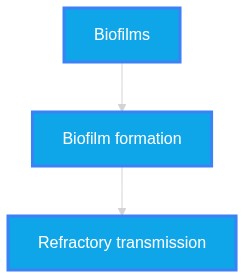
Systemic Logic Chain
-
Biofilms
-->
Biofilm formation
(Align: 7)
Rationale: Clinical isolates adhere to inert surfaces, forming biofilms as a key survival strategy.
-
Biofilm formation
-->
Refractory transmission
(Align: 7)
Rationale: Biofilm-associated cells survive conventional disinfection, facilitating hospital persistence.
Accelerate Your Research with PathMap™
PathMap is a local-first, veridical bioinformatics engine that guarantees source-aligned insights without AI hallucinations. We empower scientists, independent researchers, and enterprises to explore the truth hidden in the literature.
Discover our Tools at PathMap.org •
Verbatim Quote Audit Log
"Both an alcohol- and a QAC-based product dPubMed ID: not achieve sufficient reduction of at least ≥4 log10 CFU/mL of biofilm-cells when applied under conditions recommended by the manufacturer"
"Using the Bead Assay for Biofilms, we demonstrate that several commonly used disinfectants may fail to inactivate biofilm-associated C. auris and C. albicans when applied as recommended."
"C. auris is not a monolithic threat but a complex of diverse lineages with specialized adaptations."
"Extracellular vesicles (EVs) are central components of fungal biology, yet their isolation commonly relies on ultracentrifugation protocols originally developed for mammalian systems."
"C. auris is an emerging fungal pathogen with unique characteristics that make it challenging to eradicate in healthcare settings once introduced."
"C. auris has emerged as an important fungal pathogen because of its capacity for healthcare-associated colonization, environmental persistence, biofilm formation, laboratory misidentification, and multidrug resistance."
"ECM-mediated resistance in Candida biofilms is multilayered, species-dependent and drug-class specific."
"Its modified cell wall, characterized by a thicker mannan layer, efficiently masks immunogenic β-glucan, thereby reducing immunogenicity."
"Since its first description in Japan in 2009, C. auris has spread rapidly worldwide, with a marked acceleration following the coronavirus disease 2019 (COVID-19) pandemic."
"All strains exhibited strong biofilm-forming capacity. ICU patients serve as primary reservoirs, with transmission driven by interregional movement."
"Adhesion to inert surfaces and subsequent biofilm formation is therefore important for C. auris propagation."
"Notably, one strain (B11103) caused rapPubMed ID: systemic dissemination and mortality. To address this, we evaluated a liquid-infused silicone (LIS) catheter coating, which has previously shown efficacy against other uropathogens."
"C. auris has emerged as an important fungal pathogen because of its capacity for healthcare-associated colonization, environmental persistence, biofilm formation, laboratory misidentification, and multidrug resistance."
"Adhesion to inert surfaces and subsequent biofilm formation is therefore important for C. auris propagation."
"Using the Bead Assay for Biofilms, we demonstrate that several commonly used disinfectants may fail to inactivate biofilm-associated C. auris and C. albicans when applied as recommended."
"Both an alcohol- and a QAC-based product dPubMed ID: not achieve sufficient reduction of at least ≥4 log10 CFU/mL of biofilm-cells when applied under conditions recommended by the manufacturer"
"All strains exhibited strong biofilm-forming capacity. ICU patients serve as primary reservoirs, with transmission driven by interregional movement."
"ECM-mediated resistance in Candida biofilms is multilayered, species-dependent and drug-class specific."
"Since its first description in Japan in 2009, C. auris has spread rapidly worldwide, with a marked acceleration following the coronavirus disease 2019 (COVID-19) pandemic."
"C. auris is an emerging fungal pathogen with unique characteristics that make it challenging to eradicate in healthcare settings once introduced."
"C. auris is not a monolithic threat but a complex of diverse lineages with specialized adaptations."
"Extracellular vesicles (EVs) are central components of fungal biology, yet their isolation commonly relies on ultracentrifugation protocols originally developed for mammalian systems."
"Its modified cell wall, characterized by a thicker mannan layer, efficiently masks immunogenic β-glucan, thereby reducing immunogenicity."
"Notably, one strain (B11103) caused rapPubMed ID: systemic dissemination and mortality. To address this, we evaluated a liquid-infused silicone (LIS) catheter coating, which has previously shown efficacy against other uropathogens."
"Accurate identification of C. auris and continuous antifungal susceptibility surveillance are essential for infection control."
"Infections caused by Candida species have considerably increased in recent decades. However, the antifungal agents for the treatment of candidiasis are restricted to few classes of drugs, which have some therapeutic limitations, including high toxicity, low efficacy and resistance development."
"Both countries exhibit high fluconazole resistance and variable susceptibility to amphotericin B, with echinocandins as the preferred first-line therapy."
"In checkerboard assays and time-kill kinetics, AC-FLC combination was highly synergistic against Candida spp., including clinical isolates, with > 2-log₁₀ decrease in CFU/mL."
"Monitoring national trends in cases identified through clinical testing and screening for colonization is critical to guide infection prevention and control efforts."
"These synergistic effects can achieve over 99% eradication of both S. aureus and E. coli in vitro."
"The BAG cream and BAG powder applied to titanium implant material, as well as their respective eluates eradicated planktonic S. aureus."
"C. auris has emerged as an important fungal pathogen because of its capacity for healthcare-associated colonization, environmental persistence, biofilm formation, laboratory misidentification, and multidrug resistance."
"All strains exhibited strong biofilm-forming capacity. ICU patients serve as primary reservoirs, with transmission driven by interregional movement."
"ECM-mediated resistance in Candida biofilms is multilayered, species-dependent and drug-class specific."
"Using the Bead Assay for Biofilms, we demonstrate that several commonly used disinfectants may fail to inactivate biofilm-associated C. auris and C. albicans when applied as recommended."
"Both an alcohol- and a QAC-based product dPubMed ID: not achieve sufficient reduction of at least ≥4 log10 CFU/mL of biofilm-cells when applied under conditions recommended by the manufacturer"
"Since its first description in Japan in 2009, C. auris has spread rapidly worldwide, with a marked acceleration following the coronavirus disease 2019 (COVID-19) pandemic."
"C. auris is not a monolithic threat but a complex of diverse lineages with specialized adaptations."
"C. auris is an emerging fungal pathogen with unique characteristics that make it challenging to eradicate in healthcare settings once introduced."
"Extracellular vesicles (EVs) are central components of fungal biology, yet their isolation commonly relies on ultracentrifugation protocols originally developed for mammalian systems."
"Its modified cell wall, characterized by a thicker mannan layer, efficiently masks immunogenic β-glucan, thereby reducing immunogenicity."
"Notably, one strain (B11103) caused rapPubMed ID: systemic dissemination and mortality. To address this, we evaluated a liquid-infused silicone (LIS) catheter coating, which has previously shown efficacy against other uropathogens."
"Accurate identification of C. auris and continuous antifungal susceptibility surveillance are essential for infection control."
"Infections caused by Candida species have considerably increased in recent decades. However, the antifungal agents for the treatment of candidiasis are restricted to few classes of drugs, which have some therapeutic limitations, including high toxicity, low efficacy and resistance development."
"Both countries exhibit high fluconazole resistance and variable susceptibility to amphotericin B, with echinocandins as the preferred first-line therapy."
"In checkerboard assays and time-kill kinetics, AC-FLC combination was highly synergistic against Candida spp., including clinical isolates, with > 2-log₁₀ decrease in CFU/mL."
"Monitoring national trends in cases identified through clinical testing and screening for colonization is critical to guide infection prevention and control efforts."
"These synergistic effects can achieve over 99% eradication of both S. aureus and E. coli in vitro."
"The BAG cream and BAG powder applied to titanium implant material, as well as their respective eluates eradicated planktonic S. aureus."
"Adhesion to inert surfaces and subsequent biofilm formation is therefore important for C. auris propagation."
"Liposomes represent a promising strategy for the safe and effective delivery of citral to control C. auris infection."
Self-Correction & Hallucination Pruning Log
The following quotes were generated by the AI but rejected by the strict verification system for failing to match the source material perfectly.
MISMATCH PRUNED (Attempt 1)
"C. auris exerts robust anti-C. auris effects by modulating key target gene expression to interfere with multiple virulence-related processes."
Validator Flag: Strict Misquote Detected! The exact character sequence "C. auris exerts robust anti-C. auri..." was NOT found in the provided text. Do NOT truncate, paraphrase, or edit quotes.
MISMATCH PRUNED (Attempt 1)
"C. auris exhibits a unique ability to grow and persist on human skin, thus leading to efficient transmission through skin-to-skin contact."
Validator Flag: Strict Misquote Detected! The exact character sequence "C. auris exhibits a unique ability ..." was NOT found in the provided text. Do NOT truncate, paraphrase, or edit quotes.
MISMATCH PRUNED (Attempt 1)
"Its ability to persist in hospital environments, colonize patients asymptomatically, and exhibit multi-drug resistance to antifungal drugs poses a major challenge to infection prevention and control."
Validator Flag: Strict Misquote Detected! The exact character sequence "Its ability to persist in hospital ..." was NOT found in the provided text. Do NOT truncate, paraphrase, or edit quotes.
MISMATCH PRUNED (Attempt 1)
"Recent studies of aggregation, biofilm formation and adhesion, and phenotypic switching have provided new insights into its virulence and persistence in healthcare settings."
Validator Flag: Strict Misquote Detected! The exact character sequence "Recent studies of aggregation, biof..." was NOT found in the provided text. Do NOT truncate, paraphrase, or edit quotes.
MISMATCH PRUNED (Attempt 1)
"biofilm-associated C. auris cells (sessile cells) exhibit MBECs 2- to 4,119-fold higher than planktonic MICs, representing a major driver of persistent colonization."
Validator Flag: Strict Misquote Detected! The exact character sequence "biofilm-associated C. auris cells (..." was NOT found in the provided text. Do NOT truncate, paraphrase, or edit quotes.
MISMATCH PRUNED (Attempt 1)
"By identifying high-biofilm clades (Clade I) or hyper-virulent lineages (Clade IV), public health systems can implement more targeted containment strategies."
Validator Flag: Strict Misquote Detected! The exact character sequence "By identifying high-biofilm clades ..." was NOT found in the provided text. Do NOT truncate, paraphrase, or edit quotes.
MISMATCH PRUNED (Attempt 1)
"Genomic analyses show that the clinical isolates with enhanced biofilm formation ability carry a loss-of-function mutation in the WOR2 locus."
Validator Flag: Strict Misquote Detected! The exact character sequence "Genomic analyses show that the clin..." was NOT found in the provided text. Do NOT truncate, paraphrase, or edit quotes.
MISMATCH PRUNED (Attempt 1)
"These features [thermotolerance, osmotolerance, and biofilm-forming capacity], together with its genomic plasticity, contribute to persistence, transmission, and drug resistance."
Validator Flag: Strict Misquote Detected! The exact character sequence "These features [thermotolerance, os..." was NOT found in the provided text. Do NOT truncate, paraphrase, or edit quotes.
MISMATCH PRUNED (Attempt 2)
"Candidozyma auris shows susceptibility comparable with that of Candida albicans. Efficacy is driven by formulation, concentration, and contact time rather than clade variation, supporting formulation-based disinfection strategies for healthcare settings."
Validator Flag: Strict Misquote Detected! The exact character sequence "Candidozyma auris shows susceptibil..." was NOT found in the provided text. Do NOT truncate, paraphrase, or edit quotes.
Mapped Reference Directory (APA)
-
[1]
PubMed ID: 42211613 - Gökmen R, Erdoğan A, Cunetoğlu B (2026). Epidemiology, Distribution, Key Characteristics, and Challenges of Candidozyma auris (Formerly Candida auris): A Narrative Review With a Special Focus on Türkiye.. Cureus. ID: 42211613.
-
[2]
PubMed ID: 42003753 - Wei M, Guo J, Li L, Zhu J, Xue Y et al. (2026). The Epidemiology and Infection Control of Candida Auris in Shanghai.. Mycoses. ID: 42003753.
-
[3]
PubMed ID: 42199049 - Tuan DA, Uyen PVN (2026). Mechanisms and species-specific patterns of ECM-mediated antifungal resistance in Candida biofilms: a systematic review and exploratory quantitative synthesis.. Future microbiology. ID: 42199049.
-
[4]
PubMed ID: 42390249 - Zmarlak-Feher NM, Finke A, Konrat K, Schaudinn C, Arvand M et al. (2026). Disinfectant tolerance of Candidozyma auris and Candida albicans biofilms evaluated using the bead assay for biofilms.. Microbiology spectrum. ID: 42390249.
-
[5]
PubMed ID: 42017651 - Bing J, Li S, Ji L, Du H, Shamoon NM et al. (2026). Global emergence and rapid spread of Candidozyma auris (syn. Candida auris): epidemiology, biology, and antifungal resistance.. Clinical microbiology reviews. ID: 42017651.
-
[6]
PubMed ID: 42348119 - Sharma P, Bari VK, Pasrija R (2026). Unraveling clade-specific differences in Candida auris: evolution, adaptation, and pathogenicity.. European journal of clinical microbiology & infectious diseases : official publication of the European Society of Clinical Microbiology. ID: 42348119.
-
[7]
PubMed ID: 42296425 - McDougal AN, Ostrosky-Zeichner L (2026). Increasing threat to the healthcare setting: Candida auris.. Current opinion in infectious diseases. ID: 42296425.
-
[8]
PubMed ID: 42307779 - Jozefowicz LJ, Bezerra BT, Veres E, Szilovics Z, Souza CM et al. (2026). Fungal Extracellular Vesicles are Recoverable Across Variable Ultracentrifugation Speeds but Display Species-specific Profiles of Sedimentation.. The Journal of membrane biology. ID: 42307779.
-
[9]
PubMed ID: 42119224 - Liu L, Niu T, Zhang T, Tan D, Duan X et al. (2026). Interplay between Candida auris and host immunity: Highlighting its unique strategies for resisting host immune responses.. Microbiological research. ID: 42119224.
-
[10]
PubMed ID: 41983685 - La Bella AA, Akegbe H, Howell C, Santiago-Tirado FH, Flores-Mireles AL (2026). Liquid-infused silicone catheters reduce fungal burden and inflammation in Candidozyma auris bladder infections.. mSphere. ID: 41983685.
-
[11]
PubMed ID: 42265601 - Timur D, Demir C (2026). Clinical characteristics, healthcare-associated exposures, and antifungal susceptibility patterns of Candida auris colonization and invasive infections: a retrospective observational study at a single center in Turkey.. BMC infectious diseases. ID: 42265601.
-
[12]
PubMed ID: 42554768 - Polaquini CR, Costa PT, Sardi JCO, Pattini VC, Almeida MTG et al. (2026). Anti-Candida activity of simplified analogs of curcumin.. Archives of microbiology. ID: 42554768.
-
[13]
PubMed ID: 42534992 - Amir OA, Ali E, Ali RH, Elatafy J, Amir AA et al. (2026). Hospital-acquired Candidozyma auris infections as an emerging threat in Saudi Arabia and Egypt: A narrative review on epidemiology and prevention strategies.. Journal of family & community medicine. ID: 42534992.
-
[14]
PubMed ID: 42230678 - David H, Balu P, Vasudevan S, Narayanan VHB, Solomon AP et al. (2026). Thermoresponsive carbohydrate polymer mucoadhesive gel for synergistic delivery of acarbose and fluconazole against Candida biofilms.. Scientific reports. ID: 42230678.
-
[15]
PubMed ID: 42378120 - Gold JAW, Baker AD, Benedict K, Forsberg K, Laury JE et al. (2026). Surveillance for Candida auris - United States, 2022-2024.. Morbidity and mortality weekly report. Surveillance summaries (Washington, D.C. : 2002). ID: 42378120.
-
[16]
PubMed ID: 42555082 - Wei C, Zhang H, Wang H, Zhang X, Tan J et al. (2026). Synergistic eradication of implant-associated infections by a copper phosphide film via bacterial metabolic collapse and oxidative burst.. Journal of materials chemistry. B. ID: 42555082.
-
[17]
PubMed ID: 42158936 - Rajkumar D, Stiller A, Balraadjsing PPS, Hupa L, Zaat SAJ (2026). Bioactive glass S53P4 cream kills ESKAPE panel multidrug resistant pathogens and Staphylococcus aureus biofilms.. Frontiers in pharmacology. ID: 42158936.
-
[18]
PubMed ID: 42003596 - Louvet M, Li J, Areitio M, Brandalise D, Bachmann D et al. (2026). Role of the transcription factor Wor2 in biofilm formation of Candidozyma auris.. mSphere. ID: 42003596.
-
[19]
PubMed ID: 42269828 - Marena GD, de Lima LC, do Nascimento ALCS, Carvalho GC, de Toledo LG et al. (2026). Liposomes loaded with Cymbopogon nardus L. Rendle essential oil: Characterization and potential in vitro and in vivo action against Candidozyma auris.. Revista iberoamericana de micologia. ID: 42269828.
Abstract Repository (Raw Full-Texts)
ID: 41983685
Title: Liquid-infused silicone catheters reduce fungal burden and inflammation in Candidozyma auris bladder infections.
Abstract: Candidozyma auris is a high-priority, emerging fungal pathogen frequently isolated from urine in healthcare settings. These isolates are often associated with indwelling urinary catheters, a primary risk factor for catheter-associated urinary tract infections (CAUTIs). Despite its clinical prevalence, the mechanisms of C. auris colonization and pathogenesis within the bladder remain poorly understood. In this study, we screened C. auris isolates from diverse clades using an in vitro biofilm model and in vivo murine models of uncomplicated UTI and CAUTI. While in vitro biofilm formation varied among isolates, the presence of a catheter in vivo significantly enhanced fungal burden in the bladder. Notably, one strain (B11103) caused rapid systemic dissemination and mortality. To address this, we evaluated a liquid-infused silicone (LIS) catheter coating, which has previously shown efficacy against other uropathogens. The LIS coating significantly reduced C. auris attachment in vitro and, crucially, mitigated fungal burden on both the catheter and bladder tissue in vivo across all tested strains. For the hypervirulent B11103 strain, LIS catheters also significantly reduced dissemination to the kidneys and bloodstream. Furthermore, cytokine analysis revealed that C. auris CAUTI upregulates IL-6, CSF3, and CXCL1; importantly, this damaging inflammatory response was also dampened by the LIS catheter. These findings demonstrate that catheterization potentiates C. auris pathogenicity and identify LIS catheters as a promising, antimicrobial-sparing strategy to prevent colonization, systemic spread, and inflammation during C. auris CAUTI.IMPORTANCEThis research addresses the critical public health challenge posed by the emergence of Candidozyma auris, elucidating its pathogenesis in the urinary tract, the second-most common yet understudied reservoir. Here, we find that C. auris exhibits plasticity in its ability to form biofilms in urine and cause uncomplicated urinary tract infections (UTIs) and catheter-associated UTIs (CAUTIs). Importantly, we show that our liquid-infused silicone (LIS) catheters effectively disrupt this cycle by reducing fungal burden, preventing systemic spread, and dampening the damaging host inflammatory response. This work establishes the urinary tract as a critical niche for systemic entry and provides a validated strategy for infection prevention. Urinary catheters make C. auris dangerous, but this liquid-infused silicone coating is fighting back.
ID: 42003596
Title: Role of the transcription factor Wor2 in biofilm formation of Candidozyma auris.
Abstract: The yeast pathogen Candidozyma (Candida) auris can form biofilms, which contribute to its virulence and nosocomial transmission. In this study, we identified the transcription factor Wor2 as a negative regulator of biofilm formation in C. auris. Wor2 hyperactivation in a strain of clade IV via the use of a protein tagging strategy resulted in downregulation of two important adhesins, SCF1 and ALS4112, and decreased biofilm-forming capacity. We showed that the impact on biofilm was predominantly mediated via decreased SCF1 expression in this strain. However, results of adhesion assays on inert surfaces and human keratinocytes found relatively modest roles of Wor2 and Scf1 in this process, suggesting that their effect on biofilm formation is complex and not limited to the adhesion step. Finally, analyses of other strains from different clades identified three distinct WOR2 genotypes, with variable WOR2 expression levels and distinct impacts of WOR2 deletion on biofilm formation. Notably, Wor2 negatively regulated biofilm in strains of clades I, III, and IV with distinct profiles of SCF1/ALS4112 expression, while it had no impact on biofilm in a clade II strain. Taken together, this study showed that Wor2 exhibited some distinct genotypic evolution in C. auris resulting in clade- or strain-specific regulatory roles and pathways in biofilm formation.IMPORTANCECandidozyma (Candida) auris is a pathogenic yeast exhibiting a particular capacity for interhuman transmission via medical instruments, which was the cause of nosocomial outbreaks of candidemia. Adhesion to inert surfaces and subsequent biofilm formation is therefore important for C. auris propagation. This work highlights the role of the transcription factor Wor2 as a negative regulator of biofilm formation in C. auris. In a strain of clade IV, Wor2 was shown to downregulate two important adhesins (SCF1 and ALS4112). Interestingly, Wor2 exhibited different genotypes across C. auris clades and strains, which were associated with distinct differential expression of WOR2, ALS4112, and SCF1, and possibly distinct roles in biofilm formation.
ID: 42003753
Title: The Epidemiology and Infection Control of Candida Auris in Shanghai.
Abstract: Candida auris is a globally emerging multidrug-resistant fungus. Its dissemination is driven by patient movement and asymptomatic carriers. However, molecular epidemiological studies linking imported cases to local strains in large metropolitan areas remain limited. To analyse the molecular epidemiology and resistance mechanisms of 33 clinical isolates in Shanghai and propose an integrated infection control strategy tailored to metropolitan healthcare settings. Isolates from 19 patients were identified via MALDI-TOF MS and sequencing. Antifungal susceptibility and biofilm formation were assessed. Environmental contamination was evaluated using PCR. Whole-genome sequencing (WGS) was employed to identify resistance mutations and perform phylogenetic analysis. All 33 isolates were fluconazole-resistant. Resistance to amphotericin B and echinocandins was observed in 9 and 4 isolates, respectively. All echinocandin-resistant strains harboured the Fks1-S639F mutation. Phylogenetic analysis revealed that Clade III (South African clade) was the dominant lineage. Colonisation was concentrated in the urinary tract and inguinal regions, while bedside tables were identified as key environmental reservoirs. All strains exhibited strong biofilm-forming capacity. ICU patients serve as primary reservoirs, with transmission driven by interregional movement. The distinct colonisation patterns and environmental hotspots provide specific targets for screening. Integrating PCR-based environmental monitoring with culture methods constitutes an effective strategy. These findings underscore the need for a standardised protocol integrating molecular diagnostics to optimise infection control in urban hospitals.
ID: 42017651
Title: Global emergence and rapid spread of Candidozyma auris (syn. Candida auris): epidemiology, biology, and antifungal resistance.
Abstract: SUMMARYThe emerging fungal pathogen Candidozyma auris (syn. Candida auris; C. auris) has attracted considerable attention from the scientific, clinical, and public health communities due to its multidrug resistance, environmental persistence, and high transmissibility. Since its first description in Japan in 2009, C. auris has spread rapidly worldwide, with a marked acceleration following the coronavirus disease 2019 (COVID-19) pandemic. As of December 2025, 84,941 colonization or infection cases have been reported across 82 countries spanning 6 continents. In this review, we summarize the current knowledge of the biology and global epidemiology of C. auris. We first examine its taxonomy, proposed origins, and key biological, genetic, and phenotypic characteristics, with particular emphasis on factors underlying environmental persistence, transmission dynamics, antifungal resistance, and virulence. Drawing on published literature and publicly available surveillance data from national public health authorities worldwide, we provide an updated overview of the global epidemiological landscape and evolving transmission patterns of C. auris. Finally, we discuss potential strategies to mitigate the continued and escalating global spread of this emerging multidrug-resistant fungal pathogen.
ID: 42119224
Title: Interplay between Candida auris and host immunity: Highlighting its unique strategies for resisting host immune responses.
Abstract: Candida auris, an emerging "super fungus," poses a global threat owing to multidrug resistance, rapid transmission, and high mortality. Distinct from other clinically prevalent fungal pathogens such as Candida species, C. auris employs unique defense mechanisms against the host immune system, including immune evasion and survival strategies. This review summarizes the distinct strategies used by C. auris to resist host immune responses. In particular, C. auris exhibits pronounced genomic and morphological plasticity, which facilitates rapid adaptation to host-derived stressors. Its modified cell wall, characterized by a thicker mannan layer, efficiently masks immunogenic β-glucan, thereby reducing immunogenicity. Furthermore, multicellular features, including robust biofilms and unique aggregative forms, enhance colonization, transmission, and stress resistance. C. auris also secretes diverse virulence factors and undergoes adaptive metabolic reprogramming under nutrient limitation, promoting more efficient immune evasion and survival within the host. Collectively, these flexible defensive strategies confer enhanced host immune resistance, contributing to its heightened pathogenicity. This review provides novel perspectives on future research directions and potential therapeutic strategies for managing C. auris infections.
ID: 42158936
Title: Bioactive glass S53P4 cream kills ESKAPE panel multidrug resistant pathogens and Staphylococcus aureus biofilms.
Abstract: Orthopedic implant-associated infections, predominantly caused by S. aureus, pose significant challenges due to biofilm formation and antibiotic resistance. Bioactive Glass (BAG) S53P4 is a unique material with antimicrobial and bone regenerative properties. We aimed to characterize a novel BAG S53P4 cream, consisting of BAG powder and a binder, for its capacity to kill Staphylococcus aureus in suspension and biofilms in the absence or presence of titanium implant material. Since the BAG antimicrobial activity depends on ions eluted, we also analyzed the eluates of the cream and of powder and binder. BAG cream, BAG powder, and binder were evaluated for antimicrobial activity against planktonic S. aureus in the presence or absence of titanium implant material, and against S. aureus biofilms. Eluates collected at different time points were tested against a panel of bacterial and fungal pathogens. Elemental ion release and pH changes were measured over time. Time-kill and biofilm assays were performed. Additionally, the applicability and antimicrobial efficacy of BAG cream were evaluated in a cadaver mouse bone defect model. The BAG cream and BAG powder applied to titanium implant material, as well as their respective eluates eradicated planktonic S. aureus. Elemental release from BAG cream and powder showed time-dependent shifts in levels of silicon, sodium, calcium and phosphorous together with stable alkaline pH levels, reflecting continuous ion release from the glass network and concurrent precipitation of calcium phosphate and silica phases. BAG cream and powder eluates collected as early as at 2 h were highly effective against S. aureus, the ESKAPE panel of multidrug resistant pathogens, colistin-resistant Escherichia coli and Cutibacterium acnes, and against the fungi Candidozyma auris and Candida albicans. The eluates displayed time-dependent bactericidal activity with significant bacterial killing starting already at 30 min and increasing with longer exposure times. Moreover, significant reduction in S. aureus biofilm was observed with the cream and powder eluates. BAG cream was easy to apply to the bone defect of a cadaver mouse using a syringe and it effectively prevented S. aureus growth. These findings show the potential of BAG cream as an innovative application form of BAG S53P4 offering a promising approach against orthopedic implant-associated infections.
ID: 42199049
Title: Mechanisms and species-specific patterns of ECM-mediated antifungal resistance in Candida biofilms: a systematic review and exploratory quantitative synthesis.
Abstract: To synthesize mechanistic evidence on how extracellular matrix (ECM) components of Candida biofilms contribute to antifungal resistance across species and antifungal drug classes. We conducted a PRISMA-guided systematic review with exploratory random-effects quantitative synthesis of peer-reviewed experimental studies evaluating ECM composition, matrix-associated regulatory pathways and antifungal susceptibility in Candida biofilms. Qualitative synthesis mapped ECM components and pathways, while harmonizable semi-quantitative data were summarized as directional modeled estimates. Of 38 full-text records assessed, 33 primary studies were included in the qualitative synthesis and 25 contributed to the exploratory pooled analysis. Preservation or modulation of ECM-associated mechanisms showed a strong modeled directional association with reduced antifungal susceptibility (pooled modeled odds ratio: 4.28, 95% CI: 4.06-4.52). β-1,3-glucan was the most consistently supported sequestration scaffold, particularly for azoles and polyenes. Mannan-glucan complexes, matrix proteins, extracellular DNA and vesicle-associated lipids provided complementary structural and remodeling functions. Non-albicans Candida species, especially Candida glabrata and Candida auris, more often combined ECM protection with efflux-linked resistance. ECM-mediated resistance in Candida biofilms is multilayered, species-dependent and drug-class specific. These findings support species-aware interpretation of biofilm-associated antifungal resistance and further development of ECM-directed adjunctive strategies.
ID: 42211613
Title: Epidemiology, Distribution, Key Characteristics, and Challenges of Candidozyma auris (Formerly Candida auris): A Narrative Review With a Special Focus on Türkiye.
Abstract: This narrative review summarizes the epidemiology, microbiological and clinical features, antifungal resistance, transmission dynamics, and public health significance of Candidozyma auris globally and with a focus on Türkiye. C. auris has emerged as an important fungal pathogen because of its capacity for healthcare-associated colonization, environmental persistence, biofilm formation, laboratory misidentification, and multidrug resistance. Available evidence suggests that its rapid global spread is related to environmental tolerance, skin colonization, interclade phenotypic differences, and antifungal resistance mechanisms. Reported cases from Türkiye further support the need for strengthened infection control and surveillance systems. It represents a significant nosocomial fungal threat that necessitates the simultaneous implementation of clinical management and public health responses. In addition, it has been observed that the dominant clade in Türkiye is Clade I, that early cases were misidentified due to laboratory method-related limitations, and that there are substantial variations in antifungal susceptibility even within the same case series.
ID: 42230678
Title: Thermoresponsive carbohydrate polymer mucoadhesive gel for synergistic delivery of acarbose and fluconazole against Candida biofilms.
Abstract: The emerging threat of drug-resistant Candida albicans, especially in recurrent vulvovaginal candidiasis (VVC) biofilms, has revealed weaknesses in existing monotherapeutic antifungal treatments. In this study, we investigated the antifungal activity of a new dual-drug in situ mucoadhesive gel system containing acarbose (AC), a pseudo-oligosaccharide sugar and FDA-approved α-glucosidase inhibitor, together with fluconazole (FLC). Although AC showed mild antifungal activity by itself, when combined with FLC, it dramatically potentiated fungicidal activity, disrupted biofilms, blocked morphogenetic switching, and arrested post-treatment hyphal regrowth. In checkerboard assays and time-kill kinetics, AC-FLC combination was highly synergistic against Candida spp., including clinical isolates, with > 2-log₁₀ decrease in CFU/mL. The thermosensitive gel (PCH16), formulated using poloxamer 407 along with the carbohydrate-based polymers chitosan and HPMC, exhibited sustained drug release, favorable rheological properties, and strong mucoadhesion suitable for vaginal delivery. Notably, the formulation retained Lactobacillus species viability, suggesting microbiome compatibility. These results affirm the promise of repurposing acarbose as a novel, non-traditional antifungal adjuvant that, in co-administration with FLC in vaginal gel, represents an encouraging, localized, and microbiota-conserving therapy for treating recurrent and resistant VVC.
ID: 42265601
Title: Clinical characteristics, healthcare-associated exposures, and antifungal susceptibility patterns of Candida auris colonization and invasive infections: a retrospective observational study at a single center in Turkey.
Abstract: Candida auris (Candidozyma auris) differs from other yeast species by its ability to persist for prolonged periods on environmental surfaces and human skin. This feature facilitates person-to-person transmission and contributes to healthcare-associated infections and outbreaks. In this study, both invasive C. auris infections and colonization were evaluated together. We aimed to compare clinical characteristics and healthcare-associated exposures between invasive and colonized cases and to assess antifungal susceptibility patterns in invasive infections. A total of 79 patients with C. auris isolation between December 2022 and April 2025 were retrospectively analyzed. Species identification was confirmed using matrix-assisted laser desorption/ionization time-of-flight mass spectrometry. Patients with C. auris isolated from invasive specimens, such as blood or tissue, were classified as having invasive infection, whereas those with isolation from non-invasive specimens such as axilla/groin swabs, nasal swabs, urine, catheters, and sputum, without concurrent invasive positivity, were classified as colonized. Patients with both screening and invasive positivity were included in the invasive infection group for comparative analyses. Antifungal susceptibility to amphotericin B, fluconazole, micafungin, and anidulafungin was determined on invasive isolates using the Sensititre YeastOne colorimetric microdilution method. Interpretation of results was based on the tentative breakpoints defined by the United States Centers for Disease Control and Prevention and the epidemiological cutoff values established by the European Committee on Antimicrobial Susceptibility Testing. Demographic characteristics, clinical variables, and healthcare-associated exposures were compared between the invasive infection and colonization groups. A total of 91 C. auris isolates from 79 patients were evaluated. Invasive infection was detected in 41 patients (52%) and colonization in 38 patients (48%). Most cases were observed in intensive care and palliative care units. Among screening sites, axilla/groin swabs showed the highest positivity rate. Central venous catheter use, intubation, surgical history, and decubitus ulcer were numerically more frequent among invasive cases; however, none of these differences reached statistical significance. Echinocandin resistance developed in two patients during follow-up. The median age was significantly higher in the invasive group than in the colonized group (74 vs. 64.5 years; p = 0.002). Accurate identification of C. auris and continuous antifungal susceptibility surveillance are essential for infection control. Older age was the only variable significantly associated with invasive infection, while other clinical and healthcare-associated exposures were common in both groups but did not differ significantly. All isolates were resistant to fluconazole, and echinocandin resistance emerged in two isolates. Amphotericin B susceptibility findings should be interpreted cautiously, as the use of Sensititre YeastOne without confirmatory reference testing may have overestimated resistance. Larger multicenter studies are needed to better define factors independently associated with invasive infection.
ID: 42269828
Title: Liposomes loaded with Cymbopogon nardus L. Rendle essential oil: Characterization and potential in vitro and in vivo action against Candidozyma auris.
Abstract: The rapid dissemination of Candidozyma auris (previously known as Candida auris) and its multidrug resistance profile poses a significant challenge in therapy once it contributes to a mortality of 30-60% of infected patients. This study aimed to evaluate the in vitro and in vivo antifungal activity of Cymbopogon nardus (L.) Rendle essential oil and citral oil, both free and incorporated into liposomes, against C. auris. The liposomes were composed of a lipid phase containing soy phosphatidylcholine, ergosterol, cholesterol and oleylamine, along with an aqueous phase consisting of PBS. The liposome was characterized by measuring the following features: hydrodynamic size, polydispersity index, zeta potential, transmission electron microscopy, infrared vibrational spectroscopy, thermogravimetry and differential scanning calorimetry, and transmission electron microscopy. The antifungal activity of the C. nardus essential oil, the citral oil and liposome-loaded compounds was determined by minimum inhibitory concentration (MIC), biofilm assay and by a Galleria mellonella infection model. G. mellonella was also used to assess acute in vivo toxicity. The liposomes exhibited sizes ranging from 218.8 to 261.7nm, polydispersity index <0.5, and a positive zeta potential. Furthermore, the liposomes showed good stability and a lipid layer in the outer region. Citral showed the best antifungal activity, with MIC 62.5μg/mL, being the compound selected for its incorporation into liposomes, which further improved its antifungal potential. Citral and citral-liposomes showed important metabolic inhibition in mature biofilms (20%). No acute toxicity was observed for either sample in G. mellonella, and citral-liposomes showed promising antifungal action in the G. mellonella infection model. Liposomes represent a promising strategy for the safe and effective delivery of citral to control C. auris infection.
ID: 42296425
Title: Increasing threat to the healthcare setting: Candida auris.
Abstract: This review summarizes the current knowledge related to infection prevention for Candida auris in the healthcare setting. Colonization, pathogenesis, and control strategies are discussed. There are numerous well documented C. auris outbreaks in healthcare settings, however, evidence is lacking on how to manage these colonized and postinfection patients long term in the acute care setting. C. auris is an emerging fungal pathogen with unique characteristics that make it challenging to eradicate in healthcare settings once introduced. Mitigation and control strategies have been investigated, but more research is needed about tangible effects of skin colonization, environmental disinfection, duration of transmission-based precautions, and topical decolonization.
ID: 42307779
Title: Fungal Extracellular Vesicles are Recoverable Across Variable Ultracentrifugation Speeds but Display Species-specific Profiles of Sedimentation.
Abstract: Extracellular vesicles (EVs) are central components of fungal biology, yet their isolation commonly relies on ultracentrifugation protocols originally developed for mammalian systems. In Cryptococcus, most EVs carry the capsular polysaccharide glucuronoxylomannan (GXM), raising the possibility that vesicle density, and therefore sedimentation, could be influenced by polysaccharide content. Here, we systematically evaluated EV recovery across sequential ultracentrifugation speeds (20,000 × g to 100,000 × g) in Cryptococcus deuterogattii, Candida auris, and Candida parapsilosis. In C. deuterogattii, GXM was detected across all ultracentrifugation fractions, and each fraction efficiently transferred polysaccharide to acapsular cells, demonstrating that its presence is independent of fraction density and does not correlate with sedimentation behavior. In the three fungal species, transmission electron microscopy and nanoparticle tracking analysis confirmed that bona fide EVs are recoverable across all centrifugation speeds. Qualitative and quantitative proteomic analyses revealed largely overlapping protein compositions among fractions within each species. However, proteomic profiles differed between species. In C. deuterogattii and C. auris, fractions displayed similar proteomic and predicted protein-protein interaction signatures across centrifugation speeds. In contrast, C. parapsilosis exhibited a clear partitioning pattern, with low-speed fractions (20,000 × g and 40,000 × g) clustering together and differing from higher-speed fractions (60,000-100,000 × g). These findings demonstrate that fungal EVs are recoverable across a broad range of ultracentrifugation speeds, but their sedimentation behavior is species-specific. Our study highlights the need for tailored EV isolation strategies and cautions against assuming methodological equivalence across fungal pathogens.
ID: 42348119
Title: Unraveling clade-specific differences in Candida auris: evolution, adaptation, and pathogenicity.
Abstract: Since its 2009 emergence, Candida auris (now also known as Candidozyma auris) has evolved from a rare isolate into a global "critical priority" pathogen. This rapid expansion is defined by its unique population structure consisting of six distinct genomic clades with starkly different evolutionary trajectories, phenotypic traits, and clinical risks. We conducted a systematic synthesis of literature from PubMed, Scopus, and Google Scholar (2009-2026), focusing on comparative genomics, clade-specific virulence, and diagnostic accuracy. A total of 64 studies were analyzed to identify patterns in clade divergence and antifungal resistance. Our analysis reveals that C. auris is not a monolithic threat but a complex of diverse lineages with specialized adaptations. Clade I (South Asian) and Clade IV (South American) represent the highest clinical risk due to hyper-virulence and high rates of multi-drug resistant (MDR) strains. In contrast, Clade II (East Asian) was initially associated with localized ear infections; recent genomic data show an expanding pathogenic profile with emerging bloodstream infections. Our review also identifies Clade V (Iranian) as a genetically distinct group and highlights the recent identification of Clade VI (Indomalayan) as a distinct lineage, suggesting a long-standing environmental reservoir. Furthermore, we identify critical "blind spots" in automated diagnostic platforms (VITEK® 2, BD Phoenix) where phenotypic variations in Clades II and III lead to frequent misidentification as Candida haemulonii or Candida famata. This review proposes a "clade-aware" framework for public health. While frontline antifungal treatment remains standardized regardless of lineage, we argue that effective long-term management and outbreak containment require integrating genomic surveillance with clade-specific infection control. By identifying high-biofilm clades (Clade I) or hyper-virulent lineages (Clade IV), public health systems can implement more targeted containment strategies, moving toward a precision-based approach to managing this fungal pathogen.
ID: 42378120
Title: Surveillance for Candida auris - United States, 2022-2024.
Abstract: Candida auris is an emerging yeast that is frequently resistant to antifungal drugs. C. auris can cause invasive infections associated with high mortality and can colonize patients asymptomatically, which facilitates transmission in health care settings. Since it was first reported in the United States in 2016, C. auris has been identified in multiple states, with increasing numbers of cases reported annually. Monitoring national trends in cases identified through clinical testing and screening for colonization is critical to guide infection prevention and control efforts. 2022-2024. State and jurisdictional health departments voluntarily report clinical and screening C. auris cases to CDC using standardized case definitions of the Council of State and Territorial Epidemiologists. Clinical cases are defined as detection of C. auris from specimens collected for diagnostic purposes; screening cases are defined as detection from colonization screening swabs. Cases were reported to CDC through the Research Electronic Data Capture (REDCap) or Data Collation and Integration for Public Health Event Response (DCIPHER) platforms. Data included patient age and sex, case type, specimen type (for clinical cases), health care facility type, Antimicrobial Resistance Laboratory Network geographic region, and specimen collection date. Analyses were descriptive and limited to cases with specimens collected during 2022-2024. During 2022-2024, a total of 13,507 clinical C. auris cases were reported to CDC, increasing from 2,882 in 2022 to 4,428 in 2023 and 6,197 in 2024, with smaller annual percentage increases over time (53.7% from 2022 to 2023 and 39.9% from 2023 to 2024). Most clinical cases occurred among adults aged ≥45 years (87.8%) and among males (61.0%). The most common specimen types among all clinical cases were urine (31.5%) and blood (30.2%); by year, the proportion of blood as the specimen type was 34.4% in 2022, 30.2% in 2023, and 25.6% in 2024. Most clinical cases were identified through specimens collected in acute care hospitals (76.6%) and long-term acute care hospitals (17.8%).During the same period, a total of 27,853 screening cases were reported to CDC, increasing from 6,226 in 2022 to 9,195 in 2023 and 12,432 in 2024. Screening cases most frequently occurred among adults aged ≥45 years (90.0%) and males (57.9%). Among cases with known facility type, the proportion of specimens collected in acute care hospitals increased from 24.7% in 2022 to 50.7% in 2024, whereas the proportion of specimens collected in long-term acute care hospitals decreased from 56.1% to 35.7% during the same period. The number of clinical and screening C. auris cases reported to CDC increased during 2022-2024, indicating ongoing transmission in U.S. health care settings. Although annual percentage increases in clinical cases declined over time, absolute case counts reported to CDC continued to rise. The increasing proportion of screening cases with specimens collected in acute care hospitals might reflect increased use of screening in acute care hospitals, including screening at admission. Because of increases in the number of reported C. auris cases, sustained infection prevention and control efforts in health care facilities, including adherence to transmission-based precautions, environmental disinfection with agents effective against C. auris, and communication of C. auris status during patient transfers remain essential to preventing clinical infections and colonization. Because this pathogen is frequently resistant to antifungal drugs, continued investment in laboratory capacity and surveillance, including antifungal susceptibility testing and screening of patients at high risk for C. auris infection, can support timely detection and guide prevention strategies. Ongoing public health coordination at federal, state, and local levels is critical to limit further spread and to address emerging antifungal drug resistance.
ID: 42390249
Title: Disinfectant tolerance of Candidozyma auris and Candida albicans biofilms evaluated using the bead assay for biofilms.
Abstract: Candidozyma auris (formerly Candida auris) has emerged as a critical nosocomial pathogen, notable for its multidrug resistance and its capability to form biofilms that enable persistence on surfaces. Although effective disinfection strategies are urgently needed, current disinfectant efficacy standards in many regions, such as Europe, are primarily based on testing planktonic Candida albicans and do not adequately reflect the resilience of Candida biofilms, including those of C. albicans and C. auris. To address this gap, the Bead Assay for Biofilms, previously developed for bacterial biofilms, was adapted for the first time to eukaryotic cells. The goal was to cultivate C. auris and C. albicans biofilms and evaluate the efficacy of selected disinfectants across four active substance classes. Cell enumeration demonstrated highly reproducible biofilms, whose architecture was confirmed by scanning electron microscopy. Both an alcohol- and a QAC-based product did not achieve sufficient reduction of at least ≥4 log10 CFU/mL of biofilm-cells when applied under conditions recommended by the manufacturer (alcohol 1 min: C. auris 0.82, C. albicans 0.54; QAC 1%, 15 min: C. auris 1.94, C. albicans 0.68). This reduced efficacy is consistent with the known increased tolerance of microorganisms in biofilms. In contrast, peracetic acid and glutaraldehyde achieved sufficient reductions, albeit at relatively high concentrations (peracetic acid 0.1%: C. auris 4.75 and 0.05%: C. albicans 4.87; glutaraldehyde 0.5%: C. auris 5.32 and C. albicans 4.15). Our findings underscore the need to adapt disinfection protocols and testing models to consider biofilm formation of C. auris and C. albicans, and species-specific resilience.IMPORTANCEThis study highlights a critical gap in current disinfection efficacy testing standards; many of which rely on planktonic cell models and do not account for the resilience of biofilm-associated cells or emerging pathogens with unique resistance traits. Although species-specific regulatory guidance for C. auris exists in certain regions (e.g., in the USA), standardized disinfectant testing remains largely based on suspension assays (often using C. albicans) and does not routinely incorporate biofilm models. Using the Bead Assay for Biofilms, we demonstrate that several commonly used disinfectants may fail to inactivate biofilm-associated C. auris and C. albicans when applied as recommended. This suggests that reliance on planktonic testing may overestimate disinfectant efficacy against clinically relevant pathogenic yeast and highlights the need to expand current testing standards in order to include biofilm-associated pathogens to improve infection prevention strategies. Consequently, our research is of immediate relevance to regulatory bodies, infection control, and public health.
ID: 42534992
Title: Hospital-acquired Candidozyma auris infections as an emerging threat in Saudi Arabia and Egypt: A narrative review on epidemiology and prevention strategies.
Abstract: Candidozyma auris (C. auris) is an emerging multidrug-resistant pathogen increasingly associated in hospital-associated outbreaks, particularly in intensive care units (ICUs), and is classified by the World Health Organization as a critical priority pathogen. Its ability to persist in hospital environments, colonize patients asymptomatically, and exhibit multi-drug resistance to antifungal drugs poses a major challenge to infection prevention and control (IPC). This work is a synthesis of published, hospital-based evidence on nosocomial C. auris infections in Saudi Arabia and Egypt, with implications for antifungal stewardship, infection prevention, and control. Saudi Arabia and Egypt were selected because of their contrasting surveillance, healthcare capacities, and reporting intensities, which allow for comparative regional interpretation. This narrative review was conducted using PubMed and Google Scholar for English-language articles from 2020 to 2025, with key terms including "Candida auris," "C. auris," together with related concepts such as epidemiology, transmission, IPC, Saudi Arabia, Egypt, and drug resistance, with an emphasis on hospital-based studies. Available evidence indicates a marked increase in reported cases and outbreaks in Saudi Arabia, with risk factors of ICU exposure, invasive medical device use, and antibiotic use, whereas data from Egypt though limited increasingly suggest misdiagnosis and emerging local circulation in tertiary care settings. Both countries exhibit high fluconazole resistance and variable susceptibility to amphotericin B, with echinocandins as the preferred first-line therapy. These findings highlight the urgent need for enhanced surveillance, improved diagnostic capacity, and sustained, consistent IPC strategies in healthcare settings across the regions to limit further spread of C. auris.
ID: 42554768
Title: Anti-Candida activity of simplified analogs of curcumin.
Abstract: Infections caused by Candida species have considerably increased in recent decades. However, the antifungal agents for the treatment of candidiasis are restricted to few classes of drugs, which have some therapeutic limitations, including high toxicity, low efficacy and resistance development. This perspective encouraged us to synthesize and evaluate a series of simplified analogs inspired by curcumin, a natural product with recognized antifungal activity. Among tested antifungal compounds, 3-hydroxy-dibenzylideneacetone (17) was the most active one against Candida species, with Minimum Inhibitory Concentration (MIC) values ranging from 7.8 to 31.2 µM. Candida albicans and Candida krusei were more susceptible to 17 than fluconazole. Compound 17 at sub-MIC was able to reduce C. albicans adhesion onto human gingival fibroblasts (HGF-1 cell line) and human epidermal keratinocytes (HaCaT cell line). Our investigations demonstrated the inhibition of 17 on C. albicans biofilm formation and preformed biofilm, when tested at MIC (31.2 µM) and 10 × MIC (312 µM) values. Combinations of 17 and amphotericin B or fluconazole showed synergistic effects against C. albicans, with Fractional Inhibitory Concentration Index (FICI) values of 0.5 and 0.2, respectively. Studies on the fungitoxicity dynamics of 17 indicated a dual mode of action, targeting C. albicans membrane and cell wall. Finally, 17 was more stable than curcumin in phosphate buffer and demonstrated low acute toxicity against Galleria mellonella larvae. These findings opened new avenues for the study of simplified analogs as anti-Candida agents based on the curcumin structure and bioactivity.
ID: 42555082
Title: Synergistic eradication of implant-associated infections by a copper phosphide film via bacterial metabolic collapse and oxidative burst.
Abstract: Implant-associated infections caused by bacterial biofilms significantly limit the clinical utility of nickel-titanium (NiTi) alloys. Existing antimicrobial coatings often suffer from limited efficacy, poor biocompatibility, or non-selective killing mechanisms. To address these issues, a novel Cu3P-based film is fabricated on NiTi substrates through a combined approach of copper plasma immersion ion implantation and gas-phase phosphorization. This film can specifically cause bacterial metabolic collapse, which refers to ATP depletion caused by disrupted transmembrane proton motive force, and concurrently promote endogenous bacterial reactive oxygen species burst and glutathione depletion via controlled copper ion release. These synergistic effects can achieve over 99% eradication of both S. aureus and E. coli in vitro. Meanwhile, it exhibits excellent biocompatibility with mammalian cells due to the distinct mitochondrial energy metabolism pathway that distinguishes cells from bacteria. In vivo results from a rat subcutaneous infection model further confirm that the metal phosphide film effectively prevents infection and promotes tissue integration without causing inflammation or toxicity. This direct-contact and ion release synergistic antibacterial design concept provides theoretical insights for designing medical metallic implants with dual advantages of robust antibacterial performance and biosafety.
Accelerate Your Research with PathMap™
PathMap is a local-first, veridical bioinformatics engine that guarantees source-aligned insights without AI hallucinations. We empower scientists, independent researchers, and enterprises to explore the truth hidden in the literature.
Discover our Tools at PathMap.org •