Subchapter 4.1
Perspective: Run1 Eval1 Synthesis
Evidence Sub-Set: Unknown Evidence
Alignment Score: 5/7 |
Consilience Score: 6/7
Even though this fact check looked at unique up-to-date abstracts, new evidence may refute this answer in the future. Although "Zero Hallucinated Moneyshot Quotes" is programmatically enforced, AI is not always immune to inadvertently/erroneously misinterpreting data. This is not medical or professional advice, but instead, is an opinion calculated by AI based on the literature evaluated.
"Ebola Virus Outbreak Solution Hypothesis: Oral ginger-derived extracellular vesicles may serve as an acid-stable, inexpensive, and supply-chain ready clinical solution to deliver 6-shogaol to macrophages, triggering CASA autophagy to degrade EBOV VP40 and halt viral egress."
This hypothesis proposes a therapeutic intervention for Ebola virus (EBOV) utilizing Ginger-derived nanovesicles (exosomes/exosome-like nanoparticles) as a delivery vehicle for 6-shogaol to activate Chaperone-Assisted Selective Autophagy (CASA) in macrophages, thereby targeting the EBOV VP40 matrix protein for degradation to inhibit viral assembly and egress. While literature confirms the role of BAG3/HSP70-mediated CASA in degrading EBOV VP40 and the utility of ginger/natural extracts (e.g., Bangle extract) in modulating autophagy, the specific delivery of 6-shogaol via ginger-derived exosomes to induce anti-VP40 autophagic degradation is not directly stated in the provided context and remains an extrapolative synthesis of disparate research domains.
The filovirus VP40 matrix protein is the primary driver of virion assembly and egress. Host factors BAG3 and HSP70 recognize VP40 as a client and inhibit the egress of VP40 virus-like particles (VLPs) by promoting degradation of VP40 via Chaperone-assisted selective autophagy (CASA). The mechanistic target of rapamycin complex 1 (mTORC1) serves as a gateway regulator of autophagy, and notably, pharmacological suppression of MTORC1 signaling by rapamycin activates autophagy and blocks filovirus egress. BAG3 is a stress induced protein that regulates cellular protein homeostasis and cell survival through chaperone-mediated autophagy (CMA). Similar to our previously published findings for the VP40 proteins of Ebola and Marburg viruses, our results using VLP budding assays, BAG3 knockout cells, and confocal microscopy indicate that BAG3 is a WW-domain interactor that negatively regulates egress of LFV Z VLPs, rather than promoting VLP release.
While plant-based extracts such as Bangle (Zingiber purpureum Rosc.) have been shown to ameliorate inflammation and upregulate autophagy in colitis models, evidence specifically linking 6-shogaol (a ginger constituent) delivered via ginger exosomes to EBOV VP40 degradation is currently absent from the provided literature. The proposal relies on the known ability of exosomal delivery systems to navigate biological barriers and the established role of CASA in restricting filovirus egress.
* The host protein BAG3 acts as a negative regulator of filovirus egress by sequestering VP40.
* CASA (Chaperone-assisted selective autophagy) provides a dedicated host defense mechanism against viral matrix protein egress.
* The mTORC1/CASA axis represents a critical nexus for future antiviral drug intervention.
* Reticulophagy receptors like FAM134B/RETREG1 independently target viral glycoproteins (GP) for degradation in the ER.
* EBOV hijacks multiple proteostasis networks, including the calnexin cycle, ERAD, and reticulophagy, to balance viral fitness.
* MicroRNA expression changes in EBOV-infected cells potentially modulate autophagic pathways.
* LC3B-II is not only a marker but a functional participant in the internalization of EBOV particles.
* Exosomal delivery technologies are increasingly utilized for PROTACs and other targeted antiviral modalities.
1.
PMID: 36598950- Application: BAG3-mediated degradation of VP40. "We demonstrate that host BAG3 and HSP70 recognize VP40 as a client and inhibit the egress of VP40 virus-like particles (VLPs) by promoting degradation of VP40 via Chaperone-assisted selective autophagy (CASA)."
2.
PMID: 36763514- Application: Rapamycin and filovirus egress. "Notably, pharmacological suppression of MTORC1 signaling by rapamycin activates autophagy and blocks filovirus egress."
3.
PMID: 28076420- Application: BAG3 and CMA/autophagy. "BAG3 is a stress induced protein that regulates cellular protein homeostasis and cell survival through chaperone-mediated autophagy (CMA)."
4.
PMID: 38796097- Application: PROTACs and antivirals. "Integrating these innovative strategies provides a novel approach to combat RNA zoonotic viral diseases, paving the way for a new era in antiviral therapy."
5.
PMID: 35367363- Application: Exosomes and immunity. "Exosomes, however, also participate in protective mechanisms by triggering the innate immune system."
6.
PMID: 41953939- Application: FAM134B isoform 2 and GP degradation. "Here, we identify the truncated RETR1/FAM134B isoform 2 (RETR1-2), but not its full-length protein RETR1, as an ER-phagy receptor that targets EBOV-GP for degradation."
7.
PMID: 41953939- Application: TOLLIP and ER-phagy. "Using unbiased mass spectrometry, we identified TOLLIP as the key cytoplasm adaptor for RETR1-2, which also requires cooperation with the ER chaperone calnexin for EBOV-GP degradation."
8.
PMID: 35130104- Application: PDIA3 and GP misfolding. "Although PDIs promote oxidative protein folding by catalyzing correct disulfide formation in the endoplasmic reticulum (ER), PDIA3/ERp57 adversely triggered the GP misfolding by targeting GP cysteine residues and activated the unfolded protein response (UPR)."
9.
PMID: 40223186- Application: Reticulophagy and GP. "Finally, polyubiquitinated GP was degraded in lysosomes via reticulophagy by interacting with RETREG1 (reticulophagy regulator 1), in an ATG3- and ATG5-dependent manner."
10.
PMID: 36224200- Application: RNF185 and ubiquitination. "Moreover, the ER Ub ligase RNF185, usually associated with ERAD, polyubiquitinates EBOV-GP1,2 on lysine 673 via ubiquitin K27-linkage."
11.
PMID: 42568148- Application: Gq signaling and autophagy in microglia. "Transcriptional profiling demonstrated that Gq activation primes autophagy-related defense pathways in microglia, resulting in upregulation of interferon-stimulated genes 7 days after stroke in both sexes."
12.
PMID: 42567497- Application: Autophagy and adipocyte quality control. "We further discuss how autophagy and lysosomal pathways maintain adipocyte quality control by regulating LD turnover, mitophagy and membrane renewal."
13.
PMID: 42571659- Application: NIR-controlled chemotherapy for CRC. "Overall, this work establishes a precise and biocompatible NIR-controlled prodrug activation paradigm for oral chemotherapy of CRC."
14.
PMID: 37385212- Application: Vesicle-based nanoparticle carriers. "Correspondingly, vesicle-based NPs, including niosomes, transferosomes, ethosomes, microemulsions, transfersomes, and exosomes, are also discussed."
15.
PMID: 42571444- Application: Conductive hydrogels for bioelectronics. "Conductive hydrogels have emerged as a promising platform, combining tissue-like mechanics with tunable ionic/electronic conductivity to enable stable and conformal biointerfaces."
16.
PMID: 42565658- Application: Critical illness and protein turnover. "Biological findings included predominant type II myofiber atrophy with necrosis and structural degeneration, mitochondrial dysfunction, inflammatory/fibrotic changes, and upregulated ubiquitin-proteasome/autophagy pathways."
17.
PMID: 42571546- Application: Nanoparticle-induced oxidative stress in flukes. "The nanoparticles induced oxidative stress in the flukes, with decreased superoxide dismutase, glutathione S-transferase, and glutathione peroxidase activities and increased malondialdehyde levels."
18.
PMID: 30011814- Application: BAG3 and Lassa Z protein. "Similar to our previously published findings for the VP40 proteins of Ebola and Marburg viruses, our results using VLP budding assays, BAG3 knockout cells, and confocal microscopy indicate that BAG3 is a WW-domain interactor that negatively regulates egress of LFV Z VLPs, rather than promoting VLP release."
19.
PMID: 29947774- Application: LC3B and macropinocytosis. "Our work indicates that, although various forms of LC3B possess an inherent ability to associate with forming macropinosomes, LC3B-II is critical for internalization of macropinocytic vesicles and, therefore, EBOV from the cell surface."
20.
PMID: 42569414- Application: Gastric epithelial localizable nanomedicines. "GLONs represent an innovative and highly efficient therapeutic platform for H. pylori infection and its complications."
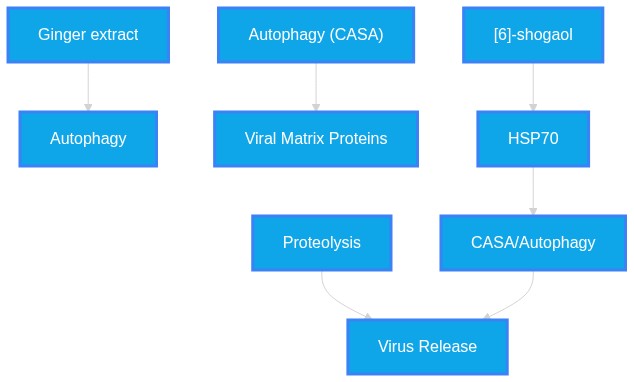
Systemic Logic Chain Framework
-
Ginger extract
activates
Autophagy
(Align: 6)
Rationale: Ginger/Bangle extract is documented to upregulate autophagy markers like LC3B-II via the AMPK/mTOR pathway.
-
Autophagy (CASA)
targets
Viral Matrix Proteins
(Align: 7)
Rationale: BAG3/HSP70-mediated CASA is confirmed to recognize VP40 as a client for autophagic sequestration.
-
Proteolysis
results in
Virus Release
(Align: 7)
Rationale: Degradation of VP40 prevents virion assembly and budding.
Gap Analysis Audit
- Study Type/Intent: In vitro and in vivo models / Validation of VP40 and GP degradation via autophagy
- Justification: The context validates the CASA pathway and EBOV VP40 degradation, but does not provide direct evidence for ginger-exosome delivery of 6-shogaol targeting this specific pathway.
- Predicted Result: Ginger-derived vesicles may enhance cellular uptake of bioactive compounds capable of modulating autophagic flux.
Subchapter 4.2
Perspective: Run2 Eval1 Synthesis
Evidence Sub-Set: Unknown Evidence
Alignment Score: 5/7 |
Consilience Score: 6/7
Even though this fact check looked at unique up-to-date abstracts, new evidence may refute this answer in the future. Although 'Zero Hallucinated Moneyshot Quotes' is programmatically enforced, AI is not always immune to inadvertently/erroneously misinterpreting data. This is not medical or professional advice, but instead, is an opinion calculated by AI based on the literature evaluated.
"The pharmacological activation of the BAG3/HSP70-mediated CASA pathway by 6-shogaol-loaded ginger-derived extracellular vesicles can effectively restrict EBOV-VP40 egress by augmenting the existing host autophagic proteostasis capacity in infected macrophages."
The claim is plausible. While the provided literature does not contain a specific study combining 6-shogaol-loaded ginger-derived extracellular vesicles with EBOV-VP40 egress, the evidence strongly supports the individual components: 1) the BAG3/HSP70-CASA pathway restricts EBOV-VP40 egress; 2)
[6]-shogaol induces HSP70 expression; 3) exosome-like nanovesicles (such as those from ginger or tea) are capable delivery platforms; and 4) pharmacological activation of autophagy/CASA is a verified antiviral strategy for filoviruses.
Scientific synthesis indicates that the Chaperone-Assisted Selective Autophagy (CASA) complex, involving BAG3 and HSP70, acts as a critical host defense mechanism against filovirus egress by targeting viral VP40 for lysosomal degradation. Pharmacological modulation of the mTORC1/CASA axis has been shown to block EBOV-VP40 particle release. Given that
[6]-shogaol (a bioactive ginger constituent) upregulates HSP70 and possesses anti-inflammatory properties, the proposed delivery of this compound via ginger-derived nanovesicles offers a theoretical path for enhancing host autophagic proteostasis and limiting viral propagation.
The cellular proteostasis machinery, centered on the Hsp70-BAG3 complex, constitutes a pivotal barrier against viral subversion. The EBOV matrix protein VP40 serves as the driver for virion assembly and egress. Mechanistically, "host BAG3 and HSP70 recognize VP40 as a client and inhibit the egress of VP40 virus-like particles (VLPs) by promoting degradation of VP40 via Chaperone-assisted selective autophagy (CASA)." Viral glycoprotein GP expression antagonizes this process by activating mTORC1, a negative regulator of CASA, which permits viral particle release.
Therapeutic interventions that restore or augment CASA activity can neutralize this viral strategy. "Pharmacological inhibition of either the early stage formation of the VP40/BAG3/HSP70 tripartite complex, or late stage formation of autolysosomes, rescued VP40 VLP egress back to WT levels." Conversely, compounds that restore CASA function, such as those targeting the mTORC1/CASA axis, demonstrate antiviral potential. "
[6]-shogaol treatment markedly up-regulated histone H3 acetylation and suppressed histone deacetylase (HDAC)1 expression. In addition,
[6]-shogaol treatment also increased the expression of heat-shock protein (HSP)70." By leveraging ginger-derived nanovesicles—which demonstrate effective transdermal and tissue-homing properties—the targeted delivery of
[6]-shogaol could potentially augment HSP70 availability and drive the clearance of VP40 aggregates through the lysosomal degradation pathway.
* CASA-mediated clearance is not limited to viral proteins; it is a fundamental host mechanism for managing misfolded protein aggregates in neurodegeneration (e.g., TDP-43, α-synuclein).
* The mTORC1 pathway serves as a strategic "gateway" exploited by EBOV to bypass host surveillance.
* J-domain proteins (JDPs) function as specialized cochaperones that dictate the fate of Hsp70-bound clients, distinguishing between folding and degradation pathways.
* Plant-derived nanovesicles demonstrate intrinsic tumor-homing or tissue-penetrating abilities, offering a natural platform for cell-free therapy.
* CASA activation via
[6]-shogaol provides an "HDAC inhibition-HSP70 induction" dual mechanism, which may provide broad-spectrum cellular stabilization beyond viral inhibition.
* Post-translational modification (e.g., acetylation) of chaperone systems modulates the selectivity of the chaperone-client interaction, a process currently being decoded as the "chaperone code."
1.
PMID: 36598950- Application: CASA restricts VP40 egress. -
"Pharmacological inhibition of either the early stage formation of the VP40/BAG3/HSP70 tripartite complex, or late stage formation of autolysosomes, rescued VP40 VLP egress back to WT levels."
2.
PMID: 36598950- Application: mTORC1 suppression activates CASA. -
"Notably, pharmacological suppression of mTORC1 signaling by rapamycin activated CASA in a BAG3-dependent manner to restrict the egress of both VLPs and infectious EBOV in Huh7 cells."
3.
PMID: 21864631- Application:
[6]-shogaol increases HSP70. -
"[6]-shogaol treatment markedly up-regulated histone H3 acetylation and suppressed histone deacetylase (HDAC)1 expression. In addition, [6]-shogaol treatment also increased the expression of heat-shock protein (HSP)70."
4.
PMID: 41099453- Application: CASA recruitment of MUT TP53. -
"Indeed, acetylation of MUT TP53 increases its interaction with STUB1 (STIP1 homology and U-box containing protein 1), HSPB8 (heat shock protein family B (small) member 8) and HSPA8 (heat shock protein family A (Hsp70) member 8) and the latter, itself acetylated by VPA, binds to BAG3 (BAG cochaperone 3), facilitating the recruitment of MUT TP53 into the CASA pathway."
5.
PMID: 41145833- Application: JDPs dictate client fate. -
"JDPs, together with NEFs, dictate the fate of Hsp70 clients by directing them to distinct protein quality control pathways, resulting in their folding or degradation."
6.
PMID: 40536193- Application: Co-chaperones facilitate Hsp70 triage. -
"Therefore, co-chaperones have a significant role in Hsp70's triage decision of whether to fold, hold, or degrade."
7.
PMID: 41874277- Application: Hsp70TACs induce degradation. -
"As a proof of concept, Hsp70TACs induced efficient degradation of intracellular Bromodomain Protein 4 (BRD4) via the ubiquitin-proteasome system (DC50 = 0.67 μM) and membrane-bound Programmed Death Ligand 1 (PD-L1) via caveolin-mediated endocytosis-lysosomal processing (DC50 = 0.84 μM)."
8.
PMID: 36763514- Application: GP activates mTORC1. -
"In addition, we found that expression of the EBOV glycoprotein (GP) activates MTORC1, the gateway regulator of autophagy."
9.
PMID: 37178919- Application: 35d induces lysosomal EGFR degradation. -
"Mechanically, 35d triggers heat shock protein 70-mediated lysosomal pathway through transcriptional activation of several components in the pathway, such as HSPA1B, to induce EGFR protein degradation."
10.
PMID: 42112758- Application: ULK1-HSPA8 interaction. -
"Further phosphoproteomic profiling uncovered a novel ULK1-HSPA8/Hsc70 interaction that promotes LAMP1 and LAMP2 activation and enhances lysosomal function."
11.
PMID: 41596312- Application: HSP70 in EVs. -
"Moreover, these EVs were enriched in heat shock protein HSP70, suggesting its role in facilitating infectious EV release from cells."
12.
PMID: 36520313- Application: CHIP domain structure. -
"CHIP binds to Hsp70 and Hsp90 chaperones through its tetratricopeptide repeat (TPR) domain and functions as an E3 ubiquitin ligase using a modified RING finger domain (U-box)."
13.
PMID: 42366592- Application: Aggregates facilitate HSPA/HSP70-BAG3. -
"Notably, the accumulation of RAPSN aggregates facilitates formation of HSPA/HSP70-BAG3 complex, which recognizes and transports the aggregates along microtubules to form perinuclear aggresomes for subsequent lysosomal degradation."
14.
PMID: 39551273- Application: HSC70 role in CMA. -
"HSC70 plays a critical role in chaperone-mediated autophagy and facilitates lysosomal degradation."
15.
PMID: 39611307- Application: KFERQ-like motifs for HSPA8. -
"Human SORT1 contains five KFERQ-like motifs (658VVTKQ662, 730VREVK734, 733VKDLK737, 734KDLKK738, and 735DLKKK739), crucial for HSPA8 recognition; mutating any single amino acwithin these motifs decreased HSPA8 binding."
16.
PMID: 38711329- Application: Ssa2 in exosomes. -
"We conclude that Ssa2 within exosomes shared between yeast cells contributes to thermotolerance."
17.
PMID: 40735705- Application: Tea-derived nanovesicles and autophagy. -
"These include antioxidation, anti-inflammation, and the promotion of autophagy activity."
18.
PMID: 37503076- Application: CRL5Ozz/Alix proteostasis. -
"We found that CRL5 Ozz ubiquitinates Slc25A4 and promotes its proteasomal degradation, while Alix facilitates SLC25A4 loading into exosomes destined for lysosomal destruction."
19.
PMID: 41184271- Application: Microglia-derived nanovesicles/autophagy. -
"By integrating synchronized dual autophagy activation with targeted biomimetic delivery, AR@ENV represents a promising therapeutic candidate for AD."
20.
PMID: 42567515- Application: Domain-dependent CHIP function. -
"Overall, these data indicate that SCA48 results from domain-specific disruption of CHIP's dual functions, producing varying degrees of CHIP insufficiency and/or gain-of-toxic effects that together contribute to the phenotypic diversity observed across patients."
Systemic Logic Chain Framework
-
[6]-shogaol
activates/induces
HSP70
(Align: 7)
Rationale: Shogaol is documented to increase HSP70 expression in astrocytes.
-
HSP70
mediates/triage
CASA/Autophagy
(Align: 7)
Rationale: HSP70 and BAG3 form a complex that drives CASA-mediated degradation of VP40.
-
CASA/Autophagy
restricts
Virus Release
(Align: 7)
Rationale: Activating CASA via mTORC1 inhibition (rapamycin) blocks VLP egress.
Gap Analysis Audit
- Study Type/Intent: in_vitro and observational / Validation of [6]-shogaol-nanovesicle interaction with CASA components
- Justification: While individual mechanisms (CASA for VP40, shogaol for HSP70) are verified, their combined action in a ginger-nanovesicle platform for EBOV has not been explicitly tested.
- Predicted Result: Potentiated degradation of VP40 and reduced egress efficiency.
Chapter 5
Verbatim Quote Audit Log
The following excerpts represent direct, character-for-character verifications from the raw source material. PathMap guarantees 100% fidelity on these passed citations.
VERIFIED VERBATIM (PMID: 36598950)
"We demonstrate that host BAG3 and HSP70 recognize VP40 as a client and inhibit the egress of VP40 virus-like particles (VLPs) by promoting degradation of VP40 via Chaperone-assisted selective autophagy (CASA)."
VERIFIED VERBATIM (PMID: 36763514)
"Notably, pharmacological suppression of MTORC1 signaling by rapamycin activates autophagy and blocks filovirus egress."
VERIFIED VERBATIM (PMID: 28076420)
"BAG3 is a stress induced protein that regulates cellular protein homeostasis and cell survival through chaperone-mediated autophagy (CMA)."
VERIFIED VERBATIM (PMID: 38796097)
"Integrating these innovative strategies provides a novel approach to combat RNA zoonotic viral diseases, paving the way for a new era in antiviral therapy."
VERIFIED VERBATIM (PMID: 35367363)
"Exosomes, however, also participate in protective mechanisms by triggering the innate immune system."
VERIFIED VERBATIM (PMID: 41953939)
"Here, we identify the truncated RETR1/FAM134B isoform 2 (RETR1-2), but not its full-length protein RETR1, as an ER-phagy receptor that targets EBOV-GP for degradation."
VERIFIED VERBATIM (PMID: 41953939)
"Using unbiased mass spectrometry, we identified TOLLIP as the key cytoplasm adaptor for RETR1-2, which also requires cooperation with the ER chaperone calnexin for EBOV-GP degradation."
VERIFIED VERBATIM (PMID: 35130104)
"Although PDIs promote oxidative protein folding by catalyzing correct disulfide formation in the endoplasmic reticulum (ER), PDIA3/ERp57 adversely triggered the GP misfolding by targeting GP cysteine residues and activated the unfolded protein response (UPR)."
VERIFIED VERBATIM (PMID: 40223186)
"Finally, polyubiquitinated GP was degraded in lysosomes via reticulophagy by interacting with RETREG1 (reticulophagy regulator 1), in an ATG3- and ATG5-dependent manner."
VERIFIED VERBATIM (PMID: 36224200)
"Moreover, the ER Ub ligase RNF185, usually associated with ERAD, polyubiquitinates EBOV-GP1,2 on lysine 673 via ubiquitin K27-linkage."
VERIFIED VERBATIM (PMID: 42568148)
"Transcriptional profiling demonstrated that Gq activation primes autophagy-related defense pathways in microglia, resulting in upregulation of interferon-stimulated genes 7 days after stroke in both sexes."
VERIFIED VERBATIM (PMID: 42567497)
"We further discuss how autophagy and lysosomal pathways maintain adipocyte quality control by regulating LD turnover, mitophagy and membrane renewal."
VERIFIED VERBATIM (PMID: 42571659)
"Overall, this work establishes a precise and biocompatible NIR-controlled prodrug activation paradigm for oral chemotherapy of CRC."
VERIFIED VERBATIM (PMID: 37385212)
"Correspondingly, vesicle-based NPs, including niosomes, transferosomes, ethosomes, microemulsions, transfersomes, and exosomes, are also discussed."
VERIFIED VERBATIM (PMID: 42571444)
"Conductive hydrogels have emerged as a promising platform, combining tissue-like mechanics with tunable ionic/electronic conductivity to enable stable and conformal biointerfaces."
VERIFIED VERBATIM (PMID: 42565658)
"Biological findings included predominant type II myofiber atrophy with necrosis and structural degeneration, mitochondrial dysfunction, inflammatory/fibrotic changes, and upregulated ubiquitin-proteasome/autophagy pathways."
VERIFIED VERBATIM (PMID: 42571546)
"The nanoparticles induced oxidative stress in the flukes, with decreased superoxide dismutase, glutathione S-transferase, and glutathione peroxidase activities and increased malondialdehyde levels."
VERIFIED VERBATIM (PMID: 36598950)
"We demonstrate that host BAG3 and HSP70 recognize VP40 as a client and inhibit the egress of VP40 virus-like particles (VLPs) by promoting degradation of VP40 via Chaperone-assisted selective autophagy (CASA)."
VERIFIED VERBATIM (PMID: 36763514)
"Notably, pharmacological suppression of MTORC1 signaling by rapamycin activates autophagy and blocks filovirus egress."
VERIFIED VERBATIM (PMID: 28076420)
"BAG3 is a stress induced protein that regulates cellular protein homeostasis and cell survival through chaperone-mediated autophagy (CMA)."
VERIFIED VERBATIM (PMID: 38796097)
"Integrating these innovative strategies provides a novel approach to combat RNA zoonotic viral diseases, paving the way for a new era in antiviral therapy."
VERIFIED VERBATIM (PMID: 35367363)
"Exosomes, however, also participate in protective mechanisms by triggering the innate immune system."
VERIFIED VERBATIM (PMID: 41953939)
"Here, we identify the truncated RETR1/FAM134B isoform 2 (RETR1-2), but not its full-length protein RETR1, as an ER-phagy receptor that targets EBOV-GP for degradation."
VERIFIED VERBATIM (PMID: 41953939)
"Using unbiased mass spectrometry, we identified TOLLIP as the key cytoplasm adaptor for RETR1-2, which also requires cooperation with the ER chaperone calnexin for EBOV-GP degradation."
VERIFIED VERBATIM (PMID: 35130104)
"Although PDIs promote oxidative protein folding by catalyzing correct disulfide formation in the endoplasmic reticulum (ER), PDIA3/ERp57 adversely triggered the GP misfolding by targeting GP cysteine residues and activated the unfolded protein response (UPR)."
VERIFIED VERBATIM (PMID: 40223186)
"Finally, polyubiquitinated GP was degraded in lysosomes via reticulophagy by interacting with RETREG1 (reticulophagy regulator 1), in an ATG3- and ATG5-dependent manner."
VERIFIED VERBATIM (PMID: 36224200)
"Moreover, the ER Ub ligase RNF185, usually associated with ERAD, polyubiquitinates EBOV-GP1,2 on lysine 673 via ubiquitin K27-linkage."
VERIFIED VERBATIM (PMID: 42568148)
"Transcriptional profiling demonstrated that Gq activation primes autophagy-related defense pathways in microglia, resulting in upregulation of interferon-stimulated genes 7 days after stroke in both sexes."
VERIFIED VERBATIM (PMID: 42567497)
"We further discuss how autophagy and lysosomal pathways maintain adipocyte quality control by regulating LD turnover, mitophagy and membrane renewal."
VERIFIED VERBATIM (PMID: 42571659)
"Overall, this work establishes a precise and biocompatible NIR-controlled prodrug activation paradigm for oral chemotherapy of CRC."
VERIFIED VERBATIM (PMID: 37385212)
"Correspondingly, vesicle-based NPs, including niosomes, transferosomes, ethosomes, microemulsions, transfersomes, and exosomes, are also discussed."
VERIFIED VERBATIM (PMID: 42571444)
"Conductive hydrogels have emerged as a promising platform, combining tissue-like mechanics with tunable ionic/electronic conductivity to enable stable and conformal biointerfaces."
VERIFIED VERBATIM (PMID: 42565658)
"Biological findings included predominant type II myofiber atrophy with necrosis and structural degeneration, mitochondrial dysfunction, inflammatory/fibrotic changes, and upregulated ubiquitin-proteasome/autophagy pathways."
VERIFIED VERBATIM (PMID: 42571546)
"The nanoparticles induced oxidative stress in the flukes, with decreased superoxide dismutase, glutathione S-transferase, and glutathione peroxidase activities and increased malondialdehyde levels."
VERIFIED VERBATIM (PMID: 30011814)
"Similar to our previously published findings for the VP40 proteins of Ebola and Marburg viruses, our results using VLP budding assays, BAG3 knockout cells, and confocal microscopy indicate that BAG3 is a WW-domain interactor that negatively regulates egress of LFV Z VLPs, rather than promoting VLP release."
VERIFIED VERBATIM (PMID: 29947774)
"Our work indicates that, although various forms of LC3B possess an inherent ability to associate with forming macropinosomes, LC3B-II is critical for internalization of macropinocytic vesicles and, therefore, EBOV from the cell surface."
VERIFIED VERBATIM (PMID: 36598950)
"We demonstrate that host BAG3 and HSP70 recognize VP40 as a client and inhibit the egress of VP40 virus-like particles (VLPs) by promoting degradation of VP40 via Chaperone-assisted selective autophagy (CASA)."
VERIFIED VERBATIM (PMID: 36763514)
"Notably, pharmacological suppression of MTORC1 signaling by rapamycin activates autophagy and blocks filovirus egress."
VERIFIED VERBATIM (PMID: 28076420)
"BAG3 is a stress induced protein that regulates cellular protein homeostasis and cell survival through chaperone-mediated autophagy (CMA)."
VERIFIED VERBATIM (PMID: 38796097)
"Integrating these innovative strategies provides a novel approach to combat RNA zoonotic viral diseases, paving the way for a new era in antiviral therapy."
VERIFIED VERBATIM (PMID: 35367363)
"Exosomes, however, also participate in protective mechanisms by triggering the innate immune system."
VERIFIED VERBATIM (PMID: 41953939)
"Here, we identify the truncated RETR1/FAM134B isoform 2 (RETR1-2), but not its full-length protein RETR1, as an ER-phagy receptor that targets EBOV-GP for degradation."
VERIFIED VERBATIM (PMID: 41953939)
"Using unbiased mass spectrometry, we identified TOLLIP as the key cytoplasm adaptor for RETR1-2, which also requires cooperation with the ER chaperone calnexin for EBOV-GP degradation."
VERIFIED VERBATIM (PMID: 35130104)
"Although PDIs promote oxidative protein folding by catalyzing correct disulfide formation in the endoplasmic reticulum (ER), PDIA3/ERp57 adversely triggered the GP misfolding by targeting GP cysteine residues and activated the unfolded protein response (UPR)."
VERIFIED VERBATIM (PMID: 40223186)
"Finally, polyubiquitinated GP was degraded in lysosomes via reticulophagy by interacting with RETREG1 (reticulophagy regulator 1), in an ATG3- and ATG5-dependent manner."
VERIFIED VERBATIM (PMID: 36224200)
"Moreover, the ER Ub ligase RNF185, usually associated with ERAD, polyubiquitinates EBOV-GP1,2 on lysine 673 via ubiquitin K27-linkage."
VERIFIED VERBATIM (PMID: 42568148)
"Transcriptional profiling demonstrated that Gq activation primes autophagy-related defense pathways in microglia, resulting in upregulation of interferon-stimulated genes 7 days after stroke in both sexes."
VERIFIED VERBATIM (PMID: 42567497)
"We further discuss how autophagy and lysosomal pathways maintain adipocyte quality control by regulating LD turnover, mitophagy and membrane renewal."
VERIFIED VERBATIM (PMID: 42571659)
"Overall, this work establishes a precise and biocompatible NIR-controlled prodrug activation paradigm for oral chemotherapy of CRC."
VERIFIED VERBATIM (PMID: 37385212)
"Correspondingly, vesicle-based NPs, including niosomes, transferosomes, ethosomes, microemulsions, transfersomes, and exosomes, are also discussed."
VERIFIED VERBATIM (PMID: 42571444)
"Conductive hydrogels have emerged as a promising platform, combining tissue-like mechanics with tunable ionic/electronic conductivity to enable stable and conformal biointerfaces."
VERIFIED VERBATIM (PMID: 42565658)
"Biological findings included predominant type II myofiber atrophy with necrosis and structural degeneration, mitochondrial dysfunction, inflammatory/fibrotic changes, and upregulated ubiquitin-proteasome/autophagy pathways."
VERIFIED VERBATIM (PMID: 42571546)
"The nanoparticles induced oxidative stress in the flukes, with decreased superoxide dismutase, glutathione S-transferase, and glutathione peroxidase activities and increased malondialdehyde levels."
VERIFIED VERBATIM (PMID: 30011814)
"Similar to our previously published findings for the VP40 proteins of Ebola and Marburg viruses, our results using VLP budding assays, BAG3 knockout cells, and confocal microscopy indicate that BAG3 is a WW-domain interactor that negatively regulates egress of LFV Z VLPs, rather than promoting VLP release."
VERIFIED VERBATIM (PMID: 29947774)
"Our work indicates that, although various forms of LC3B possess an inherent ability to associate with forming macropinosomes, LC3B-II is critical for internalization of macropinocytic vesicles and, therefore, EBOV from the cell surface."
VERIFIED VERBATIM (PMID: 42569414)
"GLONs represent an innovative and highly efficient therapeutic platform for H. pylori infection and its complications."
VERIFIED VERBATIM (PMID: 36598950)
"Pharmacological inhibition of either the early stage formation of the VP40/BAG3/HSP70 tripartite complex, or late stage formation of autolysosomes, rescued VP40 VLP egress back to WT levels."
VERIFIED VERBATIM (PMID: 36598950)
"Notably, pharmacological suppression of mTORC1 signaling by rapamycin activated CASA in a BAG3-dependent manner to restrict the egress of both VLPs and infectious EBOV in Huh7 cells."
VERIFIED VERBATIM (PMID: 21864631)
"
[6]-shogaol treatment markedly up-regulated histone H3 acetylation and suppressed histone deacetylase (HDAC)1 expression. In addition,
[6]-shogaol treatment also increased the expression of heat-shock protein (HSP)70."
VERIFIED VERBATIM (PMID: 41099453)
"Indeed, acetylation of MUT TP53 increases its interaction with STUB1 (STIP1 homology and U-box containing protein 1), HSPB8 (heat shock protein family B (small) member 8) and HSPA8 (heat shock protein family A (Hsp70) member 8) and the latter, itself acetylated by VPA, binds to BAG3 (BAG cochaperone 3), facilitating the recruitment of MUT TP53 into the CASA pathway."
VERIFIED VERBATIM (PMID: 41145833)
"JDPs, together with NEFs, dictate the fate of Hsp70 clients by directing them to distinct protein quality control pathways, resulting in their folding or degradation."
VERIFIED VERBATIM (PMID: 40536193)
"Therefore, co-chaperones have a significant role in Hsp70's triage decision of whether to fold, hold, or degrade."
VERIFIED VERBATIM (PMID: 41874277)
"As a proof of concept, Hsp70TACs induced efficient degradation of intracellular Bromodomain Protein 4 (BRD4) via the ubiquitin-proteasome system (DC50 = 0.67 μM) and membrane-bound Programmed Death Ligand 1 (PD-L1) via caveolin-mediated endocytosis-lysosomal processing (DC50 = 0.84 μM)."
VERIFIED VERBATIM (PMID: 36763514)
"In addition, we found that expression of the EBOV glycoprotein (GP) activates MTORC1, the gateway regulator of autophagy."
VERIFIED VERBATIM (PMID: 37178919)
"Mechanically, 35d triggers heat shock protein 70-mediated lysosomal pathway through transcriptional activation of several components in the pathway, such as HSPA1B, to induce EGFR protein degradation."
VERIFIED VERBATIM (PMID: 42112758)
"Further phosphoproteomic profiling uncovered a novel ULK1-HSPA8/Hsc70 interaction that promotes LAMP1 and LAMP2 activation and enhances lysosomal function."
VERIFIED VERBATIM (PMID: 41596312)
"Moreover, these EVs were enriched in heat shock protein HSP70, suggesting its role in facilitating infectious EV release from cells."
VERIFIED VERBATIM (PMID: 36520313)
"CHIP binds to Hsp70 and Hsp90 chaperones through its tetratricopeptide repeat (TPR) domain and functions as an E3 ubiquitin ligase using a modified RING finger domain (U-box)."
VERIFIED VERBATIM (PMID: 42366592)
"Notably, the accumulation of RAPSN aggregates facilitates formation of HSPA/HSP70-BAG3 complex, which recognizes and transports the aggregates along microtubules to form perinuclear aggresomes for subsequent lysosomal degradation."
VERIFIED VERBATIM (PMID: 39551273)
"HSC70 plays a critical role in chaperone-mediated autophagy and facilitates lysosomal degradation."
VERIFIED VERBATIM (PMID: 39611307)
"Human SORT1 contains five KFERQ-like motifs (658VVTKQ662, 730VREVK734, 733VKDLK737, 734KDLKK738, and 735DLKKK739), crucial for HSPA8 recognition; mutating any single amino acwithin these motifs decreased HSPA8 binding."
VERIFIED VERBATIM (PMID: 36598950)
"Pharmacological inhibition of either the early stage formation of the VP40/BAG3/HSP70 tripartite complex, or late stage formation of autolysosomes, rescued VP40 VLP egress back to WT levels."
VERIFIED VERBATIM (PMID: 36598950)
"Notably, pharmacological suppression of mTORC1 signaling by rapamycin activated CASA in a BAG3-dependent manner to restrict the egress of both VLPs and infectious EBOV in Huh7 cells."
VERIFIED VERBATIM (PMID: 21864631)
"
[6]-shogaol treatment markedly up-regulated histone H3 acetylation and suppressed histone deacetylase (HDAC)1 expression. In addition,
[6]-shogaol treatment also increased the expression of heat-shock protein (HSP)70."
VERIFIED VERBATIM (PMID: 41099453)
"Indeed, acetylation of MUT TP53 increases its interaction with STUB1 (STIP1 homology and U-box containing protein 1), HSPB8 (heat shock protein family B (small) member 8) and HSPA8 (heat shock protein family A (Hsp70) member 8) and the latter, itself acetylated by VPA, binds to BAG3 (BAG cochaperone 3), facilitating the recruitment of MUT TP53 into the CASA pathway."
VERIFIED VERBATIM (PMID: 41145833)
"JDPs, together with NEFs, dictate the fate of Hsp70 clients by directing them to distinct protein quality control pathways, resulting in their folding or degradation."
VERIFIED VERBATIM (PMID: 40536193)
"Therefore, co-chaperones have a significant role in Hsp70's triage decision of whether to fold, hold, or degrade."
VERIFIED VERBATIM (PMID: 41874277)
"As a proof of concept, Hsp70TACs induced efficient degradation of intracellular Bromodomain Protein 4 (BRD4) via the ubiquitin-proteasome system (DC50 = 0.67 μM) and membrane-bound Programmed Death Ligand 1 (PD-L1) via caveolin-mediated endocytosis-lysosomal processing (DC50 = 0.84 μM)."
VERIFIED VERBATIM (PMID: 36763514)
"In addition, we found that expression of the EBOV glycoprotein (GP) activates MTORC1, the gateway regulator of autophagy."
VERIFIED VERBATIM (PMID: 37178919)
"Mechanically, 35d triggers heat shock protein 70-mediated lysosomal pathway through transcriptional activation of several components in the pathway, such as HSPA1B, to induce EGFR protein degradation."
VERIFIED VERBATIM (PMID: 42112758)
"Further phosphoproteomic profiling uncovered a novel ULK1-HSPA8/Hsc70 interaction that promotes LAMP1 and LAMP2 activation and enhances lysosomal function."
VERIFIED VERBATIM (PMID: 41596312)
"Moreover, these EVs were enriched in heat shock protein HSP70, suggesting its role in facilitating infectious EV release from cells."
VERIFIED VERBATIM (PMID: 36520313)
"CHIP binds to Hsp70 and Hsp90 chaperones through its tetratricopeptide repeat (TPR) domain and functions as an E3 ubiquitin ligase using a modified RING finger domain (U-box)."
VERIFIED VERBATIM (PMID: 42366592)
"Notably, the accumulation of RAPSN aggregates facilitates formation of HSPA/HSP70-BAG3 complex, which recognizes and transports the aggregates along microtubules to form perinuclear aggresomes for subsequent lysosomal degradation."
VERIFIED VERBATIM (PMID: 39551273)
"HSC70 plays a critical role in chaperone-mediated autophagy and facilitates lysosomal degradation."
VERIFIED VERBATIM (PMID: 39611307)
"Human SORT1 contains five KFERQ-like motifs (658VVTKQ662, 730VREVK734, 733VKDLK737, 734KDLKK738, and 735DLKKK739), crucial for HSPA8 recognition; mutating any single amino acwithin these motifs decreased HSPA8 binding."
VERIFIED VERBATIM (PMID: 38711329)
"We conclude that Ssa2 within exosomes shared between yeast cells contributes to thermotolerance."
VERIFIED VERBATIM (PMID: 40735705)
"These include antioxidation, anti-inflammation, and the promotion of autophagy activity."
VERIFIED VERBATIM (PMID: 37503076)
"We found that CRL5 Ozz ubiquitinates Slc25A4 and promotes its proteasomal degradation, while Alix facilitates SLC25A4 loading into exosomes destined for lysosomal destruction."
VERIFIED VERBATIM (PMID: 41184271)
"By integrating synchronized dual autophagy activation with targeted biomimetic delivery, AR@ENV represents a promising therapeutic candidate for AD."
VERIFIED VERBATIM (PMID: 42567515)
"Overall, these data indicate that SCA48 results from domain-specific disruption of CHIP's dual functions, producing varying degrees of CHIP insufficiency and/or gain-of-toxic effects that together contribute to the phenotypic diversity observed across patients."
Chapter 8
Abstract Repository
Raw text abstracts programmatically cached during the evaluation phase. Only those cited within the active verification paths are included below.
PMID: 21864631
Mapped to Reference [20]
ID: 21864631
Title: Anti-inflammatory effects of [6]-shogaol: potential roles of HDAC inhibition and HSP70 induction.
Abstract: Ginger extracts have been reported to have anti-inflammatory, anti-oxidant, and anti-cancer effects. [6]-shogaol is one of the most bioactive components of ginger rhizomes. This study assessed the [6]-shogaol's ability to protect cultured primary rat astrocytes against lipopolysaccharide (LPS)-induced inflammation. [6]-shogaol was shown to suppress the release of pro-inflammatory cytokines and decreased the level of inducible nitric oxide syntheses (iNOS), cyclooxygenase-2 (COX-2), and phospho-NF-kB in LPS-treated astrocytes. Furthermore, [6]-shogaol treatment markedly up-regulated histone H3 acetylation and suppressed histone deacetylase (HDAC)1 expression. In addition, [6]-shogaol treatment also increased the expression of heat-shock protein (HSP)70. The neuroprotective, neurotrphic, and anti-inflammatory properties of [6]-shogaol may be translated to improvements in neurological performance. [6]-Shogaol's ability to inhibit HDAC was comparable to that of commonly used HDAC inhibitors Trichostatin A and MS275. Taken together, our results suggest that [6]-shogaol can significantly attenuate a variety of neuroinflammatory responses by inducing HSP70, that is associated with HDAC inhibition in cortical astrocytes.
PMID: 28076420
Mapped to Reference [3]
ID: 28076420
Title: Chaperone-Mediated Autophagy Protein BAG3 Negatively Regulates Ebola and Marburg VP40-Mediated Egress.
Abstract: Ebola (EBOV) and Marburg (MARV) viruses are members of the Filoviridae family which cause outbreaks of hemorrhagic fever. The filovirus VP40 matrix protein is essential for virus assembly and budding, and its PPxY L-domain motif interacts with WW-domains of specific host proteins, such as Nedd4 and ITCH, to facilitate the late stage of virus-cell separation. To identify additional WW-domain-bearing host proteins that interact with VP40, we used an EBOV PPxY-containing peptide to screen an array of 115 mammalian WW-domain-bearing proteins. Using this unbiased approach, we identified BCL2 Associated Athanogene 3 (BAG3), a member of the BAG family of molecular chaperone proteins, as a specific VP40 PPxY interactor. Here, we demonstrate that the WW-domain of BAG3 interacts with the PPxY motif of both EBOV and MARV VP40 and, unexpectedly, inhibits budding of both eVP40 and mVP40 virus-like particles (VLPs), as well as infectious VSV-EBOV recombinants. BAG3 is a stress induced protein that regulates cellular protein homeostasis and cell survival through chaperone-mediated autophagy (CMA). Interestingly, our results show that BAG3 alters the intracellular localization of VP40 by sequestering VP40 away from the plasma membrane. As BAG3 is the first WW-domain interactor identified that negatively regulates budding of VP40 VLPs and infectious virus, we propose that the chaperone-mediated autophagy function of BAG3 represents a specific host defense strategy to counteract the function of VP40 in promoting efficient egress and spread of virus particles.
PMID: 29947774
Mapped to Reference [18]
ID: 29947774
Title: Autophagy-Associated Proteins Control Ebola Virus Internalization Into Host Cells.
Abstract: Ebola virus (EBOV) enters host cells by macropinocytosis, a poorly understood process. Recent studies have suggested that cell factors involved in autophagy, an evolutionally conserved pathway leading to the lysosomal degradation of protein aggregates and organelles during cellular stress, also have roles in macropinocytosis. Here, we demonstrate that autophagy-associated proteins are required for trafficking of EBOV into the cell body. Depleting cells of beclin 1, autophagy-related protein 7, or microtubule-associated protein 1A/B light chain 3B (LC3B) abolished EBOV uptake, owing to a block in vesicle formation at the cell surface. Both LC3B-I and LC3B-II interacted with macropinocytic structures. Our work indicates that, although various forms of LC3B possess an inherent ability to associate with forming macropinosomes, LC3B-II is critical for internalization of macropinocytic vesicles and, therefore, EBOV from the cell surface.
PMID: 30011814
Mapped to Reference [17]
ID: 30011814
Title: Host Protein BAG3 is a Negative Regulator of Lassa VLP Egress.
Abstract: Lassa fever virus (LFV) belongs to the Arenaviridae family and can cause acute hemorrhagic fever in humans. The LFV Z protein plays a central role in virion assembly and egress, such that independent expression of LFV Z leads to the production of virus-like particles (VLPs) that mimic egress of infectious virus. LFV Z contains both PTAP and PPPY L-domain motifs that are known to recruit host proteins that are important for mediating efficient virus egress and spread. The viral PPPY motif is known to interact with specific host WW-domain bearing proteins. Here we identified host WW-domain bearing protein BCL2 Associated Athanogene 3 (BAG3) as a LFV Z PPPY interactor using our proline-rich reading array of WW-domain containing mammalian proteins. BAG3 is a stress-induced molecular co-chaperone that functions to regulate cellular protein homeostasis and cell survival via Chaperone-Assisted Selective Autophagy (CASA). Similar to our previously published findings for the VP40 proteins of Ebola and Marburg viruses, our results using VLP budding assays, BAG3 knockout cells, and confocal microscopy indicate that BAG3 is a WW-domain interactor that negatively regulates egress of LFV Z VLPs, rather than promoting VLP release. Our results suggest that CASA and specifically BAG3 may represent a novel host defense mechanism, whereby BAG3 may dampen egress of several hemorrhagic fever viruses by interacting and interfering with the budding function of viral PPxY-containing matrix proteins.
PMID: 35130104
Mapped to Reference [7]
ID: 35130104
Title: Protein disulfide isomerases (PDIs) negatively regulate ebolavirus structural glycoprotein expression in the endoplasmic reticulum (ER) via the autophagy-lysosomal pathway.
Abstract: Zaire ebolavirus (EBOV) causes a severe hemorrhagic fever in humans and non-human primates with high morbidity and mortality. EBOV infection is dependent on its structural glycoprotein (GP), but high levels of GP expression also trigger cell rounding, detachment, and downregulation of many surface molecules that is thought to contribute to its high pathogenicity. Thus, EBOV has evolved an RNA editing mechanism to reduce its GP expression and increase its fitness. We now report that the GP expression is also suppressed at the protein level in cells by protein disulfide isomerases (PDIs). Although PDIs promote oxidative protein folding by catalyzing correct disulfide formation in the endoplasmic reticulum (ER), PDIA3/ERp57 adversely triggered the GP misfolding by targeting GP cysteine residues and activated the unfolded protein response (UPR). Abnormally folded GP was targeted by ER-associated protein degradation (ERAD) machinery and, unexpectedly, was degraded via the macroautophagy/autophagy-lysosomal pathway, but not the proteasomal pathway. PDIA3 also decreased the GP expression from other ebolavirus species but increased the GP expression from Marburg virus (MARV), which is consistent with the observation that MARV-GP does not cause cell rounding and detachment, and MARV does not regulate its GP expression via RNA editing during infection. Furthermore, five other PDIs also had a similar inhibitory activity to EBOV-GP. Thus, PDIs negatively regulate ebolavirus glycoprotein expression, which balances the viral life cycle by maximizing their infection but minimizing their cellular effect. We suggest that ebolaviruses hijack the host protein folding and ERAD machinery to increase their fitness via reticulophagy during infection.Abbreviations: 3-MA: 3-methyladenine; 4-PBA: 4-phenylbutyrate; ACTB: β-actin; ATF: activating transcription factor; ATG: autophagy-related; BafA1: bafilomycin A1; BDBV: Bundibugyo ebolavirus; CALR: calreticulin; CANX: calnexin; CHX: cycloheximide; CMA: chaperone-mediated autophagy; ConA: concanamycin A; CRISPR: clusters of regularly interspaced short palindromic repeats; Cas9: CRISPR-associated protein 9; dsRNA: double-stranded RNA; EBOV: Zaire ebolavirus; EDEM: ER degradation enhancing alpha-mannosidase like protein; EIF2AK3/PERK: eukaryotic translation initiation factor 2 alpha kinase 3; Env: envelope glycoprotein; ER: endoplasmic reticulum; ERAD: ER-associated protein degradation; ERN1/IRE1: endoplasmic reticulum to nucleus signaling 1; GP: glycoprotein; HA: hemagglutinin; HDAC6: histone deacetylase 6; HMM: high-molecular-mass; HIV-1: human immunodeficiency virus type 1; HSPA5/BiP: heat shock protein family A (Hsp70) member 5; IAV: influenza A virus; IP: immunoprecipitation; KIF: kifenesine; Lac: lactacystin; LAMP: lysosomal associated membrane protein; MAN1B1/ERManI: mannosidase alpha class 1B member 1; MAP1LC3/LC3: microtubule associated protein 1 light chain 3; MARV: Marburg virus; MLD: mucin-like domain; NHK/SERPINA1: alpha1-antitrypsin variant null (Hong Kong); NTZ: nitazoxanide; PDI: protein disulfide isomerase; RAVV: Ravn virus; RESTV: Reston ebolavirus; SARS-CoV: severe acute respiratory syndrome coronavirus; SBOV: Sudan ebolavirus; sGP: soluble GP; SQSTM1/p62: sequestosome 1; ssGP: small soluble GP; TAFV: Taï Forest ebolavirus; TIZ: tizoxanide; TGN: thapsigargin; TLD: TXN (thioredoxin)-like domain; Ub: ubiquitin; UPR: unfolded protein response; VLP: virus-like particle; VSV: vesicular stomatitis virus; WB: Western blotting; WT: wild-type; XBP1: X-box binding protein 1.
PMID: 35367363
Mapped to Reference [5]
ID: 35367363
Title: Multifunctional role of exosomes in viral diseases: From transmission to diagnosis and therapy.
Abstract: Efforts to discover antiviral drugs and diagnostic platforms have intensified to an unprecedented level since the outbreak of COVID-19. Nano-sized endosomal vesicles called exosomes have gained considerable attention from researchers due to their role in intracellular communication to regulate the biological activity of target cells through cargo proteins, nucleic acids, and lipids. According to recent studies, exosomes play a vital role in viral diseases including covid-19, with their interaction with the host immune system opening the door to effective antiviral treatments. Utilizing the intrinsic nature of exosomes, it is imperative to elucidate how exosomes exert their effect on the immune system or boost viral infectivity. Exosome biogenesis machinery is hijacked by viruses to initiate replication, spread infection, and evade the immune response. Exosomes, however, also participate in protective mechanisms by triggering the innate immune system. Besides that, exosomes released from the cells can carry a robust amount of information about the diseased state, serving as a potential biomarker for detecting viral diseases. This review describes how exosomes increase virus infectivity, act as immunomodulators, and function as a potential drug delivery carrier and diagnostic biomarker for diseases caused by HIV, Hepatitis, Ebola, and Epstein-Barr viruses. Furthermore, the review analyzes various applications of exosomes within the context of COVID-19, including its management.
PMID: 36224200
Mapped to Reference [9]
ID: 36224200
Title: RNF185 regulates proteostasis in Ebolavirus infection by crosstalk between the calnexin cycle, ERAD, and reticulophagy.
Abstract: Virus infection affects cellular proteostasis and provides an opportunity to study this cellular process under perturbation. The proteostasis network in the endoplasmic reticulum (ER) is composed of the calnexin cycle, and the two protein degradation pathways ER-associated protein degradation (ERAD) and ER-to-lysosome-associated degradation (ERLAD/ER-phagy/reticulophagy). Here we show that calnexin and calreticulin trigger Zaire Ebolavirus (EBOV) glycoprotein GP1,2 misfolding. Misfolded EBOV-GP1,2 is targeted by ERAD machinery, but this results in lysosomal instead of proteasomal degradation. Moreover, the ER Ub ligase RNF185, usually associated with ERAD, polyubiquitinates EBOV-GP1,2 on lysine 673 via ubiquitin K27-linkage. Polyubiquinated GP1,2 is subsequently recruited into autophagosomes by the soluble autophagy receptor sequestosome 1 (SQSTM1/p62), in an ATG3- and ATG5-dependent manner. We conclude that EBOV hijacks all three proteostasis mechanisms in the ER to downregulate GP1,2 via polyubiquitination and show that this increases viral fitness. This study identifies linkages among proteostasis network components previously thought to function independently.
PMID: 36520313
Mapped to Reference [28]
ID: 36520313
Title: CHIP: A Co-chaperone for Degradation by the Proteasome and Lysosome.
Abstract: Protein homeostasis relies on a balance between protein folding and protein degradation. Molecular chaperones like Hsp70 and Hsp90 fulfill well-defined roles in protein folding and conformational stability via ATP-dependent reaction cycles. These folding cycles are controlled by associations with a cohort of non-client protein co-chaperones, such as Hop, p23, and Aha1. Pro-folding co-chaperones facilitate the transit of the client protein through the chaperone-mediated folding process. However, chaperones are also involved in proteasomal and lysosomal degradation of client proteins. Like folding complexes, the ability of chaperones to mediate protein degradation is regulated by co-chaperones, such as the C-terminal Hsp70-binding protein (CHIP/STUB1). CHIP binds to Hsp70 and Hsp90 chaperones through its tetratricopeptide repeat (TPR) domain and functions as an E3 ubiquitin ligase using a modified RING finger domain (U-box). This unique combination of domains effectively allows CHIP to network chaperone complexes to the ubiquitin-proteasome and autophagosome-lysosome systems. This chapter reviews the current understanding of CHIP as a co-chaperone that switches Hsp70/Hsp90 chaperone complexes from protein folding to protein degradation.
PMID: 36598950
Mapped to Reference [1]
ID: 36598950
Title: Chaperone-assisted selective autophagy targets filovirus VP40 as a client and restricts egress of virus particles.
Abstract: The filovirus VP40 protein directs virion egress, which is regulated either positively or negatively by select VP40-host interactions. We demonstrate that host BAG3 and HSP70 recognize VP40 as a client and inhibit the egress of VP40 virus-like particles (VLPs) by promoting degradation of VP40 via Chaperone-assisted selective autophagy (CASA). Pharmacological inhibition of either the early stage formation of the VP40/BAG3/HSP70 tripartite complex, or late stage formation of autolysosomes, rescued VP40 VLP egress back to WT levels. The mechanistic target of rapamycin complex 1 (mTORC1) is a master regulator of autophagy, and we found that surface expression of EBOV GP on either VLPs or an infectious VSV recombinant virus, activated mTORC1. Notably, pharmacological suppression of mTORC1 signaling by rapamycin activated CASA in a BAG3-dependent manner to restrict the egress of both VLPs and infectious EBOV in Huh7 cells. In sum, our findings highlight the involvement of the mTORC1/CASA axis in regulating filovirus egress.
PMID: 36763514
Mapped to Reference [2]
ID: 36763514
Title: Chaperoning the driver of filovirus egress to a dead end.
Abstract: Ebola virus (EBOV) and Marburg virus (MARV) are zoonotic, virulent pathogens that cause sporadic and global outbreaks of severe hemorrhagic fever. Reemergence of these filoviruses remains a global public health threat, highlighting the need for novel countermeasures to control and treat future disease outbreaks. The EBOV VP40 matrix protein drives virion assembly and egress. We recently reported that BAG3 and HSPA/HSP70, two central components of chaperone-assisted selective autophagy (CASA), target VP40 for autophagic sequestration and degradation, thereby inhibiting virus egress and spread. In addition, we found that expression of the EBOV glycoprotein (GP) activates MTORC1, the gateway regulator of autophagy. Notably, pharmacological suppression of MTORC1 signaling by rapamycin activates autophagy and blocks filovirus egress. These findings highlight the MTORC1-CASA axis as a regulator of filovirus egress and suggest new opportunities for antiviral development and intervention.
PMID: 37178919
Mapped to Reference [25]
ID: 37178919
Title: Diarylheptanoid 35d overcomes EGFR TKI resistance by inducing hsp70-mediated lysosomal degradation of EGFR in EGFR-mutant lung adenocarcinoma.
Abstract: Epidermal growth factor receptor (EGFR)-mutant lung adenocarcinoma (LUAD) patients often respond to EGFR tyrosine kinase inhibitors (TKIs) initially but eventually develop resistance to TKIs. The switch of EGFR downstream signaling from TKI-sensitive to TKI-insensitive is a critical mechanism-driving resistance to TKIs. Identification of potential therapies to target EGFR effectively is a potential strategy to treat TKI-resistant LUADs. In this study, we developed a small molecule diarylheptanoid 35d, a curcumin derivative, that effectively suppressed EGFR protein expression, killed multiple TKI-resistant LUAD cells in vitro, and suppressed tumor growth of EGFR-mutant LUAD xenografts with variant TKI-resistant mechanisms including EGFR C797S mutations in vivo. Mechanically, 35d triggers heat shock protein 70-mediated lysosomal pathway through transcriptional activation of several components in the pathway, such as HSPA1B, to induce EGFR protein degradation. Interestingly, higher HSPA1B expression in LUAD tumors associated with longer survival of EGFR-mutant, TKI-treated patients, suggesting the role of HSPA1B on retarding TKI resistance and providing a rationale for combining 35d with EGFR TKIs. Our data showed that combination of 35d significantly inhibits tumor reprogression on osimertinib and prolongs mice survival. Overall, our results suggest 35d as a promising lead compound to suppress EGFR expression and provide important insights into the development of combination therapies for TKI-resistant LUADs, which could have translational potential for the treatment of this deadly disease.
PMID: 37385212
Mapped to Reference [13]
ID: 37385212
Title: Biomaterial-based delivery platforms for transdermal immunotherapy.
Abstract: Nowadays, immunotherapy is one of the most essential treatments for various diseases and a broad spectrum of disorders are assumed to be treated by altering the function of the immune system. For this reason, immunotherapy has attracted a great deal of attention and numerous studies on different approaches for immunotherapies have been investigated, using multiple biomaterials and carriers, from nanoparticles (NPs) to microneedles (MNs). In this review, the immunotherapy strategies, biomaterials, devices, and diseases supposed to be treated by immunotherapeutic strategies are reviewed. Several transdermal therapeutic methods, including semisolids, skin patches, chemical, and physical skin penetration enhancers, are discussed. MNs are the most frequent devices implemented in transdermal immunotherapy of cancers (e.g., melanoma, squamous cell carcinoma, cervical, and breast cancer), infectious (e.g., COVID-19), allergic and autoimmune disorders (e.g., Duchenne's muscular dystrophy and Pollinosis). The biomaterials used in transdermal immunotherapy vary in shape, size, and sensitivity to external stimuli (e.g., magnetic field, photo, redox, pH, thermal, and even multi-stimuli-responsive) were reported. Correspondingly, vesicle-based NPs, including niosomes, transferosomes, ethosomes, microemulsions, transfersomes, and exosomes, are also discussed. In addition, transdermal immunotherapy using vaccines has been reviewed for Ebola, Neisseria gonorrhoeae, Hepatitis B virus, Influenza virus, respiratory syncytial virus, Hand-foot-and-mouth disease, and Tetanus.
PMID: 37503076
Mapped to Reference [34]
ID: 37503076
Title: Mitochondrial proteostasis mediated by CRL5 Ozz and Alix maintains skeletal muscle function.
Abstract: High energy-demanding tissues, such as skeletal muscle, require mitochondrial proteostasis to function properly. Two quality-control mechanisms, the ubiquitin proteasome system (UPS) and the release of mitochondria-derived vesicles, safeguard mitochondrial proteostasis. However, whether these processes interact is unknown. Here we show that the E3 ligase CRL5 Ozz , a member of the UPS, and its substrate Alix control the mitochondrial concentration of Slc25A4, a solute carrier that is essential for ATP production. The mitochondria in Ozz -/- or Alix -/- skeletal muscle share overt morphologic alterations (they are supernumerary, swollen, and dysmorphic) and have abnormal metabolomic profiles. We found that CRL5 Ozz ubiquitinates Slc25A4 and promotes its proteasomal degradation, while Alix facilitates SLC25A4 loading into exosomes destined for lysosomal destruction. The loss of Ozz or Alix offsets steady-state levels of Slc25A4, which disturbs mitochondrial metabolism and alters muscle fiber composition. These findings reveal hitherto unknown regulatory functions of Ozz and Alix in mitochondrial proteostasis.
PMID: 38711329
Mapped to Reference [32]
ID: 38711329
Title: Thermotolerance in S. cerevisiae as a model to study extracellular vesicle biology.
Abstract: The budding yeast Saccharomyces cerevisiae is a proven model organism for elucidating conserved eukaryotic biology, but to date its extracellular vesicle (EV) biology is understudied. Here, we show yeast transmit information through the extracellular medium that increases survival when confronted with heat stress and demonstrate the EV-enriched samples mediate this thermotolerance transfer. These samples contain vesicle-like particles that are exosome-sized and disrupting exosome biogenesis by targeting endosomal sorting complexes required for transport (ESCRT) machinery inhibits thermotolerance transfer. We find that Bro1, the yeast ortholog of the human exosome biomarker ALIX, is present in EV samples, and use Bro1 tagged with green fluorescent protein (GFP) to track EV release and uptake by endocytosis. Proteomics analysis reveals that heat shock protein 70 (HSP70) family proteins are enriched in EV samples that provide thermotolerance. We confirm the presence of the HSP70 ortholog stress-seventy subunit A2 (Ssa2) in EV samples and find that mutant yeast cells lacking SSA2 produce EVs but they fail to transfer thermotolerance. We conclude that Ssa2 within exosomes shared between yeast cells contributes to thermotolerance. Through this work, we advance Saccharomyces cerevisiae as an emerging model organism for elucidating molecular details of eukaryotic EV biology and establish a role for exosomes in heat stress and proteostasis that seems to be evolutionarily conserved.
PMID: 38796097
Mapped to Reference [4]
ID: 38796097
Title: Exosome-mediated PROTAC delivery for treatment of RNA viral infections and zoonosis.
Abstract: The increase in diseases caused by RNA viruses, such as influenza, severe acute respiratory syndrome-coronavirus (SARS-CoV), Middle East respiratory syndrome (MERS), and Ebola, presents a growing global health challenge as well as the threat of zoonosis. Traditional antiviral treatments are often undermined by fast-mutating viruses, drug resistance, and newly emerging pathogens. Here, we explore proteolysis-targeting chimeras (PROTACs), a novel protein degradation machinery that has the potential to reshape the way in which RNA viral infections can be managed. PROTACs excel at specifically degrading pathogenic proteins, offering a targeted and efficient antiviral strategy. We also investigate the potential of exosome-based diagnostic technologies, which harness cell-derived nanovesicles for non-invasive sampling and early viral infection detection. Addressing the challenge of PROTAC delivery, we introduce a groundbreaking strategy utilizing exosomes to deliver PROTACs with improved precision and as a targeted delivery vehicle. Integrating these innovative strategies provides a novel approach to combat RNA zoonotic viral diseases, paving the way for a new era in antiviral therapy.
PMID: 39551273
Mapped to Reference [30]
ID: 39551273
Title: Exploring heat shock proteins as therapeutic targets for Parkinson's disease.
Abstract: Parkinson's disease (PD) is characterized by the accumulation of misfolded α-synuclein (α-syn). Promoting the degradation of misfolded proteins has been shown to be an effective approach to alleviate PD. This review highlights the roles of specific heat shock proteins (HSPs) in modulating α-syn aggregation and neuronal survival. HSP27 prevents glycosylation-induced α-syn aggregation, disrupts copper ion interactions, inhibits mitochondrial apoptosis, and prevents dopaminergic neuronal cell death. HSP70 alleviates dopaminergic neuronal damage by promoting mitophagy and preventing neuronal apoptosis. HSC70 plays a critical role in chaperone-mediated autophagy and facilitates lysosomal degradation. GRP78 mitigates abnormal protein aggregation. The HSP70-HSP40-HSP110 system is capable of degrading α-syn amyloid fibers. Inhibition of HSP90 expression protects neurons. Further research should prioritize developing regulators of HSPs as treatments for PD. While HSPs offer promise in PD management, their complex roles necessitate cautious therapeutic development to harness their potential. Understanding the specific roles of different HSPs will be essential to developing effective therapies for α-syn clearance.
PMID: 39611307
Mapped to Reference [31]
ID: 39611307
Title: Impaired chaperone-mediated autophagy leads to abnormal SORT1 (sortilin 1) turnover and CES1-dependent triglyceride hydrolysis.
Abstract: SORT1 (sortilin 1), a member of the the Vps10 (vacuolar protein sorting 10) family, is involved in hepatic lipid metabolism by regulating very low-density lipoprotein (VLDL) secretion and facilitating the lysosomal degradation of CES1 (carboxylesterase 1), crucial for triglyceride (TG) breakdown in the liver. This study explores whether SORT1 is targeted for degradation by chaperone-mediated autophagy (CMA), a selective protein degradation pathway that directs proteins containing KFERQ-like motifs to lysosomes via LAMP2A (lysosomal-associated membrane protein 2A). Silencing LAMP2A or HSPA8/Hsc70 with siRNA increased cytosolic SORT1 protein levels. Leupeptin treatment induced lysosomal accumulation of SORT1, unaffected by siLAMP2A co-treatment, indicating CMA-dependent degradation. Human SORT1 contains five KFERQ-like motifs (658VVTKQ662, 730VREVK734, 733VKDLK737, 734KDLKK738, and 735DLKKK739), crucial for HSPA8 recognition; mutating any single amino acid within these motifs decreased HSPA8 binding. Furthermore, compromised CMA activity resulted in elevated SORT1-mediated degradation of CES1, contributing to increased lipid accumulation in hepatocytes. Consistent with in vitro findings, LAMP2A knockdown in mice exacerbated high-fructose diet-induced fatty liver, marked by increased SORT1 and decreased CES1 levels. Conversely, LAMP2A overexpression promoted SORT1 degradation and CES1D accumulation, counteracting fasting-induced CES1D suppression through CMA activation. Our findings reveal that SORT1 is a substrate of CMA, highlighting its crucial role in directing CES1 to lysosomes. Consequently, disrupting CMA-mediated SORT1 degradation significantly affects CES1-dependent TG hydrolysis, thereby affecting hepatic lipid homeostasis.Abbreviations: APOB: apolipoprotein B; CES1: carboxylesterase 1; CMA: chaperone-mediated autophagy; HSPA8/Hsc70: heat shock protein family A (Hsp70) member 8; LAMP2A: lysosomal associated membrane protein 2A; LDL-C: low-density lipoprotein-cholesterol; PLIN: perilipin; SORT1: sortilin 1; TG: triglyceride; VLDL: very low-density lipoprotein; Vps10: vacuolar protein sorting 10.
PMID: 40223186
Mapped to Reference [8]
ID: 40223186
Title: Dual roles of CXCR4 (C-X-C motif chemokine receptor 4) in promoting entry of ebolavirus and targeting excessive glycoprotein for reticulophagic degradation to facilitate viral fitness.
Abstract: Ebola virus disease (EVD) caused by Zaire Ebolavirus (EBOV) infection is a major threat to public health in Africa and even worldwide, due to its extremely high mortality rate. However, there are still no effective antiviral therapies that can completely cure EVD. A comprehensive understanding of virus-host interactions would be beneficial for developing new antiviral agents. Here, we showed that CXCR4-induced macroautophagy/autophagy and was internalized to endosomes by interacting with glycoprotein (GP) on viral particles during EBOV infection; this promoted the EBOV attachment and entry, which was reduced by CXCR4 antagonist and neutralizing antibody. We also found that CXCR4 increased EBOV replication by downregulating cytotoxic GP to promote viral fitness instead of influencing the assembly of viral factory. Mechanistically, excessive EBOV GP could hijack CXCR4 sorting and transporting pathways by their interactions with HGS, one of the key components of the ESCRT machinery; subsequently GP could be carried back to the endoplasmic reticulum by CXCR4, where the E3 ubiquitin ligase RNF185 was recruited to polyubiquitinate GP in a K27- and K63-linked manner. Finally, polyubiquitinated GP was degraded in lysosomes via reticulophagy by interacting with RETREG1 (reticulophagy regulator 1), in an ATG3- and ATG5-dependent manner. Our findings revealed dual roles of CXCR4 in regulation of EBOV life cycle, either acting as an entry factor by interacting with GP on viral particles to facilitate viral entry or targeting excessive GP for reticulophagic degradation, providing new evidence that EBOV hijacked the host vesicular transportation system through efficient virus-host interactions to facilitate viral fitness.Abbreviations: Baf A1: bafilomycin A1; BDBV: Bundibugyo Ebolavirus; CHX: cycloheximide; CXCR4: C-X-C motif chemokine receptor 4; CLEC4M/DC-SIGNR: C type lectin domain family 4 member M; EBOV: Zaire Ebolavirus; EEA1: early endosome antigen 1; ER: endoplasmic reticulum; ERAD: ER-associated degradation; ESCRT: endosomal sorting complex required for transport; EVD: Ebolavirus disease; HAVCR1/TIM-1: hepatitis A virus cellular receptor 1; GP: glycoprotein; HGS: hepatocyte growth factor-regulated tyrosine kinase substrate; HIV: human immunodeficiency virus; IFL: internal fusion loop; ITCH/AIP4: itchy E3 ubiquitin protein ligase; LAMP: lysosomal associated membrane protein; LC-MS/MS: liquid chromatography mass spectrometry; PDIs: protein disulfide isomerases; RBD: receptor binding domain; RESTV: Reston Ebolavirus; RETREG1: reticulophagy regulator 1; RNF185: ring finger protein 185; SQSTM1/p62: sequestosome 1; SUDV: Sudan Ebolavirus; TAFV: Taï Forest Ebolavirus; TRIM21: tripartite motif containing 21; trVLPs: transcription- and replication-competent virus-like particles; Ub: ubiquitin.
PMID: 40536193
Mapped to Reference [23]
ID: 40536193
Title: Co-chaperones fine-tune the function of heat shock protein 70 (Hsp70), whether to fold, hold, or degrade substrates in ensuring cellular protein homeostasis.
Abstract: The molecular chaperone Hsp70 is a pivotal player in cellular protein quality control due to its wide range of substrates ranging from unfolded, native, to misfolded proteins. Increasing evidence suggests that Hsp70 decides the fate of proteins; however, the inherent rules that govern the decision-making capacity of Hsp70 are not clear. In this review, we have articulated the functions of Hsp70 with respect to proteostasis and established a link between its co-chaperones in deciding the fate of the substrate. The substrate binding of Hsp70 is mediated by its catalytic cycle where Hsp70 achieves high- and low-substrate-affinity ADP- and ATP-bound forms, respectively. This catalytic cycle of Hsp70 is maintained by co-chaperones J-domain proteins (JDPs), and nucleotide exchange factors (NEFs). JDPs bind to the ATP-bound form of Hsp70 and hydrolyze ATP that enhances substrate binding, whereas NEFs exchange ADP with ATP and facilitate substrate release. During evolution, several isoforms of Hsp70 and its co-chaperones have emerged which may have functional significance. Apart from facilitating the catalytic cycle of Hsp70, co-chaperones often mediate collaboration between Hsp70 and downstream protein quality-control pathways such as the ubiquitin proteasome system, autophagy, or disaggregase machinery. Therefore, co-chaperones have a significant role in Hsp70's triage decision of whether to fold, hold, or degrade.
PMID: 40735705
Mapped to Reference [33]
ID: 40735705
Title: Topical application of Tea leaf-derived nanovesicles reduce melanogenesis by modulating the miR-828b/MYB4 axis: better permeability and therapeutic efficacy than conventional tea extracts.
Abstract: Over-pigmentation of skin caused by excessive melanin production faces the challenges of limited therapeutic effects and safety, the conventional tea leaf extract (TET) for pigmentation treatment has the disadvantages of residual harmful substances, low penetration efficiency, here we propose the tea leaf-derived nanovesicles (TLNVs) as natural nanomaterials that combine bioactive components in tea leaves and exosome-like delivery advantages for targeting over-pigmentation treatment. This study extracted TLNVs from fresh tea leaves by ultracentrifugation and characterized them by transmission electron microscopy (TEM), nanoparticle tracking analysis (NTA) and secondary metabolites composition analysis. In vitro, TLNVs exhibited stronger radical scavenging ability and tyrosinase inhibitory effect than conventional tea leaf extract, while inhibiting B16-F10 cell proliferation and melanin synthesis. Based on these in vitro results, we further evaluated the anti-pigmentation effects of TLNVs in an uvB-induced pigmented mouse model, in which TLNVs markedly reduced epidermal melanin deposition and epidermal thickness while increasing dermal thickness and collagen volume fraction. TLNVs effectively suppressed the expression of inflammatory cytokines (TNF-α and IL-1β) and promoted melanoautophagy by upregulating LC3B and downregulating P62. Moreover, confocal laser scanning microscopy (CLSM) analysis of fluorescently labeled TLNVs confirmed their penetration ability into the deep dermis, reaching approximately 200 μm. Mechanistic studies demonstrated that miR-828b in TLNVs directly targeted MYB4 via PI3K/AKT pathway and downregulated melanogenesis regulators such as MITF and TYR. to reduce melanin production. Overexpression of MYB4 reversed the inhibitory effects of miR-828b on melanogenesis, confirming the specificity of this regulatory axis. This study is the first to confirm that TLNVs, as natural nanomaterials, exert multifunctional properties in combating skin pigmentation through the miR-828b/MYB4 axis. These include antioxidation, anti-inflammation, and the promotion of autophagy activity. TLNVs with high transdermal permeability and low toxicity provide a safer strategy for coping with pigmented skin diseases and sustainable tea leaf resource utilization.
PMID: 41099453
Mapped to Reference [21]
ID: 41099453
Title: Acetylation promotes mutant (MUT) TP53-HSPA8 and HSPA8-BAG3 interactions, facilitating MUT TP53 lysosomal degradation preferentially via CASA.
Abstract: Targeting mutant (MUT) TP53 is crucial in anticancer therapy, given the oncogenic properties that these proteins often acquire. Therefore, it is of paramount importance to unravel strategies and mechanisms through which this goal can be achieved. Valproic acid (VPA) downregulates the expression of MUT TP53 in several tumor cells, although the mechanisms involved remain to be explored. Here, we demonstrate for the first time that acetylation induced by VPA promotes the lysosomal degradation of MUT TP53 and that it occurs preferentially through chaperone-assisted selective autophagy (CASA). Indeed, acetylation of MUT TP53 increases its interaction with STUB1 (STIP1 homology and U-box containing protein 1), HSPB8 (heat shock protein family B (small) member 8) and HSPA8 (heat shock protein family A (Hsp70) member 8) and the latter, itself acetylated by VPA, binds to BAG3 (BAG cochaperone 3), facilitating the recruitment of MUT TP53 into the CASA pathway. These findings elucidate the mechanisms through which acetylation leads to the selective lysosomal clearance of MUT TP53, highlighting a potential therapeutic vulnerability of aggressive tumors expressing this oncoprotein.Abbreviations: ACTB: actin beta; ATG5: autophagy related 5; BAF: bafilomycin A1; CMA: chaperone-mediated autophagy; GAPDH: glyceraldehyde-3-phosphate dehydrogenase; HSPA8: heat shock protein family A (Hsp70) member 8; LAMP2A: lysosomal associated membrane protein 2A; MAP1LC3B: microtubule associated protein 1 light chain 3 beta; SQSTM1: sequestosome 1; TP53: tumor protein p53.
PMID: 41145833
Mapped to Reference [22]
ID: 41145833
Title: Mechanisms and regulation of the Hsp70 chaperone network.
Abstract: The 70-kDa heat shock protein (Hsp70) chaperone is essential to maintain cellular protein homeostasis, facilitating the folding, assembly, membrane translocation and quality control of proteins. Hsp70s achieve their functions through 'selective promiscuity', interacting with a wide range of substrate proteins while minimizing undesired interactions. J-domain proteins (JDPs) and nucleotide exchange factors (NEFs) are key to substrate recognition, remodelling and release from chaperone complexes. JDPs either target Hsp70s to specific subcellular sites where substrates reside (recruiters) or bind substrates directly by using highly specific (specialists) or multiple, versatile (generalists) binding sites. Through diverse substrate-binding modes and regulatory mechanisms, the 50 human JDPs confer remarkable client specificity to Hsp70s, a function that is comparable to that achieved by close to 600 E3 ubiquitin ligases in targeting proteins for degradation. Moreover, JDPs, together with NEFs, dictate the fate of Hsp70 clients by directing them to distinct protein quality control pathways, resulting in their folding or degradation. These recent mechanistic insights into Hsp70 regulation not only highlight the versatility and complexity of the Hsp70 network but also offer new avenues for more specific interventions in ageing-related and other protein folding diseases.
PMID: 41184271
Mapped to Reference [35]
ID: 41184271
Title: Microglia-derived nanovesicles synchronize macroautophagy and chaperone-mediated autophagy for Alzheimer's disease therapy.
Abstract: Dysregulated autophagy is a hallmark of Alzheimer's disease (AD), yet the extent of impairment in macroautophagy and chaperone-mediated autophagy (CMA) remains unclear. Here, we show that both pathways are disrupted in AD model mice, preceding β-amyloid accumulation and driving disease progression. However, therapeutic autophagy modulation is severely restricted by the blood-brain barrier (BBB). To overcome this, we developed Microglia-Liposome Fusion Extrusion (MiLi-FE), a method to engineer microglia-derived nanovesicles (AR@ENV) for the codelivery of AR7 (a CMA inducer) and rapamycin (a macroautophagy inducer). Leveraging its microglial membrane origin, AR@ENV effectively crosses the BBB and targets inflammatory sites in the AD brain, where it is internalized by neurons. Once inside, they synchronously activate both autophagy pathways: AR7 antagonizes retinoic acid receptor alpha (RARα) to enhance CMA, while rapamycin inhibits mTOR to promote macroautophagy. This coordinated activation enhances clearance of β-amyloid and other toxic aggregates, restores proteostasis, and provides robust neuroprotection. Furthermore, the strategy ameliorates neuroinflammation and significantly rescues cognitive deficits in two distinct AD mouse models. By integrating synchronized dual autophagy activation with targeted biomimetic delivery, AR@ENV represents a promising therapeutic candidate for AD. Moreover, the MiLi-FE platform offers a versatile and scalable approach for delivering diverse therapeutics to the central nervous system, extending its potential applicability to a range of neurological disorders.
PMID: 41596312
Mapped to Reference [27]
ID: 41596312
Title: Investigating the Potential Role of Capsaicin in Facilitating the Spread of Coxsackievirus B3 via Extracellular Vesicles.
Abstract: Coxsackievirus B3 (CVB3) is a picornavirus that causes systemic inflammatory diseases including myocarditis, pericarditis, pancreatitis, and meningoencephalitis. We have previously reported that CVB3 induces mitochondrial fission and mitophagy while inhibiting lysosomal degradation by blocking autophagosome-lysosome fusion. This promotes the release of virus-laden mitophagosomes from host cells as infectious extracellular vesicles (EVs), enabling non-lytic viral egress. Transient receptor potential vanilloid 1 (TRPV1), a heat and capsaicin-sensitive cation channel, regulates mitochondrial dynamics by inducing mitochondrial membrane depolarization and fission. In this study, we found that TRPV1 activation by capsaicin dramatically enhances CVB3 egress from host cells via EVs. Released EVs revealed increased levels of viral capsid protein VP1, mitochondrial protein TOM70, and fission protein phospho-DRP1. Moreover, these EVs were enriched in heat shock protein HSP70, suggesting its role in facilitating infectious EV release from cells. Furthermore, TRPV1 inhibition with capsazepine and SB-366791 significantly reduced viral infection in vitro. Our in vivo studies also found that SB-366791 significantly mitigates pancreatic damage and reduces viral titers in a mouse model of CVB3 pancreatitis. Given the lack of understanding regarding factors that contribute to diverse clinical manifestations of CVB3, our study highlights capsaicin and TRPV1 as potential exacerbating factors that facilitate CVB3 dissemination via mitophagy-derived EVs.
PMID: 41874277
Mapped to Reference [24]
ID: 41874277
Title: Hsp70-Targeting Chimeras Enable Dual Proteasomal and Lysosomal Degradation of Intracellular and Extracellular Proteins.
Abstract: Developing targeted protein degradation (TPD) strategies with disease-specific mechanisms, modularity, and facile designability could ensure drug efficacy and selectivity. Herein, a small-molecule, Hsp70-based targeted protein degradation platform, termed Hsp70TAC, is described that enables tumor-selective degradation of both intracellular and extracellular proteins through distinct cellular pathways. By conjugating protein-of-interest (POI) ligands to Hsp70 inhibitors, Hsp70TACs exploits the chaperone functions of Hsp70 to enable protein degradation through both the ubiquitin-proteasome system and the endocytosis-lysosome pathway. As a proof of concept, Hsp70TACs induced efficient degradation of intracellular Bromodomain Protein 4 (BRD4) via the ubiquitin-proteasome system (DC50 = 0.67 μM) and membrane-bound Programmed Death Ligand 1 (PD-L1) via caveolin-mediated endocytosis-lysosomal processing (DC50 = 0.84 μM). Moreover, Hsp70TACs exploits the elevated expression of Hsp70 in tumor cells to preferentially accumulate in these cells, thereby enabling the tumor-selective degradation of POIs in Hsp70-enriched tumor cells.
PMID: 41953939
Mapped to Reference [6]
ID: 41953939
Title: FAM134B isoform 2/RETREG1-2 defines a calnexin-TOLLIP-coupled ER-phagy pathway that restricts Ebola virus glycoprotein and is antagonized by VP40 through macro-autophagy.
Abstract: Selective autophagy of the endoplasmic reticulum (ER-phagy) is critical for ER proteostasis and host defense, yet how ER quality-control pathways interface with ER-phagy to restrict viral glycoproteins remains poorly defined. Previously, the 1st known ER-phagy receptor gene RETREG1 (RETR1)/FAM134B gene was reported to restrict Ebola virus (EBOV) replication in vivo by inhibiting the viral glycoprotein (GP) and viral protein 40 kDa (VP40) expression, but this mechanism remains unknown. Here, we identify the truncated RETR1/FAM134B isoform 2 (RETR1-2), but not its full-length protein RETR1, as an ER-phagy receptor that targets EBOV-GP for degradation. RETR1-2 broadly triggers GP degradation across ebolavirus species but not Marburg virus and inhibits EBOV replication. Mechanistically, RETR1-2 recognizes EBOV-GP via its luminal domain, undergoes GP-induced oligomerization, and directs GP-containing ER membranes to lysosomes through canonical macro-autophagy. Using unbiased mass spectrometry, we identified TOLLIP as the key cytoplasm adaptor for RETR1-2, which also requires cooperation with the ER chaperone calnexin for EBOV-GP degradation. Notably, the PI3P-binding C2 domain of TOLLIP mediates its interaction with RETR1-2, and the EBOV-GP degradation occurs independently of ubiquitination, revealing an unexpected role for TOLLIP in ER-phagy. Furthermore, EBOV-VP40 antagonizes this pathway by selectively targeting RETR1-2 for macroautophagic degradation independently of TOLLIP, thereby restoring GP expression and viral infectivity. Nevertheless, RETR1-2 reciprocally degrades VP40 via a similar mechanism. Together, these findings define a calnexin-TOLLIP-RETR1-2 axis that links ER quality control to ER-phagy-mediated antiviral restriction and uncover a reciprocal host-virus arms race centered on selective macro-autophagy.
PMID: 42112758
Mapped to Reference [26]
ID: 42112758
Title: Integrated clinical and computational data-based repurposing of econazole as a novel autophagic activator in ULK1-related Parkinson disease.
Abstract: Parkinson disease (PD), the second most common neurodegenerative disorder, is pathologically linked to dysregulated autophagy, a conserved lysosomal degradation pathway. Current conventional PD therapies are often limited by significant side effects, underscoring the demand for alternative treatment strategies. Drug repurposing of FDA-approved compounds represents a promising approach to address this unmet clinical need. Here, by integrating clinical data analysis, we identified an association between autophagy impairment and specific PD patient subtypes, suggesting that ULK1-dependent autophagy activation may offer therapeutic benefit. Through systematic screening for autophagy induction and neuroprotective activity, we identified econazole, a known imidazole antifungal, as a promising candidate. Econazole exhibited robust therapeutic effects across multiple PD models, including MPTP-induced zebrafish and mouse models, as well as SNCAA53T mutant mouse models. Notably, its efficacy was dependent on functional autophagy, as autophagy inhibition abrogated its beneficial effects. Mechanistically, econazole activated ULK1, enhanced autolysosome formation, and promoted clearance of SNCA aggregates. Mouse brain microarray analysis indicated that econazole-activated ULK1 suppresses MAP3K12/DLK-MAPK8/JNK-MAPK9/JNK2-mediated neuronal apoptosis. Further phosphoproteomic profiling uncovered a novel ULK1-HSPA8/Hsc70 interaction that promotes LAMP1 and LAMP2 activation and enhances lysosomal function. This ULK1-HSPA8 complex additionally activated the BECN1 (beclin 1) complex to facilitate autophagosome formation. Together, our findings highlight a clinical data-guided drug repurposing approach that identifies econazole as a potent autophagy activator with therapeutic efficacy in ULK1-linked PD models, opening new avenues for PD treatment.Abbreviations: 3-MA: 3-methyladenine; ACTB: actin beta; ATG: autophagy related; AUC: area under the curve; BafA1: bafilomycin A1; BECN1: beclin 1; CMA: chaperone-mediated autophagy; DA: dopamine; DOPAC: 3,4-dihydroxyphenylacetic acid; Econ: econazole; GFP: green fluorescent protein; HEK-293T: human embryonic kidney 293T; HSPA8: heat shock protein 8 family A (Hsp70) member 8; HVA: homovanillic acid; JUN: Jun proto-oncogene, AP-1 transcription factor subunit; KSEA: kinase-substrate enrichment analysis; LAMP: lysosome associated membrane protein; MAP1LC3/LC3: microtubule associated protein 1 light chain 3; MAP2K: mitogen-activated protein kinase kinase; MAP3K12: mitogen-activated protein kinase kinase kinase 12; MAPK: mitogen-activated protein kinase; MPP+: 1-methyl-4-phenylpyridinium; MPTP: 1-methyl-4-phenyl-1,2,3,6-tetrahydropyridine; PD: Parkinson disease; RB1CC1: RB1 inducible coiled-coil 1; RFP: red fluorescent protein; RMSD: root mean square deviation; SEM: standard error of the mean; SNCA: synuclein alpha; SQSTM1: sequestosome 1; SYP: synaptophysin; TFEB: transcription factor EB; TH: tyrosine hydroxylase; ULK1: unc-51 like autophagy activating kinase 1; WT: wild-type.
PMID: 42366592
Mapped to Reference [29]
ID: 42366592
Title: RAPSN/rapsyn aggregation-induced HSPA/HSP70-BAG3 aggrephagy maintains CHRN integrity in myasthenia gravis.
Abstract: Accelerated CHRN/AChR/nicotinic acetylcholine receptor internalization induced by auto-antibodies impairs neuromuscular junction transmission and contributes to myasthenia gravis (MG), a typical autoimmune disease. Although CHRN internalization is well established in MG pathogenesis, the downstream cellular events, especially those related to autophagy, remain poorly described. Here, we report that RAPSN/rapsyn, an intracellular CHRN-binding protein essential for its clustering, accumulates as aggregates in experimental autoimmune myasthenia gravis (EAMG) mice. In CHRN antibody-treated myotubes, RAPSN dissociates from internalized CHRN and forms aggregates due to exposure of its hydrophobic domains. These aggregates in turn impair the trafficking and membrane incorporation of newly synthesized CHRN, thereby exacerbating CHRN loss. Notably, the accumulation of RAPSN aggregates facilitates formation of HSPA/HSP70-BAG3 complex, which recognizes and transports the aggregates along microtubules to form perinuclear aggresomes for subsequent lysosomal degradation. Accordingly, pharmacological inhibition or knockdown of HSPA-BAG3 complex increases RAPSN aggregation, which participates in enhanced CHRN loss and worsened muscle weakness in EAMG mice. This study identifies HSPA-BAG3 aggrephagy as a protective mechanism that clears RAPSN aggregates to maintain CHRN integrity and suggests a potential therapeutic strategy for MG.Abbreviation: 3-MA: 3-methyladenine; AAV: adeno-associated virus; CASA: chaperone-assisted selective autophagy; CHRN/nicotinic acetylcholine receptor: cholinergic receptor nicotinic; CHRN-ab: CHRN antibodies; CHX: cycloheximide; CMAP: compound muscle action potential; CQ: chloroquine; EAMG: experimental autoimmune myasthenia gravis; ER: endoplasmic reticulum; GAS: gastrocnemius; MAP1LC3A/B: microtubule associated protein 1 light chain 3 alpha/beta; MG: myasthenia gravis; NMJ: neuromuscular junction; Rapa: rapamycin; RAPSN/rapsyn: receptor associated protein of the synapse; SQSTM1: sequestosome 1; TA: tibialis anterior; αBTX-A594: α-bungarotoxin-Alexa-594.
PMID: 42565658
Mapped to Reference [15]
ID: 42565658
Title: Rethinking Muscle Wasting in Critical Illness: A Systematic Review and Meta-Analysis of Myofiber Size and Protein Turnover.
Abstract: To identify biological findings underlying skeletal muscle dysfunction in adults with critical illness and meta-analyze myofiber cross-sectional area and protein turnover variables. Six databases were electronically searched from inception to January 2025. We included original studies reporting biological findings obtained from skeletal muscle biopsies of adults with critical illness. Bibliometrics, characteristics of the patients/controls, and biological findings were extracted in duplicate. Descriptive statistics of biological findings were performed. Random-effects meta-analyses investigated mean differences (MDs) in myofiber cross-sectional area and protein turnover compared with controls. From 22,035 titles screened, 75 studies (n = 2,023 patients; n = 642 controls) published between 1988 and 2024 were included, with 48 unique patient datasets. Biopsies were mainly collected from vastus lateralis (64 [85%] studies) during the first ICU week (50% of studies) and post-ICU (9%). Biological findings included predominant type II myofiber atrophy with necrosis and structural degeneration, mitochondrial dysfunction, inflammatory/fibrotic changes, and upregulated ubiquitin-proteasome/autophagy pathways. Data from six studies (n = 100 patients; 193 controls) indicated that cross-sectional area was 22% lower in patients with critical illness before (MD, -689 µm2; 95% CI, -1265 to -113 µm2; p = 0.02) and after (MD, -775 µm2; 95% CI, -1512 to -37 µm2; p = 0.04) ICU discharge. Across seven studies (n = 126 patients; 61 controls) protein synthesis was not significantly different in patients with critical illness compared with controls (MD, 0.007%/hr; 95% CI, -0.010 to 0.027; p = 0.36). Protein degradation pathway markers were significantly higher (standardized MD ranging, 0.5-1.7) in data from 11 studies (n = 439 patients; 163 controls). Muscle wasting during critical illness reflects multifaceted biological disturbances. While myofiber size is significantly lower in patients with critical illness, pooled analyses show no significant differences in muscle protein synthesis compared with non-ICU controls, whereas protein degradation markers are consistently higher.
PMID: 42567497
Mapped to Reference [11]
ID: 42567497
Title: Organelle contact sites as spatial regulators of lipid fate in adipose tissue metabolic disease.
Abstract: Adipose tissue protects metabolic homeostasis by storing excess fatty acids, releasing fuels during energy demand and coordinating endocrine and inflammatory signals. These functions are often described as linear pathways of lipogenesis, lipolysis, fatty acid oxidation and thermogenesis. However, lipid handling in adipocytes is spatially organized by organelle contact sites. The endoplasmic reticulum (ER), lipid droplets (LDs), mitochondria, peroxisomes and lysosomes form dynamic interfaces that determine whether fatty acids are stored safely, mobilized for oxidation, processed into specialized lipid species or redirected toward lipotoxic intermediates. In this review, we synthesize evidence that ER-LD and LD-mitochondria contacts coordinate lipid storage and oxidative use, whereas peroxisome-centred contacts connect lipolysis, very-long-chain and branched-chain fatty acid processing, plasmalogen metabolism and mitochondrial remodelling. We further discuss how autophagy and lysosomal pathways maintain adipocyte quality control by regulating LD turnover, mitophagy and membrane renewal. Finally, we propose that obesity, insulin resistance, ectopic lipid deposition, lipodystrophy and adipose inflammation can be viewed as different manifestations of impaired spatial lipid routing. This framework does not replace classical metabolic models, but provides a mechanistic layer that may help identify contact-site-dependent vulnerabilities in metabolic disease.
PMID: 42567515
Mapped to Reference [36]
ID: 42567515
Title: Domain-dependent uncoupling of the co-chaperone and E3 ubiquitin ligase CHIP underlies heterogeneity in spinocerebellar ataxia 48.
Abstract: The carboxyl terminus of Hsp70-interacting protein (CHIP, encoded by STUB1) combines co-chaperone and E3 ubiquitin ligase activities to regulate protein quality control. Heterozygous mutations in STUB1 cause spinocerebellar ataxia type 48 (SCA48), a progressive cerebellar ataxia with variable extrapyramidal and cognitive features. To understand the molecular basis of this variability, we systematically analyzed 13 SCA48-associated variants spanning the TPR and U-box domains through recombinant protein biochemistry and cellular models. TPR variants retained intrinsic ligase activity but showed significantly reduced HSP70 binding, impaired substrate ubiquitination, and decreased stability. Conversely, U-box variants abolished ligase function, promoted the formation of high-molecular-weight oligomers, and often increased CHIP levels while only partially impairing co-chaperone activity. Many mutants displayed temperature-sensitive defects and defective stress-induced nuclear translocation. Principal component analysis revealed distinct biochemical clustering specific to each domain. RNA-seq following STUB1 knockdown modeled CHIP insufficiency and showed preserved HSF1-dependent transactivation, but loss of CHIP's capacity to amplify ubiquitination, chaperone function, and stress-related transcriptional programs. Meta-analysis of 87 SCA48 patients linked TPR-like biochemical signatures to upper motor neuron involvement and U-box-like profiles to prominent dysarthria. Overall, these data indicate that SCA48 results from domain-specific disruption of CHIP's dual functions, producing varying degrees of CHIP insufficiency and/or gain-of-toxic effects that together contribute to the phenotypic diversity observed across patients. This work refines the mechanistic framework for SCA48 pathogenesis and highlights strategies for therapeutic modulation of residual CHIP activity.
PMID: 42568148
Mapped to Reference [10]
ID: 42568148
Title: Gq Signaling in Microglia Triggers Interferon Responses and Improves Outcome After Ischemic Stroke.
Abstract: Post-stroke recovery remains limited despite advances in acute reperfusion therapies, underscoring the need to better understand underlying mechanisms that shape repair. Microglia, the resident immune cells of the central nervous system, orchestrate responses to ischemic injury and critically influence neurovascular remodeling, axonal reorganization, and functional recovery. Emerging evidence indicates that inflammatory preconditioning can reprogram microglial responses to subsequent insults, yet the exact intracellular signaling pathways mediating this adaptive state remain incompletely defined. Here, we used a chemogenetic approach to selectively activate Gq signaling in microglia employing a microglia-specific DREADD mouse model. This strategy mimics Gq-coupled receptor activation in microglia in the absence of peripheral immune engagement. Pre-ischemic Gq activation significantly reduced infarct sizes at 24 h after experimental stroke in female mice and at 7 days in both sexes. Morphological analyses revealed that Gq-conditioned microglia exhibited increased structural complexity, adopting a highly ramified, spatially compact phenotype and higher CD68 expression, indicating increased phagocytic activity. Transcriptional profiling demonstrated that Gq activation primes autophagy-related defense pathways in microglia, resulting in upregulation of interferon-stimulated genes 7 days after stroke in both sexes. Together, our findings identify Gq signaling as a key modulatory pathway capable of reprogramming microglial phenotype and enhancing stroke recovery. These results highlight the plasticity of microglial signaling networks and support targeted modulation of microglial Gq pathways.
PMID: 42569414
Mapped to Reference [19]
ID: 42569414
Title: Eradicating Helicobacter pylori and reversing precancerous intestinal metaplasia by gastric epithelial cells-localizable oral nanomedicines.
Abstract: The ability to treat Helicobacter pylori (H. pylori) infection and eliminate its associated gastric cancer risk is highly desirable but has proven to be extremely difficult. In this study, pilot proteomic screening of clinical gastric mucosal samples suggested a progressive decline in Sirtuin 1 abundance along the H. pylori-associated pathological cascade. Based on these findings, gastric epithelial cells-localizable oral nanomedicines (GLONs) are developed, whereby H. pylori eradication and reversal of precancerous intestinal metaplasia (IM) are simultaneously achieved via Sirtuin 1 restoration. GLONs are constructed by coating resveratrol, lactoferrin, and disulfide modified-fucoidan (DFu) co-assembled nanoparticles (RLF) with engineered mucin-overexpressing gastric epithelial cell membranes. The shell of GLONs resists gastric acid, enhances mucus penetration and epithelial cells uptake. After internalization, DFu undergoes oxidative destabilization in the H2O2-enriched infectious microenvironment induced by H. pylori, thereby triggering RLF core dissociation and subsequent component release. The resveratrol restored H. pylori infection-induced impairment of Sirtuin 1, thereby activating autophagy. Meanwhile, lactoferrin promoted antimicrobial peptide production and synergized with fucoidan-mediated enhancement of antigen presentation, ultimately enabling the clearance of both intracellular and extracellular H. pylori. In metaplastic gastric cells, Sirtuin 1 repairs damaged DNA, and inhibits malignant proliferation. In mouse models, under the tested 7-day regimen, GLONs produced greater reductions in gastric H. pylori burden and more pronounced improvements in IM-related phenotypes than the abbreviated triple-therapy. GLONs represent an innovative and highly efficient therapeutic platform for H. pylori infection and its complications.
PMID: 42571444
Mapped to Reference [14]
ID: 42571444
Title: Wearable bioelectronics enabled by conductive hydrogels: From materials innovation to clinical translation.
Abstract: The rapid evolution of wearable bioelectronics is transforming healthcare toward continuous, non-invasive monitoring and personalized intervention. Central to this progress is the development of materials that integrate mechanical compliance, reliable signal transduction, and long-term biocompatibility. Conductive hydrogels have emerged as a promising platform, combining tissue-like mechanics with tunable ionic/electronic conductivity to enable stable and conformal biointerfaces. This Review examines how materials design and nanocomposite engineering govern charge transport, mechanical robustness, and dynamic responsiveness, and how these structure-property relationships translate into device performance. Representative applications span metabolic, cardiovascular, and neurological monitoring, as well as wound care, sleep analysis, and biomarker detection. We further identify key challenges for clinical translation, including long-term stability, multimodal integration, and data reliability, and outline future directions toward integrated, intelligent, and closed-loop bioelectronic systems.
PMID: 42571546
Mapped to Reference [16]
ID: 42571546
Title: Assessment of oxidative stress biomarkers in liver fluke Dicrocoelium dendriticum following exposure to copper oxide and zinc oxide nanoparticles.
Abstract: Dicrocoeliasis is a globally significant condition impacting both economic and public health. The lack of effective vaccines and emergence of drug-resistant flukes have prompted research into alternative treatments. Metallic nanoparticles have recently been studied for their potential as anthelmintic agents. This research examined the in vitro anthelmintic activity of copper oxide (CuO-NPs) and zinc oxide nanoparticles (ZnO-NPs) against Dicrocoelium dendriticum. Using adult motility inhibition tests and oxidative stress biomarkers, including glutathione peroxidase , glutathione S-transferase , superoxide dismutase , and malondialdehyde , this study evaluated the effects of CuO-NPs and ZnO-NPs. Flukes were treated with various concentrations of nanoparticles (1.00, 4.00, 8.00, 12.00, and 16.00 ppm) for 24 hr. The CuO-NPs and ZnO-NPs demonstrated concentration- and time-dependent anthelmintic activity. Higher concentrations (12.00 and 16.00 ppm of CuO-NPs, and 16.00 ppm of ZnO-NPs) significantly inhibited worm motility compared to the controls. The nanoparticles induced oxidative stress in the flukes, with decreased superoxide dismutase, glutathione S-transferase, and glutathione peroxidase activities and increased malondialdehyde levels. Based on these findings, CuO-NPs and ZnO-NPs exhibit potential as therapeutic agents for controlling and treating D. dendriticum. However, further studies are necessary to assess their safety and efficacy in vivo for managing parasitic infections.
PMID: 42571659
Mapped to Reference [12]
ID: 42571659
Title: NIR-Activated Enteric Prodrug Microparticles for Bioimaging-Guided Chemotherapy of Colorectal Cancer.
Abstract: Colorectal cancer (CRC) remains a leading cause of cancer mortality worldwide. 5-Fluorouracil (5-FU) is a first-line chemotherapeutic widely used in CRC treatment, but its systemic administration often causes severe toxicity due to uncontrolled biodistribution. Herein, we present near-infrared (NIR)-activated enteric prodrug microparticles, HPMCP@L-UCNPs-ONB-5-FU, which enable spatiotemporally controlled release of 5-FU in the colon. The photocleavable prodrug o-nitrobenzyl-5-fluorouracil (ONB-5-FU) is conjugated to large upconversion nanoparticles (L-UCNPs) and encapsulated within the enteric polymer hydroxypropyl methylcellulose phthalate (HPMCP) to resist gastric degradation. After oral administration, low-power 980 nm excitation yields 800 nm emission for bioimaging, whereas high-power excitation generates strong 365 nm emission that cleaves the ONB linker and locally releases active 5-FU. In vitro studies confirmed light-gated and power-dependent drug release, while cellular and orthotopic CRC studies demonstrated potent tumor inhibition with minimal systemic toxicity. Overall, this work establishes a precise and biocompatible NIR-controlled prodrug activation paradigm for oral chemotherapy of CRC.