Candida Auris: Biological and Molecular Pathways, Phenotype Data
Plausibility Verdicts
Candida auris utilizes a highly flexible genome and adaptive metabolic pathways to survive host stress and antifungal pressure.
Candida auris is an evolving, highly adaptive multidrug-resistant yeast with significant structural genomic variation that facilitates antifungal resistance and persistence.
Candida auris utilizes a complex array of genetic mutations, metabolic plasticity, and cell surface modifications to survive in clinical and environmental niches.
Dataset Summary
Novel & Overlooked Insights
- The transcription factor *WOR2* acts as a negative regulator of biofilm formation; its inactivation is observed in clinical strains to enhance persistence.
- Candida auris* suppresses host innate immune defenses by downregulating neutrophil reactive nitrogen species to below basal levels.
- The carbonic anhydrase *Nce103* is essential for maintaining fitness in nutrient-limited environments and sustaining amphotericin B resistance.
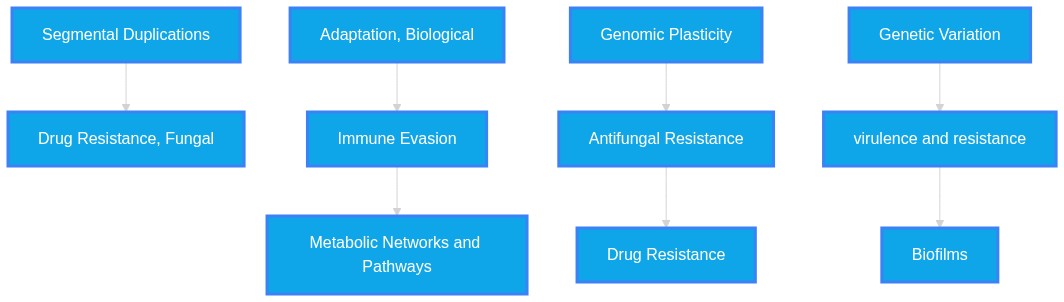
- Segmental duplications, rather than just point mutations, serve as a predominant, non-mutational driver of multidrug resistance.
- Extracellular vesicles (EVs) export metabolites linked to nucleotide salvage and amino acid metabolism, serving as a mechanism for population-level stress adaptation.
- C. auris* exhibits "morphotype-specific vulnerabilities," where transient developmental states (filamentous or pseudohyphal) represent entry points for peptide-based therapies.
- Nutrient limitation in the host environment triggers *NINJ1*-dependent macrophage lysis, facilitating fungal escape.
- C. auris employs non-mutational mechanisms of resistance, specifically segmental duplications of genomic regions, to circumvent antifungal activity.
- The pathogen displays clade-specific geographic distribution and resistance profiles, complicating universal treatment protocols.
- C. auris can persist on non-living environmental surfaces and skin, exhibiting tolerance to standard hospital disinfectants.
- A significant proportion of the C. auris genome consists of core gene families, yet many are functionally dispensable under experimental conditions.
- C. auris exhibits a unique ability to manipulate host neutrophil responses by suppressing reactive nitrogen species (RNS) production.
- Environmental surveillance has detected C. auris DNA in surface waters, indicating potential reservoirs outside traditional clinical settings.
- Cross-kingdom interactions (e.g., mycoviruses) and abiotic stress may influence the thermal tolerance and fitness of the pathogen.
- Phenotypic variation in C. auris frequently results in misidentification by standard diagnostic automated systems, often being mislabeled as other yeast species.
- Early morphogenetic states of C. auris represent a transient vulnerability to specific antifungal proteins.
- The metabolic regulation by mitochondrial proteins is critical for tolerance, with specific deletions leading to fitness defects.
- Candida auris* colonization shows a distinct predilection for the groin and axillary regions compared to other *Candida* species.
- Loss-of-function mutations in the *WOR2* locus are significantly correlated with enhanced biofilm formation capabilities.
- Candida auris* displays unexpected environmental reservoirs, including wastewater and coastal wetlands, suggesting a sapronotic ecology.
- While echinocandin resistance is often associated with fitness costs in other fungi, *Candida auris* maintains virulence even after developing resistance mutations.
- "Phagocytic podosomes" represent a novel actin-rich mechanism utilized by human macrophages for the uptake of *Candida auris*.
- Standard diagnostic platforms (VITEK 2, BD Phoenix) frequently suffer from blind spots, resulting in misidentification as *Candida haemulonii* or *Candida famata*.
- Environmental disinfectant failure against biofilms is not primarily clade-dependent but driven by formulation and contact time.
Extracted Discoveries
- Perform comparative CRISPR-Cas9 knockdown of HGT family transporters across multiple clades to determine their specific contribution to antifungal drug uptake/efflux.
- Investigate the impact of Nce103 inhibition on the fitness of pan-azole-resistant strains in competitive in vivo skin colonization models.
- Evaluate the role of EVs as carriers of resistance markers in clinical samples via proteomic and transcriptomic tracking.
- Perform comparative transcriptomic profiling of C. auris clades during exposure to sub-inhibitory concentrations of environmental triazoles to identify cross-resistance signatures.
- Evaluate the impact of specific segmental duplications on fitness in the presence of combination antifungal therapy (e.g., echinocandin + azole).
- Assess the effect of WOR2-regulated adhesion genes on skin colonization in diverse environmental models.
- Evaluate the synergistic efficacy of combination therapy (e.g., caspofungin + posaconazole) against isolates with specific FKS1 hotspot mutations.
- Investigate the impact of phagocytic podosomes on the intracellular survival rate of hypervirulent clade IV strains.
- Longitudinal study of genomic stability and CNV evolution in patients undergoing long-term antifungal therapy.
- Cross-clade analysis of the NINJ1-mediated cell death pathway during systemic candidemia.
- Investigative study on the interaction between C. auris metabolic states and host-directed therapies involving SIRT3/FOXO3A axes.
- Longitudinal surveillance study of environmental reservoirs in coastal wetlands to determine the correlation between environmental DNA persistence and healthcare-associated outbreaks.
- Multi-center clinical trial comparing the efficacy of novel triazoles like NT-a9 against conventional therapy for bloodstream infections across different geographical clades.
- Longitudinal genomic surveillance of environmental reservoirs (wastewater and soil) to correlate with human clinical outbreaks.
- Comprehensive comparative proteomics across all six clades to identify clade-specific surface proteins for immunotherapy.
- Standardization of disinfectant efficacy testing models for C. auris to include biofilm-based protocols.
- Discovered Hypothesis (A to C): Inhibition of the carbonic sensing pathway (CSP) via Nce103 blockade may enhance the efficacy of echinocandin-based therapies by preventing stress-induced cell wall remodeling.
Literature A (Origin): Nce103 (carbonic anhydrase) is linked to amphotericin B resistance and skin fitness (ID: 41436656).
Literature C (Target): Echinocandin tolerance involves cell wall remodeling and stress pathways (ID: 42548818).
The Intersecting Bridge B: Mitochondrial energy function and CO2/bicarbonate signaling (CSP).
Biological Rationale: Since the carbonic sensing pathway modulates mitochondrial energy required for stress adaptation, blocking it may force the fungus to divert resources away from cell wall maintenance (chitin/glucan remodeling) necessary to withstand echinocandin pressure. - Inhibitors of the unfolded protein response regulator HAC1 may restore susceptibility to echinocandins in strains with structural duplications of the FKS1 locus.
- HAC1-mediated ER stress adaptation in C. auris (ID: 42370646).
- Structural variation-driven echinocandin resistance and tolerance (ID: 42431934).
- Endoplasmic reticulum stress response pathway.
- The unfolded protein response is a critical mechanism for protein folding homeostasis; strains with structural resistance mutations likely suffer from increased proteotoxic stress, making them hypersensitive to the disruption of pathways like HAC1.
- Inhibiting phagocytic podosome formation in human macrophages may increase the efficacy of echinocandin therapy against C. auris by enhancing immune-mediated clearance.
- Phagocytic podosomes facilitate efficient uptake of C. auris by human macrophages (Source ID: 41863801).
- Calcineurin pathway activation is a critical adaptive mechanism for C. auris survival under echinocandin (ANI) stress (Source ID: 41943553).
- Actin-cytoskeleton dynamics and Rho-GTPase signaling which are shared by phagocytic cup formation and CWI/calcineurin stress adaptation.
- Phagocytic podosomes represent specialized cytoskeletal structures; their inhibition may force C. auris into an extracellular state where it is more susceptible to the combined stress of host immune factors and echinocandin-induced cell wall damage, thus lowering the resistance threshold.
- There is a notable ambiguity regarding the role of morphological transitions: while NFAP2 susceptibility is biophysically mediated in pseudohyphal forms (ID: 42405804), other studies highlight that biofilm formation (a complex morphological outcome) is actively modulated by transcription factors like WOR2, sometimes resulting in clade-specific responses that do not always align across species-wide models.
- There is a slight nuance in mortality reporting: ID 42537628 reports mortality rates of 30-60% for invasive infections, whereas ID 42506280 reports specific 30-day mortality as 24% and 90-day as 46% in a Korean cohort, highlighting regional or facility-specific variance.
- Conflicting findings on echinocandin susceptibility testing; some studies report high resistance and cross-resistance, while others maintain that echinocandins retain good in vitro activity and support their role as first-line therapy.
- Haloperidol is identified as having potential for repurposing due to its ability to induce programmed cell death (apoptosis) and alter Ca2+ homeostasis (ID: 41619989). Additionally, ethyl caffeate is suggested as a host-directed candidate to reprogram macrophage immunometabolism via the SIRT3-FOXO3A-AKT axis (ID: 42003544).
- The use of Inz-5 (cytochrome bc1 inhibitor) to enhance susceptibility to voriconazole and caspofungin in resistant strains (ID: 42530613); the use of Duloxetine as a potentiator for conventional antifungals (ID: 42547693).
- Liquid-infused silicone (LIS) catheters are identified as an effective, antimicrobial-sparing approach to reduce C. auris burden in CAUTIs; repurposed phytochemicals like nutmeg essential oil and guar gum-quercetin conjugates demonstrate potential to disrupt membranes and biofilm formation.
PathMap is funded by sales of datasets and coversheets to researchers of any kind who wish to discover the most viable routes and paths to accelerate cures. We do not make theoretical molecules, we expose the truth in current PubMed literature. Commission a trace today.
PathMap Scores
How are these metrics evaluated?
Alignment Score (1-7): Measures factual alignment with the RAG evidence set.
[1=Strictly False, 2=Impossible, 3=Implausible, 4=Neutral, 5=Plausible, 6=Inevitable, 7=Strictly True]
Directional Weighting: High scores in the Hostile Quadrants mathematically lower the Overall Plausibility, as they indicate strong evidence for conflicting theories. Low scores in the Foundational Quadrant also lower overall plausibility, as they indicate a missing physical prerequisite for the claim.
Veridicality Audit Report
All Extracted Datapoints
Evaluated Perspectives & Quadrants
CLAIM EVALUATED AND ANSWER TO USER
"Candida Auris: Biological and Molecular Pathways, Phenotype Data" The biological and molecular pathways of *Candida auris* are characterized by high genomic plasticity, multi-layered antifungal resistance mechanisms, and adaptive stress responses. Phenotypically, the pathogen displays significant clade-dependent diversity, including variable biofilm formation, aggregation, and skin colonization capabilities.ABSTRACT & REWRITTEN CLAIM
*Candida auris* acts as a high-priority, multidrug-resistant fungal pathogen with complex regulatory mechanisms. Research identifies the importance of ergosterol biosynthesis, efflux pump activity (e.g., CDR1, MDR1), and mitochondrial adaptation (e.g., cytochrome bc1) in maintaining viability under antifungal pressure. Morphological plasticity, specifically the ability to transition between yeast, aggregative, and pseudohyphal forms, serves as a mechanism for immune evasion and environmental persistence.INTRODUCTION & JUSTIFICATION
The pathogenic profile of *Candida auris* is defined by its evolutionary divergence into distinct clades, each exhibiting unique molecular signatures and virulence traits. Its resistance to conventional antifungals—including azoles, polyenes, and echinocandins—is driven by both canonical point mutations (e.g., *ERG11* and *FKS1* mutations) and structural genomic variations such as segmental duplications. The ability of *C. auris* to persist in hospital settings is linked to its robust biofilm-forming capacity, regulated by transcription factors such as *WOR2*, and its unique skin-tropic behavior supported by specific carbon metabolism pathways and carbonic anhydrase activity. Host interaction is mediated by the suppression of neutrophil reactive nitrogen species and the exploitation of glucose-starvation-induced cell damage.Novel & Overlooked
EVIDENCE, METHODOLOGY & CITATIONS
1. ID: 42554648 - "NT-a9 binds Erg11 with much higher affinity than FLC by forming key hydrogen bonds with Gly307 and His377, leading to irreversible ergosterol depletion, toxic sterol accumulation, and severe fungal membrane damage." 2. ID: 42548818 - "RNA-Seq revealed that both classes overexpressed MDR1, TAC1b, UPC2 and FKS1, but Class 2 showed broad ergosterol pathway upregulation, whereas Class 3 exhibited restricted ergosterol activation but downregulation of the sole chitinase gene CHT1 (5.17-fold), a known mechanism of echinocandin tolerance." 3. ID: 42530613 - "Deletion of RIP1, a conserved catalytic complex subunit, does not significantly alter the susceptibility to caspofungin or voriconazole. However, rip1Δ mutants exhibit a marked reduction in antifungal tolerance across a wide range of supra-MIC concentrations." 4. ID: 42519068 - "Mechanistic studies showed increased intracellular ROS accumulation, loss of mitochondrial membrane potential, and apoptosis-associated changes, as confirmed by Annexin V/PI staining, with a concentration-dependent increase in late apoptotic/necrotic cell populations at higher exposure levels." 5. ID: 42513906 - "Further investigations into fluconazole-response mechanisms identified enhanced efflux pump activity, along with ERG11 gene Y132F mutations and transcription factor modulation among these clinical strains." 6. ID: 42431934 - "We identify recurrent CNV hotspots, with segmental duplications representing a predominant mode of genome variation. Small duplications encompassing ERG11 arise at high frequency and frequently co-occur with drug resistance-associated ERG11 mutations, collectively enhancing azole resistance." 7. ID: 42405803 - "C. albicans rapidly downregulated neutrophil RNS below basal levels during the first day post-infection, a time at which neutrophil RNS is upregulated in bacterial infections as an important host-defense mechanism, indicating fungal evasion of host neutrophils. We confirmed the downregulation of RNS in human primary neutrophils and with clinical Candida isolates, including emerging human pathogens Candida auris and Candida glabrata." 8. ID: 42405804 - "In C. auris, increased susceptibility of pseudohyphal cells occurred without overt transcriptional remodeling, consistent with the characteristically muted gene expression responses of this species, suggesting that NFAP2 sensitivity is governed primarily by biophysical and post-transcriptional mechanisms rather than transcriptional reprogramming." 9. ID: 42370646 - "Reverse transcription PCR and sequencing analyses revealed that HAC1 mRNA in C. auris undergoes an unconventional splicing event of 287 bp that is enhanced under endoplasmic reticulum stress conditions." 10. ID: 42369549 - "Proteomic profiling revealed that C. auris mounts distinct but overlapping adaptive responses to antifungal stress, involving stress response pathways, metabolic reprogramming and amino acid biosynthesis." 11. ID: 42259815 - "Genomic analyses show that the clinical isolates with enhanced biofilm formation ability carry a loss-of-function mutation in the WOR2 locus, which encodes a white-opaque switching regulator in Candida species." 12. ID: 42283785 - "Evidence suggests that mannan-mediated masking of pathogen-associated molecular patterns (PAMPs) in the aggregative phenotype may contribute to persistence and reduced virulence in the host." 13. ID: 42184474 - "The antifungal mechanism of compound 9 involves cell membrane disruption and intracellular ROS accumulation." 14. ID: 42270656 - "In glucose-starved macrophages, NINJ1 ruptures membranes independently of known cell death programs. Consistently, NINJ1 is the dominant effector of fungal-induced macrophage damage amongst host cell death factors." 15. ID: 41745298 - "Export of these metabolites via EVs may support population-level coordination, biofilm remodeling, and modulation of host immune responses, contributing to echinocandin tolerance." 16. ID: 41745238 - "Notably, the Δhgt13 strain exhibited markedly increased FLC resistance, concomitant with reduced intracellular FLC accumulation and decreased membrane permeability." 17. ID: 41703337 - "Fluconazole induces significant upregulation of CDT1 through the calcineurin signalling pathway. Cdt1, beyond its canonical calcium-pumping function, has evolved another function in mediating fluconazole efflux through its fluconazole-induced, calcineurin- and ATP hydrolysis-dependent plasma membrane localization." 18. ID: 41436656 - "A key question in C. auris biology is how clinical isolates acquire amphotericin B resistance. Here we demonstrate that a carbonic sensing pathway (CSP) contributes to amphotericin B resistance by modulating mitochondrial energy functions in clinical C. auris isolates." 19. ID: 41823412 - "The mutant strains all exhibited abrogated growth in skin-like media and demonstrated nutrient preferences that differed from the wild type. Thus, we propose a model of how C. auris has the capacity to metabolize nutrients that are available on skin by optimizing its metabolic profile." 20. ID: 42000719 - "Transcriptomic profiling of drug-resistant isolates under antifungal and stress conditions identifies previously uncharacterized adaptation mechanisms, including differential regulation of ribosomal assembly pathways and cell cycle checkpoints."CLAIM EVALUATED AND ANSWER TO USER
"Candida Auris: Biological and Molecular Pathways, Phenotype Data"ABSTRACT & REWRITTEN CLAIM
Candida auris is a multidrug-resistant, globally emerging yeast pathogen characterized by significant genetic diversity across six clades, structural genomic plasticity (including segmental duplications), and highly adaptive stress response networks that facilitate nosocomial persistence and antifungal failure.INTRODUCTION & JUSTIFICATION
Candida auris has rapidly escalated from a rare diagnostic finding to a critical-priority global health threat. Its biological success is rooted in a robust, multi-faceted adaptive capacity. Recent molecular research identifies distinct genomic strategies employed by the pathogen to navigate therapeutic pressure. Specifically, structural variations, such as those within the ERG11 locus, drive azole resistance, while supernumerary chromosomes contribute to echinocandin tolerance. Furthermore, internal regulatory systems, including the unfolded protein response and specific mitochondrial complexes, enable C. auris to maintain viability under host-imposed stress. The pathogen’s ability to manipulate the host immune environment—specifically by suppressing reactive nitrogen species—underscores its sophisticated virulence. Surveillance data indicate that environmental reservoirs and hospital-associated colonization remain primary drivers of dissemination.Novel & Overlooked
EVIDENCE, METHODOLOGY & CITATIONS
1. ID: 42554648 - "NT-a9 is a novel triazole antifungal with potent activity against Candida and Cryptococcus species via strong inhibition of ergosterol biosynthesis." 2. ID: 42548818 - "Exposure to supra-MIC TCZ (8-32 μg/mL) produced three phenotypic classes: Class 2 (TCZ-R, fluconazole-R) and Class 3 (TCZ-R, fluconazole-R, plus tolerance to caspofungin and micafungin)." 3. ID: 42527656 - "C. auris strains are classified into six distinct clades: South Asia, East Asia, South Africa, South America, Iran and Singapore." 4. ID: 42513906 - "Sequencing identified Y132F mutations in the ERG11 gene of the three clinical strains." 5. ID: 42370646 - "Functional analyses demonstrated that deletion of HAC1 increased sensitivity to endoplasmic reticulum stress." 6. ID: 42369549 - "Proteomic profiling revealed that C. auris mounts distinct but overlapping adaptive responses to antifungal stress, involving stress response pathways, metabolic reprogramming and amino acid biosynthesis." 7. ID: 42348119 - "Clade I (South Asian) and Clade IV (South American) represent the highest clinical risk due to hyper-virulence and high rates of multi-drug resistant (MDR) strains." 8. ID: 42346566 - "Resistance patterns have evolved from predominantly azole resistance to broader multidrug-resistant phenotypes, including treatment-emergent echinocandin resistance." 9. ID: 42505599 - "Candida auris emerged only in the post-pandemic period, showing high resistance to fluconazole (75%) and amphotericin B (36.7%)." 10. ID: 42470541 - "C. auris DNA was detected in one sample (1.25%), specifically from the Gediz Delta (Sample No. 5651, 38.523° N, 26.892° E), with Ct values 33.8-37.2 confirmed by sequencing." 11. ID: 42515075 - "Antifungal-treated groups showed lower NSP-related protein expression, while fungicidal agents were associated with absence of fungal growth in catheter and kidney cultures." 12. ID: 42466666 - "Fluconazole resistance was found in 90.51% (1555/1718), while resistance to amphotericin B and echinocandins was 13.17% (223/1693) and 4.57% (76/1693), respectively." 13. ID: 42182103 - "To examine this hypothesis, we developed a novel insertional mutagenesis approach that leverages the promiscuous integration of linear DNA in the C. auris genome. This global analysis identified 614 high-confidence essential genes." 14. ID: 42530613 - "Targeting cytochrome bc1 function with the fungal-specific inhibitor Inz-5 enhances antifungal action of both voriconazole and caspofungin." 15. ID: 42378120 - "The number of clinical and screening C. auris cases reported to CDC increased during 2022-2024, indicating ongoing transmission in U.S. health care settings." 16. ID: 42532402 - "Candidozyma auris (Candida auris), first identified in 2022, rapidly became endemic, accounting for 29.5% of isolates in the post-COVID era and exhibiting uniform resistance to fluconazole." 17. ID: 42506280 - "30-day mortality was 24%, and 90-day mortality was 46%." 18. ID: 42424280 - "Most isolates showed susceptibility to voriconazole and caspofungin, while varying percentages of susceptibility to fluconazole were observed, especially in C. glabrata and C. auris." 19. ID: 42368398 - "An increased number of C. auris isolates were identified." 20. ID: 42515051 - "All MALDI-TOF MS systems with updated databases correctly identified the yeast at the species level; identification was confirmed by sequencing."CLAIM EVALUATED AND ANSWER TO USER
The biological, molecular, and phenotypic attributes of the emerging pathogen *Candida auris* (Candidozyma auris) provide a multi-layered framework for its resilience, environmental persistence, and clinical recalcitrance.ABSTRACT & REWRITTEN CLAIM
*Candida auris* is characterized by clade-specific genomic and phenotypic diversity, high intrinsic and acquired antifungal resistance (notably to azoles, polyenes, and echinocandins), and significant environmental persistence. Pathogenic mechanisms include biofilm formation, metabolic adaptation to skin, cell wall remodeling, and unique immune evasion strategies, necessitating integrated molecular surveillance and novel therapeutic targeting.INTRODUCTION & JUSTIFICATION
*Candida auris* has emerged as a global public health crisis, defined by its rapid nosocomial transmission and multidrug-resistant profile. The organism demonstrates high genomic plasticity across six recognized clades. Adaptation to host environments, particularly the skin, is facilitated by a robust metabolic profile capable of utilizing scarce nutrients in skin-like conditions. Resilience against chemical decontamination and antifungal therapy is multi-factorial, involving efflux pump upregulation (CDR1, MDR1), mutations in target genes like *ERG11* and *FKS1*, and adaptive remodeling of the extracellular matrix. Host immunity is countered by unique cell wall architectures and aggregative growth forms, necessitating a One Health surveillance strategy.Novel & Overlooked
EVIDENCE, METHODOLOGY & CITATIONS
1. ID: 42310987 - 88.9% of Candida auris cases (24/27) were identified exclusively from groin swabs. 2. ID: 42259815 - Genomic analyses show that the clinical isolates with enhanced biofilm formation ability carry a loss-of-function mutation in the WOR2 locus 3. ID: 41763301 - Environmental isolates have been documented in coastal wetlands, wastewater systems, agricultural products, as well as in diverse animals 4. ID: 42051239 - Whole-genome sequencing revealed clinically relevant mutations in FKS1, as well as changes in genes involved in ergosterol biosynthesis (ERG3), amino acid metabolism, and PKA signaling. 5. ID: 42549922 - Transcriptomic analysis identified 11 adhesion- and biofilm-associated target genes, among which SCF1 and ALS1 served as pivotal regulators. 6. ID: 42548818 - Brief (48 h) exposure to sub-MIC TCZ (1 μg/mL) selected variants (6.9% frequency) with cross-resistance to TCZ and fluconazole 7. ID: 42296425 - C. auris is an emerging fungal pathogen with unique characteristics that make it challenging to eradicate in healthcare settings once introduced. 8. ID: 42119224 - Its modified cell wall, characterized by a thicker mannan layer, efficiently masks immunogenic β-glucan, thereby reducing immunogenicity. 9. ID: 42348119 - Clade I (South Asian) and Clade IV (South American) represent the highest clinical risk due to hyper-virulence and high rates of multi-drug resistant (MDR) strains. 10. ID: 42545748 - Often C. auris gets misidentified as other species due to its phylogenetic similarity with C. heamulonii. 11. ID: 41823412 - The mutant strains all exhibited abrogated growth in skin-like media and demonstrated nutrient preferences that differed from the wild type. 12. ID: 41925335 - We conclude that several proteins contribute to C. auris surface hydrophobicity. 13. ID: 41943553 - Furthermore, ANI activated both CWI and calcineurin pathways, indicating adaptive stress responses. 14. ID: 42026471 - C. auris isolates exhibited amino acid substitutions in ERG11, ERG2, ERG4, CIS2, TAC1, and CDR1. 15. ID: 42519068 - Mechanistic studies showed increased intracellular ROS accumulation, loss of mitochondrial membrane potential, and apoptosis-associated changes 16. ID: 42229743 - These biofilms often show a much higher tolerance to standard antifungal drugs and can escape the host body's immune defenses. 17. ID: 42003753 - Colonisation was concentrated in the urinary tract and inguinal regions, while bedside tables were identified as key environmental reservoirs. 18. ID: 41863801 - We show that the phagocytosis of C. auris cells by primary human macrophages involves the formation of dot-like F-actin-rich structures at C. auris-containing phagosomes that we characterize as phagocytic podosomes. 19. ID: 42346566 - Surveillance data indicate that a high proportion of C. auris isolates exhibit resistance to azoles, often exceeding 80% in some regions, while echinocandin resistance remains variable. 20. ID: 41944852 - The organism appears to acquire drug resistance quickly.Verbatim Quote Audit Console
Mapped Reference Directory (APA)
- [1] ID: 42554648 - Zhu S, Ni T, Gao L, Li W, Zhang D et al. (2026). NT-A9, a new triazole, exhibits potent antifungal activity against Candida and Cryptococcus species through potent ergosterol biosynthesis inhibition.. Antimicrobial agents and chemotherapy. ID: 42554648.
- [2] ID: 42548818 - Peng L, Xu Y, Chen X, Li W, Guo L (2026). In vitro exposure to the agricultural triazole tebuconazole selects for fluconazole cross-resistance and echinocandin tolerance in Candidozyma auris.. Frontiers in cellular and infection microbiology. ID: 42548818.
- [3] ID: 42530613 - Phan-Canh T, Lackner M, Chauhan M, Zenz LM, Chauhan N et al. (2026). Cytochrome bc1 Catalytic Subunit Rip1 Modulates Antifungal Tolerance in Candida auris.. ACS infectious diseases. ID: 42530613.
- [4] ID: 42519068 - Wani MY, El-Said WA, Al-Bogami AS, Khan ZA, Ahmad A et al. (2026). Guar gum-quercetin bioconjugate as a promising multifunctional biomaterial for combating drug-resistant fungal pathogens.. RSC advances. ID: 42519068.
- [5] ID: 42513906 - Hu C, Fang J, Zhou H, Xin C, Song Z (2026). Comparative Analysis of Virulence Traits and Fluconazole-Response Mechanisms in Clinical Isolates of Candidozyma auris.. Microorganisms. ID: 42513906.
- [6] ID: 42431934 - Narayanan A, Joshi S, Harchand R, Prasad R, Rudramurthy SM et al. (2026). Segmental duplications and supernumerary chromosomes drive antifungal drug resistance in Candida auris.. Nature communications. ID: 42431934.
- [7] ID: 42405803 - Burgess TB, Hammond FR, Szkuta PT, Lewis A, Christou S et al. (2026). Candida spp. suppress neutrophil reactive nitrogen species to evade killing.. mBio. ID: 42405803.
- [8] ID: 42405804 - Merber R, Laczi K, Bende G, Kazinczi E, Farkas A et al. (2026). Morphotype-specific susceptibility to Neosartorya (Aspergillus) fischeri antifungal protein 2 is associated with an anabolic transcriptional signature in Candida.. Microbiology spectrum. ID: 42405804.
- [9] ID: 42370646 - Oiki S, Abe M, Hirasawa A, Koizumi A, Otani A et al. (2026). HAC1 contributes to stress adaptation and virulence in the emerging fungal pathogen Candida auris.. Medical mycology. ID: 42370646.
- [10] ID: 42369549 - Mazumdar R, Bjelanovic A (2026). A targeted drug-repurposing strategy identifies Tavaborole (Kerydin) as a potent fungistatic agent against Candida auris.. Frontiers in microbiology. ID: 42369549.
- [11] ID: 42259815 - Liang W, Guan S, Bing J, Du H, Zheng Q et al. (2026). The Wor2 phenotypic switching regulator controls biofilm formation in Candida auris.. NPJ biofilms and microbiomes. ID: 42259815.
- [12] ID: 42283785 - Solanki S, Singh B, Mathur K, Asif S, Francis A et al. (2026). Insights on molecular drivers of phenotypic plasticity in Candidozyma auris.. World journal of microbiology & biotechnology. ID: 42283785.
- [13] ID: 42184474 - Huo R, Wang Y, Zi G, Feng S, Cai L et al. (2026). Antifungal meroterpenoids from deep-sea-derived fungus Acremonium sclerotigenum.. Phytochemistry. ID: 42184474.
- [14] ID: 42270656 - Weerasinghe H, Tulyaprawat O, Stölting H, Sonnberger J, Mobbs B et al. (2026). Infection-induced glucose starvation triggers NINJ1-dependent macrophage lysis and Candida escape.. Nature communications. ID: 42270656.
- [15] ID: 41745298 - Alves V, Mulholland CV, Zamith-Miranda D, Frases S, Berney M et al. (2026). Caspofungin Reshapes the Extracellular Vesicles Metabolome of Candidozyma (Candida) auris, Altering Amino Acid and Nucleotide Metabolism.. Journal of fungi (Basel, Switzerland). ID: 41745298.
- [16] ID: 41745238 - Kumar P, Kumar M, Saini A, Mohamad SO, Ali B et al. (2026). Comprehensive Insights into Sugar Transporters of Candidozyma auris and Their Roles in Antifungal Resistance.. Journal of fungi (Basel, Switzerland). ID: 41745238.
- [17] ID: 41703337 - Song Y, Chen J, Wan J, Zhang J, Liu Q et al. (2026). Candida auris vacuolar calcium pump mediates fluconazole efflux and resistance evolution.. Nature microbiology. ID: 41703337.
- [18] ID: 41436656 - Phan-Canh T, Coman C, Lackner M, Troppmair N, Müller C et al. (2026). Candida auris skin tropism and antifungal resistance are mediated by carbonic anhydrase Nce103.. Nature microbiology. ID: 41436656.
- [19] ID: 41823412 - Nicklas JP, Deming C, Lee-Lin S, Conlan S, Shen Z et al. (2026). Candida auris metabolism and growth preferences in physiologically relevant skin-like conditions.. mBio. ID: 41823412.
- [20] ID: 42000719 - Chang CL, Moshi MA, Nguyen QH, Oh J, Nguyen H et al. (2026). Wastewater intelligence predicts the emergence of clinically-relevant and drug-resistant Candidozyma auris at healthcare facilities.. Nature communications. ID: 42000719.
- [21] ID: 42527656 - Osama D, Alsedawy M, Hussein MS, Hassan MA, Elrefaey SM et al. (2026). The urgent and challenging superbug fungus Candidozyma auris (formerly Candida auris): a comprehensive review.. Antonie van Leeuwenhoek. ID: 42527656.
- [22] ID: 42348119 - Sharma P, Bari VK, Pasrija R (2026). Unraveling clade-specific differences in Candida auris: evolution, adaptation, and pathogenicity.. European journal of clinical microbiology & infectious diseases : official publication of the European Society of Clinical Microbiology. ID: 42348119.
- [23] ID: 42346566 - Raeisi S, Madhavan P, Adisuri DS (2026). Recent Outbreaks, Resistance Trends, and Control Measures in Candida auris and Candida glabrata Infections.. Journal of fungi (Basel, Switzerland). ID: 42346566.
- [24] ID: 42505599 - Çapar A, Özyiğitoğlu D, Başlılar Ş, Efil Erdoğan M, Balak B et al. (2026). Changes in Antimicrobial Resistance Patterns in Intensive Care Units Following the COVID-19 Pandemic: A 10-Year Retrospective Study from Türkiye.. Antibiotics (Basel, Switzerland). ID: 42505599.
- [25] ID: 42470541 - Ergen AG, Keskin E, Akgun A, Erol HB, Edis G et al. (2026). Environmental Detection of Candidozyma (Candida) auris in Surface Waters of the Gediz Delta, a Critical Coastal Wetland in Türkiye: Expanding One Health Surveillance Perspective.. Mycopathologia. ID: 42470541.
- [26] ID: 42515075 - Berk Cam H, Kilinc L, Avci HH, Soylu H, Cakir T et al. (2026). Vascular Notch-Related Protein Expression in a Rat Model of Central Venous Catheter-Associated Candida albicans Infection Under Antifungal and Prostaglandin-Pathway Interventions.. Pathogens (Basel, Switzerland). ID: 42515075.
- [27] ID: 42466666 - Rodríguez-Cerdeira C, Martínez-Herrera E, Saunte DML, Vite-Garín T, Fuentes-Venado CE et al. (2026). Candida auris in Europe: Epidemiology and antifungal resistance. A systematic review.. Journal of the European Academy of Dermatology and Venereology : JEADV. ID: 42466666.
- [28] ID: 42182103 - Hale JJ, Larkin AJ, Rapala JR, Hurto R, Zhao G et al. (2026). Defining the Candidozyma auris pan-genome and essentiality.. bioRxiv : the preprint server for biology. ID: 42182103.
- [29] ID: 42378120 - Gold JAW, Baker AD, Benedict K, Forsberg K, Laury JE et al. (2026). Surveillance for Candida auris - United States, 2022-2024.. Morbidity and mortality weekly report. Surveillance summaries (Washington, D.C. : 2002). ID: 42378120.
- [30] ID: 42532402 - Spiliopoulou A, Βania L, Giannopoulou I, Leonidou L, Lagadinou M et al. (2026). Candidemia in Post-COVID Era: Increasing incidence of endemic fluconazole-resistant Candida parapsilosis and Candidozyma auris.. International journal of infectious diseases : IJID : official publication of the International Society for Infectious Diseases. ID: 42532402.
- [31] ID: 42506280 - Han M, Ahn JY, Seong JE, Lee SJ, Kim J et al. (2026). Risk Factors for Mortality in Candida auris Bloodstream Infection: A Multicenter Study in South Korea, 2018-2025.. Journal of fungi (Basel, Switzerland). ID: 42506280.
- [32] ID: 42424280 - Paredes-Gago R, Alvarado-Vela S, Céspedes-Román C (2026). Candida species identified by MAL-DI-TOF and antifungal susceptibility in hospitalized patients with COVID-19 in Peru.. Revista peruana de medicina experimental y salud publica. ID: 42424280.
- [33] ID: 42368398 - Anonymous (2026). Healthcare-associated infections and antimicrobial resistance in Canadian acute care hospitals, 2020-2024.. Canada communicable disease report = Releve des maladies transmissibles au Canada. ID: 42368398.
- [34] ID: 42515051 - Carolis E, Cosio T, Magrì C, Del Mondo M, Torelli R et al. (2026). Unmasking Candida viswanathii in Panel-Negative Candidemia Through Integrated MALDI-TOF MS and FTIR Spectroscopy.. Pathogens (Basel, Switzerland). ID: 42515051.
- [35] ID: 42310987 - Myrou A, Metallidis S, Savopoulos C (2026). Rectal versus groin screening for multidrug-resistant organisms: pathogen-specific diagnostic yield in a tertiary-care hospital.. Infection control and hospital epidemiology. ID: 42310987.
- [36] ID: 41763301 - Garcia-Bustos V (2026). Environmental continuum of Candidozyma auris: From sapronotic ecology to outbreak prediction and control with a One Health perspective.. Revista iberoamericana de micologia. ID: 41763301.
- [37] ID: 42051239 - Bohner F, Szilovics Z, Veres É, Papp C, Nosanchuk JD et al. (2026). Micafungin microevolution in Candida auris reveals resistance development without in vivo fitness compromise.. Virulence. ID: 42051239.
- [38] ID: 42549922 - Li C, Wu H, Wang Y, Wei W, Wu D et al. (2026). Baicalein suppresses adhesion and biofilm formation in Candida auris.. Microbiology spectrum. ID: 42549922.
- [39] ID: 42296425 - McDougal AN, Ostrosky-Zeichner L (2026). Increasing threat to the healthcare setting: Candida auris.. Current opinion in infectious diseases. ID: 42296425.
- [40] ID: 42119224 - Liu L, Niu T, Zhang T, Tan D, Duan X et al. (2026). Interplay between Candida auris and host immunity: Highlighting its unique strategies for resisting host immune responses.. Microbiological research. ID: 42119224.
- [41] ID: 42545748 - Singh SK, Vamsimohan A (2026). Candida auris: An opportunistic fungal pathogen and a priority emergent threat.. Acta microbiologica et immunologica Hungarica. ID: 42545748.
- [42] ID: 41925335 - Rodrigues Dos Santos Junior S, Stempinski PR, Van Wieren A, Gerbig GR, Smith DFQ et al. (2026). Protein-related hydrophobicity differences among strains belonging to Candidozyma auris (Candida auris) clades.. Microbiology spectrum. ID: 41925335.
- [43] ID: 41943553 - Yang X, Ge A, Zhou H, Hu C, Yang X et al. (2026). Mutation, biofilm formation, and cell wall remodeling contribute to echinocandin resistance of Candidozyma auris.. Future microbiology. ID: 41943553.
- [44] ID: 42026471 - Xie Z, Li Y, Yang F, Liu W, Cai R et al. (2026). Susceptibility of Candida auris isolates to antifungal agents: perspectives from whole-genome sequencing and phenotypic testing.. BMC microbiology. ID: 42026471.
- [45] ID: 42229743 - Saini Y, Wani MY, Hameed S (2026). Antifungal peptides for biofilm disruption: Mechanisms, design strategies, and translational outlook.. Microbial pathogenesis. ID: 42229743.
- [46] ID: 42003753 - Wei M, Guo J, Li L, Zhu J, Xue Y et al. (2026). The Epidemiology and Infection Control of Candida Auris in Shanghai.. Mycoses. ID: 42003753.
- [47] ID: 41863801 - Sopelniak K, Batlouni R, Sun Q, Cervero P, Linder S (2026). Phagocytic podosomes enable efficient uptake of Candida auris by primary human macrophages.. Cell reports. ID: 41863801.
- [48] ID: 41944852 - Negi P, Verma N, Rishi P, Multani K, Sharma M et al. (2026). Candida auris: a multidimensional focus on its identification, epidemiology, pathogenesis, and therapeutic options.. Archives of microbiology. ID: 41944852.
Abstract Repository (Raw Full-Texts) Show Database Collapse Database
ID: 41436656
Title: Candida auris skin tropism and antifungal resistance are mediated by carbonic anhydrase Nce103.
Abstract: The pronounced skin tropism and pan-antifungal resistance of Candida auris pose a serious global health threat. A key question in C. auris biology is how clinical isolates acquire amphotericin B resistance. Here we demonstrate that a carbonic sensing pathway (CSP) contributes to amphotericin B resistance by modulating mitochondrial energy functions in clinical C. auris isolates. Integrated transcriptomics and proteomics identify the carbonic anhydrase Nce103 and its transcription factors Rca1 and Efg1 as important regulatory components of the CSP. The conversion of CO2 into bicarbonate sustains energy metabolism required for colonization and fitness on human skin and in nutrient-limited microenvironments. We also show that bacterial skin colonizers engage urease to release CO2 that sustains C. auris fitness and skin colonization. These findings highlight therapeutic options to re-sensitize C. auris to antifungal treatments, as well as to prevent skin colonization by blocking the CSP.
View on PubMed
ID: 41703337
Title: Candida auris vacuolar calcium pump mediates fluconazole efflux and resistance evolution.
Abstract: Candida auris is an emerging fungal pathogen notable for its intrinsically high resistance to fluconazole, the most prescribed antifungal drug. However, the genetic regulators underlying fluconazole susceptibility in C. auris remain unclear. Here we performed a pooled screen of piggyBac (PB) transposition mutants and identified significant enrichment of mitochondrial genes whose inactivation reduces fluconazole susceptibility. A genome-wide genetic interaction analysis of a mitochondrial gene deletion mutant, pet309Δ, suggests that the vacuolar calcium pump homologue CDT1 (Calcium and Drug Transporter 1) is responsible for its reduced fluconazole susceptibility. Fluconazole induces significant upregulation of CDT1 through the calcineurin signalling pathway. Cdt1, beyond its canonical calcium-pumping function, has evolved another function in mediating fluconazole efflux through its fluconazole-induced, calcineurin- and ATP hydrolysis-dependent plasma membrane localization. In addition, Cdt1 accelerates the evolution of fluconazole resistance or tolerance, and its transcript levels are substantially elevated across resistant clinical isolates. Our findings reveal a neofunctionalized role for Cdt1 in mediating fluconazole efflux in C. auris.
View on PubMed
ID: 41745238
Title: Comprehensive Insights into Sugar Transporters of Candidozyma auris and Their Roles in Antifungal Resistance.
Abstract: In Candida species, including Candidozyma auris (formerly Candida auris), overexpression of efflux pumps is a well-established mechanism of antifungal resistance. However, accumulating evidence indicates that impaired drug import may also significantly contribute to reduced antifungal susceptibility. Sugar importers, historically viewed solely as hexose transporters (HGTs), are now emerging as potential indirect modulators of antifungal uptake. Here, we performed a comprehensive inventory and functional analysis of the HGT family in C. auris to assess its contribution to antifungal import. Phylogenetic analyses revealed that C. auris HGTs are more closely related to those of Candida albicans (C. albicans) than Saccharomyces cerevisiae (S. cerevisiae). All HGT genes showed basal expression, with several significantly downregulated upon fluconazole (FLC) exposure. To establish functional relevance, we generated a mini-library of HGT deletion mutants. Notably, the Δhgt13 strain exhibited markedly increased FLC resistance, concomitant with reduced intracellular FLC accumulation and decreased membrane permeability. Consistently, molecular docking and molecular dynamics simulations demonstrated strong and stable interactions between FLC and Hgt13p. Together, these findings implicate Hgt13p as a key determinant of FLC import and membrane permeability, revealing reduced FLC import could also contribute to antifungal resistance in C. auris.
View on PubMed
ID: 41745298
Title: Caspofungin Reshapes the Extracellular Vesicles Metabolome of Candidozyma (Candida) auris, Altering Amino Acid and Nucleotide Metabolism.
Abstract: Candidozyma auris is an emerging multidrug-resistant fungal pathogen associated with severe invasive infections and high mortality, particularly in healthcare environments. Its rapid global expansion and resistance to multiple antifungal classes pose major challenges to treatment and containment. Extracellular vesicles (EVs) have recently been recognized as important mediators of fungal communication, virulence, and stress adaptation. Here, we examine how caspofungin, a frontline echinocandin, reshapes the EV metabolome of C. auris. Caspofungin exposure drives pronounced remodeling of EV size distributions, yielding a predominance of smaller, more uniform EVs alongside a minor population of larger subtypes. Metabolomic profiling of EVs revealed marked enrichment of metabolites involved in nucleotide salvage and recycling, along with altered amino acid abundances, including increases in amino acids associated with stress responses and redox regulation. These changes are consistent with altered nucleotide turnover and amino acid metabolism under antifungal stress. Importantly, these metabolic alterations reflect caspofungin-induced changes in cellular metabolism that are selectively exported via extracellular vesicles, rather than metabolic activity occurring within the vesicles themselves. Export of these metabolites via EVs may support population-level coordination, biofilm remodeling, and modulation of host immune responses, contributing to echinocandin tolerance. Together, our findings highlight nucleotide- and amino acid-associated metabolic features of EVs as informative readouts of caspofungin exposure and highlight the EV metabolome as a promising source of non-invasive biomarkers for monitoring drug exposure and resistance. This work advances understanding of C. auris adaptation under antifungal stress and reveals new opportunities for therapeutic and diagnostic innovation against this high-priority pathogen.
View on PubMed
ID: 41763301
Title: Environmental continuum of Candidozyma auris: From sapronotic ecology to outbreak prediction and control with a One Health perspective.
Abstract: Candidozyma auris (formerly Candida auris) has emerged within just over a decade as one of the most relevant multidrug-resistant fungal pathogens affecting human health worldwide. Its pathogenicity, capacity for skin colonization, environmental persistence, and resistance to antifungal drugs and disinfectants have all contributed to its consolidation as a leading cause of healthcare-associated outbreaks. Nevertheless, increasing evidence indicates that C. auris should not be viewed solely as a nosocomial yeast, but rather as part of a broader environmental continuum encompassing natural habitats, anthropogenic niches, and multiple host species. Environmental isolates have been documented in coastal wetlands, wastewater systems, agricultural products, as well as in diverse animals - including companion animals, reptiles, amphibians, and insects - supporting its classification as a sapronotic pathogen. The near-simultaneous emergence of distinct clades across continents strongly suggests that climate change, agricultural azole exposure, and ecological adaptation have collectively selected strains exhibiting thermotolerance, antifungal resistance, and cross-kingdom persistence, thereby enabling recurrent spillover into human populations. Recent advances in wastewater-based epidemiology demonstrate that C. auris can be detected at the community level, often preceding clinical recognition, while animal colonization underscores its overlooked role in pathogen maintenance and transmission networks. This review synthesizes current evidence on the ecological, evolutionary, and epidemiological determinants of C. auris, positioning outbreaks as amplification phenomena within interconnected ecological systems rather than isolated nosocomial events. Adoption of a One Health framework, integrating environmental, veterinary, and human health surveillance, will be essential for predictive outbreak modeling, early detection, and the development of sustainable strategies to mitigate the ongoing and future threats posed by this emerging fungal pathogen.
View on PubMed
ID: 41823412
Title: Candida auris metabolism and growth preferences in physiologically relevant skin-like conditions.
Abstract: Candida auris is an opportunistic, multidrug-resistant yeast with a high capacity for human skin colonization in healthcare settings, which can lead to subsequent infections with high mortality rates. Despite the recent emergence of at least four distinct clades at the global scale, little remains known about how C. auris is so adept at growing on skin and the key genes and pathways it utilizes to metabolize the scarce nutrients available. Here, we identify the roles that conventional and alternative carbon metabolism genes and metabolic pathways have in facilitating C. auris growth through laboratory-based experiments and bioinformatics analyses. In artificial skin-like media, all four clades of C. auris were more capable of growing than Candida albicans SC5314, a clinically relevant counterpart. By investigating the differential regulation of C. auris when growing in skin-like media as compared to rich fungal media, we uncovered hundreds of genes in multiple metabolic pathways. To further test the mechanisms of these metabolic pathways, we deleted several non-essential gene candidates including FOX2 (B9J08_002847), CAT2 (B9J08_000010), and ICL1 (B9J08_003374). The mutant strains all exhibited abrogated growth in skin-like media and demonstrated nutrient preferences that differed from the wild type. Thus, we propose a model of how C. auris has the capacity to metabolize nutrients that are available on skin by optimizing its metabolic profile. Targeting these metabolic pathways to mitigate C. auris growth on skin is a potential avenue to explore in controlling the spread of this emerging human fungal pathogen. Candida auris is an emerging fungal pathogen with human skin as its primary site of colonization and subsequent transmission. Here, we show the importance of conventional and alternative carbon metabolism for the ability of C. auris to grow in artificial skin-like media. This knowledge provides a better understanding of C. auris metabolism and sheds light on genes and pathways that could be targeted to interfere with persistent skin colonization.
View on PubMed
ID: 41863801
Title: Phagocytic podosomes enable efficient uptake of Candida auris by primary human macrophages.
Abstract: The yeast Candida auris is an emerging pathogen. Understanding the molecular mechanisms of its uptake and processing by immune cells is thus critical for counteracting the spread of respective infections. We show that the phagocytosis of C. auris cells by primary human macrophages involves the formation of dot-like F-actin-rich structures at C. auris-containing phagosomes that we characterize as phagocytic podosomes. We analyze the composition, architecture, and dynamics of these structures, showing that they constitute a specific adaptation of the phagocytic actin network. The disruption of phagocytic podosomes is associated with reduced internalization of C. auris and delayed phagosomal maturation. Our data provide detailed insights into cytoskeletal rearrangements upon internalization of Candida by immune cells while also demonstrating that the actin network within phagocytic cups is not necessarily uniform and continuous. At the same time, we identify C. auris as a pathophysiologically relevant target whose internalization involves the formation of phagocytic podosomes.
View on PubMed
ID: 41925335
Title: Protein-related hydrophobicity differences among strains belonging to Candidozyma auris (Candida auris) clades.
Abstract: In recent years, Candidozyma auris (Candida auris) has emerged as a threat to human health due to its combination of virulence and antifungal resistance. This fungal pathogen is notable for its thermotolerance and a strong attachment capability that confers environmental persistence and immune evasion. Here, we compared strains from five clades of C. auris: clade I = South Asia (CDC 387), clade II = East Asia (CDC 381), clade III = Africa (CDC 384), clade IV = South America (CDC 385), and clade V = Iran (CDC 1097) for their ability to regulate cell surface hydrophobicity and biofilm. The hydrophobicity varied for each C. auris clade, with strains 384, 385, and 1097 displaying the highest hydrophobicity levels. C. auris strains had variable biofilm levels when compared among clades and had lower or similar biofilm levels when compared with Candida albicans at different temperatures. Comparison of mass spectrometry analysis of proteolytic digestates of cells from strains with low or high hydrophobicity revealed putative surface hydrophobic proteins. These included homologs to Candida albicans Als3 and IFF proteins, and their contribution to hydrophobicity and biofilm formation was confirmed with gene-deficient (knockout) C. auris strains. We conclude that several proteins contribute to C. auris surface hydrophobicity. Candidozyma auris (Candida auris) is an emerging pathogenic microorganism that is rapidly gaining attention due to outbreaks in health care facilities and its multidrug resistance. Its origin has yet to be determined, but genotypic analyses have pointed toward a simultaneous independent emergence of the different clades, possibly implicating climate change as a major factor in its recent appearance as a fungal pathogen. In 2022, the World Health Organization placed C. auris in the critical priority group as the second greatest fungal threat globally. Due to limited immunological and proteomic studies of C. auris, we sought to elucidate possible virulence mechanisms and identify leading proteins that can be targeted by immunotherapies and new drugs. Using proteomic analysis, we identified 12 lead proteins related to C. auris hydrophobicity and adhesion, implying that these properties are conferred by multiple proteins.
View on PubMed
ID: 41943553
Title: Mutation, biofilm formation, and cell wall remodeling contribute to echinocandin resistance of Candidozyma auris.
Abstract: This study systematically elucidates the mechanisms of echinocandin resistance in Candidozyma auris (C. auris), providing insights into potential therapeutic strategies. Echinocandin susceptibility of clinical bloodstream C. auris isolates was determined using E-test, and resistance-associated mutations were identified by Sanger sequencing. Biofilm formation under antifungal stress was assessed by crystal violet staining and the 2,3-bis-(2-methoxy-4-nitro-5-sulfophenyl)-2H-tetrazolium-5-carboxanilide (XTT) assays. Changes in cell wall components were analyzed using quantitative fluorescence assays, while expression of cell wall biosynthesis-related genes was evaluated by RT-qPCR. Activation of cell wall integrity (CWI) and calcineurin pathways was examined, and the adjunctive effect of calcineurin inhibitors with anidulafungin (ANI) was assessed using disk diffusion and checkerboard assays. Echinocandin resistance in the clinical isolate C. auris 01 was attributed to an S639F mutation in FKS1. ANI treatment-induced cell aggregation and enhanced biofilm formation. It also triggered cell wall remodeling, increasing chitin, mannan, and β-glucan levels, accompanied by upregulation of β-glucan synthase (FKS1, FKS2), chitin synthase (CHS1, CHS3), and mannan synthesis (PMR1, PMT1). Furthermore, ANI activated both CWI and calcineurin pathways, indicating adaptive stress responses. Notably, calcineurin inhibition exhibited an additive effect with ANI. These results highlight a multifaceted resistance framework involving structural, signaling, and potential genetic alterations.
View on PubMed
ID: 41944852
Title: Candida auris: a multidimensional focus on its identification, epidemiology, pathogenesis, and therapeutic options.
Abstract: Humans have encountered many epidemics caused by pathogenic microorganisms since the turn of the century. The prevalence of fungal infections has significantly increased on a global scale, adversely impacting human health. Candida species remain among the most prevalent and widely spread opportunistic fungi, with Candida auris emerging as a notorious hospital-acquired pathogen. This fungal pathogen causes nosocomial bloodstream infections (BSI), coupled with a high in-hospital death rate and significant multidrug-resistance (MDR). Standard quaternary ammonium compounds (Quats), are often ineffective, requiring the use of Environmental Protection Agency (EPA)-registered hospital-grade disinfectants. Routine laboratory procedures often fail to efficiently identify the fungi, making it difficult to predict the infection’s true severity. Hence, molecular-based methods are now considered the gold standard for rapid identification. Despite the availability of approved drugs, their efficacy is questionable due to the emerging drug resistance within the fungal population. The organism appears to acquire drug resistance quickly. While echinocandins remain first-line therapy, the emergence of echinocandin-or pan-resistant cases indicates that treating pan-resistant strains would be particularly tricky, if not unfeasible. This underscores the urgent need for enhanced infection control, improved point-of-care diagnostics, and the development of novel therapeutic strategies. This article highlights the crucial aspects of epidemiology, identification techniques, drug resistance mechanisms, treatments, and challenges associated with C. auris infections. Understanding these interconnected aspects is essential for optimizing clinical management and mitigating the escalating public health crisis posed by this tenacious pathogen.
View on PubMed
ID: 42000719
Title: Wastewater intelligence predicts the emergence of clinically-relevant and drug-resistant Candidozyma auris at healthcare facilities.
Abstract: The rapid evolution of antifungal resistance in Candidozyma auris (formerly Candida auris) presents significant challenges for conventional public health surveillance methods, particularly in detecting emergent and highly transmissible drug-resistant variants. Here, using wastewater-based epidemiology tools initially developed during the COVID-19 pandemic, we implement a high-resolution, facility-level early warning system to monitor C. auris infections and resistance patterns. Our evaluation across Southern Nevada demonstrates that upstream sewage monitoring at healthcare facilities provides significant sensitivity (p < 0.001) compared to wastewater treatment plant sampling. By combining amplicon sequencing and MALDI-TOF mass spectrometry, we identify clinically-relevant, resistance-associated variants in wastewater samples, while whole-genome sequencing reveals >90% genomic concordance between 443 wastewater-derived genomes and 2945 clinical isolates. We also detect previously unreported subclades and resistance mutations, including FKS1 Phe635Leu and co-occurring ERG11/FKS1 variants in wastewater samples up to nearly five months before their appearance in clinical settings. Transcriptomic profiling of drug-resistant isolates under antifungal and stress conditions identifies previously uncharacterized adaptation mechanisms, including differential regulation of ribosomal assembly pathways and cell cycle checkpoints. These findings highlight how wastewater intelligence can enhance traditional public health approaches for early detection and monitoring of C. auris outbreaks and antifungal resistance.
View on PubMed
ID: 42003753
Title: The Epidemiology and Infection Control of Candida Auris in Shanghai.
Abstract: Candida auris is a globally emerging multidrug-resistant fungus. Its dissemination is driven by patient movement and asymptomatic carriers. However, molecular epidemiological studies linking imported cases to local strains in large metropolitan areas remain limited. To analyse the molecular epidemiology and resistance mechanisms of 33 clinical isolates in Shanghai and propose an integrated infection control strategy tailored to metropolitan healthcare settings. Isolates from 19 patients were identified via MALDI-TOF MS and sequencing. Antifungal susceptibility and biofilm formation were assessed. Environmental contamination was evaluated using PCR. Whole-genome sequencing (WGS) was employed to identify resistance mutations and perform phylogenetic analysis. All 33 isolates were fluconazole-resistant. Resistance to amphotericin B and echinocandins was observed in 9 and 4 isolates, respectively. All echinocandin-resistant strains harboured the Fks1-S639F mutation. Phylogenetic analysis revealed that Clade III (South African clade) was the dominant lineage. Colonisation was concentrated in the urinary tract and inguinal regions, while bedside tables were identified as key environmental reservoirs. All strains exhibited strong biofilm-forming capacity. ICU patients serve as primary reservoirs, with transmission driven by interregional movement. The distinct colonisation patterns and environmental hotspots provide specific targets for screening. Integrating PCR-based environmental monitoring with culture methods constitutes an effective strategy. These findings underscore the need for a standardised protocol integrating molecular diagnostics to optimise infection control in urban hospitals.
View on PubMed
ID: 42026471
Title: Susceptibility of Candida auris isolates to antifungal agents: perspectives from whole-genome sequencing and phenotypic testing.
Abstract: BACKGROUND: Candida auris (Candidozyma auris, C. auris) is a fungal pathogen presenting therapeutic challenges, with multidrug and disinfectant resistance. These traits enable it to persist and be continuously transmitted in the environment, posing significant challenges for preventing and controlling clinical infections. Our study aimed to elucidate the phylogenetic relationships of C. auris isolates collected in China, and to explore the tolerance of C. auris to antifungal drugs and disinfectant agents commonly used in hospital. This study also intended to comprehensively characterize the drug resistance genes and amino acid substitutions in C. auris. METHODS: Whole-genome sequencing was used to identify and construct a phylogenetic tree for 8 strains of C. auris. The minimum inhibitory concentration (MIC) and minimum bacterial concentration (MBC) of antifungal agents against C. auris isolates were determined using broth dilution. Quantitative suspension tests were conducted to evaluate the killing effects of different disinfectant agents on C. auris isolates. Resistance genes and mutation sites were identified using bioinformatic analysis. RESULTS: Five isolates of C. auris were closely related to the C. auris B13916 (clade I) and three isolates were closest to B17721 (clade III). All isolates showed resistance to fluconazole; five of them showed reduced susceptibility to amphotericin B. Compared with Candida albicans, benzalkonium chloride, didodecyl dimethylammonium chloride, chlorhexidine gluconate, and hydrogen peroxide showed increased MIC and MBC values against C. auris isolates. Under specific conditions, the anti-fungal effects of benzalkonium chloride, chlorhexidine gluconate, sodium hypochlorite, ethanol, and povidone-iodine were effective. however, didodecyl dimethylammonium chloride and hydrogen peroxide were less effective. C. auris isolates exhibited amino acid substitutions in ERG11, ERG2, ERG4, CIS2, TAC1, and CDR1. They also possessed resistance genes associated with antimicrobial target alterations and efflux pump. CONCLUSIONS: The decreased susceptibility of C. auris to fluconazole, amphotericin B, didodecyl dimethylammonium chloride, and hydrogen peroxide, which could be attributed to resistance genes and single-nucleotide mutations, reminds medical institutions to rationally select the type, concentration, and exposure time of antifungal agents targeting C. auris. The emergence of C. auris resistance to antifungal drugs and disinfectant agents may involve common molecular mechanisms involving nucleotide mutations, requiring further studies.
View on PubMed
ID: 42051239
Title: Micafungin microevolution in Candida auris reveals resistance development without in vivo fitness compromise.
Abstract: Candida auris is an emerging multidrug-resistant pathogen with high transmissibility in healthcare settings. Although echinocandin resistance in Candida is typically associated with fitness loss, we found that micafungin-resistant C. auris strains (MICAevo) generated from two distinct source isolates (AR0381 and AR0387) via experimental microevolution retained full virulence. Evolved strains developed stable resistance to multiple echinocandins, while AR0387 (B8441), originating from MICAevo strain, also acquired increased azole tolerance. Whole-genome sequencing revealed clinically relevant mutations in FKS1, as well as changes in genes involved in ergosterol biosynthesis (ERG3), amino acid metabolism, and PKA signaling. Despite in vitro sensitivity to cell wall stressors, resistant strains maintained or even enhanced colonization in a murine systemic infection model. Independently evolved strains showed similar antifungal resistance profiles, and although minor differences of pathogenic potential were noted, no consistent virulence attenuation was observed, indicating the reproducibility of phenotype changes. These findings suggest that C. auris can acquire echinocandin resistance without compromising pathogenicity, supporting its persistence and spread in clinical settings.
View on PubMed
ID: 42119224
Title: Interplay between Candida auris and host immunity: Highlighting its unique strategies for resisting host immune responses.
Abstract: Candida auris, an emerging "super fungus," poses a global threat owing to multidrug resistance, rapid transmission, and high mortality. Distinct from other clinically prevalent fungal pathogens such as Candida species, C. auris employs unique defense mechanisms against the host immune system, including immune evasion and survival strategies. This review summarizes the distinct strategies used by C. auris to resist host immune responses. In particular, C. auris exhibits pronounced genomic and morphological plasticity, which facilitates rapid adaptation to host-derived stressors. Its modified cell wall, characterized by a thicker mannan layer, efficiently masks immunogenic β-glucan, thereby reducing immunogenicity. Furthermore, multicellular features, including robust biofilms and unique aggregative forms, enhance colonization, transmission, and stress resistance. C. auris also secretes diverse virulence factors and undergoes adaptive metabolic reprogramming under nutrient limitation, promoting more efficient immune evasion and survival within the host. Collectively, these flexible defensive strategies confer enhanced host immune resistance, contributing to its heightened pathogenicity. This review provides novel perspectives on future research directions and potential therapeutic strategies for managing C. auris infections.
View on PubMed
ID: 42182103
Title: Defining the Candidozyma auris pan-genome and essentiality.
Abstract: Candidozyma auris is an emerging multi-drug resistant fungal pathogen characterized by high mortality and rapid transmission in healthcare settings, but the genetic drivers of phenotypic variation between strains and the landscape of gene essentiality in this organism remain undercharacterized. Here, we integrate pangenomic analysis with global essentiality screening to establish a foundational understanding of the C. auris genome and identify potential therapeutic targets. We performed pangenome analysis on 695 outbreak strains of C. auris selected to be genetically representative of publicly sequenced genomes. After using BLAST to refine the pangenome, we found that 96.8% of gene families were core, with the remaining high-confidence accessory gene families primarily consisting of gene loss events or clade-specific genes. The high proportion of core genes emphasizes the clonal nature of these outbreak strains, but comparative analysis with the closely related C. haemuli species complex suggested that most of these core genes are functionally dispensible. To examine this hypothesis, we developed a novel insertional mutagenesis approach that leverages the promiscuous integration of linear DNA in the C. auris genome. This global analysis identified 614 high-confidence essential genes. Crucially, nearly one-third of these genes, including the conserved translation initiation factor Sui1, exhibit divergent essentiality patterns compared to the model yeasts Candida albicans and Saccharomyces cerevisiae. These findings highlight organism-specific biology that would be overlooked by orthology alone. By combining pangenomic diversity with functional essentiality, this study provides a comprehensive resource for identifying species-specific determinants of virulence and prioritizing novel targets for antifungal drug development.
View on PubMed
ID: 42184474
Title: Antifungal meroterpenoids from deep-sea-derived fungus Acremonium sclerotigenum.
Abstract: Seven previously undescribed compounds, acrenoids A-G (1-7), along with two known compounds (8 and 9), were isolated from the culture of the deep-sea-derived fungus Acremonium sclerotigenum LW14. The structures of these compounds were characterized by a combination of spectroscopic studies, ECD calculations, and ECD experiments induced by Rh2(OCOCF3)4. Acrenoid A (1) features a distinctive 5/5/7 tricyclic ring framework. Moreover, all isolates were evaluated for their antifungal activities. Notably, compound 9 exhibited potent antifungal activity against drug-resistant Candida auris 12766, with a MIC of 4 μg/mL. In addition, compound 9 exhibited low hemolytic toxicity. The antifungal mechanism of compound 9 involves cell membrane disruption and intracellular ROS accumulation. In addition to these effects, it also inhibited biofilm formation in C. auris 12766. These findings highlight compound 9 as a promising antifungal candidate for treating C. auris.
View on PubMed
ID: 42229743
Title: Antifungal peptides for biofilm disruption: Mechanisms, design strategies, and translational outlook.
Abstract: Invasive fungal infections in intensive care units are a serious concern, especially when they are associated with biofilm formation. These infections often lead to high mortality because biofilms make the fungi more resistant to antifungal drugs and harder for the immune system to clear. Pathogens such as Candida auris, Candida albicans, and Aspergillus fumigatus are particularly problematic, as they are known to develop multidrug resistance and cause persistent infections in critically ill patients. These biofilms often show a much higher tolerance to standard antifungal drugs and can escape the host body's immune defenses. This makes the infections they cause more persistent and very difficult to treat in clinical practice. Antifungal peptides (AFPs), whether derived from natural host-defense molecules or designed through rational engineering, are emerging as promising options for tackling fungal biofilms. They act through several mechanisms, such as disrupting the fungal cell membrane, blocking early adhesion and morphogenesis, and weakening the extracellular matrix. Importantly, they may also work in synergy with existing antifungal drugs, making treatment more effective. Recent progress in peptide engineering and delivery methods, such as nanocarriers and hydrogel-based systems has enhanced the stability, selectivity, and ability of peptides to target fungal biofilms in experimental models. At the same time, there are important challenges that remain, including their tendency to break down due to proteolytic enzymes, possible cytotoxic effects, difficulties in large scale manufacturing, and regulatory hurdles linked to peptide-based therapies. Overall, AFPs represent a promising and fast developing area of research, but their use in clinical practice is limited. More studies are needed to confirm their safety, effectiveness and practical feasibility for managing biofilm-associated fungal infections.
View on PubMed
ID: 42259815
Title: The Wor2 phenotypic switching regulator controls biofilm formation in Candida auris.
Abstract: The emerging fungal pathogen Candida auris is a serious global public health threat due to its ability to persist in healthcare environments and on human skin. Here, we report a prevalent cluster of clinical C. auris strains with enhanced biofilm formation, a contributor to environmental and skin persistence. Genomic analyses show that the clinical isolates with enhanced biofilm formation ability carry a loss-of-function mutation in the WOR2 locus, which encodes a white-opaque switching regulator in Candida species. Analysis of 13,314 published genomes revealed that 3104 strains (23.3%) harbor nonsense or frameshift mutations in WOR2, indicating frequent clinical occurrence. Deletion of WOR2 in a clinical strain markedly increased biofilm formation, whereas reintroduction of an intact WOR2 significantly attenuated biofilm development. Further analyses show that Wor2 inactivation upregulates GFC1, ALS4, and multiple biofilm-associated genes. Together, these findings reveal a key regulatory mechanism underlying biofilm development, environmental persistence, and transmission of C. auris.
View on PubMed
ID: 42270656
Title: Infection-induced glucose starvation triggers NINJ1-dependent macrophage lysis and Candida escape.
Abstract: Pathogens compete for glucose with macrophages, which disrupts host glycolysis, modulates antimicrobial responses and causes macrophage death. We show that glucose starvation induced by major fungal pathogens Candida albicans and Candida auris causes macrophage lysis by activating NINJ1, the executioner of membrane rupture during cell death. In glucose-starved macrophages, NINJ1 ruptures membranes independently of known cell death programs. Consistently, NINJ1 is the dominant effector of fungal-induced macrophage damage amongst host cell death factors. Supplementation of the amino acid alanine rescues glucose-starved macrophages better than glucose, and it does so by inhibiting NINJ1 oligomerization. Moreover, C. albicans infection disrupts amino acid metabolism in mice and reduces serum alanine. Finally, NINJ1-mediated membrane rupture enables C. albicans egress from macrophages together with the toxin candidalysin. We establish the mechanism of glucose starvation-induced macrophage damage by NINJ1, and demonstrate the roles of NINJ1 and alanine in immune responses to Candida and fungal escape.
View on PubMed
ID: 42283785
Title: Insights on molecular drivers of phenotypic plasticity in Candidozyma auris.
Abstract: Candidozyma auris (or Candida auris) is the first fungal species declared as a global health threat by the U.S. Center for Disease Control and Prevention (CDC). Its high environmental persistence, immune evasion, phenotypic heterogeneity, and multidrug resistance are major contributors to its high mortality rate. Under diverse environmental conditions, C. auris exhibits marked phenotypic plasticity, switching from non-aggregative to aggregative form and, in some contexts, pseudohyphal-like morphotypes. However, the significance of this heterogeneity in pathogenesis and drug tolerance remains poorly understood. This review provides a comprehensive overview of how external cues influence C. auris morphotypes, with particular emphasis on aggregation. It further highlights the role of adhesion-associated genes (ALS4112 and SCF1) in mediating cell aggregation and examines their evolutionary trajectories across Candida species and among distinct C. auris clades. In addition, we discuss emerging molecular mechanisms that may underlie differential morphotypes and their links to virulence and antifungal tolerance. Evidence suggests that mannan-mediated masking of pathogen-associated molecular patterns (PAMPs) in the aggregative phenotype may contribute to persistence and reduced virulence in the host. Overall, C. auris can remodel its cell wall and elicit distinct host immune responses based on its form, opening avenues for novel therapeutic strategies which further require deeper experimental validation.
View on PubMed
ID: 42296425
Title: Increasing threat to the healthcare setting: Candida auris.
Abstract: This review summarizes the current knowledge related to infection prevention for Candida auris in the healthcare setting. Colonization, pathogenesis, and control strategies are discussed. There are numerous well documented C. auris outbreaks in healthcare settings, however, evidence is lacking on how to manage these colonized and postinfection patients long term in the acute care setting. C. auris is an emerging fungal pathogen with unique characteristics that make it challenging to eradicate in healthcare settings once introduced. Mitigation and control strategies have been investigated, but more research is needed about tangible effects of skin colonization, environmental disinfection, duration of transmission-based precautions, and topical decolonization.
View on PubMed
ID: 42310987
Title: Rectal versus groin screening for multidrug-resistant organisms: pathogen-specific diagnostic yield in a tertiary-care hospital.
Abstract: To evaluate the pathogen-specific diagnostic yield of rectal and groin screening sites in a hospital-based multidrug-resistant organism (MDRO) surveillance program. Prospective observational surveillance study. Tertiary academic hospital in Northern Greece. Hospitalized patients undergoing active MDRO screening based on predefined infection prevention and control criteria. A pathogen-focused analysis was conducted using data from a prospective MDRO surveillance program between October 2024 and January 2025. Screening swabs were obtained from the rectum and groin. Target organisms included multidrug-resistant (MDR) Klebsiella pneumoniae, Pseudomonas aeruginosa, vancomycin-resistant enterococci (VRE), Candida auris, and Acinetobacter spp. Pathogen-specific detection yields were calculated for each anatomical site. Among 1,206 screening swabs, 308 (25.5%) were positive for at least one MDRO. Rectal swabs detected 95.8% of Klebsiella pneumoniae (K. pneumoniae) (92/96), 100% of VRE (59/59), and 66.7% of Pseudomonas aeruginosa (46/69). In contrast, 88.9% of Candida auris cases (24/27) were identified exclusively from groin swabs. Reliance on rectal screening alone would have missed nearly 90% of Candida auris carriers, whereas groin-only screening would have failed to detect most K. pneumoniae and all VRE carriers. Anatomical site selection critically influences MDRO surveillance sensitivity. Rectal screening is optimal for MDROs colonizing the gastrointestinal tract, whereas groin sampling is essential for detecting Candida auris. Pathogen-targeted, site-specific surveillance strategies may substantially improve detection efficiency and optimize infection prevention efforts in high-prevalence hospital settings.
View on PubMed
ID: 42346566
Title: Recent Outbreaks, Resistance Trends, and Control Measures in Candida auris and Candida glabrata Infections.
Abstract: The global rise in multidrug-resistant (MDR) fungal pathogens has positioned Candida auris and Candida glabrata as major threats to public health. In recent years, these pathogens have increasingly been reported beyond traditional hospital settings, including neonatal intensive care units, long-term care facilities, oncology wards, and post-pandemic critical care environments. International surveillance bodies, including the Centers for Disease Control and Prevention (CDC), European Centre for Disease Prevention and Control (ECDC), World Health Organization (WHO), and regional monitoring networks, have documented escalating antifungal resistance, complex outbreak dynamics, and persistent gaps in infection control implementation. C. auris has emerged as a major etiological agent of healthcare-associated outbreaks, particularly in intensive care and neonatal units. Surveillance data indicate that a high proportion of C. auris isolates exhibit resistance to azoles, often exceeding 80% in some regions, while echinocandin resistance remains variable. Resistance patterns have evolved from predominantly azole resistance to broader multidrug-resistant phenotypes, including treatment-emergent echinocandin resistance. Six genetically distinct clades (I-VI) have been identified, with Clades I, III, and IV associated with large-scale outbreaks, whereas available data suggests that Clades II, V, and VI are more geographically restricted, although evidence for the recently described clades remains limited. C. glabrata is increasingly recognized as a major cause of invasive candidiasis, with rising resistance reported across multiple regions. While reduced azole susceptibility was historically predominant, emerging evidence highlights rising dual azole-echinocandin resistance, adaptive microevolution during antifungal therapy, and biofilm-associated tolerance mechanisms. Despite these advances, significant gaps persist in global resistance surveillance and in the mechanistic understanding of virulence and antifungal adaptation. Current mitigation strategies include antifungal stewardship programs, expanded resistance testing, and strengthened surveillance systems. Advances in rapid diagnostic technologies such as matrix-assisted laser desorption ionization-time of flight (MALDI-TOF) mass spectrometry, polymerase chain reaction (PCR)-based assays, and genomic surveillance have improved pathogen identification and outbreak detection, although accessibility remains limited in resource-constrained settings. This review examines emerging epidemiological, genomic, and antifungal resistance trends in C. auris and C. glabrata and highlights key priorities for improving diagnosis, surveillance, stewardship, and management of multidrug-resistant Candida infections.
View on PubMed
ID: 42348119
Title: Unraveling clade-specific differences in Candida auris: evolution, adaptation, and pathogenicity.
Abstract: Since its 2009 emergence, Candida auris (now also known as Candidozyma auris) has evolved from a rare isolate into a global "critical priority" pathogen. This rapid expansion is defined by its unique population structure consisting of six distinct genomic clades with starkly different evolutionary trajectories, phenotypic traits, and clinical risks. We conducted a systematic synthesis of literature from PubMed, Scopus, and Google Scholar (2009-2026), focusing on comparative genomics, clade-specific virulence, and diagnostic accuracy. A total of 64 studies were analyzed to identify patterns in clade divergence and antifungal resistance. Our analysis reveals that C. auris is not a monolithic threat but a complex of diverse lineages with specialized adaptations. Clade I (South Asian) and Clade IV (South American) represent the highest clinical risk due to hyper-virulence and high rates of multi-drug resistant (MDR) strains. In contrast, Clade II (East Asian) was initially associated with localized ear infections; recent genomic data show an expanding pathogenic profile with emerging bloodstream infections. Our review also identifies Clade V (Iranian) as a genetically distinct group and highlights the recent identification of Clade VI (Indomalayan) as a distinct lineage, suggesting a long-standing environmental reservoir. Furthermore, we identify critical "blind spots" in automated diagnostic platforms (VITEK® 2, BD Phoenix) where phenotypic variations in Clades II and III lead to frequent misidentification as Candida haemulonii or Candida famata. This review proposes a "clade-aware" framework for public health. While frontline antifungal treatment remains standardized regardless of lineage, we argue that effective long-term management and outbreak containment require integrating genomic surveillance with clade-specific infection control. By identifying high-biofilm clades (Clade I) or hyper-virulent lineages (Clade IV), public health systems can implement more targeted containment strategies, moving toward a precision-based approach to managing this fungal pathogen.
View on PubMed
ID: 42368398
Title: Healthcare-associated infections and antimicrobial resistance in Canadian acute care hospitals, 2020-2024.
Abstract: Healthcare-associated infections (HAIs) and antimicrobial resistance (AMR) continue to contribute to excess morbidity and mortality among Canadians. To describe epidemiologic and laboratory characteristics and trends of HAIs and AMR, 2020-2024, using surveillance and laboratory data submitted by hospitals to the Canadian Nosocomial Infection Surveillance Program (CNISP) and by provincial and territorial laboratories to the National Microbiology Laboratory. Data was collected from 109 Canadian sentinel acute care hospitals between January 1, 2020 and December 31, 2024 for Clostridioides difficile infections (CDI), methicillin-resistant Staphylococcus aureus (MRSA) bloodstream infections (BSIs), vancomycin-resistant Enterococcus (VRE) BSIs (specifically Enterococcus faecalis and Enterococcus faecium), carbapenemase-producing Enterobacterales (CPE) and carbapenemase-producing Acinetobacter baumannii (CPA) infections and colonizations and Candidozyma auris (C. auris; formerly Candida auris) infections. Trend analysis for case counts, incidence rates (rates), outcomes, molecular characterization and AMR profiles are presented. From 2020 to 2024, rates remained relatively stable for CDI (range: 5.01-5.38 infections per 10,000 patient days) and MRSA BSI (range: 0.99-1.16 infections per 10,000 patient days) and increased significantly for VRE BSIs (from 0.30 to 0.42 infections per 10,000 patient days; p=0.01). During this time, infection rates for CPE remained low compared to other HAIs but increased significantly (rates: 0.05-0.20; p=0.03), CPA counts continue to remain very low (n=22 infections) and C. auris counts remained low compared to other HAIs (n=43 isolates). The incidence of MRSA BSIs and CDI remained stable and VRE BSIs and CPE infections increased in the Canadian acute care hospitals participating in CNISP. An increased number of C. auris isolates were identified. Reporting standardized surveillance data to inform the application of infection prevention and control practices in acute care hospitals is critical to help decrease the burden of HAIs and AMR in Canada.
View on PubMed
ID: 42369549
Title: A targeted drug-repurposing strategy identifies Tavaborole (Kerydin) as a potent fungistatic agent against Candida auris.
Abstract: Candida auris is an emerging multidrug-resistant fungal pathogen posing a major global health threat. In this study, we employed a targeted drug-repurposing strategy to identify novel indications for existing FDA-approved compounds against C. auris, leading to the identification of Tavaborole as a potent fungistatic agent. Tavaborole displayed robust activity across all five tested clades of C. auris, as well as against Candida albicans and Candida glabrata. To investigate drug resistance mechanisms of C. auris, we applied quantitative proteomics analyses following exposure to Tavaborole and Amphotericin B (AmB), complemented by electron microscopy. Proteomic profiling revealed that C. auris mounts distinct but overlapping adaptive responses to antifungal stress, involving stress response pathways, metabolic reprogramming and amino acid biosynthesis. While Tavaborole primarily induced targeted stress adaptation, AmB triggered a broader, multi-pronged resistance response including oxidative stress mitigation, osmolyte production and metabolic remodeling. Shared alterations in glycogen metabolism and amino acid biosynthesis suggest conserved antifungal adaptation mechanisms. Altogether, this study highlights Tavaborole as a promising antifungal candidate against C. auris, sheds novel insights into drug resistance mechanisms employed by the pathogen and delivers a drug-repurposing procedure highly customizable to target other microorganisms.
View on PubMed
ID: 42370646
Title: HAC1 contributes to stress adaptation and virulence in the emerging fungal pathogen Candida auris.
Abstract: Candida auris (Candidozyma auris) is an emerging multidrug-resistant fungal pathogen that poses a significant global health threat. However, the molecular mechanisms underlying its virulence remain incompletely understood. In this study, we performed in vivo transcriptome analysis using an immunosuppressed mouse gastrointestinal infection model to identify genes associated with host adaptation and virulence during infection. By comparing fungal transcriptomes obtained from colonization and dissemination sites with those from in vitro cultures, we identified genes that were consistently upregulated during infection. Among these genes, the unfolded protein response regulator HAC1 was selected as a candidate virulence-associated gene for further analysis. Reverse transcription PCR and sequencing analyses revealed that HAC1 mRNA in C. auris undergoes an unconventional splicing event of 287 bp that is enhanced under endoplasmic reticulum stress conditions. The excised region spans the annotated open reading frame boundary, suggesting that the translated region of HAC1 may require re-evaluation. Notably, a proportion of HAC1 transcripts appeared to be spliced even under non-stress conditions, indicating a detectable basal level of the unfolded protein response. Differences in splicing dynamics were also observed among clade strains. Functional analyses demonstrated that deletion of HAC1 increased sensitivity to endoplasmic reticulum stress. The HAC1 deletion mutant also exhibited reduced virulence in both Galleria mellonella and immunosuppressed mouse infection models, as evidenced by delayed host mortality and decreased fungal burdens, respectively. These findings indicate that HAC1 contributes to endoplasmic reticulum stress adaptation and survival in the host environment and identify HAC1 as a virulence-associated gene in C. auris. Candida auris is an emerging multidrug-resistant fungal pathogen. Using in vivo transcriptome analysis, we identified HAC1 as a regulator of endoplasmic reticulum stress adaptation and virulence in infection models. This study provides new insight into stress-response pathways in C. auris virulence.
View on PubMed
ID: 42378120
Title: Surveillance for Candida auris - United States, 2022-2024.
Abstract: Candida auris is an emerging yeast that is frequently resistant to antifungal drugs. C. auris can cause invasive infections associated with high mortality and can colonize patients asymptomatically, which facilitates transmission in health care settings. Since it was first reported in the United States in 2016, C. auris has been identified in multiple states, with increasing numbers of cases reported annually. Monitoring national trends in cases identified through clinical testing and screening for colonization is critical to guide infection prevention and control efforts. 2022-2024. State and jurisdictional health departments voluntarily report clinical and screening C. auris cases to CDC using standardized case definitions of the Council of State and Territorial Epidemiologists. Clinical cases are defined as detection of C. auris from specimens collected for diagnostic purposes; screening cases are defined as detection from colonization screening swabs. Cases were reported to CDC through the Research Electronic Data Capture (REDCap) or Data Collation and Integration for Public Health Event Response (DCIPHER) platforms. Data included patient age and sex, case type, specimen type (for clinical cases), health care facility type, Antimicrobial Resistance Laboratory Network geographic region, and specimen collection date. Analyses were descriptive and limited to cases with specimens collected during 2022-2024. During 2022-2024, a total of 13,507 clinical C. auris cases were reported to CDC, increasing from 2,882 in 2022 to 4,428 in 2023 and 6,197 in 2024, with smaller annual percentage increases over time (53.7% from 2022 to 2023 and 39.9% from 2023 to 2024). Most clinical cases occurred among adults aged ≥45 years (87.8%) and among males (61.0%). The most common specimen types among all clinical cases were urine (31.5%) and blood (30.2%); by year, the proportion of blood as the specimen type was 34.4% in 2022, 30.2% in 2023, and 25.6% in 2024. Most clinical cases were identified through specimens collected in acute care hospitals (76.6%) and long-term acute care hospitals (17.8%).During the same period, a total of 27,853 screening cases were reported to CDC, increasing from 6,226 in 2022 to 9,195 in 2023 and 12,432 in 2024. Screening cases most frequently occurred among adults aged ≥45 years (90.0%) and males (57.9%). Among cases with known facility type, the proportion of specimens collected in acute care hospitals increased from 24.7% in 2022 to 50.7% in 2024, whereas the proportion of specimens collected in long-term acute care hospitals decreased from 56.1% to 35.7% during the same period. The number of clinical and screening C. auris cases reported to CDC increased during 2022-2024, indicating ongoing transmission in U.S. health care settings. Although annual percentage increases in clinical cases declined over time, absolute case counts reported to CDC continued to rise. The increasing proportion of screening cases with specimens collected in acute care hospitals might reflect increased use of screening in acute care hospitals, including screening at admission. Because of increases in the number of reported C. auris cases, sustained infection prevention and control efforts in health care facilities, including adherence to transmission-based precautions, environmental disinfection with agents effective against C. auris, and communication of C. auris status during patient transfers remain essential to preventing clinical infections and colonization. Because this pathogen is frequently resistant to antifungal drugs, continued investment in laboratory capacity and surveillance, including antifungal susceptibility testing and screening of patients at high risk for C. auris infection, can support timely detection and guide prevention strategies. Ongoing public health coordination at federal, state, and local levels is critical to limit further spread and to address emerging antifungal drug resistance.
View on PubMed
ID: 42405803
Title: Candida spp. suppress neutrophil reactive nitrogen species to evade killing.
Abstract: Candida albicans is a human commensal that can cause life-threatening invasive infection in immunocompromised individuals. Human immunity to C. albicans infection is thought to be largely dependent on neutrophil reactive oxygen and nitrogen species (ROS/RNS) generation by neutrophils. Despite this, our understanding of innate immune killing and escape by C. albicans is primarily studied in macrophages, and the precise mechanisms of evasion are unclear in neutrophils. Here, we sought to determine the importance of neutrophil reactive nitrogen species (RNS) production during C. albicans infection in vivo. Using a zebrafish model, we found that C. albicans rapidly downregulated neutrophil RNS below basal levels during the first day post-infection, a time at which neutrophil RNS is upregulated in bacterial infections as an important host-defense mechanism, indicating fungal evasion of host neutrophils. We confirmed the downregulation of RNS in human primary neutrophils and with clinical Candida isolates, including emerging human pathogens Candida auris and Candida glabrata. Inducible nitric oxide synthase (iNOS; Nos2 in zebrafish), the enzyme responsible for RNS production, competes with the arginase enzyme for a shared substrate, L-arginine. Using a zebrafish arginase2 transgenic line and a C. albicans car1Δ mutant, we showed that both host and fungal arginase contribute to the reduction in neutrophil RNS. Despite pathogen downregulation, upregulation of neutrophil RNS via hypoxia-inducible factor 1α (Hif-1α) stabilization was sufficient to improve host survival following C. albicans infection. Inhibition of Nos2 blocked the host protective effect of Hif-1α stabilization. Finally, restoration of neutrophil RNS via Hif-1α stabilization was additive to clinically relevant antifungal treatment, increasing survival and clearance of C. albicans infections. Together, these data demonstrate that restoration of the neutrophil RNS response in C. albicans infection improves infection outcomes, highlighting the potential of targeting Hif-1α and RNS in host-directed therapies against fungal infections.IMPORTANCECandida albicans is a fungus that normally lives harmlessly in the human body but can cause life-threatening infections in people with weakened immune systems. A key part of the body's defense against this fungus is neutrophils, immune cells that kill microbes using toxic molecules. However, how Candida avoids neutrophil defense is not well understood. Here, we used zebrafish and human immune cells to show that Candida suppresses an important neutrophil defense, reactive nitrogen species (RNS), during infection. Unlike bacteria, which trigger RNS, Candida reduces these protective molecules to below normal levels, helping its survival. This effect was also observed with other disease-causing Candida species. We went on to show that both the host and Candida contribute to this suppression. Importantly, boosting the neutrophil response improved survival and helped clear infection, especially when combined with standard antifungal drugs. These findings suggest new ways to support the immune system alongside existing treatments.
View on PubMed
ID: 42405804
Title: Morphotype-specific susceptibility to Neosartorya (Aspergillus) fischeri antifungal protein 2 is associated with an anabolic transcriptional signature in Candida.
Abstract: The emergence of drug-resistant Candida species has created a demand for global antifungal strategies that extend beyond classical growth inhibition to target unknown vulnerabilities of fungal pathogens. In this study, we demonstrated that the Neosartorya (Aspergillus) fischeri antifungal protein NFAP2 selectively targets early morphogenetic states of Candida albicans and Candidozyma auris, revealing a transient window of susceptibility during filament and pseudohypha formation. Integrated transcriptomic and in vivo analyses indicate that these developmental states may represent context-dependent entry points for NFAP2 activity. In C. albicans, transcriptomic and network analyses indicate the presence of an anabolic, translation-associated gene expression signature, accompanied by suppression of stress-protective pathways, which is associated with increased susceptibility of emerging hyphae to NFAP2 but does not establish a direct causal mechanism. In C. auris, increased susceptibility of pseudohyphal cells occurred without overt transcriptional remodeling, consistent with the characteristically muted gene expression responses of this species, suggesting that NFAP2 sensitivity is governed primarily by biophysical and post-transcriptional mechanisms rather than transcriptional reprogramming. Importantly, morphotype-specific vulnerabilities observed in vitro were reflected in distinct in vivo outcomes in Galleria mellonella, as NFAP2 was well tolerated and provided a moderate, transient survival benefit in pseudohyphal C. auris infections, but not in filamentous C. albicans, where a worsened outcome was observed, consistent with species- and morphotype-dependent activity. Taken together, these results suggest that early morphogenetic states of Candida are stress-sensitive phenotypes associated with increased susceptibility to NFAP2. This work provides a proof-of-concept framework for future investigation of morphotype-associated antifungal vulnerability to peptide-based antifungal strategies.IMPORTANCEDrug-resistant Candida species represent an escalating global health threat; however, most antifungal strategies continue to target fungal growth rather than intrinsic biological vulnerabilities. In this study, we identified early morphogenetic transitions as a shared window of increased susceptibility in both Candida albicans and the highly drug-resistant pathogen Candidozyma (formerly Candida) auris. By integrating transcriptomic profiling with in vivo infection models, we found that NFAP2 exhibits antifungal activity that is influenced by these transient developmental states in a context-dependent manner while remaining well tolerated by the host. We further demonstrated that morphotype-specific stress responses are associated with the divergent sensitivities of C. albicans and C. auris to NFAP2. These results support the concept that fungal morphogenesis may represent a therapeutically actionable process and provide a framework for designing antifungal strategies that target developmental states rather than growth. This strategy may open new opportunities for improving protein- and peptide-based therapies, as well as combination therapies against difficult-to-treat fungal pathogens.
View on PubMed
ID: 42424280
Title: Candida species identified by MAL-DI-TOF and antifungal susceptibility in hospitalized patients with COVID-19 in Peru.
Abstract: To identify Candida species using MALDI-TOF and analyze their antifungal susceptibility from Candida genus isolates in hospitalized patients with COVID-19 between November 2020 and April 2022. An observational, descriptive, and cross-sectional study based on the se-condary analysis of microbiological and clinical-epidemiological data from 260 Candida isolates, primarily from urine, respiratory secretions, and blood cultures, referred to the National Reference Laboratory of Mycology of the National Institute of Health. Identification was performed using phenotypic techniques and MALDI-TOF, and antifungal susceptibility was evaluated using disk diffusion and broth microdilution according to Clinical and Laboratory Standards Institute (CLSI) criteria. Candida albicans was the most prevalent species (64.6%), followed by Candida tropicalis, Candida glabrata, Candida parapsilosis, and Candida auris. Most isolates showed susceptibility to voriconazole and caspofungin, while varying percentages of susceptibility to fluconazole were observed, especially in C. glabrata and C. auris. Minimum inhibitory concentration (MIC) values showed variability between species and antifungals. Non-albicans species represented a considerable proportion of the analyzed isolates. These findings descri-be the pattern of species and antifungal susceptibility in strains referred to the National Reference Labora-tory of Mycology of the National Institute of Health during the COVID-19 pandemic. Identificar especies de Candida mediante MALDI-TOF y analizar su susceptibilidad antifún-gica de aislamientos del género Candida en pacientes hospitalizados con COVID-19 entre noviembre de 2020 y abril de 2022. Estudio observacional, descriptivo y transversal basado en el análisis secundario de datos microbiológicos y clínico-epidemiológicos de 260 aislamientos de Candidaprovenientes principalmente de orina, secreciones respiratorias y hemocultivos, remitidos al laboratorio de Referencia Nacional de Micología del Instituto Nacional de Salud. La identificación se realizó mediante técnicas fenotípicas y MALDI-TOF, y la susceptibilidad antifúngica se evaluó mediante difusión en disco y microdilución en caldo según criterios del Clinical and Laboratory Standards Institute (CLSI). Candida albicans fue la especie más prevalente (64,6%), seguida de Candida tropicalis,Candida glabrata, Candida parapsilosis y Candida auris. La mayoría de los aislamientos mostró susceptibilidad ha vorico-nazol y caspofungina, mientras que se observaron porcentajes variables de susceptibilidad a fluconazol, especialmente en C. glabrata y C. auris. Los valores de la concentración mínima inhibitoria (MIC) eviden-ciaron variabilidad entre especies y antifúngicos. Las especies no-albicans representaron una proporción considerable de los aislamientos analizados. Estos hallazgos describen el patrón de especies y susceptibilidad antifúngica en cepas remitidas al Laboratorio de Referencia Nacional de Micología del Instituto Nacional de Salud durante la pandemia de COVID-19. Identificar especies de Candida mediante MALDI-TOF y analizar su susceptibilidad antifúngica de aislamientos del género Candida en pacientes hospitalizados con COVID-19 entre noviembre de 2020 y abril de 2022. Estudio observacional, descriptivo y transversal basado en el análisis secundario de datos microbiológicos y clínico-epidemiológicos de 260 aislamientos de Candida provenientes principalmente de orina, secreciones respiratorias y hemocultivos, remitidos al laboratorio de Referencia Nacional de Micología del Instituto Nacional de Salud. La identificación se realizó mediante técnicas fenotípicas y MALDI-TOF, y la susceptibilidad antifúngica se evaluó mediante difusión en disco y microdilución en caldo según criterios del Clinical and Laboratory Standards Institute (CLSI). Candida albicans fue la especie más prevalente (64,6%), seguida de Candida tropicalis, Candida glabrata, Candida parapsilosis y Candida auris. La mayoría de los aislamientos mostró susceptibilidad ha voriconazol y caspofungina, mientras que se observaron porcentajes variables de susceptibilidad a fluconazol, especialmente en C. glabrata y C. auris. Los valores de la concentración mínima inhibitoria (MIC) evidenciaron variabilidad entre especies y antifúngicos. Las especies no-albicans representaron una proporción considerable de los aislamientos analizados. Estos hallazgos describen el patrón de especies y susceptibilidad antifúngica en cepas remitidas al Laboratorio de Referencia Nacional de Micología del Instituto Nacional de Salud durante la pandemia de COVID-19.
View on PubMed
ID: 42431934
Title: Segmental duplications and supernumerary chromosomes drive antifungal drug resistance in Candida auris.
Abstract: Candida auris, a World Health Organisation-listed critical priority fungal pathogen, causes frequent multidrug-resistant outbreaks worldwide. While point mutations underlying antifungal resistance are well characterised, the contribution of structural genomic variation to antifungal responses remains poorly defined. Here, we integrate whole-genome sequencing, a genome-wide copy number variation (CNV) screen, electrophoretic karyotyping, and mutation-accumulation analyses to investigate the role of structural variation in antifungal susceptibility across a clinical cohort of C. auris isolates. We identify recurrent CNV hotspots, with segmental duplications representing a predominant mode of genome variation. Small duplications encompassing ERG11 arise at high frequency and frequently co-occur with drug resistance-associated ERG11 mutations, collectively enhancing azole resistance. In addition, large centromere-inclusive duplications of chromosome 1 generate supernumerary chromosomes, leading to paradoxical growth and reduced susceptibility to caspofungin, an echinocandin. At the population level, structural variants frequently arise in parallel to FKS1 mutations, suggesting multiple genetic mechanisms underlying reduced drug susceptibility. Together, our findings establish segmental duplication as a major, non-mutational driver of antifungal resistance, highlighting the need to consider structural genomic variation in both resistance surveillance and clinical susceptibility testing.
View on PubMed
ID: 42466666
Title: Candida auris in Europe: Epidemiology and antifungal resistance. A systematic review.
Abstract: Candida auris is a widely distributed yeast that is considered a dangerous pathogen, with reported mortality rates ranging from 30% to 60%. This yeast shows a high level of resistance to several antifungal agents commonly used to treat systemic infections. The pathogen persists on contaminated surfaces, tolerates hospital-grade disinfectants, survives desiccation and spreads easily through direct or indirect contact. It has been reported on all five continents and is increasingly prevalent in Europe. To determine the distribution and antifungal susceptibility/resistance of Candida auris isolates identified in Europe until January 2025. This systematic review followed the Preferred Reporting Items for Systematic Reviews and Meta-Analyses (PRISMA) guidelines. Searches were conducted in EBSCOhost, MEDLINE/PubMed, Scopus and SciELO databases using the terms 'Candida auris' and 'Candidozyma auris', combined with the name of each European country. It was limited to English or Spanish articles published until 31 January 2025, excluding reviews, meta-analyses and book chapters. Ninety-one articles reporting antifungal susceptibility were retrieved, covering 2191 clinical isolates of C. auris from 16 countries. Most isolates were from Spain (n = 886, 40.44%), Italy (n = 553, 25.24%), Greece (n = 214, 9.77%), the United Kingdom (n = 182, 8.31%) and Russia (n = 108, 4.93%), accounting for 88.68% of cases. The remaining 248 isolates (11.32%) were reported across 11 other countries. Fluconazole resistance was found in 90.51% (1555/1718), while resistance to amphotericin B and echinocandins was 13.17% (223/1693) and 4.57% (76/1693), respectively. Candida auris has been predominantly detected in Southern Europe, where the majority of clinical isolates exhibit resistance to fluconazole. Consensus is essential for timely diagnosis, targeted treatment and infection control to prevent its spread. New therapeutic options must be explored to manage Candida auris.
View on PubMed
ID: 42470541
Title: Environmental Detection of Candidozyma (Candida) auris in Surface Waters of the Gediz Delta, a Critical Coastal Wetland in Türkiye: Expanding One Health Surveillance Perspective.
Abstract: Candidozyma auris (syn. Candida auris) is an emerging multidrug-resistant yeast of growing clinical and environmental concern. Despite its increasing detection in healthcare settings worldwide, environmental evidence remains scarce. This study presents the first molecular detection of C. auris DNA in surface waters of Türkiye, within the Ramsar-protected Gediz Delta, as part of the national One Health Surveillance Framework. A total of 80 surface-water samples were collected from five wetland ecosystems Tuz Lake, Kulu Lake, Göksu Delta (Akgöl and Paradeniz Lagoons), Kızılırmak Delta, and Gediz Delta. Physicochemical parameters; temperature, pH, and salinity were recorded in situ using a multi parameter sensor. Environmental DNA was extracted from 2 L of 0.22 µm Sterivex-filtered water and analyzed via qPCR using C. auris-specific (CauF/CauR) and Candida-genus (CauRelF/CauRelR) primer sets. Yeast isolation was performed on CHROMagar™ Candida Plus, and identification was achieved by MALDI-TOF MS. C. auris DNA was detected in one sample (1.25%), specifically from the Gediz Delta (Sample No. 5651, 38.523° N, 26.892° E), with Ct values 33.8-37.2 confirmed by sequencing. Broader Candida genus signals were observed in 24% of samples. Culture-based analyses yielded no viable C. auris, but 15 yeast isolates were identified, mainly Pichia kudriavzevii (Candida krusei), C. albicans, and Nakaseomyces glabratus (Candida glabrata). The culture-negative yet qPCR-positive finding indicates that C. auris DNA likely persists in aquatic environments as non-viable or residual material. This finding provides early molecular evidence of environmental dissemination and underscores the need for viability assays, culture-based isolation, and metagenomic monitoring integrated within One Health surveillance programmes.
View on PubMed
ID: 42505599
Title: Changes in Antimicrobial Resistance Patterns in Intensive Care Units Following the COVID-19 Pandemic: A 10-Year Retrospective Study from Türkiye.
Abstract: The coronavirus disease 2019 (COVID-19) pandemic coincided with substantial changes in healthcare delivery and antimicrobial resistance (AMR) patterns worldwide, particularly in intensive care units (ICUs), where invasive procedures and broad-spectrum antibiotics are commonly used. Data from Türkiye remains limited. This retrospective observational study evaluated bacterial and fungal isolates from adult ICU patients at a tertiary hospital from 2016 to 2025. Microorganisms were identified, and antimicrobial susceptibility testing was performed using standardized methods. Resistance patterns were compared between the pre-pandemic (January 2016-February 2020) and post-pandemic (March 2020-May 2025) periods. A total of 2666 patients and 5433 isolates were analyzed. Gram-negative pathogens showed marked increases in resistance: carbapenem and colistin resistance in Klebsiella pneumoniae were significantly higher in the post-pandemic period (69.6% vs. 44.4% and 60.5% vs. 22.5%, respectively; p < 0.001). Resistance rates to multiple antimicrobial agents also increased in Acinetobacter baumannii and Pseudomonas aeruginosa (p < 0.05). Among Gram-positive bacteria, vancomycin-resistant Enterococcus faecium increased from 10% to 47.1%. Candida auris emerged only in the post-pandemic period, showing high resistance to fluconazole (75%) and amphotericin B (36.7%). Significant differences in AMR patterns were observed between the pre- and post-pandemic periods in this ICU population. Higher resistance rates were observed among several clinically important bacterial pathogens, and Candida auris emerged exclusively during the post-pandemic period. Given the study's observational design, these findings should be interpreted as temporal associations rather than evidence of a causal effect of the COVID-19 pandemic. Continued antimicrobial stewardship and infection-control measures remain essential to address the growing burden of AMR.
View on PubMed
ID: 42506280
Title: Risk Factors for Mortality in Candida auris Bloodstream Infection: A Multicenter Study in South Korea, 2018-2025.
Abstract: Candida auris (C. auris) is a multidrug-resistant pathogen that spreads clonally in healthcare settings and was designated an urgent threat by the Centers for Disease Control and Prevention in 2019. We conducted a multicenter study to identify mortality risk factors in C. auris bloodstream infection (BSI) in South Korea. In this retrospective cohort study across three tertiary centers, 50 adults with first-episode C. auris BSI were analyzed. Primary and secondary outcomes were 30- and 90-day mortality. 30-day mortality was 24%, and 90-day mortality was 46%. Older age and higher Sequential Organ Failure Assessment score were independently associated with 30-day mortality. Microbiologic clearance within 30 days was protective. For 90-day mortality, older age was the only independent risk factor, and microbiologic clearance within 90 days was also protective. In conclusion, C. auris BSI causes substantial 30-day mortality, underscoring the need for risk-stratified, clearance-focused management.
View on PubMed
ID: 42513906
Title: Comparative Analysis of Virulence Traits and Fluconazole-Response Mechanisms in Clinical Isolates of Candidozyma auris.
Abstract: Candidozyma auris (formerly known as Candida auris) has emerged as a formidable clinical fungal pathogen as a result of its multidrug resistance and persistent colonization capabilities. In this study, three clinical C. auris strains (namely C. auris strain 01, C. auris strain 03, and C. auris strain 13) with distinct origins were characterized to investigate their phenotypic variations and mechanisms of azole resistance. Comprehensive profiling revealed significant inter-strain differences in biofilm formation, cell surface hydrophobicity, adhesion capacity, and phospholipase activity. Testing for antifungal susceptibility showed that the three clinical strains exhibited different minimum inhibitory concentrations for multiple azoles (fluconazole, voriconazole, and itraconazole) and echinocandins (anidulafungin and micafungin). Sequencing identified Y132F mutations in the ERG11 gene of the three clinical strains. Mechanistic investigations demonstrated that fluconazole exposure significantly upregulated the expression of efflux pump genes (CDR1 and CDR2) and the genes encoding their transcriptional regulators (MDR1 and TAC1b). In a murine skin colonization model, comparing data from the standard strain C. auris strain CBS12766 and clinical strains of C. auris strain 03 and C. auris strain 13 exhibited a significantly higher fungal burden of tissue, whereas strain C. auris strain 01 showed an intermediate level. Host immunity response analysis revealed that expression of the IL-1β gene was significantly elevated in C. auris strain CBS12766-infected mice, while expression of IL-6 and CXCL-1 genes was predominantly increased in the C. auris strain 01, with TNF-α gene expression levels being comparable across all strains. Histopathological examination confirmed local infiltration of inflammatory cells and mild epidermal edema, indicating active host immune engagement. Overall, our findings highlighted substantial phenotypic heterogeneity, different colonization capacities, and differences in expression of inflammatory cytokines among the C. auris strains. Further investigations into fluconazole-response mechanisms identified enhanced efflux pump activity, along with ERG11 gene Y132F mutations and transcription factor modulation among these clinical strains.
View on PubMed
ID: 42515051
Title: Unmasking Candida viswanathii in Panel-Negative Candidemia Through Integrated MALDI-TOF MS and FTIR Spectroscopy.
Abstract: Rare fungal infections may represent under-recognized causes of healthcare-associated sepsis, particularly when caused by emerging or difficult-to-identify pathogens. We aimed to characterize Candida viswanathii isolates recovered in the setting of panel-negative candidemia and to assess the contribution of an integrated diagnostic workflow. We investigated seven C. viswanathii isolates overall, including three recovered at our institution from blood, urine, and bronchoalveolar lavage of a NICU patient, as well as four bloodstream isolates from a second pediatric center included for comparison. Isolates were analyzed by culture and microscopy, three MALDI-TOF MS platforms, internal transcribed spacer sequencing, Fourier transform infrared (FTIR) spectroscopy and antifungal susceptibility testing. C. viswanathii was repeatedly recovered from blood, urine and bronchoalveolar lavage, while the FilmArray BCID2 panel remained negative. All MALDI-TOF MS systems with updated databases correctly identified the yeast at the species level; identification was confirmed by sequencing. Fourier transform infrared analysis showed clustering of clinical isolates and clearly separated C. viswanathii from related Candida species. All isolates exhibited low MICs to echinocandins and amphotericin B as well as moderately elevated fluconazole MICs (2-4 mg/L). This study supports the use of explicit diagnostic algorithms for rare fungal pathogens in yeast-positive, syndromic panel-negative blood cultures. In this setting, updated MALDI-TOF MS libraries and FTIR spectroscopy may provide useful adjunctive support for the recognition and phenotypic discrimination of atypical yeasts within an integrated laboratory workflow.
View on PubMed
ID: 42515075
Title: Vascular Notch-Related Protein Expression in a Rat Model of Central Venous Catheter-Associated Candida albicans Infection Under Antifungal and Prostaglandin-Pathway Interventions.
Abstract: Central venous catheters are a major risk factor for Candida albicans vascular infections, which remain challenging to manage. Although antifungal therapy is standard, the host pathways shaping vascular responses-particularly the Notch signaling pathway (NSP)-are not well characterized in this context. In addition, the potential influence of the prostaglandin pathway on vascular NSP-related responses during infection remains unclear. In this study, a rat model of central venous catheter-associated C. albicans infection was used to evaluate microbiological outcomes and vascular NSP-related protein expression. Immunohistochemical analyses were performed to assess Candida immunostaining alongside the expression of Notch receptors (Notch1-3) and ligands (DLL1/4, Jagged1/2) in vascular tissues. Experimental groups included sham, infected control, antifungal-treated (fluconazole, caspofungin, liposomal amphotericin B), and prostaglandin pathway-intervention groups (sulprostone and sulprostone followed by indomethacin). C. albicans infection was associated with higher vascular NSP-related protein expression compared with sham animals. Antifungal-treated groups showed lower NSP-related protein expression, while fungicidal agents were associated with absence of fungal growth in catheter and kidney cultures. In the sulprostone-indomethacin-treated group, NSP-related protein expression levels were lower than those in the sulprostone-treated group despite persistent fungal burden. In conclusion, central venous catheter-associated C. albicans infection was associated with altered vascular NSP-related protein expression. Differences in NSP-related protein expression patterns were observed across antifungal- and prostaglandin pathway-intervention groups. These findings are descriptive and do not allow causal inference but may provide a basis for future studies exploring the role of NSP in vascular responses to C. albicans infection.
View on PubMed
ID: 42519068
Title: Guar gum-quercetin bioconjugate as a promising multifunctional biomaterial for combating drug-resistant fungal pathogens.
Abstract: The global emergence of Candida auris, a multidrug-resistant fungal pathogen associated with high transmissibility and limited therapeutic options, highlights the need for new antifungal strategies. In this study, we report the synthesis, characterization, and biological evaluation of a guar gum-quercetin bioconjugate designed to improve the practical applicability of quercetin through covalent conjugation with a biocompatible polysaccharide scaffold and a cystamine-based disulfide linker. The formation of the GG-Cys-Quer conjugate was supported by FTIR, 1H/13C NMR, CHNS elemental analysis, degree-of-substitution estimation, SEM, and TGA. The conjugate showed potent antifungal activity against five clinical C. auris isolates, with MIC and MFC values ranging from 0.030 to 0.245 µg mL-1 and 0.123 to 0.488 µg mL-1, respectively. Against the resistant isolate MRL6057, GG-Cys-Quer showed an MIC of 0.245 µg mL-1, whereas caspofungin showed an MIC of 4.0 µg mL-1 under the same assay conditions. Mechanistic studies showed increased intracellular ROS accumulation, loss of mitochondrial membrane potential, and apoptosis-associated changes, as confirmed by Annexin V/PI staining, with a concentration-dependent increase in late apoptotic/necrotic cell populations at higher exposure levels. Ultrastructural analysis further revealed membrane deformation, pore formation, and cellular collapse, supporting severe fungal cell damage following treatment. In mammalian L929 fibroblasts, GG-Cys-Quer maintained >85% cell viability at MFC-level exposure, indicating preliminary in vitro cytocompatibility. Overall, these findings demonstrate that GG-Cys-Quer is a structurally characterized guar gum-quercetin conjugate with strong in vitro antifungal activity against C. auris and a mechanism involving oxidative stress, mitochondrial dysfunction, and apoptosis-associated fungal cell death. Further side-by-side studies with free quercetin, linker controls, guar gum controls, and in vivo models are required to define the specific contribution of conjugation and assess translational potential.
View on PubMed
ID: 42527656
Title: The urgent and challenging superbug fungus Candidozyma auris (formerly Candida auris): a comprehensive review.
Abstract: Based on recent literature, this review critically summarises current information on Candidozyma auris (formerly known as Candida auris) infections to identify factors contributing to their emergence and persistence in healthcare settings. Specifically, it seeks to identify major gaps and challenges in Candidozyma auris (C. auris) classification, diagnostic methods, virulence traits, antifungal therapy, and infection prevention, thereby providing a consolidated evidence base to support improved clinical management, surveillance, and future research. Recent advances have enabled rapid, accurate identification of C. auris using updated MALDI-TOF MS databases and real-time PCR assays. Novel antifungal agents and combination therapies offer potential options against resistant and biofilm-forming C. auris, while recent studies of aggregation, biofilm formation and adhesion, and phenotypic switching have provided new insights into its virulence and persistence in healthcare settings. C. auris exhibits many virulence traits that influence the severity of its infections. Identifying C. auris using conventional microbiological and culture-based methods can be challenging, often leading to delayed diagnoses and inappropriate treatment of infections. Its resistance to commonly used antifungal drugs, including azoles, polyenes and echinocandins, further complicates infection control and treatment strategies. C. auris strains are classified into six distinct clades: South Asia, East Asia, South Africa, South America, Iran and Singapore. Each clade exhibits unique genetic characteristics and varying levels of drug resistance. The emergence of C. auris underscores the high priority and urgent need for research, the development of practical molecular-based diagnostic tools, novel antifungal therapies, and robust infection control measures to combat this growing threat.
View on PubMed
ID: 42530613
Title: Cytochrome bc1 Catalytic Subunit Rip1 Modulates Antifungal Tolerance in Candida auris.
Abstract: Candida auris is an emerging fungal pathogen causing invasive infections in immunocompromised patients, with mortality rates reaching up to 60%. Pronounced drug resistance makes treatment failure common, and so does antifungal tolerance, a phenomenon enabling pathogen survival at supra-MIC concentrations without resistance mutations. Here, we uncover a mechanism of antifungal tolerance in C. auris engaging the mitochondrial cytochrome bc1 complex. Deletion of RIP1, a conserved catalytic complex subunit, does not significantly alter the susceptibility to caspofungin or voriconazole. However, rip1Δ mutants exhibit a marked reduction in antifungal tolerance across a wide range of supra-MIC concentrations. Transcriptomics reveals the dysregulation of multiple drug resistance and tolerance-related genes in the rip1Δ mutant, demonstrating a role for Rip1 in controlling antifungal susceptibility. Targeting cytochrome bc1 function with the fungal-specific inhibitor Inz-5 enhances antifungal action of both voriconazole and caspofungin. Additionally, ablation of RIP1 causes fitness defects, suggesting that cytochrome bc1 is a potential antifungal target against C. auris infections.
View on PubMed
ID: 42532402
Title: Candidemia in Post-COVID Era: Increasing incidence of endemic fluconazole-resistant Candida parapsilosis and Candidozyma auris.
Abstract: To assess the effect of the COVID-19 pandemic on the epidemiology of candidemia. We retrospectively analyzed candidemia episodes diagnosed from 2018 to 2024 in a tertiary university hospital, evaluating incidence trends, species distribution, ward origin, antifungal susceptibility, and antifungal consumption in the context of the COVID-19 pandemic. Candidemia incidence remained high beyond the COVID-19 pandemic, particularly in intensive care unit. Candida parapsilosis species complex was the predominant pathogen, accounting for 41.4% in the post-COVID era, and exhibited persistently high fluconazole resistance rates of up to 64.3% together with increasing resistance to voriconazole. Increased azole resistance was associated with isolation from intensive care units. Candidozyma auris (Candida auris), first identified in 2022, rapidly became endemic, accounting for 29.5% of isolates in the post-COVID era and exhibiting uniform resistance to fluconazole. Candida albicans (18.5%) ranked as the third most frequently isolated species. Amphotericin B and echinocandins retained excellent in vitro activity, whereas the clinical utility of fluconazole was markedly reduced due to the high prevalence of resistant C. parapsilosis and C. auris. The COVID-19 pandemic was associated with a sustained increase in candidemia incidence, major shifts in species distribution, and high fluconazole resistance rates. These findings underline the need for ongoing surveillance and implementation of infection control measures.
View on PubMed
ID: 42545748
Title: Candida auris: An opportunistic fungal pathogen and a priority emergent threat.
Abstract: Candida auris is an opportunistic yeast causing infections in vulnerable patients leading to high mortality ratio. The Centers for Disease Control and Prevention (CDC) has designated it as a pathogen of concern. The World Health Organization (WHO) has listed it in priority list of fungal pathogens. C. auris has the ability to spread very fast inside the hospital environment and cause outbreaks worldwide. It has a very high affinity toward skin colonization, especially in the areas like axilla and groin. Based on whole genome sequencing it is classified into five clades. Each clade has different geographical distribution. Often C. auris gets misidentified as other species due to its phylogenetic similarity with C. heamulonii. This can only be resolved by establishing diagnosis at molecular levels. Whole genome sequencing and polymerase chain reaction are some of the important molecular diagnostic methods for detection of C. auris. MALDI-TOF-MS is a culture based highly efficient method that is widely being used for C. auris identification. Treatment of C. auris infection depends on effective antifungal therapy, as multidrug resistance is quite common, the drug regime is decided after antifungal sensitivity testing. It is commonly treated with echinocandins and polyenes. Apart from the antifungal therapy it is also important to monitor the fungemia by performing blood cultures. A strict surveillance system can help prevent the disease. Timely screening of hospital personnel carrying the yeast can contain the spread of this organism. Newer antifungal agents are also required as the organism develops resistance very fast.
View on PubMed
ID: 42548818
Title: In vitro exposure to the agricultural triazole tebuconazole selects for fluconazole cross-resistance and echinocandin tolerance in Candidozyma auris.
Abstract: The agricultural triazole fungicide tebuconazole (TCZ) has been implicated in the emergence of azole resistance in human fungal pathogens, but its direct role in selecting resistance and tolerance in Candidozyma auris remains unclear. Here, we investigated whether laboratory exposure of a clade III clinical C. auris isolate to TCZ could induce cross-resistance to clinical antifungals. Among 17 agrochemicals tested, only TCZ exhibited intrinsic antifungal activity. Brief (48 h) exposure to sub-MIC TCZ (1 μg/mL) selected variants (6.9% frequency) with cross-resistance to TCZ and fluconazole, but full susceptibility to caspofungin. Exposure to supra-MIC TCZ (8-32 μg/mL) produced three phenotypic classes: Class 2 (TCZ-R, fluconazole-R) and Class 3 (TCZ-R, fluconazole-R, plus tolerance to caspofungin and micafungin). The frequency of Class 3 increased dose-dependently from 23% to 50% as TCZ concentration rose. RNA-Seq revealed that both classes overexpressed MDR1, TAC1b, UPC2 and FKS1, but Class 2 showed broad ergosterol pathway upregulation, whereas Class 3 exhibited restricted ergosterol activation but downregulation of the sole chitinase gene CHT1 (5.17-fold), a known mechanism of echinocandin tolerance. Unlike the CRS-MIS phenomenon in Candida glabrata, our Class 3 adaptors displayed equal tolerance to both caspofungin and micafungin. Collectively, these findings demonstrate that, in a clade III clinical isolate of C. auris under the tested laboratory conditions, laboratory exposure to an agricultural triazole can rapidly select for clinically relevant azole cross-resistance and echinocandin tolerance in C. auris, suggesting that environmental fungicide use may inadvertently compromise the efficacy of last-line antifungals.
View on PubMed
ID: 42549922
Title: Baicalein suppresses adhesion and biofilm formation in Candida auris.
Abstract: Candida auris, an emerging multidrug-resistant fungal pathogen, poses a severe global public health threat owing to its high nosocomial transmissibility, considerable mortality, and widespread antifungal resistance. Baicalein (BE), a major bioactive constituent of Scutellaria baicalensis Georgi, exhibits notable antifungal potential, yet its specific molecular mechanisms against C. auris remain poorly elucidated. In this study, we determined the antifungal activity of BE against multiple C. auris isolates, assessed its effects on fungal growth, virulence attributes, adhesion, and biofilm development, validated its in vivo protective efficacy in a Galleria mellonella infection model, and explored the underlying mechanisms via transcriptomic sequencing. BE exerted potent and consistent antifungal activity against all tested strains, with a minimum inhibitory concentration of 1 μg/mL, minimum fungicidal concentrations of 4-8 μg/mL, and a sessile minimum inhibitory concentration of 32 μg/mL. It time- and concentration-dependently suppressed fungal growth, virulence factor expression, adhesion to biological and non-biological surfaces, and biofilm formation, while conferring significant in vivo protection against C. auris infection. Transcriptomic analysis identified 11 adhesion- and biofilm-associated target genes, among which SCF1 and ALS1 served as pivotal regulators. Collectively, BE exerts robust anti-C. auris effects by modulating key target gene expression to interfere with multiple virulence-related processes, providing experimental support for its development as a novel antifungal agent for C. auris infection treatment.IMPORTANCEThe emerging multidrug-resistant fungal pathogen Candida auris has become a critical global public health concern. Its pronounced nosocomial transmissibility, high infection-associated mortality, and extensive cross-resistance to mainstream antifungal agents have created substantial unmet needs in clinical treatment and nosocomial infection control. In this study, we systematically validated the in vitro and in vivo antifungal activity of baicalein against C. auris and elucidated the molecular mechanism underlying its modulation of virulence-related genes. Our findings provide a pivotal experimental basis for the development of novel antifungal therapeutics targeting C. auris infections.
View on PubMed
ID: 42554648
Title: NT-A9, a new triazole, exhibits potent antifungal activity against Candida and Cryptococcus species through potent ergosterol biosynthesis inhibition.
Abstract: Invasive fungal infections (IFIs) remain a major global health threat due to limited therapeutic options and rising azole resistance. NT-a9 is a novel triazole antifungal with potent activity against Candida and Cryptococcus species via strong inhibition of ergosterol biosynthesis. In vitro, NT-a9 exhibited potent and sustained antifungal activity against clinical isolates, with superior potency compared to fluconazole (FLC). It also displayed a prolonged post-antifungal effect (PAFE) against most Candida species, a property rarely seen in conventional azoles. Resistance profiling demonstrated that NT-a9 possesses a high genetic barrier, fully suppressing resistant mutant emergence in Cryptococcus species and maintaining stable susceptibility in Candida albicans during 28 days of continuous exposure. NT-a9 retained potent activity against FLC-resistant Cryptococcus neoformans and multidrug-resistant Candida auris, with minimal influence from drug efflux mechanisms. In murine invasive candidiasis, a single low dose of NT-a9 achieved 100% survival and markedly reduced renal fungal burden, significantly outperforming FLC. NT-a9 also substantially improved survival in mice infected with FLC-resistant C. auris. Mechanistically, NT-a9 binds Erg11 with much higher affinity than FLC by forming key hydrogen bonds with Gly307 and His377, leading to irreversible ergosterol depletion, toxic sterol accumulation, and severe fungal membrane damage. Transcriptomic analysis further confirmed that NT-a9 extensively disrupts sterol biosynthesis and triggers compensatory gene expression that reinforces its antifungal action. As a novel triazole integrating long-lasting efficacy, a high resistance barrier, and potent activity against pan-azole-resistant pathogens, NT-a9 represents a promising clinical candidate for treating IFIs.
View on PubMed
Investigator Profile