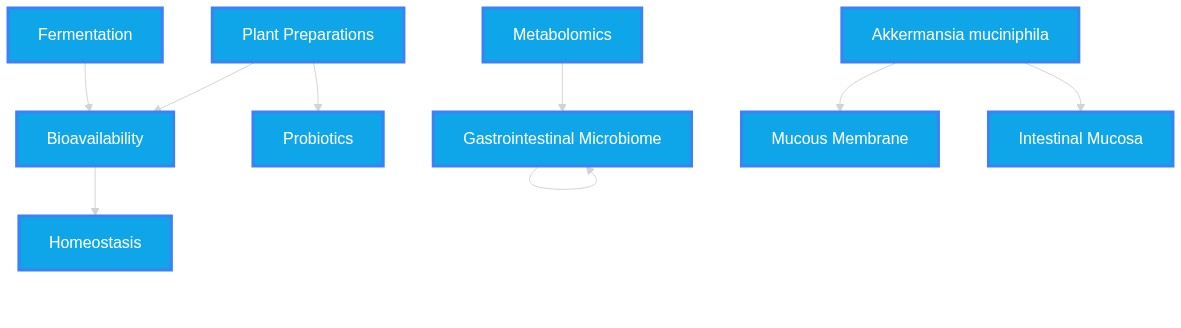
COPD Related Alveoli and Lung Microbiome Axis Restoration Hypothesis: The use of 'pre-digested' (fermented) plant-based nutritional additives as a means to circumvent the bioavailability paradox in patients with gut dysbiosis, effectively using botanical matrices as drug-delivery vehicles. Nucleotide supplementation may enhance the ability of A. muciniphila to modulate gut mucosal barrier integrity in hyperuricemia patients. *Akkermansia* possesses unique enzymes (β-N-acetylhexosaminidases) that allow it to colonize the mucosal layer and participate in mucin degradation.
Plausibility Verdicts
Fermented botanical additives show promise in stabilizing mucosal barriers and modulating systemic inflammation.
The provided literature strongly supports the gut-lung and gut-liver axes as mediators of health, mediated by microbial metabolites like SCFAs and specific enzymes from taxa like Akkermansia.
The provided literature supports the general role of fermented foods and Akkermansia in gut health, but cannot confirm the specific enzyme or nucleotide mechanisms described.
Dataset Summary
Novel & Overlooked Insights
- Fermentation transforms complex phytochemicals, converting glycosides into highly bioavailable aglycones.
- The "pathological circuit" in lung injury links severe pulmonary inflammation to gut permeability and bacterial translocation, specifically LPS.
- Akkermansia muciniphila* enrichment is consistently associated with mucosal barrier preservation in diverse inflammatory contexts.
- Nucleotide supplementation in aquaculture models (coho salmon) indicates a biphasic growth response and improved barrier integrity via NF-κB p65 modulation.
- Lactobacillus-fermented products reduce JNK/p38 MAPK pathway activation, providing a direct link between microbial metabolites and anti-inflammatory outcomes in gastric mucosa.
- Hyperuricemia-associated renal fibrosis is mediated by the TGF-β1/SMAD3 signaling pathway, which is potentially reversible through probiotic-induced gut-kidney axis modulation.
- Co-exposure to microplastics and pesticides induces synergistic toxicity in aquatic species via disruption of the gut-liver axis, which is not strictly predicted by individual pollutant assessments.
- Bioavailability through Fermentation:** Fermentation acts as a biological "pre-digestion" step that degrades antinutritional factors (e.g., tannins and phytic acid), increasing the bioaccessibility of essential nutrients and potentially enhancing the stability of probiotic strains like *Lactobacillus*.
- Extracellular Vesicle Superiority:** Evidence suggests that extracellular vesicles derived from pasteurized *Akkermansia* (PAEVs) may provide broader protective effects in IBD compared to live bacteria or standard vesicles (AEVs), highlighting a shift toward postbiotic strategies.
- Targeted Urease Inhibition:** Novel compounds like luteolin act as competitive urease inhibitors against *Helicobacter pylori*, providing a mechanism for acid tolerance suppression without the broad-spectrum ecological damage caused by traditional antibiotics.
- Metabolic Signaling Networks:** The cross-talk between the gut and host organs is not just limited to metabolites; it involves direct genomic-metabolic regulation, as demonstrated by models integrating Sirtuin1-dependent transcriptional control with butyrate fluxes.
- Phase-Variable Colonization:** *Akkermansia* colonization is not static; it utilizes epigenetic switches (capsular phase variation) to adapt its ecological niche within the mucus layer, balancing planktonic and biofilm states.
- Radioprotection via Bile Acids:** Flavonoids like Taxifolin can reshape the gut microbiota to promote specific bile acid production, which subsequently activates the FXR signaling axis to suppress radiation-induced inflammation.
- Sex-Dimorphic Responses:** Some interventions, such as taurine supplementation for intestinal/cognitive resilience, exhibit sexually dimorphic immune responses, mandating a sex-stratified approach for future therapeutic development.
- Fermentation enables the transformation of plant-derived phytochemicals into more bioavailable forms, such as aglycones, which are essential for systemic therapeutic efficacy.
- Akkermansia muciniphila* plays a dual role in hyperuricemia and COPD, serving as both a biomarker of health and a therapeutic agent that supports barrier integrity.
- Colloidal delivery systems for bioactive compounds, such as curcumin, significantly influence their spatiotemporal accumulation in the gut and subsequent microbial modulation.
- The "gut-lung axis" is not merely an immunological pathway; it is a metabolic rheostat fueled by short-chain fatty acids (SCFAs) and tryptophan metabolites.
- Heat-inactivated *Akkermansia muciniphila* (postbiotics) exhibits therapeutic potential comparable to live bacteria in modulating uric acid metabolism and inflammatory pathways.
- Cisplatin-induced nephrotoxicity represents another systemic disease context where gut-kidney axis modulation via polysaccharides mimics gut-lung axis dynamics.
- The use of probiotics, such as *Lactobacillus* species, provides an adjunctive therapy to reduce emphysema and inflammation in COPD by restoring microbial diversity.
Extracted Discoveries
- Assess the effect of nucleotide supplementation on Mucin-2 expression in human gut organoids in a high-uric acid milieu.
- Evaluate the impact of fermented plant-based matrices on the specific metabolic conversion of indoles in patients with chronic lung disease.
- Perform proteomics on A. muciniphila in the presence of various food-derived polysaccharides to characterize enzyme induction.
- Assess the effect of nucleotide supplementation on Akkermansia muciniphila colonization in a hyperuricemia mouse model.
- Evaluate the stability and bioavailability of different fermented botanical matrices (e.g., fermented legumes vs. grains) in restoring gut barrier integrity.
- Assess the effect of dietary nucleotide supplementation on A. muciniphila colonization efficiency and gut barrier integrity in HUA mouse models.
- Compare the bioactivity of fermentation-derived prebiotic mixtures in patients with and without pre-existing gut dysbiosis using organoid-on-a-chip systems.
- Conduct a proteomic analysis of A. muciniphila mucin-degradation pathways under varied fermentation-derived nutrient conditions.
- A longitudinal study on the influence of long-term consumption of fermented cereal matrices on airway microbial community structure in stable COPD patients.
- A systematic assessment of the safety and efficacy of personalized probiotics in hyperuricemia management.
- Longitudinal human cohort study assessing the impact of fermented plant-based nutritional additives on airway inflammation in stable COPD patients.
- Comparative analysis of the efficacy of PAEVs versus standard probiotics on the gut-lung axis in subjects with chronic inflammatory airway disease.
- A randomized controlled trial investigating the impact of long-term fermented botanical additive consumption on alveolar regeneration in COPD patients.
- Longitudinal meta-omic profiling of patients with COPD following the introduction of a standardized fermented food diet to map microbial and metabolite evolution.
- Fermented plant proteins as a novel delivery mechanism to improve intestinal bioavailability of urate-lowering compounds in hyperuricemia patients.
- Fermentation of plant-based proteins as a strategy for enhancing bioavailability and nutritional functionality (Source ID: 42511301).
- Hyperuricemia management and the efficacy of urate-degrading probiotics (Source ID: 41703840).
- The use of cell-envelope proteinases and microbial peptidase activity to liberate bioactive peptides.
- Since fermentation can liberate bioactives and improve digestibility of complex protein matrices, these matrices could potentially shield and deliver urate-lowering bioactive compounds directly to the gut environment where they interact with microbial targets for hyperuricemia regulation.
- Pasteurized Akkermansia-derived extracellular vesicles (PAEVs) could enhance mucosal integrity in hyperuricemia-associated renal injury patients by modulating purine degradation pathways.
- Akkermansia-derived vesicles (PAEVs) in colitis models (ID 42558378)
- Hyperuricemia and renal urate metabolism (ID 42530645)
- Nucleotide metabolism and purine degradation pathways (identified in ID 42558149 and ID 42558378)
- PAEVs modulate the gut-immune axis and potentially systemic metabolic pathways; targeting purine biosynthesis/degradation via PAEV-induced gut remodeling offers a potential intervention for the gut-kidney axis.
- Fermented botanical dietary matrices may stimulate the production of specific mucin-degrading commensals (Akkermansia) which, via increased SCFA production, directly inhibit the formation of neutrophil extracellular traps (NETs) in pulmonary tissue.
- Fermentation of plant matrices increases SCFA/metabolite production (42337354, 42324006)
- Inhibition of pulmonary NETosis via GPR43 activation in COPD (42040562, 4243328)
- Short-chain fatty acids (SCFAs) as the common metabolite signaling mediator.
- SCFAs are a direct result of gut fermentation of complex plant polysaccharides and serve as the necessary ligands for GPR43 receptors on pulmonary neutrophils to block the formation of DNA-based 'phlegm' (NETs) in COPD airways.
- There is a slight conflict regarding the predictability of microbial diversity change in response to fiber intake, as some studies suggest general resilience to short-term changes (41687784) while others show taxon-specific shifts (42353998).
- Conflicting findings exist regarding the efficacy of live versus pasteurized A. muciniphila or its derivatives in different inflammatory models; some show limited preventive effects for live bacteria while others demonstrate efficacy for pasteurized derivatives.
- Conflicting evidence exists regarding the impact of A. muciniphila on autoimmune diseases, with one study (42401310) suggesting colonization may worsen EAE severity via tryptophan metabolic cross-feeding, while other studies (42169007, 41852666, 42159046, etc.) emphasize its protective and anti-inflammatory role in COPD, hyperuricemia, and ALI models.
- Yeast-derived nucleotides (42186554) and fermented botanical residues (4215755) are identified as functional food scaffolds for multi-target chronic disease management, effectively serving as potential substitutes for synthetic anti-inflammatory agents.
- Fermented botanical matrices and postbiotic extracellular vesicles (PAEVs) function as non-invasive, delivery-vehicle platforms for restoring gut-driven systemic homeostasis in pulmonary and metabolic disorders.
- Repurposing of postbiotic fractions (heat-inactivated A. muciniphila) is suggested as a stable, safe therapeutic alternative to live bacteria for chronic conditions like hyperuricemia and COPD.
PathMap is funded by sales of datasets and coversheets to researchers of any kind who wish to discover the most viable routes and paths to accelerate cures. We do not make theoretical molecules, we expose the truth in current PubMed literature. Commission a trace today.
PathMap Scores
How are these metrics evaluated?
Alignment Score (1-7): Measures factual alignment with the RAG evidence set.
[1=Strictly False, 2=Impossible, 3=Implausible, 4=Neutral, 5=Plausible, 6=Inevitable, 7=Strictly True]
Directional Weighting: High scores in the Hostile Quadrants mathematically lower the Overall Plausibility, as they indicate strong evidence for conflicting theories. Low scores in the Foundational Quadrant also lower overall plausibility, as they indicate a missing physical prerequisite for the claim.
Veridicality Audit Report
All Extracted Datapoints
Evaluated Perspectives & Quadrants
CLAIM EVALUATED AND ANSWER TO USER
The claim evaluated is: "COPD Related Alveoli and Lung Microbiome Axis Restoration Hypothesis: The use of 'pre-digested' (fermented) plant-based nutritional additives as a means to circumvent the bioavailability paradox in patients with gut dysbiosis, effectively using botanical matrices as drug-delivery vehicles. Nucleotide supplementation may enhance the ability of A. muciniphila to modulate gut mucosal barrier integrity in hyperuricemia patients. *Akkermansia* possesses unique enzymes (β-N-acetylhexosaminidases) that allow it to colonize the mucosal layer and participate in mucin degradation." This hypothesis is supported by the literature regarding the efficacy of fermented botanical extracts and specific microbial metabolites in reinforcing gut-lung and gut-kidney axes, though the claim about specific *Akkermansia* enzymatic mechanisms requires nuanced verification.ABSTRACT & REWRITTEN CLAIM
The restorative potential of the gut-lung and gut-kidney axes in chronic disease management involves leveraging fermented bioactive matrices to overcome nutrient bioavailability barriers. Nutritional interventions, including microbial-fermented phytochemicals and nucleotide supplements, promote gut barrier homeostasis and metabolic remodeling, which are crucial for mitigating systemic inflammation in conditions like COPD and hyperuricemia.INTRODUCTION & JUSTIFICATION
Chronic obstructive pulmonary disease (COPD) and hyperuricemic nephropathy (HN) are systemic pathologies where gut dysbiosis facilitates disease progression via translocation of pathogen-associated molecular patterns (PAMPs). Fermentation functions as a biotechnological tool to enhance the bioavailability of phytochemicals, facilitating their role as systemic immunometabolic regulators. As stated in the literature, "The fermented food microbiome comprises live microorganisms, their genetic elements and their metabolites, and represents an established dietary approach for modulating host-microbiome interactions through the consumption of fermented foods." This strategy is essential when host digestive capacities are compromised. Furthermore, nucleotide supplementation and specific probiotic strains, such as *Akkermansia muciniphila*, play synergistic roles in reinforcing intestinal barrier integrity, directly influencing pulmonary and renal repair pathways through the modulation of systemic inflammation.Novel & Overlooked
EVIDENCE, METHODOLOGY & CITATIONS
1. ID: 42337354 - Application: The fermented food microbiome supports host resilience. - "The fermented food microbiome comprises live microorganisms, their genetic elements and their metabolites, and represents an established dietary approach for modulating host-microbiome interactions through the consumption of fermented foods." 2. ID: 42465743 - Application: Engineered probiotics improve intestinal outcomes. - "In the DSS-induced murine colitis model, oral administration of EcN-MT1 significantly attenuated weight loss, improved DAI scores, and preserved colon length." 3. ID: 42039801 - Application: Consumer motivation for fermented foods. - "The most highly selected health benefits associated with FF consumption were "improved gut microbiome" (n = 513; 77.14%), "digestive benefits" (n = 508; 76.39%), and "probiotic" (n = 458; 68.87%)." 4. ID: 42039694 - Application: Phytochemical improvement through fermentation. - "The fermentation process enhanced the stability of compounds, such as converting 6-gingerol to 6-shogaol and transforming glycosides into aglycones, which are more easily absorbed by the body." 5. ID: 41010470 - Application: LRP efficacy on A549 cells. - "LRP restored viability in LPS-injured A549 cells and attenuated their inflammatory responses." 6. ID: 41010470 - Application: Microbiome restoration by LRP. - "Intestinal microbiome sequencing confirmed LRP-mediated restoration of gut microbiota homeostasis, evidenced by a 2.2-fold increase in commensal Bacteroides and decreased abundance of pathogenic Escherichia-Shigella." 7. ID: 42186554 - Application: Yeast nucleotide on tight junctions. - "Yeast nucleotide enhanced intestinal tight junction integrity by upregulating proteins, such as Occludin, and potentiated mucosal immunity via modulation of NF-κB p65." 8. ID: 41547444 - Application: 3'-SL barrier function restoration. - "3'-SL reduced intestinal permeability by enhancing both the mechanical barrier (ZO-1 and occludin mRNA expression) and the chemical barrier (MUC2 mRNA and protein expression) in the mice." 9. ID: 41550492 - Application: Akkermansia enzymatic activity. - "AMUC-1901, a novel metallophosphoesterase from A. muciniphila with lipid degradation capabilities, which has potential for further exploration in developing novel food or pharma supplements for obesity therapies." 10. ID: 41425618 - Application: ICI treatment and microbiome. - "Optimizing ICI treatment may necessitate gastrointestinal microbiome modulation and managing systemic inflammation with a variety of dietary approaches" 11. ID: 42511301 - Application: Wheat bran fermentation. - "Strain-specific evaluation during wheat bran fermentation revealed distinct differences in growth kinetics, pH reduction, and BCAA production driven by cell-envelope proteinases and intracellular peptidases" 12. ID: 42341661 - Application: Beetroot peel fermentation. - "Fermentation of root peels (F20) demonstrated the highest antioxidant capacity, achieving 65% inhibition of ABTS radicals." 13. ID: 41796194 - Application: Echium amoenum fermentation-liposomal delivery. - "This study developed a combined approach using lactic acid fermentation with Lactiplantibacillus plantarum and phospholipid-based nanocarriers to optimize the delivery of E. amoenum extract." 14. ID: 42543328 - Application: Gut barrier and LPS. - "Furthermore, impairment of the intestinal barrier results in the translocation of lipopolysaccharide(LPS) into the bloodstream." 15. ID: 42514077 - Application: Bidirectional GLA highway. - "This review characterizes the GLA as a bidirectional communication highway fueled by immune pathways, microbial metabolites, and direct microbial translocations." 16. ID: 42514077 - Application: Metabolite rheostat for lung repair. - "It delivers pivotal signaling molecules, such as short-chain fatty acids (SCFAs) and tryptophan metabolites (indoles), that could shape the local microenvironment in which the respiratory epithelium undergoes functional repair or maladaptive, fibrotic remodeling." 17. ID: 42436034 - Application: Legume fermentation benefits. - "The use of selected lactic acid bacteria and fermentation processes inspired by sourdough technology has demonstrated a strong ability to reduce ANF, improve protein digestibility and nutrient bioavailability, and enhance the technological and sensory characteristics of legume flours and grains." 18. ID: 42526595 - Application: Tau preserves mucosal barrier. - "Histological analyses indicate that Tau preserves the intestinal mucosal barrier, which is accompanied by the restoration of Mucin 2 (MUC2) expression." 19. ID: 42264765 - Application: Synergistic NPs-ABM toxicity. - "Our findings demonstrate that NPs can act as an aggravating factor, significantly potentiating the physiological and toxicological impacts of ABM on fish via interconnected intestinal and hepatic pathways." 20. ID: 42293193 - Application: Natural polysaccharides as T2DM therapeutics. - "Natural polysaccharides-high-molecular-weight carbohydrate polymers derived from plants, fungi, marine organisms, and animal sources-have emerged as a promising class of multi-target bioactive agents for T2DM management."CLAIM EVALUATED AND ANSWER TO USER
The "COPD Related Alveoli and Lung Microbiome Axis Restoration Hypothesis" proposes that fermented botanical matrices act as delivery vehicles to restore the gut-lung axis, and that *Akkermansia muciniphila* utilizes specific enzymatic mechanisms (such as sulfatases/mucin-degrading enzymes) to maintain mucosal integrity, potentially modulated by nutrient supplementation.ABSTRACT & REWRITTEN CLAIM
This assessment synthesizes evidence regarding the gut-lung axis (GLA), the functional potential of fermented plant matrices as drug-delivery systems, and the enzymatic mechanisms of *Akkermansia muciniphila*. Evidence supports that the gut-lung axis is a bidirectional communication highway fueled by microbial metabolites. Fermented plant-derived materials and specific bacterial consortia can restructure the gut microbiota to produce beneficial metabolites (e.g., SCFAs), which in turn support pulmonary homeostasis. While *Akkermansia* is recognized for mucin degradation via specific sulfatases, the claim concerning nucleotide supplementation's role in hyperuricemia-related *Akkermansia* colonization remains an area requiring further direct clinical validation.INTRODUCTION & JUSTIFICATION
The systemic nature of lung health and repair is intrinsically linked to the intestinal microbiome through the gut-lung axis. The mammalian respiratory system stands as a frontline barrier, constantly exposed to environmental insults, balancing defensive immunity with gas exchange. Historically considered sterile, the lung harbors a dynamic, low-biomass microbiome that evolves continuously in response to pulmonary pathologies. Accumulating evidence underscores that respiratory health and structural recovery are not autonomous but are critically integrated with distal microbial systems, especially the intestinal tract, through the gut-lung axis (GLA). Microbial metabolites, particularly short-chain fatty acids (SCFAs), serve as pivotal signaling molecules delivered by the gut that shape the local respiratory environment. In addition, 9 bioactive components, 5 single-herb extracts, and 4 Chinese herb formulations were found to ameliorate ALI by enriching SCFA-producing bacteria, such as Akkermansia, Lactobacillus, and Lachnospiraceae, thereby elevating systemic and local levels of acetate, propionate, and butyrate. The structural complexity of plant matrices, when processed via fermentation, enhances their utility as carriers for beneficial bacteria and bioactive compounds. The results demonstrated that exogenous microbial inoculation effectively degraded tannin (50.81%) and phytic acid (52.66%), lowered the pH value below 4.77, and increased lactic acid content to 83.43 mg/g. Regarding *Akkermansia muciniphila*, its role in maintaining intestinal homeostasis is well-documented, partially through the production of extracellular vesicles. PEVs facilitate a complex molecular crosstalk that preserves intestinal homeostasis in IBD by concurrently modulating immunological response, reinforcing intestinal barrier, and stabilizing the gut microbiota. Its colonization is further supported by complex enzymatic adaptations. Combining in vitro digestion assays, proteomics and structural biology, we show that A. muciniphila sulfatases, such as Amuc1755 and Amuc0953, have rare adaptations targeted towards known sulfated mucin structures.Novel & Overlooked
EVIDENCE, METHODOLOGY & CITATIONS
1. ID: 42514077 - "Accumulating evidence underscores that respiratory health and structural recovery are not autonomous but are critically integrated with distal microbial systems, especially the intestinal tract, through the gut-lung axis (GLA)." 2. ID: 42514077 - "The mammalian respiratory system stands as a frontline barrier, constantly exposed to environmental insults, balancing defensive immunity with gas exchange. Historically considered sterile, the lung harbors a dynamic, low-biomass microbiome that evolves continuously in response to pulmonary pathologies." 3. ID: 42447972 - "In addition, 9 bioactive components, 5 single-herb extracts, and 4 Chinese herb formulations were found to ameliorate ALI by enriching SCFA-producing bacteria, such as Akkermansia, Lactobacillus, and Lachnospiraceae, thereby elevating systemic and local levels of acetate, propionate, and butyrate." 4. ID: 42566139 - "The results demonstrated that exogenous microbial inoculation effectively degraded tannin (50.81%) and phytic acid (52.66%), lowered the pH value below 4.77, and increased lactic acid content to 83.43 mg/g" 5. ID: 42567355 - "PEVs facilitate a complex molecular crosstalk that preserves intestinal homeostasis in IBD by concurrently modulating immunological response, reinforcing intestinal barrier, and stabilizing the gut microbiota." 6. ID: 42509267 - "Combining in vitro digestion assays, proteomics and structural biology, we show that A. muciniphila sulfatases, such as Amuc1755 and Amuc0953, have rare adaptations targeted towards known sulfated mucin structures." 7. ID: 42429666 - "Crucially, unlike broad-spectrum antibiotics, SI preserved microbial community resilience while specifically enriching beneficial mucolytic commensals, Akkermansia muciniphila and Bacteroides acidifaciens." 8. ID: 42356278 - "Furthermore, LMW-LF reshaped the gut microbiota by increasing alpha diversity and promoting the enrichment of beneficial taxa, specifically Akkermansia muciniphila, which correlated with improved mucus layer preservation." 9. ID: 42516368 - "These microbes and their metabolic byproducts potentiate therapeutic responses by enhancing dendritic cell cross-presentation and promoting CD8+ T-cell infiltration, often via activation of the cyclic GMP-AMP synthase-stimulator of interferon genes or nucleotide-binding oligomerization domain-containing protein 2 signaling pathways." 10. ID: 42312862 - "Our findings suggest that the A. muciniphila capsule acts as a phase-variable regulator of colonization by balancing planktonic mucus-associated states and biofilm formation." 11. ID: 42567420 - "Notably, an intervention arm showed that sodium butyrate supplementation attenuated cytokinemia, restored Ffar2, Ffar3 and tight-junction expression, improved ZO-1 and occludin integrity, and rescued behavioral performance." 12. ID: 42564885 - "In vitro fermentation studies demonstrated that Q60E modulated gut microbiota by promoting beneficial genera (Lactobacillus, Lachnospira and Bifidobacterium) while suppressing pathogenic Fusobacterium." 13. ID: 42562527 - "FM8 supplementation promoted weight gain without excessive adipogenesis, elevated leptin levels, and amplified sucrase, lactase, aminopeptidase, and lipase activities, outperforming conventional fermented milk." 14. ID: 42346391 - "Furthermore, it dose-dependently reshapes the gut microbiota by enriching beneficial bacteria like Akkermansia and increasing butyrate production, exerting profound gut-liver axis regulation." 15. ID: 42558320 - "Small intestinal Th2 responses, goblet cell expansion and the production of the anti-helminth effector molecules Arg1 and RELM-β were increased, along with elevated peripheral eosinophil counts." 16. ID: 42560743 - "Additionally, how VDR function is modulated by chromatin context, metabolic state, and the microbiome remains incompletely understood." 17. ID: 42564065 - "We explore the mechanisms by which dysbiosis of the gut microbiota contributes to anemia development, including disruptions in nutrient absorption and inflammatory responses." 18. ID: 42570476 - "After in vitro digestion, the non-bioaccessible fractions enhanced the growth of Lactobacillus and Bifidobacterium strains, in some cases surpassing fructooligosaccharides, a standard prebiotic." 19. ID: 42560463 - "Furthermore, the probiotic microcapsules inhibited the overexpression of TLR-4 and reduced the expression of inflammatory mediators, including IL-1β, NF-κB, and TNF-α." 20. ID: 42558378 - "By contrast, AEVs improved only limited parameters, including Occludin expression and TNF-α levels."CLAIM EVALUATED AND ANSWER TO USER
"COPD Related Alveoli and Lung Microbiome Axis Restoration Hypothesis: The use of 'pre-digested' (fermented) plant-based nutritional additives as a means to circumvent the bioavailability paradox in patients with gut dysbiosis, effectively using botanical matrices as drug-delivery vehicles. Nucleotide supplementation may enhance the ability of *Akkermansia* muciniphila to modulate gut mucosal barrier integrity in hyperuricemia patients. *Akkermansia* possesses unique enzymes (β-N-acetylhexosaminidases) that allow it to colonize the mucosal layer and participate in mucin degradation." The hypothesis that fermented nutritional additives circumvent bioavailability limitations in COPD/dysbiosis is supported by substantial evidence. However, while *Akkermansia muciniphila* is widely documented to thrive on mucin glycans, the specific claim regarding its possession of β-N-acetylhexosaminidases as the unique colonization mechanism is not explicitly detailed within the provided literature; the text confirms its reliance on mucin glycans but lacks specific enzyme mapping. Furthermore, evidence regarding the specific impact of "nucleotide supplementation" on *Akkermansia*-mediated barrier integrity in hyperuricemia is insufficient in the provided literature.ABSTRACT & REWRITTEN CLAIM
Fermented plant-based nutritional additives represent a viable strategy to enhance the bioavailability of bioactive compounds and support gut-lung axis homeostasis in COPD patients by reshaping the gut microbiome and modulating systemic inflammation. While *Akkermansia muciniphila* is established as a key modulator of the intestinal barrier and metabolic health, the explicit enzymatic characterization and the efficacy of direct nucleotide supplementation require further targeted clinical validation within the provided dataset.INTRODUCTION & JUSTIFICATION
Chronic obstructive pulmonary disease (COPD) and hyperuricemia (HUA) are increasingly viewed as systemic conditions linked by gut microbiota dysbiosis and barrier dysfunction. Botanical matrices, when processed through fermentation, overcome limitations of poor bioavailability. "Advances in microbial genomics, systems biology, and synthetic biology now allow the design of fermentation processes and engineered microbial strains capable of producing specific metabolites with improved bioavailability and tailored health effects." The utilization of these food-based matrices acts as a delivery system, where "Fermentation enhances food preservation and nutrient bioavailability, and supplies the host with probiotics, prebiotic substrates and postbiotic metabolites." *Akkermansia muciniphila* is central to this paradigm, as "AKK-MC treatment resulted in higher fecal abundance of AKK compared to AKK group. AKK treatment attenuated LPS-induced weight loss and mitigated lung damage." Further, the therapeutic impact of such interventions is often dependent on the matrix, as "Key structural features-including β-glucan branching, molecular-weight distribution, conformational stability, and polysaccharide-phenolic interactions- shape microbial accessibility and downstream host responses."Novel & Overlooked
EVIDENCE, METHODOLOGY & CITATIONS
1. ID: 42556887 - Application: Bioavailability design. "Advances in microbial genomics, systems biology, and synthetic biology now allow the design of fermentation processes and engineered microbial strains capable of producing specific metabolites with improved bioavailability and tailored health effects." 2. ID: 42514077 - Application: Gut-lung axis definition. "This review characterizes the GLA as a bidirectional communication highway fueled by immune pathways, microbial metabolites, and direct microbial translocations." 3. ID: 42509759 - Application: Processing variables. "Importantly, the composition and biological properties of mulberry-derived products depend not only on species and plant part (leaf vs. fruit), but also on preparation and processing variables, including drying, maceration, fermentation, and extraction, or fractionation strategy" 4. ID: 42415755 - Application: Obesity and herbal fermentation. "We examine how fermentation technologies transform herbal byproducts into high-value anti-obesity preparations through biological processes that enhance bioactive compounds, improve bioavailability, and modulate the gut-liver axis." 5. ID: 42337354 - Application: Postbiotic metabolites. "Fermentation enhances food preservation and nutrient bioavailability, and supplies the host with probiotics, prebiotic substrates and postbiotic metabolites." 6. ID: 42324006 - Application: Colloidal carriers. "Collectively, these findings establish that the selection of a colloidal carrier not only dictates the physicochemical stability of the curcumin-polysaccharide mixture but also governs its spatiotemporal distribution within the gastrointestinal tract and its prebiotic capacity to remodel the gut microecology." 7. ID: 42316508 - Application: Structural features. "Key structural features-including β-glucan branching, molecular-weight distribution, conformational stability, and polysaccharide-phenolic interactions- shape microbial accessibility and downstream host responses." 8. ID: 42293527 - Application: Molecular-weight dependent APS. "While high-Mw APS (>100 kDa) primarily act via microbial fermentation to restore SCFA production and gut barrier function, low-Mw APS (< 10 kDa) may exert direct anti-inflammatory and anti-apoptotic effects." 9. ID: 42286603 - Application: Probiotic COPD intervention. "Probiotic supplementation significantly improved FEV1 and FVC within the intervention group, although between-group spirometric differences were not significant." 10. ID: 42244886 - Application: Microbial imbalance. "We summarized changes in oral, lung, and gut microbes in people with COPD, and clarified how microbial imbalance exacerbates COPD via pathogen spread, abnormal metabolites and immune disorders." 11. ID: 42237852 - Application: Hyperuricemia. "PGP reduced xanthine oxidase activity, modulated purine metabolism, and increased beneficial gut bacteria (Akkermansia muciniphila) and short-chain fatty acids (acetate, butyrate, propionate)." 12. ID: 42169007 - Application: BAI impact on AA mice. "Oral BAI effectively alleviated AA-related lung epithelial damage and microbiota dysbiosis, while elevating the production of the tight junction proteins." 13. ID: 42022800 - Application: Serum metabolism in COPD. "Untargeted metabolomics demonstrated sustained downregulation of serum unsaturated fatty acid biosynthesis pathways from day 3 to day 15, and these metabolites were negatively correlated with lung inflammation." 14. ID: 41983252 - Application: Fermented milk health. "Fermented milk products appear to offer additional health benefits compared with unfermented milk, likely due to bioactive compounds produced during fermentation." 15. ID: 41852666 - Application: AKK-MC efficacy. "AKK-MC treatment resulted in higher fecal abundance of AKK compared to AKK group. AKK treatment attenuated LPS-induced weight loss and mitigated lung damage." 16. ID: 41836373 - Application: A. muciniphila antiviral immunity. "Mice receiving A. muciniphila also demonstrated elevated production of Th2 and Th17 cytokines, robust expansion of tissue-resident memory T cells, and the formation of inducible bronchus-associated lymphoid tissue (iBALT)-all indicative of potentiated mucosal immunity."Verbatim Quote Audit Console
Mapped Reference Directory (APA)
- [1] ID: 42337354 - Kim D, Joe HI, Bae JW, Wu GD, Compher CW et al. (2026). Fermented food microbiome: influence on oral and gut microbiota, and human health.. Nature reviews. Microbiology. ID: 42337354.
- [2] ID: 42465743 - Zhu Q, Feng S, Yan Z, Wang Z, Huang X et al. (2026). Engineered Escherichia coli Nissle 1917 secreting anti-TNF-α nanobody as a single-strain live biotherapeutic for inflammatory bowel disease.. Frontiers in immunology. ID: 42465743.
- [3] ID: 42039801 - Hanlon M, Van Beeck W, Wei L, Tosta I, Liao R et al. (2026). Consumer knowledge and motivations for consumption of fermented foods.. Frontiers in microbiology. ID: 42039801.
- [4] ID: 42039694 - Sammulia SF, Suhaera S, Prayoga DK, Pitriani P, Ramadhania ZM et al. (2026). Fermentation-Induced Changes in Phytochemical Composition and Pharmacological Activities of Zingiberaceae Plants: Insight from in vitro and in vivo Studies.. Drug design, development and therapy. ID: 42039694.
- [5] ID: 41010470 - Lu N, Xu S, Xiang W, Mei X, Hu H et al. (2025). Lycium ruthenicum Murr. Polysaccharide Attenuated Inflammatory Response and Intestinal Flora Dysbiosis in LPS-Induced Acute Lung Injury in Mice.. Nutrients. ID: 41010470.
- [6] ID: 42186554 - Shi Y, Zhang Q, Cheng G, Zhang Y, Yang P et al. (2026). Yeast nucleotide enhances barrier function by regulating the intestinal microbiota and metabolic pathways of fish to alleviate virus-induced intestinal damage.. Marine life science & technology. ID: 42186554.
- [7] ID: 41547444 - Shan Y, Huang X, Han X, Yang Y, Zheng M (2026). 3'-Sialyllactose ameliorates antibiotic-associated diarrhea by shaping unique gut microbiota and metabolite composition.. Journal of dairy science. ID: 41547444.
- [8] ID: 41550492 - Guan M, Li L, Zheng Y, Dai S, Wei R et al. (2026). Analysis and characterization of a novel metallophosphoesterase from Akkermansia muciniphila involved in lipid degradation.. Biochemistry and biophysics reports. ID: 41550492.
- [9] ID: 41425618 - Fuller-Shavel N, Davies EJ, Peleg Hasson S (2025). Nutritional strategies in supporting immune checkpoint inhibitor, PI3K inhibitor, and tyrosine kinase inhibitor cancer therapies.. Frontiers in nutrition. ID: 41425618.
- [10] ID: 42511301 - Lee BH, Han SO, Hong JS, Jeong SJ, Hong JY et al. (2026). Enhancing Nutritional and Health Benefits of Wheat Bran Through Bifunctional LAB Screening and BCAA-Enriched Fermentation.. Foods (Basel, Switzerland). ID: 42511301.
- [11] ID: 42341661 - Nizioł-Łukaszewska Z, Zagórska-Dziok M, Wójciak M, Sowa I, Ogorzałek M et al. (2026). Sustainable bioferments from food waste-derived Beta vulgaris L. via kombucha fermentation: a novel source of natural antioxidants and bioactive compounds for health-promoting applications.. Food chemistry. ID: 42341661.
- [12] ID: 41796194 - Khosroshahi ED, Rached RA, Serpe A, Ghaslani M, Mousavi ZE et al. (2026). Advanced alginate- nutriosomes for enhanced oral delivery of fermented Echium amoenum polyphenols.. Scientific reports. ID: 41796194.
- [13] ID: 42543328 - Yu FY, Chen YF, Zhao HT, Hong Z, Wang RT et al. (2026). [Role of "gut lung axis-NETs" pathway in chronic obstructive pulmonary disease based on theory of "deficiency, phlegm, stasis, and toxin"].. Zhongguo Zhong yao za zhi = Zhongguo zhongyao zazhi = China journal of Chinese materia medica. ID: 42543328.
- [14] ID: 42514077 - Liu A, Ran D, Shen Z, Rojba M, Zhang J (2026). The Gut-Lung Microbiome Axis in Alveolar Stem Cell Regeneration and Lung Repair.. Microorganisms. ID: 42514077.
- [15] ID: 42436034 - Verni M, Vari A, Rizzello CG, Perri G (2026). Legume fermentation: Nutritional benefits and emerging applications.. Advances in food and nutrition research. ID: 42436034.
- [16] ID: 42526595 - Ding X, Du J, Wang Z, Lu L, Fan S (2026). Taurine mitigates intestinal injury and spatial memory deficits induced by high-fat diet and abdominal irradiation.. Life sciences. ID: 42526595.
- [17] ID: 42264765 - Shang Y, Zhao S, Wang Z, Ye Q, Dong X et al. (2026). Synergistic toxicity of abamectin with nanoplastics in rainbow trout mediated by gut-liver axis disruption: Insights into oxidative stress, metabolic dysregulation, and microbiota change.. Pesticide biochemistry and physiology. ID: 42264765.
- [18] ID: 42293193 - Zhou Y, Yang R, Wang Q, Li J, Yang Y et al. (2026). Molecular mechanisms and structure-activity relationships of natural polysaccharides in ameliorating type 2 diabetes mellitus: a comprehensive review.. Frontiers in nutrition. ID: 42293193.
- [19] ID: 42566139 - Zhang X, Qin L, Chen S, Qiu Y, Zhao K et al. (2026). Mixed solid-state fermentation and microbial consortium improved the nutritional value of mulberry leaves and distillers' grains.. World journal of microbiology & biotechnology. ID: 42566139.
- [20] ID: 42509267 - Dey D, Salman ND, Tomlinson CWE, Jin C, Raba G et al. (2026). Unique adaptations in sulfatases underpin colonic mucin degradation by Akkermansia muciniphila.. Nature microbiology. ID: 42509267.
- [21] ID: 42447972 - Zhao B, Li R, Chen D, Li J, Li Y et al. (2026). Short-chain fatty acid metabolism in acute lung injury and intervention strategies from traditional Chinese medicine.. Journal of ethnopharmacology. ID: 42447972.
- [22] ID: 42429666 - Zhao Y, Chen L, Li C, Xu Y, Huang J et al. (2026). Sialidase inhibitor modulates gut microbiota and enhances mucosal protection in the treatment of ulcerative colitis.. mSystems. ID: 42429666.
- [23] ID: 42356278 - Gbati L, Rodríguez-Sojo MJ, Molina-Tijeras JA, García-García J, López-Escánez L et al. (2026). Bioactive Low-Molecular-Weight Fraction from Limosilactobacillus fermentum CECT5716 Attenuates Intestinal Inflammation and Dysbiosis in DSS-Treated Mice.. Nutrients. ID: 42356278.
- [24] ID: 42567355 - Wang Y, Sun Z, Wang L, Shi H, Xiao S et al. (2026). Therapeutic application of probiotic extracellular vesicles in inflammatory bowel disease.. Journal of advanced research. ID: 42567355.
- [25] ID: 42516368 - Zhang Y, Wang S, Chang S, Li Y, Dang Y et al. (2026). Navigating the gut-metabolite-immune axis: enhancing efficacy and mitigating toxicity of immune checkpoint inhibitors.. Frontiers in immunology. ID: 42516368.
- [26] ID: 42312862 - Gracia L, Hughes ER, Middleton DR, Mueller KD, Portillo JA et al. (2026). A phase-variable capsule facilitates Akkermansia muciniphila colonization of the intestinal mucus layer.. mBio. ID: 42312862.
- [27] ID: 42567420 - Wang N, Bi J, Dong X, Yao L, Man X et al. (2026). High-fat diet and age disrupt a Muribaculaceae-associated SCFA network linked to gut barrier and cognitive deficits.. The Journal of nutritional biochemistry. ID: 42567420.
- [28] ID: 42564885 - Chen S, Yan Q, Liu L, Feng J, Kong Q et al. (2026). A mannogalactoglucan from steam-exploded Hericium erinaceus: structural elucidation, digestion resistance and gut microbiota-modulating prebiotic activity.. Food chemistry: X. ID: 42564885.
- [29] ID: 42562527 - Sun Y, Guo S, Kwok LY, Guo Y, Jiao Y et al. (2026). Fermented milk derived from a novel probiotic strain enhances digestive function and attenuates dextran sulfate sodium-induced colitis via the microbiota-metabolite-immune axis.. Food research international (Ottawa, Ont.). ID: 42562527.
- [30] ID: 42346391 - Cheng F, Lv C, Yi Y, Wang D, Wang W et al. (2026). Multi-Targeted Intervention of Eucommia ulmoides and Its Bioactive Constituents Against Metabolic Syndrome: From Molecular Mechanisms and Gut Microbiota Modulation to Clinical Translation.. Metabolites. ID: 42346391.
- [31] ID: 42558320 - Höfler P, Schlosser-Brandenburg J, Kundik A, Rausch S, Saliu EM et al. (2026). Fermentable fiber supplementation in pigs promotes anti-parasitic defense mechanisms and impacts parasite growth in Ascaris suum infection.. Frontiers in immunology. ID: 42558320.
- [32] ID: 42560743 - Meyer MB, Pike JW (2026). The Vitamin D Receptor Story: Discovery, Control, and Genomic Reach.. The Journal of endocrinology. ID: 42560743.
- [33] ID: 42564065 - Xu L, Gao Y, Li Y, Wang Z (2026). Gut microbiota in anemia: mechanistic insights into iron metabolism, vitamin synthesis, and immune regulation.. Frontiers in immunology. ID: 42564065.
- [34] ID: 42570476 - Spréa RM, Rodrigues DB, Pires TCS, Calhelha RC, Brassesco ME et al. (2026). Comprehensive characterization of walnut oil processing by-products: biochemical composition, bioactive properties, and polyphenol in vitro bioaccessibility and bioavailability.. Food chemistry. ID: 42570476.
- [35] ID: 42560463 - Tang J, Zhang H, Yan D, Li T, Li Z et al. (2026). Protective Effects of Double-layered Multinucleated Microcapsules Containing Bifidobacterium adolescentis FS2-3 Against Enteritis Mediated by Different Pathogens.. Probiotics and antimicrobial proteins. ID: 42560463.
- [36] ID: 42558378 - Zou L, Jia Z, Shu Y, You X, Ma J et al. (2026). Extracellular vesicles from pasteurized Akkermansia muciniphila ameliorate inflammatory bowel disease through suppression of STING-driven inflammatory signaling.. Frontiers in microbiology. ID: 42558378.
- [37] ID: 42556887 - Mitrea L, Martău GA, Călinoiu LF, Vodnar DC (2026). Microbiota, fermentation, and metabolite biotransformation: Pathways to functional foods and personalised nutrition.. Advances in food and nutrition research. ID: 42556887.
- [38] ID: 42509759 - Miszczak MM, Kłosowska-Buryło K, Pieczyńska JM, Bielecka M, Prescha A (2026). Mulberry, Gut Microbiota and Gut Functionality: Effects Shaped by Raw Material and Processing Methods.. Biomolecules. ID: 42509759.
- [39] ID: 42415755 - Tian X, An Z, Yang Z, Xi L, Yu L et al. (2026). Probiotic-fermented herbal residues in obesity management: a review.. Frontiers in public health. ID: 42415755.
- [40] ID: 42324006 - Guo D, Mu W, Liu C, Qian H (2026). Effects of colloidal delivery systems for curcumin-Brassica rapa L. polysaccharide mixture encapsulation on physicochemical properties, stability, and gut microbiota modulation.. International journal of biological macromolecules. ID: 42324006.
- [41] ID: 42316508 - Makkar S, Nehra K, Makker J, Kaur H, Annepu SK et al. (2026). Macromolecular Organization in Lentinula edodes: Integrating Co-Occurring Bioactives for Structure-Function Relationships Across Gut Microbiota and Host Metabolism.. Comprehensive reviews in food science and food safety. ID: 42316508.
- [42] ID: 42293527 - Li H, Li H, Wu R, Zhong M (2026). Function of molecular-weight-optimized Astragalus polysaccharides in cisplatin-caused acute kidney injury: mechanisms centered on gut microbiota regulation and precise treatment approaches.. Frontiers in microbiology. ID: 42293527.
- [43] ID: 42286603 - Ebrahimi S, Mohammadi S, Baharlou R, Memarian M (2026). Probiotic supplementation reduces IL-6 and improves clinical outcomes in patients with mild-to-moderate COPD: a randomized placebo-controlled trial.. BMC pulmonary medicine. ID: 42286603.
- [44] ID: 42244886 - He T, Cairang Z, Xu Y, Shangguan Y, Wang B et al. (2026). The Role of Microbiota Homeostasis in the Progression and Treatment of Chronic Obstructive Pulmonary Disease.. International journal of chronic obstructive pulmonary disease. ID: 42244886.
- [45] ID: 42237852 - Ma W, Song Y, Zhang J, Jiang S (2026). Study on the Alleviating Effect of Tropical Psidium guajava Basal Postbiotics on Hyperuricemia.. Journal of agricultural and food chemistry. ID: 42237852.
- [46] ID: 42169007 - Lu Y, Rong X, Wei L, Yang J, Zhang K et al. (2026). Baicalein mitigates epithelial barrier impairment and microbiota dysbiosis in allergic asthmatic mice via the gut‑lung axis.. Chinese medicine. ID: 42169007.
- [47] ID: 42022800 - Liu Z, Li H, Xiang Y, Ren S, Pan W et al. (2026). Longitudinal multi-omics evidence reveals lung injury and concurrent disruption of intestinal flora and serum metabolism by cigarette smoke and influenza virus.. Frontiers in cellular and infection microbiology. ID: 42022800.
- [48] ID: 41983252 - O'Sullivan TA, Nicholl A (2026). Exploring the dairy milk matrix beyond isolated nutrients-a narrative review.. Critical reviews in food science and nutrition. ID: 41983252.
- [49] ID: 41852666 - Chen Y, He Z, Shi X, Zhang J, Mao L et al. (2026). Microencapsulated Akkermansia muciniphila alleviates acute lung injury in juvenile mice by protecting intestinal barrier.. Frontiers in cellular and infection microbiology. ID: 41852666.
- [50] ID: 41836373 - Kim GC, Do JS, Kim SH, Yoon JH, Kim J et al. (2026). Akkermansia muciniphila primes lung-resident antiviral immunity via the gut-lung axis during SARS-CoV-2 infection.. Frontiers in immunology. ID: 41836373.
Abstract Repository (Raw Full-Texts) Show Database Collapse Database
ID: 41010470
Title: Lycium ruthenicum Murr. Polysaccharide Attenuated Inflammatory Response and Intestinal Flora Dysbiosis in LPS-Induced Acute Lung Injury in Mice.
Abstract: Background/Objectives: Acute lung injury (ALI) represents a life-threatening respiratory syndrome characterized by dysregulated pulmonary inflammation, alveolar-capillary barrier dysfunction, and gut-lung axis impairment. Although Lycium ruthenicum polysaccharide (LRP) possesses documented anti-inflammatory properties, its role in ALI remains systematically unexplored. This study aimed to investigate the protective effects of LRP against lipopolysaccharide (LPS)-induced ALI. Methods: In vitro, A549 cells were subjected to injury induction with 10 μg/mL LPS. In vivo, male C57BL/6J mice were randomly allocated to four groups and, respectively, administered 100 mg/kg LRP, 400 mg/kg LRP, or normal saline for 7 days prior to ALI induction via intratracheal LPS instillation (5 mg/kg). Results: LRP restored viability in LPS-injured A549 cells and attenuated their inflammatory responses. Histopathological analysis demonstrated that high-dose LRP (H-LRP) significantly reduced alveolar collapse and inhibited inflammatory cell infiltration in bronchoalveolar lavage fluid (BALF) compared to the LPS group. The H-LRP group exhibited marked downregulation of pro-inflammatory cytokines (TNF-α, IL-1β, IL-6) concomitant with upregulation of the anti-inflammatory cytokine IL-10. Intestinal microbiome sequencing confirmed LRP-mediated restoration of gut microbiota homeostasis, evidenced by a 2.2-fold increase in commensal Bacteroides and decreased abundance of pathogenic Escherichia-Shigella. Conclusions: These findings establish LRP as a protective agent against ALI and suggest its potential utility as an adjuvant therapeutic candidate for enhanced pulmonary protection.
View on PubMed
ID: 41425618
Title: Nutritional strategies in supporting immune checkpoint inhibitor, PI3K inhibitor, and tyrosine kinase inhibitor cancer therapies.
Abstract: Nutritional status of patients undergoing cancer treatment has been associated with cancer therapy and survival outcomes across multiple therapy types. Targeted therapies, including immune checkpoint inhibitors (ICIs), phosphatidylinositol 3-kinase (PI3K) inhibitors and EGFR-tyrosine kinase inhibitors (TKIs), are both influenced by and themselves influence the patients' nutritional and metabolic status. Precision nutrition approaches that address specific aspects of targeted therapies, from minimizing toxicities and treatment resistance to potential therapeutic synergies, offer an important avenue to optimize clinical outcomes for patients receiving targeted oncological treatments as a part of an overall precision integrative oncology approach. Optimizing ICI treatment may necessitate gastrointestinal microbiome modulation and managing systemic inflammation with a variety of dietary approaches under study, including the Mediterranean diet, increasing fiber and fermented food intake, fasting and fasting mimicking diet and the ketogenic diet. Supplementation approaches using live biotherapeutics alongside ICIs predominate over prebiotic, postbiotic and synbiotic studies, which require further attention and investment, alongside human research on mycotherapy and fucoidan-based combinations. Optimizing PI3K treatment tolerance requires close attention to monitoring and managing glycemic control through nutrition, lifestyle and pharmacological intervention as necessary, and in supporting patients with EGFR-TKIs both nutritional prehabilitation and close attention to managing gastrointestinal toxicities is paramount. Rational individualized approaches based on detailed and dynamic clinical assessment of patient-, cancer- and treatment-related factors, using validated prognostic scores and biomarkers, are needed to maximize the potential of precision nutrition now and in future trials in this arena.
View on PubMed
ID: 41547444
Title: 3'-Sialyllactose ameliorates antibiotic-associated diarrhea by shaping unique gut microbiota and metabolite composition.
Abstract: 3'-Sialyllactose (3'-SL) is a naturally occurring prebiotic in milk, known to regulate intestinal microbiota and prevent diseases. However, the mechanisms through which 3'-SL alleviates antibiotic-associated diarrhea remain poorly understood. In this study, an antibiotic-associated diarrhea model was established through the co-administration of ampicillin and neomycin. The effects of 3'-SL supplementation on diarrhea phenotype, inflammation, intestinal permeability, and barrier function were examined in antibiotic-associated diarrhea-model mice. Moreover, gut microbiota composition, metabolite profiles, and their alterations were analyzed using genomic and metabolomic approaches. The results demonstrate that 3'-SL increased body weight and aquaporin (AQP) 3 and AQP4 levels but reduced diarrhea rate, cecal mass, and fecal water content in the model mice, indicating its therapeutic effect on diarrhea. Furthermore, 3'-SL reduced serum levels of IL-6, tumor necrosis factor (TNF)-α, and IL-1β, while increasing IL-10 levels in the mice. Moreover, 3'-SL reduced intestinal permeability by enhancing both the mechanical barrier (ZO-1 and occludin mRNA expression) and the chemical barrier (MUC2 mRNA and protein expression) in the mice. 16S rRNA analysis revealed that mice in the 3'-SL group exhibited greater abundances of Akkermansia, Bacteroides, and Dubosiella, along with a reduced relative abundance of the diarrhea-associated bacterium Alloprevotella. Furthermore, metabolomics analysis indicated that 3'-SL promoted enrichment of purine metabolism, pyrimidine metabolism, nucleotide metabolism, and the pentose phosphate pathway, which may be associated with diarrhea development, inflammation amelioration, and barrier regulation. In conclusion, our findings suggest that 3'-SL ameliorates antibiotic-associated diarrhea by modulating gut microbiota and metabolite profiles.
View on PubMed
ID: 41550492
Title: Analysis and characterization of a novel metallophosphoesterase from Akkermansia muciniphila involved in lipid degradation.
Abstract: Gut microbes play an important role in the regulation of host health. Multiple studies have shown that Akkermansia muciniphila, as a promising beneficial gut bacterium, is robustly associated with positive effects on host metabolism, immunological regulation, and its presence inversely correlates with body weight. But the precise function played by this bacterium underlying lipid degradation is still unknown. Here we identify a metallophosphoesterase from A. muciniphila. The metallophosphoesterase is composed of a binuclear metal center connected with tyrosine residues and a highly conserved calcineurin-like_PHP_ApaH domain. The enzyme activity has reached its peak in the conditions of pH 8.0, temperature of 37 °C. The enzyme is active for esters with short fatty-acid chains, and has high catalytic activity for hydrolysis of phospholipid sodium salts. In addition, five of predicted active sites of the metallophosphoesterase affecting its enzymatic activity are individually analyzed. Point mutation of H47 reduces the catalytic activity of the metallophosphoesterase for its most preferred substrate, while mutation of H181 has the opposite effect of increasing the enzymatic activity. Overall, we report the first characterization of AMUC-1901, a novel metallophosphoesterase from A. muciniphila with lipid degradation capabilities, which has potential for further exploration in developing novel food or pharma supplements for obesity therapies.
View on PubMed
ID: 41796194
Title: Advanced alginate- nutriosomes for enhanced oral delivery of fermented Echium amoenum polyphenols.
Abstract: Echium amoenum, a highly valued medicinal plant in Iran, is rich in polyphenols. Microbial fermentation can improve the bioavailability of its phenolic compounds, which are otherwise limited (5-10%), by releasing them from the plant cell wall. Moreover, incorporating these bioactive compounds in phospholipid vesicles can further maximize their biological efficacy. This study developed a combined approach using lactic acid fermentation with Lactiplantibacillus plantarum and phospholipid-based nanocarriers to optimize the delivery of E. amoenum extract. Fermented extract (50 mg/mL) was successfully incorporated into liposomes, nutriosomes, and advanced alginate-nutriosomes, as confirmed by cryo-TEM and FTIR analyses. All vesicles were nanosized (105-124 nm), negatively charged (~ - 56 mV), and homogeneously dispersed (PDI ≤ 0.19) with high loading efficiencies (> 90%). They remained stable under simulated saliva, gastric, and intestinal conditions and exhibited controlled release. In vitro assays demonstrated biocompatibility and protective effects on stressed Caco-2 cells. Overall, alginate-nutriosomes represent a promising nanocarrier for oral administration of fermented E. amoenum extract.
View on PubMed
ID: 41836373
Title: Akkermansia muciniphila primes lung-resident antiviral immunity via the gut-lung axis during SARS-CoV-2 infection.
Abstract: The gut microbiota plays a central role in shaping systemic immunity and modulating the gut-lung axis, which is crucial during respiratory infections such as COVID-19. SARS-CoV-2 infection is known to disrupt the gut microbiome, but the downstream functional impacts on microbial metabolism and host immune responses remain insufficiently understood. Using K18-hACE2 transgenic mice, researchers investigated the effects of SARS-CoV-2 variants (WA and Omicron) on the gut microbiome and host immunity. Microbial composition and functional profiles were assessed post-infection. To test the therapeutic potential of Akkermansia muciniphila (A. muciniphila), live bacteria were administered prophylactically, and various outcomes were evaluated, including weight loss, lung pathology, immune cell phenotypes, and cytokine production. In K18-hACE2 transgenic mice infected with SARS-CoV-2, there was a marked reduction in gut microbial diversity, accompanied by a consistent enrichment of A. muciniphila. This microbial shift was associated with functional disruptions in key metabolic pathways, particularly those involved in glycosaminoglycan degradation and lipid metabolism, suggesting a broader impact of infection on microbial functionality. Remarkably, prophylactic administration of live A. muciniphila prior to infection led to significant protective effects. Treated mice exhibited reduced weight loss and improved lung histopathology compared to untreated controls. Local antiviral immune responses in the lung were notably enhanced without triggering excessive systemic inflammation. Mice receiving A. muciniphila also demonstrated elevated production of Th2 and Th17 cytokines, robust expansion of tissue-resident memory T cells, and the formation of inducible bronchus-associated lymphoid tissue (iBALT)-all indicative of potentiated mucosal immunity. These findings highlight a functional role for A. muciniphila not only as a microbial signature of COVID-19-associated dysbiosis but also as an active modulator of host immune responses during respiratory viral infections. These findings position A. muciniphila as both a biomarker of COVID-19-related gut dysbiosis and a potent live biotherapeutic candidate for respiratory infections. Its ability to enhance mucosal immune responses through gut-lung axis modulation highlights its promise in prophylactic strategies against viral respiratory diseases, including SARS-CoV-2.
View on PubMed
ID: 41852666
Title: Microencapsulated Akkermansia muciniphila alleviates acute lung injury in juvenile mice by protecting intestinal barrier.
Abstract: The gut-lung axis plays a critical role in the pathogenesis of acute lung injury (ALI). While intestinal microbiota, particularly Akkermansia muciniphila (AKK), has been linked to the regulation of ALI in adult murine model, its impact on juvenile hosts, who exhibit heightened susceptibility to lipopolysaccharide (LPS)-induced ALI, remains poorly understood. Moreover, despite microencapsulation enhancing the probiotic gastrointestinal survival and colonization of probiotics, the therapeutic potential of microencapsulated AKK (AKK-MC) in juvenile murine ALI has not been explored. In this study, juvenile mice were orally gavaged with live AKK or AKK-MC for 14 days, with LPS-induced ALI established on day 11. Lung tissues were analyzed for morphological changes and inflammatory cytokine analysis. Bronchoalveolar lavage fluid (BALF) was collected for total cell counts and protein concentration. Macrophages and neutrophils infiltration in the lungs was quantified via immunofluorescence staining. Four segments of the intestinal tract (jejunum, ileum, cecum, and colon) were harvested for histological analysis using hematoxylin and eosin (H&E), Alcian blue-periodic acid-Schiff (AB-PAS), and toluidine blue (TBO) staining. These evaluations included measurements of villus height to crypt depth, intestinal injury scoring, and counts of goblet and mast cells. AKK-MC treatment resulted in higher fecal abundance of AKK compared to AKK group. AKK treatment attenuated LPS-induced weight loss and mitigated lung damage. This was evidenced by reduced protein concentration and cell counts in BALF, downregulation of Tnf-α and Il-1β expression, improved lung histology, and decreased macrophage infiltration and neutrophil extracellular traps formation. In the intestine, AKK treatment restored mucosal architecture, increased villus height to crypt depth ratios, maintained goblet cell populations, and reduced mast cell infiltration across intestinal segments. These results demonstrate that microencapsulation enhances AKK's efficacy in ameliorating LPS-induced ALI in juvenile mice through gut microbiota modulation. This study provides a crucial foundation for the development of probiotic-based interventions in pediatric ALI.
View on PubMed
ID: 41983252
Title: Exploring the dairy milk matrix beyond isolated nutrients-a narrative review.
Abstract: The concept of the food matrix considers individual components along with how they are structured, interact, and are modified during processing. There is increasing interest around the health effects of individual nutrients versus whole foods, creating a need to better understand how the matrix may influence health outcomes. This narrative review explores the dairy milk matrix and compares health effects with those of isolated components, with additional comparisons to plant-based milk alternatives. Comparative evidence suggests that while calcium from food and supplements generally has similar effects (depending on the form of the supplemental calcium), consumption of food-based sources such as milk may have fewer adverse effects associated with high-dose supplemental intake. Fermented milk products appear to offer additional health benefits compared with unfermented milk, likely due to bioactive compounds produced during fermentation. Structural and functional manipulation of milk proteins, such as whey and lactoferrin, can also modify matrix functionality; for example, appropriate processing conditions can preserve lactoferrin's iron-binding capacity, supporting iron transport and bioavailability. Compared with plant-based milks, which often require fortification and extensive processing, the dairy milk matrix is particularly effective at promoting nutrient absorption. Our findings highlight the importance of adopting a whole food perspective when considering milk in dietary recommendations and research.
View on PubMed
ID: 42022800
Title: Longitudinal multi-omics evidence reveals lung injury and concurrent disruption of intestinal flora and serum metabolism by cigarette smoke and influenza virus.
Abstract: Cigarette smoke (CS) exposure is the primary risk factor for chronic obstructive pulmonary disease (COPD), and respiratory viral infections, particularly influenza A virus (IAV), are major triggers of acute exacerbations of COPD (AECOPD). However, the dynamic interactions among pulmonary pathology, gut microbiota, and host metabolism during these episodes remains unclear. This study aimed to delineate the longitudinal characteristics of virus-induced AECOPD and identify potential biomarkers. Mice were exposed to cigarette smoke for eight weeks, followed by intranasal inoculation with IAV. A longitudinal assessment was conducted from day 1 to day 15 post-infection, integrating analyses of lung pathology, lung function, gut microbiome, and both serum and fecal metabolomes. Additionally, random forest modeling was employed to identify specific metabolic biomarkers associated with the acute exacerbation stage. Mice exposed to cigarette smoke and IAV exhibited significant pulmonary immune cell recruitment, impaired lung function, and emphysematous changes, peaking at day 5 post-infection. By day 15, acute airway inflammation had subsided; however, interstitial immune cell infiltration, collagen deposition, and emphysema persisted. 16S rRNA sequencing revealed dynamic shifts in gut microbiota composition, with the abundance of Intestinimonas positively correlating with pulmonary inflammatory markers. Untargeted metabolomics demonstrated sustained downregulation of serum unsaturated fatty acid biosynthesis pathways from day 3 to day 15, and these metabolites were negatively correlated with lung inflammation. Random forest analysis identified 1-Methylnicotinamide (1-MNA) as a promising biomarker for distinguishing virus-triggered AECOPD, achieving an area under the curve (AUC) of 1.0. This study demonstrates that cigarette smoke combined with influenza infection induces persistent lung injury alongside concurrent disruption of intestinal flora and serum metabolism. The findings show that gut microbiota and metabolites are potential biomarkers and supplementation with unsaturated fatty acids may represent a novel therapeutic strategy for virus-induced AECOPD.
View on PubMed
ID: 42039694
Title: Fermentation-Induced Changes in Phytochemical Composition and Pharmacological Activities of Zingiberaceae Plants: Insight from in vitro and in vivo Studies.
Abstract: The Zingiberaceae family has long been used in traditional medicine due to its rich array of secondary metabolites. However, its low bioavailability, limited stability in its native form, degradation during digestion, and poor solubility in water all restrict its absorption in the human body. Fermentation represents an effective biotechnological method for modifying the phytochemical composition and potentially enhancing its pharmacological effects. This study aims to explore the impact of fermentation on Zingiberaceae, focusing on the alteration of phytochemical profiles and the enhancement of pharmacological activities. Articles were sourced from the Scopus and PubMed databases and filtered for publications between 2015 and 2025; there were 2 articles that were electronically removed before screening due to duplication, yielding 62 articles. These articles were then further screened based on titles, abstracts, and full texts, resulting in five relevant studies. Fermentation was found to improve the phytochemical profile, influenced by the microbial strains used and the physicochemical properties of the phytochemicals. The fermentation process enhanced the stability of compounds, such as converting 6-gingerol to 6-shogaol and transforming glycosides into aglycones, which are more easily absorbed by the body. Additionally, fermentation increased phenolic and flavonoid content, accompanied by enhanced antioxidant and anti-inflammatory activities. Pharmacologically, in vitro studies showed that fermented extracts modulate cytokine signaling pathways in immune cells while enhancing anti-aging properties and skin barrier protection. Meanwhile, in vivo studies demonstrated improvements in metabolic regulation and neuroprotective effects in cognitive disorders. Further mechanistic investigations are needed to clarify the pathways through which fermentation influences the behavior of phytoconstituents and their pharmacological performance. This review provides an overview of preclinical fermentation studies on Zingiberaceae plants, both in vitro and in vivo, with a focus on their phytochemical composition and effectiveness in enhancing pharmacological activity.
View on PubMed
ID: 42039801
Title: Consumer knowledge and motivations for consumption of fermented foods.
Abstract: Non-alcoholic fermented foods (FFs) are a popular food group with consumers; however limited studies exist evaluating the motivations for consuming FFs and the frequency of consumption. To begin to address this gap in knowledge, we developed an online survey to assess participant familiarity with different types of fermented products, determine consumption frequency, and gain insight into the motivation for consumption. A total of 751 participants completed the survey. Yogurt was the most frequently identified fermented food (n = 658; 87.62% of respondents). Participants reported consuming fermented cereal grains (n = 307; 46.17%), fruits and vegetables (n = 281; 42.26%), dairy products (n = 204; 39.70%), soy/rice products (n = 250; 37.60%) and fermented meats (n = 204; 30.68%). Reported daily consumption was highest for categories of fermented cereal and dairy products, compared to the other categories which typically were consumed on a weekly or monthly basis. The primary motivator for consumption was taste (n = 337; 50.68%) compared to health benefits (n = 235; 35.34%) and cultural reasons (n = 80; 12.03%). The most highly selected health benefits associated with FF consumption were "improved gut microbiome" (n = 513; 77.14%), "digestive benefits" (n = 508; 76.39%), and "probiotic" (n = 458; 68.87%). Participants associated health benefits with all fermented products listed in the survey. Therefore, consumers may assume that all fermented foods confer the same health benefits. The motivations for consumption (sensory attributes, health benefits, cultural reasons) did not vary when individuals were asked to respond for FFs as a broad category versus specifically for non-alcoholic, fermented fruits and vegetables. This suggests that consumers view FFs similarly regardless of the starting ingredients and fermentative process involved.
View on PubMed
ID: 42169007
Title: Baicalein mitigates epithelial barrier impairment and microbiota dysbiosis in allergic asthmatic mice via the gut‑lung axis.
Abstract: Allergic asthma (AA) may result in repeated episodes of chest constriction and coughing. In its most serious manifestations, it can cause death by asphyxiation. Currently, no efficacious therapeutic interventions exist to avert or counteract these serious outcomes. Baicalein (BAI) is a core quality marker of the traditional Chinese medicine Scutellaria baicalensis, but the mechanism of its oral action remains unclear. Assess the therapeutic efficacy of BAI in AA mice models and investigate its mechanism of action. Evaluate the efficacy of BAI on ovalbumin-induced AA mice. To assess alterations in the pulmonary and gut microbial communities, 16S rRNA sequencing was employed. The integrity and restoration of the lung and intestinal epithelial lining were evaluated via immunohistochemistry. Furthermore, gas chromatography-mass spectrometry quantified fecal levels of short-chain fatty acids (SCFAs) in AA mice, and flow cytometry was used to analyze the content of ILC2 cells in colon tissue. Finally, the role of beneficial bacteria and their metabolites in inhibiting AA was further confirmed through fecal microbiota transplantation (FMT). Oral BAI effectively alleviated AA-related lung epithelial damage and microbiota dysbiosis, while elevating the production of the tight junction proteins. Moreover, BAI mitigated colonic epithelial damage, inhibited ILC2s activation in the colon, enriched the abundance of gut probiotics capable of producing SCFAs, especially Akkermansia muciniphila (A. muciniphila), and increased the content of SCFAs such as propionic acid in feces. The FMT experiment conducted after gavage with broad-spectrum antibiotics confirmed that BAI mediated reversal of microbial dysbiosis plays a key role in the treatment of AA, significantly increasing the expression of GPR41 mRNA in colon tissue and inhibiting the activation of ILC2s. The potential prebiotic BAI mitigates AA via targeting A. muciniphila and its metabolites, which consequently inhibits epithelial damage and type 2 immune activation.
View on PubMed
ID: 42186554
Title: Yeast nucleotide enhances barrier function by regulating the intestinal microbiota and metabolic pathways of fish to alleviate virus-induced intestinal damage.
Abstract: Yeast nucleotides are known to modulate host immunity and gut microbiota. In teleosts, the intestinal mucosa represents a principal portal of viral entry, compromising barrier integrity, yet the mechanisms by which yeast nucleotides potentiate antiviral defenses remain to be elucidated. Herein, this study performed an eight-week feeding trial of coho salmon with graded yeast nucleotide levels (0, 125, 250, 500, and 1000 mg/kg), followed by intraperitoneal IHNV challenge with sampling at four days post-infection, and an in vitro assessment of intestinal mucus from the control and 500 mg/kg groups co-incubated with EPC cells and IHNV to evaluate antiviral efficacy. Coho salmon showed a biphasic growth response to dietary yeast nucleotides, with the 500 mg/kg group achieving the highest growth among all treatments. Yeast nucleotide enhanced intestinal tight junction integrity by upregulating proteins, such as Occludin, and potentiated mucosal immunity via modulation of NF-κB p65. Notably, yeast nucleotides reshaped gut microbiota and were associated with changes in lipid metabolism and increased levels of bioactive metabolites, with taxa such as Romboutsia, Bacillus, Turicibacter and Clostridium sensu stricto 1 showing significant correlations with these metabolic and immune parameters, although direct functional roles remain to be confirmed. Upon IHNV challenge, the 500 mg/kg group demonstrated significantly reduced cumulative mortality and ameliorated virus-induced disruption of intestinal barrier function compared to the control group. Finally, intestinal mucus from 500 mg/kg yeast nucleotides-fed fish conferred antiviral protection in vitro by upregulating host antiviral gene expression in EPC cells. These findings highlight dietary yeast nucleotides as key modulators of antiviral defense and intestinal barrier integrity potentially through microbiota-associated lipid metabolism and bioactive metabolite profiles, while acknowledging that further functional studies are required to establish causality, offering promising nutritional strategies against virus-induced gut injury. The online version contains supplementary material available at 10.1007/s42995-025-00330-9.
View on PubMed
ID: 42237852
Title: Study on the Alleviating Effect of Tropical Psidium guajava Basal Postbiotics on Hyperuricemia.
Abstract: Hyperuricemia (HUA) is a growing global health concern with a younger onset trend. Using a high-purine diet-induced HUA mouse model, this study evaluated kidney, colon, and gut microbiota damage and investigated the effects of Psidium guajava basal postbiotics (PGP). PGP reduced xanthine oxidase activity, modulated purine metabolism, and increased beneficial gut bacteria (Akkermansia muciniphila) and short-chain fatty acids (acetate, butyrate, propionate). This led to decreased blood urea nitrogen, creatinine, and renal malondialdehyde, along with reduced inflammatory factors (IL-8, LPS). Consequently, PGP alleviated HUA and mitigated HUA-induced kidney and colonic damage. This study highlights the therapeutic potential of tropical postbiotics against HUA, offering a theoretical basis for dietary supplements in chronic disease prevention.
View on PubMed
ID: 42244886
Title: The Role of Microbiota Homeostasis in the Progression and Treatment of Chronic Obstructive Pulmonary Disease.
Abstract: Chronic obstructive pulmonary disease (COPD) is a heterogeneous chronic respiratory disorder characterized by persistent airflow obstruction. Its high morbidity and mortality have posed a substantial public health burden, with current symptomatic treatments exhibiting inadequate control and potential adverse effects. With advances in microecological research techniques, the critical role of microbial homeostasis in the oral cavity, lungs, and gut in respiratory health has become increasingly prominent, and microbial dysbiosis is closely associated with progression and therapeutic outcomes of COPD. This review summarizes the compositional alterations of oral, lung, and gut microbiota in COPD patients, analyzes the interactions of the oral-lung axis and gut-lung axis, and delineates three mechanisms through which microbial dysbiosis promotes COPD progression: pathogenic bacterial migration, abnormal metabolite production and immune dysregulation. Additionally, this review summarizes Western and traditional Chinese medicine interventions targeting microbiota homeostasis, including antibiotics, microecological preparations, and herbal medicines, which have shown potential in improving COPD clinical outcomes. This review aims to provide a theoretical reference for the clinical diagnosis and management of COPD. Millions of people worldwide live with chronic obstructive pulmonary disease (COPD), which brings persistent breathing struggles that disrupt their daily living. Current standard treatments mainly relieve symptoms, but have limited effects on controlling disease progression, and may cause unwanted side effects. Mounting research shows that microbes in the mouth, lungs and gut play a critical role in maintaining lung health, while their imbalance can drive COPD progression. This review focused on the link between microbial balance and COPD to find new intervention ideas. We summarized changes in oral, lung, and gut microbes in people with COPD, and clarified how microbial imbalance exacerbates COPD via pathogen spread, abnormal metabolites and immune disorders. We also sorted out Western and traditional Chinese medicine strategies that restore microbial balance to improve COPD treatment and quality of life. These findings show a promising strategy for COPD therapy from the perspective of regulating microbial balance.
View on PubMed
ID: 42264765
Title: Synergistic toxicity of abamectin with nanoplastics in rainbow trout mediated by gut-liver axis disruption: Insights into oxidative stress, metabolic dysregulation, and microbiota change.
Abstract: Abamectin (ABM), a widely used pesticide in aquaculture, may interact with pervasive environmental contaminants like nanoplastics (NPs), potentially altering its toxicity to non-target organisms. This study investigated the synergistic effects and underlying mechanisms of polystyrene NPs and ABM at environmentally relevant concentrations in juvenile rainbow trout (Oncorhynchus mykiss) during a 28-day exposure. Compared to ABM alone, co-exposure with NPs induced significantly greater synergistic toxicity. This was evidenced by exacerbated intestinal barrier dysfunction, including downregulation of tight junction proteins (Occludin, Claudin-23, ZO-1) and a shift in the gut microbiota characterized by the enrichment of potential pathogens, such as Neochlamydia. In the liver, the combined exposure markedly enhanced oxidative stress and inflammatory responses. Untargeted metabolomics further revealed that the co-exposure disturbed fundamental metabolic pathways more profoundly than either contaminant alone, particularly affecting amino acid, carbohydrate, and nucleotide metabolism. Critically, correlation analyses integrated gut microbiota dysbiosis with hepatic metabolic disorders, supporting a pivotal role for gut-liver axis disruption in the synergistic toxicity. Our findings demonstrate that NPs can act as an aggravating factor, significantly potentiating the physiological and toxicological impacts of ABM on fish via interconnected intestinal and hepatic pathways. This study provides crucial mechanistic insights for the risk assessment of pesticide interactions with emerging contaminants in aquatic environments.
View on PubMed
ID: 42286603
Title: Probiotic supplementation reduces IL-6 and improves clinical outcomes in patients with mild-to-moderate COPD: a randomized placebo-controlled trial.
Abstract: Chronic obstructive pulmonary disease (COPD) is characterized by persistent inflammation and progressive airflow limitation. Emerging evidence highlights the gut-lung axis as a potential therapeutic target, with probiotics proposed to modulate Th17-related inflammatory pathways. In this randomized, double-blind, placebo-controlled trial, 50 patients with mild-to-moderate COPD were enrolled; 44 completed the 8-week intervention (23 probiotics, 21 placebo). Participants received either a multistrain probiotic formulation or placebo. Outcomes included spirometry, COPD Assessment Test (CAT), modified Medical Research Council (mMRC) dyspnea scale, and serum IL-6, IL-17, and TGF-β levels. Probiotic supplementation significantly improved FEV1 and FVC within the intervention group, although between-group spirometric differences were not significant. IL-6 levels declined significantly following probiotic therapy, with a significantly greater reduction compared to placebo, whereas IL-17 and TGF-β remained unchanged. CAT scores improved significantly in the probiotic group, exceeding the minimal clinically important difference and demonstrating a significant between-group effect. No significant change was observed in mMRC scores. Eight weeks of probiotic supplementation was associated with reduced systemic IL-6 levels and clinically meaningful improvement in patient-reported outcomes in mild-to-moderate COPD. These findings support a potential adjunctive role for probiotics and warrant larger mechanistic trials. Registered on 26 December 2024 in the Iranian Registry of Clinical Trials (IRCT), registration number IRCT20241211064025N1.
View on PubMed
ID: 42293193
Title: Molecular mechanisms and structure-activity relationships of natural polysaccharides in ameliorating type 2 diabetes mellitus: a comprehensive review.
Abstract: Type 2 diabetes mellitus (T2DM) is a global metabolic pandemic affecting hundreds of millions of people, with current pharmacological therapies limited by adverse effects, long-term tolerability issues, and cost barriers. Natural polysaccharides-high-molecular-weight carbohydrate polymers derived from plants, fungi, marine organisms, and animal sources-have emerged as a promising class of multi-target bioactive agents for T2DM management. This comprehensive review first outlines the key pathophysiological mechanisms of T2DM, encompassing insulin resistance, pancreatic β-cell dysfunction, chronic inflammation, oxidative stress, and gut microbiota dysbiosis. We then systematically review the natural sources and structural classification of polysaccharides, alongside their extraction and purification methods. The core of this review examines the molecular mechanisms by which natural polysaccharides ameliorate T2DM: (1) enhancing insulin sensitivity and glucose metabolism via the PI3K/Akt and AMPK signaling pathways; (2) protecting pancreatic β-cells from apoptosis and promoting insulin secretion; (3) suppressing chronic inflammation through NF-κB and NLRP3 pathway inhibition; (4) attenuating oxidative stress via Nrf2/HO-1 pathway activation; and (5) restoring gut microbiota homeostasis, reinforcing intestinal barrier integrity, and elevating short-chain fatty acids production. Structure-activity relationship analyses indicate that hypoglycemic efficacy is tightly correlated with molecular weight, monosaccharide composition, glycosidic linkage types, degree of branching, three-dimensional conformation, and chemical derivatization. Finally, challenges surrounding clinical translation, standardization, and bioavailability are discussed, along with future research directions. This review provides a theoretical framework for the application of natural polysaccharides as functional foods, nutraceuticals, or lead compounds in T2DM prevention and treatment.
View on PubMed
ID: 42293527
Title: Function of molecular-weight-optimized Astragalus polysaccharides in cisplatin-caused acute kidney injury: mechanisms centered on gut microbiota regulation and precise treatment approaches.
Abstract: Cisplatin is a widely used chemotherapeutic drug for solid tumors, including colorectal cancer, but its clinical application is limited by dose-dependent nephrotoxicity, often resulting in acute kidney injury (AKI). The gut-kidney axis has emerged as a key factor in cisplatin-induced AKI, with gut microbial imbalance contributing to inflammation and metabolic dysregulation. Astragalus polysaccharides (APS), the main bioactive constituents of Astragalus membranaceus, have shown potential in mitigating AKI, partly through modulation of the gut microbiota. Clinical sequencing data indicate that cisplatin treatment reduces short-chain fatty acid (SCFA)-producing bacteria (e.g., Faecalibacterium, Roseburia) and increases potentially pathogenic groups (e.g., Enterobacteriaceae), leading to alterations in SCFA, amino acid, and bile acid metabolism. This study integrates these findings with existing literature to propose a molecular-weight (Mw)-defined APS model targeting the gut-kidney axis. While high-Mw APS (>100 kDa) primarily act via microbial fermentation to restore SCFA production and gut barrier function, low-Mw APS (< 10 kDa) may exert direct anti-inflammatory and anti-apoptotic effects. Advanced gut-targeted delivery systems are also discussed as strategies to enhance APS bioavailability and colonic targeting. Understanding these Mw-dependent mechanisms is critical for developing APS as a precise adjunct therapy to prevent cisplatin-induced AKI and improve patient outcomes.
View on PubMed
ID: 42312862
Title: A phase-variable capsule facilitates Akkermansia muciniphila colonization of the intestinal mucus layer.
Abstract: Akkermansia muciniphila is a mucophilic commensal bacterium that significantly impacts metabolic and immune homeostasis. However, the bacterial factors involved in colonization of the gastrointestinal tract are not well understood. Here, we clarify the role of capsular polysaccharides (CPS) in Akkermansia (Akk) colonization. We show that Akkermansia species have multiple cps loci, with cps1 being the most conserved across species. We find that cps1 is regulated by phase variation via invertible genetic elements, leading to population diversity during growth in culture media, mice, and humans. An A. muciniphila mutant that cannot produce capsular polysaccharides successfully colonized the intestines of mice but showed a reduced ability to interact with the mucus layer. Additionally, this mutant tended to form biofilms and increased aggregation on abiotic surfaces and within the gastrointestinal lumen. Our findings suggest that the A. muciniphila capsule acts as a phase-variable regulator of colonization by balancing planktonic mucus-associated states and biofilm formation. Akkermansia muciniphila, a member of the human gut microbiota, is associated with improved metabolic and immune health. However, the bacterial factors that allow this organism to thrive in the intestine and interact with the host are not fully understood. We identify capsular polysaccharides as key regulators of A. muciniphila association with mucin-rich layers in the gastrointestinal tract and its proximity to the intestinal lining. Furthermore, capsule synthesis in Akkermansia is controlled by epigenetic switches; hence, a small but significant fraction of bacteria lack a capsule. These capsule-free bacteria cluster and are prone to forming biofilms. Therefore, capsular phase variation enables A. muciniphila to switch between different colonization states, underscoring the role of A. muciniphila glycans in adapting to the gut environment.
View on PubMed
ID: 42316508
Title: Macromolecular Organization in Lentinula edodes: Integrating Co-Occurring Bioactives for Structure-Function Relationships Across Gut Microbiota and Host Metabolism.
Abstract: Diet-microbe-host interactions are increasingly recognized as properties of complex food matrices rather than the sum of isolated compounds. Lentinula edodes (shiitake) provides a chemically diverse system containing β-(1→3),(1→6)-glucans, heteropolysaccharides, phenolics, terpenoids, eritadenine, ergothioneine, and bioactive peptides. Evidence suggests that biological effects attributed to shiitake are better interpreted within the whole matrix rather than through reductionist, single-compound approaches. Key structural features-including β-glucan branching, molecular-weight distribution, conformational stability, and polysaccharide-phenolic interactions- shape microbial accessibility and downstream host responses. Here, macromolecular organization refers to the architecture and co-occurrence of these components across digestion and microbial transformation. Across experimental systems, shiitake polysaccharides are linked to shifts in gut microbial composition, including enrichment of butyrate-producing and mucin-associated taxa such as Faecalibacterium, Roseburia, Akkermansia, and Bifidobacterium. These changes are often accompanied by altered short-chain fatty acid profiles and related signaling pathways. In parallel, low-molecular-weight compounds, particularly eritadenine and ergothioneine, are associated with lipid metabolism and redox-related processes in preclinical and limited human studies. However, interpretation is constrained by variability in structural characterization, study design, and limited availability of structure-resolved human data. This review integrates evidence across biosynthesis, processing, microbial fermentation, and host responses, emphasizing context-dependent associations rather than causal claims. By positioning shiitake as a model system, it highlights the value of structure-guided frameworks and outlines directions to improve reproducibility and translational relevance in functional food science. These insights extend beyond shiitake and provide a framework for interpreting structure-function relationships in complex food systems.
View on PubMed
ID: 42324006
Title: Effects of colloidal delivery systems for curcumin-Brassica rapa L. polysaccharide mixture encapsulation on physicochemical properties, stability, and gut microbiota modulation.
Abstract: The therapeutic potential of curcumin is severely constrained by its poor physicochemical stability and low oral bioavailability. Co-formulation with Brassica rapa L. polysaccharide offers a promising strategy to enhance its functionality; however, the impact of different colloidal delivery systems on the encapsulation performance and subsequent biological fate of this mixture remains unclear. In this study, we systematically compared three spray-dried delivery platforms, including liposomes (LP-CP), sodium caseinate nanoparticles (SC-CP), and β-cyclodextrin inclusion complexes (CYC-CP), for encapsulating CP. Our results demonstrated that the carrier system critically determined encapsulation performance, with SC-CP exhibiting superior curcumin loading capacity (7.24%), curcumin thermal stability (82.87% retention at 95 °C), and favorable hygroscopicity profiles. Notably, SC-CP facilitated enhanced colonic accumulation in vivo, achieving a peak accumulation of 53.45% at 8 h post-gavage, representing a 15-fold increase compared to curcumin from unencapsulated CP. By integrating in vitro fermentation models with in vivo animal experiments and employing 16S rRNA sequencing alongside short-chain fatty acid (SCFA) analysis, we systematically elucidated the carrier-specific modulatory effects on the gut microbiota. In the in vitro fermentation system, SC-CP significantly promoted the production of acetate, propionate, and butyrate, while enriching butyrate-producing genera such as Lachnospiraceae_NK4A136_group. In the in vivo animal model, SC-CP intervention resulted in a 1.6-fold increase in cecal butyrate levels and a marked increase in the abundance of beneficial genera, including Akkermansia, demonstrating superior modulation of microbial community structure and metabolic function. Collectively, these findings establish that the selection of a colloidal carrier not only dictates the physicochemical stability of the curcumin-polysaccharide mixture but also governs its spatiotemporal distribution within the gastrointestinal tract and its prebiotic capacity to remodel the gut microecology. This study provides a theoretical foundation for the rational selection of delivery systems to maximize the functional efficacy of bioactive ingredients in functional food applications.
View on PubMed
ID: 42337354
Title: Fermented food microbiome: influence on oral and gut microbiota, and human health.
Abstract: The fermented food microbiome comprises live microorganisms, their genetic elements and their metabolites, and represents an established dietary approach for modulating host-microbiome interactions through the consumption of fermented foods. Fermentation enhances food preservation and nutrient bioavailability, and supplies the host with probiotics, prebiotic substrates and postbiotic metabolites. These bioactive compounds can influence the oral and gut microbiota, modulate immune function and support metabolic resilience. Fibre-rich, plant-based fermented foods retain such components within structured matrices that enhance microbial viability and mucosal interactions more consistently than do fermented dairy foods. This Review explores how the fermented food microbiome affects the oral-gut axis via both transient microbial exposure and metabolite-mediated signalling. Drawing on clinical and preclinical evidence, we examine how fermented food intake alters resident microbiota and host physiology throughout the digestive tract. Despite growing evidence, the mechanisms through which fermented food might promote health remain insufficiently defined in humans owing to strain variability, inconsistency in microbial composition across fermented foods, heterogeneous clinical outcomes and regulatory ambiguity. Taking into account these limitations, we propose a roadmap to integrate the fermented food microbiome into precision nutrition as a feasible, personalized, diet-based strategy to promote health and prevent disease.
View on PubMed
ID: 42341661
Title: Sustainable bioferments from food waste-derived Beta vulgaris L. via kombucha fermentation: a novel source of natural antioxidants and bioactive compounds for health-promoting applications.
Abstract: In the context of a circular economy, the potential of beetroot (Beta vulgaris L.) waste (leaves and peels) was investigated. The activity of unfermented and kombucha-fermented extracts was compared using tests for antioxidant activity, cytotoxicity, anti-inflammatory activity, antimicrobial activity, and transepidermal water loss (TEWL). Fermentation lasting 20 days (F20) significantly increased the bioavailability of compounds. Fermentation of root peels (F20) demonstrated the highest antioxidant capacity, achieving 65% inhibition of ABTS radicals. In anti-inflammatory tests, it most strongly inhibited IL-6, reducing the level of this cytokine from 5.31-fold (for the positive control with LPS) to only 3.61-fold. Furthermore, the F20 extract effectively improved the epidermal barrier by reducing TEWL and demonstrated potent antimicrobial activity, with a zone of inhibition for S. aureus of 18 mm. Cytotoxicity studies demonstrated good cell tolerance (viability above 100%) at low concentrations, while higher doses limited cell survival. The results confirm that fermented beet waste can be transformed into multifunctional, sustainable health-promoting raw materials.
View on PubMed
ID: 42346391
Title: Multi-Targeted Intervention of Eucommia ulmoides and Its Bioactive Constituents Against Metabolic Syndrome: From Molecular Mechanisms and Gut Microbiota Modulation to Clinical Translation.
Abstract: Background/Objectives: Metabolic syndrome (MetS) is a pressing global health challenge comprising obesity, hyperglycemia, hypertension, and hyperlipidemia. Conventional polypharmacy often presents long-term compliance issues and side effects. Eucommia ulmoides Oliv., a traditional medicinal and edible plant rich in iridoids, lignans, flavonoids, and polysaccharides, has emerged as a promising natural intervention. This review aims to systematically summarize the bioavailability and multifaceted pharmacological mechanisms of E. ulmoides and its bioactive components in alleviating MetS. Methods: We comprehensively reviewed the recent in vitro and in vivo literature to map the functional evidence, specific signaling pathways, and gut microbiota-host interactions associated with E. ulmoides extracts and its key phytochemicals (e.g., asperuloside) against various metabolic dysfunctions. Results: Current evidence indicates that E. ulmoides operates through a "multi-component, multi-target, and multi-pathway" paradigm. For hyperlipidemia and obesity, it activates hepatic lipid metabolism (PPARα/CPT1A, FXR/CYP7A1) and mitigates oxidative stress (Nrf2/ARE). Furthermore, it dose-dependently reshapes the gut microbiota by enriching beneficial bacteria like Akkermansia and increasing butyrate production, exerting profound gut-liver axis regulation. It also ameliorates hypertension by activating the ACE2-Ang-(1-7)-Mas axis, improves insulin resistance via the AMPK/PI3K/Akt cascade, and manages hyperuricemia by modulating XOD and renal transporters. Notably, the low oral bioavailability of its glycosides highlights the crucial role of gut microbial hydrolysis in its efficacy. Conclusions: E. ulmoides holds substantial therapeutic potential as a multi-target natural supplement for MetS. However, future translational applications necessitate large-scale randomized clinical trials, multi-omics studies to further clarify host-microbiome interactions, and the development of standardized formulations to ensure clinical efficacy.
View on PubMed
ID: 42356278
Title: Bioactive Low-Molecular-Weight Fraction from Limosilactobacillus fermentum CECT5716 Attenuates Intestinal Inflammation and Dysbiosis in DSS-Treated Mice.
Abstract: Postbiotics, including cell-free supernatants and their fractions, have emerged as a safe and effective alternative to live probiotics for managing intestinal inflammation. This study investigated the protective effects of low-molecular-weight fractions (<3 kDa) of the probiotic Limosilactobacillus fermentum CECT5716 (LMW-LF) in a murine model of experimental colitis. Male C57BL/6J mice were orally administered LMW-LF for 10 days prior to colitis induction with 3% dextran sodium sulfate (DSS) for 5 days. Colonic damage was assessed via the Disease Activity Index (DAI), histology, and immunofluorescence (Ocln and Ki67). Immune cell populations were analyzed by flow cytometry, while mucosal gene expression and gut microbiota composition were evaluated using RT-qPCR and 16S rRNA sequencing, respectively. LMW-LF administration significantly attenuated clinical symptoms and macroscopic colonic damage. Treatment restored epithelial barrier integrity by upregulating tight junction proteins (Tjp1) and mucin genes (Muc1-3) while normalizing DSS-induced epithelial hyperproliferation. Immunologically, LMW-LF reduced pro-inflammatory monocyte infiltration; downregulated Il6, Tnfa, and Ifng; and promoted an immunoregulatory phenotype by enhancing Ampk expression and partially restoring regulatory T cell (Treg) populations. Furthermore, LMW-LF reshaped the gut microbiota by increasing alpha diversity and promoting the enrichment of beneficial taxa, specifically Akkermansia muciniphila, which correlated with improved mucus layer preservation. LMW-LF is an active fraction acting across the host-microbiota axis. By integrating epithelial protection, immunomodulation, and microbial reshaping, it represents a promising dietary strategy for the management of Inflammatory Bowel Diseases.
View on PubMed
ID: 42415755
Title: Probiotic-fermented herbal residues in obesity management: a review.
Abstract: The global prevalence of has reached epidemic proportions, largely driven by dietary shifts toward high-calorie, processed foods, and sedentary lifestyles. Obesity is a complex polygenic disorder characterized by excessive adipose tissue accumulation and adipocyte hypertrophy, leading to various metabolic dysfunctions. The gut microbiota plays a pivotal role in regulating host energy metabolism, and dysbiosis, an imbalance in its composition and function, is strongly linked to obesity development and progression, Traditional Chinese medicine (TCM) has long been utilized for weight management, yet "efficiency limitations" and "resource waste" remain significant concerns. This comprehensive review explores the emerging approach of using probiotic-fermented herbal residues for obesity management. We examine how fermentation technologies transform herbal byproducts into high-value anti-obesity preparations through biological processes that enhance bioactive compounds, improve bioavailability, and modulate the gut-liver axis. The integration of herbal medicine with modern biotechnology impossible represents a promising frontier in sustainable healthcare and precision medicine for metabolic disorders.
View on PubMed
ID: 42429666
Title: Sialidase inhibitor modulates gut microbiota and enhances mucosal protection in the treatment of ulcerative colitis.
Abstract: Ulcerative colitis (UC) is characterized by mucosal barrier erosion, a process exacerbated by bacterial sialidases. We investigated the therapeutic efficacy of the sialidase inhibitor (SI) in UC. In a pilot randomized clinical trial, SI intervention significantly improved clinical symptoms and endoscopic outcomes in mild-to-moderate UC patients. This improvement correlated with an enrichment of butyrate-producing taxa and beneficial metabolic pathways. In a dextran sulfate sodium-induced colitis mouse model, SI attenuated inflammation and restored mucus layer integrity, accompanied by increased expression of Muc2 and Tff3. Crucially, unlike broad-spectrum antibiotics, SI preserved microbial community resilience while specifically enriching beneficial mucolytic commensals, Akkermansia muciniphila and Bacteroides acidifaciens. These findings identify SI as a promising therapeutic strategy that targets sialidase activity to reinforce the mucosal barrier and restore gut homeostasis.IMPORTANCEThe gut microbiota plays a pivotal role in maintaining mucosal integrity and intestinal homeostasis; however, dysbiosis-driven mucus layer degradation remains a hallmark of ulcerative colitis (UC). Current interventions like antibiotics often disrupt microbial diversity, exacerbating dysbiosis and failing to address mucosal thinning, which is a critical factor in UC progression. Developing strategies to reinforce the mucus barrier without compromising microbial balance is urgently needed, but such approaches remain underexplored. Our study demonstrates that sialidase inhibitors (SIs) uniquely preserve mucosal thickness by curbing microbial mucin degradation while selectively enriching beneficial taxa and butyrate-producing bacteria. Unlike antibiotics, SIs enhance mucosal protection without destabilizing microbial communities, offering a dual-action therapeutic strategy. This work bridges a critical knowledge gap, providing evidence for microbiota-targeted therapies that synergistically restore mucosal health and microbial ecology in UC.CLINICAL TRIALSThis study was registered with the Chinese Clinial Trial Registry as ChiCTR2000028767.
View on PubMed
ID: 42436034
Title: Legume fermentation: Nutritional benefits and emerging applications.
Abstract: Legumes are increasingly recognized as strategic plant-based ingredients due to their high content of proteins with good biological value, dietary fibers, minerals, oligosaccharides, and phenolic compounds. However, their broader use in food formulations is often limited by the presence of anti-nutritional factors (ANF) and other compounds that may negatively affect digestibility, technological performance, and sensory acceptability. In recent years, different technological and biotechnological strategies have been explored to enhance the nutritional and functional properties of legumes and legume-derived ingredients. Among these approaches, fermentation has emerged as a particularly effective and sustainable process widely applied in several traditional food systems. The use of selected lactic acid bacteria and fermentation processes inspired by sourdough technology has demonstrated a strong ability to reduce ANF, improve protein digestibility and nutrient bioavailability, and enhance the technological and sensory characteristics of legume flours and grains. In addition, fermentation contributes to improving food safety through the inhibition or transformation of spoilage microorganisms, pathogens, and toxic compounds. Beyond their direct consumption, fermented legumes are also key components of many traditional foods and can be successfully incorporated into innovative formulations of staple products, including baked goods and pasta, leading to foods with improved nutritional, functional, and shelf-life properties.
View on PubMed
ID: 42447972
Title: Short-chain fatty acid metabolism in acute lung injury and intervention strategies from traditional Chinese medicine.
Abstract: Acute lung injury (ALI) and acute respiratory distress syndrome (ARDS) are severe conditions associated with high mortality rates and limited treatment options. Short-chain fatty acids (SCFAs) serve as central immunomodulatory metabolites mediate the crosstalk between the gut and lung. Traditional Chinese medicine (TCM), with its holistic approach, shows promise in restoring gut-lung balance and alleviating respiratory inflammation by modulating gut microbiota and SCFA metabolism. To elucidate the protective role and mechanism of SCFAs in ALI and ARDS via the gut-lung axis. Meanwhile, to evaluate the therapeutic potential of TCM in treating ALI by modulating the gut microbiota and enhancing SCFA production. A comprehensive literature search was conducted across PubMed, Ovid-Embase, Web of Science, and CNKI databases (2010-2025). Keywords included "short-chain fatty acid", "gut microbes", "acute lung injury", "traditional Chinese medicine", and related terms. The search focused on preclinical and mechanistic studies investigating SCFA signaling, gut microbiota remodeling, and the therapeutic effects of herbal compounds or their active constituents in ALI/ARDS models. This review identified acetate, propionate, and butyrate as key mediators that protect against ALI through distinct mechanisms, including anti-oxidation, anti-inflammation, immunomodulation, apoptosis reduction, airway tight-junction protection, and regulation of intestinal homeostasis. In addition, 9 bioactive components, 5 single-herb extracts, and 4 Chinese herb formulations were found to ameliorate ALI by enriching SCFA-producing bacteria, such as Akkermansia, Lactobacillus, and Lachnospiraceae, thereby elevating systemic and local levels of acetate, propionate, and butyrate. SCFAs represent critical molecular mediators of the gut-lung axis, and their modulation by natural products offers a promising microbiota-centered strategy for ALI treatment. This microbiota-centered strategy holds great promise for ALI precision medicine.
View on PubMed
ID: 42465743
Title: Engineered Escherichia coli Nissle 1917 secreting anti-TNF-α nanobody as a single-strain live biotherapeutic for inflammatory bowel disease.
Abstract: The rising global incidence of inflammatory bowel disease (IBD) creates an urgent need for safer, gut-targeted therapies. Current treatments, from small-molecule drugs to systemic anti-tumor necrosis factor-alpha (TNF-α) biologics, are frequently limited by off-target immunosuppression, heightened infection risk, and poor mucosal bioavailability. Engineered probiotic-based live biotherapeutics offer a compelling alternative by enabling localized drug production within the inflamed intestine. We engineered Escherichia coli Nissle 1917 (EcN) to secrete the anti-TNF-α nanobody MT1, creating the streamlined, single-strain platform EcN-MT1. Five signal peptides were screened, and plasmid-based and CRISPR-Cas9-mediated chromosomal integration strategies were compared. Structural modeling and molecular dynamics simulated MT1-murine TNF-α (mTNF-α) binding. Binding affinity and anti-inflammatory activity were assessed by ELISA and in lipopolysaccharide (LPS)-stimulated RAW264.7 macrophages. Therapeutic efficacy was further evaluated in a dextran sulfate sodium (DSS)-induced murine colitis model by assessing body weight, disease activity index (DAI), colon length, histopathology, colonic pro-inflammatory cytokines, and 16S rRNA gut microbiota profiling. Among the tested signal peptides, α-hemolysin (HlyA) achieved highest secretion (4.6 mg/L), and the plasmid-based strain markedly outperformed genomic integrants without impairing growth. Simulations confirmed stable complementarity-determining regions (CDR)-mediated binding, consistent with the high affinity (EC50 27.9 nM) and potent suppression of LPS-induced mRNA expression of Tnf and interleukin-1β (Il1b) in macrophages. In the DSS-induced murine colitis model, oral administration of EcN-MT1 significantly attenuated weight loss, improved DAI scores, and preserved colon length. Histopathological analysis revealed reduced mucosal ulceration, crypt loss, and immune cell infiltration, accompanied by downregulated colonic Tnf and Il1b mRNA. Notably, EcN-MT1 treatment restored gut microbial diversity, corrected dysbiosis, and enriched beneficial taxa linked to butyrate production, barrier enhancement, and anti-inflammatory effects. This study establishes EcN-MT1 as a potent, orally deliverable live biotherapeutic that achieves localized TNF-α neutralization while concurrently promoting microbial and mucosal homeostasis, offering a novel and translatable strategy for IBD treatment.
View on PubMed
ID: 42509267
Title: Unique adaptations in sulfatases underpin colonic mucin degradation by Akkermansia muciniphila.
Abstract: Excessive foraging of colonic mucin glycans by gut bacteria is associated with diseases such as inflammatory bowel disease. Although Akkermansia muciniphila is an important mucin degrader, the role of carbohydrate sulfatases that facilitate digestion of these heavily sulfated glycans remains unclear. Combining in vitro digestion assays, proteomics and structural biology, we show that A. muciniphila sulfatases, such as Amuc1755 and Amuc0953, have rare adaptations targeted towards known sulfated mucin structures. They show larger degrees of modularity, including a previously unknown mucin-binding domain. When grown on colonic mucin substrates, glycoproteins of reduced size were important for the growth of A. muciniphila. Further mutational analysis and localization studies revealed that desulfation of N-acetyl-D-glucosamine was periplasmic, while desulfation of D-galactose occurred extracellularly and in the periplasm. These data improve our understanding of contexts for the positive health correlations of A. muciniphila while metabolizing colonic mucin as its sole carbon source.
View on PubMed
ID: 42509759
Title: Mulberry, Gut Microbiota and Gut Functionality: Effects Shaped by Raw Material and Processing Methods.
Abstract: Mulberry species (Morus spp.) provide phytochemically distinct plant materials in which leaves are typically characterized by high levels of iminosugars (notably 1-deoxynojirimycin), flavonols/flavones, and polysaccharides, whereas fruits-especially Morus nigra-contain substantial amounts of anthocyanins alongside other phenolic compounds and polysaccharides. Importantly, the composition and biological properties of mulberry-derived products depend not only on species and plant part (leaf vs. fruit), but also on preparation and processing variables, including drying, maceration, fermentation, and extraction, or fractionation strategy (e.g., aqueous vs. hydroalcoholic extracts or enriched fractions). Such technological factors may substantially influence the chemical composition, bioavailability, and functionality of mulberry-derived preparations and thereby modify their interactions with gut microbiota and host metabolic processes. Available preclinical studies indicate that mulberry leaf- and fruit-derived preparations can affect gut microbial composition or activity in experimental models of metabolic dysfunction. Reported findings frequently include enrichment of microbial taxa commonly regarded as beneficial, such as Bifidobacterium, Lactobacillus, and Akkermansia, normalization of dysbiosis-associated microbial patterns, and increased production of short-chain fatty acids, particularly acetate, propionate, and butyrate. These microbial changes are sometimes observed alongside improvements in metabolic parameters such as glucose regulation, lipid profile, adiposity, or inflammatory markers. However, reported responses differ across plant parts, species, and preparation approaches, indicating that phytochemical composition and processing strategy are likely to influence biological outcomes. Interpretation of the current evidence is limited by the predominance of non-human studies and by incomplete or inconsistent reporting of extract composition, processing conditions, and standardization procedures. These factors reduce comparability between studies and complicate mechanistic interpretation of microbiome-related effects. Overall, existing preclinical data support the possibility that mulberry-derived preparations may influence metabolic health through microbiota-associated pathways shaped by both botanical origin and preparative technology. Well-designed human intervention studies using chemically characterized and standardized preparations, together with comprehensive gut microbiome analyses, are needed to determine the translational relevance of these observations and to identify which mulberry-derived preparations offer the greatest potential for supporting gut and metabolic health.
View on PubMed
ID: 42511301
Title: Enhancing Nutritional and Health Benefits of Wheat Bran Through Bifunctional LAB Screening and BCAA-Enriched Fermentation.
Abstract: Lactic acid bacteria (LAB)-mediated fermentation has been widely explored as a strategy to enhance the nutritional functionality of cereal processing by-products. In this study, 50 LAB strains previously isolated from Korean traditional fermented foods and obtained from the National Agrobiodiversity Center (KACC, Jeonju-si, Republic of Korea) were systematically screened for bifunctional carbohydrate and protein degradation capacities, and their potential to improve the nutritional functionality of wheat bran was evaluated. Paper disc assays revealed substantial inter-strain variability, with clear zone diameters ranging from 12.35 to 29.52 mm for carbohydrate degradation and 11.61 to 25.45 mm for protein degradation. Ten strains exceeding both upper-quartile enzymatic degradation cutoff thresholds (≥25.25 mm for carbohydrate degradation and ≥17.98 mm for protein degradation, respectively) were putatively identified as Lactiplantibacillus plantarum and Lacticaseibacillus paracasei based on 16S rRNA gene sequencing (99.73-100% similarity). Substrate-specific fermentation using L. paracasei KS 595 across four substrates (brewed soy sauce soybean meal, pea, floury rice, and wheat bran) demonstrated substrate-dependent differences in growth and branched-chain amino acid (BCAA) accumulation, with the highest increase observed in pea fermentation. Strain-specific evaluation during wheat bran fermentation revealed distinct differences in growth kinetics, pH reduction, and BCAA production driven by cell-envelope proteinases and intracellular peptidases, with viable cell counts reaching 9-10 log CFU/mL after 48 h. Biogenic amine analysis indicated that histamine levels remained below commonly accepted safety limits in all strains, while L. paracasei KS 543 showed no detectable tyramine or histamine. Although the potential improvement in plant protein bioavailability was indirectly inferred through the free BCAA enrichment rather than directly measured in vivo, these results support a systematic screening approach for selecting LAB strains capable of producing BCAA-enriched fermented wheat bran, with potential implications for improving plant protein bioavailability and addressing nutritional needs in aging and active populations.
View on PubMed
ID: 42514077
Title: The Gut-Lung Microbiome Axis in Alveolar Stem Cell Regeneration and Lung Repair.
Abstract: The mammalian respiratory system stands as a frontline barrier, constantly exposed to environmental insults, balancing defensive immunity with gas exchange. Historically considered sterile, the lung harbors a dynamic, low-biomass microbiome that evolves continuously in response to pulmonary pathologies. Accumulating evidence underscores that respiratory health and structural recovery are not autonomous but are critically integrated with distal microbial systems, especially the intestinal tract, through the gut-lung axis (GLA). This review characterizes the GLA as a bidirectional communication highway fueled by immune pathways, microbial metabolites, and direct microbial translocations. During acute or chronic injuries, such as COVID-19, COPD, asthma, idiopathic pulmonary fibrosis (IPF) and lung cancer, the gut microbiota serves as a remote metabolic "rheostat". It delivers pivotal signaling molecules, such as short-chain fatty acids (SCFAs) and tryptophan metabolites (indoles), that could shape the local microenvironment in which the respiratory epithelium undergoes functional repair or maladaptive, fibrotic remodeling. Mechanistically, gut-derived butyrate enhances mitochondrial activity in alveolar epithelial cells, while resident progenitors, such as Alveolar Type 2 (AT2) cells, depend on intact mitochondrial fatty acid oxidation for proper regenerative differentiation. Conversely, critical lung illness disrupts this homeostasis via a "pathological circuit," where severe pulmonary inflammation drives gut permeability, fecal dysbiosis, and the subsequent translocation of pathogen-associated molecular patterns (PAMPs, such as LPS) or gut-associated bacteria back into the pulmonary circulation. This review highlights the systemic nature of lung regeneration, which likely depends heavily on intestinal health through the GLA. Ultimately, leveraging these remote microbial networks through precision postbiotic supplementation, dietary priming, or microbiota transplantation represents a crucial frontier in precision medicine to promote definitive alveolar repair.
View on PubMed
ID: 42516368
Title: Navigating the gut-metabolite-immune axis: enhancing efficacy and mitigating toxicity of immune checkpoint inhibitors.
Abstract: Immune checkpoint inhibitors (ICIs) have revolutionized the oncological landscape by disrupting inhibitory pathways, notably programmed cell death protein-1/programmed death-ligand 1 (PD-1/PD-L1) and cytotoxic T-lymphocyte-associated antigen-4 (CTLA-4) pathways, thereby reinvigorating host antitumor immunity. Although these agents have emerged as frontline standard therapies for malignancies, their clinical utility remains limited. Interpatient therapeutic variability is inextricably linked to the composition and functional capacity of the gut microbiome. The underlying mechanisms appear to involve a complex dialogue between the microbiota and host immune system, where microbial metabolites serve as critical mediators in remodeling the tumor microenvironment. Despite these insights, progression in the field remains constrained due to heterogeneity in study cohorts and sample-processing methodologies, hindering the establishment of reproducible individualized predictive models and clinical intervention strategies. Consequently, there is an urgent need to systematically delineate the microbiome-metabolite-immune axis to optimize the balance between ICI efficacy and systemic toxicity. By synthesizing the latest evidence, this review aimed to highlight the pivotal roles of specific taxa, including Bacteroides, Bifidobacterium, and Akkermansia muciniphila, in ICI efficacy. These microbes and their metabolic byproducts potentiate therapeutic responses by enhancing dendritic cell cross-presentation and promoting CD8+ T-cell infiltration, often via activation of the cyclic GMP-AMP synthase-stimulator of interferon genes or nucleotide-binding oligomerization domain-containing protein 2 signaling pathways. Furthermore, these microbial components demonstrate the ability to protect the heart and colon against inflammation and barrier disruption, thereby mitigating immune-related adverse events. Although the feasibility and safety of interventions such as fecal microbiota transplantation and supplementation with next-generation encapsulated probiotics, postbiotics, or dietary fiber have been demonstrated in preclinical and Phase I trials, substantial hurdles remain. Future progress requires large-scale, multicenter, standardized, longitudinal studies integrating metagenomics and metabolomics to construct robust cross-cancer and cross-population predictive models. Such rigorous validation would enable the development of precise microbial interventions that maximize therapeutic gains while minimizing the incidence of adverse reactions.
View on PubMed
ID: 42526595
Title: Taurine mitigates intestinal injury and spatial memory deficits induced by high-fat diet and abdominal irradiation.
Abstract: Combined metabolic dysfunction and ionizing radiation produce multifactorial systemic harm, challenging organismal homeostasis and cognitive function. Here, we define a new role for dietary taurine (Tau) protection against combined high-fat diet (HFD) and whole-abdominal irradiation (WAI) stress. In a two-sex murine model, we show that Tau intervention blocks metabolic organ damage and severe structural enteropathy. Histological analyses indicate that Tau preserves the intestinal mucosal barrier, which is accompanied by the restoration of Mucin 2 (MUC2) expression. Furthermore, 16S rRNA sequencing showed that Tau reshapes gut dysbiosis, increasing the relative abundance of the mucin-degrading bacterium Akkermansia muciniphila, which may potentially contribute to mucosal homeostasis. Coincident with the stabilization of this mucin-microbiome interface, we observed that Tau attenuates systemic endotoxemia and reduces inflammatory extracellular vesicle transmission of the gut-brain axis. Consequently, this reduced peripheral inflammation preserves hippocampal dentate gyrus (DG) architecture and ameliorates spatial memory deficit. Importantly, while this microbiome-gut-brain protection is similar in both sexes, systemic immune responses are strikingly sexually dimorphic, mandating a sex-stratified therapeutic approach. Together, these studies reveal a potential microbiome-associated link in Tau-induced systemic resilience, providing a translatable nutritional strategy against combined radiotoxic and metabolic disorders.
View on PubMed
ID: 42543328
Title: [Role of "gut lung axis-NETs" pathway in chronic obstructive pulmonary disease based on theory of "deficiency, phlegm, stasis, and toxin"].
Abstract: Chronic obstructive pulmonary disease(COPD) is a systemic disease characterized by persistent airflow limitation and airway inflammation, with a consistently high incidence and a lack of effective clinical interventions to reverse disease progression. Based on the core TCM pathogenesis theory of "deficiency, phlegm, stasis, and toxin", this paper systematically explores the critical role of the "gut lung axis-neutrophil extracellular traps(NETs)" pathway in the occurrence and development of COPD, as well as its intrinsic association with TCM pathogenesis. Specifically, dysbiosis of the intestinal microecology and dysregulation of pulmonary NETs persist throughout the disease course. Among these, "deficiency of healthy Qi" serves as the initiating factor; disruption of the gut microbiota and deficiency of metabolic products lead to decreased pulmonary defensive function and immunometabolic imbalance. Furthermore, impairment of the intestinal barrier results in the translocation of lipopolysaccharide(LPS) into the bloodstream. As an "endogenous toxin", LPS activates pulmonary neutrophils, triggers oxidative stress, and promotes the formation of NETs. Moreover, the explosive release of pulmonary NETs represents the microscopic entity of the pathological products of "phlegm, stasis, and toxin". The highly viscous DNA backbone of NETs contributes to the formation of "tenacious phlegm" that obstructs the airways; NETs-induced immunothrombosis leads to "stasis obstructing lung collaterals"; and the cytotoxic proteins carried by NETs act as "virulent toxins" that directly damage the lung parenchyma. These pathological processes are the microscopic manifestations of the core pathogenesis of COPD, namely "deficiency leading to excess", "intertwining of phlegm and stasis", and "toxin damaging lung collaterals". In this context, spleen Qi deficiency drives dysregulation of the gut-lung microecology; the influx of endogenous toxins induces NETs activation; and the accumulation of phlegm, stasis, and toxin aggravates lung tissue remodeling. Accordingly, this paper proposes the application of the "consolidating the foundation and clearing the source" method to reconstruct intestinal microecology and block the origin of endogenous toxins, as well as the "removing toxins and dredging collaterals" method to target NETs regulation for resolving phlegm and removing stasis. Through dual "gut-lung" targeting to restore systemic homeostasis, this study provides a theoretical basis and new insights for the integrated TCM and western medicine prevention and treatment of COPD.
View on PubMed
ID: 42556887
Title: Microbiota, fermentation, and metabolite biotransformation: Pathways to functional foods and personalised nutrition.
Abstract: Fermentation is among the oldest biotechnological processes and a modern platform for precision metabolic engineering, enabling the targeted production of health-promoting metabolites. The human gut microbiota, with its complex enzymatic potential, converts dietary substrates into a wide range of bioactive molecules, including short-chain fatty acids, vitamins, neuroactive compounds, and polyphenol-derived metabolites that influence host metabolism, immunity, and neurological functions. Advances in microbial genomics, systems biology, and synthetic biology now allow the design of fermentation processes and engineered microbial strains capable of producing specific metabolites with improved bioavailability and tailored health effects. Precision fermentation integrates traditional microbial fermentation with genome editing, metabolic flux optimisation, and AI-assisted pathway design to achieve predictable yields of vitamins, polyphenols, bioactive peptides, and long-chain polyunsaturated fatty acids. These innovations create opportunities to develop functional foods, nutraceuticals, and personalized nutrition strategies that match metabolite profiles to an individual's microbiome composition. This chapter explores the mechanistic links between microbial metabolism and host health, reviews emerging fermentation technologies for targeted metabolite production, and highlights industrial case studies demonstrating the transition of precision fermentation from research to commercial applications.
View on PubMed
ID: 42558320
Title: Fermentable fiber supplementation in pigs promotes anti-parasitic defense mechanisms and impacts parasite growth in Ascaris suum infection.
Abstract: Ascarids are among the most prevalent soil-transmitted helminths affecting both humans and livestock, particularly pigs. While reduced anthelmintic efficacy has been reported in humans, frequent reinfection and the lack of a vaccine highlight the need for alternative control strategies across species. In pigs, fermentable dietary fibers have been shown to enhance type 2 immune responses and mucosal barrier function and may represent a complementary strategy for parasite control. Here, we investigated the effects of a fermentable fiber diet in pigs infected with the parasite Ascaris suum (A. suum). Weaned pigs were fed either a diet enriched with fermentable fibers (HFD) or a control diet low in fermentable fibers (LFD). Four weeks after initiating supplementation, pigs were infected with A. suum eggs and maintained on the respective diets for an additional five weeks. HFD supplementation did not affect worm burden but significantly reduced worm size. This was associated with enhanced systemic and mucosal type 2 immune responses. Small intestinal Th2 responses, goblet cell expansion and the production of the anti-helminth effector molecules Arg1 and RELM-β were increased, along with elevated peripheral eosinophil counts. Hence, dietary supplementation with HFD promoted innate and adaptive Th2 responses in A. suum infected pigs leading to impaired parasite development. These findings suggest that fermentable dietary fibers such as inulin and sugar beet pulp can influence infection dynamics at both the host and parasite levels.
View on PubMed
ID: 42558378
Title: Extracellular vesicles from pasteurized Akkermansia muciniphila ameliorate inflammatory bowel disease through suppression of STING-driven inflammatory signaling.
Abstract: Akkermansia muciniphila (A. muciniphila) has shown considerable potential in maintaining intestinal barrier homeostasis and regulating host inflammatory responses, both of which are commonly disrupted in inflammatory bowel disease (IBD). However, the therapeutic application of live A. muciniphila in IBD remains controversial. Interestingly, A. muciniphila-derived extracellular vesicles (AEVs) have been reported to improve intestinal barrier function, immune status, and gut microbiota composition, and may exert superior efficacy in IBD. In parallel, pasteurized A. muciniphila has been shown to retain, or even enhance, beneficial bioactivity compared with the live bacterium in certain disease settings. Here, we investigated whether extracellular vesicles derived from pasteurized A. muciniphila (PAEVs) preserve or further enhance the anti-inflammatory and barrier-protective effects of the parental bacterium. A dextran sulfate sodium (DSS)-induced mouse model of colitis was used to evaluate the therapeutic effects of PAEVs and AEVs. Disease severity, body weight loss, colonic histopathology, inflammatory cytokine expression, intestinal barrier integrity, inflammatory signaling pathways, and gut microbiota composition were assessed. PAEVs markedly attenuated DSS-induced colitis, as evidenced by reduced weight loss, improved colonic histology, decreased levels of TNF-α, IL-6, and IFN-γ, and enhanced tight junction proteins. By contrast, AEVs improved only limited parameters, including Occludin expression and TNF-α levels. Mechanistically, PAEV-mediated protection may be associated with suppression of the STING/IκB/NF-κB signaling axis and remodeling of the gut microbiota. These findings indicate that PAEVs effectively alleviate experimental IBD by enhancing tight junction proteins, suppressing some inflammatory cytokines, and modulating gut microbiota composition. Compared with AEVs, PAEVs exhibit broader protective effects, suggesting that extracellular vesicles derived from pasteurized A. muciniphila may represent a promising postbiotic strategy for IBD intervention. Importantly, this study offers the first systematic comparison of extracellular vesicles derived from live and pasteurized A. muciniphila, highlighting PAEVs as a distinct and potentially more effective postbiotic vesicle formulation for IBD intervention.
View on PubMed
ID: 42560463
Title: Protective Effects of Double-layered Multinucleated Microcapsules Containing Bifidobacterium adolescentis FS2-3 Against Enteritis Mediated by Different Pathogens.
Abstract: Bifidobacterium adolescentis (B. adolescentis), a dominant probiotic in the gut of infants and healthy adults, exerts protective effects on immune development and disease prevention. However, the intervention capability of B. adolescentis against different pathogenic bacteria remains unclear. In this study, we verified that B. adolescentis FS2-3 showed inhibitory effects against five common pathogenic bacteria, including Shigella dysenteriae CMCC 51,252, Klebsiella pneumoniae NCTC 13,440, Pseudomonas aeruginosa CMCC 10,104, Salmonella enteritidis CMCC 50,746, and Campylobacter jejuni CICC 22,936. To improve its intestinal colonization efficiency, we constructed double-layered multinucleated microcapsules (probiotic microcapsules) of B. adolescentis FS2-3 and evaluated their effects on bacterial enteritis induced by five representative foodborne pathogens. The in vitro experiments showed that the survival rate of B. adolescentis FS2-3 in the microcapsules was increased by 5.76 times compared with the unencapsulated strain. Additionally, the probiotic microcapsules significantly reduced intestinal tissue damage and inflammation in all enteritis mice, especially in Salmonella-infected mice. Specifically, the probiotic microcapsules reversed the abnormal bacterial composition by promoting the colonization of beneficial bacteria Bifidobacterium, Alloprevotella, and Lachnospiraceae. Furthermore, the probiotic microcapsules inhibited the overexpression of TLR-4 and reduced the expression of inflammatory mediators, including IL-1β, NF-κB, and TNF-α. These findings provide new insights into the application of probiotic microcapsules in the treatment of enteritis.
View on PubMed
ID: 42560743
Title: The Vitamin D Receptor Story: Discovery, Control, and Genomic Reach.
Abstract: The vitamin D receptor (VDR) is a ligand-activated nuclear receptor that mediates the biological actions of vitamin D and is a critical regulator of mineral homeostasis, cellular differentiation, immune function, and metabolism. VDR is a high-affinity intracellular binding protein for the most active vitamin D metabolite, 1,25-dihydroxyvitamin D3 (1,25D). Early biochemical and molecular studies established VDR as a member of the nuclear receptor superfamily, functioning as a transcription factor that heterodimerizes with the retinoid X receptor and binds vitamin D response elements to regulate gene expression. Since the cloning of the VDR gene in the 1980s, characterization of its structural domains, and identification of co-regulators significantly advanced understanding of its genomic mechanisms of action. Over the past several decades, research has expanded the scope of VDR biology beyond classical calcium and phosphate metabolism. Genome-wide binding analyses and transcriptomic studies have revealed extensive VDR cistromes and context-dependent gene networks across diverse tissues. These advances have positioned VDR as a key factor linking vitamin D availability to tissue-specific outcomes. Despite substantial progress, fundamental questions remain including mechanisms governing tissue-specific VDR actions, integration of genomic signaling pathways, and role of VDR in complex diseases such as cancer, autoimmune disorders, and aging. Additionally, how VDR function is modulated by chromatin context, metabolic state, and the microbiome remains incompletely understood. Here, we summarize what is known about these actions of VDR and its history of discovery. Addressing these questions will be essential for translating mechanistic insights into improved therapeutic strategies targeting the vitamin D axis.
View on PubMed
ID: 42562527
Title: Fermented milk derived from a novel probiotic strain enhances digestive function and attenuates dextran sulfate sodium-induced colitis via the microbiota-metabolite-immune axis.
Abstract: Probiotic-fermented dairy products are increasingly recognized for their dual role in nutrient optimization and disease prevention. This study investigated the mechanisms by which Bifidobacterium animalis subsp. lactis Probio-M8 fermented milk enhances digestive efficiency and protects against dextran sulfate sodium-induced colitis in rats. FM8 supplementation promoted weight gain without excessive adipogenesis, elevated leptin levels, and amplified sucrase, lactase, aminopeptidase, and lipase activities, outperforming conventional fermented milk. Metagenomic analysis revealed microbial restructuring with Corynebacterium glutamicum and Bifidobacterium animalis enrichment, and increased short-chain fatty acids.Untargeted metabolomics identified FM8-responsive metabolites, including p-hydroxybenzaldehyde and indole-3-carboxaldehyde, linked to anti-inflammatory pathways. In dextran sulfate sodium-challenged rats, FM8 pre-administration attenuated colitis severity by reducing disease activity index scores, normalizing colon histology, and suppressing interleukin (IL)-6 and IL-17 while elevating IL-10 and IL-22. Mechanistically, FM8 enriched Bifidobacterium animalis and butyrate levels, which inversely correlated with mucosal injury and pro-inflammatory cytokines. These findings demonstrate that FM8 enhances gastrointestinal health through tripartite microbiota-metabolite-immune interactions, highlighting its functional potential for metabolic optimization and colitis prevention.
View on PubMed
ID: 42564065
Title: Gut microbiota in anemia: mechanistic insights into iron metabolism, vitamin synthesis, and immune regulation.
Abstract: The gut microbiota, as a vital micro-ecological system within the human body, plays a crucial role in regulating diverse physiological functions. Recent research has increasingly demonstrated its close association with the occurrence and progression of anemia. This review summarizes current understanding of how the gut microbiota influences iron metabolism, vitamin synthesis-particularly vitamin B12-and immune modulation, all of which are key factors in the pathogenesis of anemia. We explore the mechanisms by which dysbiosis of the gut microbiota contributes to anemia development, including disruptions in nutrient absorption and inflammatory responses. Furthermore, we analyze recent clinical studies that investigate the relationship between gut microbiota alterations and different anemia subtypes. By integrating the latest basic and clinical research findings, this review aims to provide a comprehensive overview of the gut microbiota's role in anemia and to highlight its potential as a novel therapeutic target. The insights offered here may guide future research and clinical interventions focused on microbiota modulation as an innovative strategy for anemia management.
View on PubMed
ID: 42564885
Title: A mannogalactoglucan from steam-exploded Hericium erinaceus: structural elucidation, digestion resistance and gut microbiota-modulating prebiotic activity.
Abstract: Steam explosion (SE) pretreatment effectively enhanced the extraction yield and bioactivity of polysaccharides from Hericium erinaceus (H. erinaceus), demonstrating notable therapeutic potential. In this study, a polysaccharide fraction (Q60E) was isolated from SE-treated H. erinaceus. Structural analysis revealed that Q60E (M w , 8.89 × 10⁴ g/mol) was a mannogalactoglucan, featuring a backbone of →3)-α-Manp-(1→, →6)-β-Glcp-(1→, →3,6)-β-Glcp-(1→, →3)-α-Glcp-(1 → and →4,6)-β-Galp-(1 → linkages with side chains of →4)-α-Glcp-(1 → and terminal β-Glcp-(1 → residues. Based on the shape factor ρ (1.71) and the Mark-Houwink-Sakurada parameter (exponent α, 0.51), Q60E adopted a random coil conformation in aqueous solution. In vitro fermentation studies demonstrated that Q60E modulated gut microbiota by promoting beneficial genera (Lactobacillus, Lachnospira and Bifidobacterium) while suppressing pathogenic Fusobacterium. Furthermore, Q60E fermentation additionally enhanced the acetic acid and total SCFAs production, underscoring its prebiotic capacity. These findings highlight the potential of the mannogalactoglucan from SE-pretreated H. erinaceus as effective prebiotics for gut health.
View on PubMed
ID: 42566139
Title: Mixed solid-state fermentation and microbial consortium improved the nutritional value of mulberry leaves and distillers' grains.
Abstract: The rapid expansion of the livestock sector has precipitated a substantial surge in animal feed demand, necessitating immediate exploration and development of alternative feed sources to ensure sustainable supply. Mulberry leaves (ML) and distillers' grains (DG) are by-products generated from agriculture and industry in Sichuan, China. Characterized by abundant output and favorable nutritional composition, two materials can be further processed to alleviate the shortage of feed resources. In this study, four strains including Bacillus subtilis, Saccharomyces cerevisiae, Levilactobacillus brevis and Lactiplantibacillus plantarum were mixed at three ratios: A (B. subtilis: S. cerevisiae: L. brevis = 1:1:1), B (B. subtilis: S. cerevisiae: L. plantarum = 1:1:1), and C (B. subtilis: S. cerevisiae: L. brevis: L. plantarum = 1:1:1:1). 10% inoculation rate was adopted for short-term anaerobic fermentation lasting 5 days using ML, DG and their mixed substrates (ML&DG) to optimize fermentation performance and modulate the microbial community structure. The results demonstrated that exogenous microbial inoculation effectively degraded tannin (50.81%) and phytic acid (52.66%), lowered the pH value below 4.77, and increased lactic acid content to 83.43 mg/g, which was 4.57 times higher than that of the control group. Meanwhile, the mixed fermentation of mulberry leaves and distillers' grains maintained a true protein retention rate of over 99% and retained antioxidant activity, with the ABTS radical scavenging capacity of the mixed substrates reaching 114.35% relative to the initial level. Microbial analysis confirmed Lactobacillus as the dominant genus correlating with quality enhancement. This study demonstrates the efficient bio-conversion of ML and DG into high-nutrient feed via solid-state fermentation using mixed fermentation and a designed microbial consortium. This waste-to-feed strategy establishes a sustainable model for circular agriculture by transforming low-value residues into functional feed resources.
View on PubMed
ID: 42567355
Title: Therapeutic application of probiotic extracellular vesicles in inflammatory bowel disease.
Abstract: The chronic, recurring nature of Inflammatory bowel disease (IBD) and the complications associated with conventional drugs have driven the search for next-generation therapies capable of overcoming the limitations of current treatment regimens. As functional proxies of their parent bacteria, probiotic extracellular vesicles (PEVs) have become the focus of attention in recent years because of their great potential in the treatment of IBD. This review summarizes the overview of PEVs and recent advances of PEVs on the therapeutical effect and potential mechanisms in IBD. In addition, the review discusses the possible applications and challenges of PEVs in IBD. Key scientific concepts of review: PEVs facilitate a complex molecular crosstalk that preserves intestinal homeostasis in IBD by concurrently modulating immunological response, reinforcing intestinal barrier, and stabilizing the gut microbiota. Although PEVs offer powerful innovations for the treatment of IBD, they still face challenges such as high-quality and scaled-up production, purification, safety, target specificity, and bioavailability. Consequently, future investigations will focus on establishing standard procedures of isolation, purification, and quality control while engineering PEVs for enhanced target-specific delivery in IBD treatment.
View on PubMed
ID: 42567420
Title: High-fat diet and age disrupt a Muribaculaceae-associated SCFA network linked to gut barrier and cognitive deficits.
Abstract: Both diet and aging shape the gut microbiota, yet how their combined remodeling propagates across microbial function to host barrier and brain outcomes remains poorly understood. Despite abundant links between Short-chain fatty acids (SCFAs) and intestinal health, integrative studies that connect community ecology with SCFA linked metabolism, epithelial signaling, systemic inflammation, behavior, and test causal reversibility are limited. In this study, we assessed gut microbiota and function alongside host tissues and behavior. In mice fed a high-fat diet (HFD), particularly in the 12-month-old cohort, we observed hippocampal-dependent cognitive and locomotor deficits (longer escape latency, fewer platform crossings, reduced target-quadrant time; lower distance, speed and center time), accompanied by systemic inflammation, with serum lipopolysaccharide (LPS) and cytokines (IL-6 and TNF-α) elevated and associated with adiposity. We then profiled the gut microbiota and its functions alongside host tissues and behavior, finding that HFD and age reduced α-diversity and shifted β-diversity, with a selective depletion of Muribaculaceae and depressed SCFA-linked pathways. Muribaculaceae abundance positively correlated with predicted SCFA-related pathways, while qRT-PCR of microbial fermentation genes supported concurrent functional alterations. In the colon, ELISA-measured butyrate level, SCFA receptors Ffar2, Ffar3 and tight-junction genes Tjp1 and Ocln were downregulated, with ZO-1 and occludin mislocalization, while serum LPS and inflammatory cytokines increased and associated with adiposity. Notably, an intervention arm showed that sodium butyrate supplementation attenuated cytokinemia, restored Ffar2, Ffar3 and tight-junction expression, improved ZO-1 and occludin integrity, and rescued behavioral performance. Collectively, these findings support an association between Muribaculaceae depletion, reduced SCFA-related functional signatures, impaired barrier associated markers, systemic inflammation, and behavioral deficits under HFD and age-associated conditions. In an intervention setting, butyrate supplementation partially ameliorated inflammatory and barrier-related readouts and improved behavioral performance.
View on PubMed
ID: 42570476
Title: Comprehensive characterization of walnut oil processing by-products: biochemical composition, bioactive properties, and polyphenol in vitro bioaccessibility and bioavailability.
Abstract: Underutilized by-products from the walnut-oil industry, namely walnut oilcake (WOC) and walnut oil dregs (WOD), were evaluated for their nutritional composition, phenolic compound profile and digestive behaviour, as well as bioactive properties (antioxidant, antimicrobial, anti-inflammatory, cytotoxic and prebiotic activities). WOC was rich in protein (38.1 g/100 g) and dietary fiber (32.6 g/100 g), while WOD presented high fat (46.8 g/100 g) and carbohydrate content (20.9 g/100 g). Glansreginin A was the predominant phenolic compound in both matrices. Following in vitro digestion using the INFOGEST protocol, higher overall polyphenol bioaccessibility was noticed in WOD (78%) compared to WOC (15%). Bioaccessible fractions exhibited higher antioxidant activity than the undigested samples. Glansreginin A was detected only on the cellular apical compartment suggesting the absence of transport across Caco-2 cells. After in vitro digestion, the non-bioaccessible fractions enhanced the growth of Lactobacillus and Bifidobacterium strains, in some cases surpassing fructooligosaccharides, a standard prebiotic. These findings support the valorisation of walnut by-products as functional ingredients, also contributing to sustainable food systems.
View on PubMed
Investigator Profile