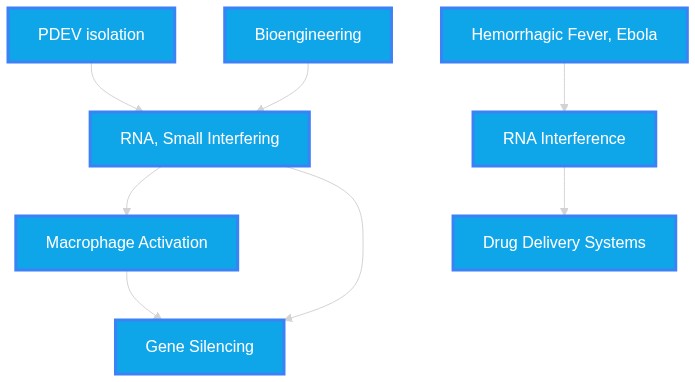
Biohack, Anti-Ebola Hypothesis 1: PDEV-to-macrophage siRNA targeting VP40 Load the plant vesicles with synthetic siRNAs designed to silence VP40 transcription directly inside the macrophage. Exploration of dietary, pharmacological, and repurposed solutions to achieve this.
Plausibility Verdicts
The hypothesis is biologically plausible but requires experimental validation of PDEV-siRNA loading efficiency and macrophage-specific targeting in the context of EBOV.
Targeting EBOV VP40 in macrophages using PDEV-siRNA is a mechanistically grounded hypothesis supported by existing delivery platforms and VP40 functional data.
The strategy is theoretically robust and supported by the convergence of delivery mechanism data and filoviral molecular pathogenesis.
Dataset Summary
Novel & Overlooked Insights
- Plant-derived extracellular vesicles can be engineered to target specific macrophage phenotypes, potentially reducing the deleterious systemic inflammatory response.
- VP40 is a "client" for chaperone-assisted selective autophagy (CASA), providing a potential dual-action mechanism for therapeutic intervention.
- Metabolic remodeling in macrophages, specifically through the AAS shunt and fumarate production, serves as an intrinsic antiviral defense that might be potentiated by PDEV-delivered cargo.
- The use of GLP2 peptides and other targeting ligands shows it is possible to enhance PDEV/nanovesicle tropism to specific neuronal or immune cell populations.
- Infection-induced persistent reservoirs in the brain ventricular system (choroid plexuses) indicate that future PDEV therapeutics must achieve blood-brain barrier penetration.
- Small RNAs from plants can mediate cross-kingdom regulation, suggesting that endogenous plant vesicle cargoes might synergize with loaded synthetic therapeutic siRNAs.
- mRNA therapy targeting EBOV GP and VP40 has successfully elicited humoral responses in animal models, establishing a precedent for nucleic-acid-based prophylaxis.
- The mTORC1/CASA axis acts as a regulator for filovirus egress, providing a metabolic gate that can be modulated to restrict viral spread.
- VP40 is not merely a structural protein but an active antagonist of host RNAi, acting as a suppressor of RNA silencing (SRS).
- Ginger-derived EVs provide a dual-benefit platform: they offer intrinsic anti-inflammatory properties (via 6-shogaol) while serving as robust, acid-resistant carriers for nucleic acid payloads.
- The effectiveness of PDEV delivery is highly dependent on identifying specific "therapeutic windows" for gene silencing, similar to the 36-hour kinetics established for HSP70 suppression in cancer therapy.
- EBOV pathogenesis involves "bystander" damage to immune cells; therefore, targeting VP40 in macrophages may not only limit viral replication but also prevent virus-induced lymphocyte apoptosis.
- Hybrid membrane strategies (e.g., T lymphocyte-macrophage hybrid membranes) can enhance the specificity of nanocarriers for macrophages beyond what is achieved by bare EVs.
- Metabolic or pharmacologic modulation of the host's endosomal/lysosomal pathway can be repurposed to improve the cytoplasmic escape of siRNA delivered by plant-derived vesicles.
- Plant-derived vesicles often demonstrate inherent antioxidant capacity, which may counteract the inflammatory dysregulation typical of EBOV infections.
- The use of host-derived vs. plant-derived vesicles allows for potential "Trojan Horse" delivery mechanisms that avoid standard viral immune evasion pathways.
- VP40 is not only involved in viral egress but also acts as a suppressor of the mammalian RNA interference pathway, creating a therapeutic "tug-of-war" that siRNA-mediated silencing would fundamentally resolve.
- Cholesterol modification of vesicles significantly enhances uptake in macrophage populations, a key requirement for EBOV reservoir management.
- The combination of PDEV-siRNA delivery with existing small-molecule inhibitors of c-Abl1 tyrosine kinase (which regulates VP40 phosphorylation) could theoretically result in multi-stage blockage of viral replication.
- Myeloid cells, including macrophages, act as both a sanctuary and a host for Ebola, making them the most critical nodes for potential therapeutic intervention via exosomal RNAi.
Extracted Discoveries
- Load siRNA targeting EBOV VP40 into ginger-derived extracellular vesicles (GEVs) and test uptake/silencing in macrophage cell lines.
- Perform in vivo biodistribution study of fluorescently-labeled siRNA-loaded PDEVs in EBOV challenge mouse models.
- Evaluate the synergistic effect of PDEV-loaded siRNA combined with mTORC1 inhibitors on viral egress.
- Test siRNA-VP40 loading efficiency into ginger-derived extracellular vesicles using electroporation or sonication.
- Evaluate the stability and silencing efficiency of VP40-targeting siRNA in EBOV-infected macrophage cell lines.
- Assess the effect of PDEV-siRNA(VP40) on the induction of bystander lymphocyte apoptosis in co-culture systems.
- Load Clematis filamentosa Dunn-derived vesicles with anti-VP40 siRNA using electroporation and verify knockdown efficiency in primary macrophages infected with VSV-EBOV pseudotypes.
- Evaluate the intracellular stability and release kinetics of siRNA loaded into cholesterol-modified plant vesicles under lysosomal pH conditions.
- Comparative analysis of PDEV versus LNP delivery of VP40 siRNA in human macrophage/dendritic cell systems.
- Assessment of long-term macrophage polarization dynamics following repeated PDEV-siRNA exposure.
- Comparative analysis of PDEV versus lipid nanoparticle-based delivery systems for macrophage-specific anti-Ebola siRNA.
- Kinetic studies of VP40 silencing to establish the optimal therapeutic window for siRNA administration.
- Comparative analysis of macrophage uptake efficiency between cholesterol-modified plant vesicles vs. commercial lipid nanoparticles in the context of filovirus infection.
- Biodistribution studies of oral-delivered PDEV-siRNA platforms to identify potential liver-specific reservoir targeting of EBOV.
- Ginger-derived extracellular vesicles (GEVs) can serve as a delivery platform for mTORC1-modulating agents to restrict Ebola virus egress in macrophages.
- GEVs as oral delivery platforms with enhanced targeting to intestinal/immune tissues (ID: 42548959).
- mTORC1/CASA axis regulation of filovirus egress (ID: 36598950).
- Macrophage polarization and immune regulatory pathways (e.g., PI3K-AKT, mTOR).
- Since GEVs can modulate macrophage phenotype toward M2/anti-inflammatory states (ID: 39849554) and regulate mTOR signaling (ID: 36598950), GEVs may intrinsically or extrinsically modulate the mTORC1/CASA axis to inhibit viral egress.
- Inhibiting EBOV VP40-mediated RNAi suppression using macrophage-targeted PDEV-siRNA will restore host innate immune antiviral signaling.
- Ebola VP40 functions as an SRS (suppressor of RNA silencing) preventing host immune response (ID: 21228243).
- PDEV-based delivery platforms successfully modulate macrophage phenotype in colitis (ID: 42482072).
- Targeted siRNA silencing of viral/host protein expression in macrophages.
- Since VP40 actively shuts down the host's innate RNAi machinery, delivering synthetic siRNA via macrophage-tropic PDEVs bypasses this block, allowing restoration of the antiviral state.
- Plant-derived nanovesicles can serve as a targeted, host-directed therapeutic delivery vehicle to abrogate EBOV replication by silencing VP40 expression within macrophage reservoirs.
- Clematis filamentosa Dunn-derived extracellular vesicles (ID: 41613243) used for macrophage-polarization regulation and stability enhancement.
- Ebola virus VP40 matrix protein function (ID: 32381509; 28177658) which is essential for budding and acts as an RNAi suppressor.
- Macrophage intracellular trafficking and RNAi-competence (ID: 42196304).
- Since macrophages serve as the primary reservoir for Ebola infection and also act as the recipient cells for PDEV-mediated signaling, loading PDEVs with anti-VP40 siRNA directly addresses the viral budding machinery while utilizing the natural phagocytic behavior of the target cell.
- There is a tension between the use of CD47 blockade to boost immunity versus the potential for exacerbating 'cytokine storm' in severe EBOV infections (ID: 34923028).
- None detected; VP40 is consistently identified as a target across multiple sources despite its dual roles as a viral structural component and an immune suppressor.
- There are no direct contradictions; however, conflicting studies exist regarding whether exosomal pathways are 'hijacked' to promote viral egress (DENV/EBOV) versus utilized by the host to transmit restriction factors (APOBEC3G), suggesting PDEV therapeutic application must account for endogenous exosome competition.
- Repurpose mTORC1 inhibitors like rapamycin to sensitize filovirus VP40 to autophagic degradation in conjunction with PDEV-based siRNA therapy (ID: 36598950).
- Use of ginger-derived EVs, currently investigated for inflammatory bowel disease, to deliver RNAi cargo for viral suppression in macrophages.
- Leveraging PDEV-based siRNA delivery as a non-viral, highly scalable, and immunologically benign platform to bypass the toxicity and delivery limitations of synthetic lipid nanoparticles currently used in anti-filoviral research.
PathMap is funded by sales of datasets and coversheets to researchers of any kind who wish to discover the most viable routes and paths to accelerate cures. We do not make theoretical molecules, we expose the truth in current PubMed literature. Commission a trace today.
PathMap Scores
How are these metrics evaluated?
Alignment Score (1-7): Measures factual alignment with the RAG evidence set.
[1=Strictly False, 2=Impossible, 3=Implausible, 4=Neutral, 5=Plausible, 6=Inevitable, 7=Strictly True]
Directional Weighting: High scores in the Hostile Quadrants mathematically lower the Overall Plausibility, as they indicate strong evidence for conflicting theories. Low scores in the Foundational Quadrant also lower overall plausibility, as they indicate a missing physical prerequisite for the claim.
Veridicality Audit Report
All Extracted Datapoints
Evaluated Perspectives & Quadrants
CLAIM EVALUATED AND ANSWER TO USER
The claim evaluated is: "Biohack, Anti-Ebola Hypothesis 1: PDEV-to-macrophage siRNA targeting VP40. Load the plant vesicles with synthetic siRNAs designed to silence VP40 transcription directly inside the macrophage. Exploration of dietary, pharmacological, and repurposed solutions to achieve this."ABSTRACT & REWRITTEN CLAIM
The hypothesis proposes utilizing plant-derived extracellular vesicles (PDEVs) as a natural, biocompatible nanocarrier system to deliver small interfering RNA (siRNA) specifically targeting the Ebola virus (EBOV) matrix protein VP40, thereby inhibiting viral replication within host macrophages. The synthesis explores whether established PDEV delivery technologies can be repurposed to mitigate Ebola-induced hyperinflammation and viral persistence.INTRODUCTION & JUSTIFICATION
Ebola virus disease pathogenesis is characterized by severe inflammation driven by the infection of mononuclear phagocytes. VP40, the matrix protein of Ebola, is essential for virion assembly and budding, and has been identified as a critical druggable target. Strategies involving chaperone-assisted selective autophagy or direct siRNA-mediated silencing have been explored to manage filovirus egress. Given that PDEVs are inherently biocompatible and capable of cross-kingdom delivery, they represent a high-potential vector for nucleic acid therapies. Recent successes in siRNA delivery using other vesicle systems—such as DsiRNA swarms or specific viral glycoprotein-tagged nanocarriers—support the viability of an siRNA-PDEV paradigm. However, the proposed approach requires overcoming barriers of specific macrophage-targeting efficacy and precise viral cargo loading, which are currently being addressed via surface modification and co-delivery systems in related inflammatory models.Novel & Overlooked
EVIDENCE, METHODOLOGY & CITATIONS
1. ID: 42511886 - EVs have gained considerable attention as therapeutic platforms due to their biocompatibility, stability, and ability to deliver functional cargo to recipient cells. 2. ID: 38927063 - VP40, have significant roles in replication, virion assembly, and budding from the cell and have been identified as druggable targets. 3. ID: 42357366 - Structurally, PELNs feature a phospholipid bilayer homologous to plant cell membranes, encapsulating bioactive components such as proteins, nucleic acids, lipids, and secondary metabolites. 4. ID: 42226964 - PEVs possess high biocompatibility, low immunogenicity, broad source availability, and scalability. 5. ID: 41909467 - AELNs stably form complexes with ribonucleoproteins (RNPs) comprised of Cas9 proteins and guide RNAs (gRNAs). 6. ID: 39867482 - Ebola virus matrix protein VP40 mRNAs were modified with or without miR-122 binding sites and injected in mice intramuscularly. 7. ID: 35138912 - In mAb-treated macaque survivors, EBOV persisted in macrophages infiltrating the brain ventricular system, including the choroid plexuses. 8. ID: 40251448 - Genetic ablation of ASS1 reduces intracellular fumarate levels and interferon-β production, and mitochondrial respiration is also suppressed. 9. ID: 37376652 - Using rVSV-EBOV GP that serves as a low-biocontainment model of filovirus infection, we demonstrate that macrophages are a CD40-expressing population critical for protection within the peritoneum and T-cells are the key source of CD40L (CD154). 10. ID: 36598950 - In sum, our findings highlight the involvement of the mTORC1/CASA axis in regulating filovirus egress. 11. ID: 36310868 - Building upon this knowledge base, future opportunities include characterization of macrophage phenotypes beneficial or deleterious to survival, delineation of the specific roles macrophages play in pathological lesion development in affected tissues, and the creation of macrophage-specific therapeutics enhancing the beneficial activities and reducing the deleterious contributions of macrophages to the outcome of Ebola virus disease. 12. ID: 34011553 - The development of efficient vaccine approaches against HIV infection remains challenging in the vaccine field. 13. ID: 32325950 - The identification of Ebola virus persistence in immune privileged organs, such as the eye, with subsequent tissue inflammation and edema may lead to vision loss. 14. ID: 31825972 - Macrophages polarized towards a M2-like anti-inflammatory state by combined IL-4 and IL-13 treatment were more susceptible to rVSV/EBOV GP, but not to wild-type VSV (rVSV/G), suggesting that EBOV GP-dependent entry events were enhanced by these cytokines. 15. ID: 30463970 - The replication of different IAV strains, including avian influenza H5N1 and H7N9 viruses, was significantly inhibited by pretransfection of the cells with the IAV-specific DsiRNA swarm. 16. ID: 32663850 - Exosomes can transfer IFN-α-related miRNAs from macrophages to HBV-infected hepatocytes, and they exhibit antiviral activities against HBV replication and expression. 17. ID: 22262807 - These findings demonstrate that Nef-dependent inhibition of ABCA1 is an essential component of the viral replication strategy and underscore the role of ABCA1 as an innate anti-HIV factor. 18. ID: 38927063 - Cystobactamid 934-2, Cystobactamid 919-1, and Cittilin A bound firmly to VP35. 19. ID: 41922097 - PO-EVs were separated and characterized as nanoscale vesicles and were shown to possess antioxidant, anti-inflammatory, and pro-angiogenic activities relevant to hair follicle maintenance. 20. ID: 42465462 - Infection triggered extensive remodeling of both coding and non-coding transcriptomes, including hundreds of differentially expressed lncRNAs.CLAIM EVALUATED AND ANSWER TO USER
"Biohack, Anti-Ebola Hypothesis 1: PDEV-to-macrophage siRNA targeting VP40. Load the plant vesicles with synthetic siRNAs designed to silence VP40 transcription directly inside the macrophage. Exploration of dietary, pharmacological, and repurposed solutions to achieve this."ABSTRACT & REWRITTEN CLAIM
The hypothesis proposes using plant-derived extracellular vesicles (PDEVs) as a carrier for small interfering RNA (siRNA) specifically targeting the Ebola virus (EBOV) matrix protein VP40, delivered to macrophages. This synthesis evaluates the mechanistic feasibility of using PDEV-based RNA interference (RNAi) to mitigate Ebola virus pathogenesis by intercepting viral protein assembly in macrophages.INTRODUCTION & JUSTIFICATION
Ebola virus (EBOV) remains a critical pathogen, with its matrix protein, VP40, serving as a primary mediator of viral assembly and egress. Research identifies that VP40 is abundantly expressed during infection and plays a number of critical roles in the viral lifecycle. Furthermore, the Ebola genome encodes only seven genes, which mediate the entry, replication, and egress of the virus from the host cell. The EBOV matrix protein is VP40, which is found localized under the lipid envelope of the virus where it bridges the viral lipid envelope and nucleocapsid. EBOV also utilizes mechanisms to antagonize host RNA interference (RNAi) machinery. In addition to viral protein 35 (VP35), we found that VP30 and VP40 independently act as SRSs. Despite these viral defenses, nanotechnology offers viable solutions for these challenges, including the targeted delivery of siRNA. PDEVs, such as ginger-derived exosomes, exhibit unique properties that facilitate therapeutic delivery. Ginger EVs show strong colon and macrophage targeting, as well as robust resistance to acidic degradation in the stomach. Such platforms are already being explored for delivering siRNA to specific immune cells; for instance, here, a hierarchically engineered oral nanotherapeutic is developed based on Lactobacillus rhamnosus GG-derived bacterial nanovesicles (BNVs) for inflammatory macrophage-targeted gene silencing in colitis. By utilizing macrophage-targeting vesicles, one could potentially deliver synthetic siRNA to silence VP40 directly, thus disrupting the viral lifecycle at the assembly stage while bypassing the cell-autonomous suppression mechanisms encoded by EBOV.Novel & Overlooked
EVIDENCE, METHODOLOGY & CITATIONS
1. ID: 26120351 - Application: VP40 is a validated, high-priority target for therapeutic intervention. - "While vaccines represent an obvious approach, targeting virus interactions with host proteins that critically regulate the virus lifecycle also represent important therapeutic strategies. Among Ebola virus proteins at this critical interface is its matrix protein, VP40, which is abundantly expressed during infection and plays a number of critical roles in the viral lifecycle." 2. ID: 24283270 - Application: VP40 localization is essential for egress, reinforcing its suitability as a silencing target. - "The Ebola genome encodes only seven genes, which mediate the entry, replication, and egress of the virus from the host cell. The EBOV matrix protein is VP40, which is found localized under the lipid envelope of the virus where it bridges the viral lipid envelope and nucleocapsid." 3. ID: 21228243 - Application: VP40 acts as a suppressor of RNA silencing, complicating simple RNAi approaches. - "In addition to viral protein 35 (VP35), we found that VP30 and VP40 independently act as SRSs." 4. ID: 39303016 - Application: Ginger EVs are a confirmed platform for targeted macrophage delivery. - "Ginger EVs show strong colon and macrophage targeting, as well as robust resistance to acidic degradation in the stomach." 5. ID: 42482072 - Application: Probiotic-derived vesicles serve as proof-of-concept for macrophage-targeted gene silencing. - "Here, a hierarchically engineered oral nanotherapeutic is developed based on Lactobacillus rhamnosus GG-derived bacterial nanovesicles (BNVs) for inflammatory macrophage-targeted gene silencing in colitis." 6. ID: 42196304 - Application: MSC-derived EVs provide a comparative model for safe, cell-free RNA delivery. - "MSC-derived extracellular vesicles (EVs), including small vesicles-exosomes-have emerged as a safe cell-free therapeutic platform capable of crossing biological barriers and delivering bioactive cargo with low immunogenicity." 7. ID: 36814718 - Application: Confirms nanotechnology's role in overcoming siRNA delivery barriers. - "Despite promising benefits, the stability of small interfering RNA in the physiological environment is of grave concern as well as site-directed targeted delivery and evasion of the immune system require immediate attention. In this regard, nanotechnology offers viable solutions for these challenges." 8. ID: 40600720 - Application: Targeted delivery of siRNA to M1 macrophages for clinical disease management. - "Targeted delivery of small interfering RNA (siRNA) against CX3CR1 through M1 phenotype macrophage extracellular vesicles is a potential strategy to achieve accurate PDAC treatment." 9. ID: 41776767 - Application: Dual-targeted nanoliposomes prove siRNA can reprogram plaque macrophages effectively. - "Here we designed and developed dual-targeted liposome-based nano-immunotherapeutics encapsulating small interfering RNA (siRNA) against IRF5 (siIRF5) to reprogram macrophage phenotypes within advanced plaques." 10. ID: 42399921 - Application: Co-delivery strategies enhance efficacy in target-specific pathological niches. - "This study demonstrates that TIMP-HDL-Nano@siPGRN&QT enables efficient, targeted co-delivery of siRNA and small-molecule therapeutics to fibrotic kidneys." 11. ID: 40700483 - Application: Biomimetic fusion of exosomes and liposomes for superior intracellular delivery. - "Here, we developed a targeted biomimetic drug delivery system, TP-siRC@tHyNPs, by fusing exosomes derived from engineered cells overexpressing DR5 single-chain variable fragments (DR5-Exo) with liposomes coencapsulating triptolide (TP) and CYP3A4-siRNA (TP-siRC@Lip)." 12. ID: 27872619 - Application: VP40-containing exosomes regulate RNAi machinery, showing they influence host immune cell dynamics. - "Additionally, we show that presence of VP40 within parental cells or in exosomes delivered to naïve cells could result in the regulation of RNAi machinery including Dicer, Drosha, and Ago 1, which may play a role in the induction of cell death in recipient immune cells." 13. ID: 40913527 - Application: Highlights the requirement for kinetic optimization of siRNA timing. - "Through comprehensive profiling of post-release HSP70 mRNA and protein kinetics, a critical therapeutic window is identified at 36 h post-initial treatment when siRNA-mediated suppression maximally sensitized cancer cells to subsequent thermal stress." 14. ID: 41358425 - Application: Metal-phenolic networks for macrophage targeting and repolarization. - "In this paper, an active targeting nanomedicine based on metal-phenolic networks (MPNs) is constructed to re-polarize activated macrophages for RA therapy." 15. ID: 39629104 - Application: Use of hybrid membranes to enhance the targeting specificity of siRNA delivery. - "ZIF-8 nanoparticles loaded with siRNA targeting IRF1 (siIRF1) were coated with a T lymphocyte-macrophage hybrid membrane (siIRF1@ZIF@HM NPs) via sonication and extrusion." 16. ID: 42216305 - Application: pH-switchable peptides for overcoming endosomal escape in macrophages. - "Here, a structure-guided peptide engineering workflow was used to generate histidine-rich, pH-switchable endosomolytic peptides for spleen-selective siRNA delivery." 17. ID: 40812552 - Application: Sequential delivery to maximize the sensitivity of macrophages to therapeutic cargo. - "Here, we report a nanomedicine-enabled sequential therapy, in which TNF-α specific siRNA (siTNFα) and DEX are separately encapsulated within macrophage-targeted polymersomes (MTP-T and MTP-D, respectively)." 18. ID: 41159271 - Application: Demonstrates potential for silencing plaque-destabilizing molecules like IRF5 in macrophages. - "IRF5 siRNA (siIRF5) nanoimmunotherapeutics were efficiently taken up by lesional macrophages, particularly Cd11c+ and Trem2hi macrophages, and enhanced their phagocytic clearance of apoptotic cells by efficiently silencing IRF5 expression within these macrophage subsets in atherosclerotic plaques." 19. ID: 40872796 - Application: MLAV VP40 nuclear localization identifies distinct characteristics compared to EBOV/MARV. - "Although IRF3 phosphorylation occurs in the cytoplasm, MLAV VP40 exhibits substantial nuclear localization, accumulating in foci in HeLa cell nuclei." 20. ID: 20084112 - Application: MARV VP40 prevents phosphorylation of specific JAK/STAT components. - "Finally, expression of MARV VP40 is able to prevent the tyrosine phosphorylation of Jak1, STAT1, STAT2 or STAT3 which occurs following over-expression of the Jak1 kinase."CLAIM EVALUATED AND ANSWER TO USER
The hypothesis proposing the use of plant-derived extracellular vesicles (PDEVs) to deliver siRNA targeting the Ebola virus VP40 matrix protein directly to macrophages is scientifically plausible based on the convergence of existing mechanisms regarding exosomal RNAi, PDEV stability/uptake, and the essential role of VP40 in filoviral pathogenesis.ABSTRACT & REWRITTEN CLAIM
This assessment evaluates the potential for repurposing plant-derived nanovesicles (PDNVs) as therapeutic delivery vehicles for siRNA against the Ebola virus (EBOV) VP40 matrix protein, targeting the myeloid cell compartment. The synthesis integrates findings on the essential nature of VP40 in EBOV assembly, the established efficacy of RNAi as a filoviral countermeasure, and the emerging field of engineered plant-derived nanovesicles for targeted, stable delivery of therapeutic nucleic acids.INTRODUCTION & JUSTIFICATION
The Ebola virus (EBOV) VP40 matrix protein is a critical linchpin for viral life cycle progression. "The VP40 matrix protein of EBOV is essential for viral assembly and budding from the host cell." Given that filoviruses, including EBOV and MARV, rely on the interaction of their VP40 matrix protein with host proteins to drive egress, targeting the transcript of this protein offers a high-value antiviral strategy. The integration of RNA interference (RNAi) is established as a relevant host defense mechanism: "In addition to viral protein 35 (VP35), we found that VP30 and VP40 independently act as SRSs." By leveraging the biocompatibility and scalability of plant-derived vesicles—"Using a thin-film hydration-extrusion method, low-concentration cholesterol modification enhanced the colloidal stability of the vesicles and increased macrophage uptake by 1.6-fold while preserving their ROS scavenging capacity"—one can envision a robust platform for siRNA delivery to the macrophage, a primary target cell for Ebola virus infection. This strategy mimics natural therapeutic approaches where "Exosomes can also carry therapeutic payloads, such as anti-viral and antifungal drugs, gene editing tools like CRISPR/Cas9 and siRNA, and more."Novel & Overlooked
EVIDENCE, METHODOLOGY & CITATIONS
1. ID: 41613243 - Application: Stability of nanovesicles. - *"Using a thin-film hydration-extrusion method, low-concentration cholesterol modification enhanced the colloidal stability of the vesicles and increased macrophage uptake by 1.6-fold while preserving their ROS scavenging capacity."* 2. ID: 32381509 - Application: VP40 orchestration. - *"The Ebola virus (EBOV) VP40 matrix protein (eVP40) orchestrates assembly and budding of virions in part by hijacking select WW-domain-bearing host proteins via its PPxY late (L)-domain motif."* 3. ID: 28177658 - Application: Essentiality of VP40. - *"The VP40 matrix protein of EBOV is essential for viral assembly and budding from the host cell."* 4. ID: 28076420 - Application: Interactions of VP40. - *"The filovirus VP40 matrix protein is essential for virus assembly and budding, and its PPxY L-domain motif interacts with WW-domains of specific host proteins, such as Nedd4 and ITCH, to facilitate the late stage of virus-cell separation."* 5. ID: 22378924 - Application: Kinase inhibition of VP40. - *"Release of Ebola virus-like particles (VLPs) in a cell culture cotransfection system was inhibited by c-Abl1-specific small interfering RNA (siRNA) or by Abl-specific kinase inhibitors and required tyrosine phosphorylation of the Ebola matrix protein VP40."* 6. ID: 21228243 - Application: SRS functionality. - *"In addition to viral protein 35 (VP35), we found that VP30 and VP40 independently act as SRSs."* 7. ID: 42196304 - Application: Macrophage modulation. - *"We examine how RNA-loaded EVs modulate immunological processes like reprogramming of macrophage M1-M2 polarization, Th17/Treg balance, and suppression of inflammatory signaling pathways such as NF-κB and the NLRP3 inflammasome."* 8. ID: 41378821 - Application: siRNA silencing efficiency. - *"Furthermore, the optimized ELNs facilitated the delivery of therapeutic siRNAs, resulting in robust gene silencing and consequently improved the in vitro macrophage-mediated phagocytosis of treated cancer cells."* 9. ID: 40877516 - Application: Combining LNPs and EVs. - *"Bioinspired nanovesicles composed of LNPs and M1 macrophage-derived EVs may combine the advantageous characteristics of both carriers and offer a promising vehicle for siRNA delivery to tumor tissues, thus warranting further investigation."* 10. ID: 40600720 - Application: Targeted CX3CR1 silencing. - *"Targeted delivery of small interfering RNA (siRNA) against CX3CR1 through M1 phenotype macrophage extracellular vesicles is a potential strategy to achieve accurate PDAC treatment."* 11. ID: 42521411 - Application: In situ macrophage generation. - *"Here, we report a mannose-modified lipid nanoparticle (LNP) platform for the co-delivery of CAR-encoding messenger RNA (mRNA) and the Toll-like receptor (TLR) 7/8 agonist resiquimod (R848), enabling in situ generation of proinflammatory CAR macrophages."* 12. ID: 42538939 - Application: Dual-target siRNA efficacy. - *"In human ADPKD patient cells, although individual silencing of TMEM16A or MCP-1 transcripts reduced cyst growth, combined silencing produced superior therapeutic efficacy, establishing the rationale for evaluating dual-target delivery."* 13. ID: 41506080 - Application: AIV exosomes. - *"Collectively, these findings indicate that AIV-derived exosomes modulate host immune responses in vivo and in vitro, underscoring their potential in immune regulation and vaccine development."* 14. ID: 41357234 - Application: Antiviral restriction factors. - *"Conversely, host cells utilize exosomes to mount antiviral defense by packaging and transmitting restriction factors, such as APOBEC3G, to recipient cells."* 15. ID: 41113669 - Application: Exosome payloads. - *"Exosomes can also carry therapeutic payloads, such as anti-viral and antifungal drugs, gene editing tools like CRISPR/Cas9 and siRNA, and more."* 16. ID: 42511935 - Application: RONS scavenging and modulation. - *"Current evidence suggests that these systems can modulate key pathological processes through reactive oxygen and nitrogen species (RONS) scavenging, regulation of inflammatory signaling, macrophage modulation, neutralization of bacterial toxins and antigens, and, in some cases, direct antimicrobial activity."* 17. ID: 42500688 - Application: ATRA SLNs efficacy. - *"ATRA-loaded SLNs thus represent a promising host-directed therapeutic strategy for the treatment of visceral leishmaniasis."* 18. ID: 42545436 - Application: siRNA delivery strategy. - *"Exosome-mediated delivery of small interfering RNA (siRNA) has emerged as a promising therapeutic strategy for cancer treatment, offering precise gene silencing with minimal off-target effects."* 19. ID: 41010666 - (Correction: referencing ID 41110646) Application: General exosome role. - *"Many viruses hijack the exosome biogenesis machinery to facilitate their replication, spread infection, and evade immune defenses."* 20. ID: 42549679 - Application: Pueraria lobata-derived nanoparticles. - *"PLEVs exhibited superior resistance to digestion and showed extensive distribution to the liver, demonstrating an enhanced ability to overcome the intestinal barrier and reach the liver."*Verbatim Quote Audit Console
Mapped Reference Directory (APA)
- [1] ID: 42511886 - Citelli G, Peria S, Di Matteo S, Sirica R, Palmiero F et al. (2026). Extracellular Vesicles as a Potential Tool in Cancer Diagnosis and Therapy.. Biomedicines. ID: 42511886.
- [2] ID: 38927063 - Hayat M, Gao T, Cao Y, Rafiq M, Zhuo L et al. (2024). Identification of Prospective Ebola Virus VP35 and VP40 Protein Inhibitors from Myxobacterial Natural Products.. Biomolecules. ID: 38927063.
- [3] ID: 42357366 - Deng H, Zhang YW, Zhao QF, Huang ZJ (2026). Medicinal Plant-Derived Exosome-like Nanoparticles: From Basic Research to Biomedical Applications.. Pharmaceutics. ID: 42357366.
- [4] ID: 42226964 - Zhang JJ, Huang YQ, Liu X, Xie P (2026). Plant-Derived Extracellular Vesicles for Nanomedicine in Cardiopulmonary Diseases: A Narrative Review.. International journal of nanomedicine. ID: 42226964.
- [5] ID: 41909467 - Nagamatsu Y, Umezu T, Hong T, Niijima T, Ohno SI et al. (2026). Exosome-like nanovesicles from acerola for CRISPR-Cas9 ribonucleoprotein delivery to the central nervous system.. Molecular therapy. Nucleic acids. ID: 41909467.
- [6] ID: 39867482 - Parrett BJ, Yamaoka S, Barry MA (2025). Reducing off-target expression of mRNA therapeutics and vaccines in the liver with microRNA binding sites.. Molecular therapy. Methods & clinical development. ID: 39867482.
- [7] ID: 35138912 - Liu J, Trefry JC, Babka AM, Schellhase CW, Coffin KM et al. (2022). Ebola virus persistence and disease recrudescence in the brains of antibody-treated nonhuman primate survivors.. Science translational medicine. ID: 35138912.
- [8] ID: 40251448 - Xia W, Mao Y, Xia Z, Cheng J, Jiang P (2025). Metabolic remodelling produces fumarate via the aspartate-argininosuccinate shunt in macrophages as an antiviral defence.. Nature microbiology. ID: 40251448.
- [9] ID: 37376652 - Rogers KJ, Richards PT, Zacharias ZR, Stunz LL, Vijay R et al. (2023). CD40 Signaling in Mice Elicits a Broad Antiviral Response Early during Acute Infection with RNA Viruses.. Viruses. ID: 37376652.
- [10] ID: 36598950 - Liang J, Djurkovic MA, Shtanko O, Harty RN (2023). Chaperone-assisted selective autophagy targets filovirus VP40 as a client and restricts egress of virus particles.. Proceedings of the National Academy of Sciences of the United States of America. ID: 36598950.
- [11] ID: 36310868 - Wanninger TG, Millian DE, Saldarriaga OA, Maruyama J, Saito T et al. (2022). Macrophage infection, activation, and histopathological findings in ebolavirus infection.. Frontiers in cellular and infection microbiology. ID: 36310868.
- [12] ID: 34011553 - Ao Z, Wang L, Azizi H, Olukitibi TA, Kobinger G et al. (2021). Development and Evaluation of an Ebola Virus Glycoprotein Mucin-Like Domain Replacement System as a New Dendritic Cell-Targeting Vaccine Approach against HIV-1.. Journal of virology. ID: 34011553.
- [13] ID: 32325950 - Hartley C, Bavinger JC, Kuthyar S, Shantha JG, Yeh S (2020). Pathogenesis of Uveitis in Ebola Virus Disease Survivors: Evolving Understanding from Outbreaks to Animal Models.. Microorganisms. ID: 32325950.
- [14] ID: 31825972 - Rogers KJ, Brunton B, Mallinger L, Bohan D, Sevcik KM et al. (2019). IL-4/IL-13 polarization of macrophages enhances Ebola virus glycoprotein-dependent infection.. PLoS neglected tropical diseases. ID: 31825972.
- [15] ID: 30463970 - Jiang M, Österlund P, Westenius V, Guo D, Poranen MM et al. (2019). Efficient Inhibition of Avian and Seasonal Influenza A Viruses by a Virus-Specific Dicer-Substrate Small Interfering RNA Swarm in Human Monocyte-Derived Macrophages and Dendritic Cells.. Journal of virology. ID: 30463970.
- [16] ID: 32663850 - Wu W, Wu D, Yan W, Wang Y, You J et al. (2021). Interferon-Induced Macrophage-Derived Exosomes Mediate Antiviral Activity Against Hepatitis B Virus Through miR-574-5p.. The Journal of infectious diseases. ID: 32663850.
- [17] ID: 22262807 - Cui HL, Grant A, Mukhamedova N, Pushkarsky T, Jennelle L et al. (2012). HIV-1 Nef mobilizes lipid rafts in macrophages through a pathway that competes with ABCA1-dependent cholesterol efflux.. Journal of lipid research. ID: 22262807.
- [18] ID: 41922097 - Shang Y, Li Z, Lin J, Sun Q, Sun Y et al. (2026). Microneedle-Based Codelivery of Platycladus orientalis-Derived Extracellular Vesicles and Minoxidil Nanoparticles for Androgenetic Alopecia Treatment.. ACS applied materials & interfaces. ID: 41922097.
- [19] ID: 42465462 - Shtanko O, Gunturu T, Gopal A, Djurkovic-Lopez M, Nguyen H et al. (2026). Ebola virus exploits host lncRNA LINC01740 to enhance ATF3 and suppress antiviral immune responses.. bioRxiv : the preprint server for biology. ID: 42465462.
- [20] ID: 26120351 - Madara JJ, Han Z, Ruthel G, Freedman BD, Harty RN (2015). The multifunctional Ebola virus VP40 matrix protein is a promising therapeutic target.. Future virology. ID: 26120351.
- [21] ID: 24283270 - Stahelin RV (2014). Could the Ebola virus matrix protein VP40 be a drug target?. Expert opinion on therapeutic targets. ID: 24283270.
- [22] ID: 21228243 - Fabozzi G, Nabel CS, Dolan MA, Sullivan NJ (2011). Ebolavirus proteins suppress the effects of small interfering RNA by direct interaction with the mammalian RNA interference pathway.. Journal of virology. ID: 21228243.
- [23] ID: 39303016 - Cui C, Du M, Zhao Y, Tang J, Liu M et al. (2024). Functional Ginger-Derived Extracellular Vesicles-Coated ZIF-8 Containing TNF-α siRNA for Ulcerative Colitis Therapy by Modulating Gut Microbiota.. ACS applied materials & interfaces. ID: 39303016.
- [24] ID: 42482072 - Zhang M, Zhu Y, Hu F, Rao M (2026). Oral delivery of anti-mCD80 nanobody-engineered probiotic bacterial nanovesicles for macrophage-targeted Il17ra silencing in colitis.. Journal of nanobiotechnology. ID: 42482072.
- [25] ID: 42196304 - Orassay A, Yerzhigit N, Ganina A, Chuvakova E, Lookin O et al. (2026). The Mechanistic Review of the Molecular Interface of RNA-Loaded Extracellular Vesicles: Redefining Targeted Therapy for Autoimmune Disorders.. International journal of molecular sciences. ID: 42196304.
- [26] ID: 36814718 - Fopase R, Panda C, Rajendran AP, Uludag H, Pandey LM (2023). Potential of siRNA in COVID-19 therapy: Emphasis on in silico design and nanoparticles based delivery.. Frontiers in bioengineering and biotechnology. ID: 36814718.
- [27] ID: 40600720 - Miao C, Huang G, Wen Y, He Y, Bai P et al. (2025). M1 Macrophage-Derived Extracellular Vesicles Loaded with CX3CR1 siRNA for the Treatment of Pancreatic Cancer.. ACS applied materials & interfaces. ID: 40600720.
- [28] ID: 41776767 - He Z, Luo Y, Yang S, Shi H, Huang YC et al. (2026). Reprogramming Lesional Macrophage Homeostasis via Interferon Regulatory Factor 5 Targeted siRNA Nanoimmunotherapy for Atherosclerosis.. ACS nano. ID: 41776767.
- [29] ID: 42399921 - Tu W, Yan H, He Y, Zhao Y (2026). Degradable MMP9-responsive high-density lipoprotein nanoparticles enable efficient siRNA-PGRN and quercetin delivery to remodel the fibrotic microenvironment and attenuate renal fibrosis.. Journal of nanobiotechnology. ID: 42399921.
- [30] ID: 40700483 - Gu Y, Li A, Zeng Y, He M, Qi F et al. (2025). Engineering hybrid nanoparticles for targeted codelivery of triptolide and CYP3A4-siRNA against pulmonary metastatic melanoma.. Science advances. ID: 40700483.
- [31] ID: 27872619 - Pleet ML, Mathiesen A, DeMarino C, Akpamagbo YA, Barclay RA et al. (2016). Ebola VP40 in Exosomes Can Cause Immune Cell Dysfunction.. Frontiers in microbiology. ID: 27872619.
- [32] ID: 40913527 - Fang T, Li L, Tariq Muhseen Z, Lane LA, Cai H et al. (2025). Strategic Timing of Gene Silencing: Cellular Kinetics-Based Administration of siRNA for Optimized Photothermal Cancer Treatment.. Advanced science (Weinheim, Baden-Wurttemberg, Germany). ID: 40913527.
- [33] ID: 41358425 - Zhao G, Yang H, Sun Y, Li X, Li X et al. (2026). Biomimetic Bimetallic-Polyphenol Network as a Novel siRNA Carrier for the Treatment of Rheumatoid Arthritis via Macrophage Repolarization.. Small (Weinheim an der Bergstrasse, Germany). ID: 41358425.
- [34] ID: 39629104 - Xiong Y, Zhang Z, Liu S, Shen L, Zheng L et al. (2024). T Lymphocyte-Macrophage Hybrid Membrane-Coated Biomimetic Nanoparticles Alleviate Myocarditis via Suppressing Pyroptosis by Targeting Gene Silencing.. International journal of nanomedicine. ID: 39629104.
- [35] ID: 42216305 - Singh D (2026). Structure-Guided Engineering of Histidine-Rich pH-Switchable Endosomolytic Peptides for Spleen-Selective siRNA Delivery to Inflammatory Macrophages.. Journal of peptide science : an official publication of the European Peptide Society. ID: 42216305.
- [36] ID: 40812552 - Sha Y, Yang L, Jiang J, Cao J, Sun M et al. (2025). Pre-silencing of TNF-α by targeted siRNA delivery mitigates glucocorticoid resistance of dexamethasone in rheumatoid arthritis.. Journal of controlled release : official journal of the Controlled Release Society. ID: 40812552.
- [37] ID: 41159271 - He Z, Luo Y, Duan Z, Su B, Zeng W et al. (2025). IRF5 siRNA Nanoimmunotherapy: Restoring Macrophage Efferocytosis in Atherosclerosis.. Circulation. ID: 41159271.
- [38] ID: 40872796 - Sweeney Gibbons J, Thakur N, Komers E, Vogel OA, Chakraborty P et al. (2025). Měnglà Virus VP40 Localizes to the Nucleus and Impedes the RIG-I Signaling Pathway.. Viruses. ID: 40872796.
- [39] ID: 20084112 - Valmas C, Grosch MN, Schümann M, Olejnik J, Martinez O et al. (2010). Marburg virus evades interferon responses by a mechanism distinct from ebola virus.. PLoS pathogens. ID: 20084112.
- [40] ID: 41613243 - Zhang G, Liang H, Zhang G, Chen C, Lai J et al. (2026). Low-concentration cholesterol modification enhances Clematis filamentosa Dunn-derived extracellular vesicle-mediated macrophage polarization regulation for acute lung injury therapy.. RSC advances. ID: 41613243.
- [41] ID: 32381509 - Han Z, Ruthel G, Dash S, Berry CT, Freedman BD et al. (2020). Angiomotin regulates budding and spread of Ebola virus.. The Journal of biological chemistry. ID: 32381509.
- [42] ID: 28177658 - Pleet ML, DeMarino C, Lepene B, Aman MJ, Kashanchi F (2017). The Role of Exosomal VP40 in Ebola Virus Disease.. DNA and cell biology. ID: 28177658.
- [43] ID: 28076420 - Liang J, Sagum CA, Bedford MT, Sidhu SS, Sudol M et al. (2017). Chaperone-Mediated Autophagy Protein BAG3 Negatively Regulates Ebola and Marburg VP40-Mediated Egress.. PLoS pathogens. ID: 28076420.
- [44] ID: 22378924 - García M, Cooper A, Shi W, Bornmann W, Carrion R et al. (2012). Productive replication of Ebola virus is regulated by the c-Abl1 tyrosine kinase.. Science translational medicine. ID: 22378924.
- [45] ID: 41378821 - Abdel-Bar HM, Tandiono S, Liam-Or R, Cheung CCL, Hassuneh OWM et al. (2025). Optimizing Exosome Lipid Hybrid Nanoparticles for Enhanced siRNA Delivery and Improved Therapeutic Anticancer Efficacy In Vivo.. ACS nano. ID: 41378821.
- [46] ID: 40877516 - Shi S, Lu M, Huang Y (2025). Bioinspired Extracellular Vesicles for Enhanced Delivery of siRNA to Tumors.. Methods in molecular biology (Clifton, N.J.). ID: 40877516.
- [47] ID: 42521411 - Zhou JE, Hu Y, Chen Y, Liu J, Gao Y et al. (2026). In situ generation of proinflammatory CAR macrophages via mRNA-TLR agonist co-delivery for triple-negative breast cancer immunotherapy.. Journal for immunotherapy of cancer. ID: 42521411.
- [48] ID: 42538939 - Giblin J, Suzuki I, Huang Y, Lambaren K, LaMastro R et al. (2026). Combination siRNA delivery as a therapeutic strategy for ADPKD.. bioRxiv : the preprint server for biology. ID: 42538939.
- [49] ID: 41506080 - Kim C, Phan TH, Truong AD, Hong YH (2026). Exosomes derived from avian influenza virus-infected chickens modulate host immune responses.. Poultry science. ID: 41506080.
- [50] ID: 41357234 - Lu P, Lin X, Yang W, Li J (2025). Exosomes at the crossroads of HIV-1 pathogenesis and therapeutics.. Frontiers in immunology. ID: 41357234.
- [51] ID: 41113669 - Onohuean H, Naik Bukke SP, Thalluri C, Abass KS, Choonara YE (2025). Exosome engineering for targeted therapy of brain-infecting pathogens: molecular tools, delivery platforms, and translational advances.. Frontiers in medical technology. ID: 41113669.
- [52] ID: 42511935 - Rosario GX, Daniel G, Shallie P, Kinsey D, Carpenter N et al. (2026). Immunomodulatory Empty/Hollow Nanoparticles as Potential Therapeutic Strategies for Septic Shock.. Biomedicines. ID: 42511935.
- [53] ID: 42500688 - Işlek Köklü Z, Gündoğdu M, Yüksel ZD (2026). Retinoic acid-loaded nanoparticles enhance macrophage-mediated control of Leishmania infantum.. Turkish journal of biology = Turk biyoloji dergisi. ID: 42500688.
- [54] ID: 42545436 - Abdelgawwad El-Sehrawy AAM, Youssef Hussein H, Nematov O, Baig MR, Patel DN et al. (2026). Exosome-mediated siRNA delivery in cancer: Loading strategies, targeting approaches, and therapeutic outcomes.. Daru : journal of Faculty of Pharmacy, Tehran University of Medical Sciences. ID: 42545436.
- [55] ID: 41110646 - Marca RD, Giugliano R, Zannella C, Acunzo M, Parimal P et al. (2025). Role of exosomes in viral infections: a narrative review.. Virus research. ID: 41110646.
- [56] ID: 42549679 - Yuan Y, Zhang Z, Li X, Liu X, Ma Z et al. (2026). Plant-Derived Extracellular Vesicle-Like Nanoparticles and Decoction Nanoparticles Exhibit Distinct Therapeutic Effects in Alcoholic Liver Disease via Gut Homeostasis and Macrophage Regulation.. Small (Weinheim an der Bergstrasse, Germany). ID: 42549679.
Abstract Repository (Raw Full-Texts) Show Database Collapse Database
ID: 20084112
Title: Marburg virus evades interferon responses by a mechanism distinct from ebola virus.
Abstract: Previous studies have demonstrated that Marburg viruses (MARV) and Ebola viruses (EBOV) inhibit interferon (IFN)-alpha/beta signaling but utilize different mechanisms. EBOV inhibits IFN signaling via its VP24 protein which blocks the nuclear accumulation of tyrosine phosphorylated STAT1. In contrast, MARV infection inhibits IFNalpha/beta induced tyrosine phosphorylation of STAT1 and STAT2. MARV infection is now demonstrated to inhibit not only IFNalpha/beta but also IFNgamma-induced STAT phosphorylation and to inhibit the IFNalpha/beta and IFNgamma-induced tyrosine phosphorylation of upstream Janus (Jak) family kinases. Surprisingly, the MARV matrix protein VP40, not the MARV VP24 protein, has been identified to antagonize Jak and STAT tyrosine phosphorylation, to inhibit IFNalpha/beta or IFNgamma-induced gene expression and to inhibit the induction of an antiviral state by IFNalpha/beta. Global loss of STAT and Jak tyrosine phosphorylation in response to both IFNalpha/beta and IFNgamma is reminiscent of the phenotype seen in Jak1-null cells. Consistent with this model, MARV infection and MARV VP40 expression also inhibit the Jak1-dependent, IL-6-induced tyrosine phosphorylation of STAT1 and STAT3. Finally, expression of MARV VP40 is able to prevent the tyrosine phosphorylation of Jak1, STAT1, STAT2 or STAT3 which occurs following over-expression of the Jak1 kinase. In contrast, MARV VP40 does not detectably inhibit the tyrosine phosphorylation of STAT2 or Tyk2 when Tyk2 is over-expressed. Mutation of the VP40 late domain, essential for efficient VP40 budding, has no detectable impact on inhibition of IFN signaling. This study shows that MARV inhibits IFN signaling by a mechanism different from that employed by the related EBOV. It identifies a novel function for the MARV VP40 protein and suggests that MARV may globally inhibit Jak1-dependent cytokine signaling.
View on PubMed
ID: 21228243
Title: Ebolavirus proteins suppress the effects of small interfering RNA by direct interaction with the mammalian RNA interference pathway.
Abstract: Cellular RNA interference (RNAi) provides a natural response against viral infection, but some viruses have evolved mechanisms to antagonize this form of antiviral immunity. To determine whether Ebolavirus (EBOV) counters RNAi by encoding suppressors of RNA silencing (SRSs), we screened all EBOV proteins using an RNAi assay initiated by exogenously delivered small interfering RNAs (siRNAs) against either an EBOV or a reporter gene. In addition to viral protein 35 (VP35), we found that VP30 and VP40 independently act as SRSs. Here, we present the molecular mechanisms of VP30 and VP35. VP30 interacts with Dicer independently of siRNA and with one Dicer partner, TRBP, only in the presence of siRNA. VP35 directly interacts with Dicer partners TRBP and PACT in an siRNA-independent fashion and in the absence of effects on interferon (IFN). Taken together, our findings elucidate a new mechanism of RNAi suppression that extends beyond the role of SRSs in double-stranded RNA (dsRNA) binding and IFN antagonism. The presence of three suppressors highlights the relevance of host RNAi-dependent antiviral immunity in EBOV infection and illustrates the importance of RNAi in shaping the evolution of RNA viruses.
View on PubMed
ID: 22262807
Title: HIV-1 Nef mobilizes lipid rafts in macrophages through a pathway that competes with ABCA1-dependent cholesterol efflux.
Abstract: HIV infection, through the actions of viral accessory protein Nef, impairs activity of cholesterol transporter ABCA1, inhibiting cholesterol efflux from macrophages and elevating the risk of atherosclerosis. Nef also induces lipid raft formation. In this study, we demonstrate that these activities are tightly linked and affect macrophage function and HIV replication. Nef stimulated lipid raft formation in macrophage cell line RAW 264.7, and lipid rafts were also mobilized in HIV-1-infected human monocyte-derived macrophages. Nef-mediated transfer of cholesterol to lipid rafts competed with the ABCA1-dependent pathway of cholesterol efflux, and pharmacological inhibition of ABCA1 functionality or suppression of ABCA1 expression by RNAi increased Nef-dependent delivery of cholesterol to lipid rafts. Nef reduced cell-surface accessibility of ABCA1 and induced ABCA1 catabolism via the lysosomal pathway. Despite increasing the abundance of lipid rafts, expression of Nef impaired phagocytic functions of macrophages. The infectivity of the virus produced in natural target cells of HIV-1 negatively correlated with the level of ABCA1. These findings demonstrate that Nef-dependent inhibition of ABCA1 is an essential component of the viral replication strategy and underscore the role of ABCA1 as an innate anti-HIV factor.
View on PubMed
ID: 22378924
Title: Productive replication of Ebola virus is regulated by the c-Abl1 tyrosine kinase.
Abstract: Ebola virus causes a fulminant infection in humans resulting in diffuse bleeding, vascular instability, hypotensive shock, and often death. Because of its high mortality and ease of transmission from human to human, Ebola virus remains a biological threat for which effective preventive and therapeutic interventions are needed. An understanding of the mechanisms of Ebola virus pathogenesis is critical for developing antiviral therapeutics. Here, we report that productive replication of Ebola virus is modulated by the c-Abl1 tyrosine kinase. Release of Ebola virus-like particles (VLPs) in a cell culture cotransfection system was inhibited by c-Abl1-specific small interfering RNA (siRNA) or by Abl-specific kinase inhibitors and required tyrosine phosphorylation of the Ebola matrix protein VP40. Expression of c-Abl1 stimulated an increase in phosphorylation of tyrosine 13 (Y(13)) of VP40, and mutation of Y(13) to alanine decreased the release of Ebola VLPs. Productive replication of the highly pathogenic Ebola virus Zaire strain was inhibited by c-Abl1-specific siRNAs or by the Abl-family inhibitor nilotinib by up to four orders of magnitude. These data indicate that c-Abl1 regulates budding or release of filoviruses through a mechanism involving phosphorylation of VP40. This step of the virus life cycle therefore may represent a target for antiviral therapy.
View on PubMed
ID: 24283270
Title: Could the Ebola virus matrix protein VP40 be a drug target?
Abstract: Filoviruses are filamentous lipid-enveloped viruses and include Ebola (EBOV) and Marburg, which are morphologically identical but antigenically distinct. These viruses can be very deadly with outbreaks of EBOV having clinical fatality as high as 90%. In 2012 there were two separate Ebola outbreaks in the Democratic Republic of Congo and Uganda that resulted in 25 and 4 fatalities, respectively. The lack of preventive vaccines and FDA-approved therapeutics has struck fear that the EBOV could become a pandemic threat. The Ebola genome encodes only seven genes, which mediate the entry, replication, and egress of the virus from the host cell. The EBOV matrix protein is VP40, which is found localized under the lipid envelope of the virus where it bridges the viral lipid envelope and nucleocapsid. VP40 is effectively a peripheral protein that mediates the plasma membrane binding and budding of the virus prior to egress. A number of studies have demonstrated specific deletions or mutations of VP40 to abrogate viral egress but to date pharmacological inhibition of VP40 has not been demonstrated. This editorial highlights VP40, which is the most abundantly expressed protein of the virus and discusses VP40 as a potential therapeutic target.
View on PubMed
ID: 26120351
Title: The multifunctional Ebola virus VP40 matrix protein is a promising therapeutic target.
Abstract: The highly virulent nature of Ebola virus, evident from the 2014 West African pandemic, highlights the need to develop vaccines or therapeutic agents that limit the pathogenesis and spread of this virus. While vaccines represent an obvious approach, targeting virus interactions with host proteins that critically regulate the virus lifecycle also represent important therapeutic strategies. Among Ebola virus proteins at this critical interface is its matrix protein, VP40, which is abundantly expressed during infection and plays a number of critical roles in the viral lifecycle. In addition to regulating viral transcription, VP40 coordinates virion assembly and budding from infected cells. Details of the molecular mechanisms underpinning these essential functions are currently being elucidated, with a particular emphasis on its interactions with host proteins that control virion assembly and egress. This review focuses on the strategies geared toward developing novel therapeutic agents that target VP40-specific control of host functions critical to virion transcription, assembly and egress.
View on PubMed
ID: 27872619
Title: Ebola VP40 in Exosomes Can Cause Immune Cell Dysfunction.
Abstract: Ebola virus (EBOV) is an enveloped, ssRNA virus from the family Filoviridae capable of causing severe hemorrhagic fever with up to 80-90% mortality rates. The most recent outbreak of EBOV in West Africa starting in 2014 resulted in over 11,300 deaths; however, long-lasting persistence and recurrence in survivors has been documented, potentially leading to further transmission of the virus. We have previously shown that exosomes from cells infected with HIV-1, HTLV-1 and Rift Valley Fever virus are able to transfer viral proteins and non-coding RNAs to naïve recipient cells, resulting in an altered cellular activity. In the current manuscript, we examined the effect of Ebola structural proteins VP40, GP, NP and VLPs on recipient immune cells, as well as the effect of exosomes containing these proteins on naïve immune cells. We found that VP40-transfected cells packaged VP40 into exosomes, and that these exosomes were capable of inducing apoptosis in recipient immune cells. Additionally, we show that presence of VP40 within parental cells or in exosomes delivered to naïve cells could result in the regulation of RNAi machinery including Dicer, Drosha, and Ago 1, which may play a role in the induction of cell death in recipient immune cells. Exosome biogenesis was regulated by VP40 in transfected cells by increasing levels of ESCRT-II proteins EAP20 and EAP45, and exosomal marker proteins CD63 and Alix. VP40 was phosphorylated by Cdk2/Cyclin complexes at Serine 233 which could be reversed with r-Roscovitine treatment. The level of VP40-containing exosomes could also be regulated by treated cells with FDA-approved Oxytetracycline. Additionally, we utilized novel nanoparticles to safely capture VP40 and other viral proteins from Ebola VLPs spiked into human samples using SDS/reducing agents, thus minimizing the need for BSL-4 conditions for most downstream assays. Collectively, our data indicates that VP40 packaged into exosomes may be responsible for the deregulation and eventual destruction of the T-cell and myeloid arms of the immune system (bystander lymphocyte apoptosis), allowing the virus to replicate to high titers in the immunocompromised host. Moreover, our results suggest that the use of drugs such as Oxytetracycline to modulate the levels of exosomes exiting EBOV-infected cells may be able to prevent the devastation of the adaptive immune system and allow for an improved rate of survival.
View on PubMed
ID: 28076420
Title: Chaperone-Mediated Autophagy Protein BAG3 Negatively Regulates Ebola and Marburg VP40-Mediated Egress.
Abstract: Ebola (EBOV) and Marburg (MARV) viruses are members of the Filoviridae family which cause outbreaks of hemorrhagic fever. The filovirus VP40 matrix protein is essential for virus assembly and budding, and its PPxY L-domain motif interacts with WW-domains of specific host proteins, such as Nedd4 and ITCH, to facilitate the late stage of virus-cell separation. To identify additional WW-domain-bearing host proteins that interact with VP40, we used an EBOV PPxY-containing peptide to screen an array of 115 mammalian WW-domain-bearing proteins. Using this unbiased approach, we identified BCL2 Associated Athanogene 3 (BAG3), a member of the BAG family of molecular chaperone proteins, as a specific VP40 PPxY interactor. Here, we demonstrate that the WW-domain of BAG3 interacts with the PPxY motif of both EBOV and MARV VP40 and, unexpectedly, inhibits budding of both eVP40 and mVP40 virus-like particles (VLPs), as well as infectious VSV-EBOV recombinants. BAG3 is a stress induced protein that regulates cellular protein homeostasis and cell survival through chaperone-mediated autophagy (CMA). Interestingly, our results show that BAG3 alters the intracellular localization of VP40 by sequestering VP40 away from the plasma membrane. As BAG3 is the first WW-domain interactor identified that negatively regulates budding of VP40 VLPs and infectious virus, we propose that the chaperone-mediated autophagy function of BAG3 represents a specific host defense strategy to counteract the function of VP40 in promoting efficient egress and spread of virus particles.
View on PubMed
ID: 28177658
Title: The Role of Exosomal VP40 in Ebola Virus Disease.
Abstract: Ebola virus (EBOV) can cause a devastating hemorrhagic disease, leading to death in a short period of time. After infection, the resulting EBOV disease results in high levels of circulating cytokines, endothelial dysfunction, coagulopathy, and bystander lymphocyte apoptosis in humans and nonhuman primates. The VP40 matrix protein of EBOV is essential for viral assembly and budding from the host cell. Recent data have shown that VP40 exists in the extracellular environment, including in exosomes, and exosomal VP40 can impact the viability of recipient immune cells, including myeloid and T cells, through the regulation of the RNAi and endosomal sorting complexes required for transport pathways. In this study, we discuss the latest findings of the impact of exosomal VP40 on immune cells in vitro and its potential implications for pathogenesis in vivo.
View on PubMed
ID: 30463970
Title: Efficient Inhibition of Avian and Seasonal Influenza A Viruses by a Virus-Specific Dicer-Substrate Small Interfering RNA Swarm in Human Monocyte-Derived Macrophages and Dendritic Cells.
Abstract: Influenza A viruses (IAVs) are viral pathogens that cause epidemics and occasional pandemics of significant mortality. The generation of efficacious vaccines and antiviral drugs remains a challenge due to the rapid appearance of new influenza virus types and antigenic variants. Consequently, novel strategies for the prevention and treatment of IAV infections are needed, given the limitations of the presently available antivirals. Here, we used enzymatically produced IAV-specific double-stranded RNA (dsRNA) molecules and Giardia intestinalis Dicer for the generation of a swarm of small interfering RNA (siRNA) molecules. The siRNAs target multiple conserved genomic regions of the IAVs. In mammalian cells, the produced 25- to 27-nucleotide-long siRNA molecules are processed by endogenous Dicer into 21-nucleotide siRNAs and are thus designated Dicer-substrate siRNAs (DsiRNAs). We evaluated the efficacy of the above DsiRNA swarm at preventing IAV infections in human primary monocyte-derived macrophages and dendritic cells. The replication of different IAV strains, including avian influenza H5N1 and H7N9 viruses, was significantly inhibited by pretransfection of the cells with the IAV-specific DsiRNA swarm. Up to 7 orders of magnitude inhibition of viral RNA expression was observed, which led to a dramatic inhibition of IAV protein synthesis and virus production. The IAV-specific DsiRNA swarm inhibited virus replication directly through the RNA interference pathway although a weak induction of innate interferon responses was detected. Our results provide direct evidence for the feasibility of the siRNA strategy and the potency of DsiRNA swarms in the prevention and treatment of influenza, including the highly pathogenic avian influenza viruses.IMPORTANCE In spite of the enormous amount of research, influenza virus is still one of the major challenges for medical virology due to its capacity to generate new variants, which potentially lead to severe epidemics and pandemics. We demonstrated here that a swarm of small interfering RNA (siRNA) molecules, including more than 100 different antiviral RNA molecules targeting the most conserved regions of the influenza A virus genome, could efficiently inhibit the replication of all tested avian and seasonal influenza A variants in human primary monocyte-derived macrophages and dendritic cells. The wide antiviral spectrum makes the virus-specific siRNA swarm a potentially efficient treatment modality against both avian and seasonal influenza viruses.
View on PubMed
ID: 31825972
Title: IL-4/IL-13 polarization of macrophages enhances Ebola virus glycoprotein-dependent infection.
Abstract: Ebolavirus (EBOV) outbreaks, while sporadic, cause tremendous morbidity and mortality. No therapeutics or vaccines are currently licensed; however, a vaccine has shown promise in clinical trials. A critical step towards development of effective therapeutics is a better understanding of factors that govern host susceptibility to this pathogen. As macrophages are an important cell population targeted during virus replication, we explore the effect of cytokine polarization on macrophage infection. We utilized a BSL2 EBOV model virus, infectious, recombinant vesicular stomatitis virus encoding EBOV glycoprotein (GP) (rVSV/EBOV GP) in place of its native glycoprotein. Macrophages polarized towards a M2-like anti-inflammatory state by combined IL-4 and IL-13 treatment were more susceptible to rVSV/EBOV GP, but not to wild-type VSV (rVSV/G), suggesting that EBOV GP-dependent entry events were enhanced by these cytokines. Examination of RNA expression of known surface receptors that bind and internalize filoviruses demonstrated that IL-4/IL-13 stimulated expression of the C-type lectin receptor DC-SIGN in human macrophages and addition of the competitive inhibitor mannan abrogated IL-4/IL-13 enhanced infection. Two murine DC-SIGN-like family members, SIGNR3 and SIGNR5, were upregulated by IL-4/IL-13 in murine macrophages, but only SIGNR3 enhanced virus infection in a mannan-inhibited manner, suggesting that murine SIGNR3 plays a similar role to human DC-SIGN. In vivo IL-4/IL-13 administration significantly increased virus-mediated mortality in a mouse model and transfer of ex vivo IL-4/IL-13-treated murine peritoneal macrophages into the peritoneal cavity of mice enhanced pathogenesis. These studies highlight the ability of macrophage polarization to influence EBOV GP-dependent virus replication in vivo and ex vivo, with M2a polarization upregulating cell surface receptor expression and thereby enhancing virus replication. Our findings provide an increased understanding of the host factors in macrophages governing susceptibility to filoviruses and identify novel murine receptors mediating EBOV entry.
View on PubMed
ID: 32325950
Title: Pathogenesis of Uveitis in Ebola Virus Disease Survivors: Evolving Understanding from Outbreaks to Animal Models.
Abstract: Ebola virus disease (EVD) and emerging infectious disease threats continue to threaten life, prosperity and global health security. To properly counteract EVD, an improved understanding of the long-term impact of recent EVD outbreaks in West Africa and the Democratic Republic of Congo are needed. In the wake of recent outbreaks, numerous health sequelae were identified in EVD survivors. These findings include joint pains, headaches, myalgias, and uveitis, a vision-threatening inflammatory condition of the eye. Retrospective and more recent prospective studies of EVD survivors from West Africa have demonstrated that uveitis may occur in 13-34% of patients with an increase in prevalence from baseline to 12-month follow-up. The clinical spectrum of disease ranges from mild, anterior uveitis to severe, sight-threatening panuveitis. Untreated inflammation may ultimately lead to secondary complications of cataract and posterior synechiae, with resultant vision impairment. The identification of Ebola virus persistence in immune privileged organs, such as the eye, with subsequent tissue inflammation and edema may lead to vision loss. Non-human primate models of EVD have demonstrated tissue localization to the eye including macrophage reservoirs within the vitreous matter. Moreover, in vitro models of Ebola virus have shown permissiveness in retinal pigment epithelial cells, potentially contributing to viral persistence. Broad perspectives from epidemiologic studies of the outbreak, animal modeling, and immunologic studies of EVD survivors have demonstrated the spectrum of the eye disease, tissue specificity of Ebola virus infection, and antigen-specific immunologic response. Further studies in these areas will elucidate the mechanisms of this highly prevalent disease with the potential for improved therapeutics for Ebola virus in immune-privileged sites.
View on PubMed
ID: 32381509
Title: Angiomotin regulates budding and spread of Ebola virus.
Abstract: The Ebola virus (EBOV) VP40 matrix protein (eVP40) orchestrates assembly and budding of virions in part by hijacking select WW-domain-bearing host proteins via its PPxY late (L)-domain motif. Angiomotin (Amot) is a multifunctional PPxY-containing adaptor protein that regulates angiogenesis, actin dynamics, and cell migration/motility. Amot also regulates the Hippo signaling pathway via interactions with the WW-domain-containing Hippo effector protein Yes-associated protein (YAP). In this report, we demonstrate that endogenous Amot is crucial for positively regulating egress of eVP40 virus-like particles (VLPs) and for egress and spread of authentic EBOV. Mechanistically, we show that ectopic YAP expression inhibits eVP40 VLP egress and that Amot co-expression rescues budding of eVP40 VLPs in a dose-dependent and PPxY-dependent manner. Moreover, results obtained with confocal and total internal reflection fluorescence microscopy suggested that Amot's role in actin organization and dynamics also contributes to promoting eVP40-mediated egress. In summary, these findings reveal a functional and competitive interplay between virus and host proteins involving the multifunctional PPxY-containing adaptor Amot, which regulates both the Hippo pathway and actin dynamics. We propose that our results have wide-ranging implications for understanding the biology and pathology of EBOV infections.
View on PubMed
ID: 32663850
Title: Interferon-Induced Macrophage-Derived Exosomes Mediate Antiviral Activity Against Hepatitis B Virus Through miR-574-5p.
Abstract: Interferon alfa (IFN-α) has been proved effective in treating chronic hepatitis B (CHB), owing to its ability to suppress hepatitis B surface antigen and hepatitis B virus (HBV) covalently closed circular DNA. However, the underlying mechanisms are unclear. We investigated the antiviral activities of exosomes from responders and nonresponders to pegylated IFN-α (PegIFN-α) as well as the supernatants of IFN-α-treated macrophages derived from THP-1 (the human leukemia monocyte cell line). Then the expression profiles of exosomal microRNAs (miRNAs) were analyzed using miRNA sequencing. The luciferase reporter assay was used to locate the binding position of HBV genomic sequence targeted by the identified miRNA. Exosomes from PegIFN-α-treated patients, particularly responders, as well as the supernatants of IFN-α-treated macrophages exhibited anti-HBV activities, as manifested by the suppression of hepatitis B surface antigen, hepatitis B e antigen, HBV DNA, and covalently closed circular DNA levels in HBV-related cell lines. PegIFN-α treatment up-regulated exosomal hsa-miR-193a-5p, hsa-miR-25-5p, and hsa-miR-574-5p, which could partially inhibit HBV replication and transcription, and hsa-miR-574-5p reduced pregenomic RNA and polymerase messenger RNA levels by binding to the 2750-2757 position of the HBV genomic sequence. Exosomes can transfer IFN-α-related miRNAs from macrophages to HBV-infected hepatocytes, and they exhibit antiviral activities against HBV replication and expression.
View on PubMed
ID: 34011553
Title: Development and Evaluation of an Ebola Virus Glycoprotein Mucin-Like Domain Replacement System as a New Dendritic Cell-Targeting Vaccine Approach against HIV-1.
Abstract: The development of efficient vaccine approaches against HIV infection remains challenging in the vaccine field. Here, we developed an Ebola virus envelope glycoprotein (EboGP)-based chimeric fusion protein system and demonstrated that replacement of the mucin-like domain (MLD) of EboGP with HIV C2-V3-C3 (134 amino acids [aa]) or C2-V3-C3-V4-C4-V5-C5 (243 aa) polypeptides (EbGPΔM-V3 and EbGPΔM-V3-V5, respectively) still maintained the efficiency of EboGP-mediated viral entry into human macrophages and dendritic cells (DCs). Animal studies using mice revealed that immunization with virus-like particles (VLPs) containing the above chimeric proteins, especially EbGPΔM-V3, induced significantly more potent anti-HIV antibodies than HIV gp120 alone in mouse serum and vaginal fluid. Moreover, the splenocytes isolated from mice immunized with VLPs containing EbGPΔM-V3 produced significantly higher levels of gamma interferon (IFN-γ), interleukin 2 (IL-2), IL-4, IL-5, and macrophage inflammatory protein 1α (MIP-1α). Additionally, we demonstrated that coexpression of EbGPΔM-V3 and the HIV Env glycoprotein in a recombinant vesicular stomatitis virus (rVSV) vector elicited robust anti-HIV antibodies that may have specifically recognized epitopes outside or inside the C2-V3-C3 region of HIV-1 gp120 and cross-reacted with the gp120 from different HIV strains. Thus, this study has demonstrated the great potential of this DC-targeting vaccine platform as a new vaccine approach for improving immunogen delivery and increasing vaccine efficacy. IMPORTANCE Currently, there are more than 38.5 million reported cases of HIV globally. To date, there is no approved vaccine for HIV-1 infection. Thus, the development of an effective vaccine against HIV infection remains a global priority. This study revealed the efficacy of a novel dendritic cell (DC)-targeting vaccination approach against HIV-1. The results clearly show that the immunization of mice with virus-like particles (VLPs) and VSVs containing HIV Env and a fusion protein composed of a DC-targeting domain of Ebola virus GP with HIV C2-V3-C3 polypeptides (EbGPΔM-V3) could induce robust immune responses against HIV-1 Env and/or Gag in serum and vaginal mucosa. These findings provide a proof of concept of this novel and efficient DC-targeting vaccine approach in delivering various antigenic polypeptides of HIV-1 and/or other emergent infections to the host antigen-presenting cells to prevent HIV and other viral infections.
View on PubMed
ID: 35138912
Title: Ebola virus persistence and disease recrudescence in the brains of antibody-treated nonhuman primate survivors.
Abstract: Effective therapeutics have been developed against acute Ebola virus disease (EVD) in both humans and experimentally infected nonhuman primates. However, the risk of viral persistence and associated disease recrudescence in survivors receiving these therapeutics remains unclear. In contrast to rhesus macaques that survived Ebola virus (EBOV) exposure in the absence of treatment, we discovered that EBOV, despite being cleared from all other organs, persisted in the brain ventricular system of rhesus macaque survivors that had received monoclonal antibody (mAb) treatment. In mAb-treated macaque survivors, EBOV persisted in macrophages infiltrating the brain ventricular system, including the choroid plexuses. This macrophage infiltration was accompanied by severe tissue damage, including ventriculitis, choroid plexitis, and meningoencephalitis. Specifically, choroid plexus endothelium-derived EBOV infection led to viral persistence in the macaque brain ventricular system. This resulted in apoptosis of ependymal cells, which constitute the blood-cerebrospinal fluid barrier of the choroid plexuses. Fatal brain-confined recrudescence of EBOV infection manifested as severe inflammation, local pathology, and widespread infection of the ventricular system and adjacent neuropil in some of the mAb-treated macaque survivors. This study highlights organ-specific EBOV persistence and fatal recrudescent disease in rhesus macaque survivors after therapeutic treatment and has implications for the long-term follow-up of human survivors of EVD.
View on PubMed
ID: 36310868
Title: Macrophage infection, activation, and histopathological findings in ebolavirus infection.
Abstract: Macrophages contribute to Ebola virus disease through their susceptibility to direct infection, their multi-faceted response to ebolaviruses, and their association with pathological findings in tissues throughout the body. Viral attachment and entry factors, as well as the more recently described influence of cell polarization, shape macrophage susceptibility to direct infection. Moreover, the study of Toll-like receptor 4 and the RIG-I-like receptor pathway in the macrophage response to ebolaviruses highlight important immune signaling pathways contributing to the breadth of macrophage responses. Lastly, the deep histopathological catalogue of macrophage involvement across numerous tissues during infection has been enriched by descriptions of tissues involved in sequelae following acute infection, including: the eye, joints, and the nervous system. Building upon this knowledge base, future opportunities include characterization of macrophage phenotypes beneficial or deleterious to survival, delineation of the specific roles macrophages play in pathological lesion development in affected tissues, and the creation of macrophage-specific therapeutics enhancing the beneficial activities and reducing the deleterious contributions of macrophages to the outcome of Ebola virus disease.
View on PubMed
ID: 36598950
Title: Chaperone-assisted selective autophagy targets filovirus VP40 as a client and restricts egress of virus particles.
Abstract: The filovirus VP40 protein directs virion egress, which is regulated either positively or negatively by select VP40-host interactions. We demonstrate that host BAG3 and HSP70 recognize VP40 as a client and inhibit the egress of VP40 virus-like particles (VLPs) by promoting degradation of VP40 via Chaperone-assisted selective autophagy (CASA). Pharmacological inhibition of either the early stage formation of the VP40/BAG3/HSP70 tripartite complex, or late stage formation of autolysosomes, rescued VP40 VLP egress back to WT levels. The mechanistic target of rapamycin complex 1 (mTORC1) is a master regulator of autophagy, and we found that surface expression of EBOV GP on either VLPs or an infectious VSV recombinant virus, activated mTORC1. Notably, pharmacological suppression of mTORC1 signaling by rapamycin activated CASA in a BAG3-dependent manner to restrict the egress of both VLPs and infectious EBOV in Huh7 cells. In sum, our findings highlight the involvement of the mTORC1/CASA axis in regulating filovirus egress.
View on PubMed
ID: 36814718
Title: Potential of siRNA in COVID-19 therapy: Emphasis on in silico design and nanoparticles based delivery.
Abstract: Small interfering RNA (siRNA)-mediated mRNA degradation approach have imparted its eminence against several difficult-to-treat genetic disorders and other allied diseases. Viral outbreaks and resulting pandemics have repeatedly threatened public health and questioned human preparedness at the forefront of drug design and biomedical readiness. During the recent pandemic caused by the SARS-CoV-2, mRNA-based vaccination strategies have paved the way for a new era of RNA therapeutics. RNA Interference (RNAi) based approach using small interfering RNA may complement clinical management of the COVID-19. RNA Interference approach will primarily work by restricting the synthesis of the proteins required for viral replication, thereby hampering viral cellular entry and trafficking by targeting host as well as protein factors. Despite promising benefits, the stability of small interfering RNA in the physiological environment is of grave concern as well as site-directed targeted delivery and evasion of the immune system require immediate attention. In this regard, nanotechnology offers viable solutions for these challenges. The review highlights the potential of small interfering RNAs targeted toward specific regions of the viral genome and the features of nanoformulations necessary for the entrapment and delivery of small interfering RNAs. In silico design of small interfering RNA for different variants of SARS-CoV-2 has been discussed. Various nanoparticles as promising carriers of small interfering RNAs along with their salient properties, including surface functionalization, are summarized. This review will help tackle the real-world challenges encountered by the in vivo delivery of small interfering RNAs, ensuring a safe, stable, and readily available drug candidate for efficient management of SARS-CoV-2 in the future.
View on PubMed
ID: 37376652
Title: CD40 Signaling in Mice Elicits a Broad Antiviral Response Early during Acute Infection with RNA Viruses.
Abstract: Macrophages are critical in the pathogenesis of a diverse group of viral pathogens, both as targets of infection and for eliciting primary defense mechanisms. Our prior in vitro work identified that CD40 signaling in murine peritoneal macrophages protects against several RNA viruses by eliciting IL-12, which stimulates the production of interferon gamma (IFN-γ). Here, we examine the role of CD40 signaling in vivo. We show that CD40 signaling is a critical, but currently poorly appreciated, component of the innate immune response using two distinct infectious agents: mouse-adapted influenza A virus (IAV, PR8) and recombinant VSV encoding the Ebola virus glycoprotein (rVSV-EBOV GP). We find that stimulation of CD40 signaling decreases early IAV titers, whereas loss of CD40 elevated early titers and compromised lung function by day 3 of infection. Protection conferred by CD40 signaling against IAV is dependent on IFN-γ production, consistent with our in vitro studies. Using rVSV-EBOV GP that serves as a low-biocontainment model of filovirus infection, we demonstrate that macrophages are a CD40-expressing population critical for protection within the peritoneum and T-cells are the key source of CD40L (CD154). These experiments reveal the in vivo mechanisms by which CD40 signaling in macrophages regulates the early host responses to RNA virus infection and highlight how CD40 agonists currently under investigation for clinical use may function as a novel class of broad antiviral treatments.
View on PubMed
ID: 38927063
Title: Identification of Prospective Ebola Virus VP35 and VP40 Protein Inhibitors from Myxobacterial Natural Products.
Abstract: The Ebola virus (EBOV) is a lethal pathogen causing hemorrhagic fever syndrome which remains a global health challenge. In the EBOV, two multifunctional proteins, VP35 and VP40, have significant roles in replication, virion assembly, and budding from the cell and have been identified as druggable targets. In this study, we employed in silico methods comprising molecular docking, molecular dynamic simulations, and pharmacological properties to identify prospective drugs for inhibiting VP35 and VP40 proteins from the myxobacterial bioactive natural product repertoire. Cystobactamid 934-2, Cystobactamid 919-1, and Cittilin A bound firmly to VP35. Meanwhile, 2-Hydroxysorangiadenosine, Enhypyrazinone B, and Sorangiadenosine showed strong binding to the matrix protein VP40. Molecular dynamic simulations revealed that, among these compounds, Cystobactamid 919-1 and 2-Hydroxysorangiadenosine had stable interactions with their respective targets. Similarly, molecular mechanics Poisson-Boltzmann surface area (MMPBSA) calculations indicated close-fitting receptor binding with VP35 or VP40. These two compounds also exhibited good pharmacological properties. In conclusion, we identified Cystobactamid 919-1 and 2-Hydroxysorangiadenosine as potential ligands for EBOV that target VP35 and VP40 proteins. These findings signify an essential step in vitro and in vivo to validate their potential for EBOV inhibition.
View on PubMed
ID: 39303016
Title: Functional Ginger-Derived Extracellular Vesicles-Coated ZIF-8 Containing TNF-α siRNA for Ulcerative Colitis Therapy by Modulating Gut Microbiota.
Abstract: Tumor necrosis factor-α (TNF-α) plays a causal role in the pathogenesis of ulcerative colitis (UC), and anti-TNF-α siRNA shows great promise in UC therapy. However, delivering siRNA with site-targeted stability and therapeutic efficacy is still challenging due to the complex and dynamic intestinal microenvironment. Here, based on the functional plant-derived ginger extracellular vesicles (EVs) and porous ZIF-8 nanoparticles, we propose a novel TNF-α siRNA delivery strategy (EVs@ZIF-8@siRNA) for UC targeted therapy. Ginger EVs show strong colon and macrophage targeting, as well as robust resistance to acidic degradation in the stomach. Moreover, 6-shogaol in ginger-derived EVs displays anti-inflammatory effects, which enhance the treatment efficiency by cooperation with TNF-α siRNA. In vitro experiments reveal that ZIF-8 nanoparticles have high TNF-α siRNA loading capacity and promote siRNA escape from cellular lysosomes. In vivo experiments show that the TNF-α level is reduced more significantly in colonic tissue than other nontargeted inflammation related factors, showing a good targeting of this composite nanoparticle. Furthermore, gut microbiota sequencing results demonstrate that the nanoparticles can promote intestinal barrier repair by regulating the intestinal microbial balance and restoring the intestinal health of UC mice. Therefore, the developed EVs@ZIF-8@siRNA nanoparticles may represent a novel colon-targeted oral drug, providing a promising therapeutic strategy for UC therapy.
View on PubMed
ID: 39629104
Title: T Lymphocyte-Macrophage Hybrid Membrane-Coated Biomimetic Nanoparticles Alleviate Myocarditis via Suppressing Pyroptosis by Targeting Gene Silencing.
Abstract: Nanomedicine coated with cell membranes has attracted increasing attention for its enhanced targeting capability and biocompatibility. Based on previous research, we identified interferon regulatory factor 1 (IRF1)-mediated macrophage pyroptosis as a potential therapeutic target for myocarditis. Herein, we fabricated an innovative immune cell membrane-coated zeolitic imidazolate framework-8 (ZIF-8) nano-delivery platform and explored its effects on myocarditis. ZIF-8 nanoparticles loaded with siRNA targeting IRF1 (siIRF1) were coated with a T lymphocyte-macrophage hybrid membrane (siIRF1@ZIF@HM NPs) via sonication and extrusion. The morphological and biological characteristics of the nanoparticles were evaluated using transmission electron microscopy (TEM) and dynamic light scattering (DLS). Cellular cytotoxicity was assessed by a cell counting kit-8 assay. Cellular uptake and endo-lysosomal escape in M1-differentiated macrophages were visualized via fluorescence microscopy. The targeting specificity and anti-myocarditis effects were evaluated in an experimental autoimmune myocarditis (EAM) mouse model. The anti-pyroptosis effects were assessed by Western blot analysis both in vivo and in vitro. Transcriptional sequencing identified T lymphocytes and macrophages as suitable membrane sources. The ZIF-8 nanoparticles exhibited high siRNA loading capacity and pH responsiveness, enabling an efficient release of siIRF1 from endo-lysosomes to the cytoplasm in macrophages. The hybrid membrane coating enabled specific targeting of M1 macrophages both in vivo and in vitro. Furthermore, delivery of siIRF1 effectively suppressed IRF1 expression and inhibited pyroptosis in IFN-γ-stimulated macrophages. Intravenous injection of siIRF1@ZIF@HM NPs significantly alleviated myocarditis progression without evident side effects. The siIRF1 nanotherapeutic approach shows potential for attenuating myocardial inflammation and mitigating myocarditis progression. Our study highlights the promise of this customized biomimetic nano-delivery system for treating inflammatory diseases.
View on PubMed
ID: 39867482
Title: Reducing off-target expression of mRNA therapeutics and vaccines in the liver with microRNA binding sites.
Abstract: Lipid nanoparticles (LNPs) are often liver tropic, presenting challenges for LNP-delivered mRNA therapeutics intended for other tissues, as off-target expression in the liver may increase side effects and modulate immune responses. To avoid off-target expression in the liver, miR-122 binding sites have been used by others in viral and non-viral therapeutics. Here, we use a luciferase reporter system to compare different copy numbers and insertion locations of miR-122 binding sequences to restrict liver expression. We inserted one to five miR-122 binding sites into the 5' or 3' untranslated regions (UTRs) of luciferase mRNAs and tested them in LNPs in vitro and in vivo via systemic intravenous and local intramuscular injections in mice. Our results showed no significant differences in de-targeting efficacy between mRNAs harboring one or multiple miR-122 binding sites or between those with 5' or 3' UTR placements. To test the impact of miR-122 binding sites on antibody response to a mRNA vaccine, Ebola virus matrix protein VP40 mRNAs were modified with or without miR-122 binding sites and injected in mice intramuscularly. This work reinforces the utility of miR-122 binding sites while providing a comparison of these sites to aid the future development of LNP-mRNA therapies for non-hepatic tissues.
View on PubMed
ID: 40251448
Title: Metabolic remodelling produces fumarate via the aspartate-argininosuccinate shunt in macrophages as an antiviral defence.
Abstract: Metabolic remodelling underpins macrophage effector functions in response to various stimuli, but the mechanisms involved are unclear. Here we report that viral-infection-induced inflammatory stimulation causes a rewiring of the urea cycle and the tricarboxylic acid cycle metabolism in macrophages to form a cyclic pathway called the aspartate-argininosuccinate (AAS) shunt. Using RNA sequencing, unbiased metabolomics and stable isotope tracing, we found that fumarate generated from the AAS shunt is driven by argininosuccinate synthase (ASS1) in the cytosol and potentiates inflammatory effects. Genetic ablation of ASS1 reduces intracellular fumarate levels and interferon-β production, and mitochondrial respiration is also suppressed. Notably, viral challenge or fumarate esters enhance interferon-β production via direct succination of the mitochondrial antiviral signalling protein and activation of the retinoic acid-inducible gene-I-like receptor signalling. In addition to the vesicular stomatitis virus, the Sendai virus and influenza A virus can also exert these effects. In addition, patients with Ebola virus disease have increased ASS1 expression and ASS1-deficient mice show suppressed macrophage interferon responses to vesicular stomatitis virus infection. These findings reveal that fumarate can be produced from the viral inflammation-induced AAS shunt and is essential for antiviral innate immunity.
View on PubMed
ID: 40600720
Title: M1 Macrophage-Derived Extracellular Vesicles Loaded with CX3CR1 siRNA for the Treatment of Pancreatic Cancer.
Abstract: Pancreatic ductal adenocarcinoma (PDAC) remains a highly fatal malignancy, with inadequate therapeutic strategies and an adverse prognosis. Gene therapy raises a prospective option to overcome the challenges posed by conventional therapeutic strategies. The CX3CL1-CX3CR1 axis plays a critical role in promoting tumor cell proliferation, migration, and metastasis in PDAC. Targeted delivery of small interfering RNA (siRNA) against CX3CR1 through M1 phenotype macrophage extracellular vesicles is a potential strategy to achieve accurate PDAC treatment. This study sought to investigate the therapeutic potential of siRNA specifically targeting CX3CR1 in PDAC via loading into extracellular vesicles (EVs) derived from M1 macrophages, evaluating its therapeutic efficacy through in vitro and in vivo experiments. The results demonstrated that siCX3CR1 was successfully incorporated into extracellular vesicles originating from M1 macrophages. M1 EV/siCX3CR1 significantly inhibited the proliferation and migration of AsPC-1 cells in vitro. In the AsPC-1 subcutaneously transplanted tumor model, M1 EV/siCX3CR1 also exhibited a significant tumor-suppressive effect. Overall, the loading of siCX3CR1 into M1 EVs holds promise as a potential therapeutic approach for pancreatic cancer treatment in the future.
View on PubMed
ID: 40700483
Title: Engineering hybrid nanoparticles for targeted codelivery of triptolide and CYP3A4-siRNA against pulmonary metastatic melanoma.
Abstract: Pulmonary metastatic melanoma (PMM) is an aggressive malignancy with limited response and rapid resistance to clinical chemotherapy, radiotherapy, immunotherapy, and biological therapies. Here, we developed a targeted biomimetic drug delivery system, TP-siRC@tHyNPs, by fusing exosomes derived from engineered cells overexpressing DR5 single-chain variable fragments (DR5-Exo) with liposomes coencapsulating triptolide (TP) and CYP3A4-siRNA (TP-siRC@Lip). DR5-Exo facilitated the targeted delivery of drug to tumor cells through DR5 receptor recognition and simultaneously activated apoptotic pathways. Moreover, CYP3A4-siRNA effectively prolonged the half-life of TP, thereby enhancing its antiproliferative and pro-apoptotic effects. Mechanistic studies revealed that TP-siRC@tHyNPs induced immunogenic cell death, reprogrammed macrophage polarization, arrested cell cycle progression, and triggered apoptotic pathways. In vivo experiments demonstrated that TP-siRC@tHyNPs specifically accumulated in lung tissue, notably inhibiting the growth of PMM while exhibiting negligible toxicity in tumor-bearing mice. Overall, this study provides a promising strategy for targeting PMM treatment, improving therapeutic efficacy while reducing off-target toxicity.
View on PubMed
ID: 40812552
Title: Pre-silencing of TNF-α by targeted siRNA delivery mitigates glucocorticoid resistance of dexamethasone in rheumatoid arthritis.
Abstract: Rheumatoid arthritis (RA) is a chronic, progressive inflammatory autoimmune disease marked by relentless synovial inflammation and joint destruction, for which long-term remission remains challenging. Although dexamethasone (DEX) is commonly employed to rapidly control disease activity, its therapeutic effectiveness is often undermined by the development of glucocorticoid resistance (GCR) and cumulative systemic toxicities. Recent insights suggest that TNF-α-driven inflammation not only perpetuates joint pathology but also sustains a molecular landscape that favors GCR, underscoring an urgent need for therapeutic strategies that jointly target inflammatory signaling and steroid sensitivity. Here, we report a nanomedicine-enabled sequential therapy, in which TNF-α specific siRNA (siTNFα) and DEX are separately encapsulated within macrophage-targeted polymersomes (MTP-T and MTP-D, respectively). Through intravenous administration of MTP-T, followed by the intraperitoneal delivery of MTP-D (designated as MTP-T/D(seq)), this sequential therapy acheives efficient knockdown of TNF-α in inflammatory macrophages, leading to enhanced expression of glucocorticoid receptor (GR), an elevated GRα/GRβ ratio, and a substantial reversal of GCR. This modulation sensitizes macrophages to DEX, enabling rapid and effective suppression of pro-inflammatory mediators while reducing toxicity. Our findings demonstrate that our sequential therapy in collagen-induced arthritis (CIA) mouse models not only mitigates joint inflammation and mitochondrial dysfunction but also normalizes the M2/M1 macrophage balance, attenuating synovial hyperplasia and cartilage damage as confirmed by molecular and histological analyses. These findings validate a precision-engineered immune microenvironment remodeling strategy that restores glucocorticoid responsiveness and confers potent therapeutic benefits, offering a compelling blueprint for overcoming steroid resistance in RA.
View on PubMed
ID: 40872796
Title: Měnglà Virus VP40 Localizes to the Nucleus and Impedes the RIG-I Signaling Pathway.
Abstract: Měnglà virus (MLAV) is a member of the genus Dianlovirus in the family Filoviridae, which also includes Ebola virus (EBOV) and Marburg virus (MARV). Whether MLAV poses a threat to human health is uncertain. However, the MLAV VP35 and VP40 proteins can impair IFNα/β gene expression and block IFNα/β-induced Jak-STAT signaling, respectively, suggesting the capacity to counteract human innate immune defenses. In this study, MLAV VP40 is demonstrated to impair the Sendai virus (SeV)-induced activation of the IFNβ promoter. Inhibition is independent of the MLAV VP40 PPPY late-domain motif that interacts with host proteins possessing WW-domains to promote viral budding. Similar IFNβ promoter inhibition was not detected for EBOV or MARV VP40. MLAV VP40 exhibited lesser capacity to inhibit TNFα activation of an NF-κB reporter gene. MLAV VP40 impaired IFNβ promoter activation by an over-expressed, constitutively active form of RIG-I and by the over-expressed IRF3 kinases TBK1 and IKKε. However, MLAV VP40 did not inhibit IFNβ promoter activation by constitutively active IRF3 5D. Consistent with these findings, MLAV VP40 inhibited SeV-induced IRF3 phosphorylation. Although IRF3 phosphorylation occurs in the cytoplasm, MLAV VP40 exhibits substantial nuclear localization, accumulating in foci in HeLa cell nuclei. In contrast, the VP40 of EBOV and MARV exhibited lower degrees of nuclear localization and did not accumulate in foci. MLAV VP40 interacts with importin alpha-1 (IMPα1), suggesting entry via the IMPα/IMPβ nuclear import pathway. Cumulatively, these data identify novel features that distinguish MLAV VP40 from its homologues in EBOV and MARV.
View on PubMed
ID: 40877516
Title: Bioinspired Extracellular Vesicles for Enhanced Delivery of siRNA to Tumors.
Abstract: Lipid nanoparticles (LNPs) are among the most effective nanocarriers for siRNA delivery due to their high transfection efficiency, nucleic acid encapsulation capacity, and relatively low toxicity. This has led to significant interest from academic institutions and pharmaceutical companies. However, the intrinsic hepatic tropism of LNPs limits their potential for targeted siRNA delivery to tumors. Extracellular vesicles (EVs), as natural nucleic acid carriers, exhibit unique biological properties. In recent years, EVs derived from M1 macrophages have gained particular attention for tumor-targeted therapy. Bioinspired nanovesicles composed of LNPs and M1 macrophage-derived EVs may combine the advantageous characteristics of both carriers and offer a promising vehicle for siRNA delivery to tumor tissues, thus warranting further investigation. This chapter outlines a laboratory-scale method for constructing bioinspired nanovesicles. First, a range of experimental methods for screening and optimizing these nanovesicles are introduced. Then, various assessment metrics such as siRNA encapsulation efficiency, vesicle fusion efficiency, and target gene silencing efficiency are discussed. Finally, experimental designs are presented for evaluating the potential siRNA delivery capabilities of these bioinspired nanovesicles both in vitro and in vivo.
View on PubMed
ID: 40913527
Title: Strategic Timing of Gene Silencing: Cellular Kinetics-Based Administration of siRNA for Optimized Photothermal Cancer Treatment.
Abstract: Heat shock protein 70 (HSP70) represents a critical barrier to effective mild-temperature photothermal therapy (MPTT), limiting its clinical utility in aggressive cancers like triple-negative breast cancer (TNBC). While small interfering RNA (siRNA)-mediated HSP70 suppression offers a promising solution, optimal timing for this therapeutic combination remains unexplored. Here, it is demonstrated that precisely timed administration significantly enhances MPTT efficacy through systematic temporal characterization of HSP70 expression dynamics. A three-component temperature-sensitive hybrid nanocarrier (I-sR@MLNP) is developed that integrates: 1) indocyanine green dimer (ICG-II) with exceptional photothermal conversion efficiency (PTCE, 95.4%); 2) macrophage membrane-derived lipid nanoparticles for active TNBC targeting through integrin α4/vascular cell adhesion molecule-1 (VCAM-1) axis; and 3) HSP70-targeting siRNA to overcome thermo-resistance. This multifunctional platform enables spatiotemporally controlled co-delivery and photo-triggered release of both therapeutic agents. Through comprehensive profiling of post-release HSP70 mRNA and protein kinetics, a critical therapeutic window is identified at 36 h post-initial treatment when siRNA-mediated suppression maximally sensitized cancer cells to subsequent thermal stress. In mouse TNBC models, this temporally optimized two-phase MPTT approach achieves superior tumor reduction compared to conventional single-treatment (+87%) or non-optimized protocols (+43%). The findings establish a novel time modulated framework for enhancing nanomedicine efficacy by aligning treatment scheduling with underlying molecular kinetics-a strategy with potential applications across various siRNA-based cancer therapies where timing of intervention may significantly impact therapeutic outcomes.
View on PubMed
ID: 41110646
Title: Role of exosomes in viral infections: a narrative review.
Abstract: Exosomes are a type of extracellular vesicles (EVs) released by cells under normal and pathological conditions. These lipid-enclosed vesicles play a key role in intracellular communication by delivering various molecules, such as proteins, nucleic acids, and lipids, thereby influencing the activity of recipient cells. In recent years, exosomes have attracted considerable attention for their involvement in viral infections and immune system evasion. Many viruses hijack the exosome biogenesis machinery to facilitate their replication, spread infection, and evade immune defenses. Therefore, gaining insights into how exosomes modulate the immune system or contribute to viral infectivity is crucial. This review explores how viral exosomes interact with host mammalian cells, highlighting their unique ability to transfer genetic material and proteins to recipient cells independent of virus-receptor interaction. Additionally, we examine the role of viral exosomes in intercellular communication, particularly how they may both promote viral infectivity and transmission, as well as participate in antiviral defense and immune regulation. Unlike previous reviews, our study integrates findings across both human and animal viral infections, critically discusses methodological standardization in exosome research, and introduces emerging therapeutic approaches such as engineered exosomes and exosome mimetics.
View on PubMed
ID: 41113669
Title: Exosome engineering for targeted therapy of brain-infecting pathogens: molecular tools, delivery platforms, and translational advances.
Abstract: Central nervous system (CNS) infections caused by pathogens such as HIV, Herpes simplex virus, Cryptococcus neoformans, and Toxoplasma gondii remain among the most difficult to treat due to the physiological barrier posed by the blood-brain barrier (BBB), pathogen latency, and systemic toxicity associated with conventional therapies. Exosome-based delivery systems are becoming a game-changing platform that can solve these therapeutic problems using their natural biocompatibility, minimal immunogenicity, and capacity to cross the BBB. This review current developments in exosome engineering that aim to make brain-targeted therapy for neuroinfectious illnesses more selective and effective. Much focus is on new molecular methods like pathogen-specific ligand display, aptamer conjugation, lipid modification, and click-chemistry-based surface functionalisation. These methods make it possible to target diseased areas of the brain precisely. Exosomes can also carry therapeutic payloads, such as anti-viral and antifungal drugs, gene editing tools like CRISPR/Cas9 and siRNA, and more. This makes them helpful in changing pathogens' persistence and the host's immunological responses. The paper tackle problems with translation, such as biodistribution, immunogenicity, GMP production, and regulatory issues. Future possibilities like synthetic exosomes, combinatory medicines, and delivery design that uses AI. The combination of nanotechnology, molecular biology, and infectious disease therapies shows that exosome engineering offers a new way to meet the clinical needs that are not satisfied in treating CNS infections.
View on PubMed
ID: 41159271
Title: IRF5 siRNA Nanoimmunotherapy: Restoring Macrophage Efferocytosis in Atherosclerosis.
Abstract: Impaired efferocytosis of macrophages within advanced atherosclerotic plaques leads to plaque deposition and rupture, ultimately resulting in atherothrombotic events. Effective restoration of efferocytic capacity in lesional macrophages remains a challenge in atherosclerosis treatment. We developed an engineered small interfering RNA (siRNA) nanoparticle platform that can therapeutically manipulate lesional macrophages by inhibiting an overexpressed plaque-destabilizing macrophage molecule: IRF5. IRF5 siRNA (siIRF5) nanoimmunotherapeutics were efficiently taken up by lesional macrophages, particularly Cd11c+ and Trem2hi macrophages, and enhanced their phagocytic clearance of apoptotic cells by efficiently silencing IRF5 expression within these macrophage subsets in atherosclerotic plaques. This resulted in remarkable therapeutic efficacy, as evidenced by reduction of necrotic core area and enhancement of plaque stability in 2 independent ApoE-/- murine models of atherosclerosis. Single-cell RNA sequencing analysis revealed that siIRF5 nanoimmunotherapeutics increased the proefferocytic receptors while decreasing the expression of proinflammatory genes associated with cytokine and chemokine pathways in lesional macrophages. These findings highlight the potential of siRNA nanoimmunotherapeutics for treating atherosclerosis and other diseases resulting from impaired efferocytosis in macrophages.
View on PubMed
ID: 41357234
Title: Exosomes at the crossroads of HIV-1 pathogenesis and therapeutics.
Abstract: Despite advances in antiretroviral therapy (ART), human immunodeficiency virus type 1 (HIV-1) remains a global health challenge, with approximately 39 million people infected worldwide, persistent viral reservoirs, and delayed immune reconstitution. Exosomes, which are extracellular vesicles (30-150 nm) that play a key role in intercellular communication, have a dual role in HIV-1 pathogenesis and therapy. Regarding pathogenesis, this review elucidates how HIV-1 exploits the exosome pathway-hijacking the Endosomal Sorting Complex Required for Transport(ESCRT)machinery for viral budding and selectively packaging viral components, such as the accessory protein Nef, to enhance infectivity, promote immune evasion, and establish latent reservoirs. Conversely, host cells utilize exosomes to mount antiviral defense by packaging and transmitting restriction factors, such as APOBEC3G, to recipient cells. Furthermore, exosomal cargo serves as promising biomarkers for disease monitoring, and exosomes themselves are emerging as versatile therapeutic nanocarriers. We highlight that plant-derived exosomes offer unique advantages, including low immunogenicity and high scalability, for delivering next-generation antiviral agents or gene editing tools. In summary, understanding the multifaceted roles of exosomes provides crucial mechanistic insights into HIV-1 pathogenesis and unveils innovative strategies toward a functional cure.
View on PubMed
ID: 41358425
Title: Biomimetic Bimetallic-Polyphenol Network as a Novel siRNA Carrier for the Treatment of Rheumatoid Arthritis via Macrophage Repolarization.
Abstract: Rheumatoid arthritis (RA) is an auto-immune disease characterized by inflammatory episodes and joint degradation. Activated macrophages produce large amounts of reactive oxygen species (ROS) and pro-inflammatory cytokines, which damage chondrocytes and destroy the cartilage matrix. Therefore, a promising therapeutic strategy for the treatment of RA is to inhibit the secretion of pro-inflammatory cytokines and ROS to promote macrophage polarization and facilitate cartilage repair. In this paper, an active targeting nanomedicine based on metal-phenolic networks (MPNs) is constructed to re-polarize activated macrophages for RA therapy. Sr2+ and Cu2+ are first coordinated with tannic acid (TA) to prepare TSC, and TNF-α siRNA is loaded into TSC via simple ultrasonic treatment to obtain TSSC. Finally, TSSC is coated with M1 macrophage membrane (termed as TSSC@M1) to enhance its inflammatory targeting ability. TSSC@M1 can actively target macrophages by releasing TA, Cu2+, and TNF-α siRNA to synergistically scavenge ROS and inhibit the expression of TNF-α to induce macrophage polarization, while Sr2+ can further protect cartilage. In the collagen-induced arthritis (CIA) mouse model, TSSC@M1 can accumulate at inflamed joints and alleviate RA symptoms by modulating macrophage phenotype and repairing cartilage. Overall, TSSC@M1 NPs offer a promising and safe approach to treat RA.
View on PubMed
ID: 41378821
Title: Optimizing Exosome Lipid Hybrid Nanoparticles for Enhanced siRNA Delivery and Improved Therapeutic Anticancer Efficacy In Vivo.
Abstract: Exosome lipid hybrid nanoparticles (ELNs) have emerged as promising drug delivery vehicles, integrating the innate targeting capabilities of exosomes with efficient cytosolic delivery of lipid nanoparticles. However, despite growing interest, the development of ELNs for nucleic acid delivery remains a formidable challenge, compounded by diverse production methods and a lack of systematic approaches to optimize their formulation and performance. This study employed a Box-Behnken design and two fabrication methods: freeze-thaw and sonication, to optimize the formulation of ELNs derived from exosomes of five distinct cancer cells. Formulation criteria focused on maximizing the fusion efficiency while minimizing particle size. The impact of the fusion method on cellular association and gene silencing of promising therapeutic targets, CD24, CD44, and CD47, was evaluated. The optimized formulations were subsequently assessed for therapeutic efficacy in 4T1 and B16F10 tumor models. Through careful manipulation of formulation variables, we obtained optimal ELNs with fusion efficiencies exceeding 50% and particle sizes under 170 nm while preserving exosomal markers CD9, CD63, and CD81. Cellular association studies revealed that ELNs specifically targeted their parental cell line, achieving ∼2.5-fold higher siRNA association compared to LNPs. Furthermore, the optimized ELNs facilitated the delivery of therapeutic siRNAs, resulting in robust gene silencing and consequently improved the in vitro macrophage-mediated phagocytosis of treated cancer cells. In vivo studies using 4T1 and B16F10 tumor models highlighted the enhanced therapeutic potential of the optimized ELNs, as evidenced by significant tumor targeting and growth inhibition. These findings underscore the importance of systematic formulation and method optimization in advancing ELNs as effective nucleic acid delivery platforms for cancer therapy.
View on PubMed
ID: 41506080
Title: Exosomes derived from avian influenza virus-infected chickens modulate host immune responses.
Abstract: Exosomes are emerging as key mediators of host-pathogen interactions, particularly as carriers of viral components during infection. This study aims to examine the immunomodulatory effects of serum-derived exosomes from Brown Leghorn chickens infected with low pathogenic avian influenza virus (LPAIV) or highly pathogenic avian influenza virus (HPAIV). These exosomes (CTRL-EXO [noninfected], LPAIV-EXO, and HPAIV-EXO) were intramuscularly injected into naïve chickens, after which tissues and serum were collected. Cytokine gene expression in immune-related tissues (lung, spleen, and trachea) was quantified through reverse transcription-quantitative polymerase chain reaction to evaluate the immune response. Unlike the lung and trachea, the spleen showed the strongest immune response following exosome injection, associated with elevated antiviral cytokines and interferons in the AIV-exosome group. In parallel, these exosomes were applied to chicken macrophage HD11 cells to determine cellular uptake and cytokine expression using reverse transcription-quantitative polymerase chain reaction. Furthermore, immunocytochemistry was performed to detect exosome-delivered viral nucleoprotein and nonstructural protein 1 proteins in HD11 cells. LPAIV-EXO induced the strongest immune activation, evidenced by increased cytokine expression and immunochemical detection of viral proteins. Collectively, these findings indicate that AIV-derived exosomes modulate host immune responses in vivo and in vitro, underscoring their potential in immune regulation and vaccine development.
View on PubMed
ID: 41613243
Title: Low-concentration cholesterol modification enhances Clematis filamentosa Dunn-derived extracellular vesicle-mediated macrophage polarization regulation for acute lung injury therapy.
Abstract: Acute lung injury (ALI) and its severe form, acute respiratory distress syndrome (ARDS), are characterized by an imbalance in M1/M2 macrophage polarization and disruption of the alveolar-capillary barrier. Although plant-derived extracellular vesicles (PEVs) hold therapeutic potential for immunomodulation, their clinical application is limited by poor stability and inefficient delivery. Here, we developed cholesterol-modified nanovesicles (CHOL@CDNVs) from Clematis filamentosa Dunn (CDNVs), a medicinal plant with documented anti-inflammatory properties. Using a thin-film hydration-extrusion method, low-concentration cholesterol modification enhanced the colloidal stability of the vesicles and increased macrophage uptake by 1.6-fold while preserving their ROS scavenging capacity. CHOL@CDNVs effectively suppressed M1 polarization and the secretion of TNF-α/IL-1β, while inducing M2 reprogramming. In an LPS-induced ALI mouse model, CHOL@CDNVs administration reduced pulmonary edema (37% lower wet/dry weight ratio) and fibrosis (67% reduction in collagen deposition) without inducing hepatotoxicity. These therapeutic effects were mediated by a shift from M1 to M2 macrophage polarization and the resolution of inflammatory properties. This study establishes cholesterol modification as a dual-functional strategy that simultaneously enhances the stability and immunoregulatory efficacy of plant-derived nanovesicles, offering a promising advance toward precision therapy for ALI/ARDS.
View on PubMed
ID: 41776767
Title: Reprogramming Lesional Macrophage Homeostasis via Interferon Regulatory Factor 5 Targeted siRNA Nanoimmunotherapy for Atherosclerosis.
Abstract: Atherosclerotic macrophages predominantly exhibit a pro-inflammatory phenotype, driving chronic inflammatory and accelerating atherosclerotic progression. Interferon regulatory factor 5 (IRF5) is highly expressed in lesional macrophages within advanced atherosclerotic plaques, where it promotes the secretion of pro-inflammatory cytokines. However, current approaches lack an effective therapeutic strategy to specifically silence this gene in lesional macrophages for atherosclerosis treatment. This study aims to develop and evaluate a dual-targeted, siRNA-based nanotherapeutic platform that selectively acts on atherosclerosis-promoting genes in plaque macrophages, offering a potential strategy for treating atherosclerosis by reprogramming lesional macrophages. Here we designed and developed dual-targeted liposome-based nano-immunotherapeutics encapsulating small interfering RNA (siRNA) against IRF5 (siIRF5) to reprogram macrophage phenotypes within advanced plaques. In high-fat diet-fed ApoE-/- mice with advanced atherosclerotic plaques, dual-targeted siIRF5-loaded liposomes effectively accumulate within lesional macrophages, downregulate IRF5 expression, and promote anti-inflammatory macrophage polarization. Moreover, this siIRF5-based nanoimmunotherapy significantly reduces plaque burden and enhances plaque stability in two independent murine models of atherosclerosis. Furthermore, this siIRF5 nanoimmunotherapy exhibits biocompatibility even after long-term administration, underscoring its translational potential for clinical application in atherosclerosis treatment. This study introduces an innovative dual-targeted siRNA-based nanotherapeutic strategy that acts on atherosclerosis-promoting genes in plaque macrophages, offering a promising therapeutic avenue for atherosclerosis and other macrophage-driven inflammatory diseases.
View on PubMed
ID: 41909467
Title: Exosome-like nanovesicles from acerola for CRISPR-Cas9 ribonucleoprotein delivery to the central nervous system.
Abstract: An aberrant six-base repeat in intron 1 of C9orf72 is the most frequent cause of solitary and familial amyotrophic lateral sclerosis and frontotemporal dementia. This mutation is a potential target for CRISPR/Cas9-based genome editing. However, the blood-brain barrier and limitations of current viral or nanoparticle-based delivery systems to neurons significantly restrict the clinical application of CRISPR-Cas9 in the brain. To address these challenges, we developed a drug delivery system using acerola-derived exosome-like nanoparticles (AELNs), which may overcome several limitations associated with human exosomes. AELNs stably form complexes with ribonucleoproteins (RNPs) comprised of Cas9 proteins and guide RNAs (gRNAs). We improved the delivery efficiency and selectivity of AELN/RNP complexes in GLP2-receptor-expressing neurons by incorporating GLP2 peptides into the AELN/RNP complexes. Intranasal administration of peptide-tagged AELN/RNP complexes in vivo confirmed the successful genome editing of C9orf72, demonstrating the potential of this system for treating neurodegenerative diseases. This study presents a potentially innovative approach for in vivo genome editing using a noninvasive delivery system.
View on PubMed
ID: 41922097
Title: Microneedle-Based Codelivery of Platycladus orientalis-Derived Extracellular Vesicles and Minoxidil Nanoparticles for Androgenetic Alopecia Treatment.
Abstract: Androgenetic alopecia (AGA) is a common hair disorder in which limited follicular drug delivery and an inflammatory and oxidative follicular microenvironment reduce topical efficacy. Herein, we developed a fast-dissolving microneedle (MN) patch of chondroitin sulfate and carboxymethyl chitosan for localized codelivery of Platycladus orientalis leaf-derived extracellular vesicles (PO-EVs) and minoxidil nanoparticles (MXD NPs). PO-EVs were separated and characterized as nanoscale vesicles and were shown to possess antioxidant, anti-inflammatory, and pro-angiogenic activities relevant to hair follicle maintenance. MXD NPs were prepared by thin-film hydration to improve the minoxidil solubility and local retention. Both were loaded into microneedles with sufficient mechanical strength that could dissolve rapidly in the skin. In a mouse model of androgenic alopecia, repeated dual-loaded MN treatment accelerated the telogen-to-anagen transition, increased hair-covered area and shaft thickness, and restored follicular morphology. Mechanistic studies showed that hair follicle stem cells were activated and proliferated, perifollicular oxidative stress and inflammation were reduced, and microvessel density around hair follicles was increased. No evident skin irritation or systemic toxicity was observed. This MN codelivery strategy improves hair regrowth by combining efficient minoxidil delivery with PO-EV-mediated microenvironment restoration and may be extended to other inflammatory/oxidative skin disorders impairing regeneration.
View on PubMed
ID: 42196304
Title: The Mechanistic Review of the Molecular Interface of RNA-Loaded Extracellular Vesicles: Redefining Targeted Therapy for Autoimmune Disorders.
Abstract: Traditional treatments of autoimmune diseases relying on systemic immunosuppression often lack curative potential and have severe side effects. Mesenchymal stem cells (MSCs) are a promising alternative due to their immunomodulatory properties; however, whole-cell therapies have certain limitations. MSC-derived extracellular vesicles (EVs), including small vesicles-exosomes-have emerged as a safe cell-free therapeutic platform capable of crossing biological barriers and delivering bioactive cargo with low immunogenicity. Various types of RNAs abundantly produced by host MSCs represent a key element of EV content. In particular, EVs carry small RNAs, which essentially determine cellular life and fate. Our review provides a comprehensive mechanistic framework for the use of RNA-loaded EVs, specifically those carrying microRNAs (miRNAs), small interfering RNAs (siRNAs), and messenger RNAs (mRNAs), in restoring immune homeostasis. We detail the biogenesis and molecular mechanisms governing sorting of RNA into EVs, along with endogenous and exogenous engineering strategies to enhance therapeutic potency. We examine how RNA-loaded EVs modulate immunological processes like reprogramming of macrophage M1-M2 polarization, Th17/Treg balance, and suppression of inflammatory signaling pathways such as NF-κB and the NLRP3 inflammasome. We address critical translational challenges-EV heterogeneity, manufacturing scalability, and need for standardized quality control-while outlining future opportunities for RNA-loaded EV-based therapeutics.
View on PubMed
ID: 42216305
Title: Structure-Guided Engineering of Histidine-Rich pH-Switchable Endosomolytic Peptides for Spleen-Selective siRNA Delivery to Inflammatory Macrophages.
Abstract: Extrahepatic delivery of small interfering RNA (siRNA) remains a major translational challenge because most nanocarriers preferentially accumulate in the liver, while endosomal sequestration limits productive cytosolic release. Inflammatory macrophages in the spleen are attractive therapeutic targets in systemic inflammation, yet spleen-selective delivery systems with efficient endosomal escape remain underdeveloped. Here, a structure-guided peptide engineering workflow was used to generate histidine-rich, pH-switchable endosomolytic peptides for spleen-selective siRNA delivery. Sequence design integrated pH-dependent charge transition modeling, amphipathic helix prediction, membrane interaction scoring, and safety filtering. Six candidate peptides were synthesized and evaluated for pH-responsive structure, membrane disruption, hemocompatibility, siRNA complexation, serum stability, macrophage uptake, endosomal escape, biodistribution, and anti-inflammatory efficacy. The lead peptide, HSEP-6, showed a predicted net charge increase from +3.1 at pH 7.4 to +7.4 at pH 5.5, helix content increasing from 17% to 56%, and acidic calcein release increasing from 9% to 62%. In inflammatory macrophages and LPS-challenged mice, HSEP-6 enabled efficient siRNA delivery, spleen-selective accumulation, marked Irf5 silencing, reduced TNF-α and IL-6, and no measurable systemic toxicity, supporting histidine-rich pH-switchable peptides as a rational platform for extrahepatic RNA delivery.
View on PubMed
ID: 42226964
Title: Plant-Derived Extracellular Vesicles for Nanomedicine in Cardiopulmonary Diseases: A Narrative Review.
Abstract: This narrative review summarizes research progress on plant-derived extracellular vesicles (PEVs) for nanomedicine in cardiopulmonary system diseases, based on key literature covering isolation, engineering, and disease mechanisms. PEVs possess high biocompatibility, low immunogenicity, broad source availability, and scalability. Their bioactive cargo (proteins, nucleic acids, lipids, secondary metabolites) regulates inflammation, oxidative stress, apoptosis, and fibrosis. This review systematically discusses PEV characteristics, large-scale isolation, and engineering approaches, with a focus on multi-target and cell-specific mechanisms in atherosclerosis, myocardial infarction, COPD, and pulmonary fibrosis. Although challenges in standardization, in vivo mechanisms, and translation remain, engineered PEVs hold promise as efficient and safe nanomedicines. The unique contribution of this review is to integrate PEV preparation and engineering with their disease-specific mechanisms, providing a coherent framework for future translational research in cardiopulmonary nanomedicine.
View on PubMed
ID: 42357366
Title: Medicinal Plant-Derived Exosome-like Nanoparticles: From Basic Research to Biomedical Applications.
Abstract: Plant-derived exosome-like nanoparticles (PELNs), a subset of extracellular vesicle (EV) secreted by plant cells, have emerged as revolutionary biomaterial with broad applications in biomedicine, agriculture, and nanotechnology. Structurally, PELNs feature a phospholipid bilayer homologous to plant cell membranes, encapsulating bioactive components such as proteins, nucleic acids, lipids, and secondary metabolites. The native structure of PELNs endows them with enhanced bioavailability, reduced immunogenicity, and improved barrier penetration for precise tissue delivery. Recent studies highlight the cross-kingdom therapeutic potential of PELNs in mammals, including antitumor, anti-inflammatory, tissue repair, immunomodulation and so on. This review comprehensively summarized recent advancements in PELN research, including innovative isolation techniques, molecular characterization, their roles in drug delivery and disease therapy. We also discussed challenges in standardization, scalability, and regulatory frameworks which could provide future perspectives for translating PELNs into clinical and industrial applications.
View on PubMed
ID: 42399921
Title: Degradable MMP9-responsive high-density lipoprotein nanoparticles enable efficient siRNA-PGRN and quercetin delivery to remodel the fibrotic microenvironment and attenuate renal fibrosis.
Abstract: Renal fibrosis is the final common pathway of chronic kidney disease and remains a challenge due to the complex fibrotic and inflammatory microenvironment. This study aimed to develop an enzyme-responsive, fibrosis-targeted nanotherapeutic system capable of simultaneously delivering siRNA against progranulin (siPGRN) and quercetin (QT) to remodel the fibrotic microenvironment and effectively attenuate renal fibrosis. The TIMP-HDL-Nano@siPGRN&QT nanoparticles prepared in this study exhibit uniform nanoscale size (~ 100 nm), high encapsulation efficiency, excellent stability, and favorable biocompatibility. The MMP9-responsive modification significantly enhanced renal accumulation and fibrotic lesion targeting in vivo. Treatment with TIMP-HDL-Nano@siPGRN&QT markedly alleviated UUO-induced renal injury, apoptosis, and fibrosis, outperforming free drug. Transcriptomic and mechanistic analyses revealed that the therapeutic effects were mediated through disruption of the PGRN-PPARα interaction, restoration of PPARα signaling, and subsequent inhibition of NF-κB-driven inflammatory pathways. Furthermore, the nanoparticles suppressed pro-inflammatory M1 macrophage polarization and promoted M2 polarization in a PPARα-dependent manner. This study demonstrates that TIMP-HDL-Nano@siPGRN&QT enables efficient, targeted co-delivery of siRNA and small-molecule therapeutics to fibrotic kidneys. By remodeling the fibrotic immune microenvironment through the PGRN-PPARα-NF-κB axis, this nanoplatform provides a potent and mechanistically defined strategy for the treatment of renal fibrosis and offers translational potential for other inflammation-driven fibrotic diseases.
View on PubMed
ID: 42465462
Title: Ebola virus exploits host lncRNA LINC01740 to enhance ATF3 and suppress antiviral immune responses.
Abstract: Ebola virus (EBOV) infection causes severe hemorrhagic fever marked by dysregulated cytokine production, impaired antiviral defenses, and multi-organ failure. Macrophages are primary targets of EBOV, and viral replication profoundly alters macrophage transcriptional programs, driving hyperinflammation. Although long non-coding RNAs (lncRNAs) are increasingly recognized as regulators of immunity and viral pathogenesis, their roles in EBOV infection remain poorly understood. We performed comprehensive transcriptomic profiling of primary human monocyte-derived macrophages infected with the highly pathogenic EBOV Mayinga variant. Infection triggered extensive remodeling of both coding and non-coding transcriptomes, including hundreds of differentially expressed lncRNAs. Functional analysis of neighboring protein-coding genes of EBOV-induced lncRNAs (EVILs) revealed enrichment of pathways linked to cytokine signaling, transcriptional regulation, and cell signaling, all of which are central to Ebola virus disease (EVD) pathogenesis. Among the most strongly induced EVILs, LINC01740 and its neighboring protein-coding gene, Activating Transcription Factor 3 (ATF3), were significantly upregulated. Antisense oligonucleotide-mediated inhibition of LINC01740 reduced ATF3 mRNA and protein levels. CRISPR/Cas13d-mediated knockdown of ATF3 restored type I interferon (IFN-I) signaling and antiviral gene expression in EBOV-infected macrophages. Mechanistically, ATF3 functions as a negative regulator of IFN-I and type I interferon-stimulated gene expression, thereby suppressing antiviral immune responses in EBOV-infected macrophages. Together, these findings identify a previously unrecognized LINC01740-ATF3-IFN-I regulatory axis that EBOV exploits to promote immune suppression and viral replication.
View on PubMed
ID: 42482072
Title: Oral delivery of anti-mCD80 nanobody-engineered probiotic bacterial nanovesicles for macrophage-targeted Il17ra silencing in colitis.
Abstract: Inflammatory bowel disease remains challenging to treat because effective intervention requires localized suppression of mucosal inflammation together with restoration of tissue homeostasis. Here, a hierarchically engineered oral nanotherapeutic is developed based on Lactobacillus rhamnosus GG-derived bacterial nanovesicles (BNVs) for inflammatory macrophage-targeted gene silencing in colitis. The vesicles are genetically engineered to display an anti-mCD80 nanobody, loaded with siIl17ra, and further encapsulated within calcium alginate microcapsules to improve gastrointestinal protection and enable gastrointestinal protection and intestinal-fluid-associated release in the lower gut. The resulting system preserves nanoscale vesicular morphology, exhibits favorable cytocompatibility, and shows enhanced uptake by inflammatory macrophages after nanobody decoration. Following internalization, siIl17ra/CD80-BNVs effectively suppress Il17ra expression and reprogram macrophages toward a pro-repair phenotype. Microcapsule incorporation further improves siRNA retention, restrains premature release under acidic conditions, and promotes sustained release under intestinally relevant pH conditions. After oral administration, MC-siIl17ra/CD80-BNVs display enhanced colorectal retention and markedly alleviate dextran sulfate sodium-induced colitis, as evidenced by reduced disease activity, attenuated histopathological injury, enhanced epithelial regeneration, decreased inflammatory mediator expression, and reduced NF-κB/caspase-associated marker changes. This work establishes a microbiota-inspired oral nanomedicine platform for localized immunomodulation and mucosal repair in colitis.
View on PubMed
ID: 42500688
Title: Retinoic acid-loaded nanoparticles enhance macrophage-mediated control of Leishmania infantum.
Abstract: Visceral leishmaniasis, primarily caused by Leishmania (L.) infantum, remains a major global health challenge due to limitations in current chemotherapeutic options, including toxicity and emerging drug resistance. Host-directed therapeutic approaches are increasingly recognized as promising alternatives. All-trans retinoic acid (ATRA) is an immunomodulatory molecule with host-dependent effects on macrophage function; however, its therapeutic use is hindered by instability and poor solubility. Solid lipid nanoparticles (SLNs) offer a controlled and biocompatible delivery platform capable of enhancing intracellular drug accumulation. ATRA-loaded SLNs were prepared and characterized for size, polydispersity index, zeta potential, and morphology. Their antileishmanial activity was evaluated against extracellular L. infantum promastigotes, noninfected RAW 264.7 macrophages, and L. infantum-infected macrophages using resazurin-based assays and xCELLigence real-time cell analysis. Neither free ATRA nor ATRA-loaded SLNs exhibited significant inhibitory activity against extracellular promastigotes at concentrations up to 75 μM. In contrast, both forms of ATRA demonstrated marked dose-dependent inhibition in infected macrophages, with a significantly enhanced intracellular response observed in the SLN formulation, while maintaining excellent biocompatibility in noninfected macrophages. Enhanced uptake and sustained intracellular release are likely contributors to the improved efficacy of the SLN system. The findings reveal that ATRA exerts its antileishmanial activity primarily through host-dependent mechanisms that become apparent within infected macrophages, and that encapsulation into SLNs markedly amplifies this intracellular effect while preserving cell viability. ATRA-loaded SLNs thus represent a promising host-directed therapeutic strategy for the treatment of visceral leishmaniasis.
View on PubMed
ID: 42511886
Title: Extracellular Vesicles as a Potential Tool in Cancer Diagnosis and Therapy.
Abstract: Cancer remains one of the leading causes of morbidity and mortality worldwide, with lung, breast, and colorectal cancers among the most prevalent and lethal malignancies. In recent years, extracellular vesicles (EVs) have emerged as important mediators of intercellular communication and promising tools in oncology. EVs are membrane-bound vesicles released by most cell types and carry diverse biomolecules, including nucleic acids, proteins, lipids, and metabolites derived from their parent cells. Their presence in biological fluids makes them attractive candidates for liquid biopsy applications and minimally invasive cancer diagnosis. In addition, EVs have gained considerable attention as therapeutic platforms due to their biocompatibility, stability, and ability to deliver functional cargo to recipient cells. Beyond mammalian EVs, plant-derived extracellular vesicles (PDEVs) are increasingly being investigated as scalable and potentially safe nanocarriers for biomedical applications. This review summarizes current advances in the use of EVs for cancer diagnosis and therapy, with particular emphasis on their role as biomarkers, drug-delivery systems, and emerging therapeutic agents. Furthermore, the review discusses current challenges and future perspectives related to EV isolation, characterization, and clinical translation in oncology.
View on PubMed
ID: 42511935
Title: Immunomodulatory Empty/Hollow Nanoparticles as Potential Therapeutic Strategies for Septic Shock.
Abstract: Septic shock is a life-threatening manifestation of sepsis characterized by dysregulated immune responses, excessive inflammation, oxidative stress, and progressive multi-organ dysfunction. Despite advances in antimicrobial therapy and supportive care, mortality remains high, highlighting the need for therapeutic strategies that target immune dysregulation in addition to infection control. The review evaluates the potential of hollow nanoparticles as immunomodulatory therapies for septic shock, focusing on lipid-based, polymeric, protein-based, biomimetic, inorganic, carbon-based, and hybrid nanoparticle platforms. Current evidence suggests that these systems can modulate key pathological processes through reactive oxygen and nitrogen species (RONS) scavenging, regulation of inflammatory signaling, macrophage modulation, neutralization of bacterial toxins and antigens, and, in some cases, direct antimicrobial activity. Among the available platforms, lipid-based and biomimetic nanoparticles appear to possess the greatest translational potential owing to their favorable immunomodulatory properties and improved biocompatibility. Nonetheless, several challenges continue to limit clinical translation, including nanoparticle-associated systemic and organ toxicity, unintended immunogenicity, limited long-term safety data, and the lack of standardized comparative studies across nanoparticle classes. Despite these limitations, the progression of VBI-S, a phospholipid nanoparticle formulation, to Phase III clinical evaluation highlights the growing clinical feasibility of such nanoparticle-based approaches for septic shock. Future research should focus on optimizing nanoparticle design, improving safety profiles, and establishing standardized preclinical and clinical evaluation frameworks. Collectively, the available evidence suggests that hollow nanoparticles represent a promising antibiotic-independent strategy for restoring immune homeostasis and improving outcomes in septic shock.
View on PubMed
ID: 42521411
Title: In situ generation of proinflammatory CAR macrophages via mRNA-TLR agonist co-delivery for triple-negative breast cancer immunotherapy.
Abstract: Chimeric antigen receptor (CAR) macrophage therapy shows significant potential for solid tumors owing to the intrinsic tumor infiltration and phagocytic capacity of macrophages. However, its clinical translation is limited by macrophage phenotypic plasticity within the immunosuppressive tumor microenvironment and the complexity of ex vivo cell manufacturing. It is essential to develop techniques that enable macrophages to be activated specifically by antigens while sustaining their proinflammatory activity in vivo. Here, we report a mannose-modified lipid nanoparticle (LNP) platform for the co-delivery of CAR-encoding messenger RNA (mRNA) and the Toll-like receptor (TLR) 7/8 agonist resiquimod (R848), enabling in situ generation of proinflammatory CAR macrophages. In vitro, we assessed macrophage-preferential uptake, CAR expression efficiency, TLR7/8 agonist-mediated macrophage polarization, and immune activation. In vivo efficacy was assessed in syngeneic and humanized mouse models of triple-negative breast cancer, including postoperative recurrence and lung metastasis models. Systemic administration of M-LNP/CAR+R848 induced robust CAR expression in tumor-associated macrophages and promoted sustained M1 polarization. Engineered macrophages exhibited enhanced antigen-specific phagocytic activity and tumor cell clearance, and promoted CD8+ T cell proliferation and NK cell infiltration, thus coordinating innate and adaptive immune responses. Functional macrophage depletion experiments demonstrated that tumor control was dependent on macrophages. In vivo treatment significantly reduced the growth of primary tumors, prevented postoperative recurrence, and prolonged survival in mice with lung metastases in both syngeneic and humanized models. Our findings demonstrate that M-LNPs enabling co-delivery of mRNA and an innate immune agonist enable in situ generation of proinflammatory CAR macrophages and induce durable antitumor immunity. This controllable and non-integrative strategy allows tunable immune activation, provides a flexible platform for CAR macrophage-based immunotherapy in triple-negative breast cancer.
View on PubMed
ID: 42538939
Title: Combination siRNA delivery as a therapeutic strategy for ADPKD.
Abstract: Autosomal dominant polycystic kidney disease (ADPKD) is the most common genetic kidney disease worldwide, characterized by progressive cyst growth and inflammation, yet effective targeted therapies remain limited. Here we show that TMEM16A and MCP-1, key mediators of cyst-lining epithelial expansion and inflammatory macrophage recruitment respectively, are consistently upregulated in cyst-lining collecting duct (CD) epithelia across murine, porcine, and human ADPKD models. In human ADPKD patient cells, although individual silencing of TMEM16A or MCP-1 transcripts reduced cyst growth, combined silencing produced superior therapeutic efficacy, establishing the rationale for evaluating dual-target delivery. To achieve dual gene silencing in the kidneys, we delivered Tmem16a and Mcp-1 siRNA using peptide amphiphile micelles (PAMs), an ultrasmall nanoparticle platform that enables efficient renal targeting. To redirect siRNA-loaded PAMs to CD epithelia, we functionalized their surface with a CD-targeting peptide (CDM), which enabled preferential accumulation in cyst-lining CD epithelia. In an inducible Pkd1-deficient mouse model, co-delivery of CDMs loaded with Tmem16a and Mcp-1 siRNA reduced kidney enlargement, cystic burden, tubular injury, and macrophage infiltration, with efficacy exceeding non-targeted siRNA delivery at equivalent doses. CDM demonstrated enhanced uptake in primary human ADPKD patient-derived CD cells and dual gene silencing reduced target gene expression and cyst expansion, establishing translational relevance. These findings establish CD peptide-functionalized micelles as a route to cell-type-selective RNAi in the kidney, delivering siRNA to cyst-lining CD cells. Furthermore, because both targets, TMEM16A and MCP-1, are transcribed within CD cells, our siRNA-loaded CD-targeting micelles silence two drivers of cyst expansion, and their simultaneous suppression represents an effective therapeutic strategy for ADPKD.
View on PubMed
ID: 42545436
Title: Exosome-mediated siRNA delivery in cancer: Loading strategies, targeting approaches, and therapeutic outcomes.
Abstract: Exosome-mediated delivery of small interfering RNA (siRNA) has emerged as a promising therapeutic strategy for cancer treatment, offering precise gene silencing with minimal off-target effects. Exosomes, naturally secreted extracellular vesicles, provide biocompatible carriers that protect siRNA from enzymatic degradation and facilitate efficient uptake by tumor cells. Their natural tropism, driven by surface proteins such as integrins and tetraspanins, promotes cellular adhesion and interactions within the tumor microenvironment, facilitating the delivery of therapeutic cargo. Preclinical studies have demonstrated that exosome-delivered siRNAs can suppress oncogenes, inhibit tumor growth, reverse chemoresistance, and modulate immune responses by targeting stromal and immune components. Engineering approaches, including surface functionalization and hybrid exosome-nanoparticle systems, further enhance stability, payload capacity, and tumor-homing efficiency. Combination strategies with chemotherapy, immunotherapy, or phototherapy have shown synergistic effects, allowing simultaneous inhibition of survival pathways, promotion of apoptosis, and remodeling of the immunosuppressive microenvironment. Early-phase clinical studies indicate safety, effective biodistribution, and functional gene silencing, highlighting the translational potential of exosome-mediated siRNA therapeutics. Challenges such as scalable production, cargo heterogeneity, and regulatory considerations remain, but ongoing advances in exosome engineering and patient-derived vesicles are poised to overcome these barriers. This review aims to comprehensively summarize the current state, therapeutic applications, and translational prospects of exosome-mediated siRNA delivery in cancer.
View on PubMed
ID: 42549679
Title: Plant-Derived Extracellular Vesicle-Like Nanoparticles and Decoction Nanoparticles Exhibit Distinct Therapeutic Effects in Alcoholic Liver Disease via Gut Homeostasis and Macrophage Regulation.
Abstract: Nanoparticles originating from plants have attracted increasing attention owing to the excellent biocompatibility and high potential in disease prevention. Various types of plant-derived nanoparticles have been extensively studied; however, comparative investigations of different nanoparticles originating from the same plant remain limited. In this study, two types of Pueraria lobata-derived nanoparticles-extracellular vesicle-like nanoparticles (PLEVs) and decoction nanoparticles (DE-NPs)-were isolated, and their physicochemical properties and therapeutic activities were systematically compared. PLEVs exhibited superior resistance to digestion and showed extensive distribution to the liver, demonstrating an enhanced ability to overcome the intestinal barrier and reach the liver. In a mouse model of alcoholic liver disease (ALD), PLEVs were internalized by hepatic macrophages, promoting their polarization into anti-inflammatory M2 and scavenging intracellular reactive oxygen species. Although DE-NPs were digested by enzymes in the gastrointestinal tract, they also possessed beneficial effects by maintaining the intestinal barrier integrity and modulating gut microbiota balance. Overall, PLEVs exhibited a superior hepatoprotective effect, which was associated with the restoration of intestinal homeostasis and the attenuation of hepatic inflammation. These findings highlight the distinct delivery pathways and therapeutic mechanisms of the two Pueraria lobata-derived nanoparticles, addressing PLEVs as a promising natural nanomedicine for alleviating liver-related diseases.
View on PubMed
Investigator Profile