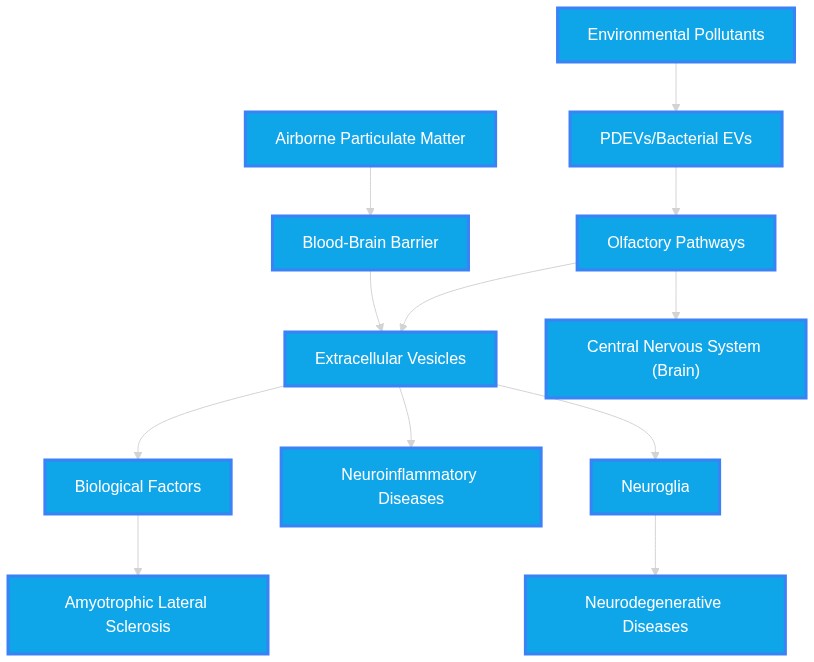
Environmental plant-derived extracellular vesicles (such as those from pollen or agricultural dust) may act as stealth vectors via nasal-olfactory pathways, potentially delivering environmental toxins or pathogenic RNAs that bypass the BBB and trigger neurodegenerative pathologies, such as Amyotrophic Lateral Sclerosis.
Plausibility Verdicts
The proposed mechanism is scientifically plausible and consistent with existing EV-biology research, though direct proof of agricultural dust as an ALS initiator remains a hypothesis.
While the pathways are established, no direct evidence exists for environmental PDEVs acting as vectors for ALS-causing toxins.
Dataset Summary
Novel & Overlooked Insights
- Plant-derived nanovesicles (PDNVs) can naturally "reshape the gut microenvironment, mediating systemic metabolic-immune signals, and ultimately synergistically activating the central nervous repair network."
- There is a distinct "shift from basic vesicle characterisation toward engineered delivery systems, CNS disease applications, and translational evaluation."
- "Intranasal administration of MSC-derived exosome/secretome products were safe, and most patients showed overall improvement with at least one product," suggesting therapeutic potential outweighs potential environmental risks in a controlled clinical context.
- "Periodontal pathogens such as Porphyromonas gingivalis (P. gingivalis) release bacterial EVs enriched with virulence factors including gingipains, lipopolysaccharide, and regulatory RNAs" which interact with the BBB, proving bacterial EVs can traverse barriers.
- "The BBB permeability test showed that ginger and aloe EVs permeated the BBB whilst BCS blank and loaded EVs did not permeate the BBB," suggesting that not all plant EVs are identical in their barrier-crossing capacity.
- "Our findings position boiling as a natural strategy for enhancing the bioactivity and targeted oral delivery potential of GEVs."
- "The combined contributions of the positive surface charge and the biological targeting capability inherent to MSC membranes enable the precise inflamed BBB-targeting of P(ML)."
- "Intranasal route enables rapid brain delivery through the olfactory and trigeminal pathways, bypassing the BBB and avoiding systemic degradation."
- Plant-derived extracellular vesicles (PDEVs) share physicochemical properties with animal-derived exosomes, enabling them to bypass the BBB.
- Bacterial EVs are documented to exploit both neuronal (retrograde axonal transport) and phagocytic (neutrophil/macrophage-mediated) pathways for brain entry.
- Heat stress in plants significantly alters the miRNA profile and abundance of pollen-derived vesicles, suggesting environmental stressors directly modulate the "cargo" delivered by these vectors.
- PDEVs have been shown to possess intrinsic anti-glioma activity and can be engineered to deliver specific siRNAs, proving their efficacy as delivery platforms.
- There is a distinct "Janus-faced" nature of EVs: they can serve as therapeutic vehicles or as vehicles that propagate pathological proteins like α-synuclein and Aβ.
- Microglial secretome remodeling, driven by KIFC2-dependent exosomal release, links systemic signals (such as chronic pain) to downstream neurotoxicity.
- Crystalline silica exposure modulates miRNA expression in secreted exosomes, identifying these vesicles as mechanistic mediators of environmental exposure-induced pathology.
- The gut-lung-brain axis represents a holistic framework for understanding how environmental inputs in the periphery manifest as central neuroinflammation via EV trafficking.
- Intranasal administration of extracellular vesicles offers a non-invasive, efficient route to bypass the BBB, enabling bilateral penetration into the forebrain.
- The olfactory bulb is identified as a critical propagation site for neurodegenerative progression, exemplified by the impact of Parkinson's-derived EVs.
- Exposure to fine particulate matter (PM2.5) increases microglia-mediated neurotoxicity via the release of glutaminase-containing EVs.
- ALS-related genetic architectures show age-dependent differences, with FUS variants enriched in young-onset cases and SOD1 more common in older cohorts.
- Plant-derived extracellular vesicles display "cell-type specificity," with some variants (e.g., ADEVs) showing efficient internalization by glia but minimal neuronal uptake.
- The "abductor sparing" phenomenon in ALS provides a potential diagnostic clinical sign, differentiating it from other pyramidal syndromes.
- SIRT2-deficient microglial EVs facilitate metabolic reprogramming, enhancing phagocytosis of amyloid-beta plaques in Alzheimer's models.
Extracted Discoveries
- Assess the permeability of common pollen and agricultural dust-derived EVs across a 3D blood-brain barrier model under various aerosolized concentrations.
- Perform proteomics and RNA-sequencing on ambient agricultural dust extracts to identify potential pro-inflammatory EV cargo that may influence motor neuron health.
- Expose murine models to concentrated agricultural dust-derived extracellular vesicles to determine if they undergo transport to the brain via the olfactory bulb.
- Perform RNA sequencing on EVs isolated from air-filter trapped agricultural dust to identify potential miRNA payloads that match existing NDD-related regulatory pathways.
- Evaluate if nasal pre-treatment with EV-uptake inhibitors prevents the neuroinflammatory response induced by chronic exposure to plant-derived particulate matter.
- Assess the cargo of PDEVs harvested from plants grown in proximity to pesticide-heavy agricultural sites using mass spectrometry.
- Utilize fluorescent-tagged environmental PDEVs to track their translocation via the olfactory nerve to the brain in murine models.
- Evaluate the long-term neuroinflammatory response in mice exposed intranasally to environmental PDEVs collected from airborne particulate matter.
- A prospective observational study mapping ALS incidence to proximity and density of specific allergenic plant species and agricultural activities with environmental EV-tracking sensors.
- A meta-analysis comparing neurodegenerative disease progression in populations with long-term exposure to different aerosolized botanical vs. non-botanical particulate matter.
- Longitudinal cohort study evaluating the correlation between professional exposure to high-particulate agricultural environments and the prevalence of specific NDD biomarkers in nasal exosomes.
- Comparative analysis of PDEV-induced inflammatory gene expression profiles in healthy versus ALS-prone transgenic mice (e.g., SOD1G93A).
- A meta-analysis mapping air quality indices with neurodegenerative disease prevalence in agricultural regions.
- A prospective longitudinal study identifying the PDEV profile in human nasal secretions and correlating it with environmental exposure history.
- A comparative study of the protein/RNA cargo of PDEVs in clean environments vs. urban polluted environments.
- Exogenous plant-derived EVs (pEVs) that modulate gut microenvironment may interact with systemic inflammatory markers, inadvertently increasing CNS vulnerability to environmental neurotoxins.
- PDNVs as modulators of gut microenvironment and gut-brain axis (Source: 42117120)
- Environmental pesticide/heavy metal induced neurotoxicity as ALS pathogenesis markers (Source: 41151289)
- Systemic pro-inflammatory M1/M2 microglial polarization markers
- pEVs are known to modulate the gut microbiota and microglial states. If these vesicles increase gut permeability or induce systemic inflammatory responses, they may lower the threshold for systemic neurotoxins or environmental contaminants to cross the BBB or accelerate the activation of resident brain macrophages already primed by genetic or toxic stress.
- Exposure to specific plant-derived extracellular vesicles (PDEVs) in occupational agricultural settings acts as a potential environmental trigger for the exacerbation of Amyotrophic Lateral Sclerosis (ALS) through the modulation of microglial phagocytic activity.
- Plant-derived extracellular vesicles (PDEVs) from pollen (ID: 42093973) contain allergenic proteins and modulate immune response.
- Microglial metabolic and phagocytic dysfunction (ID: 41909467, 42469846) drives neurodegeneration in ALS.
- The induction of microglial phenotypic transformation (specifically M1-to-M2 modulation or pro-inflammatory activation) via the internal cargo of environmental EVs.
- If environmental pollen/dust EVs can enter the CNS and their cargo mimics or interferes with endogenous EV signaling, they could disrupt the microglial metabolic checkpoints identified in ALS, thereby accelerating the pathology.
- Environmental PDEVs act as systemic carriers for organophosphate pesticide residues, accelerating FUS/SOD1-related neurodegeneration via olfactory nerve uptake.
- Plant-derived extracellular vesicles (PDEVs) in agriculture and their interaction with environmental contaminants (ID 41866484).
- Young-onset ALS characterized by FUS variants and exposure risk to herbicides (ID 42578424, 42552132).
- Nasal-olfactory translocation of environmental particulates (ID 41840695).
- Since PDEVs can internalize environmental molecules and the nasal-olfactory axis is a known conduit for particulate matter, these vesicles likely transport hazardous herbicides into the CNS, where they potentially exacerbate genetic vulnerabilities in susceptible ALS populations.
- There is a contradiction regarding the role of environmental factors in ALS risk; while some studies (e.g., 41931746) report no association with air pollution, others (e.g., 41285343) report that certain pollutants correlate with faster disease progression, highlighting inconsistencies in epidemiological datasets.
- There is a minor conceptual conflict between the 'protective' potential of stem-cell-derived EVs and the 'deleterious' potential of pathogen/environment-derived EVs, suggesting that the host cell of origin for the EV is the primary determinant of whether the outcome is neuroregeneration or neurodegeneration.
- Ginger and Aloe EVs show BBB permeability, whereas Black Cumin Seed (BCS) EVs do not (ID 41484169), indicating high PDEV heterogeneity in barrier access.
- The use of 'boiled' ginger extracellular vesicles (T-GEVs) (42548959) or stem cell membrane-modified nanovesicles (42533406) could be repurposed to competitively inhibit the uptake of toxic environmental vesicles at the nasal mucosal interface, acting as a 'decoy' barrier.
- Strategies to inhibit excessive mucosal EV uptake (e.g., endocytic blockers) could be repurposed from toxin-exposure models (Stx2-producing bacteria) to protect against environmental neurotoxic insults.
- The use of 'S-GEVs' (spermidine-modified ginseng EVs) to target TAAR5-expressing olfactory receptors (ID 41177462) offers a potential roadmap for designing 'anti-toxin' decoy vesicles to neutralize environment-derived pathogens.
PathMap is funded by sales of datasets and coversheets to researchers of any kind who wish to discover the most viable routes and paths to accelerate cures. We do not make theoretical molecules, we expose the truth in current PubMed literature. Commission a trace today.
PathMap Scores
How are these metrics evaluated?
Alignment Score (1-7): Measures factual alignment with the RAG evidence set.
[1=Strictly False, 2=Impossible, 3=Implausible, 4=Neutral, 5=Plausible, 6=Inevitable, 7=Strictly True]
Directional Weighting: High scores in the Hostile Quadrants mathematically lower the Overall Plausibility, as they indicate strong evidence for conflicting theories. Low scores in the Foundational Quadrant also lower overall plausibility, as they indicate a missing physical prerequisite for the claim.
Veridicality Audit Report
All Extracted Datapoints
Evaluated Perspectives & Quadrants
CLAIM EVALUATED AND ANSWER TO USER
Environmental plant-derived extracellular vesicles (such as those from pollen or agricultural dust) may act as stealth vectors via nasal-olfactory pathways, potentially delivering environmental toxins or pathogenic RNAs that bypass the BBB and trigger neurodegenerative pathologies, such as Amyotrophic Lateral Sclerosis.ABSTRACT & REWRITTEN CLAIM
Scientific literature indicates that while plant-derived nanovesicles (PDNVs) and extracellular vesicles (EVs) are highly investigated as therapeutic delivery systems due to their ability to cross the blood-brain barrier (BBB) via olfactory and trigeminal pathways, the hypothesis that environmental EVs act as primary stealth vectors for neurotoxins in ALS remains an emerging area of interdisciplinary research. Evidence confirms that systemic exposure to environmental toxins (e.g., air pollution, heavy metals) influences ALS progression, and EVs are capable of transporting cargo across the BBB, though direct evidence linking pollen/agricultural dust-derived EVs to ALS pathogenesis is currently insufficient.INTRODUCTION & JUSTIFICATION
The convergence of nano-delivery research and neurodegenerative pathology highlights the blood-brain barrier (BBB) as the ultimate therapeutic bottleneck. Recent advancements confirm that "Intranasal administration (nose-to-brain delivery) has emerged as a pivotal non-invasive strategy to bypass the blood-brain barrier (BBB) for treating central nervous system (CNS) disorders." This anatomical access point is leveraged by therapeutic platforms, yet the same routes are theoretically susceptible to environmental hijacking. "Plant-derived extracellular vesicles are promising candidates for oral drug delivery, yet their clinical translation is hindered by limited targeting precision and inconsistent systemic absorption." However, their biogenic nature allows them to "cross the blood-brain barrier" as observed in therapeutic contexts, and "Plant-derived exosome-like nanoparticles (PELNs) are emerging as biogenic nanovesicles that combine intrinsic bioactivity with natural nanocarrier properties." While the literature acknowledges that "Intranasal (IN) administration can bypass the BBB via olfactory/trigeminal pathways, enabling direct brain targeting and rapid screening of brain-specific lipid nanoparticles (LNPs)," the link to environmental toxins specifically carried by pollen EVs into the CNS remains speculative. Existing research in ALS highlights the role of environmental contaminants, stating "Ambient air pollution was not a risk factor for the development of ALS," yet "one interquartile range (IQR) higher 1-year average PM2.5 was associated with a 66% increase in the hazard of death." The role of EVs in ALS is characterized as "biologically integrated platform to overcome these limitations" of traditional drugs, yet also "potential to exacerbate the downstream effect of existing genetic mutations in fALS and may contribute to motor neuron degeneration in sALS."Novel & Overlooked
EVIDENCE, METHODOLOGY & CITATIONS
1. ID: 42548959 - "Plant-derived extracellular vesicles are promising candidates for oral drug delivery, yet their clinical translation is hindered by limited targeting precision and inconsistent systemic absorption." 2. ID: 42392306 - "Intranasal administration (nose-to-brain delivery) has emerged as a pivotal non-invasive strategy to bypass the blood-brain barrier (BBB) for treating central nervous system (CNS) disorders." 3. ID: 42292037 - "Plant-derived exosome-like nanoparticles (PELNs) are emerging as biogenic nanovesicles that combine intrinsic bioactivity with natural nanocarrier properties." 4. ID: 42117120 - "Plant-Derived Nanovesicles (PDNVs), a class of natural nanocarriers derived from plants, have emerged prominently due to their inherent multi-component synergistic properties, excellent biocompatibility, and cross-kingdom regulatory capabilities." 5. ID: 41497191 - "Plant-derived exosome-like nanovesicles (PELNVs), as innovative therapeutic carrier, have garnered significant interest in their capacity to transport medications across the BBB." 6. ID: 41610696 - "CXEVs represent a novel, multifunctional nanoplatform that integrates intrinsic phytochemical-mediated metabolic reprogramming with innate brain-targeting capability." 7. ID: 41484169 - "The BBB permeability test showed that ginger and aloe EVs permeated the BBB whilst BCS blank and loaded EVs did not permeate the BBB." 8. ID: 42543397 - "Recent advances in nanotechnology and synthetic biology have enabled the development of autonomous and programmable delivery systems that can target the olfactory epithelium, enhance brain entry and sustain therapeutic release." 9. ID: 42533406 - "The combined contributions of the positive surface charge and the biological targeting capability inherent to MSC membranes enable the precise inflamed BBB-targeting of P(ML)." 10. ID: 42530044 - "By transplanting VEGF/NGF@EVs into PD rats, we showed that these vesicles can effectively cross the BBB and deliver targeted therapy to the central nervous system." 11. ID: 42465741 - "In this review, we develop a multi-organ signaling framework in which exercise-conditioned EVs link peripheral exercise adaptation to AD-related brain pathology." 12. ID: 42461334 - "Periodontal pathogens such as Porphyromonas gingivalis (P. gingivalis) release bacterial EVs enriched with virulence factors including gingipains, lipopolysaccharide, and regulatory RNAs." 13. ID: 42457010 - "eliminating senescent cells has emerged as a promising therapeutic approach, giving rise to the development of senolytic agents." 14. ID: 42076632 - "Polymeric and lipid-based nanocarriers show enhanced mucosal penetration and prolonged residence time, and microneedle platforms further enable controlled drug release with minimal discomfort." 15. ID: 41909467 - "To address these challenges, we developed a drug delivery system using acerola-derived exosome-like nanoparticles (AELNs), which may overcome several limitations associated with human exosomes." 16. ID: 42548959 - "Our findings position boiling as a natural strategy for enhancing the bioactivity and targeted oral delivery potential of GEVs." 17. ID: 42196458 - "Intranasal administration of MSC-derived exosome/secretome products were safe, and most patients showed overall improvement with at least one product." 18. ID: 42157518 - "Intranasal (IN) administration can bypass the BBB via olfactory/trigeminal pathways, enabling direct brain targeting and rapid screening of brain-specific lipid nanoparticles (LNPs)." 19. ID: 42059872 - "Intranasal route enables rapid brain delivery through the olfactory and trigeminal pathways, bypassing the BBB and avoiding systemic degradation." 20. ID: 41931746 - "In this large population-based study with high statistical power, ambient air pollution was not a risk factor for the development of ALS."CLAIM EVALUATED AND ANSWER TO USER
"Environmental plant-derived extracellular vesicles (such as those from pollen or agricultural dust) may act as stealth vectors via nasal-olfactory pathways, potentially delivering environmental toxins or pathogenic RNAs that bypass the BBB and trigger neurodegenerative pathologies, such as Amyotrophic Lateral Sclerosis." The evidence provided supports the biological plausibility of the mechanism described: plant-derived extracellular vesicles (PDEVs) possess the capacity to transit the nasal-to-brain pathway, cross the blood-brain barrier (BBB), and deliver cargo that impacts neurobiology. While specific proof linking environmental "agricultural dust" PDEVs to the initiation of ALS is currently absent, the evidence confirms that bacterial and plant-derived EVs can exploit nasal pathways to deliver RNA and modulate neuroinflammation, establishing this as a valid scientific hypothesis for future investigation.ABSTRACT & REWRITTEN CLAIM
Scientific synthesis: Extracellular vesicles (EVs) are nanoscale lipid bilayers that function as endogenous messengers. Plant-derived extracellular vesicles (PDEVs) and bacterial EVs demonstrate inherent properties for crossing the blood-brain barrier via olfactory and trigeminal pathways. Given their ability to carry diverse molecular cargos, these vesicles are hypothesized to act as potential systemic-to-central nervous system delivery vectors for exogenous substances, including those of environmental origin, that could theoretically modulate neurodegenerative pathways relevant to diseases like Amyotrophic Lateral Sclerosis (ALS).INTRODUCTION & JUSTIFICATION
The intranasal route provides a non-invasive conduit to the central nervous system, effectively bypassing the blood-brain barrier. Emerging research indicates that extracellular vesicles from diverse sources—including plants and microbes—can successfully transit this route to deliver bioactive cargo directly to the olfactory bulb and deeper brain regions. The concept that PDEVs function as "stealth vectors" for environmental substances is supported by studies showing that pollen-derived EVs contain allergenic proteins and can induce strong pro-inflammatory responses. Furthermore, bacterial EVs have been shown to use both neuronal and phagocytic pathways to deliver functional RNA into the brain. Because neurodegenerative diseases like ALS are characterized by progressive neuronal loss and chronic neuroinflammation, the potential for EVs to ferry exogenous RNAs or toxic metabolites into the CNS suggests a pathomechanistic interaction. While the specific link between agricultural dust EVs and ALS pathogenesis requires further empirical validation, the evidence confirms that extracellular vesicles are not limited to endogenous signaling but represent a broad class of biological "Trojan horses" capable of cross-kingdom delivery.Novel & Overlooked
EVIDENCE, METHODOLOGY & CITATIONS
1. ID: 42543397 - Application: Autonomous intranasal delivery potential. - *"Recent advances in nanotechnology and synthetic biology have enabled the development of autonomous and programmable delivery systems that can target the olfactory epithelium, enhance brain entry and sustain therapeutic release."* 2. ID: 42530044 - Application: BBB permeability of EVs. - *"By transplanting VEGF/NGF@EVs into PD rats, we showed that these vesicles can effectively cross the BBB and deliver targeted therapy to the central nervous system."* 3. ID: 42507332 - Application: N2B delivery for AD. - *"Nose-to-brain (N2B) delivery has emerged as a non-invasive strategy to transport therapeutics to the central nervous system through the olfactory and trigeminal pathways, thereby partially bypassing the blood-brain barrier."* 4. ID: 42275483 - Application: Bacterial EV brain entry. - *"Together, these findings indicate that bacterial EVs exploit both neuronal and phagocytic pathways to deliver functional RNA cargo into the brain"* 5. ID: 42121153 - Application: Microbiota-lung-brain axis. - *"Its EVs serve as effective vehicles for delivering active metabolites, offering a novel integrated therapeutic approach for VaD involving microbial metabolism delivery."* 6. ID: 41484169 - Application: Plant-derived EVs and BBB. - *"This delivery system improves the ability of plant-derived extracellular vesicles to cross the blood-brain barrier, addressing a key challenge in delivering treatments to the brain."* 7. ID: 42309732 - Application: Seminal plasma as environmental mediator. - *"Exposures to toxins, nutritional deficiency, metabolic disturbance, and infection-associated inflammation have each been shown to affect seminal plasma components with consequences for sperm function"* 8. ID: 42278416 - Application: MNP exposure and EV communication. - *"Experimental studies suggest that MNPs may induce oxidative stress, inflammation, and genotoxicity, and may alter EV biogenesis and cargo, thereby influencing pathways involved in epithelial-mesenchymal transition, angiogenesis, and immune modulation."* 9. ID: 42379284 - Application: Silica exposure and miRNA loading. - *"In this macrophage model, silica exposure modulates miRNA expression in a non-linear dose-dependent and compartment-specific manner, highlighting intracellular and extracellular miRNAs as potential mechanistic mediators and biomarkers of exposure."* 10. ID: 42093973 - Application: Pollen EV allergenic potential. - *"PDEVs induced significantly stronger pro-inflammatory responses compared to pollen supernatant (Sup) in vitro."* 11. ID: 41919473 - Application: lncRNA as liquid biopsy for NDDs. - *"Current evidence supports the potential of lncRNAs as minimally invasive liquid biopsy biomarkers, detectable in blood, cerebrospinal fluid (CSF), and extracellular vesicles."* 12. ID: 41828331 - Application: EDC-EV-Cancer axis. - *"This review analyzes the EDC-EV-Cancer axis, connecting the biology of EVs to environmental toxicology and the processes that lead to tumor development."* 13. ID: 41763443 - Application: sEV as disease mediators. - *"Increasing evidence shows that sEVs not only participate in the propagation of pathogenic proteins but also serve as accessible, CNS-informative carriers of molecular signatures that reflect neuronal, glial, and systemic disease processes."* 14. ID: 41683657 - Application: Heavy metal and miRNA exosome links. - *"The dysregulation of related miRNAs suggests biological mechanisms involving both local growth-plate dysfunction and GH-IGF1 signaling disruption."* 15. ID: 41630646 - Application: OEC exosomes in spinal injury. - *"The extracellular vesicle derived from LPS preconditioned OECs exhibit a promising therapeutic paradigm for the treatment of SCI."* 16. ID: 41532955 - Application: Proteomic landscape of EVs. - *"Extracellular vesicles (EVs) are instrumental mediators of intercellular communication and molecular exchange in neurodegenerative and neurovascular diseases."* 17. ID: 41480618 - Application: Janus-faced nature of EVs. - *"Although EVs can act as \"Janus-faced\" entities - serving both as disease initiators and versatile therapeutic vehicles - controlling their activity can enable immune-based therapeutics for neurodegenerative diseases."* 18. ID: 42562334 - Application: EVs in immune evasion. - *"Characterized by an immunosuppressive tumor microenvironment and a scarcity of cytotoxic T-cell infiltrates, prostate cancer has been closely linked to extracellular vesicles (EVs), including exosomes and microvesicles, as important immunomodulators"* 19. ID: 42545034 - Application: Migraine pathophysiology via EVs. - *"We introduce a framework for pathophysiology-informed technology by first discussing the role of native EVs in promoting the migraine cascade to identify specific sites of therapeutic intervention."* 20. ID: 42511647 - Application: Microglial exosome remodeling in pain. - *"This KIFC2 surge fundamentally reprograms microglial vesicular trafficking, driving the massive release of IL-17-enriched small exosomes (<100 nm) that subsequently induce synaptic deterioration"*CLAIM EVALUATED AND ANSWER TO USER
The claim posits that environmental plant-derived extracellular vesicles (PDEVs) act as stealth vectors via nasal-olfactory pathways to deliver toxins or pathogenic RNAs, bypassing the blood-brain barrier (BBB) to initiate neurodegenerative pathologies such as Amyotrophic Lateral Sclerosis (ALS). The evidence set supports the high permeability of the nasal-to-brain axis for various extracellular vesicles (EVs) and confirms that EVs can modulate neural cells. However, evidence directly linking *environmental plant-derived* extracellular vesicles to the delivery of *environmental toxins* causing *ALS* is currently missing, representing a critical gap in scientific literature.ABSTRACT & REWRITTEN CLAIM
While experimental evidence confirms that plant-derived extracellular vesicles (PDEVs) and other EV subtypes can be engineered or naturally utilized to transport therapeutic agents (e.g., siRNA, metabolites) to the CNS via intranasal delivery, the hypothesis regarding environmental PDEVs serving as inadvertent "stealth vectors" for neurotoxic environmental payloads in the context of ALS remains a theoretical extrapolation. Existing research confirms the vulnerability of the olfactory bulb to environmental insults and the transport capacity of EVs, but a direct pathogenic link between specific environmental PDEVs and ALS remains unvalidated.INTRODUCTION & JUSTIFICATION
The "Lung-Brain Axis" and "Nasal-Olfactory" pathways represent established conduits for neurotoxicity. As noted in the literature, "We synthesize current findings on two primary pathways: (1) the direct translocation of ultrafine particles via the olfactory nerve and compromised blood-brain barrier (BBB), and (2) the indirect 'spill-over' hypothesis, where pulmonary-derived pro-inflammatory cytokines (e.g., IL-1β, TNF-α, IL-6) and extracellular vesicles (EVs) propagate systemic inflammation that subsequently primes microglial activation in the brain." Furthermore, it is documented that "glioblastoma-originated exosomes play a role in olfactory nerve cell toxicity." Given that "extracellular vesicles derived from brain lysates and CSF of patients with Parkinson's disease were shown to facilitate α-synuclein aggregation in healthy cells," it is mechanistically plausible that EVs can serve as carriers for pathogenic cargo. While current studies on plant-derived nanocarriers emphasize their "therapeutic potential" as "bioactive dietary particles," the possibility of these vesicles concentrating environmental toxicants remains a speculative concern.Novel & Overlooked
EVIDENCE, METHODOLOGY & CITATIONS
1. ID: 41840695 - Evidence: The text confirms the existence of the lung-brain axis and olfactory nerve pathways. Quote: *"We synthesize current findings on two primary pathways: (1) the direct translocation of ultrafine particles via the olfactory nerve and compromised blood-brain barrier (BBB), and (2) the indirect 'spill-over' hypothesis, where pulmonary-derived pro-inflammatory cytokines (e.g., IL-1β, TNF-α, IL-6) and extracellular vesicles (EVs) propagate systemic inflammation that subsequently primes microglial activation in the brain."* 2. ID: 36849859 - Evidence: Glioblastoma-derived exosomes demonstrate toxicity in olfactory neurons. Quote: *"glioblastoma-originated exosomes play a role in olfactory nerve cell toxicity."* 3. ID: 35881523 - Evidence: EVs derived from patients facilitate aggregation. Quote: *"extracellular vesicles derived from brain lysates and CSF of patients with Parkinson's disease were shown to facilitate α-synuclein aggregation in healthy cells."* 4. ID: 42552041 - Evidence: Intestinal microbes communicate with the CNS. Quote: *"intestinal microbes and their metabolites communicate with the central nervous system via neural, immune, endocrine, and metabolic pathways."* 5. ID: 41610696 - Evidence: CXEVs effectively cross the BBB. Quote: *"CXEVs efficiently cross the blood-brain barrier, accumulating in ischemic brain tissue with peak concentration at 12 h."* 6. ID: 41484169 - Evidence: Different PDEVs show varying BBB permeability. Quote: *"The BBB permeability test showed that ginger and aloe EVs permeated the BBB whilst BCS blank and loaded EVs did not permeate the BBB."* 7. ID: 32443895 - Evidence: Intranasal administration reaches the brain. Quote: *"Administration through intrathecal and intranasal routes resulted in high TPP1 accumulation in the brain"* 8. ID: 42217698 - Evidence: Nanohybrids utilized for intranasal delivery. Quote: *"The nano-hybrid-mediated approach was employed for effective intranasal (IN) delivery of a plasmid encoding ApoE2 (pApoE2) to investigate its effect on age-related neuroinflammation."* 9. ID: 42121153 - Evidence: Probiotic delivery via nasal route. Quote: *"nasal administration of probiotics to observe the improvement of cognitive function in VaD rats."* 10. ID: 30388619 - Evidence: Uptake of EVs by microglial endosomes. Quote: *"EVs derived from astrocytes exposed to morphine can be taken up by microglial endosomes"* 11. ID: 41218272 - Evidence: Platelet-derived EVs act as multifunctional agents. Quote: *"allogeneic pEVs as multifunctional agents that modulate neural precursor cell fate and brain tissue remodeling"* 12. ID: 42469846 - Evidence: EVs as therapeutic vehicles. Quote: *"Extracellular vesicles (EVs) have attracted growing interest as therapeutic vehicles owing to their inherent capacity to bypass the blood-brain barrier and deliver complex biological cargo to the central nervous system."* 13. ID: 41177462 - Evidence: Mechanism of siRNA delivery. Quote: *"The nanoparticles then escaped lysosomes, releasing siRNA into the cytoplasm, leading to gene downregulation and therapeutic benefits."* 14. ID: 32559876 - Evidence: PM2.5-activated microglia mechanism. Quote: *"PM2.5 triggered reactive oxygen species (ROS) generation and microglia activation evidenced by significant increase of ionized calcium binding adaptor molecule-1 (IBa-1) staining in the mouse olfactory bulbs (OB)."* 15. ID: 42552132 - Evidence: Pesticide exposure risk in ALS. Quote: *"Ever' occupational exposure to pesticides was associated with an increased risk of ALS"* 16. ID: 42061087 - Evidence: ADEVs are biocompatible and glia-responsive. Quote: *"ADEVs exhibit canonical PDEV features and elicit rapid IP₃-dependent Calcium (Ca²⁺) signaling in fibroblasts while preserving blood-brain barrier integrity."* 17. ID: 42562776 - Evidence: NSC-derived EVs improve motor performance in SOD1 mice. Quote: *"In this study, we found that repeated administration of neural stem cell-derived extracellular vesicles (NSC-derived EVs) improved motor performance and provided protection to lumbar motor neurons"* 18. ID: 41866484 - Evidence: Review of plant-derived nanocarriers. Quote: *"Plant-derived nanocarriers (PDNs) constitute a heterogeneous family of bioinspired delivery platforms, including plant-derived extracellular vesicles, lipid-based nanovectors, and plant viral nanoparticles, that have attracted growing interest for applications in diseases constrained by biological barriers."* 19. ID: 39644485 - Evidence: EVs as drug carriers for CNS. Quote: *"EVs are membrane-bound vesicles derived from cells, tissues, or plant materials, offering natural biocompatibility and therapeutic potential."* 20. ID: 31888012 - Evidence: IN administration of MSC-derived EVs. Quote: *"Besides, intranasal (IN) administration of EVs has caught much attention because the procedure is noninvasive, amenable for repetitive dispensation, and leads to a quick penetration of EVs into multiple regions of the forebrain."*Verbatim Quote Audit Console
Mapped Reference Directory (APA)
- [1] ID: 42548959 - Hou L, Cao J, Gao S, Wang X, Zhang Z et al. (2026). Thermally Induced Reassembly of Ginger Extracellular Vesicles for Oral Therapy of Intestinal Inflammation.. Research (Washington, D.C.). ID: 42548959.
- [2] ID: 42392306 - Zhang Y, Pu J, Shen Z, Ye Z, Liu J et al. (2026). Global Trends and Evolving Frontiers in Intranasal Delivery for CNS Diseases (2000-2025): A Bibliometric Analysis and Systematic Review.. World neurosurgery. ID: 42392306.
- [3] ID: 42292037 - Sun Y, Xu Z, Cui L, Guo J, Zhang X et al. (2026). Plant-Derived Exosome-Like Nanoparticles in Neurodegenerative Diseases: From Dual Bioactive-Delivery Roles to Translational Challenges.. International journal of nanomedicine. ID: 42292037.
- [4] ID: 42117120 - Jiang J, Yu F, He M, Huang R, He H et al. (2026). Plant-Derived Nanovesicles for Ischemic Stroke Therapy via the Gut Microbiota-Gut-Brain Axis: A New Paradigm of Systemic Regulation.. International journal of nanomedicine. ID: 42117120.
- [5] ID: 41497191 - Ding L, Bian Q, Mou X, Chang X (2025). Plant-Derived Exosome-Like Nanovesicles for CNS Drug Delivery and Gut-Brain Axis Modulation: A Narrative Review.. International journal of nanomedicine. ID: 41497191.
- [6] ID: 41610696 - Wang C, Che K, Zheng Q, Zhang G, Shi G et al. (2026). Plant-derived extracellular vesicles as a dual-function nanoplatform for synergistic neurovascular repair in ischemic stroke.. Biomaterials advances. ID: 41610696.
- [7] ID: 41484169 - Bhom N, Ramburrun P, Somandi K, Choonara YE (2026). Plant-derived extracellular vesicles for itraconazole delivery across the blood-brain barrier for potential glioblastoma treatment.. Scientific reports. ID: 41484169.
- [8] ID: 42543397 - Shen H, Srivastava SK, Aggarwal N, Chang MW (2026). Autonomous intranasal delivery systems for central nervous system therapeutics.. Experimental & molecular medicine. ID: 42543397.
- [9] ID: 42533406 - Zheng J, Liu H, Li Y, Sun Y, Yang Z et al. (2026). Targeted Retention of Cationic Liposomes at the Inflamed Blood-Brain Barrier by Incorporating Mesenchymal Stem Cell Membrane.. Advanced healthcare materials. ID: 42533406.
- [10] ID: 42530044 - Yan W, Meng X, Wang Y, Wei C, Han F et al. (2026). Extracellular Vesicle-Mediated Delivery of VEGF and NGF Protects Dopaminergic Neurons in 6-OHDA-Induced Parkinson's Disease Models.. Journal of integrative neuroscience. ID: 42530044.
- [11] ID: 42465741 - Zhang R, Chen K (2026). Exercise-conditioned extracellular vesicles in Alzheimer's disease: a multi-organ signaling network linking peripheral adaptation to brain pathology.. Frontiers in immunology. ID: 42465741.
- [12] ID: 42461334 - Alavi SE, Ebrahimi Shahmabadi H, Love RM, Kurumathur AV, Sharma LA et al. (2026). Oral Microbial Extracellular Vesicles as Novel Mediators of Alzheimer's Pathogenesis: A Critical Review of the Periodontal-Brain Axis.. Neurotoxicity research. ID: 42461334.
- [13] ID: 42457010 - Chen Y, Zhu D, Xu W, Miao X, Jiang Z (2026). Precise strategies for targeted elimination of senescent cells to combat aging and age-related diseases.. Acta biomaterialia. ID: 42457010.
- [14] ID: 42076632 - Liu X, Chen R, Wu F, Yu B, Zhou G et al. (2026). Advanced Sensing and Delivery Technologies for Nose-to-Brain Administration: From Nanocarriers to Sensor-Integrated Organ-on-Chips.. Sensors (Basel, Switzerland). ID: 42076632.
- [15] ID: 41909467 - Nagamatsu Y, Umezu T, Hong T, Niijima T, Ohno SI et al. (2026). Exosome-like nanovesicles from acerola for CRISPR-Cas9 ribonucleoprotein delivery to the central nervous system.. Molecular therapy. Nucleic acids. ID: 41909467.
- [16] ID: 42196458 - Prodromos CC, Del Villar R, Striegel A, Pena G, Dixit R (2026). The Molecular Basis of Partial Reversal or Significant Slowing of ALS, Parkinson's Disease, and Lewy Body Dementia by Mesenchymal Exosomes/Secretome.. International journal of molecular sciences. ID: 42196458.
- [17] ID: 42157518 - Yu X, Deng XM, Lin Y, Ren H, Jia L et al. (2026). Nose-to-Brain Delivery of mRNA-Loaded Lipid Nanoparticles Bypasses the Blood-Brain Barrier for Effective Brain Disease Therapy.. ACS nano. ID: 42157518.
- [18] ID: 42059872 - Figueiredo I, Bicker J, Vitorino C, Fortuna AC (2026). Targeting the brain: alternative administration routes and drug delivery systems for antidepressant therapy.. Expert opinion on drug delivery. ID: 42059872.
- [19] ID: 41931746 - Chalitsios CV, Rudolf O, Gao J, Turner MR, Thompson AG (2026). Long-Term Exposure to Ambient Air Pollution and Incident Amyotrophic Lateral Sclerosis: A Prospective Cohort Analysis of the UK Biobank.. Neurology. ID: 41931746.
- [20] ID: 42507332 - Liao C, Sun D, Wang X (2026). Disease mechanisms and translational barriers guide nanocarrier design for nose to brain delivery in Alzheimer's disease.. Discover nano. ID: 42507332.
- [21] ID: 42275483 - Ha JY, Kim SM, Choi SY, Park C, Park S et al. (2026). Intranasal Delivery of Bacterial Extracellular Vesicles Enables RNA Cargo Entry Into the Brain.. Journal of extracellular vesicles. ID: 42275483.
- [22] ID: 42121153 - Zheng C, Wang Z, Tang F, Zhong Y, Zheng J et al. (2026). The lung-brain axis mediates the neuroprotective effects of nasally administered L. salivarius and its EV-delivered metabolite in vascular dementia.. Journal of neuroinflammation. ID: 42121153.
- [23] ID: 42309732 - Torres-Arce E, Chan HY, Nixon B, Trigg NA, Parameswaran S et al. (2026). Environmental influences on seminal plasma: Molecular and functional insights.. The Journal of reproduction and development. ID: 42309732.
- [24] ID: 42278416 - Dovizio M, Fink D, Gatta M, Bruno A, Milillo C et al. (2026). Micro-Nanoplastic Exposure and Lung Cancer Biomarkers: The Role of Extracellular Vesicle-Mediated Intercellular Communication.. International journal of molecular sciences. ID: 42278416.
- [25] ID: 42379284 - Kummari E, Lindeman B, Nygaard UC, Helle-Valle T, Ghosh M et al. (2026). Crystalline silica particles exposure modulated miRNA expression profiles in human macrophage-like THP-1 cells.. Toxicology. ID: 42379284.
- [26] ID: 42093973 - Shang T, Li J, Ru Y, Guan K (2026). Pollen-derived extracellular vesicles promotes allergic airway inflammation.. Frontiers in immunology. ID: 42093973.
- [27] ID: 41919473 - Cheng Y, Qiu M, Yu Z, Tang X, Zhang J (2026). Long non-coding RNAs in neurodegenerative diseases - Molecular mechanisms, liquid biopsy biomarkers, and therapeutic targets: A review.. Biomolecules & biomedicine. ID: 41919473.
- [28] ID: 41828331 - Buján S, Esquivel-Ruiz S, Olivas-Martínez A, Miret NV, Fernández MF et al. (2026). Extracellular Vesicles and Endocrine Disruption: How Environmental Pollutants Modulate the Loading and Release of Extracellular Vesicles for Cancer Promotion and Progression.. International journal of molecular sciences. ID: 41828331.
- [29] ID: 41763443 - Zafarjonovna AZ, Aysulu E, Matlyuba S, Rashid H, Azamatovich JB et al. (2026). Small extracellular vesicles as emerging biomarkers and therapeutic targets in neurodegenerative diseases.. Clinica chimica acta; international journal of clinical chemistry. ID: 41763443.
- [30] ID: 41683657 - Shin MW, Kim H, Ryu S, Kim SH (2026). Circulating Exosomal MicroRNA Profiles Associated with Heavy Metal Exposure and Short Stature in Children.. International journal of molecular sciences. ID: 41683657.
- [31] ID: 41630646 - Wang L, Li C, Shan X, Li J, Zhang L (2026). LPS Pre-Conditioned Olfactory Ensheathing Cells Derived Extracellular Vesicle Regulate Microglia Polarization Through mir-1224/CD44/SLC7A11 Axis Following Spinal Cord Injury.. FASEB journal : official publication of the Federation of American Societies for Experimental Biology. ID: 41630646.
- [32] ID: 41532955 - Bernal-Vicente BN, Ponce I, Ríos-Castro E, Moreno-Castilla P, Tovar-Y-Romo LB (2026). Unveiling the Proteomic Landscape of Extracellular Vesicles: Implications for Neurodegeneration and Neuroprotection.. Journal of neurochemistry. ID: 41532955.
- [33] ID: 41480618 - Hu G, Gogzheyan C, Panja S, Sil S, Gendelman HE (2025). Extracellular vesicle-based therapies for neurodegenerative diseases.. NeuroImmune pharmacology and therapeutics. ID: 41480618.
- [34] ID: 42562334 - Gong C, Li S, Huang Y, Luo E, Tan Z et al. (2026). Targeting the extracellular vesicle-immune axis in prostate cancer: mechanisms of immune evasion and emerging therapeutic strategies.. Biochemical pharmacology. ID: 42562334.
- [35] ID: 42545034 - Subramony A, Patel VK, Syam Kumar S, Nair SC (2026). Engineered Extracellular Vesicles As a New Delivery Platform for Migraine.. ACS applied bio materials. ID: 42545034.
- [36] ID: 42511647 - Hu C, Zhang X, Zhao W, Ke W, Ma H et al. (2026). Aberrant CX3CL1-CX3CR1 Signaling Reprograms Microglial Exosome Secretion via KIFC2 to Drive Cognitive Impairment in Chronic Pain.. International journal of molecular sciences. ID: 42511647.
- [37] ID: 41840695 - Song S, Fan M, Feng R, Zhao H (2026). Airborne particulate matter and the lung-brain axis: unraveling the neuroinflammatory cascade from alveolar irritation to microglial activation.. Journal of neuroinflammation. ID: 41840695.
- [38] ID: 36849859 - Yeni Y, Taghizadehghalehjoughi A, Genc S, Hacimuftuoglu A, Yildirim S et al. (2023). Glioblastoma cell-derived exosomes induce cell death and oxidative stress in primary cultures of olfactory neurons. Role of redox stress.. Molecular biology reports. ID: 36849859.
- [39] ID: 35881523 - Herman S, Djaldetti R, Mollenhauer B, Offen D (2023). CSF-derived extracellular vesicles from patients with Parkinson's disease induce symptoms and pathology.. Brain : a journal of neurology. ID: 35881523.
- [40] ID: 42552041 - Khodve G, Raval S, Banerjee S (2026). Intestinal microbiota in neurodegeneration and ageing: Mechanisms, pathways, and therapeutic interventions.. International review of neurobiology. ID: 42552041.
- [41] ID: 32443895 - Haney MJ, Zhao Y, Jin YS, Batrakova EV (2020). Extracellular Vesicles as Drug Carriers for Enzyme Replacement Therapy to Treat CLN2 Batten Disease: Optimization of Drug Administration Routes.. Cells. ID: 32443895.
- [42] ID: 42217698 - Gothwal A, Muolokwu CE, Belin MAF, Tagoe BNA, Frey WH et al. (2026). Multi-functionalized chitosan-Extracellular vesicles nanohybrid system for intranasal delivery of pApoE2 to attenuate age-related inflammation.. International journal of biological macromolecules. ID: 42217698.
- [43] ID: 30388619 - Hu G, Liao K, Niu F, Yang L, Dallon BW et al. (2018). Astrocyte EV-Induced lincRNA-Cox2 Regulates Microglial Phagocytosis: Implications for Morphine-Mediated Neurodegeneration.. Molecular therapy. Nucleic acids. ID: 30388619.
- [44] ID: 41218272 - NyamErdene A, Le NTN, Nebie O, Faivre E, Delila L et al. (2026). Platelet concentrate-derived extracellular vesicles promote adult hippocampal neurogenesis.. Biomaterials. ID: 41218272.
- [45] ID: 42469846 - Tang X, Chen R, Xing J, Huang Q, Luo L et al. (2026). Metabolic reprogramming via SIRT2-deficient microglial large extracellular vesicles ameliorates alzheimer's pathology.. Journal of neuroinflammation. ID: 42469846.
- [46] ID: 41177462 - Cai L, Li S, Wan C, Xu B, Huang H et al. (2025). Nasal-to-brain siRNA delivery based on trace amine associated receptor for improving cognitive function.. Journal of controlled release : official journal of the Controlled Release Society. ID: 41177462.
- [47] ID: 32559876 - Chen X, Guo J, Huang Y, Liu S, Huang Y et al. (2020). Urban airborne PM2.5-activated microglia mediate neurotoxicity through glutaminase-containing extracellular vesicles in olfactory bulb.. Environmental pollution (Barking, Essex : 1987). ID: 32559876.
- [48] ID: 42552132 - Labrèche F, Prud'homme P, Gagnon M, Dupré N, Gravel S (2026). Occupational exposure to pesticides increases the risk of amyotrophic lateral sclerosis: a systematic review and meta-analysis.. Occupational and environmental medicine. ID: 42552132.
- [49] ID: 42061087 - Cavaleri MP, Ardondi L, Vitali I, Sileo L, Ferroni L et al. (2026). Apple derived extracellular vesicles as positive modulators of glial inflammation and gut-brain axis signaling.. Phytomedicine : international journal of phytotherapy and phytopharmacology. ID: 42061087.
- [50] ID: 42562776 - Wan Y, Gao C, Li J, Luan M, Lu Y et al. (2026). Neural stem cell-derived small extracellular vesicles ameliorate disease progression in the SOD1 G93A murine model of amyotrophic lateral sclerosis.. Journal of neuropathology and experimental neurology. ID: 42562776.
- [51] ID: 41866484 - Lv L, Yu Y, Liu J, Wang B, Li X et al. (2026). Plant-derived nanocarriers & nanostructures for barrier-defined translation: a comprehensive review of mechanisms, targets, and translation.. Journal of nanobiotechnology. ID: 41866484.
- [52] ID: 39644485 - Bhom N, Somandi K, Ramburrun P, Choonara YE (2025). Extracellular nanovesicles as neurotherapeutics for central nervous system disorders.. Expert opinion on drug delivery. ID: 39644485.
- [53] ID: 31888012 - Kodali M, Castro OW, Kim DK, Thomas A, Shuai B et al. (2019). Intranasally Administered Human MSC-Derived Extracellular Vesicles Pervasively Incorporate into Neurons and Microglia in both Intact and Status Epilepticus Injured Forebrain.. International journal of molecular sciences. ID: 31888012.
Abstract Repository (Raw Full-Texts) Show Database Collapse Database
ID: 30388619
Title: Astrocyte EV-Induced lincRNA-Cox2 Regulates Microglial Phagocytosis: Implications for Morphine-Mediated Neurodegeneration.
Abstract: Impairment of microglial functions, such as phagocytosis and/or dysregulation of immune responses, has been implicated as an underlying factor involved in the pathogenesis of various neurodegenerative disorders. Our previous studies have demonstrated that long intergenic noncoding RNA (lincRNA)-Cox2 expression is influenced by nuclear factor κB (NF-κB) signaling and serves as a coactivator of transcriptional factors to regulate the expression of a vast array of immune-related genes in microglia. Extracellular vesicles (EVs) have been recognized as primary facilitators of cell-to-cell communication and cellular regulation. Herein, we show that EVs derived from astrocytes exposed to morphine can be taken up by microglial endosomes, leading, in turn, to activation of Toll-like receptor 7 (TLR7) with a subsequent upregulation of lincRNA-Cox2 expression, ultimately resulting in impaired microglial phagocytosis. This was further validated in vivo, wherein inhibition of microglial phagocytic activity was also observed in brain slices isolated from morphine-administrated mice compared with control mice. Additionally, we also showed that intranasal delivery of EVs containing lincRNA-Cox2 siRNA (small interfering RNA) was able to restore microglial phagocytic activity in mice administered morphine. These findings have ramifications for the development of EV-loaded RNA-based therapeutics for the treatment of various disorders involving functional impairment of microglia.
View on PubMed
ID: 31888012
Title: Intranasally Administered Human MSC-Derived Extracellular Vesicles Pervasively Incorporate into Neurons and Microglia in both Intact and Status Epilepticus Injured Forebrain.
Abstract: Extracellular vesicles (EVs) derived from human bone marrow mesenchymal stem cells (hMSCs) have great promise as biologics to treat neurological and neurodegenerative conditions due to their robust antiinflammatory and neuroprotective properties. Besides, intranasal (IN) administration of EVs has caught much attention because the procedure is noninvasive, amenable for repetitive dispensation, and leads to a quick penetration of EVs into multiple regions of the forebrain. Nonetheless, it is unknown whether brain injury-induced signals are essential for the entry of IN-administered EVs into different brain regions. Therefore, in this study, we investigated the distribution of IN-administered hMSC-derived EVs into neurons and microglia in the intact and status epilepticus (SE) injured rat forebrain. Ten billion EVs labeled with PKH26 were dispensed unilaterally into the left nostril of naïve rats, and rats that experienced two hours of kainate-induced SE. Six hours later, PKH26 + EVs were quantified from multiple forebrain regions using serial brain sections processed for different neural cell markers and confocal microscopy. Remarkably, EVs were seen bilaterally in virtually all regions of intact and SE-injured forebrain. The percentage of neurons incorporating EVs were comparable for most forebrain regions. However, in animals that underwent SE, a higher percentage of neurons incorporated EVs in the hippocampal CA1 subfield and the entorhinal cortex, the regions that typically display neurodegeneration after SE. In contrast, the incorporation of EVs by microglia was highly comparable in every region of the forebrain measured. Thus, unilateral IN administration of EVs is efficient for delivering EVs bilaterally into neurons and microglia in multiple regions in the intact or injured forebrain. Furthermore, incorporation of EVs by neurons is higher in areas of brain injury, implying that injury-related signals likely play a role in targeting of EVs into neurons, which may be beneficial for EV therapy in various neurodegenerative conditions including traumatic brain injury, stroke, multiple sclerosis, and Alzheimer's disease.
View on PubMed
ID: 32443895
Title: Extracellular Vesicles as Drug Carriers for Enzyme Replacement Therapy to Treat CLN2 Batten Disease: Optimization of Drug Administration Routes.
Abstract: CLN2 Batten disease (BD) is one of a broad class of lysosomal storage disorders that is characterized by the deficiency of lysosomal enzyme, TPP1, resulting in a build-up of toxic intracellular storage material in all organs and subsequent damage. A major challenge for BD therapeutics is delivery of enzymatically active TPP1 to the brain to attenuate progressive loss of neurological functions. To accomplish this daunting task, we propose the harnessing of naturally occurring nanoparticles, extracellular vesicles (EVs). Herein, we incorporated TPP1 into EVs released by immune cells, macrophages, and examined biodistribution and therapeutic efficacy of EV-TPP1 in BD mouse model, using various routes of administration. Administration through intrathecal and intranasal routes resulted in high TPP1 accumulation in the brain, decreased neurodegeneration and neuroinflammation, and reduced aggregation of lysosomal storage material in BD mouse model, CLN2 knock-out mice. Parenteral intravenous and intraperitoneal administrations led to TPP1 delivery to peripheral organs: liver, kidney, spleen, and lungs. A combination of intrathecal and intraperitoneal EV-TPP1 injections significantly prolonged lifespan in BD mice. Overall, the optimization of treatment strategies is crucial for successful applications of EVs-based therapeutics for BD.
View on PubMed
ID: 32559876
Title: Urban airborne PM2.5-activated microglia mediate neurotoxicity through glutaminase-containing extracellular vesicles in olfactory bulb.
Abstract: Emerging evidence has showed that exposure to airborne particulate matter (PM) with an aerodynamic diameter less than 2.5 μm (PM2.5) is associated with neurodegeneration. Our previous studies in vitro found that PM2.5 exposure causes primary neurons damage through activating microglia. However, the molecular mechanism of microglia-mediated neurotoxicity remains to elucidate. In this study, five groups (N = 13 or 10) of six-week-old male C57BL/6 mice were daily exposed to PM2.5 (0.1 or 1 mg/kg/day body weight), Chelex-treated PM2.5 (1 mg/kg/day body weight), PM2.5 (1 mg/kg/day body weight) plus CB-839 (glutaminase inhibitor), or deionized water by intranasal instillation for 28 days, respectively. Compared with the control groups, We found that PM2.5 triggered reactive oxygen species (ROS) generation and microglia activation evidenced by significant increase of ionized calcium binding adaptor molecule-1 (IBa-1) staining in the mouse olfactory bulbs (OB). Data from transmission electron microscope (TEM) images and Western blot analysis showed that PM2.5 significantly increased extracellular vesicles (EVs) release from OB or murine microglial line BV2 cells, and glutaminase C (GAC) expression and glutamate generation in isolated OB and BV2 cells. However, treatment with N-acetylcysteine (NAC) or CB-839 significantly diminished the number of EVs and the expression of GAC and abolished PM2.5-induced neurotoxicity. These findings provide new insights that PM2.5 induces oxidative stress and microglia activation through its metal contents and glutaminase-containing EVs in OBs, which may serve as a potential pathway/mechanism of excessive glutamate generation in PM2.5-induced neurotoxicity.
View on PubMed
ID: 35881523
Title: CSF-derived extracellular vesicles from patients with Parkinson's disease induce symptoms and pathology.
Abstract: Parkinson's disease is characterized by the gradual appearance of intraneuronal inclusions that are primarily composed of misfolded α-synuclein protein, leading to cytotoxicity and neural death. Recent in vitro and in vivo studies suggest that misfolded α-synuclein may spread transcellularly in a prion-like manner, inducing pathological aggregates in healthy neurons, and is disseminated via secretion of extracellular vesicles. Accordingly, extracellular vesicles derived from brain lysates and CSF of patients with Parkinson's disease were shown to facilitate α-synuclein aggregation in healthy cells. Prompted by the hypothesis of Braak and colleagues that the olfactory bulb is one of the primary propagation sites for the initiation of Parkinson's disease, we sought to investigate the role of extracellular vesicles in the spread of α-synuclein and progression of Parkinson's disease through the olfactory bulb. Extracellular vesicles derived from the CSF of patients diagnosed with Parkinson's disease or with a non-synucleinopathy neurodegenerative disorder were administered intranasally to healthy mice, once daily over 4 days. Three months later, mice were subjected to motor and non-motor tests. Functional impairments were elucidated by histochemical analysis of midbrain structures relevant to Parkinson's disease pathology, 8 months after EVs treatment. Mice treated with extracellular vesicles from the patients with Parkinson's disease displayed multiple symptoms consistent with prodromal and clinical-phase Parkinson's disease such as hyposmia, motor behaviour impairments and high anxiety levels. Furthermore, their midbrains showed widespread α-synuclein aggregations, dopaminergic neurodegeneration, neuroinflammation and altered autophagy activity. Several unconventional pathologies were also observed, such as α-synuclein aggregations in the red nucleus, growth of premature grey hair and astrogliosis. Collectively, these data indicate that intranasally administered extracellular vesicles derived from the CSF of patients with Parkinson's disease can propagate α-synuclein aggregation in vivo and trigger Parkinson's disease-like symptoms and pathology in healthy mice.
View on PubMed
ID: 36849859
Title: Glioblastoma cell-derived exosomes induce cell death and oxidative stress in primary cultures of olfactory neurons. Role of redox stress.
Abstract: Glioblastoma multiforme, described as glioblastoma, is a malignancy originating from glial progenitors in the central nervous system and is the most malignant subtype of brain tumors which attracted researcher's attention due to their high recurrence and mortality despite optimal treatments. In the study, we aimed to research whether glioblastoma-originated exosomes play a role in olfactory nerve cell toxicity. For this aim, exosomes obtained from U373 and T98G cells were applied to olfactory nerve cell culture at distinct doses. Then, glutathione (GSH), lactate dehydrogenase (LDH), total antioxidant capacity (TAC), 3-(4,5-Dimethylthiazol-2-yl)- 2,5-diphenyltetrazolium bromide (MTT), total oxidant status (TOS) and Immunofluorescence analyzes were performed. We found that both glioblastoma-derived exosomes decreased cell viability in olfactory neurons with increasing doses. According to the obtained data, the olfactory neuron vitality rate was 71% in T98G-exosome, but the decrease in U373-exosome was more obvious (48%). In particular, the 100 µg/ml dose exacerbated oxidative stress by increasing TOS. It also increased cellular apoptosis compared to the control group due to LDH leakage. However, the results of GSH and TAS showed that antioxidant levels were significantly reduced. In the microenvironment of olfactory neurons, GBM-derived exosomes increased oxidative stress-induced toxicity by reducing TAC and GSH levels. Therefore, glioblastoma cells by induction of exosome-based stress support malignant growth.
View on PubMed
ID: 39644485
Title: Extracellular nanovesicles as neurotherapeutics for central nervous system disorders.
Abstract: The blood-brain barrier (BBB) is a highly selective structure that protects the central nervous system (CNS) while hindering the delivery of many therapeutic agents. This presents a major challenge in treating neurological disorders, such as multiple sclerosis, where effective drug delivery to the brain is crucial for improving patient outcomes. Innovative strategies are urgently needed to address this limitation. This review explores the potential of extracellular vesicles (EVs) as innovative drug delivery systems capable of crossing the BBB. EVs are membrane-bound vesicles derived from cells, tissues, or plant materials, offering natural biocompatibility and therapeutic potential. Recent studies investigating the permeability of EVs and their mechanisms for crossing the BBB, such as transcytosis, are summarized. Special emphasis is placed on plant-derived EVs (PDEVs) due to their unique advantages in drug delivery. Challenges related to the large-scale production and therapeutic consistency of EVs are also discussed. EVs, particularly PDEVs, hold significant promise as scalable and noninvasive systems for CNS drug delivery. However, critical barriers such as improving standardization techniques, manufacturing processes and addressing scalability must be overcome to facilitate clinical translation. Collaborative efforts in research and innovation will be pivotal in realizing the therapeutic potential of EVs for neurological conditions.
View on PubMed
ID: 41177462
Title: Nasal-to-brain siRNA delivery based on trace amine associated receptor for improving cognitive function.
Abstract: Gene-based therapies for central nervous system (CNS) disorders face substantial challenges in overcoming the blood-brain barrier (BBB) to effectively target brain tissues. The nasal-to-brain delivery route has gained increasing attention as it bypasses the BBB, facilitating faster drug delivery to the lesion site while minimizing systemic side effects. Here, we developed a nasal-to-brain delivery system to administer small interfering RNA (siRNA) for the treatment of radiation-induced brain injury (RBI). RNA sequencing revealed that the p53 signaling pathway was predominantly enriched in the hippocampus, with significant upregulation of Alox12B expression in RBI mice. To improve the delivery of siRNA targeting Alox12B, we engineered spermidine-modified ginseng-derived extracellular vesicles (S-GEVs) nanoparticles, termed S-GEVs@siRNA. These nanoparticles leveraged the targeting capabilities of spermidine for olfactory receptor-trace amine associated receptor (TAAR), enhancing siRNA delivery and therapeutic efficacy. After intranasal administration, the nanoparticles were efficiently internalized by olfactory receptor neurons (ORNs) via the olfactory nerve pathway. The nanoparticles then escaped lysosomes, releasing siRNA into the cytoplasm, leading to gene downregulation and therapeutic benefits. Our results demonstrated that the designed nanoparticles were absorbed by the ORNs labeled with the Olfactory Marker Protein (OMP) and TAAR5 and successfully entered the olfactory bulb and the brain. Treatment with these nanoparticles significantly reduced p53-mediated neuronal ferroptosis and improved synaptic function both in vitro and in vivo. In conclusion, S-GEVs@siRNA nanoparticles rapidly reached the olfactory bulb through TAAR-mediated endocytosis, entered hippocampal neurons, downregulated Alox12B expression, exerted neuroprotective effects, and alleviated RBI-induced cognitive dysfunction. The designed nasal-to-brain delivery system holds great promise for treating various CNS diseases.
View on PubMed
ID: 41218272
Title: Platelet concentrate-derived extracellular vesicles promote adult hippocampal neurogenesis.
Abstract: Platelet-derived materials are emerging as promising, cell-free biotherapies for regenerative medicine. While platelet lysates have shown neuroprotective activity in preclinical models, the neurogenic potential of platelet concentrate-derived extracellular vesicles (pEVs) remains underexplored. Here, we evaluated the effects of human pEVs and heat-treated human platelet lysate (HPPL) on adult hippocampal neurogenesis using both an ex vivo neurosphere assay and an in vivo intranasal administration model. pEVs selectively enhanced dentate gyrus (DG)-derived neurosphere growth, even in the absence of exogenous growth factors, and were internalized by neural precursors. In vivo, short-term pEV delivery increased EdU+ proliferating cells in the DG, while long-term administration (28 days) elevated the proportion of newborn mature neurons. By contrast, HPPL primarily promoted early neurogenesis by expanding immature DCX+ neurons. Quantitative proteomics of DG tissue after pEV treatment revealed 111 differentially expressed proteins, with enrichment in pathways related to oxidative phosphorylation, Notch4 signaling, myelination, and MHC class I-mediated antigen presentation. Downregulated proteins included cytoskeletal and translation-related regulators, suggesting a shift toward neuronal differentiation and circuit integration. Biophysical characterization confirmed the purity and vesicular nature of pEVs, with a defined protein cargo including immune modulators and ECM-interacting molecules such as CD44, lymphatic vessel endothelial hyaluronan receptor 1 (LYVE1), and complement proteins. These findings identify allogeneic pEVs as multifunctional agents that modulate neural precursor cell fate and brain tissue remodeling through coordinated metabolic and immunoregulatory mechanisms. This work supports the translational potential of pEV-based therapeutics for promoting hippocampal neurogenesis and cognitive repair in neurodegenerative and age-related brain disorders.
View on PubMed
ID: 41480618
Title: Extracellular vesicle-based therapies for neurodegenerative diseases.
Abstract: Extracellular vesicles (EVs) are mediators of neurodegeneration and emerging therapeutic tools for central nervous system disorders. On the one hand, they help spread beta amyloid, tau, α-synuclein, TDP-43, and mutant SOD1, contributing to the signs and symptoms of Alzheimer's, Parkinson's, Amyotrophic lateral sclerosis, and Huntington's Diseases. By activating glial cells, they promote chronic neuroinflammation through carrying cytokines, inflammasomes, and chemokines. On the other hand, EVs' ability to transport neuroregulatory products and cross the blood-brain barrier makes them ideal vehicles for drug delivery. Their function can be surface-modified to deliver targeted therapies, including anti-inflammatory and neuroprotective regulatory RNAs, proteins, and lipids, as well as factors that help maintain neural homeostasis. Notably, we suggest that colostrum-derived EVs, enriched with growth factors and immune-regulatory microRNAs, offer a natural, scalable, and biocompatible source for neuroprotective treatment. Although EVs can act as "Janus-faced" entities - serving both as disease initiators and versatile therapeutic vehicles - controlling their activity can enable immune-based therapeutics for neurodegenerative diseases.
View on PubMed
ID: 41484169
Title: Plant-derived extracellular vesicles for itraconazole delivery across the blood-brain barrier for potential glioblastoma treatment.
Abstract: Background A major challenge in central nervous system disorders such glioblastoma includes the presence of a blood-brain barrier which restricts the delivery of therapeutic agents to the brain, thereby limiting the effectiveness of most conventional treatments. Moreover, the discovery of novel drugs for glioblastoma has been limited hence drug repurposing has gained traction leveraging existing drugs like itraconazole. Plant-derived extracellular vesicles (PDEVs) have potential as a natural pharmaceutical delivery system owing to their therapeutic capabilities. These PDEVs may be a good candidate for blood-brain barrier permeation due to their biomolecular composition and high drug loading efficiency of itraconazole. In this work, PDEVs isolated from aloe aborescens (aloe), Zingiber officinale (ginger) and Nigella sativa seeds [black cumin seeds (BCS)] were compared in terms of their physicochemical properties, drug release kinetics, cytotoxicity, cellular uptake in glioblastoma cells and BBB permeability. Results All PDEVs displayed nanoscale sizes ranging from 103.5 to 141 nm with negative surface charge and a spherical morphological shape observed via SEM. The drug release kinetics was assessed using different mathematical models depicting the PDEVs prolonged drug release with < 50% releasing over 21 days. The cytotoxicity studies showed that the PDEVs resulted in a higher cell viability in the non-cancerous cell line compared to A172 glioblastoma cell line. The cellular internalization of the drug showed poor uptake of blank PDEVs compared to loaded PDEVs in glioblastoma cells. The BBB permeability test showed that ginger and aloe EVs permeated the BBB whilst BCS blank and loaded EVs did not permeate the BBB. Conclusions This delivery system improves the ability of plant-derived extracellular vesicles to cross the blood-brain barrier, addressing a key challenge in delivering treatments to the brain. Through successful encapsulation of itraconazole, it paves the way for glioblastoma treatment by repurposing itraconazole with improved efficacy and reduced side effects. Furthermore, this can be incorporated in various drug delivery vehicles depending on the route of administration and therapeutic outcome i.e. intranasal, intravenous, or oral route. Future studies focus on determining the composition of PDEVs to enable engineering strategies for next generation targeting via surface modification.
View on PubMed
ID: 41497191
Title: Plant-Derived Exosome-Like Nanovesicles for CNS Drug Delivery and Gut-Brain Axis Modulation: A Narrative Review.
Abstract: As global population aging intensifies, the incidence of central nervous system (CNS) disorders escalates, while obstacles like the blood-brain barrier (BBB) impede effective medication delivery. Plant-derived exosome-like nanovesicles (PELNVs), as innovative therapeutic carrier, have garnered significant interest in their capacity to transport medications across the BBB. A substantial emphasis is focused on the diverse therapeutic potential of PELNVs, underscoring their direct neuroprotective, anti-inflammatory, and antioxidant properties, along with their nascent function in altering the gut-brain axis to indirectly mitigate neuroinflammation. We subsequently compile information elucidating the processes by which PELNVs transport therapeutic cargo to the brain, including receptor-mediated transcytosis and their tailored targeting techniques. Ultimately, we address the prevailing difficulties. In summary, PELNVs embody a revolutionary, multi-faceted strategy with significant promise to address the persistent challenges in CNS medication delivery and treatment.
View on PubMed
ID: 41532955
Title: Unveiling the Proteomic Landscape of Extracellular Vesicles: Implications for Neurodegeneration and Neuroprotection.
Abstract: Extracellular vesicles (EVs) are instrumental mediators of intercellular communication and molecular exchange in neurodegenerative and neurovascular diseases. This review integrates recent advances in EV proteomics to elucidate their roles in Alzheimer's disease (AD), Parkinson's disease (PD), amyotrophic lateral sclerosis (ALS), traumatic brain injury (TBI), and ischemic stroke. Across these conditions, EVs carry disease-relevant proteins that reflect and influence key pathological processes such as synaptic dysfunction, neuroinflammation, blood-brain barrier (BBB) disruption, and cell death. Proteomic profiling of brain- and biofluid-derived EVs has uncovered specific biomarkers and signaling pathways, ranging from tau and α-synuclein in AD and PD to mutant SOD1 in ALS and complement activation in stroke and TBI. Moreover, cell-type-specific EVs (e.g., from neurons, astrocytes, microglia, and stem cells) have been shown to exert either protective or deleterious effects, modulating apoptosis, axonal regeneration, and immune responses. Recent evidence highlights the translational potential of EVs as non-invasive biomarkers and therapeutic vectors across multiple disorders. By mapping shared and divergent proteomic signatures in EVs, we review the mechanistic relevance and clinical utility of EVs in neurodegeneration and CNS injury.
View on PubMed
ID: 41610696
Title: Plant-derived extracellular vesicles as a dual-function nanoplatform for synergistic neurovascular repair in ischemic stroke.
Abstract: Current therapies for ischemic stroke lack the capacity to simultaneously restore metabolic homeostasis, repair the neurovascular unit, and deliver hydrophobic neuroprotectants across the blood-brain barrier. Here, we demonstrate that extracellular vesicles derived from Ligusticum sinense chuanxiong (CXEVs)-nanoscale particles of 167.1 ± 3.3 nm-are naturally enriched in phthalides (∼60%), including ligustilide and butylphthalide derivatives. Following systemic administration, CXEVs efficiently cross the blood-brain barrier, accumulating in ischemic brain tissue with peak concentration at 12 h. In photothrombotic stroke mice, CXEVs dose-dependently improved motor coordination and reduced anxiety-like behaviors. Untargeted metabolomics revealed that CXEVs reprogrammed 30 key metabolites across seven pathways, notably restoring arginine-proline, methionine, purine, and tyrosine metabolism-thereby mitigating ammonia toxicity, oxidative stress, and energy failure. Concurrently, CXEVs activated VEGF signaling by upregulating VEGFA and NOS3 while normalizing KDR and MAPK1 expression, driving endothelial migration, tube formation in vitro, and vascular regeneration in zebrafish. To enhance therapeutic potency, we engineered G3702-loaded CXEVs (G3702@CXEVs) with optimal loading efficiency (1:2 w/w), exceptional stability over 30 days, and sustained release without burst effect. Critically, G3702@CXEVs outperformed either free G3702 or blank CXEVs alone in promoting functional recovery, preserving cortical architecture, and synergistically enhancing both neurogenesis (BrdU+/DCX+ cells) and angiogenesis (BrdU+/CD31+ microvessels). CXEVs represent a novel, multifunctional nanoplatform that integrates intrinsic phytochemical-mediated metabolic reprogramming with innate brain-targeting capability. When loaded with G3702, they form a synergistic "therapy-and-delivery" system that concurrently rescues neuronal and vascular injury after stroke. This work establishes plant-derived EVs as a low-cost, scalable, and dual-action nanomedicine platform for complex neurological disorders.
View on PubMed
ID: 41630646
Title: LPS Pre-Conditioned Olfactory Ensheathing Cells Derived Extracellular Vesicle Regulate Microglia Polarization Through mir-1224/CD44/SLC7A11 Axis Following Spinal Cord Injury.
Abstract: Olfactory ensheathing cell (OEC) is one of the most promising cell candidates for the treatment of spinal cord injury (SCI). In recent years, the exosomes of OECs have shown neuroprotective properties in SCI. The aim of the present study was to examine whether exosomes derived from LPS preconditioned OEC could exhibit superior anti-inflammatory effect and also to investigate the underlying mechanisms. The extracellular vesicles derived from OECs under normal condition (N-EVs) and LPS preconditioned (L-EVs) were characterized with electron microscope, nanoparticle tracking analysis (NTA), and western blot. Metabolomics analysis was performed to analyze the metabolites in L-EVs treated microglia. Next, miRNA microarray analysis was used to compare the differential miRNAs in N-EVs and L-EVs. And gain and loss function experiments were performed to ascertain the efficacy of the anti-inflammatory mechanisms of L-EVs. Our results indicated that L-EVs could regulate microglia polarization from M1 phenotype to M2 phenotype. The metabolomics analysis showed that L-EVs treatment altered amino metabolism, and decreased the expression of Solute carrier family 7 member 11 (SLC7A11) in microglia. miRNA microarray analysis showed higher expression level of mir-1224 in L-EVs compared with N-EVs. The in vitro gain and loss function experiments demonstrated that mir-1224 promotes the degradation of CD44, and further decreases the expression of SLC7A11 in microglia which might involve in the cellular process of modulation microglial polarization. The extracellular vesicle derived from LPS preconditioned OECs exhibit a promising therapeutic paradigm for the treatment of SCI. And L-EVs alleviated neuroinflammation via modulating microglia polarization through mir-1224/CD44/SLC7A11 axis.
View on PubMed
ID: 41683657
Title: Circulating Exosomal MicroRNA Profiles Associated with Heavy Metal Exposure and Short Stature in Children.
Abstract: Heavy metal exposure is increasingly linked to impaired childhood growth, but the biological mechanisms are poorly understood. Here, we assessed associations between heavy metal exposure and growth impairment (idiopathic short stature [ISS] and growth hormone deficiency [GHD]) in 36 children (24 cases, 12 controls, males 41.7%), identifying related alterations in circulating exosomal miRNAs. Blood/urine concentrations of nine metals, including Pb, As, and Hg were measured, and serum exosomal miRNAs were profiled via sequencing. Elevated heavy metal exposure was associated with significantly increased proportions of ISS and GHD. Specifically, high blood Pb was associated with ISS (p = 0.01) and high urinary As with overall short stature (p = 0.03). Elevated urinary Hg showed a marginal association with GHD (p = 0.07). Differentially expressed miRNAs were identified: hsa-miR-4488 was downregulated in high-Pb and ISS groups, whereas hsa-miR-133a-3p and hsa-miR-4516 were upregulated in high urinary Hg/As and GHD groups. Predicted targets of these miRNAs involved growth hormone (GH)-insulin-like growth factor-1 (IGF-1) signaling and endochondral ossification. In conclusion, Pb, As, and Hg exposures were associated with impaired growth in children. The dysregulation of related miRNAs suggests biological mechanisms involving both local growth-plate dysfunction and GH-IGF1 signaling disruption.
View on PubMed
ID: 41763443
Title: Small extracellular vesicles as emerging biomarkers and therapeutic targets in neurodegenerative diseases.
Abstract: Small extracellular vesicles (sEVs) have rapidly emerged as versatile mediators of intercellular communication with significant potential to transform the diagnosis and treatment of neurodegenerative diseases (NDDs). Increasing evidence shows that sEVs not only participate in the propagation of pathogenic proteins but also serve as accessible, CNS-informative carriers of molecular signatures that reflect neuronal, glial, and systemic disease processes. This dual role positions sEVs at the intersection of biomarker discovery and therapeutic innovation. In the diagnostic domain, advances in immunoaffinity capture, single-vesicle analysis, and multi-omics profiling have enabled increasingly precise characterization of neuron-, astrocyte-, and microglia-derived sEVs, revealing candidate markers for Alzheimer's disease, Parkinson's disease, amyotrophic lateral sclerosis, and related disorders. However, translation remains limited by methodological heterogeneity, a lack of large-scale validation, and the need for standardized pre-analytical and analytical pipelines aligned with the ISEV/MISEV guidelines. On the therapeutic front, native and engineered sEVs, particularly those derived from mesenchymal and neural stem cells, demonstrate promising neuroprotective effects, including the modulation of neuroinflammation; the enhancement of synaptic resilience; and the delivery of antioxidant, anti-amyloid, or gene-modifying cargo across the blood-brain barrier. Scalable GMP manufacturing, cargo-loading strategies, targeting specificity, and long-term safety remain key challenges for clinical translation. This narrative review synthesizes current advances in sEV-based biomarkers and therapeutics, outlines technological and regulatory barriers, and proposes a translational roadmap spanning mechanistic discovery, platform standardization, and integration into precision-medicine frameworks. Collectively, emerging data position sEVs as powerful tools capable of reshaping the diagnostic and therapeutic landscape of NDDs, provided that coordinated multidisciplinary efforts address the remaining gaps in validation, scalability, and regulatory readiness.
View on PubMed
ID: 41828331
Title: Extracellular Vesicles and Endocrine Disruption: How Environmental Pollutants Modulate the Loading and Release of Extracellular Vesicles for Cancer Promotion and Progression.
Abstract: Intercellular communication is mediated by extracellular vesicles (EVs), particles released by all cell types that transfer bioactive cargo (proteins, lipids, nucleic acids) to recipient cells, influencing their function. Furthermore, the human population is simultaneously exposed to mixtures of endocrine-disrupting chemicals (EDCs), capable of altering hormonal homeostasis. Epidemiological and experimental evidence, in animal and cellular models, show that EDCs can contribute to the initiation, development, and progression of carcinogenesis. This review analyzes the EDC-EV-Cancer axis, connecting the biology of EVs to environmental toxicology and the processes that lead to tumor development. It has been examined how specific pollutants-arsenic, polycyclic aromatic hydrocarbons, bisphenol A, phthalates, particulate matter 2.5, and cigarette smoke-modify the secretion and content of EVs. These altered EVs may subsequently trigger critical oncogenic mechanisms in recipient cells, including proliferation, angiogenesis, migration, immunosuppression, and metastasis. Specific mechanisms, pathways, miRNAs, and proteins have been identified, following exposure to various EDCs that are capable of modulating cells and the tumor microenvironment to induce carcinogenesis and tumor progression. Therefore, EVs represent a promising platform for investigating the role of exposome in tumor development, serving as a real-time monitoring system that would allow tracking of combined and dynamic human environmental exposure and help in cancer prevention.
View on PubMed
ID: 41840695
Title: Airborne particulate matter and the lung-brain axis: unraveling the neuroinflammatory cascade from alveolar irritation to microglial activation.
Abstract: BACKGROUND: Epidemiological evidence increasingly substantiates a correlation between chronic exposure to airborne environmental pollutants—specifically fine particulate matter (PM₂.₅) and diesel exhaust particles—and the prevalence of neurological disorders. While the respiratory consequences of these exposures are well-documented, the mechanisms by which pulmonary distress communicates pathogenic signals to the central nervous system remain complex and multifaceted. SCOPE & REVIEW: This review explores the "Lung-Brain Axis" as a critical conduit for neurotoxicity. We synthesize current findings on two primary pathways: (1) the direct translocation of ultrafine particles via the olfactory nerve and compromised blood-brain barrier (BBB), and (2) the indirect "spill-over" hypothesis, where pulmonary-derived pro-inflammatory cytokines (e.g., IL-1β, TNF-α, IL-6) and extracellular vesicles (EVs) propagate systemic inflammation that subsequently primes microglial activation in the brain. KEY MECHANISMS: We detail the molecular interplay between alveolar macrophages and the subsequent polarization of neuroimmune cells. Special attention is given to the role of the vagus nerve in sensing pulmonary inflammation and the potential involvement of lung-derived exosomes in transporting microRNAs that disrupt neuronal homeostasis. CONCLUSION: Understanding the specific molecular messengers of the lung-brain axis is essential for developing therapeutic strategies. Targeting the pulmonary inflammatory response may offer a novel prophylactic approach to mitigate the neurological burden of environmental pollution.
View on PubMed
ID: 41866484
Title: Plant-derived nanocarriers & nanostructures for barrier-defined translation: a comprehensive review of mechanisms, targets, and translation.
Abstract: Plant-derived nanocarriers (PDNs) constitute a heterogeneous family of bioinspired delivery platforms, including plant-derived extracellular vesicles, lipid-based nanovectors, and plant viral nanoparticles, that have attracted growing interest for applications in diseases constrained by biological barriers. A critical challenge in this field is distinguishing descriptive reports of barrier interaction from mechanistically and translationally meaningful evidence. This review provides a structured synthesis of plant-derived nanocarriers through a barrier-defined framework, rather than a platform-centric catalog, to clarify where and how these systems may add value relative to established nanomedicine approaches. We examine three exemplar contexts in which delivery barriers dominate therapeutic failure: central nervous system tumors, where the relevant interface is often the blood-tumor barrier rather than an intact blood-brain barrier; metabolic steatotic liver disease, governed by oral exposure and the gut-liver axis; and radiation-induced intestinal injury, characterized by epithelial disruption, oxidative stress, and inflammatory signaling. Across these settings, we differentiate intrinsic bioactivity of plant-derived carriers from engineered payload delivery, and critically assess the experimental models, routes of administration, and readouts used to support claims of tissue access and efficacy. Importantly, we highlight recurring methodological limitations, including heterogeneous isolation workflows, labeling artifacts, and overgeneralization from disease-compromised barriers, and align terminology with current extracellular vesicle reporting guidance. Beyond biological performance, we evaluate translational constraints, including pharmacokinetics, mononuclear phagocyte system clearance, manufacturing scalability, and regulatory classification ambiguity. By integrating mechanistic evidence with barrier context and translational readiness, this review reframes plant-derived nanocarriers not as universally superior delivery systems, but as context-dependent platforms whose utility depends on matching carrier class, route, and disease biology. This synthesis aims to extract actionable design principles while delineating the evidentiary gaps that must be addressed before clinical translation.
View on PubMed
ID: 41909467
Title: Exosome-like nanovesicles from acerola for CRISPR-Cas9 ribonucleoprotein delivery to the central nervous system.
Abstract: An aberrant six-base repeat in intron 1 of C9orf72 is the most frequent cause of solitary and familial amyotrophic lateral sclerosis and frontotemporal dementia. This mutation is a potential target for CRISPR/Cas9-based genome editing. However, the blood-brain barrier and limitations of current viral or nanoparticle-based delivery systems to neurons significantly restrict the clinical application of CRISPR-Cas9 in the brain. To address these challenges, we developed a drug delivery system using acerola-derived exosome-like nanoparticles (AELNs), which may overcome several limitations associated with human exosomes. AELNs stably form complexes with ribonucleoproteins (RNPs) comprised of Cas9 proteins and guide RNAs (gRNAs). We improved the delivery efficiency and selectivity of AELN/RNP complexes in GLP2-receptor-expressing neurons by incorporating GLP2 peptides into the AELN/RNP complexes. Intranasal administration of peptide-tagged AELN/RNP complexes in vivo confirmed the successful genome editing of C9orf72, demonstrating the potential of this system for treating neurodegenerative diseases. This study presents a potentially innovative approach for in vivo genome editing using a noninvasive delivery system.
View on PubMed
ID: 41919473
Title: Long non-coding RNAs in neurodegenerative diseases - Molecular mechanisms, liquid biopsy biomarkers, and therapeutic targets: A review.
Abstract: Neurodegenerative diseases (NDDs), such as Alzheimer's disease (AD), Parkinson's disease (PD), amyotrophic lateral sclerosis (ALS), and Huntington's disease (HD), are age-related disorders characterized by progressive neuronal loss, cognitive decline, and limited options for disease-modifying treatments. Increasing evidence suggests that long non-coding RNAs (lncRNAs) play significant roles in neurodevelopment, neuronal homeostasis, and disease progression; however, their involvement in shared pathogenic pathways and clinical applications remains inadequately defined. This review consolidates recent experimental, transcriptomic, bioinformatic, and emerging clinical findings regarding the role of lncRNAs in NDDs. We examine how lncRNAs modulate common disease mechanisms, including protein misfolding and aggregation, neuroinflammation, mitochondrial dysfunction, ferroptosis, synaptic failure, and aging-related neurodegenerative processes. These regulatory functions occur through various mechanisms, including epigenetic modifications, transcriptional regulation, post-transcriptional processes, and RNA-protein interactions, as well as novel mechanisms such as liquid-liquid phase separation (LLPS), peptide coding, and exosome-mediated intercellular communication. Current evidence supports the potential of lncRNAs as minimally invasive liquid biopsy biomarkers, detectable in blood, cerebrospinal fluid (CSF), and extracellular vesicles. Additionally, lncRNAs may serve as therapeutic targets through antisense oligonucleotides (ASOs), gene editing, and engineered delivery platforms. Overall, lncRNAs have emerged as central molecular regulators and promising candidates for translation in NDDs. Nonetheless, challenges related to specificity, validation, delivery across the blood-brain barrier, and clinical standardization must be addressed before their routine application in precision neurology.
View on PubMed
ID: 41931746
Title: Long-Term Exposure to Ambient Air Pollution and Incident Amyotrophic Lateral Sclerosis: A Prospective Cohort Analysis of the UK Biobank.
Abstract: Amyotrophic lateral sclerosis (ALS) is a neurodegenerative disease with a complex etiology. Although a range of genetic and lifestyle factors have been implicated, the potential role of environmental airborne pollution exposure is uncertain. This study examined the association between long-term ambient exposure to air pollutants and the incidence of ALS in UK Biobank participants. This prospective cohort study was based on the UK Biobank participants aged 40-69 years. The analytical sample comprised participants free of ALS at baseline and had complete data on air pollution exposure. Long-term exposure (2006-2021) to nitrogen dioxide (NO2), nitrogen oxides (NOX), fine particulate matter (PM2.5; <2.5 µm), and coarse particulate matter (PM10; <10 µm) was assessed using data from the UK Department for Environment, Food and Rural Affairs at a spatial resolution of 1 × 1 km. To evaluate the association between these pollutants and ALS risk, we used multivariable time-varying Cox proportional hazards models. Several sensitivity analyses were conducted to assess the robustness of the results. We also examined for gene-environment interaction stratified by C9orf72 status and UNC13A genotype. Among the 501,308 participants with a mean age of 56.5 (SD 8.1) years at baseline, 272,764 (54.4%) were female. Over a median follow-up of 8.4 years, 687 individuals developed ALS. We did not observe any associations for any of the examined pollutants and ALS risk. Specifically, the hazard ratios per SD increment for PM10, PM2.5, NOX, and NO2 were 1.03 (95% CI 0.92-1.15), 1.00 (95% CI 0.88-1.14), 1.01 (95% CI 0.90-1.13), and 1.00 (95% CI 0.89-1.12), respectively. Individuals living in areas with the highest tertile of air pollutant exposure, compared with those in the lowest tertile, did not show a higher risk of ALS across any of the pollutants examined (p for trend >0.05). Restricted cubic spline analyses revealed no nonlinear associations between air pollution and ALS risk (all p for nonlinearity >0.05). These results remained robust in various subgroup and sensitivity analyses. No evidence of gene-environment interaction was found. In this large population-based study with high statistical power, ambient air pollution was not a risk factor for the development of ALS.
View on PubMed
ID: 42059872
Title: Targeting the brain: alternative administration routes and drug delivery systems for antidepressant therapy.
Abstract: Although numerous antidepressants are clinically available, they are characterized by slow therapeutic onset, systemic effects, and limited brain exposure, which is restricted by the blood-brain barrier (BBB). Alternative administration routes namely intranasal, ocular, and intratympanic delivery, are emerging as promising strategies for a direct drug targeting of the central nervous system. Data were obtained from PubMed, Web of Science, Scopus, and regulatory agencies, 2010-2025. Intranasal route enables rapid brain delivery through the olfactory and trigeminal pathways, bypassing the BBB and avoiding systemic degradation. Ocular delivery allows drugs to reach the retina and optic nerve, providing access to deeper brain structures, while intratympanic route facilitates drug passage into the inner ear and subsequently into the cerebrospinal fluid through its connection to the cochlear perilymph, circumventing the BBB. Innovative drug delivery systems have the potential to enhance drug stability, brain permeability, and enable sustained and targeted release. By integrating these technologies with novel administration routes, which allow direct brain delivery, it may be possible to enhance cerebral biodistribution, speed therapeutic onset, reduce systemic side effects. This is a crucial area of ongoing research, offering the potential for safer, more effective, and patient-centered treatments for depression.
View on PubMed
ID: 42061087
Title: Apple derived extracellular vesicles as positive modulators of glial inflammation and gut-brain axis signaling.
Abstract: Plant-derived extracellular vesicles (PDEVs) are emerging as bioactive dietary particles with the capacity to modulate mammalian physiology. Here, we characterize the structure and functional properties of apple-derived extracellular vesicles (ADEVs) and evaluate their relevance to neuroimmune and gut-brain communication. ADEVs exhibit canonical PDEV features and elicit rapid IP₃-dependent Calcium (Ca²⁺) signaling in fibroblasts while preserving blood-brain barrier integrity. Neural assays reveal marked cell-type specificity: ADEVs are efficiently internalized by glial cells and activate glial Ca²⁺ signaling yet display minimal neuronal uptake and no detectable Ca²⁺ response in differentiated SH-SY5Y neurons. Consistent with this selectivity, ADEVs attenuate TNF-α-induced cytokine secretion in activated glia but remain inert in resting neural cells. Although capable of encapsulating L-DOPA efficiently, ADEVs fail to deliver functional neuroprotection against rotenone toxicity, indicating limited neuronal compatibility for dopaminergic cargo. In parallel, using advanced in vitro colon simulation platforms, ADEVs modulate the colonic microbiome in a dose-dependent manner, promoting carbohydrate fermentation and short-chain fatty acid production while reducing proteolytic metabolism under physiologically relevant conditions, with sustained, region-specific effects during prolonged exposure. In vivo, ADEV administration in dogs with chronic intestinal inflammation is associated with altered circulating serotonin levels, suggesting engagement of gut-brain neurochemical pathways with potential implications for mood regulation. Collectively, these findings identify ADEVs as biocompatible, glia-responsive plant vesicles with potential neuromodulatory activity, while delineating intrinsic constraints in their use as neuronal drug-delivery systems.
View on PubMed
ID: 42076632
Title: Advanced Sensing and Delivery Technologies for Nose-to-Brain Administration: From Nanocarriers to Sensor-Integrated Organ-on-Chips.
Abstract: Central nervous system (CNS) disorders represent a growing healthcare burden, and various drugs are developed for their treatment. However, the blood-brain barrier (BBB) prevents over 98% of therapeutics from reaching brain tissue. Intranasal delivery provides a promising alternative by exploiting olfactory and trigeminal nerve pathways to circumvent the BBB. This review surveys recent advances in nose-to-brain delivery technologies, from carrier design to evaluation methods. Polymeric and lipid-based nanocarriers show enhanced mucosal penetration and prolonged residence time, and microneedle platforms further enable controlled drug release with minimal discomfort. To evaluate these delivery strategies, sensor-integrated organ-on-chip models provide more physiologically relevant testing than static cultures. Although persistent challenges such as rapid mucociliary clearance and formulation stability remain, combining nanotechnology with microfluidic devices and computational modeling shows potential for developing patient-specific therapeutics.
View on PubMed
ID: 42093973
Title: Pollen-derived extracellular vesicles promotes allergic airway inflammation.
Abstract: Asthma remains a global health burden, affecting over 300 million individuals worldwide, with its pathogenesis involving complex interactions between genetic predisposition and environmental allergens. Pollen is a well-established trigger of allergic asthma. However, the precise mechanisms underlying its allergenic activity remain incompletely understood. Recent advances have highlighted the emerging role of plant-derived extracellular vesicles in immune modulation. Notably, pollen-derived extracellular vesicles (PDEVs) have been identified as carriers of allergenic proteins. Therefore, this study investigates whether pollen contains extracellular vesicles(EVs) and whether these vesicles can induce allergic airway inflammation. We isolated extracellular vesicles from Artemisia annua pollen using differential centrifugation and sucrose density gradient ultracentrifugation. The biological activity of PDEVs was evaluated in vitro using human airway epithelial cells (BEAS-2B) and in vivo using a murine asthma model. PDEVs are nanoscale lipid bilayer structures containing diverse allergenic proteins and exhibiting structural stability. PDEVs induced significantly stronger pro-inflammatory responses compared to pollen supernatant (Sup) in vitro. PDEVs enhanced inflammatory cytokine production IL-4, IL-5, IL-13, IL-33 expression, and promoted eosinophilic, neutrophilic infiltration in murine. Our findings suggest extracellular vesicles present in pollen grains, which may represent a critical mechanism underlying pollen-induced airway inflammation. Targeting PDEVs may offer new therapeutic strategies for allergic airway diseases prevention and treatment.
View on PubMed
ID: 42117120
Title: Plant-Derived Nanovesicles for Ischemic Stroke Therapy via the Gut Microbiota-Gut-Brain Axis: A New Paradigm of Systemic Regulation.
Abstract: Ischemic stroke (IS) is a globally significant disease with complex pathological mechanisms. Traditional therapeutic strategies centered on central nervous system-targeted delivery face substantial limitations due to the presence of the blood-brain barrier (BBB) and the multifactorial nature of the disease. In recent years, the gut microbiota-gut-brain axis, which elucidates the multi-pathway dialogue between the gut and the brain, has provided a novel systemic intervention perspective for IS treatment. In this context, Plant-Derived Nanovesicles (PDNVs), a class of natural nanocarriers derived from plants, have emerged prominently due to their inherent multi-component synergistic properties, excellent biocompatibility, and cross-kingdom regulatory capabilities. Critically, IS itself rapidly induces gut dysbiosis and barrier disruption, creating a vicious cycle that amplifies neuroinflammation-a pathological feature shared with other inflammatory conditions such as colitis and Inflammatory bowel disease. In this context, PDNVs, a class of natural nanocarriers derived from plants, have emerged prominently due to their inherent multi-component synergistic properties, excellent biocompatibility, and cross-kingdom regulatory capabilities. Drawing on mechanistic insights from these related disease models, this article systematically discusses the multi-level integrated mechanism of PDNVs as novel "functional messengers", involving reshaping the gut microenvironment, mediating systemic metabolic-immune signals, and ultimately synergistically activating the central nervous repair network, thereby offering a new paradigm for IS therapy. This review not only summarizes the mechanisms of action of PDNVs but also systematically constructs a framework and strategy for their translation from experimental research to clinical application. Highlighting critical hurdles such as the need for standardized production and rigorous quality control to ensure batch-to-batch consistency.
View on PubMed
ID: 42121153
Title: The lung-brain axis mediates the neuroprotective effects of nasally administered L. salivarius and its EV-delivered metabolite in vascular dementia.
Abstract: Neuroinflammation and impaired barrier function are two prominent pathological mechanisms contributing to cognitive impairment in patients with vascular dementia (VaD). Currently, effective treatments for VaD remain limited, underscoring the clinical significance of developing novel, multi-targeted therapeutic strategies. In recent years, more and more studies have shown the connection between lung and brain, so we used nasal administration of probiotics to observe the improvement of cognitive function in VaD rats. Because the safety of the organism is uncertain, the study develop a bacterial extracellular vesicles (EVs) drug delivery system that delivers the key bioactive metabolite asperuloside (ASP) by modulating the microbiota-lung-brain axis, aiming to improve brain targeting and therapeutic outcomes. The results show that nasal administration of L. salivarius significantly ameliorated cognitive impairment, mitigated neuroinflammation, restored blood-brain barrier and lung barrier function, and modulated lung flora in VaD rats. Metabolomics analysis identified ASP as the principal active metabolite, although its efficacy as a standalone agent was constrained. The EA system effectively facilitated ASP delivery to brain tissue, yielding neuroprotective and barrier-repair effects. Collectively, our study shows that L. salivarius can modulate the pathophysiological processes of VaD via the "microbiota-lung-brain axis." Its EVs serve as effective vehicles for delivering active metabolites, offering a novel integrated therapeutic approach for VaD involving microbial metabolism delivery.
View on PubMed
ID: 42157518
Title: Nose-to-Brain Delivery of mRNA-Loaded Lipid Nanoparticles Bypasses the Blood-Brain Barrier for Effective Brain Disease Therapy.
Abstract: mRNA-loaded lipid nanoparticles (mRNA-LNPs) show great therapeutic potential, but their use in central nervous system (CNS) disorders is limited by poor blood-brain barrier (BBB) penetration. Intranasal (IN) administration can bypass the BBB via olfactory/trigeminal pathways, enabling direct brain targeting and rapid screening of brain-specific lipid nanoparticles (LNPs). Using a peptide-based ionizable lipid platform, we systematically evaluated how LNP surface charge affects IN brain delivery and found that positively charged mRNA-LNPs produced superior brain transfection. Iterative in vivo screening yielded an intranasal brain-targeting LNP (INBT LNP) that efficiently traverses the olfactory and trigeminal nerves, drives brain-specific mRNA expression, and minimizes off-target expression in peripheral organs. Co-delivery of mRNAs encoding brain-derived neurotrophic factor (BDNF) and interleukin-10 (IL-10) using INBT LNPs significantly reduced neuroinflammation, inhibited neuronal death, and improved cognition in a repetitive mild traumatic brain injury (rmTBI) mouse model. Overall, this work establishes a noninvasive, patient-compliant, intranasal mRNA-LNP platform for brain delivery, offering a promising therapeutic strategy for TBI and other CNS disorders.
View on PubMed
ID: 42196458
Title: The Molecular Basis of Partial Reversal or Significant Slowing of ALS, Parkinson's Disease, and Lewy Body Dementia by Mesenchymal Exosomes/Secretome.
Abstract: Neuromuscular and neurodegenerative (NMND) disorders are diseases that cause progressive damage to the central nervous system leaving patients with symptoms that negatively affect everyday living with death almost inevitable. These include amyotrophic lateral sclerosis (ALS), Lewy body dementia (LBD), and Parkinson's disease (PD) with cases expected to increase in the future. Intranasally administered stem cell-derived exosomes/secretome have been seen as potential therapeutic options for these disorders in preclinical animal models. This study sought to observe the efficacy of mesenchymal stem cell-derived exosomes/secretome in patients with ALS, LBD, and PD. Based off these preclinical studies, we conducted a case-controlled series experiment with 86 patients with ALS, LBD, or PD, with the independent variable being the treatment and the dependent variable being the clinical response. These patients were recruited and given intranasal instillations of various MSC-derived exosome/secretome products. Subsequent treatments were given to patients who did not have a response to one product. Patients were followed up at one week, one, two, three, and six months post-treatment. Historical external controls were used for comparison to clinical outcomes. There were no serious adverse events in any patient. A total of 67 of 86 (77%) patients showed a positive clinical response to at least one product. Outcomes were strongly associated with greater treatment frequency for ALS and LBD. Intranasal administration of MSC-derived exosome/secretome products were safe, and most patients showed overall improvement with at least one product. Some patients also saw a substantial decrease in the rate of decline compared to historical controls. These results also give rise to the hypothesis: do MSC-derived exosomes/secretome treatments show efficacy in other NMND disorders? The primary limitation of this study is the 6-month follow-up.
View on PubMed
ID: 42217698
Title: Multi-functionalized chitosan-Extracellular vesicles nanohybrid system for intranasal delivery of pApoE2 to attenuate age-related inflammation.
Abstract: Neuroinflammation in aging is a chronic, low-grade inflammatory state in the brain that worsens with age and is linked to neurodegeneration. It is characterized by elevated pro-inflammatory cytokines, oxidative stress, impaired microglial function, activated glia, and astrocytes. Higher ApoE2 expression in the brain attenuates neuroinflammation. The nano-hybrid-mediated approach was employed for effective intranasal (IN) delivery of a plasmid encoding ApoE2 (pApoE2) to investigate its effect on age-related neuroinflammation. The nanohybrid demonstrated enhanced pDNA loading (89.1%) compared to extracellular vesicles (EVs) (10.4%), was <230 nm in size, and was non-toxic to brain cells. The nanohybrid/pApoE2 complex demonstrated significantly higher (p ≤ 0.05) cellular transfection efficiency in primary astrocytes and neurons than EVs (12.3 ± 3.8 and 10.5 ± 1.5 ng/mg of protein, respectively). In vivo brain transfection via nanohybrid/pApoE2 showed significantly higher (p ≤ 0.05) ApoE expression across all treated groups, at 57.7 ± 13.8 ng/mg of protein. Comparative analysis of pro-inflammatory cytokines in 3-month-old and 24-month-old mice revealed higher neuroinflammation in the older mice. The nanohybrid/pApoE2 complex-treated mice have shown a significant reduction in the TNF-α, IL-6, and IL-1β expression in the brain, plasma, and spleen. Our study elucidates a therapeutic approach of nanohybrid-mediated IN administration of pApoE2 against inflammaging.
View on PubMed
ID: 42275483
Title: Intranasal Delivery of Bacterial Extracellular Vesicles Enables RNA Cargo Entry Into the Brain.
Abstract: Extracellular vesicles (EVs) released by bacteria are potent mediators of host-microbe interactions. They modulate immune responses, deliver functional molecules and influence disease progression. However, whether bacterial EVs can access the brain and functionally affect host cells remains unclear. In this study, we engineered Escherichia coli-derived EVs by electroporating Cre recombinase mRNA (Ec EVCre) and assessed their transport and functional delivery following intranasal administration. Using mT/mG reporter mice, we observed EV uptake in the olfactory epithelium and recombination-driven GFP expression in a subset of neurons in the olfactory bulb, providing proof-of-concept for the functional delivery of bacterial EV-associated mRNA into the brain. Single-cell RNA sequencing and imaging analyses of the olfactory regions revealed neuronal and immune cell subsets as key EV targets. Microfluidic biochip chamber assays with cultured sensory neurons demonstrated that EVs undergo retrograde axonal transport from neurite terminals to the soma via signalling endosomes. Pharmacological inhibition significantly impaired EV uptake, supporting the involvement of endocytic pathways. In addition to neuronal entry, we discovered that phagocytic cells, including neutrophils and macrophages, can engulf EVCre in the nasal mucosa and migrate into the brain, providing an alternative immune-mediated route for vesicle delivery. Together, these findings indicate that bacterial EVs exploit both neuronal and phagocytic pathways to deliver functional RNA cargo into the brain, providing novel insights into microbial access to the central nervous system and its implications for neuroimmune interactions.
View on PubMed
ID: 42278416
Title: Micro-Nanoplastic Exposure and Lung Cancer Biomarkers: The Role of Extracellular Vesicle-Mediated Intercellular Communication.
Abstract: Micro- and nanoplastics (MNPs) are widespread environmental pollutants, with increasing evidence of human exposure through multiple routes. Their detection in human tissues, including the lungs, raises concerns about their potential impact on respiratory health, including lung cancer (LC). This review synthesizes current evidence on the biological effects of MNP exposure, with a focus on mechanisms potentially relevant to LC. In particular, extracellular vesicles (EVs) are discussed as mediators potentially linking environmental exposure to cellular responses. Experimental studies suggest that MNPs may induce oxidative stress, inflammation, and genotoxicity, and may alter EV biogenesis and cargo, thereby influencing pathways involved in epithelial-mesenchymal transition, angiogenesis, and immune modulation. We also explore the potential contribution of the gut-lung axis, where MNP-induced dysbiosis and intestinal barrier disruption may promote systemic inflammatory responses, with bacterial EVs acting as additional mediators. However, evidence directly linking MNP exposure, EV-mediated signaling, and LC is limited and largely derived from experimental models. Key challenges include the lack of standardized detection methods, insufficient dose-response data, and scarce epidemiological evidence. Integrating exposomic and multi-omic approaches, including EV-omics, lipidomics, and metabolomics, is needed to clarify the relevance of these mechanisms and support the identification of potential biomarkers in human disease.
View on PubMed
ID: 42292037
Title: Plant-Derived Exosome-Like Nanoparticles in Neurodegenerative Diseases: From Dual Bioactive-Delivery Roles to Translational Challenges.
Abstract: Neurodegenerative diseases, particularly Alzheimer's disease (AD) and related disorders, remain difficult to treat because of their multifactorial pathogenesis, limited disease-modifying therapies, and insufficient central nervous system exposure of many therapeutic agents. Plant-derived exosome-like nanoparticles (PELNs) are emerging as biogenic nanovesicles that combine intrinsic bioactivity with natural nanocarrier properties. Enriched with lipids, proteins, small RNAs, and phytochemicals, PELNs may exert neuroprotective effects while offering opportunities for gastrointestinal stability, systemic transport, and potential central nervous system delivery. This review critically summarizes the dual bioactive-delivery roles of PELNs in AD and related neurodegenerative disorders. We discuss their potential mechanisms in modulating neuroinflammation, glial cell-mediated immune responses, redox imbalance, mitochondrial dysfunction, pathological protein aggregation, neural repair, and gut-brain axis regulation. We further examine how administration routes, biodistribution patterns, cellular uptake, and blood-brain barrier (BBB) models influence the interpretation of evidence for central nervous system (CNS) targeting. In addition, recent advances in isolation, purification, characterization, cargo loading, and surface engineering strategies are reviewed in the context of improving stability, targeting capacity, and translational feasibility. Despite their promise, the clinical development of PELNs remains constrained by source-dependent heterogeneity, non-standardized isolation methods, insufficiently defined critical quality attributes, inconsistent dosing metrics, limited pharmacokinetic and biodistribution data, and unresolved long-term biosafety concerns. Establishing rigorous Chemistry, Manufacturing, and Controls (CMC) frameworks, reproducible quality-control assays, and evidence-based translational pathways will be essential for advancing PELNs from experimental bioactive vesicles to clinically relevant neurotherapeutic platforms.
View on PubMed
ID: 42309732
Title: Environmental influences on seminal plasma: Molecular and functional insights.
Abstract: Seminal plasma is a pivotal regulator of reproductive success that contributes to fertility and fecundity beyond its traditionally recognized function as a vehicle for spermatozoa. Rich in soluble and extracellular vesicle-encased signaling molecules, seminal plasma influences sperm integrity and function, whilst simultaneously driving profound physiological changes in the female reproductive tract. These functions are broadly conserved across vertebrate and invertebrate species and help to optimize fertilization and create an immunological environment that supports implantation and fetal development. Perturbation of seminal plasma composition or ablation of its effects can affect fertility, the progression of pregnancy and even the long-term health of offspring. Given these far‑reaching effects, the responsiveness of seminal plasma composition to environmental exposures and influences has become an important focus of research. Studies across species using a variety of different physiological perturbations or environmental exposures have shown modification to the abundance and activities of soluble and extracellular vesicle-derived seminal plasma signaling molecules. Exposures to toxins, nutritional deficiency, metabolic disturbance, and infection-associated inflammation have each been shown to affect seminal plasma components with consequences for sperm function, female reproductive tract responses, embryo development, and offspring health. Collectively, these findings position seminal plasma, in addition to spermatozoa, as an important mediator of paternal environmental influences, offering a biological means through which males convey information on their physiological state to their mates and influence reproductive success across generations.
View on PubMed
ID: 42379284
Title: Crystalline silica particles exposure modulated miRNA expression profiles in human macrophage-like THP-1 cells.
Abstract: Occupational and environmental exposure to crystalline silica particles is a major global health concern linked to silicosis, pulmonary fibrosis, autoimmune disease, and lung cancer. MicroRNAs (miRNAs) regulate gene expression post-transcriptionally and are emerging as potential effect biomarkers of exposure in human biomonitoring studies. To identify intracellular and extracellular miRNAs responses to silica-particle exposure in human THP-1 derived macrophages, differentiated THP-1 derived macrophages were exposed to 0-300 µg/mL crystalline silica particles for 24 h. Cytotoxicity was assessed via LDH release assays. Expression profiles of 24 selected miRNAs were evaluated in intracellular and extracellular compartments, i.e., in cell-suspension and in their conditioned culturing media (secreted exosomes). Significant miRNAs were identified using fold change > ±1.5 and adjusted p < 0.05 (BH method), followed by functional enrichment and correlation analyses. Silica exposure induced dose-dependent cytotoxicity up to 200 µg/mL. Nine intracellular miRNAs (miR-132-5p, miR-1-3p, miR-146a-5p, miR-146b-3p, miR-146b-5p, miR-148a-3p, miR-181a-3p, miR-181c-3p, miR-193a-3p) were significantly modulated; five of these (miR-132-5p, miR-1-3p, miR-146a-5p, miR-148a-3p, miR-193a-3p) were also changed in the secreted exosomes. These five miRNAs showed often non-linear dose-response expression patterns, with bell-shaped or U-shaped trends. Functional enrichment analysis linked these miRNAs to immune activation, inflammatory signaling, and fibrotic pathways, and diseases including silicosis, pulmonary fibrosis, and metabolic disorders. Correlation analyses revealed co-regulation within intracellular and extracellular compartments, with selective miRNA export suggested for miR-193a-3p. In this macrophage model, silica exposure modulates miRNA expression in a non-linear dose-dependent and compartment-specific manner, highlighting intracellular and extracellular miRNAs as potential mechanistic mediators and biomarkers of exposure.
View on PubMed
ID: 42392306
Title: Global Trends and Evolving Frontiers in Intranasal Delivery for CNS Diseases (2000-2025): A Bibliometric Analysis and Systematic Review.
Abstract: Intranasal administration (nose-to-brain delivery) has emerged as a pivotal non-invasive strategy to bypass the blood-brain barrier (BBB) for treating central nervous system (CNS) disorders. However, the exponential growth of literature in this domain presents challenges in grasping the holistic research trajectory and identifying emerging hotspots. This study conducted a comprehensive bibliometric analysis of 4009 publications retrieved from the Web of Science Core Collection (WoSCC) spanning from 2000 to 2025. Tools including VOSviewer, CiteSpace, and R-bibliometrix were employed to map spatiotemporal trends, collaborative networks, and keyword evolution. The analysis reveals a robust upward trend in global research output, predominantly driven by China and the United States. Keyword clustering identified 5 major research sub-domains: Alzheimer's disease, Oxytocin (behavioral/psychiatric applications), Stroke and Neuroinflammation, Brain Tumors, and Nanoparticles. Burst detection analysis elucidates a distinct paradigm shift in scientific focus: early investigations prioritized mucosal absorption mechanisms and tolerance, the focus subsequently transitioned to specific therapeutic agents (e.g., insulin, oxytocin), and most recently, the field has been dominated by the optimization of delivery vectors, specifically lipid-based nanoparticles and exosomes. While nanotechnology has become the current technological frontier for enhancing brain targeting, a critical gap remains between promising preclinical results and clinical translation. Future research must prioritize the development of biomimetic delivery systems and highly predictive translational models to bridge the divide between bench and bedside. This review provides a strategic roadmap for researchers to navigate current trends and address the barriers hindering clinical application.
View on PubMed
ID: 42457010
Title: Precise strategies for targeted elimination of senescent cells to combat aging and age-related diseases.
Abstract: Cellular senescence is a cell fate marked by a prolonged and generally irreversible cessation of the cell cycle in reaction to stressors and certain physiological events. Senescent cells accumulate with age and contribute to the pathogenesis of various age-related diseases, such as neurodegeneration and cardiovascular disorders. In this context, eliminating senescent cells has emerged as a promising therapeutic approach, giving rise to the development of senolytic agents. Nevertheless, current senolytics lack precise selectivity and may induce off-target toxicity, highlighting the need for more precise interventions. This review summarizes recent progress in targeted elimination of senescent cells, including immunotherapy, engineered extracellular vesicles, and nano-based drug delivery systems. Additionally, we introduce their potential applications across various age-related diseases, then discuss the limitations and future development directions at length. STATEMENT OF SIGNIFICANCE: As the global population ages, age-related diseases pose a significant threat to human health and socioeconomic systems. Currently, eliminating senescent cells has become a promising therapeutic strategy. However, traditional senolytics lack precise selectivity and result in off-target toxicity and considerable side effects, highlighting the importance of targeted elimination. Building upon previous contributions, our study moves the field forward because we provide a systematic overview of recent advances in targeted strategies, including immunotherapy, engineered extracellular vesicles, and nano-based drug delivery systems. These strategies employ and process biomaterials to achieve precise clearance of senescent cells. Besides, we elucidate the molecular mechanisms of action and discuss the challenges and prospects, offering insights for improving biomaterials and therapeutic strategies.
View on PubMed
ID: 42461334
Title: Oral Microbial Extracellular Vesicles as Novel Mediators of Alzheimer's Pathogenesis: A Critical Review of the Periodontal-Brain Axis.
Abstract: Alzheimer's disease (AD) is a progressive neurodegenerative disorder whose origins extend beyond the brain. Chronic periodontitis has emerged as a modifiable risk factor, and extracellular vesicles (EVs) have recently been proposed as important mediators of the periodontal-brain axis. Periodontal pathogens such as Porphyromonas gingivalis (P. gingivalis) release bacterial EVs enriched with virulence factors including gingipains, lipopolysaccharide, and regulatory RNAs. These vesicles can enter systemic circulation, interact with the blood-brain barrier, activate microglia, and trigger inflammatory signaling pathways such as NF-κB and NLRP3. These processes contribute to neuroinflammation, amyloid-β accumulation, and tau hyperphosphorylation, hallmarks of AD pathology. Host-derived EVs further contribute to this complex signaling network by facilitating intercellular communication and potentially propagating pathogenic proteins while also carrying protective molecules. Preclinical studies suggest that periodontal-derived vesicles can reach the hippocampus and impair cognition, while clinical studies have detected P. gingivalis DNA and gingipains in AD brain tissues. EV-associated biomarkers in blood or cerebrospinal fluid and engineered therapeutic vesicles represent promising tools for early diagnosis and intervention. Targeting oral microbial EVs may therefore offer novel avenues for AD prevention and therapy.
View on PubMed
ID: 42465741
Title: Exercise-conditioned extracellular vesicles in Alzheimer's disease: a multi-organ signaling network linking peripheral adaptation to brain pathology.
Abstract: Alzheimer's disease (AD) is a multifactorial neurodegenerative disorder in which amyloid-β accumulation, tau pathology, chronic neuroinflammation, cerebrovascular impairment, and synaptic dysfunction act as interconnected rather than independent processes. Physical exercise is protective against several of these features, but how its peripheral effects produce coordinated changes in the brain remains only partly defined. Soluble exerkines explain part of this benefit, but they act individually, do not protect labile cargo such as RNA, and carry little information about their cell of origin. Extracellular vesicles (EVs) offer a complementary mechanism. By packaging diverse cargo within a membrane, they co-deliver several signals at once, protect labile cargo in transit, and carry a profile that partly reflects the state and origin of the releasing cell. In this review, we develop a multi-organ signaling framework in which exercise-conditioned EVs link peripheral exercise adaptation to AD-related brain pathology. We examine how exercise reshapes EV biogenesis, the circulating EV pool, and EV engagement with the neurovascular interface. We then map how exercise-conditioned EVs intersect with amyloid aggregation and clearance, tau propagation, neuroinflammation, blood-brain barrier integrity, and synaptic and neurogenic resilience, and which tissues contribute to the exercise-responsive EV pool. Several bottlenecks keep the field at the level of association rather than causation, including cargo heterogeneity, uncertain tissue-of-origin attribution, and the gap between describing cargo and demonstrating its function. This framework outlines a realistic, staged route from current associative evidence toward clinical application, in which exercise-conditioned EVs serve first as biomarkers of exercise responsiveness and later as engineered therapeutic platforms for AD.
View on PubMed
ID: 42469846
Title: Metabolic reprogramming via SIRT2-deficient microglial large extracellular vesicles ameliorates alzheimer's pathology.
Abstract: Current therapies for Alzheimer's disease (AD) offer only symptomatic relief, highlighting the urgent need for disease-modifying approaches capable of halting or reversing neurodegeneration. Extracellular vesicles (EVs) have attracted growing interest as therapeutic vehicles owing to their inherent capacity to bypass the blood-brain barrier and deliver complex biological cargo to the central nervous system. Here, we examined whether large EVs (LEVs) derived from microglia with stable Sirtuin-2 knockdown (SIRT2-KD) confer the neuroprotective effects associated with SIRT2 inhibition. LEVs harvested from SIRT2-KD microglia were administered intranasally to APP/PS1 mice. We assessed microglial uptake of LEVs, along with subsequent changes in cellular metabolism, migration toward amyloid-beta (Aβ) plaques, phagocytic activity, and downstream pathological and behavioral outcomes. Proteomic and acetylomic profiling were employed to characterize the molecular cargo of LEVs-SIRT2-KD. LEVs-SIRT2-KD were readily internalized by microglia in vivo following intranasal delivery. Uptake of these vesicles markedly enhanced microglial bioenergetics, driving coordinated upregulation of both oxidative phosphorylation and glycolysis. This metabolic shift was accompanied by improved microglial recruitment to Aβ plaques and increased phagocytic clearance. Consequently, treated mice showed reduced Aβ plaque deposition, restored synaptic integrity, and reversal of cognitive deficits. Proteomic and acetylomic analyses revealed that LEVs-SIRT2-KD are selectively enriched in proteins and acetylation modifications linked to energy metabolism and phagocytic function, offering a mechanistic basis for the observed metabolic reprogramming. Together, these results identify LEVs as a critical vesicle subtype mediating the effects of SIRT2 knockdown and support a cell-free therapeutic strategy for AD centered on EVs-driven metabolic reprogramming of microglia.
View on PubMed
ID: 42507332
Title: Disease mechanisms and translational barriers guide nanocarrier design for nose to brain delivery in Alzheimer's disease.
Abstract: Alzheimer's disease (AD) is a progressive neurodegenerative disorder with limited disease-modifying treatment options, partly because many therapeutic agents show insufficient brain exposure and dose-limiting systemic adverse effects after conventional administration. Nose-to-brain (N2B) delivery has emerged as a non-invasive strategy to transport therapeutics to the central nervous system through the olfactory and trigeminal pathways, thereby partially bypassing the blood-brain barrier. Recent advances in nanomedicine and biomaterial engineering have further improved this approach by enhancing drug stability, nasal residence, mucosal transport, and brain-targeting efficiency. This review examines nanocarrier-enabled N2B delivery strategies for AD from a mechanism-guided perspective, highlighting how AD-related pathological processes shape the selection of therapeutic cargos and formulation designs. We discuss recent progress in the intranasal delivery of repurposed small molecules, natural products, insulin-related agents, peptides and proteins, extracellular vesicles, antibodies, and nucleic acid-based therapeutics. We further summarize major nanocarrier and formulation platforms, including lipid-based systems, polymeric nanoparticles, micelles, extracellular vesicles, in situ gels, and device-assisted delivery technologies. Particular attention is given to the design parameters that influence N2B performance, including particle size distribution/PDI, surface charge, mucus interaction, cargo protection, targeting modification, biodistribution, and deposition reproducibility. Finally, we critically evaluate the translational challenges that continue to limit clinical application, including species differences in nasal anatomy, dose-volume restrictions, device-dependent variability, limited human pharmacokinetic evidence, manufacturing complexity, long-term safety, and regulatory requirements. By integrating disease mechanisms, nanocarrier design, and translational considerations, this review provides a structured perspective for developing more rational and clinically feasible N2B nanodelivery systems for AD.
View on PubMed
ID: 42511647
Title: Aberrant CX3CL1-CX3CR1 Signaling Reprograms Microglial Exosome Secretion via KIFC2 to Drive Cognitive Impairment in Chronic Pain.
Abstract: Chronic pain acts as a potent driver of progressive cognitive impairment. Although microglial hyperactivation serves as a pivotal mechanistic bridge in this comorbidity, the intracellular molecular cascades coupling persistent nociception to cognitive decline remain largely elusive. Here, we identify a previously unrecognized microglial secretome remodeling axis, governed by CX3CL1-CX3CR1 signaling, that drives pain-associated cognitive impairment. Clinically, elevated cerebrospinal fluid (CSF) CX3CL1 correlates strongly with cognitive impairment in chronic pain patients. In murine models, pharmacological blockade of the microglial CX3CL1-CX3CR1 signaling attenuated chronic pain-induced memory deficits. Mechanistically, aberrant CX3CL1-CX3CR1 activation triggers a sequential p38 MAPK-NF-κB cascade to upregulate the kinesin motor KIFC2. This KIFC2 surge fundamentally reprograms microglial vesicular trafficking, driving the massive release of IL-17-enriched small exosomes (<100 nm) that subsequently induce synaptic deterioration and neuronal apoptosis manifested by PSD95 degradation, caspase-3 cleavage, and compromised cell viability. Crucially, this microglial p38 MAPK-NF-κB-KIFC2 cascade hyperactivation was validated in situ within the hippocampal slices of chronic pain models. Collectively, our findings delineate a comprehensive cascade spanning from receptor hyperactivation to KIFC2-dependent exosomal remodeling, elucidating a novel mechanism of microglia-mediated neurotoxicity. Targeting this CX3CL1-KIFC2 exosomal axis offers a potential therapeutic strategy to uncouple chronic pain from its debilitating cognitive comorbidities.
View on PubMed
ID: 42530044
Title: Extracellular Vesicle-Mediated Delivery of VEGF and NGF Protects Dopaminergic Neurons in 6-OHDA-Induced Parkinson's Disease Models.
Abstract: Parkinson's disease (PD) is a neurodegenerative disorder marked by motor dysfunction. No definitive methods exist to repair damaged neurons. Vascular endothelial growth factor (VEGF) and nerve growth factor (NGF) are two neuroprotective agents that work synergistically. However, these large molecular proteins have difficulty crossing the blood-brain barrier (BBB). Extracellular vesicles (EVs) offer superior targeting and low immunogenicity, making them excellent carriers. In this study we examined the protective effects of VEGF and NGF in a cell model and evaluated the therapeutic potential of VEGF-NGF contained within EVs in PD rats. EVs were isolated using sequential differential centrifugation and characterized using transmission electron microscopy, nanoparticle tracking analysis, and western blotting (WB). VEGF and NGF were loaded into the EVs using a saponin-assisted method to create VEGF@EVs, NGF@EVs, and VEGF/NGF@EVs. The viability of 6-hydroxydopamine hydrochloride (6-OHDA)-induced SH-SY5Y cells was measured using the cell counting kit-8 assay before and after treatment with VEGF and NGF. Autophagy levels were assessed using WB, and the role of autophagy was further explored using the autophagy inhibitor chloroquine. Unilateral PD rat models were established via stereotactic injection of 6-OHDA into male Sprague-Dawley rats. Behavioral changes were monitored before and after treatment. Neuronal recovery, neurotransmitter levels, and autophagy levels in the rat brains were evaluated using immunohistochemistry, enzyme-linked immunosorbent assay, and WB. VEGF/NGF@EVs significantly enhanced the viability of 6-OHDA-induced SH-SY5Y cells. A complete autophagic process was identified as essential for this protective effect. The intranasal administration of VEGF/NGF@EVs improved motor behavior in PD rats, with performance better than that of single growth factor treatments. The number of tyrosine hydroxylase (TH)-positive neurons, TH protein expression, and dopamine content were significantly increased. In addition, the level of autophagy in the rat substantia nigra was elevated. VEGF/NGF@EVs exert protective effects in both in vitro and in vivo 6-OHDA-induced PD models by promoting autophagy, demonstrating greater efficacy than either growth factor alone. By transplanting VEGF/NGF@EVs into PD rats, we showed that these vesicles can effectively cross the BBB and deliver targeted therapy to the central nervous system. This study highlights the significant potential of EV-mediated protein transplantation strategies for treating neurological disorders.
View on PubMed
ID: 42533406
Title: Targeted Retention of Cationic Liposomes at the Inflamed Blood-Brain Barrier by Incorporating Mesenchymal Stem Cell Membrane.
Abstract: Blood-brain barrier (BBB) disruption is found in many acute and chronic inflammatory encephalopathies. Timely restoration of BBB integrity is essential for controlling disease progression, especially in ischemic stroke. While various brain-targeting strategies have been developed, achieving precise BBB-targeting and sustained retention at the BBB to enable faster and more effective repair remains a significant challenge. In this study, a biomimetic strategy is developed to enhance inflamed BBB-targeting gene delivery using cationic hybrid nanovesicles derived from mesenchymal stem cell (MSC) membranes, named P(ML). The combined contributions of the positive surface charge and the biological targeting capability inherent to MSC membranes enable the precise inflamed BBB-targeting of P(ML). In vitro and in vivo studies demonstrated that P(ML) efficiently accumulated in ischemic brain regions, and exhibited precise retention at inflamed BBB, rather than a diffuse distribution within the whole brain. Additionally, P(ML) showed efficient nucleic acid delivery capability. When loaded with siRNA targeting p66Shc, a protein involved in endothelial dysfunction, P(ML) exhibited significant protective effects on the injured BBB in animal models. This biomimetic P(ML) nanocarrier platform represents a promising strategy for inflamed BBB-targeting gene delivery, offering potential therapeutic applications for ischemic stroke and other BBB-related disorders.
View on PubMed
ID: 42543397
Title: Autonomous intranasal delivery systems for central nervous system therapeutics.
Abstract: Intranasal delivery provides a rapid, non-invasive route to the central nervous system, bypassing the blood-brain barrier and first-pass metabolism. However, its therapeutic potential remains constrained by the nasal cavity's complex anatomy, the restricted surface area and permeability of the olfactory epithelium, and short drug residence times. Recent advances in nanotechnology and synthetic biology have enabled the development of autonomous and programmable delivery systems that can target the olfactory epithelium, enhance brain entry and sustain therapeutic release. This review highlights current strategies for engineering intranasal drug delivery vectors that can replicate or extend cellular functions to enable autonomous nose-to-brain drug delivery. These vectors include: synthetic nanoparticles that mimic essential cellular activities and allow for modular surface modification; extracellular vesicles that naturally carry therapeutic cargo and exhibit parent-cell-derived tropism; and living therapeutics, such as engineered microbes, viruses or stem cells, that respond dynamically to host environments and can be genetically programmed for precise payload production. Emphasis is placed on the modular design of functional components, host-responsive interactions tailored to anatomical and physiological cues, and the integration of programmable functions that collectively drive delivery autonomy and therapeutic efficacy. Together, these advances position intranasal delivery as a versatile platform for treating neurological disorders, offering a foundation for future translational development.
View on PubMed
ID: 42545034
Title: Engineered Extracellular Vesicles As a New Delivery Platform for Migraine.
Abstract: Migraine represents a complex neurovascular disorder that is challenging to treat due to the blood-brain barrier (BBB) and complex pathophysiology involving the trigeminovascular system, neuroinflammation, and cortical spreading depression. Current systemic therapies, including calcitonin gene-related peptide (CGRP) inhibitors, offer benefits but have limited efficacy and may cause adverse effects; thus, highlighting the need for targeted delivery across the BBB. This review introduces extracellular vesicles (EVs) as an appropriate pharmaceutical engineering platform to address such challenges. While traditional treatments have inherent disadvantages, engineered EVs offer efficient blood-brain barrier (BBB) penetration, targeted delivery, and multi-therapeutic payload capacity for migraine-associated neural circuits. We introduce a framework for pathophysiology-informed technology by first discussing the role of native EVs in promoting the migraine cascade to identify specific sites of therapeutic intervention. In this review, the focus is on pharmaceutical nanotechnology, starting with the strategic selection of producer cells, including "Hijack & Modify" vs De Novo Design, and continuing through sequential nano-engineering of EVs by surface functionalization and utilization of hybrid vesicles for targeting the BBB and trigeminovascular systems to state-of-the-art smart-release systems. We continue with the critical analytical and manufacturing sciences needed to translate such engineered EVs from bench to bedside, addressing important translational challenges through scalable Good manufacturing practices (GMP) production, supported potency assays, and comprehensive quality assurance processes. These include potency tests, GMP production, and robust quality control that may be expanded. Finally, we combine all of these into a single translational pathway that examines the regulatory issues, the patent landscape, and the future of personalized EV therapeutics. The current review provides an exhaustive framework for developing EV-based treatments by combining cutting-edge pharmaceutical nanotechnology with deep biological insights to make migraine treatment more reliable.
View on PubMed
ID: 42548959
Title: Thermally Induced Reassembly of Ginger Extracellular Vesicles for Oral Therapy of Intestinal Inflammation.
Abstract: Plant-derived extracellular vesicles are promising candidates for oral drug delivery, yet their clinical translation is hindered by limited targeting precision and inconsistent systemic absorption. While surface engineering can enhance tissue accumulation, strategies that preserve biocompatibility and enable scalable production remain limited. Here, we introduce boiling as a simple thermal processing approach that structurally reconfigures ginger extracellular vesicles (GEVs) into functionally enhanced, thermally reassembled GEVs (T-GEVs). The surface architecture of T-GEVs is enriched with key vesicle trafficking regulators, including V-type proton adenosine triphosphatase subunit G, ARF1, and β-adaptin-like protein. This specific composition drives their tissue-specific accumulation in the intestine and liver and potentiates clathrin-dependent cellular uptake in intestinal cells by 8.57-fold. Beyond superior intrinsic anti-inflammatory activity through NLRP3 inflammasome suppression, T-GEVs function as an efficient oral delivery platform. When loaded with tumor necrosis factor-α (TNF-α) small interfering RNA, they enable a synergistic therapy that combines innate anti-inflammatory activity with targeted gene silencing of TNF-α, showing potent efficacy in colitis. Our findings position boiling as a natural strategy for enhancing the bioactivity and targeted oral delivery potential of GEVs.
View on PubMed
ID: 42552041
Title: Intestinal microbiota in neurodegeneration and ageing: Mechanisms, pathways, and therapeutic interventions.
Abstract: The human gut microbiota represents a complex ecosystem of trillions of microorganisms with profound implications for neurological health. Emerging evidence demonstrates that dysbiosis, an imbalance in microbial composition and function, plays a crucial role in the pathogenesis of neurodegenerative diseases and age-related cognitive decline. This chapter summarizes current knowledge of the microbiota-gut-brain axis (MGBA) and elucidates how intestinal microbes and their metabolites communicate with the central nervous system via neural, immune, endocrine, and metabolic pathways. We examine the mechanistic links between gut dysbiosis and specific neurodegenerative conditions, including Alzheimer's disease (AD), Parkinson's disease (PD), Amyotrophic lateral sclerosis (ALS), Huntington's disease (HD), and Multiple sclerosis (MS). Furthermore, we explore age-related changes in the microbiota and their contributions to neuroinflammation, immunosenescence, and cognitive decline. Finally, we evaluate therapeutic interventions targeting the microbiota, including probiotics, prebiotics, synbiotics, and dietary modulation as promising strategies to prevent and ameliorate neurodegenerative pathology. The chapter provides a comprehensive summary of how microbiota-targeted approaches may delay ageing and neurodegeneration.
View on PubMed
ID: 42552132
Title: Occupational exposure to pesticides increases the risk of amyotrophic lateral sclerosis: a systematic review and meta-analysis.
Abstract: To systematically review the evidence on the association between occupational exposure to pesticides and the risk of amyotrophic lateral sclerosis (ALS). A systematic search, conducted in eight bibliographic databases for publications between 1990 and 2025, identified observational studies estimating the risk of ALS after occupational pesticide exposure. Study quality was assessed using the WHO Risk of Bias (RoB) assessment instrument for systematic reviews, with the ROBINS-E (RoB in non-randomised studies of exposure) tool domains of bias. Pooled risk estimates were produced using random-effects models with restricted maximum likelihood, heterogeneity was assessed with I² statistics, and meta-regressions and publication bias explored with funnel plots and Egger's test. Eight case-control studies (1734 cases) were retained for meta-analysis from 767 initially screened articles. 'Ever' occupational exposure to pesticides was associated with an increased risk of ALS (n=6 studies, pooled OR (pOR)=1.6; 95% CI 1.1, 2.2; I²=57%), for combined sexes. The risk for exposure to herbicides was slightly greater (pOR=1.7, I2=0.0%) than for exposure to insecticides or fungicides (pORs=1.6, I2=0.0%). Based on three studies, ever exposure to high levels of pesticides was associated with a higher risk (pOR=2.7; 95% CI=1.4, 5.0) than exposure to low levels (pOR=1.9; 95% CI=1.0, 3.7). Self-reported exposure assessment methods and older publication dates (<2015) were statistically significant predictors of the effect size. Despite the small number of studies and some heterogeneity, our results add to the evidence suggesting that occupational exposure to pesticides may increase the risk of ALS.
View on PubMed
ID: 42562334
Title: Targeting the extracellular vesicle-immune axis in prostate cancer: mechanisms of immune evasion and emerging therapeutic strategies.
Abstract: Prostate cancer is one of the least immunogenic malignancies and poorly responds to immunotherapies. Characterized by an immunosuppressive tumor microenvironment and a scarcity of cytotoxic T-cell infiltrates, prostate cancer has been closely linked to extracellular vesicles (EVs), including exosomes and microvesicles, as important immunomodulators of immune evasion, therapy resistance, and disease progression. Through their cargo of proteins, lipids, and nucleic acids, tumor-secreted EVs shape antigen presentation, immune checkpoint activity, myeloid cell fate, and pre-metastatic niche formation by exchanging programmed death-ligand 1 (PD-L1), cytokines, microRNAs (miRNAs), and other bioactive mediators. These discoveries have led to EVs being investigated not only as a mechanism for prostate cancer aggressiveness but also as therapeutic targets themselves. Furthermore, engineering EVs for cancer therapy has become more prominent over recent years, as they are used as natural delivery vehicles for immunomodulatory drugs, nucleic acids, and toxins, as well as for the development of cancer vaccines. In this review, we discuss the EV-immune axis in prostate cancer and how chemotherapeutics, EV biogenesis inhibitors, and radionuclides reprogram EV-immune interactions. Engineered EVs, dendritic cell-derived EVs, and EV vaccines are also explored as potential immunotherapeutic opportunities. Overall, by targeting EV-mediated signaling, one can tackle immune resistance from multiple angles and remodel the tumor microenvironment to respond to immunotherapies, such as immune checkpoint blockade.
View on PubMed
ID: 42562776
Title: Neural stem cell-derived small extracellular vesicles ameliorate disease progression in the SOD1 G93A murine model of amyotrophic lateral sclerosis.
Abstract: Amyotrophic lateral sclerosis (ALS) is a progressive neurodegenerative disease that primarily affects motor neurons leading to muscle weakness, paralysis, and ultimately, respiratory failure. Extracellular vesicles (EVs) facilitate intercellular communication by mimicking the functions of their parent cells. In this study, we found that repeated administration of neural stem cell-derived extracellular vesicles (NSC-derived EVs) improved motor performance and provided protection to lumbar motor neurons, the neuromuscular junctions, and muscle morphology in the SOD1 G93A transgenic mouse model of ALS. Furthermore, by analyzing the RNA-sequencing of muscle specimens from ALS-SOD1 patients, we demonstrated that the rescue effects of NSC-derived EVs might be linked to the p53 pathway. Compared to the PBS control treatment group, both TP53 and the p53 upregulated modulator of apoptosis (PUMA) were downregulated in the spinal cord of mice treated with NSC-derived EVs. These data provide additional knowledge for the promising use of NSC-derived EVs as a potential therapy for ALS.
View on PubMed
Investigator Profile