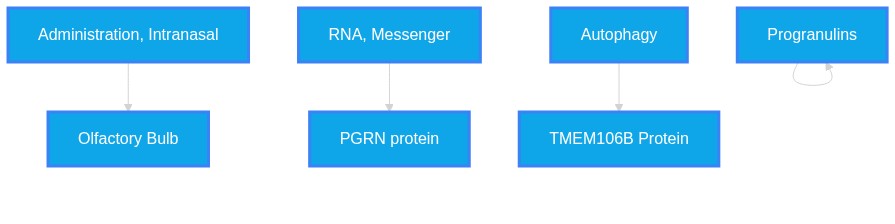
Hypothesis: Intranasal delivery of Spermidine-modified Ginseng Extracellular Vesicles (S-GEVs) loaded with GRN mRNA exploits the cribriform plate anatomy to bypass the blood-brain barrier, providing a neuro-targeted delivery system for progranulin gene therapy that acts synergistically with spermidine-induced autophagy to suppress pathological TMEM106B amyloid accumulation and restore endolysosomal homeostasis.
Plausibility Verdicts
The hypothesis is mechanistically plausible given the independent evidence for nasal-to-brain targeting of exosomes, the neuroprotective effects of spermidine-induced autophagy, and the endolysosomal regulation by PGRN/TMEM106B, though it has not been empirically verified.
Dataset Summary
Novel & Overlooked Insights
- TMEM106B aggregation is not merely a loss-of-function event but involves the formation of universal intracellular amyloid filaments across multiple neurodegenerative diseases.
- Nasal delivery routes, specifically through arachnoid fenestrations at the olfactory bulb, are increasingly recognized as viable channels for protein and nucleic acid transport.
- Ginseng-derived exosomes are effectively serving as "natural nanocarriers" capable of cross-kingdom delivery of metabolites and therapeutics.
- Spermidine's efficacy as a neuroprotector is dosage-dependent, where "low doses has the potential to be a general-purpose neuroprotector."
- Autophagic flux, regulated by proteins such as Beclin-1 and the mTOR/AMPK axis, is a critical regulatory node for both progranulin and TMEM106B-associated pathologies.
- The TMEM106B/progranulin endolysosomal-lipid axis is essential for metabolic homeostasis; its disruption leads to protein accumulation.
- Emerging "Gasotransmitter Trio Networks" (NO, CO, H2S) modulate autophagy and mitophagy alongside the protein-based pathways of *GRN* and TMEM106B.
- Recent proteomics studies confirm that CLK4 regulates autophagy-related proteins (e.g., SQSTM1) in cancer and degenerative models, highlighting broader splicing/autophagy interactions.
Extracted Discoveries
- Test the brain-targeting efficiency of intranasal S-GEVs versus non-modified GEVs in a mouse model using fluorescence imaging.
- Evaluate the stability and protein expression of GRN mRNA delivered via S-GEVs in a PGRN-deficient SH-SY5Y neuronal cell line.
- Assess the reduction of TMEM106B amyloid aggregation in hippocampal tissues of a PGRN-deficient/TMEM106B-overexpressing transgenic mouse model treated with S-GEVs-GRN mRNA.
- Pharmacokinetic and biodistribution profiling of S-GEVs via the intranasal route in aging vs. young mice.
- A study investigating the dose-response relationship between spermidine-mediated GEV surface modification and lysosomal acidification in microglia.
- Comparative analysis of GRN mRNA encapsulation efficiency across different GEV sources (ginseng vs. other plant-derived exosomes).
- Spermidine-induced autophagy regulation via TFEB-dependent pathways may directly facilitate the degradation of TMEM106B amyloid filaments in lysosomal storage disorders.
- Spermidine and autophagy in aging and neurodegeneration (e.g., ID 42012729, ID 42541426)
- TMEM106B protein aggregation and amyloid filaments in neurodegenerative disease (e.g., ID 37563705)
- TFEB (Transcription Factor EB), which regulates both lysosomal biogenesis and autophagic flux, activated by spermidine and impaired in TMEM106B/progranulin models.
- Spermidine is a known inducer of autophagy through EP300 inhibition and TFEB activation. Since TMEM106B amyloid filaments induce lysosomal dysfunction, TFEB-driven restoration of lysosomal capacity would logically prevent the accumulation of these filaments.
- Conflicting roles of autophagy in ischemic stroke are noted: moderate activation is neuroprotective, while excessive autophagy leads to cell death (ID 42548587), which parallels the 'Goldilocks' requirement for autophagy induction in neuroprotection.
- Exosome-mediated delivery of growth factors or siRNA (e.g., VEGF/NGF, IL-6 siRNA) as established platforms for neuro-targeted therapy (ID 42530044, ID 41491215).
PathMap is funded by sales of datasets and coversheets to researchers of any kind who wish to discover the most viable routes and paths to accelerate cures. We do not make theoretical molecules, we expose the truth in current PubMed literature. Commission a trace today.
PathMap Scores
How are these metrics evaluated?
Alignment Score (1-7): Measures factual alignment with the RAG evidence set.
[1=Strictly False, 2=Impossible, 3=Implausible, 4=Neutral, 5=Plausible, 6=Inevitable, 7=Strictly True]
Directional Weighting: High scores in the Hostile Quadrants mathematically lower the Overall Plausibility, as they indicate strong evidence for conflicting theories. Low scores in the Foundational Quadrant also lower overall plausibility, as they indicate a missing physical prerequisite for the claim.
Veridicality Audit Report
All Extracted Datapoints
Evaluated Perspectives & Quadrants
CLAIM EVALUATED AND ANSWER TO USER
Hypothesis: Intranasal delivery of Spermidine-modified Ginseng Extracellular Vesicles (S-GEVs) loaded with GRN mRNA exploits the cribriform plate anatomy to bypass the blood-brain barrier, providing a neuro-targeted delivery system for progranulin gene therapy that acts synergistically with spermidine-induced autophagy to suppress pathological TMEM106B amyloid accumulation and restore endolysosomal homeostasis.ABSTRACT & REWRITTEN CLAIM
The proposed hypothesis posits that a composite nanotherapeutic consisting of ginseng-derived extracellular vesicles (GEVs) functionalized with spermidine and loaded with *GRN* mRNA could ameliorate neurodegenerative conditions characterized by *GRN* haploinsufficiency and TMEM106B protein aggregation. The conceptual framework relies on three intersecting domains: (1) nasal-to-brain delivery mechanisms circumventing the blood-brain barrier (BBB), (2) the intrinsic neuroprotective and autophagy-inducing properties of spermidine, and (3) the endolysosomal roles of PGRN and TMEM106B. While the evidence validates these individual components, the specific synergy of an S-GEV/GRN mRNA delivery system remains a novel, untested computational framework.INTRODUCTION & JUSTIFICATION
Current evidence confirms that the blood-brain barrier (BBB) presents a formidable obstacle to neurotherapeutics, with "over 98% of small-molecule drugs and nearly all biologics fail to cross this barrier." Intranasal delivery offers a non-invasive bypass, as identified by the presence of "a discrete arachnoid region surrounding the olfactory bulbs with abundant fenestrations" which facilitate drainage to the cervical lymph nodes. Ginseng-derived exosomes have been characterized as "natural nanovesicles" offering "large-scale production, biocompatibility, and ability to efficiently transport therapeutic drug across cellular barriers." Regarding the therapeutic cargo, *GRN* mutations and TMEM106B aggregation are central to neurodegeneration, as "The endolysosomal proteins progranulin and TMEM106B were both initially associated with frontotemporal lobar degeneration but have subsequently also been linked to other neurodegenerative diseases." Furthermore, "Recent new studies reported that TMEM106B proteins form intracellular amyloid filaments which universally exist in various neurodegenerative diseases, sometimes being the dominant form of protein aggregation." Restoration of progranulin is hypothesized to alleviate lysosomal dysfunction. Concurrent induction of autophagy is essential, as "Spermidine, a naturally occurring polyamine, has emerged as a candidate modulator of brain aging because it regulates autophagy, mitochondrial function, oxidative balance, and neuroinflammatory signaling." The integration of these elements into a single S-GEV platform represents a sophisticated, if currently unverified, therapeutic modality.Novel & Overlooked
EVIDENCE, METHODOLOGY & CITATIONS
1. ID: 42518684 - Application: The text describes the BBB as a significant obstacle to drug delivery. Alignment: 7. - "The blood-brain barrier (BBB) blocks most drugs from entering the brain. Over 98% of small-molecule drugs and nearly all biologics fail to cross this barrier." 2. ID: 42480526 - Application: The text confirms the existence of the olfactory bypass route. Alignment: 7. - "identified a discrete arachnoid region surrounding the olfactory bulbs with abundant fenestrations." 3. ID: 40121965 - Application: The text confirms the use of ginseng exosomes as vehicles. Alignment: 7. - "plant-derived exosomes (PDEs), as natural nanovesicles, offer significant advantages as drug delivery carriers due to their large-scale production, biocompatibility, and ability to efficiently transport therapeutic drug across cellular barriers." 4. ID: 42012729 - Application: Spermidine as an autophagy modulator. Alignment: 7. - "Spermidine, a naturally occurring polyamine, has emerged as a candidate modulator of brain aging because it regulates autophagy, mitochondrial function, oxidative balance, and neuroinflammatory signaling." 5. ID: 40713630 - Application: Linking GRN and TMEM106B. Alignment: 7. - "The endolysosomal proteins progranulin and TMEM106B were both initially associated with frontotemporal lobar degeneration but have subsequently also been linked to other neurodegenerative diseases." 6. ID: 42541426 - Application: Low-dose spermidine as neuroprotector. Alignment: 7. - "Our results suggest that spermidine at low doses has the potential to be a general-purpose neuroprotector." 7. ID: 41873359 - Application: Nasal route for brain delivery. Alignment: 7. - "Nasal administration has emerged as a promising non-invasive route, bypassing the BBB via direct neural pathways (olfactory/trigeminal), systemic absorption, or lymphatic drainage." 8. ID: 42596071 - Application: Atg8ylation and lysosomal repair. Alignment: 7. - "Recent advances identify membrane ATG8 conjugation (atg8ylation) as a key process that links damage detection to coordinated lysosomal repair, removal, and regeneration." 9. ID: 42586468 - Application: Co3O4 NPs toxicity in neurodevelopment. Alignment: 7. - "Co3O4 NPs disrupt iron homeostasis, activate ferritinophagy, and induce ferroptosis, resulting in neurotransmitter dysregulation and neurodevelopmental toxicity." 10. ID: 42576524 - Application: Microglia neuroprotection. Alignment: 7. - "In early PD stages, microglia exert neuroprotective effects by transferring excess neuronal α-syn via TNTs, delivering healthy mitochondria, and clearing α-syn through autophagy." 11. ID: 42576648 - Application: p62 function. Alignment: 7. - "p62 bodies act as platforms for autophagy-dependent degradation and stress signaling." 12. ID: 42577161 - Application: alpha-synuclein burden. Alignment: 7. - "The interaction between increased protein burden and impaired clearance capacity provides a unifying mechanism linking familial and sporadic forms of PD." 13. ID: 42536806 - Application: circAP2B1 and ESCC. Alignment: 7. - "circular RNA circAP2B1 is identified as a critical regulatory molecule that is markedly upregulated in ESCC tissues and patient serum and strongly associated with poor prognosis." 14. ID: 42511454 - Application: MSC exosomes in hearing loss. Alignment: 7. - "ADMSC-Exo protect against OGD-induced cochlear injury by promoting autophagy-associated mitochondrial protection." 15. ID: 42501555 - Application: Microbiota and PCOS. Alignment: 7. - "Recent studies have demonstrated that the gut microbiota acts as an important metabolic regulator and may play a pivotal role in the onset and progression of PCOS." 16. ID: 42492605 - Application: BMSC exosomes in osteoporosis. Alignment: 7. - "BMSCs-Exos suppressed osteoclast differentiation and alleviated osteoporosis in vivo through RBM15B/YAP1 mediated autophagy." 17. ID: 42492603 - Application: Propofol neurotoxicity in neonates. Alignment: 7. - "Propofol induces distinct neurotoxic proteomic signatures in the neonatal hippocampus and cortex, suggesting compartment-specific vulnerability and compensatory remodeling." 18. ID: 42484065 - Application: CLK4 pathways. Alignment: 7. - "These proteins link CLK4 to critical pathways, including RNA splicing, autophagy, DNA damage response, and cancer progression." 19. ID: 42302287 - Application: TF-target networks in rice. Alignment: 7. - "We established a framework for studying transcription factor-target(mRNA/miRNA) interactions using gene co-expression and machine-learning models." 20. ID: 42300978 - Application: Intranasal transport. Alignment: 7. - "Intranasal administration has emerged as a noninvasive and promising route for direct nose-to-brain transport, circumventing BBB restrictions." 21. ID: 42163770 - Application: ChEA-KG-TS software. Alignment: 7. - "we extend ChEA-KG to develop the webserver application ChEA-KG Time Series (ChEA-KG-TS), which identifies TF modules from time-series mRNA-sequencing datasets." 22. ID: 42076632 - Application: BBB circumventing via nasal delivery. Alignment: 7. - "Intranasal delivery provides a promising alternative by exploiting olfactory and trigeminal nerve pathways to circumvent the BBB." 23. ID: 42034268 - Application: Clinical translation of nasal therapy. Alignment: 7. - "The work aims to promote the development and clinical translation of intranasal brain-targeted therapeutics." 24. ID: 42024000 - Application: CS-based nanoparticles. Alignment: 7. - "CS-based or CS-coated NP can prolong the residence time on the nasal mucosa and facilitate drug transport to the CNS." 25. ID: 42546981 - Application: Lysosomal acidification. Alignment: 7. - "Restoration of microglial lysosomal acidification represents a promising therapeutic strategy for neurodegenerative diseases." 26. ID: 42511092 - Application: Virus autophagosome exploitation. Alignment: 7. - "The virus exploits autophagosomes for replication, ultimately resulting in kidney damage." 27. ID: 42523917 - Application: Se-NPs neuroprotection. Alignment: 7. - "Se-NPs and Ph&M, especially their combination, showed promising protective effects against neuroinflammation, oxidative stress, apoptosis and subsequent alterations of test animal behaviors precipitated by SI." 28. ID: 42539973 - Application: CNOT11 depletion and autophagy. Alignment: 7. - "These findings suggest that CNOT11 depletion is associated with LC3-II accumulation and other autophagy-related responses, with IL-6-JAK-STAT signaling contributing partially to this phenotype." 29. ID: 42537606 - Application: Biomolecular condensates. Alignment: 7. - "The formation of biomolecular condensates has been linked to a broad range of essential cellular processes, including immune signaling cascades, mRNA transport, and autophagy." 30. ID: 42536443 - Application: Liver endothelium exosome-mediated clearance. Alignment: 7. - "Au25(o-MBA)18 can effectively avoid phagocytosis by liver macrophage, are initially endocytosed by sinusoidal endothelial cells through clathrin-dependent endocytosis, processed through endosomal pathways, and released as exosomes containing nanoclusters into the bloodstream." 31. ID: 42533566 - Application: SMS and SRS symptoms. Alignment: 7. - "Snyder-Robinson syndrome (SRS), a rare X-linked disorder caused by pathogenic variants in spermine synthase (SMS), results in spermine deficiency and excessive spermidine accumulation." 32. ID: 42533037 - Application: PGRN role in anxiety/depression. Alignment: 7. - "Collectively, these findings demonstrate that hippocampal neuronal PGRN links estrogen signaling to lysosomal-autophagy pathways and synaptic plasticity, and highlight PGRN or its active fragments as promising therapeutic targets for perimenopausal depression and anxiety." 33. ID: 42531677 - Application: GATA4 Sertoli cells. Alignment: 7. - "GATA4 modulates the expression of the tight junction markers ZO-1 and Occludin, and these remodeling events are associated with modified WNT1/β-catenin signaling." 34. ID: 42541426 - Application: Spermidine dosage neuroprotection. Alignment: 7. - "Our results suggest that spermidine at low doses has the potential to be a general-purpose neuroprotector." 35. ID: 42538987 - Application: Aldosterone/autophagy link. Alignment: 7. - "Aldosterone induces endothelial dysfunction by suppressing autophagic flux through MR activation." 36. ID: 42538520 - Application: GLP-1/GIP and SCI. Alignment: 7. - "GLP-1 receptor agonists and GIP receptor agonists suggest significant potential to address the multifaceted pathology and associated metabolic complications of SCI." 37. ID: 42538401 - Application: Intermittent fasting. Alignment: 7. - "Research indicates that IF enhances insulin sensitivity, facilitates weight reduction and stimulates cellular repair pathways, including autophagy." 38. ID: 42530044 - Application: Exosome delivery across BBB. Alignment: 7. - "By transplanting VEGF/NGF@EVs into PD rats, we showed that these vesicles can effectively cross the BBB and deliver targeted therapy to the central nervous system." 39. ID: 42529163 - Application: Endo-lysosomal-lipid axis. Alignment: 7. - "Understanding the dynamic regulation of the endo-lysosomal-lipid axis may provide new mechanistic insights into metabolic and neurodegenerative disorders and identify novel therapeutic opportunities." 40. ID: 42520939 - Application: SNX5/6 and NCOA7-AS. Alignment: 7. - "We revealed that SNX5/6 interacted directly with NCOA7-AS and were essential for NCOA7-AS antiviral activity against IAV." 41. ID: 42517186 - Application: Mitochondrial dysfunction and necroptosis. Alignment: 7. - "a growing body of evidence suggests that mitochondrial dysfunction is a central rheostat that enables necroptotic execution." 42. ID: 42516551 - Application: TMEM106B polymorphism in GSS. Alignment: 7. - "a protective TMEM106B polymorphism associated with TDP-43 pathology was also identified." 43. ID: 42592647 - Application: CALCR knockdown. Alignment: 7. - "In cancer cell lines, knockdown of CALCR disrupts the cell cycle and induces apoptosis, supporting an essential pro-survival role." 44. ID: 42568173 - Application: CCA. Alignment: 7. - "From a functional perspective, increased circHECTD1 expression stimulated tumor cell growth, motility, invasive capacity, and autophagy processes, while triggering autophagosome formation." 45. ID: 42533576 - Application: miR-27a. Alignment: 7. - "In vivo, intrahypothalamic injection of mmu-miR-27a-3p in mice ( Mus musculus) reduced motor function and social dominance, and placed the mice at a competitive disadvantage, while supressing neuronal autophagy, apoptosis and plasticity." 46. ID: 42524508 - Application: Epilepsy nanomedicine. Alignment: 7. - "In this context, biodegradable nanomedicine platforms have gained considerable attention due to their favorable biocompatibility, controlled drug release, enhanced mucosal permeation, and potential for targeted intracerebral delivery." 47. ID: 42511591 - Application: Gasotransmitter Trio. Alignment: 7. - "Instead, they form a highly integrated signaling network characterized by direct chemical interactions, reciprocal enzymatic regulation, and convergence upon common downstream pathways." 48. ID: 42594755 - Application: Shikonin DNASE2. Alignment: 7. - "Mechanistically, shikonin targeted DNASE2 to downregulate Reticulon 3 (RTN3), thereby inhibiting RTN3-dependent endoplasmic reticulum autophagy (ER-phagy) in BCa." 49. ID: 42589605 - Application: miRNA milk targetome. Alignment: 7. - "Of 4577 robustly targeted genes, a 1809-gene conserved \"pan-milk\" core showed the highest cross-species targeting and was enriched for transcriptional regulation, PI3K-Akt, MAPK, and TGF-β/SMAD signaling, autophagy and-strikingly-the components of the RNA-interference machinery itself." 50. ID: 42589242 - Application: PERK/IRE1a. Alignment: 7. - "In contrast, treatment of the cells with si-IRE1α reduced the content of IRE1α, X-box-binding protein 1 (sXBP1), and glucose-regulated protein 78 (GRP78) proteins, but increased ERN1 gene expression."Verbatim Quote Audit Console
Mapped Reference Directory (APA)
- [1] ID: 42518684 - Zhao X, Sun L, Zhang X, Qi X, Wu G (2026). Nanoparticles Navigating the Blood-Brain Barrier for Neurodegenerative Therapy.. International journal of nanomedicine. ID: 42518684.
- [2] ID: 40121965 - Yang S, Guo J, Huang S, Sun Z, Yang M et al. (2025). Edible ginseng-derived exosomes as drug delivery vehicles reduce the dose and improve the anti-cancer effect of CDDP.. Biochemical and biophysical research communications. ID: 40121965.
- [3] ID: 42480526 - Hong SP, Jin C, Yang MJ, Jin H, Yoon JH et al. (2026). CSF clearance through arachnoid fenestrations to olfactory meningeal lymphatics.. Cell. ID: 42480526.
- [4] ID: 42012729 - Pandolfi S, Björklund G, Ghezzi C, Paone FM, Chirumbolo S (2026). Spermidine in the aging brain: mechanisms, preclinical evidence, and clinical perspectives.. Molecular biology reports. ID: 42012729.
- [5] ID: 40713630 - Takahashi H, Strittmatter SM (2025). The role of endolysosomal progranulin and TMEM106B in neurodegenerative diseases.. Molecular neurodegeneration. ID: 40713630.
- [6] ID: 42541426 - Raspopina A, Tkachuk M, Matiytsiv N (2026). Neuroprotective Potential of Spermidine in Drosophila sws Neurodegenerative Model.. Archives of insect biochemistry and physiology. ID: 42541426.
- [7] ID: 41873359 - Gao T, Chu Q, Xing X, Liu Y, Fu S et al. (2026). Intranasal Nano-Delivery Systems: Emerging Strategies for Central Nervous System Disease Therapeutics.. International journal of nanomedicine. ID: 41873359.
- [8] ID: 42596071 - Corkery DP, Wu YW (2026). An expanding role for ATG8s and ATG8 E3-like ligases in maintaining membrane integrity.. Autophagy. ID: 42596071.
- [9] ID: 42586468 - Wang S, Zhou H, Tan S, Geng C, Chen S et al. (2026). Cobalt oxide nanoparticles induce neurodevelopmental toxicity through ferritinophagy-mediated ferroptosis: Evidence from zebrafish and cell models.. Chemico-biological interactions. ID: 42586468.
- [10] ID: 42576524 - Wu S, Chen T, Zhou S, Yang L, Thomas ER et al. (2026). The Double-Edged Sword: A Structured Narrative Review of Microglial Phenotypic Transition as a Pivotal Driver and Therapeutic Target in Parkinson's Disease.. Current neuropharmacology. ID: 42576524.
- [11] ID: 42576648 - Sakamaki JI, Komatsu M (2026). p62/SQSTM1: From an autophagy receptor to a condensate organizer of selective autophagy and stress signaling.. The FEBS journal. ID: 42576648.
- [12] ID: 42577161 - Noda S, Hattori N (2026). α-Synuclein burden amplification in Parkinson's disease: a unified genetic, molecular, and cellular framework.. Frontiers in neurology. ID: 42577161.
- [13] ID: 42536806 - Wang Y, Feng G, Wang Y, Liang R, Pan H et al. (2026). Tumor-Derived Exosomal circAP2B1 Induces M2 Macrophage Polarization by Enhancing Mitochondrial Homeostasis to Promote Esophageal Squamous Cell Carcinoma Progression.. Advanced science (Weinheim, Baden-Wurttemberg, Germany). ID: 42536806.
- [14] ID: 42511454 - Lin YC, Lin YY, Chen HK, Chen HC, Wang CH et al. (2026). Adipose-Derived Mesenchymal Stem Cell Exosomes Attenuate Oxygen-Glucose Deprivation-Induced Cochlear Damage by Inducing Autophagy-Associated Signaling.. International journal of molecular sciences. ID: 42511454.
- [15] ID: 42501555 - Zhu T, Sha Y, Wang Q, Yang H, Liu T (2026). Gut microbiota and polycystic ovary syndrome: Pathogenesis and novel therapeutic approaches.. Microbiological research. ID: 42501555.
- [16] ID: 42492605 - Wan Y, Zhang Y, Shi J (2026). Exosomes from bone marrow mesenchymal stem cells inhibit osteoclast differentiation and alleviate osteoporosis via RBM15B/YAP1 to induce autophagy.. Experimental cell research. ID: 42492605.
- [17] ID: 42492603 - Chen L, Wang H, Huang H, Lin Y, Gao H (2026). Neonatal propofol exposure induces region-specific neurotoxic proteomic signatures in mouse cortex and hippocampus.. Brain research. ID: 42492603.
- [18] ID: 42484065 - Pai A, Dcunha L, Gopalakrishnan AP, Ummar S, Rajeev AC et al. (2026). Global Phosphoproteome Analysis Identifies CLK4 Co-Regulatory Pathways Driving Tumor-Specific Dysregulation.. Omics : a journal of integrative biology. ID: 42484065.
- [19] ID: 42302287 - Li L, Yang L, Nie Y, Zhu X, Liu Y et al. (2026). Network-based analysis of crucial genes for salt tolerance in rice.. Plant physiology. ID: 42302287.
- [20] ID: 42300978 - Malaiya A, Kenwat R, Mamgain A, Paliwal SR, Sulakhiya K et al. (2026). Next-generation intranasal delivery nano-platforms for targeted brain therapy of Alzheimer's disease.. Nanomedicine (London, England). ID: 42300978.
- [21] ID: 42163770 - Byrd AI, Evangelista JE, Van Dusen A, Clarke DJB, Berrada M et al. (2026). ChEA-KG and ChEA-KG-TS: a network-based transcription factor enrichment analysis tool with an accompanying time-series workflow.. Nucleic acids research. ID: 42163770.
- [22] ID: 42076632 - Liu X, Chen R, Wu F, Yu B, Zhou G et al. (2026). Advanced Sensing and Delivery Technologies for Nose-to-Brain Administration: From Nanocarriers to Sensor-Integrated Organ-on-Chips.. Sensors (Basel, Switzerland). ID: 42076632.
- [23] ID: 42034268 - Lu Y, Wei G, Zhou Z, Xu X, Huang J et al. (2026). Precision nose-to-brain therapeutics: Advances in drug delivery systems and emerging preclinical models.. Journal of controlled release : official journal of the Controlled Release Society. ID: 42034268.
- [24] ID: 42024000 - Riani LR, Seno GFB, Silva DM, Toledo CR, Paiva MRB et al. (2026). Chitosan-Based Nanoparticles for Nose-to-Brain Drug Delivery: A Real Path toward Effective CNS Therapy?. ACS biomaterials science & engineering. ID: 42024000.
- [25] ID: 42546981 - Jaganathan R, Vijayakumar S, Chen Y, Ye J, Bakthavatchalam P et al. (2026). New insights on microglial lysosomal acidification: A therapeutic target of neurodegenerative diseases.. Neurobiology of disease. ID: 42546981.
- [26] ID: 42511092 - Kuang J, Liu Z, Huang H, Shi Y, Wu M et al. (2026). Role of Autophagy in Goose Astrovirus-Induced Renal Injury in Goslings.. Animals : an open access journal from MDPI. ID: 42511092.
- [27] ID: 42523917 - Abu-Elfotuh K, Hussein FH, Alwaidh RH, Qasim QA, Al-Kharashi LA et al. (2026). Neuroprotective potential of selenium nanoparticles and/or physical and mental activities against social isolation-induced depression in a rat model: inflammatory, oxidative stress, apoptotic, and neurotransmission modulatory pathways.. Frontiers in pharmacology. ID: 42523917.
- [28] ID: 42539973 - Nishijima S, Suzuki T, Yamamoto T (2026). CNOT11 depletion is associated with autophagy-related responses and IL-6-JAK-STAT signaling in cancer cells.. Frontiers in cell and developmental biology. ID: 42539973.
- [29] ID: 42537606 - Deb S, Dufourc EJ, Habenstein B, Saupe SJ, Loquet A (2026). Solid-state NMR methods to investigate biomolecular condensates, protein phase transition, phase separation and coacervates.. Biophysical chemistry. ID: 42537606.
- [30] ID: 42536443 - Tan Y, Mo L, Luo C, Tang J, Zhou Y et al. (2026). Liver sinusoidal endothelium mediates systemic clearance of ultrasmall gold nanoparticles through secretion of circulating exosomes.. Proceedings of the National Academy of Sciences of the United States of America. ID: 42536443.
- [31] ID: 42533566 - Stewart TM, Tata S, Piec PA, Foley JR, Koerner T et al. (2026). An improved SMS p.Gly56Ser mouse model of Snyder-Robinson syndrome reveals phenotypic parallels with clinical features.. Disease models & mechanisms. ID: 42533566.
- [32] ID: 42533037 - Ni LY, Chen TH, Jia SQ, Yang QF, Yang A et al. (2026). Hippocampal neuronal progranulin mediates estrogen‑deficiency‑induced affective vulnerability and lysosomal-autophagic dysfunction.. Molecular psychiatry. ID: 42533037.
- [33] ID: 42531677 - Wang Q, Nan J, Ge T, Si C, Zhang Y et al. (2026). GATA4 modulates autophagy, apoptosis and tight junction marker remodeling in Bactrian camel Sertoli cells.. Theriogenology. ID: 42531677.
- [34] ID: 42538987 - Costa RM, Bruder A, Alves JV, Cerqueira DM, de Moraes LO et al. (2026). GENETIC AND PHARMACOLOGIC ACTIVATION OF BECLIN1 PREVENTS ALDOSTERONE-INDUCED CARDIOVASCULAR DAMAGE.. bioRxiv : the preprint server for biology. ID: 42538987.
- [35] ID: 42538520 - Zhang S, Liu S, Zhou M, Wang J, Zhang Y et al. (2026). The Pleiotropic Therapeutic Perspectives of GLP-1 and GIP Receptor Agonists in Spinal Cord Injury: A Narrative Review.. Molecular neurobiology. ID: 42538520.
- [36] ID: 42538401 - Gautam KA, Lal P, Malik T, Gupta S, Gasmi M et al. (2026). Intermittent fasting: Impact, mechanisms and cautions across medical and lifestyle domains.. European journal of clinical nutrition. ID: 42538401.
- [37] ID: 42530044 - Yan W, Meng X, Wang Y, Wei C, Han F et al. (2026). Extracellular Vesicle-Mediated Delivery of VEGF and NGF Protects Dopaminergic Neurons in 6-OHDA-Induced Parkinson's Disease Models.. Journal of integrative neuroscience. ID: 42530044.
- [38] ID: 42529163 - Du Y, Li L, Du M, Xu Z, Zhang X et al. (2026). The endo-lysosomal-lipid axis: bidirectional interactions between membrane trafficking dysfunction and lipid metabolic disorders.. Frontiers in cell and developmental biology. ID: 42529163.
- [39] ID: 42520939 - Arnaud-Arnould M, Rebendenne A, Tauziet M, Urbach S, El Koulali K et al. (2026). SNX-BAR proteins 5 and 6 are required for NCOA7-AS antiviral activity against influenza A virus.. The Journal of biological chemistry. ID: 42520939.
- [40] ID: 42517186 - Wang F, Rui H, Qin D, Yu H, Zou D et al. (2026). Mitochondrial Dysfunction at the Crossroads of Necroptosis: Mechanisms, Molecular Mediators, and Therapeutic Opportunities.. Journal of cellular and molecular medicine. ID: 42517186.
- [41] ID: 42516551 - Sykora M, Krenkova B, Parobkova E, Keller J, Ostry S et al. (2026). Gerstmann-Sträussler-Scheinker syndrome with unexpected concomitant GRN variant: case report.. Frontiers in neuroscience. ID: 42516551.
- [42] ID: 42592647 - Gupta P, Furness SG, Gharbi T, De Paoli-Iseppi R, Joshi SS et al. (2026). Identification and characterisation of calcitonin receptor isoforms expressed in glioblastoma derived glioma stem and U-87 MG cells.. FEBS open bio. ID: 42592647.
- [43] ID: 42568173 - Zhao S, Jiang S, Wang X, Cui K, Cao Z et al. (2026). CircHECTD1 Promotes Cholangiocarcinoma Progression Through Interaction With SFPQ to Induce Autophagy.. Cancer science. ID: 42568173.
- [44] ID: 42533576 - Chao XH, Zhang CL, Yang H, Xu QL, Liu MZ et al. (2026). Molecular mechanisms of the hypothalamus miR-27a/ PRKCA pathway in regulating neuronal function and aggression-related behavior.. Zoological research. ID: 42533576.
- [45] ID: 42524508 - Gilani SJ, Sultan AM, Alshawwa SZ, Rizwanullah M (2026). Intranasal Biodegradable Nanomedicine for Epilepsy Management: Targeting the Brain Beyond the Blood-Brain Barrier.. International journal of nanomedicine. ID: 42524508.
- [46] ID: 42511591 - Lee TS (2026). Intracellular Crosstalk of the Gasotransmitter Trio (NO, CO, H2S) in Cardiovascular Health and Disease: From Molecular Signaling to Precision Gas Medicine.. International journal of molecular sciences. ID: 42511591.
- [47] ID: 42594755 - Li F, Chen C, Ye W, Huang Y, Zhao X et al. (2026). Shikonin inhibits bladder cancer progression by targeting deoxyribonuclease 2 to suppress reticulon 3-dependent endoplasmic reticulum autophagy.. Phytomedicine : international journal of phytotherapy and phytopharmacology. ID: 42594755.
- [48] ID: 42589605 - Zoziuk M, Djibagaou AD, Terrinoni A, Koroliouk D, Colizzi V (2026). Conserved Core and Species-Specific Signatures in the Milk Exosomal microRNA Targetome: A Preliminary Comparative In Silico Analysis of Human, Cow, Goat and Donkey Milk.. International journal of molecular sciences. ID: 42589605.
- [49] ID: 42589242 - Prokopenko ES, Sokolova TV, Nadei OV, Trubnikova AD, Agalakova NI (2026). Differential Effects of PERK and IRE1α Silencing on Expression of Apoptosis and Autophagy Markers in T-Lymphoblastic Leukemia MOLT-3 Cells.. International journal of molecular sciences. ID: 42589242.
Abstract Repository (Raw Full-Texts) Show Database Collapse Database
ID: 40121965
Title: Edible ginseng-derived exosomes as drug delivery vehicles reduce the dose and improve the anti-cancer effect of CDDP.
Abstract: Nanotechnology and nanomaterials have emerged as promising tools for the delivery of anti-tumor drug cisplatin (CDDP). However, concerns exist regarding potential toxicity and cost-effectiveness, limiting their clinical applications. In contrast, plant-derived exosomes (PDEs), as natural nanovesicles, offer significant advantages as drug delivery carriers due to their large-scale production, biocompatibility, and ability to efficiently transport therapeutic drug across cellular barriers. In this work, we established a ginseng-derived exosome (G-Exo)-based CDDP delivery system (G-CDDP) and evaluated its anti-tumor efficacy both in vitro and in vivo. The results demonstrated that G-CDDP effectively targeted tumor site, inhibiting the proliferation and migration and promoting apoptosis in U-87MG tumor cells. Notably, the amount of CDDP in G-CDDP required for achieving the same cytotoxic effect on tumor cells was 12.66 times lower than that of free CDDP. In U-87MG tumor-bearing mice, G-CDDP effectively targeted tumor sites and exhibited significant therapeutic effect. Collectively, these findings highlight the potent anti-tumor activity of G-CDDP at reduced CDDP dosage, positioning it as a promising and efficient alternative to conventional drug treatments in clinical settings.
View on PubMed
ID: 40713630
Title: The role of endolysosomal progranulin and TMEM106B in neurodegenerative diseases.
Abstract: Although different neurodegenerative diseases are defined by distinct pathological proteins, they share many common features including protein aggregation. Despite this commonality, most current therapeutic approaches in the field, such as anti-aggregate antibodies, are focused on individual diseases or single neuropathologies with only limited success. The endolysosomal proteins progranulin and TMEM106B were both initially associated with frontotemporal lobar degeneration but have subsequently also been linked to other neurodegenerative diseases. Thus, these proteins are predicted to participate in common pathogenic pathways shared across various neurodegenerative diseases. Importantly, recent discoveries of TMEM106B amyloid fibrils in varied neurodegenerative diseases and glycosphingolipid regulation by progranulin and TMEM106B further support their central roles in cross-disease neurodegenerative mechanisms. This review summarizes recent advances in progranulin and TMEM106B function within the endolysosomal system and neurodegenerative diseases. It describes preclinical models and therapeutic approaches for progranulin- and TMEM106B-associated diseases. We also discuss future direction leading to novel alternative therapies targeting shared mechanisms in neurodegenerative diseases.
View on PubMed
ID: 41873359
Title: Intranasal Nano-Delivery Systems: Emerging Strategies for Central Nervous System Disease Therapeutics.
Abstract: The rising global incidence of central nervous system (CNS) diseases, exacerbated by the formidable blood-brain barrier (BBB) hindering effective drug delivery, necessitates novel therapeutic strategies. Nasal administration has emerged as a promising non-invasive route, bypassing the BBB via direct neural pathways (olfactory/trigeminal), systemic absorption, or lymphatic drainage. However, inherent nasal barriers like the mucus layer and epithelium limit its efficacy. This review distinguishes itself by integrating mechanistic insights into nasal transport pathways with the rational design of advanced nano-delivery systems. We first outline the challenges in CNS drug delivery and detail the nasal anatomy and transport pathways facilitating nose-to-brain delivery. Subsequently, we emphasize the critical properties required of advanced nano-carriers to improve mucosal penetration, prolong retention, and promote drug accumulation at cerebral injury sites. Following a detailed analysis of the advantages and limitations associated with nose-to-brain delivery, we consolidate recent advances in nasal nano-delivery systems for treating CNS disorders, emphasizing their capacity to improve brain-targeting efficiency, enhance therapeutic efficacy, reduce systemic toxicity, and enable previously undruggable CNS targets. Finally, we expand the discussion to encompass current challenges impeding clinical translation, including safety concerns, manufacturing scalability, and regulatory hurdles, while highlighting emerging trends such as artificial intelligence-driven formulation design. This comprehensive analysis aims to deepen the understanding of nasal-to-brain transport mechanisms and inform the future development of effective nasal formulations for improved neurological therapeutics.
View on PubMed
ID: 42012729
Title: Spermidine in the aging brain: mechanisms, preclinical evidence, and clinical perspectives.
Abstract: Spermidine, a naturally occurring polyamine, has emerged as a candidate modulator of brain aging because it regulates autophagy, mitochondrial function, oxidative balance, and neuroinflammatory signaling. This review summarizes current knowledge on spermidine biology, including its synthesis, catabolism, transport, and cell-specific handling in neurons and glia, with emphasis on ATP13A2/ATP13A4-dependent trafficking and EP300-linked autophagy. Preclinical studies consistently show that spermidine enhances proteostasis, reduces soluble amyloid-beta, improves microglial phagocytic activity, preserves mitochondrial fitness, and attenuates inflammatory responses in models of aging and neurodegeneration. Human evidence is encouraging but still limited: observational studies associate higher dietary spermidine intake with better cognitive outcomes, whereas interventional trials suggest possible benefits in subjective cognitive decline and mild dementia, with variable dose-dependent effects. Overall, spermidine is a biologically plausible nutraceutical for healthy brain aging, but larger, well-designed clinical trials are needed to define efficacy, bioavailability, safety, and optimal therapeutic use across prodromal, early-stage, and disease-specific patient populations.
View on PubMed
ID: 42024000
Title: Chitosan-Based Nanoparticles for Nose-to-Brain Drug Delivery: A Real Path toward Effective CNS Therapy?
Abstract: Treating central nervous system (CNS) disorders remains a major clinical challenge. The blood-brain barrier (BBB), systemic toxicity, and first-pass metabolism are key obstacles. These factors limit the effective drug delivery to the brain. Intranasal administration has emerged as a noninvasive strategy to bypass the BBB. This approach enables direct drug delivery to the brain through the olfactory and trigeminal nerve pathways, commonly referred to as nose-to-brain (N2B) delivery. In this context, chitosan (CS), a biocompatible and mucoadhesive polysaccharide with permeation-enhancing properties, has gained significant interest as a functional material for nanoparticle (NP) engineering. CS-based or CS-coated NP can prolong the residence time on the nasal mucosa and facilitate drug transport to the CNS. This review provides a comprehensive overview of recent advances in CS-based NP for N2B drug delivery across a range of CNS disorders, including neurodegenerative, neuropsychiatric, neoplastic, and infectious conditions. Particular attention is given to formulation strategies, mechanistic insights, and preclinical outcomes. Recent patent applications are surveyed to underscore the translational potential and commercial interest in this technology. Collectively, CS-based NPs effectively address major therapeutic barriers, establishing a transformative and innovative platform in CNS drug delivery.
View on PubMed
ID: 42034268
Title: Precision nose-to-brain therapeutics: Advances in drug delivery systems and emerging preclinical models.
Abstract: Intranasal administration has emerged as a promising non-invasive route for brain-targeted drug delivery, primarily due to its unique ability to bypass the blood-brain barrier (BBB) and facilitate direct brain targeting via neural pathways. Consequently, this route has been extensively investigated for treating diverse brain disorders, ranging from acute conditions to neurodegenerative diseases. Despite the advantages and clinical approval of several nasal products, the need for effective disease-modifying therapies (DMTs) of brain disorders remains unmet. Given that most brain disorders involve region-specific or cell-type-specific pathological changes, and that off-target effects may result in central nervous system toxicity, precision nose-to-brain delivery is critical. A major challenge to its clinical translation remains the lack of predictive, human-relevant preclinical models. Therefore, this review explores the challenges in nose-to-brain drug delivery development, highlights advanced intranasal delivery strategies for treating brain disorders, and discusses emerging in vitro models for evaluating nose-to-brain delivery efficiency. The work aims to promote the development and clinical translation of intranasal brain-targeted therapeutics.
View on PubMed
ID: 42076632
Title: Advanced Sensing and Delivery Technologies for Nose-to-Brain Administration: From Nanocarriers to Sensor-Integrated Organ-on-Chips.
Abstract: Central nervous system (CNS) disorders represent a growing healthcare burden, and various drugs are developed for their treatment. However, the blood-brain barrier (BBB) prevents over 98% of therapeutics from reaching brain tissue. Intranasal delivery provides a promising alternative by exploiting olfactory and trigeminal nerve pathways to circumvent the BBB. This review surveys recent advances in nose-to-brain delivery technologies, from carrier design to evaluation methods. Polymeric and lipid-based nanocarriers show enhanced mucosal penetration and prolonged residence time, and microneedle platforms further enable controlled drug release with minimal discomfort. To evaluate these delivery strategies, sensor-integrated organ-on-chip models provide more physiologically relevant testing than static cultures. Although persistent challenges such as rapid mucociliary clearance and formulation stability remain, combining nanotechnology with microfluidic devices and computational modeling shows potential for developing patient-specific therapeutics.
View on PubMed
ID: 42163770
Title: ChEA-KG and ChEA-KG-TS: a network-based transcription factor enrichment analysis tool with an accompanying time-series workflow.
Abstract: Transcription factor (TF) modules interact to regulate key biological processes and cell-state transitions in normal physiology and disease. Understanding these modules and how they evolve over time can be accomplished by constructing gene regulatory networks (GRNs). To identify context-specific TF subnetworks, we developed ChEA-KG, which generates enriched TF regulatory subnetworks for input gene sets. ChEA-KG is based on a GRN connecting 1559 human TFs via 131 181 signed and directed edges inferred from diverse published ChIP-seq (chromatin immunoprecipitation followed by sequencing) and mRNA (messenger RNA)-sequencing experiments. We demonstrate ChEA-KG's utility by applying it to uncover master regulators of aging, mechanisms of action (MoA) for drug classes, pan-cancer subtypes, and cell types from across 14 major human tissues. Next, we extend ChEA-KG to develop the webserver application ChEA-KG Time Series (ChEA-KG-TS), which identifies TF modules from time-series mRNA-sequencing datasets. Results from this workflow are automatically summarized as reports that include enrichment analysis, regulatory subnetworks, and UMAP projections of enriched TFs. We use ChEA-KG-TS to explain transient responses in two use cases. ChEA-KG and ChEA-KG-TS are available from https://chea-kg.maayanlab.cloud/ and https://chea-kg-ts.maayanlab.cloud/.
View on PubMed
ID: 42300978
Title: Next-generation intranasal delivery nano-platforms for targeted brain therapy of Alzheimer's disease.
Abstract: Alzheimer's disease (AD) is a progressive neurodegenerative disorder that poses a growing global health burden. Effective drug delivery to the brain is largely constrained by the selective nature of the blood-brain barrier (BBB), which limits therapeutic efficacy of conventional oral medications. Intranasal administration has emerged as a noninvasive and promising route for direct nose-to-brain transport, circumventing BBB restrictions. This review explores the potential of intranasal drug delivery as an alternative approach for targeted brain therapy in Alzheimer's disease. It comprehensively discusses the mechanisms of nasal absorption, physiological and formulation-related barriers, and the role of advanced nanocarrier platforms in overcoming these limitations. Emphasis is placed on recent innovations involving polymeric, lipid-based, and vesicular carriers, along with the incorporation of mucoadhesive and permeation-enhancing agents. The present focus is enhancing bioavailability, prolonging drug residence time, and minimizing systemic toxicity. Surface modifications of nanocarriers further facilitates mucosal adhesion and enables effective nose-to-brain transport of encapsulated therapeutic agents. However, clinical translation remains challenging due to interindividual variability in nasal physiology, scalability constraints, and regulatory complexities. Future progress will depend on the rational design of multifunctional nanocarriers, integration of mucoadhesive and stimuli-responsive components, and the use of precision-based formulation strategies.
View on PubMed
ID: 42302287
Title: Network-based analysis of crucial genes for salt tolerance in rice.
Abstract: Rice responds to salt stress by modulating a vast array of genes integrated into a sophisticated regulatory network. This complexity makes it challenging to identify the key genes and the specific alleles that confer tolerance. We used time-course expression analysis to profile gene and miRNA expression associated with salt tolerance in Pokkali, a salt-tolerant rice variety. We established a framework for studying transcription factor-target(mRNA/miRNA) interactions using gene co-expression and machine-learning models. Moreover, we developed a hypergeometric distribution-based method to elucidate the interactions of salt stress-related miRNA-targets. Using these approaches, we established co-expression (GCN) and gene regulatory networks (GRN) based on co-expression and TF/miRNA-target interactions. Hub genes with high connectivity in our networks were enriched for previously reported salt tolerance genes, a finding largely supported by subsequent haplotype analysis of 374 rice accessions. Finally, we functionally validated three crucial hub genes, OsCAF1B, OsADR3 and Ospdr9, by demonstrating their roles in salt tolerance using their knockout mutants. The crucial genes, haplotypes and networks for salt tolerance identified in this study (resource available at https://cbi.njau.edu.cn/RiceSALTnet) provide a foundation for breeding rice cultivars with enhanced salt tolerance.
View on PubMed
ID: 42480526
Title: CSF clearance through arachnoid fenestrations to olfactory meningeal lymphatics.
Abstract: Meningeal (dural) lymphatics are essential for cerebrospinal fluid (CSF) clearance to cervical lymph nodes, yet the precise pathway is incompletely understood. Using a multifaceted approach in mice, we examined tracer dynamics and the CSF outflow pathway from the subarachnoid space (SAS) to the nasal mucosa and identified a discrete arachnoid region surrounding the olfactory bulbs with abundant fenestrations. Similar arachnoid fenestrations were found in cynomolgus monkeys. Fluorescent tracers in the SAS passed through arachnoid fenestrations into dural lymphatics, which traversed the cribriform plate foramina, joined the nasal lymphatics, and drained to the cervical lymph nodes. In aged mice, the known reduction in CSF outflow was accompanied by lymphatic atrophy in the olfactory dura and nasal mucosa and by fewer arachnoid fenestrations and smaller cribriform plate foramina. Importantly, the lymphatics and CSF clearance were restored to normal by intranasal delivery of vascular endothelial growth factor-C (VEGF-C), thereby documenting the reversibility of the aging-related impairment in CSF clearance.
View on PubMed
ID: 42484065
Title: Global Phosphoproteome Analysis Identifies CLK4 Co-Regulatory Pathways Driving Tumor-Specific Dysregulation.
Abstract: Dual-specificity protein kinase CLK4 plays a pivotal role in regulating alternative mRNA splicing, DNA repair, and various cellular processes through precise phosphorylation. In this study, we analyzed 3825 global human cellular phosphoproteome studies, identifying 430 qualitative profiles and 55 quantitative differential datasets featuring high-confidence Class-1 phosphosites (localization probability ≥ 75%; A-score ≥ 13). Notably, S136 and S138 emerged as predominant phosphorylation sites outside the kinase domain. These sites showed frequent detection and differential expression in liver, lung, and head and neck cancers, as documented in PhosphositePlus. We identified a high-confidence set of co-regulated phosphoproteins, including SQSTM1, SRRT, RPS6, TP53BP1, TNKS1BP1, THUMPD1, OTUD4, and TCEA1. These proteins link CLK4 to critical pathways, including RNA splicing, autophagy, DNA damage response, and cancer progression. Binary interactors, including SRRM2, Interacts with SPT6 1 (IWS1), RBBP6, ZC3H18, BUD13, and DYRK1A, further connect CLK4 to RNA processing and splicing. Predicted downstream substrates, such as CCNL2, CDK11B, PRDX6, YTHDC1, RBM15, SRRM1, SFSWAP, HNRNPU, and DOCK7, highlight CLK4's broad regulatory scope. Upstream kinases were also predicted for S136 and S138. Site-resolved analyses revealed tumor-specific dysregulation of CLK4 phosphorylation at key residues. Co-occurring phosphosite alterations and nearby somatic mutations suggest disrupted CLK4 regulation in cancer. Overall, this study provides a comprehensive phosphoproteomic resource that maps CLK4's co-regulatory networks, paving the way for mechanistic investigations and targeted cancer therapies.
View on PubMed
ID: 42492603
Title: Neonatal propofol exposure induces region-specific neurotoxic proteomic signatures in mouse cortex and hippocampus.
Abstract: Neonatal propofol exposure has been implicated in long-term neurodevelopmental impairments; however, region-specific molecular mechanisms remain unclear. This study examined region-specific proteomic alterations in exosome-enriched small extracellular vesicles (exosome-enriched sEVs) from the cortex and hippocampus induced by neonatal propofol exposure. Using a clinically relevant repeated-dose regimen, C57BL/6 mice received propofol (50  mg/kg, P5-P7). At P21, exosome-enriched sEVs were isolated and analyzed by data-independent acquisition mass spectrometry. Candidate differentially expressed proteins (candidate DEPs) were defined by fold change (FC) ≥ 1.5 or ≤ 0.667 and nominal p < 0.05, followed by Gene Ontology (GO), KEGG pathways, Cluster of Orthologous Groups (COG), and domain enrichment analyses. After Benjamini-Hochberg correction, no protein reached q < 0.05, indicating that the exploratory findings were not significant. We identified 63 candidate DEPs in the hippocampus and 55 in the cortex. Hippocampal downregulated proteins enriched in synaptic vesicle cycling, oxidative phosphorylation, and apoptosis, suggesting synaptic-mitochondrial disruption; upregulated proteins associated with ER stress and chaperone-mediated autophagy, suggesting proteostatic adaptation. Cortical candidate DEPs reflected suppressed mitochondrial function alongside enhanced translation and cytoskeletal remodeling. These region- and direction-specific changes were consistently observed across all bioinformatic platforms. The hippocampus showed pronounced synaptic and mitochondrial alterations, while the cortex exhibited cytoskeletal changes and metabolic shifts. In conclusion, Propofol induces distinct neurotoxic proteomic signatures in the neonatal hippocampus and cortex, suggesting compartment-specific vulnerability and compensatory remodeling. Thus, exosome-enriched sEV proteomics offers a sensitive approach to detecting early anesthetic-induced neurodevelopmental disturbances.
View on PubMed
ID: 42492605
Title: Exosomes from bone marrow mesenchymal stem cells inhibit osteoclast differentiation and alleviate osteoporosis via RBM15B/YAP1 to induce autophagy.
Abstract: Osteoporosis develops primarily as a result of an imbalance between osteoclastic bone resorption and osteoblastic bone formation. Bone marrow mesenchymal stem cells-derived-exosomes (BMSCs-Exos) regulate osteoclast differentiation and osteoporosis in recent studies. But the mechanisms are still unclear. This research aimed to explore the mechanisms of BMSCs-Exos in osteoclast differentiation and osteoporosis. Exosomes were extracted from BMSCs. THP-1 cells were cultured and treated with BMSCs-Exos. Osteoclast- and autophagy-related gene expression was assessed by qPCR and Western blot, the regulation of YAP1 by RBM15B was analyzed by MeRIP and RNA pull-down, osteoclast differentiation was detected by TRAP staining. HE staining, immunohistochemical staining and micro-CT were employed to assess the impact of BMSCs-Exos on osteoporosis. BMSCs-Exos were internalized by THP-1 cells, promoted YAP1 expression and autophagy, and inhibited osteoclast differentiation. Silencing of YAP1 in THP-1 cells reversed BMSCs-Exos-induced autophagy and the inhibition of osteoclast differentiation; conversely, YAP1 overexpression produced opposite effects. BMSCs-Exos-delivered RBM15B promoted m6A methylation modification of YAP1. Silencing of RBM15B in BMSCs blocked the impact of BMSCs-Exos on autophagy and osteoclast differentiation, whereas RBM15B overexpression exerted opposing influences. Furthermore, BMSCs-Exos suppressed osteoclast differentiation and alleviated osteoporosis in vivo through RBM15B/YAP1 mediated autophagy. BMSCs-Exos promoted m6A methylation modification of YAP1 by delivering RBM15B mRNA to enhance YAP1 RNA stability, promoted autophagy, and inhibited osteoclast differentiation and alleviated osteoporosis.
View on PubMed
ID: 42501555
Title: Gut microbiota and polycystic ovary syndrome: Pathogenesis and novel therapeutic approaches.
Abstract: Polycystic ovary syndrome (PCOS) is a common endocrine and metabolic disorder in women that is characterized by a complex pathogenesis involving multiple mechanisms, including hyperandrogenism, ovulatory dysfunction, insulin resistance (IR), and chronic inflammation. Recent studies have demonstrated that the gut microbiota acts as an important metabolic regulator and may play a pivotal role in the onset and progression of PCOS. Patients with PCOS frequently exhibit gut microbiota dysbiosis, which is characterized by reduced microbial diversity, decreased levels of beneficial bacteria, increased levels of pathogenic bacteria, and altered metabolic byproducts. This imbalance may contribute to IR and ovarian dysfunction by activating the toll-like receptor 4/nuclear factor kappa B inflammatory pathway, inducing oxidative stress, and disrupting Wnt/β-catenin signaling. The Wnt/β-catenin signaling pathway, a key regulator of follicular development, is frequently aberrantly activated in PCOS. In this narrative review, we summarize the recent advances in understanding the roles of the gut microbiota and the Wnt/β-catenin signaling pathway in the pathogenesis of PCOS. To this end, we conducted a comprehensive literature search across PubMed, Web of Science, Embase, and Cochrane Library databases, covering publications from January 2012 to March 2026. Ninety-eight articles were included after screening. We further explored therapeutic strategies based on microbiome modulation and signaling pathway targeting, including probiotics, traditional Chinese medicine, ginsenosides, puerarin, fecal microbiota transplantation, and nanoparticle-based ginseng-derived exosomes, thereby providing novel insights into potential therapies for PCOS.
View on PubMed
ID: 42511092
Title: Role of Autophagy in Goose Astrovirus-Induced Renal Injury in Goslings.
Abstract: Goose astrovirus (GoAstV) is a newly identified virus affecting geese, leading to goose gout, which is marked by urate deposits in organs and joints. This research investigates the role of autophagy in renal damage caused by GoAstV in goslings. The findings indicated that GoAstV infection in goslings resulted in characteristic clinical manifestations, with renal tissues displaying tubular swelling, inflammatory infiltration, and autophagosome formation. In vivo experiments demonstrated a significant upregulation of mRNA levels for autophagy-related factors, including AMPK, LC3A, ATG5, ATG7, P62, Beclin1, AMBRA1 and GABARAPL1, while mTOR and LC3B levels were notably decreased. At 3 dpi, the protein expression levels of ATG5, Beclin1, and LC3B II/I increased, while P62 levels decreased, suggesting autophagy activation. In vitro analyses revealed that GoAstV infection led to enhanced autophagy; however, the concurrent upregulation of LC3B II/I and P62 proteins suggested an obstruction in the autophagic flux. Upon the inhibition of autophagy with 3-methyladenine (3-MA, autophagy inhibitor), there was a significant reduction in the expression of autophagy-related factors, accompanied by a marked decrease in viral replication rates. In conclusion, GoAstV infection in gosling kidney cells initially triggers enhanced autophagy and subsequently causes a blockage in the autophagic flux. The virus exploits autophagosomes for replication, ultimately resulting in kidney damage. The application of 3-MA effectively inhibits this autophagic process and diminishes viral replication.
View on PubMed
ID: 42511454
Title: Adipose-Derived Mesenchymal Stem Cell Exosomes Attenuate Oxygen-Glucose Deprivation-Induced Cochlear Damage by Inducing Autophagy-Associated Signaling.
Abstract: Ischemia plays a critical role in the pathogenesis of sensorineural hearing loss through the induction of severe cochlear apoptosis and mitochondrial dysfunction. Exosomes derived from adipose-derived mesenchymal stem cells (ADMSC-Exo) have robust protective effects under non-otologic ischemic conditions. However, their otoprotective effects remain unclear. This study aimed to investigate the protective effects of human ADMSC-Exo against cochlear damage and mitochondrial dysfunction under oxygen-glucose deprivation (OGD), an in vitro and ex vivo model of cochlear ischemia. ADMSC-Exo attenuated OGD-induced cytotoxicity and apoptosis in HEI-OC1 cells and reduced the OGD-induced loss of cochlear hair cells in the organ of Corti explants. OGD caused a decrease in mitochondrial mass and mitochondrial membrane potential depolarization and impaired mitochondrial respiration in auditory cells. ADMSC-Exo preserved mitochondrial integrity and improved mitochondrial bioenergetic function following OGD exposure. These effects were accompanied by increased LC3-II conversion and formation of autolysosome-like structures and elevated expression of PINK1 and Parkin, indicating the activation of autophagy and mitophagy-related protective mechanisms. Importantly, 3-methyladenine, an autophagy inhibitor, attenuated the cytoprotective effect of ADMSC-Exo, supporting the involvement of autophagy in ADMSC-Exo-mediated protection. Collectively, these findings suggest that ADMSC-Exo protect against OGD-induced cochlear injury by promoting autophagy-associated mitochondrial protection.
View on PubMed
ID: 42511591
Title: Intracellular Crosstalk of the Gasotransmitter Trio (NO, CO, H2S) in Cardiovascular Health and Disease: From Molecular Signaling to Precision Gas Medicine.
Abstract: Nitric oxide (NO), carbon monoxide (CO), and hydrogen sulfide (H2S) were once regarded solely as toxic environmental gases. However, accumulating evidence over the past several decades has established them as the three principal endogenous gasotransmitters that regulate a wide spectrum of physiological and pathological processes. Unlike conventional signaling molecules, gasotransmitters diffuse freely across biological membranes and exert potent biological effects through receptor-independent mechanisms, including redox-sensitive post-translational modifications and modulation of heme-containing proteins. Although the individual functions of NO, CO, and H2S have been extensively reviewed, emerging studies indicate that these gaseous mediators rarely operate in isolation. Instead, they form a highly integrated signaling network characterized by direct chemical interactions, reciprocal enzymatic regulation, and convergence upon common downstream pathways. In this mini-review, we propose the concept of a "Gasotransmitter Trio Network," emphasizing the molecular crosstalk among NO, CO, and H2S as a fundamental determinant of cellular homeostasis. We first summarize the biosynthetic pathways and major signaling mechanisms of the gasotransmitter trio, including S-nitrosylation, persulfidation, and heme-dependent regulation. We then discuss recent advances revealing how interactions among these gases generate novel bioactive intermediates and coordinate redox signaling. Particular attention is given to the emerging roles of gasotransmitters in regulating ferroptosis, autophagy, and mitophagy by modulating iron metabolism, lipid peroxidation, mitochondrial quality control, and antioxidant defense systems. These findings support a unified framework in which gasotransmitters function as master regulators of cellular fate under conditions of physiological and pathological stress. Finally, we highlight recent progress in stimuli-responsive donors, CO-releasing molecules (CORMs), NO-releasing materials (NORMs), H2S donors, and advanced nanoplatforms that enable spatiotemporally controlled gas delivery. We propose that future therapeutic strategies will increasingly rely on programmable multi-gas systems that recapitulate endogenous gasotransmitter networks. Collectively, this review provides a systems-level perspective on gasotransmitter biology and outlines emerging opportunities for the development of precision gas medicine in cardiovascular, neurodegenerative, inflammatory, metabolic, and malignant diseases.
View on PubMed
ID: 42516551
Title: Gerstmann-Sträussler-Scheinker syndrome with unexpected concomitant GRN variant: case report.
Abstract: The objective is to report a patient with Gerstmann-Sträussler-Scheinker syndrome caused by a pathogenic PRNP P102L variant harboring an unexpected concomitant pathogenic GRN variant p.R110X and to discuss the potential contribution of combined genetic pathology to the clinical and neuroimaging phenotype confirmed by autopsy. Moreover, we discuss the potential role of TMEM106B as an important modifier of the protein TDP-43 neuropathology associated with the GRN mutation in this case. The patient underwent detailed clinical assessment, serial neuropsychological evaluation, brain MRI, cerebrospinal fluid analysis, whole-exome sequencing, and next generation sequencing. A postmortem neuropathologic examination was performed to confirm the diagnosis. The patient presented slowly progressive paresthesia, cerebellar ataxia, dysarthria, and later cognitive and behavioral changes. Genetic testing revealed a heterozygous PRNP P102L variant and an unpenetrated GRN p.R110X variant; a protective TMEM106B polymorphism associated with TDP-43 pathology was also identified. Neuroimaging demonstrated progressive cerebellar and parietal atrophy with asymmetric left frontal opercular and insular involvement. The clinical course was dominated by a cerebellar GSS phenotype. The patient died 4 years after symptom onset. Neuropathology confirmed GSS, nevertheless without detectable TDP-43-associated neuropathology. This case highlights the diagnostic complexity of rare neurodegenerative disorders and illustrates that pathogenic variants may not influence phenotypic expression. Comprehensive genetic testing should be considered in atypical cases, as certain genetic variants may contribute to phenotypic variability and represent potential modifiers of phenotypic expression.
View on PubMed
ID: 42517186
Title: Mitochondrial Dysfunction at the Crossroads of Necroptosis: Mechanisms, Molecular Mediators, and Therapeutic Opportunities.
Abstract: The conceptual landscape of cell death has evolved beyond the traditional dichotomy of apoptosis and necrosis to encompass diverse regulated pathways including necroptosis, autophagy, ferroptosis, and pyroptosis. Necroptosis, a caspase-independent inflammatory form of programmed cell death, has emerged as a critical driver of the pathogenesis of cardiovascular disorders, neurodegenerative diseases, and cancer. Concurrently, our understanding of mitochondrial biology has undergone a paradigm shift: mitochondria are no longer viewed merely as bioenergetic powerhouses, but as dynamic signalling hubs that orchestrate metabolic reprogramming, cellular homeostasis, and ultimate cell fate decisions. In this regard, a growing body of evidence suggests that mitochondrial dysfunction is a central rheostat that enables necroptotic execution. This review delineates the mechanistic interplay between necroptosis and mitochondrial dysfunction and systematically analyzes the key molecular mediators and pathological pathways through which mitochondrial dysregulation drives necroptotic activation. Furthermore, this review identifies actionable therapeutic targets and translational strategies for modulating necroptosis in related diseases.
View on PubMed
ID: 42518684
Title: Nanoparticles Navigating the Blood-Brain Barrier for Neurodegenerative Therapy.
Abstract: The blood-brain barrier (BBB) blocks most drugs from entering the brain. Over 98% of small-molecule drugs and nearly all biologics fail to cross this barrier. Nanoparticles (NPs) provide multiple ways to bypass the BBB. These include receptor-mediated transcytosis, adsorptive-mediated transport, and intranasal delivery. NPs can also modify disease-related pathways. For example, they promote amyloid-β clearance, reduce tau phosphorylation, and reprogram neuroimmune responses. Many preclinical studies have shown promising results in Alzheimer's, Parkinson's, and Huntington's diseases. However, no NP-based therapy has moved beyond early-stage clinical trials. Several issues remain unresolved. Direct comparisons between different NP platforms are lacking. The long-term toxicity of NPs in the brain is not well understood. Animal models also do not accurately reflect human disease. We suggest that future work should focus on standardized characterization, better predictive models, and clinical trial designs that address NP diversity. Researchers should also compare NP therapies with existing treatments in a rigorous manner.
View on PubMed
ID: 42520939
Title: SNX-BAR proteins 5 and 6 are required for NCOA7-AS antiviral activity against influenza A virus.
Abstract: Interferon-induced antiviral proteins act on the first line of defence against viruses, including influenza A virus (IAV). Among those, the short isoform of Nuclear Receptor Coactivator 7 (NCOA7-AS) has been shown to inhibit IAV entry and more especially the fusion between endosomal and viral membranes. Ectopic expression of NCOA7-AS leads to the increased acidification of the endolysosomal pathway, putatively through NCOA7-AS interaction with the vacuolar ATPase (V-ATPase). However, the precise mechanism of action of NCOA7-AS is not fully understood. Here, we identified the cellular partners of NCOA7-AS by mass spectrometry, including the V-ATPase subunits known to interact with NCOA7-AS. A point mutation disrupting the interaction with the V-ATPase led to loss of antiviral activity against IAV, demonstrating that V-ATPase engagement is required for the antiviral phenotype. Moreover, sorting nexin (SNX) 1/2/5/6 were identified as novel partners of NCOA7-AS. These proteins are involved in retrograde transport of cellular cargoes from endosomes to the trans-Golgi network. We revealed that SNX5/6 interacted directly with NCOA7-AS and were essential for NCOA7-AS antiviral activity against IAV. Interestingly, crystal structures of NCOA7-AS/SNX5 complexes showed that the SNX5-interaction motif in NCOA7-AS was similar to those found in known cargoes of SNX5/6. In addition, we could pinpoint several critical residues that were important for binding and antiviral activity. Collectively, our study identifies novel essential partners for NCOA7-AS antiviral activity and the structural basis for their interaction.
View on PubMed
ID: 42523917
Title: Neuroprotective potential of selenium nanoparticles and/or physical and mental activities against social isolation-induced depression in a rat model: inflammatory, oxidative stress, apoptotic, and neurotransmission modulatory pathways.
Abstract: Social isolation (SI), attributable to modern lifestyles and fast-growing technology, is a leading cause of depression. Selenium nanoparticles (Se-NPs) are neuroactive agents owing to their antioxidant and anti-inflammatory activities. Additionally, physical and mental activities (Ph&M) exert neuroprotective effects by optimizing the release of both neurotransmitters and growth factors. However, their neuroprotective effects against SI-induced depression are still poorly investigated. We aim to explore the neuroprotective effect of Se-NPs, Ph&M, and their combination to guard against the harmful effects of SI-induced depression in a rat model. Fifty Sprague Dawley rats were randomly allocated into five groups: control, SI, Ph&M, orally administered Se-NPs (0.1 mg/kg), and a combination group. Neuroprotective activity was quantitatively estimated pharmacologically, biochemically, histologically, and behaviorally. SI caused behavioral and biochemical alteration in the rat model, decreasing neurotransmitter levels, increasing the transcription of inflammatory response genes (TLR4 and NF-κB), and consequently increasing the production of the cytokines TNF-α and IL-1β. It also activated the proinflammatory NLRP3/caspase-1 pathway. The ER stress parameters PERK, CHOP, and GRP78 were significantly elevated. Impairment of autophagy and increased neurodegeneration were detected via the decline of AMPK/SIRT-1/Beclin-1 PI3K/AKT gene expression and m-TOR overexpression. Decreased expression of TrkB and CREB mRNA and consequent decline in brain-derived neurotropic factor were recorded. SI caused a drastic drop in Wnt3a and β-catenin levels and increased GSK3β activity affecting neuroplasticity and cognitive functions. Administration of Se-NPs and/or application of Ph&M, especially their combination, provided significant protection against prior SI effects. Se-NPs and Ph&M, especially their combination, showed promising protective effects against neuroinflammation, oxidative stress, apoptosis and subsequent alterations of test animal behaviors precipitated by SI.
View on PubMed
ID: 42524508
Title: Intranasal Biodegradable Nanomedicine for Epilepsy Management: Targeting the Brain Beyond the Blood-Brain Barrier.
Abstract: Epilepsy is a common chronic neurological disorder characterized by recurrent, unprovoked seizures arising from abnormal neuronal hyperexcitability and hypersynchronous electrical activity within the brain. Despite advances in antiseizure medications, effective epilepsy management remains challenging because of pharmacoresistance, limited blood-brain barrier (BBB) permeability, inadequate intracerebral drug accumulation, and systemic toxicity. Moreover, currently available therapies primarily provide symptomatic seizure control without addressing the fundamental pathological processes involved in epileptogenesis, neuroinflammation, oxidative stress, and neuronal degeneration. Intranasal administration has emerged as an attractive non-invasive approach for direct brain targeting, enabling therapeutic agents to circumvent BBB-associated transport barriers and access the central nervous system through the olfactory and trigeminal neural pathways. In this context, biodegradable nanomedicine platforms have gained considerable attention due to their favorable biocompatibility, controlled drug release, enhanced mucosal permeation, and potential for targeted intracerebral delivery. This review provides a comprehensive and critical overview of recent advances in intranasal biodegradable nanomedicine for epilepsy, integrating current knowledge on disease pathophysiology, biological and pharmaceutical barriers, nose-to-brain transport mechanisms, biodegradable nanoparticle platforms, and emerging functionalization strategies. Importantly, the review critically evaluates the current evidence, distinguishing encouraging preclinical findings and discusses the major translational challenges that continue to hinder clinical implementation. Finally, future perspectives are highlighted to identify opportunities for developing safer, more effective, and clinically translatable therapies for epilepsy management.
View on PubMed
ID: 42529163
Title: The endo-lysosomal-lipid axis: bidirectional interactions between membrane trafficking dysfunction and lipid metabolic disorders.
Abstract: The endo-lysosomal system is a central regulator of intracellular trafficking, cargo degradation, and metabolic homeostasis. Its dynamic function is closely intertwined with lipid metabolism, forming an integrated regulatory network termed the endo-lysosomal-lipid axis. Disruption of this axis can impair endosomal maturation, lysosomal acidification, autophagic degradation, and lysosome-centered signaling pathways, resulting in defective cellular clearance and chronic inflammatory responses. Conversely, dysfunction of the endo-lysosomal system disrupts cholesterol trafficking, lipid redistribution, and macromolecular degradation, ultimately promoting secondary lipid accumulation and metabolic imbalance. In this review, we summarize the reciprocal interactions between lipid metabolism and endo-lysosomal function, with particular emphasis on membrane trafficking, lysosomal homeostasis, autophagy, membrane contact sites, and multicellular lipid clearance networks. We further discuss how these interconnected processes contribute to disease progression and highlight emerging therapeutic strategies aimed at restoring lysosomal function and lipid homeostasis. Understanding the dynamic regulation of the endo-lysosomal-lipid axis may provide new mechanistic insights into metabolic and neurodegenerative disorders and identify novel therapeutic opportunities.
View on PubMed
ID: 42530044
Title: Extracellular Vesicle-Mediated Delivery of VEGF and NGF Protects Dopaminergic Neurons in 6-OHDA-Induced Parkinson's Disease Models.
Abstract: Parkinson's disease (PD) is a neurodegenerative disorder marked by motor dysfunction. No definitive methods exist to repair damaged neurons. Vascular endothelial growth factor (VEGF) and nerve growth factor (NGF) are two neuroprotective agents that work synergistically. However, these large molecular proteins have difficulty crossing the blood-brain barrier (BBB). Extracellular vesicles (EVs) offer superior targeting and low immunogenicity, making them excellent carriers. In this study we examined the protective effects of VEGF and NGF in a cell model and evaluated the therapeutic potential of VEGF-NGF contained within EVs in PD rats. EVs were isolated using sequential differential centrifugation and characterized using transmission electron microscopy, nanoparticle tracking analysis, and western blotting (WB). VEGF and NGF were loaded into the EVs using a saponin-assisted method to create VEGF@EVs, NGF@EVs, and VEGF/NGF@EVs. The viability of 6-hydroxydopamine hydrochloride (6-OHDA)-induced SH-SY5Y cells was measured using the cell counting kit-8 assay before and after treatment with VEGF and NGF. Autophagy levels were assessed using WB, and the role of autophagy was further explored using the autophagy inhibitor chloroquine. Unilateral PD rat models were established via stereotactic injection of 6-OHDA into male Sprague-Dawley rats. Behavioral changes were monitored before and after treatment. Neuronal recovery, neurotransmitter levels, and autophagy levels in the rat brains were evaluated using immunohistochemistry, enzyme-linked immunosorbent assay, and WB. VEGF/NGF@EVs significantly enhanced the viability of 6-OHDA-induced SH-SY5Y cells. A complete autophagic process was identified as essential for this protective effect. The intranasal administration of VEGF/NGF@EVs improved motor behavior in PD rats, with performance better than that of single growth factor treatments. The number of tyrosine hydroxylase (TH)-positive neurons, TH protein expression, and dopamine content were significantly increased. In addition, the level of autophagy in the rat substantia nigra was elevated. VEGF/NGF@EVs exert protective effects in both in vitro and in vivo 6-OHDA-induced PD models by promoting autophagy, demonstrating greater efficacy than either growth factor alone. By transplanting VEGF/NGF@EVs into PD rats, we showed that these vesicles can effectively cross the BBB and deliver targeted therapy to the central nervous system. This study highlights the significant potential of EV-mediated protein transplantation strategies for treating neurological disorders.
View on PubMed
ID: 42531677
Title: GATA4 modulates autophagy, apoptosis and tight junction marker remodeling in Bactrian camel Sertoli cells.
Abstract: Bactrian camels exhibit distinct seasonal estrus, with periodic testicular functional fluctuations regulating their reproductive activity. As a key transcription factor in reproductive modulation, the specific role of GATA4 in the testicular microenvironment of Bactrian camels remains unclear. This study investigates the expression patterns of GATA4 in the testicular tissue during estrus and anestrus phases, alongside its potential regulatory effects on Sertoli cells (SCs) function. Utilizing mRNA sequencing, we analyzed testicular samples in estrus (n = 3) and anestrus (n = 3), identifying 291 differentially expressed genes (DEGs). Gene Ontology (GO) and Kyoto Encyclopedia of Genes and Genomes (KEGG) pathway enrichment analyses revealed that GATA4 was involved in reproduction-related processes, including tight junction formation, autophagy, and cell cycle regulation. Notably, validation showed that GATA4 expression was significantly upregulated in testicular tissue during the anestrus period, with its protein localized primarily in SCs. Gain- and loss-of-function assays revealed that altered GATA4 expression is associated with changes in autophagy-related marker profiles, evidenced by a lower LC3II/LC3I ratio, decreased Beclin-1, and increased P62 expression level. Silencing GATA4 induced opposite alterations in these autophagy-associated molecular markers, and these molecular changes are associated with modified mTOR/NF-κB pathway expression. Additionally, GATA4 influences SCs apoptosis and G0/G1 cell cycle arrest and these cellular phenotypic changes are accompanied by alterations in the PI3K/AKT pathway, which correlates with changed levels of BAX, Caspase-3, BCL2, and CDK1. And moreover, GATA4 modulates the expression of the tight junction markers ZO-1 and Occludin, and these remodeling events are associated with modified WNT1/β-catenin signaling. In conclusion, GATA4 exhibits dynamic expression patterns throughout the reproductive cycle, which correlates with the modulation of multiple biological processes in SCs, including autophagy-related marker remodeling, apoptosis regulation, and tight junction marker remodeling. This study's findings provide a key molecular target for elucidating the seasonal reproductive mechanism and reproductive regulation of Bactrian camels and enrich the current understanding of reproductive regulatory mechanisms in this species.
View on PubMed
ID: 42533037
Title: Hippocampal neuronal progranulin mediates estrogen‑deficiency‑induced affective vulnerability and lysosomal-autophagic dysfunction.
Abstract: Perimenopausal women typically face a heightened risk of emotional disturbances, including anxiety and depression. The estrogen decline increases vulnerability to mood disorders, but the molecular mechanisms underlying stress resilience remain unclear. Here, we identify hippocampal neuronal progranulin (PGRN), a secreted neuroprotective glycoprotein, as a key regulator of affective resilience under estrogen-deficient conditions. Ovariectomy (OVX) reduces hippocampal neuronal PGRN expression and induces anxiety- and depression-like behaviors, whereas estradiol supplementation restores both PGRN levels and behavior. Adeno-associated virus (AAV)-mediated overexpression of PGRN alleviates affective deficits across OVX, 4‑vinylcyclohexene diepoxide (4-VCD)-induced ovarian failure, and natural aging models, while neuronal, but not microglial, Grn deletion exacerbates stress susceptibility. Mechanistically, PGRN restores lysosomal protease activity, normalizes autophagic flux, activates AMP-activated protein kinase (AMPK) phosphorylation, and rescues mushroom spine loss, thereby restoring cellular and synaptic homeostasis. Intracerebral recombinant PGRN rescues OVX‑induced behavioral deficits, and the blood-brain barrier (BBB)-permeable fragment granulin-E (GRN‑E) confers similar protection after systemic administration. Collectively, these findings demonstrate that hippocampal neuronal PGRN links estrogen signaling to lysosomal-autophagy pathways and synaptic plasticity, and highlight PGRN or its active fragments as promising therapeutic targets for perimenopausal depression and anxiety.
View on PubMed
ID: 42533566
Title: An improved SMS p.Gly56Ser mouse model of Snyder-Robinson syndrome reveals phenotypic parallels with clinical features.
Abstract: Snyder-Robinson syndrome (SRS), a rare X-linked disorder caused by pathogenic variants in spermine synthase (SMS), results in spermine deficiency and excessive spermidine accumulation. Previously reported mouse models exhibited reduced birthrate and survival of affected males, greatly limiting their experimental utility. Here we describe a new mouse model carrying the clinically relevant Sms p.Gly56Ser (SmsG56S) allele in which viable males are recovered at Mendelian ratios, enabling generation of adequately powered cohorts. Hemizygous males produce markedly reduced SMS protein across tissues, recreating the biochemical hallmark of SRS, an elevated spermidine:spermine ratio. SmsG56S/Y males exhibit reduced body size, altered body composition, decreased locomotor and exploratory behaviors, and reduced seizure threshold, aligning with clinical features reported in SRS patients. Serum LDL, HDL, and cholesterol levels were reduced, while brain histology revealed modest region-specific astrocytic changes. Comprehensive polyamine profiling revealed tissue-specific biochemical disturbances, highlighting putrescine elevation in the brain and informing development of translational strategies and windows for intervention. Overall, this improved model reproduces multiple key aspects of the human SRS phenotype and provides a robust platform for mechanistic studies and preclinical evaluation of therapies.
View on PubMed
ID: 42533576
Title: Molecular mechanisms of the hypothalamus miR-27a/ PRKCA pathway in regulating neuronal function and aggression-related behavior.
Abstract: The intensification of livestock production has heightened public concern about animal welfare, with aggressive behavior recognized as a key determinant of both welfare and productivity. MicroRNAs (miRNAs), which are critical post-transcriptional regulators, have emerged as important modulators of animal behavior. This study investigated the molecular basis of aggression in pigs ( Sus scrofa), focusing on miRNA-mediated regulation. Hypothalamic miRNA-sequencing of the most aggressive ( n=4) and least aggressive ( n=4) piglets identified nine differentially expressed miRNAs. Among these, miR-27a was significantly upregulated in aggressive individuals. Functional assays demonstrated that both porcine miR-27a and its human ( Homo sapiens) ortholog has-miR-27a-3p, suppressed autophagy, apoptosis, and neuronal plasticity in primary porcine neurons and human SH-SY5Y neuroblastoma cells. To clarify the underlying mechanisms, mRNA-sequencing was performed on porcine neurons transfected with miR-27a mimics or negative controls, identifying 436 differentially expressed genes (84 upregulated and 352 downregulated). Gene Ontology (GO), Kyoto Encyclopedia of Genes and Genomes (KEGG), and protein-protein interaction (PPI) analyses highlighted eight genes- CBL, PRKCA, SLC38A1, ZBTB16, AANAT, CYP1A1, SLC7A11, and NTRK2-associated with tryptophan metabolism, oxidative stress, and long-term synaptic depression. Bioinformatic analysis and dual-luciferase reporter assays confirmed that miR-27a directly targets the 3'-UTR of PRKCA, thereby suppressing of autophagy, apoptosis, and neuronal plasticity. In vivo, intrahypothalamic injection of mmu-miR-27a-3p in mice ( Mus musculus) reduced motor function and social dominance, and placed the mice at a competitive disadvantage, while supressing neuronal autophagy, apoptosis and plasticity. 随着集约化动物生产的普及,人们对动物福利的关注日益增加。攻击行为作为影响动物福利的重要因素,对提升福利水平和生产效率至关重要。而作为转录后调控的关键分子miRNA已成为动物行为的重要调节因子。该研究旨在从分子层面解析猪攻击行为的形成机制,重点关注 miRNA 介导的调控作用。通过对攻击行为较强( n = 4)和较弱( n = 4)仔猪下丘脑进行 miRNA 测序,共鉴定出 9 种差异表达的 miRNA。其中,miR-27a 在攻击行为较强的个体中显著上调。细胞功能学验证表明,ssc-miR-27a 及其hsa-miR-27a-3p 能够抑制猪原代神经细胞和人神经母细胞瘤细胞系(SH-SY5Y) 的自噬、凋亡和可塑性。为了进一步探究 miR-27a 对猪原代神经细胞的调控作用,通过对转染 miR-27a 模拟物和阴性对照的猪原代神经细胞进行 mRNA-seq,共鉴定出 436 个差异表达基因(84 个上调,352 个下调)。富集分析(GO、KEGG、PPI)发现有8个基因—— CBL、 PRKCA、 SLC38A1、 ZBTB16、 AANAT、 CYP1A1、 SLC7A11 和 NTRK2,与色氨酸代谢、氧化应激和长期突触抑制等通路相关。生物信息学和双荧光素酶报告基因检测表明,miR-27a 直接靶向 PRKCA 的 3'-UTR,介导自噬、凋亡和可塑性的抑制。活体实验表明,小鼠下丘脑内注射 mmu-miR-27a-3p 会降低其运动功能,削弱其社会支配地位,并使其处于竞争劣势,同时抑制小鼠神经元的自噬、细胞凋亡和可塑性。.
View on PubMed
ID: 42536443
Title: Liver sinusoidal endothelium mediates systemic clearance of ultrasmall gold nanoparticles through secretion of circulating exosomes.
Abstract: Liver sinusoidal endothelium featuring a unique discontinuous lining and robust endocytic activity is vital for nanoparticle retention, clearance, and translocation. However, liver sinusoidal endothelium-mediated nanoparticle elimination remains far less understood than liver macrophage uptake despite both processes being involved in hepatic detoxification. Using water-soluble Au25(o-MBA)18 (o-MBA: o-mercaptobenzoic acids) with optimized local hydrophobicity for weak protein-binding affinity and high endothelium targeting as probes, we report an exosome-mediated systemic clearance for endocytosed nanoclusters in sinusoidal endothelial cells. Au25(o-MBA)18 can effectively avoid phagocytosis by liver macrophage, are initially endocytosed by sinusoidal endothelial cells through clathrin-dependent endocytosis, processed through endosomal pathways, and released as exosomes containing nanoclusters into the bloodstream. During the exosome biogenesis, Au25(o-MBA)18 progressively transform into flower-like aggregates (approximately 100 nm). These circulating exosomes traverse the glomerular membrane through autophagy in glomerular endothelial cells and podocytes before urinary excretion. Here, this exosome-mediated pathway converts exogenous ultrasmall gold nanoparticles into biocompatible endogenous exosome-enveloped cargos for systemic circulation with reduced toxicity, providing a foundation for developing next generation of safe and effective nanomedicines.
View on PubMed
ID: 42536806
Title: Tumor-Derived Exosomal circAP2B1 Induces M2 Macrophage Polarization by Enhancing Mitochondrial Homeostasis to Promote Esophageal Squamous Cell Carcinoma Progression.
Abstract: Esophageal squamous cell carcinoma (ESCC) remodels the immunosuppressive tumor microenvironment via exosome-mediated intercellular communication. In this study, circular RNA circAP2B1 is identified as a critical regulatory molecule that is markedly upregulated in ESCC tissues and patient serum and strongly associated with poor prognosis. Mechanistically, tumor-derived exosomes efficiently deliver circAP2B1 to tumor-associated macrophages (TAMs), where it serves as a distinct molecular scaffold that simultaneously binds the transcription factor ESRRA and the nuclear import receptor KPNA1, facilitating ternary complex formation and ESRRA nuclear translocation. Once in the nucleus, ESRRA directly activates the transcription of Mitofusin 2 (MFN2), a pivotal regulator of mitochondrial fusion, thereby enhancing mitochondrial oxidative phosphorylation, improving ATP production efficiency, and establishing a metabolically optimized intracellular environment that ultimately drives TAMs toward a pro-tumor M2 phenotype. Both in vitro and in vivo experiments demonstrate that targeted intervention of the circAP2B1/ESRRA/KPNA1/MFN2 signaling axis effectively reverses M2 polarization and markedly suppresses tumor progression. This study uncovers a novel exosomal circRNA-mediated metabolic-immune regulatory pathway and offers new avenues for the diagnosis and treatment of ESCC. The findings not only expand the understanding of circRNA functions in tumor immunity but also provide a theoretical basis for the development of therapies targeting the metabolic-immune axis.
View on PubMed
ID: 42537606
Title: Solid-state NMR methods to investigate biomolecular condensates, protein phase transition, phase separation and coacervates.
Abstract: The formation of biomolecular condensates has been linked to a broad range of essential cellular processes, including immune signaling cascades, mRNA transport, and autophagy. Conversely, phase-separated condensates have also been associated with aberrant protein misfolding and subsequent aggregation in neurodegenerative disease-related processes. Protein phase separation and phase transitions involve the formation of heterogeneous and dynamic assemblies that can evolve into gel-like or semi-crystalline states, which are challenging to characterize using high-resolution structural biology techniques. Solid-state nuclear magnetic resonance (NMR) spectroscopy now offers a broad arsenal of methods to probe the structural and dynamic features of viscous condensates, elastic solids, coacervates and rigid protein assemblies. This review provides an overview of solid-state NMR approaches that are readily applicable and discusses potential methodological developments to investigate protein condensates and coacervates as well as to study protein phase separation and phase transitions.
View on PubMed
ID: 42538401
Title: Intermittent fasting: Impact, mechanisms and cautions across medical and lifestyle domains.
Abstract: Intermittent fasting (IF) has emerged as a promising dietary approach with prospective advantages for clinical as well as non-clinical applications. Research indicates that IF enhances insulin sensitivity, facilitates weight reduction and stimulates cellular repair pathways, including autophagy. Physiological adaptations to fasting are reflected in favorable alterations in biomarkers and metabolic processes. This review examines the current evidence on IF by analyzing studies retrieved through schematic searches of the MEDLINE via PubMed database, Embase and ScienceDirect using specific keyword combinations. It focuses on commonly practiced regimens- Time-restricted eating (TRE) (16/8 method), Alternate-day fasting (ADF), the 5:2 intermittent energy-restriction diet and One meal a day (OMAD) approaches and explores their effects on cardiovascular function, metabolic regulation, cognitive performance and longevity. Various IF regimens including the TRE (16/8 method), ADF, the 5:2 diet and OMAD approaches are discussed in relation to their effects on cardiovascular health, cognitive function, metabolic regulation, aging and longevity. While most finding highlight significant health benefits, inconsistencies and methodological limitations are also reported. Mechanistically, IF orchestrates a coordinated metabolic response through modulation of key nutrient sensing pathway such as AMP activated protein kinase (AMPK), mechanistic target of rapamycin (mTOR) and unc-51-like kinase 1 (ULK1). These cascades interact with Sirtuins (SIRT1/3), peroxisome proliferator activated receptor gamma coactivator-1α (PGC-1α) and the transcription factor EB (TFEB) to regulate autophagy, mitochondrial biogenesis, oxidative stress defense and cellular repair. Clinically, these molecular events underpin improvements in glycaemic control, lipid metabolism and inflammatory balance, supporting the therapeutic potential of IF for cardiometabolic disorders, neuroprotection and healthy aging.
View on PubMed
ID: 42538520
Title: The Pleiotropic Therapeutic Perspectives of GLP-1 and GIP Receptor Agonists in Spinal Cord Injury: A Narrative Review.
Abstract: Spinal cord injury (SCI) constitutes a major global health challenge. The pathophysiology of SCI involves many aspects. Current treatments, such as early decompression and glucocorticoids, target single pathways and show limited efficacy with safety concerns. In this context, interventions based on the incretin system are now considered attractive candidates for SCI intervention. This review comprehensively outlines the mechanisms underlying microenvironmental imbalance following SCI and explores glucagon-like peptide-1 (GLP-1) and glucose-dependent insulinotropic polypeptide (GIP) receptor agonists as promising options. These agents, recognized for their role in managing diabetes and body weight, demonstrate substantial pleiotropic effects beyond simple glycemic regulation. These beneficial actions include neuroprotection, anti-inflammatory effects, and the promotion of tissue repair. Preclinical SCI studies have indicated that GLP-1 receptor agonists and GIP receptor agonists reduce inflammation by shifting microglia/macrophages to anti-inflammatory phenotypes, suppress apoptosis, increase autophagy, alleviate oxidative stress, promote axonal regeneration, improve the injury microenvironment, and have the potential to regulate immune cells. Related research in other neurological disorders supports these mechanisms, with dual agonists showing superior efficacy. GLP-1 receptor agonists and GIP receptor agonists suggest significant potential to address the multifaceted pathology and associated metabolic complications of SCI. Current evidence highlights the importance of mechanistic elucidation, dose optimization, the development of innovative delivery systems such as nanoparticles, and further validation in large animal and human studies.
View on PubMed
ID: 42538987
Title: GENETIC AND PHARMACOLOGIC ACTIVATION OF BECLIN1 PREVENTS ALDOSTERONE-INDUCED CARDIOVASCULAR DAMAGE.
Abstract: Aldosterone promotes endothelial dysfunction and cardiovascular injury through mineralocorticoid receptor (MR) activation. Autophagy is essential for endothelial homeostasis, yet its role in aldosterone-mediated vascular dysfunction remains unclear. We tested whether aldosterone impairs autophagic flux and whether restoring autophagy via Beclin1 (BCN1) activation protects vascular and cardiac function. Endothelial and vascular responses to aldosterone were assessed in wild-type mice, BCN1 gain-of-function mice (Becn1), and mice treated with spermidine or a BCN1-activating TB-peptide. Vascular function, nitric oxide (NO)/reactive oxygen species (ROS) production, autophagy markers, endothelial migration, and cardiac fibrosis were evaluated using wire myography, fluorescence assays, Western blotting, confocal microscopy, migration assays, and histology. Aldosterone impaired endothelium-dependent relaxation, decreased NO, increased ROS, and disrupted autophagic flux in an MR-dependent manner, indicated by LC3 accumulation and reduced p62 and BCN1 expression. Spermidine restored endothelial function and normalized NO and ROS levels. BCN1 gain-of-function mice were protected from aldosterone-induced endothelial dysfunction and exhibited reduced coronary and myocardial fibrosis. TB-peptide activation of BCN1 enhanced autophagic flux, improved vascular function, decreased cardiac fibrosis, and rescued endothelial migration impaired by aldosterone. Aldosterone induces endothelial dysfunction by suppressing autophagic flux through MR activation. Genetic or pharmacologic enhancement of BCN1-dependent autophagy restores endothelial homeostasis and prevents vascular and cardiac injury, identifying autophagy activation as a promising therapeutic approach for cardiovascular diseases associated with mineralocorticoid excess.
View on PubMed
ID: 42539973
Title: CNOT11 depletion is associated with autophagy-related responses and IL-6-JAK-STAT signaling in cancer cells.
Abstract: The CCR4-NOT complex is a central regulator of deadenylation-mediated mRNA decay, yet the role of its vertebrate-specific subunit CNOT11 remains unclear. We investigated the role of CNOT11 in cellular stress responses using siRNA-mediated knockdown, immunoblotting, immunoprecipitation, transcriptomic analysis, quantitative RT-PCR, ELISA, cycloheximide chase assays, actinomycin D treatment, and poly(A) tail analysis. CNOT11 depletion did not markedly alter the expression of other CCR4-NOT subunits but reduced the association of CNOT10 with the complex. CNOT11 knockdown was associated with LC3-II accumulation, transcriptional upregulation of autophagy-related genes, and changes in AMPK/ULK1 signaling. Increased IL-6 expression and secretion and enhanced STAT1 and STAT3 phosphorylation were also observed. IL-6 knockdown or STAT3 inhibition partially attenuated LC3-II accumulation. Increased IL-6 expression was associated with elevated transcription, without detectable changes in mRNA stability or poly(A) tail length. These findings suggest that CNOT11 depletion is associated with LC3-II accumulation and other autophagy-related responses, with IL-6-JAK-STAT signaling contributing partially to this phenotype. Definitive assessment of autophagic flux and the causal positioning of IL-6 signaling will require further studies using gold-standard flux assays and IL-6 rescue or neutralization approaches.
View on PubMed
ID: 42541426
Title: Neuroprotective Potential of Spermidine in Drosophila sws Neurodegenerative Model.
Abstract: Neurodegenerative disorders are characterized by progressive neuronal loss and functional decline, yet effective interventions remain limited. The polyamine spermidine was suggested to exert neuroprotective effects, but its concentration-dependent impact on longevity, neuronal integrity, and behavior remains still not well studied. Here, we investigated the effects of spermidine on lifespan, behavioral responses, brain tissue, target gene expression, and antioxidant status in Drosophila melanogaster model of age-dependent neurodegeneration. Wild-type flies and swiss cheese (sws1) mutants were exposed to 0.5, 1, and 5 mM spermidine from early adulthood. Lifespan analysis revealed that high-dose spermidine (5 mM) reduced survival in both wild-type and sws1 mutants, whereas lower doses (0.5 and 1 mM) significantly improved survival in mutants without affecting wild-type flies. Behavioral assays revealed that sws1 flies exhibited reduced climbing ability compared to controls, which was further decreased at 5 mM. Lower concentrations did not significantly affect locomotor performance. Taste preference for trehalose, impaired in untreated sws1 mutants, was partially restored by spermidine at all tested concentrations. Histological analysis of 10-13-day-old mutants showed a concentration-dependent reduction in degeneration zones within the lamina and medulla at 0.5 and 1 mM, whereas 5 mM had no effect. Biochemical assays indicated mild pro-oxidant effects at 5 mM, reflected by increased malondialdehyde (MDA) levels, while 0.5 mM enhanced antioxidant defenses, including catalase activity and Trolox equivalent antioxidant capacity (TEAC). Our results suggest that spermidine at low doses has the potential to be a general-purpose neuroprotector.
View on PubMed
ID: 42546981
Title: New insights on microglial lysosomal acidification: A therapeutic target of neurodegenerative diseases.
Abstract: Microglia, the resident immune cells of the central nervous system (CNS), maintain brain homeostasis and respond to pathological insults. Microglial dysfunction has been implicated in the pathogenesis of several neurodegenerative diseases, including Alzheimer's disease, Parkinson's disease, and multiple sclerosis. Impaired lysosomal function, particularly defective lysosomal acidification, leads to the accumulation of undegraded material, thereby promoting neuroinflammation and neuronal damage. This review examines the mechanisms governing lysosomal acidification in microglia and evaluates its potential as both a therapeutic target and a prognostic biomarker in neurodegenerative diseases. The literature on microglial lysosomal acidification, lysosomal pH regulation, autophagy, and neurodegeneration was searched in PubMed, Scopus, and Web of Science. Relevant mechanistic, preclinical, and translational studies were critically appraised and synthesized. Lysosomal acidification is increasingly recognized as a key regulator of microglial function and homeostasis. Defective acidification, driven by dysregulation of the vacuolar H+-ATPase (V-ATPase) proton pump, TFEB/TFE3 signaling pathways, and lysosomal ion channels such as TRPML1 and TMEM175, impairs autophagic flux and substrate degradation, facilitating the accumulation of neurotoxic aggregates including amyloid-β and α-synuclein. Emerging evidence suggests that the degree of microglial lysosomal acidification may serve as a prognostic biomarker for disease progression and therapeutic response. Restoration or enhancement of lysosomal acidification through pharmacological modulation of lysosomal pH, activation of autophagy, or targeting of key regulatory pathways has been shown to re-establish microglial homeostasis, attenuate neuroinflammation, and confer neuroprotection in preclinical models. Restoration of microglial lysosomal acidification represents a promising therapeutic strategy for neurodegenerative diseases. A deeper understanding of the molecular mechanisms regulating lysosomal acidification in microglia may facilitate the identification of novel biomarkers and therapeutic targets, ultimately contributing to the development of innovative interventions for neurodegenerative disorders.
View on PubMed
ID: 42568173
Title: CircHECTD1 Promotes Cholangiocarcinoma Progression Through Interaction With SFPQ to Induce Autophagy.
Abstract: Cholangiocarcinoma (CCA) constitutes a highly malignant tumor type demonstrating rising global incidence rates. Circular RNAs (circRNAs), characterized by their covalently bonded single-stranded loop configuration, have been identified as functional regulators across various cancer types. Previous studies have suggested circHECTD1's involvement in tumor processes, but its specific contributions and molecular pathways in CCA progression, particularly regarding autophagy regulation, remain unclear. Experimental data demonstrated significant upregulation of circHECTD1 in CCA cell lines, along with notable stability against RNase-mediated breakdown. From a functional perspective, increased circHECTD1 expression stimulated tumor cell growth, motility, invasive capacity, and autophagy processes, while triggering autophagosome formation. Mechanistically, circHECTD1 served as a molecular platform for the splicing factor SFPQ (proline- and glutamine-rich), facilitating SFPQ's binding to the ATG12 promoter regulatory region and enhancing the expression of ATG12 mRNA, resulting in increased transcriptional activity and enhanced mRNA durability, which in turn stimulated the autophagic process. When SFPQ was experimentally downregulated, this effect was diminished. Conversely, when autophagy was pharmacologically inhibited, the oncogenic effects mediated by circHECTD1 were effectively counteracted. These observations suggest that circHECTD1 plays a crucial role in the progression of CCA by forming a complex with SFPQ, which subsequently enhances both the transcription of ATG12 and the stability of ATG12 mRNA, thereby promoting autophagy and tumor progression.
View on PubMed
ID: 42576524
Title: The Double-Edged Sword: A Structured Narrative Review of Microglial Phenotypic Transition as a Pivotal Driver and Therapeutic Target in Parkinson's Disease.
Abstract: Parkinson's disease (PD) is a progressive neurodegenerative disorder primarily involving the loss of dopaminergic neurons and pathological α-synuclein (α-syn) aggregation. A pivotal feature of PD pathogenesis is the dual role of microglia, which shifts from maintaining neuronal homeostasis to driving neuroinflammation and neurodegeneration. The mechanisms underlying this functional transition and its consequences for disease progression require a comprehensive synthesis. A structured PubMed search was performed using the keywords "Parkinson's disease", "microglia", "neuroinflammation", "α-synuclein", "polarization", "tunneling nanotubes (TNTs)", "NF-κB", and "NLRP3". Relevant combinations of these terms were also used. A total of 2952 records were retrieved up to December 2025. Of these, 147 studies were included based on relevance to microglial polarization, neuroinflammation, α-syn-related pathology, and intercellular communication mechanisms. In early PD stages, microglia exert neuroprotective effects by transferring excess neuronal α-syn via TNTs, delivering healthy mitochondria, and clearing α-syn through autophagy. With disease progression, accumulated α-syn promotes microglial polarization toward the M1 phenotype. This shift activates TLR2/4, TREM2, MHCII, and RAGE receptors, triggering NF-κB/NLRP3 pathways, releasing pro-inflammatory cytokines, and generating NOX2-derived ROS. The resulting neuroinflammatory cascade not only damages dopaminergic neurons directly but also disrupts astrocyte function and blood-brain barrier integrity, creating a self-perpetuating cycle of inflammation and neurodegeneration. These findings support dysregulated microglial polarization as an important component of PD pathobiology, but the available evidence remains weighted toward preclinical models. Future work should better define the timing, heterogeneity, and clinical measurability of microglial state transitions before microglia-targeted strategies can be translated with confidence. Microglial polarization may represent a potential therapeutic direction in Parkinson's disease, although further mechanistic and clinical validation and more precise biomarker definition remain necessary.
View on PubMed
ID: 42576648
Title: p62/SQSTM1: From an autophagy receptor to a condensate organizer of selective autophagy and stress signaling.
Abstract: Upon exposure to stress, cells activate a variety of stress-response and quality-control mechanisms to maintain homeostasis. Dysregulation of these processes is implicated in numerous diseases, including cancer, liver disorders, and neurodegenerative diseases. p62/Sequestosome 1 (SQSTM1) is a multifunctional protein that plays a central role in protein homeostasis and stress responses by regulating autophagy and signal transduction pathways. Through its multiple protein-interacting domains, p62 functions both as a scaffold for selective autophagic degradation and as a signaling hub. Since our previous review of p62 a decade ago, substantial progress has been made in elucidating its molecular functions and physiological roles. Notably, p62 undergoes liquid-liquid phase separation with ubiquitinated proteins to form membraneless condensates, termed p62 bodies, when cells are exposed to proteotoxic stress. By sequestering specific proteins, p62 bodies act as platforms for autophagy-dependent degradation and stress signaling. These findings have substantially revised our view of p62 function, which was previously considered primarily as a receptor simply linking ubiquitinated substrates to autophagic membranes and connecting signaling molecules. This conceptual shift from one-to-one molecular interactions to multivalent, multimolecular, higher-order assemblies has fundamentally redefined the functional landscape of p62. In this review, we highlight how p62 bodies integrate selective autophagy and stress signaling, with a particular emphasis on their emerging roles in disease pathogenesis and their potential as therapeutic targets.
View on PubMed
ID: 42577161
Title: α-Synuclein burden amplification in Parkinson's disease: a unified genetic, molecular, and cellular framework.
Abstract: Parkinson's disease (PD) is a progressive neurodegenerative disorder characterized pathologically by the accumulation and propagation of α-synuclein (α-syn). Although α-syn aggregation is considered central to PD pathogenesis, increasing evidence suggests that α-syn abundance may be as important as its conformational state. Genetic studies have demonstrated an SNCA dosage effect, with gene duplication and triplication associated with progressively more severe familial PD phenotypes. Complementary evidence indicates that dysfunction of protein clearance pathways, particularly the autophagy-lysosome system, promotes intracellular α-syn accumulation and increases its neurotoxic potential. In this review, we propose α-syn multiplication as an integrative framework for interpreting PD pathogenesis. This concept extends beyond SNCA copy-number variation to encompass processes that increase the effective α-syn burden within neurons or across neural networks, including increased gene expression, impaired degradation, disrupted proteostasis, and pathological propagation. We summarize α-syn structural dynamics and the concentration-dependent distribution of monomeric, oligomeric, and fibrillar species. We then review evidence from SNCA gene-dosage studies and examine the role of the autophagy-lysosome pathway in regulating α-syn homeostasis, with particular emphasis on recent experimental findings demonstrating that autophagy deficiency exacerbates α-syn accumulation and neurodegeneration in human α-syn bacterial artificial chromosome transgenic mice. Collectively, the available genetic, biochemical, and experimental evidence supports a model in which the balance between α-syn production and clearance influences disease progression alongside protein misfolding. The interaction between increased protein burden and impaired clearance capacity provides a unifying mechanism linking familial and sporadic forms of PD. We propose that α-syn multiplication offers an integrative framework for understanding PD pathogenesis, provides a quantitative perspective on disease heterogeneity, and highlights therapeutic opportunities aimed at reducing α-syn burden and restoring proteostatic balance.
View on PubMed
ID: 42586468
Title: Cobalt oxide nanoparticles induce neurodevelopmental toxicity through ferritinophagy-mediated ferroptosis: Evidence from zebrafish and cell models.
Abstract: Cobalt oxide nanoparticles (Co3O4 NPs) are widely used in lithium batteries and semiconductors, and are often detected in water, soil, and occupational environments. While cobalt ions are linked to neurodegenerative diseases, the neurodevelopmental toxicity of Co3O4 NPs remains poorly understood. Ferroptosis, a process regulated by iron homeostasis, can be triggered by ferrous overload through ferritinophagy. This study explores how Co3O4 NPs induce ferritinophagy and their role in neurodevelopmental toxicity. Zebrafish larvae exposed to Co3O4 NPs at concentrations of 0, 5, and 50 mg/L for up to 120 h post-fertilization (hpf) exhibited dose-dependent developmental toxicity, including delayed hatching, increased malformations, and impaired motor behavior. Transgenic zebrafish models demonstrated neuronal shortening, reduced fluorescence, and altered neurotransmitter profiles, as supported by liquid chromatography-tandem mass spectrometry. Co3O4 NPs induced oxidative stress, leading to iron overload, lipid peroxidation (elevated MDA, depleted glutathione), and ferritinophagy activation, as evidenced by changes in genes and proteins related to iron metabolism (trf, fpn, slc7a11) and ferroptosis (GPX4, ACSL4, FTH1, NCOA4). Ferritinophagy was further confirmed using autophagy inhibitors, demonstrating its role in neurotoxicity. Additionally, Vitamin E (d-α-tocopherol), a lipid-soluble antioxidant that suppresses lipid peroxidation, reduced neurodevelopmental abnormalities, supporting that Co3O4 NP-induced toxicity occurs through ferritinophagy-mediated ferroptosis, leading to neurotransmitter dysregulation. These findings were corroborated in human neuroblastoma cells (SH-SY5Y/SK-N-SH). In conclusion, Co3O4 NPs disrupt iron homeostasis, activate ferritinophagy, and induce ferroptosis, resulting in neurotransmitter dysregulation and neurodevelopmental toxicity. These results provide new insights for assessing the neurodevelopmental toxicity and environmental risk of Co3O4 NPs and similar nanomaterials.
View on PubMed
ID: 42589242
Title: Differential Effects of PERK and IRE1α Silencing on Expression of Apoptosis and Autophagy Markers in T-Lymphoblastic Leukemia MOLT-3 Cells.
Abstract: Cancer cells are able to survive under conditions of high endoplasmic reticulum (ER) stress by activating the adaptive unfolded protein response (UPR), which is closely linked with autophagy. On the other hand, excessive and prolonged ER stress leads to apoptosis. However, the relationships between different UPR branches and apoptosis or autophagy vary in cancer cells of different origins and depend on the extent and nature of the stress signal. This study was designed to establish the role of ER stress sensors protein kinase RNA-like endoplasmic reticulum kinase (PERK) and inositol-requiring enzyme 1 (IRE1α) in apoptosis or autophagy signaling in T-lymphoblastic leukemia MOLT-3 cells via the RNA interference method. The cells were transfected with small interfering RNAs (si-PERK, si-IRE1α, or si-Cont) for 6 h and further cultured under normal conditions for 72 h to provide an insight into chronic effects of the gene silencing. The expression of apoptosis and autophagy effectors at the mRNA and protein levels was compared using RT-PCR and Western blot assays, respectively. Transfection of the cells with PERK siRNA led to a significant decrease in PERK protein and gene expression, and decreased phosphorylation of its downstream effector eukaryotic initiation factor 2α (eIF2α). PERK silencing was accompanied by activation of apoptosis-related genes and proteins-BCL2-associated X (Bax), caspase-3, C/EBP homologous protein (CHOP), while the levels of autophagy markers (Unc-51 like autophagy activating kinase 1 (ULK1), Beclin-1, and microtubule-associated proteins 1A/1B light chain 3 (LC3A/B)) remained stable. In contrast, treatment of the cells with si-IRE1α reduced the content of IRE1α, X-box-binding protein 1 (sXBP1), and glucose-regulated protein 78 (GRP78) proteins, but increased ERN1 gene expression. IRE1α RNA interference did not affect the levels of the pro-apoptotic marker Bax, but suppressed caspase-3, CHOP, c-Jun N-terminal kinase (JNK), and autophagy signaling molecules (ULK1, Beclin-1, LC3A/B) at both the transcriptional and translational levels. These results indicate that the PERK pathway is an important contributor to the survival of MOLT-3 cells under basal ER stress, while PERK depletion compromises the resistance of cells to UPR-mediated apoptosis. The IRE1α UPR branch is directly linked with autophagy-dependent signaling, although IRE1α knockdown exerted a more complicated influence on the cells, probably via activation of multiple pro-death and compensatory pro-survival regulatory mechanisms.
View on PubMed
ID: 42589605
Title: Conserved Core and Species-Specific Signatures in the Milk Exosomal microRNA Targetome: A Preliminary Comparative In Silico Analysis of Human, Cow, Goat and Donkey Milk.
Abstract: Milk-derived extracellular vesicles (EVs) transport microRNAs (miRNAs) that are unusually stable and have been proposed to survive digestion and modulate gene expression in the consumer, although their dietary bioavailability and physiological relevance remain debated. How the predicted regulatory potential of these miRNAs differs among the milks of different animals most relevant to human nutrition has not been systematically compared. Here, we performed an integrative in silico analysis of publicly available small-RNA sequencing data from 29 milk and milk-cell samples of human, cow, goat, and donkey origin. miRNAs were quantified against human (hsa) miRBase references-thereby restricting the analysis to evolutionarily conserved miRNAs with human orthologs-and their predicted effect on the human transcriptome was modeled by integrating predicted (mirDIP database) and experimentally supported (TarBase v9 database) miRNA-target interactions into a per-gene, per-species weighted targeting score. Because miRNAs act predominantly as repressors, this score is read as a prediction of which genes would be post-transcriptionally down-regulated in a recipient. miR-148a-3p dominated the exosomal spectrum of all four species (human, cow, goat, and donkey; ≈21.5% of pooled abundance), and the twenty most abundant miRNAs accounted for roughly three quarters of the signal. Of 4577 robustly targeted genes, a 1809-gene conserved "pan-milk" core showed the highest cross-species targeting and was enriched for transcriptional regulation, PI3K-Akt, MAPK, and TGF-β/SMAD signaling, autophagy and-strikingly-the components of the RNA-interference machinery itself. Species-restricted gene sets recapitulated biologically plausible programs, including a human-biased neuronal/axon-guidance and chromatin module, a donkey-biased transcriptional, epithelial, and immune (CD47) module, and a ruminant lipid/cholesterol and insulin-mTOR module. Across categories, we observed a reproducible confidence-exclusivity trade-off. We emphasize that these results are computational predictions that assume dietary miRNA uptake and do not constitute experimental validation. We provide the complete targetome as a hypothesis-generating resource to prioritize candidate genes, pathways, and milk types for future functional, nutritional, and epigenetic investigation. Across the 29 samples from the four species, miRNA composition segregated by species (silhouette width = 0.82, a cluster-separation measure ranging from -1 to 1, with values near 1 indicating well-separated groups) and the category structure exceeded a permutation null, indicating that the between-species signal is robust to differences in dataset origin and milk state.
View on PubMed
ID: 42592647
Title: Identification and characterisation of calcitonin receptor isoforms expressed in glioblastoma derived glioma stem and U-87 MG cells.
Abstract: Glioblastoma (GBM) is a highly lethal brain cancer in which the calcitonin receptor (CT Receptor), encoded by the CALCR gene, is expressed in 78-88% of patient biopsies. Here, we investigate whether the CT Receptor plays a role in cancer cell survival. In cancer cell lines, knockdown of CALCR disrupts the cell cycle and induces apoptosis, supporting an essential pro-survival role. The CALCR gene produces three main transcripts in humans, of which Transcript 1 encodes CALCRb mRNA including exon 10 and is translated into the CTb Receptor isoform, and Transcripts 2 and 3 which are translated into the CTa Receptor. CALCRb expression is conserved across a diverse range of mammalian species. We examined the expression of all CT Receptor isoforms (CALCRtotal) and CALCRb expression in four high-grade glioma stem-like cell lines and in U-87 MG glioblastoma cells. Using qPCR, we observed stable levels of both CALCRtotal and CALCRb expression under conditions of autophagy or apoptosis, consistent with a requirement for CALCRb in cell survival. As alternative splicing (AS) of key genes in cancers confers tumour resilience, we investigated AS of CALCR transcript 2 using long-read nanopore sequencing. Unexpectedly, we discovered a novel AS event causing inclusion of exon 10 within Transcript 2 in all glioblastoma cell lines investigated. This finding, together with stable CALCRb expression under cellular stress and the finding by other groups confirming that knockdown of CT Receptor compromises cell survival, implicates the CTb Receptor as a potential oncoprotein.
View on PubMed
ID: 42594755
Title: Shikonin inhibits bladder cancer progression by targeting deoxyribonuclease 2 to suppress reticulon 3-dependent endoplasmic reticulum autophagy.
Abstract: Bladder cancer (BCa) is a prevalent urinary malignancy with unmet clinical therapeutic needs. Shikonin, a natural anti-tumor compound, exerts anti-BCa activity, yet its direct molecular target and underlying mechanism remain undefined. This study aimed to identify the direct target of shikonin in BCa and to elucidate the mechanism by which shikonin suppresses tumor progression. The anti-BCa effects of shikonin were assessed in vitro and in vivo. Drug affinity responsive target stability (DARTS) combined with 4D quantitative proteomics identified shikonin's direct target, which was validated by molecular docking and cellular thermal shift assay (CETSA). Gain- and loss-of-function experiments and ER-phagy-related assays elucidated the underlying molecular mechanism. Shikonin inhibited BCa cell proliferation, migration, invasion and induced senescence in vitro, and suppressed tumor growth in vivo with no obvious toxicity. Deoxyribonuclease 2 (DNASE2) was identified as shikonin's direct target; shikonin promoted DNASE2 ubiquitination and degradation without altering its mRNA level. DNASE2 was highly expressed in BCa and correlated with poor prognosis, and its knockdown mimicked and enhanced shikonin's anti-BCa effects. Mechanistically, shikonin targeted DNASE2 to downregulate Reticulon 3 (RTN3), thereby inhibiting RTN3-dependent endoplasmic reticulum autophagy (ER-phagy) in BCa. This study first identifies DNASE2 as the direct target of shikonin in BCa, and reveals that shikonin exerts anti-BCa activity by promoting DNASE2 ubiquitination/degradation to inhibit the DNASE2/RTN3 axis-mediated ER-phagy. The DNASE2/RTN3 axis is a novel ER-phagy regulatory node in BCa, providing a potential therapeutic target for BCa treatment.
View on PubMed
ID: 42596071
Title: An expanding role for ATG8s and ATG8 E3-like ligases in maintaining membrane integrity.
Abstract: Endolysosomal membranes are frequently damaged by pathogenic stress associated with aging, infection, and neurodegeneration, and failure to repair such damage leads to inflammation and cell death. Recent advances identify membrane ATG8 conjugation (atg8ylation) as a key process that links damage detection to coordinated lysosomal repair, removal, and regeneration. Beyond its canonical role in macroautophagy, membrane atg8ylation also occurs on preexisting, non-autophagosomal single membranes through Conjugation of ATG8s to Single Membranes (CASM), positioning this pathway as a rapid response to membrane stress. Two E3-like ligase complexes, ATG16L1-ATG5-ATG12 and TECPR1-ATG5-ATG12, act as complementary sensors of lysosomal injury by detecting distinct physicochemical cues, including proton gradient collapse and lipid scrambling. These ligases convert damage signals into spatially restricted membrane atg8ylation, generating a membrane-associated platform that coordinates multiple downstream pathways. These include ESCRT-dependent membrane repair, ER-lysosome lipid transfer, membrane tubulation, and stress granule formation. When repair fails, membrane atg8ylation regulates lysophagy and activates lysosomal biogenesis and regeneration to restore lysosomal homeostasis. These emerging findings define membrane atg8ylation as a central organizer of membrane quality control rather than a pathway merely confined to macroautophagy. In this review, we summarize the current understanding of how membrane atg8ylation detects lysosomal damage and how this pathway coordinates other lysosomal quality control mechanisms to maintain lysosomal integrity.
View on PubMed
Investigator Profile