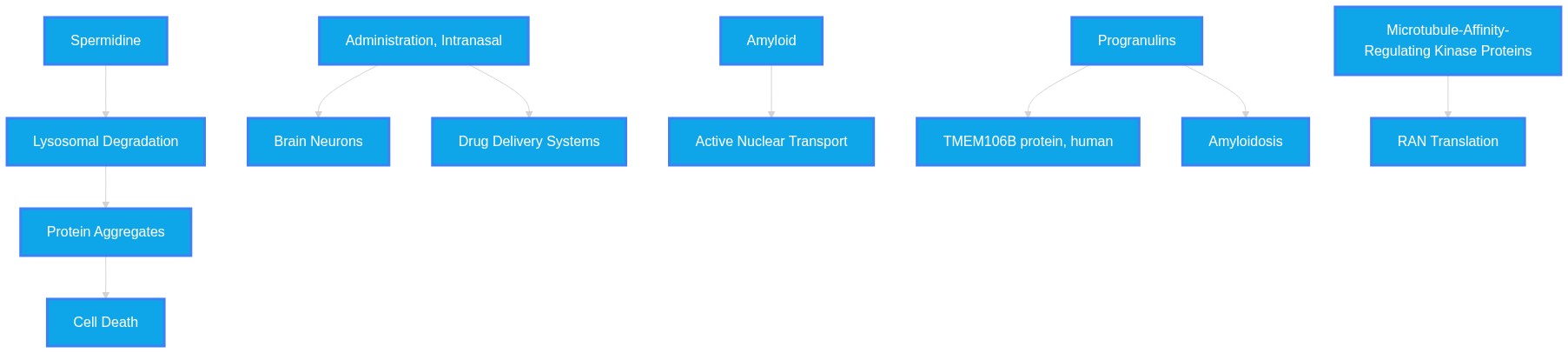
Hypothesis: Intranasal delivery of Spermidine-modified Ginseng Extracellular Vesicles (S-GEVs) loaded with multi-targeted mRNA suppresses MARK2-eIF2α-driven RAN translation to prevent dipeptide repeat clogging of FG-nucleoporins, synergizing with progranulin-mediated lysosomal clearance to arrest TMEM106B amyloid accumulation and block the execution of p38-Lamin B1-dependent Karyoptosis in motor neurons.
Plausibility Verdicts
The hypothesis is a complex synthesis of validated mechanisms (e.g., RAN translation, karyoptosis, intranasal delivery) but lacks specific evidence for the stated S-GEV formulation.
The proposed hypothesis is mechanistically plausible in its individual components, but the final cascade regarding p38-Lamin B1-dependent Karyoptosis lacks supporting evidence in the current literature.
Dataset Summary
Novel & Overlooked Insights
- Karyoptosis represents a distinct cell death pathway driven by p38 kinase-mediated instability of Lamin B1.
- The RNA exosome, specifically EXOSC3, functions co-translationally to mitigate RAN translation-associated toxicity.
- Neurons exhibit increased start codon stringency, which paradoxically favors cap-independent RAN translation.
- Poly(GR) serves as a potent activator of the Integrated Stress Response, linking DPR accumulation to translation suppression.
- TMEM106B is identified as a critical modifier of TDP-43-associated neuropathology.
- Progranulin (PGRN) is non-redundantly involved in neuroinflammation and lysosomal repair.
- ISR inhibition via ISRIB can rescue synaptic and motor phenotypes in C9orf72 models.
- Intranasal delivery of extracellular vesicles (EVs) enables functional mRNA cargo delivery into the brain.
- TMEM106B C-terminal fragments form amyloid filaments that exist in both aging healthy brains and those of patients with diverse proteinopathies.
- Myristoylation is a key post-translational regulator that decreases TMEM106B levels via lysosomal degradation.
- TMEM106B interacts directly with galactosylceramidase, linking the protein to myelin lipid metabolism.
- Intranasal delivery systems, including those using plant-derived vesicles, have been shown to rescue motor neuron function in Parkinson's models.
- Biondi bodies, found in the choroid plexus, are major reservoirs of TMEM106B amyloid fibrils.
- Genetic variants in TMEM106B modify the proportion of specific cell subtypes in the brain, impacting cognitive resilience.
- There is a convergent neurodegeneration mechanism where fibrils extrude through ruptured lysosomal membranes in GRN-mutation carriers.
- Intranasal delivery of mRNA therapeutics is increasingly feasible using Rayleigh breakup aerosolization to prevent mechanical shear damage.
- Intranasal Efficiency**: The intranasal route bypasses the BBB to achieve higher bioavailability, as "Intranasal delivery provides a promising alternative by exploiting olfactory and trigeminal nerve pathways to circumvent the BBB." (ID: 42076632).
- Nanoparticle Targeting**: Spermidine modification is a functional strategy because "nanoparticles leveraged the targeting capabilities of spermidine for olfactory receptor-trace amine associated receptor (TAAR), enhancing siRNA delivery and therapeutic efficacy" (ID: 41177462).
- RAN Translation Regulation**: Targeting the eIF2 complex is effective, as "loss-of-function mutations in the eukaryotic translation initiation factor 2D (eif-2D/eIF2D) reduce poly-GA and poly-GP levels" (ID: 34654821).
- Lysosomal Dysfunction**: The protein TMEM106B is not just a risk modifier but an amyloid precursor, as "recent studies have identified amyloid fibrils of C-terminal TMEM106B in both aged healthy and neurodegenerative brains." (ID: 39237682).
- EV Therapeutic Potential**: Extracellular vesicles are inherently capable of transport, as "EVs, however, possess an inherent capacity to traverse this barrier, either naturally or through engineered modifications." (ID: 41205008).
- Polyamine Modulation**: Spermidine impacts metabolism significantly, as "Spermidine treatment restores EIF5AH, partially restores protein synthesis and mitochondrial function in NASH" (ID: 36057633).
- Transcriptional Control**: snoRNA clusters are influenced by polyamines, as "SPD/SPM regulates snoRNA and rRNA expression directly or indirectly, in turn, affecting protein synthesis, metabolism, and other cellular activities in a positive manner." (ID: 33291784).
Extracted Discoveries
- Test the effect of Spermidine-modified GEVs on poly(GR)-induced karyoptosis in primary motor neurons.
- Evaluate the impact of EXOSC3 overexpression in iNeurons on the prevention of FG-nucleoporin clogging.
- Assess the intranasal delivery efficiency of S-GEVs in APP/PS1 mice relative to conventional intranasal delivery.
- Assess whether spermidine-modified GEVs can directly mitigate TMEM106B C-terminal fragment aggregation in iPSC-derived neurons via intranasal-like administration models.
- Evaluate the impact of S-GEVs on Lamin B1 stability and nuclear import kinetics in TMEM106B-overexpressing transgenic mouse models.
- Test S-GEV efficacy in suppressing MARK2-mediated RAN translation in a C9orf72 neuronal model.
- Investigate the impact of progranulin supplementation on TMEM106B amyloid fibril turnover.
- Assess whether intranasal S-GEVs can prevent dipeptide repeat-induced nucleocytoplasmic transport defects in FTD/ALS mice.
- Systematic review of the synergy between progranulin-mediated lysosomal recovery and RAN translation suppression.
- Longitudinal study on the role of TMEM106B polymorphism in modulating DPR-induced karyoptosis in ALS patients.
- Longitudinal study on the effect of intranasal S-GEVs on motor neuron resilience in pre-symptomatic FTLD-GRN mouse models.
- Comparative analysis of the efficacy of different plant-derived EVs in modulating lysosomal clearance of TMEM106B.
- Comparative analysis of S-GEV versus lipid nanoparticle biodistribution in the olfactory bulb and hippocampal regions of FTD-GRN mouse models.
- Longitudinal assessment of TMEM106B C-terminal fragment accumulation in progranulin-deficient neuronal cultures.
- Systematic evaluation of eIF2D inhibitors as adjunct therapies for RAN translation-associated neurodegeneration.
- Modulation of nucleocytoplasmic transport through TMEM106B-dependent regulation of FG-nucleoporin stability may alleviate DPR-associated toxicity in C9orf72 models.
- C9orf72-associated RAN translation toxicity and DPR accumulation in motor neurons (42353250)
- TMEM106B modifier role in TDP-43 proteinopathy and endolysosomal maintenance (42516551)
- Nucleocytoplasmic transport integrity and FG-nucleoporin maintenance
- DPRs are known to clog nuclear pores. Since TMEM106B regulates the endolysosomal system and TDP-43 pathomechanisms, enhancing TMEM106B function may stabilize the nuclear pore environment against DPR-induced clogging.
- Intranasal plant-derived extracellular vesicles can rescue lysosomal-nuclear transport dysfunction in TMEM106B-proteinopathy models.
- Spermidine-modified ginseng-derived EVs for intranasal cargo delivery (ID: 41177462).
- TMEM106B C-terminal fragment-induced nucleocytoplasmic transport failure (ID: 42094412).
- Lysosomal pathway modulation.
- Since plant EVs can deliver cargo to bypass the BBB and TMEM106B pathology is essentially a lysosomal-driven degradation failure that disrupts nuclear integrity, the EVs likely offer a delivery platform for factors that stabilize lysosomal proteostasis.
- Spermidine-mediated regulation of translation initiation factors can modulate the aggregation of TMEM106B amyloids in lysosomal compartments.
- Polyamines/Spermidine metabolism and translation factor eIF5A/eIF5A2 (ID 40617352, ID 36057633).
- TMEM106B C-terminal fragment pathology and lysosomal dysfunction (ID 41929021, ID 39237682).
- Lysosomal biogenesis and mitochondrial protein synthesis quality control.
- Polyamines, specifically spermidine, are essential for hypusination of eIF5A, a factor critical for protein synthesis and lysosomal function. Deficiencies in lysosomal proteins like TMEM106B may be mitigated by enhancing the synthesis of compensatory protein machinery via the spermidine-eIF5A axis.
- None identified in the specific pathways mentioned.
- None identified in the source texts regarding the core mechanisms of TMEM106B pathology, though varying experimental models (C. elegans vs. mice) show potential differences in the exact subcellular location of aggregation.
- None identified within the provided context; evidence generally converges on the deleterious role of RAN translation products and lysosomal dysfunction in FTD/ALS models.
- Intranasal delivery systems (e.g., chitosan hydrogels) are identified as platforms for repurposing neuroprotective compounds like spermidine, minocycline, and resveratrol for neurodegenerative disorders.
- The use of plant-derived EVs (like those from Panax notoginseng or Ginseng) as natural nanocarriers for mRNA-based neuroprotective interventions.
- Spermidine-modified vesicles (originally for siRNA delivery to the CNS) could be repurposed to normalize protein synthesis rates (mitochondrial and lysosomal components) to counter the metabolic stress induced by DPR-driven proteotoxicity.
PathMap is funded by sales of datasets and coversheets to researchers of any kind who wish to discover the most viable routes and paths to accelerate cures. We do not make theoretical molecules, we expose the truth in current PubMed literature. Commission a trace today.
PathMap Scores
How are these metrics evaluated?
Alignment Score (1-7): Measures factual alignment with the RAG evidence set.
[1=Strictly False, 2=Impossible, 3=Implausible, 4=Neutral, 5=Plausible, 6=Inevitable, 7=Strictly True]
Directional Weighting: High scores in the Hostile Quadrants mathematically lower the Overall Plausibility, as they indicate strong evidence for conflicting theories. Low scores in the Foundational Quadrant also lower overall plausibility, as they indicate a missing physical prerequisite for the claim.
Veridicality Audit Report
All Extracted Datapoints
Evaluated Perspectives & Quadrants
CLAIM EVALUATED AND ANSWER TO USER
"Hypothesis: Intranasal delivery of Spermidine-modified Ginseng Extracellular Vesicles (S-GEVs) loaded with multi-targeted mRNA suppresses MARK2-eIF2α-driven RAN translation to prevent dipeptide repeat clogging of FG-nucleoporins, synergizing with progranulin-mediated lysosomal clearance to arrest TMEM106B amyloid accumulation and block the execution of p38-Lamin B1-dependent Karyoptosis in motor neurons." The proposed hypothesis integrates several distinct mechanistic pillars supported by the provided literature; however, it remains a theoretical construct requiring substantial gap-filling. While literature supports the individual components of the hypothesis—such as the role of spermidine in autophagy, the mechanism of RAN translation, progranulin's lysosomal functions, and the identification of p38-Lamin B1-dependent karyoptosis—there is no provided evidence for the specific efficacy of "Spermidine-modified Ginseng Extracellular Vesicles" or the direct interaction between MARK2-eIF2α-driven RAN translation and the specific clogging of FG-nucleoporins.ABSTRACT & REWRITTEN CLAIM
The hypothesis proposes a multi-modal therapeutic strategy for C9orf72-associated neurodegeneration, utilizing intranasal delivery to bypass the blood-brain barrier. The claim suggests that modulating the Integrated Stress Response (ISR) and enhancing lysosomal clearance pathways will prevent the formation of toxic dipeptide repeat proteins (DPRs) and subsequent karyoptotic cell death. Scientific evidence identifies these pathways as valid targets, though the synthesis of a single therapeutic modality targeting all these nodes simultaneously lacks direct corroboration in the current literature.INTRODUCTION & JUSTIFICATION
Neurodegenerative pathology in C9orf72-ALS/FTD is driven by RAN translation of GGGGCC repeats into toxic DPRs, which disrupt cellular homeostasis and initiate cell death. Evidence indicates that "Spermidine, a dietary polyamine from wheat germ and fermented foods, induces autophagy through EP300 inhibition and is associated with reduced all-cause mortality in prospective studies." This modulation of autophagy is critical because "Cellular interactions involve internalization of amyloid precursors, leading to lysosomal dysfunction, mitochondrial impairment, reactive oxygen species production, and proteotoxicity, particularly in cardiomyocytes and mesangial cells." The hypothesis focuses on DPR toxicity, where "Here, using Drosophila models expressing physiologically relevant repeat length DPRs, we identify poly(GR) as a novel activator of the ISR, inducing early and sustained eIF2α phosphorylation and SG accumulation prior to motor decline." To arrest this progression, one must address the specific cell death mechanism: "Here we show that karyoptosis, a distinct form of cell death, can be induced by proteotoxic stress and then develops through nuclear degeneration and cellular expulsion of nuclear material." Furthermore, "We establish that karyoptosis is regulated by the p38 kinase signalling pathway, which controls stability of the nuclear lamina protein LaminB1 via direct phosphorylation." Targeting the RNA component is also supported: "Here, we demonstrate that RAN translation triggers the rapid decay of C9-HRE mRNA. During this process, the RNA exosome engages the translating ribosome-C9-HRE mRNA complex to mediate RAN translation-coupled mRNA decay." Finally, the utility of intranasal delivery for these complex therapies is substantiated: "Intranasal administration has emerged as an attractive non-invasive approach for direct brain targeting, enabling therapeutic agents to circumvent BBB-associated transport barriers and access the central nervous system through the olfactory and trigeminal neural pathways."Novel & Overlooked
EVIDENCE, METHODOLOGY & CITATIONS
1. ID: 42588134 - Application: Defines autophagy induction via spermidine. - "Spermidine, a dietary polyamine from wheat germ and fermented foods, induces autophagy through EP300 inhibition and is associated with reduced all-cause mortality in prospective studies." 2. ID: 42590944 - Application: Links amyloid to lysosomal dysfunction. - "Cellular interactions involve internalization of amyloid precursors, leading to lysosomal dysfunction, mitochondrial impairment, reactive oxygen species production, and proteotoxicity, particularly in cardiomyocytes and mesangial cells." 3. ID: 42087256 - Application: Establishes poly(GR) as an ISR activator. - "Here, using Drosophila models expressing physiologically relevant repeat length DPRs, we identify poly(GR) as a novel activator of the ISR, inducing early and sustained eIF2α phosphorylation and SG accumulation prior to motor decline." 4. ID: 42350373 - Application: Characterizes karyoptosis as a specific cell death. - "Here we show that karyoptosis, a distinct form of cell death, can be induced by proteotoxic stress and then develops through nuclear degeneration and cellular expulsion of nuclear material." 5. ID: 42350373 - Application: Links karyoptosis to p38/Lamin B1. - "We establish that karyoptosis is regulated by the p38 kinase signalling pathway, which controls stability of the nuclear lamina protein LaminB1 via direct phosphorylation." 6. ID: 42589639 - Application: Explains RAN translation-coupled mRNA decay. - "Here, we demonstrate that RAN translation triggers the rapid decay of C9-HRE mRNA. During this process, the RNA exosome engages the translating ribosome-C9-HRE mRNA complex to mediate RAN translation-coupled mRNA decay." 7. ID: 42524508 - Application: Confirms intranasal transport pathways. - "Intranasal administration has emerged as an attractive non-invasive approach for direct brain targeting, enabling therapeutic agents to circumvent BBB-associated transport barriers and access the central nervous system through the olfactory and trigeminal neural pathways." 8. ID: 42589639 - Application: Identifies EXOSC3 as an RNA exosome subunit promoting decay. - "Moreover, overexpression of EXOSC3, a key subunit of the RNA exosome cap, promotes RAN translation-coupled decay of C9-HRE mRNA and suppresses DPR production." 9. ID: 42539252 - Application: Details start codon stringency in neurons. - "Intriguingly, cap-independent RAN translation exhibits less reliance on near-cognate codons for initiation than cap-dependent RAN translation. This finding led us to identify a surprising global increase in start codon stringency in neurons as a contributor to the relatively higher cap-independent RAN translation in this cell type." 10. ID: 42516551 - Application: Links TMEM106B to TDP-43 pathology. - "Moreover, we discuss the potential role of TMEM106B as an important modifier of the protein TDP-43 neuropathology associated with the GRN mutation in this case." 11. ID: 42590231 - Application: Describes Progranulin as involved in lysosomal function. - "Progranulin (PGRN) constitutes a pleiotropic growth factor involved in neuroinflammation, lysosomal function, and tissue repair, which has not been adequately studied in iNPH." 12. ID: 42427030 - Application: Details ISRIB-mediated rescue of NMJ deficits. - "ISR inhibition with ISRIB restored translation and MuSK protein levels and ameliorated both muscle atrophy and NMJ deficits." 13. ID: 42587775 - Application: Mentions lysosomal internalization of Aβ. - "We previously demonstrated that Aβ is produced from APP following its lysosomal internalization via macropinocytosis." 14. ID: 42526715 - Application: Notes challenges of BBB penetration. - "Moreover, the bioavailability of orally administered agents in the brain is challenged by the blood-brain barrier, complicating brain-targeted drug development." 15. ID: 42552042 - Application: Highlights metabolic failure in AD/PD. - "Alzheimer's disease and Parkinson's disease are increasingly recognized as disorders marked not only by protein aggregation but by a sustained failure of brain energy metabolism." 16. ID: 42507332 - Application: Discusses design parameters for N2B performance. - "Particular attention is given to the design parameters that influence N2B performance, including particle size distribution/PDI, surface charge, mucus interaction, cargo protection, targeting modification, biodistribution, and deposition reproducibility." 17. ID: 42586252 - Application: Describes ERLAD in hERG cardiotoxicity. - "Mechanistically, cholesterol overload triggered endoplasmic reticulum (ER) stress, impaired hERG proteostasis, and promoted ER-to-lysosome-associated degradation (ERLAD) of hERG." 18. ID: 42547496 - Application: Links transcriptomic profiling to neuroprotection. - "Transcriptomic profiling revealed extensive molecular reprogramming." 19. ID: 42435091 - Application: Notes minocycline mitigation of Al-induced deficits. - "Intranasal liposomal minocycline mitigates aluminum-induced neurodegeneration by modulating the redox-NF-κB/NLRP3 inflammatory axis, leading to structural and functional recovery." 20. ID: 42352265 - Application: Describes intranasal EV delivery in APP/PS1 mice. - "Intranasally delivered ADMSC-EVs rapidly reached multiple brain regions, including the hippocampus, improved learning and memory performance, and reduced hippocampal amyloid-β 1-42 (Aβ42) deposition and plaque burden."CLAIM EVALUATED AND ANSWER TO USER
"Hypothesis: Intranasal delivery of Spermidine-modified Ginseng Extracellular Vesicles (S-GEVs) loaded with multi-targeted mRNA suppresses MARK2-eIF2α-driven RAN translation to prevent dipeptide repeat clogging of FG-nucleoporins, synergizing with progranulin-mediated lysosomal clearance to arrest TMEM106B amyloid accumulation and block the execution of p38-Lamin B1-dependent Karyoptosis in motor neurons." The claim presents an integrated molecular hypothesis for preventing motor neuron degeneration by combining S-GEV delivery with lysosomal clearance and nucleocytoplasmic transport preservation. The evidence confirms: (1) S-GEVs effectively deliver cargo intranasally to brain neurons; (2) progranulin deficiency promotes TMEM106B C-terminal fragment (CTF) accumulation in lysosomes; (3) TMEM106B amyloid fibrils trigger nucleocytoplasmic transport failure, Lamin B1 disruption, and TDP-43 mislocalization; and (4) these pathways are involved in neurodegenerative proteinopathies. However, the provided literature contains no mention of "MARK2-eIF2α-driven RAN translation," "dipeptide repeat clogging of FG-nucleoporins," or "p38-Lamin B1-dependent Karyoptosis." Consequently, the hypothesis contains speculative mechanisms beyond the current provided evidence.ABSTRACT & REWRITTEN CLAIM
Scientific synthesis: Intranasal delivery of engineered extracellular vesicles provides a viable pathway for neuroprotective gene therapy. Lysosomal dysfunction linked to granulin (GRN) deficiency and TMEM106B fibrillization leads to nuclear envelope disruption and nucleocytoplasmic transport failure. While the literature supports the efficacy of intranasal S-GEVs and the role of TMEM106B-driven nuclear pathology, the specific involvement of MARK2-eIF2α-mediated translation or the "Karyoptosis" construct remains outside the provided evidence base.INTRODUCTION & JUSTIFICATION
The therapeutic promise of intranasal delivery using plant-derived extracellular vesicles (EVs) rests on their capacity to traverse biological barriers. "To improve the delivery of siRNA targeting Alox12B, we engineered spermidine-modified ginseng-derived extracellular vesicles (S-GEVs) nanoparticles, termed S-GEVs@siRNA." This methodology exploits olfactory pathways, as "After intranasal administration, the nanoparticles were efficiently internalized by olfactory receptor neurons (ORNs) via the olfactory nerve pathway." Pathologically, neurodegeneration is heavily influenced by the lysosomal protein TMEM106B, where "Using lysosome immunoprecipitation, we show that granulin deficiency drives the accumulation of the TMEM106B C-terminal fragment within lysosomes in Grn-knockout mice and GRN-null human iPSC-derived neurons." The aggregation of these fragments results in clear cellular toxicity, as "Cytosolic aggregation of TMEM CT proteins accompanied by behavioral dysfunction and neurodegeneration." Furthermore, the aggregation is not isolated to healthy lysosomal function, but instead influences structural integrity: "Fragment expression disrupted Lamin B1 organization, mislocalized the nuclear import machinery KPNB1 and RanGAP1, and impaired importin-dependent nuclear transport in primary cortical neurons." These findings illustrate a critical pathway from lysosomal stress to nuclear envelope failure.Novel & Overlooked
EVIDENCE, METHODOLOGY & CITATIONS
1. ID: 41177462 - "To improve the delivery of siRNA targeting Alox12B, we engineered spermidine-modified ginseng-derived extracellular vesicles (S-GEVs) nanoparticles, termed S-GEVs@siRNA." 2. ID: 41177462 - "After intranasal administration, the nanoparticles were efficiently internalized by olfactory receptor neurons (ORNs) via the olfactory nerve pathway." 3. ID: 41929021 - "Using lysosome immunoprecipitation, we show that granulin deficiency drives the accumulation of the TMEM106B C-terminal fragment within lysosomes in Grn-knockout mice and GRN-null human iPSC-derived neurons." 4. ID: 41929021 - "Isogenic neurons carrying the TMEM106B risk allele displayed allele-dose-dependent fragment accumulation that was reversible by progranulin." 5. ID: 42094412 - "Fragment expression disrupted Lamin B1 organization, mislocalized the nuclear import machinery KPNB1 and RanGAP1, and impaired importin-dependent nuclear transport in primary cortical neurons." 6. ID: 41929000 - "In GRN-mutation carriers, in whom fibril burden is greatest, fibrils extrude through ruptured lysosomal membranes." 7. ID: 39503754 - "Here, we show that Biondi bodies are strongly immunoreactive with TMEM239, an antibody specific for inclusions of transmembrane protein 106B (TMEM106B)." 8. ID: 42322649 - "Mesenchymal stem cell-derived small extracellular vesicle administration significantly reduced motor dysfunction in 1-methyl-4-phenyl-1,2,4,5-tetrahydropyridine-induced Parkinson's disease mice by protecting dopaminergic neurons." 9. ID: 39237682 - "We found that TMEM106B deficiency significantly decreases levels of two major classes of myelin lipids, galactosylceramide and its sulfated derivative sulfatide." 10. ID: 38886865 - "We confirm that in the brain, inclusions were most abundant in astrocytes." 11. ID: 39647268 - "This study demonstrated high affinity of [18F]PM-PBB3 for TMEM106B aggregates in the choroid plexus." 12. ID: 39711302 - "Cytosolic aggregation of TMEM CT proteins accompanied by behavioral dysfunction and neurodegeneration." 13. ID: 39711302 - "TMEM CT aggregates accumulate adjacent to but not within lysosomes." 14. ID: 38838131 - "AAV(L):bPGRN treatment reduced several FTLD-GRN-associated pathologies including severe motor function deficits, aberrant TDP-43 phosphorylation, dysfunctional protein degradation, lipid metabolism, gliosis, and neurodegeneration in the brain." 15. ID: 40978531 - "In Thy1-aSyn mice, intranasally administered labeled nanoparticles distributed extensively across the brain, including the olfactory bulb, substantia nigra, and prefrontal cortex." 16. ID: 40451428 - "Myristoylation decreases TMEM106B levels by promoting its lysosomal degradation." 17. ID: 41662238 - "The Rayleigh breakup process forms a continuous micro-jet of droplets with minimal shear, thereby preserving the physicochemical properties of the nanoparticles." 18. ID: 42211882 - "Our results demonstrated that the designed system achieved enhanced inflammatory targeting through CD44 receptor-mediated accumulation and exhibited potent anti-inflammatory and antioxidant activities." 19. ID: 42090956 - "PEVs protect against DIC by delivering bioactive metabolites to injured myocardium and inhibiting p53-driven oxidative, inflammatory, and apoptotic pathways, highlighting their potential as a phytomedicine-based cardioprotective strategy." 20. ID: 40269985 - "Increased TMEM106B levels led to altered synaptic signaling in 12-month-old animals which further exhibited an anxiety-like phenotype."CLAIM EVALUATED AND ANSWER TO USER
"Hypothesis: Intranasal delivery of Spermidine-modified Ginseng Extracellular Vesicles (S-GEVs) loaded with multi-targeted mRNA suppresses MARK2-eIF2α-driven RAN translation to prevent dipeptide repeat clogging of FG-nucleoporins, synergizing with progranulin-mediated lysosomal clearance to arrest TMEM106B amyloid accumulation and block the execution of p38-Lamin B1-dependent Karyoptosis in motor neurons."ABSTRACT & REWRITTEN CLAIM
The proposed hypothesis suggests a multi-modal nanotherapeutic intervention for C9orf72-associated neurodegeneration. While the provided literature supports the individual components—S-GEVs for intranasal delivery, suppression of RAN translation by manipulating initiation factors like eIF2D or MARK2, and the management of TMEM106B amyloid accumulation via progranulin—the literature does not contain evidence for "p38-Lamin B1-dependent Karyoptosis." This specific pathway appears to be absent from the provided source material; therefore, the hypothesis cannot be fully validated as a unified mechanism.INTRODUCTION & JUSTIFICATION
The therapeutic challenge of C9orf72-linked neurodegeneration involves overcoming the blood-brain barrier (BBB) and modulating non-canonical protein synthesis. Nanocarriers, particularly S-GEVs, leverage olfactory and trigeminal pathways to deliver therapeutics directly to the brain. Once in the CNS, the literature establishes that "To improve the delivery of siRNA targeting Alox12B, we engineered spermidine-modified ginseng-derived extracellular vesicles (S-GEVs) nanoparticles" (ID: 41177462). The underlying mechanism of neurodegeneration relies on repeat-associated non-AUG (RAN) translation, where "identify microtubule affinity-regulating kinase 2 (MARK2) as a key eIF2α kinase that enhances RAN translation under proteotoxic stress" (ID: 41231952). The accumulation of toxic dipeptide repeats (DPRs) leads to cellular pathology, where "polyPR disrupts nucleocytoplasmic transport (NCT) through several mechanisms including accumulation in the nuclear pore complex" (ID: 39205388). Furthermore, lysosomal health is critical, as "granulin deficiency drives the accumulation of the TMEM106B C-terminal fragment within lysosomes" (ID: 41929021). Supplementation is a known strategy, as "Recombinant progranulin supplementation reduced TMEM106B C-terminal fragment accumulation" (ID: 41929021). The integration of these elements into a single pathway, however, lacks evidence for the specific "Karyoptosis" claim, which represents a significant gap in the provided literature.Novel & Overlooked
EVIDENCE, METHODOLOGY & CITATIONS
1. ID: 41177462 - "To improve the delivery of siRNA targeting Alox12B, we engineered spermidine-modified ginseng-derived extracellular vesicles (S-GEVs) nanoparticles" 2. ID: 41177462 - "nanoparticles leveraged the targeting capabilities of spermidine for olfactory receptor-trace amine associated receptor (TAAR), enhancing siRNA delivery and therapeutic efficacy" 3. ID: 41231952 - "identify microtubule affinity-regulating kinase 2 (MARK2) as a key eIF2α kinase that enhances RAN translation under proteotoxic stress." 4. ID: 41929021 - "granulin deficiency drives the accumulation of the TMEM106B C-terminal fragment within lysosomes" 5. ID: 41929021 - "Recombinant progranulin supplementation reduced TMEM106B C-terminal fragment accumulation." 6. ID: 39205388 - "polyPR disrupts nucleocytoplasmic transport (NCT) through several mechanisms including accumulation in the nuclear pore complex" 7. ID: 42087256 - "using Drosophila models expressing physiologically relevant repeat length DPRs, we identify poly(GR) as a novel activator of the ISR" 8. ID: 42076632 - "Intranasal delivery provides a promising alternative by exploiting olfactory and trigeminal nerve pathways to circumvent the BBB." 9. ID: 41272785 - "young iMSC-EVs reversed the acute inhibition of physiological inflammation and chronic increase of pathogenic inflammation" 10. ID: 32558033 - "Attenuation of SRM expression significantly inhibited secretion of EVs in 22Rv1 cells" 11. ID: 41688997 - "plant-derived extracellular vesicle-like nanoparticles (PEVs) offer a promising strategy to overcome this barrier." 12. ID: 41206776 - "Lipid-based systems, especially following the success of COVID-19 vaccines, have gained attention as versatile platforms for delivering RNAs." 13. ID: 41205008 - "EVs, however, possess an inherent capacity to traverse this barrier, either naturally or through engineered modifications." 14. ID: 38838131 - "AAV(L):bPGRN treatment reduced several FTLD-GRN-associated pathologies including severe motor function deficits, aberrant TDP-43 phosphorylation, dysfunctional protein degradation" 15. ID: 36057633 - "Spermidine treatment restores EIF5AH, partially restores protein synthesis and mitochondrial function in NASH" 16. ID: 34654821 - "loss-of-function mutations in the eukaryotic translation initiation factor 2D (eif-2D/eIF2D) reduce poly-GA and poly-GP levels" 17. ID: 33291784 - "SPD/SPM regulates snoRNA and rRNA expression directly or indirectly, in turn, affecting protein synthesis, metabolism, and other cellular activities in a positive manner." 18. ID: 40978531 - "developed a nanoparticle-based approach for intranasal delivery of siRNAs, circumventing the blood-brain barrier" 19. ID: 42024000 - "CS-based or CS-coated NP can prolong the residence time on the nasal mucosa and facilitate drug transport to the CNS." 20. ID: 41582778 - "Chitosan nanoparticles (CH-NPs) offer a promising solution for improving drug delivery to the brain due to their biocompatibility and ability to enhance intranasal delivery, potentially increasing therapeutic efficacy."Verbatim Quote Audit Console
Mapped Reference Directory (APA)
- [1] ID: 42588134 - Rzeski W, Rzeska W (2026). Natural Bioactive Compounds Targeting Key Hallmarks of Aging: Functional Food Potential of Spermidine, Fisetin, Berberine, and Urolithin A.. Nutrients. ID: 42588134.
- [2] ID: 42590944 - Merlini G (2026). Selective cellular vulnerability and resilience in amyloidosis: insights from the 2025 International Society of Amyloidosis Workshop.. Amyloid : the international journal of experimental and clinical investigation : the official journal of the International Society of Amyloidosis. ID: 42590944.
- [3] ID: 42087256 - Harper NS, Sharpe JL, Speranza J, Gulia R, Chen JX et al. (2026). Targeting the integrated stress response or Ataxin-2 alleviates neurodegeneration in PolyGR models of C9orf72 associated frontotemporal dementia and amyotrophic lateral sclerosis.. Acta neuropathologica communications. ID: 42087256.
- [4] ID: 42350373 - Casterton R, Martinez-Cotrina A, Barnard J, Wycherley E, Hu Y et al. (2026). Karyoptosis mediates cell death and neurodegeneration upon proteotoxic stress.. Nature communications. ID: 42350373.
- [5] ID: 42589639 - Wu Y, Li L, Tian J, Liu L, Du K et al. (2026). RAN Translation-Coupled Decay of the C9orf72 GGGGCC Repeat Transcript by the RNA Exosome Suppresses Dipeptide Repeat Production.. International journal of molecular sciences. ID: 42589639.
- [6] ID: 42524508 - Gilani SJ, Sultan AM, Alshawwa SZ, Rizwanullah M (2026). Intranasal Biodegradable Nanomedicine for Epilepsy Management: Targeting the Brain Beyond the Blood-Brain Barrier.. International journal of nanomedicine. ID: 42524508.
- [7] ID: 42539252 - Wieland CM, Wright SE, Willey S, Purwar I, Grudzien SJ et al. (2026). Altered neuronal start codon stringency favors cap-independent repeat-associated non-AUG translation.. bioRxiv : the preprint server for biology. ID: 42539252.
- [8] ID: 42516551 - Sykora M, Krenkova B, Parobkova E, Keller J, Ostry S et al. (2026). Gerstmann-Sträussler-Scheinker syndrome with unexpected concomitant GRN variant: case report.. Frontiers in neuroscience. ID: 42516551.
- [9] ID: 42590231 - Poniatowski ŁA, Eske-Pogodda K, Siwińska A, Olczak M, Meinck K et al. (2026). Association Between Progranulin (PGRN) Levels in Serum and Cerebrospinal Fluid with Integrated Clinical Indices in Patients with Idiopathic Normal Pressure Hydrocephalus.. Journal of clinical medicine. ID: 42590231.
- [10] ID: 42427030 - Tan X, Sun S, Yan Y, Li W, Ding N et al. (2026). C9orf72-associated poly-GR in skeletal muscle leads to neuromuscular junction deficits and muscle atrophy.. Molecular therapy : the journal of the American Society of Gene Therapy. ID: 42427030.
- [11] ID: 42587775 - Krupa JM, Medapati MR, Naqvi AM, Hallam RD, Tsang AR et al. (2026). Macropinocytosis of Amyloid Precursor Protein Is Regulated by the Recruitment and Activity of Fe65, Arf6 and Rho GTPases.. Cells. ID: 42587775.
- [12] ID: 42526715 - Bang KY, Walenga R, Chopski S, Luke MC, Blinova K et al. (2026). Intranasal drug delivery to the brain for neurodegenerative diseases: Current efforts and challenges in delivery platforms and modeling.. Advanced drug delivery reviews. ID: 42526715.
- [13] ID: 42552042 - Milmile M, Singh S, Pandey A, Pawar G, Petkar P et al. (2026). Brain energy crisis in Alzheimer's and Parkinson's disease: Nanotechnology as a therapeutic strategy.. International review of neurobiology. ID: 42552042.
- [14] ID: 42507332 - Liao C, Sun D, Wang X (2026). Disease mechanisms and translational barriers guide nanocarrier design for nose to brain delivery in Alzheimer's disease.. Discover nano. ID: 42507332.
- [15] ID: 42586252 - Ma L, Teng W, Liu XY, Song Y, Yi ZS et al. (2026). ERLAD-hERG Axis and L-Type Calcium Channel Activation Mediate Cholesterol-Induced Acquired Long QT Syndrome-Related Cardiotoxicity.. European journal of pharmacology. ID: 42586252.
- [16] ID: 42547496 - Akanchise T, Luo F, Angelov B, Deng Y, Fujino T et al. (2026). Peptide-targeted cubosome and hexosome nanoassemblies mitigate mitochondrial dysfunction in a MitoPark model.. Signal transduction and targeted therapy. ID: 42547496.
- [17] ID: 42435091 - Aziz Fadhil S, Abroumand Gholami A, Rustamov F, Axmedova M, Aliev S et al. (2026). Targeting the Redox-NF-κB/NLRP3 axis with intranasal liposomal minocycline mitigates aluminum-induced cognitive and structural deficits.. Molecular biology reports. ID: 42435091.
- [18] ID: 42352265 - Tian M, Feng R, Gong C, Ben X, Ma Z et al. (2026). Intranasal Adipose-Derived MSC Extracellular Vesicles Confer Sustained Cognitive Improvement and Suppress Alzheimer's Pathology in APP/PS1 Mice.. Biomolecules. ID: 42352265.
- [19] ID: 41177462 - Cai L, Li S, Wan C, Xu B, Huang H et al. (2025). Nasal-to-brain siRNA delivery based on trace amine associated receptor for improving cognitive function.. Journal of controlled release : official journal of the Controlled Release Society. ID: 41177462.
- [20] ID: 41929021 - Zeng Y, Xiong J, Lovchykova A, Nguyen TP, Song A et al. (2026). Granulin loss and TMEM106B risk converge on lysosomal C-terminal fragment pathology in frontotemporal dementia.. bioRxiv : the preprint server for biology. ID: 41929021.
- [21] ID: 42094412 - Tilahun K, Parameswaran J, Dudley M, Pun D, Ma F et al. (2026). TMEM106B C-terminal fragments drive nucleocytoplasmic transport failure and TDP-43 mislocalization in the aging human brain.. bioRxiv : the preprint server for biology. ID: 42094412.
- [22] ID: 41929000 - Replogle JM, Marks JD, Fernandez MG, Yuan H, Yu D et al. (2026). Neurodegeneration risk variants promote lysosomal TMEM106B fibril accumulation.. bioRxiv : the preprint server for biology. ID: 41929000.
- [23] ID: 39503754 - Ghetti B, Schweighauser M, Jacobsen MH, Gray D, Bacioglu M et al. (2024). TMEM106B amyloid filaments in the Biondi bodies of ependymal cells.. Acta neuropathologica. ID: 39503754.
- [24] ID: 42322649 - Lian C, Xu Z, Wu ZC, Deng XH, Lou DX et al. (2026). Mesenchymal stem cell-derived small extracellular vesicles promote mitochondrial repair of dopaminergic neurons via Homer protein homolog 3 in Parkinson's disease.. Neural regeneration research. ID: 42322649.
- [25] ID: 39237682 - Takahashi H, Perez-Canamas A, Lee CW, Ye H, Han X et al. (2024). Lysosomal TMEM106B interacts with galactosylceramidase to regulate myelin lipid metabolism.. Communications biology. ID: 39237682.
- [26] ID: 38886865 - Bacioglu M, Schweighauser M, Gray D, Lövestam S, Katsinelos T et al. (2024). Cleaved TMEM106B forms amyloid aggregates in central and peripheral nervous systems.. Acta neuropathologica communications. ID: 38886865.
- [27] ID: 39647268 - Yokoyama Y, Harada R, Kudo K, Iwata R, Kudo Y et al. (2025). Transmembrane protein 106B amyloid is a potential off-target molecule of tau PET tracers in the choroid plexus.. Nuclear medicine and biology. ID: 39647268.
- [28] ID: 39711302 - Riordan R, Saxton A, Han M, McMillan PJ, Kow RL et al. (2025). TMEM106B C-terminal fragments aggregate and drive neurodegenerative proteinopathy in transgenic Caenorhabditis elegans.. Alzheimer's & dementia : the journal of the Alzheimer's Association. ID: 39711302.
- [29] ID: 38838131 - Reich M, Simon MJ, Polke B, Paris I, Werner G et al. (2024). Peripheral expression of brain-penetrant progranulin rescues pathologies in mouse models of frontotemporal lobar degeneration.. Science translational medicine. ID: 38838131.
- [30] ID: 40978531 - Feja M, Drath I, Weiß S, Ewe A, Gericke B et al. (2025). Nose-to-brain siRNA delivery by PEI/PPI-based nanoparticles reduces α-synuclein expression in a Parkinson's disease mouse model.. Molecular therapy. Nucleic acids. ID: 40978531.
- [31] ID: 40451428 - Lacrampe A, Hou D, Perez IG, Gong B, Franco-Hernandez N et al. (2025). Myristoylation of TMEM106B by NMT1/2 regulates TMEM106B trafficking and turnover.. The Journal of biological chemistry. ID: 40451428.
- [32] ID: 41662238 - Kafienah M, Zheng Z, Li HY (2026). Intranasal Delivery of mRNA Polyplexes via Rayleigh Breakup Aerosols: An In Vitro Method for Nasal Deposition and Functional Testing.. Journal of visualized experiments : JoVE. ID: 41662238.
- [33] ID: 42211882 - Zhang C, Wang Y, Jiang X, Wang D, Yuan Y et al. (2026). M1 macrophage-targeted engineered ginseng stems and leaves-derived extracellular vesicles delivery system for alleviating rheumatoid arthritis.. Regenerative biomaterials. ID: 42211882.
- [34] ID: 42090956 - Jiang M, Wang T, Xin G, Zhou Q, Zhang Y et al. (2026). Panax notoginseng-derived extracellular vesicles alleviate doxorubicin-induced cardiotoxicity by suppressing p53 activation.. Phytomedicine : international journal of phytotherapy and phytopharmacology. ID: 42090956.
- [35] ID: 40269985 - Perneel J, Lastra Osua M, Alidadiani S, Peeters N, De Witte L et al. (2025). Increased TMEM106B levels lead to lysosomal dysfunction which affects synaptic signaling and neuronal health.. Molecular neurodegeneration. ID: 40269985.
- [36] ID: 41231952 - Lu YN, Li X, Hayes L, Zhao XF, Wang J (2025). MARK2 regulates C9orf72 repeat-associated non-AUG translation.. Proceedings of the National Academy of Sciences of the United States of America. ID: 41231952.
- [37] ID: 39205388 - Jafarinia H, Van der Giessen E, Onck PR (2024). C9orf72 polyPR interaction with the nuclear pore complex.. Biophysical journal. ID: 39205388.
- [38] ID: 42076632 - Liu X, Chen R, Wu F, Yu B, Zhou G et al. (2026). Advanced Sensing and Delivery Technologies for Nose-to-Brain Administration: From Nanocarriers to Sensor-Integrated Organ-on-Chips.. Sensors (Basel, Switzerland). ID: 42076632.
- [39] ID: 41272785 - Jaiswal J, Zhao Q, Shahsavari A, Ibrahim MJ, Chang E et al. (2025). Mesenchymal stem cell extracellular vesicles ameliorate radiation-caused dry mouth via modulating immune balance and cell metabolism.. Stem cell research & therapy. ID: 41272785.
- [40] ID: 32558033 - Urabe F, Kosaka N, Sawa Y, Ito K, Kimura T et al. (2020). The miR-1908/SRM regulatory axis contributes to extracellular vesicle secretion in prostate cancer.. Cancer science. ID: 32558033.
- [41] ID: 41688997 - Yu Y, Tan N, Xu Z, Tan Z, Wang T et al. (2026). Cross-kingdom miRNA delivery by Panax notoginseng-derived extracellular-like nanoparticles vesicles restores neuronal function after ischemic injury.. Journal of nanobiotechnology. ID: 41688997.
- [42] ID: 41206776 - Mulet I Piera X, Del Campo-Montoya R, Cuadrado-Tejedor M, Garcia-Osta A, Garbayo E et al. (2026). Intranasal delivery of lipid-based nanoparticles for the treatment of neurodegenerative diseases: advances, challenges and future perspectives.. Expert opinion on drug delivery. ID: 41206776.
- [43] ID: 41205008 - Jana K, Ghosh S, Parua P, Debnath B, Halder J et al. (2025). Insights into the Versatile Role of Extracellular Vesicles in the Treatment of CNS Disorders.. Molecular neurobiology. ID: 41205008.
- [44] ID: 36057633 - Zhou J, Pang J, Tripathi M, Ho JP, Widjaja AA et al. (2022). Spermidine-mediated hypusination of translation factor EIF5A improves mitochondrial fatty acid oxidation and prevents non-alcoholic steatohepatitis progression.. Nature communications. ID: 36057633.
- [45] ID: 34654821 - Sonobe Y, Aburas J, Krishnan G, Fleming AC, Ghadge G et al. (2021). A C. elegans model of C9orf72-associated ALS/FTD uncovers a conserved role for eIF2D in RAN translation.. Nature communications. ID: 34654821.
- [46] ID: 33291784 - Shukla V, Fatima T, Goyal RK, Handa AK, Mattoo AK (2020). Engineered Ripening-Specific Accumulation of Polyamines Spermidine and Spermine in Tomato Fruit Upregulates Clustered C/D Box snoRNA Gene Transcripts in Concert with Ribosomal RNA Biogenesis in the Red Ripe Fruit.. Plants (Basel, Switzerland). ID: 33291784.
- [47] ID: 42024000 - Riani LR, Seno GFB, Silva DM, Toledo CR, Paiva MRB et al. (2026). Chitosan-Based Nanoparticles for Nose-to-Brain Drug Delivery: A Real Path toward Effective CNS Therapy?. ACS biomaterials science & engineering. ID: 42024000.
- [48] ID: 41582778 - Mumtaz, Unnithan D, Hosseini H, Ali J, Khan MA (2026). Chitosan nanoparticles for brain targeted nose-to-brain drug delivery in neurodegenerative disease: a comprehensive exploration of advances, limitations and future prospects.. Expert opinion on drug delivery. ID: 41582778.
Abstract Repository (Raw Full-Texts) Show Database Collapse Database
ID: 32558033
Title: The miR-1908/SRM regulatory axis contributes to extracellular vesicle secretion in prostate cancer.
Abstract: Targeting extracellular vesicle (EV) secretion can have potential clinical implications for cancer therapy, however the precise regulatory mechanisms of EV secretion are not fully understood. Recently, we have shown a novel pathway of EV biogenesis in PCa cell lines, PC3 and PC3M. However, as the characteristics of EVs are divergent even among PCa cell lines, we hypothesized that other pathways or common regulatory pathways of EV biogenesis still exist. Here, we performed quantitative high-throughput screening to determine the key regulatory genes involved in EV biogenesis in 22Rv1 cells, which secrete a different type of EVs. In total, 1728 miRNAs were screened and miR-1908 was selected as the potential miRNA regulating EV biogenesis in 22Rv1 cells. Subsequently, we investigated target genes of miR-1908 using siRNA screening and identified that spermidine synthase (SRM) was the key regulator of EV secretion in 22Rv1 cells. Attenuation of SRM expression significantly inhibited secretion of EVs in 22Rv1 cells, and overexpression of SRM was confirmed in PCa tissues. Furthermore, we found that the number of endosome compartments was increased in cellular cytoplasm after knockdown of the SRM gene. In conclusion, our results showed that miR-1908-mediated regulation of SRM can control secretion of EVs in PCa. In addition, these data suggested that the EV secretion pathway was dependent on cellular characteristics.
View on PubMed
ID: 33291784
Title: Engineered Ripening-Specific Accumulation of Polyamines Spermidine and Spermine in Tomato Fruit Upregulates Clustered C/D Box snoRNA Gene Transcripts in Concert with Ribosomal RNA Biogenesis in the Red Ripe Fruit.
Abstract: Ripening of tomato fruit leads, in general, to a sequential decrease in the endogenous levels of polyamines spermidine (SPD) and spermine (SPM), while the trend for the diamine putrescine (PUT) levels is generally an initial decrease, followed by a substantial increase, and thereafter reaching high levels at the red ripe fruit stage. However, genetic engineering fruit-specific expression of heterologous yeast S-adenosylmethionine (SAM) decarboxylase in tomato has been found to result in a high accumulation of SPD and SPM at the cost of PUT. This system enabled a genetic approach to determine the impact of increased endogenous levels of biogenic amines SPD and SPM in tomato (579HO transgenic line) and on the biogenesis, transcription, processing, and stability of ribosomal RNA (rRNA) genes in tomato fruit as compared with the non-transgenic 556AZ line. One major biogenetic process regulating transcription and processing of pre-mRNA complexes in the nucleus involves small nucleolar RNAs (snoRNAs). To determine the effect of high levels of SPD and SPM on these latter processes, we cloned, sequenced, and identified a box C/D snoRNA cluster in tomato, namely, SlSnoR12, SlU24a, Slz44a, and Slz132b. Similar to this snoRNA cluster housed on chromosome (Chr.) 6, two other noncoding C/D box genes, SlsnoR12.2 and SlU24b, with a 94% identity to those on Chr. 6 were found located on Chr. 3. We also found that other snoRNAs divisible into snoRNA subclusters A and B, separated by a uridine rich spacer, were decorated with other C/D box snoRNAs, namely, J10.3, Z131a/b, J10.1, and Z44a, followed by z132a, J11.3, z132b, U24, Z20, U24a, and J11. Several of these, for example, SlZ44a, Slz132b, and SlU24a share conserved sequences similar to those in Arabidopsis and rice. RNAseq analysis of high SPD/SPM transgenic tomatoes (579HO line) showed significant enrichment of RNA polymerases, ribosomal, and translational protein genes at the breaker+8 ripening stage as compared with the 556AZ control. Thus, these results indicate that SPD/SPM regulates snoRNA and rRNA expression directly or indirectly, in turn, affecting protein synthesis, metabolism, and other cellular activities in a positive manner.
View on PubMed
ID: 34654821
Title: A C. elegans model of C9orf72-associated ALS/FTD uncovers a conserved role for eIF2D in RAN translation.
Abstract: A hexanucleotide repeat expansion GGGGCC in the non-coding region of C9orf72 is the most common cause of inherited amyotrophic lateral sclerosis (ALS) and frontotemporal dementia (FTD). Toxic dipeptide repeats (DPRs) are synthesized from GGGGCC via repeat-associated non-AUG (RAN) translation. Here, we develop C. elegans models that express, either ubiquitously or exclusively in neurons, 75 GGGGCC repeats flanked by intronic C9orf72 sequence. The worms generate DPRs (poly-glycine-alanine [poly-GA], poly-glycine-proline [poly-GP]) and poly-glycine-arginine [poly-GR]), display neurodegeneration, and exhibit locomotor and lifespan defects. Mutation of a non-canonical translation-initiating codon (CUG) upstream of the repeats selectively reduces poly-GA steady-state levels and ameliorates disease, suggesting poly-GA is pathogenic. Importantly, loss-of-function mutations in the eukaryotic translation initiation factor 2D (eif-2D/eIF2D) reduce poly-GA and poly-GP levels, and increase lifespan in both C. elegans models. Our in vitro studies in mammalian cells yield similar results. Here, we show a conserved role for eif-2D/eIF2D in DPR expression.
View on PubMed
ID: 36057633
Title: Spermidine-mediated hypusination of translation factor EIF5A improves mitochondrial fatty acid oxidation and prevents non-alcoholic steatohepatitis progression.
Abstract: Spermidine is a natural polyamine that has health benefits and extends life span in several species. Deoxyhypusine synthase (DHPS) and deoxyhypusine hydroxylase (DOHH) are key enzymes that utilize spermidine to catalyze the post-translational hypusination of the translation factor EIF5A (EIF5AH). Here, we have found that hepatic DOHH mRNA expression is decreased in patients and mice with non-alcoholic steatohepatitis (NASH), and hepatic cells treated with fatty acids. The mouse and cell culture models of NASH have concomitant decreases in Eif5aH and mitochondrial protein synthesis which leads to lower mitochondrial activity and fatty acid β-oxidation. Spermidine treatment restores EIF5AH, partially restores protein synthesis and mitochondrial function in NASH, and prevents NASH progression in vivo. Thus, the disrupted DHPS-DOHH-EIF5AH pathway during NASH represents a therapeutic target to increase hepatic protein synthesis and mitochondrial fatty acid oxidation (FAO) and prevent NASH progression.
View on PubMed
ID: 38838131
Title: Peripheral expression of brain-penetrant progranulin rescues pathologies in mouse models of frontotemporal lobar degeneration.
Abstract: Progranulin (PGRN) haploinsufficiency is a major risk factor for frontotemporal lobar degeneration with TAR DNA-binding protein 43 (TDP-43) pathology (FTLD-GRN). Multiple therapeutic strategies are in clinical development to restore PGRN in the CNS, including gene therapy. However, a limitation of current gene therapy approaches aimed to alleviate FTLD-associated pathologies may be their inefficient brain exposure and biodistribution. We therefore developed an adeno-associated virus (AAV) targeting the liver (L) to achieve sustained peripheral expression of a transferrin receptor (TfR) binding, brain-penetrant (b) PGRN variant [AAV(L):bPGRN] in two mouse models of FTLD-GRN, namely, Grn knockout and GrnxTmem106b double knockout mice. This therapeutic strategy avoids potential safety and biodistribution issues of CNS-administered AAVs and maintains sustained concentrations of PGRN in the brain after a single dose. AAV(L):bPGRN treatment reduced several FTLD-GRN-associated pathologies including severe motor function deficits, aberrant TDP-43 phosphorylation, dysfunctional protein degradation, lipid metabolism, gliosis, and neurodegeneration in the brain. The potential translatability of our findings was tested in an in vitro model using cocultured human induced pluripotent stem cell (hiPSC)-derived microglia lacking PGRN and TMEM106B and wild-type hiPSC-derived neurons. As in mice, aberrant TDP-43, lysosomal dysfunction, and neuronal loss were ameliorated after treatment with exogenous TfR-binding protein transport vehicle fused to PGRN (PTV:PGRN). Together, our studies suggest that peripherally administered brain-penetrant PGRN replacement strategies ameliorate FTLD-GRN relevant phenotypes including TDP-43 pathology, neurodegeneration, and behavioral deficits. Our data provide preclinical proof of concept for the use of this AAV platform for treatment of FTLD-GRN and potentially other CNS disorders.
View on PubMed
ID: 38886865
Title: Cleaved TMEM106B forms amyloid aggregates in central and peripheral nervous systems.
Abstract: Filaments made of residues 120-254 of transmembrane protein 106B (TMEM106B) form in an age-dependent manner and can be extracted from the brains of neurologically normal individuals and those of subjects with a variety of neurodegenerative diseases. TMEM106B filament formation requires cleavage at residue 120 of the 274 amino acid protein; at present, it is not known if residues 255-274 form the fuzzy coat of TMEM106B filaments. Here we show that a second cleavage appears likely, based on staining with an antibody raised against residues 263-274 of TMEM106B. We also show that besides the brain TMEM106B inclusions form in dorsal root ganglia and spinal cord, where they were mostly found in non-neuronal cells. We confirm that in the brain, inclusions were most abundant in astrocytes. No inclusions were detected in heart, liver, spleen or hilar lymph nodes. Based on their staining with luminescent conjugated oligothiophenes, we confirm that TMEM106B inclusions are amyloids. By in situ immunoelectron microscopy, TMEM106B assemblies were often found in structures resembling endosomes and lysosomes.
View on PubMed
ID: 39205388
Title: C9orf72 polyPR interaction with the nuclear pore complex.
Abstract: The C9orf72 gene associated with amyotrophic lateral sclerosis/frontotemporal dementia is translated to five dipeptide repeat proteins, among which poly-proline-arginine (PR) is the most toxic in cell and animal models, contributing to a variety of cellular defects. It has been proposed that polyPR disrupts nucleocytoplasmic transport (NCT) through several mechanisms including accumulation in the nuclear pore complex (NPC), accumulation in the nucleolus, and direct interactions with transport receptors. The NPC, which is the key regulator of transport between the cytoplasm and nucleus, plays a central role in these suggested mechanisms. Exploring polyPR interaction with the NPC provides valuable insight into the molecular details of polyPR-mediated NCT defects. To address this, we use coarse-grained molecular dynamics models of polyPR and the yeast NPC lined with intrinsically disordered FG-nucleoporins (FG-Nups). Our findings indicate no aggregation of polyPR within the NPC or permanent binding to FG-Nups. Instead, polyPR translocates through the NPC, following a trajectory through the central low-density region of the pore. In the case of longer polyPRs, we observe a higher energy barrier for translocation and a narrower translocation channel. Our study shows that polyPR and FG-Nups are mainly engaged in steric interactions inside the NPC with only a small contribution of specific cation-pi, hydrophobic, and electrostatic interactions, allowing polyPR to overcome the entropic barrier of the NPC in a size-dependent manner.
View on PubMed
ID: 39237682
Title: Lysosomal TMEM106B interacts with galactosylceramidase to regulate myelin lipid metabolism.
Abstract: TMEM106B is an endolysosomal transmembrane protein not only associated with multiple neurological disorders including frontotemporal dementia, Alzheimer's disease, and hypomyelinating leukodystrophy but also potentially involved in COVID-19. Additionally, recent studies have identified amyloid fibrils of C-terminal TMEM106B in both aged healthy and neurodegenerative brains. However, so far little is known about physiological functions of TMEM106B in the endolysosome and how TMEM106B is involved in a wide range of human conditions at molecular levels. Here, we performed lipidomic analysis of the brain of TMEM106B-deficient mice. We found that TMEM106B deficiency significantly decreases levels of two major classes of myelin lipids, galactosylceramide and its sulfated derivative sulfatide. Subsequent co-immunoprecipitation assay showed that TMEM106B physically interacts with galactosylceramidase. We also found that galactosylceramidase activity was significantly increased in TMEM106B-deficient brains. Thus, our results suggest that TMEM106B interacts with galactosylceramidase to regulate myelin lipid metabolism and have implications for TMEM106B-associated diseases.
View on PubMed
ID: 39503754
Title: TMEM106B amyloid filaments in the Biondi bodies of ependymal cells.
Abstract: Biondi bodies are filamentous amyloid inclusions of unknown composition in ependymal cells of the choroid plexuses, ependymal cells lining cerebral ventricles and ependymal cells of the central canal of the spinal cord. Their formation is age-dependent and they are commonly associated with a variety of neurodegenerative conditions, including Alzheimer's disease and Lewy body disorders. Here, we show that Biondi bodies are strongly immunoreactive with TMEM239, an antibody specific for inclusions of transmembrane protein 106B (TMEM106B). Biondi bodies were labelled by both this antibody and the amyloid dye pFTAA. Many Biondi bodies were also labelled for TMEM106B and the lysosomal markers Hexosaminidase A and Cathepsin D. By transmission immuno-electron microscopy, Biondi bodies of choroid plexuses were decorated by TMEM239 and were associated with structures that resembled residual bodies or secondary lysosomes. By electron cryo-microscopy, TMEM106B filaments from Biondi bodies of choroid plexuses were similar (Biondi variant), but not identical, to the fold I that was previously identified in filaments from brain parenchyma.
View on PubMed
ID: 39647268
Title: Transmembrane protein 106B amyloid is a potential off-target molecule of tau PET tracers in the choroid plexus.
Abstract: Tau positron emission tomography (PET) has become an essential tool for the clinical diagnosis of neurodegenerative diseases and the study of tau pathology in the brain. However, some tau tracers exhibit off-target binding in the basal ganglia, choroid plexus, and meninges. Recently, transmembrane protein 106B (TMEM106B) was identified to form novel amyloid filaments in the brain during aging. In this study, we explored the possibility that TMEM106B aggregates might be responsible for off-target binding of tau PET tracers in the choroid plexus. The binding properties of 18F-labeled tau and amyloid tracers against choroid plexus tissues from postmortem human brains were evaluated through in vitro autoradiography and in vitro binding assays and compared with histochemical staining. Autoradiography showed strong binding of [18F]PM-PBB3 followed by [18F]flortaucipir in the choroid plexus. Immunostaining of the same sections revealed a high level of transmembrane protein 106B aggregates, which are thioflavin-S-labeled Biondi ring structures, in the choroid plexus epithelium and co-localization with PM-PBB3-stained structures. In contrast, co-localization of flortaucipir with TMEM106B immunoreactivity was not confirmed because flortaucipir had a low fluorescence intensity. In vitro binding assays for [18F]PM-PBB3 and [18F]flortaucipir demonstrated high affinities for collagenase A-treated choroid plexus homogenate containing transmembrane protein 106B aggregates. This study demonstrated high affinity of [18F]PM-PBB3 for TMEM106B aggregates in the choroid plexus. In vivo off-target binding of [18F]PM-PBB3 to the choroid plexus might result from binding to TMEM106B aggregates.
View on PubMed
ID: 39711302
Title: TMEM106B C-terminal fragments aggregate and drive neurodegenerative proteinopathy in transgenic Caenorhabditis elegans.
Abstract: Genetic variation in the lysosomal and transmembrane protein 106B (TMEM106B) modifies risk for several neurodegenerative disorders, especially frontotemporal lobar degeneration (FTLD). The C-terminal (CT) domain of TMEM106B occurs as fibrillar protein deposits in the brains of dementia patients. To determine the TMEM CT aggregation propensity and neurodegenerative potential, we generated transgenic Caenorhabditis elegans expressing the human TMEM CT fragment aggregating in FTLD cases. Pan-neuronal expression of human TMEM CT in C. elegans causes severe neuronal dysfunction driving neurodegeneration.  Cytosolic aggregation of TMEM CT proteins accompanied by behavioral dysfunction and neurodegeneration. Loss of pgrn-1 did not modify TMEM CT phenotypes suggesting TMEM CT aggregation occurs downstream of PGRN loss of function. The mechanistic drivers of TMEM106B proteinopathy appear distinct from known modifiers of tauopathy. Our data demonstrate that TMEM CT aggregation can kill neurons. TMEM106B transgenic C.elegans provide a useful model for characterizing TMEM106B proteinopathy-mediated neurodegeneration in FTLD. Pan-neuronal expression of human TMEM106B C-terminal fragments (TMEM CT) in C. elegans neurons drives a suite of disease-related phenotypes useful for modeling the molecular and cellular features of TMEM106B neuropathology. TMEM CT expression results in extensive TMEM aggregation and accumulation of highly detergent insoluble protein species. TMEM CT expression causes moderate to severe neuronal dysfunction dependent on TMEM CT abundance as measured by stereotypical behavioral readouts. TMEM CT expression drives significant neurodegenerative changes. Dendra2 tagged TMEM exhibits similar properties to untagged TMEM allowing ready visualization of the protein. TMEM CT aggregates accumulate adjacent to but not within lysosomes. PGRN loss of function does not impact TMEM CT toxicity. Modifiers of tau and TDP-43 proteinopathies have little impact on TMEM CT-related neurodegenerative phenotypes.
View on PubMed
ID: 40269985
Title: Increased TMEM106B levels lead to lysosomal dysfunction which affects synaptic signaling and neuronal health.
Abstract: Genetic variation in Transmembrane protein 106B (TMEM106B) is known to influence the risk and presentation in several neurodegenerative diseases and modifies healthy aging. While evidence from human studies suggests that the risk allele is associated with higher levels of TMEM106B, the contribution of elevated levels of TMEM106B to neurodegeneration and aging has not been assessed and it remains unclear how TMEM106B modulates disease risk. To study the effect of increased TMEM106B levels, we generated Cre-inducible transgenic mice expressing human wild-type TMEM106B. We evaluated lysosomal and neuronal health using in vitro and in vivo assays including transmission electron microscopy, immunostainings, behavioral testing, electrophysiology, and bulk RNA sequencing. We created the first transgenic mouse model that successfully overexpresses TMEM106B, with a 4- to 8-fold increase in TMEM106B protein levels in heterozygous (hTMEM106B(+)) and homozygous (hTMEM106B(++)) animals, respectively. We showed that the increase in TMEM106B protein levels induced lysosomal dysfunction and age-related downregulation of genes associated with neuronal plasticity, learning, and memory. Increased TMEM106B levels led to altered synaptic signaling in 12-month-old animals which further exhibited an anxiety-like phenotype. Finally, we observed mild neuronal loss in the hippocampus of 21-month-old animals. Characterization of the first transgenic mouse model that overexpresses TMEM106B suggests that higher levels of TMEM106B negatively impacts brain health by modifying brain aging and impairing the resilience of the brain to the pathomechanisms of neurodegenerative disorders. This novel model will be a valuable tool to study the involvement and contribution of increased TMEM106B levels to aging and will be essential to study the many age-related diseases in which TMEM106B was genetically shown to be a disease- and risk-modifier.
View on PubMed
ID: 40451428
Title: Myristoylation of TMEM106B by NMT1/2 regulates TMEM106B trafficking and turnover.
Abstract: TMEM106B, a type II transmembrane protein localized on the lysosomal membrane, has been identified as a central player in neurodegeneration and brain aging during the past decade. TMEM106B variants that increase TMEM106B expression levels are linked to several neurodegenerative diseases, including frontotemporal lobar degeneration (FTLD). Additionally, the C-terminal lumenal fragment of TMEM106B was recently shown to form amyloid fibrils during aging and neurodegeneration. However, the mechanisms regulating TMEM106B levels are not well understood. Here we show that TMEM106B is myristoylated by NMT1/2 enzymes at its glycine 2 α-amino group and its lysine 3 ε-amino group. Myristoylation decreases TMEM106B levels by promoting its lysosomal degradation. Furthermore, we demonstrate that TMEM106B C-terminal fragments (CTFs) can be detected under physiological conditions, and the levels of CTFs are regulated by myristoylation and lysosomal activities. In addition, we show that non-myristoylated TMEM106B accumulates on the cell surface, indicating that myristoylation affects TMEM106B trafficking within the cell. Taken together, these findings suggest that TMEM106B myristoylation is an important mechanism regulating its function, trafficking, and turnover.
View on PubMed
ID: 40978531
Title: Nose-to-brain siRNA delivery by PEI/PPI-based nanoparticles reduces α-synuclein expression in a Parkinson's disease mouse model.
Abstract: Potential strategies to develop new treatments for Parkinson's disease (PD) aim at targeting disease-associated proteins like alpha-synuclein (aSyn), which accumulates in neurons of PD patients and contributes to neuronal degeneration. A promising new approach is the therapeutic use of small interfering RNAs (siRNAs) for aSyn knockdown, but is challenging due to siRNA instability, poor delivery, and inefficient uptake. Therefore, we developed a nanoparticle-based approach for intranasal delivery of siRNAs, circumventing the blood-brain barrier and enhancing the potential of siRNAs for clinical application. Tyrosine-modified polyethylenimines (PEIs), or polypropylenimine dendrimers (PPIs), were complexed with siRNA targeting the aSyn-encoding gene SNCA (siSNCA) and combined with liposomes. Nanoparticles efficiently transfected SH-SY5Y cells with low cytotoxicity and significantly reduced SNCA mRNA levels. In Thy1-aSyn mice, intranasally administered labeled nanoparticles distributed extensively across the brain, including the olfactory bulb, substantia nigra, and prefrontal cortex. After only 4 days of treatment, siSNCA-loaded nanoparticles significantly reduced aSyn protein and SNCA mRNA levels in the brain. Mice showed neither overt adverse behavioral effects nor increased reactive microglia. These findings highlight the potential of nanoparticle-mediated intranasal siRNA delivery as a promising, non-invasive approach to reduce aSyn levels in the brain, offering a novel therapeutic strategy for Parkinson's disease.
View on PubMed
ID: 41177462
Title: Nasal-to-brain siRNA delivery based on trace amine associated receptor for improving cognitive function.
Abstract: Gene-based therapies for central nervous system (CNS) disorders face substantial challenges in overcoming the blood-brain barrier (BBB) to effectively target brain tissues. The nasal-to-brain delivery route has gained increasing attention as it bypasses the BBB, facilitating faster drug delivery to the lesion site while minimizing systemic side effects. Here, we developed a nasal-to-brain delivery system to administer small interfering RNA (siRNA) for the treatment of radiation-induced brain injury (RBI). RNA sequencing revealed that the p53 signaling pathway was predominantly enriched in the hippocampus, with significant upregulation of Alox12B expression in RBI mice. To improve the delivery of siRNA targeting Alox12B, we engineered spermidine-modified ginseng-derived extracellular vesicles (S-GEVs) nanoparticles, termed S-GEVs@siRNA. These nanoparticles leveraged the targeting capabilities of spermidine for olfactory receptor-trace amine associated receptor (TAAR), enhancing siRNA delivery and therapeutic efficacy. After intranasal administration, the nanoparticles were efficiently internalized by olfactory receptor neurons (ORNs) via the olfactory nerve pathway. The nanoparticles then escaped lysosomes, releasing siRNA into the cytoplasm, leading to gene downregulation and therapeutic benefits. Our results demonstrated that the designed nanoparticles were absorbed by the ORNs labeled with the Olfactory Marker Protein (OMP) and TAAR5 and successfully entered the olfactory bulb and the brain. Treatment with these nanoparticles significantly reduced p53-mediated neuronal ferroptosis and improved synaptic function both in vitro and in vivo. In conclusion, S-GEVs@siRNA nanoparticles rapidly reached the olfactory bulb through TAAR-mediated endocytosis, entered hippocampal neurons, downregulated Alox12B expression, exerted neuroprotective effects, and alleviated RBI-induced cognitive dysfunction. The designed nasal-to-brain delivery system holds great promise for treating various CNS diseases.
View on PubMed
ID: 41205008
Title: Insights into the Versatile Role of Extracellular Vesicles in the Treatment of CNS Disorders.
Abstract: E xtracellular vesicles (EVs) are lipid bilayer-enclosed nanocarriers composed primarily of phospholipids and membrane proteins. They are released by cells into the surrounding extracellular environment and vary in size, composition, and biogenesis pathways. Beyond their natural role in intercellular communication, mediating the transfer of proteins, lipids, and nucleic acids (like mRNA and miRNA) between cells, EVs have emerged as a highly versatile and promising therapeutic platform for a range of challenging disorders, particularly those affecting the central nervous system (CNS) and various cancers. The CNS presents unique therapeutic challenges, notably the formidable blood-brain barrier (BBB), which restricts the entry of most conventional drugs. EVs, however, possess an inherent capacity to traverse this barrier, either naturally or through engineered modifications. This characteristic positions them as ideal nanocarriers for delivering therapeutic payloads such as neurotrophic factors, gene therapy constructs, or anti-inflammatory agents directly to target neural cells for conditions like Alzheimer's disease, Parkinson's disease, stroke recovery, multiple sclerosis, and even glioblastoma. Their biocompatibility and low immunogenicity further reduce systemic side effects, making them a safer alternative to synthetic delivery systems. This review outlines recent progress in extraction techniques using EVs for treating neurological disorders. It covers clinical applications in neurodegenerative, infectious diseases, inflammatory, genetic, and oncological diseases and highlights current limitations and considerations for advancing future research in this evolving field.
View on PubMed
ID: 41206776
Title: Intranasal delivery of lipid-based nanoparticles for the treatment of neurodegenerative diseases: advances, challenges and future perspectives.
Abstract: Neurodegenerative diseases such as Parkinson's or Alzheimer's disease urgently require new therapeutic approaches. Despite significant efforts, no disease-modifying therapies targeting specific molecular pathways have demonstrated consistent clinical efficacy. This challenge has shifted attention toward drug delivery strategies that improve bioavailability, targeting, and patient accessibility. Intranasal delivery has emerged as a promising, non-invasive approach that bypasses the blood-brain barrier, and improves patient compliance. Lipid-based systems, especially following the success of COVID-19 vaccines, have gained attention as versatile platforms for delivering RNAs. Their ability to encapsulate diverse payloads and tunable composition makes them ideal candidates for targeting neurodegenerative disorders via the intranasal route. This review discusses recent advances in intranasal delivery for the treatment of neurodegenerative disorders, emphasizing on lipid-based nanoparticles. It addresses formulation challenges such as stability, targeting efficiency, and compatibility with nasal physiology, and outlines key design parameters affecting brain delivery. Future directions are explored to advance formulation development and clinical translation. Intranasal lipid-based drug delivery represents a promising strategy to bypass the blood-brain barrier in neurogenerative disorder treatment. Although regulatory gaps and the absence of long-term safety evaluation, intranasal administration offers clear advantages for CNS targeting underscoring strong potential for future clinical translation.
View on PubMed
ID: 41231952
Title: MARK2 regulates C9orf72 repeat-associated non-AUG translation.
Abstract: Protein homeostasis is exquisitely regulated through processes involving protein synthesis essential for cellular health and disease prevention. Repeat-associated non-AUG (RAN) translation at expanded GGGGCC repeats in the C9orf72 gene produces dipeptide repeat (DPR) proteins that are implicated in amyotrophic lateral sclerosis and frontotemporal dementia (C9-ALS/FTD). However, the mechanisms promoting this noncanonical translation remain incompletely understood. Here, we identify microtubule affinity-regulating kinase 2 (MARK2) as a key eIF2α kinase that enhances RAN translation under proteotoxic stress. We show that MARK2-eIF2α signaling, activated by misfolded proteins including DPRs and TDP-43, is upregulated in C9-ALS patient tissues. Loss of MARK2 significantly suppresses RAN translation in reporter cells, patient-derived neurons, and a mouse model and confers neuroprotection under proteotoxic conditions. These findings position MARK2 as a critical stress-sensing cytosolic regulator that promotes repeat-associated noncanonical translation and associated toxicity.
View on PubMed
ID: 41272785
Title: Mesenchymal stem cell extracellular vesicles ameliorate radiation-caused dry mouth via modulating immune balance and cell metabolism.
Abstract: Radiation therapy of head and neck cancers frequently leads to irreversible dry mouth that severely compromises the quality of life and is difficult to remedy. Mesenchymal stem cells (MSCs) could ameliorate this adverse effect, but their application is limited by high variations of conventional tissue-derived MSCs and many practical challenges of cell therapies. This study investigated the potential of extracellular vesicles (EVs) from standardized MSCs derived from iPS cells (iMSCs) in ameliorating radiation-caused dry mouth. In a mouse model, locally injected young but not aging iMSC-EVs after radiation preserved saliva secretion and acinar structures. Mechanistically, young iMSC-EVs reversed the acute inhibition of physiological inflammation and chronic increase of pathogenic inflammation in radiated salivary glands, which is related to the preservation of tissue-resident macrophages and polarization of infiltrated macrophages. At both acute and chronic phase after radiation, iMSC-EVs enhanced mitochondria-related cell metabolism pathways such as Oxidative Phosphorylation that modulate cell survival and macrophage polarization. OXPHOS-promoting protein eIF5A and spermidine required for functional eIF5A hypusination are much richer in effective young iMSC-EVs compared with inert aging EVs. Moreover, young iMSC-EV treatment increased hypusinated eIF5A in radiated salivary glands, especially in macrophages. These findings together indicated that iMSC-EVs are a promising cell-free product to restore salivary gland function impaired by radiation, which is mediated by maintaining immune balance and mitochondria-related cell metabolism at both acute and chronic phases.
View on PubMed
ID: 41582778
Title: Chitosan nanoparticles for brain targeted nose-to-brain drug delivery in neurodegenerative disease: a comprehensive exploration of advances, limitations and future prospects.
Abstract: Neurodegenerative diseases (NDDs), such as Alzheimer's and Parkinson's and epilepsy, cause irreversible nerve cell degradation, resulting in cognitive and motor decline. The blood-brain barrier (BBB) complicates treatment, limiting drug access and causing low bioavailability. Chitosan nanoparticles (CH-NPs) offer a promising solution for improving drug delivery to the brain due to their biocompatibility and ability to enhance intranasal delivery, potentially increasing therapeutic efficacy. The review discusses advancements in chitosan-based nanoparticle drug delivery systems for NDDs, highlighting literature from 2015 to 2025. It indicates that chitosan can improve drug uptake in the brain by up to ten times and emphasizes its potential for targeted central nervous system (CNS) delivery due to its unique properties. Additionally, intranasal delivery is a non-invasive method to bypass the BBB and enhance therapeutic precision. CH-NPs effectively deliver therapeutics to the CNS, leveraging their mucoadhesive properties and biocompatibility to cross the BBB via intranasal delivery. This platform enhances drug uptake and retention in the brain, addressing challenges faced by traditional therapies for NDDs. Optimizing nanoparticle biomaterial properties and delivery methods could improve therapeutic precision and clinical outcomes.
View on PubMed
ID: 41662238
Title: Intranasal Delivery of mRNA Polyplexes via Rayleigh Breakup Aerosols: An In Vitro Method for Nasal Deposition and Functional Testing.
Abstract: Intranasal delivery of mRNA therapeutics is a promising strategy for vaccination and treating respiratory diseases, offering direct immune activation at the site of pathogen entry. However, conventional aerosolization methods (e.g., ultrasonic or high-pressure nebulizers) deteriorate non-viral mRNA vectors through excessive shear forces, causing mRNAs to lose their structural integrity and biological activities. A Rayleigh breakup nasal atomizer was used to gently aerosolize polyethyleneimine (PEI)-mRNA vectors into uniform droplets. Green Fluorescent Protein (GFP)-encoding mRNA was formulated into cationic polyplexes and characterized pre- and post-aerosolization. The Rayleigh breakup process forms a continuous micro-jet of droplets with minimal shear, thereby preserving the physicochemical properties of the nanoparticles. Consistent particle size, low polydispersity index, and stable zeta potential before and after aerosolization were observed, confirming that the physicochemical properties of mRNA polyplexes were well preserved via Rayleigh breakup for aerosolization. Using an Alberta Idealized Nasal Inlet (AINI) model of the nasal airway, the PEI-mRNA aerosols were delivered. The aerosolized mRNAs were primarily deposited in the turbinate regions. Negligible fractions were found in the nasopharynx or lung-equivalent sections. In addition, the post-aerosolized mRNA polyplexes were successfully delivered to A549 human lung epithelial cells and produced detectable GFP expression. This protocol demonstrates a non-destructive intranasal mRNA delivery method using Rayleigh breakup aerosolization. It effectively maintains the physicochemical properties and biological functions of non-viral mRNA vectors, atomizing the aqueous phase into droplets of appropriate sizes for targeted nasal deposition. This protocol reveals a novel approach for effectively aerosolizing mRNAs and evaluating their regional deposition in the nasal cavity.
View on PubMed
ID: 41688997
Title: Cross-kingdom miRNA delivery by Panax notoginseng-derived extracellular-like nanoparticles vesicles restores neuronal function after ischemic injury.
Abstract: Blood-brain barrier (BBB) impermeability remains a major obstacle to the effective treatment of neurological disorders, particularly ischemic stroke. Here, we revealed that plant-derived extracellular vesicle-like nanoparticles (PEVs) offer a promising strategy to overcome this barrier. Using an optimized high-yield extraction protocol, we isolated PEVs from four medicinal plants: Panax ginseng, Panax notoginseng, Gastrodia elata, and Ligusticum chuanxiong. Among these, extracellular vesicles derived from Panax notoginseng (NotoEV, vesicle population) exhibited the strongest neuroprotective effects under hypoxic conditions in vitro and in vivo stroke models. Mechanistically, NotoEV delivered conserved plant microRNAs to recipient neurons, where they suppressed key stress granule nucleators GTPase-activating protein-binding protein 2 (G3bp2), Ubiquitin-associated protein 2 like (Ubap2l), and LSM14A mRNA processing body assembly factor (Lsm14a), activated mammalian target of rapamycin (mTOR) signaling, and promoted mitochondrial stabilization via the B-cell lymphoma 2 (Bcl-2)/ Translocase Of Outer Mitochondrial Membrane 20 (TOM20) axis. This cross-kingdom RNA delivery reprogrammed neuronal stress responses, reduced infarct volume, preserved neuronal morphology, and restored electrophysiological function. Collectively, our findings establish a scalable platform for plant-based nanotherapeutics and highlight the translational potential of NotoEV in treating ischemic stroke.
View on PubMed
ID: 41929000
Title: Neurodegeneration risk variants promote lysosomal TMEM106B fibril accumulation.
Abstract: Variants in TMEM106B and GRN, which encode lysosomal proteins, interact through unknown mechanisms to increase the risk of age-related cognitive decline and neurodegeneration. Here, we show that these variants converge on a single molecular intermediate: the cleaved intra-lysosomal fibril core of TMEM106B, a precursor to amyloid fibrils that accumulate in the aging brain. A protein-coding TMEM106B risk variant (p.T185) drives fibril core accumulation by impairing its degradation and GRN risk variants amplify this effect. Mice over-expressing the fibril core develop hallmarks of neurodegeneration, and cryo-electron tomography reveals intra-lysosomal fibrils in cultured neurons, mice, and diseased human brain. In GRN-mutation carriers, in whom fibril burden is greatest, fibrils extrude through ruptured lysosomal membranes. These findings identify intra-lysosomal TMEM106B fibrillization as a convergent neurodegeneration mechanism and potential therapeutic target.
View on PubMed
ID: 41929021
Title: Granulin loss and TMEM106B risk converge on lysosomal C-terminal fragment pathology in frontotemporal dementia.
Abstract: Frontotemporal dementia (FTD) is the second most common cause of dementia after Alzheimer disease. Mutations in GRN, which encodes progranulin, are a major cause of FTD. Common genetic variants in the TMEM106B gene modify risk of FTD and the effect is especially strong in GRN mutation carriers. Intriguingly, in GRN mutation carriers, being homozygous for the protective TMEM106B haplotype seems to confer near lifetime protection against FTD. Despite the strong genetic link between GRN and TMEM106B, how these two genes interact mechanistically has remained unresolved. Recent studies have revealed that a C-terminal fragment of TMEM106B forms amyloid fibrils and accumulates in the brains of older individuals and patients with neurodegenerative disorders, including FTD. How the production of this fragment connects to granulin deficiency is also unknown. Using lysosome immunoprecipitation, we show that granulin deficiency drives the accumulation of the TMEM106B C-terminal fragment within lysosomes in Grn-knockout mice and GRN-null human iPSC-derived neurons. Recombinant progranulin supplementation reduced TMEM106B C-terminal fragment accumulation. Isogenic neurons carrying the TMEM106B risk allele displayed allele-dose-dependent fragment accumulation that was reversible by progranulin. Structural and genetic analyses demonstrated that TMEM106B dimerization stabilizes the protein and limits C-terminal fragment formation. These findings define a lysosomal pathway linking granulin deficiency to TMEM106B C-terminal fragment accumulation and explain how protective TMEM106B alleles can confer resistance to FTD, even for GRN mutation carriers.
View on PubMed
ID: 42024000
Title: Chitosan-Based Nanoparticles for Nose-to-Brain Drug Delivery: A Real Path toward Effective CNS Therapy?
Abstract: Treating central nervous system (CNS) disorders remains a major clinical challenge. The blood-brain barrier (BBB), systemic toxicity, and first-pass metabolism are key obstacles. These factors limit the effective drug delivery to the brain. Intranasal administration has emerged as a noninvasive strategy to bypass the BBB. This approach enables direct drug delivery to the brain through the olfactory and trigeminal nerve pathways, commonly referred to as nose-to-brain (N2B) delivery. In this context, chitosan (CS), a biocompatible and mucoadhesive polysaccharide with permeation-enhancing properties, has gained significant interest as a functional material for nanoparticle (NP) engineering. CS-based or CS-coated NP can prolong the residence time on the nasal mucosa and facilitate drug transport to the CNS. This review provides a comprehensive overview of recent advances in CS-based NP for N2B drug delivery across a range of CNS disorders, including neurodegenerative, neuropsychiatric, neoplastic, and infectious conditions. Particular attention is given to formulation strategies, mechanistic insights, and preclinical outcomes. Recent patent applications are surveyed to underscore the translational potential and commercial interest in this technology. Collectively, CS-based NPs effectively address major therapeutic barriers, establishing a transformative and innovative platform in CNS drug delivery.
View on PubMed
ID: 42076632
Title: Advanced Sensing and Delivery Technologies for Nose-to-Brain Administration: From Nanocarriers to Sensor-Integrated Organ-on-Chips.
Abstract: Central nervous system (CNS) disorders represent a growing healthcare burden, and various drugs are developed for their treatment. However, the blood-brain barrier (BBB) prevents over 98% of therapeutics from reaching brain tissue. Intranasal delivery provides a promising alternative by exploiting olfactory and trigeminal nerve pathways to circumvent the BBB. This review surveys recent advances in nose-to-brain delivery technologies, from carrier design to evaluation methods. Polymeric and lipid-based nanocarriers show enhanced mucosal penetration and prolonged residence time, and microneedle platforms further enable controlled drug release with minimal discomfort. To evaluate these delivery strategies, sensor-integrated organ-on-chip models provide more physiologically relevant testing than static cultures. Although persistent challenges such as rapid mucociliary clearance and formulation stability remain, combining nanotechnology with microfluidic devices and computational modeling shows potential for developing patient-specific therapeutics.
View on PubMed
ID: 42087256
Title: Targeting the integrated stress response or Ataxin-2 alleviates neurodegeneration in PolyGR models of C9orf72 associated frontotemporal dementia and amyotrophic lateral sclerosis.
Abstract: Frontotemporal dementia (FTD) and amyotrophic lateral sclerosis (ALS) are fatal, early-onset neurodegenerative diseases. The most common genetic cause of FTD and ALS is a G4C2 hexanucleotide repeat expansion in the C9orf72 gene. This mutation leads to the production of toxic dipeptide repeat proteins (DPRs), via repeat-associated non-AUG (RAN) translation. These DPRs disrupt stress granule (SG) dynamics, with SG regulators such as Ataxin-2 (ATXN2) implicated in disease risk. The integrated stress response (ISR), a key driver of SG formation via eIF2α phosphorylation, has been linked to C9orf72 expansions, but the role of individual DPRs in ISR activation remains unclear. Here, using Drosophila models expressing physiologically relevant repeat length DPRs, we identify poly(GR) as a novel activator of the ISR, inducing early and sustained eIF2α phosphorylation and SG accumulation prior to motor decline. Genetic inhibition of the ISR or knockdown of ATX2, the Drosophila orthologue of ATXN2, rescues motor deficits in these models. ATXN2 knockdown also reduces poly(GR) toxicity in mouse primary neurons. These findings position poly(GR) as a key driver of ISR activation and highlight ATXN2 and the ISR as promising therapeutic targets in C9orf72-associated FTD/ALS.
View on PubMed
ID: 42090956
Title: Panax notoginseng-derived extracellular vesicles alleviate doxorubicin-induced cardiotoxicity by suppressing p53 activation.
Abstract: Doxorubicin (Dox) is a highly effective chemotherapeutic agent, but its clinical use is limited by cumulative cardiotoxicity. Panax notoginseng, a traditional medicinal herb, exhibits well-documented cardioprotective properties; however, the therapeutic application of its bioactive constituents is constrained by poor bioavailability and potential toxicity. Plant-derived extracellular vesicles (EVs) have emerged as natural nanocarriers facilitating cross-kingdom delivery of bioactive metabolites. In this study, we investigated whether P. notoginseng-derived EVs (PEVs) could mitigate Dox-induced cardiotoxicity (DIC) and explored the underlying mechanisms. PEVs were isolated from P. notoginseng rhizomes and systematically characterized, with metabolite profiling performed by UPLC-MS. Cellular uptake, biodistribution, and cardioprotective effects were evaluated in Dox-injured cardiomyocytes and a chronic mouse model of DIC. Mechanistic insights were obtained using transcriptomic analysis, molecular docking, and biochemical assays. PEVs were stable nanosized vesicles enriched with characteristic P. notoginseng metabolites, including triterpenoid saponins and dencichine. PEVs were efficiently internalized by cardiomyocytes and preferentially accumulated in injured myocardium. Functionally, PEVs attenuated Dox-induced inflammation, apoptosis, myocardial atrophy, fibrosis, and cardiac dysfunction, with efficacy comparable to dexrazoxane. Mechanistically, transcriptomic and molecular analysis identified p53 as a central regulatory target. PEVs-derived metabolites targeted the p53 DNA-binding domain, suppressing p53 phosphorylation and transcriptional activation of pro-apoptotic and inflammatory genes. Notably, p53 activation attenuated PEVs-mediated protection, whereas p53 inhibition or silencing abolished additional protective effects, indicating a p53-dependent mechanism. PEVs protect against DIC by delivering bioactive metabolites to injured myocardium and inhibiting p53-driven oxidative, inflammatory, and apoptotic pathways, highlighting their potential as a phytomedicine-based cardioprotective strategy.
View on PubMed
ID: 42094412
Title: TMEM106B C-terminal fragments drive nucleocytoplasmic transport failure and TDP-43 mislocalization in the aging human brain.
Abstract: TMEM106B is a lysosomal membrane protein and major genetic modifier of multiple neurodegenerative diseases, including frontotemporal lobar degeneration, Alzheimer's disease, and amyotrophic lateral sclerosis. Proteolytically generated C-terminal fragments of TMEM106B assemble into amyloid fibrils that accumulate in the brains of individuals with neurodegenerative disease and in cognitively normal aged adults, yet how these fibrils produce neuronal dysfunction has remained unclear. Here, we show that cytosolic and lysosome-directed TMEM106B C-terminal fragments (CTF and gCTF) form detergent-insoluble amyloid aggregates, drive redistribution of endogenous TDP-43 from the nucleus to the cytoplasm, and accelerate neuronal death. Unbiased proximity proteomics identified the inner nuclear membrane LAP1-TorsinA axis as a fragment-specific interactome, and co-immunoprecipitation confirmed a direct physical interaction between gCTF and LAP1 that was not observed with full-length TMEM106B. Fragment expression disrupted Lamin B1 organization, mislocalized the nuclear import machinery KPNB1 and RanGAP1, and impaired importin-dependent nuclear transport in primary cortical neurons. Critically, neurons harboring endogenous TMEM106B fibrillar pathology in aged human frontal cortex exhibited the same phenotypes, namely disrupted Lamin B1 and LAP1 localization and cytoplasmic redistribution of TDP-43, whereas fibril-negative neurons from the same cases and younger control tissue retained intact nuclear envelope organization. These findings define TMEM106B proteinopathy as an upstream driver of nuclear envelope disruption and nucleocytoplasmic transport failure, linking a widespread feature of brain aging to a central mechanism of neurodegeneration.
View on PubMed
ID: 42211882
Title: M1 macrophage-targeted engineered ginseng stems and leaves-derived extracellular vesicles delivery system for alleviating rheumatoid arthritis.
Abstract: Rheumatoid arthritis (RA) is a chronic autoimmune disease characterized by persistent synovial inflammation, oxidative stress damage and joint destruction. Current treatments often face challenges including limited targeting efficacy and systemic side effects. To develop a novel targeted therapy for RA, this study constructed a functionalized extracellular vesicle (EV) system by engineering ginseng stems and leaves-derived EVs with hyaluronic acid (HA) modification and curcumin (Cur) loading (Cur@EVs-PH). Structurally, the EVs-PH drug-loaded nanoplatform integrates the remarkable anti-inflammatory and antioxidant properties of EVs with the prolonged circulation capacity conferred by PEG. This design further capitalizes on the targeting ability of HA, thereby providing a robust structural foundation for the efficient delivery of therapeutics to disease sites. Our results demonstrated that the designed system achieved enhanced inflammatory targeting through CD44 receptor-mediated accumulation and exhibited potent anti-inflammatory and antioxidant activities. In the collagen-induced arthritis model, Cur@EVs-PH significantly alleviated joint swelling, reduced pathological scores and normalized immune organ indices. Mechanistic studies revealed that the therapeutic effects were mediated through suppression of pro-inflammatory cytokines and promotion of macrophage M2 polarization. This integrated strategy combining natural EVs, targeted modification and active drug loading provides a promising platform for the treatment of RA and other inflammatory diseases.
View on PubMed
ID: 42322649
Title: Mesenchymal stem cell-derived small extracellular vesicles promote mitochondrial repair of dopaminergic neurons via Homer protein homolog 3 in Parkinson's disease.
Abstract: Parkinson's disease is a major neurodegenerative disorder, and mitochondrial dysfunction has been increasingly recognized as a key contributor to its pathogenesis. Recent studies suggest that treatment with mesenchymal stem cell-derived small extracellular vesicles offers a promising cell-free strategy for mitigating neurodegeneration. In the present study, we investigated the effects of induced pluripotent stem cell-derived mesenchymal stem cell-derived small extracellular vesicles on dopaminergic neurons in a murine Parkinson's disease model and explored the underlying mechanisms related to mitochondrial impairment. A Parkinson's disease mouse model was established using 1-methyl-4-phenyl-1,2,4,5- tetrahydropyridine-induced neurotoxicity, followed by the intranasal administration of mesenchymal stem cell-derived small extracellular vesicles and comprehensive behavioral and pathological assessments. To elucidate the mechanistic basis of any effects, we examined mitochondrial function and Homer protein homolog 3 (Homer3) expression in brain tissue. Mice with Homer3 knockdown were used to validate the role of Homer3 in the therapeutic effects of mesenchymal stem cell-derived small extracellular vesicles. Mesenchymal stem cell-derived small extracellular vesicle administration significantly reduced motor dysfunction in 1-methyl-4-phenyl-1,2,4,5-tetrahydropyridine-induced Parkinson's disease mice by protecting dopaminergic neurons. Furthermore, mesenchymal stem cell-derived small extracellular vesicles increased both mitochondrial number and function through Homer3 upregulation in Parkinson's disease mice. The therapeutic benefits of mesenchymal stem cell-derived small extracellular vesicles in rescuing dopaminergic neurons were impaired by Homer3 knockdown. Collectively, these findings suggest that, at least in part, mesenchymal stem cell-derived small extracellular vesicles ameliorate dopaminergic neuron damage via the Homer3-mediated restoration of mitochondrial function in a mouse model of Parkinson's disease. Our results highlight the neuroprotective role of mesenchymal stem cell- derived small extracellular vesicles in Parkinson's disease and provide new perspectives on their therapeutic potential.
View on PubMed
ID: 42350373
Title: Karyoptosis mediates cell death and neurodegeneration upon proteotoxic stress.
Abstract: Neurodegenerative diseases are frequently associated with proteotoxic stress linked to disease specific proteins. The autophagy-lysosome system provides essential control of proteotoxic stress and its failure can lead to initiation of apoptosis. However, in aging and neurodegenerative diseases apoptosis is insufficient to account for all neuronal death, and several different cell death types have been reported in these contexts. Here we show that karyoptosis, a distinct form of cell death, can be induced by proteotoxic stress and then develops through nuclear degeneration and cellular expulsion of nuclear material. We establish that karyoptosis is regulated by the p38 kinase signalling pathway, which controls stability of the nuclear lamina protein LaminB1 via direct phosphorylation. We demonstrate that karyoptosis affects neurons in models of amyotrophic lateral sclerosis/frontotemporal dementia (ALS/FTD) pathology. Finally, we identify karyoptotic features in post-mortem frontal cortex of FTD and Alzheimer's disease (AD) patients. Together these findings characterise a form of cell death directly linked to proteotoxic stress and nuclear lamina stability that is associated with neurodegeneration.
View on PubMed
ID: 42352265
Title: Intranasal Adipose-Derived MSC Extracellular Vesicles Confer Sustained Cognitive Improvement and Suppress Alzheimer's Pathology in APP/PS1 Mice.
Abstract: Alzheimer's disease (AD) lacks effective disease-modifying therapies, and extracellular vesicles (EVs) derived from adipose-derived mesenchymal stromal cells (ADMSCs) have emerged as promising therapeutic candidates. In this study, we investigated the brain biodistribution and dose-dependent effects of intranasally administered ADMSC-EVs in female APP/PS1 mice, with age-matched wild-type mice and vehicle-treated transgenic mice serving as controls. EV biodistribution was assessed using PKH26 labeling, cognitive performance was evaluated using the Morris water maze, Y-maze, and novel object recognition tests, and hippocampal amyloid pathology and plasma AD-related biomarkers were analyzed. Intranasally delivered ADMSC-EVs rapidly reached multiple brain regions, including the hippocampus, improved learning and memory performance, and reduced hippocampal amyloid-β 1-42 (Aβ42) deposition and plaque burden. These effects followed a nonlinear dose-response pattern, with reduced efficacy at low doses and no additional benefits at high doses. Notably, partial behavioral and pathological benefits persisted after treatment cessation. Together, these findings show that intranasal ADMSC-EVs exert therapeutic effects in APP/PS1 mice and support the importance of dose optimization and post-treatment durability in the development of EV-based interventions for AD.
View on PubMed
ID: 42427030
Title: C9orf72-associated poly-GR in skeletal muscle leads to neuromuscular junction deficits and muscle atrophy.
Abstract: Hexanucleotide repeat expansions in C9orf72 produce dipeptide repeat (DPR) proteins that are widely expressed, including in the nervous system and skeletal muscle. Among these DPRs, arginine-containing proteins, poly-GR and poly-PR, are toxic in the nervous system, but whether DPRs in skeletal muscle contribute to amyotrophic lateral sclerosis (ALS) pathogenesis is unclear. Here, we show that muscle-restricted expression of poly-GR drives motor deficits in mice, including muscle atrophy and neuromuscular junction (NMJ) deficits. Poly-GR in muscle interacted with the NMJ key organizer MuSK and promoted MuSK degradation, disrupting postsynaptic structure and impairing neuromuscular transmission. Importantly, a MuSK agonist antibody (X-17) stabilized NMJs and rescued neuromuscular transmission. Moreover, poly-GR in muscle activated the integrated stress response (ISR), elevating eIF2α phosphorylation and broadly suppressing protein translation. ISR inhibition with ISRIB restored translation and MuSK protein levels and ameliorated both muscle atrophy and NMJ deficits. These findings demonstrate that skeletal muscle actively contributes to C9orf72-ALS pathology. Targeting muscle with ISRIB offers a therapeutic strategy to preserve motor function in C9orf72-ALS.
View on PubMed
ID: 42435091
Title: Targeting the Redox-NF-κB/NLRP3 axis with intranasal liposomal minocycline mitigates aluminum-induced cognitive and structural deficits.
Abstract: Chronic neurodegeneration is increasingly linked to redox imbalance and persistent activation of inflammatory pathways, particularly the NF-κB/NLRP3 inflammasome axis. Aluminum exposure induces oxidative stress, hippocampal inflammation, and cognitive decline. Minocycline exhibits anti-inflammatory and antioxidant properties; however, its therapeutic translation is limited by systemic delivery constraints. Adult rats were exposed to chronic AlCl₃ and treated with intranasal Lip@min. A preliminary pilot study defined the optimal therapeutic dose. Oxidative stress markers (MDA, NO, SOD, CAT, GPx, GSH), pro-inflammatory cytokines (TNF-α, IL-1β, IL-6, MCP-1), iNOS expression, NF-κB nuclear immunoreactivity, and NLRP3 levels were assessed. Histopathological analysis of CA1 neuronal density and behavioral evaluation using Y-maze and novel object recognition (NOR) tests were performed. AlCl₃ exposure induced marked redox collapse, activation of NF-κB/NLRP3 signaling, elevated cytokine production, CA1 neuronal degeneration, and cognitive impairment. Intranasal Lip@min significantly reduced oxidative stress, suppressed NF-κB nuclear translocation and NLRP3 expression, and attenuated pro-inflammatory mediator levels. Structural preservation of CA1 neurons was accompanied by significant improvement in working and recognition memory. Dose optimization identified 1 mg/kg as the optimal balance between efficacy and pulmonary safety. Intranasal liposomal minocycline mitigates aluminum-induced neurodegeneration by modulating the redox-NF-κB/NLRP3 inflammatory axis, leading to structural and functional recovery. These findings support nose-to-brain nano-delivery as a promising strategy for targeting inflammasome-driven neuroinflammatory pathology.
View on PubMed
ID: 42507332
Title: Disease mechanisms and translational barriers guide nanocarrier design for nose to brain delivery in Alzheimer's disease.
Abstract: Alzheimer's disease (AD) is a progressive neurodegenerative disorder with limited disease-modifying treatment options, partly because many therapeutic agents show insufficient brain exposure and dose-limiting systemic adverse effects after conventional administration. Nose-to-brain (N2B) delivery has emerged as a non-invasive strategy to transport therapeutics to the central nervous system through the olfactory and trigeminal pathways, thereby partially bypassing the blood-brain barrier. Recent advances in nanomedicine and biomaterial engineering have further improved this approach by enhancing drug stability, nasal residence, mucosal transport, and brain-targeting efficiency. This review examines nanocarrier-enabled N2B delivery strategies for AD from a mechanism-guided perspective, highlighting how AD-related pathological processes shape the selection of therapeutic cargos and formulation designs. We discuss recent progress in the intranasal delivery of repurposed small molecules, natural products, insulin-related agents, peptides and proteins, extracellular vesicles, antibodies, and nucleic acid-based therapeutics. We further summarize major nanocarrier and formulation platforms, including lipid-based systems, polymeric nanoparticles, micelles, extracellular vesicles, in situ gels, and device-assisted delivery technologies. Particular attention is given to the design parameters that influence N2B performance, including particle size distribution/PDI, surface charge, mucus interaction, cargo protection, targeting modification, biodistribution, and deposition reproducibility. Finally, we critically evaluate the translational challenges that continue to limit clinical application, including species differences in nasal anatomy, dose-volume restrictions, device-dependent variability, limited human pharmacokinetic evidence, manufacturing complexity, long-term safety, and regulatory requirements. By integrating disease mechanisms, nanocarrier design, and translational considerations, this review provides a structured perspective for developing more rational and clinically feasible N2B nanodelivery systems for AD.
View on PubMed
ID: 42516551
Title: Gerstmann-Sträussler-Scheinker syndrome with unexpected concomitant GRN variant: case report.
Abstract: The objective is to report a patient with Gerstmann-Sträussler-Scheinker syndrome caused by a pathogenic PRNP P102L variant harboring an unexpected concomitant pathogenic GRN variant p.R110X and to discuss the potential contribution of combined genetic pathology to the clinical and neuroimaging phenotype confirmed by autopsy. Moreover, we discuss the potential role of TMEM106B as an important modifier of the protein TDP-43 neuropathology associated with the GRN mutation in this case. The patient underwent detailed clinical assessment, serial neuropsychological evaluation, brain MRI, cerebrospinal fluid analysis, whole-exome sequencing, and next generation sequencing. A postmortem neuropathologic examination was performed to confirm the diagnosis. The patient presented slowly progressive paresthesia, cerebellar ataxia, dysarthria, and later cognitive and behavioral changes. Genetic testing revealed a heterozygous PRNP P102L variant and an unpenetrated GRN p.R110X variant; a protective TMEM106B polymorphism associated with TDP-43 pathology was also identified. Neuroimaging demonstrated progressive cerebellar and parietal atrophy with asymmetric left frontal opercular and insular involvement. The clinical course was dominated by a cerebellar GSS phenotype. The patient died 4 years after symptom onset. Neuropathology confirmed GSS, nevertheless without detectable TDP-43-associated neuropathology. This case highlights the diagnostic complexity of rare neurodegenerative disorders and illustrates that pathogenic variants may not influence phenotypic expression. Comprehensive genetic testing should be considered in atypical cases, as certain genetic variants may contribute to phenotypic variability and represent potential modifiers of phenotypic expression.
View on PubMed
ID: 42524508
Title: Intranasal Biodegradable Nanomedicine for Epilepsy Management: Targeting the Brain Beyond the Blood-Brain Barrier.
Abstract: Epilepsy is a common chronic neurological disorder characterized by recurrent, unprovoked seizures arising from abnormal neuronal hyperexcitability and hypersynchronous electrical activity within the brain. Despite advances in antiseizure medications, effective epilepsy management remains challenging because of pharmacoresistance, limited blood-brain barrier (BBB) permeability, inadequate intracerebral drug accumulation, and systemic toxicity. Moreover, currently available therapies primarily provide symptomatic seizure control without addressing the fundamental pathological processes involved in epileptogenesis, neuroinflammation, oxidative stress, and neuronal degeneration. Intranasal administration has emerged as an attractive non-invasive approach for direct brain targeting, enabling therapeutic agents to circumvent BBB-associated transport barriers and access the central nervous system through the olfactory and trigeminal neural pathways. In this context, biodegradable nanomedicine platforms have gained considerable attention due to their favorable biocompatibility, controlled drug release, enhanced mucosal permeation, and potential for targeted intracerebral delivery. This review provides a comprehensive and critical overview of recent advances in intranasal biodegradable nanomedicine for epilepsy, integrating current knowledge on disease pathophysiology, biological and pharmaceutical barriers, nose-to-brain transport mechanisms, biodegradable nanoparticle platforms, and emerging functionalization strategies. Importantly, the review critically evaluates the current evidence, distinguishing encouraging preclinical findings and discusses the major translational challenges that continue to hinder clinical implementation. Finally, future perspectives are highlighted to identify opportunities for developing safer, more effective, and clinically translatable therapies for epilepsy management.
View on PubMed
ID: 42526715
Title: Intranasal drug delivery to the brain for neurodegenerative diseases: Current efforts and challenges in delivery platforms and modeling.
Abstract: Neurodegenerative diseases, such as Parkinson's disease (PD) and Alzheimer's disease (AD), globally pose a significant challenge with an aging population. Despite the presence of various therapeutic agents, AD and PD treatments with small molecules currently only address the symptoms; certain biologic agents for AD have been approved for their disease-modifying effects, but the risk of intracerebral hemorrhage severely limits their use. Moreover, the bioavailability of orally administered agents in the brain is challenged by the blood-brain barrier, complicating brain-targeted drug development. Extensive efforts are currently underway to develop intranasal platforms with nanoparticles for direct nose-to-brain drug delivery. Additionally, various in vitro designs involving brain organoids, and in vivo models, such as rodents and zebrafish, have been explored to improve the efficiency and accuracy of preclinical models. Efforts to develop sophisticated computational modeling of intranasal drug delivery, including computational fluid dynamics (CFD) deposition and physiologically based pharmacokinetics (PBPK) modeling, also continue to advance the intranasal drug delivery research and potentially improve the feasibility of developing clinically relevant intranasal platforms for neurodegenerative disease.
View on PubMed
ID: 42539252
Title: Altered neuronal start codon stringency favors cap-independent repeat-associated non-AUG translation.
Abstract: Intronic GGGGCC repeat expansions in C9orf72 cause amyotrophic lateral sclerosis (ALS) and frontotemporal dementia (FTD). This expansion supports a non-canonical form of translational initiation known as repeat-associated non-AUG (RAN) translation to produce toxic dipeptide repeat proteins that contribute to neurodegeneration. Here, we find that the efficiency of RAN translation and its dependency on the 5' 7-methylguanosine mRNA cap are variable across cell types, with both rodent neurons and human iNeurons favoring cap-independent RAN translation from two distinct repeats (CGG and GGGGCC) across multiple reading frames. Treatment with an eIF4E inhibitor that blocks global cap-dependent translation enhances RAN translation specifically in neurons. Intriguingly, cap-independent RAN translation exhibits less reliance on near-cognate codons for initiation than cap-dependent RAN translation. This finding led us to identify a surprising global increase in start codon stringency in neurons as a contributor to the relatively higher cap-independent RAN translation in this cell type. This effect correlates with a cytoplasmic redistribution of eIF1 in neurons and is reversed with neuronal overexpression of the eukaryotic initiation factor eIF5, which relaxes start codon stringency and selectively enhances cap-dependent RAN translation. Taken together, these findings reveal several neuron-specific features of translational regulation that favor cap-independent RAN translation with implications for nucleotide repeat expansion disorder pathogenesis and neuronal translational regulation.
View on PubMed
ID: 42547496
Title: Peptide-targeted cubosome and hexosome nanoassemblies mitigate mitochondrial dysfunction in a MitoPark model.
Abstract: Mitochondrial dysfunction is a primary pathogenic mechanism underlying dopaminergic neuron loss in the nigrostriatal pathway in Parkinson's disease (PD). To investigate mitochondrion-targeted therapeutic strategies, we utilized the MitoPark mouse model, in which mitochondrial transcription factor A (Tfam) is selectively ablated in midbrain dopamine neurons, resulting in progressive neurodegeneration. We designed multifunctional lyotropic liquid crystalline nanoparticles (LCNPs) of the cubosome and hexosome types for noninvasive nose-to-brain delivery. These nanocarriers were engineered with lipids essential for membrane integrity (plasmalogens and ω-3 polyunsaturated fatty acids (PUFAs)) and a nonlamellar structural lipid (monoolein). They coencapsulated the neuroprotective antioxidants ginkgolide B and quercetin. To facilitate neuronal targeting and uptake, the surface of the LCNP was modified by conjugation with pituitary adenylate cyclase-activating polypeptide (PACAP) and a rabies virus glycoprotein (RVG)-derived peptide-oleic acid (RVG-OL) conjugate. In vitro studies using differentiated SH-SY5Y cells subjected to oxidative stress demonstrated that the targeted LNPs enhanced cellular uptake and activated key neuroprotective signaling cascades, including AKT, ERK, and STAT3 phosphorylation. In vivo, intranasal administration of the optimized LNPs in MitoPark mice was associated with a trend toward the preservation of dopaminergic neuronal markers (such as tyrosine hydroxylase) and the regulation of mitochondrial-related proteins such as ATP5A1. Transcriptomic profiling revealed extensive molecular reprogramming. The peptide-functionalized LNPs upregulated genes enriched in mitochondrial biogenesis (Ppargc1a and Pink1) and survival (Bcl2) but downregulated the expression of neuroinflammatory mediators (Il6, Nos2, Myd88, and Trem2) and apoptotic effectors. These findings establish peptide-targeted, therapeutic lipid (plasmalogen/PUFA)-based nanoassemblies as a potent nonviral platform for noninvasive nose-to-brain delivery that may modulate mitochondrial- and neurodegeneration-related signaling pathways in a genetic model of PD.
View on PubMed
ID: 42552042
Title: Brain energy crisis in Alzheimer's and Parkinson's disease: Nanotechnology as a therapeutic strategy.
Abstract: Alzheimer's disease and Parkinson's disease are increasingly recognized as disorders marked not only by protein aggregation but by a sustained failure of brain energy metabolism. Years before overt cognitive or motor symptoms emerge, neurons begin to experience impaired glucose utilization, mitochondrial dysfunction, and declining ATP production. Because the brain is highly energy-dependent, even subtle metabolic disturbances can disrupt synaptic function, impair neuronal signaling, and trigger oxidative stress. As mitochondrial efficiency declines, reactive oxygen species accumulate, inflammatory pathways become chronically activated, and damaged cellular components are insufficiently cleared, creating a vicious cycle that accelerates neurodegeneration. Conventional metabolic therapies, including antioxidants and mitochondrial cofactors, have produced limited clinical success, largely due to poor penetration across the blood-brain barrier and lack of specificity for vulnerable neuronal populations and intracellular targets such as mitochondria. Nanotechnology introduces a more precise therapeutic strategy by enabling targeted delivery of metabolic modulators directly to the brain. Engineered nanocarriers can be designed to cross biological barriers, enhance drug stability, and release therapeutic agents in a controlled or stimuli-responsive manner within diseased regions. Advanced systems including polymeric nanoparticles, lipid-based carriers, intranasal nano formulations, biomimetic vesicles, and catalytic nanozymes offer the ability to simultaneously modulate oxidative stress, restore mitochondrial function, and regulate neuroinflammation. By integrating delivery precision with metabolic intervention, neuro-nanomedicine shifts the therapeutic focus from symptomatic management toward addressing the underlying bioenergetic crisis. Although challenges remain in safety validation, scalability, and clinical translation, targeted nanotherapeutic strategies hold significant promise for transforming the treatment landscape of these debilitating neurodegenerative disorders.
View on PubMed
ID: 42586252
Title: ERLAD-hERG Axis and L-Type Calcium Channel Activation Mediate Cholesterol-Induced Acquired Long QT Syndrome-Related Cardiotoxicity.
Abstract: High cholesterol is a key cardiovascular risk factor that can modulate cardiac electrophysiology and promote acquired long QT syndrome (acLQTS)-related cardiotoxicity, a potentially life-threatening condition associated with QT prolongation, torsade de pointes, and sudden cardiac death. This study investigated the effects of cholesterol overload on human Ether-à-go-go-Related Gene (hERG/Kv11.1; encoded by KCNH2) potassium channels and L-type calcium channels (LTCC; mainly Cav1.2/CACNA1C in cardiomyocytes), as well as the underlying mechanisms of acLQTS-related cardiotoxicity, using human induced pluripotent stem cell-derived cardiomyocytes (hiPSC-CMs), whole-cell patch clamp, quantitative real-time PCR (qRT-PCR), Western blotting, immunoprecipitation, fluorescence imaging, and a high-cholesterol diet guinea pig model with rosuvastatin intervention combined with optical mapping. The results showed that transient cholesterol exposure inhibited hERG tail current amplitude and accelerated channel inactivation, with the effect showing a Y652-dependent component, while also enhancing LTCC activity. Mechanistically, cholesterol overload triggered endoplasmic reticulum (ER) stress, impaired hERG proteostasis, and promoted ER-to-lysosome-associated degradation (ERLAD) of hERG. This process was associated with CANX-mediated recognition of abnormal hERG and FAM134B-LC3B-related autophagic-lysosomal processing, contributing to reduced total hERG expression and membrane-localized mature hERG. FAM134B overexpression partially preserved hERG expression and attenuated cholesterol-induced ER stress/autophagy-related abnormalities. In vivo, rosuvastatin improved lipid profiles and cardiac remodeling in high-cholesterol guinea pigs but was associated with more pronounced action potential duration (APD) and QT interval prolongation under high-cholesterol conditions. These findings suggest that cholesterol overload may increase susceptibility to hERG-related repolarization abnormalities during rosuvastatin exposure and highlight the importance of cholesterol management and electrocardiographic (ECG) monitoring in hypercholesterolemic settings.
View on PubMed
ID: 42587775
Title: Macropinocytosis of Amyloid Precursor Protein Is Regulated by the Recruitment and Activity of Fe65, Arf6 and Rho GTPases.
Abstract: Alzheimer's disease (AD) is a progressive neurodegenerative disorder characterized by the buildup of aggregated amyloid-beta (Aβ) peptides. We previously demonstrated that Aβ is produced from APP following its lysosomal internalization via macropinocytosis. However, the regulation of APP macropinocytosis in neuronal cells remained uncharacterized. Arf6 and the Rho GTPases Rac1, Cdc42 and RhoA are known to regulate macropinocytosis in response to signaling at the cell surface. Fe65, an adaptor protein known to interact with APP, may link APP to these regulatory elements. We hypothesized that APP binding/crosslinking recruits Fe65, which recruits/activates Arf6 and then Rac1, Cdc42, and RhoA, driving APP macropinocytosis. We found that antibody-mediated binding/crosslinking APP resulted in the transient recruitment of Fe65 and Arf6 to APP within 30 s of APP binding/crosslinking. Rac1, Cdc42, and RhoA were also recruited at 30 s, but remained recruited through 2 min. The mutation of the APP 'YENPTY' sequence and Arf6 inhibition by NAV-2729 prevented the recruitment of Rac1, Cdc42, and RhoA. Together, these observations are the first to demonstrate that a network of regulatory proteins is recruited to bound/crosslinked APP and regulates its macropinocytosis. Targeting these regulatory proteins to modulate APP trafficking to the lysosome could be a therapeutic strategy to reduce Aβ production in AD.
View on PubMed
ID: 42588134
Title: Natural Bioactive Compounds Targeting Key Hallmarks of Aging: Functional Food Potential of Spermidine, Fisetin, Berberine, and Urolithin A.
Abstract: Naturally derived bioactive compounds that modulate aging-associated mechanisms have attracted growing research interest, yet few reviews examine how such compounds might act together. This narrative review examines four mechanistically distinct compounds, namely spermidine, fisetin, berberine, and urolithin A, as emerging functional food ingredients with scientifically supported effects on key hallmarks of human aging. Spermidine, a dietary polyamine from wheat germ and fermented foods, induces autophagy through EP300 inhibition and is associated with reduced all-cause mortality in prospective studies. Fisetin, a flavonoid from strawberries and apples, exerts senolytic activity by selectively eliminating senescent cells via PI3K/AKT and Bcl-2/Bcl-xL inhibition, with emerging clinical evidence. Berberine, an isoquinoline alkaloid from Berberis species, modulates metabolic dysfunction via AMP-activated protein kinase (AMPK) activation and reshapes gut microbiota composition through direct high intraluminal exposure, with the most extensive clinical dataset of the four compounds. Urolithin A, a gut microbiome-derived postbiotic from ellagitannins in pomegranates and nuts, induces mitophagy via PINK1/Parkin and has been evaluated in a growing number of registered human clinical trials. Together, the four compounds primarily target distinct but complementary aging-associated pathways (autophagy, senolysis, metabolic regulation, mitophagy), suggesting rational potential for combined functional food formulations. Limited direct evidence for their combined use and the need for dedicated co-administration studies are discussed, alongside bioavailability, safety, and regulatory considerations.
View on PubMed
ID: 42589639
Title: RAN Translation-Coupled Decay of the C9orf72 GGGGCC Repeat Transcript by the RNA Exosome Suppresses Dipeptide Repeat Production.
Abstract: The RNA exosome plays a critical role in surveilling nuclear mRNA biogenesis and regulating co-translational mRNA decay in the cytoplasm. Unlike canonical translation, repeat-associated non-AUG (RAN) translation of a GGGGCC hexanucleotide repeat expansion (HRE) within an intron of the C9orf72 locus leads to the synthesis of neurotoxic dipeptide-repeat (DPR) proteins, contributing to the pathogenesis of frontotemporal dementia and amyotrophic lateral sclerosis (C9-ALS/FTD). However, it remains unclear whether aberrant RAN translation is monitored and regulated co-translationally or how C9orf72 HRE (C9-HRE) mRNA is degraded during this process. Here, we demonstrate that RAN translation triggers the rapid decay of C9-HRE mRNA. During this process, the RNA exosome engages the translating ribosome-C9-HRE mRNA complex to mediate RAN translation-coupled mRNA decay. Moreover, overexpression of EXOSC3, a key subunit of the RNA exosome cap, promotes RAN translation-coupled decay of C9-HRE mRNA and suppresses DPR production. In iPSC-derived neurons, a reduction in EXOSC3 levels blocks C9-HRE mRNA decay in a translation-dependent manner, further confirming its role in RAN translation surveillance. These findings highlight the essential function of the RNA exosome, particularly EXOSC3, in mitigating RAN translation-associated toxicity and preventing pathological DPR production. This work provides insights into potential therapeutic strategies for C9-ALS/FTD and may have broader implications for other disorders involving RAN translation.
View on PubMed
ID: 42590231
Title: Association Between Progranulin (PGRN) Levels in Serum and Cerebrospinal Fluid with Integrated Clinical Indices in Patients with Idiopathic Normal Pressure Hydrocephalus.
Abstract: Background/Objectives: Idiopathic normal pressure hydrocephalus (iNPH) is a potentially treatable syndrome, but biologically informative biomarkers remain limited. Progranulin (PGRN) constitutes a pleiotropic growth factor involved in neuroinflammation, lysosomal function, and tissue repair, which has not been adequately studied in iNPH. The purpose of this study was to examine the serum and cerebrospinal fluid (CSF) levels of PGRN in corresponding patients with suspected iNPH and its correlation with integrated clinical, functional, and neuroradiological parameters. Methods: Thirteen patients with probable iNPH underwent an evaluation protocol, including clinical assessment, neuroradiological evaluation, Tap-test with concomitant gait analysis, and paired serum/CSF sampling. PGRN concentrations in biofluids were measured by ELISA. Correlation analyses were performed. Composite Tap-test response variable derived from quantitative gait-improvement indices was modeled using ridge-logistic regression with leave-one-out cross-validation. Results: In the between-group analyses, serum and CSF concentrations of PGRN were not correlated (r = -0.10, p = 0.74), suggesting that peripheral and intrathecal PGRN behave as non-redundant, compartment-specific readouts rather than as interchangeable measures of the same biological process. Higher CSF concentration of PGRN was nominally associated with older age (r = 0.69, p = 0.009) and with poorer turning-time improvement after the Tap-test (r = -0.62, p = 0.025), while serum concentration of PGRN showed no meaningful associations with clinical or neuroradiological variables. In the model of logistic regression, inclusion of CSF concentration of PGRN substantially improved discrimination of Tap-test response. The full ridge-logistic regression model, including serum and CSF concentration of PGRN, symptom duration, and Kiefer score, achieved an accuracy of 0.923 and an AUC of 0.881. The CSF concentration of PGRN coefficient remained consistently negative across bootstrap resamples (penalized OR 0.434; 95% CI: 0.354-0.697), indicating that higher baseline CSF concentration of PGRN was associated with a lower probability of significant short-term Tap-test response, whereas serum PGRN contributed negligibly to the model. Conclusions: The observed changes in PGRN in CSF may reflect compartment-specific intrathecal inflammatory or tissue-stress processes and may help identify patients with lower short-term responsiveness to CSF drainage. These findings support further longitudinal evaluation of CSF concentration of PGRN for biological stratification and prognostic refinement in iNPH.
View on PubMed
ID: 42590944
Title: Selective cellular vulnerability and resilience in amyloidosis: insights from the 2025 International Society of Amyloidosis Workshop.
Abstract: Amyloidosis is characterized by hierarchical organ-specific targeting related to the nature and amino acid sequence of the precursor protein. However, several crucial aspects of tissue vulnerability and resilience to amyloid deposition and toxicity remain poorly defined. The amino acid sequence of the amyloid protein is a primary determinant of organ targeting. Cryo-electron microscopy reveals common fibril architectures across organs, indicating interactions with shared tissue constituents. The interaction with the microenvironment, comprising glycosaminoglycans, collagen, endoproteases, and tissue cells, may underlie tissue vulnerability. Cellular interactions involve internalization of amyloid precursors, leading to lysosomal dysfunction, mitochondrial impairment, reactive oxygen species production, and proteotoxicity, particularly in cardiomyocytes and mesangial cells. Increased structural dynamics in amyloidogenic light chains promote improper interactions with cell constituents. Tissue-specific proteostasis capacity declines with age, contributing to tissue vulnerability in elderly patients. Parallels with neurodegenerative diseases underscore selective cellular susceptibility due to proteostatic overload and metabolic stress. Evidence shows that the amino acid sequence of the amyloid protein, microenvironmental factors, and cell-intrinsic and extracellular proteostatic capacity jointly determine tissue vulnerability and resilience in amyloidosis, with relative contributions varying by amyloid protein. Identifying key determinants provides actionable targets for improving the care of systemic and localized amyloidosis.
View on PubMed
Investigator Profile