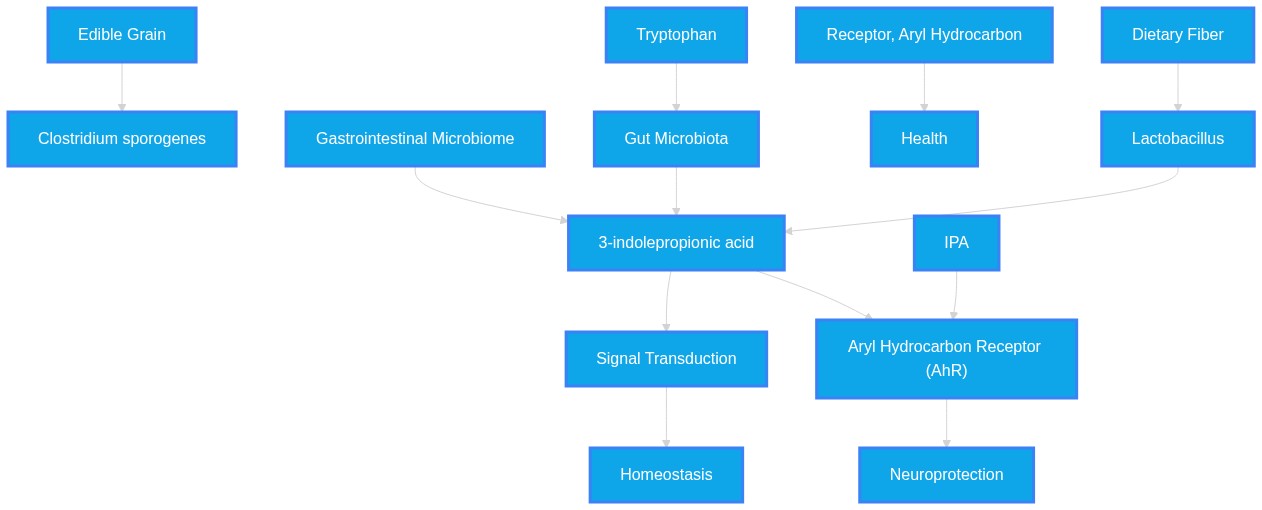
What is the role of 3-indolepropionic acid within the body, and what foods or nutrients may help replenish it if deficient?
Plausibility Verdicts
IPA is a gut microbial metabolite of tryptophan that protects the host through AhR and PXR signaling. You can support its production by eating whole grains, vegetables, and legumes, or using specific probiotics that restore tryptophan-metabolizing bacteria.
Dataset Summary
Novel & Overlooked Insights
- IPA’s neuroprotective capacity involves the attenuation of neuronal apoptosis via the upregulation of anti-apoptotic proteins like BCL2.
- The metabolite demonstrates potential in protecting against intracerebral hemorrhage and ischemic brain injury through antioxidant and anti-apoptotic signaling pathways.
- IPA exhibits dual-action modulation of tight junction proteins (e.g., Claudin-1, Occludin) to reinforce the intestinal and airway epithelial barriers.
- In the context of bone health, IPA modulates bone marrow stem cell lineage commitment, suppressing adipogenesis while promoting osteogenesis by antagonizing PPARγ.
- Novel sensing platforms using single-walled carbon nanotubes allow for real-time monitoring of IPA dynamics, potentially serving as a diagnostic tool for gut inflammation.
- The gut-lung axis highlights IPA as a critical protective factor against viral respiratory infections by modulating interferon signaling.
- Emerging research suggests that IPA can inhibit the activity of drug transporters OAT1 and OAT3, influencing the pharmacokinetics of administered medications.
- Host-microbe co-metabolism of tryptophan remains a central target for traditional medicinal formulas like *Buyang Huanwu Decoction* or *Qitu Qushi Formula* to mitigate chronic injury.
- Replenishment of IPA is not merely a taxonomic enrichment problem; it involves systemic metabolic shifts, such as the regulation of the kynurenine-to-serotonin pathways.
- IPA acts as a protective agent against secondary brain injury by attenuating neuronal apoptosis through upregulation of BCL2.
- The conversion of tryptophan to IPA is highly dependent on specific gut Clostridium species and other commensal bacteria, making it a sensitive marker of microbial dysbiosis.
- IPA exhibits dual-axis regulatory potential, modulating both pro-inflammatory (e.g., suppression of IL-6/IL-17) and reparative signaling pathways (e.g., AhR-mediated barrier support).
- High bioavailability of IPA allows it to function effectively in both peripheral and central compartments, crossing the gut-brain barrier to impact neurological recovery.
- While IPA generally promotes health, certain strains like *Fusobacterium nucleatum* can produce IPA to activate AhR in a manner that potentially fuels colorectal cancer progression through M2 macrophage polarization, highlighting a context-dependent dual nature.
- IPA supplementation has been effectively used to mitigate organ toxicity caused by chemotherapy agents like epirubicin and environmental pollutants like chlorpyrifos.
- IPA's binding affinity to targets like AKT1 and IL6 positions it as a promising therapeutic candidate for chronic diseases like intervertebral disc degeneration and diabetic nephropathy.
- IPA levels are consistently reduced in disease states such as CSDS-induced depression and high-fat diet-induced obesity.
- IPA is a potent AhR agonist, allowing it to cross-talk between the gut, brain, and liver, influencing pathways like AKT1 and IL-17.
- IPA synthesis is highly dependent on specific commensal bacteria like *Clostridium sporogenes*.
- IPA serves as an endogenous antioxidant capable of mitigating drug-induced organ toxicity, such as epirubicin-induced cardiotoxicity.
- IPA shows promise in protecting against neurodegenerative conditions, including Parkinson’s disease and Alzheimer’s-related models.
- Certain traditional fermented foods, like tarhana, are high in various tryptophan metabolites, potentially providing a dietary source.
- IPA can be identified as a biomarker for metabolic health, such as in the context of chronic kidney disease or non-HDL cholesterol levels.
Extracted Discoveries
- Determine the bioavailability of orally administered IPA in human patients with inflammatory bowel disease compared to healthy controls.
- Assess the longitudinal effect of whole-grain intervention on serum IPA levels in populations with metabolic syndrome.
- Evaluate the capacity of specific synbiotic combinations to maximize IPA production in the context of antibiotic-induced dysbiosis.
- Assess the longitudinal impact of specific dietary patterns (High Fiber vs. Western Diet) on serum IPA levels in humans and their correlation with inflammatory markers.
- Perform controlled probiotic supplementation trials (e.g., L. johnsonii) to quantify the conversion efficiency of dietary tryptophan to systemic IPA levels in healthy vs. dysbiotic subjects.
- Conduct organoid-based studies to delineate the cell-type-specific protective mechanisms of IPA against chemotherapeutic toxicity beyond hepatocytes.
- Determine the dose-response relationship between dietary pectin supplementation and serum IPA levels in human cohorts with IBD.
- Perform isotope-tracing studies using 13C-labeled tryptophan to verify direct conversion rates to IPA across different probiotic-rich fermentations.
- A prospective cohort study measuring the impact of long-term IPA levels on the incidence of neurocognitive impairment in the elderly.
- A meta-analysis of clinical interventions aimed at optimizing tryptophan metabolism through prebiotics and postbiotics.
- A meta-analysis of observational studies correlating gut microbiota diversity with circulating 3-indolepropionic acid in chronic disease patients (PD, IBD, T2D).
- A prospective longitudinal study investigating the role of IPA levels as a predictive biomarker for recovery after intracerebral hemorrhage or cardiovascular bypass surgery.
- A clinical trial evaluating the synergistic effects of prebiotic fructans and probiotic supplementation on endogenous IPA restoration in patients with metabolic syndrome.
- Longitudinal clinical study to assess the efficacy of FOS and Lactobacillus supplementation in restoring IPA levels in pediatric populations with antibiotic-induced food allergies.
- Comparative analysis of the IPA-restoring potential of different traditional fermented food products (e.g., tarhana vs. yogurt) in healthy subjects.
- Indole-3-propionic acid (IPA) may stabilize blood glucose fluctuations in type 1 diabetes by modulating the gut-pancreas axis via PXR-mediated enhancement of beta-cell resilience.
- Role of IPA in regulating PXR signaling (Source: 42367812)
- Role of PXR in pancreas-specific beta-cell maintenance or glucose regulation (not currently linked to IPA in the provided dataset).
- Pregnane X Receptor (PXR)
- IPA acts as a ligand for PXR, which is known to influence energy-related signaling. If IPA-PXR signaling protects the intestinal barrier, it is mechanistically plausible that it could also affect the metabolic homeostasis of beta-cells if the signaling pathway is active in that tissue.
- 3-indolepropionic acid may serve as a potential dietary intervention to alleviate chronic insomnia-hypertension comorbidity by modulating IL-17 signaling.
- Hypertension-insomnia comorbidity (ID: 41865122)
- 3-Indolepropionic acid (ID: 41865122)
- IL-17 signaling pathway (IL-6 target hub)
- IPA is a documented high-affinity binder to IL-6 (ID: 41865122), and IL-17 signaling is identified as the crucial regulatory hub in the hypertension-insomnia axis. Thus, IPA-mediated inhibition of the IL-6/IL-17 axis could mechanistically decouple the neuroinflammatory feed-forward loop driving this comorbidity.
- Supplementation with microbial-derived IPA may enhance long-term memory in non-demented elderly by modulating hippocampal mitochondrial dynamics.
- IPA improves cognitive memory in Morris water maze (ID: 42360541).
- Intermittent fasting improves mitochondrial biogenesis in the hippocampus (ID: 32071312).
- Mitochondrial biogenesis / hippocampal energy metabolism.
- IPA has been shown to activate antioxidant pathways (Nrf2) which are protective of mitochondrial health; given that cognitive improvement is linked to hippocampal energy capacity, the synergy is mechanistically sound.
- There is a minor contradiction in the role of IPA across conditions: while it is generally protective, it has been observed to promote lymph node metastasis in gastric cancer via AHR signaling (Source: 42163413), whereas it suppresses tumor progression in other models (e.g., hepatocellular carcinoma). This indicates that the context of the tumor microenvironment dictates the net outcome of IPA signaling.
- While IPA is generally described as a protective/reparative metabolite, ID: 37892146 notes that IPA can directly activate hepatic stellate cells and promote features of fibrosis, suggesting that its protective effects may be dose-dependent or context-specific depending on the target tissue (e.g., fibrotic vs. healthy tissue).
- Conflicting findings exist regarding IPA's role in hepatic fibrosis: while it is generally considered protective, some experimental animal models report that IPA can directly activate hepatic stellate cells, promoting proliferation and fibrogenic markers (ID: 37892146).
- IPA-functionalized nanoconduits are currently used for peripheral nerve repair (Source: 42294799); this technology could be repurposed for direct neuroprotective delivery in spinal cord injury recovery.
- IPA as an adjunct therapy for cancer treatment: Repurposed to protect healthy tissues (heart, kidney, ovary) from chemotherapy-induced toxicity (EPI, DON) while also acting as an anti-tumor agent in gastric cancer (TNF/IL-17 modulation).
- IPA as an intervention for inflammatory pain: Repurposed as a gut-microbiota-derived analgesic supplement to target TRPV1/CGRP pathways in chronic inflammatory pain management (CFA-induced models).
- IPA is identified as a potent anti-inflammatory and neuroprotective agent. It has been repurposed through network pharmacology to target specific pathways like IL-6/AKT1 in diabetes (ID: 40164705), Parkinson's disease (ID: 41642359), and spinal cord injury (ID: 41663028), demonstrating utility as an endogenous therapeutic beyond its role as a simple metabolite.
PathMap is funded by sales of datasets and coversheets to researchers of any kind who wish to discover the most viable routes and paths to accelerate cures. We do not make theoretical molecules, we expose the truth in current PubMed literature. Commission a trace today.
PathMap Scores
How are these metrics evaluated?
Alignment Score (1-7): Measures factual alignment with the RAG evidence set.
[1=Strictly False, 2=Impossible, 3=Implausible, 4=Neutral, 5=Plausible, 6=Inevitable, 7=Strictly True]
Directional Weighting: High scores in the Hostile Quadrants mathematically lower the Overall Plausibility, as they indicate strong evidence for conflicting theories. Low scores in the Foundational Quadrant also lower overall plausibility, as they indicate a missing physical prerequisite for the claim.
All Extracted Datapoints
Evaluated Perspectives & Quadrants
CLAIM EVALUATED AND ANSWER TO USER
The role of 3-indolepropionic acid (IPA) in physiological maintenance and replenishment strategies through dietary and probiotic intervention.ABSTRACT & REWRITTEN CLAIM
3-indolepropionic acid (IPA) is a microbiota-derived metabolite of tryptophan with broad homeostatic, anti-inflammatory, and neuroprotective properties. It is endogenously produced by specific gut taxa, such as *Clostridium sporogenes*, and its levels can be modulated by dietary intake of whole grains, legumes, vegetables, and specific prebiotic or probiotic substrates.INTRODUCTION & JUSTIFICATION
3-indolepropionic acid (IPA) functions as a key effector in the gut-microbiota-host axis, mediating systemic immune homeostasis, barrier integrity, and neuroprotection. Mechanistically, IPA serves as a potent agonist for the aryl hydrocarbon receptor (AhR) and the pregnane X receptor (PXR). Its depletion is associated with disease states ranging from metabolic syndrome and inflammatory bowel disease to neurodegenerative and autoimmune disorders. Replenishment strategies involve the administration of substrates that foster indole-producing bacterial communities, such as prebiotic polysaccharides and specific *Lactobacillus* or *Bifidobacterium* strains.Novel & Overlooked
EVIDENCE, METHODOLOGY & CITATIONS
1. ID: 42360541 - Application: Neuroprotection against hemorrhage - "Administration of 3-IPA significantly ameliorated neurological deficits and improved cognitive memory in the Morris water maze test." 2. ID: 42367812 - Application: Modulation of anxiety and depression - "IPA supplementation restored circulating IPA levels, upregulated the expression of key genes (Cyp3a11 and Abcb1a) in the cerebral pregnane X receptor (PXR) signaling, ameliorated DCA-induced emotional and behavioral abnormalities" 3. ID: 42344277 - Application: Dietary sources - "Whole grains were linked to betaine, 3-indolepropionic acid (IPA), and hippuric acid; vegetables and legumes to IPA, N-acetylornithine, and pipecolic acid; and fruits to proline-betaine and IPA." 4. ID: 42116470 - Application: Antioxidant and barrier restoration - "IPA alleviates mitochondrial dysfunction and reactive oxygen species accumulation via activation of the aryl hydrocarbon receptor (AhR)-nuclear factor erythroid 2-related factor 2 (Nrf2)-heme oxygenase-1 (HO-1) antioxidant pathway" 5. ID: 42206057 - Application: Cancer progression inhibition - "Restoration of Phocaeicola vulgatus or administration of its tryptophan-derived metabolite indole-3-propionic acid significantly attenuated hepatocellular carcinoma progression in vivo." 6. ID: 42332755 - Application: Intervertebral disc protection - "Gut microbiota-derived metabolites, particularly 3-indolepropionic acid, may modulate IDD progression by targeting IL6, TLR4, CXCL8, and JUN through inflammation- and lipid-related pathways" 7. ID: 42294799 - Application: Nerve repair support - "Meanwhile, IPA combined with PDA potently scavenged reactive oxygen species (ROS), suppressed NF-κB activation, and promoted M2 polarization of macrophages" 8. ID: 42335643 - Application: Alleviating lung injury - "The treatment raised the relative abundance of indole-3-propionic acid (IPA) in serum, which subsequently triggered the AhR/CYP1A1 pathway and thereby alleviated ALI." 9. ID: 42259240 - Application: Airway barrier integrity - "TRP, through activation of the AhR-NRF2 signaling pathway, enhances tight junction protein expression and restores airway epithelial barrier integrity" 10. ID: 42097143 - Application: Antiviral immunity - "The tryptophan metabolite indole-3-propionic acid (IPA), derived from helminth-altered microbiota, induces lung epithelial IFN-I responses and is sufficient to protect offspring from respiratory syncytial virus (RSV)" 11. ID: 42220214 - Application: Liver disease modulation - "Metabolomic profiling suggested the involvement of key pathways, including serotonergic synapse, bile secretion, and tryptophan metabolism." 12. ID: 42106047 - Application: Colitis attenuation - "targeted metabolomics revealed that L. gasseri intervention was associated with the restoration of indole-3-lactic acid (ILA) and indole-3-propionic acid (IPA) levels in the tryptophan-indole metabolic pathway." 13. ID: 42221486 - Application: Uric acid dysregulation - "Probiotic and prebiotic interventions, such as Lactobacillus fermentum GR-3, Lactobacillus johnsonii YH1136, and Lactobacillus gasseri PA-3, effectively improve uric acid dysregulation" 14. ID: 42228778 - Application: Vascular health - "indole metabolites exert dual vascular effects" 15. ID: 42327718 - Application: Functional inference in stroke - "Tax4Fun2-based inference suggested predicted gut functional alterations involving lipopolysaccharide biosynthesis potential and tryptophan metabolism-related pathways." 16. ID: 42056116 - Application: Pain modulation - "IF remodeled the gut microbiota and metabolite profile, marked by a substantial increase in the abundance of Akkermansia muciniphila and its key metabolite, indole-3-propionic acid (IPA)." 17. ID: 42068175 - Application: Inflammation biomarker - "The sensor reveals significant differences in plasma IPA levels between healthy controls and patients with active gut inflammation: ulcerative colitis and Crohn's disease, highlighting its promise in rapid gut health assessment." 18. ID: 42246175 - Application: Osteoporosis - "In vivo, oral administration of IPA markedly improved trabecular bone microarchitecture, enhanced bone formation, and corrected marrow adiposity without detectable systemic toxicity." 19. ID: 42074996 - Application: Tight junction proteins - "Immunohistochemistry demonstrated significantly elevated expression of intestinal tight junction proteins Claudin 1, MUC-2, Occludin, and ZO-1 in the PL group compared to the CK group (p < 0.001)." 20. ID: 42275581 - Application: Liver disease/ER stress - "IPA supplementation reduced hepatic lipid accumulation and alleviated insulin resistance, liver damage, and steatosis development in high-fat diet-fed mice, while gut microbiota dysbiosis was restored."CLAIM EVALUATED AND ANSWER TO USER
What is the role of 3-indolepropionic acid within the body, and what foods or nutrients may help replenish it if deficient?ABSTRACT & REWRITTEN CLAIM
3-Indolepropionic acid (IPA) is a gut microbiota-derived metabolite that functions as a systemic regulator of immune, metabolic, and neurological health. It is primarily synthesized by specific gut microbial taxa using dietary tryptophan as a substrate. IPA exerts protective effects across various physiological domains—including the gut-brain axis, bone homeostasis, cardiovascular system, and inflammatory responses—by acting as an aryl hydrocarbon receptor (AhR) agonist and binding to targets like AKT1 and PXR. Replenishment of IPA levels can be achieved through the intake of whole grains, vegetables, fruits, and legumes, or via supplementation with specific probiotic strains (e.g., *Lactobacillus johnsonii*, *Pediococcus lactis*) that enhance its endogenous production.INTRODUCTION & JUSTIFICATION
3-Indolepropionic acid (IPA) is a key bioactive metabolite produced through the fermentation of tryptophan by specific gut microbiota. Its role in the host organism is expansive, serving as a protective agent against diverse pathologies ranging from neurodegenerative disorders to inflammatory conditions and bone loss. IPA facilitates these benefits by modulating signaling pathways such as the aryl hydrocarbon receptor (AhR), which is critical for maintaining epithelial barrier integrity and suppressing pro-inflammatory responses. Mechanistically, IPA has been identified as a high-affinity binder to key cellular targets like AKT1 and PXR, enabling the modulation of apoptosis and neuroinflammation. Deficiency in IPA is linked to metabolic dysfunction, depression-like behaviors, and poor outcomes in conditions like intracerebral hemorrhage or sepsis-associated encephalopathy. Replenishment strategies focus on dietary modifications or targeted microbial interventions. Evidence indicates that diets rich in plant-based sources like whole grains and legumes are instrumental in maintaining physiological IPA levels.Novel & Overlooked
EVIDENCE, METHODOLOGY & CITATIONS
1. ID: 42360541 - Application: Neuroprotection. "Administration of 3-IPA significantly ameliorated neurological deficits and improved cognitive memory in the Morris water maze test." 2. ID: 42344277 - Application: Dietary sources. "Whole grains were linked to betaine, 3-indolepropionic acid (IPA), and hippuric acid; vegetables and legumes to IPA, N-acetylornithine, and pipecolic acid; and fruits to proline-betaine and IPA." 3. ID: 42332755 - Application: Mechanism/IDD. "Gut microbiota-derived metabolites, particularly 3-indolepropionic acid, may modulate IDD progression by targeting IL6, TLR4, CXCL8, and JUN through inflammation- and lipid-related pathways" 4. ID: 42157054 - Application: Metabolism/Aortic Dissection. "Metabolomic profiling revealed significant elevations of tryptophan-indole pathway metabolites-such as indolepyruvate, indole-3-acetic acid, and indolepropionic acid-in both FeNonAD and AAD groups." 5. ID: 42074996 - Application: Probiotics/Barrier. "The results revealed that screening for significantly altered endogenous metabolites identified core differences concentrated in metabolites related to intestinal barrier repair, anti-inflammation, and antioxidant activity (e.g., 3-indolepropionic acid, astaxanthin, hydroxybenzoic acid)." 6. ID: 41825730 - Application: Depression/AhR. "Critically, the antidepressant effects of L. johnsonii and IPA were counteracted by AhR antagonist CH223191." 7. ID: 41642359 - Application: Parkinson’s/AKT1. "Docking suggested favorable IPA-AKT1 binding (-7.553 kcal/mol), and IPA rescued viability in MPP⁺ treated HT‑22 cells" 8. ID: 41592564 - Application: Maternal/Fetal. "These data reveal the metabolites consumed by the fetus, microbial metabolites (e.g., 3-indolepropionic acid), metabolites obtained from diet, and medications" 9. ID: 41208579 - Application: CKD/Metabolite Core. "The network analysis revealed that butyrate, equol, 3-indolepropionic acid, and propionate were the core gut microbiota metabolites." 10. ID: 41107778 - Application: Pharmacokinetics/Cancer. "Pharmacokinetic profiling showed 3-Indolepropionic acid's high bioavailability" 11. ID: 40831283 - Application: NAFLD. "Lower levels of 5-HIAA and IPA are observed in patients with NAFLD." 12. ID: 40750967 - Application: CD/AKT1. "Structure-based screening (AutoDock Vina/AMBER20) revealed 3-indolepropionic acid (IPA) as a high-affinity AKT1 binder (ΔG = -67.4 kJ/mol)" 13. ID: 40553417 - Application: PXR/Apoptosis. "IPA reduces DON-induced hepatocyte apoptosis in piglets, mice, and hepatocyte cell lines by enhancing PXR expression and facilitating nuclear translocation." 14. ID: 40532744 - Application: Bone health. "IPA supplementation alleviated systemic inflammatory response, inhibited osteoclast activation, and improved bone mass in mice." 15. ID: 40433318 - Application: Pain management. "Our results show that IPA can improve pain-related behavior and alleviate inflammation in the CFA-treated mice" 16. ID: 40423900 - Application: GO therapy. "IPA, ILA and IAA may play a protective role in GO by regulating inflammation and proliferation in orbital fibroblasts" 17. ID: 39594991 - Application: Renal transplantation. "The metabolites negatively associated with serum creatinine > 1.5 mg/dL were 3-methylindole, guaiacol, histidine, 3-indolepropionic acid, and α-lipoic acid." 18. ID: 38728837 - Application: Lipid metabolism. "Furthermore, decreased 3-indolepropionic acid and N-methyltryptamine, resulting from suppressed capacities for microbial reductive TCA cycle, functioned as major microbial effectors to the elevation of circulating non-HDL-c." 19. ID: 37477660 - Application: Cardiotoxicity. "EPI-initiated increases in cardiotoxicity biomarkers were significantly (p < 0.05) reduced by 3-IPA supplementation." 20. ID: 37275545 - Application: Pathogen inhibition. "Among them, the increase in indolelactic acid and 3-indolepropionic acid levels were further confirmed using HPLC."CLAIM EVALUATED AND ANSWER TO USER
"What is the role of 3-indolepropionic acid within the body, and what foods or nutrients may help replenish it if deficient?"ABSTRACT & REWRITTEN CLAIM
3-indolepropionic acid (IPA) is a microbiota-derived metabolite of tryptophan. It serves critical roles in neuroprotection, anti-inflammation, and maintaining metabolic homeostasis. Deficiencies, often linked to gut dysbiosis, can be ameliorated by prebiotics (such as pectin and ulvan) and specific probiotics (such as *Lactobacillus johnsonii* or *Bifidobacterium longum*) that support tryptophan-to-IPA microbial pathways.INTRODUCTION & JUSTIFICATION
3-Indolepropionic acid (IPA) is recognized as a potent gut-microbiota-derived metabolite with significant systemic physiological impacts. Mechanistically, IPA exerts neuroprotective and anti-inflammatory effects, often through the activation of the aryl hydrocarbon receptor (AhR). As noted in scientific literature, "Administration of 3-IPA significantly ameliorated neurological deficits and improved cognitive memory in the Morris water maze test." The presence of IPA is essential for mucosal health, as "By employing 16S rRNA and metabolomic analysis, we identified that 3-indolepropionic acid (IPA) was the most affected differential microbial metabolite that regulated EGC gliosis." Regarding potential therapeutic intervention, research suggests that dietary fiber sources can act as prebiotics to restore levels, as "Faecal fermentation of soluble persimmon fractions led to higher production of indole-3-propionic acid compared to insoluble fractions." Furthermore, metabolic precursors and probiotic supplementation are critical, as "Ginsenoside Rg1 can protect the intestinal barrier and alleviate colon inflammation in UC mice, and the underlying mechanism is closely related to the regulation of gut microbiota composition and microbial tryptophan metabolism."Novel & Overlooked
EVIDENCE, METHODOLOGY & CITATIONS
1. ID: 42360541 - "Administration of 3-IPA significantly ameliorated neurological deficits and improved cognitive memory in the Morris water maze test." 2. ID: 42332755 - "The G-M-T network highlighted butyrate, propionate, acetate, succinate, trimethylamine oxide, and 3-indolepropionic acid as core metabolites." 3. ID: 41825730 - "Notably, 3-indolepropionic acid (IPA) levels were consistently reduced in feces, colon, blood, and hippocampus of CSDS mice." 4. ID: 41642359 - "Integration of 1,518 gut microbiota metabolite targets with 8,679 PD genes yielded 63 shared targets, among which AKT1, IL6, JUN, TP53, and NFKB1 emerged as hubs." 5. ID: 41107778 - "Pharmacokinetic profiling showed 3-Indolepropionic acid's high bioavailability, while GM-S-M analysis identified key microbial taxa (e.g., Lactobacillus plantarum, Akkermansia muciniphila) modulated by SXKZD" 6. ID: 40532744 - "3-Indolepropionic acid (IPA) is a gut microbiota metabolite that is deficient in obese mice." 7. ID: 40486846 - "By employing 16S rRNA and metabolomic analysis, we identified that 3-indolepropionic acid (IPA) was the most affected differential microbial metabolite that regulated EGC gliosis." 8. ID: 40174685 - "Here, we report for the first time that F. nucleatum-derived 3-Indolepropionic acid (IPA) activates AhR in macrophages, driving M2 polarization and tumor-promoting immunosuppression." 9. ID: 38728837 - "Furthermore, decreased 3-indolepropionic acid and N-methyltryptamine, resulting from suppressed capacities for microbial reductive TCA cycle, functioned as major microbial effectors to the elevation of circulating non-HDL-c." 10. ID: 37477660 - "Endogenously derived 3-indolepropionic acid (3-IPA) from tryptophan metabolism is of interest due to its antioxidant capabilities which may have cardioprotective effects." 11. ID: 37399002 - "FODMAP lowered bile acids, whereas phenolic-derived metabolites and 3-indolepropionic acid (IPA) were higher compared with placebo." 12. ID: 35655785 - "DSS decreased the levels of tryptophan metabolites in the serum, including indole-3-carboxaldehyde, indole-3-lactic acid, 3-indolepropionic acid, and niacinamide and Rg1 can increase the levels of these metabolites." 13. ID: 35644820 - "Indole-3-propionic acid (IPA) is a by-product of tryptophan metabolism with high antioxidant capacity and has the potential to curb CPF-mediated toxicities in the hepatorenal system of rats." 14. ID: 35186998 - "3-indolepropionic acid, kynurenine, and indoleacrylic acid had synergistic effects on regulating immuno-inflammatory responses in IgAN patients." 15. ID: 33477939 - "Metabolomic analyses revealed that it was associated with lower and higher plasma levels of glycine and 3-Indolepropionic acid in NAFLR mice, respectively." 16. ID: 32354351 - "The gut bacterial ClpB-like gene function was also linked to specific plasma metabolites (hippuric acid and 3-indolepropionic acid) and fecal lupeol." 17. ID: 32116775 - "Results showed that 3-indolepropionic acid (IPA) and pathway of glycine, serine, and threonine metabolism were significantly altered after acute PQ intoxication" 18. ID: 41670561 - "The healthy versions of the LCD and LFD patterns were also linked to lower triglycerides, higher high-density lipoprotein cholesterol, and lower high-sensitivity C-reactive protein levels, as well as favorable metabolomic profiles, including increased 3-indolepropionic acid and decreased valine." 19. ID: 42242027 - "Collectively, our results suggest that B. longum mitigates MASLD through modulation of the gut microbiota and host serum metabolome, supporting its potential as a probiotic candidate for the management of metabolic health." 20. ID: 41700500 - "Faecal fermentation of soluble persimmon fractions led to higher production of indole-3-propionic acid compared to insoluble fractions."Verbatim Quote Audit Console
Mapped Reference Directory (APA)
- [1] ID: 42360541 - Han S, Wang Z, Guo F, Zheng Q, Huang T et al. (2026). The gut microbial metabolite 3-indolepropionic acid as a functional neuroprotective agent against intracerebral hemorrhage: integrating epidemiological screening with in vivo validation.. Metabolic brain disease. ID: 42360541.
- [2] ID: 42367812 - Wu Y, Liu L, You D, Mao T, Zheng X et al. (2026). Deoxycholic acid promotes anxiety- and depression-like behaviors in mice via modulation of the gut microbial metabolite indole-3-propionic acid.. Frontiers in immunology. ID: 42367812.
- [3] ID: 42344277 - Wang X, Xia P, Wang F, Wu Z, Hu Y et al. (2026). Metabolomic signatures of dietary carbohydrates and differential association with type 2 diabetes.. Nature health. ID: 42344277.
- [4] ID: 42116470 - Wang L, Zhu N, Cai F, Lin X, Lai C et al. (2026). Fructooligosaccharides alleviate early-life antibiotic-exposed food allergy via the Indole-3-propionic acid-AhR-Nrf2 Axis: A multi-omics prospective cohort study.. Food research international (Ottawa, Ont.). ID: 42116470.
- [5] ID: 42206057 - Hu Z, Yue P, Yuan M, Zhang Z, Li Q et al. (2026). Stress accelerates hepatocellular carcinoma progression via a gut microbial-metabolite axis.. Frontiers in immunology. ID: 42206057.
- [6] ID: 42332755 - Liu H, Zhang S, Yao D, Wang Y, Kong Q (2026). Gut microbiota-derived metabolites as potential therapeutic agents for intervertebral disc degeneration: insights from network pharmacology and molecular docking.. Gut pathogens. ID: 42332755.
- [7] ID: 42294799 - Li J, Li X, Yang Z, Xia G, Wu J et al. (2026). NIR-II Neuromodulation Combined with Metabolite-Mediated Immunoregulation for Accelerated Deeply Located Nerve Repair.. ACS nano. ID: 42294799.
- [8] ID: 42335643 - Kong Y, Feng J, Xu H, Chen X, Huo W et al. (2026). Psoralen ameliorates sepsis-induced acute lung injury by regulating microbiota-dependent tryptophan metabolism.. Phytomedicine : international journal of phytotherapy and phytopharmacology. ID: 42335643.
- [9] ID: 42259240 - Zhang L, Liu W, Luo X, Shen X, Liu T et al. (2026). Gut microbiota-derived tryptamine activates AhR-NRF2 signaling to modulate airway epithelial barrier function in allergic asthma.. International immunopharmacology. ID: 42259240.
- [10] ID: 42097143 - Antunes Fernandes K, Sanders F, Cafiero TR, Huang C, Reyes J et al. (2026). Maternal helminths rewire the microbiota to promote offspring antiviral immunity.. Cell host & microbe. ID: 42097143.
- [11] ID: 42220214 - Ren L, Gao W, Ma X, Zhang H, Xiao Y et al. (2026). Royal Jelly and 10-Hydroxy-2-decenoic Acid Mitigate Alcoholic Fatty Liver Disease in Mice via the Gut-Microbiota-Metabolite Axis.. Molecular nutrition & food research. ID: 42220214.
- [12] ID: 42106047 - Zhang C, Yu L, Liu Y, Xu M, Yu J et al. (2026). Glycoside hydrolase-mediated utilization of Poria cocos polysaccharide enriches Lactobacillus gasseri and activates the AhR-IL-22 axis to attenuate DSS-induced colitis.. International journal of biological macromolecules. ID: 42106047.
- [13] ID: 42221486 - Li H, Zhou H, Li M, Wu J, Pan L (2026). The roles of gut microbiota and their metabolites in uric acid-related metabolic diseases: mechanisms and therapeutic targets.. Frontiers in microbiology. ID: 42221486.
- [14] ID: 42228778 - Liu Y, Wang Y, Teng H, Nie W, Qiao X et al. (2026). From gut microbiota metabolism to microvascular injury: Exploring the role and mechanisms of gut microbiota in obesity-induced coronary microcirculation dysfunction.. Virulence. ID: 42228778.
- [15] ID: 42327718 - Zhang X, Chen F, Yang J, Ma J, Li X et al. (2026). Oral and gut microbiota dysbiosis with strengthened oral-gut connectivity in post-stroke cognitive impairment.. Frontiers in immunology. ID: 42327718.
- [16] ID: 42056116 - Ao RF, Huang YS, Hu YT, Yong HR, Wang SC et al. (2026). Intermittent fasting alleviates hyperalgesia in ovariectomized mice via gut microbiota remodeling.. NPJ biofilms and microbiomes. ID: 42056116.
- [17] ID: 42068175 - Ang MC, Lee JWJ, Mohaideen S, Sánchez-Velázquez G, Wang S et al. (2026). Fluorescent Nanosensor for Indole-3-Propionic Acid Detection in Gut Health Monitoring.. Advanced healthcare materials. ID: 42068175.
- [18] ID: 42246175 - Bai J, Wang R, Fan J, Su S, Si G et al. (2026). Microbiota‑derived indole‑3‑propionic acid reprograms bone marrow stem cell fate via PPARγ suppression to rescue osteoporosis.. International journal of molecular medicine. ID: 42246175.
- [19] ID: 42074996 - Sun J, Zhang H, Liu W, Wang J, Wang X et al. (2026). The Effect of Pediococcus Lactis and Postbiotics on Gut Health and Intestinal Metabolic Profiles.. Nutrients. ID: 42074996.
- [20] ID: 42275581 - Luo Y, Zhang Y, Zhang Q, Li X, Cai K et al. (2026). Gut microbiota-derived indole-3-propionic acid alleviates endoplasmic reticulum stress by regulating FMO2 in MASLD.. Hepatology communications. ID: 42275581.
- [21] ID: 42157054 - Cheng S, Hao X, Liu S, Zhang L, Zhang S et al. (2026). Integrated multi-omics analysis reveals a gut microbiota-tryptophan metabolism axis contributes to sex differences in a β-aminopropionitrile-induced aortic dissection mouse model.. Biology of sex differences. ID: 42157054.
- [22] ID: 41825730 - Xie J, Zhang Y, Wang JL, He F, Xu K et al. (2026). Lactobacillus johnsonii and 3-indolepropionic acid improve the depression-like behaviors via inhibiting neuroinflammation.. Pharmacological research. ID: 41825730.
- [23] ID: 41642359 - Zheng Q, Han S, He L, Chen Y (2026). Exploring the therapeutic potential of the gut microbiota metabolite 3‑indolepropionic acid in parkinson's disease: a network pharmacology, molecular docking and cell viability study.. Metabolic brain disease. ID: 41642359.
- [24] ID: 41592564 - Lancaster S, Mataraso S, Reiss JD, Contrepois K, Trowbridge CA et al. (2026). An encyclopedia of the cord blood metabolome reveals maternal-fetal interactions and disease risk.. Cell reports. Medicine. ID: 41592564.
- [25] ID: 41208579 - Yao W, Huo J, Liu K, Tao P (2026). The application of metabolites derived from gut microbiota to the treatment of chronic kidney disease: a network pharmacology study.. International journal of surgery (London, England). ID: 41208579.
- [26] ID: 41107778 - Zhou Z, Fang Y, Song L, Wang Y, Fang Z (2025). Unraveling the Gut Microbiota-mediated Anti-tumor Mechanisms of ShenXia KuanZhong Decoction in Gastric Cancer: a Systems Biology and Dose-weighted Network Pharmacology Approach.. Biological procedures online. ID: 41107778.
- [27] ID: 40831283 - Wang XR, Li ZZ, Sun SD, Song YG, Miao JX et al. (2025). Inhaling Eugenol Inhibits NAFLD by Activating the Hepatic Ectopic Olfactory Receptor Olfr544 and Modulating the Gut Microbiota.. Advanced science (Weinheim, Baden-Wurttemberg, Germany). ID: 40831283.
- [28] ID: 40750967 - Chen S, Li Y, Liu J, Wu J, Zhao H et al. (2025). Gut Microbial Metabolite Crosstalk in Crohn's Disease: Network Pharmacology Unveils Dual-Axis Pathogenesis and Therapeutic Targets.. BioFactors (Oxford, England). ID: 40750967.
- [29] ID: 40553417 - Feng Y, Lin Z, Wang H, Men Z, Shen J et al. (2025). 3-Indolepropionic acid confers PXR-p53 binding to mitigate deoxynivalenol-induced hepatocyte apoptosis.. Science China. Life sciences. ID: 40553417.
- [30] ID: 40532744 - Wu R, Kong Y, Li J, Chen H, Jiao Y et al. (2025). Indole-3 propionate inhibits NF-κB/NLRP3-mediated osteoclastogenesis and improves bone quality in high-fat-diet induced obese mice.. Biochimica et biophysica acta. Molecular basis of disease. ID: 40532744.
- [31] ID: 40433318 - Ao RF, Yong HR, Hu YT, Huang YS, Gao JW et al. (2025). Indolepropionic Acid Attenuates CFA-Induced Inflammatory Pain in Mice.. Journal of pain research. ID: 40433318.
- [32] ID: 40423900 - Yang W, Xu X, Xie R, Lin J, Hou Z et al. (2025). Tryptophan metabolites exert potential therapeutic activity in graves' orbitopathy by ameliorating orbital fibroblasts inflammation and proliferation.. Journal of endocrinological investigation. ID: 40423900.
- [33] ID: 39594991 - Viejo-Boyano I, Roca-Marugán MI, Peris-Fernández M, Amengual JL, Balaguer-Timor Á et al. (2024). Early Metabolomic Profiling as a Predictor of Renal Function Six Months After Kidney Transplantation.. Biomedicines. ID: 39594991.
- [34] ID: 38728837 - Zhou S, Liu L, Ye B, Xu Y, You Y et al. (2024). Gut microbial metabolism is linked to variations in circulating non-high density lipoprotein cholesterol.. EBioMedicine. ID: 38728837.
- [35] ID: 37477660 - Owumi S, Arunsi U, Otunla M, Adebisi G, Altayyar A et al. (2024). 3-Indolepropionic acid mitigates sub-acute toxicity in the cardiomyocytes of epirubicin-treated female rats.. Naunyn-Schmiedeberg's archives of pharmacology. ID: 37477660.
- [36] ID: 37275545 - Cheng J, Xiao M, Ren X, Secundo F, Yu Y et al. (2023). Response of Salmonella enterica serovar Typhimurium to alginate oligosaccharides fermented with fecal inoculum: integrated transcriptomic and metabolomic analyses.. Marine life science & technology. ID: 37275545.
- [37] ID: 40486846 - Shang M, Ning J, Zang C, Ma J, Yang Y et al. (2025). Microbial metabolite 3-indolepropionic acid alleviated PD pathologies by decreasing enteric glia cell gliosis via suppressing IL-13Rα1 related signaling pathways.. Acta pharmaceutica Sinica. B. ID: 40486846.
- [38] ID: 40174685 - Song Q, Jin Z, Zhang H, Hong K, Zhu B et al. (2025). Fusobacterium nucleatum-derived 3-indolepropionic acid promotes colorectal cancer progression via aryl hydrocarbon receptor activation in macrophages.. Chemico-biological interactions. ID: 40174685.
- [39] ID: 37399002 - Nordin E, Hellström PM, Vuong E, Ribbenstedt A, Brunius C et al. (2023). IBS randomized study: FODMAPs alter bile acids, phenolic- and tryptophan metabolites, while gluten modifies lipids.. American journal of physiology. Regulatory, integrative and comparative physiology. ID: 37399002.
- [40] ID: 35655785 - Cheng H, Liu J, Zhang D, Wang J, Tan Y et al. (2022). Ginsenoside Rg1 Alleviates Acute Ulcerative Colitis by Modulating Gut Microbiota and Microbial Tryptophan Metabolism.. Frontiers in immunology. ID: 35655785.
- [41] ID: 35644820 - Owumi SE, Najophe ES, Otunla MT (2022). 3-Indolepropionic acid prevented chlorpyrifos-induced hepatorenal toxicities in rats by improving anti-inflammatory, antioxidant, and pro-apoptotic responses and abating DNA damage.. Environmental science and pollution research international. ID: 35644820.
- [42] ID: 35186998 - Wu H, Tang D, Yun M, Liu H, Huang S et al. (2022). Metabolic Dysfunctions of Intestinal Fatty Acids and Tryptophan Reveal Immuno-Inflammatory Response Activation in IgA Nephropathy.. Frontiers in medicine. ID: 35186998.
- [43] ID: 33477939 - Burz SD, Monnoye M, Philippe C, Farin W, Ratziu V et al. (2021). Fecal Microbiota Transplant from Human to Mice Gives Insights into the Role of the Gut Microbiota in Non-Alcoholic Fatty Liver Disease (NAFLD).. Microorganisms. ID: 33477939.
- [44] ID: 32354351 - Arnoriaga-Rodríguez M, Mayneris-Perxachs J, Burokas A, Pérez-Brocal V, Moya A et al. (2020). Gut bacterial ClpB-like gene function is associated with decreased body weight and a characteristic microbiota profile.. Microbiome. ID: 32354351.
- [45] ID: 32116775 - Yu Y, Gao Z, Lou J, Mao Z, Li K et al. (2020). Identification of Serum-Based Metabolic Feature and Characteristic Metabolites in Paraquat Intoxicated Mouse Models.. Frontiers in physiology. ID: 32116775.
- [46] ID: 41670561 - Wu Z, Liu B, Wang X, Alessa H, Zeleznik OA et al. (2026). Effect of Low-Carbohydrate and Low-Fat Diets on Metabolomic Indices and Coronary Heart Disease in U.S. Individuals.. Journal of the American College of Cardiology. ID: 41670561.
- [47] ID: 42242027 - Li J, Ji J, Ma X, Xu Z, Zhou L et al. (2026). Bifidobacterium longum alleviation of metabolic dysfunction-associated steatotic liver disease: A multi-omics landscape of microbiota and metabolome reconfiguration.. Microbiological research. ID: 42242027.
- [48] ID: 41700500 - Sabater C, López-Bermudo L, Moreno-Chamba B, Salazar-Bermeo J, Hayward NJ et al. (2026). Persimmon by-products, rich in fibre, promote beneficial gut bacteria.. Food & function. ID: 41700500.
Abstract Repository (Raw Full-Texts) Show Database Collapse Database
ID: 32116775
Title: Identification of Serum-Based Metabolic Feature and Characteristic Metabolites in Paraquat Intoxicated Mouse Models.
Abstract: Paraquat (PQ) is a widely used herbicide which can cause high mortality to humans. However, relatively few studies focus on metabolic feature of PQ intoxication for investigating the underlying mechanisms. Here we performed non-targeted metabolomics profiling of serum samples from acute and chronic PQ intoxicated mouse models by gas chromatography time-of-flight mass spectrometry (GC-TOF/MS) to identify metabolic feature and characteristic metabolites of acute and chronic PQ intoxication. Results showed that 3-indolepropionic acid (IPA) and pathway of glycine, serine, and threonine metabolism were significantly altered after acute PQ intoxication; 2-hydroxybutyric acid and the ratio of L-serine/glycine were of significance between acute and chronic PQ intoxication. Then targeted metabolomics profiling was conducted by liquid chromatography-mass spectrometry (LC-MS) analysis to confirm the changes of IPA after acute PQ intoxication. Moreover, IPA-producing gut bacteria in feces were quantified by qRT-PCR to explain the varied IPA serum concentration. Clostridium botulinum and Peptostreptococcus anaerobius were significantly suppressed after acute PQ intoxication. The data suggested that PQ caused oxidative damage partially through suppression of anti-oxidative metabolite producing gut bacteria. In conclusion, we identified characteristic metabolites and pathway of acute and chronic PQ intoxication which could be potential biomarkers and therapeutic targets.
View on PubMed
ID: 32354351
Title: Gut bacterial ClpB-like gene function is associated with decreased body weight and a characteristic microbiota profile.
Abstract: The chaperone ClpB, a bacterial protein, is a conformational antigen-mimetic of α-melanocyte-stimulating hormone (α-MSH) implicated in body weight regulation in mice. We here investigated the potential associations of gut bacterial ClpB-like gene function with obesity status and gut microbiota in humans. Gut microbiota ClpB KEGG function was negatively associated with body mass index, waist circumference, and total fat mass (DEXA). The relative abundance (RA) of several phyla and families directly associated with ClpB was decreased in subjects with obesity. Specifically, the RA of Rikenellaceae, Clostridiaceae and not assigned Firmicutes were lower in subjects with obesity and positively associated with gut bacterial ClpB-like gene function (not assigned Firmicutes (r = 0.405, FDR = 2.93 × 10⁻²), Rikenellaceae (r = 0.217, FDR = 0.031), and Clostridiaceae (r = 0.239, FDR = 0.017)). The gut bacterial ClpB-like gene function was also linked to specific plasma metabolites (hippuric acid and 3-indolepropionic acid) and fecal lupeol. The α-MSH-like epitope similar to that of Escherichia coli ClpB was also identified in some sequences of those bacterial families. After fecal transplantation from humans to mice, the families that more contributed to ClpB-like gene function in humans were also associated with ClpB-like gene function in mice after adjusting for the donor's body mass index (not assigned Firmicutes (r = 0.621, p = 0.003), Prevotellaceae (r = 0.725, p = 4.1 × 10⁻⁷), Rikenellaceae (r = 0.702, p = 3.9 × 10⁻⁴), and Ruminococcaceae (r = 0.526, p = 0.014)). Clostridiaceae (r = - 0.445, p = 0.038) and Prevotellaceae RA (r = - 0.479, p = 0.024) and were also negatively associated with weight gain in mice. The absolute abundance (AA) of Prevotellaceae in mice was also positively associated with the gut bacterial ClpB-like gene function in mice. DESeq2 identified species of Prevotellaceae, both negatively associated with mice' weight gain and positively with gut bacterial ClpB-like gene function. In summary, gut bacterial ClpB-like gene function is associated with obesity status, a specific gut microbiota composition and a plasma metabolomics profile in humans that could be partially transplanted to mice. Video Abstract.
View on PubMed
ID: 33477939
Title: Fecal Microbiota Transplant from Human to Mice Gives Insights into the Role of the Gut Microbiota in Non-Alcoholic Fatty Liver Disease (NAFLD).
Abstract: Non-alcoholic fatty liver diseases (NAFLD) are associated with changes in the composition and metabolic activities of the gut microbiota. However, the causal role played by the gut microbiota in individual susceptibility to NAFLD and particularly at its early stage is still unclear. In this context, we transplanted the microbiota from a patient with fatty liver (NAFL) and from a healthy individual to two groups of mice. We first showed that the microbiota composition in recipient mice resembled the microbiota composition of their respective human donor. Following administration of a high-fructose, high-fat diet, mice that received the human NAFL microbiota (NAFLR) gained more weight and had a higher liver triglycerides level and higher plasma LDL cholesterol than mice that received the human healthy microbiota (HR). Metabolomic analyses revealed that it was associated with lower and higher plasma levels of glycine and 3-Indolepropionic acid in NAFLR mice, respectively. Moreover, several bacterial genera and OTUs were identified as differently represented in the NAFLR and HR microbiota and therefore potentially responsible for the different phenotypes observed. Altogether, our results confirm that the gut bacteria play a role in obesity and steatosis development and that targeting the gut microbiota may be a preventive or therapeutic strategy in NAFLD management.
View on PubMed
ID: 35186998
Title: Metabolic Dysfunctions of Intestinal Fatty Acids and Tryptophan Reveal Immuno-Inflammatory Response Activation in IgA Nephropathy.
Abstract: Immunoglobulin A nephropathy (IgAN) is the most common form of primary glomerulonephritis. Although an important link between intestinal metabolites and immune activity is widely established, the metabolic profile of IgAN is still poorly understood, which severely limits the mechanistic studies and therapy of IgAN. The diversity of intestinal flora and relative abundance of metabolites in IgAN patients and healthy subjects were measured by 16s ribosomal RNA gene sequencing combined with liquid chromatography tandem-mass spectrometry. The levels of serum Gd-IgA1, IL-6, IL-10, IL-22, and TNF-a were tested by ELISA. We employed the tryptophan-targeted UHPLC-MRM-MS approach to assess the content of tryptophan metabolites quantitatively. Intestinal fatty acid levels, mainly unsaturated fatty acids, were observed to be dramatically decreased in IgAN patients. Disorders in linoleic acid and arachidonic acid metabolism, metabolic imbalances of anti-/pro- inflammatory fatty acid metabolites, and intestinal AhR signaling deficiency might reflect the damage of the intestinal mucosal barrier in IgAN patients. In addition, we found that high levels of Gd-IgA1, IL-22, and TNF-α were associated with the activity of the tryptophan-kynurenine metabolic pathway, as well as lower levels of 3-indolepropionic acid. 3-indolepropionic acid, kynurenine, and indoleacrylic acid had synergistic effects on regulating immuno-inflammatory responses in IgAN patients. The metabolic characteristic of fatty acids and tryptophan in the intestinal system is disturbed in IgAN patients, leading to active immune-inflammatory reactions.
View on PubMed
ID: 35644820
Title: 3-Indolepropionic acid prevented chlorpyrifos-induced hepatorenal toxicities in rats by improving anti-inflammatory, antioxidant, and pro-apoptotic responses and abating DNA damage.
Abstract: The application of chlorpyrifos (CPF), an organophosphorus pesticide to control insects, is associated with oxidative stress and reduced quality of life in humans and animals. Indole-3-propionic acid (IPA) is a by-product of tryptophan metabolism with high antioxidant capacity and has the potential to curb CPF-mediated toxicities in the hepatorenal system of rats. It is against this background that we explored the subacute exposure of CPF and the effect of IPA in the liver and kidney of thirty rats using five cohort experimental designs (n = 6) consisting of control (corn oil 2 mL/kg body weight), CPF alone (5 mg/kg), IPA alone (50 mg/kg), CPF + IPA1 (5 mg/kg + 25 mg/kg), and CPF + IPA2 (5 mg/kg + 50 mg/kg). Subsequently, we evaluated biomarkers of hepatorenal damage, oxidative and nitrosative stress, inflammation, DNA damage, and apoptosis by spectrophotometric and enzyme-linked immunosorbent assay methods. Our results showed that co-treatment with IPA decreased CPF-upregulated serum hepatic transaminases, creatinine, and urea; reversed CPF downregulation of SOD, CAT, GPx, GST, GSH, Trx, TRx-R, and TSH; and abated CPF upregulation of XO, MPO, RONS, and LPO. Co-treatment with IPA decreased CPF-upregulated IL-1β and 8-OHdG levels, caspase-9 and caspase-3 activities, and increased IL-10. In addition, IPA averts CPF-induced histological changes in the liver and kidney of rats. Our results demonstrate that co-dosing CPF-exposed rats with IPA can significantly decrease CPF-induced oxidative stress, pro-inflammatory responses, DNA damage, and subsequent pro-apoptotic responses in rats' liver and kidneys. Therefore, supplementing tryptophan-derived endogenous IPA from exogenous sources may help avert toxicity occasioned by inadvertent exposure to harmful chemicals, including CPF-induced systemic perturbation of liver and kidney function.
View on PubMed
ID: 35655785
Title: Ginsenoside Rg1 Alleviates Acute Ulcerative Colitis by Modulating Gut Microbiota and Microbial Tryptophan Metabolism.
Abstract: Ulcerative colitis (UC) is a chronic and recurrent inflammatory disorder in the gastrointestinal tract. Here, we examined the pharmacological effects of ginsenoside Rg1, a natural compound with low bioavailability, on the acute experimental colitis mice induced by dextran sulfate sodium (DSS) and explored underlying mechanisms. Acute UC was induced in C57BL/6 mice by 2.5% DSS for 7 days, meanwhile, 2 mg/10 g b.w. ginsenoside Rg1 was administrated to treat the mice. Body weight, colon length, colon tissue pathology, and colon tissue inflammatory cytokines were assessed. The composition structure of gut microbiota was profiled using 16s rRNA sequencing. Global metabolomic profiling of the feces was performed, and tryptophan and its metabolites in the serum were detected. The results showed that Rg1 significantly ameliorated DSS-induced colonic injury and colonic inflammation. In addition, Rg1 also partly reversed the imbalance of gut microbiota composition caused by DSS. Rg1 intervention can regulate various metabolic pathways of gut microbiota such as valine, leucine, and isoleucine biosynthesis and vitamin B6 metabolism and the most prominent metabolic alteration was tryptophan metabolism. DSS decreased the levels of tryptophan metabolites in the serum, including indole-3-carboxaldehyde, indole-3-lactic acid, 3-indolepropionic acid, and niacinamide and Rg1 can increase the levels of these metabolites. In conclusion, the study discovered that Rg1 can protect the intestinal barrier and alleviate colon inflammation in UC mice, and the underlying mechanism is closely related to the regulation of gut microbiota composition and microbial tryptophan metabolism.
View on PubMed
ID: 37275545
Title: Response of Salmonella enterica serovar Typhimurium to alginate oligosaccharides fermented with fecal inoculum: integrated transcriptomic and metabolomic analyses.
Abstract: Alginate oligosaccharides (AOS), extracted from marine brown algae, are a common functional feed additive; however, it remains unclear whether they modulate the gut microbiota and microbial metabolites. The response of Salmonella enterica serovar Typhimurium, a common poultry pathogen, to AOS fermented with chicken fecal inocula was investigated using metabolomic and transcriptomic analyses. Single-strain cultivation tests showed that AOS did not directly inhibit the growth of S. Typhimurium. However, when AOS were fermented by chicken fecal microbiota, the supernatant of fermented AOS (F-AOS) exhibited remarkable antibacterial activity against S. Typhimurium, decreasing the abundance ratio of S. Typhimurium in the fecal microbiota from 18.94 to 2.94%. Transcriptomic analyses showed that the 855 differentially expressed genes induced by F-AOS were mainly enriched in porphyrin and chlorophyll metabolism, oxidative phosphorylation, and Salmonella infection-related pathways. RT-qPCR confirmed that F-AOS downregulated key genes involved in flagellar assembly and the type III secretory system of S. Typhimurium, indicating metabolites in F-AOS can influence the growth and metabolism of S. Typhimurium. Metabolomic analyses showed that 205 microbial metabolites were significantly altered in F-AOS. Among them, the increase in indolelactic acid and 3-indolepropionic acid levels were further confirmed using HPLC. This study provides a new perspective for the application of AOS as a feed additive against pathogenic intestinal bacteria. The online version contains supplementary material available at 10.1007/s42995-023-00176-z.
View on PubMed
ID: 37399002
Title: IBS randomized study: FODMAPs alter bile acids, phenolic- and tryptophan metabolites, while gluten modifies lipids.
Abstract: Diet is considered a culprit for symptoms in irritable bowel syndrome (IBS), although the mechanistic understanding of underlying causes is lacking. Metabolomics, i.e., the analysis of metabolites in biological samples may offer a diet-responsive fingerprint for IBS. Our aim was to explore alterations in the plasma metabolome after interventions with fermentable oligosaccharides, disaccharides, monosaccharides, and polyols (FODMAPs) or gluten versus control in IBS, and to relate such alterations to symptoms. People with IBS (n = 110) were included in a double-blind, randomized, crossover study with 1-wk provocations of FODMAPs, gluten, or placebo. Symptoms were evaluated with the IBS severity scoring system (IBS-SSS). Untargeted metabolomics was performed on plasma samples using LC-qTOF-MS. Discovery of metabolite alterations by treatment was performed using random forest followed by linear mixed modeling. Associations were studied using Spearman correlation. The metabolome was affected by FODMAP [classification rate (CR) 0.88, P < 0.0001], but less by gluten intake CR 0.72, P = 0.01). FODMAP lowered bile acids, whereas phenolic-derived metabolites and 3-indolepropionic acid (IPA) were higher compared with placebo. IPA and some unidentified metabolites correlated weakly to abdominal pain and quality of life. Gluten affected lipid metabolism weakly, but with no interpretable relationship to IBS. FODMAP affected gut microbial-derived metabolites relating to positive health outcomes. IPA and unknown metabolites correlated weakly to IBS severity. Minor symptom worsening by FODMAP intake must be weighed against general positive health aspects of FODMAP. The gluten intervention affected lipid metabolism weakly with no interpretable association to IBS severity. Registration: www.clinicaltrials.gov as NCT03653689.NEW & NOTEWORTHY In irritable bowel syndrome (IBS), fermentable oligo-, di-, monosaccharides, and polyols (FODMAPs) affected microbial-derived metabolites relating to positive health outcomes such as reduced risk of colon cancer, inflammation, and type 2 diabetes, as shown in previous studies. The minor IBS symptom induction by FODMAP intake must be weighed against the positive health aspects of FODMAP consumption. Gluten affected lipids weakly with no association to IBS severity.
View on PubMed
ID: 37477660
Title: 3-Indolepropionic acid mitigates sub-acute toxicity in the cardiomyocytes of epirubicin-treated female rats.
Abstract: Epirubicin (EPI) is an effective chemotherapeutic against breast cancer, though EPI-related cardiotoxicity limits its usage. Endogenously derived 3-indolepropionic acid (3-IPA) from tryptophan metabolism is of interest due to its antioxidant capabilities which may have cardioprotective effects. Supplementation with 3-IPA may abate EPI's cardiotoxicity, and herein we studied the possibility of lessening EPI-induced cardiotoxicity in Wistar rats. Experimental rats (n = 30; BW 180-200 g) were randomly distributed in five cohorts (A-E; n = 6 each). Group A (control), Group B (EPI 2.5 mg/mL), and group C (3-IPA 40 mg/kg) while Groups D and E were co-treated with EPI (2.5 mg/mL) together with 3-IPA (D: 20 and E: 40 mg/kg). Following sacrifice, oxidative status, lipid profile, transaminases relevant to cardiac function, and inflammatory biomarkers were analysed. Also, 8-hydroxyl-2'-deoxyguanosine (8-OHdG) and cardiac troponin T (cTnT) levels were assessed using an enzyme-linked immunosorbent assay (ELISA). EPI-initiated increases in cardiotoxicity biomarkers were significantly (p < 0.05) reduced by 3-IPA supplementation. Decreased antioxidant and increases in reactive oxygen and nitrogen species (RONS), 8-OHdG and lipid peroxidation were lessened (p < 0.05) in rat hearts co-treated with 3-IPA. EPI-induced increases in nitric oxide and myeloperoxidase were reduced (p < 0.05) by 3-IPA co-treatment. In addition, 3-IPA reversed EPI-mediated alterations in alanine aminotransferase (ALT), aspartate amino transaminases (AST), lactate dehydrogenase (LDH), cardiac troponin T (cTnT), and serum lipid profile including total cholesterol and triglycerides. Microscopic examination of the cardiac tissues showed that histopathological lesions severity induced by EPI was lesser in 3-IPA co-treated rats. Our findings demonstrate that supplementing endogenously derived 3-IPA can enhance antioxidant protection in the cardiac tissue susceptible to EPI toxicity in female rats. These findings may benefit breast cancer patients undergoing chemotherapy by further validating these experimental data.
View on PubMed
ID: 38728837
Title: Gut microbial metabolism is linked to variations in circulating non-high density lipoprotein cholesterol.
Abstract: Non-high-density lipoprotein cholesterol (non-HDL-c) was a strong risk factor for incident cardiovascular diseases and proved to be a better target of lipid-lowering therapies. Recently, gut microbiota has been implicated in the regulation of host metabolism. However, its causal role in the variation of non-HDL-c remains unclear. Microbial species and metabolic capacities were assessed with fecal metagenomics, and their associations with non-HDL-c were evaluated by Spearman correlation, followed by LASSO and linear regression adjusted for established cardiovascular risk factors. Moreover, integrative analysis with plasma metabolomics were performed to determine the key molecules linking microbial metabolism and variation of non-HDL-c. Furthermore, bi-directional mendelian randomization analysis was performed to determine the potential causal associations of selected species and metabolites with non-HDL-c. Decreased Eubacterium rectale but increased Clostridium sp CAG_299 were causally linked to a higher level of non-HDL-c. A total of 16 microbial capacities were found to be independently associated with non-HDL-c after correcting for age, sex, demographics, lifestyles and comorbidities, with the strongest association observed for tricarboxylic acid (TCA) cycle. Furthermore, decreased 3-indolepropionic acid and N-methyltryptamine, resulting from suppressed capacities for microbial reductive TCA cycle, functioned as major microbial effectors to the elevation of circulating non-HDL-c. Overall, our findings provided insight into the causal effects of gut microbes on non-HDL-c and uncovered a novel link between non-HDL-c and microbial metabolism, highlighting the possibility of regulating non-HDL-c by microbiota-modifying interventions. A full list of funding bodies can be found in the Sources of funding section.
View on PubMed
ID: 39594991
Title: Early Metabolomic Profiling as a Predictor of Renal Function Six Months After Kidney Transplantation.
Abstract: Kidney transplantation is the therapy of choice for patients with advanced chronic kidney disease; however, predicting graft outcomes remains a significant challenge. Early identification of reliable biomarkers could enhance post-transplant management and improve long-term outcomes. This study aimed to identify metabolomic biomarkers within the first week after kidney transplantation that predict renal function at six months. We conducted a prospective study involving 50 adult patients who received deceased donor kidney transplants. Plasma samples collected one week after transplant were analyzed using liquid chromatography-mass spectrometry in a semi-targeted metabolomic approach. A Partial Least Squares-Discriminant Analysis (PLS-DA) model identified metabolites associated with serum creatinine > 1.5 mg/dL at six months. Metabolites were selected based on a Variable Importance in Projection (VIP) score > 1.5, which was used to optimize model performance. The PLS-DA model demonstrated strong predictive performance with an area under the curve (AUC) of 0.958. The metabolites negatively associated with serum creatinine > 1.5 mg/dL were 3-methylindole, guaiacol, histidine, 3-indolepropionic acid, and α-lipoic acid. Conversely, the metabolites positively associated with worse kidney graft outcomes included homocarnosine, 5-methylcytosine, xanthosine, choline, phenylalanine, kynurenic acid, and L-kynurenine. Early metabolomic profiling after transplantation shows promise in predicting renal function. Identifying metabolites with antioxidant and anti-inflammatory properties, as well as those that are harmful and could be targeted therapeutically, underscores their potential clinical significance. The link between several metabolites and the tryptophan pathway suggests that further specific evaluation of this pathway is warranted. These biomarkers can enhance patient management and graft survival.
View on PubMed
ID: 40174685
Title: Fusobacterium nucleatum-derived 3-indolepropionic acid promotes colorectal cancer progression via aryl hydrocarbon receptor activation in macrophages.
Abstract: An increasing body of research indicates that Fusobacterium nucleatum (F. nucleatum) significantly influences the onset and progression of colorectal cancer (CRC). Our previous study has shown that F. nucleatum exerts pro-tumorigenic effects through aryl hydrocarbon receptor (AhR) activation. However, the role of its microbial metabolites in regulating immune responses remains unclear. Here, we report for the first time that F. nucleatum-derived 3-Indolepropionic acid (IPA) activates AhR in macrophages, driving M2 polarization and tumor-promoting immunosuppression. We discovered that culture supernatant of F. nucleatum (CSF) robustly activates AhR in macrophages. In co-culture systems, CSF upregulated the expression of the M2 marker CD206 and elevated mRNA levels of CD163, TGF-β, IL-10, and VEGF. In a subcutaneous allograft model, CSF induced an elevated number of CD206+ macrophages and decreased presence of CD8+ T cells within the tumor microenvironment, thereby promoting tumor growth. Liquid chromatography-tandem mass spectrometry (LC-MS/MS) revealed IPA as a novel major AhR-activating metabolite in CSF. Strikingly, IPA recapitulated CSF's effects in promoting tumor cell migration and immunosuppression, both in vitro and in vivo. Critically, the AhR inhibitor CH223191 abolished both IPA-mediated M2 polarization and tumor growth. Our study revealed a novel mechanism by which F. nucleatum-derived IPA reprograms macrophages through AhR activation to fuel CRC progression, providing potential therapeutic targets for CRC treatment and prognosis improvement.
View on PubMed
ID: 40423900
Title: Tryptophan metabolites exert potential therapeutic activity in graves' orbitopathy by ameliorating orbital fibroblasts inflammation and proliferation.
Abstract: Graves' orbitopathy (GO) is a sight-threatening organ-specific autoimmune disease with complicated pathogenesis. Gut microbiota-derived tryptophan (Trp) metabolites play important roles in immune-related diseases, but their role in GO remains unknown. Trp metabolism-associated gut flora was analyzed by 16 S sequencing in GO patients and controls. Serum metabolomics profiling was performed to assess Trp metabolic pathway. Trp metabolites levels were measured by ELISA in 401 serum samples from a case-control study, and their effects on inflammation and proliferation in orbital fibroblasts were evaluated in vitro. Trp metabolism-associated gut flora, including phylum Firmicutes and genus Anaerostipes, were significantly down-regulated in GO patients. Serum metabolomics revealed significant enrichment of Trp metabolic pathway in both GO and Graves' disease (GD) groups. Serum levels of indolepropionic acid (IPA), indole-3-lactate (ILA), and indoleacetic acid (IAA) were significantly decreased in both GD and GO patients compared to controls, with IAA levels further reduced in GO compared to GD patients. Notably, active GO patients had significantly lower IAA levels compared to inactive ones. Moreover, the levels of IAA were negatively correlated with clinical activity score and serum thyrotropin receptor antibody (TRAb) in GO patients. In vitro, IPA, ILA, and IAA mitigated TNFα-induced inflammation and proliferation in orbital fibroblasts by suppressing the Akt signaling pathway. Trp metabolites IAA maybe a novel biomarker for GO progression. And IPA, ILA and IAA may play a protective role in GO by regulating inflammation and proliferation in orbital fibroblasts, suggesting their potential as therapeutic targets for GO treatment.
View on PubMed
ID: 40433318
Title: Indolepropionic Acid Attenuates CFA-Induced Inflammatory Pain in Mice.
Abstract: Chronic pain is a global health issue that affects as many as 20% of the population. Inflammatory pain, an important form of chronic pain, negatively impacts patients' quality of life. Indolepropionic acid (IPA), a metabolite derived from the gut microbiota, has anti-inflammatory properties. However, its effect on inflammatory pain has not yet been explored. This study aims to investigate the impact of IPA on CFA-induced inflammatory pain. A mouse model of inflammatory pain was established by injection of Complete Freund's Adjuvant (CFA) into the hind paw, and treated with the IPA supplement. Behavioral assessments were conducted using the Von Frey test, cold or hot plate tests. The expression of pain-related transcripts, such as transient receptor potential vanilloid 1 (TRPV1) and calcitonin gene-related peptide (CGRP) was evaluated. Degree of inflammation was assessed by the thickness of paws, degree of inflammatory infiltration and the changes of serum tumor necrosis factor (TNF)-α, interleukin(IL)-6 and IL-1β. IPA supplement improved the CFA-induced decrease of the mechanical withdrawal threshold and cold and thermal withdrawal latency. Meanwhile, IPA inhibited the CFA-induced upregulation of TRPV1 and CGRP in DRGs. In addition, IPA treatment also suppressed the CFA-induced local and systemic inflammation, including the swelling and thickening of the paw, local infiltration of inflammatory cells, and increased serum levels of TNF-α, IL-6, and IL-1β. Our results show that IPA can improve pain-related behavior and alleviate inflammation in the CFA-treated mice, which provides new insight into potential strategies for inflammatory pain management.
View on PubMed
ID: 40486846
Title: Microbial metabolite 3-indolepropionic acid alleviated PD pathologies by decreasing enteric glia cell gliosis via suppressing IL-13Rα1 related signaling pathways.
Abstract: Although enteric glial cell (EGC) abnormal activation is reported to be involved in the pathogenesis of Parkinson's disease (PD), and inhibition of EGC gliosis alleviated gut and dopaminergic neuronal dysfunction was verified in our previous study, the potential role of gut microbiota on EGC function in PD still need to be addressed. In the present study, fecal microbiota transplantation revealed that EGC function was regulated by gut microbiota. By employing 16S rRNA and metabolomic analysis, we identified that 3-indolepropionic acid (IPA) was the most affected differential microbial metabolite that regulated EGC gliosis. The protective effects of IPA on PD were validated in rotenone-stimulated EGCs and rotenone (30 mg/kg i.g. for 4 weeks)-induced PD mice, as indicated by decreased inflammation, improved intestinal and brain barrier as well as dopaminergic neuronal function. Mechanistic study showed that IPA targeted pregnane X receptor (PXR) in EGCs, and inhibition of IL-13Rα1 involved cytokine-cytokine receptor interaction pathway, leading to inactivation of downstream JAK1-STAT6 pathway. Our data not only provided evidence that EGC gliosis was critical in spreading intestinal damage to brain, but also highlighted the potential role of microbial metabolite IPA in alleviating PD pathological damages through gut-brain axis.
View on PubMed
ID: 40532744
Title: Indole-3 propionate inhibits NF-κB/NLRP3-mediated osteoclastogenesis and improves bone quality in high-fat-diet induced obese mice.
Abstract: Obesity is a global health issue that causes altered gut microbiota and a wide variety of diseases, such as osteoporosis. The association between altered gut microbiota metabolites and high-fat diet (HFD)-induced osteoporosis has not been thoroughly investigated. 3-Indolepropionic acid (IPA) is a gut microbiota metabolite that is deficient in obese mice. The purpose of this study is to examine wheter IPA affects osteoporosis in HFD-induced obese mice. Mice were fed with HFD for 12 weeks, during which IPA or vancomycin was administered. Micro-computed tomography, hematoxylin and eosin (H&E) staining, and tartrate-resistant acid phosphatase (TRAP) staining were used to evaluate osteoporosis and osteoclast activation in vivo. Cultured bone marrow macrophages were used to examine osteoclast activation in vitro. Western blot, immunohistochemical staining, and immunofluorescence staining were used to investigate the nuclear factor kappa B (NF-κB) and NLRP3 signaling pathways. Reduced bone mass and noticeable osteoclast activation were observed in mice fed with HFD and vancomycin. IPA supplementation alleviated systemic inflammatory response, inhibited osteoclast activation, and improved bone mass in mice. Mechanistically, IPA inhibited the phosphorylation of NF-κB, thus, reducing the expression levels of NLRP3, caspase-1, and apoptosis-associated speck-like protein containing a caspase recruitment domain (ASC) and inhibiting osteoclast activation. These findings suggest that IPA-induced inhibition of osteoclast activation in the HFD environment was mediated via the NF-κB/NLRP3 pathway. Our study suggests that IPA consumption may help manage obesity-induced osteoporosis.
View on PubMed
ID: 40553417
Title: 3-Indolepropionic acid confers PXR-p53 binding to mitigate deoxynivalenol-induced hepatocyte apoptosis.
Abstract: Deoxynivalenol (DON) is a prevalent mycotoxin in animal feed that particularly impacts weaned piglets, causing liver damage, growth retardation, and posing significant public health risks. However, the precise mechanisms underlying DON-induced liver damage and optimal treatment approaches remain unclear. The pregnane X receptor (PXR) holds a pivotal position in hepatic xenobiotic elimination and drug metabolism. This research aimed to explore the involvement of PXR in DON-induced liver injury and evaluate the potential of the PXR agonist, 3-indolepropionic acid (IPA), to alleviate liver damage and associated diarrhea in weaned piglets under practical farming conditions. The results demonstrated that DON initiates p53-mediated hepatocyte apoptosis in weaned piglets. RNA-seq and hepatocyte-specific PXR knockout (PXR-HKO) mice revealed PXR's regulatory role in DON-induced hepatocyte apoptosis. IPA reduces DON-induced hepatocyte apoptosis in piglets, mice, and hepatocyte cell lines by enhancing PXR expression and facilitating nuclear translocation. Furthermore, AlphaFold3 predictions and Co-IP assays demonstrate that DON diminishes PXR-p53 binding, thereby amplifying p53-mediated apoptotic transactivation. In conclusion, this study elucidates a novel mechanism by which PXR decreases its binding to p53 upon DON exposure, thereby promoting hepatocyte apoptosis. Additionally, it validates the positive impact of IPA in mitigating liver damage and diarrhea caused by DON in weaned piglets.
View on PubMed
ID: 40750967
Title: Gut Microbial Metabolite Crosstalk in Crohn's Disease: Network Pharmacology Unveils Dual-Axis Pathogenesis and Therapeutic Targets.
Abstract: Crohn's disease (CD), a chronic inflammatory bowel disorder, is driven by dysregulated interactions between gut microbiota and host metabolism. Here, we developed a computational framework integrating multiomics profiling, network pharmacology, and molecular dynamics simulations to systematically map microbiota-metabolite-target-signaling (M-M-T-S) networks and identify therapeutic candidates. By analyzing gut microbial metabolomics and CD-associated targets (via SwissTargetPrediction [STP]/SEA), we constructed a protein-protein interaction (PPI) network enriched for 50 intestinal hub targets (IL6, AKT1, PPARG; degree centrality [CD] > 19.4), which orchestrate inflammatory (TNF/IL-17/TLR, FDR = 3.8 × 10-12) and metabolic (PPAR, FDR = 1.5 × 10-10) pathways. Structure-based screening (AutoDock Vina/AMBER20) revealed 3-indolepropionic acid (IPA) as a high-affinity AKT1 binder (ΔG = -67.4 kJ/mol), while Genipin exhibited robust binding to PTGS2, both validated by 100-ns dynamics simulations (RMSD < 3.8 Å). Mechanistic network analysis uncovered a dual-axis regulatory paradigm: a pro-inflammatory axis (Clostridiumspp.-derived LPS aggravates Th17 polarization via TLR4/IL-17 signaling) and a reparative axis (Faecalibacterium prausnitzii-produced butyrate enhances barrier integrity through PPARγ-mediated NF-κB suppression). Phylogenetic analysis linked microbial functional traits (e.g., LPS/SCFA synthesis) to evolutionary conservation, highlighting clade-specific roles in CD progression. Drug-likeness evaluation (SwissADME/ADMETlab 2.0) prioritized IPA as a lead candidate due to its superior solubility (7.65 mg/mL), nonhepatotoxic profile, and AhR agonism, outperforming Genipin. This study establishes IL6/AKT1/PPARG as central therapeutic hubs and positions IPA for clinical translation. Our framework bridges multiomics integration with precision medicine, offering a scalable strategy to decode microbiome-driven pathologies and accelerate metabolite-based therapeutics.
View on PubMed
ID: 40831283
Title: Inhaling Eugenol Inhibits NAFLD by Activating the Hepatic Ectopic Olfactory Receptor Olfr544 and Modulating the Gut Microbiota.
Abstract: Non-alcoholic fatty liver disease (NAFLD) is a major public health threat with currently limited therapeutic options. Inhalation therapy shows promise for treating metabolic disorders due to rapid absorption and high patient adherence, though relevant medications remain scarce. Eugenol (EUG), the primary component of Syzygium aromaticum volatile oil, emerges as a promising NAFLD inhibitor from lipid-lowering aromatic Chinese medicine screening. EUG elicited significant anti-steatotic effects in both cultured hepatocytes and comprehensive high-fat diet-induced NAFLD animal models. Mechanistically, EUG targeted the activation of the hepatic ectopic olfactory receptor Olfr544 and up-regulated its downstream cyclic adenosine monophosphate (cAMP)/protein kinase A (PKA)/cAMP response element binding protein signaling pathway, which further promoted fat lipolysis and oxidation. This effect is prevented by Olfr544 knockdown models both in vitro and in vivo, with supporting bioinformatics analysis. Moreover, EUG reversed gut microbiota dysbiosis and enriched two probiotic strains L. ruteri XR23 and L. johnsonii XR25, and oral gavage potently mitigated NAFLD in mice, with the key metabolites 3-indolepropionic acid (IPA) and 5-hydroxyindole-3-acetic acid (5-HIAA) inhibiting lipid synthesis. Lower levels of 5-HIAA and IPA are observed in patients with NAFLD. These results highlight the considerable potential of EUG as an agonist of Olfr544 for treating NAFLD by inhalation.
View on PubMed
ID: 41107778
Title: Unraveling the Gut Microbiota-mediated Anti-tumor Mechanisms of ShenXia KuanZhong Decoction in Gastric Cancer: a Systems Biology and Dose-weighted Network Pharmacology Approach.
Abstract: Gastric cancer (GC) remains a formidable global health issue with limited therapeutic options. ShenXia KuanZhong Decoction (SXKZD), a classical traditional Chinese medicine (TCM) formula, is used to manage GC; however, its anti-tumor mechanisms remain poorly understood. The anti-GC effects of SXKZD were investigated in a GC model using dose-weighted network pharmacology, molecular docking, molecular dynamics (MD) simulations, and pharmacokinetic profiling. Its impacts on tumor metabolism, immunity, and gut microbiota were assessed. A gut microbiota-substrate-metabolite (GM-S-M) network was constructed, and key targets and pathways were analyzed using computational and experimental methods. SXKZD treatment significantly alleviated tumor progression in GC models. Network analysis revealed upregulated TNF and IL6 expression in GC, which SXKZD reduced, alongside enrichment in IL-17 and TNF signaling pathways. Molecular docking and MD simulations confirmed stable binding of Ginsenoside Rh2 and 3-Indolepropionic acid to TNF, with binding energies of -147.63 kJ/mol and - 98.63 kJ/mol, respectively. Pharmacokinetic profiling showed 3-Indolepropionic acid's high bioavailability, while GM-S-M analysis identified key microbial taxa (e.g., Lactobacillus plantarum, Akkermansia muciniphila) modulated by SXKZD, enhancing anti-tumor immunity and metabolism.To further confirm these computational predictions, in vitro CCK-8 assays revealed that GRh2 and IPA inhibited AGS cell growth in a concentration-dependent manner, with IC50 values of 68.74 ± 1.27 µg/mL and 780.60 ± 24.40 µg/mL at 24 hours, respectively. Western blot analysis demonstrated that GRh2 more effectively suppressed TNFα expression, whereas CETSA showed that IPA provided superior thermal stabilization of TNFα. SXKZD mitigates GC by modulating gut microbiota and inhibiting TNF signaling, offering a mechanistic basis for its therapeutic potential in GC management.
View on PubMed
ID: 41208579
Title: The application of metabolites derived from gut microbiota to the treatment of chronic kidney disease: a network pharmacology study.
Abstract: Chronic kidney disease (CKD) has emerged as a significant global health challenge. Gut microbiota metabolites microbiota can exert favorable effects on CKD. But their underlying mechanisms are not fully elucidated. The aim of this study is to investigate the protective mechanism of gut microbiota metabolites in CKD via network pharmacology study. The targets of gut microbiota metabolites were acquired from Similarity Ensemble Approach and Swiss Target Prediction. The CKD targets were acquired from disease database. The protein-protein interaction (PPI) networks, gene ontology (GO) function and Kyoto Encyclopedia of Genes and Genomes (KEGG) analysis were conducted to identify core target and key signaling pathway. The "gut microbiota-targets-metabolites" was built to screen the core metabolites. Molecular docking was employed to measure the binding affinity. A total of four targets were considered core targets between gut microbiota metabolites and CKD. The GO results indicated that the biological function of metabolites was associated with the regulation of fatty acid metabolic process, and KEGG pathway enrichment revealed that the PI3K/AKT signaling pathway was closely involved in the regulation of CKD by gut microbiota metabolites. The network analysis revealed that butyrate, equol, 3-indolepropionic acid, and propionate were the core gut microbiota metabolites. The molecular docking results indicated their good binding affinity to the core targets. The gut microbiota metabolites exert beneficial effect on CKD by regulating multi-signaling pathway and multi-targets. This work provides a scientific support for the application of gut microbiota metabolites to CKD treatment.
View on PubMed
ID: 41592564
Title: An encyclopedia of the cord blood metabolome reveals maternal-fetal interactions and disease risk.
Abstract: Metabolites present in the mother traverse the placenta to supply energy, essential nutrients, and communication signals to the fetus. To gain a deeper understanding of fetal metabolism and the impacts of maternal metabolic health and medications on the fetus, we have created CordDB. Using mass spectrometry, we systematically document the metabolites and medications that enter and leave the fetus during birth, as well as the associated health records of the mother and newborn. These data reveal the metabolites consumed by the fetus, microbial metabolites (e.g., 3-indolepropionic acid), metabolites obtained from diet, and medications, as well as create a healthy newborn signature. Our study demonstrates that the mother's microbial interactions and nutrition, premature birth, and the mother's use of drugs such as bupivacaine and betamethasone are linked to variations in the metabolic profiles and health of newborns.
View on PubMed
ID: 41642359
Title: Exploring the therapeutic potential of the gut microbiota metabolite 3‑indolepropionic acid in parkinson's disease: a network pharmacology, molecular docking and cell viability study.
Abstract: Background the global burden of Parkinson's disease (PD) is rising, yet its pathogenesis remains incompletely understood. Growing evidence implicates the microbiota-gut-brain axis, especially metabolites gut microbiota, as key modulators of PD pathogenesis, but their precise molecular actions remain unclear. Methods using Global Burden of Disease data (1990-2021), we first characterized global epidemiological trends of PD. We identified gut microbiota metabolites and their key targets involved in PD by integrating network pharmacology and molecular docking. Functional enrichment highlighted AKT1 related signaling as a central hub. Finally, Cell Counting Kit 8 (CCK8) assays assessed the neuroprotective effects of selected compounds in 1-methyl-4-phenylpyridinium induced HT-22 neuronal cells. Results global PD prevalence increased from 3,148,395 (1990) to 11,767,272 (2021). Integration of 1,518 gut microbiota metabolite targets with 8,679 PD genes yielded 63 shared targets, among which AKT1, IL6, JUN, TP53, and NFKB1 emerged as hubs. Enrichment analyses highlighted pathways related to inflammation, cellular stress, and apoptosis. Docking suggested favorable IPA-AKT1 binding (-7.553 kcal/mol), and IPA rescued viability in MPP⁺ treated HT‑22 cells (n = 6 per group, mean ± SD; P < 0.05 vs. MPP⁺ control), with significant gains versus MPP⁺ controls (P < 0.05). Conclusion this study integrates epidemiological analysis with computational and experimental approaches to reveal that gut microbiota metabolites, particularly IPA, may influence PD through AKT1 mediated regulation of neuroinflammatory and apoptotic pathways. The insight highlight gut microbiota metabolites as promising candidates for biomarker discovery and therapeutic exploration in PD.
View on PubMed
ID: 41670561
Title: Effect of Low-Carbohydrate and Low-Fat Diets on Metabolomic Indices and Coronary Heart Disease in U.S. Individuals.
Abstract: Low-carbohydrate diet (LCD) and low-fat diet (LFD) patterns are practiced by many in the United States, although their health effects, as well as the role of diet quality in the effects, are not fully understood. This study aimed to prospectively examine the associations of these diets, which emphasize different quantities and qualities of macronutrients, as well as their objective metabolomic indices, with coronary heart disease (CHD) risk in U.S. We followed 42,720 men in the Health Professionals Follow-Up Study (HPFS) (1986-2016), 64,164 women in the Nurses' Health Study (NHS) (1986-2018), and 91,589 women in NHSII (1991-2019) for CHD incidence. Five LCD and 5 LFD indices were derived based on food frequency questionnaire (FFQ) assessments, each emphasizing different sources and qualities of macronutrients (animal products vs plant-based foods, whole grains vs refined carbohydrates, etc). Multimetabolite scores of LCD and LFD indices assessed using FFQ assessments were developed through elastic net regressions among 1,146 healthy participants in the lifestyle validation studies (LVS), substudies embedded in the NHS/NHSII/HPFS. During 5,248,916 person-years of follow-up, we documented 20,033 CHD cases. When comparing individuals with the highest LCD scores (emphasizing lower carbohydrate contents) and those with the lowest, the pooled multivariable-adjusted hazard ratios (95% CIs) for CHD were 1.05 (1.01-1.10) for overall LCD, 1.07 (1.02-1.12) for animal LCD, 0.94 (0.90-0.99) for vegetable LCD, 1.14 (1.09-1.20) for unhealthy LCD, and 0.85 (0.82-0.89) for healthy LCD. These estimates were 0.93 (0.89-0.98) for overall LFD, 0.94 (0.90-0.98) for animal LFD, 0.87 (0.83-0.91) for vegetable LFD, 1.12 (1.07-1.17) for unhealthy LFD, and 0.87 (0.83-0.91) for healthy LFD. The healthy versions of the LCD and LFD patterns were also linked to lower triglycerides, higher high-density lipoprotein cholesterol, and lower high-sensitivity C-reactive protein levels, as well as favorable metabolomic profiles, including increased 3-indolepropionic acid and decreased valine. Unhealthy patterns showed opposite associations. Multimetabolite scores of LCD and LFD indices were developed in the LVS (Spearman r = 0.57-0.68) and replicated in NHS, NHSII, and HPFS (r = 0.21-0.38). They showed associations with CHD risk highly consistent with those based on FFQ assessments. These findings highlight the critical role of diet quality in determining health effects of low-carbohydrate and low-fat diets on CHD risk. The healthy versions of these diets may exert their health benefits through some common pathways that together entail favorable cardiovascular risk profile and lower CHD risk.
View on PubMed
ID: 41700500
Title: Persimmon by-products, rich in fibre, promote beneficial gut bacteria.
Abstract: Persimmon by-products are a promising source of bioactive ingredients that could be used for functional food formulation and health promotion. The aim of this study was to investigate the microbiota modulatory properties of persimmon soluble and insoluble fibre fractions. For this purpose, an in vitro faecal fermentation experiment was carried out and microbiota profiles were analysed by amplicon sequencing. According to the results obtained, different persimmon fractions selectively promoted the growth of potentially probiotic genera including Bacteroides, Megasphaera, Oscillibacter and Lachnospiraceae members. Members of these taxa are important short-chain fatty acid (SCFA) producers showing statistical associations with other members of the gut microbiota. The influence of raw material composition on the fermentative profiles was also determined. Soluble non-starch polysaccharide (NSP) fractions rich in arabinose and fucose promote Oscillibacter while insoluble NSP fractions led to an increase in Megasphaera. The effect of phenolic molecules on the fermentative properties of persimmon substrates was also investigated. Faecal fermentation of soluble persimmon fractions led to higher production of indole-3-propionic acid compared to insoluble fractions. These findings underscore the potential health benefits of soluble fibre-rich persimmon by-products. Results presented here highlight the potential applications of persimmon by-products to formulate prebiotic ingredients that selectively stimulate the growth of beneficial gut commensals including next-generation probiotics.
View on PubMed
ID: 41825730
Title: Lactobacillus johnsonii and 3-indolepropionic acid improve the depression-like behaviors via inhibiting neuroinflammation.
Abstract: Gut microbiota-derived metabolites play a crucial role in depression. This study aimed to elucidate the role of tryptophan metabolites herein. In a CSDS mouse model, we identified eight differential species, twelve altered neurotransmitters, and two up-regulated inflammatory factors (IL-6 and IL-1β). Notably, 3-indolepropionic acid (IPA) levels were consistently reduced in feces, colon, blood, and hippocampus of CSDS mice. The decreased abundance of Lactobacillus johnsonii (L. johnsonii) was correlated closely with depression-like behaviors (DLBs), reduced fecal IPA, and elevated IL-6 and IL-1β. Both L. johnsonii and IPA supplementation alleviated DLBs, along with up-regulated AhR and down-regulated NF-κB, NLRP3, IL-6, and IL-1β in hippocampus. Moreover, both treatments significantly elevated IPA levels in peripheral and central samples, and improved the mRNA levels of AhR and NF-κB p65 in hippocampus. Critically, the antidepressant effects of L. johnsonii and IPA were counteracted by AhR antagonist CH223191. Independent experimental results showed that CH223191 had no significant effects on behaviors of CSDS mice. To our knowledge, this was the first study to report reduced IPA levels in both peripheral and central samples of CSDS mice. We also provided the first demonstration that the antidepressant effects of L. johnsonii and IPA were mediated, at least in part, through the inhibition of neuroinflammation via AhR pathway, accompanied by the restoration of IPA levels in gut-brain axis. These findings positioned L. johnsonii and IPA as promising therapeutic candidates for depression.
View on PubMed
ID: 42056116
Title: Intermittent fasting alleviates hyperalgesia in ovariectomized mice via gut microbiota remodeling.
Abstract: Pain is a common symptom of menopause, yet effective therapeutic options are limited. Intermittent fasting (IF) has emerged as a promising dietary intervention; however, its effects on menopausal pain are still unclear. In this study, we established a hyperalgesia model in mice through ovariectomy (OVX) and subjected them to an alternate-day fasting regimen. IF significantly elevated the pain thresholds for mechanical, hot and cold stimuli in OVX mice and reduced the expression of pain-related molecules, including transient receptor potential vanilloid 1 (TRPV1) and calcitonin gene-related peptide (CGRP) in dorsal root ganglion (DRG). Moreover, IF remodeled the gut microbiota and metabolite profile, marked by a substantial increase in the abundance of Akkermansia muciniphila and its key metabolite, indole-3-propionic acid (IPA). Depletion of the gut microbiota via antibiotic treatment abolished the analgesic effects of IF on OVX-induced hyperalgesia. Conversely, fecal microbiota transplantation from IF-treated donors restored microbial composition and alleviated hyperalgesia in OVX recipients. Administration of A. muciniphila increased IPA levels and alleviated hyperalgesia in OVX mice. Importantly, exogenous IPA supplementation not only alleviated hyperalgesia but also reduced the excitability of DRG neurons. Together, these findings demonstrate that IF mitigates estrogen deficiency-related hyperalgesia through remodeling gut microbiota and metabolite profile, and identify IPA as a potential therapeutic target, offering new perspectives for the clinical management of menopausal pain.
View on PubMed
ID: 42068175
Title: Fluorescent Nanosensor for Indole-3-Propionic Acid Detection in Gut Health Monitoring.
Abstract: The gut microbiota plays a pivotal role in bio-transforming dietary components, including tryptophan, an essential amino acid that undergoes microbial metabolism. Microbial metabolism of tryptophan yields indole-3-propionic acid (IPA), an emerging biomarker for gut inflammation. Current IPA detection relies on expensive, time-consuming mass spectrometry. To address this limitation, a fluorescent nanosensor system is presented that uniquely features two optical modalities: one utilizing near-infrared (NIR) emission of a central single-walled carbon nanotube (SWNT), and a separate, visible emission from the corona phase polymer, a cationic conjugated polyelectrolyte (CP3). Selective IPA molecular recognition occurs at the latter, but the binding is optically reported via quenching in both the visible and NIR emission channels. The two modalities provide complementary advantages: CP3-SWNTs' NIR channel enables detection in strongly scattering tissue environments due to reduced Rayleigh scattering at longer wavelengths. Conversely, CP3 visible channel facilitates future rapid, cost-effective point-of-care biological sample screening. Functionality of both modalities is maintained within a gelatin metacrylate hydrogel offering potential for future continuous in vivo monitoring of IPA dynamics. The sensor reveals significant differences in plasma IPA levels between healthy controls and patients with active gut inflammation: ulcerative colitis and Crohn's disease, highlighting its promise in rapid gut health assessment.
View on PubMed
ID: 42074996
Title: The Effect of Pediococcus Lactis and Postbiotics on Gut Health and Intestinal Metabolic Profiles.
Abstract: To investigate the effects of probiotics and their postbiotics on mouse health, this study utilized healthy mice randomly assigned to a control group (CK, n = 6), a probiotic group (L, n = 6, oral gavage 200 μL Pediococcus lactis), and a postbiotic group (PL, n = 6, oral gavage 200 μL Pediococcus lactis postbiotic). Following 21 days of continuous intervention, changes in gut metabolic profiles, microbial community structure, tissue morphology, and tight junction protein expression were systematically analyzed using metabolomics, 16S rRNA sequencing, hematoxylin and eosin (HE) staining, and immunohistochemistry techniques. The results revealed that screening for significantly altered endogenous metabolites identified core differences concentrated in metabolites related to intestinal barrier repair, anti-inflammation, and antioxidant activity (e.g., 3-indolepropionic acid, astaxanthin, hydroxybenzoic acid). 16S rRNA sequencing revealed that the overall community structure was relatively stable according to principal component analysis, although differences were detected in specific taxa. However, LEfSe analysis identified significantly enriched functional microbial groups at multiple taxonomic levels in the PL group: phylum: Actinomycetota; class: Coriobacteriia; order: Coriobacteriales, Erysipelotrichales; family: Erysipelotrichaceae, Eggerthellaceae; genus: norank_Erysipelotrichaceae, Intestinimonas. These results suggest that although the overall community structure remained relatively stable, specific taxa may have differed between groups. Hematoxylin and eosin staining revealed no pathological lesions in intestinal tissues from either group, with intact mucosal architecture. Immunohistochemistry demonstrated significantly elevated expression of intestinal tight junction proteins Claudin 1, MUC-2, Occludin, and ZO-1 in the PL group compared to the CK group (p < 0.001). In summary, this probiotic (Pediococcus lactis) and its postbiotic showed promising effects, which may be related to changes in specific microbiota taxa, intestinal metabolic profiles, and tight junction protein expression. Beyond maintaining gut microbiota and tissue homeostasis, it enhances intestinal barrier function, suppresses latent inflammation, and boosts antioxidant capacity. Postbiotics may exhibit superior efficacy compared to probiotics. This provides robust experimental evidence for its development and application in gut health products for healthy populations. However, these findings still require further validation in studies with longer intervention periods and in disease models.
View on PubMed
ID: 42097143
Title: Maternal helminths rewire the microbiota to promote offspring antiviral immunity.
Abstract: Maternal environmental exposures can alter microbiome composition and lead to changes in offspring immunity. Industrialization has led to significant shifts in the microbiome, but whether these have transgenerational impacts remains unclear. Here, we discovered that maternal helminths, an evolutionarily conserved mammalian partner lost in industrialized societies, confer broad and lasting protection against respiratory viruses in offspring. This heterologous antiviral immunity is mediated by helminth-induced changes in the maternal microbiota. The tryptophan metabolite indole-3-propionic acid (IPA), derived from helminth-altered microbiota, induces lung epithelial IFN-I responses and is sufficient to protect offspring from respiratory syncytial virus (RSV) and influenza A virus infections. Analysis of chronically helminth-infected human populations reveals gut microbiota enriched for tryptophan metabolic capacity. Additionally, IPA treatment is sufficient to enhance antiviral IFN-I signaling in human bronchial epithelial cells. Collectively, this work uncovers the importance of maternal helminth-driven trans-kingdom crosstalk across generations and highlights microbial metabolites as actionable strategies to strengthen antiviral defense.
View on PubMed
ID: 42106047
Title: Glycoside hydrolase-mediated utilization of Poria cocos polysaccharide enriches Lactobacillus gasseri and activates the AhR-IL-22 axis to attenuate DSS-induced colitis.
Abstract: Polysaccharides derived from edible fungi can alleviate ulcerative colitis (UC) by enriching beneficial probiotics. However, the mechanisms underlying their interaction with probiotics remain unclear. Here, The current study investigated how Poria cocos polysaccharide (PCP) enriches L. gasseri and the effects of L. gasseri on dextran sulfate sodium (DSS)-induced UC. Genomic analyses predicted multiple polysaccharide utilization loci in L. gasseri, and growth kinetics together with gene expression assays confirmed that PCP promoted L. gasseri growth and upregulated glycoside hydrolases (GH1 and GH3). In UC induced mice, L. gasseri alleviated weight loss, colon shortening, and Disease activity index score, increased goblet cells, and decreased pro-inflammatory cytokines. In addition, targeted metabolomics revealed that L. gasseri intervention was associated with the restoration of indole-3-lactic acid (ILA) and indole-3-propionic acid (IPA) levels in the tryptophan-indole metabolic pathway. RT-qPCR, Western blot, and immunofluorescence analyses showed that L. gasseri intervention induced the upregulation of AHR expression and the downstream genes CYP1A1 and IL-22. Treatment with the AHR antagonist CH223191 further confirmed that the anti-inflammatory and barrier-protective effects were dependent on the AHR pathway. Notably, It was further verified through ABX depletion experiments that PCP exerts its indirect therapeutic effect via L. gasseri. Consequently, this study provided new insights into the interaction between PCP and probiotics the mechanism underlying the protective role of L. gasseri in the intestinal barrier, and proposes promising preliminary combination strategy for the treatment and prevention of UC.
View on PubMed
ID: 42116470
Title: Fructooligosaccharides alleviate early-life antibiotic-exposed food allergy via the Indole-3-propionic acid-AhR-Nrf2 Axis: A multi-omics prospective cohort study.
Abstract: Gut microbiota is critical in food allergy (FA) development. While early-life antibiotics increase FA risk, the mechanism is unclear, and current treatments cannot correct underlying immune defects. To investigate how early-life antibiotics exacerbate FA and whether fructo-oligosaccharides (FOS) can restore gut-immune balance. We linked early-life antibiotic use to gut dysbiosis and metabolites in a birth cohor, modeled mechanisms and FOS intervention in antibiotic-exposed FA mice, and validated FOS efficacy in a pediatric trial. Early-life antibiotics caused persistent gut dysbiosis (notably Lactobacillus depletion) and disrupted tryptophan metabolism, ultimately resulting in oxidative stress, barrier damage, and T-cell imbalance. FOS restored Lactobacillus and the tryptophan metabolite indole-3-propionic acid (IPA). IPA alleviates mitochondrial dysfunction and reactive oxygen species accumulation via activation of the aryl hydrocarbon receptor (AhR)-nuclear factor erythroid 2-related factor 2 (Nrf2)-heme oxygenase-1 (HO-1) antioxidant pathway, and enhances intestinal barrier integrity, ultimately rebalancing T-cell homeostasis and attenuating FA. In a pediatric trial, metagenomic sequencing revealed that FOS enriches both Lactobacillus johnsonii and Clostridium sporogenes, synergistically promoting IPA production-which correlates with reduced SCORAD scores and improved weight gain. Early-life antibiotics cause lasting disruptions in gut microbiota and metabolism that worsen FA. FOS mitigates FA by boosting microbiota-derived IPA to activate the protective AhR-Nrf2-HO-1 pathway, highlighting its therapeutic potential for FA, particularly in patients with prior antibiotic exposure.
View on PubMed
ID: 42157054
Title: Integrated multi-omics analysis reveals a gut microbiota-tryptophan metabolism axis contributes to sex differences in a β-aminopropionitrile-induced aortic dissection mouse model.
Abstract: Sex differences in aortic dissection (AD) have been consistently reported in epidemiological studies and experimental mouse models, with males showing markedly higher susceptibility. However, the molecular basis underlying these sex-specific differences remains insufficiently understood. Three-week-old male and female C57BL/6J mice were administered 0.4% β-aminopropionitrile (BAPN) in drinking water for 28 d to induce AD. After the induction period, fecal samples, serum, and aortic tissues were collected from all surviving animals. Integrated analyses included strand-specific transcriptomic sequencing of aortic tissues, untargeted serum metabolomics, and full-length 16 S rRNA sequencing of fecal samples to characterize sex-related differences across transcriptomic, metabolic, and microbiome layers. Inter-omics correlations were further assessed using bioinformatic approaches. Furthermore, in vivo experiments were conducted to validate the impact of key metabolites on the progression of AD. Female mice exhibited significantly lower susceptibility to BAPN-induced AD, including reduced rates of aortic rupture, lower incidence of AD or aneurysm (AAD), and attenuated aortic dilation. Transcriptomic analysis revealed that female non-dissected mice (FeNonAD) displayed diminished induction of inflammation-related genes and lower predicted immune cell infiltration. Metabolomic profiling revealed significant elevations of tryptophan-indole pathway metabolites-such as indolepyruvate, indole-3-acetic acid, and indolepropionic acid-in both FeNonAD and AAD groups. Microbiome analysis further revealed a higher relative abundance of tryptophan-metabolizing taxa, particularly key Clostridium species, in the intestinal tract of FeNonAD mice, accompanied by significant upregulation of key functional genes (tyrB and aspC) associated with indolepyruvate synthesis. Weighted gene co-expression network analysis (WGCNA)-based integration identified strong negative correlations between indolepyruvate and indole-3-acetic acid sodium salt levels and aortic gene modules linked to immune-inflammatory activation. Further in vivo experiments demonstrated that treatment with indolepyruvate delayed AD progression in male mice. This study highlights a central "gut microbiota-tryptophan metabolism-aortic inflammation" axis that contributes to sexual dimorphism in BAPN-induced AD. These findings provide new molecular insights into sex-specific disease mechanisms and offer a conceptual basis for developing sex-tailored diagnostic and therapeutic strategies. Aortic dissection is a dangerous condition, in which the wall of the main artery leaving the heart suddenly tears. It leads to internal bleeding and can be fatal. Doctors have long known that men develop this condition more often than women, but the reasons behind this difference have remained unclear.We used a mouse model to investigate why females appear to be better protected against aortic dissection. We examined several layers of biology simultaneously, including gene activity in the aorta, circulating chemicals, and bacteria in the gut. We aimed to understand how the body responds before and during disease.Female mice showed fewer signs of inflammation in the aorta and were less prone to vessel rupture. Their blood also contained higher levels of certain molecules made from the amino acid tryptophan. These molecules, called indole metabolites, are known to modulate immune responses and support healthy cell function. We discovered that female mice produced more of these protective molecules because their gut bacteria were better at converting tryptophan into indole compounds. In further experiments, supplementing male mice with indolepyruvate, an indole metabolite, reduced the incidence of aortic dissection.We found that these indole metabolites were associated with reduced activation of inflammation-related genes in the aorta. This suggests that communication between the gut and the blood vessel wall may help protect females from disease.Our findings highlight a gut–body pathway that may explain why females are less vulnerable to aortic dissection and point to new possibilities for prevention or treatment.
View on PubMed
ID: 42206057
Title: Stress accelerates hepatocellular carcinoma progression via a gut microbial-metabolite axis.
Abstract: Hepatocellular carcinoma ranks among the most prevalent malignancies worldwide. While stress can modulate tumor initiation, progression, metastasis, and therapeutic response through diverse mechanisms, its specific role in hepatocellular carcinoma pathobiology remains elusive. This study aimed to elucidate the role of the gut microbiota in stress-promoted hepatocellular carcinoma progression and to uncover the pathways associated with disease progression. Integrating clinical and preclinical models, we delineated stress-induced restructuring of the gut microbiota and functionally restored specific microbial constituents. Mechanistic insights into the microbial metabolite indole-3-propionic acid were derived through in vitro and in vivo interrogations of the hepatocellular carcinoma tumor microenvironment. Stress profoundly remodels the gut microbiota, with Phocaeicola vulgatus being significantly reduced. Restoration of Phocaeicola vulgatus or administration of its tryptophan-derived metabolite indole-3-propionic acid significantly attenuated hepatocellular carcinoma progression in vivo. Indole-3-propionic acid treatment reduced endothelial JAM2 expression and was associated with reduced JAM2-F11R-mediated endothelial-macrophage crosstalk in hepatocellular carcinoma, which may contribute to suppression of tumor progression. These findings support a role for the stress-gut microbiota-metabolite-tumor microenvironment axis in hepatocellular carcinoma progression and suggest potential translational targets for microbiome-based therapeutic strategies.
View on PubMed
ID: 42220214
Title: Royal Jelly and 10-Hydroxy-2-decenoic Acid Mitigate Alcoholic Fatty Liver Disease in Mice via the Gut-Microbiota-Metabolite Axis.
Abstract: Royal jelly (RJ) and its bioactive compound, 10-hydroxy-2-decenoic acid (10-HDA), have been reported to possess hepatoprotective properties, yet their mechanisms against alcoholic fatty liver disease (AFLD) remain to be fully elucidated. This study integrated 16S rRNA sequencing, untargeted metabolomics, and molecular analyses to evaluate their therapeutic potential in an AFLD mouse model. Results indicated that RJ (200 mg/kg/day) and 10-HDA (100 mg/kg/day) alleviated alcohol-induced liver injury by reducing lipid accumulation, dyslipidemia, inflammation, and oxidative stress. Furthermore, these interventions modulated gut microbiota composition by decreasing the relative abundance of Pseudomonadota and Escherichia, while increasing taxa such as Akkermansia and Lactobacillus. Metabolomic profiling suggested the involvement of key pathways, including serotonergic synapse, bile secretion, and tryptophan metabolism. In the liver, RJ and 10-HDA treatment was associated with the activation of the AMPK pathway, which promotes fatty acid β-oxidation and suppresses lipogenesis. Notably, integrated correlation analyses indicated that the restoration of certain fecal metabolites correlated with hepatic AMPK activation. Collectively, RJ and 10-HDA may mitigate AFLD by modulating the gut-microbiota-metabolite axis and the AMPK signaling pathway, supporting their potential use as dietary supplements for liver health.
View on PubMed
ID: 42221486
Title: The roles of gut microbiota and their metabolites in uric acid-related metabolic diseases: mechanisms and therapeutic targets.
Abstract: Gut microbiota and their metabolites play a central regulatory role in uric-acid-related metabolic diseases, serving as a crucial interface linking purine metabolism with host inflammatory responses. This review synthesizes current evidence on microbial community alterations, metabolic functional shifts, and receptor-mediated signaling mechanisms in hyperuricemia, gout, and uric acid nephropathy. Studies demonstrate that gut microbes can directly degrade purine substrates, modulate uric acid transporters and metabolic enzyme activity, and regulate host pathways through metabolites such as short-chain fatty acids, bile acids, and indole derivatives acting on receptors including GPR41 and GPR43. These interactions collectively shape the dynamic balance between uric acid production and excretion. Probiotic and prebiotic interventions, such as Lactobacillus fermentum GR-3, Lactobacillus johnsonii YH1136, and Lactobacillus gasseri PA-3, effectively improve uric acid dysregulation via the gut-kidney and gut-liver axes, underscoring their therapeutic potential. In parallel, emerging metabolite- and receptor-targeted strategies provide new opportunities for precision intervention in uric-acid-related metabolic disorders. Future work should emphasize mechanistic causality and individualized host-microbe interactions within the microbe-metabolite-host signaling network to support clinical translation of microbiota-based therapies.
View on PubMed
ID: 42228778
Title: From gut microbiota metabolism to microvascular injury: Exploring the role and mechanisms of gut microbiota in obesity-induced coronary microcirculation dysfunction.
Abstract: Obesity, a global epidemic, drives coronary microvascular dysfunction (CMD), a precursor to cardiovascular disease, via gut microbiota dysbiosis. Clinical evidence shows a 47.7% reduction in coronary flow reserve among obese patients, highlighting obesity's pivotal role in CMD pathogenesis. This review elucidates molecular mechanisms linking obesity-induced dysbiosis to CMD, focusing on microbial metabolites: TMAO promotes lipid deposition and inflammation; reduced SCFAs impair endothelial function; bile acids modulate vascular tone via FXR/TGR5; LPS induces metabolic endotoxemia; BCAAs trigger insulin resistance; endogenous ethanol fosters oxidative stress; indole metabolites exert dual vascular effects; ImP and PAGln accelerate atherosclerosis and thrombosis; and H2S deficiency and elevated succinate exacerbate remodeling. The gut-heart axis amplifies CMD risk beyond traditional factors. Future multi-omics studies should identify biomarkers and develop targeted therapies, such as metabolite inhibitors and precision nutrition, to mitigate obesity-related CMD and improve outcomes. The Graphical Abstract is presented in Figure 1.[Figure: see text].
View on PubMed
ID: 42242027
Title: Bifidobacterium longum alleviation of metabolic dysfunction-associated steatotic liver disease: A multi-omics landscape of microbiota and metabolome reconfiguration.
Abstract: The gut microbiome-host metabolism axis plays a critical role in the pathogenesis of metabolic dysfunction-associated steatotic liver disease (MASLD). Although the probiotic Bifidobacterium longum (B. longum) shows promise in ameliorating metabolic disorders, its functional impact on the microbiome-metabolome interplay in MASLD remains elusive. Herein, we established a MASLD mouse model using a high-fat, high-fructose (HFHF) diet and conducted integrated multi-omics analyses, including liver transcriptomics, gut metagenomics, and serum metabolomics, following B. longum intervention. B. longum supplementation effectively attenuated systemic metabolic dysfunction, hepatic steatosis, and intestinal barrier impairment in MASLD. This amelioration was driven by a two-pronged functional reorganization: the restoration of intestinal integrity and a profound remodeling of the hepatic transcriptome, featuring the downregulation of crucial mediators within the CD14-TLR4-NF-κB signaling cascade, including Cd14 and Runx1. Such functional reorganization coincided with a reconfigured gut microbiota, characterized by an increased abundance of beneficial taxa (e.g., Parabacteroides distasonis, Muribaculum intestinale) and suppression of opportunistic pathobionts (e.g., Ruminococcus gnavus, Clostridioides difficile). Furthermore, these microbial shifts were intrinsically linked to a reconfigured serum metabolome, highlighted by the enrichment of protective tryptophan-derived metabolites (e.g., indole-3-propionic acid) and the reduction of detrimental ones (e.g., 17α-methyltestosterone, 7-HDoHE). Collectively, our results suggest that B. longum mitigates MASLD through modulation of the gut microbiota and host serum metabolome, supporting its potential as a probiotic candidate for the management of metabolic health.
View on PubMed
ID: 42246175
Title: Microbiota‑derived indole‑3‑propionic acid reprograms bone marrow stem cell fate via PPARγ suppression to rescue osteoporosis.
Abstract: Osteoporosis (OP) is increasingly recognised as a disorder driven by impaired lineage allocation of bone marrow stromal cells (BMSCs), characterised by a shift from osteogenesis toward adipogenesis under conditions such as oestrogen deficiency and oxidative stress. Although gut microbiota‑derived metabolites have emerged as critical regulators of skeletal homeostasis, their direct role in BMSC fate determination remains poorly understood. In the present study, indole‑3‑propionic acid (IPA) was identified, a metabolite produced by Clostridium sporogenes, as a key regulator of bone‑fat balance. Integrative analyses combining 16S rRNA sequencing, metabolomics, transcriptomics and functional assays revealed that IPA levels were significantly reduced in ovariectomised mice and positively correlated with bone mass. Functionally, IPA protected BMSCs from oxidative stress‑induced apoptosis, restored osteogenic capacity, and suppressed adipogenic differentiation. Mechanistically, RNA sequencing and molecular docking analyses demonstrated that IPA modulates the peroxisome proliferator‑activated receptor gamma (PPARγ) signalling pathway, thereby reprogramming BMSC lineage commitment. In vivo, oral administration of IPA markedly improved trabecular bone microarchitecture, enhanced bone formation, and corrected marrow adiposity without detectable systemic toxicity. Collectively, the present findings identified IPA as a previously under‑recognised microbiota‑derived metabolite that maintains skeletal homeostasis by restoring the osteogenic‑adipogenic balance through suppression of PPARγ signalling. The present study uncovers a mechanistic link between gut microbial metabolism and BMSC fate regulation and highlights IPA as a promising therapeutic candidate for OP.
View on PubMed
ID: 42259240
Title: Gut microbiota-derived tryptamine activates AhR-NRF2 signaling to modulate airway epithelial barrier function in allergic asthma.
Abstract: Allergic asthma is a chronic inflammatory airway disease characterized by epithelial barrier dysfunction and dysregulated immune responses. Emerging evidence indicates that gut microbiota dysbiosis contributes to asthma pathogenesis through the gut-lung axis, with microbial metabolites such as tryptamine (TRP) playing critical immunomodulatory roles. However, the precise mechanisms linking gut microbiota-derived tryptophan metabolites to airway epithelial barrier integrity remain incompletely understood. This study aims to investigate the role of gut microbiota-dependent tryptamine-aryl hydrocarbon receptor (AhR)-nuclear factor erythroid 2-related factor 2 (NRF2) signaling in regulating airway epithelial barrier function in house dust mite (HDM)-induced allergic asthma. HDM-induced allergic airway inflammation was established in C57BL/6 mice through intratracheal sensitization followed by intranasal challenge. Airway hyperresponsiveness (AHR) was measured using an Animal Lung Function System with methacholine challenge. Gut microbiota composition was analyzed by 16S rRNA gene sequencing, and functional prediction was performed using PICRUSt2. Fecal tryptophan metabolites were quantified by targeted metabolomics. The effects of exogenous TRP administration (10 mg/kg/day) on airway inflammation, AhR-NRF2 signaling, and tight junction protein expression were evaluated in vivo and in vitro using human bronchial epithelial cells (16HBE). NRF2-specific siRNA was employed to validate the necessity of NRF2 in the AhR-NRF2 axis. HDM-challenged mice exhibited significant gut microbiota dysbiosis, characterized by reduced abundance of beneficial bacteria (Lactobacillus, Bifidobacterium) and decreased fecal TRP levels. HDM-challenged mice also showed significantly enhanced AHR compared to controls. TRP administration attenuated HDM-induced airway inflammation and AHR, promoted AhR nuclear translocation, upregulated NRF2 expression, and enhanced tight junction protein (Claudin-1, Occludin, E-cadherin) expression. In vitro studies confirmed that TRP activated AhR-NRF2 signaling and restored barrier function in HDM-stimulated 16HBE cells, effects that were blocked by the AhR antagonist CH-223191. Importantly, NRF2 knockdown by siRNA abolished the protective effects of AhR overexpression on tight junction protein expression, demonstrating that NRF2 is an essential downstream mediator of the AhR-NRF2 axis. These findings demonstrate that HDM-induced allergic airway inflammation is associated with gut microbiota dysbiosis and impaired tryptophan metabolism. TRP, through activation of the AhR-NRF2 signaling pathway, enhances tight junction protein expression and restores airway epithelial barrier integrity, highlighting the therapeutic potential of targeting the gut microbiota-tryptophan-AhR-NRF2 axis in asthma.
View on PubMed
ID: 42275581
Title: Gut microbiota-derived indole-3-propionic acid alleviates endoplasmic reticulum stress by regulating FMO2 in MASLD.
Abstract: Metabolic dysfunction-associated steatotic liver disease (MASLD) has become a global health challenge for which there are currently no approved drugs. Indole-3-propionic acid (IPA), as one of the primary metabolites of gut microbiota, can influence the development of liver diseases through the gut-liver axis, but how it contributes to liver diseases remains unclear. The present study was conducted to explore the possible molecular mechanisms of IPA in the development of MASLD. Metabolomic analysis compared serum and fecal metabolite profiles between MASLD and normal mice. The effects of microbial metabolite IPA on MASLD were evaluated through the utilization of a mouse model and cell models. Transcriptome data analysis was used, and further validation was conducted through flow cytometry, western blotting, RNA interference, and immunoprecipitation. Serum and fecal IPA levels in high-fat diet-fed mice were significantly decreased compared with those of normal chow diet-fed mice. IPA supplementation reduced hepatic lipid accumulation and alleviated insulin resistance, liver damage, and steatosis development in high-fat diet-fed mice, while gut microbiota dysbiosis was restored. Mechanistic analysis suggested that IPA promoted FMO2 expression, enhancing the interaction between FMO2 and protein kinase R-like endoplasmic reticulum kinase (PERK) and inhibiting the PERK/eIF2α/ATF4/CHOP signaling cascade, then mitigating endoplasmic reticulum (ER) stress, such as reducing hepatocyte apoptosis and reactive oxygen species levels, ultimately improving MASLD. IPA can promote the expression of FMO2, which binds to PERK within the ER of hepatocytes. This binding process inhibits the phosphorylation of PERK, thereby affecting PERK-mediated ER stress, and subsequently leading to a reduction in hepatocyte apoptosis and oxidation. This study puts forward the IPA/FMO2/PERK axis as a potential therapeutic target in ER stress for MASLD.
View on PubMed
ID: 42294799
Title: NIR-II Neuromodulation Combined with Metabolite-Mediated Immunoregulation for Accelerated Deeply Located Nerve Repair.
Abstract: Deep peripheral nerve regeneration is hindered by inflammatory infection, neurotrophic factor deficiency, and slow axonal growth kinetics. Although multifunctional nerve guidance conduits (NGCs) have been developed, achieving spatiotemporally precise neuromodulation within deeply located neural tissues remains a significant challenge. Herein, we developed a nerve conduit fabricated with a gut metabolite indole-3-propionic acid (IPA)-functionalized and polydopamine-coated Au nanorod clusters (AuNR@PDA-IPA (API)) loaded on a parallel fiber film of PLGA, exhibiting NIR-II-responsiveness for spatiotemporally precise neuromodulation. API nanoclusters convert deep-penetrating NIR-II light (1064 nm wavelength) into deeply localized heat (∼42-43 °C), which noninvasively activates the transient receptor potential vanilloid 1 (TRPV1) channel in Schwann cells (SCs). This activation triggers Ca2+ influx and membrane depolarization, promoting neurotrophic expression. Concurrently, NIR-II irradiation directly modulated the release of neuroprotective IPA from the API platform through an on-off switching mechanism. Meanwhile, IPA combined with PDA potently scavenged reactive oxygen species (ROS), suppressed NF-κB activation, and promoted M2 polarization of macrophages, thereby reshaping the neuroregenerative microenvironment. The in vitro and in vivo results demonstrate that API-functionalized conduit enhances VEGF-driven angiogenesis and activates SCs to upregulate the expression of neurotrophic factors (BDNF, NGF) and glial-specific proteins (S100, GFAPs). By orchestrated tripartite regulation of the "anti-inflammatory-angiogenic-neuroregenerative" system, the conduit enabled robust axonal regrowth, remyelination, and functional recovery in peripheral nerve defects, offering a transformative strategy for the repair of deeply located neural tissues. This work presents a noninvasive bioelectronic paradigm that merges spatiotemporal photothermal neuromodulation with immune metabolic reprogramming for precision neural reconstruction.
View on PubMed
ID: 42327718
Title: Oral and gut microbiota dysbiosis with strengthened oral-gut connectivity in post-stroke cognitive impairment.
Abstract: Microbiome studies in post-stroke cognitive impairment (PSCI) have focused on the gut, while upstream oral dysbiosis and oral-gut axis signatures remain undercharacterized. We profiled paired oral and gut microbiota in PSCI to assess coordinated alterations and cross-site associations. This single-center cross-sectional study enrolled 133 post-stroke participants (64 PSCI). Paired tongue-coating and fecal samples underwent 16S rRNA gene sequencing. We compared α/β diversity, taxonomic composition, and predicted functional pathways at both sites, quantified within-individual oral-gut dissimilarity and the gut fraction of oral-gut shared microbiota, and adapted an oral enrichment score (OES) to index gut "oralization". Differential microbiota, predicted pathways, and MMSE/MoCA scores were integrated into a multi-layer association framework. Machine-learning models were built using oral features, gut features, and combined oral-gut features, with SHAP for interpretability. PSCI showed reduced oral richness (ACE/Chao1) and reduced gut diversity/evenness (Shannon/Simpson), with significant β-diversity differences at both sites. Oral commensals (Leptotrichia, Neisseria) were depleted, whereas opportunistic taxa (Pseudomonas, Alloprevotella, Streptococcus) were enriched. In the gut, SCFA-associated microbiota (Coprococcus, Faecalibacterium, Ruminococcus) decreased, while Gram-negative potential pathogens (Enterobacter, Pseudomonas, Klebsiella) increased. Tax4Fun2-based inference suggested predicted gut functional alterations involving lipopolysaccharide biosynthesis potential and tryptophan metabolism-related pathways. Oral-gut metrics supported stronger oral-gut association in PSCI, including lower paired dissimilarity, a higher shared-genera fraction, and elevated OES (median 0.0368 vs 0.0142), mainly driven by oral-dominant microbiota (Streptococcus, Fusobacterium, Veillonella and Haemophilus). Combined oral-gut features showed the most favorable exploratory test-set performance (XGBoost AUC 0.945; average precision 0.943). PSCI was associated with coordinated oral and gut dysbiosis, characterized by loss of commensals, enrichment of opportunistic or Gram-negative taxa, and a stronger gut oralization signal reflected by reduced oral-gut dissimilarity and elevated OES. Tax4Fun2 suggested predicted functional potential related to lipopolysaccharide biosynthesis and tryptophan metabolism, while combined oral-gut features showed favorable exploratory internal discrimination of PSCI. These findings require validation in larger longitudinal multi-omics cohorts.
View on PubMed
ID: 42332755
Title: Gut microbiota-derived metabolites as potential therapeutic agents for intervertebral disc degeneration: insights from network pharmacology and molecular docking.
Abstract: Increasing evidence highlights the critical role of gut microbiota diversity in maintaining systemic homeostasis; however, the mechanisms by which microbiota-derived metabolites regulate host targets remain incompletely understood. Intervertebral disc degeneration (IDD) is strongly associated with chronic inflammation and metabolic dysregulation. This study employed a network pharmacology approach to elucidate metabolite-target interactions underlying the gut-disc axis. Gut microbiota-derived metabolites were retrieved from the gutMGene database, and their potential targets were predicted using the Similarity Ensemble Approach and SwissTargetPrediction. IDD-related genes were collected from GeneCards and OMIM databases. Overlapping targets were identified to construct a protein-protein interaction (PPI) network and screen core genes. Gene Ontology (GO) and Kyoto Encyclopedia of Genes and Genomes (KEGG) enrichment analyses were performed using R software. A gut microbiota-metabolites-targets (G-M-T) network was established, followed by molecular docking to assess metabolite-target binding affinities. Twenty-two overlapping targets were identified, among which nine key candidates were initially screened. Network analysis revealed IL6, TLR4, CXCL8, and JUN as core targets due to their high connectivity. Enrichment analyses indicated that these targets were mainly involved in inflammatory responses, oxidative stress, apoptosis, extracellular matrix metabolism, and IL-17- and lipid-related pathways. The G-M-T network highlighted butyrate, propionate, acetate, succinate, trimethylamine oxide, and 3-indolepropionic acid as core metabolites. Molecular docking suggested favorable binding affinities, with 3-indolepropionic acid exhibiting the strongest interactions. Gut microbiota-derived metabolites, particularly 3-indolepropionic acid, may modulate IDD progression by targeting IL6, TLR4, CXCL8, and JUN through inflammation- and lipid-related pathways, providing mechanistic insights into the gut-disc axis.
View on PubMed
ID: 42335643
Title: Psoralen ameliorates sepsis-induced acute lung injury by regulating microbiota-dependent tryptophan metabolism.
Abstract: Sepsis frequently leads to acute lung injury (ALI). Despite the documented anti-inflammatory effects of Psoralen (PSO), the exact mechanism by which it confers protection against septic ALI remains poorly understood. This research explored the protective efficacy and mechanistic aspects of PSO in sepsis-induced ALI. Lipopolysaccharide (LPS) was employed to create a murine ALI model. Pathological and inflammatory responses were evaluated. The dependency on gut microbiota was assessed through intestinal flora ablation and fecal microbiota transplantation. The aryl hydrocarbon receptor (AhR) engagement was demonstrated by its agonist FICZ and antagonist CH-223191. In a septic ALI model, PSO ameliorated the histopathological damage and attenuated the inflammatory response. Evidence for this included a lower lung neutrophil percentage and decreased amounts of the proinflammatory mediators tumor necrosis factor-α, interleukin-6, interleukin-1β, as well as MPO-DNA complexes. Additionally, PSO downregulated the abundance of key markers in pulmonary tissue, including peptidylarginine deiminase 4, colony-stimulating factor 2, citrullinated histone H3, and MPO, thereby suppressing neutrophil extracellular trap formation. Furthermore, PSO altered gut microbial diversity, an effect that relied on tryptophan metabolism originating from the gut microbiota. The treatment raised the relative abundance of indole-3-propionic acid (IPA) in serum, which subsequently triggered the AhR/CYP1A1 pathway and thereby alleviated ALI. Moreover, PSO enhanced intestinal tight junction protein expression. Nonetheless, these protective effects were abolished by the AhR inhibitor CH-223191.
View on PubMed
ID: 42344277
Title: Metabolomic signatures of dietary carbohydrates and differential association with type 2 diabetes.
Abstract: Metabolomic indices summarizing diet-related metabolic responses are instrumental for examining and replicating diet-disease associations. We aimed to identify metabolomic signatures characterizing the amounts and types of dietary carbohydrates and assess their associations with type 2 diabetes (T2D) risk. Nutritional metabolomics indices were developed using data from 1,196 healthy participants in the Lifestyle Validation Studies (LVS) with 7-day diet records (7DDRs). Elastic net regression within cross-validation was used to derive metabolomic indices of total carbohydrates and primary food sources. Replication was conducted using feeding menu data among 153 women from the Nutrition and Physical Activity Assessment Study (NPAAS). Associations with incident T2D were examined using multivariable Cox regression in 11,454 participants from the Nurses' Health Study (NHS), NHSII, and Health Professionals Follow-up Study. Metabolites positively associated with total carbohydrates and added sugars mainly included glycerolipids (DAGs, TAGs), while glycerophospholipids (PEs, PCs) were inversely associated. Whole grains were linked to betaine, 3-indolepropionic acid (IPA), and hippuric acid; vegetables and legumes to IPA, N-acetylornithine, and pipecolic acid; and fruits to proline-betaine and IPA. Identified metabolomic signatures showed significant correlations with 7DDR-assessed diet in the LVS (Pearson r 0.33-0.65). In the NPAAS, the metabolomic index of total carbohydrates was also significantly correlated with intake (r = 0.40). Signatures for total carbohydrates, added sugars, refined grains, and potatoes were associated with higher T2D risk [HR per SD: 1.07 (1.02-1.12), 1.09 (1.03-1.14), 1.12 (1.07-1.18), and 1.36 (1.29-1.43)], whereas whole grain, vegetable, fruit, and legume signatures were inversely associated [HR per SD: 0.73 (0.70-0.77), 0.95 (0.90-0.99), 0.88 (0.83-0.92), and 0.93 (0.88-0.97)]. The metabolomic signatures of carbohydrate sources were differentially associated with T2D risk, highlighting the utility of blood metabolomics to objectively capture dietary carbohydrates and support dietary guidelines emphasizing fruits, vegetables, and whole grains for diabetes prevention.
View on PubMed
ID: 42360541
Title: The gut microbial metabolite 3-indolepropionic acid as a functional neuroprotective agent against intracerebral hemorrhage: integrating epidemiological screening with in vivo validation.
Abstract: Intracerebral hemorrhage (ICH) is a severe stroke subtype with limited therapeutic options. Emerging evidence highlights the diet-gut-brain axis in neurological outcomes, yet the specific metabolic mediators remain elusive. This study integrated epidemiological, genetic, and experimental approaches to investigate the potential neuroprotective role of gut-derived metabolites in ICH. Utilizing Global Burden of Disease data and Mendelian randomization analysis, we explored the associations between dietary habits and ICH, and investigated putative causal relationships between specific gut microbiota and disease risk. Subsequent network pharmacology analysis predicted that 3-indolepropionic acid (3-IPA) might exert neuroprotective effects primarily through anti-apoptotic pathways. To evaluate these findings in vivo, we established a mouse model of ICH. Administration of 3-IPA significantly ameliorated neurological deficits and improved cognitive memory in the Morris water maze test. Furthermore, immunofluorescence and Western blot analyses indicated that 3-IPA treatment was associated with the upregulation of the anti-apoptotic protein BCL2 and the reduction of pro-apoptotic markers in the peri-hematomal region. In conclusion, our multidisciplinary study outlines a potential biological pathway linking dietary patterns, gut microbial metabolism, and brain injury recovery. Our findings suggest that the gut microbial metabolite 3-IPA protects against ICH-induced secondary brain injury, potentially by attenuating neuronal apoptosis, highlighting it as a promising metabolic intervention target for ICH therapy.
View on PubMed
ID: 42367812
Title: Deoxycholic acid promotes anxiety- and depression-like behaviors in mice via modulation of the gut microbial metabolite indole-3-propionic acid.
Abstract: High-fat diet (HFD)-associated anxiety- and depression-like behaviors are closely linked to disturbances in the gut-brain axis; however, the peripheral signaling mechanisms and key metabolites involved remain to be elucidated. Deoxycholic acid (DCA), a bile acid elevated by a HFD, has been reported to be associated with abnormal cognitive behaviors in mice. This study aimed to investigate whether HFD-induced anxiety- and depression-like behaviors are regulated by intestinal DCA and its underlying mechanisms. Four mouse models were established with different interventions: a low-fat diet (LFD), a HFD, a LFD plus DCA, and a HFD plus the bile acid binder cholestyramine. We performed behavioral phenotyping, brain tissue transcriptome sequencing, fecal 16S rRNA gene sequencing, fecal and serum metabolomics, and intestinal barrier function assessment to clarify the phenotypes and underlying mechanisms. In vitro cell experiments, ileal organoid assays, and in vivo fecal microbiota transplantation (FMT) were further used for validation. DCA intervention induced HFD-like anxiety- and depression-like behaviors in the mice, accompanied by reduced levels of the key gut bacterium Clostridium_sensu_stricto_1 and its metabolite indole-3-propionic acid (IPA) in the gut and serum. IPA supplementation restored circulating IPA levels, upregulated the expression of key genes (Cyp3a11 and Abcb1a) in the cerebral pregnane X receptor (PXR) signaling, ameliorated DCA-induced emotional and behavioral abnormalities, and reversed related gut-brain axis impairments, including downregulated brain barrier-related proteins, morphological changes associated with microglial activation, intestinal barrier damage (reduced goblet cells, downregulated Claudin-1/Occludin), intestinal epithelial oxidative stress and injury, and impaired ileal organoid budding. FMT induced behavioral phenotypes, barrier impairments, reduced serum IPA, and cerebral pathological changes in recipient mice similar to those observed in DCA model mice. These findings support a potential gut-brain pathway linking HFD-associated luminal DCA elevation to anxiety- and depression-like behaviors in mice. The reduction in IPA levels resulting from the remodeling of gut microbiota triggered by DCA might be the key mediating factor. Targeting abnormal bile acid metabolism or restoring IPA function is a promising intervention strategy for HFD-related emotional and behavioral abnormalities.
View on PubMed
Investigator Profile