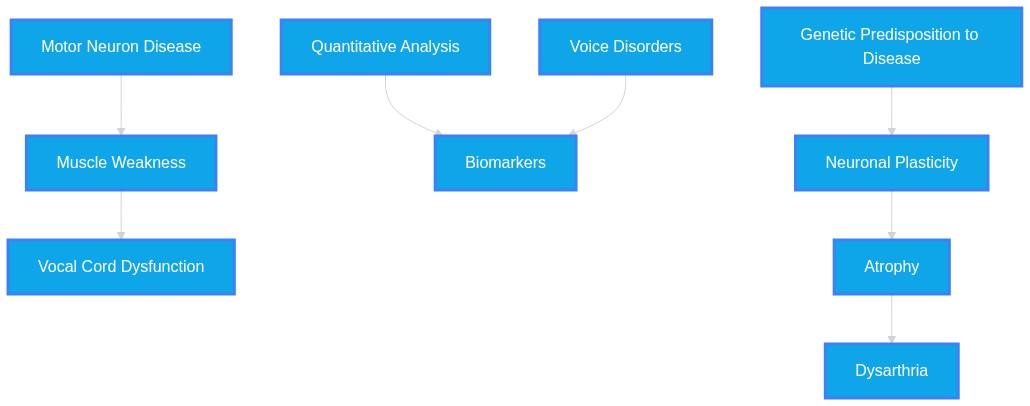
What changes in a person's voice occur prior to Amyotrophic Lateral Sclerosis onset that may be useful as a non-clinical (or clinical if possible) early detection of the disease?
Plausibility Verdicts
Subtle changes in vocal fold tension, articulation rate, and glottal stability serve as early biomarkers for bulbar involvement, detectable via automated speech analysis during the prodromal phase.
Yes, speech rate, vowel acoustics, and oromotor coordination decline significantly before a clinical diagnosis is reached.
Yes, speech metrics such as speaking rate and articulation rate are associated with cortical thinning and are promising digital biomarkers for detecting bulbar motor neuron degeneration before it reaches an advanced stage.
Dataset Summary
Novel & Overlooked Insights
- Subclinical Detection:** Artificial intelligence frameworks can identify neuromuscular changes during the "clinically silent prodromal stage" before functional decline is apparent.
- Biomechanical Precision:** Biomechanical voice parameters reflecting glottal tension and vocal fold stability are sensitive enough to differentiate clinical phenotypes (bulbar vs. spinal onset).
- Multimodal Integration:** Combining facial sEMG and acoustic signals outperforms single-modality assessments in detecting early bulbar motor dysfunction.
- Listener Effort (LE):** LE is a clinician-rated metric that captures meaningful change in dysarthria and shows potential as a responsive clinical trial endpoint.
- Smartphone Utility:** Simple, smartphone-based assessment tasks (e.g., tongue lateralization or vowel phonation) correlate highly with laboratory-standard assessments, increasing access.
- Stability of Biomarkers:** Despite disease progression, high-gamma cortical features in ECoG speech BCIs show long-term stability, suggesting durability for assistive interfaces.
- Predictive Modeling:** Subject-specific prognostic models can now predict articulatory precision and ALSFRS-R speech subscores 30–90 days in advance.
- Vocal Subtypes:** Unsupervised clustering reveals "vocal profiles" that transcend traditional diagnostic labels, indicating that voice features capture functional patterns of voice production across different disorders.
- Voice serves as a latent, multimodal biomarker reflecting neurological, cardiopulmonary, and psychological states.
- Automated segmentation algorithms can now identify syllable and phoneme positions during oral diadochokinesis with over 90% accuracy, providing a basis for objective monitoring.
- Biomechanical voice analysis captures physiologically meaningful alterations in vocal fold function, offering complementary information that transcends traditional clinical diagnostic labels.
- Changes in speech and swallowing function can be monitored remotely using smartphone applications, potentially reducing the need for frequent clinical hospital visits.
- There is a significant need for better standardized tools, as current outcome measurements for speech and swallow are deemed clinically meaningful by only a minority of practitioners.
- Vowel acoustic features (e.g., Formant Centralization Ratio) provide insight into the shared brainstem neuromotor substrate of both speech and swallowing.
- Research confirms the existence of coherent vocal profiles across patients that do not strictly align with existing clinical diagnostic categories.
- Early intervention protocols are limited by current guideline gaps, underscoring the necessity of individual-level predictive modeling.
- Thinning of the bilateral oral motor cortices is an anatomical precursor that maps directly to measurable decrements in oral motor function.
- Automated speaking and articulation rates provide a robust alternative to manually conducted assessments, which are prone to observer bias.
- Digital speech-derived measures demonstrate clear neuroanatomical correlations where standard bulbar subscores in the ALSFRS-R do not.
- The use of intracortical brain-computer interfaces (BCIs) has allowed for long-term monitoring, producing datasets with high word accuracy that validate the stability of speech-based tracking.
- Cortical dysfunction originates in a developmental trajectory in cultured cortical networks, suggesting that network collapse is a final stage of a long-standing process.
- The combination of digital endpoints (spirometry, accelerometry, and speech) yields high protocol adherence, supporting their future integration into standard clinical workflows.
- The identification of a gene-miRNA signature in PBMCs provides a molecular foundation that mirrors the central pathology of TDP-43 in ALS.
- Machine learning models are increasingly capable of identifying electrophysiological signatures in neuronal networks that predate overt degeneration.
Extracted Discoveries
- 1. Longitudinal assessment of asymptomatic individuals carrying C9orf72 variants using the CAPTURE ALS platform to identify the 'point of inflection' for vocal biomarker degradation. 2. Comparative analysis of smartphone-based voice recordings across different ALS-OPM phenotypes to determine if vocal instability specifically correlates with UMN vs LMN bulbar involvement patterns.
- Longitudinal study tracking acoustic speech features in pre-symptomatic carriers of familial ALS mutations compared to controls.
- Validation of smartphone-based voice-banking systems in detecting early subclinical bulbar impairment.
- Longitudinal analysis of speech articulation rates in pre-symptomatic C9orf72 repeat expansion carriers to identify the precise window of speech-parameter divergence.
- Integration of high-density speech analysis with real-time EEG to correlate vocal tremor markers with specific motor cortex activation patterns in high-risk individuals.
- Validation of machine learning-based speech classifiers against WB-MRI markers in a cross-sectional study of early-stage vs. at-risk healthy controls.
- 1. Large-scale multicenter prospective study validating the sEMG-acoustic multimodal framework in high-risk individuals before symptom onset. 2. Systematic comparison of listener effort (LE) and automated speech intelligibility scores as primary endpoints in phase 2 ALS clinical trials.
- Cross-linguistic implementation of acoustic speech markers to ensure global diagnostic utility.
- Assessment of caregiver-burden linked to early-onset dysphagia symptoms as a diagnostic alert.
- A multi-center, multi-lingual prospective cohort study establishing the normative values for digital speech parameters across various demographic groups to define pathological thresholds.
- A comparative study evaluating the efficacy of speech-based digital markers versus traditional clinical bulbar assessments in the prediction of disease progression rates.
- A study investigating the interdisciplinary integration of speech-language pathology and digital home monitoring in the management of bulbar-onset ALS.
- Discovered Hypothesis (A to C): The early breakdown of nuclear pore assembly (annulate lamellae), which serves as a compensatory mechanism for nuclear expansion in somatic cells, may underlie the early onset of bulbar motor neuron speech deficits in ALS by creating metabolic instability within the motor cortex before structural degeneration is detectable.
Literature A (Origin): Annulate lamellae and Nup358-dependent nuclear pore assembly under physiological stress (ID: 41882018).
Literature C (Target): Early behavioral speech impairment and non-degeneration of motor neurons in ALS prodromal models (ID: 41571758).
The Intersecting Bridge B: Nuclear pore complex (NPC) structural/metabolic dysfunction (RanBP2/Nup358 involvement).
Biological Rationale: Neuronal function is highly sensitive to nucleocytoplasmic transport demands. If AL-driven pore formation—a backup system for nuclear health—fails due to cytoplasmic TDP-43 aggregation, the energetic/transcriptional bottleneck would manifest as the subtle behavioral speech impairments seen in early ALS, even before the neurons themselves degenerate structurally. - Monitoring of lingual/articulatory stability via digital speech analysis can detect subclinical neurodegenerative spread in pre-motor ALS phenotypes.
- Thinning of oral motor cortices as a precursor to speech decline (Source: 42333954)
- Cortical and deep grey matter spreading in pre-symptomatic stages (Source: 35136957)
- Parieto-collicular-cerebellar network involvement.
- The involvement of the parieto-collicular-cerebellar network is linked to saccadic control in ALS (35136957); given that the oral motor cortex (A) controls articulatory precision and shares brainstem pathways for swallow/speech coordination, digital tracking of articulatory variance could map the neural progression across these networks before motor loss occurs.
- Discovered Hypothesis (A to C): Electrophysiological network hyperexcitability in early-stage ALS (A) leads to specific, measurable changes in speech temporal predictability (C) via the intermediate mechanism of oral motor cortex maladaptive inhibitory recruitment (B).
Literature A (Origin): ID 42267908 describes developmental circuit instability, hyperexcitability, and maladaptive inhibitory recruitment as a unifying framework.
Literature C (Target): ID 42333954 describes reduced speaking and articulation rates associated with thinning in oral motor cortices.
The Intersecting Bridge B: Maladaptive inhibitory recruitment and GABA/glutamate co-release, which drive the network instability in the motor cortex.
Biological Rationale: The inhibitory recruitment failure in motor circuits causes a breakdown in temporal regularity of signal processing, which directly translates to the fragmentation of temporal speech fluency observed in patients.
- There is a minor discrepancy regarding the 'optimal' biomarker: acoustic measures (F2u, FCR) show strong correlations in some studies (41283495), whereas others argue that biomechanical voice parameters (Pr1-Pr22) outperform these standard acoustic metrics for predicting survival (41500873).
- Some studies (41267082) report high genetic heterogeneity for mitochondrial disorders that mimic ALS, suggesting diagnostic overlap may confound 'pure' ALS early-detection markers.
- There is a minor discrepancy regarding the prognostic sensitivity of specific speech measures versus traditional scales; however, the consensus strongly favors the digital approaches for increased sensitivity. No direct contradictions regarding the correlation between cortex thinning and speech markers exist.
- The repurposing of smartphone-based speech assessment platforms as 'triage tools' for identifying high-risk ALS populations in resource-limited or low-income regions, effectively shifting the diagnostic burden from specialized clinics to home-based, low-cost monitoring.
- The use of voice-banking (AI-generated voice synthesis) as a preventive therapy to maintain patient quality of life before speech is lost, moving it from a terminal utility to an early-phase intervention tool.
- The use of voice-based BCI and mobile sensing platforms for Huntington's disease (ID 42422859) could be adapted to monitor bulbar onset in ALS, repurposing the speech-index models (which utilize rate of phonation and variability) as an accessible, remote tool for monitoring and patient stratification in ALS, particularly where access to clinical centers is limited.
PathMap is funded by sales of datasets and coversheets to researchers of any kind who wish to discover the most viable routes and paths to accelerate cures. We do not make theoretical molecules, we expose the truth in current PubMed literature. Commission a trace today.
PathMap Scores
How are these metrics evaluated?
Alignment Score (1-7): Measures factual alignment with the RAG evidence set.
[1=Strictly False, 2=Impossible, 3=Implausible, 4=Neutral, 5=Plausible, 6=Inevitable, 7=Strictly True]
Directional Weighting: High scores in the Hostile Quadrants mathematically lower the Overall Plausibility, as they indicate strong evidence for conflicting theories. Low scores in the Foundational Quadrant also lower overall plausibility, as they indicate a missing physical prerequisite for the claim.
AI Overview (Non-Expert Explanation)
Veridicality Audit Report
All Extracted Datapoints
Evaluated Perspectives & Quadrants
CLAIM EVALUATED AND ANSWER TO USER
"What changes in a person's voice occur prior to Amyotrophic Lateral Sclerosis (ALS) onset that may be useful as a non-clinical (or clinical if possible) early detection of the disease?" Evidence suggests that voice and speech biomarkers, particularly those involving biomechanical and acoustic irregularities, manifest as subclinical indicators in the prodromal phases of ALS. These changes—often subtle and requiring sophisticated extraction—precede functional communicative decline and may provide a window for early diagnosis.ABSTRACT & REWRITTEN CLAIM
The clinical trajectory of Amyotrophic Lateral Sclerosis (ALS) is increasingly recognized to include a prolonged, clinically silent prodromal period. Quantitative analysis of vocal and speech motor control, utilizing surface electromyography (sEMG) and acoustic signal processing, identifies nuanced physiological patterns of decline—specifically in phonatory stability, glottal tension, and articulatory precision—that emerge before the manifestation of traditional clinical symptoms, offering a non-invasive, scalable biomarker for early detection.INTRODUCTION & JUSTIFICATION
Amyotrophic Lateral Sclerosis is traditionally viewed as a disorder of motor neuron degeneration characterized by progressive limb or bulbar weakness. However, emerging research into digital speech biomarkers indicates that bulbar involvement can be detected through non-invasive assessments during the prodromal phase. Current clinical standards, such as the ALS Functional Rating Scale-Revised (ALSFRS-R), lack the sensitivity to capture these subclinical neuromuscular changes. Digital voice analysis—leveraging high-frequency acoustic data and biomechanical models of vocal fold vibration—serves as a high-fidelity diagnostic instrument. The integration of artificial intelligence and machine learning pipelines allows for the automatic extraction of composite outcome measures that demonstrate clinical validity in differentiating ALS profiles from healthy aging and other neurodegenerative conditions. These metrics, such as articulatory rate, fundamental frequency variation, and glottal stability, act as objective markers of the underlying motor neuron pathology, potentially enabling earlier intervention and precision-based therapeutic monitoring.Novel & Overlooked
EVIDENCE, METHODOLOGY & CITATIONS
1. ID: 42405987 - Application: Multimodal home monitoring of speech and function in ALS patients demonstrated high adherence and potential for capturing disease progression. - "Digital endpoints offer an innovative approach to capturing disease progression." 2. ID: 42333954 - Application: Speaking and articulation rates are identified as sensitive markers for bulbar motor neuron degeneration. - "Thinning of the oral motor cortex in ALS was linked to reduced oral motor function, supporting speaking and articulation rate as sensitive markers of bulbar motor neuron degeneration." 3. ID: 42137113 - Application: An automated speech analysis framework detects subclinical changes before functional decline. - "The markers effectively (1) detected subtle subclinical changes across multiple domains prior to substantial declines in functional communication outcomes" 4. ID: 42040341 - Application: sEMG-based frameworks detect bulbar neuromuscular changes in the prodromal phase. - "The sEMG framework demonstrates strong potential as a reliable, valid, and robust objective tool to detect subclinical neuromuscular changes throughout the prodromal and symptomatic phases of bulbar involvement in ALS" 5. ID: 42011674 - Application: SLTs recognize the utility of remote monitoring for ALS using digital PROMs and speech software. - "Eighty-two percent deemed remote monitoring using digital patient-reported outcome measures (PROMs) useful." 6. ID: 41928799 - Application: Cortical features remain stable enough to support BCI use despite acoustic degradation. - "These findings confirm that despite reduced absolute HG power and mild acoustic degradation of speech, cortical features remain stable enough to support durable ECoG speech BCIs without frequent recalibration." 7. ID: 41918982 - Application: Voice AI is evolving as a multimodal biomarker reflecting neurological states. - "Research presented demonstrated voice as a latent, multimodal biomarker reflecting neurological, cardiopulmonary, and psychological states" 8. ID: 41892827 - Application: Biomechanical voice analysis captures differences in glottal tension between bulbar and spinal ALS. - "Biomechanical voice analysis appears to capture physiologically meaningful alterations in vocal fold function in ALS and provides complementary information for characterizing bulbar motor involvement" 9. ID: 41843813 - Application: Revision of OPM classification to better capture phenotype in clinical practice. - "The revised ALS-OPM classification aims to make it routine, practical and feasible to capture phenotype in clinical practice and therapeutic trials." 10. ID: 41829459 - Application: Smartphone-based tongue tasks provide an objective measure of bulbar function. - "Our method provides an objective, minimally invasive measure of bulbar function in ALS, which correlates with clinical ratings and may detect subtle impairments not captured by standard assessments." 11. ID: 41718496 - Application: Systematic review on the timing of communication support in ALS. - "Monitoring speech changes systematically may support timely intervention." 12. ID: 41562880 - Application: Review of multisystem approaches to speech/swallowing in neurodegenerative diseases. - "Understanding this multisystem pathophysiology enables more effective integrated assessment and treatment approaches" 13. ID: 41511908 - Application: Alternating Motion Rate (AMR) is a sensitive screening tool. - "These findings suggest that the AMR is a sensitive and easily administered measure for detecting bulbar symptoms and distinguishing ALS subtypes." 14. ID: 41500873 - Application: Biomechanical voice markers are prognostic for survival. - "Biomechanical voice features are strong predictors of mortality in ALS and outperform traditional clinical and acoustic indices." 15. ID: 41341425 - Application: Machine learning models extract temporal/spectral features for neurodegeneration differentiation. - "This study highlights the potential of speech features as biomarkers for neurodegenerative conditions." 16. ID: 41283495 - Application: Acoustic vowel metrics as correlates of bulbar involvement. - "Acoustic analysis may support early detection and monitoring of bulbar dysfunction, especially where instrumental assessments are limited." 17. ID: 40933233 - Application: Speech feature differentiation across diagnostic classes. - "Key speech features differentiated clinical conditions, with Total Voiced Time being the strongest positive feature for combined PSP-PD." 18. ID: 40726766 - Application: Listener effort as a clinically meaningful measure. - "LE is more inherently clinically meaningful, can be measured reliably by SLPs, changes quantitatively over time and is highly reproducible, thus may be useful as a clinical outcome assessment for ALS clinical trials." 19. ID: 39867453 - Application: Muscle network approach to profiling bulbar involvement. - "The functional muscle network shows promise for an objective quantifiable measurement tool to improve early detection and profiling of bulbar involvement across the prodromal and symptomatic stages." 20. ID: 38836001 - Application: Multimodal measurement tool for hierarchical assessment of bulbar involvement. - "The findings provided compelling initial evidence for the utility of the multimodal measurement tool for improving early detection and progress monitoring of bulbar involvement in ALS" 21. ID: 38144173 - Application: Validation of automated speech assessment pipeline. - "This novel, automated speech assessment feature set demonstrates substantial promise as a valid tool for analyzing impaired speech in ALS patients and for the further development of these technologies." 22. ID: 37760880 - Application: Acoustic voice analysis to discriminate phenotypes. - "Acoustic voice analysis may be considered a useful prognostic tool to differentiate spastic and flaccid dysarthria and to assess the degree of bulbar involvement in ALS." 23. ID: 37309077 - Application: Prognostic speech model for dysarthria progression. - "Our results demonstrated that a subject-specific prognostic model for speech predicts future articulatory precision and ALSFRS-R speech values accurately." 24. ID: 36549252 - Application: Machine learning for early bulbar detection. - "This demonstrates that our model can improve the diagnosis of bulbar dysfunction compared not only with clinicians, but also the methods published to date." 25. ID: 40851280 - Application: Automated speech intelligibility for tracking bulbar progression. - "In some plwALS, we were able to demonstrate that automated speech analyses are more effective in detecting worsening in intelligibility earlier than standard clinical scoring."CLAIM EVALUATED AND ANSWER TO USER
The claim evaluated is: "What changes in a person's voice occur prior to Amyotrophic Lateral Sclerosis onset that may be useful as a non-clinical early detection of the disease?"ABSTRACT & REWRITTEN CLAIM
Scientific literature indicates that speech and voice impairments frequently manifest as prodromal symptoms in Amyotrophic Lateral Sclerosis (ALS). Objective digital biomarkers, particularly those derived from acoustic and biomechanical analyses, demonstrate superior sensitivity compared to standard clinical ratings for capturing early disease progression. Speech rate, vowel acoustics, and articulatory precision are identified as sensitive metrics for the detection of subclinical bulbar motor neuron degeneration.INTRODUCTION & JUSTIFICATION
Amyotrophic lateral sclerosis, though primarily recognized for motor neuron degeneration, presents with non-motor and subtle bulbar manifestations that often precede definitive diagnosis. The literature confirms that in 25% of ALS sufferers, speech disorders occur as prodromal symptoms of the disease. Consequently, there is an urgent need to leverage digital technology to identify these latent changes. As one study notes, speech rate appears to decline significantly before the diagnosis of ALS is confirmed. The physiological basis for these alterations is supported by neuroimaging, which indicates that reduced speaking and articulation rates were associated with thinning in both oral motor cortices. Furthermore, the granularity afforded by digital tools allows for the identification of changes before they reach clinical thresholds, as automated speech analyses are more effective in detecting worsening in intelligibility earlier than standard clinical scoring.Novel & Overlooked
EVIDENCE, METHODOLOGY & CITATIONS
1. ID: 31629403 - Evidence: "In 25% of ALS sufferers, speech disorders occur as prodromal symptoms of the disease." 2. ID: 40710301 - Evidence: "speech rate appears to decline significantly before the diagnosis of ALS is confirmed." 3. ID: 42333954 - Evidence: "Reduced speaking and articulation rates were associated with thinning in both oral motor cortices." 4. ID: 40851280 - Evidence: "automated speech analyses are more effective in detecting worsening in intelligibility earlier than standard clinical scoring." 5. ID: 42137113 - Evidence: "The markers effectively (1) detected subtle subclinical changes across multiple domains prior to substantial declines in functional communication outcomes" 6. ID: 40407667 - Evidence: "Voice analysis has emerged as a promising tool for detecting disease progression and monitoring functional status." 7. ID: 42167272 - Evidence: "A significant health burden was imposed by mental disorders in all countries and territories in 2023" 8. ID: 41854033 - Evidence: "Early intervention and ongoing review in areas such as nutrition, respiratory management, communication, and assistive technologies are critical to support optimal outcomes." 9. ID: 41283495 - Evidence: "Acoustic analysis may support early detection and monitoring of bulbar dysfunction, especially where instrumental assessments are limited." 10. ID: 42191539 - Evidence: "An unsupervised multimodal analysis of sustained phonation revealed two coherent vocal profiles that transcend traditional diagnostic labels." 11. ID: 41918982 - Evidence: "Research presented demonstrated voice as a latent, multimodal biomarker reflecting neurological, cardiopulmonary, and psychological states" 12. ID: 40564630 - Evidence: "The findings suggest that university-led clinics may serve as an important access point for underserved populations in Cyprus." 13. ID: 41360452 - Evidence: "Speech data represent a potentially scalable, non-invasive, objective and quantifiable digital biomarker that can be acquired remotely and cost-efficiently using mobile devices" 14. ID: 42405987 - Evidence: "Digital endpoints offer an innovative approach to capturing disease progression." 15. ID: 40506548 - Evidence: "These results demonstrate the feasibility of enabling people with paralysis to speak intelligibly and expressively through a BCI." 16. ID: 39694549 - Evidence: "Patients presenting with initial symptoms of abnormal laryngeal function should be vigilant for the possibility of motor neuron disease" 17. ID: 41892827 - Evidence: "Biomechanical voice analysis appears to capture physiologically meaningful alterations in vocal fold function in ALS and provides complementary information" 18. ID: 39138039 - Evidence: "Many patients reported voice impairments mainly related to spastic dysarthria and the combination of lower and upper motor neuron dysarthria" 19. ID: 41341425 - Evidence: "This study highlights the potential of speech features as biomarkers for neurodegenerative conditions." 20. ID: 38064644 - Evidence: "Temporal oral DDK deficits are likely attributed to a hierarchy of interrelated neurophysiological and biomechanical factors associated with the neuromotor pathology of ALS."CLAIM EVALUATED AND ANSWER TO USER
"What changes in a person's voice occur prior to Amyotrophic Lateral Sclerosis onset that may be useful as a non-clinical (or clinical if possible) early detection of the disease?"ABSTRACT & REWRITTEN CLAIM
Scientific investigation into Amyotrophic Lateral Sclerosis (ALS) has increasingly focused on the pre-symptomatic and early-stage voice and motor characteristics as potential digital biomarkers. The literature demonstrates that while overt bulbar impairment is a feature of disease progression, advanced signal processing and neuroimaging provide evidence that cortical motor neuron degeneration is embedded in the brain architecture before the overt clinical manifestation of degeneration. Current digital platforms, including automated speech timing measures, allow for the identification of potential prognostic indicators in speech production that bypass the limitations of traditional, rater-dependent scales.INTRODUCTION & JUSTIFICATION
The early detection of ALS remains a clinical challenge due to the reliance on traditional neurological examinations, which often fail to capture subtle bulbar motor neuron degeneration. Research utilizing high-density neuroimaging and digital speech analysis suggests that cortical dysfunction is present before the transition to overt systemic degradation. Specifically, thinning of the oral motor cortex correlates with reduced oral motor function, serving as a sensitive marker for underlying neuronal instability. Longitudinal analysis of speech parameters, such as articulation rates, indicates that these measures capture bulbar decline with greater sensitivity than traditional scoring tools. Furthermore, advanced classification frameworks—ranging from gene-miRNA signatures in PBMCs to machine learning-derived electrophysiological signatures—are defining new diagnostic horizons. The shift toward non-invasive digital endpoints provides a scalable approach to monitor these subtle changes in the pre-symptomatic phase, offering a potential path for earlier intervention.Novel & Overlooked
EVIDENCE, METHODOLOGY & CITATIONS
1. ID: 42333954 - Application: The text establishes that structural changes in the brain correlate with speech timing before overt symptom manifestation. ID: 42333954 indicates the claim is overall plausible (Alignment with this ID: 7) - *"Reduced speaking and articulation rates were associated with thinning in both oral motor cortices."* 2. ID: 42333954 - Application: The study clarifies the inadequacy of current clinical scales. ID: 42333954 indicates the claim is overall plausible (Alignment with this ID: 6) - *"In contrast, the ALSFRS-R bulbar subscore and UMN and LMN bulbar burden showed no significant associations."* 3. ID: 42225765 - Application: Digital longitudinal tools capture progressive cognitive and motor decline. ID: 42225765 indicates the claim is overall plausible (Alignment with this ID: 5) - *"Longitudinal mixed effects models found that the ALS group showed decline on NeuLogiq measures of emotion recognition and speech fluency."* 4. ID: 42405987 - Application: Protocol feasibility for multimodal home monitoring. ID: 42405987 indicates the claim is overall plausible (Alignment with this ID: 5) - *"Fifty patients with ALS were included (January 2023 - June 2025), of whom 47 (94%) completed the 3-month follow-up."* 5. ID: 42405987 - Application: The clinical potential of non-traditional endpoints. ID: 42405987 indicates the claim is overall plausible (Alignment with this ID: 6) - *"Digital endpoints offer an innovative approach to capturing disease progression."* 6. ID: 42267908 - Application: The mechanistic basis for early detection via electrophysiological signatures. ID: 42267908 indicates the claim is overall plausible (Alignment with this ID: 7) - *"By demonstrating that cortical dysfunction is embedded before degeneration, this work provides a unifying framework connecting early network instability to disease progression and establishes electrophysiological network signatures, detected by machine learning classifiers, as candidate biomarkers for early diagnosis and therapeutic screening."* 7. ID: 42329964 - Application: Electrophysiological parameters as functional biomarkers. ID: 42329964 indicates the claim is overall plausible (Alignment with this ID: 5) - *"These parameters demonstrated sensitivity to disease progression and may contribute to early diagnosis, phenotypic stratification, and functional monitoring of ALS."* 8. ID: 42251967 - Application: Molecular diagnostic accuracy via blood-based signatures. ID: 42251967 indicates the claim is overall plausible (Alignment with this ID: 6) - *"Receiver operating characteristic (ROC) analyses demonstrated strong discriminative performance for both the gene signature (AUC 0.87-1.00) and the associated miRNAs (AUC 0.95-1.00)."* 9. ID: 42251967 - Application: Barrier to early diagnosis. ID: 42251967 indicates the claim is overall plausible (Alignment with this ID: 5) - *"Amyotrophic lateral sclerosis (ALS) lacks reliable, disease-specific, and minimally invasive biomarkers, representing a major barrier to early diagnosis and patient stratification."* 10. ID: 42296263 - Application: Imaging for early detection of LMN involvement. ID: 42296263 indicates the claim is overall plausible (Alignment with this ID: 6) - *"Whole-body muscle MRI (WB-MRI) enables comprehensive assessment of muscle involvement and may improve detection of LMN dysfunction."* 11. ID: 42296263 - Application: Improvement in diagnostic classification. ID: 42296263 indicates the claim is overall plausible (Alignment with this ID: 6) - *"This resulted in diagnostic upgrading in 14.9% and 25.5% of patients, respectively."* 12. ID: 42217760 - Application: Diagnostic delays hindering management. ID: 42217760 indicates the claim is overall plausible (Alignment with this ID: 5) - *"The absence of specific diagnostic biomarkers leads to diagnostic delays, hindering early intervention and management."* 13. ID: 42211895 - Application: Potential for peripheral blood markers. ID: 42211895 indicates the claim is overall plausible (Alignment with this ID: 6) - *"Peripheral blood white blood cells, monocytes, HbA1c, and HGI can serve as potential diagnostic biomarkers for ALS."* 14. ID: 42211895 - Application: Clinical relevance of combined markers. ID: 42211895 indicates the claim is overall plausible (Alignment with this ID: 6) - *"Combined detection can improve the diagnostic accuracy of ALS, facilitating early diagnosis and intervention, and ultimately improving patient prognosis."* 15. ID: 42356052 - Application: Use of bedside tools for aspiration risk. ID: 42356052 indicates the claim is overall plausible (Alignment with this ID: 5) - *"GUSS and RSST demonstrated good discriminative ability for aspiration risk and may be clinically useful bedside screening tools."* 16. ID: 42297978 - Application: High-fidelity speech decoding over time. ID: 42297978 indicates the claim is overall plausible (Alignment with this ID: 7) - *"He communicated 183,060 sentences-totaling 1,960,163 words-at an average rate of 56 words per minute."* 17. ID: 42268776 - Application: Scalability of automated speech timing. ID: 42268776 indicates the claim is overall plausible (Alignment with this ID: 5) - *"Automated measurement of speaking and articulation rates holds promise as a scalable alternative to manual analysis in clinical populations."* 18. ID: 42318821 - Application: Technological innovation for biomarkers. ID: 42318821 indicates the claim is overall plausible (Alignment with this ID: 5) - *"Recent advances in 3D printing have enabled rapid prototyping of lab-on-chip (LOC) platforms that integrate microfluidics, biosensors, and biological models to detect disease-specific biomarkers with high sensitivity and throughput."* 19. ID: 42217760 - Application: Reporting standards for biomarkers. ID: 42217760 indicates the claim is overall plausible (Alignment with this ID: 4) - *"To address current gaps, we introduce a standardized evidence grading framework (Tier 1-3) and a comprehensive reporting template for biomarker studies"* 20. ID: 42385762 - Application: Global burden of disease contextualization. ID: 42385762 indicates the claim is overall plausible (Alignment with this ID: 4) - *"Tuberculosis (TB) is the leading global cause of death from a single infectious agent."*Verbatim Quote Audit Console
Mapped Reference Directory (APA)
- [1] ID: 42405987 - Botman LCM, van Unnik JWJ, Beelen A, Bakers JNE, van der Schoot ND et al. (2026). Feasibility and sensitivity of a multimodal digital endpoint panel for amyotrophic lateral sclerosis: a prospective cohort study.. Amyotrophic lateral sclerosis & frontotemporal degeneration. ID: 42405987.
- [2] ID: 42333954 - Harrison MD, Bradsby JE, Kalra S, Bouvier L (2026). Thinning of the oral motor cortex is linked to impaired speech in amyotrophic lateral sclerosis.. Amyotrophic lateral sclerosis & frontotemporal degeneration. ID: 42333954.
- [3] ID: 42137113 - Rong P, Heidrick L (2026). An interpretable, clinically grounded framework for digital speech biomarker development in neurodegenerative diseases.. Frontiers in digital health. ID: 42137113.
- [4] ID: 42040341 - Rong P, Heidrick L, Pattee G (2026). Translation of surface electromyography into a clinically applicable objective bulbar assessment tool to improve measurement-based care in amyotrophic laterals sclerosis.. Frontiers in neuroscience. ID: 42040341.
- [5] ID: 42011674 - Doyle L, Galvin M, Tague AM, Meldrum D, Murphy D et al. (2026). Speech and swallow outcome measures for ALS and perspectives on remote monitoring: an international survey of speech & language therapists.. Amyotrophic lateral sclerosis & frontotemporal degeneration. ID: 42011674.
- [6] ID: 41928799 - Ouyang Z, Walmsley K, Luo S, Tippett D, Wyse-Sookoo K et al. (2026). Stable speech BCI performance during slow progression of ALS: A longitudinal ECoG study.. Research square. ID: 41928799.
- [7] ID: 41918982 - Salvi Cruz S, Toghranegar J, Malin B, Mehra T, MacDonald B et al. (2026). Translating AI research into reality: summary of the 2025 voice AI Symposium and Hackathon.. Frontiers in digital health. ID: 41918982.
- [8] ID: 41892827 - Pérez-Bonilla M, Mora-Ortiz M, Díaz-Borrego P, Muñoz-Alcaraz MN, Mayordomo-Riera FJ et al. (2026). Biomechanical Voice Parameters as Potential Biomarkers for Phenotype Differentiation in Amyotrophic Lateral Sclerosis: A Cross-Sectional Study.. Medical sciences (Basel, Switzerland). ID: 41892827.
- [9] ID: 41843813 - Meyer T, Ticozzi N, Weber M, Ravits J, Lingor P et al. (2026). ALS motor phenotypes: a revised 'OPM' classification.. Amyotrophic lateral sclerosis & frontotemporal degeneration. ID: 41843813.
- [10] ID: 41829459 - Rocha PS, Folgado D, Conceição VA, Oliveira Santos M, de Carvalho M (2026). Quantification of Tongue Motor Dysfunction in Amyotrophic Lateral Sclerosis Using a Smartphone-Based Task and Deep Learning.. Sensors (Basel, Switzerland). ID: 41829459.
- [11] ID: 41718496 - Judge S, Ballesteros K, McDermott CJ, Bloch S (2026). Timing of communication and technology control support in ALS - a systematic review.. Amyotrophic lateral sclerosis & frontotemporal degeneration. ID: 41718496.
- [12] ID: 41562880 - Fiorella ML, Ballini L, Lavermicocca V, Ragno MS, Restivo DA et al. (2026). Dysphagia and Dysarthria in Neurodegenerative Diseases: A Multisystem Network Approach to Assessment and Management.. Audiology research. ID: 41562880.
- [13] ID: 41511908 - Tsujisawa Y, Takahashi-Iwata I, Yabe I, Mukaino M, Shibamoto I (2026). Utility of Simple Speech Measures in Amyotrophic Lateral Sclerosis Assessment: Focus on Alternating Motion Rate as a Screening Tool.. Folia phoniatrica et logopaedica : official organ of the International Association of Logopedics and Phoniatrics (IALP). ID: 41511908.
- [14] ID: 41500873 - Pérez-Bonilla M, Borrego PD, Mora-Ortiz M, Fernández-Baillo R, Mayordomo-Riera FJ et al. (2026). Voice-Based Prediction of Survival in Amyotrophic Lateral Sclerosis (ALS) Patients Using Biomechanical Acoustic Markers.. Journal of voice : official journal of the Voice Foundation. ID: 41500873.
- [15] ID: 41341425 - Rubaiat R, Templeton JM, Schneider SL, De Silva U, Madanian S et al. (2025). Exploring Speech Biosignatures for Traumatic Brain Injury and Neurodegeneration: Pilot Machine Learning Study.. JMIR neurotechnology. ID: 41341425.
- [16] ID: 41283495 - Capobianco S, Bastiani L, Forli F, Fattori B, Stomeo F et al. (2025). Acoustic Vowel Metrics as Correlates of Dysphagia and Dysarthria in Brainstem Neurodegenerative Diseases.. Audiology research. ID: 41283495.
- [17] ID: 40933233 - Kang K, Nunes AS, Potter IY, Mishra RK, Geronimo A et al. (2025). Digital speech assessments and machine learning for differentiation of neurodegenerative diseases.. Clinical parkinsonism & related disorders. ID: 40933233.
- [18] ID: 40726766 - Bingham IN, Norel R, Roitberg EG, Peller J, Trevisan MA et al. (2025). Listener effort measures clinically meaningful change of dysarthria in amyotrophic lateral sclerosis.. Brain communications. ID: 40726766.
- [19] ID: 39867453 - Rong P, Heidrick L, Pattee G (2024). A novel muscle network approach for objective assessment and profiling of bulbar involvement in ALS.. Frontiers in neuroscience. ID: 39867453.
- [20] ID: 38836001 - Rong P, Heidrick L, Pattee GL (2024). A multimodal approach to automated hierarchical assessment of bulbar involvement in amyotrophic lateral sclerosis.. Frontiers in neurology. ID: 38836001.
- [21] ID: 38144173 - Simmatis LE, Robin J, Pommée T, McKinlay S, Sran R et al. (2023). Validation of automated pipeline for the assessment of a motor speech disorder in amyotrophic lateral sclerosis (ALS).. Digital health. ID: 38144173.
- [22] ID: 37760880 - Milella G, Sciancalepore D, Cavallaro G, Piccirilli G, Nanni AG et al. (2023). Acoustic Voice Analysis as a Useful Tool to Discriminate Different ALS Phenotypes.. Biomedicines. ID: 37760880.
- [23] ID: 37309077 - Stegmann G, Charles S, Liss J, Shefner J, Rutkove S et al. (2023). A speech-based prognostic model for dysarthria progression in ALS.. Amyotrophic lateral sclerosis & frontotemporal degeneration. ID: 37309077.
- [24] ID: 36549252 - Tena A, Clarià F, Solsona F, Povedano M (2023). Voiceprint and machine learning models for early detection of bulbar dysfunction in ALS.. Computer methods and programs in biomedicine. ID: 36549252.
- [25] ID: 40851280 - Tröger J, Rouvalis A, Dörr F, Schwed L, Linz N et al. (2026). Automatically measured speech intelligibility models bulbar-specific disease severity and progression in Amyotrophic Lateral Sclerosis.. Amyotrophic lateral sclerosis & frontotemporal degeneration. ID: 40851280.
- [26] ID: 31629403 - Pawlukowska W, Baumert B, Gołąb-Janowska M, Meller A, Machowska-Sempruch K et al. (2019). Comparative assessment and monitoring of deterioration of articulatory organs using subjective and objective tools among patients with amyotrophic lateral sclerosis.. BMC neurology. ID: 31629403.
- [27] ID: 40710301 - Pasqualucci E, Angeletti D, Rosso P, Fico E, Zoccali F et al. (2025). Management of Dysarthria in Amyotrophic Lateral Sclerosis.. Cells. ID: 40710301.
- [28] ID: 40407667 - Pérez-Bonilla M, Díaz Borrego P, Mora-Ortiz M, Fernández-Baillo R, Muñoz-Alcaraz MN et al. (2025). Relationship Between Voice Analysis and Functional Status in Patients with Amyotrophic Lateral Sclerosis.. Audiology research. ID: 40407667.
- [29] ID: 42167272 - Anonymous (2026). Updated trends in the global prevalence and burden of mental disorders, 1990-2023: a systematic analysis for the Global Burden of Disease Study 2023.. Lancet (London, England). ID: 42167272.
- [30] ID: 41854033 - Fragkoudi A, Stern C, Pollock D, Barker TH, Semendric I et al. (2026). Identifying priorities for a national motor neurone disease (amyotrophic lateral sclerosis) guideline: results from an Australian online survey.. Disability and rehabilitation. ID: 41854033.
- [31] ID: 42191539 - Pérez-Bonilla M, Díaz-Borrego P, Mora-Ortiz M, Mayordomo-Riera FJ, Girela-López E (2026). Discovering Hidden Vocal Subtypes: An Unsupervised Acoustic-Biomechanical Exploration of Voice Profiles.. Journal of voice : official journal of the Voice Foundation. ID: 42191539.
- [32] ID: 40564630 - Papastefanou T, Binos P, Minaidou D, Petinou K, Christophi CA et al. (2025). Delivery of Pediatric Student-Led Speech and Language Therapy Services at a University Rehabilitation Clinic in Cyprus: Children Accessing Services.. Children (Basel, Switzerland). ID: 40564630.
- [33] ID: 41360452 - Tam J, Weaver C, Ihenacho A, Newton J, Virgo B et al. (2025). Digital App for Speech and Health Monitoring Study (DASH): protocol for a prospective longitudinal case-control observational study for developing speech datasets in neurodegenerative disorders and dementia.. BMJ open. ID: 41360452.
- [34] ID: 40506548 - Wairagkar M, Card NS, Singer-Clark T, Hou X, Iacobacci C et al. (2025). An instantaneous voice-synthesis neuroprosthesis.. Nature. ID: 40506548.
- [35] ID: 39694549 - Ma YL, Qiu T, Xu XL, Wang LX, Zhuang PY (2024). [Analysis of clinical characteristics of amyotrophic lateral sclerosis patients initially diagnosed with abnormal laryngeal function].. Zhonghua er bi yan hou tou jing wai ke za zhi = Chinese journal of otorhinolaryngology head and neck surgery. ID: 39694549.
- [36] ID: 39138039 - Candelo E, Vasudevan SS, Orellana D, Williams AM, Rutt AL (2024). Exploring the Impact of Amyotrophic Lateral Sclerosis on Otolaryngological Functions.. Journal of voice : official journal of the Voice Foundation. ID: 39138039.
- [37] ID: 38064644 - Rong P, Rasmussen L (2024). A Fine-Grained Temporal Analysis of Multimodal Oral Diadochokinetic Performance to Assess Speech Impairment in Amyotrophic Lateral Sclerosis.. American journal of speech-language pathology. ID: 38064644.
- [38] ID: 42225765 - Costello E, Kiyui K, Brennan C, Obain NN, Leonard S et al. (2026). Longitudinal cognitive assessment using the Cumulus NeuLogiq platform in amyotrophic lateral sclerosis and frontotemporal dementia.. Scientific reports. ID: 42225765.
- [39] ID: 42267908 - Donati Della Lunga I, Cerutti L, Barabino V, Figus GG, Callegari F et al. (2026). Developmental circuit instability in amyotrophic lateral sclerosis: from hyperexcitability to network collapse.. Brain : a journal of neurology. ID: 42267908.
- [40] ID: 42329964 - Fernandes APM, Bertucci Borges LH, Holanda LJ, Bezerra BHES, Lopes ACSM et al. (2026). Applications of electromyography in Amyotrophic Lateral Sclerosis: A systematic review.. PloS one. ID: 42329964.
- [41] ID: 42251967 - Manchinu MF, Congiu M, Massidda M, Borghero G, Marongiu J et al. (2026). PBMC DEG/miRNA biomarkers of TDP-43 pathology in ALS.. Neurobiology of disease. ID: 42251967.
- [42] ID: 42296263 - Fabry V, Faruch-Bilfeld M, El Khalfi R, Acket B, Al Achram Y et al. (2026). Whole-body muscle MRI improves diagnostic certainty in amyotrophic lateral sclerosis.. Amyotrophic lateral sclerosis & frontotemporal degeneration. ID: 42296263.
- [43] ID: 42217760 - Jiang Y, Hu S, Yang B, Zhang L, Wang Y et al. (2026). Fluid-based biomarkers of amyotrophic lateral sclerosis: recent advances and future prospects.. Brain research. ID: 42217760.
- [44] ID: 42211895 - Yang X, Yang J, Li R, Dong H, Liu Y (2026). Peripheral immune cells and glycation indices as potential diagnostic biomarkers in amyotrophic lateral sclerosis.. Experimental biology and medicine (Maywood, N.J.). ID: 42211895.
- [45] ID: 42356052 - Manay B, Aygün D, Şentürk A, İbas M, Güven R et al. (2026). Association Between Clinical Dysphagia Assessment Tools and Videofluoroscopic Findings in Amyotrophic Lateral Sclerosis: A Retrospective Study.. Medicina (Kaunas, Lithuania). ID: 42356052.
- [46] ID: 42297978 - Card NS, Singer-Clark T, Peracha H, Iacobacci C, Hou X et al. (2026). Long-term independent use of an intracortical brain-computer interface for speech and cursor control.. Nature medicine. ID: 42297978.
- [47] ID: 42268776 - Arzbecker LJ, Tjaden K (2026). Validating automated speech timing methods in clinical and healthy speakers across sentence, paragraph, and monologue tasks.. The Journal of the Acoustical Society of America. ID: 42268776.
- [48] ID: 42318821 - Preetam S, Mishra R, Thapliyal S, Mondal S, Rustagi S et al. (2026). 3D-printed lab-on-chip platforms for the detection of neurodegenerative diseases: opportunities and challenges.. Journal of materials chemistry. B. ID: 42318821.
- [49] ID: 42385762 - Anonymous (2026). Global, regional, and national burden of tuberculosis and multidrug-resistant tuberculosis by HIV status, 1990-2023: a systematic analysis for the Global Burden of Disease Study 2023.. The Lancet. Infectious diseases. ID: 42385762.
Abstract Repository (Raw Full-Texts) Show Database Collapse Database
ID: 31629403
Title: Comparative assessment and monitoring of deterioration of articulatory organs using subjective and objective tools among patients with amyotrophic lateral sclerosis.
Abstract: Amyotrophic lateral sclerosis (ALS) is a fatal degenerative disease of a rapid course. In 25% of ALS sufferers, speech disorders occur as prodromal symptoms of the disease. Impaired communication affects physical health and has a negative impact on mental and emotional condition. In this study, we assessed which domains of speech are particularly affected in ALS. Subsequently, we estimated possible correlations between the ALS patients' subjective perception of their speech quality and an objective assessment of the speech organs carried out by an expert. The study group consisted of 63 patients with sporadic ALS. The patients were examined for articulatory functions by means of Voice Handicap Index (VHI) and the Frenchay Dysarthria Assessment (FDA). On the basis of the VHI scores, the entire cohort was divided into 2 groups: group I (40 subjects) with mild speech impairment, and group II (23 subjects) displaying moderate and profound speech deficits. In an early phase of ALS, changes were typically reported in the tongue, lips and soft palate. The FDA and VHI-based measurements revealed a high, positive correlation between the objective and subjective evaluation of articulation quality. Deterioration of the articulatory organs resulted in the reduction of social, physical and emotional functioning. The highly positive correlation between the VHI and FDA scales seems to indicate that the VHI questionnaire may be a reliable, self-contained tool for monitoring the course and progression of speech disorders in ALS. NCT02193893 .
View on PubMed
ID: 36549252
Title: Voiceprint and machine learning models for early detection of bulbar dysfunction in ALS.
Abstract: Bulbar dysfunction is a term used in amyotrophic lateral sclerosis (ALS). It refers to motor neuron disability in the corticobulbar area of the brainstem which leads to a dysfunction of speech and swallowing. One of the earliest symptoms of bulbar dysfunction is voice deterioration characterized by grossly defective articulation, extremely slow laborious speech, marked hypernasality and severe harshness. Recently, research efforts have focused on voice analysis to capture this dysfunction. The main aim of this paper is to provide a new methodology to diagnose this dysfunction automatically at early stages of the disease, earlier than clinicians can do. The study focused on the creation of a voiceprint consisting of a pattern generated from the quasi-periodic components of a steady portion of the five Spanish vowels and the computation of the five principal and independent components of this pattern. Then, a set of statistically significant features was obtained using multivariate analysis of variance and the outcomes of the most common supervised classification models were obtained. The best model (random forest) obtained an accuracy, sensitivity and specificity of 88.3%, 85.0% and 95.0% respectively when classifying bulbar vs. control participants but the results worsened when classifying bulbar vs. no-bulbar patients (accuracy, sensitivity and specificity of 78.7%, 80.0% and 77.5% respectively for support vector machines). Due to the great uncertainty found in the annotated corpus of the ALS patients without bulbar involvement, we used a safe semi-supervised support vector machine to relabel the ALS participants diagnosed without bulbar involvement as bulbar and no-bulbar. The performance of the results obtained increased, especially when classifying bulbar and no-bulbar patients obtaining an accuracy, sensitivity and specificity of 91.0%, 83.3% and 100.0% respectively for support vector machines. This demonstrates that our model can improve the diagnosis of bulbar dysfunction compared not only with clinicians, but also the methods published to date. The results obtained demonstrate the efficiency and applicability of the methodology presented in this paper. It may lead to the development of a cheap and easy-to-use tool to identify this dysfunction in early stages of the disease and monitor progress.
View on PubMed
ID: 37309077
Title: A speech-based prognostic model for dysarthria progression in ALS.
Abstract: Objective: We demonstrated that it was possible to predict ALS patients' degree of future speech impairment based on past data. We used longitudinal data from two ALS studies where participants recorded their speech on a daily or weekly basis and provided ALSFRS-R speech subscores on a weekly or quarterly basis (quarter-annually). Methods: Using their speech recordings, we measured articulatory precision (a measure of the crispness of pronunciation) using an algorithm that analyzed the acoustic signal of each phoneme in the words produced. First, we established the analytical and clinical validity of the measure of articulatory precision, showing that the measure correlated with perceptual ratings of articulatory precision (r = .9). Second, using articulatory precision from speech samples from each participant collected over a 45-90 day model calibration period, we showed it was possible to predict articulatory precision 30-90 days after the last day of the model calibration period. Finally, we showed that the predicted articulatory precision scores mapped onto ALSFRS-R speech subscores. Results: the mean absolute error was as low as 4% for articulatory precision and 14% for ALSFRS-R speech subscores relative to the total range of their respective scales. Conclusion: Our results demonstrated that a subject-specific prognostic model for speech predicts future articulatory precision and ALSFRS-R speech values accurately.
View on PubMed
ID: 37760880
Title: Acoustic Voice Analysis as a Useful Tool to Discriminate Different ALS Phenotypes.
Abstract: Approximately 80-96% of people with amyotrophic lateral sclerosis (ALS) become unable to speak during the disease progression. Assessing upper and lower motor neuron impairment in bulbar regions of ALS patients remains challenging, particularly in distinguishing spastic and flaccid dysarthria. This study aimed to evaluate acoustic voice parameters as useful biomarkers to discriminate ALS clinical phenotypes. Triangular vowel space area (tVSA), alternating motion rates (AMRs), and sequential motion rates (SMRs) were analyzed in 36 ALS patients and 20 sex/age-matched healthy controls (HCs). tVSA, AMR, and SMR values significantly differed between ALS and HCs, and between ALS with prevalent upper (pUMN) and lower motor neuron (pLMN) impairment. tVSA showed higher accuracy in discriminating pUMN from pLMN patients. AMR and SMR were significantly lower in patients with bulbar onset than those with spinal onset, both with and without bulbar symptoms. Furthermore, these values were also lower in patients with spinal onset associated with bulbar symptoms than in those with spinal onset alone. Additionally, AMR and SMR values correlated with the degree of dysphagia. Acoustic voice analysis may be considered a useful prognostic tool to differentiate spastic and flaccid dysarthria and to assess the degree of bulbar involvement in ALS.
View on PubMed
ID: 38064644
Title: A Fine-Grained Temporal Analysis of Multimodal Oral Diadochokinetic Performance to Assess Speech Impairment in Amyotrophic Lateral Sclerosis.
Abstract: This study used a semiautomated fine-grained temporal analysis to extract features of temporal oral diadochokinetic (DDK) performance across multiple modalities and tasks, from neurologically healthy and impaired individuals secondary to amyotrophic lateral sclerosis (ALS). The aims were to (a) delineate temporal oral DDK deficits relating to the neuromotor pathology of ALS and (b) identify the optimal task-feature combinations to detect speech impairment in ALS. Mandibular myoelectric, kinematic, and acoustic data were acquired from 13 individuals with ALS and 10 healthy controls producing three alternating motion rate tasks and one sequential motion rate task. Twenty-seven features were extracted from the multimodal data, characterizing three temporal constructs: duration/rate, variability, and coordination. The disease impacts on these features were assessed across tasks, and the task eliciting the greatest disease-related change was identified for each feature. Such "optimal" task-feature combinations were fed into logistic regression to differentiate individuals with ALS from healthy controls. Temporal deficits in ALS were characterized by (a) increased duration and variability and reduced coordination of jaw muscle activities, (b) increased duration and variability and altered temporal symmetry of jaw velocity profile, (c) increased muscle-burst-to-peak-velocity duration, and (d) increased motion-to-voice onset duration. These temporal features were differentially affected across tasks. The optimal task-feature combinations, which were further clustered into three composite factors reflecting temporal variability, coarser-grained duration, and finer-grained duration, differentiated ALS from controls with an F1 score of 0.86 (precision = 1.00, recall = 0.75). Temporal oral DDK deficits are likely attributed to a hierarchy of interrelated neurophysiological and biomechanical factors associated with the neuromotor pathology of ALS. These deficits, as assessed crossmodally, provide previously unavailable insights into the multifaceted timing impairment of oromotor performance in ALS. The optimal task-feature combinations targeting these deficits show promise as quantitative markers for (early) detection of speech impairment in ALS.
View on PubMed
ID: 38144173
Title: Validation of automated pipeline for the assessment of a motor speech disorder in amyotrophic lateral sclerosis (ALS).
Abstract: Amyotrophic lateral sclerosis (ALS) frequently causes speech impairments, which can be valuable early indicators of decline. Automated acoustic assessment of speech in ALS is attractive, and there is a pressing need to validate such tools in line with best practices, including analytical and clinical validation. We hypothesized that data analysis using a novel speech assessment pipeline would correspond strongly to analyses performed using lab-standard practices and that acoustic features from the novel pipeline would correspond to clinical outcomes of interest in ALS. We analyzed data from three standard speech assessment tasks (i.e., vowel phonation, passage reading, and diadochokinesis) in 122 ALS patients. Data were analyzed automatically using a pipeline developed by Winterlight Labs, which yielded 53 acoustic features. First, for analytical validation, data were analyzed using a lab-standard analysis pipeline for comparison. This was followed by univariate analysis (Spearman correlations between individual features in Winterlight and in-lab datasets) and multivariate analysis (sparse canonical correlation analysis (SCCA)). Subsequently, clinical validation was performed. This included univariate analysis (Spearman correlation between automated acoustic features and clinical measures) and multivariate analysis (interpretable autoencoder-based dimensionality reduction). Analytical validity was demonstrated by substantial univariate correlations (Spearman's ρ > 0.70) between corresponding pairs of features from automated and lab-based datasets, as well as interpretable SCCA feature groups. Clinical validity was supported by strong univariate correlations between automated features and clinical measures (Spearman's ρ > 0.70), as well as associations between multivariate outputs and clinical measures. This novel, automated speech assessment feature set demonstrates substantial promise as a valid tool for analyzing impaired speech in ALS patients and for the further development of these technologies.
View on PubMed
ID: 38836001
Title: A multimodal approach to automated hierarchical assessment of bulbar involvement in amyotrophic lateral sclerosis.
Abstract: As a hallmark feature of amyotrophic lateral sclerosis (ALS), bulbar involvement leads to progressive declines of speech and swallowing functions, significantly impacting social, emotional, and physical health, and quality of life. Standard clinical tools for bulbar assessment focus primarily on clinical symptoms and functional outcomes. However, ALS is known to have a long, clinically silent prodromal stage characterized by complex subclinical changes at various levels of the bulbar motor system. These changes accumulate over time and eventually culminate in clinical symptoms and functional declines. Detection of these subclinical changes is critical, both for mechanistic understanding of bulbar neuromuscular pathology and for optimal clinical management of bulbar dysfunction in ALS. To this end, we developed a novel multimodal measurement tool based on two clinically readily available, noninvasive instruments-facial surface electromyography (sEMG) and acoustic techniques-to hierarchically assess seven constructs of bulbar/speech motor control at the neuromuscular and acoustic levels. These constructs, including prosody, pause, functional connectivity, amplitude, rhythm, complexity, and regularity, are both mechanically and clinically relevant to bulbar involvement. Using a custom-developed, fully automated data analytic algorithm, a variety of features were extracted from the sEMG and acoustic recordings of a speech task performed by 13 individuals with ALS and 10 neurologically healthy controls. These features were then factorized into 10 composite outcome measures using confirmatory factor analysis. Statistical and machine learning techniques were applied to these composite outcome measures to evaluate their reliability (internal consistency), validity (concurrent and construct), and efficacy for early detection and progress monitoring of bulbar involvement in ALS. The composite outcome measures were demonstrated to (1) be internally consistent and structurally valid in measuring the targeted constructs; (2) hold concurrent validity with the existing clinical and functional criteria for bulbar assessment; and (3) outperform the outcome measures obtained from each constituent modality in differentiating individuals with ALS from healthy controls. Moreover, the composite outcome measures combined demonstrated high efficacy for detecting subclinical changes in the targeted constructs, both during the prodromal stage and during the transition from prodromal to symptomatic stages. The findings provided compelling initial evidence for the utility of the multimodal measurement tool for improving early detection and progress monitoring of bulbar involvement in ALS, which have important implications in facilitating timely access to and delivery of optimal clinical care of bulbar dysfunction.
View on PubMed
ID: 39138039
Title: Exploring the Impact of Amyotrophic Lateral Sclerosis on Otolaryngological Functions.
Abstract: Amyotrophic lateral sclerosis (ALS) is a fatal neurodegenerative disorder characterized by progressive degeneration of upper and lower motor neurons at the spinal or bulbar level. We aim to describe the most frequent otolaryngology (ORL) complaints and voice disturbances in patients with bulbar onset ALS. Retrospective cohort study. Single-center study with combined ORL and ALS clinic evaluation. Patients with a confirmed diagnosis of ALS following an ORL visit and who underwent comprehensive voice assessments between January 2021 and January 2023. Objective voice assessments. Glottal functional index (GFI), voice handicap index (VHI), reflux system index (RSI), and voice quality characteristics such as shimmer, jitter, maximum phonation time (MPT), and other essential parameters were assessed. One hundred and thirty-three patients (age 62.17 ± 10.79, 54.48% female) were included. Three patients were referred from the ORL department to the ALS clinic. The most frequent symptoms were; dysphagia, dysarthria, facial weakness, pseudobulbar affect, and sialorrhea. The mean of forced vital capacity was 59.85%, EAT-10 15.91 ± 11.66, RSI 25.84 ± 9.03, GFI 14.12 ± 5.58, VHI-10 42.81 ± 34.94, MPT 15.22 s ± 8.06. Many patients reported voice impairments mainly related to spastic dysarthria and the combination of lower and upper motor neuron dysarthria, hypernasality, reduced verbal expression, and articulatory accuracy. Shimmer was increased to 8.46% ± 7.20, and jitter to 2.26% ± 1.39. Based on our cohort, this population with bulbar onset ALS has a higher frequency of voice disturbance characterized by hypernasality, spastic dysarthria, and reduced verbal expression. Level 3.
View on PubMed
ID: 39694549
Title: [Analysis of clinical characteristics of amyotrophic lateral sclerosis patients initially diagnosed with abnormal laryngeal function].
Abstract: Objective: To study the laryngeal functional characteristics of patients with amyotrophic lateral sclerosis (ALS)disease diagnosed at the voice clinic. Methods: A retrospective analysis(case series study) was conducted on the laryngeal functional characteristics of 7 patients [2 males, 5 females, age ranged from 43 to 76(60.85±13.18)]with motor neuron disease who visited the voice clinic and were ultimately diagnosed by neurologists. The data included laryngostroboscopy, fiberoptic endoscopic examination of swallowing(FEES), acoustic analysis and laryngeal electromyography(LEMG). Descriptive methods were used for analysis. Results: ①There were 2 males and 5 females, with an average age of (60.85±13.18) years. They had previously visited the otolaryngology department more than twice, visit frequency with an average of 3.57 and an average diagnosis time of 12.28 months. The main complaints of the patient at the time of treatment were voice change, dysphagia or vocal fatigue. ②LEMG: Among 7 cases, 4 cases demonstrated neurogenic damage, all of which were bilateral, and 3 cases showed normal findings on examination. Spontaneous potentials (SP) were present in three cases for more than 6 months, with the longest duration being 24 months. Three cases exhibited the coexistence of spontaneous potential and reinnervated motor unit potentials (MUPs), and two cases showed bundle tremor potential.③Laryngostroboscopy revealed bilateral vocal fold asymmetry and glottic insufficiency in 7 cases, and decreased vocal cord movement in 4 cases, and vocal cord atrophy in 5 cases. FEES showed that 7 patients presented with mild to severe swallowing dysfunction, 3 cases had soft palate insufficiency and mild to severe food residues in the epiglottic valley and pyriform fossa. 1 case showed leakage and 1 case showed aspiration. Conclusions: Patients presenting with initial symptoms of abnormal laryngeal function should be vigilant for the possibility of motor neuron disease, especially when laryngostroboscopy reveals abnormal vocal fold movement and swallowing dysfunction. LEMG examination reveals bilateral neurogenic damage, prolonged spontaneous potential, coexistence of spontaneous potential and reinnervated MUPs, and the appearance of bundle tremor potential, which is beneficial for early detection of motor neuron disease. 目的: 分析首诊嗓音科的肌萎缩侧索硬化(amyotrophic lateral sclerosis,ALS)患者的喉部症状、体征和喉肌电图特点。 方法: 该病例系列研究分析2021年4月至2023年4月在厦门大学附属中山医院嗓音门诊首诊、最终确诊ALS的7例患者[男性2例,女性5例;年龄为43~76(60.85±13.18)岁]的喉部症状、体征(频闪喉镜、吞咽喉镜)、声学评估及喉肌电图资料。采用描述性方法进行分析。 结果: ①7例患者既往均在耳鼻咽喉科就诊2次以上(中位次数3.57次),确诊时间为12.28个月。就诊时主诉主要为:声音嘶哑、发声费力、发声疲劳、吞咽异物感或吞咽困难、呼吸不畅及说话含糊等。②喉肌电图:7例中4例提示为神经源性损害,且均为双侧,3例检查正常;3例发现自发电位者均出现在6个月以上,最长者达24个月;3例发现进行性失神经损害和慢性再生并存,2例出现束颤电位。③频闪喉镜:7例患者均出现双侧声带运动不对称和声门闭合不全(4例垂直面,3例水平面),5例声带松弛,3例双侧声带运动减弱,1例单侧声带运动减弱。吞咽喉镜:7例患者均显示有轻-重度不等的吞咽功能障碍,3例患者软腭闭合不全,进食后会厌谷及梨状窝均有轻度-重度不等的食物残留,1例见渗漏,1例见误吸。 结论: 首发症状为喉功能异常的患者,当频闪喉镜发现声带运动功能异常特别是声门闭合不全同时伴有吞咽喉镜下吞咽功能异常时,需警惕ALS的可能,喉肌电图检查发现双侧神经源性损害、自发电位长时间持续存在、自发电位和宽大运动单位电位(motor unit potential,MUP)并存以及束颤电位的出现,有助于早期发现诊断ALS。.
View on PubMed
ID: 39867453
Title: A novel muscle network approach for objective assessment and profiling of bulbar involvement in ALS.
Abstract: As a hallmark feature of amyotrophic lateral sclerosis (ALS), bulbar involvement significantly impacts psychosocial, emotional, and physical health. A validated objective marker is however lacking to characterize and phenotype bulbar involvement, positing a major barrier to early detection, progress monitoring, and tailored care. This study aimed to bridge this gap by constructing a multiplex functional mandibular muscle network to provide a novel objective measurement tool of bulbar involvement. A noninvasive electrophysiological technique-surface electromyography-was combined with graph network analysis to extract 48 features measuring the regulatory mechanisms, connectivity, integration, segregation, assortativity, and lateralization of the functional muscle network during a speech task. These features were clustered into 10 interpretable latent factors. To evaluate the utility of the muscle network as a bulbar measurement tool, a heterogenous ALS cohort, consisting of eight individuals with overt clinical bulbar symptoms and seven without, along with 10 neurologically healthy controls, was employed to train and validate statistical and machine learning algorithms to assess the disease effects on the network features and the relation of the network performance to the current clinical diagnostic standard and behavioral patterns of bulbar involvement. Significant disease effects were found on most network features. The most robust effects were manifested by reduced and more variable myoelectric activities, and reduced functional connectivity and integration of the muscle network. The 10 latent factors (1) demonstrated acceptably high efficacy for detecting bulbar neuromuscular changes across all clinically confirmed symptomatic cases and clinically silent prodromal cases (area under the curve = 0.89-0.91; F1 score = 0.85-0.87; precision = 0.84-0.86; recall = 0.87-0.88); and (2) selectively correlated with clinically meaningful behavioral patterns (conditional R 2 = 0.45-0.81). The functional muscle network shows promise for an objective quantifiable measurement tool to improve early detection and profiling of bulbar involvement across the prodromal and symptomatic stages. This tool has various strengths, including the use of a clinically readily available noninvasive instrument, fully automated data processing and analytics, and generation of interpretable objective outcome measures (i.e., latent factors), together rendering it highly scalable in routine clinical practice for assessing and monitoring of bulbar involvement.
View on PubMed
ID: 40407667
Title: Relationship Between Voice Analysis and Functional Status in Patients with Amyotrophic Lateral Sclerosis.
Abstract: Background: Amyotrophic Lateral Sclerosis (ALS) is a progressive neurodegenerative disease affecting both upper and lower motor neurons, with bulbar dysfunction manifesting in up to 80% of patients. Dysarthria, characterized by impaired speech production, is common in ALS and often correlates with disease severity. Voice analysis has emerged as a promising tool for detecting disease progression and monitoring functional status. Methods: This study investigates acoustic and biomechanical voice alterations in ALS patients and their association with clinical measures of functional independence. A descriptive observational case series study was conducted, involving 43 ALS patients and 43 age and sex matched controls with non-neurological voice disorders. Sustained vowel /a/ recordings were obtained and analyzed using Voice Clinical Systems® and Praat software (version 6.2.22). Biomechanical and acoustic parameters were correlated with ALS Functional Rating Scale-Revised (ALSFRS-R) and Barthel Index scores. Results: Significant differences were observed between ALS and control groups (elevated muscle force and tension and interedge distance in non-ALS individuals). Between bulbar and spinal ALS subtypes, elevated values were observed in certain parameters in Bulbar ALS patients, indicating irregular vocal fold contact and weakened phonatory control, while spinal ALS exhibited increased values, suggesting higher phonatory muscle tension. Elevated biomechanical parameters were significantly correlated with low ALSFRS-R scores, suggesting a possible relationship between voice measures and functional decline. However, acoustic measurements showed no relationship with performance status. Conclusions: These results highlight the potential of voice analysis as a non-invasive, objective tool for monitoring ALS stage and differentiating between subtypes. Further research is needed to validate these findings and explore their clinical applications.
View on PubMed
ID: 40506548
Title: An instantaneous voice-synthesis neuroprosthesis.
Abstract: Brain-computer interfaces (BCIs) have the potential to restore communication for people who have lost the ability to speak owing to a neurological disease or injury. BCIs have been used to translate the neural correlates of attempted speech into text1-3. However, text communication fails to capture the nuances of human speech, such as prosody and immediately hearing one's own voice. Here we demonstrate a brain-to-voice neuroprosthesis that instantaneously synthesizes voice with closed-loop audio feedback by decoding neural activity from 256 microelectrodes implanted into the ventral precentral gyrus of a man with amyotrophic lateral sclerosis and severe dysarthria. We overcame the challenge of lacking ground-truth speech for training the neural decoder and were able to accurately synthesize his voice. Along with phonemic content, we were also able to decode paralinguistic features from intracortical activity, enabling the participant to modulate his BCI-synthesized voice in real time to change intonation and sing short melodies. These results demonstrate the feasibility of enabling people with paralysis to speak intelligibly and expressively through a BCI.
View on PubMed
ID: 40564630
Title: Delivery of Pediatric Student-Led Speech and Language Therapy Services at a University Rehabilitation Clinic in Cyprus: Children Accessing Services.
Abstract: Background/Objectives: Early identification and intervention in speech and language therapy (SLT) are essential for children's academic, social, and emotional development. In Cyprus, barriers such as long waiting lists, financial constraints, and limited public awareness restrict access to SLT services. University-led clinics offer a promising alternative by providing affordable, accessible care while training future clinicians. This study aimed to examine the demographic profiles, referral pathways, and diagnostic patterns of children accessing services at a university-led SLT clinic. By documenting referral trends and diagnostic outcomes, this study offers preliminary insights into patterns of service use and potential access disparities in the Cypriot context. Methods: A retrospective analysis was conducted using records from 235 children, aged 0;7 to 15 years, assessed at the University Rehabilitation Clinic between 2015 and 2024. Data included age, gender, socioeconomic status (SES), bilingualism, referral source, and diagnostic outcomes. Diagnoses were classified using Bishop et al.'s (2016) framework. Results: Significant associations were identified between age, parental education, referral source, and diagnostic category. Older children (9;1-12 years) demonstrated a markedly increased likelihood of receiving a developmental language disorder (DLD) diagnosis. Higher parental education levels and referrals from teachers or parents were also predictive of DLD and other communication impairments. Bilingualism was not a significant predictor of diagnostic category. Conclusions: The findings suggest that university-led clinics may serve as an important access point for underserved populations in Cyprus. This study provides preliminary evidence concerning demographic and referral factors that can inform outreach strategies and future service planning.
View on PubMed
ID: 40710301
Title: Management of Dysarthria in Amyotrophic Lateral Sclerosis.
Abstract: Amyotrophic lateral sclerosis (ALS) stands as the leading neurodegenerative disorder affecting the motor system. One of the hallmarks of ALS, especially its bulbar form, is dysarthria, which significantly impairs the quality of life of ALS patients. This review provides a comprehensive overview of the current knowledge on the clinical manifestations, diagnostic differentiation, underlying mechanisms, diagnostic tools, and therapeutic strategies for the treatment of dysarthria in ALS. We update on the most promising digital speech biomarkers of ALS that are critical for early and differential diagnosis. Advances in artificial intelligence and digital speech processing have transformed the analysis of speech patterns, and offer the opportunity to start therapy early to improve vocal function, as speech rate appears to decline significantly before the diagnosis of ALS is confirmed. In addition, we discuss the impact of interventions that can improve vocal function and quality of life for patients, such as compensatory speech techniques, surgical options, improving lung function and respiratory muscle strength, and percutaneous dilated tracheostomy, possibly with adjunctive therapies to treat respiratory insufficiency, and finally assistive devices for alternative communication.
View on PubMed
ID: 40726766
Title: Listener effort measures clinically meaningful change of dysarthria in amyotrophic lateral sclerosis.
Abstract: Amyotrophic lateral sclerosis (ALS) is a neurodegenerative motor neuron disease that can cause progressive bulbar dysfunction and dysarthria, resulting in reduced quality of life. Quantitative motor speech analysis can identify features of dysarthria that worsen with ALS progression but are not, inherently, clinically meaningful. Listener effort (LE) is a clinician-rated feature describing how much effort the listener needs to exert to understand the dysarthric speaker. This study investigated whether LE could act as a clinically meaningful measure of ALS dysarthria that could be used as an outcome measure in clinical trials. The Everything ALS Speech Study obtained longitudinal clinical information and speech recordings from 292 participants. In a subset of 125 participants, we measured speaking rate and three speech-language pathologists (SLPs) with expertise in ALS rated LE. We also built and tested a LE prediction algorithm to predict the SLPs' rating of LE. In addition, all speech recordings and associated clinical data are now being made available to ALS researchers via the Everything ALS portal. LE intra- and inter-rater reliability was very high (ICC 0.94-0.95). LE correlated with other measures of dysarthria at baseline and changed over time in participants with ALS (slope 0.77 pts/month, SE = 0.15, P < 0.001) but not controls (slope 0.005 pts/month, SE = 0.02, P = 0.807). The slope of LE progression was faster in people with bulbar onset than non-bulbar onset ALS (1.66 points/month versus 0.42 pts/month; P < 0.001) but was similar in all participants who had bulbar dysfunction at baseline, regardless of ALS site of onset (1.52 pts/month for bulbar onset versus 0.98 pts/month for non-bulbar onset with current bulbar involvement; P = 0.36). The LE prediction model predicted the true LE, with an average R 2 of 0.83 ± 0.07. Dysarthria is associated with decreased quality of life in people with ALS. Quantitative measures of dysarthria in ALS could be useful as ALS clinical trial outcome measures, providing insight into the progression of bulbar symptoms. Speaking rate quantifies progression but is variable across speaking stimuli, emotional states and contextual factors. LE is more inherently clinically meaningful, can be measured reliably by SLPs, changes quantitatively over time and is highly reproducible, thus may be useful as a clinical outcome assessment for ALS clinical trials. Furthermore, a LE prediction model is effective at predicting LE scores and should be validated on an external dataset.
View on PubMed
ID: 40851280
Title: Automatically measured speech intelligibility models bulbar-specific disease severity and progression in Amyotrophic Lateral Sclerosis.
Abstract: Amyotrophic lateral sclerosis (ALS) is a progressive neurodegenerative disease that leads to widespread motor deterioration, including significant motor speech impairments. Speech intelligibility is a crucial component of communication affected in ALS, requiring objective, scalable assessment methods as an indicator of disease progression and treatment efficacy. Objective: This study investigates whether speech and bulbar function in ALS could be evaluated and monitored utilizing an automated digital measure of speech intelligibility derived from naturalistic picture descriptions. Methods: Speech recordings from 44 patients living with ALS (plwALS) and 49 matched healthy controls (HC) were analyzed and processed utilizing an automated speech analysis pipeline to extract an intelligibility score. These were part of a cross-sectional and longitudinal study involving two assessments. Results: The findings confirmed that speech intelligibility is significantly reduced in plwALS compared to HC. Those with bulbar-onset ALS have lower intelligibility than those with spinal-onset ALS, and the intelligibility of individuals with bulbar symptoms-regardless of the onset type-is lower than in plwALS without bulbar symptoms. Declining ALS-related speech scores correspond with worsening intelligibility in longitudinal assessments. Intelligibility correlates strongly with bulbar-specific clinical measures but not with global scores, highlighting its role in tracking bulbar progression. In some plwALS, we were able to demonstrate that automated speech analyses are more effective in detecting worsening in intelligibility earlier than standard clinical scoring. Conclusion: Our findings highlight that automated speech intelligibility assessments can be a valuable marker to improve clinical monitoring and facilitate earlier intervention in ALS as a supplement to standard assessments.
View on PubMed
ID: 40933233
Title: Digital speech assessments and machine learning for differentiation of neurodegenerative diseases.
Abstract: Speech impairment is a prevalent symptom of neurological disorders, including Parkinson's disease (PD), Progressive Supranuclear Palsy (PSP), Huntington's disease (HD), and Amyotrophic Lateral Sclerosis (ALS), with mechanisms and severity varying across and within conditions. Scalable digital health tools and machine learning (ML) are essential for diagnosing and tracking neurodegenerative disease. A total of 92 individuals were included in this study (21 PSP, 21 PD, 18 HD, 15 ALS, and 16 healthy elderly controls (CTR)). The Rainbow Passage was collected on a digital device and analyzed to extract 12 speech features representing speech production. A set of Elastic Net ML models was trained on these speech features to differentiate between diagnostic classes. A specialized Support Vector Machine ML model was then developed to differentiate PSP from PD. Elastic Net models achieved a balanced accuracy of 77% over 5 diagnostic classes (group-specific sensitivities of 76% for PSP, 67% for PD, 83% for HD, 73% for ALS, and 88% for CTR) and 83% over 4 diagnostic classes (group-specific sensitivities of 83% for PSP-PD, 83% for HD, 73% for ALS, and 94% for CTR). The PSP vs. PD classification model demonstrated a balanced accuracy of 85%, with sensitivity of 88% for PSP and 82% for PD. Key speech features differentiated clinical conditions, with Total Voiced Time being the strongest positive feature for combined PSP-PD. In HD, ALS, and CTR, Ratio Extra Words, Pauses per Second, and Intelligibility were the most strongly differentiating features, respectively. Articulatory Rate emerged as the most distinguishing feature between PD and PSP. Our findings highlight the potential of digital health technology and ML in identifying and monitoring speech features in neurodegenerative diseases.
View on PubMed
ID: 41283495
Title: Acoustic Vowel Metrics as Correlates of Dysphagia and Dysarthria in Brainstem Neurodegenerative Diseases.
Abstract: Background/Objectives: Swallowing and speech rely on shared brainstem circuits coordinating oropharyngeal motor functions. In neurodegenerative diseases affecting the brainstem-such as progressive supranuclear palsy (PSP), amyotrophic lateral sclerosis (ALS), and multiple system atrophy (MSA)-bulbar dysfunction often impairs tongue propulsion and motility, affecting both swallowing (dysphagia) and phonation (dysarthria). This study aimed to investigate whether vowel-based acoustic features are associated with swallowing severity in brainstem-related disorders and to explore their potential as surrogate markers of bulbar involvement. Methods: This was a cross-sectional observational study. Thirty-one patients (13 PSP, 12 ALS, 6 MSA) underwent clinical dysarthria assessment, acoustic analysis of the first (F1) and second (F2) formants during sustained phonation of /a/, /i/, /e/, and /u/, and swallowing evaluation using standardized clinical scales (DOSS, FOIS, ASHA-NOMS) and fiberoptic endoscopic evaluation (Pooling Score, Penetration-Aspiration Scale). The vowel space area (tVSA, qVSA) and Formant Centralization Ratio (FCR) were computed. Results: Significant correlations emerged between acoustic vowel metrics and dysphagia severity, especially for liquids. The FCR showed strong correlations with DOSS (ρ = -0.660, p < 0.0001), FOIS (ρ = -0.531, p = 0.002), ASHA-NOMS (ρ = -0.604, p < 0.0001), and instrumental scores for liquids: the Pooling Score (ρ = 0.538, p = 0.002) and PAS (ρ = 0.630, p < 0.0001). VSA measures were also associated significantly with liquid swallowing impairment. F2u correlated with dysarthria severity and all liquid-related dysphagia scores. Conclusions: Vowel-based acoustic parameters, particularly FCR and F2u, reflect the shared neuromotor substrate of articulation and swallowing. Acoustic analysis may support early detection and monitoring of bulbar dysfunction, especially where instrumental assessments are limited.
View on PubMed
ID: 41341425
Title: Exploring Speech Biosignatures for Traumatic Brain Injury and Neurodegeneration: Pilot Machine Learning Study.
Abstract: Speech features are increasingly linked to neurodegenerative and mental health conditions, offering the potential for early detection and differentiation between disorders. As interest in speech analysis grows, distinguishing between conditions becomes critical for reliable diagnosis and assessment. This pilot study explores speech biosignatures in two distinct neurodegenerative conditions: (1) mild traumatic brain injuries (eg, concussions) and (2) Parkinson disease (PD) as the neurodegenerative condition. The study included speech samples from 235 participants (97 concussed and 94 age-matched healthy controls, 29 PD and 15 healthy controls) for the PaTaKa test and 239 participants (91 concussed and 104 healthy controls, 29 PD and 15 healthy controls) for the Sustained Vowel (/ah/) test. Age-matched healthy controls were used. Young age-matched controls were used for concussion and respective age-matched controls for neurodegenerative participants (15 healthy samples for both tests). Data augmentation with noise was applied to balance small datasets for neurodegenerative and healthy controls. Machine learning models (support vector machine, decision tree, random forest, and Extreme Gradient Boosting) were employed using 37 temporal and spectral speech features. A 5-fold stratified cross-validation was used to evaluate classification performance. For the PaTaKa test, classifiers performed well, achieving F 1-scores above 0.9 for concussed versus healthy and concussed versus neurodegenerative classifications across all models. Initial tests using the original dataset for neurodegenerative versus healthy classification yielded very poor results, with F 1-scores below 0.2 and accuracy under 30% (eg, below 12 out of 44 correctly classified samples) across all models. This underscored the need for data augmentation, which significantly improved performance to 60%-70% (eg, 26-31 out of 44 samples) accuracy. In contrast, the Sustained Vowel test showed mixed results; F 1-scores remained high (more than 0.85 across all models) for concussed versus neurodegenerative classifications but were significantly lower for concussed versus healthy (0.59-0.62) and neurodegenerative versus healthy (0.33-0.77), depending on the model. This study highlights the potential of speech features as biomarkers for neurodegenerative conditions. The PaTaKa test exhibited strong discriminative ability, especially for concussed versus neurodegenerative and concussed versus healthy tasks, whereas challenges remain for neurodegenerative versus healthy classification. These findings emphasize the need for further exploration of speech-based tools for differential diagnosis and early identification in neurodegenerative health.
View on PubMed
ID: 41360452
Title: Digital App for Speech and Health Monitoring Study (DASH): protocol for a prospective longitudinal case-control observational study for developing speech datasets in neurodegenerative disorders and dementia.
Abstract: Neurodegenerative disorders (NDDs) represent an unprecedented public health burden. These disorders are clinically heterogeneous and therapeutically challenging, but advances in discovery science and trial methodology offer hope for translation to new treatments. Against this background, there is an urgent unmet need for biomarkers to aid with early and accurate diagnosis, prognosis and monitoring throughout the care pathway and in clinical trials.Investigations routinely used in clinical care and trials are often invasive, expensive, time-consuming, subjective and ordinal. Speech data represent a potentially scalable, non-invasive, objective and quantifiable digital biomarker that can be acquired remotely and cost-efficiently using mobile devices, and analysed using state-of-the-art speech signal processing and machine learning approaches. This prospective case-control observational study of multiple NDDs aims to deliver a deeply clinically phenotyped longitudinal speech dataset to facilitate development and evaluation of speech biomarkers. People living with dementia, motor neuron disease, multiple sclerosis and Parkinson's disease are eligible to participate. Healthy individuals (including relatives or carers of participants with neurological disease) are also eligible to participate as controls. Participants complete a study app with standardised speech recording tasks (including reading, free speech, picture description and verbal fluency tasks) and patient-reported outcome measures of quality of life and mood (EuroQol-5 Dimension-5 Level, Patient Health Questionnaire 2) every 2 months at home or in clinic. Participants also complete disease severity scales, cognitive screening tests and provide optional samples for blood-based biomarkers at baseline and then 6-monthly. Follow-up is scheduled for up to 24 months. Initially, 30 participants will be recruited to each group. Speech recordings and contemporaneous clinical data will be used to create a dataset for development and evaluation of novel speech-based diagnosis and monitoring algorithms. Digital App for Speech and Health Monitoring Study was approved by the South Central-Hampshire B Ethics Committee (REC ref. 24/SC/0067), NHS Lothian (R&D ref. 2024/0034) and NHS Forth Valley (R&D ref. FV1494). Results of the study will be submitted for publication in peer-reviewed journals and conferences. Data from the study will be shared with other researchers and used to facilitate speech processing challenges for neurological disorders. Regular updates will be provided on the Anne Rowling Regenerative Neurology Clinic web page and social media platforms. ClinicalTrials.gov NCT06450418 (pre-results).
View on PubMed
ID: 41500873
Title: Voice-Based Prediction of Survival in Amyotrophic Lateral Sclerosis (ALS) Patients Using Biomechanical Acoustic Markers.
Abstract: To evaluate whether voice-derived acoustic and biomechanical features can serve as non-invasive biomarkers for mortality-risk prediction and survival stratification in patients with amyotrophic lateral sclerosis (ALS). We conducted a retrospective study including 50 ALS patients evaluated in a phoniatrics consultation with available sustained vowel recordings, demographic data, and functional assessments. Nested logistic regression models were developed to predict clinical outcomes, progressively incorporating demographic variables, functional indices (Grade, Roughness, Breathiness, Asthenia, Strain, and Barthel), acoustic features (fundamental frequency, jitter, shimmer, harmonics-to-noise ratio), and biomechanical voice parameters (Pr1-Pr22). Model performance was assessed using receiver operating characteristic curves and area under the curve (AUC) comparisons via DeLong tests. Stepwise Akaike Information Criterion (StepAIC) was applied to optimize the final model. A Cox proportional hazards model was used to evaluate the association between voice parameters and survival time. The final StepAIC model, which included a subset of biomechanical features, achieved excellent predictive performance (AUC = 0.903, 95% confidence interval: 0.816-0.989), significantly outperforming baseline and acoustic-only models. Bootstrapping confirmed the model's robustness and generalizability. Cox regression analysis showed that the derived risk scores stratified patients into tertiles with significantly different survival probabilities (log-rank P < 0.0001; hazard ratio for high vs. low-risk group = 11.2). Biomechanical voice features are strong predictors of mortality in ALS and outperform traditional clinical and acoustic indices. These findings support the integration of voice analysis into ALS monitoring protocols as a non-invasive, cost-effective, and scalable prognostic tool.
View on PubMed
ID: 41511908
Title: Utility of Simple Speech Measures in Amyotrophic Lateral Sclerosis Assessment: Focus on Alternating Motion Rate as a Screening Tool.
Abstract: Amyotrophic lateral sclerosis (ALS) is a neurodegenerative disorder characterized by progressive degeneration of motor neurons. Early detection of bulbar symptoms is crucial for timely diagnosis and intervention; however, variability in symptom progression complicates clinical assessment. This retrospective observational study aimed to classify patients with ALS into three groups - spinal onset, spinal onset with bulbar involvement, and bulbar onset - and to identify speech evaluation metrics that effectively differentiate these groups. Data from 68 patients with ALS were retrospectively analyzed. Speech samples were collected and evaluated for alternating motion rate (AMR), maximum phonation time (MPT), nasality, maximum tongue pressure (MTP), speech rate, and speech intelligibility. Group comparisons and receiver operating characteristic (ROC) curve analyses were conducted to assess discriminatory ability. AMR significantly differed among the three groups, with the spinal-onset group demonstrating the highest rates and the bulbar-onset group showing the lowest rates. ROC analysis indicated that AMR exhibited excellent discriminatory power, particularly in distinguishing spinal-from bulbar-onset ALS. Significant differences were also observed in MTP, nasality, speech rate, and speech intelligibility, although some metrics were less effective in differentiating the intermediate group. No significant group differences were found in MPT. These findings suggest that the AMR is a sensitive and easily administered measure for detecting bulbar symptoms and distinguishing ALS subtypes. The intermediate characteristics observed in the spinal-onset with bulbar involvement group support this classification as a distinct clinical phenotype. Combining AMR with secondary measures such as MTP, nasality, speech rate, and speech intelligibility may enhance early detection of bulbar symptoms and improve clinical decision-making.
View on PubMed
ID: 41562880
Title: Dysphagia and Dysarthria in Neurodegenerative Diseases: A Multisystem Network Approach to Assessment and Management.
Abstract: Dysphagia and dysarthria are common, co-occurring manifestations in neurodegenerative diseases, resulting from damage to distributed neural networks involving cortical, subcortical, cerebellar, and brainstem regions. These disorders profoundly affect patient health and quality of life through complex sensorimotor impairments. Objective: The aims was to provide a comprehensive, evidence-based review of the neuroanatomical substrates, pathophysiology, diagnostic approaches, and management strategies for dysphagia and dysarthria in neurodegenerative diseases with emphasis on their multisystem nature and integrated treatment approaches. Methods: A narrative literature review was conducted using PubMed, Scopus, and Web of Science databases (2000-2024), focusing on Parkinson's disease (PD), amyotrophic lateral sclerosis (ALS), progressive supranuclear palsy (PSP), and multiple system atrophy (MSA). Search terms included "dysphagia", "dysarthria", "neurodegenerative diseases", "neural networks", "swallowing control" and "speech production." Studies on neuroanatomy, pathophysiology, diagnostic tools, and therapeutic interventions were included. Results: Contemporary neuroscience demonstrates that swallowing and speech control involve extensive neural networks beyond the brainstem, including bilateral sensorimotor cortex, insula, cingulate gyrus, basal ganglia, and cerebellum. Disease-specific patterns reflect multisystem involvement: PD affects basal ganglia and multiple brainstem nuclei; ALS involves cortical and brainstem motor neurons; MSA causes widespread autonomic and motor degeneration; PSP produces tau-related damage across multiple brain regions. Diagnostic approaches combining fiberoptic endoscopic evaluation, videofluoroscopy, acoustic analysis, and neuroimaging enable precise characterization. Management requires multidisciplinary Integrated teams implementing coordinated speech-swallowing therapy, pharmacological interventions, and assistive technologies. Conclusions: Dysphagia and dysarthria in neurodegenerative diseases result from multifocal brain damage affecting distributed neural networks. Understanding this multisystem pathophysiology enables more effective integrated assessment and treatment approaches, enhancing patient outcomes and quality of life.
View on PubMed
ID: 41718496
Title: Timing of communication and technology control support in ALS - a systematic review.
Abstract: Objective: To review evidence on the optimal timing of interventions that support communication and technology control for people living with Amyotrophic Lateral sclerosis (ALS). Methods: A systematic review was conducted following a pre-registered protocol. Databases were searched for studies involving people living with ALS that addressed timing of assistive technology interventions for communication or technology control. Screening and data extraction were completed in duplicate, findings were synthesized using a thematic analysis, and relevant findings presented as a descriptive summary. Results: Twenty-eight studies met the inclusion criteria. Evidence focused overwhelmingly on communication support rather than wider assistive technology interventions. Need for a communication aid typically occurs between one and five years from diagnosis and the timing of this varies significantly according to the site of onset of ALS. There are significant variations in the timing of changes for individuals within these groupings and there are likely a larger number of groupings that would be clinically useful. A significant correlation between changes in speaking rate and intelligibility has been shown. Once changes to speech do start to occur then the time to the loss of functional speech appears relatively consistent across the types of ALS. Conclusion: Current best practice guidelines are not reflective of the findings of this review and do not support professionals in identifying how to provide timely support. Monitoring speech changes systematically may support timely intervention. There is potential for individual level predictive modeling to help support people living with ALS to be proactive and prepared for changes.
View on PubMed
ID: 41829459
Title: Quantification of Tongue Motor Dysfunction in Amyotrophic Lateral Sclerosis Using a Smartphone-Based Task and Deep Learning.
Abstract: Bulbar dysfunction is a major complication of amyotrophic lateral sclerosis (ALS). This study aimed to develop and validate a simple, smartphone-based task for the objective assessment of tongue movements and to examine their association with clinical variables. 37 ALS patients and 20 age- and sex-matched controls performed a tongue lateralization task, recorded with a smartphone. A deep-learning U-Net++-based model was used for segmentation and feature extraction. The frequency and maximum amplitude of tongue movements were quantified. Clinical measures included the ALS Functional Rating Scale-revised (ALSFRS-r) bulbar sub-scores, tongue fasciculations, jaw jerk, and tongue "spasticity". Between-group differences and associations between tongue metrics and clinical features were assessed. The U-Net++-based model achieved robust segmentation performance. Patients showed lower tongue movement frequency than controls (0.14 vs. 0.40, t = -9.58, p < 0.001). Normalized frequency was associated with dysarthria (t = -3.13, p = 0.003) but not dysphagia (t = -1.05, p = 0.30). Normalized frequency (t = 2.77, p = 0.009) and tongue "spasticity" (t = -2.57, p = 0.015) were both associated with speech performance in a multiple-regression model (R = 0.51, adjusted R2 = 0.43). Our method provides an objective, minimally invasive measure of bulbar function in ALS, which correlates with clinical ratings and may detect subtle impairments not captured by standard assessments. This approach offers a promising tool for remote monitoring and may support more effective disease management.
View on PubMed
ID: 41843813
Title: ALS motor phenotypes: a revised 'OPM' classification.
Abstract: Defining motor phenotypes in amyotrophic lateral sclerosis (ALS) is important for individualized care and optimal therapeutic trial design. The "ALS-OPM" classification is based on the onset region (O), the propagation of motor symptoms (P), and the degree of clinical upper (UMN) and/or lower (LMN) motor neuron dysfunction (M). An international ALS expert focus group was held in September 2025, followed by a consensus process through which revisions of the OPM classification were finalized. Onset (O1-4) identifies first motor symptoms as relating to the head (O1), distal/proximal arm (O2d/p), respiratory/axial trunk (O3r/a), or distal/proximal leg (O4d/p). Onset symptoms are defined by weakness or slowed, poorly coordinated voluntary movements in the muscles of the head, arm, trunk, or leg, including dysarthria, dysphagia, dysphonia, dyspnea, and axial instability. Propagation (P1(n)) or absence of propagation (P0(n)) of motor symptoms from the onset region to another body region are designated, where n denotes the number of months from onset to propagation or assessment. The degree of UMN dysfunction (slowed, poorly coordinated voluntary movements, hyperreflexia and/or spastic muscle tone, emotional lability) and/or LMN dysfunction (weakness with associated muscle atrophy) is classified as follows: balanced UMN and LMN dysfunction (M0); dominant (M1d) or pure UMN dysfunction (M1p); dominant (M2d) or pure LMN dysfunction (M2p); and dissociated UMN/LMN dysfunction (M3), in which the arms and legs predominantly show LMN and UMN involvement, respectively. The revised ALS-OPM classification aims to make it routine, practical and feasible to capture phenotype in clinical practice and therapeutic trials.
View on PubMed
ID: 41854033
Title: Identifying priorities for a national motor neurone disease (amyotrophic lateral sclerosis) guideline: results from an Australian online survey.
Abstract: To identify the priorities of people living with motor neurone disease (MND), their carers, asymptomatic genetic carriers, and healthcare professionals (HCPs) in Australia, to inform the development of a national MND care guideline. An anonymous online survey was distributed via MND organisations and groups to the Australian MND community. Two hundred and fourteen individuals completed the survey. Of those, 44.8% (n = 96) were HCPs, with the remaining consisting of people living with MND, genetic carriers, and carers. The following areas were rated as extremely important and should be included in the guideline: diagnosis, service delivery models, clinical care management, caregiver support, and palliative care; while views on genetic testing and cognitive assessment were mixed. Participants highlighted a need for holistic care which considered emotional/psychological and physical aspects of MND. People with MND and their carers want the Australian MND care guideline to highlight proactive and coordinated support prioritising quality of life, while maintaining independence for as long as possible. Identifying priorities is a fundamental step that will shape the forthcoming Australian MND care guideline. This methodology ensures the voices of those with lived experience and interest holders are incorporated from the outset. The responses to the online survey highlight the importance of proactive, coordinated, and multidisciplinary approaches for people living with motor neurone disease (MND).Holistic care should be integrated into healthcare settings that address both the physical and emotional/psychological needs of individuals with MND and their carers.Early intervention and ongoing review in areas such as nutrition, respiratory management, communication, and assistive technologies are critical to support optimal outcomes.The responses highlight the need for clear communication pathways and equitable access to healthcare and support services across Australia.Incorporating the perspectives of people with MND, carers, and healthcare professionals into guideline development can ensure rehabilitation practices are person-centred, responsive, and aligned with lived experiences.
View on PubMed
ID: 41892827
Title: Biomechanical Voice Parameters as Potential Biomarkers for Phenotype Differentiation in Amyotrophic Lateral Sclerosis: A Cross-Sectional Study.
Abstract: Background/Objectives: Amyotrophic lateral sclerosis (ALS) is a clinically heterogeneous neurodegenerative disease in which bulbar involvement frequently affects speech and voice production. Although acoustic voice analysis can detect phonatory alterations in ALS, its ability to differentiate clinical phenotypes remains limited. This study investigated whether biomechanical voice parameters provide complementary information for characterizing bulbar involvement across bulbar-onset ALS (ALS-B) and spinal-onset ALS (ALS-S) and explored their association with clinical and functional measures. Methods: This cross-sectional observational study included 50 patients with ALS (20 ALS-B, 30 ALS-S) and 50 controls with non-neurological voice disorders. Sustained vowel phonation was analyzed using acoustic measures and biomechanical voice parameters derived from a standardized model of vocal fold vibration. Perceptual voice severity was assessed using the GRBAS scale, while functional status was evaluated with the ALS Functional Rating Scale-Revised (ALSFRS-R) and the Barthel Index. Associations with clinical measures were explored in secondary analyses. Results: Compared with controls, ALS patients showed significant differences in acoustic measures and several biomechanical parameters related to glottal closure and vibratory stability. Biomechanical analysis revealed significant differences between ALS-B and ALS-S, particularly in parameters reflecting vibratory asymmetry, glottal tension and cycle-to-cycle instability. Unexpectedly, ALS-B showed greater perceptual voice severity and higher Barthel Index scores than ALS-S, while no differences were observed in global ALSFRS-R total scores. Conclusions: Biomechanical voice analysis appears to capture physiologically meaningful alterations in vocal fold function in ALS and provides complementary information for characterizing bulbar motor involvement across clinical phenotypes, particularly ALS-B disease. When combined with acoustic and clinical assessments, this approach may enhance the evaluation of bulbar involvement and functional status in ALS.
View on PubMed
ID: 41918982
Title: Translating AI research into reality: summary of the 2025 voice AI Symposium and Hackathon.
Abstract: The 2025 Voice AI Symposium represented a transition from conceptual research to clinical implementation in vocal biomarker science. Hosted by the NIH-funded Bridge2AI-Voice consortium, the meeting convened global experts to address the methodological, ethical, and translational challenges of integrating voice-based artificial intelligence (AI) into healthcare. This mini-review synthesizes symposium insights across six domains: multimodal integration, FAIR (Findable, Accessible, Interoperable, Reusable) and CARE (Collective Benefit, Authority to Control, Responsibility, Ethics) data governance, clinical translation, interdisciplinary training, and cross-sector innovation. Research presented demonstrated voice as a latent, multimodal biomarker reflecting neurological, cardiopulmonary, and psychological states, while discussions emphasized ethical data practices and human-centered design. The implementation-focused panels underscored the importance of workflow alignment and usability for adoption in real-world care. Collectively, the symposium reflects a field advancing toward translational readiness and ethical accountability, positioning voice AI as a scalable, inclusive tool for next-generation healthcare.
View on PubMed
ID: 41928799
Title: Stable speech BCI performance during slow progression of ALS: A longitudinal ECoG study.
Abstract: Electrocorticographic (ECoG) speech brain-computer interfaces (BCIs) show promise for restoring communication in amyotrophic lateral sclerosis (ALS), but the long-term stability of speech-related neural signals and decoding performance during disease progression remains unclear. We tracked signal characteristics and decoding over 25 months in a participant with ALS to determine how high-gamma (HG, 70-170 Hz) activity changes over time and whether these changes affect offline speech decoding. We implanted two 8×8 subdural ECoG grids over left sensorimotor cortex (SMC) in a participant with slowly progressive bulbar variant ALS. Across 25 months, the participant performed an overt syllable-repetition task (12 consonant-vowel tokens) during simultaneous ECoG and audio recording. We quantified HG activation ratio (ActR), spectral signal-to-noise ratio (SNR; HG/HF, where HF = 300-499 Hz), and peak z-scored HG responses. Speech acoustics were evaluated using first/second formants (F1/F2) and the triangular vowel space area (tVSA). Offline EEGNet-based decoders were assessed in two stages: models trained on post-implant months 1-6 were tested on months 7-25, while models trained on stabilized data (months 7-11) were tested on the remaining period (months 12-25). Electrode-level saliency assessed spatial contributions to decoding. Acoustic analyses showed a significant reduction in tVSA over two years (-44.6 Hz2/day; P < 10-7), consistent with mild intelligibility decline. Neural metrics (ActR and SNR) followed a biphasic trajectory: increasing during the first 6 months, after which ActR stabilized (0.041%/day; P = 0.13), and SNR declined gradually (-0.46%/day, P < 10- 4). The model trained on months 1-6 achieved 55.7% accuracy (chance: 8.33%), but performance declined over time (-0.019%/day; P = 2.1×10⁻⁴). Conversely, the model trained on months 7-11 achieved higher accuracy (65.9%) on subsequent data with no significant temporal decline (P = 0.23). Speech-related HG features exhibited an initial unstable period followed by a long-term gradual SNR reduction, potentially reflecting disease progression. Models trained after signal stabilization generalized robustly to data recorded over a year later. These findings confirm that despite reduced absolute HG power and mild acoustic degradation of speech, cortical features remain stable enough to support durable ECoG speech BCIs without frequent recalibration. These findings will motivate future adaptive calibration algorithms that account for slow signal changes while leveraging stable spatial representations in ventral SMC. NCT03567213.
View on PubMed
ID: 42011674
Title: Speech and swallow outcome measures for ALS and perspectives on remote monitoring: an international survey of speech & language therapists.
Abstract: Dysarthria and dysphagia occur frequently in Amyotrophic Lateral Sclerosis (ALS). To manage these symptoms, speech & language therapists (SLTs) must identify relevant speech and swallow outcomes and select suitable outcome measurement instruments. Remote monitoring is an evolving mode of health status tracking. This survey aimed to establish SLT perspectives on ALS assessment regarding 1) the clinical meaningfulness of existing outcome measurement instruments 2) remote monitoring 3) usefulness of assessment devices for patient care and 4) bulbar function outcomes and measurement instruments useful for research studies. An online English-language survey was distributed internationally through gatekeepers and social media. Sixty-six SLTs responded from 13 countries. Current outcome measurement instruments were regarded as clinically meaningful in ALS by 35% for speech and 41% for swallow. Only 12% had access to remote monitoring, but 77% would like to avail of it, with 58% perceiving its potential to enhance care. Eighty-two percent deemed remote monitoring using digital patient-reported outcome measures (PROMs) useful. Speech intelligibility measurement was selected as the most useful communication outcome for remote monitoring (92%) and research (94%). SLTs agreed that speech intelligibility test software (72%), smart device apps (70%) and tongue pressure measurement devices (54%) are useful assessment equipment. SLTs want better measurement instruments for speech and swallow in ALS. They regarded technologies including remote monitoring incorporating digital PROMs as useful. Outcomes reflecting communication and swallow functional success level were deemed most useful. These survey findings can inform the selection of digital speech and swallow outcomes for ALS.
View on PubMed
ID: 42040341
Title: Translation of surface electromyography into a clinically applicable objective bulbar assessment tool to improve measurement-based care in amyotrophic laterals sclerosis.
Abstract: This study aims to translate surface electromyography (sEMG) into a clinically applicable, objective tool for assessing bulbar involvement in amyotrophic lateral sclerosis (ALS). A clinically grounded sEMG framework was developed, integrating a standardized, repeatable protocol with a novel analytic pipeline, to automatically extract 60 features from six craniofacial muscle groups during a set of motorically demanding but cognitively and linguistically less challenging oral diadochokinetic (DDK) tasks. Using this framework, 104 oral DDK recordings were acquired from 16 individuals with ALS-nine with overt bulbar symptoms (ALS+B) and seven without (ALS-B)-and 10 healthy controls (HCs). The sEMG features were clustered into 10 interpretable composite measures and validated by evaluating their (1) internal consistency using Cronbach's α ; (2) associations with standardized functional outcomes and a biomechanical metric-stiffness-via mediation analysis; (3) discriminatory efficacy in distinguishing ALS+B and ALS-B from HC, as well as from each other, using machine learning classifications; and (4) robustness to common nonmotor confounders, including age, sex, and cognitive-linguistic impairments, through a comparison of discriminatory performance before and after adjustment for these factors. All composite measures exhibited (1) high internal consistency (Cronbach's α = 0.89 ± 0.071 ), (2) significant (or marginally significant) direct or stiffness-mediated indirect associations with the functional outcomes, and (3) consistently high discriminatory accuracy (0.82-0.85), both before and after adjustment for confounders. The sEMG framework demonstrates strong potential as a reliable, valid, and robust objective tool to detect subclinical neuromuscular changes throughout the prodromal and symptomatic phases of bulbar involvement in ALS, while remaining resistant against disease-related cognitive-linguistic impairments and disease-unrelated confounders. This tool may augment standard clinical evaluations, enabling earlier detection of bulbar involvement and measurement-based care in ALS.
View on PubMed
ID: 42137113
Title: An interpretable, clinically grounded framework for digital speech biomarker development in neurodegenerative diseases.
Abstract: Communication ability-a key determinant of quality of life-is frequently affected and progressively declines in neurodegenerative diseases. Effective management of progressive communication disorders requires a personalized approach to deliver timely interventions tailored to the evolving profiles of communicative impairment, thereby supporting functional communication throughout the disease course. To this end, reliable tools capable of detecting and quantifying both disease-specific patterns of communicative impairment and within-disease phenotypic variability are urgently needed. This study leverages Artificial Intelligence and advanced data analytics to develop an acoustic-based framework for automated extraction of interpretable, clinically grounded speech markers to enable objective assessment and phenotyping of progressive communication disorders. Three groups of participants, including 14 individuals with amyotrophic lateral sclerosis (ALS) and 15 individuals with Parkinson's disease (PD), alongside 10 neurologically healthy controls, performed a standardized oral passage reading task, yielding 739 speech samples. Fifty acoustic features were extracted using an automated analytic pipeline and subsequently clustered into six interpretable composite markers. The clinical utility of these markers was evaluated with the recorded speech samples by examining their (1) associations with standardized metrics of cognitive, motor speech, and overall communicative functions, (2) efficacy for detecting and differentiating disease-specific communicative impairment patterns in ALS and PD using supervised machine learning, and (3) utility for within-disease phenotyping and stratification using unsupervised clustering analysis. The markers effectively (1) detected subtle subclinical changes across multiple domains prior to substantial declines in functional communication outcomes; (2) differentiated disease-specific patterns of communicative impairment (multiclass area under the curve > 0.90); and (3) identified subgroups with distinct speech profiles within each disease. The findings support the potential of the proposed framework as a clinically translatable, objective tool to facilitate early detection, differential diagnosis, and phenotyping of progressive communication disorders, ultimately advancing personalized, measurement-based care in neurodegenerative diseases.
View on PubMed
ID: 42167272
Title: Updated trends in the global prevalence and burden of mental disorders, 1990-2023: a systematic analysis for the Global Burden of Disease Study 2023.
Abstract: The 2023 iteration of the Global Burden of Diseases, Injuries, and Risk Factors Study (GBD) estimated prevalence, incidence, and health burden for 375 diseases and injuries, including 12 mental disorders. We assess past, current, and emerging trends in the prevalence and burden of mental disorders across sexes and age groups, for 21 regions, 204 countries and territories, and by Socio-demographic Index (SDI) quintile, from 1990 to 2023. Mental disorders included in GBD 2023 were anxiety disorders, major depressive disorder, dysthymia, bipolar disorder, schizophrenia, autism spectrum disorders, conduct disorder, attention-deficit hyperactivity disorder, anorexia nervosa, bulimia nervosa, idiopathic developmental intellectual disability, and a residual category of other mental disorders. A literature review identified epidemiological data for each disorder. These were analysed via a Bayesian meta-regression to estimate prevalence by disorder, sex, age, location, and year. Disorder-specific prevalence was multiplied by disability weights representing the severity of health loss associated with each disorder to estimate years lived with disability (YLDs). Deaths due to anorexia nervosa were assessed with a Cause of Death Ensemble modelling strategy to estimate deaths by sex, age, location, and year, and then multiplied by the standard life expectancy at age of death to estimate years of life lost (YLLs). YLDs equalled disability-adjusted life-years (DALYs) for all mental disorders except anorexia nervosa (the only mental disorder considered as an underlying cause of death in GBD), for which DALYs represented the sum of YLDs and YLLs. We presented prevalence, deaths, YLDs, YLLs, and DALYs as counts, age-specific rates per 100 000 population, and age-standardised rates per 100 000 population. We estimated 1·17 billion (95% uncertainty interval 1·06-1·31) prevalent cases of mental disorders globally in 2023, equivalent to an age-standardised prevalence rate of 14 210·7 cases (12 849·5-15 940·1) per 100 000 population. These estimates represented a 95·5% (75·0-121·2) increase in prevalent cases and 24·2% (11·4-41·4) increase in age-standardised prevalence rate between 1990 and 2023. All mental disorders showed increases in prevalent cases between 1990 and 2023, while notable increases were seen in age-standardised prevalence rates for anxiety disorders, major depressive disorder, dysthymia, anorexia nervosa, bulimia nervosa, schizophrenia, and conduct disorder. There were an estimated 171 million (127-228) DALYs due to mental disorders globally across sex and age in 2023, equivalent to an age-standardised DALY rate of 2070·5 DALYs (1519·1-2750·5) per 100 000 population. Mental disorders contributed to 6·1% (4·8-7·6) of all-cause DALYs in 2023, making them the fifth leading cause of global DALYs (up from 12th in 1990). DALYs were almost entirely composed of YLDs. Mental disorders were the leading cause of YLDs in 2023 (up from second in 1990), explaining 17·3% (14·8-20·6) of all-cause global YLDs. Leading causes of mental disorder DALYs were anxiety disorders (ranked 11th among the 304 diseases and injuries at Level 4 of the GBD cause hierarchy), major depressive disorder (15th), and schizophrenia (41st). Globally in 2023, mental disorder age-standardised DALY rates were higher among females (2239·6 [1643·7-3014·1] per 100 000) than among males (1900·2 [1399·8-2510·8] per 100 000), and peaked in the 15-19 years age group (2617·3 [1850·6-3696·8] per 100 000). All locations showed increased mental disorder DALY rates in 2023 compared with 1990, ranging across countries and territories from 1302·4 (952·7-1683·7) per 100 000 in Viet Nam to 3555·8 (2661·9-4715·0) per 100 000 in the Netherlands. Across SDI quintiles, DALY rates ranged from 1853·0 (1352·1-2469·3) per 100 000 for middle SDI to 2184·1 (1606·1-2890·3) per 100 000 for high SDI. A significant health burden was imposed by mental disorders in all countries and territories in 2023, irrespective of the health resources available. In some instances, this burden has increased over time and is unevenly distributed across populations. Stronger surveillance systems, particularly in low-income and middle-income countries, are required. Additionally, we need more coordinated and inclusive policies to reduce the burden through early treatment and prevention, tailored to sex and age differences across locations. Responding to the mental health needs of our global population, especially those most vulnerable, is an obligation, not a choice. Gates Foundation, Queensland Health, and University of Queensland.
View on PubMed
ID: 42191539
Title: Discovering Hidden Vocal Subtypes: An Unsupervised Acoustic-Biomechanical Exploration of Voice Profiles.
Abstract: This study aims to explore latent acoustic-biomechanical patterns of voice production using an unsupervised multivariate approach, and to identify data-driven vocal profiles across individuals with amyotrophic lateral sclerosis (ALS) and nonneurological dysphonia. A cross-sectional sample of 100 individuals, including patients with ALS and individuals with nonneurological dysphonia, was analyzed. Sustained vowel phonation was recorded and characterized using 26 variables, including standard acoustic measures (fundamental frequency -fo-, jitter, shimmer, and harmonics-to-noise ratio (HNR)) and 22 biomechanical parameters. Principal component analysis was applied to investigate relationships among variables and reduce dimensionality. Unsupervised clustering was performed at both the variable level to identify functional groupings and the participant level to derive data-driven voice profiles. Cluster validity was assessed using internal indices. Post hoc statistical comparisons and chi-square tests were used descriptively to characterize between-cluster differences and their relationship with clinical categories. The first five principal components explained 70.7% of the total variance, revealing structured relationships between acoustic and biomechanical features. Participant level clustering consistently supported a two-profile solution. Fifteen voice parameters differed significantly between profiles after false discovery rate correction, with the largest effects observed for shimmer, HNR, and the biomechanical parameter Pr11, reflecting differences in vocal stability and noise-related characteristics. The identified profiles were not significantly associated with clinical diagnostic categories. An unsupervised multimodal analysis of sustained phonation revealed two coherent vocal profiles that transcend traditional diagnostic labels. These data-driven voice phenotypes may capture functional patterns of voice production and support future efforts toward more refined and personalized characterization of voice disorders.
View on PubMed
ID: 42211895
Title: Peripheral immune cells and glycation indices as potential diagnostic biomarkers in amyotrophic lateral sclerosis.
Abstract: The diagnosis of amyotrophic lateral sclerosis (ALS) mainly relies on clinical symptoms and the exclusion of other diseases, with a lack of specific biomarkers, leading to delayed diagnosis and a high rate of misdiagnosis. This study aims to explore the utility of peripheral immune cells and glycosylation indices as potential diagnostic biomarkers for ALS to enhance the accuracy and efficiency of early ALS diagnosis. This retrospective study included 54 ALS patients diagnosed in our hospital from June 2023 to October 2024, along with 54 healthy controls. Blood samples and laboratory data, including levels of peripheral immune cells and glycosylation indices, were collected from both groups. Through logistic regression, random forest models, receiver operating characteristic (ROC) curve analysis, and SHAP interpretability analysis, the predictive abilities and clinical significance of each candidate indicator were screened and evaluated. Notable disparities were detected in age, leukocyte count, monocyte levels, glycated haemoglobin A1c (HbA1c), and haemoglobin glycation index (HGI) between the control and ALS groups (all P < 0.05). Logistic regression analysis revealed that age (OR = 1.114) and monocyte (OR = 3.174) were risk factors for ALS, while leukocyte (OR = 0.533) and HbA1c (OR = 0.069) were protective factors. The random forest algorithm, ranked by decreasing importance, showed that leukocyte, HGI, monocyte, and HbA1c level all influenced ALS. Using these indicators to predict ALS resulted in a false-positive rate of 18% and a false-negative rate of 6%. ROC curve analysis indicated that the combined use of leukocyte, monocyte, HbA1c level, and HGI provided the highest diagnostic value for ALS (AUC = 0.774), which was higher than that of any individual indicator (all P < 0.05). SHAP analysis visualization demonstrated that increased monocyte and decreased leukocyte, HGI, and HbA1c level were all associated with an increased risk of ALS onset, ranked in descending order of feature importance as monocyte, leukocyte, HGI, and HbA1c. Peripheral blood white blood cells, monocytes, HbA1c, and HGI can serve as potential diagnostic biomarkers for ALS. Combined detection can improve the diagnostic accuracy of ALS, facilitating early diagnosis and intervention, and ultimately improving patient prognosis. Further validation in cohorts including disease controls is required to confirm specificity.
View on PubMed
ID: 42217760
Title: Fluid-based biomarkers of amyotrophic lateral sclerosis: recent advances and future prospects.
Abstract: Amyotrophic lateral sclerosis (ALS) is a devastating neurodegenerative disorder with no definitive cure. The absence of specific diagnostic biomarkers leads to diagnostic delays, hindering early intervention and management. This review provides a critical appraisal of fluid-based biomarkers for ALS across multiple sources-cerebrospinal fluid (CSF), blood, urine, saliva, and tears-with emphasis on their diagnostic and prognostic potential, limitations, and readiness for clinical translation. While neurofilaments (NfL, pNfH) are well-established as sensitive indicators of neuroaxonal injury and are increasingly used as prognostic and pharmacodynamic markers in clinical trials, they lack disease specificity. Biomarkers reflecting ALS-specific pathology, such as TDP-43 species and C9orf72 dipeptide repeat proteins (DPRs), show promise but remain in early validation stages with limited multicenter data. Emerging markers from non-invasive sources (urine p75ECD, salivary chromogranin A, tear metabolomics) offer potential for repeated sampling but require rigorous external validation before clinical adoption. To address current gaps, we introduce a standardized evidence grading framework (Tier 1-3) and a comprehensive reporting template for biomarker studies, including explicit performance metrics (AUC, sensitivity, specificity, confidence intervals) and validation status. We also propose minimum reporting standards for study design, pre-analytical variables, and statistical rigor, modeled on REMARK guidelines. A roadmap for biomarker validation and a cross-fluid comparison matrix are provided to guide future research. Despite considerable progress, significant challenges remain, including biological heterogeneity, pre-analytical variability, and insufficient external validation. Future efforts should prioritize multicenter prospective studies, assay harmonization, ethical frameworks for early diagnosis, and integration of emerging technologies such as artificial intelligence and digital twins. Fluid-based biomarkers, while not yet replacing clinical evaluation, are essential tools for accelerating drug development, enabling patient stratification, and moving toward personalized medicine in ALS.
View on PubMed
ID: 42225765
Title: Longitudinal cognitive assessment using the Cumulus NeuLogiq platform in amyotrophic lateral sclerosis and frontotemporal dementia.
Abstract: People living with ALS (plwALS) and/or FTD (plwFTD) often experience cognitive and behavioural changes. However, detection can be confounded due to factors like fatigue and testing anxiety. Cumulus neuroscience developed NeuLogiq(R), a multi-modal neurocognitive platform that can be used in clinic or at home, providing an ecologically valid measure of cognition. This study examined the feasibility and usability of NeuLogiq in plwALS, plwFTD, and controls, and compared performance on gold standard neuropsychological assessments with corresponding NeuLogiq digital assessments. Over 8 months, plwALS (n = 11), plwFTD (n = 7), and matched healthy controls (n = 10) completed longitudinal full neuropsychological assessment, as well as three 25-minute NeuLogiq Platform sessions every 2 weeks in their homes. Participants adhered well to the study schedule, conducting over 32/54 sessions on average. All groups rated usability in the 'good' or 'excellent' range and had > 80% complete data. Baseline group differences were detectable on both NeuLogiq digital assessments and benchmark neuropsychological assessments of similar cognitive domains. Longitudinal mixed effects models found that the ALS group showed decline on NeuLogiq measures of emotion recognition and speech fluency. These findings suggest that the NeuLogiq platform is feasible and usable for plwALS and plwFTD, and can identify cognitive deficits to a similar extent as benchmark assessments over time.
View on PubMed
ID: 42251967
Title: PBMC DEG/miRNA biomarkers of TDP-43 pathology in ALS.
Abstract: Amyotrophic lateral sclerosis (ALS) lacks reliable, disease-specific, and minimally invasive biomarkers, representing a major barrier to early diagnosis and patient stratification. The primary aim of this translational pilot study was to identify a disease-specific, TDP-43-related, gene-microRNA (miRNA) signature in peripheral blood mononuclear cells (PBMCs) of ALS patients with potential diagnostic value. To this end, we first identified differentially expressed disease-specific genes (dsDEGs) using a TDP-43-based rat model of ALS, generated by stereotaxic infusion of full-length (FL) TAR DNA-binding protein 43 (TDP-43) into the motor cortex. Transcriptomic profiling of the motor cortex revealed candidate dsDEGs, which were subsequently validated by RT-qPCR in motor cortex, spinal cord, and PBMCs from the same animals. To assess translational relevance, expression levels of these dsDEGs were analyzed in PBMCs from early- to mid-stage ALS patients and matched healthy controls, while disease specificity was evaluated using Parkinson's disease (PD) samples. In parallel, conserved miRNAs predicted to target the identified dsDEGs were examined in both rat and human PBMCs. Five dsDEGs, Mctp1, Penk, Mt2A, Drd1, and Rasgrp2, were consistently dysregulated across central and peripheral tissues in the TDP-43 rat model. RT-qPCR analysis of human PBMCs confirmed significant and selective dysregulation of these genes in ALS, but not in PD, supporting disease specificity. Moreover, exposure of human neuroblastoma cells and healthy PBMCs to TDP-43 recapitulated the ALS-like expression changes. Computational and experimental analyses identified seven conserved miRNAs targeting these dsDEGs, of which four were significantly downregulated in ALS PBMCs, supporting a coordinated regulatory network. Receiver operating characteristic (ROC) analyses demonstrated strong discriminative performance for both the gene signature (AUC 0.87-1.00) and the associated miRNAs (AUC 0.95-1.00). Together, these findings define a novel PBMC-based gene-miRNA signature that mirrors central ALS pathology and shows high diagnostic accuracy and disease specificity, highlighting its potential as a minimally invasive biomarker for ALS.
View on PubMed
ID: 42267908
Title: Developmental circuit instability in amyotrophic lateral sclerosis: from hyperexcitability to network collapse.
Abstract: Amyotrophic lateral sclerosis (ALS) is traditionally viewed as a late-onset motor neuron disease, yet how cortical dysfunction originates and contributes to pathogenesis remains unresolved. In this study, we reconstruct the developmental trajectory of cultured cortical networks derived from SOD1G93A mouse embryos using a multimodal approach, by combining morphometric, electrophysiological, pharmacological, molecular, computational, and machine-learning techniques. We prove that ALS neurons fail to acquire mature polarization and connectivity, displaying a transient phase of hyperexcitability that precedes a progressive collapse of network organization. Astrocytic dysfunction emerges early and impairs synchronization, establishing a causal link between glial dysfunction and neuronal instability. The analysis of synaptic transmission reveals an excitatory bias followed by maladaptive inhibitory recruitment and GABA/glutamate co-release, causing fragmented and inefficient network topologies. Finally, in silico modelling identified deficient intrinsic adaptation as a key driver of hyperexcitability. Together, our findings position ALS as a developmentally rooted disorder of cultured cortical network homeostasis, driven by glial, synaptic, and intrinsic adaptation failures. By demonstrating that cortical dysfunction is embedded before degeneration, this work provides a unifying framework connecting early network instability to disease progression and establishes electrophysiological network signatures, detected by machine learning classifiers, as candidate biomarkers for early diagnosis and therapeutic screening.
View on PubMed
ID: 42268776
Title: Validating automated speech timing methods in clinical and healthy speakers across sentence, paragraph, and monologue tasks.
Abstract: Automated measurement of speaking and articulation rates holds promise as a scalable alternative to manual analysis in clinical populations. This study evaluated a Praat-based script that estimates global speech timing by detecting syllable nuclei via amplitude dips. Speaking rate (syllables/total duration) and articulation rate (syllables/speaking time) were measured manually and with an automated script across speakers with multiple sclerosis (MS), Parkinson's disease (PD), and healthy controls. Sixty participants (20 per group) completed sentence, paragraph, and monologue tasks (N = 180 recordings). Default script parameters were compared to an optimized version with manually tuned dip thresholds. Analyses included error metrics, linear mixed-effects models, and generalizability analysis. Automated speaking rate measures showed strong correlations with manual measures across all groups and tasks (r = 0.623-0.998). However, default automated estimates underestimated both speaking and articulation rates, especially in clinical speakers and for the monologue task. Articulation rate was more sensitive to the measurement method, which accounted for nearly half of the total variance. Optimization of the Praat script parameters reduced proportional error by ∼60%, with varying effects across groups. Findings suggest that optimized automated methods can improve measurement accuracy, but population- and task-specific challenges persist, especially for articulation rate in MS and PD speakers.
View on PubMed
ID: 42296263
Title: Whole-body muscle MRI improves diagnostic certainty in amyotrophic lateral sclerosis.
Abstract: Introduction: Early diagnosis of amyotrophic lateral sclerosis (ALS) remains challenging due to the absence of a definitive biomarker and the difficulty of demonstrating widespread lower motor neuron (LMN) involvement. Whole-body muscle MRI (WB-MRI) enables comprehensive assessment of muscle involvement and may improve detection of LMN dysfunction. This study aimed to evaluate whether WB-MRI improves diagnostic certainty in ALS when combined with clinical and electromyography (EMG) assessment. Methods: In this prospective single-center study, 47 patients with ALS underwent clinical examination, EMG, and WB-MRI. Diagnostic classification according to the Awaji criteria was assessed using clinical and EMG data alone and after integration of MRI markers of LMN involvement, including fatty infiltration and muscle edema, or muscle edema alone as a surrogate marker. Results: WB-MRI identified additional LMN-involved regions in 27.7% of patients when both fatty infiltration and muscle edema were considered, and in 42.6% when considering muscle edema alone. This resulted in diagnostic upgrading in 14.9% and 25.5% of patients, respectively. The proportion of definite ALS increased from 8.5% to 17.0% when muscle edema alone was considered. MRI had limited impact on diagnostic classification according to the Gold Coast criteria. Among patients without LMN involvement on clinical and EMG assessment (all with bulbar-onset), 50% were reclassified after MRI. Conclusion: WB-MRI improves detection of LMN involvement and increases diagnostic certainty according to the Awaji criteria, with muscle edema appearing to be the most relevant MRI marker for integration into ALS diagnostic assessment.
View on PubMed
ID: 42297978
Title: Long-term independent use of an intracortical brain-computer interface for speech and cursor control.
Abstract: Brain-computer interfaces (BCIs) can provide naturalistic communication and digital access to people with severe paralysis by decoding neural activity associated with attempted speech and movement. Recent work has demonstrated highly accurate intracortical BCIs for speech and cursor control, but two critical capabilities needed for practical viability were unmet: independent at-home operation without researcher assistance and reliable long-term performance supporting accurate speech and cursor decoding. Here we demonstrate the independent and near-daily use of a multimodal BCI with novel brain-to-text speech and computer cursor decoders by a man with paralysis and severe dysarthria due to amyotrophic lateral sclerosis. Over nearly 2 years, the participant used the BCI for more than 3,800 h at home with no researchers present to maintain rich interpersonal communication with his family and friends, independently control his personal computer and sustain full-time employment-despite being paralyzed. He communicated 183,060 sentences-totaling 1,960,163 words-at an average rate of 56 words per minute. He labeled 92% of sentences as being decoded at least mostly correctly. In formal quantifications of performance where he was asked to say words presented on a screen, attempted speech was consistently decoded with more than 99% word accuracy (125,000 word vocabulary). The participant also used the speech BCI as keyboard input and the cursor BCI as mouse input to control his personal computer, enabling him to send text messages and emails and to browse the internet. These results demonstrate that intracortical BCIs have the potential to support independent use in the home, marking a critical step toward practical assistive technology for people with severe motor impairment.
View on PubMed
ID: 42318821
Title: 3D-printed lab-on-chip platforms for the detection of neurodegenerative diseases: opportunities and challenges.
Abstract: Neurodegenerative diseases (NDs) such as Alzheimer's, Parkinson's, and ALS remain some of the most challenging disorders to diagnose at an early stage. Conventional approaches rely on costly neuroimaging or invasive cerebrospinal fluid sampling, which limit accessibility and early intervention. Recent advances in 3D printing have enabled rapid prototyping of lab-on-chip (LOC) platforms that integrate microfluidics, biosensors, and biological models to detect disease-specific biomarkers with high sensitivity and throughput. Herein, we explore the synergistic role of 3D printing technologies and biomaterials in fabricating LOC systems for NDs. We highlight key biomarkers, and neuron- and organoid-on-chip platforms, and discuss the challenges and opportunities in clinical translation. By combining technical innovation in additive manufacturing with biological relevance, 3D-printed LOC devices represent a transformative approach toward precision diagnostics in neuro-medicine.
View on PubMed
ID: 42329964
Title: Applications of electromyography in Amyotrophic Lateral Sclerosis: A systematic review.
Abstract: This systematic review examined the use of surface electromyography (sEMG) for the neuromuscular assessment of individuals with Amyotrophic Lateral Sclerosis (ALS), focusing on clinical parameters, the muscle groups evaluated, acquisition protocols, technical properties of the recording systems, integration with other technologies, and signal processing strategies. We included observational studies that applied sEMG to individuals diagnosed with ALS, with or without comparison to healthy controls, and without restrictions on publication year. The analyses included signals recorded at rest and during voluntary contractions, with or without the use of biofeedback. Most studies employed conventional or high-density surface electrodes, with sampling frequencies ranging from 500 Hz to 3000 Hz. The results showed that the primary parameters assessed were muscle fatigue, fasciculation patterns, the number of motor units (MUNE/MUNIX), motor unit firing rates, and signal complexity. These parameters demonstrated sensitivity to disease progression and may contribute to early diagnosis, phenotypic stratification, and functional monitoring of ALS. Additionally, the studies highlighted the increasing use of advanced computational approaches, such as machine learning, for feature extraction and automated classification. In conclusion, sEMG is a promising tool for functional assessment in ALS, with the potential to improve diagnostic accuracy and support new therapeutic strategies based on electrophysiological biomarkers. However, despite technological advances, the included studies displayed substantial methodological heterogeneity and limited protocol standardization. Integration with other neurophysiological modalities also remains underexplored, despite its significant clinical potential.
View on PubMed
ID: 42333954
Title: Thinning of the oral motor cortex is linked to impaired speech in amyotrophic lateral sclerosis.
Abstract: Most individuals with amyotrophic lateral sclerosis (ALS) develop bulbar impairment as their disease progresses. The ALS Functional Rating Scale-Revised (ALSFRS-R) bulbar subscore and neurological examination of upper (UMN) and lower motor neurons (LMN) are routinely used to assess this dysfunction but have inherent limitations. Speech‑derived measures have shown promise for capturing bulbar decline with greater sensitivity, but their neurobiological correlates remain unclear. This study examined the associations between quantitative speech measures and cortical thinning in ALS. Data from the Canadian ALS Neuroimaging Consortium were analyzed. Speech measures were extracted from audio recordings of the standardized "Bamboo Passage". Cortical thickness was calculated from T1‑weighted MRI scans. General linear models first compared cortical thickness between patients with ALS and healthy controls. Associations between the speech measures and cortical thickness were then assessed within the ALS group. Patients with ALS showed cortical thinning across bilateral frontotemporal regions, with the largest clusters in the bilateral motor cortices. Reduced speaking and articulation rates were associated with thinning in both oral motor cortices. In contrast, the ALSFRS-R bulbar subscore and UMN and LMN bulbar burden showed no significant associations. Measures of pausing behavior were negatively associated with frontal cortical regions. Thinning of the oral motor cortex in ALS was linked to reduced oral motor function, supporting speaking and articulation rate as sensitive markers of bulbar motor neuron degeneration. These measures demonstrated neuroanatomical associations that the ALSFRS-R bulbar subscore and neurological examination findings did not, highlighting their potential value for monitoring bulbar dysfunction in ALS.
View on PubMed
ID: 42356052
Title: Association Between Clinical Dysphagia Assessment Tools and Videofluoroscopic Findings in Amyotrophic Lateral Sclerosis: A Retrospective Study.
Abstract: Background and Objectives: Amyotrophic lateral sclerosis (ALS) is a neurodegenerative disease frequently associated with dysphagia and aspiration risk. This study aimed to investigate the relationship between clinical dysphagia assessment tools (EAT-10, GUSS, RSST, and sialorrhea severity) and videofluoroscopic swallowing study (VFSS) findings in patients with ALS. Materials and Methods: This retrospective observational study included 60 patients with ALS classified as spinal-onset (n = 38) or bulbar-onset (n = 22). Relationships between clinical assessments and VFSS findings were analysed using Spearman correlation analysis. Exploratory multivariable regression and receiver operating characteristic (ROC) analyses were performed to evaluate associations and aspiration risk discrimination. Results: Strong negative correlations were observed between PAS-Liquid and RSST and GUSS scores, whereas EAT-10 showed a strong positive correlation (all p < 0.001). ROC analyses demonstrated good discriminative ability for aspiration risk for GUSS (AUC = 0.89), RSST (AUC = 0.88), and EAT-10 (AUC = 0.82). Patients with bulbar-onset ALS demonstrated higher penetration-aspiration severity and lower functional oral intake. Conclusions: Clinical dysphagia assessment tools showed significant associations with instrumental swallowing findings in ALS. GUSS and RSST demonstrated good discriminative ability for aspiration risk and may be clinically useful bedside screening tools. However, instrumental swallowing assessment remains essential whenever feasible.
View on PubMed
ID: 42385762
Title: Global, regional, and national burden of tuberculosis and multidrug-resistant tuberculosis by HIV status, 1990-2023: a systematic analysis for the Global Burden of Disease Study 2023.
Abstract: Tuberculosis (TB) is the leading global cause of death from a single infectious agent. Recent reductions in global health funding have threatened TB control, making comprehensive assessment of TB, HIV-related TB, and drug-resistant TB burdens before these disruptions essential for shaping effective responses. The WHO End TB Strategy sets targets of a 95% reduction in TB deaths and a 90% reduction in TB incidence between 2015 and 2035. Using results from the Global Burden of Diseases, Injuries, and Risk Factors Study (GBD) 2023, this study aims to assess the burden of TB and multidrug-resistant TB (MDR-TB) across 204 countries and territories, and to evaluate progress towards the WHO End TB incidence and mortality targets. We quantified TB mortality using the Cause of Death Ensemble modelling platform with global vital registration, surveillance, verbal autopsy, and minimally invasive tissue sampling data. For TB morbidity estimation, we simultaneously modelled incidence, prevalence, and mortality by age and sex using DisMod-MR 2.1. A population attributable fraction (PAF) approach was applied to stratify morbidity and mortality estimates by HIV and drug-resistance status. We also calculated disability-adjusted life-years (DALYs) as the sum of years of life lost and years lived with disability. For the risk factor analysis, a comparative risk assessment framework was used and PAFs were derived for alcohol use, smoking, and high fasting plasma glucose to determine the proportion of TB burden associated with these risk factors. In 2023, there were an estimated 9·11 million (95% uncertainty interval 8·04-10·3) incident cases of all-form TB, 1·22 million (0·98-1·49) deaths, and 54·6 million (43·8-65·5) DALYs globally. HIV-related TB comprised 781 000 (690 000-879 000) incident cases and 210 000 (142 000-279 000) deaths, contributing 11·0 million (7·56-14·3) DALYs. MDR-TB accounted for 466 000 (198 000-1 080 000) incident cases, 102 000 (31 700-238 000) deaths, and 3·96 million (1·31-9·01) DALYs. From 2015 to 2023, global all-form TB incidence rates declined by 19·2% (17·8-20·5) and deaths declined by 22·6% (4·7-35·7); declines were larger for drug-susceptible TB than for MDR-TB. Sub-Saharan Africa and south Asia had the highest mortality burdens in 2023; reductions in all-form TB incidence and mortality were uneven between 2000 and 2023, with limited progress in both measures in Latin America and the Caribbean. Removing smoking, alcohol use, and high fasting plasma glucose would reduce global TB deaths to 768 000 (592 000-970 000) and DALYs to 34·9 million (27·8-43·8) in 2023; MDR-TB deaths would decrease to 77 200 (23 400-183 000) and DALYs to 3·12 million (1·03-7·29). Global progress towards WHO End TB targets is disparate and fragile. Although many regions achieved meaningful gains, others have stagnated in recent years. The complexity of TB prevention is amplified by divergent MDR-TB trends, the persistent burden of HIV, and growing exposure to modifiable risk factors. Recent volatility in global health financing threatens to further destabilise this vulnerable epidemiological landscape; concerted action is urgently needed to temper disruptions and preserve progress. Gates Foundation.
View on PubMed
ID: 42405987
Title: Feasibility and sensitivity of a multimodal digital endpoint panel for amyotrophic lateral sclerosis: a prospective cohort study.
Abstract: Background: The use of digital technology may improve monitoring of amyotrophic lateral sclerosis (ALS) but a multimodal approach is likely required to capture the full disease phenotype. We evaluated the feasibility of a multimodal home monitoring protocol in ALS. Methods: We conducted a 3-month prospective cohort study at the University Medical Center Utrecht, Netherlands, with monthly home assessments of spirometry, accelerometry, speech, and questionnaires on functioning. The primary outcome was protocol adherence, defined as percentage of completed assessments. Secondary outcomes included acceptability ((totally) agree, neutral, (totally) disagree), and perceived burden, ranging from 0 (no burden) to 10 (extremely burdensome). Exploratory analyses were performed to evaluate changes in digital endpoints using linear mixed-effects models. Findings: Fifty patients with ALS were included (January 2023 - June 2025), of whom 47 (94%) completed the 3-month follow-up. Overall adherence was 83.2% (95% CI 76.9-88.6) and did not differ across modalities (p = 0.75). Adherers did not differ from non-adherers in either demographic or disease characteristics. In month 3, 93.0% to 95.3% of patients considered monthly remote assessments as acceptable, with a mean burden score of 2.0 (95% CI 1.7 to 2.3); burden was highest for speech (2.5) and the lowest for questionnaires (1.5). Digital endpoints showed significant change over 3 months (all p < 0.05). Interpretation: This study demonstrates good adherence and acceptability of a multimodal remote monitoring protocol. Digital endpoints offer an innovative approach to capturing disease progression. Future research should assess its long-term feasibility, added value, and integration alongside established clinical outcomes.
View on PubMed
Investigator Profile