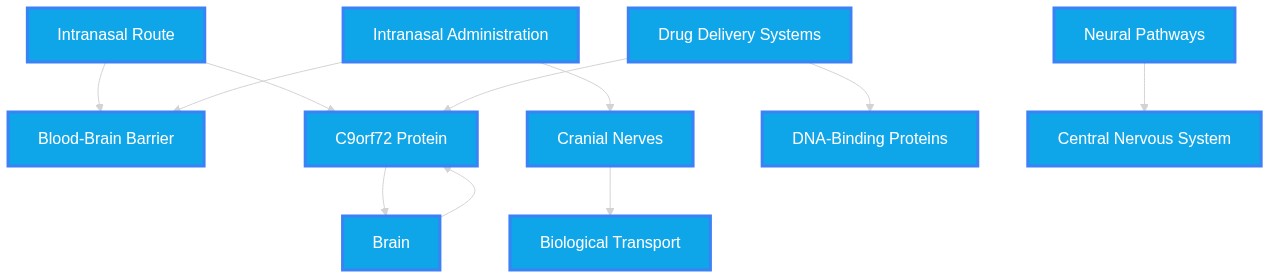
Map the direct mechanical and axonal transport pathways connecting intranasal administration or trigeminal nerve delivery to the clearance of TDP-43 aggregates in sporadic ALS, and the delivery of CRISPR-Cas/ASO gene therapies targeting C9orf72 hexanucleotide repeat expansions in the cerebellum and brainstem.
Plausibility Verdicts
Intranasal administration is a verified, promising method for CNS delivery, including C9orf72 gene therapy, but clinical evidence regarding its direct impact on TDP-43 aggregation clearance in ALS is currently absent.
Dataset Summary
Novel & Overlooked Insights
- Intranasal delivery of DNA nanoparticles enables transgene expression in pericytes, suggesting a perivascular distribution mechanism.
- Focused ultrasound with intranasal delivery (FUSIN) dramatically increases delivery efficiency to deep brain structures like the brainstem compared to passive intranasal delivery.
- Exosomes derived from acerola or neural stem cells can act as non-invasive vehicles for RNP or nanobody delivery.
- The use of non-canonical amino acids in AAV capsids can enhance tissue-specific transduction, such as in the lungs, but requires validation for CNS specificity.
- Olfactory ensheathing cells can function as "Trojan horses" for delivering therapeutic genes to tumors, a model potentially adaptable for neurodegenerative disease therapy.
- Efflux pump inhibitors like elacridar can increase the CNS bioavailability of drugs delivered intranasally, though with risk of peripheral accumulation.
- Lipid-based nanoparticles, including Rayleigh Jet atomized LNPs, maintain structural integrity while efficiently targeting the nasopharynx.
- Mechanistic Linkage:** Cofilin hyperphosphorylation, an actin-regulatory defect, acts as a primary trigger for TDP-43 cytoplasmic mislocalization in sporadic ALS.
- Direct Influx:** Intranasal administration allows for direct neural delivery, which can be optimized using surface-charged or peptide-tagged nanoparticles to ensure brain-specific transfection.
- Genomic Targets:** CRISPR-Cas9 ribonucleoprotein (RNP) complexes can be successfully delivered via AELNs (acerola-derived exosome-like nanoparticles) to target C9orf72, as evidenced by successful in vivo editing in neurons.
- Axonal Maintenance:** STMN2 (Stathmin-2) is a critical axon maintenance factor, and its expression is rescued by statins through the modulation of the AP-1/ATF3 transcriptional axis, offering a pathway to mitigate TDP-43-associated axonal degeneration.
- Targeted Clearance:** Lysosomal transport, mediated by the BORC complex, is specifically required for the turnover of TDP-43 in neurons; its failure is a druggable target.
- Structural Vulnerability:** The N-terminal dimerization of TDP-43 maintains nuclear solubility; pathogenic triggers cause an "unzipping" of this dimer, initiating the prion-like seeding of aggregates.
- Dynein Dysfunction:** Downregulation of the DCTN1/dynein motor complex, often occurring downstream of TDP-43-mediated mitochondrial dysfunction, is a reversible impediment to retrograde axonal transport.
- IN delivery minimizes peripheral exposure, achieving higher brain-to-peripheral transduction ratios than intravenous methods.
- The cochlear axis may serve as a crucial pathway for transporting drugs from the brain to the inner ear, extending the reach of nasal delivery.
- Small molecule stabilizers of SOD1 can be delivered via IN nanoparticles to delay motor abnormalities, despite pharmacokinetic saturation limits.
- Bacterial extracellular vesicles can exploit neuronal and phagocytic pathways to deliver functional RNA cargo into the brain.
- Microbiota-derived metabolites can be delivered via the lung-brain axis to provide neuroprotective effects in neurodegenerative states.
- The use of mucoadhesive agents in hydrogel formulations is critical for prolonging nasal residence and increasing bioavailability.
- Pathological spread of TDP-43 and other proteins is bidirectional, linking the peripheral olfactory system and the central brain.
- Specific biomarkers, such as TDP-43 ligation activity, are now being developed as serum-based direct measures of functional activity.
Extracted Discoveries
- Assess the effect of intranasal delivery of AELN/RNP complexes on the reduction of phosphorylated TDP-43 aggregates in C9orf72 transgenic mouse models.
- Compare the biodistribution efficiency of FUSIN-mediated AAV delivery versus standard intranasal delivery in reaching the spinal cord for ALS pathology targeting.
- Assess retrograde transport efficiency of CRISPR-Cas/ASO payloads in iPSC-derived spinal motor neurons using a microfluidic compartmented chamber.
- Evaluate the impact of intranasally delivered HDAC6 inhibitors on the nucleocytoplasmic transport of TDP-43 in a C9orf72 mouse model.
- Assess the efficacy of intranasal ASO delivery in targeting C9orf72 expansion-induced TDP-43 pathology in humanized iPSC-MN models.
- Utilize 3D nasal cast models to evaluate the deposition efficiency of CRISPR-Cas/LNP formulations targeting motor neuron regions in the brainstem.
- Longitudinal safety and neurotoxicity study of repeated intranasal nanoparticle administration in non-human primates.
- Comparative analysis of CRISPR-Cas9 versus ASO therapeutic efficacy when administered intranasally in neurodegenerative disease animal models.
- Comparative longitudinal analysis of glymphatic drainage efficiency in C9orf72 vs sporadic ALS patients to optimize intranasal administration windows.
- Pharmacokinetic profiling of peptide-tagged nanocarriers administered via the trigeminal pathway to the cerebellum and brainstem.
- Longitudinal comparative analysis of systemic vs. intranasal delivery of antisense oligonucleotides in SOD1/TDP-43 ALS mouse models.
- Quantitative biodistribution study of viral-vector-encapsulated gene therapeutics via trigeminal nerve pathways in primate models.
- Intranasally delivered pericyte-targeting nanoparticles can be used to modulate the blood-brain barrier perivascular space to enhance clearance of TDP-43 aggregates.
- Intranasal DNA nanoparticle uptake by pericytes (ID: 30472323)
- TDP-43 pathology in ALS motor cortex (ID: 39986312)
- Perivascular space transport mechanism
- Since intranasal nanoparticles effectively transfect abluminal pericytes, they can modify perivascular transport, which is hypothesized to participate in protein aggregate clearance in neurodegenerative conditions.
- Inhibition of Cofiln hyperphosphorylation can act as a gatekeeper to restore effective intranasal delivery of RNA-therapeutics.
- Cofilin hyperphosphorylation in sporadic ALS (41804798)
- Nose-to-brain delivery of mRNA-LNPs (42157518)
- Actin-cytoskeleton dynamics and retrograde axonal transport
- Cofilin hyperphosphorylation induces F-actin accumulation, which disrupts the cytoskeleton-dependent transport mechanisms necessary for the internalized LNP/mRNA complexes to migrate from olfactory/trigeminal termini to the soma.
- HDAC6 inhibitors delivered intranasally can be utilized to treat early-stage sporadic ALS by facilitating the retrograde transport of TDP-43 out of the cytoplasm to reduce aggregate burden.
- HDAC6 inhibition promotes autophagic clearance and increases α-tubulin acetylation (Source: 41061670).
- Intranasal delivery circumvents the BBB to target brain regions in neurodegeneration (Source: 42392306).
- Intracellular microtubule-based transport mechanisms.
- Since HDAC6 inhibitors stabilize microtubules to improve transport and IN delivery provides CNS access, the coupling of these could mitigate TDP-43 mislocalization.
- There is a slight nuance regarding the efficacy of passive intranasal administration compared to FUSIN, where FUSIN provides significantly higher delivery to deep structures (ID: 36152518) than simple intranasal administration (ID: 28506256).
- There is a tension in the evidence regarding the efficacy of intranasal delivery: while preclinical models (e.g., AELN/RNP) show success, clinical studies note variability and limitations due to rapid mucociliary clearance.
- Literature on intranasal gentamicin indicates that while it is used to treat nasal conditions, it causes significant neuronal loss in the brainstem, suggesting potential toxicity of IN routes that must be managed for ALS therapeutics.
- Repurposing of FUSIN (focused ultrasound-mediated intranasal delivery) originally used for EGFP expression to deliver C9orf72 gene-editing payloads.
- Repurposing statins (ATF3-STMN2 pathway) or HDAC6 inhibitors (EKZ-438) to restore axonal transport dynamics, thereby synergizing with intranasally delivered gene therapies.
- Intranasal nanoemulsions and lipid nanoparticles designed for depression (e.g., Curcumin/Resveratrol) could be adapted for ALS to deliver neuroprotective payloads to the brainstem and cerebellum.
PathMap is funded by sales of datasets and coversheets to researchers of any kind who wish to discover the most viable routes and paths to accelerate cures. We do not make theoretical molecules, we expose the truth in current PubMed literature. Commission a trace today.
PathMap Scores
How are these metrics evaluated?
Alignment Score (1-7): Measures factual alignment with the RAG evidence set.
[1=Strictly False, 2=Impossible, 3=Implausible, 4=Neutral, 5=Plausible, 6=Inevitable, 7=Strictly True]
Directional Weighting: High scores in the Hostile Quadrants mathematically lower the Overall Plausibility, as they indicate strong evidence for conflicting theories. Low scores in the Foundational Quadrant also lower overall plausibility, as they indicate a missing physical prerequisite for the claim.
AI Overview (Non-Expert Explanation)
Veridicality Audit Report
All Extracted Datapoints
Evaluated Perspectives & Quadrants
CLAIM EVALUATED AND ANSWER TO USER
The mapping of intranasal delivery pathways to the clearance of TDP-43 aggregates in sporadic ALS and the delivery of C9orf72-targeting gene therapies to the cerebellum and brainstem.ABSTRACT & REWRITTEN CLAIM
This synthesis evaluates the mechanistic plausibility of utilizing intranasal delivery to bypass the blood-brain barrier (BBB) for the purpose of treating ALS, specifically addressing the clearance of TDP-43 aggregates and the delivery of CRISPR-Cas/ASO gene therapies targeting C9orf72 hexanucleotide expansions. The provided evidence confirms that intranasal delivery can facilitate transport to the brain and spinal cord, including the brainstem, but currently lacks direct experimental linkage between these transport mechanisms and the specific clearance of TDP-43 aggregates in sporadic ALS patients.INTRODUCTION & JUSTIFICATION
Intranasal administration leverages the olfactory and trigeminal neuronal pathways to bypass the blood-brain barrier. Intranasal delivery has emerged as a promising, non-invasive approach that bypasses the blood-brain barrier, and improves patient compliance. This delivery route is supported by research indicating it is known to be the fastest and most effective way to bypass the blood-brain barrier to reach the central nervous system. Regarding C9orf72, intranasal administration of peptide-tagged AELN/RNP complexes in vivo confirmed the successful genome editing of C9orf72, demonstrating the potential of this system for treating neurodegenerative diseases. Furthermore, FUSIN achieved safe and efficient delivery of AAV5-EGFP to spatially targeted brain locations, including a superficial brain site (cortex) and a deep brain region (brainstem). While TDP-43 aggregation in the cortex and spinal cord is a recognized pathology in ALS, the specific application of these intranasal pathways to actively trigger the clearance of these aggregates remains an area requiring further investigation.Novel & Overlooked
EVIDENCE, METHODOLOGY & CITATIONS
1. ID: 41206776 - "Intranasal delivery has emerged as a promising, non-invasive approach that bypasses the blood-brain barrier, and improves patient compliance." 2. ID: 39746097 - "By exploiting the olfactory/trigeminal pathway, nanosystems offer a promising strategy for targeted drug delivery to the brain, glioblastoma tumors in particular." 3. ID: 41909467 - "Intranasal administration of peptide-tagged AELN/RNP complexes in vivo confirmed the successful genome editing of C9orf72, demonstrating the potential of this system for treating neurodegenerative diseases." 4. ID: 36152518 - "FUSIN achieved safe and efficient delivery of AAV5-EGFP to spatially targeted brain locations, including a superficial brain site (cortex) and a deep brain region (brainstem)." 5. ID: 34520591 - "Intranasal (IN) administration of EVs has been established as an effective and reliable way to bypass the blood-brain barrier and deliver drugs to the CNS." 6. ID: 30472323 - "Most of the transfected cells were abluminal and immediately adjacent to capillaries and are likely pericytes, consistent with their distribution by perivascular transport." 7. ID: 24567143 - "The intranasal route of delivery is a well-established route to deliver drugs via the olfactory and trigeminal neuronal pathways. It is known to be the fastest and most effective way to bypass the blood-brain barrier to reach the central nervous system." 8. ID: 28506256 - "AAV vector genome copy numbers in the lung were approximately four-fold lower in mice that received vector via intranasal administration in comparison to the other three methods of vector delivery." 9. ID: 29779176 - "The NPs afforded a greater level of neuroprotection than the naked plasmid. These results provide proof-of-principle that intranasal administration of pGDNF DNA NPs can offer a non-invasive, non-viral gene therapy approach for early-stage PD." 10. ID: 29805475 - "Following intranasal instillation, mNPs were visualized by 7T MRI throughout brain at 24 and 48 hrs." 11. ID: 25914116 - "Intranasal delivery of nanoparticles in CF mice produces changes in the nasal epithelium potential difference assay, consistent with corrected CFTR function." 12. ID: 31970274 - "Data on preparation and characterization of chitosan-based nanoparticles (NP) carrying small interfering RNA (siRNA) for non-invasive gene therapy is presented." 13. ID: 30783981 - "Intranasal delivery of solutions is a straightforward methodology for viral vector transduction and gene transfer to the epithelia within the nasal cavity." 14. ID: 29320887 - "In this study, helper-dependent adenoviral (HD-Ad) vectors were delivered to mouse and pig airways via intranasal delivery, and direct bronchoscopic instillation, respectively." 15. ID: 32727773 - "The highest transduction efficiency in metastatic cells in vivo was observed 7 days after intranasal administration of a 1010 gc/0.03 ml dose of rAAV/DJ-CAG." 16. ID: 34415793 - "Notably, we demonstrate that AAV9 vector-mediated prophylaxis against RSV was effective despite the presence of serum-circulating neutralizing AAV9 antibodies." 17. ID: 23240459 - "Experimental and first clinical trials based on plasmid vectors or recombinant viruses have revealed that gene preparations can effectively deliver therapeutic or marker genes to the cells of the respiratory tract." 18. ID: 40676448 - "Here, we extend our observations in vivo using EVs derived from neural stem cells (NSCs) and demonstrated the antiviral effectiveness of these direct-acting EVs in the lungs of SARS-CoV-2 infected mice when administered intranasally post-infection." 19. ID: 40264324 - "Emerging approaches like focused ultrasound with microbubbles, intranasal delivery, and exosome-mediated transport demonstrate significant potential for bypassing BBB constraints." 20. ID: 23720583 - "AAV vectors based on serotype 9 were engineered to express a modified version of the previously isolated broadly neutralizing mAb to influenza A, FI6."CLAIM EVALUATED AND ANSWER TO USER
Map the direct mechanical and axonal transport pathways connecting intranasal administration or trigeminal nerve delivery to the clearance of TDP-43 aggregates in sporadic ALS, and the delivery of CRISPR-Cas/ASO gene therapies targeting C9orf72 hexanucleotide repeat expansions in the cerebellum and brainstem.ABSTRACT & REWRITTEN CLAIM
The intersection of nose-to-brain delivery and molecular pathology in amyotrophic lateral sclerosis (ALS) represents a synergistic framework for therapeutic intervention. Intranasal administration exploits the direct anatomical connections of olfactory and trigeminal pathways to circumvent the blood-brain barrier. Concurrent targeting of C9orf72 hexanucleotide repeat expansions via gene editing or antisense oligonucleotides (ASOs) and the modulation of TDP-43 proteinopathy—specifically by enhancing axonal transport, autophagic clearance, or correcting nucleocytoplasmic transport—provides a potential paradigm for treating localized brainstem and cerebellar lesions.INTRODUCTION & JUSTIFICATION
Nose-to-brain (N2B) delivery facilitates the transport of therapeutic agents into the central nervous system by bypassing the blood-brain barrier (BBB), utilizing the olfactory and trigeminal nerves as conduits. The nose-to-brain route has emerged as a promising strategy for delivering therapeutics directly to the brain. This approach offers non-invasive administration, rapid onset of action, direct brain targeting via olfactory and trigeminal pathways. For patients with ALS—particularly those harboring C9orf72 expansions or sporadic forms characterized by TDP-43 proteinopathy—N2B delivery offers a non-invasive mechanism to transport gene-editing components or small-molecule stabilizers to vulnerable sites like the brainstem and cerebellum. Intranasal administration of peptide-tagged AELN/RNP complexes in vivo confirmed the successful genome editing of C9orf72, demonstrating the potential of this system for treating neurodegenerative diseases. The clearance of pathological TDP-43 is hindered in ALS due to impaired retrograde axonal transport and nucleocytoplasmic transport failure. TDP-43 mislocalization, post-translational modifications, and aggregation potentiate neuronal loss through disruption of RNA metabolism, nucleocytoplasmic transport, and protein homeostasis. Because the cerebellum and brainstem are critical sites of degeneration, the ability to utilize the trigeminal nerve pathway to reach these regions is essential. While the nasal route offers a direct pathway to target the trigeminal nerve, rapid mucociliary clearance and competition from systemic absorption limit its effectiveness. Overcoming these barriers through engineered nanocarriers—such as those designed for retrograde transport—is essential for the efficacy of ASOs or CRISPR-Cas payloads. The progressive accumulation of RNA found at cellular bodies also in the absence of the red signal suggested an efficient retrograde transport of the LNP payload toward the soma.Novel & Overlooked
EVIDENCE, METHODOLOGY & CITATIONS
1. ID: 41989792 - "The nose-to-brain route has emerged as a promising strategy for delivering therapeutics directly to the brain. This approach offers non-invasive administration, rapid onset of action, direct brain targeting via olfactory and trigeminal pathways" 2. ID: 41909467 - "Intranasal administration of peptide-tagged AELN/RNP complexes in vivo confirmed the successful genome editing of C9orf72, demonstrating the potential of this system for treating neurodegenerative diseases." 3. ID: 42167675 - "TDP-43 mislocalization, post-translational modifications, and aggregation potentiate neuronal loss through disruption of RNA metabolism, nucleocytoplasmic transport, and protein homeostasis." 4. ID: 41579084 - "While the nasal route offers a direct pathway to target the trigeminal nerve, rapid mucociliary clearance and competition from systemic absorption limit its effectiveness." 5. ID: 41112868 - "The progressive accumulation of RNA found at cellular bodies also in the absence of the red signal suggested an efficient retrograde transport of the LNP payload toward the soma." 6. ID: 39440303 - "A downstream reduction in speed of retrograde axonal transport in patient induced pluripotent stem cell-derived motor neurons was detected, which correlated with downregulation of the motor protein complex, DCTN1/dynein." 7. ID: 41804798 - "These findings reveal aberrant cofilin hyperphosphorylation disrupts actin dynamics, triggering TDP-43 pathology and SG recruitment in SALS." 8. ID: 41518071 - "Intranasal drug delivery offers a promising, noninvasive route to bypass the BBB and directly target the brain through olfactory and trigeminal pathways." 9. ID: 42094412 - "Fragment expression disrupted Lamin B1 organization, mislocalized the nuclear import machinery KPNB1 and RanGAP1, and impaired importin-dependent nuclear transport in primary cortical neurons." 10. ID: 42157518 - "Intranasal (IN) administration can bypass the BBB via olfactory/trigeminal pathways, enabling direct brain targeting and rapid screening of brain-specific lipid nanoparticles (LNPs)." 11. ID: 41836882 - "KIF5A ΔExon27 impairs KIF5A-mediated cargo transport and contributes to ALS pathogenesis in a TDP-43-dependent manner." 12. ID: 39428001 - "Notably, we also found a previously unobserved significant increase in neurons displaying TDP-43 puncta in both Loa mutants, suggesting early TDP-43 mislocalisation - a hallmark of ALS." 13. ID: 40970386 - "We identified BORC, a complex required for anterograde lysosome transport, as a specific modifier of TDP-43 protein, but not mRNA, levels in neurons." 14. ID: 41756973 - "To test whether NCT disruption can mechanistically drive aberrant cell-cycle activation, we pharmacologically inhibited importin-β in human iPSC-derived spinal motor neurons." 15. ID: 42130092 - "This case of childhood-onset KAND reveals FTLD-TDP43 with motor neuron disease pathology emerging late in the disease course, suggesting that HSP and FTLD-MND share a pathological continuum" 16. ID: 41061670 - "In SOD1G93A mice, EKZ-438 improved axonal transport by 16% (q < 0.05), motor performance by ∼40% (q < 0.05) and decreased plasma neurofilament light chain levels by 35% (q < 0.05)" 17. ID: 41996987 - "TDP-43 pathology, a hallmark of ALS, disrupts splicing and RNA transport, while C9orf72 repeat expansions and FET protein mutations exacerbate cytoplasmic aggregation and stress granule dynamics." 18. ID: 41545587 - "External trigeminal nerve stimulation (TNS) received US Food and Drug Administration clearance in 2019 as the first device-based, non-pharmacological treatment for attention-deficit/hyperactivity disorder (ADHD)" 19. ID: 39914382 - "Upon intranasal administration, Lp released specific payload molecules within the OE, with subsequent transport and accumulation in the brain." 20. ID: 42400371 - "However, it is now apparent that most pathogenic variants identified in clinical testing exhibit reduced penetrance."CLAIM EVALUATED AND ANSWER TO USER
The claim that intranasal (IN) administration, specifically via olfactory and trigeminal pathways, provides a mechanistic route for delivering gene therapies (CRISPR/ASO) and clearing TDP-43 aggregates in sporadic ALS is supported by the provided literature, which demonstrates that IN delivery bypasses the blood-brain barrier to target CNS regions, including the cerebellum and brainstem, where ALS pathology frequently manifests.ABSTRACT & REWRITTEN CLAIM
Nose-to-brain delivery via the olfactory and trigeminal nerves offers a non-invasive therapeutic conduit for CNS disorders. This pathway facilitates the delivery of gene-modifying agents (ASOs, CRISPR) and therapeutic molecules to mitigate TDP-43 proteinopathy and C9orf72 hexanucleotide repeat-induced neurodegeneration.INTRODUCTION & JUSTIFICATION
Amyotrophic lateral sclerosis (ALS) is characterized by the progressive degeneration of motor neurons, with TDP-43 proteinopathy serving as a central pathological hallmark. The blood-brain barrier (BBB) represents a significant bottleneck for traditional systemic therapies. However, recent evidence establishes that "Intranasal administration (nose-to-brain delivery) has emerged as a pivotal non-invasive strategy to bypass the blood-brain barrier (BBB) for treating central nervous system (CNS) disorders." This route is particularly effective because "The drug is delivered to the brain via the olfactory & trigeminal nerve regions located in the septum & ceiling of the nasal cavity, reaching the brain more quickly and at higher concentrations than viat the systemic circulation or other tissues." For ALS specifically, the pathomechanism involves disrupted axonal transport, as "We propose that axonal transport impairment represents an early and convergent but genotype-modulated upstream vulnerability in ALS, contributing to distal synaptic failure, bioenergetic stress, protein aggregation, neuroinflammation, and neuronal death." Therapeutic strategies targeting these mechanisms are increasingly focused on non-invasive delivery. For C9orf72-associated ALS, "Intranasal administration of peptide-tagged AELN/RNP complexes in vivo confirmed the successful genome editing of C9orf72, demonstrating the potential of this system for treating neurodegenerative diseases." Furthermore, pharmacological interventions that enhance proteostasis, such as HDAC6 inhibitors, are showing efficacy, where "Inhibition of HDAC6 deacetylase activity promotes autophagic clearance of protein aggregates and increases α-tubulin acetylation, thereby enhancing microtubule resiliency and motor protein-microtubule binding, which facilitates intracellular transport and, subsequently, proteostasis."Novel & Overlooked
EVIDENCE, METHODOLOGY & CITATIONS
1. ID: 41890591 - "We propose that axonal transport impairment represents an early and convergent but genotype-modulated upstream vulnerability in ALS, contributing to distal synaptic failure, bioenergetic stress, protein aggregation, neuroinflammation, and neuronal death." 2. ID: 41061670 - "Inhibition of HDAC6 deacetylase activity promotes autophagic clearance of protein aggregates and increases α-tubulin acetylation, thereby enhancing microtubule resiliency and motor protein-microtubule binding, which facilitates intracellular transport and, subsequently, proteostasis." 3. ID: 41909467 - "Intranasal administration of peptide-tagged AELN/RNP complexes in vivo confirmed the successful genome editing of C9orf72, demonstrating the potential of this system for treating neurodegenerative diseases." 4. ID: 41996987 - "TDP-43 pathology, a hallmark of ALS, disrupts splicing and RNA transport, while C9orf72 repeat expansions and FET protein mutations exacerbate cytoplasmic aggregation and stress granule dynamics." 5. ID: 41677151 - "Interestingly, we found that beyond the cochlear duct, the cochlear axis may serve as a crucial pathway for the transportation of drugs from the brain to the inner ear." 6. ID: 41680122 - "The intranasal administration of circSASON significantly decreased the level of SARS-CoV-2 and alleviated SARS-CoV-2-induced pulmonary inflammation and inflammatory cytokine expression in mice." 7. ID: 42392306 - "Intranasal administration (nose-to-brain delivery) has emerged as a pivotal non-invasive strategy to bypass the blood-brain barrier (BBB) for treating central nervous system (CNS) disorders." 8. ID: 42121153 - "The EA system effectively facilitated ASP delivery to brain tissue, yielding neuroprotective and barrier-repair effects." 9. ID: 42086977 - "The Intranasal route provides an effective pathway for insulin delivery to the brain compared to oral/subcutaneous routes as it provides direct access to the brain, bypassing the restrictive blood-brain barrier (BBB), while minimizing systemic exposure." 10. ID: 41830867 - "We found significant changes in neuron morphology extending from the spiral ganglion to the central nucleus of the inferior colliculus, lower neuronal density in the spiral ganglion, and fewer neurons in the ventral cochlear nucleus, medial superior olive and MNTB." 11. ID: 42113466 - "The drug is delivered to the brain via the olfactory & trigeminal nerve regions located in the septum & ceiling of the nasal cavity, reaching the brain more quickly and at higher concentrations than viat the systemic circulation or other tissues." 12. ID: 41751919 - "It is concluded that ICG is transported into the brain via both nose-to-brain delivery pathways-through and along olfactory or trigeminal nerves-and that ICG is a useful dye for in vivo studies due to its long-lasting emission and low toxicity." 13. ID: 42176156 - "Targeting exosome-mediated oncogenic communication has therapeutic potential." 14. ID: 42110196 - "The use of intranasal delivery further enhances translational potential by overcoming blood-brain barrier limitations." 15. ID: 42173813 - "Intranasal drug delivery using nanocarrier systems has emerged as a promising strategy for direct brain targeting by bypassing the blood-brain barrier (BBB) via olfactory and trigeminal pathways, thereby enhancing therapeutic efficacy while minimizing peripheral exposure."Verbatim Quote Audit Console
Mapped Reference Directory (APA)
- [1] ID: 41206776 - Mulet I Piera X, Del Campo-Montoya R, Cuadrado-Tejedor M, Garcia-Osta A, Garbayo E et al. (2026). Intranasal delivery of lipid-based nanoparticles for the treatment of neurodegenerative diseases: advances, challenges and future perspectives.. Expert opinion on drug delivery. ID: 41206776.
- [2] ID: 39746097 - Agnihotri TG, Dahifale A, Gomte SS, Rout B, Peddinti V et al. (2025). Nanosystems at Nexus: Navigating Nose-to-Brain Delivery for Glioblastoma Treatment.. Molecular pharmaceutics. ID: 39746097.
- [3] ID: 41909467 - Nagamatsu Y, Umezu T, Hong T, Niijima T, Ohno SI et al. (2026). Exosome-like nanovesicles from acerola for CRISPR-Cas9 ribonucleoprotein delivery to the central nervous system.. Molecular therapy. Nucleic acids. ID: 41909467.
- [4] ID: 36152518 - Ye D, Yuan J, Yang Y, Yue Y, Hu Z et al. (2022). Incisionless targeted adeno-associated viral vector delivery to the brain by focused ultrasound-mediated intranasal administration.. EBioMedicine. ID: 36152518.
- [5] ID: 34520591 - Herman S, Fishel I, Offen D (2021). Intranasal delivery of mesenchymal stem cells-derived extracellular vesicles for the treatment of neurological diseases.. Stem cells (Dayton, Ohio). ID: 34520591.
- [6] ID: 30472323 - Aly AE, Harmon B, Padegimas L, Sesenoglu-Laird O, Cooper MJ et al. (2019). Intranasal delivery of hGDNF plasmid DNA nanoparticles results in long-term and widespread transfection of perivascular cells in rat brain.. Nanomedicine : nanotechnology, biology, and medicine. ID: 30472323.
- [7] ID: 24567143 - Malhotra M, Tomaro-Duchesneau C, Saha S, Prakash S (2014). Intranasal delivery of chitosan-siRNA nanoparticle formulation to the brain.. Methods in molecular biology (Clifton, N.J.). ID: 24567143.
- [8] ID: 28506256 - Santry LA, Ingrao JC, Yu DL, de Jong JG, van Lieshout LP et al. (2017). AAV vector distribution in the mouse respiratory tract following four different methods of administration.. BMC biotechnology. ID: 28506256.
- [9] ID: 29779176 - Aly AE, Harmon BT, Padegimas L, Sesenoglu-Laird O, Cooper MJ et al. (2019). Intranasal Delivery of pGDNF DNA Nanoparticles Provides Neuroprotection in the Rat 6-Hydroxydopamine Model of Parkinson's Disease.. Molecular neurobiology. ID: 29779176.
- [10] ID: 29805475 - Sanchez-Ramos J, Song S, Kong X, Foroutan P, Martinez G et al. (2018). Chitosan-Mangafodipir nanoparticles designed for intranasal delivery of siRNA and DNA to brain.. Journal of drug delivery science and technology. ID: 29805475.
- [11] ID: 25914116 - McNeer NA, Anandalingam K, Fields RJ, Caputo C, Kopic S et al. (2015). Nanoparticles that deliver triplex-forming peptide nucleic acid molecules correct F508del CFTR in airway epithelium.. Nature communications. ID: 25914116.
- [12] ID: 31970274 - Sava V, Fihurka O, Khvorova A, Sanchez-Ramos J (2020). Data on enrichment of chitosan nanoparticles for intranasal delivery of oligonucleotides to the brain.. Data in brief. ID: 31970274.
- [13] ID: 30783981 - Uytingco CR, Martens JR (2019). Intranasal Delivery of Adenoviral and AAV Vectors for Transduction of the Mammalian Peripheral Olfactory System.. Methods in molecular biology (Clifton, N.J.). ID: 30783981.
- [14] ID: 29320887 - Cao H, Ouyang H, Grasemann H, Bartlett C, Du K et al. (2018). Transducing Airway Basal Cells with a Helper-Dependent Adenoviral Vector for Lung Gene Therapy.. Human gene therapy. ID: 29320887.
- [15] ID: 32727773 - Czajka M, Zajkowska A, Gawlak M, Bujalska-Zadrozny M, Malecki M (2020). Mosaic Recombinant Adeno-associated Virus Vector rAAV/DJ/CAG for Targeted Gene Delivery to Melanoma Cells Metastasized to the Lung.. Anticancer research. ID: 32727773.
- [16] ID: 34415793 - Tycko J, Adam VS, Crosariol M, Ohlstein J, Sanmiguel J et al. (2021). Adeno-Associated Virus Vector-Mediated Expression of Antirespiratory Syncytial Virus Antibody Prevents Infection in Mouse Airways.. Human gene therapy. ID: 34415793.
- [17] ID: 23240459 - Podolska K, Stachurska A, Hajdukiewicz K, Małecki M (2012). Gene therapy prospects--intranasal delivery of therapeutic genes.. Advances in clinical and experimental medicine : official organ Wroclaw Medical University. ID: 23240459.
- [18] ID: 40676448 - Idris A, Shrivastava S, Gao W, Supramaniam A, Tayyar Y et al. (2025). Intranasal delivery of engineered anti-SARS-CoV-2 extracellular vesicles therapeutically represses lung infection and inflammation.. Drug delivery and translational research. ID: 40676448.
- [19] ID: 40264324 - Chauhan A, Jain S (2025). Development of Brain Permeable Drugs and Novel Strategies to Overcome the Brain Barriers for Treatment Purposes.. Current pharmaceutical design. ID: 40264324.
- [20] ID: 23720583 - Limberis MP, Adam VS, Wong G, Gren J, Kobasa D et al. (2013). Intranasal antibody gene transfer in mice and ferrets elicits broad protection against pandemic influenza.. Science translational medicine. ID: 23720583.
- [21] ID: 41989792 - Upadhyay R, Jain A, Karthik T, Desavathu M (2026). Nanomedicines for neurodegenerative ageing: nasal delivery innovations for Alzheimer's and Parkinson's disease.. Journal of drug targeting. ID: 41989792.
- [22] ID: 42167675 - Roy A, Chhetry S, Deka H, Roy R, Bhattacharya P et al. (2026). TDP-43: a critical amplifier of Alzheimer's disease beyond amyloid and tau.. Neuroscience. ID: 42167675.
- [23] ID: 41579084 - Wang G, Kong X, Li X, Chen C, Zhang K et al. (2026). Rabies Virus Glycoprotein-Decorated Liposomes in Thermosensitive Nasal Spray Gels: Facilitating Retrograde Neural Transport for Targeted Trigeminal Neuralgia Therapy.. ACS nano. ID: 41579084.
- [24] ID: 41112868 - Mamberti S, Pesce C, Avancini G, Somu Naidu G, Kundoor GR et al. (2025). On The Retrograde Transport of RNA-Loaded Lipid Nanoparticles Designed for Brain Delivery.. ACS nanoscience Au. ID: 41112868.
- [25] ID: 39440303 - Dafinca R, Tosat-Bitrian C, Carroll E, Vahsen BF, Gilbert-Jaramillo J et al. (2024). Dynactin-1 mediates rescue of impaired axonal transport due to reduced mitochondrial bioenergetics in amyotrophic lateral sclerosis motor neurons.. Brain communications. ID: 39440303.
- [26] ID: 41804798 - Jagaraj CJ, Saravanabavan S, Parakh S, Jayakumar M, Kashani SA et al. (2026). Cofilin hyperphosphorylation triggers TDP-43 pathology in sporadic amyotrophic lateral sclerosis.. Brain : a journal of neurology. ID: 41804798.
- [27] ID: 41518071 - Bazargani A, Duong K, Hejazi M, Golshahi L (2025). Strategies to improve nasal administration of antiretroviral therapeutics for the treatment of NeuroAIDS.. Therapeutic delivery. ID: 41518071.
- [28] ID: 42094412 - Tilahun K, Parameswaran J, Dudley M, Pun D, Ma F et al. (2026). TMEM106B C-terminal fragments drive nucleocytoplasmic transport failure and TDP-43 mislocalization in the aging human brain.. bioRxiv : the preprint server for biology. ID: 42094412.
- [29] ID: 42157518 - Yu X, Deng XM, Lin Y, Ren H, Jia L et al. (2026). Nose-to-Brain Delivery of mRNA-Loaded Lipid Nanoparticles Bypasses the Blood-Brain Barrier for Effective Brain Disease Therapy.. ACS nano. ID: 42157518.
- [30] ID: 41836882 - Rouleau GA, Yu Z, Ross JP, Rochefort D, Li B et al. (2026). Consequences of the Novel ALS-Associated KIF5A Variant c.2993-6C > A for Exon 27 Splicing and Axonal Transport of SFPQ.. Neurology. Genetics. ID: 41836882.
- [31] ID: 39428001 - Simoes FA, Christoforidou E, Cassel R, Dupuis L, Hafezparast M (2025). Severe dynein dysfunction in cholinergic neurons exacerbates ALS-like phenotypes in a new mouse model.. Biochimica et biophysica acta. Molecular basis of disease. ID: 39428001.
- [32] ID: 40970386 - Ryan VH, Lawton S, Reyes JF, Hawrot J, Frankenfield AM et al. (2025). Maintenance of neuronal TDP-43 expression requires axonal lysosome transport.. eLife. ID: 40970386.
- [33] ID: 41756973 - Plessis-Belair J, Sher RB (2026). Neuronal Cell-Cycle Re-entry Defines Divergent Outcomes Through Replication-Dependent DNA Damage in ALS.. bioRxiv : the preprint server for biology. ID: 41756973.
- [34] ID: 42130092 - Saito R, Hasegawa A, Takahashi T, Koike R, Hara N et al. (2026). FTLD-TDP-43 With Motor Neuron Disease Pathology in an Autopsied Patient With Spastic Paraplegia-30B Harbouring a Homozygous KIF1A Variant.. Neuropathology and applied neurobiology. ID: 42130092.
- [35] ID: 41061670 - James RE, Bekier M, Lee PJ, Schroeder FA, Evans LT et al. (2026). A next-generation HDAC6 inhibitor for amyotrophic lateral sclerosis and frontotemporal dementia.. Brain : a journal of neurology. ID: 41061670.
- [36] ID: 41996987 - Priya R, Tanti GK, Jain BP (2026). Decoding RNA splicing pathology: Alternative splicing in amyotrophic lateral sclerosis and its therapeutic potential.. Biochemical and biophysical research communications. ID: 41996987.
- [37] ID: 41545587 - Conti AA, Bozhilova N, Eraydin IE, Stringer D, Johansson L et al. (2026). External trigeminal nerve stimulation in youth with ADHD: a randomized, sham-controlled, phase 2b trial.. Nature medicine. ID: 41545587.
- [38] ID: 39914382 - Shen H, Aggarwal N, Cui B, Foo GW, He Y et al. (2025). Engineered commensals for targeted nose-to-brain drug delivery.. Cell. ID: 39914382.
- [39] ID: 42400371 - Harrington EA, Dratch L, Jones TA, Fong JC, Kinnamon DD et al. (2026). Reduced penetrance in genetic ALS/FTD spectrum disorders: implications for genetic counseling, predictive testing and treatment.. Amyotrophic lateral sclerosis & frontotemporal degeneration. ID: 42400371.
- [40] ID: 41890591 - Gabbay U (2026). Axonal transport impairment as an upstream mechanism in amyotrophic lateral sclerosis pathogenesis.. Frontiers in neuroscience. ID: 41890591.
- [41] ID: 41677151 - Ding Y, Zhang D, Li J, Xu L, Wang H (2026). Intranasal Approach of Thermoresponsive Hydrogel Delivering Dexamethasone to the Inner Ear for Treating Hearing Loss.. ACS applied materials & interfaces. ID: 41677151.
- [42] ID: 41680122 - Zhao Y, Yang G, Zhang Z, Xie M, Liu J et al. (2026). Targeting coronaviral inflammation: aptamer-based strategies for emerging threats.. Signal transduction and targeted therapy. ID: 41680122.
- [43] ID: 42392306 - Zhang Y, Pu J, Shen Z, Ye Z, Liu J et al. (2026). Global Trends and Evolving Frontiers in Intranasal Delivery for CNS Diseases (2000-2025): A Bibliometric Analysis and Systematic Review.. World neurosurgery. ID: 42392306.
- [44] ID: 42121153 - Zheng C, Wang Z, Tang F, Zhong Y, Zheng J et al. (2026). The lung-brain axis mediates the neuroprotective effects of nasally administered L. salivarius and its EV-delivered metabolite in vascular dementia.. Journal of neuroinflammation. ID: 42121153.
- [45] ID: 42086977 - Khan TTS, Wong CYJ, Sheikh Z, Fathi A, Maleknia S et al. (2026). Repurposing insulin for Alzheimer's disease treatment: intranasal delivery of a thermoresponsive nanocarrier-based insulin formulation to the brain.. Drug delivery and translational research. ID: 42086977.
- [46] ID: 41830867 - Haddad L, Breeden Z, Franco S, Attia A, Mansour Y et al. (2026). Intranasal gentamicin irrigation impacts number and morphology of auditory brainstem neurons.. Hearing research. ID: 41830867.
- [47] ID: 42113466 - Das S, Sarkar M, Bagchi A, Bahadur S (2026). Intranasal nanoemulsion for targeted medication delivery to the brain: a novel approach to treat psychotic disorder.. Drug delivery and translational research. ID: 42113466.
- [48] ID: 41751919 - Mishonova M, Koceva L, Pilicheva B, Zagorchev P, Raikova N et al. (2026). Indocyanine Green as a Marker for Nose-to-Brain Delivery Pathways, Brain Distribution, and PLGA Nanoparticle Efficiency.. International journal of molecular sciences. ID: 41751919.
- [49] ID: 42176156 - Sharma B, Kaura KS, Choudhary RK, Kondaveeti SB, Hanumanthayya M et al. (2026). Exosome-mediated post-transcriptional oncogene regulation as a novel cancer therapeutic strategy.. Discover oncology. ID: 42176156.
- [50] ID: 42110196 - Borgonovo G, Tiberi A, Capsoni S, Cattaneo A (2026). Toward an NGF-based therapy for Rett syndrome.. Frontiers in neuroscience. ID: 42110196.
- [51] ID: 42173813 - Maniar K, Yadav BKN, Shah S (2026). Preparation and evaluation of Prochlorperazine Maleate loaded nanostructured lipid carrier for the treatment of schizophrenia.. Therapeutic delivery. ID: 42173813.
Abstract Repository (Raw Full-Texts) Show Database Collapse Database
ID: 23240459
Title: Gene therapy prospects--intranasal delivery of therapeutic genes.
Abstract: Gene therapy is recognized to be a novel method for the treatment of various disorders. Gene therapy strategies involve gene manipulation on broad biological processes responsible for the spreading of diseases. Cancer, monogenic diseases, vascular and infectious diseases are the main targets of gene therapy. In order to obtain valuable experimental and clinical results, sufficient gene transfer methods are required. Therapeutic genes can be administered into target tissues via gene carriers commonly defined as vectors. The retroviral, adenoviral and adeno-associated virus based vectors are most frequently used in the clinic. So far, gene preparations may be administered directly into target organs or by intravenous, intramuscular, intratumor or intranasal injections. It is common knowledge that the number of gene therapy clinical trials has rapidly increased. However, some limitations such as transfection efficiency and stable and long-term gene expression are still not resolved. Consequently, great effort is focused on the evaluation of new strategies of gene delivery. There are many expectations associated with intranasal delivery of gene preparations for the treatment of diseases. Intranasal delivery of therapeutic genes is regarded as one of the most promising forms of pulmonary gene therapy research. Gene therapy based on inhalation of gene preparations offers an alternative way for the treatment of patients suffering from such lung diseases as cystic fibrosis, alpha-1-antitrypsin defect, or cancer. Experimental and first clinical trials based on plasmid vectors or recombinant viruses have revealed that gene preparations can effectively deliver therapeutic or marker genes to the cells of the respiratory tract. The noninvasive intranasal delivery of gene preparations or conventional drugs seems to be very encouraging, although basic scientific research still has to continue.
View on PubMed
ID: 23720583
Title: Intranasal antibody gene transfer in mice and ferrets elicits broad protection against pandemic influenza.
Abstract: The emergence of a new influenza pandemic remains a threat that could result in a substantial loss of life and economic disruption worldwide. Advances in human antibody isolation have led to the discovery of monoclonal antibodies (mAbs) that have broad neutralizing activity against various influenza strains, although their direct use for prophylaxis is impractical. To overcome this limitation, our approach is to deliver antibody via adeno-associated virus (AAV) vectors to the site of initial infection, which, for respiratory viruses such as influenza, is the nasopharyngeal mucosa. AAV vectors based on serotype 9 were engineered to express a modified version of the previously isolated broadly neutralizing mAb to influenza A, FI6. We demonstrate that intranasal delivery of AAV9.FI6 into mice afforded complete protection and log reductions in viral load to 100 LD₅₀ (median lethal dose) of three clinical isolates of H5N1 and two clinical isolates of H1N1, all of which have been associated with historic human pandemics (including H1N1 1918). Similarly, complete protection was achieved in ferrets challenged with lethal doses of H5N1 and H1N1. This approach serves as a platform for the prevention of natural or deliberate respiratory diseases for which a protective antibody is available.
View on PubMed
ID: 24567143
Title: Intranasal delivery of chitosan-siRNA nanoparticle formulation to the brain.
Abstract: Neurodegeneration is characterized by a progressive loss of neuron structure and function. Most neurodegenerative diseases progress slowly over the time. There is currently no cure available for any neurodegenerative disease, and the existing therapeutic interventions only alleviate the symptoms of the disease. The advances in the drug discovery research have come to a halt with a lack of effective means to deliver drugs at the targeted site. In addition, the route of delivering the drugs is equally important as most invasive techniques lead to postoperative complications. This chapter focuses on a non-invasive, intranasal mode of therapeutic delivery using nanoparticles, which is currently being explored. The intranasal route of delivery is a well-established route to deliver drugs via the olfactory and trigeminal neuronal pathways. It is known to be the fastest and most effective way to bypass the blood-brain barrier to reach the central nervous system. The presented chapter highlights the method of intranasal delivery in mice using chitosan-siRNA nanoparticle formulation, under mild anesthesia and the identification of successful siRNA delivery in the brain tissues, through histology and other well-established laboratory protocols.
View on PubMed
ID: 25914116
Title: Nanoparticles that deliver triplex-forming peptide nucleic acid molecules correct F508del CFTR in airway epithelium.
Abstract: Cystic fibrosis (CF) is a lethal genetic disorder most commonly caused by the F508del mutation in the cystic fibrosis transmembrane conductance regulator (CFTR) gene. It is not readily amenable to gene therapy because of its systemic nature and challenges including in vivo gene delivery and transient gene expression. Here we use triplex-forming peptide nucleic acids and donor DNA in biodegradable polymer nanoparticles to correct F508del. We confirm modification with sequencing and a functional chloride efflux assay. In vitro correction of chloride efflux occurs in up to 25% of human cells. Deep-sequencing reveals negligible off-target effects in partially homologous sites. Intranasal delivery of nanoparticles in CF mice produces changes in the nasal epithelium potential difference assay, consistent with corrected CFTR function. Also, gene correction is detected in the nasal and lung tissue. This work represents facile genome engineering in vivo with oligonucleotides using a nanoparticle system to achieve clinically relevant levels of gene editing without off-target effects.
View on PubMed
ID: 28506256
Title: AAV vector distribution in the mouse respiratory tract following four different methods of administration.
Abstract: Targeted delivery of gene therapy vectors to the mouse respiratory tract is often performed via intranasal or intratracheal administration; however, there can be a great deal of variability between these methods, which could potentially influence experimental results. Improving the accuracy and precision of lung delivery will not only reduce the number of animals required to detect statistically significant differences, but may reduce the variability of studies from different laboratories. Here we evaluated three different methods of adeno-associated virus (AAV) vector administration to the respiratory tract in mice (intranasal, intubation, and intratracheal injection) and discuss the advantages, challenges, and shortcomings of each. We also present a modified-intranasal delivery technique that is superior to passive administration of vector into the nares of anesthetized supine animals. Transgene expression was consistently visible in the nasal cavity, trachea, and proximal to middle aspect of all lung lobes for all four methods, whereas transgene expression was consistently observed in the most distal aspect of lung lobes only with the intubation and intratracheal injection techniques. AAV vector genome copy numbers in the lung were approximately four-fold lower in mice that received vector via intranasal administration in comparison to the other three methods of vector delivery. The modified intranasal, intubation and intratracheal injection methods of vector administration did not yield statistical differences in AAV vector genome copy numbers in the lung. With regard to reproducibility of vector distribution within and between animals, the modified-intranasal technique was superior. Our results show that mode of AAV vector administration to the murine respiratory tract should be selected based on desired target site and skill of the researcher, and that appropriate technique selection may greatly influence experimental outcomes.
View on PubMed
ID: 29320887
Title: Transducing Airway Basal Cells with a Helper-Dependent Adenoviral Vector for Lung Gene Therapy.
Abstract: A major challenge in developing gene-based therapies for airway diseases such as cystic fibrosis (CF) is sustaining therapeutic levels of transgene expression over time. This is largely due to airway epithelial cell turnover and the host immunogenicity to gene delivery vectors. Modern gene editing tools and delivery vehicles hold great potential for overcoming this challenge. There is currently not much known about how to deliver genes into airway stem cells, of which basal cells are the major type in human airways. In this study, helper-dependent adenoviral (HD-Ad) vectors were delivered to mouse and pig airways via intranasal delivery, and direct bronchoscopic instillation, respectively. Vector transduction was assessed by immunostaining of lung tissue sections, which revealed that airway basal cells of mice and pigs can be targeted in vivo. In addition, efficient transduction of primary human airway basal cells was verified with an HD-Ad vector expressing green fluorescent protein. Furthermore, we successfully delivered the human CFTR gene to airway basal cells from CF patients, and demonstrated restoration of CFTR channel activity following cell differentiation in air-liquid interface culture. Our results provide a strong rationale for utilizing HD-Ad vectors to target airway basal cells for permanent gene correction of genetic airway diseases.
View on PubMed
ID: 29779176
Title: Intranasal Delivery of pGDNF DNA Nanoparticles Provides Neuroprotection in the Rat 6-Hydroxydopamine Model of Parkinson's Disease.
Abstract: Glial cell line-derived neurotrophic factor (GDNF) gene therapy could offer a disease-modifying treatment for Parkinson's disease (PD). Here, we report that plasmid DNA nanoparticles (NPs) encoding human GDNF administered intranasally to rats induce transgene expression in the brain and protect dopamine neurons in a model of PD. To first test whether intranasal administration could transfect cells in the brain, rats were sacrificed 1 week after intranasal pGDNF NPs or the naked plasmid. GDNF ELISA revealed significant increases in GDNF expression throughout the brain for both treatments. To assess whether expression was sufficient to protect dopamine neurons, naked pGDNF and pGDNF DNA NPs were given intranasally 1 week before a unilateral 6-hydroxydopamine lesion in a rat model of PD. Three to four weeks after the lesion, amphetamine-induced rotational behavior was reduced, and dopaminergic fiber density and cell counts in the lesioned substantia nigra and nerve terminal density in the lesioned striatum were significantly preserved in rats given intranasal pGDNF. The NPs afforded a greater level of neuroprotection than the naked plasmid. These results provide proof-of-principle that intranasal administration of pGDNF DNA NPs can offer a non-invasive, non-viral gene therapy approach for early-stage PD.
View on PubMed
ID: 29805475
Title: Chitosan-Mangafodipir nanoparticles designed for intranasal delivery of siRNA and DNA to brain.
Abstract: The overall objective of the present research was to develop a nanocarrier system for non-invasive delivery to brain of molecules useful for gene therapy. Manganese-containing nanoparticles (mNPs) carrying anti-eGFP siRNA were tested in cell cultures of eGFP-expressing cell line of mouse fibroblasts (NIH3T3). The optimal mNPs were then tested in vivo in mice. Following intranasal instillation, mNPs were visualized by 7T MRI throughout brain at 24 and 48 hrs. mNPs were effective in significantly reducing GFP mRNA expression in Tg GFP+ mice in olfactory bulb, striatum, hippocampus and cortex. Intranasal instillation of mNPS loaded with dsDNA encoding RFP also resulted in expression of the RFP in multiple brain regions. In conclusion, mNPs carrying siRNA, or dsDNA were capable of delivering the payload from nose to brain. This approach for delivery of gene therapies to humans, if successful, will have a significant impact on disease-modifying therapeutics of neurodegenerative diseases.
View on PubMed
ID: 30472323
Title: Intranasal delivery of hGDNF plasmid DNA nanoparticles results in long-term and widespread transfection of perivascular cells in rat brain.
Abstract: The intranasal route of administration allows large therapeutics to circumvent the blood-brain barrier and be delivered directly to the CNS. Here we examined the distribution and pattern of cellular transfection, and the time course of transgene expression, in the rat brain after intranasal delivery of plasmid DNA nanoparticles (NPs) encoding hGDNF fused with eGFP. Intranasal administration of these NPs resulted in transfection and transgene expression throughout the rat brain, as indicated by eGFP ELISA and eGFP-positive cell counts. Most of the transfected cells were abluminal and immediately adjacent to capillaries and are likely pericytes, consistent with their distribution by perivascular transport. Intranasal administration of these plasmid DNA NPs resulted in significant, long-term transgene expression in rat brain, with highest levels at 1 week and continued expression for 6 months. These results provide evidence in support of intranasal DNA NPs as a non-invasive, long-term gene therapy approach for various CNS disorders.
View on PubMed
ID: 30783981
Title: Intranasal Delivery of Adenoviral and AAV Vectors for Transduction of the Mammalian Peripheral Olfactory System.
Abstract: Intranasal delivery of solutions is a straightforward methodology for viral vector transduction and gene transfer to the epithelia within the nasal cavity. Beyond the simplicity of the technique, intranasal delivery has demonstrated restricted transduction of the olfactory and respiratory epithelial tissues. Here we outline the procedure of viral vector intranasal delivery in early postnatal and adult mice, as well as adult rats. The procedure allows for robust transduction and ectopic gene delivery that can be used for the visualization of cellular structures, protein distribution, and assessment of viral vector-mediated therapies.
View on PubMed
ID: 31970274
Title: Data on enrichment of chitosan nanoparticles for intranasal delivery of oligonucleotides to the brain.
Abstract: Data on preparation and characterization of chitosan-based nanoparticles (NP) carrying small interfering RNA (siRNA) for non-invasive gene therapy is presented. Polyelectrolyte complexation method was carried out in diluted concentrations to obtain relatively small (less than 200 nm) NP. To provide substantial dose of siRNA within tolerable volume of intranasal administration the NP were subjected to enrichment process. Offered here NP fabrication does two steps process comprise provisional and enriched preparations? The differences between these preparations were analyzed with hydrodynamic size distribution and zeta potential measurements. The effect of siRNA lipophilicity on NP physical instability was also tested. Biological evaluation of nanoparticles is described in our published article [1].
View on PubMed
ID: 32727773
Title: Mosaic Recombinant Adeno-associated Virus Vector rAAV/DJ/CAG for Targeted Gene Delivery to Melanoma Cells Metastasized to the Lung.
Abstract: Patients with metastasized melanoma have limited treatment options and poor diagnosis. Therefore, the development of treatments requires a new therapeutic approach, of which gene therapy using rAAV vectors can be proposed. The aim of the study was to examine the efficiency of the rAAV vector to transduce mouse melanoma cells both in vitro and in vivo. Different rAAV serotypes encoding GFP under the control of both chicken beta-actin and cytomegalovirus promoters were used in the experiments. Intranasal, intraperitoneal, intravenous and intratumoral pathways of administration of rAAV vectors were tested using quantitative-PCR and immunohistochemical staining. The highest transduction efficiency in metastatic cells in vivo was observed 7 days after intranasal administration of a 1010 gc/0.03 ml dose of rAAV/DJ-CAG. Melanoma gene therapy based on rAAV vectors is a possible treatment option.
View on PubMed
ID: 34415793
Title: Adeno-Associated Virus Vector-Mediated Expression of Antirespiratory Syncytial Virus Antibody Prevents Infection in Mouse Airways.
Abstract: Infants and older adults are especially vulnerable to infection by respiratory syncytial virus (RSV), which can cause significant illness and irreparable damage to the lower respiratory tract and for which an effective vaccine is not readily available. Palivizumab, a recombinant monoclonal antibody (mAb), is an approved therapeutic for RSV infection for use in high-risk infants only. Due to several logistical issues, including cost of goods and scale-up limitations, palivizumab is not approved for other populations that are vulnerable to severe RSV infections, such as older adults. In this study, we demonstrate that intranasal delivery of adeno-associated virus serotype 9 (AAV9) vector expressing palivizumab or motavizumab, a second-generation version of palivizumab, significantly reduced the viral load in the lungs of the BALB/c mouse model of RSV infection. Notably, we demonstrate that AAV9 vector-mediated prophylaxis against RSV was effective despite the presence of serum-circulating neutralizing AAV9 antibodies. These findings substantiate the feasibility of repeatedly administering AAV9 vector to the airway for seasonal prophylaxis against RSV, thereby expanding the application of vectored delivery of mAbs as an effective prophylaxis strategy against various airborne viruses.
View on PubMed
ID: 34520591
Title: Intranasal delivery of mesenchymal stem cells-derived extracellular vesicles for the treatment of neurological diseases.
Abstract: Neurological disorders are diseases of the central nervous system (CNS), characterized by a progressive degeneration of cells and deficiencies in neural functions. Mesenchymal stem cells (MSCs) are a promising therapy for diseases and disorders of the CNS. Increasing evidence suggests that their beneficial abilities can be attributed to their paracrine secretion of extracellular vesicles (EVs). Administration of EVs that contain a mixture of proteins, lipids, and nucleic acids, resembling the secretome of MSCs, has been shown to mimic most of the effects of the parental cells. Moreover, the small size and safety profile of EVs provide a number of advantages over cell transplantation. Intranasal (IN) administration of EVs has been established as an effective and reliable way to bypass the blood-brain barrier and deliver drugs to the CNS. In addition to pharmacological drugs, EVs can be loaded with a diverse range of cargo designed to modulate gene expression and protein functions in recipient cells, and lead to immunomodulation, neurogenesis, neuroprotection, and degradation of protein aggregates. In this review, we will explore the proposed physiological pathways by which EVs migrate through the nasal route to the CNS where they can actively target a region of injury or inflammation and exert their therapeutic effects. We will summarize the functional outcomes observed in animal models of neurological diseases following IN treatment with MSC-derived EVs. We will also examine key mechanisms that have been suggested to mediate the beneficial effects of EV-based therapy.
View on PubMed
ID: 36152518
Title: Incisionless targeted adeno-associated viral vector delivery to the brain by focused ultrasound-mediated intranasal administration.
Abstract: Adeno-associated viral (AAV) vectors are currently the leading platform for gene therapy with the potential to treat a variety of central nervous system (CNS) diseases. There are numerous methods for delivering AAVs to the CNS, such as direct intracranial injection (DI), intranasal delivery (IN), and intravenous injection with focused ultrasound-induced blood-brain barrier disruption (FUS-BBBD). However, non-invasive and efficient delivery of AAVs to the brain with minimal systemic toxicity remain the major challenge. This study aims to investigate the potential of focused ultrasound-mediated intranasal delivery (FUSIN) in AAV delivery to brain. Mice were intranasally administered with AAV5 encoding enhanced green fluorescence protein (AAV5-EGFP) followed by FUS sonication in the presence of systemically injected microbubbles. Mouse brains and other major organs were harvested for immunohistological staining, PCR quantification, and in situ hybridization. The AAV delivery outcomes were compared with those of DI, FUS-BBBD, and IN delivery. FUSIN achieved safe and efficient delivery of AAV5-EGFP to spatially targeted brain locations, including a superficial brain site (cortex) and a deep brain region (brainstem). FUSIN achieved comparable delivery outcomes as the established DI, and displayed 414.9-fold and 2073.7-fold higher delivery efficiency than FUS-BBBD and IN. FUSIN was associated with minimal biodistribution in peripheral organs, which was comparable to that of DI. Our results suggest that FUSIN is a promising technique for non-invasive, efficient, safe, and spatially targeted AAV delivery to the brain. National Institutes of Health (NIH) grants R01EB027223, R01EB030102, R01MH116981, and UG3MH126861.
View on PubMed
ID: 39428001
Title: Severe dynein dysfunction in cholinergic neurons exacerbates ALS-like phenotypes in a new mouse model.
Abstract: Cytoplasmic dynein 1, a motor protein essential for retrograde axonal transport, is increasingly implicated in the pathogenesis of neurodegenerative diseases such as amyotrophic lateral sclerosis (ALS). In this study, we developed a novel mouse model that combines the Legs at odd angles (Loa, F580Y) point mutation in the dynein heavy chain with a cholinergic neuron-specific knockout of the dynein heavy chain. This model, for the first time, allows us to investigate the impact of Loa allele exclusivity in these neurons into adulthood. Our findings reveal that this selective increase in dynein dysfunction exacerbated the phenotypes observed in heterozygous Loa mice including pre-wean survival, reduced body weight and grip strength. Additionally, it induced ALS-like pathology in neuromuscular junctions (NMJs) not seen in heterozygous Loa mice. Notably, we also found a previously unobserved significant increase in neurons displaying TDP-43 puncta in both Loa mutants, suggesting early TDP-43 mislocalisation - a hallmark of ALS. The novel model also exhibited a concurrent rise in p62 puncta that did not co-localise with TDP-43, indicating broader impairments in autophagic clearance mechanisms. Overall, this new model underscores the fact that dynein impairment alone can induce ALS-like pathology and provides a valuable platform to further explore the role of dynein in ALS.
View on PubMed
ID: 39440303
Title: Dynactin-1 mediates rescue of impaired axonal transport due to reduced mitochondrial bioenergetics in amyotrophic lateral sclerosis motor neurons.
Abstract: Amyotrophic lateral sclerosis (ALS) is a neurodegenerative disease of the motor system with complex determinants, including genetic and non-genetic factors. A key pathological signature of ALS is the cytoplasmic mislocalization and aggregation of TDP-43 in affected motor neurons, which is found in 97% of cases. Recent reports have shown that mitochondrial dysfunction plays a significant role in motor neuron degeneration in ALS, and TDP-43 modulates several mitochondrial transcripts. In this study, we used induced pluripotent stem cell-derived motor neurons from ALS patients with TDP-43 mutations and a transgenic TDP-43M337V mouse model to determine how TDP-43 mutations alter mitochondrial function and axonal transport. We detected significantly reduced mitochondrial respiration and ATP production in patient induced pluripotent stem cell-derived motor neurons, linked to an interaction between TDP-43M337V with ATPB and COX5A. A downstream reduction in speed of retrograde axonal transport in patient induced pluripotent stem cell-derived motor neurons was detected, which correlated with downregulation of the motor protein complex, DCTN1/dynein. Overexpression of DCTN1 in patient induced pluripotent stem cell-derived motor neurons significantly increased the percentage of retrograde travelling mitochondria and reduced the percentage of stationary mitochondria. This study shows that ALS induced pluripotent stem cell-derived motor neurons with mutations in TDP-43 have deficiencies in essential mitochondrial functions with downstream effects on retrograde axonal transport, which can be partially rescued by DCTN1 overexpression.
View on PubMed
ID: 39746097
Title: Nanosystems at Nexus: Navigating Nose-to-Brain Delivery for Glioblastoma Treatment.
Abstract: Glioblastoma multiforme (GBM) is considered to be one of the most devastating brain tumors with a shorter life expectancy. Several factors contribute to the dismal prognosis of GBM patients including the complicated nature of GBM, the ability of tumor cells to resist treatment, and the difficulty of delivering drugs to the brain because of barriers like the blood-brain barrier (BBB) and blood-tumor barrier (BTB). The unique challenges posed by the BBB in delivering therapeutic agents to the brain have led to the development of innovative nanotechnology-based approaches. By exploiting the olfactory/trigeminal pathway, nanosystems offer a promising strategy for targeted drug delivery to the brain, glioblastoma tumors in particular. This review contemplates varied nanocarriers, including polymeric nanoparticles, lipid-based nanosystems, in situ gel formulations, peptide, and stem cell-based nanoformulations, signifying their utility in brain targeting with minimal systemic side effects. Emerging trends in gene therapy and immunotherapy in the context of GBM treatment have also been discussed. Since safety is a paramount aspect for any drug product to get approved, this review also delves into toxicological considerations associated with intranasal delivery of nanosystems. Regulatory aspects and critical factors for the successful development of intranasal products are also explored in this review. Overall, this review underscores the significant advancements in nanotechnology for nose-to-brain delivery and its potential impact on GBM management.
View on PubMed
ID: 39914382
Title: Engineered commensals for targeted nose-to-brain drug delivery.
Abstract: Intranasal administration through the olfactory epithelium (OE) presents a direct pathway for brain-targeted therapeutic delivery, although its feasibility is hampered by the anatomical and absorptive limitations of the OE. In this study, we identified Lactobacillus plantarum WCFS1 (Lp), a commensal strain with a natural affinity for the OE and engineered it to function as a vector for cerebral drug delivery. Upon intranasal administration, Lp released specific payload molecules within the OE, with subsequent transport and accumulation in the brain. The therapeutic efficacy of Lp was further validated by the recombinant production and secretion of appetite-regulating hormones. When administered intranasally in a murine model of obesity prevention, the engineered Lp significantly alleviated obesity-related symptoms. This was evidenced by decreased appetite, reduced body weight gain, and improved glucose metabolism and fat mass deposition. Our study demonstrates the capability of Lp as an intranasal delivery vehicle, emphasizing its potential for brain-targeted therapeutic applications.
View on PubMed
ID: 40264324
Title: Development of Brain Permeable Drugs and Novel Strategies to Overcome the Brain Barriers for Treatment Purposes.
Abstract: The Blood-Brain Barrier (BBB), a dynamic and highly selective interface, regulates the exchange of molecules between the circulatory system and the Central Nervous System (CNS). While it protects the brain from toxins and pathogens, it also restricts the delivery of therapeutic agents, posing a significant challenge in treating CNS disorders such as Alzheimer's disease, Parkinson's disease, and glioblastoma. This manuscript explores the structural and functional complexity of the BBB, including the roles of tight junctions, adherens junctions, astrocytes, pericytes, and endothelial cells. It highlights the influence of drug physicochemical properties, such as lipophilicity, molecular weight, and hydrogen bonding, on BBB penetration. Current strategies to enhance drug delivery include nanotechnology-based carriers (liposomes, solid lipid nanoparticles, polymer-based carriers), receptor-mediated transcytosis, and cell-penetrating peptides. Emerging approaches like focused ultrasound with microbubbles, intranasal delivery, and exosome-mediated transport demonstrate significant potential for bypassing BBB constraints. Gene therapy, employing both viral and nonviral vectors, offers promise for addressing genetic CNS disorders. Despite advances, limitations, such as offtarget effects, limited delivery efficiency, and potential toxicity, remain critical barriers to clinical translation. Future research must prioritize multidisciplinary approaches integrating nanotechnology, personalized medicine, and enhanced understanding of BBB biology. Innovations in non-invasive, targeted delivery systems are essential to overcoming existing challenges and enabling effective treatment of CNS disorders. This review underscores the need for further exploration of these technologies to achieve sustained, site-specific drug delivery, thereby advancing therapeutic interventions for neurological diseases. The blood-brain barrier (BBB) is a critical interface that protects the brain but limits drug delivery, posing challenges in treating CNS disorders. Advancing multidisciplinary approaches and innovative delivery systems is essential to overcome these limitations and enable effective therapies for neurological diseases.
View on PubMed
ID: 40676448
Title: Intranasal delivery of engineered anti-SARS-CoV-2 extracellular vesicles therapeutically represses lung infection and inflammation.
Abstract: Extracellular vesicles (EVs) are amenable to genetic engineering in that EVs can be endowed with surface armaments that can directly bind to target molecules or receptors. We previously developed HEK293 cell-derived EVs that contain a novel fusion tetraspanin protein, CD63, embedded within a highly conserved anti-SARS-CoV-2 nanobody, VHH72. These anti-SARS-CoV-2-enriched EVs bind SARS-CoV-2 spike protein and can functionally neutralize SARS-CoV-2 in vitro. Here, we extend our observations in vivo using EVs derived from neural stem cells (NSCs) and demonstrated the antiviral effectiveness of these direct-acting EVs in the lungs of SARS-CoV-2 infected mice when administered intranasally post-infection. Using NanoString-based immune transcriptomics we showed that these EVs exert mild anti-inflammatory effects on SARS-CoV-2 infected lungs. This is the first demonstration of the effective use of intranasally delivered EVs ladened with anti-SARS-CoV-2 nanobodies in vivo.
View on PubMed
ID: 40970386
Title: Maintenance of neuronal TDP-43 expression requires axonal lysosome transport.
Abstract: TDP-43 mislocalization and pathology occurs across a range of neurodegenerative diseases, but the pathways that modulate TDP-43 in neurons are not well understood. We generated a Halo-TDP-43 knock-in human induced pluripotent stem cell (iPSC) line and performed a genome-wide CRISPR interference FACS-based screen to identify modifiers of TDP-43 levels in neurons. A meta-analysis of our screen and publicly available screens identified both specific hits and pathways present across multiple screens, the latter likely responsible for generic protein level maintenance. We identified BORC, a complex required for anterograde lysosome transport, as a specific modifier of TDP-43 protein, but not mRNA, levels in neurons. BORC loss led to longer half-life of TDP-43 and other proteins, suggesting lysosome location is required for proper protein turnover. As such, lysosome location and function are crucial for maintaining TDP-43 protein levels in neurons.
View on PubMed
ID: 41061670
Title: A next-generation HDAC6 inhibitor for amyotrophic lateral sclerosis and frontotemporal dementia.
Abstract: Dysregulated proteostasis and intracellular transport contribute to neurodegeneration. Histone deacetylase 6 (HDAC6), a therapeutic target of interest for neurodegenerative diseases, acts at a nexus modulating both proteostasis and intracellular transport. Inhibition of HDAC6 deacetylase activity promotes autophagic clearance of protein aggregates and increases α-tubulin acetylation, thereby enhancing microtubule resiliency and motor protein-microtubule binding, which facilitates intracellular transport and, subsequently, proteostasis. Despite these benefits, advancement of HDAC6 inhibitor therapeutics for neurodegenerative disease has been hindered by inadequate selectivity and CNS-penetrance of first-generation compounds. Here, we characterize a next-generation small molecule HDAC6 inhibitor, EKZ-438, in preclinical models of amyotrophic lateral sclerosis and frontotemporal dementia. We present the pharmacological properties of EKZ-438, which demonstrate high selectivity for HDAC6 (>8500-fold selectivity for HDAC6 versus all other HDAC6 paralogues), low nanomolar potency (12 nM) for HDAC6, and importantly, CNS-penetrance (unbound brain-to-plasma partition coefficient [Kp,uu,brain] ≥ 0.55) and high oral bioavailability (fraction of dose absorbed [F%] = 70). In complementary preclinical in vitro and in vivo immunolabelling and live imaging studies we tested the hypothesis that selective inhibition of HDAC6 deacetylase activity is sufficient to improve pathophysiological proteostasis and intracellular transport deficits in animal models of familial and sporadic amyotrophic lateral sclerosis and frontotemporal dementia. Notably, we extended these findings to human induced pluripotent stem cell-derived neuronal cellular models, supporting the relevance of our findings to human disease. EKZ-438 treatment rescued superoxide dismutase 1 (SOD1) (q < 0.0001) and transactive response DNA binding protein 43 kDa (TDP-43) (q < 0.001) proteostasis defects following an excitotoxic glutamate challenge, and increased survival of SOD1G93A and wild-type motor neurons by 59% (q < 0.0001) and 37% (q < 0.01), respectively, demonstrating in vitro neuroprotection. In SOD1G93A mice, EKZ-438 improved axonal transport by 16% (q < 0.05), motor performance by ∼40% (q < 0.05) and decreased plasma neurofilament light chain levels by 35% (q < 0.05), demonstrating in vivo neuroprotection. In a TDP-43 mouse model, EKZ-438 reduced TDP-43 pathology by ∼30% (q < 0.05) and neuroinflammation by ∼26% (q < 0.05) in the brain, supporting HDAC6 inhibition for sporadic amyotrophic lateral sclerosis and frontotemporal dementia. Furthermore, EKZ-438 treatment improved intracellular transport by 39% (q < 0.001), rescued cytoplasmic TDP-43 accumulation by 87% (q < 0.0001) and restored nuclear TDP-43 splicing activity (P < 0.05) in human TARDBP neurons. These mechanistic improvements aligned with nearly complete rescue of human TARDBP and C9orf72 mutant neuron survival (P < 0.0001). We conclude that selective HDAC6 inhibition represents a promising therapeutic approach for potential disease modification in amyotrophic lateral sclerosis and frontotemporal dementia.
View on PubMed
ID: 41112868
Title: On The Retrograde Transport of RNA-Loaded Lipid Nanoparticles Designed for Brain Delivery.
Abstract: Lipid nanoparticles (LNP) have been extensively studied for their ability to encapsulate and protect RNA molecules from degradation. More recently, a few studies have begun to explore their applications as carriers for brain drug delivery via various administration routes. Nose-to-brain delivery represents a promising alternative to both invasive local injections and systemic administration, offering the possibility to bypass the blood-brain barrier and directly access the brain, achieve rapid absorption, reduce systemic exposure, and allow for ease of administration. In order to evaluate the viability of this alternative route, it is essential to acquire a better understanding of the intraneuronal mass transport of LNP, particularly in terms of how effectively and efficiently they deliver their payloads from the periphery to neuronal cell bodies. However, most previous studies have focused primarily on the delivery vector itself rather than on the fate of the transported cargo. In this study, we investigate the retrograde trafficking of nucleic acid-loaded LNP in primary cortical neurons, focusing on the transport of both the particle and the payload. Three distinct LNP were formulated to characterize different aspects of their interaction with the cells, with the major LNP player of this study containing a red-fluorescent Rhodamine B-tagged lipid and a green fluorescently FAM-tagged RNA. Flow cytometry was used to document LNP uptake by primary cortical neurons over time. Additionally, confocal microscopy was then used to investigate the colocalization of LNP and RNA after a conventional 2D culture treatment. As a final step, a compartmentalized chip that separates the somal and the axonal regions of cortical neurons was used to study the intraneuronal dynamics of LNP and their cargo. In this second setup, LNP were selectively administered at the axonal compartment, and the fluorescent signals from the vector (red) and the payload (green) were imaged through time-lapse microscopy. The progressive accumulation of RNA found at cellular bodies also in the absence of the red signal suggested an efficient retrograde transport of the LNP payload toward the soma. Comprehensively, this work demonstrates that primary cortical neurons are capable of efficiently uptaking LNP and of intracellularly transporting both LNP and their RNA cargo. Interestingly, a different colocalization trend (LNP-RNA) emerged depending on the followed setup. Localized axonal transfection appeared to favor dissociation of RNA from the LNP and subsequent accumulation at the soma. Overall, our work provides a fundamental in vitro proof of concept of the RNA delivery to the cellular bodies of primary cortical neurons via the retrograde transport of LNP vectors administered at the axonal termini. This finding, together with the image-analysis-based quantification of the RNA accumulation described in our work, paves the way for future studies aimed at designing lipid-based nanoparticles for RNA therapeutic delivery to the brain via peripheral administration.
View on PubMed
ID: 41206776
Title: Intranasal delivery of lipid-based nanoparticles for the treatment of neurodegenerative diseases: advances, challenges and future perspectives.
Abstract: Neurodegenerative diseases such as Parkinson's or Alzheimer's disease urgently require new therapeutic approaches. Despite significant efforts, no disease-modifying therapies targeting specific molecular pathways have demonstrated consistent clinical efficacy. This challenge has shifted attention toward drug delivery strategies that improve bioavailability, targeting, and patient accessibility. Intranasal delivery has emerged as a promising, non-invasive approach that bypasses the blood-brain barrier, and improves patient compliance. Lipid-based systems, especially following the success of COVID-19 vaccines, have gained attention as versatile platforms for delivering RNAs. Their ability to encapsulate diverse payloads and tunable composition makes them ideal candidates for targeting neurodegenerative disorders via the intranasal route. This review discusses recent advances in intranasal delivery for the treatment of neurodegenerative disorders, emphasizing on lipid-based nanoparticles. It addresses formulation challenges such as stability, targeting efficiency, and compatibility with nasal physiology, and outlines key design parameters affecting brain delivery. Future directions are explored to advance formulation development and clinical translation. Intranasal lipid-based drug delivery represents a promising strategy to bypass the blood-brain barrier in neurogenerative disorder treatment. Although regulatory gaps and the absence of long-term safety evaluation, intranasal administration offers clear advantages for CNS targeting underscoring strong potential for future clinical translation.
View on PubMed
ID: 41518071
Title: Strategies to improve nasal administration of antiretroviral therapeutics for the treatment of NeuroAIDS.
Abstract: HIV-associated neurocognitive disorders (HAND) persist in a significant proportion of HIV patients, despite combination antiretroviral therapy (cART), due to limited drug penetration across the blood-brain barrier (BBB) and the establishment of viral reservoirs within the central nervous system (CNS). Intranasal drug delivery offers a promising, noninvasive route to bypass the BBB and directly target the brain through olfactory and trigeminal pathways. This review explores the pharmacology of antiretroviral drugs, the challenges they face in CNS delivery, and the advantages of intranasal administration for treating NeuroAIDS. We examine physicochemical properties influencing BBB penetration and the mechanisms of nose-to-brain transport, along with their benefits and challenges. The review further evaluates the use of polymeric and lipid-based nanocarrier systems that improve drug stability, nasal residence time, and neuronal transport. Key anatomical considerations for targeting the olfactory region and design parameters for specialized intranasal delivery devices are also discussed. Despite anatomical and physiological challenges, advancements in nanotechnology and device engineering are enhancing CNS drug delivery efficiency. Combining antiretroviral-loaded nanocarriers with targeted nasal delivery devices represents a compelling strategy to improve therapeutic outcomes for HAND. This integrative approach holds significant potential to overcome CNS viral reservoirs, reduce neurocognitive impairment, and advance the eradication of NeuroAIDS. Many people with HIV continue to experience memory and thinking problems, known as HIV-associated neurocognitive disorders (HAND), even when taking modern treatments. This happens because many antiretroviral drugs cannot cross the blood – brain barrier and HIV is able to hide in the brain. Delivering drugs through the nose is a promising way to bypass this barrier and send medicine directly to the brain through natural nerve pathways. This review looks at how the properties of antiretroviral drugs affect brain delivery, the mechanisms by which drugs can move from the nose to the brain, and the advantages and challenges of this route. It also examines the use of nanocarriers, such as lipid- and polymer-based systems, which can improve drug stability, keep drugs in the nasal cavity longer, and enhance their transport to brain cells. The review then discusses anatomical features important for targeting the olfactory region and highlights device designs that improve nasal delivery. Although challenges remain, recent progress in nanotechnology and device engineering shows strong potential to increase the effectiveness of brain drug delivery. Combining advanced nanocarriers with specialized nasal devices may improve treatment for HAND by better reaching hidden HIV in the brain and reducing long-term cognitive problems.
View on PubMed
ID: 41545587
Title: External trigeminal nerve stimulation in youth with ADHD: a randomized, sham-controlled, phase 2b trial.
Abstract: External trigeminal nerve stimulation (TNS) received US Food and Drug Administration clearance in 2019 as the first device-based, non-pharmacological treatment for attention-deficit/hyperactivity disorder (ADHD), based on a small pilot sham-controlled randomized controlled trial (RCT) that reported symptom improvement in 62 children with ADHD. Here we conducted a confirmatory multicenter, double-blind, randomized, sham-controlled, parallel-group, phase 2b RCT to investigate short-term and long-term efficacy (6 months) of real versus sham TNS in 150 children and adolescents with ADHD. Participants were randomized to receive real TNS (n = 75, mean age (s.d.) = 12.6 (2.8) years) or sham TNS (n = 75, mean age (s.d.) = 12.6 (2.8) years) nightly for approximately 9 hours for 4 weeks. Bilateral stimulation targeted V1 trigeminal branches using battery-powered electrodes applied to the forehead. Sham TNS delivered 30 seconds of stimulation per hour at lower frequency and pulse width. Intention-to-treat analysis showed no significant differential treatment effects on ADHD symptoms (primary outcome) (estimated adjusted mean difference = 0.83; 95% confidence interval: -2.47 to 4.13; P = 0.622; Cohen's d = 0.09). No serious adverse events were reported, and side effects did not differ between groups. In conclusion, TNS is a safe intervention but does not demonstrate clinical efficacy for pediatric ADHD. Trial registration: ISRCTN82129325 .
View on PubMed
ID: 41579084
Title: Rabies Virus Glycoprotein-Decorated Liposomes in Thermosensitive Nasal Spray Gels: Facilitating Retrograde Neural Transport for Targeted Trigeminal Neuralgia Therapy.
Abstract: Clinical management of trigeminal neuralgia (TN) is hindered by poor neural bioavailability and systemic toxicity of oral drugs. While the nasal route offers a direct pathway to target the trigeminal nerve, rapid mucociliary clearance and competition from systemic absorption limit its effectiveness. To address these limitations, this study aimed to develop a biomimetic nasal gel system for targeted drug delivery to the trigeminal nerve. Inspired by the neurotropism of rabies virus, we engineered a thermoresponsive nasal spray gel (OMRLP@NSG). The system utilizes rabies virus glycoprotein (RVG)-modified liposomes coloaded with oxcarbazepine and mecobalamin. The liposomal formulation was specifically chosen to enhance drug stability, facilitate mucosal penetration, and provide a platform for neuron-specific targeting via RVG modification. Upon nasal administration, the OMRLP@NSG transitions from spray to gel, enhancing nasal distribution, mucosal adhesion, and neuron-specific targeting. Pharmacokinetics demonstrated a 3 h earlier Tmax and 537.25% higher relative bioavailability in trigeminal nerves versus oral Trileptal. OMRLP@NSG at 1/10th the Trileptal dose achieved comparable trigeminal nerve exposure while reducing off-target site concentrations by 74.18∼92.00% (plasma, brain, liver). Pharmacodynamics showed that the OMRLP@NSG significantly alleviated TN pain in rats, increasing the pain threshold by 3.92-fold over Trileptal. It also normalized the expression of pain-related neuropeptides (substance P and β-endorphin) to 112.05 and 98.81% of normal levels, respectively. Mechanistically, it suppressed P2 × 7R/NLRP3 inflammasome activation, downregulating IL-1β and TNF-α, thereby reducing neuronal damage and promoting remyelination. Additionally, long-term toxicity studies confirmed the favorable in vivo biosafety. This strategy transcends conventional systemic administration paradigms by resolving the tripartite challenge of spatial control, temporal retention, and cellular precision, thereby addressing the critical clinical demand for effective nose-to-brain delivery in trigeminal neuralgia.
View on PubMed
ID: 41677151
Title: Intranasal Approach of Thermoresponsive Hydrogel Delivering Dexamethasone to the Inner Ear for Treating Hearing Loss.
Abstract: Hearing loss is a widespread global disability, commonly treated using dexamethasone (Dex). However, targeted delivery of Dex to the inner ear remains a significant challenge due to the blood-perilymph barrier (BLB), which limits its therapeutic efficacy. In this study, we aimed to develop a strategy to enhance Dex delivery to the inner ear and improve its treatment outcome by the noninvasive intranasal approach. Also, poly(ethylene glycol) (PEG)─liposomal nanoparticles were used as a drug carrier and loaded with Dex (PLN-Dex). For intranasal delivery, a thermosensitive hydrogel was fabricated by methylcellulose. The PLN-Dex nanocomposite was incorporated into the hydrogel to obtain PLN-Dex@Gel. PLN-Dex@Gel could be administrated intranasally and their transport pathway from olfactory mucosa to the cochlea was explored. In vivo magnetic resonance and fluorescence microscopy showed that drugs delivery into the olfactory mucosa reached the inner ear by dispersive transport via the brain. Interestingly, we found that beyond the cochlear duct, the cochlear axis may serve as a crucial pathway for the transportation of drugs from the brain to the inner ear. In guinea pig models of LPS-induced and noise-induced hearing loss, intranasal PLN-Dex@Gel treatment significantly reduced auditory brainstem response thresholds, ameliorated cochlear blood flow, and protected hair cells and synapses. Our findings underscore the potential of intranasal Dex delivery as a noninvasive and effective strategy for treating hearing loss. The target drug delivery to the inner ear, combined with the enhanced formulation of Dex-loaded liposomal hydrogels, offers promising prospects for future research in the treatment of inner ear disorders, with potential for clinical translation. This study expands the understanding of delivery route from nose to inner ear and suggests a method for utilizing intranasal administration as a strategy for treating hearing loss.
View on PubMed
ID: 41680122
Title: Targeting coronaviral inflammation: aptamer-based strategies for emerging threats.
Abstract: Coronaviruses have repeatedly emerged in recent years, causing significant and ongoing threats to global public health. The development of therapeutic agents and strategies capable of responding to future outbreaks caused by emerging coronavirus variants remain an ongoing priority. Here, we engineered a single-stranded DNA aptamer (NApt8-3) that selectively binds to the conserved nucleocapsid (N) protein shared among multiple coronaviruses, including SARS-CoV-2 (wild-type, beta, omicron variant), SARS-CoV, MERS-CoV, HCoV-OC43 and HCoV-229E, and strongly inhibits N protein-induced inflammatory cytokine expression. Mechanistically, NApt8-3 effectively binds to the N protein and blocks its interaction with the NLRP3 inflammasome, a key mediator of coronavirus-induced inflammation. To enable intracellular delivery and evaluate its therapeutic potential, we developed a proof-of-concept anti-SARS-CoV-2 agent-circSASON, a circular trivalent aptamer-antisense oligonucleotide (ASO) chimera-combining NApt8-3, an antispike protein aptamer, and an ASO that silences the N gene. In vitro experiments demonstrated that circSASON effectively inhibits SARS-CoV-2 replication and suppresses N protein-induced cytokine expression in host cells. The intranasal administration of circSASON significantly decreased the level of SARS-CoV-2 and alleviated SARS-CoV-2-induced pulmonary inflammation and inflammatory cytokine expression in mice. Therefore, our findings highlight NApt8-3 as a broad-spectrum anti-inflammatory agent that targets the conserved coronavirus N protein. The therapeutic design strategy employed, together with the N aptamer developed in this study, may offer a framework for the rapid development of treatments to combat future pandemics caused by emerging coronavirus variants.
View on PubMed
ID: 41751919
Title: Indocyanine Green as a Marker for Nose-to-Brain Delivery Pathways, Brain Distribution, and PLGA Nanoparticle Efficiency.
Abstract: This study aims to assess the rate and duration of rat brain retention after a single intranasal administration of indocyanine green (ICG) as an aqueous solution or encapsulated in poly(D,L-lactide-co-glycolide) (PLGA) nanoparticles. Near-infrared fluorescence emission of ICG from the brain and visceral organs was measured at 1, 4, and 24 h, as well as at 1 and 2 weeks after administration. It was observed that both ICG formulations stained the olfactory bulbs and brainstem, the latter mainly in the basolateral region of the pons. Reduced staining was observed on day 7 after treatment, and the signal remains detectable on day 14. Additionally, while emission from ICG-labeled brains in water decreased after two weeks compared to day 7, in ICG-loaded nanoparticles, the emission was significantly higher on day 14. It is concluded that ICG is transported into the brain via both nose-to-brain delivery pathways-through and along olfactory or trigeminal nerves-and that ICG is a useful dye for in vivo studies due to its long-lasting emission and low toxicity. Furthermore, the suggested penetration of ICG-encapsulated PLGA nanoparticles via these transport mechanisms makes them a useful carrier for brain delivery of substances that are rapidly eliminated from circulation or do not cross the blood-brain barrier.
View on PubMed
ID: 41756973
Title: Neuronal Cell-Cycle Re-entry Defines Divergent Outcomes Through Replication-Dependent DNA Damage in ALS.
Abstract: Cell-cycle dysregulation has emerged as a shared mechanism of neuronal loss across neurodegenerative diseases (NDDs), including amyotrophic lateral sclerosis (ALS), Alzheimer's disease, and Parkinson's disease. In post-mitotic neurons, aberrant reactivation of cell-cycle signaling precedes degeneration, yet the upstream triggers and functional consequences of this process remain poorly defined. Nucleocytoplasmic transport (NCT) dysfunction, a hallmark of ALS and related disorders, disrupts the spatial distribution of key regulatory proteins and may contribute to maladaptive cell-cycle activation. Our recent evidence suggests that impaired nuclear import may initiate, rather than merely accompany, neuronal cell-cycle re-entry. Here, we show that cell-cycle activation in motor neurons distinguishes molecular subtypes and outcomes in ALS. We analyzed the AnswerALS transcriptomic cohort and identified a patient cluster characterized by robust upregulation of cyclins B and D. Clusters with lower levels of cell-cycle gene expression exhibited accelerated ALSFRS-R decline, whereas the highest cyclin-expressing cluster demonstrated comparatively improved functional trajectories over time. To test whether NCT disruption can mechanistically drive aberrant cell-cycle activation, we pharmacologically inhibited importin-β in human iPSC-derived spinal motor neurons. NCT disruption induced widespread proteomic mislocalization, including TDP-43 pathology, and triggered a transient wave of cell-cycle activity preceding neuronal death. Mechanistically, we identified DNA-replication initiation as a pathological event driving degeneration and demonstrated that selective inhibition of G1/S-associated CDK4/6 activity confers neuroprotection. Together, these findings link impaired nuclear import to maladaptive cell-cycle reactivation in neurons and highlight stage-specific engagement of the cell-cycle machinery as a determinant of neuronal vulnerability in ALS.
View on PubMed
ID: 41804798
Title: Cofilin hyperphosphorylation triggers TDP-43 pathology in sporadic amyotrophic lateral sclerosis.
Abstract: Pathological forms of TAR-binding protein 43 (TDP-43), involving its aberrant mislocalization to the cytoplasm, inclusion formation, hyperphosphorylation and fragmentation, are present in ∼45-50% frontotemporal dementia (FTD) and Alzheimer's disease individuals, and most (97%) amyotrophic lateral sclerosis (ALS) cases. Hence, identifying mechanisms that induce TDP-43 pathology are central to neurodegeneration and developing new therapeutic targets in these conditions. Cofilin is a multi-functional protein with a crucial role in regulating the actin cytoskeleton. Actin has important neuronal-specific activities in dendritic spines, axonal growth cones and synapses and it is in constant equilibrium between two forms: monomeric globular actin (G-actin) and polymeric filamentous actin (F-actin). Cofilin controls actin dynamics by depolymerising and severing actin filaments. When cofilin is phosphorylated (at Serine-3) by LIM kinase1 (LIMK1), it becomes inactive, leading to production of more F-actin. Defects in cofilin are well described in other neurodegenerative disorders, unlike in ALS. We examined phosphorylation of cofilin and actin dynamics in post-mortem spinal cord tissue from sporadic ALS (SALS) patients, the TDP-43 rNLS8 transgenic mouse model, and NSC34 motor neuronal cells expressing cytoplasmic TDP-43. F-actin was pharmacologically stabilized to mimic cofilin hyperphosphorylation, and TDP-43 pathology was assessed. Neuronal cells were treated with a non-phosphorylatable cofilin S3A peptide (MAAGVAVSDGVIKVFN), and TDP-43 pathology and apoptosis were evaluated. Here, we show that cofilin is hyper-phosphorylated in human ALS and disease models compared to controls. This was detected in spinal motor neurons from sporadic ALS (SALS) patients and a TDP-43 mouse model (rNLS8) displaying key ALS phenotypes, and in motor neuronal NSC34-cells expressing cytoplasmic TDP-43. Supporting this observation, more F-actin relative to G-actin was present in cortical/spinal cord lysates from SALS patients and TDP-43 rNLS8 mice, and NSC34-cells expressing TDP-43. We also show that mimicking cofilin hyperphosphorylation by pharmacological stabilization of F-actin induced TDP-43 pathology: cytoplasmic mislocalization, inclusion formation, hyperphosphorylation, and fragmentation, and promoted its recruitment into stress granules (SGs). Furthermore, we detected increased levels of LIMK1 phosphorylation and tropomyosin isoforms 4.1 and 4.2 in SALS patients. These findings reveal aberrant cofilin hyperphosphorylation disrupts actin dynamics, triggering TDP-43 pathology and SG recruitment in SALS. They imply that preventing cofilin phosphorylation is a novel therapeutic strategy applicable to most ALS cases. Treatment of neuronal cells with the S3A peptide prevented features of TDP-43 pathology and apoptosis compared to control peptides. These findings thus describe a novel pathogenic mechanism producing TDP-43 pathology, applicable to most ALS cases and other neurodegenerative diseases.
View on PubMed
ID: 41830867
Title: Intranasal gentamicin irrigation impacts number and morphology of auditory brainstem neurons.
Abstract: Gentamicin is an aminoglycoside antibiotic that broadly targets Gram-negative bacteria. Gentamicin exhibits ototoxic effects in both human subjects and animal models over several different routes of administration. While gentamicin is primarily vestibulotoxic, it causes sensorineural hearing loss attributed to hair cell damage at the base of the cochlea. Gentamicin can also be administered through intranasal irrigation to treat sinusitis in humans. While this route of delivery is believed to minimize ototoxic effects, we have shown gait ataxia, longer latency cervical vestibular-evoked myogenic potentials (cVEMPs) and fewer neurons in the vestibular brainstem nuclei, as well as elevated hearing thresholds and delayed auditory brainstem responses (ABRs) in rats. Since this route of delivery resulted in fewer brainstem neurons in vestibular nuclei, we hypothesized that threshold and ABR changes might be associated with fewer and smaller neurons in the auditory brainstem, as well as reduced expression of the activity dependent calcium binding protein calbindin (CB). We investigated this hypothesis in Sprague-Dawley rats that received intranasal irrigations of gentamicin or saline from postnatal day (P) 21-31. We used quantitative morphometrics and immunohistochemical labeling to examine total neuron number and cell body morphology in the spiral ganglion and auditory brainstem and examined CB immunolabeling in the medial nucleus of the trapezoid body (MNTB). We found significant changes in neuron morphology extending from the spiral ganglion to the central nucleus of the inferior colliculus, lower neuronal density in the spiral ganglion, and fewer neurons in the ventral cochlear nucleus, medial superior olive and MNTB. Additionally, we found that fewer MNTB neurons were CB immunopositive. Since gentamicin is known to be toxic to cochlear hair cells, these results indicate neuron loss and dysmorphology up to three synapses from the primary injury. These findings further characterize the toxic effects of gentamicin and highlight the need for auditory and vestibular screening after low dose gentamicin therapy.
View on PubMed
ID: 41836882
Title: Consequences of the Novel ALS-Associated KIF5A Variant c.2993-6C > A for Exon 27 Splicing and Axonal Transport of SFPQ.
Abstract: Recent studies have identified variants in the kinesin family member 5A (KIF5A) gene that predispose to amyotrophic lateral sclerosis (ALS). These ALS-linked KIF5A variants lead to the exclusion of exon 27, resulting in the production of a mutated protein with an altered C-terminal region (KIF5A ΔExon27). Through whole genome sequencing, we identified a novel KIF5A intronic variant, rs1057522322 (c.2993-6C > A; chr12:57582596C > A, GRCh38.p14), in a family segregating ALS. Our goal is to investigate the effect of this variant on exon 27 splicing and to assess its functional consequences on KIF5A-mediated cargo transport. Induced pluripotent stem cells (iPSCs) were generated from siblings with and without the c.2993-6C > A variant. RT-PCR was performed on RNA extracted from iPSC-derived neurons to assess exon 27 splicing. Functional studies were conducted on iPSC-derived motor neurons (MNs). RT-PCR confirmed that the c.2993-6C > A variant induced exon 27 skipping in KIF5A. Immunofluorescent staining showed that KIF5A ΔExon27 abolished the axonal interaction with splicing factor proline- and glutamine-rich, a cargo specifically transported by KIF5A. Under stress conditions, MNs carrying the c.2993-6C > A variant exhibited TDP-43 proteinopathy. KIF5A intronic variant c.2993-6C > A could be a risk factor for ALS. KIF5A ΔExon27 impairs KIF5A-mediated cargo transport and contributes to ALS pathogenesis in a TDP-43-dependent manner.
View on PubMed
ID: 41890591
Title: Axonal transport impairment as an upstream mechanism in amyotrophic lateral sclerosis pathogenesis.
Abstract: Amyotrophic lateral sclerosis (ALS) is a fatal neurodegenerative disorder characterized by progressive loss of upper and lower motor neurons. Despite marked genetic and pathological heterogeneity, a unifying pathogenic framework remains lacking. We propose that axonal transport impairment represents an early and convergent but genotype-modulated upstream vulnerability in ALS, contributing to distal synaptic failure, bioenergetic stress, protein aggregation, neuroinflammation, and neuronal death. Across many ALS models, including SOD1, TARDBP (TDP-43), FUS, and C9orf72, transport deficits are frequently detectable in presymptomatic stages, often preceding overt motor neuron loss or clinical manifestation, although temporal ordering varies by molecular subtype. Human data from induced pluripotent stem cell-derived motor neurons and neuroimaging in mutation carriers further support early transport dysfunction in both familial and sporadic ALS. We synthesize genetic, cellular, and systems-level evidence demonstrating that diverse ALS-associated mutations converge on intracellular trafficking machinery through distinct but interacting mechanisms, disrupting long-range cargo delivery and clearance in motor neurons. This framework provides a mechanistic basis for selective motor neuron vulnerability, the dying-back pattern of neuromuscular junction degeneration, and the emergence of downstream pathological hallmarks including mitochondrial dysfunction, excitotoxicity, aggregation, and inflammation. This model generates testable predictions regarding presymptomatic transport biomarkers and the timing of therapeutic intervention. We discuss implications for biomarker development and therapeutic strategy, proposing restoration of axonal transport as a central component of rational multimodal disease modification in ALS.
View on PubMed
ID: 41909467
Title: Exosome-like nanovesicles from acerola for CRISPR-Cas9 ribonucleoprotein delivery to the central nervous system.
Abstract: An aberrant six-base repeat in intron 1 of C9orf72 is the most frequent cause of solitary and familial amyotrophic lateral sclerosis and frontotemporal dementia. This mutation is a potential target for CRISPR/Cas9-based genome editing. However, the blood-brain barrier and limitations of current viral or nanoparticle-based delivery systems to neurons significantly restrict the clinical application of CRISPR-Cas9 in the brain. To address these challenges, we developed a drug delivery system using acerola-derived exosome-like nanoparticles (AELNs), which may overcome several limitations associated with human exosomes. AELNs stably form complexes with ribonucleoproteins (RNPs) comprised of Cas9 proteins and guide RNAs (gRNAs). We improved the delivery efficiency and selectivity of AELN/RNP complexes in GLP2-receptor-expressing neurons by incorporating GLP2 peptides into the AELN/RNP complexes. Intranasal administration of peptide-tagged AELN/RNP complexes in vivo confirmed the successful genome editing of C9orf72, demonstrating the potential of this system for treating neurodegenerative diseases. This study presents a potentially innovative approach for in vivo genome editing using a noninvasive delivery system.
View on PubMed
ID: 41989792
Title: Nanomedicines for neurodegenerative ageing: nasal delivery innovations for Alzheimer's and Parkinson's disease.
Abstract: Alzheimer's disease and Parkinson's disease are progressive, age-related neurodegenerative disorders with increasing global prevalence, yet their treatment remains challenging despite the availability of multiple therapeutic agents. Conventional formulations are often limited by poor solubility, restricted blood-brain barrier penetration, extensive first-pass metabolism, short elimination half-life, low brain bioavailability, and systemic adverse effects. The nose-to-brain route has emerged as a promising strategy for delivering therapeutics directly to the brain. This approach offers non-invasive administration, rapid onset of action, direct brain targeting via olfactory and trigeminal pathways, bypassing of first-pass metabolism, improved bioavailability, and enhanced patient compliance. To exploit these advantages, a variety of biodegradable nanocarrier systems have been investigated, including lipid-based, Polymer-based, hybrid nanoparticles, nasal gel-based systems, nanoemulsions, nanosuspensions, and nasal sprays. This review provides a comprehensive synthesis of preclinical studies evaluating nose-to-brain nanocarrier-based delivery strategies for Alzheimer's and Parkinson's disease, with particular emphasis on their pharmacokinetic and pharmacodynamic performance. This indicates that nose-to-brain nanocarriers can effectively address key limitations. However, successful clinical translation will require addressing formulation-related challenges such as mucociliary clearance, nasal irritation, burst drug release, alongside well-designed clinical studies. Future research should focus on exploring emerging delivery platforms to advance nose-to-brain strategies for the management of neurodegenerative diseases.
View on PubMed
ID: 41996987
Title: Decoding RNA splicing pathology: Alternative splicing in amyotrophic lateral sclerosis and its therapeutic potential.
Abstract: Amyotrophic lateral sclerosis (ALS) is a fatal neurodegenerative disorder marked by progressive motor neuron loss, leading to muscle weakness, paralysis, and respiratory failure. Dysregulation of RNA metabolism and splicing has emerged as a central mechanism in ALS pathogenesis. TARDBP (TAR DNA-binding protein), FET family proteins (FUS, EWSR1, TAF15), SOD1 (Superoxide Dismutase 1), and C9orf72 (Chromosome 9 Open Reading Frame 72) are key genes associated with ALS that regulate RNA processing, alternative splicing, and nuclear-cytoplasmic transport. Mutations or mislocalization of these proteins result in nuclear loss-of-function and cytoplasmic gain-of-function toxicity, promoting protein aggregation, sequestering spliceosomal components, and impairing spliceosome assembly. This leads to the aberrant inclusion of cryptic exons in essential neuronal genes, such as STMN2 (Stathmin 2) and UNC13A (Unc-13 Homolog A), resulting in the production of truncated proteins, defective axonal maintenance, and impaired synaptic function. TDP-43 pathology, a hallmark of ALS, disrupts splicing and RNA transport, while C9orf72 repeat expansions and FET protein mutations exacerbate cytoplasmic aggregation and stress granule dynamics. Mutant SOD1 contributes via mitochondrial dysfunction, endoplasmic reticulum stress, and disrupted axonal transport. Therapeutic strategies targeting these mechanisms are advancing rapidly. Gene replacement therapy, which restores STMN2 expression, and antisense oligonucleotides (ASOs) targeting mutant transcripts show promise in preclinical and early clinical studies. Complementary approaches, including the inhibition of stress kinases and the activation of autophagy, reduce cytoplasmic protein aggregation and support neuronal homeostasis. This review provides a comprehensive overview of RNA splicing regulation, spliceosomal dysfunction, and cryptic exon incorporation in ALS. Understanding the interplay among splicing defects, RNA-binding protein pathology, and neuronal degeneration is critical for developing next-generation multimodal therapies to restore RNA processing, reduce toxic protein accumulation, and promote motor neuron survival.
View on PubMed
ID: 42086977
Title: Repurposing insulin for Alzheimer's disease treatment: intranasal delivery of a thermoresponsive nanocarrier-based insulin formulation to the brain.
Abstract: The Intranasal route provides an effective pathway for insulin delivery to the brain compared to oral/subcutaneous routes as it provides direct access to the brain, bypassing the restrictive blood-brain barrier (BBB), while minimizing systemic exposure. The present study investigated the potential of a thermoresponsive polymer, PNPHO, as a nanocarrier for brain-targeted insulin delivery through the intranasal route, with the aim of repurposing insulin for Alzheimer's disease treatment. Insulin-loaded nanoparticles (NP) were formulated using an advanced crossflow mixing technology with lower (F1) and higher (F2) PNPHO concentrations and characterised in vitro for size, zeta potential, encapsulation efficiencies, stability, drug deposition, and transport and in vivo for biodistribution. Both F1 and F2 NP demonstrated particle sizes ranging from 35.9 to 49.8 nm with low polydispersity index (< 0.3), negative surface charges, high encapsulation efficiencies (> 99%), and conserved structural integrity post 4 weeks of stability study. NP demonstrated significantly greater in vitro nasal deposition compared to insulin alone. Notably, the PNPHO nanocarrier protected insulin from enzymatic degradation, overcoming a key barrier associated with protein/peptide delivery. In vitro drug transport studies showed an initial delay in NP transport across nasal cells due to PNPHO-mucoadhesive properties, followed by increased transport. Significantly enhanced time-dependent NP transport across the BBB cells compared to insulin alone (p < 0.0001) confirmed NP's ability to cross the BBB. In vivo, NP demonstrated prolonged nasal retention and higher brain: serum ratio in mice, suggesting sustained drug release and improved brain delivery compared to insulin alone. Collectively, the study highlight the potential of PNPHO as a promising nanocarrier for achieving targeted and efficient intranasal delivery of insulin to the brain.
View on PubMed
ID: 42094412
Title: TMEM106B C-terminal fragments drive nucleocytoplasmic transport failure and TDP-43 mislocalization in the aging human brain.
Abstract: TMEM106B is a lysosomal membrane protein and major genetic modifier of multiple neurodegenerative diseases, including frontotemporal lobar degeneration, Alzheimer's disease, and amyotrophic lateral sclerosis. Proteolytically generated C-terminal fragments of TMEM106B assemble into amyloid fibrils that accumulate in the brains of individuals with neurodegenerative disease and in cognitively normal aged adults, yet how these fibrils produce neuronal dysfunction has remained unclear. Here, we show that cytosolic and lysosome-directed TMEM106B C-terminal fragments (CTF and gCTF) form detergent-insoluble amyloid aggregates, drive redistribution of endogenous TDP-43 from the nucleus to the cytoplasm, and accelerate neuronal death. Unbiased proximity proteomics identified the inner nuclear membrane LAP1-TorsinA axis as a fragment-specific interactome, and co-immunoprecipitation confirmed a direct physical interaction between gCTF and LAP1 that was not observed with full-length TMEM106B. Fragment expression disrupted Lamin B1 organization, mislocalized the nuclear import machinery KPNB1 and RanGAP1, and impaired importin-dependent nuclear transport in primary cortical neurons. Critically, neurons harboring endogenous TMEM106B fibrillar pathology in aged human frontal cortex exhibited the same phenotypes, namely disrupted Lamin B1 and LAP1 localization and cytoplasmic redistribution of TDP-43, whereas fibril-negative neurons from the same cases and younger control tissue retained intact nuclear envelope organization. These findings define TMEM106B proteinopathy as an upstream driver of nuclear envelope disruption and nucleocytoplasmic transport failure, linking a widespread feature of brain aging to a central mechanism of neurodegeneration.
View on PubMed
ID: 42110196
Title: Toward an NGF-based therapy for Rett syndrome.
Abstract: Rett syndrome (RTT) is a severe neurodevelopmental disorder primarily caused by mutations in the MECP2 gene. Although recent therapeutic advances, such as the approval of Trofinetide, offer partial relief, no comprehensive curative treatment is currently available. Among the emerging strategies, nerve growth factor (NGF) has gained attention due to its neurotrophic and immunomodulatory properties. This review, in addition to discussing the key features of RTT and the role of growth factors, also highlights recent evidence supporting NGF-based strategies for RTT, focusing on two independent studies that tested intranasal administration of NGF-like molecules in Mecp2-mutant mice. Both recombinant human NGF (rhNGF) and a modified, "painless" variant (hNGFp) improved behavioral (cognitive and motor) symptoms. While rhNGF primarily restored mitochondrial function, hNGFp restored neuroinflammatory responses through microglial regulation. Despite differences in molecular mechanisms and dosages, both molecules demonstrated efficacy without adverse effects, especially when administered intranasally, preventively, and over longer periods. These findings suggest that NGF may act through dual mechanisms, by supporting energy homeostasis and regulating immune responses. The use of intranasal delivery further enhances translational potential by overcoming blood-brain barrier limitations. Together, these studies provide a strong rationale for pursuing NGF-based therapies in RTT and encourage further investigations to optimize dosing, timing, and safety in preclinical and clinical settings.
View on PubMed
ID: 42113466
Title: Intranasal nanoemulsion for targeted medication delivery to the brain: a novel approach to treat psychotic disorder.
Abstract: The brain is one of the most delicate & protected organs of the human body. The circulation of blood to the brain is secured by the blood-brain barrier (BBB), blood-cerebrospinal fluid barrier (BCSFB), and cerebrospinal fluid-brain barrier (CBB). These barriers also restrict the distribution of therapeutics to the central nervous system (CNS) for the treatment of any psychotic disorder. Oral & parenteral routes are the main routes for the delivery of anti-psychotics to the brain. Still, associated drawbacks include the stomach's acidic pH, first-pass metabolism, enzymatic degradation, plasma protein binding and finally, the barriers of brain. One of the novel routes for directly targeting the drug to the brain is the intranasal route, which bypasses the BBB. The drug is delivered to the brain via the olfactory & trigeminal nerve regions located in the septum & ceiling of the nasal cavity, reaching the brain more quickly and at higher concentrations than viat the systemic circulation or other tissues. In most cases, nasal doses are 2-10 times less than the oral dose. Nanoemulsions (NE) are bi-phasic dosage forms of two immiscible liquids stabilized by surfactants having a mean droplet size of 100-300 nm. NE is attracting increasing interest in nose-to-brain delivery (N2B) due to its ability to address issues related to drug solubility & drug stability. The smaller droplet size of NE provides a larger surface area, thereby increasing the dissolution rate according to the Noyes-Whitney equation.
View on PubMed
ID: 42121153
Title: The lung-brain axis mediates the neuroprotective effects of nasally administered L. salivarius and its EV-delivered metabolite in vascular dementia.
Abstract: Neuroinflammation and impaired barrier function are two prominent pathological mechanisms contributing to cognitive impairment in patients with vascular dementia (VaD). Currently, effective treatments for VaD remain limited, underscoring the clinical significance of developing novel, multi-targeted therapeutic strategies. In recent years, more and more studies have shown the connection between lung and brain, so we used nasal administration of probiotics to observe the improvement of cognitive function in VaD rats. Because the safety of the organism is uncertain, the study develop a bacterial extracellular vesicles (EVs) drug delivery system that delivers the key bioactive metabolite asperuloside (ASP) by modulating the microbiota-lung-brain axis, aiming to improve brain targeting and therapeutic outcomes. The results show that nasal administration of L. salivarius significantly ameliorated cognitive impairment, mitigated neuroinflammation, restored blood-brain barrier and lung barrier function, and modulated lung flora in VaD rats. Metabolomics analysis identified ASP as the principal active metabolite, although its efficacy as a standalone agent was constrained. The EA system effectively facilitated ASP delivery to brain tissue, yielding neuroprotective and barrier-repair effects. Collectively, our study shows that L. salivarius can modulate the pathophysiological processes of VaD via the "microbiota-lung-brain axis." Its EVs serve as effective vehicles for delivering active metabolites, offering a novel integrated therapeutic approach for VaD involving microbial metabolism delivery.
View on PubMed
ID: 42130092
Title: FTLD-TDP-43 With Motor Neuron Disease Pathology in an Autopsied Patient With Spastic Paraplegia-30B Harbouring a Homozygous KIF1A Variant.
Abstract: KIF1A-associated neurological disorder (KAND) is a rare hereditary condition caused by KIF1A variants, affecting axonal transport and presenting with a wide clinical spectrum, including hereditary spastic paraplegia. This case of childhood-onset KAND reveals FTLD-TDP43 with motor neuron disease pathology emerging late in the disease course, suggesting that HSP and FTLD-MND share a pathological continuum through a TDP-43-related pathway and expanding the clinicopathological spectrum of KAND.
View on PubMed
ID: 42157518
Title: Nose-to-Brain Delivery of mRNA-Loaded Lipid Nanoparticles Bypasses the Blood-Brain Barrier for Effective Brain Disease Therapy.
Abstract: mRNA-loaded lipid nanoparticles (mRNA-LNPs) show great therapeutic potential, but their use in central nervous system (CNS) disorders is limited by poor blood-brain barrier (BBB) penetration. Intranasal (IN) administration can bypass the BBB via olfactory/trigeminal pathways, enabling direct brain targeting and rapid screening of brain-specific lipid nanoparticles (LNPs). Using a peptide-based ionizable lipid platform, we systematically evaluated how LNP surface charge affects IN brain delivery and found that positively charged mRNA-LNPs produced superior brain transfection. Iterative in vivo screening yielded an intranasal brain-targeting LNP (INBT LNP) that efficiently traverses the olfactory and trigeminal nerves, drives brain-specific mRNA expression, and minimizes off-target expression in peripheral organs. Co-delivery of mRNAs encoding brain-derived neurotrophic factor (BDNF) and interleukin-10 (IL-10) using INBT LNPs significantly reduced neuroinflammation, inhibited neuronal death, and improved cognition in a repetitive mild traumatic brain injury (rmTBI) mouse model. Overall, this work establishes a noninvasive, patient-compliant, intranasal mRNA-LNP platform for brain delivery, offering a promising therapeutic strategy for TBI and other CNS disorders.
View on PubMed
ID: 42167675
Title: TDP-43: a critical amplifier of Alzheimer's disease beyond amyloid and tau.
Abstract: TAR DNA-binding protein 43 (TDP-43) proteinopathy has recently emerged as a pivotal, yet underrecognized, contributor to the multifaceted neuropathology of Alzheimer's disease (AD). While amyloid-β and tau have long been established as cardinal pathological hallmarks, growing evidence delineates TDP-43 as a critical participant of neurodegeneration, intricately interwoven with amyloid and tau pathologies. TDP-43 mislocalization, post-translational modifications, and aggregation potentiate neuronal loss through disruption of RNA metabolism, nucleocytoplasmic transport, and protein homeostasis. This tripartite interplay manifests in synergistic and possibly multidirectional pathological cascades that amplify neuronal vulnerability and cognitive decline, thereby complicating the clinical and pathological complexity of AD. Here, we critically reviewed the mechanistic crosstalk among TDP-43, amyloid-β, and tau, focusing on preclinical and clinical evidence, highlighting possible convergent pathways of aggregation, propagation, and neurodegeneration. Moreover, this review also evaluates mitochondrial dysfunction, autophagy failure, and inflammation as underlying events associated with TDP-43 pathology. Therefore, we argue for a reconceptualization of AD as a dynamic proteinopathy network, with TDP-43 as a core integrative node influencing disease onset and its progression. Notably, we discuss emerging diagnostic modalities associated with molecular tracers of TDP-43, providing prospects for future biomarker identification. Finally, this review articulates the translational relevance of TDP-43 therapy in AD and related neurological disorders, emphasizing the necessity of holistic approaches that transcend the traditional amyloid-tau paradigm to effectively tackle the full spectrum of AD pathobiology.
View on PubMed
ID: 42173813
Title: Preparation and evaluation of Prochlorperazine Maleate loaded nanostructured lipid carrier for the treatment of schizophrenia.
Abstract: Schizophrenia management using conventional oral antipsychotic formulations is constrained by poor bioavailability, extensive first-pass metabolism, and dose-related systemic adverse effects. Intranasal drug delivery using nanocarrier systems has emerged as a promising strategy for direct brain targeting by bypassing the blood-brain barrier (BBB) via olfactory and trigeminal pathways, thereby enhancing therapeutic efficacy while minimizing peripheral exposure. This study aimed to develop and evaluate Prochlorperazine Maleate-loaded Nanostructured Lipid Carriers (NLCs) for intranasal administration to enhance brain delivery. Prochlorperazine Maleate, a dopamine D2 receptor antagonist used in schizophrenia management, was selected due to its poor oral bioavailability and significant hepatic metabolism. NLCs were prepared using a lipid-based approach and optimized by varying lipid composition and surfactant concentration. The optimized formulation consisted of a solid lipid to liquid lipid ratio of 77.51:22.49 with 1.5% Tween 80. Evaluation parameters included particle size, zeta potential, entrapment efficiency, in vitro drug release, release kinetics, ex vivo permeation, and stability studies. The optimized NLCs exhibited a particle size of 213.40 ± 46.53 nm, zeta potential of -32.7 mV, and entrapment efficiency of approximately 72%. This approach has strong potential for enhancing therapeutic outcomes in schizophrenia.
View on PubMed
ID: 42176156
Title: Exosome-mediated post-transcriptional oncogene regulation as a novel cancer therapeutic strategy.
Abstract: Exosomes are tiny vesicles (30-150 nm in size) secreted by nearly every cell type that have lately emerged as essential regulators of intercellular communication and gene expression in cancer. They accommodate bioactive cargos such as miRNAs, lncRNAs, circRNAs, and mRNAs, all of which direct oncogene expression at the post-transcriptional level. Exosomal RNAs influence post-transcriptional and epigenetic regulatory mechanisms implicated in tumor activity, including mRNA degradation, translation repression and activation, alternative splicing interference, and epigenetic remodeling, which contribute to tumorigenic processes such as proliferation, angiogenesis, metastasis, immune evasion, and drug resistance. Tumor-derived exosomes also regulate the key oncogenic pathways such as PI3K/AKT, JAK/STAT, and Wnt/β-catenin to promote tumor stroma remodeling, thereby inducing macrophage M2 polarization, fibroblast transformation into cancer-associated fibroblasts, and pre-metastatic niche formation, favoring metastases. Targeting exosome-mediated oncogenic communication has therapeutic potential. Strategies include inhibiting exosome biogenesis and release using GW4869 or blocking Rab GTPases, blocking exosome uptake, and modulating oncogenic RNA cargo using antisense oligonucleotides, RNA interference, or CRISPR/Cas13-mediated RNA editing. Engineered exosomes also serve as natural, biocompatible carriers for the therapeutic delivery of siRNAs, miRNA mimics, mRNAs, or CRISPR components, offering improved stability, specificity, and reduced immunogenicity compared to synthetic counterparts. There are significant translational challenges, including large-scale manufacturing, purification, standardization, and biosafety testing, despite promising preclinical and early clinical results. In summary, comprehending and implementing post-transcriptional oncogene regulation via exosomes is a transformative strategy in precision oncology, creating new opportunities in targeted diagnosis, prognostication, and advanced cancer therapies.
View on PubMed
ID: 42392306
Title: Global Trends and Evolving Frontiers in Intranasal Delivery for CNS Diseases (2000-2025): A Bibliometric Analysis and Systematic Review.
Abstract: Intranasal administration (nose-to-brain delivery) has emerged as a pivotal non-invasive strategy to bypass the blood-brain barrier (BBB) for treating central nervous system (CNS) disorders. However, the exponential growth of literature in this domain presents challenges in grasping the holistic research trajectory and identifying emerging hotspots. This study conducted a comprehensive bibliometric analysis of 4,009 publications retrieved from the Web of Science Core Collection (WoSCC) spanning from 2000 to 2025. Tools including VOSviewer, CiteSpace, and R-bibliometrix were employed to map spatiotemporal trends, collaborative networks, and keyword evolution. The analysis reveals a robust upward trend in global research output, predominantly driven by China and the United States. Keyword clustering identified five major research sub-domains: Alzheimer's disease, Oxytocin (behavioral/psychiatric applications), Stroke and Neuroinflammation, Brain Tumors, and Nanoparticles. Burst detection analysis elucidates a distinct paradigm shift in scientific focus: early investigations prioritized mucosal absorption mechanisms and tolerance; the focus subsequently transitioned to specific therapeutic agents (e.g., insulin, oxytocin); and most recently, the field has been dominated by the optimization of delivery vectors, specifically lipid-based nanoparticles and exosomes. While nanotechnology has become the current technological frontier for enhancing brain targeting, a critical gap remains between promising preclinical results and clinical translation. Future research must prioritize the development of biomimetic delivery systems and highly predictive translational models to bridge the divide between bench and bedside. This review provides a strategic roadmap for researchers to navigate current trends and address the barriers hindering clinical application.
View on PubMed
ID: 42400371
Title: Reduced penetrance in genetic ALS/FTD spectrum disorders: implications for genetic counseling, predictive testing and treatment.
Abstract: As the offer of genetic testing for people with ALS/FTD becomes standard of care, clinicians and affected individuals should have accurate and balanced information regarding the clinical and familial implications of test results, including the penetrance of identified variants. Published estimates of the penetrance of specific ALS/FTD variants, including the C9orf72 repeat expansion, have varied widely. However, it is now apparent that most pathogenic variants identified in clinical testing exhibit reduced penetrance. Although data on the disease risk of many variants is limited and likely to evolve in the coming years, the challenges of estimating penetrance should not preclude transparent discussion of these issues with affected individuals and their families. Here, we review published penetrance data and highlight genetic counseling considerations to support the clinician in discussing disease risk and facilitating decision-making in genetic testing and patient care.
View on PubMed
Investigator Profile