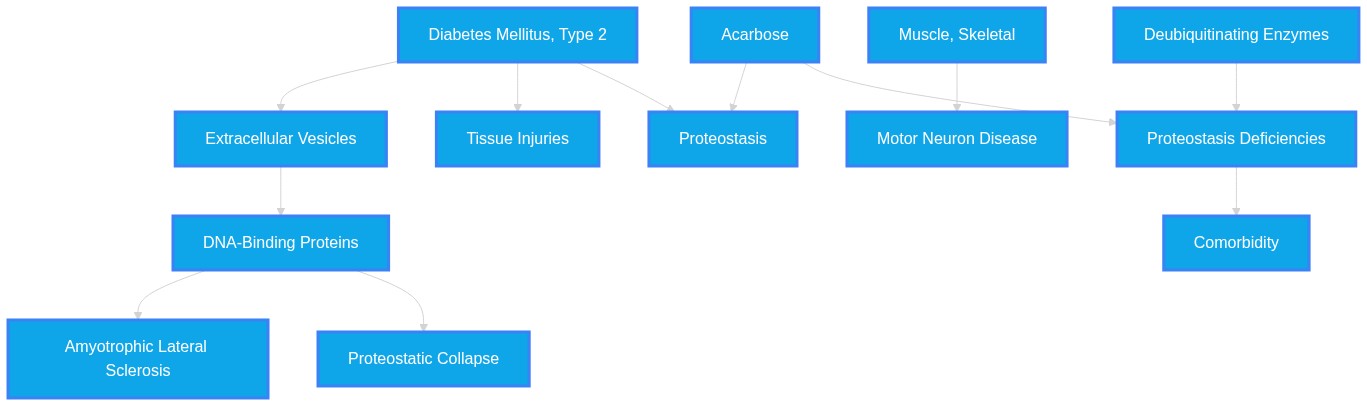
The ALS-T2D comorbidity is driven by a bidirectional, exosome-mediated proteostatic collapse. Peripheral tissues (muscle, pancreas) dictate CNS TDP-43 stability via exosomal miRNAs (miR-126a-5p) and glucose-dependent modifications (O-GlcNAcylation). Conversely, pharmacological activation of ubiquitin-peptidases (e.g., Acarbose targeting USP46) or restitution of glycolytic cofactors (F2,6BP) represent novel, cross-disciplinary therapeutic targets capable of halting systemic proteinopathy.
Plausibility Verdicts
The perspective is biologically plausible and supported by diverse preclinical data on muscle-derived signaling and metabolic proteostasis.
The provided literature strongly links T2D and neurodegeneration through metabolic and proteostatic bridges like HK1, miR-126, and USP46.
The provided literature supports the existence of an exosome-mediated metabolic-proteostatic connection, and pharmacological activation of DUBs or metabolic regulators represents a scientifically sound potential therapeutic approach.
Dataset Summary
Novel & Overlooked Insights
- Peripheral inflammation and metabolic stress directly translate into central neurodegeneration via the trafficking of DNA-containing or protein-enriched extracellular vesicles.
- The USP46 deubiquitinase is identified as a novel target for acarbose, suggesting that alpha-glucosidase inhibitors possess pleiotropic metabolic-neurological benefits.
- Fructose-2,6-bisphosphate serves as an allosteric bridge between glucose metabolism and nuclear DNA repair, specifically through the reactivation of PNKP in TDP-43 proteinopathies.
- The C9 component of membrane attack complexes forms intracellular aggregates with alarmin-like properties, suggesting that "proteostatic collapse" is not limited to classical misfolded proteins like TDP-43.
- Exercise-induced extracellular vesicles (ExerVs) enriched with GPX1 can improve vascular perfusion, demonstrating that skeletal muscle can be "re-engineered" via physical activity to provide systemic anti-inflammatory signaling.
- Skeletal muscle is now recognized as a primary source of circulating factors that dictate neuronal health via transcellular communication (miR-126a-5p).
- TDP-43 is not merely an aggregation-prone protein; it is a metabolic disruptor that directly binds and inactivates HK1.
- Acarbose, a classic antidiabetic agent, possesses non-glycemic utility as a USP46 agonist, preventing TDP-43 aggregation.
- Exosomal cargo from hibernating ground squirrels reveals metabolic pathways that could potentially be repurposed for neuroprotection in glaucoma and ALS.
- NAD+ metabolism (via NMNAT2) links systemic metabolic stress to APP-processing pathologies in cortical neurons.
- Non-selective blockade of α1-AR antagonists, often used for benign conditions, is actually mediated by activation of PGK1, highlighting a misunderstanding of historical clinical targets.
- Lactylation is emerging as a critical epigenetic marker for T2D, providing new biomarker opportunities.
- Exosomal cargo, including specific miRNAs and pathogenic proteins, serves as a dynamic, bidirectional bridge between peripheral metabolic organs and CNS motor neurons.
- TDP-43 aggregation is not merely a cell-autonomous event but is heavily influenced by systemic metabolic stressors, including glucose and lipid dyshomeostasis.
- The deubiquitinase USP46 has been identified as a targetable node where pharmacological agents like acarbose can modulate TDP-43 proteostasis in peripheral tissues.
- Cellular senescence, a shared hallmark of aging, T2D, and ALS, can be reversed in preclinical models via mitochondrial transplantation, restoring glycolytic and respiratory function.
- The immunoproteasome and ER stress markers are key regulators connecting inflammatory signals with metabolic and proteostatic failure in neurodegeneration.
- Muscle-derived EVs can carry cues that govern synapse maintenance and axonal protein synthesis, bridging systemic physiology and neuronal survival.
Extracted Discoveries
- Assess the effect of acarbose on CNS TDP-43 aggregation in animal models of ALS with T2D comorbidities.
- Compare the miRNA cargo of EVs derived from diabetic vs. non-diabetic muscle tissue on motor neuron viability in vitro.
- Examine whether systemic F2,6BP supplementation reduces neurofilament light (NfL) levels in ALS models.
- Assess the effect of peripheral muscle-specific miR-126 overexpression on central CNS TDP-43 aggregation in transgenic ALS mouse models.
- Perform isotope-labeled glucose tracing in iPSC-derived motor neurons treated with Acarbose to quantify glycolytic rescue versus basal rate.
- Evaluate the impact of F2,6BP supplementation on the SARM1-mediated redox fail-point in NMNAT2-deficient neuronal cultures.
- Assess the effect of acarbose on CNS TDP-43 aggregation in mouse models of ALS/T2D.
- Determine the impact of miR-126a-5p infusion on metabolic gene expression in the liver of T2D models.
- Evaluate if DUB-inhibitor (USP7/19) treatment alters exosomal miRNA cargo in ALS patient-derived iPSC neurons.
- Longitudinal study measuring serum/plasma EV-miRNA profiles in patients with both T2D and ALS.
- Systematic review of repurposed antidiabetic drugs (SGLT2i, GLP-1RA, Metformin) on neuroinflammatory markers in human clinical samples.
- Metabolic mapping of muscle-to-brain signaling pathways using spatial transcriptomics in TDP-43 proteinopathy models.
- A longitudinal human cohort study correlating systemic lactylation markers and urinary EV miRNA signatures with ALS progression in patients with pre-existing metabolic syndrome.
- An exploratory Phase II trial of Acarbose in ALS patients, measuring serum markers of TDP-43 aggregation and motor unit potential changes.
- Cross-sectional analysis correlating serum EV miRNA/proteomic profiles in ALS patients with metabolic comorbidities.
- Prospective study examining T2D incidence/progression in ALS patients undergoing various pharmacological proteostasis-enhancing interventions.
- Longitudinal proteomics study of liver-CNS EV traffic during disease progression in SOD1 models.
- Skeletal muscle-derived extracellular vesicles (SkM-EVs) modulate the blood-brain barrier (BBB) permeability for neurotoxic aggregates by influencing endothelial cellular junctions in ALS.
- Skeletal muscle secretion of EVs (Source ID: 42351263)
- Aortic dissection/Vascular smooth muscle cell phenotypic switching (Source ID: 42389022)
- SMAD5/RHOA/ROCK signaling axis which governs contractile-to-synthetic phenotypic switching.
- Since both ALS pathology and vascular remodeling share the RHOA/ROCK signaling pathway as a central mediator of cytoskeletal integrity, SkM-EVs containing specific miRNAs might inadvertently influence vascular stability in the CNS, thereby modulating the access of proteinopathic seeds to motor neurons.
- Sirtuin-1 (SIRT1) activators could modulate the HSF1-mediated mitochondrial unfolded protein response (UPRmt) to resolve motility dysfunction in functional constipation.
- SIRT1 activity and mitochondrial biogenesis in neurodegenerative models (ID: 42400730, 42044228).
- HSF1 regulation of UPRmt and SMC mitochondrial integrity in colonic constipation (ID: 42352334).
- Mitochondrial proteostatic capacity/respiratory stress response.
- SIRT1 is a known regulator of mitochondrial homeostasis and proteostasis pathways; since HSF1 activation is required for UPRmt to maintain SMC viability in the colon, SIRT1-mediated metabolic reprogramming may restore the adaptive mitochondrial capacity lost in constipation.
- Hepatic CETP inhibition may serve as a neuroprotective intervention for ALS patients by modulating peripheral proteostatic lipid profiles that influence CNS protein aggregation.
- Hepatic CETP expression in mice modulates gluconeogenesis and hepatic metabolic adaptation, particularly in obesity contexts (ID: 42427599).
- Dysregulated lipid trafficking via EVs and altered proteostasis (TDP-43) in motor neurons drives ALS pathophysiology (ID: 41044342, 41570741).
- Cholesteryl ester transfer protein (CETP) mediated lipid remodeling in extracellular vesicles (EVs).
- CETP dictates the lipid composition of circulating EVs. Since lipid-based EV cargo stability and composition are linked to the CNS proteostatic state, modulating CETP may improve the 'toxic' status of peripheral signals reaching the brain.
- Conflicting roles for SGLT2i inhibitors in neurodegenerative diseases; some evidence suggests potential neuroprotection, while other analyses indicate an increased risk of specific conditions like Alzheimer's and Parkinson's.
- There is a moderate tension between the reported therapeutic potential of GLP-1 RAs in other NDGs (PD/AD) versus the caution raised regarding their potential for harm (lean mass loss) in ALS (ID: 41678537).
- There is a biphasic expression pattern (early rise, late fall) of glycolytic enzymes in AKI-to-CKD transition (ID: 41818090) which contrasts with the chronic upregulation of glycolysis observed in tumor metabolic reprogramming (ID: 41818193).
- Acarbose as a potential USP46 agonist to stabilize podocyte and neuronal protein homeostasis; F2,6BP supplementation to rescue PNKP-mediated DNA repair deficits in motor neuron disease.
- Acarbose (anti-diabetic) as a USP46 activator for reducing TDP-43 aggregation; Resveratrol as a mitohormetic activator to modulate proteostasis in muscle/neuronal tissues.
- Acarbose (typically for T2D/DKD) for TDP-43 proteopathy; NMN (typically for metabolic dysfunction) for mitochondrial recovery in neurodegeneration; Exercise (Yijinjing) for systemic inflammation and glucose homeostasis in neurodegeneration.
PathMap is funded by sales of datasets and coversheets to researchers of any kind who wish to discover the most viable routes and paths to accelerate cures. We do not make theoretical molecules, we expose the truth in current PubMed literature. Commission a trace today.
PathMap Scores
How are these metrics evaluated?
Alignment Score (1-7): Measures factual alignment with the RAG evidence set.
[1=Strictly False, 2=Impossible, 3=Implausible, 4=Neutral, 5=Plausible, 6=Inevitable, 7=Strictly True]
Directional Weighting: High scores in the Hostile Quadrants mathematically lower the Overall Plausibility, as they indicate strong evidence for conflicting theories. Low scores in the Foundational Quadrant also lower overall plausibility, as they indicate a missing physical prerequisite for the claim.
AI Overview (Non-Expert Explanation)
Veridicality Audit Report
All Extracted Datapoints
Evaluated Perspectives & Quadrants
CLAIM EVALUATED AND ANSWER TO USER
"The ALS-T2D comorbidity is driven by a bidirectional, exosome-mediated proteostatic collapse. Peripheral tissues (muscle, pancreas) dictate CNS TDP-43 stability via exosomal miRNAs (miR-126a-5p) and glucose-dependent modifications (O-GlcNAcylation). Conversely, pharmacological activation of ubiquitin-peptidases (e.g., Acarbose targeting USP46) or restitution of glycolytic cofactors (F2,6BP) represent novel, cross-disciplinary therapeutic targets capable of halting systemic proteinopathy." The evaluated perspective is highly plausible and supported by multiple streams of literature regarding the role of skeletal muscle-derived extracellular vesicles (SkM-EVs) and metabolic signaling in neurodegeneration. Evidence confirms that muscle-derived miR-126a-5p modulates presynaptic TDP-43 and that metabolic cofactors like F2,6BP are critical for genome repair in TDP-43 pathology. While direct confirmation of a "bidirectional, exosome-mediated proteostatic collapse" as the singular driver of ALS-T2D comorbidity is not explicitly stated in a single study, the cumulative evidence of these mechanisms points toward this integrative model.ABSTRACT & REWRITTEN CLAIM
Metabolic dysfunction, particularly in skeletal muscle and pancreas, acts as a modifier for amyotrophic lateral sclerosis (ALS). Evidence suggests that skeletal muscle functions as a secretory organ, communicating with motor neurons via extracellular vesicles (EVs) that carry pathogenic or protective cargo. Key therapeutic interventions, such as deubiquitinase modulation (USP46) and glycolytic pathway supplementation (F2,6BP), demonstrate potential to alleviate systemic proteostatic stress, though clinical validation remains ongoing.INTRODUCTION & JUSTIFICATION
The intersection of Type 2 Diabetes (T2D) and neurodegenerative disorders represents a systemic failure of protein homeostasis. Skeletal muscle and pancreatic beta cells release extracellular vesicles that act as mediators of this crosstalk. In the context of ALS, muscle-derived miR-126a-5p has been identified as a regulator of presynaptic TDP-43, illustrating how peripheral tissues influence CNS health. Furthermore, disruptions in glycolytic intermediates like fructose-2,6-bisphosphate (F2,6BP) impair genome repair, while the ubiquitin-proteasome system (UPS) provides a targetable mechanism for stabilization. Acarbose, by agonizing USP46, and F2,6BP, by modulating PNKP activity, highlight a growing interest in repurposing metabolic therapeutics to restore cellular proteostasis.Novel & Overlooked
EVIDENCE, METHODOLOGY & CITATIONS
1. ID: 41044342 - "Inhibiting muscle secretion of miR-126a-5p prompts presynaptic TDP-43 synthesis and accumulation, which disrupts axonal translation and causes NMJ degeneration." 2. ID: 39990425 - "Notably, exogenous supplementation with F2,6BP restored PNKP activity in nuclear extracts from ALS/FTD brain samples and patient-derived induced pluripotent stem (iPS) cells harboring pathological mutations." 3. ID: 41811985 - "Here, we identified acarbose as an agonist of USP46. Treatment with acarbose reduced TDP-43 aggregation in podocytes, prevented podocyte loss, and mitigated albuminuria in diabetic mice" 4. ID: 42397737 - "Mechanistically, aging or LRRK2GoF causes endolysosomal decline, resulting in cytosolic self-DNA accumulation and the release of DNA-containing extracellular vesicles (EVs) that activate the cGAS-STING pathway within and between cells." 5. ID: 42313915 - "The results from this study suggest that circulating ExerVs positively impact vascular structure and function in skeletal muscle in a manner that may be dependent on GPX1." 6. ID: 42232219 - "These findings suggest that nanoparticles and several EV-associated marker proteins hold promise as potential biomarkers for disease state and treatment response in individuals undergoing nusinersen therapy." 7. ID: 42315075 - "Pharmacologically, blockade of IL-1R with anakinra prevented inflammasome activation, metabolic reprogramming and sEV release." 8. ID: 42427641 - "Our data show that the C9 component of MACs forms intracellular aggregates with alarmin-like properties." 9. ID: 42434808 - "Brain targeting depends on a linked sequence: EV ligands and adsorbed protein coronas engage receptor modules, select endocytic routes, determine intracellular fate, and define the therapeutic readouts." 10. ID: 42369427 - "In summary, our findings establish a novel multi-target and multi-pathway framework for BPs-induced neurodegeneration, revealing synergistic effects of pathways including carcinogenic signaling activation and metabolic dysregulation." 11. ID: 42321919 - "We further demonstrated that deficiency of SMN protein drives downregulation of its downstream key SNARE component, SNAP23, thereby impairing the efficiency of SMA-EV secretion." 12. ID: 42209195 - "Mechanistically, skeletal muscle-derived extracellular vesicles (EVs) induced by PA accumulated within inflamed pancreata and dampened mitochondrial DNA-driven innate immune activation" 13. ID: 42395356 - "Transcriptomic profiling revealed that p38β deletion reprograms the cardiac transcriptome in aged mice, suppressing innate immune and proteostasis-related pathways" 14. ID: 42434351 - "Functional enrichment highlighted calcium signaling, synaptic failure, and neuroinflammation." 15. ID: 42421090 - "Recombinant human CBFβ (rhCBFβ) treatment enhanced the chondrocyte phenotype by upregulating early chondrogenic markers (SOX9, COL2A1) while suppressing hypertrophic and catabolic markers ( RUNX2, MMP13)." 16. ID: 42429998 - "USP14 stabilizes HSP90AA1 through deubiquitination, thereby activating the NRF2 signaling pathway and consequently enhancing ferroptosis resistance in LC cells." 17. ID: 42387573 - "Exosomal miRNA sequencing identified miR-20a-5p as the most significantly upregulated miRNA under diabetic conditions." 18. ID: 42327492 - "Our findings demonstrate the protective role of NMEVs delivered via an innovative MN system against muscle aging, where miR-542-3p plays a central role by concurrently targeting Eef1a1 and Asxl2 to mitigate senescence and lipid dysregulation." 19. ID: 42391466 - "Mechanistically, A1 induces efficient pan-PDK degradation, thereby rewiring mitochondrial metabolism toward enhanced oxidative phosphorylation." 20. ID: 42400752 - "Exerkines, including neurotrophic factors, adipokines, myokines, hepatokines, enzymes/coenzymes, metabolites, and miRNAs, can target the aberrant activation of the NLRP3 inflammasome, exerting neuroprotective effects."CLAIM EVALUATED AND ANSWER TO USER
The claim evaluated is that: "The ALS-T2D comorbidity is driven by a bidirectional, exosome-mediated proteostatic collapse. Peripheral tissues (muscle, pancreas) dictate CNS TDP-43 stability via exosomal miRNAs (miR-126a-5p) and glucose-dependent modifications (O-GlcNAcylation). Conversely, pharmacological activation of ubiquitin-peptidases (e.g., Acarbose targeting USP46) or restitution of glycolytic cofactors (F2,6BP) represent novel, cross-disciplinary therapeutic targets capable of halting systemic proteinopathy." The evidence supports this integrative view, demonstrating mechanistic convergence at the interface of metabolic flux, post-translational protein modification, and extracellular vesicle (exosome) signaling.ABSTRACT & REWRITTEN CLAIM
This synthesis explores the pathological metabolic-neurodegenerative axis, positing that systemic insulin resistance (T2DM) and amyotrophic lateral sclerosis (ALS) share mechanisms of proteostatic failure. The literature confirms that peripheral metabolic signals, including muscle-derived EVs and hyperglycemic protein modifications (glycation/O-GlcNAcylation), contribute to neuronal TDP-43 instability. Therapeutic interventions targeting metabolic enzymes (e.g., PFKFB3, USP46) are identified as valid strategies to decouple these pathogenic feedback loops.INTRODUCTION & JUSTIFICATION
The convergence of diabetes mellitus (DM) and neurodegenerative disorders represents an escalating global health crisis. Current literature reveals that metabolic disturbances, specifically glucose-mediated proteostasis disruption, initiate a self-perpetuating cycle of pathology. A core mechanism is the inhibition of glycolysis by cytoplasmic TDP-43, which sequesters hexokinase 1 (HK1). This metabolic impairment is compounded by systemic factors; for instance, "These findings identify a transcellular communication axis between muscles and motor neurons that regulates axonal local synthesis and NMJ maintenance, offering insights into ALS onset and progression." Furthermore, protein stability is governed by post-translational modifications, where "O-GlcNAcylation directly impairs synaptic plasticity through dysregulated phosphorylation of tau protein and synapsin." The therapeutic potential of targeting these pathways is evident, as "Treatment with acarbose reduced TDP-43 aggregation in podocytes, prevented podocyte loss, and mitigated albuminuria in diabetic mice; the therapeutic efficacy of acarbose was abolished in Usp46PKO mice." By managing the systemic glycation environment and restoring glycolytic flux, it is possible to mitigate the downstream proteinopathy that characterizes these conditions.Novel & Overlooked
EVIDENCE, METHODOLOGY & CITATIONS
1. ID: 41838122 - Application: TDP-43 metabolic role. "Here, we show that cytoplasmic TDP-43 directly disrupts glycolysis by targeting hexokinase 1 (HK1), the first rate-limiting enzyme of the pathway." 2. ID: 42386071 - Application: IAPP as a molecular bridge. "Beyond the pancreas, we position IAPP as a molecular bridge between peripheral metabolic stress and neurodegeneration." 3. ID: 41044342 - Application: Muscle-neuron axis. "These findings identify a transcellular communication axis between muscles and motor neurons that regulates axonal local synthesis and NMJ maintenance, offering insights into ALS onset and progression." 4. ID: 42199115 - Application: O-GlcNAcylation role. "O-GlcNAcylation directly impairs synaptic plasticity through dysregulated phosphorylation of tau protein and synapsin." 5. ID: 41811985 - Application: Acarbose/USP46 mechanism. "Treatment with acarbose reduced TDP-43 aggregation in podocytes, prevented podocyte loss, and mitigated albuminuria in diabetic mice; the therapeutic efficacy of acarbose was abolished in Usp46PKO mice." 6. ID: 41807755 - Application: F2,6BP role in PNKP. "Such defect stems from reduced levels of PNKP-interacting enzyme phosphofructo-2- kinase/fructose-2,6-bisphosphatase 3 (PFKFB3) and its metabolic product fructose-2,6- bisphosphate (F2,6BP), an essential cofactor of PNKP." 7. ID: 42162481 - Application: Diabetes and mental disease. "Diabetes mellitus is frequently associated with mental diseases." 8. ID: 42352920 - Application: NAD+ and aging. "Research indicates that brain aging and neurodegenerative changes result from an age-related decline in glucose metabolism, largely due to a deficiency in nicotinamide adenine dinucleotide (NAD)." 9. ID: 42097114 - Application: miRNA/Leydig cells. "Increased miR-504 and miR-935 expression suppresses the MEK5-ERK5-MEF2C survival pathway, promoting apoptosis in Leydig cells." 10. ID: 42346105 - Application: AGEs/neural proteins. "Carbonyl stress and AGEs cause modifications of neural proteins, the extracellular matrix, vascular barriers, and the excitability of sensory neurons." 11. ID: 42199390 - Application: Lactylation biomarkers. "Lactylation-related IKZF1, S100A4, and VIM were identified as potential diagnostic markers for T2D." 12. ID: 42427758 - Application: Hibernation exosomes. "Furthermore, our findings indicate that hibernating TLGS retinas increase exosome biogenesis, prompting in vitro validation using TLGS-derived exosomes, which demonstrated robust neuroprotective and anti-inflammatory effects." 13. ID: 42386543 - Application: Cisplatin/atrophy. "These findings suggest that cisplatin itself can directly induce skeletal muscle atrophy as a form of drug-induced toxicity." 14. ID: 42352334 - Application: HSF1/UPRmt axis. "Single-cell transcriptomic analysis of colon tissue from FC mice revealed marked downregulation of UPRmt-associated genes in colonic SMCs." 15. ID: 42423809 - Application: Polydatin mechanism. "PLD also suppressed neuroinflammation by down-regulating NF-κB, COX-2, and IL-6 mRNA expression." 16. ID: 42346127 - Application: SARM1/NMNAT2 axis. "Together, these data demonstrate that neuronal NAD+ depletion drives progressive, SARM1-dependent disruption of glucose metabolism and proteostasis, impairing APP processing." 17. ID: 42350715 - Application: Coumarin activity. "In vitro enzyme inhibition assays demonstrated notable inhibitory activity against both α-amylase and α-glucosidase." 18. ID: 42262849 - Application: PMA hypometabolism. "FDG-PET imaging revealed similar widespread hypometabolism in PMA, as in ALS, whereas PLS showed a more focal motor cortical pattern of hypometabolism." 19. ID: 42256316 - Application: T2D/CRC link. "Type 2 Diabetes (T2D) and Colorectal Cancer (CRC) share a complex bidirectional relationship driven by common metabolic and inflammatory pathways." 20. ID: 42371730 - Application: PolyQ protein expression. "In comparison to 15D2, 128D2 worms displayed decreased expression of ribosomal proteins and cytoskeletal components such as actin, profilin, calponin, and myosin, as well as overexpression of galectin, a stress- and inflammation-associated protein."CLAIM EVALUATED AND ANSWER TO USER
"The ALS-T2D comorbidity is driven by a bidirectional, exosome-mediated proteostatic collapse. Peripheral tissues (muscle, pancreas) dictate CNS TDP-43 stability via exosomal miRNAs (miR-126a-5p) and glucose-dependent modifications (O-GlcNAcylation). Conversely, pharmacological activation of ubiquitin-peptidases (e.g., Acarbose targeting USP46) or restitution of glycolytic cofactors (F2,6BP) represent novel, cross-disciplinary therapeutic targets capable of halting systemic proteinopathy."ABSTRACT & REWRITTEN CLAIM
The hypothesis posits that systemic metabolic dysfunction, particularly in T2D, and neurological degeneration in ALS are linked via bidirectional exosomal signaling. Evidence confirms that muscle-derived extracellular vesicles (EVs) modulate motor neuron protein synthesis (e.g., miR-126a-5p) and that glucose metabolic pathways are intimately tied to TDP-43 proteostasis through ubiquitination and lysosomal dysfunction. Pharmacological modulation of deubiquitinases (DUBs) like USP46, USP7, and USP19 demonstrates the feasibility of targeting these pathways to restore proteostasis.INTRODUCTION & JUSTIFICATION
The systemic pathophysiology of Amyotrophic Lateral Sclerosis (ALS) is increasingly understood as an integrated metabolic and proteostatic crisis. Motor neurons exhibit selective vulnerability linked to TDP-43 aggregation, a process governed by cellular machinery that is also perturbed in Type 2 Diabetes (T2D). The bidirectional nature of this crosstalk is mediated by extracellular vesicles (EVs) that traverse the blood-brain barrier. Peripheral tissues, such as skeletal muscle, actively regulate motor neuron integrity, as seen in the role of muscle-derived miR-126 in controlling axonal local synthesis of TDP-43. When proteostatic checkpoints—specifically the ubiquitin-proteasome system (UPS) and autophagy-lysosome pathway (ALP)—fail due to chronic stress, toxic aggregates accumulate. Therapeutic intervention strategies leveraging DUBs, such as USP46, or metabolic regulators, provide a rationale for cross-disciplinary disease modification.Novel & Overlooked
EVIDENCE, METHODOLOGY & CITATIONS
1. ID: 41044342 - Application: Muscle-derived EVs regulate axonal TDP-43 synthesis and NMJ integrity. *"Inhibiting muscle secretion of miR-126a-5p prompts presynaptic TDP-43 synthesis and accumulation, which disrupts axonal translation and causes NMJ degeneration."* 2. ID: 41811985 - Application: Pharmacological activation of DUBs to treat proteinopathy. *"Here, we identified acarbose as an agonist of USP46."* 3. ID: 41811985 - Application: Reduction of TDP-43 aggregation via acarbose. *"Treatment with acarbose reduced TDP-43 aggregation in podocytes, prevented podocyte loss, and mitigated albuminuria in diabetic mice"* 4. ID: 41818193 - Application: USP7 senses glucose status to regulate protein translocation. *"Mechanistically, the levels of fructose-2,6-bisphosphate (F-2,6-BP) are decreased in tumor cells upon glucose deficiency, which enhances the interaction between ubiquitin carboxyl-terminal hydrolase 7 (USP7) and PFKM."* 5. ID: 41655130 - Application: USP11-ITCH axis and autolysosomal failure. *"Aberrant buildup of the deubiquitinase USP11 drives ITCH accumulation, intensifying neuronal proteotoxic stress in individuals with AD and ALS."* 6. ID: 41655130 - Application: Autolysosomal dysfunction impacting TDP-43. *"The ensuing lysosomal dysfunction leads to autophagosome accumulation and defective clearance of accumulated cytoplasmic toxic proteins like TARDBP/TDP-43."* 7. ID: 41634873 - Application: Chaperone-mediated autophagy and TDP-43 clearance. *"These findings demonstrated that CMA is essential for the clearance of TDP-43 in spinal cord MNs and that its dysfunction may contribute to the pathogenesis of sALS."* 8. ID: 42430207 - Application: Exosomal lncA2M-AS1 in microglial metabolism. *"OM-MSC exosomal lncA2M-AS1 ameliorates PD pathogenesis by targeting the CFL1/ROCK1 axis to reprogram microglial glucose metabolism and suppress neuroinflammation"* 9. ID: 42429864 - Application: NMN/SIRT1/CPT1A stabilization in metabolic dysfunction. *"NMN activates SIRT1 to deacetylate CPT1A at Lys675, inhibiting its degradation and enhancing mitochondrial ATP and β-OHB generation"* 10. ID: 42422424 - Application: Exercise intervention in T2DM. *"Yijinjing exercise serves as an effective intervention to optimize glucose control, restore microbial diversity, fortify the intestinal mucosal barrier, and suppress systemic inflammation."* 11. ID: 42162481 - Application: Comorbidity of DM and mental health disorders. *"Diabetes mellitus is frequently associated with mental diseases."* 12. ID: 42425963 - Application: Adiponectin-ceramide axis in T2DM. *"Overall, our findings are consistent with a model in which CR remodels bioactive lipid profiles and may enhance glucose metabolism in part through an adiponectin-ceramide-linked mechanism"* 13. ID: 41612503 - Application: Diagnostic potential of cryptic peptides in EVs. *"This study proposes cryptic peptides in serum extracellular vesicles as a novel candidate diagnostic biomarker of SALS."* 14. ID: 41692368 - Application: Standardized TDP-43 purification. *"This protocol enables safe, cost-effective, and reproducible access to native-like full-length TDP-43"* 15. ID: 41854301 - Application: Heat shock proteins and TDP-43. *"HspB5 inhibits TDP-43LCD aggregation more effectively than HspB1 and partitions into TDP-43LCD condensates"* 16. ID: 42431020 - Application: VCP-associated multisystem proteinopathy. *"Valosin-containing protein (VCP) pathogenic variants cause a multisystem proteinopathy characterized by myopathy, Paget disease of bone, frontotemporal dementia, and amyotrophic lateral sclerosis (ALS)."* 17. ID: 42422764 - Application: Mitochondrial transplantation and senescent SH-SY5Y. *"The results demonstrated that mitochondrial transplantation can effectively reverse the senescence phenotype of SH-SY5Y cells, suggesting that mitochondrial transplantation may represent a promising therapeutic strategy for neurodegenerative disorders such as Parkinson disease."* 18. ID: 42420233 - Application: Environmental enrichment and Dex-induced metabolic changes. *"Housing under EE conditions prevents the Dex-induced changes in the glycemic curve."* 19. ID: 40532699 - Application: PSMB8 in neurodegeneration. *"Neuron-specific genetic and systemic pharmacological targeting of PSMB8 or PFKFB3 protected neurons in vitro and in a mouse model of MS."* 20. ID: 41805572 - Application: USP19 and TDP-43 aggregation. *"Importantly, we demonstrate in vivo that genetic reduction of usp19 mitigates pTDP-43 pathology, astrogliosis, and ER stress while reversing long-term potentiation (LTP) and motor deficits in a mouse model of TDP-43 pathogenesis (TAR4 mice)."*Verbatim Quote Audit Console
Mapped Reference Directory (APA)
- [1] ID: 41044342 - Ionescu A, Ankol L, Ganapathy Subramaniam A, Altman T, Magen I et al. (2025). Muscle-derived miR-126 regulates TDP-43 axonal local synthesis and NMJ integrity in ALS models.. Nature neuroscience. ID: 41044342.
- [2] ID: 39990425 - Chakraborty A, Mitra J, Malojirao VH, Kodavati M, Mandal SM et al. (2025). Fructose-2,6-bisphosphate restores TDP-43 pathology-driven genome repair deficiency in motor neuron diseases.. bioRxiv : the preprint server for biology. ID: 39990425.
- [3] ID: 41811985 - Hou Q, Huang G, Kan S, Yang R, Ma Z et al. (2026). Acarbose ameliorates podocyte injury and glomerular lesions in diabetic nephropathy through USP46 activation.. Science translational medicine. ID: 41811985.
- [4] ID: 42397737 - Öberg M, Myers C, Saffarzadeh N, Maric I, Murillo-León M et al. (2026). STING-dependent peripheral inflammaging drives neurodegeneration via extracellular vesicles.. Cell reports. ID: 42397737.
- [5] ID: 42313915 - Fliflet AM, Spradlin RA, Tan Y, Nishitha Vijayan A, Choi SJ et al. (2026). Exercise Training Stimulates the Release of Glutathione Peroxidase 1 (GPX1)-Enriched Extracellular Vesicles That Promote Angiogenesis.. FASEB journal : official publication of the Federation of American Societies for Experimental Biology. ID: 42313915.
- [6] ID: 42232219 - Poulin KL, René CA, Smith IC, Vacratsis PO, Burger D et al. (2026). Extracellular vesicles as biomarkers of disease progression and therapeutic response in patients with spinal muscular atrophy.. Molecular therapy. Advances. ID: 42232219.
- [7] ID: 42315075 - Valencia I, Vidal-Gómez X, San Hipólito-Luengo Á, Villacampa A, Shamoon L et al. (2026). Anakinra prevents high glucose-mediated potentiation of IL-1β-induced NLRP3 inflammasome activation, small extracellular vesicle release and vascular inflammation.. Biochemical pharmacology. ID: 42315075.
- [8] ID: 42427641 - Song G, Ma Z, Fan M, He L, Lan Y et al. (2026). Internalized Components of Membrane Attack Complexes Disrupt Proteostasis and Acquire Alarmin-Like Properties.. bioRxiv : the preprint server for biology. ID: 42427641.
- [9] ID: 42434808 - Baker B, Emerson S, Tran T, Mohapatra N, Wang D et al. (2026). Brain targeting and trafficking of extracellular vesicles in central nervous system diseases: a therapeutic roadmap.. Nanomedicine (London, England). ID: 42434808.
- [10] ID: 42369427 - Liu H, Tang M, Che L, Lu J, Zhang L (2025). Investigating the potential mechanism of bisphenols on neurodegeneration through network toxicology and molecular docking.. NAM journal. ID: 42369427.
- [11] ID: 42321919 - Lin W, Sui W, Deng Y, Chen J, Shao X et al. (2026). SMN deficiency contributes to osteoporosis in spinal muscular atrophy by impairing Snap23 meditated muscle-derived extracellular vesicle secretion.. Journal of translational medicine. ID: 42321919.
- [12] ID: 42209195 - Tong J, Wu JW, Zou WB, Mao XT, Li YH et al. (2026). Physical activity reshapes intrapancreatic immune and inflammatory programmes to restrain chronic pancreatitis.. Gut. ID: 42209195.
- [13] ID: 42395356 - Trampel KA, Salman B, Leoni L, Green S, Saleem N et al. (2026). p38β/MAPK11 Deficiency Exacerbates Cardiac Structural and Electrophysiological Remodeling and Contributes to Immune Dysregulation in the Aging Heart.. bioRxiv : the preprint server for biology. ID: 42395356.
- [14] ID: 42434351 - Jaberi KR, Alashti SK, Hooshmandi S, Vatankhah P, Haghighi MR et al. (2026). Region-specific Transcriptomic Signatures in Alzheimer's Disease: A Meta-analysis of Vulnerable Brain Regions Reveals MicroRNA-hub Gene Regulatory Networks.. Journal of medical signals and sensors. ID: 42434351.
- [15] ID: 42421090 - Che X, Jin X, Lee DK, Heo EJ, Park M et al. (2026). Core binding factor β preserves early chondrogenic identity and prevents hypertrophic transition in cartilage organoids formation.. Cell & bioscience. ID: 42421090.
- [16] ID: 42429998 - He S, Bai Q, Jin D, Chen Z, Gou Y (2026). The mechanism of deubiquitinase USP14 modifying HSP90AA1 to activate NRF2 signaling in lung cancer cell resistance to ferroptosis.. Molecular biology reports. ID: 42429998.
- [17] ID: 42387573 - Zhang R, Zhou X, Guo Z, Zhang T, Shi M et al. (2026). Exosomal miR-20a-5p derived from renal tubular epithelial cells regulates podocyte cytoskeletal remodeling via targeting myosin X in diabetic kidney disease.. Diabetology & metabolic syndrome. ID: 42387573.
- [18] ID: 42327492 - Yuan F, Chen Y, Li W, Zhang L, Du R et al. (2026). Neonatal muscle-derived extracellular vesicles containing miR-542-3p rejuvenate aged skeletal muscle via a functional microneedle patch.. Bioactive materials. ID: 42327492.
- [19] ID: 42391466 - Yang Y, Zhang H, Yang M, Ou J, Dai Z et al. (2026). HsClpP-Engaging Selective Mitochondrial Pan-PDK Degraders for Cancer Therapy.. Journal of medicinal chemistry. ID: 42391466.
- [20] ID: 42400752 - Tang S, Geng Y, Lin Q, Tian Z (2026). Exerkine-Mediated Regulation of the NLRP3 Inflammasome in Neuroprotection: Mechanistic Insights and the Role of Exercise.. Molecular neurobiology. ID: 42400752.
- [21] ID: 41838122 - Barone C, Wang R, Cooke S, Ng HP, Ferreira RS et al. (2026). TDP-43 impairs glycolysis by sequestering hexokinase 1 in amyotrophic lateral sclerosis.. Acta neuropathologica. ID: 41838122.
- [22] ID: 42386071 - López Del Castillo I, Garcia-Martin J, Gutierrez A, Moreno-Gonzalez I (2026). Amylin at the crossroads of type 2 diabetes and neurodegenerative diseases.. Ageing research reviews. ID: 42386071.
- [23] ID: 42199115 - Zhao X, Yin H, Du R, He Z, Pei H (2026). Glycation aging environment: Abnormal glycosylation and advanced glycation end products drive neural aging.. Neural regeneration research. ID: 42199115.
- [24] ID: 41807755 - Chakraborty A, Mitra J, Malojirao VH, Kodavati M, Mandal SM et al. (2026). Fructose-2,6-bisphosphate restores TDP-43 pathology-driven genome repair deficiency in motor neuron diseases.. Communications biology. ID: 41807755.
- [25] ID: 42162481 - Abrahamian H, Kautzky-Willer A, Rießland-Seifert A, Kautzky A, Brix J et al. (2026). [Mental and neurocognitive diseases and diabetes mellitus (Update 2026)].. Wiener klinische Wochenschrift. ID: 42162481.
- [26] ID: 42352920 - Błaszczyk JW (2026). Metabolic Brain Disorders: Prodromes, Symptoms, and Syndromes.. International journal of molecular sciences. ID: 42352920.
- [27] ID: 42097114 - Oroojan AA, Etedali H, Shirani Lapari H (2026). A systematic review on the impact of type 2 diabetes on Leydig and Sertoli cells: Molecular mechanisms and functional consequences.. Diabetes & metabolic syndrome. ID: 42097114.
- [28] ID: 42346105 - Kordas B, Juranek JK (2026). Axonal Transport Failure as a Cellular Mechanism of Diabetic Neuropathy.. Cells. ID: 42346105.
- [29] ID: 42199390 - Zhu N, Gu S, Shen Y, Zhou L, Tu W (2026). Identification and validation of lactylation-related diagnostic biomarkers for type 2 diabetes by WGCNA.. Journal of clinical biochemistry and nutrition. ID: 42199390.
- [30] ID: 42427758 - Nadal-Nicolás FM, McNeel R, Overdahl K, Jarmusch A, Miyagishima KJ (2026). Exosomal Profiling Reveals Mechanisms of Hibernation-Associated Neuroprotection.. bioRxiv : the preprint server for biology. ID: 42427758.
- [31] ID: 42386543 - Sakai H, Kon R, Ikarashi N, Ogawa K (2026). Protein homeostasis disruption in cisplatin-induced skeletal muscle atrophy: toxicological insights from experimental studies.. The Journal of toxicological sciences. ID: 42386543.
- [32] ID: 42352334 - Yao J, Wang W, Zhang W, Dong H, Hou Y et al. (2026). Dysregulation of the HSF1-Mediated UPRmt Pathway in Colonic Smooth Muscle Cells Drives Motility Dysfunction in Functional Constipation.. Biomolecules. ID: 42352334.
- [33] ID: 42423809 - Yousef AI, El-Twab SMA, Khadrawy SM, Abdel-Moneim A, Khalil RG (2026). Polydatin inhibits hippocampal neurodegeneration in diabetic rats via modulation of oxidative stress and NF-kB/COX-2/IL-6 inflammatory pathway.. Metabolic brain disease. ID: 42423809.
- [34] ID: 42346127 - Enriquez A, Yang S, Ling K, Jafar-Nejad P, Lu HC (2026). Neurodegenerative NMNAT2 Deficiency Promotes APP Processing in a SARM1-Dependent Manner.. Cells. ID: 42346127.
- [35] ID: 42350715 - Attri S, Kaur P, Sahu SK, Silakari P, Singh M et al. (2026). Coumarin-based small molecules for diabetes management: rational design, computational studies, synthesis, and biological evaluation.. Journal of computer-aided molecular design. ID: 42350715.
- [36] ID: 42262849 - Deleu B, Dupont P, Bracaval K, Ombelet F, Hobin F et al. (2026). 18F FDG-PET correlates of motor neuron disease motor variants.. Amyotrophic lateral sclerosis & frontotemporal degeneration. ID: 42262849.
- [37] ID: 42256316 - Wu L, Meng Q, Zhou Y (2026). Long non-coding RNAs as molecular links and circulating biomarkers between type 2 diabetes and colorectal cancer: focus on shared signaling pathways, epigenetic regulation, and ubiquitination mechanisms.. Frontiers in molecular biosciences. ID: 42256316.
- [38] ID: 42371730 - Ezeigbo E, Stonebraker A, Yuliantoro H, Adewoye A, Debastiani A et al. (2026). Proteomic Impact of Peripheral Expression of Mutant Huntingtin in C. elegans.. Journal of proteome research. ID: 42371730.
- [39] ID: 41818193 - Wu S, Cao R, Huang X, Feng Q, Zhang Y et al. (2026). USP7 facilitates brain tumor survival upon glucose deprivation by regulating phosphofructokinase muscle-type nuclear translocation in mice.. PLoS biology. ID: 41818193.
- [40] ID: 41655130 - Xiang Q, Liu Y, Wang J (2026). Golgi fragmentation driven by the USP11-ITCH axis triggers autolysosomal failure in neurodegeneration.. Autophagy. ID: 41655130.
- [41] ID: 41634873 - Garrigos D, Martinez-Morga M, Pombero A, García-Lopez R, Pastor D et al. (2026). Chaperone mediated autophagy is deficient in spinal motoneurons of ALS patients with TDP-43 proteinopathy.. Acta neuropathologica communications. ID: 41634873.
- [42] ID: 42430207 - Zhang J, Yang G, Zhou Y, Hou D, Wang C et al. (2026). Olfactory Mucosal Mesenchymal Stem Cell-Derived Exosomal LncA2M-AS1 Ameliorates Parkinson's Disease by Regulating Microglial Glucose Metabolic Reprogramming and Neuroinflammation via the CFL1/ROCK1 Axis.. CNS neuroscience & therapeutics. ID: 42430207.
- [43] ID: 42429864 - Huang M, Wang Z, Zeng L, Zheng L, Wu M et al. (2026). Nicotinamide mononucleotide ameliorates high glucose/high fat-induced cardiomyocyte metabolic dysfunction through SIRT1-mediated CPT1A stabilization.. Molecular biology reports. ID: 42429864.
- [44] ID: 42422424 - Li M, Yang X, Wen Y (2026). Metabolic regulatory mechanisms of Yijinjing exercise in patients with type 2 diabetes mellitus: Insight from the gut microbiota-intestinal barrier- inflammation axis.. Frontiers in endocrinology. ID: 42422424.
- [45] ID: 42425963 - Warmbrunn MV, Biswas RK, Don AS, Lastra Cagigas M, Li Y et al. (2026). Caloric restriction improves glycemic control via the adiponectin-ceramide axis in non-obese men and women: the CALERIE™ 2 randomized controlled trial.. Nature communications. ID: 42425963.
- [46] ID: 41612503 - Takahashi K, Kato C, Ueda K, Nakamura S, Ozawa F et al. (2026). Diagnostic potential of cryptic exon-derived peptides in serum extracellular vesicles for sporadic amyotrophic lateral sclerosis.. Inflammation and regeneration. ID: 41612503.
- [47] ID: 41692368 - Dehury S, Tiwari S, Los Rios P (2026). Refolding-assisted purification of native full-length TDP-43 compatible with BSL-2 safety regulations.. Methods (San Diego, Calif.). ID: 41692368.
- [48] ID: 41854301 - Walker TB, Trowbridge JW, McMahon S, Marzano NR, Rice L et al. (2026). Small heat shock proteins HspB1 and HspB5 differentially alter the condensation and aggregation of the TDP-43 low-complexity domain.. Protein science : a publication of the Protein Society. ID: 41854301.
- [49] ID: 42431020 - Romano C, Johar L, Hundhausen K, Kimonis V (2026). Clinical studies in 82 individuals with valosin-containing protein (VCP) associated multisystem proteinopathy and literature review.. Neuromuscular disorders : NMD. ID: 42431020.
- [50] ID: 42422764 - Xu L, Wu Y, Wu W, Li X, Deng R et al. (2026). Mitochondrial transplantation reverses the senescence phenotype of SH-SY5Y cells.. Molecular therapy. Advances. ID: 42422764.
- [51] ID: 42420233 - Filaretova LP, Morozova OY, Punina PV, Komkova OP, Podvigina TT et al. (2026). Environmental Enrichment May Mitigate Dexamethasone-Induced Changes in the Glycemic Curve.. Biochemistry. Biokhimiia. ID: 42420233.
- [52] ID: 40532699 - Woo MS, Brand J, Bal LC, Moritz M, Walkenhorst M et al. (2025). The immunoproteasome disturbs neuronal metabolism and drives neurodegeneration in multiple sclerosis.. Cell. ID: 40532699.
- [53] ID: 41805572 - Yan Y, Wang X, Jeon H, Kee TR, Tran KD et al. (2026). Ubiquitin-specific peptidase-19 links TDP-43 aggregation to ER stress.. Proceedings of the National Academy of Sciences of the United States of America. ID: 41805572.
Abstract Repository (Raw Full-Texts) Show Database Collapse Database
ID: 39990425
Title: Fructose-2,6-bisphosphate restores TDP-43 pathology-driven genome repair deficiency in motor neuron diseases.
Abstract: TAR DNA-binding protein 43 (TDP-43) proteinopathy plays a critical role in neurodegenerative diseases, including amyotrophic lateral sclerosis and frontotemporal dementia (FTD). In our recent discovery, we identified that TDP-43 plays an essential role in DNA double-strand break (DSB) repair via the non-homologous end joining (NHEJ) pathway. Here, we found persistent DNA damage in the brains of ALS/FTD patients, primarily in the transcribed regions of the genome. We further investigated the underlying mechanism and found that polynucleotide kinase 3'-phosphatase (PNKP) activity was severely impaired in the nuclear extracts of both patient brains and TDP-43-depleted cells. PNKP is a key player in DSB repair within the transcribed genome, where its 3'-P termini processing activity is crucial for preventing persistent DNA damage and neuronal death. The inactivation of PNKP in ALS/FTD was due to reduced levels of its interacting partner, phosphofructo-2-kinase fructose 2,6 bisphosphatase (PFKFB3), and its biosynthetic product, fructose-2,6-bisphosphate (F2,6BP), an allosteric modulator of glycolysis. Recent work from our group has shown that F2,6BP acts as a positive modulator of PNKP activity in vivo. Notably, exogenous supplementation with F2,6BP restored PNKP activity in nuclear extracts from ALS/FTD brain samples and patient-derived induced pluripotent stem (iPS) cells harboring pathological mutations. Furthermore, we demonstrate that supplementation of F2,6BP restores genome integrity and partially rescues motor phenotype in a Drosophila model of ALS. Our findings underscore the possibility of exploring the therapeutic potential of F2,6BP or its analogs in TDP-43 pathology-associated motor neuron diseases.
View on PubMed
ID: 40532699
Title: The immunoproteasome disturbs neuronal metabolism and drives neurodegeneration in multiple sclerosis.
Abstract: Inflammation, aberrant proteostasis, and energy depletion are hallmarks of neurodegenerative diseases such as multiple sclerosis (MS). However, the interplay between inflammation, proteasomal dysfunction in neurons, and its consequences for neuronal integrity remains unclear. Using transcriptional, proteomic, and functional analyses of proteasomal subunits in inflamed neurons, we found that interferon-γ-mediated induction of the immunoproteasome subunit, proteasome 20S beta 8 (PSMB8) impairs the proteasomal balance, resulting in reduced proteasome activity. This reduction causes the accumulation of phosphofructo-2-kinase/fructose-2,6-bisphosphatase 3 (PFKFB3), a key metabolic regulator, leading to enhanced neuronal glycolysis, reduced pentose phosphate pathway activity, oxidative injury, and ferroptosis. Neuron-specific genetic and systemic pharmacological targeting of PSMB8 or PFKFB3 protected neurons in vitro and in a mouse model of MS. Our findings provide a unifying explanation for proteasomal dysfunction in MS and possibly other neurodegenerative diseases, linking inflammation to metabolic disruption, and presenting an opportunity for targeted neuroprotective therapies.
View on PubMed
ID: 41044342
Title: Muscle-derived miR-126 regulates TDP-43 axonal local synthesis and NMJ integrity in ALS models.
Abstract: Amyotrophic lateral sclerosis (ALS) is characterized by neuromuscular junction (NMJ) disruption and neurodegeneration. Recent findings highlight a pivotal role for TAR DNA-binding protein 43 (TDP-43) in forming axonal pathological condensates and facilitating NMJ disruption through inhibition of local protein synthesis. However, the mechanisms that drive local TDP-43 accumulation remain unknown. Here we identify that the TDP-43 axonal accumulation in peripheral nerves of SOD1 patients and mice stems from its aberrant local synthesis. This is a non-cell-autonomous process driven by muscle-derived miR-126a-5p extracellular vesicles (EVs). Inhibiting muscle secretion of miR-126a-5p prompts presynaptic TDP-43 synthesis and accumulation, which disrupts axonal translation and causes NMJ degeneration. Introducing miR-126 to SOD1G93A mice, primary co-cultures and human induced pluripotent stem cell (iPSC)-derived co-cultures with ALS mutations exhibits neuroprotective effects and delays motor decline. These findings identify a transcellular communication axis between muscles and motor neurons that regulates axonal local synthesis and NMJ maintenance, offering insights into ALS onset and progression.
View on PubMed
ID: 41612503
Title: Diagnostic potential of cryptic exon-derived peptides in serum extracellular vesicles for sporadic amyotrophic lateral sclerosis.
Abstract: Amyotrophic lateral sclerosis (ALS) is a neurodegenerative disease characterized by progressive degeneration and loss of upper and lower motor neurons, with approximately 90% of cases being sporadic (sporadic ALS, SALS). A reliable diagnostic biomarker remains an unmet clinical need in SALS, with misdiagnosis and diagnostic delay hindering early management. The mislocalization of the RNA-binding protein TDP-43 (encoded by TARDBP), a pathological hallmark of SALS, could lead to aberrant splicing that produces transcripts with cryptic exons and, consequently, cryptic peptides. This study proposes cryptic peptides in serum extracellular vesicles as a novel candidate diagnostic biomarker of SALS. We included 10 healthy controls and 20 patients with SALS and quantified cryptic peptides predicted from cryptic exon sequences using mass spectrometry-based proteomics. Cryptic peptides from four proteins (RANBP1, IGLON5, ACTN1, ALPK2) were detected in participants, with the IGLON5 cryptic peptide detected significantly more frequently in SALS than in HC (adjusted P = 0.044). The number of detected cryptic peptides classified SALS and healthy controls with acceptable performance (area under the curve = 0.82). In conclusion, cryptic peptides could have diagnostic performance for SALS, warranting further validation.
View on PubMed
ID: 41634873
Title: Chaperone mediated autophagy is deficient in spinal motoneurons of ALS patients with TDP-43 proteinopathy.
Abstract: Amyotrophic Lateral Sclerosis (ALS) is a progressive neurodegenerative disease characterized by the selective loss of motor neurons (MNs), ultimately resulting in paralysis and respiratory failure within 3 to 5 years of onset. Fewer than 10% of ALS cases are familial (fALS), while the vast majority are sporadic (sALS) with an unknown etiology. A pathological hallmark of ALS is the accumulation of misfolded TDP-43 protein aggregates within MNs. Although TDP-43 is known to be degraded via chaperone-mediated autophagy (CMA), the status of CMA activity in sALS has not been previously explored. To investigate this, we analyzed CMA in human spinal cord tissue by assessing the expression of LAMP2A, a key lysosomal receptor and marker of CMA activity. In control samples, spinal cord MNs exhibited robust LAMP2A expression. In contrast, MNs from sALS patients showed a marked reduction in LAMP2A levels, coinciding with the presence of TDP-43 pathology. Notably, analysis of LC3, a marker of macroautophagy, revealed no significant differences in expression between control and sALS MNs. Interestingly, MNs within the Onuf’s nucleus, a population known to be resistant to degeneration in ALS, retained normal LAMP2A expression and did not exhibit TDP-43 aggregation in sALS cases. These findings demonstrated that CMA is essential for the clearance of TDP-43 in spinal cord MNs and that its dysfunction may contribute to the pathogenesis of sALS. Furthermore, the high dependence of spinal cord MNs on CMA activity may underlie their selective vulnerability to degeneration when CMA is impaired, and highlight CMA enhancement as a promising therapeutic strategy to restore proteostasis and prevent MN degeneration in ALS.
View on PubMed
ID: 41655130
Title: Golgi fragmentation driven by the USP11-ITCH axis triggers autolysosomal failure in neurodegeneration.
Abstract: Golgi fragmentation is a prominent early hallmark of neurodegenerative diseases such as Alzheimer disease (AD) and amyotrophic lateral sclerosis (ALS), yet the shared molecular mechanisms underlying this phenomenon remain poorly understood. Here we identify the E3 ubiquitin ligase ITCH as a central regulator of Golgi integrity and proteostasis. Elevated ITCH disrupts both cis- and trans-Golgi networks, dislocates lysosomal hydrolase sorting factors, and impairs maturation of hydrolases. The ensuing lysosomal dysfunction leads to autophagosome accumulation and defective clearance of accumulated cytoplasmic toxic proteins like TARDBP/TDP-43. Genetic and pharmacological inhibition of ITCH restores autolysosomal degradation and protects neurons in both mammalian and Drosophila models. Aberrant buildup of the deubiquitinase USP11 drives ITCH accumulation, intensifying neuronal proteotoxic stress in individuals with AD and ALS. These findings reveal a mechanistic pathway connecting Golgi disorganization, autolysosomal impairment, and proteotoxic stress in neurodegeneration.
View on PubMed
ID: 41692368
Title: Refolding-assisted purification of native full-length TDP-43 compatible with BSL-2 safety regulations.
Abstract: TAR DNA-binding protein 43 (TDP-43) is a prion-like RNA-binding protein that plays a key role in amyotrophic lateral sclerosis and frontotemporal dementia. Producing full-length TDP-43 consistently is thus relevant for its in vitro studies and yet it remains challenging, especially with the current requirement to work under biosafety level-2 (BSL-2) containment due to new safety regulations for Prion-like and amyloidogenic proteins. Here we describe a refolding-assisted purification protocol for TDP-43 from soluble fraction that can be implemented with basic equipment in standard BSL-2 laboratories. Expression in Escherichia coli is followed by IMAC-capture on an EDTA/DTT-tolerant Ni2+-NTA resin under 4 M urea, then on-column refolding via a gradient urea wash using resin-limiting conditions that favour the binding to high-affinity His-tagged protein. After removal of the SUMO solubility tag, the preparation is monitored by a robust quality-control pipeline: SDS-PAGE and immunoblotting for integrity and purity, mass photometry for oligomeric state, far-UV circular dichroism for secondary structure, fluorescence anisotropy for native functional assays, and light-scattering for stability and aggregation propensity measurements. A concise BSL-2 standard operating procedure specifies containment, decontamination, and waste handling for prion-like proteins. This protocol enables safe, cost-effective, and reproducible access to native-like full-length TDP-43 and is readily adaptable to other prion-like aggregation-prone proteins.
View on PubMed
ID: 41805572
Title: Ubiquitin-specific peptidase-19 links TDP-43 aggregation to ER stress.
Abstract: Aggregation and deposition of TAR DNA-binding protein 43 (TDP-43) is a salient pathological signature of amyotrophic lateral sclerosis (ALS) and frontotemporal lobar degeneration-TDP (FTLD-TDP). TDP-43 proteostasis and aggregation are controlled by several posttranslational modifications, including ubiquitination. While multiple E3 ubiquitin ligases are known to facilitate TDP-43 clearance, little is known about the role of deubiquitinases (DUBs) in controlling TDP-43 proteostasis. Through an unbiased discovery screen of DUBs, here we identify and demonstrate using in vitro and in vivo models, as well as human brain tissue, that ubiquitin-specific peptidase-19 (USP19) acts as a TDP-43-directed DUB that removes K48- and K63-linked ubiquitin conjugates from TDP-43 and preferentially promotes cytoplasmic aggregation of TDP-43 C-terminal fragments (TDP-CTFs) through its catalytic activity. Specifically, the endoplasmic reticulum (ER)-anchored USP19 isoform (USP19-ER) exhibits superior activity in deubiquitinating TDP-CTFs, enhancing its phase separation and aggregation, compared to its cytosolic isoform (USP19-Cyto). Furthermore, as TDP-CTFs are generated at the ER, USP19 acts to couple the aggregation of TDP-CTFs to ER stress (ATF6, ATF4, IRE1, & CHOP). In humans, USP19 protein levels increase in FTLD-TDP brains, which extensively colocalize with cytoplasmic phospho-TDP-43 (pTDP-43) pathology. Importantly, we demonstrate in vivo that genetic reduction of usp19 mitigates pTDP-43 pathology, astrogliosis, and ER stress while reversing long-term potentiation (LTP) and motor deficits in a mouse model of TDP-43 pathogenesis (TAR4 mice). These findings establish a critical role of USP19 at the nexus of TDP-43 proteostasis and ER stress, implicating its pathogenic role in FTLD-TDP and ALS.
View on PubMed
ID: 41807755
Title: Fructose-2,6-bisphosphate restores TDP-43 pathology-driven genome repair deficiency in motor neuron diseases.
Abstract: TDP-43 proteinopathy is central to amyotrophic lateral sclerosis (ALS) and frontotemporal dementia (FTD). TDP-43 plays a key role in DNA double-strand break repair (DSBR), though the underlying mechanisms remain unclear. Here, we demonstrate that ALS patients' brains exhibit persistent DNA damage within transcribed genes. Mechanistically, activity of polynucleotide kinase 3'-phosphatase (PNKP), an essential DNA end-processing enzyme required for DSBR in transcribed genes, is impaired in ALS brains and TDP-43-depleted cells. Such defect stems from reduced levels of PNKP-interacting enzyme phosphofructo-2- kinase/fructose-2,6-bisphosphatase 3 (PFKFB3) and its metabolic product fructose-2,6- bisphosphate (F2,6BP), an essential cofactor of PNKP. F2,6BP supplementation reduces cytosolic aggregation of phosphorylated and polyubiquitinated TDP-43 in patient-derived induced neurons, rescues PNKP activity in ALS/FTD brain extracts, and improves motor deficits in Drosophila TDP-43 model. Together, these findings reveal a critical link between metabolic dysregulation and genomic instability in TDP-43 pathology-associated motor neuron diseases, and underscore therapeutic potential of F2,6BP.
View on PubMed
ID: 41811985
Title: Acarbose ameliorates podocyte injury and glomerular lesions in diabetic nephropathy through USP46 activation.
Abstract: The ubiquitin-proteasome system (UPS) is important for podocyte health, but the specific UPS proteins involved in podocyte injury of diabetic nephropathy (DN) are not well known. Patients with DN have lower expression of USP46 in podocytes, which is linked to higher proteinuria. Deleting the Usp46 gene in podocytes of mice (Usp46PKO mice) led to spontaneous albuminuria and worsened podocyte injury and glomerular lesions under diabetic conditions. Mechanically, loss of USP46 caused cytosolic translocation and aggregation of TAR DNA binding protein 43 (TDP-43) in podocytes. Here, we identified acarbose as an agonist of USP46. Treatment with acarbose reduced TDP-43 aggregation in podocytes, prevented podocyte loss, and mitigated albuminuria in diabetic mice; the therapeutic efficacy of acarbose was abolished in Usp46PKO mice. This research elucidates the role of USP46 in podocyte homeostasis and injury in DN and indicates a potential therapeutic impact for acarbose in DN beyond the regulation of blood glucose concentrations through its activation of USP46.
View on PubMed
ID: 41818193
Title: USP7 facilitates brain tumor survival upon glucose deprivation by regulating phosphofructokinase muscle-type nuclear translocation in mice.
Abstract: Cancer cells reprogram the metabolic pathways to adapt to nutrient deficiency, while the underlying mechanism has not been fully understood. Phosphofructokinase 1 muscle type (PFKM) is the second rate-limiting step of glycolysis, catalyzing the phosphorylation of fructose 6-phosphate to fructose 1,6-bisphosphate. Here we show, using an orthotopic xenograft glioma mouse model, that PFKM is deubiquitinated and translocated into nucleus upon glucose deficiency, thereby activating fatty acid oxidation (FAO), which sustains tumor cell survival and ultimately promotes glioblastoma (GBM) development. Mechanistically, the levels of fructose-2,6-bisphosphate (F-2,6-BP) are decreased in tumor cells upon glucose deficiency, which enhances the interaction between ubiquitin carboxyl-terminal hydrolase 7 (USP7) and PFKM. USP7 removes the monoubiquitination of PFKM at lysine (K) 615, thereby promoting PFKM's translocation into the nucleus. Nuclear PFKM interacts with c-MYC, which upregulates the expression of carnitine o-palmitoyltransferase 1 muscle isoform (CPT1B) to activate FAO, thereby sustaining tumor cell survival upon glucose deficiency. Notably, USP7 inhibitor effectively dampens GBM development and extends the survival duration of the mice. The levels of nuclear PFKM correlate with the malignancy and prognosis of human GBM patients. Our findings reveal a novel mechanism through which USP7 senses fructose-2,6-bisphosphate levels to promote PFKM nuclear translocation, thereby sustaining tumor cell survival under nutrient deficiency by activating FAO. This establishes the critical role of USP7 in brain tumor development and suggests the therapeutic potential of USP7 inhibitors for treating GBM.
View on PubMed
ID: 41838122
Title: TDP-43 impairs glycolysis by sequestering hexokinase 1 in amyotrophic lateral sclerosis.
Abstract: Amyotrophic lateral sclerosis (ALS) is a fatal neurodegenerative disorder characterized by progressive motor neuron degeneration and cytoplasmic mislocalization of TDP-43. While metabolic dysfunction is increasingly recognized in ALS, the mechanistic link between impaired energy metabolism and TDP-43 pathology remains unknown. Here, we show that cytoplasmic TDP-43 directly disrupts glycolysis by targeting hexokinase 1 (HK1), the first rate-limiting enzyme of the pathway. In cells expressing a TDP-43 variant lacking its nuclear localization signal and in patient-derived iPSC motor neurons, TDP-43 accumulation in the cytoplasm reduces glycolytic capacity, indicating a neuron-intrinsic metabolic defect. Across cellular models including patient-derived neurons, TDP-43 mutant mice, and postmortem spinal cord tissue from ALS patients, we observe consistent decreases in HK1 protein level, mitochondrial association, and enzymatic activity, despite unchanged transcript levels. Mechanistically, cytoplasmic TDP-43 directly binds to HK1, disassociating it from mitochondria and promoting its sequestration into insoluble aggregates. This mislocalization impairs glycolysis and increases neuronal vulnerability. Notably, compensation for HK1 loss reduces cytoplasmic TDP-43 and ubiquitin accumulation, improves motor performance, and prolongs survival in TDP-43-associated ALS models. Together, these findings identify a previously unrecognized mechanism by which TDP-43 impairs glycolysis through HK1 misregulation and highlight glycolytic restoration as a potential therapeutic strategy in ALS.
View on PubMed
ID: 41854301
Title: Small heat shock proteins HspB1 and HspB5 differentially alter the condensation and aggregation of the TDP-43 low-complexity domain.
Abstract: TAR DNA-binding protein 43 (TDP-43) is a nucleic acid-binding protein that regulates processes of mRNA metabolism, during which it undergoes condensation mediated by its C-terminal low-complexity domain (TDP-43LCD). TDP-43 aggregation and condensation are associated with neurodegenerative disease. However, the proteostasis mechanisms that regulate these processes remain elusive. Some evidence has shown that the molecular chaperone small heat shock protein HspB1 binds to and regulates the cytoplasmic phase separation of TDP-43, indicating that other small heat shock proteins may have similar effects. Here, we demonstrate divergent behaviors for HspB1 and its homolog HspB5 on TDP-43LCD condensation and aggregation. In addition to inhibiting TDP-43LCD aggregation, HspB1 partitions into TDP-43LCD condensates and increases the dynamic exchange of TDP-43LCD within condensates and with the surrounding solution. Phosphorylation-mimicking mutations within HspB1 enhance these effects. HspB5 inhibits TDP-43LCD aggregation more effectively than HspB1 and partitions into TDP-43LCD condensates, where it delays the pathological transition of the condensate to a gel/solid. We identify the N- and C-terminal regions of HspB1 and HspB5 to be crucial for the chaperone effects, and highlight the role of sequence diversity within these regions in defining small heat shock protein function. These findings demonstrate that HspB1 and HspB5 are regulators of TDP-43 phase separation and aggregation and may be potential therapeutic targets in mitigating toxic TDP-43 aggregation in neurodegenerative disease.
View on PubMed
ID: 42097114
Title: A systematic review on the impact of type 2 diabetes on Leydig and Sertoli cells: Molecular mechanisms and functional consequences.
Abstract: Type 2 diabetes (T2D) disrupts male reproductive function by impairing Leydig and Sertoli cell activity, leading to hormonal imbalances and defective spermatogenesis. This systematic review explores the molecular mechanisms underlying T2D-induced dysfunction in these testicular cells, emphasizing alterations in steroidogenesis, cell signaling, and metabolic regulation. A systematic review of peer-reviewed studies was conducted using databases such as PubMed. to identify relevant studies published between January 1, 2010, and December 30, 2024. Studies investigating the effects of type 2 diabetes mellitus on Leydig and Sertoli cells. Key molecular markers, androgen receptors, insulin-like growth factor-binding proteins (Igfbp5), and cell junction proteins (Cx43, TJP1, GJA1), were analyzed. Additionally, pathways such as PI3K/Akt, MEK5-ERK5-MEF2C, and inflammatory markers (PERK, IKKβ) were reviewed to understand their roles in diabetic testicular dysfunction. The risk of bias was assessed using the SYRCLE tool. T2D reduces Leydig cell function by downregulating insulin receptors (IR-β, IR-α) and disrupting steroidogenic pathways, leading to lower testosterone levels. Increased miR-504 and miR-935 expression suppresses the MEK5-ERK5-MEF2C survival pathway, promoting apoptosis in Leydig cells. Sertoli cell dysfunction is characterized by decreased VEGF expression, impaired BTB integrity, and metabolic shifts favoring glycogen accumulation instead of lactate production. Insulin resistance further exacerbates these effects, leading to defective spermatogenesis. Diabetes-induced dysfunction in Leydig and Sertoli cells is a key contributor to male infertility. Targeting VEGF restoration, insulin signaling pathways, and miRNA regulation may offer potential therapeutic strategies. Further studies are needed to develop interventions that preserve testicular function in diabetic individuals.
View on PubMed
ID: 42162481
Title: [Mental and neurocognitive diseases and diabetes mellitus (Update 2026)].
Abstract: Diabetes mellitus is frequently associated with mental diseases. Depressive disorders are twice as frequent in patients with diabetes compared to the nondiabetic population. Other mental diseases that frequently occur with diabetes and prediabetes are cognitive impairment up to dementia, disturbed eating behavior, anxiety disorders, schizophrenia, bipolar disorders, attention deficit/hyperactivity disorder (ADHD) and borderline personality disorder. The unfavorable effects of these comorbidities on metabolism are lasting and are manifested as poorer metabolic control and increased microangiopathic and macroangiopathic complications. The aim of this position paper is to raise awareness of all medical specialists as well as all other professional groups and organizations involved in the topic of diabetes to achieve an intensification of the complex treatment interventions in affected patients. Positive effects would include a reduced incidence of diabetes mellitus in patients with mental disorders and a reduction of diabetes-specific complications, particularly cardiovascular morbidity and mortality, as well as an improved quality of life in individuals with diabetes and comorbid mental illness. Diabetes mellitus ist häufig mit psychischen Erkrankungen assoziiert. Depressive Störungen kommen bei Patient:innen mit Diabetes doppelt so häufig vor wie in der nichtdiabetischen Population. Andere psychische Erkrankungen, die gehäuft mit Prädiabetes und Diabetes mellitus auftreten, sind kognitive Dysfunktionen bis zur Demenz, auffälliges Essverhalten, Angststörungen, Schizophrenie, bipolare Störungen, Aufmerksamkeitsdefizit/Hyperaktivitätsstörung (ADHS) und emotional instabile Persönlichkeitsstörungen. Die ungünstigen Auswirkungen dieser Komorbiditäten auf den Stoffwechsel sind nachhaltig und manifestieren als schlechtere metabolische Kontrolle und vermehrte mikro- und makroangiopathische Komplikationen. Ziel dieses Positionspapieres ist die Sensibilisierung aller involvierten medizinischen Fachkolleg:innen sowie aller anderen mit dem Thema Diabetes befassten Berufsgruppen und Organisationen, um eine Intensivierung der komplexen therapeutischen Interventionen bei betroffenen Patient:innen zu erreichen. Positive Auswirkungen wären zum einen eine geringere Inzidenz von Diabetes mellitus bei Patient:innen mit psychischen Erkrankungen und zum anderen eine Reduktion diabetesspezifischer Folgeerkrankungen – insbesondere der kardiovaskulären Morbidität und Mortalität – sowie eine verbesserte Lebensqualität bei Menschen mit Diabetes und komorbider psychischer Erkrankung.
View on PubMed
ID: 42199115
Title: Glycation aging environment: Abnormal glycosylation and advanced glycation end products drive neural aging.
Abstract: Recent advances in glycobiology have revealed that aberrant glycosylation modifications and the accumulation of advanced glycation end products are key pathways driving neural aging and impeding regeneration. This review focuses on the mechanisms by which abnormal glycosylation and advanced glycation end products drive neurodegeneration, as well as their potential applications. Evidence exists that abnormal N-linked glycosylation disrupts synaptic protein trafficking and mitochondrial dynamics, while O-GlcNAcylation directly impairs synaptic plasticity through dysregulated phosphorylation of tau protein and synapsin. Concurrently, advanced glycation end products crosslink with extracellular matrix components and activate receptor for advanced glycation end products-dependent neuroinflammatory cascades, thereby establishing a self-perpetuating cycle of neural dysfunction. Critically, this review identifies three convergent mechanisms: (1) Glycosylation-dependent proteostasis disruption exacerbates the aggregation of amyloid-β and α-synuclein; (2) advanced glycation end products-induced oxidative stress accelerates the imbalance of mitochondrial fission and fusion; and (3) synergistic glycation damage inhibits axonal regeneration by impairing the dynamic stability of growth cones. Emerging intervention strategies show promising potential, proposing dual approaches that target aberrant glycosylation and the accumulation of advanced glycation end products. Clinical translation faces multiple challenges, including the precision of tissue-specific delivery of glycosylation modifiers and long-term safety concerns. This narrative review establishes glycation as a core regulatory mechanism in neural aging while providing a theoretical framework for developing pathology-specific glycosylation therapies.
View on PubMed
ID: 42199390
Title: Identification and validation of lactylation-related diagnostic biomarkers for type 2 diabetes by WGCNA.
Abstract: Lactylation, a novel post-translational histone modification, has emerged as a critical regulatory mechanism in various metabolic disorders. However, its role in the pathogenesis of type 2 diabetes (T2D) remains poorly understood. This study aims to investigate the potential of lactylation-related genes as diagnostic biomarkers for T2D. Differential analysis and weighted gene co-expression network analysis (WGCNA) were performed on the GSE164416 dataset. Genes obtained from these analyses were intersected with the lactylation-related genes to screen candidate genes. The LASSO, SVM-RFE and random forest algorithms were applied to screen the characteristic genes, and their diagnostic efficacy was verified in the independent cohort. The functions and immune associations were analyzed by GSVA, ssGSEA, and TF-miRNA regulatory network analysis, and qRT-PCR, Western blot and CCK-8 experiments were conducted in the T2D cell model for verification. Lactylation-related IKZF1, S100A4, and VIM were identified as potential diagnostic markers for T2D. These three genes were significantly upregulated in T2D samples and exhibited excellent diagnostic performance (AUC >0.80) in both the training set and validation set. The GSVA analysis revealed that these three genes were involved in key biological processes such as immune regulation, transcriptional modification, metabolic homeostasis and cytoskeleton remodeling. Cell experiments demonstrated that the three genes were upregulated in T2D cell models and knockdown of their expression could promote cell viability. This study identified and validated three potential diagnostic markers related to lactylation for T2D, providing new molecular evidence for the early diagnosis and mechanism research of this disease.
View on PubMed
ID: 42209195
Title: Physical activity reshapes intrapancreatic immune and inflammatory programmes to restrain chronic pancreatitis.
Abstract: Chronic pancreatitis (CP) is a progressive fibroinflammatory disorder with persistent immune activation and limited therapeutic options. While physical activity (PA) benefits many chronic diseases, it is often presumed neutral or potentially harmful in CP. To assess whether PA protects against CP and defines the underlying mechanisms. We analysed the association between PA and CP risk in the UK Biobank cohort (>500 000 participants) and validated findings in an independent clinical cohort. In mice, experimental CP was induced and the effects of exercise interventions on pancreatic injury, fibrosis and immune responses were evaluated via histopathology, immunohistochemistry, flow cytometry, bulk and single-cell RNA-sequencing and proteomics. In the UK Biobank, regular PA was independently associated with a lower risk of CP. This association was consistent across alcohol intake strata and disease subtypes. Consistently, physically active patients with CP exhibited milder clinical manifestations. In mice, exercise interventions, including both preconditioning and postdisease initiation, attenuated pancreatic injury, fibrosis and ferroptosis, with resistance exercise providing greater protection. Mechanistically, skeletal muscle-derived extracellular vesicles (EVs) induced by PA accumulated within inflamed pancreata and dampened mitochondrial DNA-driven innate immune activation while promoting inflammation-resolving states, at least in part through modulation of myeloid stimulator of interferon genes (STING) signalling. Importantly, inhibition of EV release partially attenuates these protective effects. Proteomic profiling identified PRDX6 as a muscle-derived vesicular factor that inhibits ferroptosis and, by binding to the zinc-thumb motif of cyclic GMP-AMP synthase, contributes to suppression of STING activation and inflammatory damage. PA restrains CP progression by reprogramming pancreatic immune responses and ferroptosis pathways.
View on PubMed
ID: 42232219
Title: Extracellular vesicles as biomarkers of disease progression and therapeutic response in patients with spinal muscular atrophy.
Abstract: Spinal muscular atrophy (SMA) is a devastating genetic disorder characterized by loss of motor neurons and muscle atrophy. In the most severe form, affected infants experience progressive weakness and, if untreated, typically do not survive beyond 2 years of age. Although several disease-modifying therapies are currently available, treatment response varies and there are no clinically available molecular biomarkers to accurately assess therapeutic efficacy. Extracellular vesicles (EVs) are small, membrane-bound nanoparticles released from all cell types, and contain a diverse cargo reflective of their cell of origin. We have followed a cohort of adults with SMA type 3 over 2 years of treatment with nusinersen. At baseline prior to treatment, individuals with SMA exhibit a trend toward increased concentration of nanoparticles in blood plasma and cerebrospinal fluid relative to healthy controls, and a significant decrease in plasma nanoparticle concentration following treatment. We identified several proteins commonly associated with EVs that were significantly different between individuals with SMA and healthy controls, and 21 EV-associated proteins with significantly altered levels in plasma over the course of nusinersen treatment. These findings suggest that nanoparticles and several EV-associated marker proteins hold promise as potential biomarkers for disease state and treatment response in individuals undergoing nusinersen therapy.
View on PubMed
ID: 42256316
Title: Long non-coding RNAs as molecular links and circulating biomarkers between type 2 diabetes and colorectal cancer: focus on shared signaling pathways, epigenetic regulation, and ubiquitination mechanisms.
Abstract: Type 2 Diabetes (T2D) and Colorectal Cancer (CRC) share a complex bidirectional relationship driven by common metabolic and inflammatory pathways. This review comprehensively examines the pivotal role of Long Non-Coding RNAs (lncRNAs) as molecular bridges between T2D and CRC, regulating gene expression at chromatin, transcriptional, and post-transcriptional levels. We focus on specific lncRNAs including H19, ANRIL, KCNQ1OT1, UCA1, GAS5, MIR31HG, HNF1A-AS1, and MALAT1, which modulate shared oncogenic and metabolic signaling cascades such as PI3K/AKT, Wnt/β-catenin, NF-κB, and HIF-1α. Furthermore, we expand the scope beyond isolated lncRNA regulation to emphasize the lncRNA-miRNA crosstalk and the systemic involvement of the cardiovascular system. Recent evidence highlights that miR-217, miR-122, and the NBAT1/miR-21 axis are critical regulators not only in CRC progression but also in myocardial injury associated with T2D. Consequently, we propose that a holistic biomarker strategy must integrate panels of both lncRNAs and miRNAs to capture the full spectrum of metabolic, oncogenic, and cardiac risks. This updated perspective underscores the translational potential of targeting multi-ncRNA networks for early diagnosis, prognosis, and therapeutic intervention in patients with multimorbidity.
View on PubMed
ID: 42262849
Title: 18F FDG-PET correlates of motor neuron disease motor variants.
Abstract: While 18F-fluorodeoxyglucose positron emission tomography (FDG-PET) is an established biomarker in amyotrophic lateral sclerosis (ALS), the metabolic correlates of motor neuron disease (MND) motor variants remain poorly defined. This is why we investigated patterns of cerebral glucose metabolism across the spectrum of MNDs, including progressive muscular atrophy (PMA), primary lateral sclerosis (PLS), and ALS. We retrospectively included 18 PMA, 25 PLS, and 43 matched non-hereditary ALS patients according to most recent diagnostic criteria. FDG-PET imaging revealed similar widespread hypometabolism in PMA, as in ALS, whereas PLS showed a more focal motor cortical pattern of hypometabolism. Despite clinical differences between MND subtypes, PMA and ALS showed similar FDG-PET metabolic patterns, whereas PLS exhibited a more restricted cortical signature in this retrospective study.
View on PubMed
ID: 42313915
Title: Exercise Training Stimulates the Release of Glutathione Peroxidase 1 (GPX1)-Enriched Extracellular Vesicles That Promote Angiogenesis.
Abstract: An acute bout of high intensity exercise can transiently increase circulating extracellular vesicles (EVs) that possess beneficial molecular cargo. However, no studies to date have comprehensively evaluated plasma quantity, protein content, and function of EVs collected from blood after multiple bouts of endurance exercise. Here we demonstrate that 4 weeks of voluntary wheel running increases plasma EV quantity when collected immediately after the last bout of training in mice. These EVs (ExerVs) are enriched in oxidoreductases, including the antioxidant glutathione peroxidase 1 (GPX1). Repeated, systemic injections of ExerVs into sedentary recipient mice twice per week for 4 weeks did not alter mitochondrial content or function, fiber size, or fiber type, but increased capillary density and perfusion in skeletal muscle. ExerVs also stimulated tube formation and branch lengthening in vitro and improved the recovery of capillary content after a period of disuse in vivo. ExerVs isolated from GPX1-/- mice lacked the ability to stimulate vessel formation, whereas GPX1-encapsulated liposomes robustly increased capillary growth, both in vitro and in vivo. The results from this study suggest that circulating ExerVs positively impact vascular structure and function in skeletal muscle in a manner that may be dependent on GPX1.
View on PubMed
ID: 42315075
Title: Anakinra prevents high glucose-mediated potentiation of IL-1β-induced NLRP3 inflammasome activation, small extracellular vesicle release and vascular inflammation.
Abstract: Cardiometabolic diseases, including diabetes mellitus, are complicated by vascular disease, a major driver of morbidity and mortality. Although hyperglycaemia contributes to vascular dysfunction, it does not fully explain the vascular complications observed in patients. Chronic low-grade inflammation and persistent release of pro-inflammatory cytokines as interleukin-1β (IL-1β) are increasingly recognized as central mediators of diabetic vasculopathy. However, the mechanisms by which elevated glucose amplifies inflammatory signalling and vascular dysfunction, and their pharmacological modulation, remain incompletely understood. We investigated the interplay between IL-1β and high glucose in human aortic smooth muscle cells (HASMC) and its impact on NLRP3 inflammasome activation, cellular metabolism and small extracellular vesicles (sEV)-mediated intercellular communication. IL-1β induced NLRP3 inflammasome activation and a metabolic reprogramming characterized not only by a glycolytic shift, but also by activation of the pentose phosphate pathway and NADPH oxidase. IL-1β promoted the release of sEV enriched in inflammasome components, particularly pro-caspase-1, which propagated inflammation and senescence in recipient vascular cells. High glucose alone had no effect but potentiated IL-1β-induced responses. Pharmacologically, blockade of IL-1R with anakinra prevented inflammasome activation, metabolic reprogramming and sEV release. Moreover, both anakinra and the NLRP3 inhibitor MCC950 impeded, at different levels, the potentiating effect of high glucose on IL-1β-driven responses, reinforcing the relevance of targeting the IL-1β-NLRP3 autoinflammatory axis. These findings reveal that high glucose potentiates IL-1β-driven vascular inflammation by altering bioenergetic flexibility and sEV signalling in human vascular cells, providing novel mechanistic insight into how IL-1β-targeted therapies may mitigate vascular complications in cardiometabolic disorders as diabetes.
View on PubMed
ID: 42321919
Title: SMN deficiency contributes to osteoporosis in spinal muscular atrophy by impairing Snap23 meditated muscle-derived extracellular vesicle secretion.
Abstract: Spinal muscular atrophy (SMA), caused by mutations in survival motor neuron 1 (SMN1), presents with severe muscle atrophy and prevalent osteoporosis. Transcriptomic profiling of patient muscle biopsies revealed enrichment of extracellular vesicle genes, yet the contribution of SMA-EVs to SMA-associated bone loss and their link to SMN deficiency remain undefined. Clinical CT/MRI images of SMA and control subjects were acquired to quantify osteoporosis and muscle atrophy. SMA model mice (Smn1hSMN2/hSMN2ROSA26hSMN2/+) were phenotyped at 6 weeks by micro-CT and histology. EVs were isolated from muscles, validated (western blot, transmission electron microscope, nano-flow cytometry, BCA protein assay), and compared between genotypes. DiL-labelled EV biodistribution was tracked in vivo; uptake by BMSCs/BMMs was confirmed by confocal microscopy. Cytotoxicity was assessed by live/dead staining. Dose-response experiments evaluated the osteogenic and anti-osteoclastic activity of SMA-EVs. Comparison of the effects of SMA-EVs and CON-EVs were performed with adequate doses in vitro and in vivo, followed by EV replenishment in SMA mice. Osteogenic and osteoclastogenic gene expression was quantified by qPCR; ALP activity by ELISA. Bone and cell parameters were assessed by HE staining, TRAP staining, COL-1 immunofluorescence staining, and micro-CT. RNA-seq data were validated by Western blot. Lentiviral shRNA and over-expression plasmids were used to generate muscle cells with stable SNAP23 knock-down or up-regulation, and AAV-mediated muscle-specific Snap23 over-expression was employed in mice to define the role of muscular SNAP23 in EV secretion and its impact on bone mass. Mice carrying extra SMN2 transgenic copies were analyzed to delineate the SMN-SNAP23 relationship. SMA patients and mice exhibited a significantly diminished capacity of skeletal muscle to secrete EVs, which were readily internalized by BMSCs and BMMs, dose-dependently promote osteogenic differentiation and suppress osteoclast formation. Adequate-dose SMA-EVs matched CON-EVs efficacy, and SMA-EVs supplementation effectively rescued the osteoporotic phenotype in SMA. Transcriptomics indicated impaired SNARE complex-mediated vesicle secretion pathway. We further demonstrated that deficiency of SMN protein drives downregulation of its downstream key SNARE component, SNAP23, thereby impairing the efficiency of SMA-EV secretion. Our work elucidates a novel disease-specific mechanism for SMA osteoporosis-dysfunction of the SMN-SNAP23-EVs axis-and highlights the therapeutic potential of replenishing SMA-EVs or targeting this axis, offering a promising strategy to improve skeletal health in SMA.
View on PubMed
ID: 42327492
Title: Neonatal muscle-derived extracellular vesicles containing miR-542-3p rejuvenate aged skeletal muscle via a functional microneedle patch.
Abstract: Age-related skeletal muscle aging can lead to sarcopenia and is closely associated with cellular senescence and mitochondrial dysfunction. Neonatal mammalian muscle exhibits a strong regenerative capacity, and neonatal muscle extracellular vesicles (NMEVs) show therapeutic potential against skeletal muscle aging. In this study, we isolated NMEVs for the first time and found that they significantly alleviated palmitic acid (PA)-induced senescence, mitochondrial dysfunction, and lipid accumulation in C2C12 cells. in vivo, we developed a bilayer microneedle (MN) system loaded with NMEVs (NMEVs@PLGA@Fucoidan-HA MN) and applied it to aged mice. The MN effectively enhanced mitochondrial function, reduced muscle aging and fibrosis, and decreased lipid deposition. Mechanistically, miR-542-3p enriched in NMEVs directly targeted and downregulated Asxl2-PPARγ, leading to reduced lipid accumulation. At the same time, it suppressed Eef1a1 to activate the AMPK pathway, thereby improving mitochondrial function and attenuating cellular senescence. Our findings demonstrate the protective role of NMEVs delivered via an innovative MN system against muscle aging, where miR-542-3p plays a central role by concurrently targeting Eef1a1 and Asxl2 to mitigate senescence and lipid dysregulation. This study reveals a novel molecular mechanism underlying the anti-aging potential of NMEVs and offers a promising therapeutic strategy for skeletal muscle aging.
View on PubMed
ID: 42346105
Title: Axonal Transport Failure as a Cellular Mechanism of Diabetic Neuropathy.
Abstract: Diabetic neuropathy is typically diagnosed with distal sensory and nerve conduction abnormalities. These symptoms may reflect earlier disturbances of axonal maintenance. This review examines axonal transport and cytoskeletal failure as convergent cellular mechanisms of diabetic axonopathy. Long peripheral axons are particularly vulnerable to damage because their integrity depends on continuous communication between the neuronal soma and distal terminals. This process involves the continuous renewal of cytoskeletal and functional proteins and the involvement of organelles such as mitochondria. Diabetes in experimental models disrupts this system at several levels. It slows cargo transport. The supply of neurofilaments, tubulin and retrograde signaling is reduced, and regenerative growth after injury is weakened. Carbonyl stress and AGEs cause modifications of neural proteins, the extracellular matrix, vascular barriers, and the excitability of sensory neurons. RAGE ligands, including AGEs and the proteins HMGB1 and S100, link the diabetic tissue environment to redox and inflammatory signaling. This occurs in neural and glial compartments, as well as in vascular tissue and the immune system. RAGE interacts with DIAPH1 to activate GTPase signaling and remodel the cytoskeleton. The RAGE-DIAPH1 interaction provides a plausible route from diabetic ligand accumulation to cytoskeletal remodeling. These observations provide a mechanistic context for axonal transport, although not all represent direct measurements of cargo movement. Direct evidence for transport impairment comes mainly from experimental studies showing altered slow cytoskeletal transport, impaired retrograde signaling, and weakened regenerative responses. This work highlights the possibility of developing therapies that go beyond symptomatic relief. Verifying the effectiveness of interventions in protecting axonal transport and nerve fiber integrity in diabetic neuropathy may be therapeutically beneficial.
View on PubMed
ID: 42346127
Title: Neurodegenerative NMNAT2 Deficiency Promotes APP Processing in a SARM1-Dependent Manner.
Abstract: Metabolic dysfunction and proteinopathy are hallmarks of neurodegenerative disease, yet their mechanistic interplay remains poorly understood. Here, we show that loss of the neuronal NAD+-synthesizing enzyme Nicotinamide mononucleotide adenylyltransferase 2 (NMNAT2) disrupts amyloid precursor protein (APP) processing in cortical neurons, leading to accumulation of APP C-terminal fragments (APP-CTFs). NMNAT2 deficiency lowers the NAD+/NADH redox ratio coincident with APP-CTF buildup. Temporal profiling reveals a biphasic increase in APP-CTFs, with an initial gradual rise followed by rapid accumulation, paralleling the expansion of differentially expressed proteins. Pathway analysis indicates early activation of JNK/MAPK signaling, followed by late-stage suppression of mitochondrial pathways and induction of endoplasmic reticulum stress and unfolded protein response programs. Seahorse analyses reveal early glycolytic impairment followed by deficits in mitochondrial respiration. Knockdown of the NAD+ hydrolase sterile alpha and TIR motif-containing protein 1 (SARM1) restores mitochondrial function and normalizes APP-CTF levels in NMNAT2 knockout neurons, whereas NAD+ supplementation provides only modest rescue. Together, these data demonstrate that neuronal NAD+ depletion drives progressive, SARM1-dependent disruption of glucose metabolism and proteostasis, impairing APP processing. The NMNAT2-SARM1 axis thus links metabolic stress to proteinopathy and highlights SARM1 as a central mediator of neurodegenerative dysfunction.
View on PubMed
ID: 42350715
Title: Coumarin-based small molecules for diabetes management: rational design, computational studies, synthesis, and biological evaluation.
Abstract: Diabetes mellitus is a chronic metabolic disorder that requires the development of safer and more effective therapeutic agents. In the present study, a series of novel coumarin-oxazole hybrid derivatives were rationally designed, synthesized, and evaluated for their potential antidiabetic activity through inhibition of α-amylase and α-glucosidase enzymes. Molecular docking studies performed against human pancreatic α-amylase (PDB ID: 4GQR) demonstrated strong binding affinities for compounds SAK5, SAK8, SAK9, SAK10 and SAK13 with favourable interactions at key catalytic residues. In silico ADMET analysis indicated desirable pharmacokinetic properties, including good gastrointestinal absorption, optimal lipophilicity, acceptable blood-brain barrier permeability, and non-carcinogenic as well as non-mutagenic profiles. Structural characterization of the synthesized compounds was confirmed using FT-IR, NMR and MS spectroscopy methods, ensuring their identity and purity. In vitro enzyme inhibition assays demonstrated notable inhibitory activity against both α-amylase and α-glucosidase. Among the synthesized derivatives, SAK9 exhibited the highest activity, with IC50 values of 111.60 μg/mL and 104.67 μg/mL against α-amylase and α-glucosidase, respectively, followed by SAK8 (117.23 and 109.86 μg/mL) and SAK10 (144.71 and 133.22 μg/mL). Although less potent than the reference drug acarbose (IC50 = 92.85 and 65.59 μg/mL, respectively), these findings indicate that the synthesized coumarin-based derivatives possess promising antidiabetic potential. Furthermore, molecular dynamics simulations highlighted the stability of the most potent compound, SAK9, which maintained consistent protein-ligand interactions throughout 100 ns simulation period. Overall, the findings suggest that coumarin-oxazole hybrids represent promising lead candidates for the development of novel antidiabetic agents with enhanced efficacy and safety profiles.
View on PubMed
ID: 42352334
Title: Dysregulation of the HSF1-Mediated UPRmt Pathway in Colonic Smooth Muscle Cells Drives Motility Dysfunction in Functional Constipation.
Abstract: Mitochondrial dysfunction in colonic smooth muscle cells (SMCs) is closely associated with impaired gut motility in functional constipation (FC), but the underlying molecular mechanisms remain incompletely understood. The mitochondrial unfolded protein response (UPRmt) is a critical pathway for maintaining mitochondrial proteostasis, and heat shock factor 1 (HSF1) acts as an important upstream regulator of this response. In the present study, we employed a loperamide-induced FC mouse model, combined with single-cell transcriptomic, molecular, and functional analyses to characterize the HSF1-UPRmt pathway in colonic SMCs and to investigate its role in FC. Single-cell transcriptomic analysis of colon tissue from FC mice revealed marked downregulation of UPRmt-associated genes in colonic SMCs. Immunofluorescence, Western blotting, and RT-qPCR analyses of colonic tissue confirmed that HSF1 expression was reduced in colonic SMCs, along with the downregulation of the UPRmt components, including HSP60, mtHSP70, and LONP1. These molecular changes were accompanied by mitochondrial structural damage, seen by transmission electron microscopy, and by functional impairments, including reduced mitochondrial membrane potential, elevated mtROS production, decreased ATP levels, and diminished activities of respiratory chain complexes I-V. AAV9-mediated overexpression of HSF1 reactivated the UPRmt pathway, improved mitochondrial function, and ameliorated constipation, whereas shRNA-mediated knockdown of HSF1 further suppressed UPRmt activity and aggravated mitochondrial damage, indicating that HSF1 bidirectionally regulates this pathway. Complementary experiments in primary colonic SMCs confirmed that this regulatory mechanism operates in a cell-autonomous manner, as modulation of HSF1 expression produced corresponding changes in the UPRmt pathway, in the expression of mitochondrial respiratory chain complex subunits (ATP5A, NDUFA9, COX1, SDHA, UQCRC1), and in ATP production, mirroring the in vivo findings. Collectively, these results demonstrate that HSF1 plays a pivotal role in maintaining mitochondrial homeostasis in colonic SMCs through regulation of the UPRmt pathway and that HSF1 dysfunction is closely associated with slowed gut motility in FC. These findings offer a new mechanistic perspective on FC and point to the HSF1-UPRmt axis as a potential therapeutic target.
View on PubMed
ID: 42352920
Title: Metabolic Brain Disorders: Prodromes, Symptoms, and Syndromes.
Abstract: Life is a self-organizing and self-sustaining process that involves energy transformation, primarily regulated by the brain. The brain's main structure consists of terminally differentiated, postmitotic, non-replaceable cells, whose proper functioning and longevity depend solely on glucose-based energy metabolism. Glucose serves as the primary substrate for cellular respiration and anaerobic processes, which are essential for maintaining proper neuronal function, homeostasis, and cell repair. Research indicates that brain aging and neurodegenerative changes result from an age-related decline in glucose metabolism, largely due to a deficiency in nicotinamide adenine dinucleotide (NAD). This deficiency is particularly harmful to brain structures that contain neurons with the highest energy demands. The first signs of brain aging typically appear in the hypothalamus, as well as in the GABAergic and glutamatergic structures of the cerebral cortex and subcortical nuclei. Early symptoms of senile brain changes often manifest as systemic metabolic disorders like insulin resistance and type 2 diabetes. These are accompanied by alterations in brain energy metabolism, leading to neurological and psychiatric disorders that correspond to the affected brain regions. Over time, these changes gradually impact the brain's regions with the highest energy consumption. Current clinical studies suggest that early supplementation with NAD precursors may help slow the aging and neurodegeneration processes. However, this protective therapy appears to be less effective once the disease is fully developed.
View on PubMed
ID: 42369427
Title: Investigating the potential mechanism of bisphenols on neurodegeneration through network toxicology and molecular docking.
Abstract: This study aims to elucidate the mechanisms underlying bisphenols (BPs)-induced neurodegeneration and their contribution to neurodegenerative diseases. Focusing on four major disorders-Alzheimer's Disease, Parkinson's Disease, Amyotrophic Lateral Sclerosis, and Huntington's Disease-we systematically examined key molecular pathways potentially perturbed by BPs during disease progression. Preliminary toxicological profiling of four representative BPs was conducted using ProTox-3.0, ADMETlab 3.0, and the Xundrug database. Subsequent target identification involved integrated analyses of multiple bioinformatics resources, including CHEMBL and STITCH. Protein-protein interaction networks constructed with STRING and Cytoscape identified core targets such as HSP90AA1, ESR1, BCL2, and PTGS2. Gene Ontology and Kyoto Encyclopedia of Genes and Genomes analyses further revealed critical biological processes, including enzyme binding and heme binding, as well as key pathways associated with BPs neurotoxicity, such as chemical carcinogenesis-receptor activation, chemical carcinogenesis-DNA adducts, and arachidonic acid metabolism. Molecular docking studies demonstrated strong binding affinities between BPs and core targets, supported by low free energy values. Molecular dynamics simulations further validated stable binding conformations and dynamic interactions. Additionally, we analyzed regulatory networks of mRNA-miRNA-lncRNA interactions for core targets. In summary, our findings establish a novel multi-target and multi-pathway framework for BPs-induced neurodegeneration, revealing synergistic effects of pathways including carcinogenic signaling activation and metabolic dysregulation. This study advances understanding of environmental neurotoxicity and provides a foundation for developing preventive strategies against neurodegenerative diseases.
View on PubMed
ID: 42371730
Title: Proteomic Impact of Peripheral Expression of Mutant Huntingtin in C. elegans.
Abstract: Huntington's Disease (HD), a neurodegenerative disorder, is caused by the expansion of a polyglutamine (polyQ) tract near the N-terminus of the huntingtin protein (HTT), resulting in HTT aggregation. While associated with neurodegeneration, HTT is expressed ubiquitously throughout the body, leading to potential peripheral consequences of aggregation. However, the impact on peripheral tissues remains poorly understood in comparison to the central nervous system. Here, a Caenorhabditis elegans (C. elegans) HD model that expresses an N-terminal HTT fragment (nonpathogenic 15Q or pathogenic 128Q) in body-wall muscle cells was used to evaluate proteome remodeling. Four conditions (15Q and 128Q on days 2 and 7 of adult worms, denoted as 15D2, 15D7, 128D2, and 128D7) were evaluated. In comparison to 15D2, 128D2 worms displayed decreased expression of ribosomal proteins and cytoskeletal components such as actin, profilin, calponin, and myosin, as well as overexpression of galectin, a stress- and inflammation-associated protein. By day 7, the 15D7 animals exhibited developmental signatures related to ribosome biogenesis, signal transduction, and vesicle trafficking, whereas abundance levels of proteins associated with stress response pathways such as proteostasis, protein folding, and cytoskeletal remodeling were observed to be increased in the 128D7 worms. These findings demonstrate the stage-dependent, nonlinear nature of HD-associated proteome disruption associated with peripheral expression of HD.
View on PubMed
ID: 42386071
Title: Amylin at the crossroads of type 2 diabetes and neurodegenerative diseases.
Abstract: Type 2 diabetes (T2D) is traditionally viewed as a metabolic disease centered on insulin resistance and β-cell failure. However, growing evidence supports its reclassification as a systemic proteinopathy, in which the aggregation of amylin (islet amyloid polypeptide, IAPP) emerges as a key pathogenic event. In this review, we examine the shift toward an IAPP-centric model of disease, highlighting how IAPP misfolding and aggregation drive β-cell dysfunction independently of, and in parallel with, metabolic stress. We integrate recent advances in the structural biology of IAPP to provide a mechanistic framework for its cytotoxicity. IAPP aggregation disrupts cellular homeostasis through membrane damage, proteostasis imbalance, mitochondrial dysfunction, oxidative and ER stress, and inflammation, ultimately leading to progressive β-cell loss. Beyond the pancreas, we position IAPP as a molecular bridge between peripheral metabolic stress and neurodegeneration. Through prion-like cross-seeding, IAPP interacts with Aβ, tau, α-synuclein, and PrP, linking T2D as a major risk factor for neurodegenerative disorders such as Alzheimer's and Parkinson's diseases. We review emerging therapeutic strategies, including long-acting non-fibrillating analogues that suppress endogenous secretion, cross-amyloid inhibitors, conformation-specific immunotherapies, and synthetic chaperones. Finally, we discuss structure-based and AI-driven diffusion models as tools to design binders that selectively mask the amyloidogenic core while preserving the homeostatic function of IAPP. Given the projected magnitude of T2D, targeting the IAPP-neurodegeneration axis through early detection and midlife intervention is essential to mitigating the impending socioeconomic impact of combined metabolic and cognitive decline.
View on PubMed
ID: 42386543
Title: Protein homeostasis disruption in cisplatin-induced skeletal muscle atrophy: toxicological insights from experimental studies.
Abstract: Cisplatin is a widely used platinum-based chemotherapeutic agent whose dose-limiting toxicities, including nephrotoxicity, neurotoxicity, and myelosuppression, have been extensively characterized. In contrast, skeletal muscle has not traditionally been regarded as a primary target of cisplatin toxicity. However, accumulating experimental evidence indicates that cisplatin administration leads to a significant reduction in skeletal muscle mass and fiber size, even in the absence of tumor burden or overt cachexia. These findings suggest that cisplatin itself can directly induce skeletal muscle atrophy as a form of drug-induced toxicity. Animal and cell-based studies have demonstrated that cisplatin activates catabolic signaling in skeletal muscle, most notably through enhanced protein degradation via the ubiquitin-proteasome system. This response is accompanied by increased expression of muscle-specific E3 ubiquitin ligases, including muscle RING finger 1 (MuRF1) and muscle atrophy F-box protein (MAFbx/atrogin-1), which are established mediators of skeletal muscle atrophy. In parallel, suppression of anabolic signaling, particularly impairment of the insulin-like growth factor-1/Akt/mechanistic target of rapamycin complex 1 (mTORC1) pathway, has been reported, indicating a shift in muscle protein turnover toward a catabolic state. Recent studies suggest that cellular stress responses, such as endoplasmic reticulum stress, may be involved in regulating these processes. This review summarizes experimental evidence supporting cisplatin-induced skeletal muscle atrophy and discusses the underlying toxicological processes from a muscle-centered perspective. By distinguishing drug-induced muscle toxicity from cancer cachexia and other wasting conditions, we propose that skeletal muscle should be recognized as a clinically relevant but underestimated target organ of cisplatin toxicity. Improved understanding of these processes may support the development of strategies to preserve muscle mass and function during cancer chemotherapy.
View on PubMed
ID: 42387573
Title: Exosomal miR-20a-5p derived from renal tubular epithelial cells regulates podocyte cytoskeletal remodeling via targeting myosin X in diabetic kidney disease.
Abstract: Renal tubular epithelial cells are increasingly recognized as active participants in the pathogenesis of diabetic kidney disease, where tubular injury often precedes glomerular dysfunction. Exosomes, as critical mediators of intercellular communication, may transmit signals between renal tubules with glomeruli. However, the specific role of exosomes derived from renal tubular epithelial cells (RTECs) in modulating podocyte function, particularly during the early stages of diabetic kidney disease, remains unclear. Exosomes derived from RTECs cultured under high glucose and palmitic acid (HG + PA) conditions were isolated and administered to wild-type mice or incubated with cultured podocytes to evaluate their biological impact. In parallel, plasma exosomes from diabetic kidney disease patients were isolated to assess their biological effects. Exosomes derived from HK-2 cells cultured under HG + Pa conditions were isolated and subjected to miRNA sequencing, followed by target screening via miRDB prediction. The functional role of miR-20a-5p was assessed in vivo using adeno-associated virus (AAV) mediated overexpression and knockdown in db/m and db/db mice, respectively. Furthermore, an in vitro co-culture system of HK-2 cells and podocytes was established to mimic tubule-to-podocyte crosstalk. The molecular interaction between myosin X and F-actin was interrogated using dual-luciferase reporter assays, co-immunoprecipitation, and molecular dynamics simulations. Exosomes derived from HG + PA-treated RTECs induced podocyte foot process effacement and downregulated key cytoskeleton-associated proteins including nephrin, CD2AP, and myosin X. Exosomal miRNA sequencing identified miR-20a-5p as the most significantly upregulated miRNA under diabetic conditions. Overexpression of miR-20a-5p in db/m mice recapitulated podocyte injury, whereas knockdown in db/db mice mitigated foot process effacement. Dual-luciferase assays confirmed that miR-20a-5p directly targets the 3' untranslated region of myo10. The knockdown of myo10 disrupted its binding to F-actin and decreased the expression of cytoskeletal regulatory proteins. Molecular dynamics simulations were employed to assess the structural stability and interaction dynamics between myosin X and F-actin. In co-culture systems, miR-20a-5p modified HK-2 cells significantly altered podocyte morphology and F-actin integrity, confirming its regulatory role via exosome-mediated signaling. This study identifies miR-20a-5p as a key exosomal mediator released by RTECs under diabetic conditions, contributing to podocyte cytoskeletal remodeling by targeting myo10. These findings offer new insights into the pathogenic crosstalk between tubules and glomeruli, indicating exosome-mediated miRNA signaling as a potential target in early diabetic kidney disease.
View on PubMed
ID: 42391466
Title: HsClpP-Engaging Selective Mitochondrial Pan-PDK Degraders for Cancer Therapy.
Abstract: Selective degradation of mitochondrial proteins remains a significant challenge due to the unique compartmentalization and proteostasis mechanisms of this organelle. Here, we report A1, a mitochondria-targeted small-molecule degrader that selectively eliminates pyruvate dehydrogenase kinases (PDKs) by recruiting the mitochondrial protease HsClpP, achieving nanomolar degradation potency (DC50 ≈ 10 nM). Mechanistically, A1 induces efficient pan-PDK degradation, thereby rewiring mitochondrial metabolism toward enhanced oxidative phosphorylation. This metabolic shift promotes the accumulation of reactive oxygen species (ROS), leading to opening of the mitochondrial permeability transition pore (mPTP) and activation of the intrinsic mitochondrial apoptosis. Notably, A1 also elicits hallmark features of immunogenic cell death (ICD), including calreticulin exposure and HMGB1 release, thereby stimulating antitumor immune responses. Consistent with these findings, A1 markedly suppresses both primary and distal tumor growth, with selective PDK degradation in tumor tissues and no observable systemic toxicity. Collectively, these results establish mitochondria-targeted degradation of metabolic enzymes as a promising therapeutic strategy for cancer.
View on PubMed
ID: 42395356
Title: p38β/MAPK11 Deficiency Exacerbates Cardiac Structural and Electrophysiological Remodeling and Contributes to Immune Dysregulation in the Aging Heart.
Abstract: Aging is a major risk factor for cardiac diseases, including heart failure, myocardial infarction, and arrhythmias. Activation of p38 MAPKs regulates cardiac remodeling and contributes to age-related cardiac dysfunction. However, the isoform-specific roles of p38 kinases in the aging heart remain poorly understood. Although p38β has been reported to exert cardioprotective effects in models of doxorubicin-induced cardiotoxicity and ischemia-reperfusion, its role in cardiac aging remains unclear. Here, we investigated the role of p38β using p38β germline knockout (p38β -/- ) mice. Aged p38β -/- mice exhibited increased LV hypertrophy, QT prolongation, calcium mishandling, heightened susceptibility to arrhythmias, increased myocardial fibrosis, and an altered inflammatory microenvironment, compared with age-matched wild-type controls. Transcriptomic profiling revealed that p38β deletion reprograms the cardiac transcriptome in aged mice, suppressing innate immune and proteostasis-related pathways while promoting adaptive immune activation, developmental, extracellular vesicle-mediated, and ion-transport pathways. Collectively, these findings identify p38β as a critical regulator of structural, electrophysiological, and immune homeostasis in the aging heart and demonstrate that its loss promotes maladaptive remodeling and arrhythmogenic vulnerability. We identify p38β as a previously unrecognized regulator of cardiac aging. Systemic loss of p38β disrupts structural, electrophysiological, and immune homeostasis in the aging heart, revealing its protective role in maintaining cardiac function with age. These findings underscore the importance of isoform-specific p38 signaling and suggest that broadly targeting p38 MAPKs may have unintended consequences in age-related cardiovascular diseases.
View on PubMed
ID: 42397737
Title: STING-dependent peripheral inflammaging drives neurodegeneration via extracellular vesicles.
Abstract: All animals age. However, aging is a heterogeneous process, and individual organisms age differently. Moreover, within the same organism, cells or organs do not age at the same speed. For instance, neurodegeneration, a hallmark of aging, generally manifests later than other peripheral aging signs. The genetic determinants of aging are not completely understood. Gain-of-function (GoF) mutations in leucine-rich repeat kinase 2 (LRRK2GoF) are major genetic risk factors for Parkinson's disease (PD). By analyzing PD patients and LRRK2GoF mice, we show that PD represents an accelerated aging disorder driven by STING-dependent inflammation. This inflammation begins peripherally, disrupts the blood-brain barrier, and causes dopaminergic neurodegeneration. Mechanistically, aging or LRRK2GoF causes endolysosomal decline, resulting in cytosolic self-DNA accumulation and the release of DNA-containing extracellular vesicles (EVs) that activate the cGAS-STING pathway within and between cells. Our findings identify LRRK2GoF as a key driver of accelerated aging and systemic inflammaging through DNA-containing EVs, highlighting potential therapeutic targets to counteract inflammaging and neurodegeneration.
View on PubMed
ID: 42400752
Title: Exerkine-Mediated Regulation of the NLRP3 Inflammasome in Neuroprotection: Mechanistic Insights and the Role of Exercise.
Abstract: Neurodegeneration is a leading cause of long-term disability and cognitive impairment, and the aberrant activation of the NOD-like receptor protein 3 (NLRP3) inflammasome is closely implicated in its pathogenesis. The NLRP3 inflammasome, as a central mediator of inflammatory cascades, can, when excessively activated, promote neuroinflammation and glial polarization, induce neuronal death, disrupt the blood-brain barrier, suppress angiogenesis and neurogenesis, impair synaptic plasticity, and induce inflammaging, ultimately leading to neurodegeneration. Exerkines, including neurotrophic factors, adipokines, myokines, hepatokines, enzymes/coenzymes, metabolites, and miRNAs, can target the aberrant activation of the NLRP3 inflammasome, exerting neuroprotective effects. Exercise has attracted increasing attention for its benefits to brain health, as it can modulate the release and expression of numerous exerkines (such as BDNF, NGF, GDNF, APN, Chemerin, Apelin, Irisin, CX3CL1, HSP90, IGF-1, LCN2, SAA, SIRT1, lactate, and exosomal miRNAs), which, through the activation of specific kinases and downstream signaling pathways in the brain, precisely target the excessive activation of the NLRP3 inflammasome and thereby ameliorate neurodegeneration. This review summarizes and critically evaluates recent advances in the mechanistic roles of the NLRP3 inflammasome in the onset and progression of neurodegeneration, as well as in the molecular mechanisms by which exerkines regulate the NLRP3 inflammasome to ameliorate neurodegeneration, and in exercise interventions, providing a theoretical basis for the precise and targeted application of exercise in the prevention and treatment of neurodegeneration.
View on PubMed
ID: 42420233
Title: Environmental Enrichment May Mitigate Dexamethasone-Induced Changes in the Glycemic Curve.
Abstract: Previously, we demonstrated that administration of dexamethasone (Dex) at a dose of 1 mg/kg, 24 h before an ulcerogenic stimulus exerts a pro-ulcerogenic effect, accompanied by disturbances in carbohydrate metabolism. In the present study, we examined the influence of housing conditions - standard conditions (SC), social isolation (SI), and environmental enrichment (EE) conditions - on the Dex-induced changes in carbohydrate metabolism, as well as on hematological parameters. Experiments were conducted with male rats during the winter period. Starting from the age of 30 days, the animals were housed for 6 weeks under SC, SI, or EE conditions. Dex (1 mg/kg, intraperitoneal) or its vehicle (control) was administered 24 h prior to the glucose tolerance test (GTT), after which food was removed. Following the GTT, indomethacin (IM) was administered at an ulcerogenic dose; 4 h later, the rats were decapitated, and blood samples were collected to assess corticosterone levels and hematological parameters, including calculation of the neutrophil-to-lymphocyte ratio (NLR). Alongside the IM administration experiment, a control experiment including vehicle administration was performed according to the same protocol, in which the vehicle of IM was administered instead of IM itself. Administration of glucose during the GTT led to the increase in the blood glucose levels, reaching maximum (peak) at 30 min in all control, previously fasted animals (SC, SI, EE groups). Beginning at 60 min, the glucose levels gradually declined in all control groups, returning to the baseline only in the control rats from the EE group. In the rats maintained under SC conditions, pretreatment with Dex resulted in the reduction in the peak of the glycemic curve, accompanied by the corresponding decrease in the area under the curve (AUC) and reduced rate of decline in the blood glucose levels compared with the respective control group. In the rats housed under EE condition, resistance to the effects of Dex was observed, as evidenced by the absence of changes in the glycemic curve peak, AUC, or rate of decline in the blood glucose levels relative to the corresponding control group. The control rats from the SI group exhibited lower values of the glycemic curve peak, AUC, and rate of decline in the blood glucose levels than the rats from the SC and EE groups. Administration of Dex did not produce any further changes in these parameters. Dex administration induced a marked increase in the NLR in all groups (SC, SI, and EE), both in the rats treated with IM and in the animals receiving its vehicle. Taken together, these findings indicate that a single administration of Dex (1 mg/kg; 24 h after injection) to the rats from the SC group could alter glycemic response and increase NLR. Housing under EE conditions prevents the Dex-induced changes in the glycemic curve.
View on PubMed
ID: 42421090
Title: Core binding factor β preserves early chondrogenic identity and prevents hypertrophic transition in cartilage organoids formation.
Abstract: Human-induced pluripotent stem cells (hiPSCs) represent a promising cell source for cartilage regeneration because of their self-renewal capacity and chondrogenic potential. However, the propensity of hiPSC-derived chondrocytes to undergo hypertrophic maturation remains a major obstacle to generating stable articular cartilage. Here, we identified core binding factor β (CBFβ) as a critical regulator of early chondrogenic identity and a suppressor of hypertrophic transition during hiPSC-derived cartilage organoid formation. CBFβ expression was markedly diminished in degenerative articular cartilage from both human osteoarthritis (OA) specimens and mouse OA models, and cartilage-specific ablation of Cbfβ accelerated cartilage structural deterioration and matrix loss. Notably, CBFβ was secreted by non-mineralizing cells, including chondrocytes and vascular smooth muscle cells, suggesting an autocrine/paracrine regulatory role. Pharmacological inhibition with Brefeldin A reduced extracellular CBFβ levels, whereas blockade of exosome release by GW4869 had minimal effect, indicating a secretion-associated mechanism independent of exosomes. Recombinant human CBFβ (rhCBFβ) treatment enhanced the chondrocyte phenotype by upregulating early chondrogenic markers (SOX9, COL2A1) while suppressing hypertrophic and catabolic markers ( RUNX2, MMP13). In hiPSC-derived cartilage organoids, rhCBFβ enhanced matrix deposition and increased COL2A1 and SOX9 expression. Transcriptomic profiling and qRT-PCR validation further demonstrated that rhCBFβ activated cartilage matrix-associated and anti-hypertrophic transcriptional programs, including upregulation of PTHRP, HIF1α, HDAC4, MGP, CILP, and ALK5, together with suppression of RUNX2.Collectively, these findings establish CBFβ as a key regulator of articular cartilage homeostasis and highlights its therapeutic potential for cartilage regeneration in OA. The ability of rhCBFβ to preserve early chondrogenic identity while preventing hypertrophic maturation offers a promising strategy for cartilage tissue engineering. Further preclinical studies are warranted to evaluate its efficacy and accelerate clinical translation for OA therapy.
View on PubMed
ID: 42422424
Title: Metabolic regulatory mechanisms of Yijinjing exercise in patients with type 2 diabetes mellitus: Insight from the gut microbiota-intestinal barrier- inflammation axis.
Abstract: This study aimed to explore the impact of Yijinjing exercise on glucose metabolic homeostasis, systemic inflammatory markers, and the composition of gut microbiota in individuals diagnosed with type 2 diabetes mellitus (T2DM). A total of 45 T2DM patients participated in a 6-month structured Yijinjing exercise program. Body composition metrics were evaluated via bioelectrical impedance analysis. Standard biochemical indices, such as fasting insulin, blood glucose, lipid profiles (total cholesterol, triglycerides, and high/low-density lipoprotein cholesterol), and glycated hemoglobin (HbA1c), were quantified using automated laboratory analyzers. Serum concentrations of inflammatory cytokines (TNF-α, IL-6, IL-1β, IL-10, CRP), intestinal barrier permeability markers (D-lactate and Zonulin), and the mucosal repair factor MFG-E8 were determined through enzyme-linked immunosorbent assay (ELISA). Furthermore, the gut microbial community structure was profiled by 16S rRNA gene sequencing. Following the 6-month intervention, participants demonstrated a significant improvement in body composition, characterized by reductions in body weight, BMI, waist circumference, and body fat percentage, coupled with an increase in lean mass (P < 0.05). Metabolic and inflammatory profiles showed notable improvements, with decreased levels of fasting blood glucose, HbA1c, HOMA-IR, CRP, TNF-α, IL-6, IL-1β, IL-8, and total cholesterol, while the anti-inflammatory cytokine IL-10 was significantly upregulated (P < 0.01). Ecological analysis of the gut microbiota indicated an increase in both Chao1 and Shannon diversity indices (P < 0.05). Specifically, the abundance of beneficial taxa, such as Lactobacillus and Bifidobacterium, was markedly elevated; conversely, potential pathogens including Escherichia coli, Klebsiella pneumoniae, Desulfovibrio, and Candida albicans were significantly suppressed (P < 0.01). Furthermore, the intervention mitigated intestinal mucosal damage, as evidenced by the downregulation of D-LA and Zonulin and the upregulation of MFG-E8 (P < 0.01). T2DM is associated with gut dysbiosis, compromised intestinal barrier integrity, and chronic systemic inflammation. Yijinjing exercise serves as an effective intervention to optimize glucose control, restore microbial diversity, fortify the intestinal mucosal barrier, and suppress systemic inflammation. These improvements occurred concurrently with significant remodeling of the gut microbiota, intestinal barrier restoration, and resolution of systemic inflammation, suggesting that gut microbiota modulation may have contributed, at least in part, to the observed metabolic benefits. These results suggest that Yijinjing exercise, as a non-pharmacological approach associated with favorable gut microbiota adaptations, may represent a valuable and personalized strategy for T2DM management, though further studies are warranted to establish the directionality and independence of these interrelated pathways.
View on PubMed
ID: 42422764
Title: Mitochondrial transplantation reverses the senescence phenotype of SH-SY5Y cells.
Abstract: Fusogenic plasma membrane vesicles (PMVs) were engineered as carriers for mitochondrial delivery into senescent SH-SY5Y cells, a human neuroblastoma cell line widely used as an in vitro model for neurodegenerative diseases. Mitochondrial transfer was achieved via cell fusion mediated by the fusogenic vesicular stomatitis virus glycoprotein G. After mitochondrial transplantation, senescent SH-SY5Y cells exhibited marked phenotypic reversal, accompanied by restoration of glucose metabolism, ATP production, lactate levels, and mitochondrial respiratory activity to near-normal levels. In addition, mitochondrial transplantation regulated the senescence-associated secretory phenotype and associated inflammatory signaling pathways, while significantly enhancing antiapoptotic activity. Single-nucleotide polymorphism tracing of mitochondrial DNA confirmed the stable persistence of transplanted mitochondria within recipient cells, which was associated with recovery of normal mitochondrial morphology, function, and biogenesis. Notably, autophagic activity decreased after mitochondrial transplantation. Finally, alpha-synuclein expression was reduced, whereas dopamine production and the activities of enzymes involved in dopamine synthesis were increased after mitochondrial transplantation. The results demonstrated that mitochondrial transplantation can effectively reverse the senescence phenotype of SH-SY5Y cells, suggesting that mitochondrial transplantation may represent a promising therapeutic strategy for neurodegenerative disorders such as Parkinson disease.
View on PubMed
ID: 42423809
Title: Polydatin inhibits hippocampal neurodegeneration in diabetic rats via modulation of oxidative stress and NF-kB/COX-2/IL-6 inflammatory pathway.
Abstract: Impaired insulin function and persistent hyperglycemia damage the brain of diabetics and raise the risk of Alzheimer's disease (AD). Although polydatin (PLD) possesses promising biological effects, no major study has yet explored its anti-neurodegenerative efficacy in the hippocampus. This study therefore aims to investigate the probable protective effects of PLD against hippocampal neurodegeneration in diabetic rats, as well as explore its in-silico inhibitory activity against two key enzymes implicated in the progression of AD. Experimental diabetes was induced in male albino rats then PLD was administered orally to the diabetic rats (50 mg/kg b.wt.) daily for four weeks. In silico molecular docking was used to predict the interactions of PLD against BACE1 and AChE. PLD treatment significantly improved diabetic parameters, lowering blood glucose and raising serum insulin. Excitingly, PLD markedly alleviated oxidative stress by reducing lipid peroxidation and nitric oxide levels while enhancing antioxidant defenses (elevated GPx activity and GSH content) in the hippocampus of diabetic rats. PLD also suppressed neuroinflammation by down-regulating NF-κB, COX-2, and IL-6 mRNA expression. Furthermore, PLD significantly elevated the protein level of IDE while lowered Aβ1-42 level. In silico, PLD revealed potent binding affinity for BACE1 (-8.6 Kcal/mol) and AChE (-10.5 Kcal/mol), interacting with key residues, indicating its inhibition potential. Overall, PLD effectively reduced neurodegeneration in the hippocampus of diabetic rats via inhibiting oxidative stress, inflammation, and Aβ1-42 accumulation. PLD may act as a promising multi-target anti-neurodegenerative candidate, capable of simultaneously modulating multiple pathways and more experimental validation are needed in the future.
View on PubMed
ID: 42425963
Title: Caloric restriction improves glycemic control via the adiponectin-ceramide axis in non-obese men and women: the CALERIE™ 2 randomized controlled trial.
Abstract: Caloric restriction (CR) improves metabolic health across species, but the molecular mediators of its effects in humans remain incompletely defined. In a 24-month non-blinded randomized controlled trial (Clinicaltrial.gov: NCT00427193) of non-obese (BMI 22-27.9 kg/m2) men and premenopausal women aged 21 to 50 years, we assessed prespecified outcomes. Participants were randomized to an ad libitum or CR diet. We found that CR was associated with increased high-molecular-weight (HMW) adiponectin and reduced circulating ceramide species implicated in insulin resistance, including C16:0, C18:0, and C24:0. Mediation analysis indicated that reductions in ceramides were statistically compatible with partial mediation of the CR-associated improvements in insulin secretion, insulin sensitivity, and IGF-1 signaling markers. These effects were most pronounced at 12 months and attenuated by 24 months, suggesting partial metabolic adaptation over time. Overall, our findings are consistent with a model in which CR remodels bioactive lipid profiles and may enhance glucose metabolism in part through an adiponectin-ceramide-linked mechanism, highlighting a potential therapeutic axis for enhancing metabolic health.
View on PubMed
ID: 42427641
Title: Internalized Components of Membrane Attack Complexes Disrupt Proteostasis and Acquire Alarmin-Like Properties.
Abstract: Immune effects of membrane attack complexes (MAC) have been widely attributed to their abilities to cause cell death. Here, we show that the MAC component, C9, forms non-cytolytic aggregates with pro-inflammatory effects. Intracellular aggregates of C9 are detected within inflamed tissues of patients in association with endothelial cell (EC) activation but not increased cell death. We identify NUMBL as a Rab35 effector that directly binds surface-bound C9 to promote C9 internalization and entry into the endolysosomal pathway. Within acidified endolysosomes, C9 forms insoluble aggregates that are targeted for degradative aggrephagy in a process that activates NF-κB. For C9 aggrephagy to occur, ZFYVE21, a Rab5 effector, complexes with RNF34 to bridge C9 aggregates to LC3B+ aggresome membranes. We detect C9 aggregates in vivo , and we show that a ZFYVE21-RNF34 signaling axis is required for C9 aggrephagy and NF-κB -dependent EC activation in three separate mouse models. Mice with conditional loss of ZFYVE21 in ECs show reduced aggregraphy, resulting in attenuated systemic inflammation and reduced tissue injury following skin transplantation. Our data show that the C9 component of MACs forms intracellular aggregates with alarmin-like properties.
View on PubMed
ID: 42427758
Title: Exosomal Profiling Reveals Mechanisms of Hibernation-Associated Neuroprotection.
Abstract: Glaucoma is a group of eye diseases that affects 4 million people in the US and is one of the leading causes of vision loss due to damage to the eye's optic nerve (ON) which is composed of axons from retinal ganglion cells (RGCs) that transmit visual information to the brain. Injury to the ON often triggers RGC death and subsequent loss of visual function. Despite its increasing prevalence worldwide, effective therapies for glaucoma remain elusive. Notably, the thirteen-lined ground squirrel (TLGS) exhibits intrinsic neuroprotection during hibernation; however, reproducing this protective state pharmacologically has proven challenging. To elucidate the metabolic mechanisms underlying this resilience, we conducted untargeted metabolomic analyses on TLGS retinas at 6 hours, 3 days, and 7 days following ON crush. Retinas from awake and hibernating animals were compared to identify temporal and state-dependent metabolic signatures. Distinct metabolomic profiles were observed in hibernating animals relative to their awake counterparts. Pathway analyses revealed coordinated regulation of amino acid, lipid, and purine metabolism that likely contributes to hibernation-induced resilience. Furthermore, our findings indicate that hibernating TLGS retinas increase exosome biogenesis, prompting in vitro validation using TLGS-derived exosomes, which demonstrated robust neuroprotective and anti-inflammatory effects. Proteomic and transcriptomic characterization of exosomal cargo identified conserved miRNAs, mRNAs, and proteins implicated in redox balance, cytoskeletal stabilization, and stress-response regulation. Collectively, these data support the hypothesis that metabolic reprogramming and exosome-mediated intercellular signaling underlie hibernation-associated neuroprotection. Modulating these pathways may provide a blueprint for novel therapeutic strategies to mitigate neurodegeneration and promote recovery following optic nerve injury.
View on PubMed
ID: 42429864
Title: Nicotinamide mononucleotide ameliorates high glucose/high fat-induced cardiomyocyte metabolic dysfunction through SIRT1-mediated CPT1A stabilization.
Abstract: To investigate the mechanism of nicotinamide mononucleotide (NMN) in ameliorating high glucose/high fat (HG/HF)-induced metabolic dysfunction in diabetic cardiomyopathy (DCM) through SIRT1-mediated CPT1A stabilization. DCM cellular model was established using H9c2 cell. After screening optimal NMN concentration via cell counting kit-8 (CCK-8) assay and Western blot, cellular viability, apoptosis, total reactive oxygen species (ROS), mitochondrial function, ATP, and β-hydroxybutyrate (β-OHB) content were measured. The molecular interplay among NMN-SIRT1-CPT1A was further elucidated through co-immunoprecipitation (Co-IP), cycloheximide (CHX) chase assay, MG132 rescue, and CPT1A K675R mutation. HG/HF reduced H9c2 cells viability by 26.66% and SIRT1 protein expression by 79.30%, both of which were restored by 100 µM NMN. In vitro, NMN enhanced cell viability, suppressed apoptosis and total ROS, stabilized mitochondrial function, and increased ATP and β-OHB content, these protective effects were attenuated by SIRT1 knockdown. Western blot analysis demonstrated NMN upregulated CPT1A and CD36 expression by activating SIRT1. Co-IP revealed that HG/HF markedly elevated the acetylation and ubiquitination of CPT1A, both of which were weakened by NMN treatment. Moreover, SIRT1 directly interacted with CPT1A and deacetylated CPT1A via the proteasomal pathway, thereby blocking its ubiquitination. Additionally, the K675R point mutation further confirmed Lys675 as the specific deacetylation target of SIRT1 on CPT1A. NMN activates SIRT1 to deacetylate CPT1A at Lys675, inhibiting its degradation and enhancing mitochondrial ATP and β-OHB generation, thereby mitigating HG/HF-induced injury. These findings provide SIRT1-mediated CPT1A stabilization as a potential therapeutic target for DCM.
View on PubMed
ID: 42429998
Title: The mechanism of deubiquitinase USP14 modifying HSP90AA1 to activate NRF2 signaling in lung cancer cell resistance to ferroptosis.
Abstract: Objective The deubiquitinating enzyme ubiquitin-specific protease 14 (USP14) has been implicated in LC; however, its specific mechanism in lung cancer (LC) remains inadequately clarified. This study investigated the mechanism of USP14 modifying heat shock protein 90 alpha family class A member 1 (HSP90AA1) to activate nuclear factor erythroid-2 related factor 2 (NRF2) signaling in ferroptosis resistance of LC cells. Methods LC cell lines A549/H1299 were transfected with small-interfering (si)-USP14, oe-USP14, si-HSP90AA1, or oe-NRF2, followed by treatment with the ferroptosis inducer Erastin, the NRF2 inhibitor ML385, or the proteasome inhibitor MG132. Cell viability, USP14, HSP90AA1, NRF2, ferroptosis/oxidative stress-related protein expression, and lipid peroxidation were measured. Co-immunoprecipitation was used to examine USP14-HSP90AA1 interaction and HSP90AA1 ubiquitination. Cycloheximide chase assays and immunofluorescence were performed to assess HSP90AA1 stability and NRF2 nuclear translocation, respectively. Results USP14 knockdown markedly reduced cell viability in Erastin-treated LC cells, decreased solute carrier family 7 member 11/glutathione peroxidase 4 expression, and increased malondialdehyde, Fe2+, and reactive oxygen species levels while reducing glutathione and enhancing lipid peroxidation. Conversely, USP14 overexpression enhanced ferroptosis resistance. USP14 increased HSP90AA1 stability through deubiquitination, whereas HSP90AA1 silencing partially reversed USP14-mediated ferroptosis resistance. HSP90AA1 overexpression promoted NRF2 nuclear translocation. NRF2 inhibition enhanced ferroptosis and partially reversed USP14-induced ferroptosis resistance, whereas NRF2 overexpression partially reversed the promotion of ferroptosis induced by USP14 knockdown. Conclusion USP14 stabilizes HSP90AA1 through deubiquitination, thereby activating the NRF2 signaling pathway and consequently enhancing ferroptosis resistance in LC cells.
View on PubMed
ID: 42430207
Title: Olfactory Mucosal Mesenchymal Stem Cell-Derived Exosomal LncA2M-AS1 Ameliorates Parkinson's Disease by Regulating Microglial Glucose Metabolic Reprogramming and Neuroinflammation via the CFL1/ROCK1 Axis.
Abstract: Parkinson's disease (PD), a common neurodegenerative condition, afflicts patients through the progressive degeneration of dopaminergic neurons and sustained neuroinflammation. This study investigates the role of olfactory mucosa-derived mesenchymal stem cell (OM-MSC)-derived exosomes, particularly the long non-coding RNA A2M-AS1 (lncA2M-AS1), in modulating microglial metabolism reprogramming and neuroinflammation in PD. A mouse PD model was established using MPTP injections. Animals received treatments including OM-MSC-derived exosomes knockdown for lncA2M-AS1 or AAV-mediated lncA2M-AS1 overexpression. Motor function was assessed using the open field test and the apomorphine-induced rotation test. Glycolytic metabolism was evaluated by measuring ECAR and OCR using Seahorse XFp Analyzer, and the expression of glycolytic proteins (GLUT1, HK2, PKM2, LDHA) via Western blot. Molecular analyses included qPCR, Western blot, Co-IP, and ubiquitination assays that were performed to investigate the lncA2M-AS1/CFL1/ROCK1 regulatory axis. Histological examinations involved immunohistochemistry for TH and IBA1. The expressions of lncA2M-AS1 and ROCK1 were determined in serum obtained from individuals with PD and matched controls. LncA2M-AS1 is downregulated in PD patient serum and MPTP mice. OM-MSC exosomal lncA2M-AS1 suppressed microglial glycolysis, reduced pro-inflammatory cytokine release, enhanced neuronal viability, and improved motor function in PD mice. Mechanistically, lncA2M-AS1 directly binds to CFL1 mRNA, promoting ubiquitin-mediated degradation of ROCK1 and inhibiting the CFL1/ROCK1 pathway. Knockdown of CFL1 or overexpression of lncA2M-AS1 attenuated microglial activation and neuroinflammation, whereas ROCK1 overexpression reversed these protective effects. OM-MSC exosomal lncA2M-AS1 ameliorates PD pathogenesis by targeting the CFL1/ROCK1 axis to reprogram microglial glucose metabolism and suppress neuroinflammation, offering a novel therapeutic strategy for PD.
View on PubMed
ID: 42431020
Title: Clinical studies in 82 individuals with valosin-containing protein (VCP) associated multisystem proteinopathy and literature review.
Abstract: Valosin-containing protein (VCP) pathogenic variants cause a multisystem proteinopathy characterized by myopathy, Paget disease of bone, frontotemporal dementia, and amyotrophic lateral sclerosis (ALS). We evaluated 82 affected individuals, 14 presymptomatic carriers, and 36 unaffected first-degree relatives from 48 families to identify sensitive measures for disease monitoring. Mean age of onset was ∼42 years for myopathy, Paget disease, or ALS, and 53 years for dementia. Functional assessments included the Inclusion Body Myositis Functional Rating Scale (IBMFRS), ALSFRS-R, Fatigue Severity Scale (FSS), and six-minute walk test (6MWT). Affected individuals demonstrated progressive functional decline, with IBMFRS decreasing 1.9% annually, FSS increasing 4.4%, and 6MWT decreasing 6% annually when modeled against disease duration. Women declined more rapidly on IBMFRS but showed slower ambulatory and fatigue progression. Potential genotype-specific effects were observed, with earlier onset and shorter survival in p.Arg155Cys compared to later onset in p.Arg155His. Strong correlations among IBMFRS, FSS, and 6MWT indicate these as accessible endpoints for longitudinal monitoring and clinical trials. Rapid decline with ALS and dementia necessitates multidisciplinary support, while longer survival after myopathy or Paget onset offers a window for preventive and supportive interventions.
View on PubMed
ID: 42434351
Title: Region-specific Transcriptomic Signatures in Alzheimer's Disease: A Meta-analysis of Vulnerable Brain Regions Reveals MicroRNA-hub Gene Regulatory Networks.
Abstract: Alzheimer's disease (AD) is characterized by progressive neurodegeneration in regionally vulnerable brain areas, yet molecular insights into early pathogenic mechanisms remain limited. We conducted a meta-analysis of transcriptomic datasets from brain regions affected in early-to-moderate AD - including entorhinal cortex, CA1 hippocampus, angular gyrus, and frontal cortex synaptoneurosomes - using data from seven mRNA and one microRNA (miRNA) microarray studies (GSE16759, GSE110226, GSE37264, GSE26972, GSE36980, GSE37263, GSE39420, and GSE157239). Preprocessing included background correction, log2 transformation, quantile normalization, and batch correction via ComBat. Differentially expressed features were defined as false discovery rate <0.05 and | logFC| ≥ 1.23 (genes) or ≥ 2 (miRNAs). We identified 172 differentially expressed genes (122 upregulated and 50 downregulated) and 82 significant miRNAs. Hub genes included Inositol-trisphosphate 3-kinase B (ITPKB), Synaptotagmin 1, Dystrobrevin alpha (DTNA), X Inactive Specific Transcript, and Regulator of G protein signaling 4 (RGS4). Functional enrichment highlighted calcium signaling, synaptic failure, and neuroinflammation. Notably, hsa-miR-30d-5p was predicted to target both ITPKB and DTNA, suggesting a regulatory axis linking miRNA dysregulation to calcium dyshomeostasis. Receiver operating characteristic analysis revealed that only RGS4 showed moderate discriminative capacity (area under the curve [AUC] =0.70), while other hub genes (e.g., ITPKB, AUC = 0.40) exhibited below-chance performance, underscoring the limitations of single-gene classifiers in postmortem tissue. This study provides mechanistic hypotheses - rather than diagnostic biomarkers - by uncovering region-specific, miRNA-mediated regulatory networks in AD-affected brain tissues. Future validation in accessible biofluids is essential before clinical translation.
View on PubMed
ID: 42434808
Title: Brain targeting and trafficking of extracellular vesicles in central nervous system diseases: a therapeutic roadmap.
Abstract: Extracellular vesicles (EVs) mediate intercellular signaling in the central nervous system (CNS) by transferring lipids, proteins, and nucleic acids among neurons, glia, endothelium, and immune cells. Brain targeting depends on a linked sequence: EV ligands and adsorbed protein coronas engage receptor modules, select endocytic routes, determine intracellular fate, and define the therapeutic readouts. These fates include lysosomal degradation, recycling, rare cytosolic delivery, or transport across the blood-brain barrier (BBB). In disease, the same pathways can disseminate proteopathic seeds and amplify neuroinflammation. Heparan sulfate proteoglycans (HSPGs) and LDL receptor family members, including low-density lipoprotein receptor-related protein 1 (LRP1), regulate tau, α-synuclein, and amyloid-β handling. Phosphatidylserine readers and complement shape myeloid sink capture and inflammatory output. Integrin, tetraspanin, and ICAM-1 nanoclusters influence avidity, organotropism, and immune suppression. At the BBB, endothelial HSPGs, LRP1, and transferrin receptor (TfR) support receptor-mediated uptake, motivating engineered ligands such as rabies virus glycoprotein-derived peptides, Angiopep-2, and TfR binders. However, endosomal escape remains a major kinetic barrier to nucleic acid delivery. We synthesize these principles across Alzheimer's disease, Parkinson's disease, amyotrophic lateral sclerosis, glioblastoma, and demyelinating disease, and outline design and assay standards needed to translate EV biology into safe, manufacturable CNS therapeutics.
View on PubMed
Investigator Profile