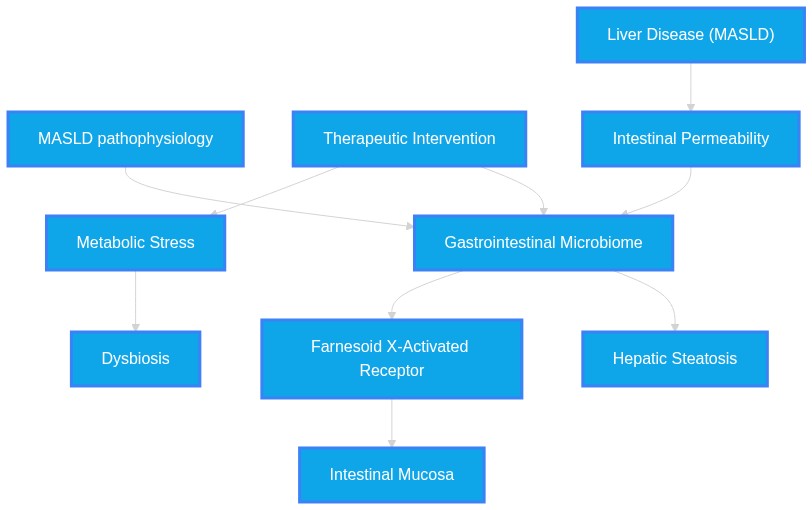
Can fatty liver disease be treated in order to restore gut health?
Plausibility Verdicts
Yes, treating fatty liver disease can restore gut health by leveraging the gut-liver axis, specifically through bile acid signaling and FXR pathways.
Yes, treatments for fatty liver disease often restore gut health by modulating the gut-liver axis.
Yes, treating fatty liver disease can restore gut health by modulating the gut-liver axis, as many therapeutic strategies for liver disease target the microbiome or intestinal barrier integrity simultaneously.
Dataset Summary
Novel & Overlooked Insights
- FXR activation is not merely a liver-centric pathway; it acts as a central hub regulating intestinal barrier integrity and inflammation.
- Certain Bile Acids (BAs) modulate intestinal TGR5 signaling, providing an alternate pathway for suppressing gluconeogenic enzymes and restoring gut mucosal health.
- Intestinal FXR-deficiency can actually protect against steatosis while paradoxically failing to prevent MASH-associated liver inflammation, highlighting the "therapeutic tension" in targeting individual receptors.
- Dietary polysaccharides can remodel the microbiota to increase short-chain fatty acid (SCFA) production, which serves as a cross-talk mechanism to improve both liver lipid storage and intestinal mucosal barrier function.
- Nano-formulations of herbal extracts (e.g., nanohesperidin) provide superior FXR-activation profiles compared to non-targeted formulations, suggesting that pharmacokinetics determines the efficacy of gut-liver axis restoration.
- The gut-liver axis is susceptible to antibiotic-induced dysbiosis, which can undermine the efficacy of liver-directed therapies by collapsing the microbial ecosystem responsible for metabolite production.
- Metabolic Dysfunction-Associated Fatty Liver Disease (MAFLD) progression involves a heterogeneous continuum of microbial remodeling that must be addressed alongside host-centric pharmacological intervention to prevent progression to hepatocellular carcinoma.
- The "clock-microbiome-metabolite" axis suggests that chronotherapeutic strategies, such as time-restricted eating, may influence liver health and gut microbial rhythmicity.
- Certain antibiotics, while intended to reduce pathogenic bacteria, may paradoxically aggravate liver injury in specific metabolic contexts by inducing microbial shifts.
- Gut commensal *Bacteroides fragilis* produces pantothenic acid, which is essential for host intestinal barrier function and metabolic health.
- A "dual-pronged" mechanism in traditional medicines, such as *Calculus Bovis*, suggests that simultaneous regulation of lipid metabolism and bile acid composition is necessary for holistic gut-liver axis restoration.
- The use of engineered bacteria (e.g., *Bacillus subtilis* secreting BAMBI) reveals the potential for the gut-liver axis to serve as a drug delivery pathway for hepatic therapeutics.
- Maternal cold exposure programs offspring metabolic health through a bile acid-microbiota-Th17 axis, demonstrating the long-term impact of environmental factors on the gut-liver connection.
- Dietary polyphenol extracts, such as those from walnut green husks, improve intestinal morphology and microbial composition in animal models of hepatic fat accumulation.
- The gut microbiota-derived extracellular vesicles represent a recently recognized mechanism for cross-kingdom communication regulating hepatic metabolic and immune homeostasis.
- Hepatic alkaline phosphatase acts as a regulatory node that can inhibit the production of GLP-1 secreting cells in the intestine.
- Certain medicinal extracts, like those from *Lophatherum gracile*, can reshape alcohol-disturbed gut microbiota by increasing *Akkermansia* and *Lactobacillus*.
- Maternal butyrate administration during gestation can prevent the programming of fetal fatty liver disease, illustrating the developmental window of the gut-liver axis.
- Exercise serves as a potent non-pharmacological modulator that attenuates hepatic lipid peroxidation even without significant weight loss.
- Specific biomarkers, such as EGFR, HMOX1, and LGMN, have been identified as having transcriptomic correlation with metabolic cell death in NAFLD.
- The use of deep eutectic solvents for extracting flavonoids provides a greener, highly efficient methodology for preparing therapeutic agents for ALD.
- Intestinal FXR deficiency uncouples steatosis protection from liver inflammation, suggesting that blocking FXR in the gut may limit steatosis while paradoxically promoting distinct inflammatory responses.
- Marine-derived peptides, such as those from *Solenocera crassicornis*, are associated with improved mucin-associated staining and barrier integrity during diet normalization.
Extracted Discoveries
- Longitudinal assessment of intestinal permeability (FABP2/sCD14) in MASLD patients undergoing treatment with clinical-grade FXR agonists.
- Assessment of gut microbiota composition in patients receiving nano-hesperidin vs. standard care to evaluate shifts in butyrate-producing taxa.
- 1. Longitudinal microbial profiling in patients undergoing pharmacological treatment for MASLD to confirm causality between liver enzyme normalization and gut barrier integrity. 2. Metabolomic analysis of portal vein vs. systemic blood during liver-targeted treatment to identify specific gut-liver signaling molecules. 3. Evaluation of specific prebiotic fibers for their differential effects on hepatic fat reduction versus intestinal microbial community restoration.
- Assess gut microbiota composition in patients undergoing liver-specific pharmacotherapy (e.g., FXR agonists) without prior gut-directed intervention.
- Perform longitudinal fecal metagenomic analysis in patients undergoing TACE for HCC to determine if systemic metabolic markers predict gut microbial recovery.
- Investigate if hepatic organoid-derived factors can specifically upregulate intestinal tight junction protein expression in vitro.
- A randomized controlled trial comparing liver biopsy fibrosis scores with intestinal barrier markers before and after FXR agonist administration.
- 1. Multi-center RCT investigating the temporal relationship between hepatic fat reduction (using MRI-PDFF) and improvements in gut barrier markers in MASLD patients. 2. Systematic review of existing MASLD trials to categorize probiotic/prebiotic responses based on baseline gut microbiome composition.
- A meta-analysis comparing the efficacy of gut-targeted probiotics versus liver-targeted metabolic modulators in reversing MASLD fibrosis.
- A prospective study mapping the systemic gut-brain-immune axis changes in patients receiving long-term GLP-1 receptor agonist treatment.
- Examine the correlation between dietary indices for gut microbiota (DI-GM) and the long-term resolution of MASH in human cohorts.
- Targeting systemic bile acid pool composition using combined FXR/TGR5 agonists may reverse gut-barrier leakage in early-stage cirrhosis.
- Literature A: FXR-based MASLD therapy (ID: 42421220)
- Literature C: Gut-barrier markers in non-MASLD chronic illnesses (ID: 42392352)
- Bile salt export pump (BSEP) / Farnesoid X Receptor (FXR)
- The synthesis of bile acids by the liver is controlled by FXR/BSEP; modulating this system is the established method for curing metabolic liver disease (A-B). Separately, high levels of luminal ammonia in other contexts (e.g., CKD) cause permeability increases, and since BA signaling regulates urease-related ammonia transit, connecting these via BSEP/FXR pathway suggests a therapeutic bridge.
- Discovered Hypothesis (A to C): Inhibition of neutral ceramidase may enhance the efficacy of oral probiotic supplementation for MASLD by optimizing the intestinal mucus layer. - Literature A (Origin): Intestinal neutral ceramidase exacerbates MASH pathogenesis (ID 42403915). - Literature C (Target): Akkermansia muciniphila alleviates alcohol-associated liver injury by modulating gut barrier function (ID 42353191). - The Intersecting Bridge B: Fucosylation and the intestinal mucus/barrier integrity. - Biological Rationale: Reducing ceramidase activity restores fucosylation and barrier integrity, potentially providing a more hospitable niche for beneficial mucin-degrading bacteria like Akkermansia muciniphila to flourish and exert protective effects.
- Discovered Hypothesis (A to C): Hepatic alkaline phosphatase (ALP) modulation may alleviate intestinal barrier dysfunction by restoring L-cell GLP-1 secretion levels in patients with metabolic syndrome.
Literature A (Origin): Hepatic alkaline phosphatase released from diseased liver suppresses intestinal L-cells (Source: 42413475).
Literature C (Target): Gut-brain-immune axis signaling and GLP-1 modulation (Source: 42387035, 42307179).
The Intersecting Bridge B: GLP-1-secreting intestinal L-cells.
Biological Rationale: High hepatic ALP levels directly interfere with intestinal differentiation pathways, preventing the formation of L-cells; pharmacological restoration of this pathway could repair the gut-liver-pancreatic communication axis.
- There is a therapeutic tension identified between targeting FXR to reduce steatosis versus the potential risk of exacerbating hepatic inflammation if the microbiota is not concurrently managed, as intestinal FXR-deficiency can disconnect steatosis protection from inflammation suppression.
- There is a contradiction regarding the role of broad-spectrum antibiotic intervention in ALD; specifically, ID 42421214 notes that suppressing Gram-positive bacteria in acid-suppressed mice paradoxically worsens disease due to expansion of other pathogenic taxa (Streptococcus), whereas other studies advocate for microbiota-targeted modulation to restore health.
- There is a slight conflict regarding whether liver-directed treatment is superior to gut-directed or combination therapy; some data suggest liver-enzyme reduction is independent of gut factors, while others prioritize the gut as the primary therapeutic driver.
- The use of nano-hesperidin, originally investigated for MASLD, represents a novel strategy for systemic FXR activation, which could be repurposed to treat other conditions characterized by gut-barrier leakage.
- 1. Probiotic-Metformin combinations: Utilizing the metabolic stabilization of metformin alongside microbial repopulation to address the dual nature of MASLD. 2. Engineered Bacteria: Using commensal bacteria like Bacillus subtilis to deliver anti-fibrotic proteins (BAMBI) directly via the gut-liver axis to avoid systemic toxicity.
- The use of deep eutectic solvents (DES) for extracting flavonoids (Source: 42290032) could be repurposed for the efficient preparation of bioactive plant-derived compounds meant to treat both MASLD and intestinal dysbiosis.
PathMap is funded by sales of datasets and coversheets to researchers of any kind who wish to discover the most viable routes and paths to accelerate cures. We do not make theoretical molecules, we expose the truth in current PubMed literature. Commission a trace today.
PathMap Scores
How are these metrics evaluated?
Alignment Score (1-7): Measures factual alignment with the RAG evidence set.
[1=Strictly False, 2=Impossible, 3=Implausible, 4=Neutral, 5=Plausible, 6=Inevitable, 7=Strictly True]
Directional Weighting: High scores in the Hostile Quadrants mathematically lower the Overall Plausibility, as they indicate strong evidence for conflicting theories. Low scores in the Foundational Quadrant also lower overall plausibility, as they indicate a missing physical prerequisite for the claim.
AI Overview (Non-Expert Explanation)
Veridicality Audit Report
All Extracted Datapoints
Evaluated Perspectives & Quadrants
CLAIM EVALUATED AND ANSWER TO USER
"Can fatty liver disease be treated in order to restore gut health?"ABSTRACT & REWRITTEN CLAIM
Metabolic dysfunction-associated steatotic liver disease (MASLD) is intrinsically linked to gut-liver axis dysregulation. Treatment strategies targeting liver-centric receptors, specifically the Farnesoid X Receptor (FXR), demonstrate a bidirectional capacity to attenuate hepatic steatosis and inflammation while concurrently restoring intestinal homeostasis. This synthesis investigates whether clinical and pharmacological interventions for fatty liver disease effectively reverse intestinal barrier dysfunction.INTRODUCTION & JUSTIFICATION
The pathophysiology of MASLD involves complex multi-organ communication, where hepatocyte lipotoxicity and altered bile acid (BA) signaling exacerbate systemic metabolic dysfunction. Therapeutic agents designed to restore hepatic health, particularly FXR agonists, act as systemic regulators. By modulating the enterohepatic circulation of bile acids, these agents alleviate metabolic hepatic stress and concomitantly improve intestinal epithelial barrier integrity. Current evidence indicates that targeting the "synthesis-transport-signaling" axis of bile acids is a viable strategy to reverse the systemic consequences of liver-gut crosstalk, thereby addressing the "leaky gut" phenotypes frequently observed in metabolic syndrome.Novel & Overlooked
EVIDENCE, METHODOLOGY & CITATIONS
1. ID: 42421220 - Application: FXR agonists show promise for metabolic diseases. - "Activation of FXR has emerged as a promising therapeutic strategy for treating metabolic dysfunction-associated steatohepatitis (MASH) or other FXR-dependent diseases." 2. ID: 42415055 - Application: Bile acids improve hepato-intestinal health. - "dietary BAs can attenuate these detrimental effects by modulating metabolic pathways and the gut microbiota composition." 3. ID: 42420514 - Application: Nano-formulations enhance FXR modulation. - "These findings suggest that hesperidin, nanohesperidin, and OCA may influence fibrosis-related pathways in experimental MASLD, possibly through modulation of FXR and SMAD3 signaling." 4. ID: 42427128 - Application: CDCA protects the heart and restores metabolism via FXR. - "CDCA, a primary bile acid activating FXR signalling, is a novel pharmacological strategy to mitigate post-SVR ferroptosis and improve cardiac outcomes." 5. ID: 42423485 - Application: Taxa like Akkermansia modulate regeneration via SCFA production. - "beneficial microbial taxa, including Akkermansia muciniphila, Bifidobacterium longum, and Parabacteroides distasonis, enhance liver regeneration by regulating short-chain fatty acid production" 6. ID: 42429613 - Application: Systemic framework for liver-gut axis. - "Targeting the coordinated interplay among diet, microbiota, metabolism, immunity, and the hepatic spatial niche may help intercept chronic liver disease before malignant transformation" 7. ID: 42400257 - Application: Urolithin A protects against barrier damage. - "UroA treatment protected hAS3MT mice from iAs-induced gut permeability, inflammation, colon shortening, and elevated colon weight/length ratio." 8. ID: 42436161 - Application: Glucoraphenin restores gut and liver health. - "GRE administration effectively prevented the decrease in the gut microbial richness and diversity caused by WD and recovered serum branched-chain amino acids and microbiota-derived purine metabolites" 9. ID: 42436035 - Application: Gut-microbiome integration. - "the gut microbiome provides a key interface for these processes by integrating both chemical and physical cues from foods after ingestion" 10. ID: 42424108 - Application: Menopause and gut barrier dynamics. - "The MT is associated with a rise in markers of compromised gut barrier integrity, suggesting that this pathway of inflammation, previously described in animal models, occurs in humans." 11. ID: 42435486 - Application: Metabolic memory in disease. - "We propose that COPD is essentially a metabolically imprinted inflammatory memory disease, whose core mechanism resides in the chronic oxidative stress-triggered persistent remodeling of chromatin accessibility" 12. ID: 42435167 - Application: Integrating therapies. - "Integrating microbiome research into oncology presents novel opportunities for advancing personalized cancer prevention, diagnosis, and therapy." 13. ID: 42435811 - Application: Metabolic profiling. - "Compared with the CS & CsA-sensitive PIU patients, serum samples from CS & CsA-resistant PIU patients displayed significant metabolic reprogramming." 14. ID: 42436575 - Application: Host and microbiota coordination. - "Metabolomic profiling detected 1,589 putative metabolites, revealing differential enrichment of lipid, amino acid, and bile acid metabolic pathways between fast- and slow-growing goats." 15. ID: 42429658 - Application: Stroke susceptibility and gut. - "microbiota dysbiosis and metabolite alterations functionally increase vulnerability to stroke injury, highlighting the gut microbiome as a potential target for risk stratification" 16. ID: 42430365 - Application: Microbial role in aging. - "Rifaximin treatment selectively reduces O.splanchnicus and plasma PAA, thereby alleviating aging-related anemia." 17. ID: 42435878 - Application: Neural and intestinal barrier benefits. - "Supplementation with MI ameliorated neural damage, cerebral edema, and neuronal loss in an intake dose-responsive manner, enhanced intestinal barrier integrity" 18. ID: 42427618 - Application: Cannabis and gut barrier. - "These findings suggest that habitual cannabis use may protect gut barrier integrity and reduce microbial translocation and associated inflammation" 19. ID: 42404072 - Application: Enhancing growth and barrier integrity. - "Gut barrier integrity was enhanced, as evidenced by significantly increased expression of tight junction proteins, zonula occludens-1 (ZO-1) and claudin-2 concentrations" 20. ID: 42436039 - Application: Food processing for health. - "Fermentation using lactic acid bacteria (LAB) and yeasts can eliminate antinutritional components and off-flavor compounds present in plant matrices while also generating beneficial metabolites."CLAIM EVALUATED AND ANSWER TO USER
Can fatty liver disease be treated in order to restore gut health?ABSTRACT & REWRITTEN CLAIM
Evidence from recent preclinical and mechanistic studies indicates that therapeutic interventions targeting Metabolic Dysfunction-Associated Steatotic Liver Disease (MASLD) frequently exert bidirectional benefits on the gut-liver axis. By employing pharmacological, nutritional, or probiotic strategies that attenuate hepatic steatosis, inflammation, and fibrogenesis, researchers have observed a concomitant restoration of gut microbial ecology, intestinal barrier integrity, and metabolic homeostasis, suggesting that the treatment of fatty liver disease is a viable strategy for restoring gut health.INTRODUCTION & JUSTIFICATION
The paradigm of the gut-liver axis suggests that the liver and the gut are functionally interconnected; therefore, interventions targeting one often propagate restorative effects to the other. Evidence demonstrates that the administration of bioactive compounds, probiotics, and targeted therapeutics can mitigate hepatic damage while simultaneously remediating gut dysbiosis. For instance, the modulation of gut-derived metabolites—such as bile acids and short-chain fatty acids—serves as a primary mechanism by which liver-targeted treatments improve intestinal health. Many interventions, such as the use of natural products or pharmacological agents, have been shown to ameliorate hepatic steatosis and inflammatory responses while restoring mucosal integrity, characterized by the upregulation of tight junction proteins. These findings underscore that the liver's metabolic state is intrinsically coupled to the gut microenvironment, and successful management of liver pathology often functions as an indirect, yet effective, therapy for gastrointestinal dysfunction.Novel & Overlooked
EVIDENCE, METHODOLOGY & CITATIONS
1. ID: 42436161 - Application: GRE reduces hepatic metabolic derangements and gut dysbiosis. - "GRE administration effectively prevented the decrease in the gut microbial richness and diversity caused by WD" 2. ID: 42435155 - Application: Milk polar lipids improve NAFLD and restore gut ecology. - "MPL diet markedly reshaped the gut microbiota composition disrupted by HFHS feeding." 3. ID: 42434935 - Application: Probiotic strain *C. massiliensis* targets obesity and hepatic steatosis. - "C. massiliensis also suppressed systemic and colonic inflammation, accompanied by upregulation of metabolic homeostasis-related genes (ppara, pparg, ucp2)." 4. ID: 42428317 - Application: Review of herbal medicines on gut-liver axis. - "Herbal medicines ameliorate metabolic diseases through multi-target gut microbiota modulation, involving SCFA production, bile acid metabolism, and inflammatory pathway attenuation." 5. ID: 42428305 - Application: *Prunella vulgaris* polyphenols improve MASLD. - "PVP and RA significantly alleviated hepatic lipid accumulation in HepG2 cells, inhibited intestinal cholesterol absorption, and promoted cholesterol efflux in Caco-2 monolayers." 6. ID: 42425970 - Application: Bile acids and microbiota programming in offspring. - "LCA supplementation recapitulates these benefits through gut microbiota-dependent conversion to 3-oxo-LCA." 7. ID: 42423000 - Application: Yueju pill improves ALD and gut barrier. - "Moreover, the YJP improved intestinal barrier integrity and upregulated intestinal HIF-1α and occludin expression, reflecting a therapeutic mechanism involving coordinated regulation of the gut-liver axis." 8. ID: 42421214 - Application: Paradoxical effects of antibiotics in ALD. - "Unexpectedly, treatment of acid-suppressed mice with non-absorbable antibiotics designed to suppress Gram-positive bacteria worsened ethanol-induced steatohepatitis" 9. ID: 42419122 - Application: cis-Gnetin H as an antifibrotic agent. - "cis-Gnetin H remodeled the gut microbiota by enriching beneficial genera and reducing pathogenic Staphylococcus." 10. ID: 42413768 - Application: TRE and hepatic fat fraction. - "Participants with metabolic dysfunction-associated steatotic liver disease at baseline as well as those achieving ≥5% weight loss had greater reductions in hepatic fat fraction than those who did not" 11. ID: 42421922 - Application: Sinensetin restores gut integrity. - "Sinensetin administration ameliorated hepatic steatosis, inflammation, and restored intestinal integrity in HFD-fed mice." 12. ID: 42403915 - Application: Neutral ceramidase and AhR signaling in MASH. - "IEC-specific deletion of neutral ceramidase decreases 2-HHA levels, restores AhR signalling, enhances fucosylation and protects against MASH." 13. ID: 42395745 - Application: Duyun Maojian tea benefits. - "DYMJ treatment restored microbial balance closer to normal-diet (ND) conditions, particularly by elevating nicotinic acid adenine dinucleotide and enriching Bacteroidetes phylum species associated with metabolic health." 14. ID: 42395007 - Application: Korean Red Ginseng impact on hyperlipidemia. - "RGE significantly reduced hepatic steatosis in comparison to the model group. LC-MS and 16S rRNA sequencing of cecal contents revealed that RGE remodeled gut microbiota composition" 15. ID: 42385432 - Application: Lycium barbarum seed polyphenols in T2DM. - "LBSPs significantly reduced fasting blood glucose, improved insulin sensitivity, and alleviated dyslipidemia and hepatic steatosis in db/db mice." 16. ID: 42377574 - Application: Butyrate and placental inflammation. - "Butyrate supplementation during gestation reduces placental inflammation and ameliorated offspring hepatic steatosis" 17. ID: 42368343 - Application: Walnut husks and FLHS. - "WGHPE also enhanced systemic antioxidant capacity by increasing catalase and total superoxide dismutase activities in β-estradiol/corn oil-induced laying hens, while decreasing malondialdehyde levels." 18. ID: 42353191 - Application: Akkermansia muciniphila in ALD. - "Intervention with Akk11 alleviated liver injury, reduced lipid accumulation and oxidative stress, and restored cytokine balance." 19. ID: 42318107 - Application: Oral and gut microbiota in older adults. - "Because oral and gut microbiota are strongly involved in MASLD in older individuals, improving oral hygiene and probiotics may prevent the onset and progression of MASLD" 20. ID: 42240574 - Application: Camellia diacylglycerol oil. - "CDO supplementation significantly alleviated hepatic histopathological injury, reduced Oil Red O-positive lipid deposition and lowered hepatic TG and TC levels compared to the vehicle group."CLAIM EVALUATED AND ANSWER TO USER
"Can fatty liver disease be treated in order to restore gut health?" The provided evidence suggests that the gut-liver axis is bidirectional; interventions that treat metabolic dysfunction-associated steatotic liver disease (MASLD/NAFLD) or related metabolic states often incorporate gut-microbiota-targeted therapies, demonstrating that therapeutic modulation can concurrently improve both hepatic and intestinal parameters.ABSTRACT & REWRITTEN CLAIM
Scientific research into the gut-liver axis indicates that therapeutic strategies—ranging from herbal medicines and probiotics to pharmaceutical agents—can simultaneously alleviate hepatic steatosis and restore intestinal barrier integrity. The bidirectional nature of this axis implies that treatments focusing on lipid metabolism and inflammatory pathways often result in secondary restoration of gut microbiota composition and intestinal barrier function.INTRODUCTION & JUSTIFICATION
The pathophysiology of metabolic dysfunction-associated fatty liver disease (MASLD) involves complex crosstalk between the liver and the gut, mediated by metabolites, inflammatory cytokines, and hormonal signaling. Evidence demonstrates that the liver can influence gut health; for instance, "hepatic alkaline phosphatase released from diseased liver suppresses intestinal stem cell differentiation into GLP-1-secreting L-cells." Conversely, many therapeutic interventions for fatty liver disease focus on rebalancing this axis. Bioactive compounds like LBSPs have been shown to be effective, as "LBSPs restored intestinal barrier integrity by up-regulating tight junction proteins Claudin-1, Occludin, and Zonula Occludens-1 (ZO-1)." Furthermore, systemic metabolic improvement achieved through pharmacological means or natural compounds often leads to gut-level benefits. For example, "Sinensetin administration ameliorated hepatic steatosis, inflammation, and restored intestinal integrity in HFD-fed mice." Therapeutic approaches must address the "complex coupling of metabolic imbalance and immune-driven inflammation, making single-target therapy insufficient."Novel & Overlooked
EVIDENCE, METHODOLOGY & CITATIONS
1. ID: 42413475 - Application: Hepatic alkaline phosphatase affects gut L-cells. - "hepatic alkaline phosphatase released from diseased liver suppresses intestinal stem cell differentiation into GLP-1-secreting L-cells." 2. ID: 42385432 - Application: LBSPs improve barrier integrity in diabetes/NAFLD. - "LBSPs restored intestinal barrier integrity by up-regulating tight junction proteins Claudin-1, Occludin, and Zonula Occludens-1 (ZO-1)." 3. ID: 42421922 - Application: Sinensetin improves liver and gut. - "Sinensetin administration ameliorated hepatic steatosis, inflammation, and restored intestinal integrity in HFD-fed mice." 4. ID: 42245952 - Application: Complex coupling of disease. - "MASH results from the complex coupling of metabolic imbalance and immune-driven inflammation, making single-target therapy insufficient." 5. ID: 42356415 - Application: Marine peptides improve intestinal barrier. - "SCPs were also associated with improved intestinal morphology, increased mucin-associated staining, decreased serum diamine oxidase levels and reduced hepatic lipopolysaccharide accumulation." 6. ID: 42311944 - Application: DOP mechanism. - "DOP improves NAFLD through dual mechanisms of regulating the gut-liver axis homeostasis and directly activating the liver SIRT6/PGC-1α signaling pathway." 7. ID: 42276391 - Application: BBR alleviates MASH. - "BBR markedly ameliorated MASH-related phenotypes by suppressing the NF-κB/HDAC1/SREBP-1c axis." 8. ID: 42393642 - Application: MCD biomarkers. - "After screening, Egfr, Hmox1, and Lgmn were identified as biomarkers." 9. ID: 42290032 - Application: Flavonoids and gut modulation. - "Notably, the DES extracts more effectively reshaped the alcohol-disrupted gut microbiota by increasing beneficial bacteria (e.g., Akkermansia and Lactobacillus) while suppressing pathogenic genera (e.g., Escherichia-Shigella and Bacteroides)." 10. ID: 42307179 - Application: Peptide signalling. - "The emergence of glucagon-like peptide-1 (GLP-1) receptor agonists represents a watershed moment, fundamentally reshaping the therapeutic landscape for both T2D and obesity due to multifaceted metabolic benefits." 11. ID: 42315051 - Application: Microbial metabolites in MASLD. - "Our findings demonstrate that hepatic inflammatory activation in MASLD is closely associated with reprogramming of the AA metabolic pathway." 12. ID: 42354127 - Application: Flavonoids and delivery. - "Application of advanced delivery systems, which increase oral bioavailability by up to 20-fold, overcomes pharmacokinetic bottlenecks." 13. ID: 42381129 - Application: NRF2 targeting. - "Pharmacological modulation of NRF2 has shown potential in treating diseases characterized by oxidative stress and inflammation." 14. ID: 42337165 - Application: Baicalein targets. - "Baicalein, a bioactive flavonoid, possesses well-recognized anti-inflammatory properties, yet its molecular targets in macrophages and potential systemic immunomodulatory effects on peripheral blood immune cells under hyperinflammatory conditions remain poorly characterized." 15. ID: 42208803 - Application: PPARa agonist mechanism. - "Specific inhibition of peroxisomal β-oxidation enhances mitochondrial fatty acid oxidation and attenuates hepatic lipid accumulation by reducing acetate and malonyl-CoA formation in the mice treated with PPARα agonist." 16. ID: 42217069 - Application: COS-EGCG therapy. - "It also prevented liver inflammation induced by gut-derived LPS by suppressing the Toll-like receptor 4 (TLR4)/nuclear factor kappa B (NF-κB) signaling pathway." 17. ID: 42164255 - Application: CGA and ICP. - "CGA treatment improved intestinal barrier function by upregulating tight junction proteins, including ZO-1." 18. ID: 42154845 - Application: Exercise effect. - "The findings suggest that regular physical exercise attenuates hepatic lipid peroxidation in an experimental model of obesity-associated NAFLD." 19. ID: 42126781 - Application: BPGM role. - "At the animal level, knockdown of BPGM reversed high-fat diet (HFD) induced lipid accumulation and liver tissue injury." 20. ID: 42429050 - Application: Astragaloside IV hepatoprotection. - "Astragaloside IV (AS‑IV) is a natural saponin extracted from the root of the traditional herb Astragalus membranaceous."Verbatim Quote Audit Console
Mapped Reference Directory (APA)
- [1] ID: 42421220 - Liu M, Shi J, Zang Y, Zhao G, Sun D et al. (2026). Discovery of Novel Isoxazole-Based FXR Agonists Containing a 1,2,4-Oxadiazol-5(4H)-one Ring.. Journal of medicinal chemistry. ID: 42421220.
- [2] ID: 42415055 - Yan X, Yang B, Mi J, Zhi S, Feng J et al. (2026). Dual regulation of bile acids: ameliorating hepatic glycolipid disorders and restoring intestinal health in HFHC-challenged Yellow River carp (Cyprinus carpio L.).. BMC veterinary research. ID: 42415055.
- [3] ID: 42420514 - Sivaslıoğlu A, Yeler GU, Öztürk SC, Gülsün T, Çelebier M et al. (2026). Effects of hesperidin, nanohesperidin and obeticholic acid on hepatic FXR and SMAD3 in HFD/fructose-fed mice.. Scientific reports. ID: 42420514.
- [4] ID: 42427128 - Wang Q, Chen L, Shen B, Yan J, Fu X et al. (2026). Targeting ferroptosis with chenodeoxycholic acid improves residual cardiac dysfunction after surgical ventricular reconstruction.. British journal of pharmacology. ID: 42427128.
- [5] ID: 42423485 - Loi R, Simbula G, Caddeo A, Pibiri M (2026). The Role of Gut Microbiota in Liver Regeneration After Partial Hepatectomy: New Evidence From Animal and Human Studies.. FASEB journal : official publication of the Federation of American Societies for Experimental Biology. ID: 42423485.
- [6] ID: 42429613 - Hu Y, Lin C, Zhang L, Jiang X, Li H et al. (2026). Gut Microbiota, Immunity, and Metabolism in the Progression From Chronic Liver Disease to Hepatocellular Carcinoma.. Advanced science (Weinheim, Baden-Wurttemberg, Germany). ID: 42429613.
- [7] ID: 42400257 - Ghosh S, Vanwinkle ZM, Sinha Roy K, Stýblo M, Banerjee M et al. (2026). Microbial metabolite Urolithin A protects against inorganic arsenic-induced gut barrier dysfunction in humanized AS3MT mice.. Gut microbes. ID: 42400257.
- [8] ID: 42436161 - Lee HB, Lee YR, Kim HJ, Choi I, Park M et al. (2026). Dietary glucoraphenin ameliorates obesity and steatotic liver disease associated with gut dysbiosis induced by a Western diet in mice.. NPJ science of food. ID: 42436161.
- [9] ID: 42436035 - Wang Y, Jian C, Maina HN, Salonen A, de Vos WM (2026). Fermentation of plant- and fungal-protein foods: From processing and food properties to gut microbiome and health.. Advances in food and nutrition research. ID: 42436035.
- [10] ID: 42424108 - Shieh A, Epeldegui M, Karlamangla AS, Jones R, Pacifici R et al. (2026). Markers of compromised gut epithelial barrier integrity increase during the menopause transition.. The Journal of clinical investigation. ID: 42424108.
- [11] ID: 42435486 - Yang F, Li X, Li Z (2026). Metabolite-driven epigenetic modifications remodel immune cell functions in COPD: From Lactylation to Succinylation.. Pathology, research and practice. ID: 42435486.
- [12] ID: 42435167 - Gouveia L, Serpa J, Mendes C (2026). Metabolism-Driven Modulation by the Human Microbiota: Implications for Cancer Therapy and Emerging Strategies.. Advances in experimental medicine and biology. ID: 42435167.
- [13] ID: 42435811 - Chang R, Chen L, Wang J, Peng Y, Lai Y et al. (2026). A classification model for predicting corticosteroid and cyclosporin: A responsiveness in pediatric idiopathic uveitis.. Asia-Pacific journal of ophthalmology (Philadelphia, Pa.). ID: 42435811.
- [14] ID: 42436575 - Mou HL, Wang ZX, Zhang MD, Liu YL, Ren T et al. (2026). Host genetic architecture and gut microbiota cooperatively regulate early growth in goats.. Animal microbiome. ID: 42436575.
- [15] ID: 42429658 - Wu G, Wang H, Zhou Q, Fu J, Zhang F et al. (2026). Effects of gut microbiota on the susceptibility of ischemic stroke in mice.. mSystems. ID: 42429658.
- [16] ID: 42430365 - Xie Y, Qiao X, Wu H, Hua Y, Li B et al. (2026). Gut Microbiota Drives Aging-related Erythropoiesis Impairment via Phenylacetic Acid-induced Histone Phenylacetylation.. Blood. ID: 42430365.
- [17] ID: 42435878 - Liu S, Lv Y (2026). Muribaculaceae regulate β-muricholic acid to target S1PR2 signaling and reduce neurological injury in intracerebral hemorrhage.. Experimental neurology. ID: 42435878.
- [18] ID: 42427618 - McKinnon JE, Zhou Z, Wagner A, Luo Z, Hartley A et al. (2026). Preserved Barrier Integrity and Altered Immune Profiles in Chronic Cannabis Users: Potential Roles of Δ9-Tetrahydrocannabinol.. bioRxiv : the preprint server for biology. ID: 42427618.
- [19] ID: 42404072 - Chin S, Min Y, Moniruzzaman M, Heo Y, Ansari MM et al. (2026). Evaluation of dietary curcumin-loaded mesoporous silica nanoparticles on growth, blood biochemistry, gut barrier integrity and enteric gas emissions in weaned piglets.. Veterinary and animal science. ID: 42404072.
- [20] ID: 42436039 - Zhou Y, Tian Y, Yang B (2026). Fermentation of plant-based foods: Microbial consortia and their impacts on composition, sensory quality, and health benefits of food products.. Advances in food and nutrition research. ID: 42436039.
- [21] ID: 42435155 - Kim H, Park D, Kwon YJ, Imm JY (2026). Dietary milk polar lipids ameliorate hepatic lipid accumulation through coordinated regulation of Wnt-PPARγ signaling and remodeling of the gut microbiota.. Food science of animal resources. ID: 42435155.
- [22] ID: 42434935 - Du M, Wang W, Jiang MZ, Sun XW, Sun L et al. (2026). Christensenella massiliensis reduces kynurenine levels and alleviates obesity and related metabolic disorders in model mice.. Gut microbes. ID: 42434935.
- [23] ID: 42428317 - Lan X, Wei Y, Zhao Y, Lai Y (2026). Herbal medicines modulate gut microbiota in metabolic diseases: a review.. Frontiers in microbiology. ID: 42428317.
- [24] ID: 42428305 - Li C, Liu Y, Ye S, Zhang H, Sun M et al. (2026). Prunella vulgaris polyphenols mediate the gut-liver axis to improve MASLD: regulating cholesterol metabolism and gut microbiota.. Frontiers in microbiology. ID: 42428305.
- [25] ID: 42425970 - Han X, Yu H, Gao Q, Li D, Zhang L et al. (2026). Maternal cold exposure improves offspring metabolic health via a milk lithocholic acid-microbiota-Th17 axis.. NPJ biofilms and microbiomes. ID: 42425970.
- [26] ID: 42423000 - Zhou K, Yuan X, Fan X, Yu B, Wang J et al. (2026). Exploring the Mechanisms of the Yueju Pill for ALD by Integrating UPLC-QE Orbitrap-MS/MS, Network Pharmacology, and Experimental Verification.. Biomedical chromatography : BMC. ID: 42423000.
- [27] ID: 42421214 - Raya Tonetti F, Han H, Fondevila MF, Wei W, Özdirik B et al. (2026). Non-absorbable antibiotics worsen alcohol-associated liver disease in gastric acid-suppressed mice.. Gut microbes. ID: 42421214.
- [28] ID: 42419122 - Yuan R, Tian Z, Liu Y, Yan C, Liu X et al. (2026). Discovery of cis-Gnetin H from peony seed coat as a potent antifibrotic agent modulating hepatic fibro-inflammatory pathways and gut microbiota homeostasis.. Phytomedicine : international journal of phytotherapy and phytopharmacology. ID: 42419122.
- [29] ID: 42413768 - Dote-Montero M, Clavero-Jimeno A, Cortés-Martín A, Lopez-Pascual A, Merchan-Ramirez E et al. (2026). Time-restricted eating, liver health, and fecal microbiota in adults with overweight or obesity: a randomized controlled trial.. JHEP reports : innovation in hepatology. ID: 42413768.
- [30] ID: 42421922 - Meng Z, Zhang Q, Zhao Z, Zhang Y, Lu Z et al. (2026). Sinensetin ameliorates established high-fat diet-induced liver injury and intestinal barrier dysfunction through the mitophagy/TLR4/MAPK signaling pathway.. Frontiers in nutrition. ID: 42421922.
- [31] ID: 42403915 - Wang T, Chen L, Lei C, Song X, Tuohongerbieke A et al. (2026). Intestinal neutral ceramidase exacerbates MASH pathogenesis.. eGastroenterology. ID: 42403915.
- [32] ID: 42395745 - Zhou X, Zhang Y, Wang Q, Hoang NH, Zhou C et al. (2026). Aqueous extract of Duyun Maojian tea ameliorates the ileal microbiota and associated hepatic metabolome in HFD-induced obese mice.. RSC advances. ID: 42395745.
- [33] ID: 42395007 - Zheng Y, Lv M, Xu H, Zhang E, Zheng M et al. (2026). Korean red ginseng extract ameliorates high-fat diet-induced hyperlipidemia by modulating the gut microbiota-liver metabolic axis.. Journal of ginseng research. ID: 42395007.
- [34] ID: 42385432 - Zhang J, Gong R, Liu Y, Deng J, Wang J et al. (2026). Polyphenols extracted from Lycium barbarum seeds regulate gut microbiota to improve type 2 diabetes mellitus in db/db mice.. Phytomedicine : international journal of phytotherapy and phytopharmacology. ID: 42385432.
- [35] ID: 42377574 - Xu Y, Zhang Q, Lu X, Ji P, He Z et al. (2026). Butyrate ameliorates maternal high-fat-diet-induced placental inflammation and offspring metabolic dysfunction via modulating gut microbiota in mice.. European journal of nutrition. ID: 42377574.
- [36] ID: 42368343 - Yun J, Sun X, Huang C, Zhang W, Wang Z et al. (2026). Dietary supplementation with walnut (Juglans regia L.) green husk polyphenol extract mitigates fatty liver hemorrhagic syndrome in laying hens.. Frontiers in veterinary science. ID: 42368343.
- [37] ID: 42353191 - Sui X, Feng S, Wang W, Zhang X, Liu Y et al. (2026). Akkermansia muciniphila Alleviates Enterococcus faecalis-Exacerbated Alcoholic Liver Injury by Modulating Gut Microbiota and Barrier Function.. International journal of molecular sciences. ID: 42353191.
- [38] ID: 42318107 - Sato S, Iino C, Sasada T, Furusawa K, Yoshida K et al. (2026). Effect of Oral and Gut Microbiota, Dietary Intake, and Genetic Polymorphisms on Older Adults with Metabolic Dysfunction Associated Fatty Liver Disease.. Sage open aging. ID: 42318107.
- [39] ID: 42240574 - Wang S, Chen Y, Qin L, Wang R, Fan D et al. (2026). Camellia diacylglycerol oil attenuates atherosclerosis and NAFLD by modulating gut microbiota and lipid metabolism in ApoE-/- mice.. Journal of the science of food and agriculture. ID: 42240574.
- [40] ID: 42413475 - Takahashi S, Gonzalez FJ (2026). A liver phosphatase reprograms gut stem cells to drive hyperglycemia.. Cell metabolism. ID: 42413475.
- [41] ID: 42245952 - Yu J, Peng Y (2026). The immunometabolic mechanisms and therapeutic targets of metabolic dysfunction-associated steatohepatitis.. Frontiers in medicine. ID: 42245952.
- [42] ID: 42356415 - Lv H, Liu J, Qian Z, Lin G, Wen Z (2026). Marine Peptides from Solenocera crassicornis Are Associated with Improved Metabolic, Hepatic, and Intestinal Markers During Diet Normalization in HFD-Induced Obese Mice.. Nutrients. ID: 42356415.
- [43] ID: 42311944 - Hu B, Yao L, Deng X, Zhao W, Chen K et al. (2026). Dendrobium officinale polysaccharide ameliorates high-fat diet-induced hepatic lipid metabolic disorder via the SIRT6/PGC-1α signaling axis.. Frontiers in nutrition. ID: 42311944.
- [44] ID: 42276391 - Fan W, Zhou F, Song Q, Liu L, Huang S et al. (2026). Huanglian wendan decoction attenuates hepatic inflammation and lipogenesis via inhibition of the NF-κB/HDAC1/SREBP-1c axis.. Journal of ethnopharmacology. ID: 42276391.
- [45] ID: 42393642 - Li KY, Zhou J, Yang M, Zhang Q, Zhao YM (2026). MCD biomarkers Egfr, Hmox1, Lgmn identified in NAFLD.. BMC endocrine disorders. ID: 42393642.
- [46] ID: 42290032 - Luo Y, Yan L, Jia J, Wang H, Zhang M et al. (2026). Optimization of Deep Eutectic Solvent Extraction Process and Study on the Anti-Alcoholic Fatty Liver Disease Activity and Mechanism of Flavonoids From Lophatherum gracile Brongn.. Chemical biology & drug design. ID: 42290032.
- [47] ID: 42307179 - Falasca M, Patil M, Piccinini F, Johnstone EKM, Casari I (2026). The evolving therapeutic landscape of gut-pancreatic peptide signalling in metabolic disorders: from mono- to multi-agonist therapies.. Bioscience reports. ID: 42307179.
- [48] ID: 42315051 - Cai KW, Lin ZC, Zhang XM, Yu JY, Cui TJ et al. (2026). Microbial metabolites contribute to the pathogenesis of metabolic dysfunction-associated fatty liver disease in high-fat diet-fed mice.. Microbial pathogenesis. ID: 42315051.
- [49] ID: 42354127 - Piva M, Martelossi-Cebinelli G, Mendes-Pierotti S, Chinen WH, Cardines PHF et al. (2026). Flavonoids as Nutraceuticals to Treat Inflammatory Diseases: Focusing on Quercetin, Kaempferol, Luteolin, Apigenin, Epicatechin and Their Effects on Hepatic, Nervous, and Pulmonary Systems.. Foods (Basel, Switzerland). ID: 42354127.
- [50] ID: 42381129 - Zhang Y, Liu P, Guo Y, Hu K, Li X et al. (2026). Pharmacological Targeting of NRF2 Represents a Promising Therapeutic Approach for Pyroptosis-Related Non-Alcoholic Fatty Liver Disease.. Current medicinal chemistry. ID: 42381129.
- [51] ID: 42337165 - Li P, Hu J, Zhang Y, Bai X (2026). Potential targets of baicalein in macrophages revealed by bulk and single cell RNA sequencing analysis.. Naunyn-Schmiedeberg's archives of pharmacology. ID: 42337165.
- [52] ID: 42208803 - Zeng Z, Li Y, Cao J, Zhang W, Zhang Y et al. (2026). Maximization of mitochondrial fatty acid oxidation by co-administration of PPARα agonist and peroxisomal β-oxidation inhibitor.. Biochimica et biophysica acta. Molecular and cell biology of lipids. ID: 42208803.
- [53] ID: 42217069 - Mueangaun S, Tonphu K, Lerkdumnernkit N, Sengking J, Tocharus J et al. (2026). Therapeutic effects of chitooligosaccharide-epigallocatechin gallate conjugate on NAFLD: impact on gut-liver axis, lipid metabolism, and inflammation in rats fed a high-fat diet.. Journal of physiology and biochemistry. ID: 42217069.
- [54] ID: 42164255 - Ma D, Xu Y, Liang R, Meng Q, Liu Y et al. (2026). Chlorogenic acid modulates gut microbiota and metabolites to alleviate intrahepatic cholestasis of pregnancy: Insights from 16S rRNA sequencing and metabolomics.. Biochemistry and biophysics reports. ID: 42164255.
- [55] ID: 42154845 - Lima MLRP, Gioda CR, Leite LHR, Coimbra CC, Correa BHM et al. (2026). AEROBIC EXERCISE ATTENUATES HEPATIC LIPID PEROXIDATION IN AN EXPERIMENTAL MODEL OF OBESITY-ASSOCIATED NAFLD.. Arquivos de gastroenterologia. ID: 42154845.
- [56] ID: 42126781 - Zhou Z, Zheng X, Chen X, Xie M, Du F et al. (2026). Bisphosphoglycerate mutase is involved in glucose metabolism and progression of nonalcoholic fatty liver disease based on liver organoids.. Human cell. ID: 42126781.
- [57] ID: 42429050 - Shi J, Zhou X, Wu J, Zeng L, Wang X et al. (2026). Protective effects of Astragaloside IV on various liver diseases: From chemistry to herbal medicines (Review).. International journal of molecular medicine. ID: 42429050.
Abstract Repository (Raw Full-Texts) Show Database Collapse Database
ID: 42126781
Title: Bisphosphoglycerate mutase is involved in glucose metabolism and progression of nonalcoholic fatty liver disease based on liver organoids.
Abstract: This study seeks to investigate the underlying mechanism of glycolytic key gene bisphosphoglycerate mutase (BPGM) in nonalcoholic fatty liver disease (NAFLD). qRT-PCR and immunohistochemistry were utilized to detect BPGM levels in clinical NAFLD samples. HepG2 cells and liver organoids were treated with free fatty acid. (FFA). The role of BPGM in NAFLD was explored at cellular, organoid, and animal levels. Metabolomics was performed to analyze differential metabolites and metabolic pathways. Furthermore, we examined the regulatory mechanisms of BPGM by HIF-1α in NAFLD. Results indicated that high expression of BPGM in NAFLD samples was correlated with NAFLD progression. Moreover, Severe group had higher BPGM expression than Mild group. FFA treatment induced time-dependent steatosis and BPGM upregulation in HepG2 cells and liver organoids, whereas BPGM knockdown attenuated lipid accumulation, cellular injury, and oxidative stress. At the animal level, knockdown of BPGM reversed high-fat diet (HFD) induced lipid accumulation and liver tissue injury. Metabolomics studies showed significant changes of metabolic pathways including glycolysis/gluconeogenesis and pyruvate metabolism. Verification experiment showed FFA increased pyruvic acid levels, and knockdown of BPGM decreased pyruvic acid levels. Pyruvic acid further reversed the changes in NAFLD progression caused by BPGM knockdown at the cellular and organoid levels. Finally, HIF-1α regulated the expression of BPGM in NAFLD. Together, our findings suggest that BPGM contributes to abnormal glucose metabolism and promotes hepatic steatosis, thereby driving NAFLD progression.
View on PubMed
ID: 42154845
Title: AEROBIC EXERCISE ATTENUATES HEPATIC LIPID PEROXIDATION IN AN EXPERIMENTAL MODEL OF OBESITY-ASSOCIATED NAFLD.
Abstract: The global rise in obesity has been accompanied by an increasing prevalence of nonalcoholic fatty liver disease (NAFLD), for which effective non-pharmacological therapeutic strategies remain limited. This study investigated the effects of aerobic exercise on hepatic oxidative stress in an experimental model of obesity-associated NAFLD. Newly weaned Wistar rats were fed a highly palatable, obesity-inducing diet. After obesity was established, the animals were randomly assigned to either a trained group (n=12) or a sedentary group (n=12). The trained group underwent moderate-intensity treadmill running for eight weeks. Hepatic lipid peroxidation was assessed using the TBARS (thiobarbituric acid reactive substances) assay. Aerobic training significantly reduced hepatic TBARS levels (P<0.0005), in an average of 1.8 nmol MDA/mg protein compared to the sedentary group. These benefits were significant regardless of weight gain maintenance. The findings suggest that regular physical exercise attenuates hepatic lipid peroxidation in an experimental model of obesity-associated NAFLD. The results support that physical exercise is an effective non-pharmacological strategy for modulating oxidative stress and preventing disease progression. O aumento global da obesidade tem sido acompanhado de prevalência crescente da doença hepática gordurosa não alcoólica (DHGNA), para a qual ainda são limitadas estratégias terapêuticas não farmacológicas eficazes. Este estudo investigou os efeitos do exercício aeróbico sobre o estresse oxidativo hepático em um modelo experimental de obesidade associada à DHGNA. Ratos Wistar recém-desmamados foram alimentados com dieta altamente palatável e indutora de obesidade. Após o estabelecimento da obesidade, os animais foram divididos aleatoriamente em grupos treinados (n=12) e sedentários (n=12). O grupo treinado foi submetido à corrida em esteira de intensidade moderada por oito semanas. A peroxidação lipídica hepática foi avaliada por meio do método TBARS (substâncias reativas ao ácido tiobarbitúrico). O treinamento aeróbico reduziu significativamente os níveis hepáticos de TBARS (P<0,0005), em uma média de 1,8 nmol MDA/mg de proteína em comparação ao grupo sedentário. Esses benefícios foram evidentes, apesar da manutenção do ganho de peso. Os achados sugerem que o exercício físico regular atenua a peroxidação lipídica hepática em modelo experimental de DHGNA associada à obesidade. Os resultados indicam que o exercício físico é uma estratégia não farmacológica eficiente na modulação do estresse oxidativo e na prevenção da progressão da doença.
View on PubMed
ID: 42164255
Title: Chlorogenic acid modulates gut microbiota and metabolites to alleviate intrahepatic cholestasis of pregnancy: Insights from 16S rRNA sequencing and metabolomics.
Abstract: Intrahepatic cholestasis of pregnancy (ICP) is a liver disorder marked by impaired bile flow, elevated serum bile acids, and pruritus, posing significant risks to maternal and fetal health. Current treatments, including ursodeoxycholic acid, have shown limited efficacy, underscoring the need for more effective therapies. Chlorogenic acid (CGA), a polyphenolic compound with antioxidant, anti-inflammatory, and hepatoprotective properties, has shown promise in managing liver diseases, but its role in ICP remains poorly understood. This study investigated the therapeutic effects of CGA in a rat model of ICP induced by 17α-ethinylestradiol. CGA treatment significantly reduced liver enzyme levels, total bile acids, and bilirubin, while improving histopathological liver damage. CGA also modulated key proteins involved in bile acid synthesis and transport, including FXR, CYP7A1, NTCP, and BSEP. Additionally, CGA treatment improved intestinal barrier function by upregulating tight junction proteins, including ZO-1. Metabolomics and 16S rRNA gene sequencing revealed that CGA treatment restored gut microbiota balance in ICP rats. CGA demonstrated a dose-dependent response, with higher doses providing more pronounced therapeutic effects. These findings suggest that CGA alleviates ICP by regulating bile acid metabolism, improving liver function, and modulating the gut microbiome, highlighting its potential as an effective therapeutic option for managing ICP.
View on PubMed
ID: 42208803
Title: Maximization of mitochondrial fatty acid oxidation by co-administration of PPARα agonist and peroxisomal β-oxidation inhibitor.
Abstract: PPARα plays a pivotal role in regulating hepatic fatty acid oxidation and activation of PPARα has been well known to stimulate mitochondrial β-oxidation and has the potential to reduce hepatic lipid level, while evidences indicate that administration of PPARα agonist does not affect hepatic triglyceride level. Therefore, an alternative mechanism might work to counteract the lipid-lowering effect of PPARα agonist. As fatty acids can also be metabolized in peroxisome and the acetyl-CoA generated in peroxisomal β-oxidation could be used for the biosynthesis of malonyl-CoA, a critical molecule in controlling mitochondria fatty acid oxidation. We hypothesize that peroxisomal β-oxidation might play a role in regulating mitochondrial fatty acid oxidation through mediating malonyl-CoA formation. This study demonstrates a counteracting mechanism by which induction of peroxisomal β-oxidation causes suppression of mitochondrial fatty acid oxidation in animals administered with PPARα agonist. PPARα agonist induces oxidation of fatty acids by peroxisomes and generates considerable acetate in the liver, which significantly elevates hepatic content of malonyl-CoA, and causes suppression of mitochondrial β-oxidation. Specific inhibition of peroxisomal β-oxidation enhances mitochondrial fatty acid oxidation and attenuates hepatic lipid accumulation by reducing acetate and malonyl-CoA formation in the mice treated with PPARα agonist. It is suggested that combination therapy of PPARα agonist and peroxisomal β-oxidation inhibitor might be a novel and effective treatment of fatty liver and related metabolic disorder through maximization of mitochondrial fatty acid oxidation.
View on PubMed
ID: 42217069
Title: Therapeutic effects of chitooligosaccharide-epigallocatechin gallate conjugate on NAFLD: impact on gut-liver axis, lipid metabolism, and inflammation in rats fed a high-fat diet.
Abstract: Non-alcoholic fatty liver disease (NAFLD) is a progressive disorder correlated with hepatic lipid homeostasis, gut dysbiosis, and inflammation. In this study, we propose a novel dietary therapy for NAFLD utilizing a conjugate of chitooligosaccharide (COS) and epigallocatechin gallate (EGCG), as the underlying mechanisms of NAFLD remain unclear. NAFLD was induced in male Wistar rats by administering a high-fat diet (HFD) for 16 weeks, followed by administration of COS-EGCG conjugate (150, 300, and 600 mg/kg) for an additional four weeks. The treatment alleviated metabolic parameters, liver steatosis, and injury. It also reduced hepatic lipid accumulation by downregulating the expression of CD36, fatty acid synthase (FASN), and sterol regulatory element-binding protein 1c (SREBP-1c), while upregulating peroxisome proliferator-activated receptor alpha (PPARα), carnitine palmitoyltransferase 1 A (CPT1A), and microsomal triglyceride transfer protein (MTTP). Regarding the gut-liver axis, the conjugate modulated gut microbiota, reduced serum lipopolysaccharide (LPS) levels, and restored the expression of intestinal tight junction proteins (zonula occludens-1; ZO-1 and occludin). It also prevented liver inflammation induced by gut-derived LPS by suppressing the Toll-like receptor 4 (TLR4)/nuclear factor kappa B (NF-κB) signaling pathway. The results suggest that the COS-EGCG conjugate exerts therapeutic effects against NAFLD by regulating hepatic lipid metabolism, modulating the gut microbiota, and attenuating gut-derived LPS-induced liver inflammation.
View on PubMed
ID: 42240574
Title: Camellia diacylglycerol oil attenuates atherosclerosis and NAFLD by modulating gut microbiota and lipid metabolism in ApoE-/- mice.
Abstract: Camellia diacylglycerol oil (CDO), produced by enzymatic glycerolysis of camellia oil, is widely consumed as a functional food ingredient; however, its cardiovascular benefits remain insufficiently characterized. This study investigated the effects of CDO on high-fat diet (HFD)-induced atherosclerosis and non-alcoholic fatty liver disease in ApoE-/- mice, with a particular focus on alterations in gut microbiota and metabolomic profiles. Compared with the vehicle group, CDO supplementation (3 and 6 mL kg-1) reduced aortic plaque area by approximately 50% without significantly affecting body weight in the mice. CDO treatment significantly decreased serum triglycerides (TG), total cholesterol (TC) and low-density lipoprotein cholesterol, at the same time as increasing high-density lipoprotein cholesterol. Notably, CDO administered at 3 mL kg-1 demonstrated greater efficacy than camellia oil in improving TG and high-density lipoprotein cholesterol levels (P < 0.05). Furthermore, CDO supplementation significantly alleviated hepatic histopathological injury, reduced Oil Red O-positive lipid deposition and lowered hepatic TG and TC levels compared to the vehicle group. Gut microbiota analysis revealed a decreased Firmicutes/Bacteroidetes ratio and increased relative abundances of Roseburia and Faecalibaculum in CDO-treated mice. Metabolomic profiling further identified ether lipid metabolism and bile acid-related pathways as potential mediators of the metabolic improvements-induced by CDO. CDO was more effective than camellia oil in mitigating HFD-induced atherosclerosis and non-alcoholic fatty liver disease in ApoE-/- mice, most likely through coordinated modulation of the gut-liver-vascular axis. These findings support the potential of CDO as a functional food ingredient for cardiovascular risk reduction and warrant further validation in human studies. © 2026 Society of Chemical Industry.
View on PubMed
ID: 42245952
Title: The immunometabolic mechanisms and therapeutic targets of metabolic dysfunction-associated steatohepatitis.
Abstract: Metabolic dysfunction-Associated Steatohepatitis (MASH) is a progressive subtype of Metabolic dysfunction-Associated Steatotic Liver Disease (MASLD) characterized by hepatic steatosis, inflammation, hepatocellular injury, and fibrosis, which may evolve to cirrhosis and hepatocellular carcinoma. Despite its growing global burden, no widely approved pharmacotherapy is available, highlighting the need to elucidate immunometabolic mechanisms and identify effective therapeutic targets. This review summarizes the epidemiology and clinical features of MASH and focuses on key pathogenic pathways, including insulin resistance, lipotoxicity, mitochondrial dysfunction, and gut-liver axis disturbance. Immune dysregulation mediated by Kupffer cell activation, macrophage polarization, inflammasome signaling, and cytokine networks is discussed in depth. The critical role of immunometabolic crosstalk in disease progression is emphasized. Current and emerging therapeutic targets-such as PPARs, FXR, THR-β, the GLP-1/FGF21 axis, DGAT2, and CCR2/CCR5-are systematically reviewed, together with advances in oligonucleotide therapy, cell-based interventions, and combination strategies. MASH results from the complex coupling of metabolic imbalance and immune-driven inflammation, making single-target therapy insufficient. Precision stratification based on immunometabolic networks and multi-target interventions represent promising directions for future drug development and individualized treatment.
View on PubMed
ID: 42276391
Title: Huanglian wendan decoction attenuates hepatic inflammation and lipogenesis via inhibition of the NF-κB/HDAC1/SREBP-1c axis.
Abstract: Metabolic dysfunction-associated steatohepatitis (MASH) is characterized by hepatic steatosis accompanied by persistent inflammation and early fibrotic remodeling. In traditional Chinese medicine, Huanglian Wendan Decoction (HLWDD) is prescribed for phlegm-heat and damp-heat syndromes affecting the gallbladder and stomach and is traditionally used to clear heat, dry dampness, and resolve phlegm. It is commonly applied in the treatment of phlegm-heat-related metabolic disorders, including fatty liver disease. However, the therapeutic effects of HLWDD and the contributions of its key constituents to MASH remain to be further elucidated. This study aimed to evaluate the anti-inflammatory and lipid-regulatory effects of HLWDD and its key components in MASH and to explore the underlying molecular mechanisms. Male C57BL/6 J mice were given a methionine-choline-deficient (MCD) diet and received HLWDD in either low or high doses through oral gavage, with fenofibrate serving as a positive control. Body weight, liver index, serum levels of alanine aminotransferase and aspartate aminotransferase, serum lipid profiles, and hepatic triglyceride and total cholesterol contents were among the evaluated parameters. H&E, Oil Red O, and Masson's trichrome staining were used to evaluate histopathological changes. Hepatic macrophage infiltration was examined by immunofluorescence, inflammatory cytokines were measured by ELISA, and key signaling and lipid metabolism-related proteins were analyzed by western blotting. UPLC‒MS/MS was used to characterize the chemical profile of the HLWDD granules and identify their major constituents. Network pharmacology analysis integrating multiple databases, together with GO and KEGG enrichment analyses, was performed to predict potential targets and pathways. Molecular docking and molecular dynamics simulations were further used to investigate compound‒target interactions. Cell viability in vitro was measured with CCK-8 assays, protein levels were confirmed through western blotting, and intracellular lipid buildup was assessed using Oil Red O staining. UPLC‒MS/MS analysis revealed that berberine (BBR), an isoquinoline alkaloid, is a major bioactive component of HLWDD. Network pharmacology analysis suggested that HLWDD and BBR may exert anti-MASH effects by modulating multiple targets and pathways, including IL-6, PPARα, and the NF-κB/HDAC1/SREBP-1c axis. These predictions were supported by in vivo experiments, which confirmed the protective effects of HLWDD against MASH. Both in vivo and in vitro studies further revealed that BBR markedly ameliorated MASH-related phenotypes by suppressing the NF-κB/HDAC1/SREBP-1c axis. Additionally, simulations of molecular docking and dynamics revealed stable interactions between BBR and important proteins within this axis. Microscale thermophoresis (MST) assays further demonstrated direct binding of BBR to HDAC1. Collectively, these findings suggest that HLWDD and its key active constituent BBR alleviate MASH, at least in part, by inhibiting the NF-κB/HDAC1/SREBP-1c axis, which is closely associated with inflammatory responses and dysregulated lipogenesis. HLWDD markedly ameliorated the MASH phenotype by attenuating hepatic inflammation and lipogenesis, with the NF-κB/HDAC1/SREBP-1c axis emerging as a key mechanism linking inflammatory signaling to aberrant lipid synthesis. BBR, identified by UPLC‒MS/MS as a major active constituent of HLWDD, largely recapitulated these effects and directly bound to HDAC1, supporting its important contribution to the protective effects of HLWDD against MASH.
View on PubMed
ID: 42290032
Title: Optimization of Deep Eutectic Solvent Extraction Process and Study on the Anti-Alcoholic Fatty Liver Disease Activity and Mechanism of Flavonoids From Lophatherum gracile Brongn.
Abstract: Deep eutectic solvents (DESs) are a novel type of green extraction medium characterized by strong designability, biodegradability, and high extraction efficiency, making them highly promising for the separation of bioactive components from natural products. Lophatherum gracile Brongn. (L. gracile) is rich in various bioactive components, including flavonoids and polysaccharides. This study established a DES-based extraction system for flavonoids of L. gracile, optimized the process using response surface methodology, and evaluated the antioxidant activity, and hepatoprotective effects of the extracts against alcoholic liver disease (ALD) with focus on gut microbiota modulation. A choline chloride-malic acid DES was identified as the optimal extractant. Under the optimized conditions (extraction time of 60 min, water content of 32%, liquid-to-solid ratio of 61:1 mL/g, molar ratio of 1:1, ultrasonic power of 480 W, and temperature of 60°C), the extraction yield of L. gracile flavonoids reached 16.62 ± 0.27 mg/g. Compared to traditional ethanol extracts, the DES-extracted L. gracile flavonoids exhibited significantly stronger DPPH radical scavenging activity. Moreover, they demonstrated enhanced hepatoprotective effects in an ALD mouse model by ameliorating dyslipidemia, alleviating liver injury, and improving hepatic histopathology. Notably, the DES extracts more effectively reshaped the alcohol-disrupted gut microbiota by increasing beneficial bacteria (e.g., Akkermansia and Lactobacillus) while suppressing pathogenic genera (e.g., Escherichia-Shigella and Bacteroides). These findings provide an efficient and environmentally friendly extraction strategy for L. gracile flavonoids and offer experimental evidence for their potential application in alcoholic liver disease prevention and treatment through gut microbiota modulation.
View on PubMed
ID: 42307179
Title: The evolving therapeutic landscape of gut-pancreatic peptide signalling in metabolic disorders: from mono- to multi-agonist therapies.
Abstract: The pharmacotherapeutic landscape for the clinical management of type-2 diabetes (T2D), obesity, metabolic dysfunction-associated steatotic liver disease (MASLD), and steatohepatitis (MASH) is evolving swiftly in response to the escalating global prevalence and incidence of these interrelated metabolic disorders. Although insulin and metformin formulations have long constituted the foundation of diabetes care, a paradigm shift in T2D management has been observed with the advent of novel pharmacotherapies. Gut peptide analogues are at the forefront of this transformation. The emergence of glucagon-like peptide-1 (GLP-1) receptor agonists represents a watershed moment, fundamentally reshaping the therapeutic landscape for both T2D and obesity due to multifaceted metabolic benefits. The clinical success of GLP-1-based therapies has stimulated pharmaceutical interest in other metabolic peptides. Gut-pancreatic peptides such as glucose-dependent insulinotropic polypeptide (GIP), glucagon, amylin, and peptide YY (PYY) are of particular interest due to their distinct pharmacological benefits and therapeutic promise in metabolic disorders. This review aims to provide a comprehensive and current overview of non-insulin gut-pancreatic peptide signalling-based therapies that are either clinically approved or under clinical investigation, with a focus on the emerging therapeutic convergence between T2D, obesity and associated liver disease. The review critically narrates their mechanisms of action, therapeutic efficacy, limitations, current development status, and positioning in the treatment landscape. Furthermore, the review delineates the emerging avenues in the development of novel peptide-based pharmacotherapies, offering insights into their future potential and acquainting the reader with developments in non-insulin gut-pancreatic peptide signalling-based therapies for metabolic disorders.
View on PubMed
ID: 42311944
Title: Dendrobium officinale polysaccharide ameliorates high-fat diet-induced hepatic lipid metabolic disorder via the SIRT6/PGC-1α signaling axis.
Abstract: This study aims to explore the potential therapeutic effect of Dendrobium officinale polysaccharide (DOP) on non-alcoholic fatty liver disease (NAFLD) induced by high-fat diet (HFD), and to elucidate the underlying mechanism involving the SIRT6/PGC-1α signaling axis and the regulation of the gut microbiota. We extracted and characterized DOP. We established a rat model of NAFLD induced by HFD and evaluated the efficacy of DOP by integrating multi-omics techniques (transcriptomics, metabolomics) and 16S rRNA sequencing. To verify the specific role of SIRT6, we introduced the SIRT6 inhibitor OSS_128167 in the primary hepatocyte model induced by oleic acid/palmitic acid (OA/PA). DOP significantly alleviated liver steatosis, oxidative stress, and lipid metabolism disorders induced by HFD. Multi-omics analysis indicated that DOP regulated liver glycerophospholipid metabolism and restored intestinal microbiota homeostasis, significantly increasing the abundance of beneficial bacteria such as Lactobacillus. Mechanistically, DOP activated the liver SIRT6/PGC-1α signaling axis, thereby enhancing antioxidant defense and inhibiting lipogenesis. Crucially, in vitro experiments confirmed that the SIRT6 inhibitor OSS_128167 eliminated the protective effect of DOP on lipid accumulation, confirming that the effect of DOP depends on SIRT6. DOP improves NAFLD through dual mechanisms of regulating the gut-liver axis homeostasis and directly activating the liver SIRT6/PGC-1α signaling pathway. The results of this study provide a theoretical basis for developing DOP as a drug for the treatment of NAFLD.
View on PubMed
ID: 42315051
Title: Microbial metabolites contribute to the pathogenesis of metabolic dysfunction-associated fatty liver disease in high-fat diet-fed mice.
Abstract: Metabolic dysfunction-associated steatotic liver disease (MASLD) affects approximately one-third of the global population and is a leading cause of chronic liver disease. Understanding the underlying metabolic pathways offers valuable insights into disease progression and potential therapeutic approaches. Dysregulation of the gut-liver axis and microbial imbalance contribute to MASLD progression by compromising intestinal barrier integrity, altering microbe-mediated metabolites, and promoting chronic hepatic inflammation. However, the specific metabolic disruptions in MASLD and the mechanisms through which microbes and their metabolites influence liver injury remain poorly understood. Six-week-old C57BL/6J mice were randomly assigned to five groups: baseline, normal chow (NC)_8w, NC_16w, MASLD_8w, and MASLD_16w. Mice in the MASLD groups were fed a high-fat diet (HFD), while the control groups were fed an NC diet. Body weight, liver function, and histopathological changes were evaluated, along with hepatic metabolomic profiling and fecal 16S ribosomal RNA gene sequencing. HFD-fed MASLD mice exhibited significant liver dysfunction, hepatic lipid accumulation, and increased body weight, triglycerides (TG), and cholesterol (CHO). Metabolomic analysis revealed marked disruption of hepatic metabolic homeostasis, particularly in lipid metabolism. Arachidonic acid metabolism was significantly altered and accompanied by increased levels of inflammatory mediators, including arachidonic acid (AA) and prostaglandin E2. In parallel, the relative abundance of Enterobacteriaceae was elevated in MASLD mice and showed a significant positive correlation with the hepatic accumulation of phosphatidylcholine (PC) (18:4(6Z,9Z,12Z,15Z)/16:1(9Z)), a phosphatidylcholine species annotated as a potential precursor of arachidonic acid. This coordinated alteration in gut microbial composition and hepatic lipid metabolites was associated with hepatic inflammatory responses in MASLD. Our findings demonstrate that hepatic inflammatory activation in MASLD is closely associated with reprogramming of the AA metabolic pathway. The observed Enterobacteriaceae-PC-AA correlation provides a potential mechanistic explanation for gut-liver crosstalk in MASLD progression, and may serve as a promising non-invasive biomarker candidate and therapeutic target for further functional validation.
View on PubMed
ID: 42318107
Title: Effect of Oral and Gut Microbiota, Dietary Intake, and Genetic Polymorphisms on Older Adults with Metabolic Dysfunction Associated Fatty Liver Disease.
Abstract: This study aimed to investigate the factors involved in the development and progression of metabolic dysfunction-associated fatty liver disease (MASLD) in older adults from various aspects. Among general residents aged ≥60 years who participated in a health checkup project, 124 individuals in a normal group and 77 in an MASLD group were targeted in this study. Differences in nutrient intake, MASLD-related single nucleotide polymorphisms (SNPs), and oral and gut microbiota between the normal and MASLD groups were investigated. Furthermore, multivariate analysis was conducted to determine which cardiometabolic criteria were associated with the identified variables. The MASLD group had increased oral Veillonella and Megasphaera and decreased gut Blautia. Oral Veillonella and Magasphaera were positively associated with body mass index (BMI), waist circumference, and systolic blood pressure. Gut Blautia negatively correlated with BMI, waist circumference, fasting blood sugar, HbA1c, triglycerides, and positively correlated with high-density lipoprotein cholesterol. However, no association was observed between nutritional intake and SNPs. Because oral and gut microbiota are strongly involved in MASLD in older individuals, improving oral hygiene and probiotics may prevent the onset and progression of MASLD by improving the oral and gut environment.
View on PubMed
ID: 42337165
Title: Potential targets of baicalein in macrophages revealed by bulk and single cell RNA sequencing analysis.
Abstract: Excessive inflammation drives organ dysfunction and high mortality in life-threatening conditions such as sepsis. Baicalein, a bioactive flavonoid, possesses well-recognized anti-inflammatory properties, yet its molecular targets in macrophages and potential systemic immunomodulatory effects on peripheral blood immune cells under hyperinflammatory conditions remain poorly characterized. Our previous studies demonstrated that baicalein alleviates hepatic inflammation in mice with non-alcoholic fatty liver disease (NAFLD) and inhibits NF-κB nuclear translocation in RAW264.7 macrophages. Here, by integrating network pharmacology, molecular docking, bulk RNA sequencing of macrophages, and single-cell RNA sequencing of peripheral blood from sepsis patients, we identified JAK2, SRC, TP53, MAPK3, AKT1, HSP90AA1, and ESR1 as potential core targets of baicalein in macrophages, and validated that the JAK2-STAT3 and NF-κB pathways might be the key downstream regulatory axes of its anti-inflammatory effects. Furthermore, we revealed that baicalein may modulate, based on single-cell expression signatures, the inflammatory phenotype of multiple peripheral blood immune cell populations, including monocytes, T cells, B cells, and granulocyte-monocyte progenitors, suggesting a potential systemic anti-inflammatory effect that requires experimental validation in human cells. Collectively, our findings elucidate the potential molecular targets of baicalein in macrophages and its multi-cellular immunoregulatory mechanisms under hyperinflammation, providing novel mechanistic insights for the clinical application of baicalein in inflammatory diseases.
View on PubMed
ID: 42353191
Title: Akkermansia muciniphila Alleviates Enterococcus faecalis-Exacerbated Alcoholic Liver Injury by Modulating Gut Microbiota and Barrier Function.
Abstract: Cytolysin-positive Enterococcus faecalis is a key pathogen in severe alcoholic hepatitis, yet the mechanisms through which it worsens disease and possible therapeutic strategies remain poorly understood. This study aimed to clarify the pathogenic effects of E. faecalis in acute alcohol-associated liver disease (ALD) and to assess the protective potential of Akkermansia muciniphila (Akk11) against this pathogen. Using a mouse model of acute ethanol gavage, animals received E. faecalis and/or Akk11 under prophylactic or therapeutic regimens. Assessments included liver injury markers, histopathology, lipid profiles, inflammatory cytokines, gut barrier integrity, and gut microbiota composition. E. faecalis exacerbated ethanol-induced hepatic steatosis and injury, showing a paradoxical effect: it increased histological damage while lowering circulating LPS and transaminases. This was linked to upregulated hepatic autophagy (increased Atg7) and reduced cholesterol, yet it promoted neutral lipid accumulation. Importantly, E. faecalis aggravated gut dysbiosis by markedly enriching the pro-inflammatory pathobiont Helicobacter typhlonius and impairing colonic barrier function. Intervention with Akk11 alleviated liver injury, reduced lipid accumulation and oxidative stress, and restored cytokine balance. Akk11 also strengthened gut barrier integrity, lowered serum endotoxin, and beneficially reshaped the microbiota. Prophylactic administration was particularly effective, normalizing the Firmicutes/Bacteroidota ratio, suppressing H. typhlonius, and enriching beneficial Bacteroides sartorii. This study confirms the pathogenic role of E. faecalis in acute ALD and establishes A. muciniphila (Akk11) as a promising microbiota-targeted therapy, which protects against liver injury by reinforcing the gut barrier, selectively modulating microbiota, and reducing inflammation, with prophylactic administration showing superior efficacy.
View on PubMed
ID: 42354127
Title: Flavonoids as Nutraceuticals to Treat Inflammatory Diseases: Focusing on Quercetin, Kaempferol, Luteolin, Apigenin, Epicatechin and Their Effects on Hepatic, Nervous, and Pulmonary Systems.
Abstract: The immune response is essential in the protection of our body against pathogens; however, the inflammatory response caused by the immune system can become a disease itself. In fact, anti-inflammatory and immune-suppressive drugs are applied to limit the immune response to treat inflammatory diseases. Flavonoids are plant-derived polyphenols extensively investigated for their anti-inflammatory and antioxidant properties in inflammatory diseases. Studies applying isolated compounds as well as using supplements as nutraceuticals based on flavonoids have been conducted. Our review systematically analyzed the top five studied flavonoids between 2020 and 2025: quercetin (1742 articles), kaempferol (642), luteolin (589), apigenin (419), and epicatechin (354), highlighting their major therapeutic applications in diseases affecting the liver (12%), nervous system (11%), and lungs (10%). Mechanistically, these compounds act as multi-target agents mainly by inhibiting NF-κB and inducing Nrf2-dependent antioxidant programs. Application of advanced delivery systems, which increase oral bioavailability by up to 20-fold, overcomes pharmacokinetic bottlenecks. Clinical highlights demonstrated promising therapeutic effects, including reduced intrahepatic lipid accumulation in non-alcoholic fatty liver disease patients following quercetin supplementation (11.5% to 9.6%) and accelerated SARS-CoV-2 clearance after quercetin phytosome administration. The translation of flavonoids into standardized clinical therapies remains limited by the lack of large-scale, well-controlled clinical trials.
View on PubMed
ID: 42356415
Title: Marine Peptides from Solenocera crassicornis Are Associated with Improved Metabolic, Hepatic, and Intestinal Markers During Diet Normalization in HFD-Induced Obese Mice.
Abstract: Background/Objectives: Obesity-associated metabolic dysfunction involves oxidative stress, gut barrier impairment, and gut-liver axis disruption. This study evaluated whether enzymatically prepared Solenocera crassicornis peptides (SCPs) provide additional benefits during diet normalization in HFD-induced obese mice and examined associations with antioxidant, microbial, and barrier markers. Methods: SCPs were characterized using UPLC-Q-TOF-MS/MS and amino acid analysis. Peptides underwent bioactivity prediction and Keap1 docking. After 7 weeks of HFD feeding, obese male C57BL/6J mice were switched to a normal diet and administered vehicle, orlistat, or SCPs for 4 weeks. Adipose tissue mass, serum lipid profiles, liver histology, hepatic antioxidant status, barrier-associated histological and biochemical markers, and gut microbiota composition were assessed. A simulated digestion-fecal fermentation model was used to assess the effects of fermentation products generated in the presence of digested SCPs on H2O2-induced oxidative injury and MUC2 secretion in LS174T goblet-like cells. Results: SCPs reduced epididymal and perirenal fat, improved serum lipids, improved hepatic steatosis-related morphology and enhanced hepatic antioxidant status. SCPs were also associated with improved intestinal morphology, increased mucin-associated staining, decreased serum diamine oxidase levels and reduced hepatic lipopolysaccharide accumulation. 16S rRNA sequencing showed SCP-associated microbial shifts, with correlations linking taxa to metabolic and barrier markers. Fermentation products generated in the presence of digested SCPs improved oxidative-stress and MUC2-related readouts in LS174T cells. Conclusions: During diet normalization, SCPs were associated with additional improvements in adiposity, lipid profiles, hepatic antioxidant status, intestinal barrier readouts, and gut microbiota. These findings support further investigation of SCPs as standardized marine protein hydrolysates, but active components, causal mechanisms, long-term efficacy, safety, and human relevance remain to be established.
View on PubMed
ID: 42368343
Title: Dietary supplementation with walnut (Juglans regia L.) green husk polyphenol extract mitigates fatty liver hemorrhagic syndrome in laying hens.
Abstract: Extracts derived from the walnut (Juglans regia L.) green husk exhibit a variety of biological activities. This study investigated the effects of walnut green husk polyphenol extracts (WGHPE) on fatty liver hemorrhagic syndrome (FLHS)-related indicators, antioxidant performance, and cecal microbiota modulation in laying hens. A total of 350 Hy-Line Brown laying hens aged 43 weeks were randomly assigned to five groups with seven replicates per group and 10 hens per replicate. An FLHS model was induced via intramuscular injection of β-estradiol dissolved in corn oil. The control (Con) and FLHS model groups received a basal diet, whereas three FLHS-based treatment groups were fed the basal diet supplemented with 0.5% (WGHPEL), 1.0% (WGHPEM), or 1.5% (WGHPEH) WGHPE, respectively. All laying hens had unrestricted access to food and water throughout the 8-week experimental period. Compared with the FLHS group, dietary supplementation with WGHPE significantly reduced liver weight, liver coefficient, abdominal adipose weight, and abdominal adipose coefficient. Histological evaluation demonstrated that WGHPE alleviated hepatocellular vacuolar degeneration and lipid droplet accumulation, indicating an improvement in FLHS-related pathological features. Furthermore, WGHPE significantly reversed FLHS-induced elevations in serum levels of total cholesterol, aspartate aminotransferase, alanine aminotransferase, and low-density lipoprotein cholesterol. WGHPE also enhanced systemic antioxidant capacity by increasing catalase and total superoxide dismutase activities in β-estradiol/corn oil-induced laying hens, while decreasing malondialdehyde levels. Regarding intestinal health, WGHPE significantly increased villus height and the villus-to-crypt ratio in the jejunum and ileum. Furthermore, in the WGHPE treatment group, the relative abundance of beneficial bacterial taxa was increased. Campylobacter and Parasutterella were positively correlated with body weight and abdominal adipose deposition, whereas Desulfovibrio and unclassified_Oscillospiraceae showed negative correlations. These findings collectively indicate beneficial associations between dietary WGHPE supplementation, intestinal microbiota composition, and overall health status in laying hens with FLHS. Dietary supplementation with WGHPE mitigated β-estradiol/corn oil-induced FLHS-associated liver injury, enhanced antioxidant capacity, and improved intestinal morphology and microbial composition. A supplementation level of 1.5% WGHPE is recommended for optimal efficacy.
View on PubMed
ID: 42377574
Title: Butyrate ameliorates maternal high-fat-diet-induced placental inflammation and offspring metabolic dysfunction via modulating gut microbiota in mice.
Abstract: Maternal high-fat diet (HFD) increases the risk of metabolic disorders in offspring. Placental inflammation acts as a critical mediator with poorly addressed etiology. Recently HFD-induced gut dysbiosis is demonstrated to be a key driver of systemic inflammation. Whether inflammatory signals triggered by HFD-induced gut dysbiosis are transmitted to the placenta via the maternal-fetal axis warrant further investigation. This study aims to elucidate the mechanistic connection between maternal gut dysbiosis and placental inflammation, thereby offering insights into microbiota-mediated developmental origins of metabolic diseases in offspring. Female C57BL/6 mice were exposed to high fat diet (HFD) for 5 weeks prior to mating with male mice. Gut microbiota was profiled by using 16 S rRNA sequencing and fecal short-chain fatty acids (SCFAs) were quantified by GC-MS from HFD pregnant mice at gestational day 18.5 (G18.5). Mice were sacrificed at G18.5, and placenta histopathological analysis as well as inflammatory markers and lipopolysaccharide (LPS) level were analyzed. Anti-inflammatory effects of butyrate were evaluated in vitro by using HTR-8/Svneo cells and in vivo through gestational supplementation (0.3 mg/g body weight) in HFD-fed dams. Maternal HFD exposure induced significant placental inflammation as well as hepatic steatosis in the offspring. HFD-fed dams exhibited distinct gut dysbiosis with reduced fecal and serum SCFAs, which was accompanied by elevated placental LPS levels and exacerbated inflammatory responses. Butyrate treatment suppressed the expression of inflammatory cytokines in vitro through down-regulating the phosphorylation of NF-κB, ERK1/2 signaling pathways via G-protein-coupled receptor 41 (GPR41). Furthermore, gestational butyrate intervention effectively alleviated placental inflammation and mitigated fetal hepatic lipid deposition in HFD-exposed offspring. Placental inflammation caused by maternal HFD is closely associated with gut microbiota dysbiosis. Butyrate supplementation during gestation reduces placental inflammation and ameliorated offspring hepatic steatosis, highlighting the therapeutic potential of butyrate for mitigating the adverse metabolic programming effects upon maternal HFD exposure.
View on PubMed
ID: 42381129
Title: Pharmacological Targeting of NRF2 Represents a Promising Therapeutic Approach for Pyroptosis-Related Non-Alcoholic Fatty Liver Disease.
Abstract: Non-alcoholic fatty liver disease (NAFLD) is a clinicopathological condition characterized by the accumulation of fat within hepatocytes in the absence of excessive alcohol consumption or other identifiable causes of liver injury. As a disease involving complex pathogenic mechanisms, NAFLD has become the most prevalent chronic liver disease and may progress to more severe conditions. Pyroptosis is a pro-inflammatory form of programmed cell death that is distinct from classical apoptosis. Accumulating evidence suggests that pyroptosis plays a role in the pathogenesis of NAFLD, contributing to disease progression from simple hepatic steatosis to non-alcoholic steatohepatitis (NASH) and fibrosis. Excessive activation of pyroptosis can exacerbate inflammatory responses, induce cellular damage, disrupt immune homeostasis, and impair liver function. Therefore, elucidating the mechanisms and roles of pyroptosis in NAFLD is crucial for the development of effective therapeutic strategies. As a key transcription factor, nuclear factor erythroid 2-related factor 2 (NRF2) has emerged as a promising therapeutic target. Pharmacological modulation of NRF2 has shown potential in treating diseases characterized by oxidative stress and inflammation. Findings from in vitro and animal studies suggest that various compounds that target NRF2 to modulate pyroptosis exhibit notable effects on the initiation and progression of NAFLD. Although most of these agents are still in the early stages of preclinical research, they hold substantial promise for future clinical translation. This review outlines recent advances in pyroptosis-related research in NAFLD and highlights pharmacological targeting of NRF2 as a promising therapeutic approach for pyroptosis-mediated NAFLD.
View on PubMed
ID: 42385432
Title: Polyphenols extracted from Lycium barbarum seeds regulate gut microbiota to improve type 2 diabetes mellitus in db/db mice.
Abstract: Mounting evidence positions the gut microbiota as a pivotal player in the onset and progression of type 2 diabetes mellitus (T2DM). Lycium barbarum seed polyphenols (LBSPs), a byproduct of Lycium barbarum processing, have shown antioxidant and anti-inflammatory bioactivities, but potential anti-T2DM effects remain unclear. To evaluate the preventive effects of LBSPs against T2DM and the associated gut microbiota mechanisms. The effects of LBSPs on fasting blood glucose, insulin sensitivity, liver lipid accumulation, intestinal barrier, gut microbiota composition, and microbial metabolites were investigated in db/db mice. LBSPs significantly reduced fasting blood glucose, improved insulin sensitivity, and alleviated dyslipidemia and hepatic steatosis in db/db mice. Furthermore, LBSPs restored intestinal barrier integrity by up-regulating tight junction proteins Claudin-1, Occludin, and Zonula Occludens-1 (ZO-1). 16S rRNA analysis revealed that LBSPs reversed gut microbiota dysbiosis, enriching Lactobacillus, Ligilactobacillus, Rikenella, Lachnospiraceae_NK4A136_group, while decreasing Escherichia-Shigella and Klebsiella. Mechanically, LBSPs can modulate aromatic amino acid metabolism, lipid metabolism, and bile acid biosynthesis by metabolomics. Mediation analysis indicated that specific gut microbiota influenced host metabolic parameters through metabolites such as 7-megastigmene-3,6,9-triol 9-glucoside. Our findings reveal that LBSPs can be used as a potential microbiota-targeted nutraceutical that reverses gut microbiota dysbiosis and diabetes-associated metabolic disorders during T2DM progression.
View on PubMed
ID: 42393642
Title: MCD biomarkers Egfr, Hmox1, Lgmn identified in NAFLD.
Abstract: Non-alcoholic fatty liver disease (NAFLD) is associated with metabolic cell death (MCD), and this study aimed to dig deeper into the biomarkers associated with MCD in NAFLD, and to provide new references for the diagnosis and treatment of NAFLD. The datasets and MCD-related genes (MCD-RGs) associated with NAFLD were downloaded from the Gene Expression Omnibus (GEO) database and the literature, respectively. Differentially expressed genes (DEGs) between NAFLD and control groups were identified and intersected with MCD-RGs to yield candidate genes. Biomarkers were obtained by screening under four machine learning models, Receiver Operating Characteristic (ROC) curves, and expression validation. Based on the biomarkers, functional enrichment, diagnostic model construction, network modulation, and reverse transcription-quantitative polymerase chain reaction (RT-qPCR) were performed. At the same time, differential infiltration of immune cells in the NAFLD and control groups was analysed. The 17 candidate genes were mostly involved in processes such as immunity and apoptosis. After screening, Egfr, Hmox1, and Lgmn were identified as biomarkers. Among these, Egfr was down-regulated whereas Hmox1 and Lgmn were up-regulated in NAFLD. Based on these biomarkers, a nomogram diagnostic model was constructed and demonstrated excellent predictive performance (AUC = 0.997). Subsequent enrichment analyses showed enrichment in inflammatory regulation between biomarkers and NAFLD groups. In addition, in the TF-biomarker network, Egfr and Hmox1 co-predicted NF-κB1. SORAFENIB was co-predicted in drug prediction. Meanwhile, five differentially infiltrating immune cells, such as CD8 T cells, were found to be strongly negatively correlated (cor = -0.475) with Egfr in both the NAFLD and control groups. In this study, Egfr, Hmox1, and Lgmn were used as biomarkers showing transcriptomic correlation with with MCD in NAFLD, and an excellent nomogram diagnostic model was developed accordingly, which is expected to provide a practical tool for diagnosis and treatment of NAFLD. Not applicable.
View on PubMed
ID: 42395007
Title: Korean red ginseng extract ameliorates high-fat diet-induced hyperlipidemia by modulating the gut microbiota-liver metabolic axis.
Abstract: Korean Red Ginseng is recognized for its ability to modulate immune responses, alleviate fatigue, and combat aging, and shows promise in treating hyperlipidemia. However, comprehensive insights into its gut-liver axis mechanisms remain limited. Rats were assigned to a normal control group, an HFD-fed model group, and four groups treated with Korean Red Ginseng extract (RGE) at doses of 125 mg/kg, 250 mg/kg, 500 mg/kg, and 1000 mg/kg. The treatment groups administered RGE by gavage for 60 days while on an HFD. The study evaluated RGE's effects on hyperlipidemia and gut microbiota through serum biochemical analysis, hepatic histopathology, cecal metabolomics, 16S rRNA sequencing, and further investigated hepatic regulatory mechanisms using molecular biology techniques. After 60 days of treatment, RGE significantly reduced serum lipid levels and liver injury markers. Histological analysis using H&E and Oil Red O staining showed that RGE significantly reduced hepatic steatosis in comparison to the model group. LC-MS and 16S rRNA sequencing of cecal contents revealed that RGE remodeled gut microbiota composition, enhancing microbiota-derived metabolite production. Molecular analysis indicated that RGE activated hepatic PPARα, downregulated SREBP-1c, and partially restored basal cholesterol biosynthesis by upregulating HMGCR mRNA. These changes collectively reduced hepatic triglyceride accumulation and promoted cholesterol excretion. RGE alleviates HFD-induced hyperlipidemia and hepatic steatosis through a coordinated gut-liver axis mechanism, involving microbiota modulation, metabolic reprogramming, and regulation of hepatic lipid factors. These findings support RGE as a potential therapeutic option for hyperlipidemia and related metabolic disorders, using an "excretion-centric" strategy.
View on PubMed
ID: 42395745
Title: Aqueous extract of Duyun Maojian tea ameliorates the ileal microbiota and associated hepatic metabolome in HFD-induced obese mice.
Abstract: Duyun Maojian tea (DYMJ), a renowned Chinese green tea, exhibits potential anti-obesity properties, though its mechanisms remain unclear. This study investigated DYMJ's regulatory effects using a high-fat diet (HFD)-induced obese mouse model, with Xuezhikang (XZK) as a positive control (HP). Hepatic/serum biochemical parameters, histopathology, liver metabolomics and ileal microbiota were analyzed. DYMJ significantly reduced body weight, hepatic malondialdehyde, aminotransferase activity and steatosis while enhancing superoxide dismutase activity. Gut microbiota analysis revealed that HFD-induced Firmicutes phylum related to energy dysregulation and insulin resistance was modulated by DYMJ. Notably, Anaerotruncus genus abundance was positively correlated with pyridoxal 5'-phosphate level. In contrast, XZK increased the abundance of Proteobacteria, potentially exacerbating insulin resistance despite improving energy metabolism. DYMJ treatment restored microbial balance closer to normal-diet (ND) conditions, particularly by elevating nicotinic acid adenine dinucleotide and enriching Bacteroidetes phylum species associated with metabolic health. These findings suggested that DYMJ mitigated obesity through dual mechanisms: alleviating oxidative stress and hepatic lipid accumulation, while reshaping gut microbiota toward a metabolic health-promoting composition. This study supports DYMJ as a safe dietary supplement for body weight management, and highlights the gut-liver axis as a pivotal target for addressing metabolic disorders.
View on PubMed
ID: 42400257
Title: Microbial metabolite Urolithin A protects against inorganic arsenic-induced gut barrier dysfunction in humanized AS3MT mice.
Abstract: Chronic exposure to inorganic arsenic (iAs) remains a major environmental health concern and is associated with significant gastrointestinal (GI) disorders, including gastroenteritis, diarrhea, and inflammatory bowel disease-like symptoms. Gut microbiota plays a critical role in mitigating arsenic toxicity, as germ-free or antibiotic-treated mice exhibit reduced fecal arsenic excretion and greater tissue accumulation. We previously showed that the microbial metabolite Urolithin A (UroA) protects against iAs-induced cytotoxicity, apoptosis, oxidative stress, and ROS production in vitro. In this study, using humanized AS3MT mice (mouse arsenic methyltransferase gene (As3mt)replaced with human AS3MT, hAS3MT), we evaluated the in vivo effects of iAs and UroA on gut barrier function. Long-term iAs exposure (100 ppb for 28 weeks) significantly reduced expression of tight junction proteins, indicating compromised intestinal barrier integrity. UroA treatment protected hAS3MT mice from iAs-induced gut permeability, inflammation, colon shortening, and elevated colon weight/length ratio. UroA also reduced iAs-induced inflammatory cytokines, myeloperoxidase (MPO) activity and preserved intestinal epithelial cell tight junction protein expression. Further, microbiome and metabolomic analysis suggested that UroA treatment protected from iAs-induced gut microbial dysbiosis, especially restored several beneficial bacterial strains and short chain fatty acids (e.g., acetate and butyrate) and led to gut homeostasis. Together, these findings demonstrate that UroA mitigates iAs-induced gut toxicity and restores microbiota homeostasis.
View on PubMed
ID: 42403915
Title: Intestinal neutral ceramidase exacerbates MASH pathogenesis.
Abstract: Metabolic dysfunction-associated steatotic liver disease and its more severe manifestation, metabolic dysfunction-associated steatohepatitis (MASH), are intimately linked to genetic factors, gut microbiota and barrier alteration. Ceramidases and ceramides are associated with MASH, yet the role of intestinal neutral ceramidase in MASH development remains unclear. Murine models with intestinal epithelial cell (IEC)-specific depletion of neutral ceramidase (Asah2ΔIEC ) or aryl hydrocarbon receptor (AhR ΔIEC) were subjected to either a Western diet (WD) at 6 weeks old for 10-12 months to induce MASH, or a hydrogenated vegetable oil, sucrose, palmitate and cholesterol (HSPC) diet to accelerate MASH progression. Fecal microbiota transplantation was performed in germ-free mice. MASH is associated with the induction of neutral ceramidase, which reshapes the intestinal microbiota and metabolite profiles, leading to increased production of 2-hydroxyhippuric acid (2-HHA). We identified 2-HHA as an inhibitor of AhR signalling, a pathway that normally promotes intestinal fucosylation. Elevated 2-HHA suppresses AhR activity, reduces fucosylation and contributes to MASH and associated airway inflammation in mice fed WD or HSPC diet. Notably, IEC-specific deletion of neutral ceramidase decreases 2-HHA levels, restores AhR signalling, enhances fucosylation and protects against MASH. Consistently, intestinal AhR deficiency exacerbates MASH by reducing intestinal fucosylation, whereas supplementation with fucoidan increases fucosylation, improves barrier function and attenuates MASH. These findings identify intestinal neutral ceramidase as a key driver of MASH through a microbiota-2-HHA-AhR axis that impairs intestinal fucosylation and barrier function, highlighting a potential therapeutic target.
View on PubMed
ID: 42404072
Title: Evaluation of dietary curcumin-loaded mesoporous silica nanoparticles on growth, blood biochemistry, gut barrier integrity and enteric gas emissions in weaned piglets.
Abstract: Weaning stress often impairs growth, metabolic function, gut barrier integrity, and microbial balance in piglets, underscoring the need for effective nutritional interventions to enhance post-weaning health. This study evaluated the effects of dietary curcumin-loaded mesoporous silica nanoparticles (SL@Cur) on growth performance, serum biochemical profiles, antioxidant capacity, gut epithelial integrity, gut microbial diversity, and fecal noxious gas emissions in weaned piglets. Thirty-six piglets (Duroc × [Yorkshire × Landrace]; 28 ± 1 days of age; 6-7 kg) were randomly assigned to diets containing 0, 30, or 60 mg/kg SL@Cur for 21 days. Piglets fed 30 or 60 mg/kg SL@Cur exhibited significantly higher final body weight, weight gain and average daily gain compared with control diet (p < 0.05). Myogenic gene expressions such as Pax7, Myf5 and Myf6 were significantly enhanced in piglets fed at 60 mg/kg SL@Cur compared to the control diet (p < 0.05). Serum triglycerides and total cholesterol levels were significantly reduced at 30 mg/kg (p < 0.05). The 30 mg/kg dose of SL@Cur also significantly decreased alanine aminotransferase and increased high-density lipoprotein concentrations than the control diet (p < 0.05). Serum glucose declined dose-dependently, whereas superoxide dismutase and cortisol remained unaffected. Gut barrier integrity was enhanced, as evidenced by significantly increased expression of tight junction proteins, zonula occludens-1 (ZO-1) and claudin-2 concentrations in SL@Cur supplied diets (p < 0.05). Analyzing the piglets' intestinal microbiomes showed that different dietary treatments lead to variations in their bacterial communities. As a result, the lower dose increased the presence of probiotics and lactic acid bacteria, while the higher dose showed more bacterial taxa and a mixed microbial shift. Additionally, SL@Cur markedly reduced fecal NH₃ and H2S gas emissions (p < 0.05). Overall, SL@Cur supplementation enhanced growth performance, improved metabolic and intestinal health parameters, and reduced enteric gas emissions in weaned piglets.
View on PubMed
ID: 42413475
Title: A liver phosphatase reprograms gut stem cells to drive hyperglycemia.
Abstract: Why is fatty liver disease associated with hyperglycemia? In this issue, Ye, Wan, Liu, Deng, Zhang et al.1 propose an unexpected mechanism: hepatic alkaline phosphatase released from diseased liver suppresses intestinal stem cell differentiation into GLP-1-secreting L-cells. This study reveals a new pathogenic route of liver-intestine communication.
View on PubMed
ID: 42413768
Title: Time-restricted eating, liver health, and fecal microbiota in adults with overweight or obesity: a randomized controlled trial.
Abstract: The optimal eating window for time-restricted eating (TRE) remains unclear. We investigated the effects of 8-hour TRE combined with usual care (UC, a Mediterranean diet-based education program), versus UC alone over 12 weeks on hepatic fat fraction, liver health markers, and fecal microbiota in adults with overweight or obesity. In this multicenter randomized trial, participants (50% women) were assigned to UC (n=49), early TRE (n=49), late TRE (n=52), or self-selected TRE (n=47). Hepatic fat fraction was assessed by MRI; liver markers included elastography-based parameters, liver enzymes, and circulating biomarkers. Fecal microbiota was analyzed by 16S rRNA gene sequencing. Hepatic fat fraction decreased significantly within the three TRE groups (all P≤0.02), but no between-group differences were observed when comparing early TRE (mean difference [MD]: -0.4%; P=0.95), late TRE (MD: -1.5%; P=0.15), and self-selected TRE groups (MD: -0.7%; P=0.77) with the UC group, or among the TRE groups themselves (all P≥0.41). Similarly, no between-group differences were found in liver health markers and fecal microbiota. Participants with metabolic dysfunction-associated steatotic liver disease at baseline as well as those achieving ≥5% weight loss had greater reductions in hepatic fat fraction than those who did not (MD: -2.7 and -2.6%; respectively, both P<0.001). A higher proportion of participants in the TRE groups achieved ≥5% weight loss compared with UC (41-44% vs 16%; P=0.001). These findings suggest that the timing of the eating window in TRE may not impact hepatic fat fraction or microbiota composition beyond the effects of weight loss, though the study was not powered for secondary outcomes. The study was registered on ClinicalTrials.gov (identifier: NCT05310721). NCT05310721 IMPACT AND IMPLICATIONS: Time-restricted eating (TRE) is increasingly used for obesity management, but whether the timing of the eating window influences liver health remains unclear. In this 12-week multicenter randomized trial, adding early, late, or self-selected 8-hour TRE to Mediterranean diet-based usual care led to within-group reductions in MRI-assessed hepatic fat fraction, but did not confer greater improvements in hepatic fat fraction, liver health markers, or fecal microbiota than usual care alone. Participants with baseline metabolic dysfunction-associated steatotic liver disease (MASLD) and those achieving ≥5% weight loss experienced larger reductions in hepatic fat fraction, suggesting these reductions in this context are more closely linked to weight loss and baseline steatosis than to eating-window timing. Clinically, these findings support prioritizing feasible eating schedules and strategies that help patients attain clinically meaningful weight loss, particularly among individuals with MASLD.
View on PubMed
ID: 42415055
Title: Dual regulation of bile acids: ameliorating hepatic glycolipid disorders and restoring intestinal health in HFHC-challenged Yellow River carp (Cyprinus carpio L.).
Abstract: This study was designed to investigate how three distinct bile acids (BAs) modulate glycolipid metabolic disorders and hepatointestinal injury induced by excessive intake of lipids and carbohydrates in Yellow River carp (Cyprinus carpio L.) and elucidate the underlying mechanisms involved. Here, the fish were randomly assigned to five groups: a control group (CON), a high-fat high-carbohydrate diet (HFHC) group, a HFHC + 300 mg/kg chenodeoxycholic acid (CDCA) group, a HFHC + 300 mg/kg ursodeoxycholic acid (UDCA) group and a HFHC + 300 mg/kg hyodeoxycholic acid (HDCA) group. The results revealed that the serum triglyceride, glucose, and total cholesterol levels were significantly elevated in HFHC-fed fish, accompanied by increased glutamic-oxaloacetic transaminase (GOT) and glutamic-pyruvic transaminase (GPT) activities in the serum and hepatopancreas. However, dietary supplementation with bile acids in the HFHC diet significantly improved these negative changes. Analysis of BA-glycolipid metabolism-related gene expression and enzyme activities in the hepatopancreas revealed that CDCA and HDCA inhibited gluconeogenesis (FBPase/PEPCK/G6Pase) and lipogenesis (SREBP-1/FAS), while promoting glycogen accumulation (genes and glycogen levels) and fatty acid β-oxidation (PPARα) via activation of the FXR (farnesoid X receptor) /SHP (small heterodimer partner) pathway. In contrast, dietary UDCA supplementation increased intestinal TGR5 (takeda G protein-coupled receptor 5) expression and suppressed the activities of two key gluconeogenic enzymes, PEPCK and G6Pase. Additionally, dietary BAs supplementation alleviated HFHC diet-induced intestinal inflammation by inhibiting the NF-κB (Nuclear Factor κB) pathway. Bile acids relieved gut dysbiosis, improved microbial alpha diversity and community structure, and enriched beneficial bacteria including Cetobacterium somerae. These microbial changes eventually modulated host substance synthesis and metabolism. HE staining showed that HFHC diet caused hepatopancreatic lesions and intestinal morphological damage in Yellow River carp, which were effectively alleviated by bile acid addition. In conclusion, HFHC diets disrupt fish glycolipid metabolism and impair hepato-intestinal health in Yellow River carp, whereas dietary BAs can attenuate these detrimental effects by modulating metabolic pathways and the gut microbiota composition.
View on PubMed
ID: 42419122
Title: Discovery of cis-Gnetin H from peony seed coat as a potent antifibrotic agent modulating hepatic fibro-inflammatory pathways and gut microbiota homeostasis.
Abstract: Liver fibrosis is a reversible stage of chronic liver disease lacking effective therapies. The peony seed coat, a major byproduct of peony oil production, is rich in bioactive stilbenes. However, its anti-fibrotic potential and underlying mechanisms remain systematically unexplored. This study aimed to isolate stilbenes from peony seed coat, identify the potent anti-fibrotic compounds, and evaluate their anti-fibrotic activity and mechanisms of action. A structure-oriented separation strategy, guided by spectroscopic analysis, enabled the isolation of stilbenes. Anti-fibrotic activity was screened in TGF-β1-induced hepatic stellate cells (HSCs). In vivo efficacy was evaluated in a CCl₄-induced mouse liver fibrosis model. Mechanisms were investigated using transcriptomics, Western blotting, and 16S rRNA gene sequencing. Among seven isolated stilbenes, cis-Gnetin H exhibited the most potent inhibition of HSCs activation by downregulating α-SMA, Collagen I, and Smad3. In CCl₄-treated mice, cis-Gnetin H significantly ameliorated liver injury, inflammation, and fibrosis. Mechanistically, cis-Gnetin H activated the Nrf2/HO-1 antioxidant pathway while suppressing NF-κB and TGF-β1/Smad signaling. Furthermore, cis-Gnetin H remodeled the gut microbiota by enriching beneficial genera and reducing pathogenic Staphylococcus. This microbial modulation was accompanied by increased production of SCFAs, which correlated strongly with improved hepatic parameters. cis-Gnetin H acts as an anti-fibrotic agent through modulating hepatic inflammatory and fibrotic signaling, and regulating the gut-liver axis via microbiota restoration and metabolite enhancement. These findings highlight cis-Gnetin H as a promising therapeutic candidate and support the high-value utilization of peony agricultural byproducts.
View on PubMed
ID: 42420514
Title: Effects of hesperidin, nanohesperidin and obeticholic acid on hepatic FXR and SMAD3 in HFD/fructose-fed mice.
Abstract: Metabolic dysfunction-associated steatotic liver disease (MASLD) is a growing global health concern, ranging from simple steatosis to advanced fibrosis. SMAD3 promotes liver injury, while Farnesoid X Receptor (FXR) regulates lipid metabolism and may have protective effects. This study evaluated the preventive and therapeutic effects of hesperidin, nanohesperidin and obeticholic acid (OCA) in an HFD/fructose-fed mice, focusing on FXR and SMAD3 levels. Forty-eight female C57BL/6J mice were utilized in prevention (10 weeks) and recovery (20 weeks) protocols. Hepatic and serum SMAD3 and FXR protein levels were measured by ELISA, gene expression by qPCR, and liver injury markers (ALT, AST) were also evaluated. No significant differences in body weight were observed between the experimental groups (p > 0.05). In the recovery protocol, nanohesperidin treatment exhibited the highest hepatic FXR protein levels (p > 0.05). Serum SMAD3 levels were significantly lower in hesperidin, nanohesperidin and OCA study groups than in the control group. Although there were significant reductions in AST levels in the treatment groups, no statistically significant differences were detected in hepatic mRNA expression levels for FXR or SMAD3 (p > 0.05). These findings suggest that hesperidin, nanohesperidin, and OCA may influence fibrosis-related pathways in experimental MASLD, possibly through modulation of FXR and SMAD3 signaling. The more pronounced FXR response observed with nanohesperidin indicates that formulation strategies may affect the biological activity of hesperidin.
View on PubMed
ID: 42421214
Title: Non-absorbable antibiotics worsen alcohol-associated liver disease in gastric acid-suppressed mice.
Abstract: Gastric acid-suppressive medications, particularly proton pump inhibitors (PPIs), are commonly used in patients with alcohol-associated liver disease (ALD) to prevent and manage upper gastrointestinal bleeding, gastroesophageal reflux disease, and non-steroidal anti-inflammatory/aspirin-induced gastroesophageal damage. By inhibiting the gastric H⁺/K⁺-ATPase, PPIs suppress acid secretion and impair bacterial killing, thereby promoting gut dysbiosis that disrupts barrier integrity and enhances bacterial translocation, ultimately exacerbating liver injury. PPIs are frequently co-administered with antibiotics for indications such as gastrointestinal bleeding, Spontaneous Bacterial Peritonitis (SBP), other infections, or hepatic encephalopathy prophylaxis, but the consequences of this combined therapy on gut microbial ecology and disease outcomes remain unclear. Our study addresses this gap by showing how PPI use, alone or with antibiotics, reshapes the gut microbiome and aggravates liver disease progression. In previous studies, we showed that PPIs promote dysbiosis and ALD progression in mice and humans by facilitating intestinal expansion and hepatic translocation of Gram-positive Enterococcus. Fecal cytolysin, an Enterococcus faecalis exotoxin that induces hepatocyte death, predicts mortality in patients with alcohol-associated hepatitis (AH). In this study, we have examined the mechanism by which PPIs alone and in combination with non-absorbable antibiotics targeting Gram-positive bacteria influence ALD, as well as the disease mechanisms associated with cytolytic Enterococcus faecalis and the development of therapeutic strategies. In mice, alcohol administration during gastric acid suppression promoted expansion of Gram-positive taxa, including cytolysin-producing Enterococcus. Similarly, PPI use in patients with AH was associated with increased fecal Enterococcus and higher 30-d mortality, underscoring the translational relevance of our findings. Unexpectedly, treatment of acid-suppressed mice with non-absorbable antibiotics designed to suppress Gram-positive bacteria worsened ethanol-induced steatohepatitis: while Enterococcus abundance decreased, Streptococcus and other potentially pathogenic taxa expanded, leading to increased bacterial translocation and aggravated liver injury. In patients with cirrhosis or metabolic dysfunction-associated steatotic liver disease (MASLD), PPIs did not promote Enterococcus expansion, indicating etiology-dependent microbiome responses. Finally, we identified dipalmitoylphosphatidylcholine and Caspase-1 inhibitor as in vitro and in vivo modulators of cytolysin activity, highlighting potential therapeutic avenues. Collectively, our study demonstrates how PPIs and non-absorbable antibiotics targeting Gram-positive bacteria interact with the gut microbiome to drive ALD, underscoring the need for careful therapeutic management.
View on PubMed
ID: 42421220
Title: Discovery of Novel Isoxazole-Based FXR Agonists Containing a 1,2,4-Oxadiazol-5(4H)-one Ring.
Abstract: Farnesoid X receptor (FXR) is a member of the ″metabolic″ subfamily of nuclear receptors and is mainly present in the liver and intestines, playing a crucial role in bile acid homeostasis, inflammation, and fibrosis. Activation of FXR has emerged as a promising therapeutic strategy for treating metabolic dysfunction-associated steatohepatitis (MASH) or other FXR-dependent diseases. Here, we report our work on the discovery of a series of isoxazole-based FXR agonists containing an oxadiazolone ring. 40 compounds were designed and synthesized based on scaffold hopping and bioisostere strategies. In particular, compound 34 (Linafexor) is a potent FXR agonist with favorable pharmacokinetic properties, high liver distribution, and ideal in vivo efficacy. It has completed Phase II clinical trial for patients with MASH and is currently undergoing a Phase III clinical trial for patients with primary biliary cholangitis (PBC). This article discusses the synthesis and biological properties of this type of new molecules.
View on PubMed
ID: 42421922
Title: Sinensetin ameliorates established high-fat diet-induced liver injury and intestinal barrier dysfunction through the mitophagy/TLR4/MAPK signaling pathway.
Abstract: Long-term consumption of a high-fat diet (HFD) causes liver injury characterized by steatosis, inflammation, and fibrosis. Mitophagy, as a selective autophagy, is reported to be involved in the regulation of liver injury. Sinensetin, a polymethoxylated flavonoid abundant in citrus fruit peels, exhibits various biological activities, including anti-inflammatory and hepatoprotective properties. However, whether sinensetin can target mitophagy and protect against HFD-induced liver damage via the gut-liver axis remains inadequately explored. In order to further investigate the relationships involved, we conducted histopathology analysis, biochemical analysis, 16S rRNA sequencing, and short-chain fatty acid (SCFA) levels. Sinensetin administration ameliorated hepatic steatosis, inflammation, and restored intestinal integrity in HFD-fed mice. Mechanistically, sinensetin remodeled the gut microbiota, elevating SCFA levels, which activated mitophagy and cleared damaged mitochondria in liver and intestinal tissues, thereby suppressing the toll-like receptor 4 (TLR4)/mitogen-activated protein kinase (MAPK) signaling. Sinensetin may contribute to protecting against HFD-induced liver injury and intestinal barrier dysfunction by orchestrating the integrated "microbiota-SCFA-mitophagy" defensive network, providing a novel paradigm beyond the classical TLR4/MAPK axis.
View on PubMed
ID: 42423000
Title: Exploring the Mechanisms of the Yueju Pill for ALD by Integrating UPLC-QE Orbitrap-MS/MS, Network Pharmacology, and Experimental Verification.
Abstract: This study integrated UPLC-QE Orbitrap-MS/MS, network pharmacology, and experimental validation to investigate the chemical profile and therapeutic mechanisms of the Yueju pill (YJP) in the treatment of alcoholic liver disease (ALD). Chemical analysis identified 91 compounds in the YJP. After SwissADME screening, 45 active ingredients were predicted as potential bioactive compounds. By overlapping the targets of these compounds with ALD-related targets, a "component-target-disease" network was constructed, revealing 183 common targets. Enrichment analysis indicated that YJP exerts its therapeutic effects through multiple pathways, including the HIF-1 signaling pathway. In animal experiments, an ALD mouse model was established using the Lieber-DeCarli ethanol liquid diet. YJP intervention significantly reduced serum TG, AST, and ALT levels, alleviated hepatic lipid deposition and collagen deposition, improved liver mitochondrial homeostasis, and decreased hepatic HIF-1α expression. Moreover, the YJP improved intestinal barrier integrity and upregulated intestinal HIF-1α and occludin expression, reflecting a therapeutic mechanism involving coordinated regulation of the gut-liver axis.
View on PubMed
ID: 42423485
Title: The Role of Gut Microbiota in Liver Regeneration After Partial Hepatectomy: New Evidence From Animal and Human Studies.
Abstract: Liver regeneration is increasingly recognized as a process influenced not only by hepatocellular signaling but also by the gut-liver axis, where gut microbiota-derived metabolites, immune mediators, and extracellular vesicles modulate hepatic recovery after liver damage. In this review, we explore recent progress in understanding the gut microbiota's role in liver regeneration and discuss its therapeutic potential in the context of hepatic surgery and liver transplantation. Emerging evidence shows that beneficial microbial taxa, including Akkermansia muciniphila, Bifidobacterium longum, and Parabacteroides distasonis, enhance liver regeneration by regulating short-chain fatty acid production, bile acid metabolism, and tricarboxylic acid cycle pathways, while dysbiosis and microbial translocation can impair regenerative outcomes. Key host-microbiome interactions, particularly the Farnesoid X Receptor (FXR)-Fibroblast Growth Factor 19 (FGF19) signaling axis, play a central role in protecting hepatocytes from bile acid overload and supporting regeneration, highlighting the therapeutic potential of FXR agonists, FGF19 mimetics, probiotics, dietary interventions, and metabolite supplementation. At the same time, monitoring bile acids profiles alongside gut microbiota composition may allow early detection and prevention of complications. In addition, microbial-derived markers such as the lipopolysaccharide/lipoteichoic acid ratio may serve as predictive biomarkers for post-hepatectomy liver failure. Adjunctive approaches, including vitamin D supplementation, may further support regeneration through vitamin D receptor-mediated regulation of bile acid homeostasis and cell-cycle progression. In the context of live donor liver transplantation, the detection of occult bacteremia further underscores the complexity of host-microbiome interactions and suggests that microbiological surveillance could improve postoperative management. Collectively, these findings emphasize the importance of microbiota-targeted strategies to improve hepatic regeneration, reduce postoperative complications, and optimize outcomes following liver surgery and transplantation.
View on PubMed
ID: 42424108
Title: Markers of compromised gut epithelial barrier integrity increase during the menopause transition.
Abstract: In female murine models, one source of inflammation is a menopause-related increase in gut permeability. We examined whether the menopause transition (MT) in women is associated with an increase in markers of gut epithelial dysfunction and gut microbial product translocation, signals of compromised gut epithelial barrier integrity. In 964 women, we measured markers of gut epithelial dysfunction (fatty acid binding protein 2, FABP2) and gut microbial antigen translocation (soluble CD14, sCD14) using sera collected before, during and after the MT. Multivariable mixed effects regressions fit piece-wise linear models to repeated FABP2 or sCD14 measures relative to time from final menstrual period (FMP). Covariates were age at FMP, race/ethnicity, and BMI. FABP2 and sCD14 did not change significantly until 2.5 years pre-FMP. At that point, FABP2 began rising; sCD14 began increasing 6 months later. FABP2 and sCD14 peaked 6 and 6.5 years post-FMP, respectively; subsequent levels remained stable. During the ~9-year interval of MT-related gain in gut barrier compromise markers, annual FABP2 and sCD14 increases were 2.6% (95% CI: 1.7 to 3.4%) and 0.8% (95% CI: 0.6 to 1.1%), respectively, among white women with sample-average BMI and age at FMP. FABP2 and sCD14 change rates did not differ significantly by race/ethnicity, BMI, or age at FMP. The MT is associated with a rise in markers of compromised gut barrier integrity, suggesting that this pathway of inflammation, previously described in animal models, occurs in humans. NIH U01NR004061, U01AG012505, U01AG012535, U01AG012531, U01AG012539, U01AG012546, U01AG012553, U01AG012554, U01AG012495, 5R01AR081794.
View on PubMed
ID: 42425970
Title: Maternal cold exposure improves offspring metabolic health via a milk lithocholic acid-microbiota-Th17 axis.
Abstract: Metabolic diseases are rising with a trend toward earlier onset, yet effective preventive strategies remain limited. While cold exposure improves metabolic health in adults, its role during pregnancy in shaping offspring metabolic outcomes remains unknown. Herein, we demonstrate that maternal cold exposure in early pregnancy markedly improved offspring glucose tolerance, insulin sensitivity, and hepatic lipid metabolism when challenged with a Western diet, and the benefits persisted into late adulthood. Transcriptomic and immunophenotyping analyses revealed that offspring with cold-exposed dams exhibited suppressed Th17 activity and IL-17 signaling. Cross-fostering and metabolomics identified elevated lithocholic acid (LCA) in maternal milk as a critical mediator of these effects. LCA supplementation recapitulates these benefits through gut microbiota-dependent conversion to 3-oxo-LCA. Furthermore, Clostridium scindens supplementation enhanced 3-oxo-LCA production, suppressed Th17 responses, and alleviated diet-induced hepatic steatosis. Clinically, analysis of the UK Biobank cohort showed that winter conception was associated with a lower risk of metabolic dysfunction-associated steatotic liver disease in offspring. A similar association was observed in the CHARLS cohort in colder northern China. Together, these results identify a maternal cold-microbiota-bile acid-Th17 axis that programs offspring metabolic health and highlight microbial bile acid metabolism as a potential therapeutic target for metabolic diseases.
View on PubMed
ID: 42427128
Title: Targeting ferroptosis with chenodeoxycholic acid improves residual cardiac dysfunction after surgical ventricular reconstruction.
Abstract: Surgical ventricular reconstruction (SVR) partially reverses left ventricular remodelling in postinfarction heart failure, yet residual cardiac dysfunction persists through unknown mechanisms. We investigated ferroptosis involvement in post-SVR pathology and explored pharmacological interventions. Myocardial infarction (MI) was induced in C57BL/6 mice followed by SVR at 4 weeks. Cardiac function was assessed by echocardiography and pressure-volume catheterization. Ferroptosis biomarkers were quantified. Connectivity Map analysis identified candidate compounds validated in Erastin-challenged AC16 cardiomyocytes and SVR mouse models. Compared with MI group, SVR improved the left ventricular end-diastolic volume index by 36.8% but showed persistent iron overload, glutathione depletion and elevated malondialdehyde. Transcriptomic analysis identified 90 ferroptosis-related differentially expressed genes following SVR. Connectivity Map prioritized three ferroptosis inhibitors, and chenodeoxycholic acid (CDCA) exhibited superior efficacy. Farnesoid X receptor (FXR) knockdown in AC16 cardiomyocytes exacerbated erastin-induced ferroptosis, while CDCA co-treatment significantly reduced erastin-induced ROS production, upregulated glutathione peroxidase 4 (GPX4) expression, and restored superoxide dismutase activity, rescued the ferroptotic phenotype and reversed associated molecular changes in FXR-knockdown cells. In SVR-treated mice, 3-week CDCA administration (50 mg·kg-1·day-1) reduced myocardial iron deposition by 14.8%, improved left ventricular ejection fraction from 23.73% to 31.61% and restored GSH/GSSG ratio from 1.645 to 1.988. CDCA up-regulated GPX4 expression by 1.573-fold compared with the vehicle group. SVR paradoxically exacerbates ferroptosis in residual myocardium through iron dysregulation and antioxidant depletion. CDCA, a primary bile acid activating FXR signalling, is a novel pharmacological strategy to mitigate post-SVR ferroptosis and improve cardiac outcomes.
View on PubMed
ID: 42427618
Title: Preserved Barrier Integrity and Altered Immune Profiles in Chronic Cannabis Users: Potential Roles of Δ9-Tetrahydrocannabinol.
Abstract: Although cannabinoids such as delta-9-tetrahydrocannabinol (THC) are generally immunosuppressive in preclinical models, chronic cannabis use in humans is paradoxically associated with increased infection risk and systemic inflammation. In this study, we demonstrate that THC directly strengthens intestinal epithelial barrier function in vitro by increasing trans-epithelial electrical resistance in a concentration-dependent manner in Caco-2 monolayers. In a cross-sectional study of chronic cannabis users via smoking or snorting compared with non-using controls, plasma lipopolysaccharide (LPS), and microbial translocation-driven inflammatory cytokines (IL-23, MCP-1, IL-8) were significantly reduced, while some cytokines (IL-6, IL-1β, TNF-α, IL-10) remained unchanged. Concurrently, users exhibited elevated macrophage-derived chemokine (MDC) and homeostatic cytokines IL-15 and IL-21, markedly suppressed IL-7 and IL-4. Plasma IL-15 and MDC levels correlated with consumption intensity, and IL-23, IL-7, and IP-10 correlated with age of first use or during heaviest use. These findings suggest that habitual cannabis use may protect gut barrier integrity and reduce microbial translocation and associated inflammation, while simultaneously disrupting systemic immune homeostasis through selective cytokine dysregulation. This dual, dose-dependent immunomodulatory profile highlights the complex balance between potential benefits and risks in both recreational and therapeutic cannabis use.
View on PubMed
ID: 42428305
Title: Prunella vulgaris polyphenols mediate the gut-liver axis to improve MASLD: regulating cholesterol metabolism and gut microbiota.
Abstract: Metabolic dysfunction-associated steatotic liver disease (MASLD) is the most prevalent chronic liver disease worldwide. The latest research shows that its pathogenesis is closely related to the imbalance of gut microbiota. Prunella vulgaris L. is an edible-medicinal plant containing bioactive compounds such as polyphenols that can lower cholesterol and protect the liver. However, whether it has anti MASLD effects has not been reported. The present study aimed to investigate the effect of Prunella vulgaris polyphenols (PVP) on alleviating MASLD from the perspective of the gut-liver axis. PVP composition was characterized via UPLC-MS/MS and HPLC. Enzymatic kinetics, fluorescence quenching, and molecular docking were used to study the inhibition of PVP and rosmarinic acid (RA) on cholesterol esterase (CEase). Effects on liver lipid accumulation and intestinal cholesterol transport were assessed using HepG2 and Caco-2 cell models. A MASLD mouse model was evaluated through ELISA, tissue staining, and 16S rRNA sequencing to determine the efficacy and mechanisms. PVP and RA exhibited anti-competitive inhibition of CEase, with IC50 values of 1.63 ± 0.06 and 0.39 ± 0.17 mg/mL, respectively. RA showed strong binding to CEase. PVP and RA significantly alleviated hepatic lipid accumulation in HepG2 cells, inhibited intestinal cholesterol absorption, and promoted cholesterol efflux in Caco-2 monolayers. In MASLD mice, PVP significantly reduced serum ALT, TBA, and TG, lowered hepatic TC and fecal TBA (P < 0.05), and ameliorated liver pathological damage. In addition, both PVP and RA modified the composition of gut microbiota in the cecum, which characterized by a reduction in bile acid (BA)-related bacteria such as g_UBA7173, g_Bacteroides_H, f_Burkholderiaceae_A, g_Phocaeicola_A, and g_Turicimonas, while increasing f_Lachnospiraceae and f_Oscillospiraceae. PVP ameliorates MASLD by inhibiting CEase and intestinal cholesterol absorption, promoting cholesterol efflux, and regulating TBA levels along with intestinal microbiota homeostasis. Our findings suggest that PVP and RA deserve further investigation as potential modulators of cholesterol metabolism in MASLD.
View on PubMed
ID: 42428317
Title: Herbal medicines modulate gut microbiota in metabolic diseases: a review.
Abstract: Metabolic diseases-including obesity, type 2 diabetes mellitus (T2DM), and non-alcoholic fatty liver disease (NAFLD)-affect over 1 billion individuals globally and are characterized by insulin resistance, chronic inflammation, and gut microbiota dysbiosis. Herbal medicines offer multi-component therapeutic potential through microbiota modulation, but mechanistic insights remain fragmented. This review synthesizes recent advances in herbal medicine-mediated gut microbiota regulation in metabolic diseases and delineates underlying molecular mechanisms. A comprehensive literature search was conducted across PubMed and Web of Science. Search strategies employed MeSH terms and free-text keywords encompassing herbal medicines, gut microbiota, and metabolic diseases. Two authors performed study selection and data extraction. Evidence synthesis was structured according to intervention type and metabolic disease category. Herbal polysaccharides and other compounds consistently increased beneficial bacteria and promoted short-chain fatty acids (SCFAs) production, improving intestinal barrier integrity via ZO-1/Occludin upregulation and attenuating TLR4/NF-κB-mediated inflammation. Herbal formulations exerted synergistic effects by remodeling microbial community structure, correcting SCFA/bile acid imbalances, and activating IRS1/PI3K/AKT insulin signaling. Notably, Lactobacillus and Akkermansia emerged as recurrent beneficial targets across multiple herbal interventions. However, evidence is predominantly preclinical, and translational validity to humans requires further validation. Herbal medicines ameliorate metabolic diseases through multi-target gut microbiota modulation, involving SCFA production, bile acid metabolism, and inflammatory pathway attenuation. These mechanistic insights support the development of microbiota-targeted herbal therapeutics, though clinical translation necessitates standardized formulations and rigorous human trials.
View on PubMed
ID: 42429050
Title: Protective effects of Astragaloside IV on various liver diseases: From chemistry to herbal medicines (Review).
Abstract: Numerous liver diseases are characterized by late diagnosis, rapid progression and high incidence, seriously threatening public health. Though widely used, traditional treatments such as drug therapy, resection and transplantation have substantial limitations. Therefore, developing novel preventive strategies and specialized therapies is crucial. As Chinese medicine continues to modernize, increasing evidence suggests that certain Chinese medicine ingredients can protect the liver. Astragaloside IV (AS‑IV) is a natural saponin extracted from the root of the traditional herb Astragalus membranaceous. It exhibits diverse pharmacological activities, including anti‑inflammatory, antioxidant, antiapoptotic and anticancer properties, and is recognized for treating neurological, cardiovascular and metabolic disorders, and cancer. These discoveries indicate its substantial promise for the treatment of liver diseases. Therapeutic trials revealed its hepatoprotective effects for the treatment of various liver diseases, such as non‑alcoholic fatty liver disease, liver fibrosis, hepatocellular carcinoma and liver injury induced by heavy metals, drugs, or alcohol and involve various signaling pathways such as nuclear factor erythroid 2‑related factor 2, toll‑like receptor 4, acetyl‑CoA carboxylase, protein kinase B, nuclear factor κB and adenosine monophosphate‑activated protein kinase. The present study presents a narrative review that comprehensively summarizes existing evidence regarding the therapeutic influence of AS‑IV on diverse liver disorders and deeply analyzes the molecular mechanisms underlying its action in liver disease. The objective is to comprehensively offer insights and references for relevant scientific research and clinical drug development to improve nutritional supplements for liver health.
View on PubMed
ID: 42429613
Title: Gut Microbiota, Immunity, and Metabolism in the Progression From Chronic Liver Disease to Hepatocellular Carcinoma.
Abstract: The progression from chronic liver injury to hepatocellular carcinoma (HCC) should be viewed as a heterogeneous continuum of immune, metabolic, fibrotic, and microbial remodeling rather than as a single linear route. Although this review uses the MASLD-MASH-fibrosis/cirrhosis-HCC sequence as a mechanistically informative model, the gut-liver-immune framework is also relevant, with important etiology-specific differences, to alcohol-associated liver disease (ALD), chronic hepatitis B virus (HBV) infection, chronic hepatitis C virus (HCV) infection, and mixed-etiology liver disease. Across these contexts, hepatocyte lipotoxicity or viral/alcohol-induced injury, mitochondrial stress, endotoxemia, altered bile-acid signaling, fibrotic remodeling, and immune exhaustion progressively reshape the hepatic microenvironment toward tumor-permissive inflammation and immune escape. We integrate transcriptomic, single-cell, spatial, microbial, and metabolomic evidence to define stage- and etiology-dependent immunometabolic states. Particular emphasis is placed on microbial metabolites, including short-chain fatty acids, secondary bile acids, and tryptophan-derived indoles, which engage host receptors such as FFAR2/3, GPR109A, FXR, TGR5, AhR, and PXR to influence lipid metabolism, epithelial barrier integrity, cytokine programs, epigenetic remodeling, and antitumor surveillance. We further discuss how sex, baseline microbiome composition, hepatic zonation, and preclinical model selection influence disease trajectories and therapeutic responses. By focusing on the gut microbiota-metabolism-immunity axis, this review provides a systems-level framework for biomarker discovery, risk stratification, precision nutrition, and rational combination therapies. Targeting the coordinated interplay among diet, microbiota, metabolism, immunity, and the hepatic spatial niche may help intercept chronic liver disease before malignant transformation and improve therapeutic responses in established HCC.
View on PubMed
ID: 42429658
Title: Effects of gut microbiota on the susceptibility of ischemic stroke in mice.
Abstract: Ischemic stroke is a highly prevalent disease with limited therapeutic options, and emerging evidence suggests that the gut microbiota influences stroke pathophysiology. However, whether the gut microbiota affects individual susceptibility to ischemic stroke remains unclear. Here, middle cerebral artery occlusion was performed to stratify mice into ischemic stroke-sensitive (SEN: reaching humane endpoints within day 1) and ischemic stroke-resistant (RES: surviving to day 7) groups based on post-stroke survival. SEN mice exhibited more severe brain injury than RES mice, accompanied by increased systemic inflammation and elevated intestinal permeability. Fecal microbiota from SEN or RES donors was transplanted into antibiotic-treated recipients. Mice receiving SEN microbiota developed significantly worse outcomes compared with those receiving RES microbiota. Multi-omic analyses of cecal contents, including 16S rRNA gene sequencing and liquid chromatography-mass spectrometry/mass spectrometry-based untargeted metabolomics, identified reduced butyrate-producing bacteria and altered glutathione metabolism as potential contributors to stroke susceptibility. Collectively, these findings demonstrate that gut microbiota and microbial metabolites modulate susceptibility to ischemic stroke. The role of the gut microbiota in determining susceptibility to ischemic stroke has remained poorly defined. This study demonstrates that microbiota dysbiosis and metabolite alterations functionally increase vulnerability to stroke injury, highlighting the gut microbiome as a potential target for risk stratification and preventive interventions. Modulating the gut microbiota may therefore represent a novel strategy for reducing stroke susceptibility.
View on PubMed
ID: 42430365
Title: Gut Microbiota Drives Aging-related Erythropoiesis Impairment via Phenylacetic Acid-induced Histone Phenylacetylation.
Abstract: Anemia, the most prevalent hematologic disorder in older adults, imposes a significant burden of cardiovascular events, cognitive decline, and mortality. However, the mechanisms underlying aging-related anemia, especially epigenetic dysregulation in hematopoietic stem and progenitor cells (HSPCs), remain incompletely understood. Although the gut microbiota is critical for hematopoiesis, its specific contribution to aging-related erythropoiesis impairment remains unclear. Here, we reveal that aging markedly activates phenylalanine metabolism and elevates plasma phenylacetic acid (PAA) levels in both humans and mice. We identify Odoribacter splanchnicus (O.splanchnicus) as a key gut symbiont whose abundance is significantly increased in aged mice and which directly drives PAA production from phenylalanine via the oxoacid:ferredoxin oxidoreductase (OFOR) superfamily encoded by porA,nifJ, and iorA/iorB. Rifaximin treatment selectively reduces O.splanchnicus and plasma PAA, thereby alleviating aging-related anemia. Mechanistically, PAA promotes a novel post-translational modification (PTMs) termed histone lysine phenylacetylation (Kpa) through the acetyltransferases HBO1. Elevated histone Kpa increases chromatin accessibility at the GATA2 promoter, disrupts the GATA switch, and blocks erythroid differentiation of HSPCs. In vivo, supplementation with sodium phenylacetate (NaPA) exacerbates anemia in microbiota-depleted mice, whereas the HBO1 inhibitor WM-3835 restores erythropoiesis by reversing histone Kpa and normalizing the GATA switch. Furthermore, dietary phenylalanine restriction lowers circulating PAA and effectively ameliorates aging-related anemia in both naturally aged mice and O.splanchnicus-colonized mice. These findings provide the first evidence that gut microbiota-derived PAA plays a critical role in the development of aging-related erythropoiesis impairment and offer multiple translatable strategies for treating this condition.
View on PubMed
ID: 42434935
Title: Christensenella massiliensis reduces kynurenine levels and alleviates obesity and related metabolic disorders in model mice.
Abstract: Next-generation probiotics derived from gut commensals show promise for metabolic disease intervention, yet effective anti-obesity strains remain limited. Here, we demonstrate that oral administration of Christensenella massiliensis markedly alleviates obesity and metabolic dysfunction in high-fat diet-induced obese mice. Treatment reduced food intake, improved glucose tolerance and insulin sensitivity, lowered blood glucose and lipid levels, and attenuated hepatic steatosis and adipose accumulation. C. massiliensis increased the levels of plasma GLP-1 and ileal GLP-1 receptor expression while decreasing ghrelin level, suggesting modulation of gut hormone regulation. C. massiliensis also suppressed systemic and colonic inflammation, accompanied by upregulation of metabolic homeostasis-related genes (ppara, pparg, ucp2). Targeted and quantitative metabolomics identified altered gut metabolic profiles, particularly reduced kynurenine levels. In vitro assays further showed that C. massiliensis converted kynurenine into kynurenic acid, and its lysate reversed kynurenine-induced lipid accumulation, inflammation, and PPARγ suppression in hepatocytes, providing mechanistic support for the observed in vivo metabolic benefits. These findings support C. massiliensis as a promising next-generation probiotic for obesity management.
View on PubMed
ID: 42435155
Title: Dietary milk polar lipids ameliorate hepatic lipid accumulation through coordinated regulation of Wnt-PPARγ signaling and remodeling of the gut microbiota.
Abstract: This study investigated the protective effects of milk polar lipids (MPL) against non-alcoholic fatty liver disease (NAFLD) and explored the underlying mechanisms using a high-fat high-sucrose (HFHS) diet-induced mouse model. MPL diet significantly reduced body weight gain, adiposity, and hepatic lipid accumulation, in addition to decreasing serum levels of liver injury markers. Mechanistically, MPL diet activated hepatic Wnt/β-catenin signaling, as evidenced by increased expression of low-density lipoprotein receptor-related protein 6 (LRP6), Wnt family member 3 A (Wnt3a), and β-catenin. Concurrently, MPL treatment suppressed peroxisome proliferator-activated receptor gamma (PPARγ) and downstream lipogenic proteins involved in triglyceride synthesis and de novo lipogenesis. In addition, MPL diet markedly reshaped the gut microbiota composition disrupted by HFHS feeding. Notably, MPL group showed a significant increased the abundance of Akkermansia muciniphila and short-chain fatty acid-producing bacteria, including members of Romboutsia and Christensenellaceae. These findings demonstrate that dietary MPL effectively attenuates HFHS diet-induced NAFLD through coordinated regulation of hepatic Wnt-PPARγ signaling and gut microbial ecology.
View on PubMed
ID: 42435167
Title: Metabolism-Driven Modulation by the Human Microbiota: Implications for Cancer Therapy and Emerging Strategies.
Abstract: The human microbiome plays a pivotal role in cancer development, progression, and therapeutic response. Epidemiologic studies have established links between microbiome composition and various malignancies, with specific microbial taxa exerting direct carcinogenic effects or influencing tumorigenesis through metabolite production and immune modulation. While the gut microbiome remains the most extensively studied, emerging evidence highlights the significance of microbiomes in other body sites, including the cervix, lung, and skin, which also modulate cancer risk and progression. These site-specific microbial communities interact with local factors, such as human papillomavirus in the cervix or inflammatory pathways in the lung and skin, contributing to carcinogenesis. Importantly, distinct microbial signatures across these niches serve as promising noninvasive biomarkers for early cancer detection and prognosis, offering improved accessibility and patient compliance compared to traditional methods. Additionally, the gut microbiome influences anticancer therapeutic outcomes, suggesting that metabolism-based interventions targeting microbial-host interactions may enhance treatment efficacy. Integrating microbiome research into oncology presents novel opportunities for advancing personalized cancer prevention, diagnosis, and therapy.
View on PubMed
ID: 42435486
Title: Metabolite-driven epigenetic modifications remodel immune cell functions in COPD: From Lactylation to Succinylation.
Abstract: Chronic obstructive pulmonary disease (COPD) is characterized by persistent airway inflammation, progressive immune dysfunction, and irreversible structural remodeling. Although cigarette smoke-induced oxidative stress has long been recognized as the predominant pathogenic driver, conventional inflammatory theories fail to fully account for the sustained inflammatory state that persists even after smoking cessation. Accumulating evidence indicates that COPD is governed by a metabolite-centered epigenetic regulatory network. Intracellular metabolic intermediates function not only as substrates for energy metabolism, but also as signaling molecules that directly modulate chromatin architecture and transcriptional programs. In this context, metabolic reprogramming emerges as a pivotal determinant of immune cell fate and inflammatory memory formation. This review systematically summarizes recent research advances in the "metabolite-redox-epigenetics" axis in COPD. We specifically discuss histone lactylation as a glycolysis-dependent inflammatory amplification mechanism and propose that histone succinylation represents a redox-sensitive epigenetic mechanism linked to mitochondrial dysfunction, bridging tricarboxylic acid (TCA) cycle dysregulation and persistent immune activation. We further integrate acetylation, crotonylation, β-hydroxybutyrylation, DNA methylation, and RNA m6A modification to construct a unified immunometabolic regulatory network. We propose that COPD is essentially a metabolically imprinted inflammatory memory disease, whose core mechanism resides in the chronic oxidative stress-triggered persistent remodeling of chromatin accessibility, which stably enforces pathogenic immune phenotypes. Targeting metabolite-driven epigenetic remodeling may offer novel therapeutic strategies to reverse chronic inflammatory memory and restore immune homeostasis. Recent evidence further suggests that cGAS-STING-mediated mitochondrial DNA sensing, inflammasome-dependent pyroptosis, gut-lung axis-derived metabolites, and AMPK/SIRT1/PGC-1α signaling may provide additional links between metabolic stress, epithelial injury, and immune dysfunction.
View on PubMed
ID: 42435811
Title: A classification model for predicting corticosteroid and cyclosporin: A responsiveness in pediatric idiopathic uveitis.
Abstract: To identify serum metabolic biomarkers that distinguish corticosteroid and cyclosporin A (CS & CsA) resistant pediatric idiopathic uveitis (PIU) patients from sensitive counterparts. Serum samples were collected from 32 CS & CsA-sensitive PIU patients and 24 CS & CsA-resistant PIU patients, respectively. UHPLC-OE-MS was employed for comprehensive metabolic profiling of the serum samples. Bioinformatic analyses were performed to identify differentially expressed metabolites (DEMs) between the two patient groups. A machine learning-based classification model was constructed using the identified DEMs as predictive features. For validation purposes, an independent internal cohort of 16 CS & CsA-sensitive and 10 CS & CsA-resistant patients was recruited to evaluate the model's stability. Compared with the CS & CsA-sensitive PIU patients, serum samples from CS & CsA-resistant PIU patients displayed significant metabolic reprogramming. Among the identified differential metabolites, lipids were the most prominently dysregulated class, accounting for 72.47% of all differential metabolites. A machine learning based multivariate feature selection approach including NNET, LASSO, and XGBoost identified 4 candidate metabolite biomarkers. ROC analysis showed that three of these biomarkers (MG 15:0, PI-Cer 28:0;3O, and SPB 20:0;2O) exhibited AUC values of 0.934, 0.953, and 0.904, respectively, and were all upregulated in CS & CsA resistant patients. In contrast, N-acetylaspartic acid showed an AUC of 0.934 and was downregulated in CS & CsA resistant patients. The combined classification model incorporating these 4 metabolites achieved an AUC of 1.0. Validation in an independent internal cohort confirmed the model's excellent performance, with AUC values of 0.971 for NNET, 0.971 for LASSO, and 0.957 for XGBoost. We have established a classification model capable of effectively discriminating CS & CsA-resistant from -sensitive PIU patients. The machine learning model leveraging metabolic biomarkers demonstrates exceptional classification accuracy and generalizability, offering potential for clinical subtype classification.
View on PubMed
ID: 42435878
Title: Muribaculaceae regulate β-muricholic acid to target S1PR2 signaling and reduce neurological injury in intracerebral hemorrhage.
Abstract: Intestinal flora imbalance after intracerebral hemorrhage (ICH) aggravates neuroinflammation and secondary brain injury through the gut-brain axis, although the specific mechanism remains unclear. This study focuses on the regulatory effects of Muribaculaceae and β-muricholic acid (β-MA, a primary bile acid) on neurological injury after ICH, aiming to reveal the molecular mechanism by which it improves the prognosis of ICH through the sphingosine-1-phosphate receptor 2 (S1PR2). A mouse ICH model was constructed by collagenase induction to evaluate the changes in gut microbiota diversity and metabolites. After intervention with Muribaculum intestinale (MI), neurological function was assessed by behavioral tests, and pathological changes of brain tissue were analyzed by Hematoxylin-Eosin and Nissl staining. Subsequently, intestinal barrier function, inflammatory factors, and total bile acid (TBA) levels were examined in ICH mice. In addition, cell viability, apoptosis, oxidative stress, inflammatory factors, and β-MA levels were analyzed in the heme-induced SH-SY5Y cell model. Molecular docking and drug affinity responsiveness target stability (DARTS) were used to analyze the interaction between β-MA and S1PR2. Intervention with a S1PR2 agonist (CYM-5520) was used to further verify the mechanism. Altered gut microbiota composition, elevated lipopolysaccharide levels, reduced expression of tight junction proteins, inflammatory activation, and disrupted bile acid metabolism were observed in ICH mice. Supplementation with MI ameliorated neural damage, cerebral edema, and neuronal loss in an intake dose-responsive manner, enhanced intestinal barrier integrity, and increased TBA levels. As a primary bile acid, β-MA directly mitigated hemin-induced oxidative stress and inflammation in neural cells. Mechanistically, β-MA downregulated the expression of S1PR2, but overexpression of S1PR2 counteracted the protective effects of β-MA. Furthermore, the administration of CYM-5520 attenuated the neuroprotective effects conferred by MI in vivo. Muribaculaceae alleviated neurological injury after ICH by upregulating β-MA levels, thereby inhibiting the S1PR2 signaling pathway. This research offers a novel approach to treating ICH by focusing on the gut microbiota-bile acid metabolism-neuroprotection axis.
View on PubMed
ID: 42436035
Title: Fermentation of plant- and fungal-protein foods: From processing and food properties to gut microbiome and health.
Abstract: The shift toward plant- and fungal proteins is driven by environmental and public-health concerns, but wider adoption is constrained by poor sensory quality, limited techno-functionality, and variable nutritional performance. Fermentation has re-emerged as a versatile processing approach because it can improve flavor and texture while remaining compatible with clean-label food design. Yet the effects of fermentation designed for alternative proteins on host physiology remain largely unexplored. This chapter examines how fermentation modifies plant- and fungal-protein foods at multiple levels and how these changes may translate into health-relevant outcomes. After outlining the major chemical and physical transformations induced by fermentation, the chapter moves beyond the traditional focus on nutrients and bioactive metabolites to consider how fermentation-driven changes in flavor and food structure influence gastrointestinal signaling and digestion. Particular attention is given to how in situ production of exopolysaccharides (EPS) during fermentation reshapes matrix organization and governs the delivery of food components along the gastrointestinal tract, where they can be utilized by the host or serve as substrates for gut microbes in complex trophic chains. Accordingly, the gut microbiome provides a key interface for these processes by integrating both chemical and physical cues from foods after ingestion, while also mediating how these cues translate into physiological responses, thereby serving as a composite readout of food properties and host physiology. By highlighting what is known and where evidence is emerging, this chapter aims to support the future rational design of fermented plant- and fungal-protein foods for both product performance and health.
View on PubMed
ID: 42436039
Title: Fermentation of plant-based foods: Microbial consortia and their impacts on composition, sensory quality, and health benefits of food products.
Abstract: Fermented plant-based foods have obtained growing interests for their improved nutrition profile, enhanced flavor and taste, as well as their health-promoting properties. Fermentation using lactic acid bacteria (LAB) and yeasts can eliminate antinutritional components and off-flavor compounds present in plant matrices while also generating beneficial metabolites. The interaction between fermentative microbes and plant substrates is dependent on plant matrices, microbial strains, and processing conditions. Accumulating evidence indicates that fermentation modifies the generation, degradation, and bioavailability of food bioactive compounds such as bioactive peptides, vitamins, volatiles, phenolics, phytic acid and phytates, saponins, and raffinose-family oligosaccharides. This chapter reviews and critically examines research data on microbial transformations of bioactive compounds in fermented plant matrices and pinpoints key factors contributing to inconsistent findings. It also identifies key research directions for understanding and applying fermentation-driven changes to improve the nutritional and functional quality of plant-based fermented foods.
View on PubMed
ID: 42436161
Title: Dietary glucoraphenin ameliorates obesity and steatotic liver disease associated with gut dysbiosis induced by a Western diet in mice.
Abstract: Western-style diets promote obesity, gut dysbiosis, and metabolic dysfunction-associated steatotic liver disease (MASLD). In this study, glucoraphenin (GRE), the major glucosinolate in radish (Raphanus sativus L.) greens and sprouts, was evaluated for its effects on Western diet (WD)-induced metabolic derangements and gut dysfunction in mice. Intaking of 1 mg/kg body weight of GRE with WD for 8 weeks caused significant reductions in adipogenesis indicators such as body weight gains, adipocyte hypertrophy, and serum leptin level. This result was further proved by significant changes in lipogenesis and lipolysis-related protein expressions in adipocyte. Administration of GRE also suppressed development of MASLD, which was observed through reductions in serum ALT and AST and suppressions the expression of FAS, SREBP1, mTOR, SCD1, ACC, and ChREBP in liver tissues. GRE administration effectively prevented the decrease in the gut microbial richness and diversity caused by WD and recovered serum branched-chain amino acids and microbiota-derived purine metabolites (inosine and hypoxanthine). These findings indicate that GRE mitigates WD-induced obesity and MASLD via coordinated regulation of lipid metabolism and the gut-liver axis.
View on PubMed
ID: 42436575
Title: Host genetic architecture and gut microbiota cooperatively regulate early growth in goats.
Abstract: Early postnatal growth is a critical determinant of meat production efficiency and long-term genetic improvement in goats; however, the molecular mechanisms underlying individual variation in growth performance remain poorly understood. In this study, a total of 123 Hechuan white goats were included. First, a genome-wide association study (GWAS) for average daily gain (ADG) was performed using all 123 individuals. Subsequently, based on the coefficient of variation of ADG (CV = 65.6%), an extreme phenotype sampling (EPS) strategy was applied to select 39 individuals with extreme growth phenotypes for subsequent metabolomic, microbiome, and integrated mGWAS analyses.The results showed that ADG approximately followed a normal distribution across the 123 goats. GWAS identified 22 loci significantly associated with ADG, mapping to genes including DLK1, NCAPG2, LCORL, CNTNAP2, and SLC8A1, which are involved in pathways related to skeletal muscle development, cell cycle regulation, ion transport, and immune function. Metabolomic profiling detected 1,589 putative metabolites, revealing differential enrichment of lipid, amino acid, and bile acid metabolic pathways between fast- and slow-growing goats. Gut microbiome analysis demonstrated that Christensenellaceae_R-7_group and Monoglobus were significantly enriched in fast-growing individuals, whereas Desulfovibrio was more abundant in slow-growing goats.Integrated mGWAS analysis further revealed extensive effects of host genetic variation on gut microbiota and fecal metabolites. Specifically, 11 bacterial genera were significantly associated with host genomic variants, among which Desulfovibrio exhibited the highest number of associated loci. Integration of multiple variant types consistently linked Desulfovibrio, Eubacterium_hallii_group, and Candidatus_Saccharimonas with genes such as ARHGAP24 and IGF2BP2. In addition, 14 metabolites were significantly associated with host genetic variants, with Lysopc(14:1(9Z)/0:0) and glycocholic acid showing the strongest associations. Notably, the peak signal for Lysopc was located within HMGA2.Collectively, these findings define a coordinated host genome-gut microbiota-metabolite network underlying early growth variation in goats and provide a mechanistic foundation for precision breeding and targeted nutritional strategies in goat production systems.
View on PubMed
Investigator Profile