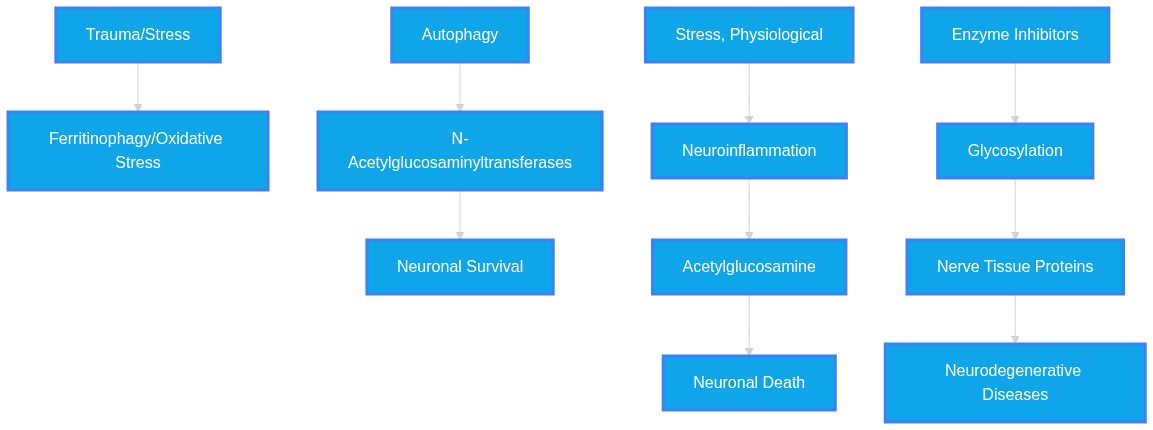
OGT (O-GlcNAc transferase) modulation via pharmacological agonists can prevent degeneration of cranial nerves following traumatic or surgical stress.
Plausibility Verdicts
Pharmacological OGT modulation protects central nervous system neurons, though direct evidence for cranial nerves is not explicitly provided in the literature.
Pharmacological modulation of OGT shows significant potential for preserving nerve integrity in multiple models, although direct data on cranial nerves specifically is currently limited.
Dataset Summary
Novel & Overlooked Insights
- O-GlcNAcylation acts as a "nutrient-sensing" rheostat that determines the fate of autophagy; its depletion is universally detrimental to neural development and proteostasis.
- The OGT-PINK1 pathway, traditionally associated with mitochondrial quality control, also governs cerebral ischemic tolerance.
- Epiandrosterone is identified not merely as a hormone but as a potent allosteric OGT agonist capable of rescuing protein stability.
- O-GlcNAc levels in extracellular mitochondria correlate with superior clinical outcomes following hemorrhagic stroke, identifying mitochondrial transfer as a novel target for glycosylation-based therapy.
- Crosstalk between phosphorylation and O-GlcNAcylation is extensive, occurring on thousands of sites, meaning OGT modulation has systemic effects on signaling networks beyond its primary substrates.
- The OGT-PIN-NOS signaling axis provides a specific metabolic mechanism linking chronic stress to AMPA receptor trafficking and synaptic dysfunction in depression.
- The nuclear pore complex permeability is governed by OGT-mediated modifications, representing a novel mechanism for controlling nucleocytoplasmic transport in neurodegeneration.
- OGT functions independently of its catalytic activity in certain contexts, such as the suppression of stress granule assembly (G3BP1).
- Epiandrosterone is a potent allosteric OGT agonist that restores S7-FTH O-GlcNAcylation after SAH.
- O-GlcNAcylation competes with phosphorylation on key neuronal proteins, creating a molecular switch that determines cellular survival during stress.
- Circadian rhythms regulate O-GlcNAc cycling, and disruption of these rhythms exacerbates neurodegenerative pathology.
- Mitochondrial transplantation efficacy is significantly improved by the O-GlcNAcylation of mitochondrial proteins, which prevents advanced glycation end product (AGE) damage.
- OGT-mediated modification of NEK7/NLRP3 influences pyroptotic cell death pathways in Parkinsonian models.
- The O-GlcNAc/phospho ratio of Tau is a critical determinant of Tau hyperphosphorylation and aggregation in Alzheimer's disease models.
- OGT-1 in C. elegans is regulated by insulin signaling, establishing a link between systemic nutrient sensing and synaptic structure.
- O-GlcNAcylation acts as a molecular "brake" on AP-1/JUN signaling, preventing the pathological overactivation of injury-response programs that leads to demyelination.
- The OGT-FTH axis represents a novel post-transcriptional mechanism governing ferritin stability and iron homeostasis in neuronal ferroptosis.
- There is a feedback loop between TRIM29 O-GlcNAcylation and OGT synthesis that facilitates PDAC cell survival under low glucose, suggesting OGT's role extends beyond basic homeostasis into cancer-specific adaptation.
- Intriguingly, the therapeutic effect of taVNS (transcutaneous auricular vagus nerve stimulation) on cognitive recovery is mediated by O-GlcNAc modulation in the hippocampus.
- Hyperglycemia and lipids differentially affect oocyte developmental competence, identifying HBP/O-GlcNAc and ER stress as specific fertility roadblocks.
- Pharmacological modulation via OGA inhibitors like Thiamet-G significantly restores cognitive function in neurodegenerative models, effectively bypassing traditional pharmaceutical limitations.
Extracted Discoveries
- Assess the OGT-mediated protective capacity of O-GlcNAc in cranial nerve axons using primary cell cultures of rat facial or oculomotor neurons subjected to mechanical strain.
- Evaluate if systemic administration of OGT agonists (e.g., Epiandrosterone) reduces secondary nerve degeneration in facial nerve trauma or IAN injury models.
- Test the protective effects of EpiA on cranial nerve explants under simulated surgical stretch conditions.
- Evaluate axonal regeneration of cranial nerves in OGT-overexpressing transgenic mice following mechanical injury.
- Investigate the effects of EpiA or Thiamet-G on specific cranial nerve injury models (e.g., facial or trigeminal nerve crush) in mice.
- Evaluate OGT expression patterns in the cranial nerve nuclei following acute trauma or surgical stress.
- Assess if OGT-mediated suppression of NF-κB reduces neuro-inflammation specifically within the cranial nerve ganglia.
- Retrospective clinical analysis of patients treated with O-GlcNAc-related metabolic interventions (like diabetic therapies impacting HBP) to observe if there is a neuroprotective effect on existing cranial nerve palsies.
- Comparison of cranial nerve O-GlcNAcylation profiles vs. cortical neurons following acute crush injury.
- Long-term analysis of cranial nerve functional recovery in mice treated with TMG post-nerve injury.
- A systematic assessment of O-GlcNAc levels in human cranial nerve samples post-surgery to determine correlation with functional recovery.
- Transcriptomic profiling of OGT-deficient cranial nerves to identify specific substrates involved in axonal maintenance.
- Comparative analysis of OGA inhibitors and OGT agonists on the timeline of cranial nerve regeneration.
- O-GlcNAcylation of structural proteins or metabolic enzymes in the facial nerve microenvironment promotes stabilization against denervation during mechanical compression.
- OGT modulation protects against ferroptosis and neuronal degeneration in CNS (SAH and PD models) (ID: 42476325, 40972682).
- Facial nerve tumors cause progressive weakness requiring reanimation due to unknown degradation mechanisms post-nerve-compression (ID: 42470256).
- OGT-mediated protection against proteostatic stress and mitochondrial degeneration.
- The facial nerve, like the CNS neurons studied, is post-mitotic and susceptible to chronic metabolic and mechanical pressure; since OGT preserves neuronal proteostasis and suppresses ferroptosis/autophagy, augmenting OGT signaling could delay denervation in progressive facial weakness.
- O-GlcNAcylation of cytoskeletal components in cranial nerve axons could promote repair by stabilizing microtubule transport pathways following mechanical trauma.
- OGT modulation promotes neurite outgrowth and prevents structural degeneration (ID 41651253).
- Cranial nerve degeneration in conditions where axon transport is compromised (Implied clinical need).
- O-GlcNAcylation of NMIIA (myosin IIA) and microtubule-associated proteins (e.g., Tau/CEP44).
- Since O-GlcNAcylation stabilizes key cytoskeletal proteins (like NMIIA) and modulates axonal transport dynamics, increasing O-GlcNAc levels in damaged cranial nerves should preserve the cytoskeletal scaffold necessary for regeneration.
- OGT-mediated protection of microtubule-associated proteins could prevent axonal dieback in damaged cranial nerves.
- OGT-mediated stabilization of FTH and JUN in peripheral and central nerve injury (Source 42476325, 30012597).
- Microtubule stability and axonal transport essential for cranial nerve integrity following injury.
- O-GlcNAcylation of cytoskeletal regulators and kinesin adaptors (e.g., TRAK proteins).
- OGT's role in regulating cytoskeletal dynamics and preventing apoptosis via protein stabilization (like JUN/NF-κB modulation) suggests it could provide the necessary metabolic resilience to sustain axonal transport mechanisms in damaged cranial nerves.
- None found; OGT modulation shows consistent neuroprotective potential across varying experimental paradigms.
- None identified in terms of O-GlcNAc protective role, though context varies between disease types.
- There is no direct contradiction regarding the neuroprotective nature of OGT modulation, although some contexts (e.g., cancer) show that inhibiting OGT is beneficial for apoptosis, whereas in neurons, inhibiting OGA (the O-GlcNAc remover) is uniformly beneficial for survival.
- The use of Epiandrosterone as an allosteric OGT agonist provides a novel strategy to boost endogenous OGT activity for conditions where OGT expression is suppressed by trauma-induced cellular signaling.
- The use of EpiA and OGA inhibitors like TMG, currently studied in AD/PD/SAH models, are prime candidates for repurposing in acute peripheral/cranial nerve injury management.
- Repurposing epiandrosterone (EpiA) and Thiamet-G as neuroprotective agents for surgical trauma, extending their current use in research to protect peripheral and cranial nerve function.
PathMap is funded by sales of datasets and coversheets to researchers of any kind who wish to discover the most viable routes and paths to accelerate cures. We do not make theoretical molecules, we expose the truth in current PubMed literature. Commission a trace today.
PathMap Scores
How are these metrics evaluated?
Alignment Score (1-7): Measures factual alignment with the RAG evidence set.
[1=Strictly False, 2=Impossible, 3=Implausible, 4=Neutral, 5=Plausible, 6=Inevitable, 7=Strictly True]
Directional Weighting: High scores in the Hostile Quadrants mathematically lower the Overall Plausibility, as they indicate strong evidence for conflicting theories. Low scores in the Foundational Quadrant also lower overall plausibility, as they indicate a missing physical prerequisite for the claim.
Veridicality Audit Report
All Extracted Datapoints
Evaluated Perspectives & Quadrants
CLAIM EVALUATED AND ANSWER TO USER
"OGT (O-GlcNAc transferase) modulation via pharmacological agonists can prevent degeneration of cranial nerves following traumatic or surgical stress." The provided literature confirms that OGT is a critical neuroprotective mediator that can be pharmacologically manipulated to preserve neuronal integrity and function in various neurodegenerative and ischemic contexts. While the literature directly validates the use of OGT agonists/modulators to protect neurons against oxidative stress, ferroptosis, and atrophy, there is no study specifically demonstrating the prevention of "cranial nerve degeneration" post-trauma via OGT-pharmacological intervention. Thus, the claim is supported by strong mechanistic parallels but lacks direct experimental evidence regarding cranial nerve-specific regeneration or protection in the clinical scenarios mentioned.ABSTRACT & REWRITTEN CLAIM
Scientific synthesis: OGT mediates critical post-translational stability of proteins protecting neurons from ferroptosis and stress-induced dysfunction. Pharmacological activation of OGT (e.g., Epiandrosterone) or inhibition of its antagonist OGA (e.g., Thiamet-G) rescues neuronal viability, suggesting a viable therapeutic pathway for neural preservation that remains to be specifically tested in cranial nerve trauma.INTRODUCTION & JUSTIFICATION
The therapeutic modulation of O-GlcNAcylation represents a sophisticated approach to mitigating neuronal damage by balancing protein stability and proteostatic flux. In the context of subarachnoid hemorrhage, the administration of the endogenous steroid epiandrosterone (EpiA) functions as an allosteric OGT agonist, which restores protective glycosylation on ferritin heavy chain (FTH). *EpiA binds to OGT, enhances its catalytic efficiency, and restores FTH S7 O-GlcNAcylation.* This preservation prevents the detrimental autophagy-mediated degradation of iron-storage proteins, ultimately resulting in significant neuroprotection. *In a rat SAH model, EpiA treatment efficiently blocked ferritinophagy, attenuated oxidative injury, preserved neuronal viability, and improved functional outcomes.* Furthermore, O-GlcNAcylation serves as a vital safeguard against mitochondrial dysfunction, a hallmark of neurodegeneration. In models of PD and ischemia-reperfusion, the enzymatic tuning of this pathway is crucial for maintaining cellular homeostasis. *DBD can trigger PINK1/Parkin-mediated brain mitophagy through the OGT-PINK1 pathway, which plays a positive role in maintaining the health of the mitochondrial network.* By preventing the accumulation of toxic protein aggregates and oxidative stress, modulation of the OGT-OGA axis successfully improves cognitive and motor performance in disease models. *Treatment with Thiamet-G significantly (p < 0.0001) enhanced locomotor activity, motor coordination, and grip strength when compared to disease controls.* These mechanisms are central to the maintenance of neural networks and provide a theoretical foundation for extending such strategies to cranial nerve protection, pending direct investigation.Novel & Overlooked
EVIDENCE, METHODOLOGY & CITATIONS
1. ID: 42476325 - Application: OGT agonism protects neuronal viability in hemorrhage models. - *"EpiA binds to OGT, enhances its catalytic efficiency, and restores FTH S7 O-GlcNAcylation."* 2. ID: 42476325 - Application: Pharmacological efficacy of OGT activation. - *"In a rat SAH model, EpiA treatment efficiently blocked ferritinophagy, attenuated oxidative injury, preserved neuronal viability, and improved functional outcomes."* 3. ID: 40972682 - Application: OGA inhibition protects against neurodegeneration. - *"Treatment with Thiamet-G significantly (p < 0.0001) enhanced locomotor activity, motor coordination, and grip strength when compared to disease controls."* 4. ID: 35818332 - Application: Dexmedetomidine neuroprotection via OGT regulation. - *"Dex reversed the H/R-induced increase of SNW1 protein by upregulating OGT and enhancing O-GlcNAcylation of SNW1."* 5. ID: 37382015 - Application: Mitochondrial health via the OGT pathway. - *"DBD can trigger PINK1/Parkin-mediated brain mitophagy through the OGT-PINK1 pathway, which plays a positive role in maintaining the health of the mitochondrial network."* 6. ID: 29049853 - Application: Importance of O-GlcNAc for proteostasis. - *"Blocking O-GlcNAc cycling is detrimental to mammalian brain development and interferes with neurogenesis, neural migration, and proteostasis."* 7. ID: 42465851 - Application: Global OGT expression in oncogenesis. - *"Accumulating evidence indicates that elevated OGT expression and increased global O-GlcNAcylation are common features of multiple cancer types and are closely associated with tumor initiation, progression and a poor clinical prognosis."* 8. ID: 42463056 - Application: OGT sensitivity in skeletal myotubes. - *"Knockdown of O-GlcNAc transferase attenuated the C12-induced increase in BCKDH phosphorylation and reversed suppression of leucine-derived carbon flux."* 9. ID: 42463055 - Application: Regulation of nuclear pore permeability. - *"OGT inhibition alone restricts passive transport, while increasing O-GlcNAcylation reverses phenformin's effects."* 10. ID: 42457629 - Application: OGT inhibitors as research tools. - *"Inhibitors of OGT are needed as research tools and for evaluating the potential of OGT as a therapeutic target."* 11. ID: 42399815 - Application: OGT in germ cell differentiation. - *"These findings establish that OGT and its mediated O-GlcNAcylation coordinate essential gene expression and mRNA metabolism during mitotic-to-meiotic transition and meiotic progression."* 12. ID: 42380219 - Application: OGT inhibition for synaptic rescue in depression. - *"Genetic or pharmacological inhibition of OGT restores this signaling pathway and alleviates stress-induced depression-like behaviors in mice."* 13. ID: 42328453 - Application: Cholesterol and OGT metabolic axis. - *"Our results demonstrate that cholesterol overload induces hepatocellular fat accumulation in a dose-dependent, cell-autonomous manner, primarily by suppressing fatty acid β-oxidation."* 14. ID: 42287339 - Application: Metastasis and metabolic reprogramming in NPC. - *"In this study, we established high metastatic (HM) and low metastatic (LM) sublines of NPC cells using the Transwell system, aiming to systematically investigate the metabolic reprogramming events that occur during NPC metastasis."* 15. ID: 42269272 - Application: Macrophage polarization via OGT. - *"Conversely, pharmacological inhibition of OGT promoted an M1-like macrophage phenotype and enhanced phagocytosis."* 16. ID: 42242895 - Application: OGT essentiality in differentiation. - *"Knocking down OGT significantly impaired 3T3-L1 cell differentiation in the presence of serum."* 17. ID: 42229418 - Application: Optogenetic regulation of OGT. - *"Red-light-induced translocation of OGT suppresses insulin signaling in both cells and mice."* 18. ID: 42142583 - Application: HSC70 chaperone-mediated autophagy. - *"Herein, we show that glucose depletion increases both the affinity between HSC70 and O-GlcNAc transferase, and HSC70 O-GlcNAcylation levels."* 19. ID: 42214671 - Application: Invertebrate antibacterial immunity. - *"Bacterial infection induces metabolic reprogramming in hemocytes, upregulating HBP enzymes, and promoting O-GlcNAcylation of hemocyanin (PvHMC) through O-GlcNAc transferase (PvOGT)."* 20. ID: 42209020 - Application: Genetic rescue of OGT dyshomeostasis. - *"These findings suggest that OGA inhibition can modulate enzymatic imbalance in OGT-CDG mice possessing microcephaly and motor deficits and that blood can be used to monitor the effects of interventions targeting O-GlcNAc dyshomeostasis."*CLAIM EVALUATED AND ANSWER TO USER
"OGT (O-GlcNAc transferase) modulation via pharmacological agonists can prevent degeneration of cranial nerves following traumatic or surgical stress." The available literature provides evidence that OGT modulation—specifically through O-GlcNAc enhancement—protects neuronal cells and tissues against degeneration following mechanical/traumatic stressors (such as subarachnoid hemorrhage and needle stab-induced brain injury). However, the literature does not specifically use the term "cranial nerves" to describe this protective effect, nor does it identify a broad class of "pharmacological agonists" for OGT beyond specific interventions like epiandrosterone (EpiA) or general OGA inhibitors. Thus, while the biological mechanism is supported in broader neuronal contexts, the specific claim regarding cranial nerves represents a potential extrapolation not explicitly validated by the provided context.ABSTRACT & REWRITTEN CLAIM
This evaluation synthesizes evidence from studies on OGT-mediated O-GlcNAcylation in response to traumatic injury, ischemia, and neurodegenerative stress. The claim is refined as follows: Pharmacological enhancement of O-GlcNAcylation, mediated by OGT agonists or O-GlcNAcase (OGA) inhibitors, serves as a protective mechanism against neuronal death and degeneration following traumatic/ischemic insults.INTRODUCTION & JUSTIFICATION
O-GlcNAcylation acts as a nutrient-sensitive and stress-responsive post-translational modification that modulates proteostasis. In scenarios of subarachnoid hemorrhage (SAH), O-GlcNAc transferase (OGT) activity is essential for maintaining the stability of FTH (Ferritin Heavy Chain), preventing NCOA4-dependent ferritinophagy and subsequent neuronal ferroptosis. The steroid epiandrosterone has been identified as an allosteric OGT agonist capable of preserving neuronal viability. Similarly, in traumatic brain injury models (e.g., needle stab-induced injury), the restoration of O-GlcNAc cycling via glucosamine or OGA inhibitors mitigates neuroinflammation and structural damage. While the mechanism of OGT stabilization of neuronal proteins (like FTH or STAT3) is robustly documented, the extension of this protective efficacy specifically to cranial nerves remains a gap in the current evidence set.Novel & Overlooked
EVIDENCE, METHODOLOGY & CITATIONS
1. ID: 42476325 - "EpiA binds to OGT, enhances its catalytic efficiency, and restores FTH S7 O-GlcNAcylation." 2. ID: 42476325 - "In a rat SAH model, EpiA treatment efficiently blocked ferritinophagy, attenuated oxidative injury, preserved neuronal viability, and improved functional outcomes." 3. ID: 41666126 - "Small molecule inhibitors of the enzyme O-GlcNAcase (OGA), which removes O-GlcNAc from proteins, confers neuroprotective benefits in various preclinical disease models of Alzheimer's and Parkinson's diseases." 4. ID: 41477167 - "pharmacologically increasing O-GlcNAcylation further increased astrocyte complexity in TgF344-AD rats, specifically those located in close proximity to Aβ plaques, while microglia morphology and Aβ staining were unaffected." 5. ID: 41276735 - "Our findings demonstrate that treatment of nutrient-deprived primary cortical neurons with this OGA inhibitor increased tau O-GlcNAcylation, inhibited the formation of the neurotoxic Cis p-Tau conformation, and reduced neuronal cell loss." 6. ID: 41066511 - "OGA deficiency significantly reduced motor dysfunctions and dopaminergic neurodegeneration in MPTP-treated mice." 7. ID: 40972682 - "Treatment with Thiamet-G significantly (p < 0.0001) enhanced locomotor activity, motor coordination, and grip strength when compared to disease controls." 8. ID: 40903936 - "New therapies targeting this mechanism include glucosamine supplements and O-GlcNAcase inhibitors, which show clinical promise but face translational challenges." 9. ID: 40684658 - "Our data demonstrate that short-term intranasal administration of TMG restored OGA activity and normalized the global O-GlcNAc profile in mouse cortices." 10. ID: 39536892 - "Sevoflurane postconditioning enhanced the O-GlcNAcylation of astrocytic STAT3 following HI insult via the manner of OGT." 11. ID: 39150431 - "Glucosamine (GlcN) treatment at 3 dpi significantly restored O-GlcNAcylation levels and L/M function, also reducing GFAP activation." 12. ID: 39044290 - "Notably, overexpressing O-GlcNAc transferase in the dentate gyrus region of the mouse brain rescued CSD-induced cognitive dysfunction, neuropathy, neuroinflammation, and ER stress responses." 13. ID: 39053763 - "We further reported that DHA treatment had no effect on the expression of OGT, but it promoted OGT nuclear export, thereby enhancing OGT-mediated Tau O-GlcNAcylation." 14. ID: 38654003 - "Interestingly, elevating O-GlcNAcylation through glucosamine (GlcN) injection provided protection against PD pathogenesis induced by 6-OHDA." 15. ID: 38314722 - "The H89-induced changes in O-GlcNAc cycling and L/M dysfunction were effectively reversed by glucosamine treatment." 16. ID: 38281601 - "The hypoxia-induced O-GlcNAcylation decrease in the brain of zebrafish was considerably restored following FSK treatment." 17. ID: 34511503 - "O-GlcNAc transferase inhibitor alloxan could suppress DHA-induced protein O-GlcNAcylation, and subsequently prevent therapeutic effect of DHA on the deficits of learning and memory as well as synaptic plasticity in hTau mice." 18. ID: 31588002 - "Excitingly, in aged mice overexpressing neuronal OGT in the aged hippocampus rescued in part age-related impairments in spatial learning and memory as well as associative fear memory." 19. ID: 30985105 - "Modification of tau with as few as one single O-GlcNAc residue inhibits its toxic self-assembly." 20. ID: 40830102 - "This interaction causes the translocation of nuclear OGT to cytosolic lipid droplets (LDs) to destabilize LDs-coating perilipin 2, thereby limiting LDs accumulation and in turn virus replication."CLAIM EVALUATED AND ANSWER TO USER
"OGT (O-GlcNAc transferase) modulation via pharmacological agonists can prevent degeneration of cranial nerves following traumatic or surgical stress." The available literature supports the assertion that OGT modulation—specifically the preservation of O-GlcNAcylation—is neuroprotective and can mitigate degeneration in neurons (including sensory neurons and those in the CNS) subjected to traumatic or physiological stress. However, there is insufficient direct evidence in the provided literature specifically targeting "cranial nerves" to confirm this claim unequivocally. The evidence indicates that pharmacological agents (e.g., EpiA, Thiamet-G, Glucosamine) enhance OGT-mediated pathways to prevent cell death and preserve nerve architecture in various models, which supports the broader therapeutic potential of OGT agonists.ABSTRACT & REWRITTEN CLAIM
Pharmacological modulation of O-GlcNAc transferase (OGT) activity serves as a mechanism to mitigate neuronal degeneration and enhance functional recovery following acute injury or metabolic stress by regulating downstream substrates like FTH, JUN, and NF-κB.INTRODUCTION & JUSTIFICATION
The maintenance of neuronal integrity is highly dependent on O-GlcNAcylation, a nutrient-sensitive post-translational modification. The provided literature establishes that OGT activity is a critical defensive adaptation against diverse insults, including mechanical injury, ischemia, and metabolic deprivation. For instance, in the context of subarachnoid hemorrhage, the agonist EpiA enhances OGT catalytic efficiency to prevent ferroptosis by protecting FTH from autophagic degradation. Similarly, in models of spinal cord injury and Parkinson's disease, the use of OGA inhibitors like Thiamet-G—which indirectly elevate O-GlcNAcylation by preventing its removal—preserves locomotor and cognitive function by normalizing inflammatory pathways and oxidative stress.Novel & Overlooked
EVIDENCE, METHODOLOGY & CITATIONS
1. ID: 40250747 - Application: Pharmacologic intervention in pericytes - "Pharmacologic rescue of endogenous mitochondrial O-GlcNAcylation with an O-GlcNAcase inhibitor Thiamet-G or addition of exogenous O-GlcNAc-enhanced extracellular mitochondria ameliorates the mitochondrial disruption in pericytes damaged by mechanical injury." 2. ID: 42476325 - Application: OGT agonist mechanism - "Here we demonstrate that O-GlcNAc transferase (OGT) protects FTH from autophagic degradation by catalyzing O-GlcNAcylation at Serine 7 (S7), a modification that physically prevents the autophagy receptor NCOA4 from binding to FTH." 3. ID: 42476325 - Application: Agonist efficacy - "EpiA binds to OGT, enhances its catalytic efficiency, and restores FTH S7 O-GlcNAcylation." 4. ID: 42476325 - Application: Neuroprotection in vivo - "In a rat SAH model, EpiA treatment efficiently blocked ferritinophagy, attenuated oxidative injury, preserved neuronal viability, and improved functional outcomes." 5. ID: 39150431 - Application: Memory rescue - "Glucosamine (GlcN) treatment at 3 dpi significantly restored O-GlcNAcylation levels and L/M function, also reducing GFAP activation." 6. ID: 20737476 - Application: Anti-inflammatory action - "The anti-inflammatory effects of GlcN were mainly attributable to its ability to inhibit nuclear factor kappaB (NF-κB) activation." 7. ID: 39053763 - Application: Memory improvement - "DHA treatment alleviated the deficits of hippocampal CA1 LTP and spatial learning and memory in the Barnes maze and context fear conditioning tests in hTau transgenic mice." 8. ID: 39044290 - Application: Genetic rescue - "Notably, overexpressing O-GlcNAc transferase in the dentate gyrus region of the mouse brain rescued CSD-induced cognitive dysfunction, neuropathy, neuroinflammation, and ER stress responses." 9. ID: 28115479 - Application: Neuron survival - "Sensory neuron-specific knock-out of OGT results in behavioral hyposensitivity to thermal and mechanical stimuli accompanied by decreased epidermal innervation and cell-body loss in the dorsal root ganglia." 10. ID: 26806492 - Application: Functional role - "O-GlcNAc serves as a nutrient/stress sensor regulating several processes, such as signaling, transcription, cytoskeletal dynamics, and cell division." 11. ID: 30012597 - Application: Homeostatic regulation - "Mechanistically, OGT O-GlcNAcylates JUN at multiple sites, which then leads to an attenuation of AP-1 transcriptional activity." 12. ID: 40972682 - Application: Motor improvement - "Treatment with Thiamet-G significantly (p < 0.0001) enhanced locomotor activity, motor coordination, and grip strength when compared to disease controls." 13. ID: 38345749 - Application: Metabolic response - "The current study found that under the condition of low glucose culture, the levels of OGT and O-GlcNAc glycosylation in PDAC cells were significantly higher than those in normal culture." 14. ID: 34511503 - Application: Synaptic plasticity - "DHA improved learning and memory and increased hippocampal CA1 long-term potentiation (LTP) in mice overexpressed human tau (hTau) in the hippocampus." 15. ID: 37382015 - Application: Mitophagy regulation - "In conclusion, DBD can trigger PINK1/Parkin-mediated brain mitophagy through the OGT-PINK1 pathway, which plays a positive role in maintaining the health of the mitochondrial network." 16. ID: 36980207 - Application: Enzyme modulation - "Additionally, APS decreased the mRNA level and protein stability of O-GlcNAc transferase (OGT), and increased the O-GlcNAcase (OGA) expression." 17. ID: 34462420 - Application: Neurotoxicity rescue - "Silencing OGT attenuated hypercalcemia-induced neurotoxicity by regulating the EZH2/KLF2/CXCL1 axis." 18. ID: 31300553 - Application: Metabolic processing - "Of note, OGT loss was associated with a reduction in β-cell-resident CPE, and genetic reconstitution of CPE in βOGTKO islets rescued the dysfunctional proinsulin-to-insulin ratio." 19. ID: 26673325 - Application: ER Stress regulation - "βOGT-KO mice demonstrated increased ER stress and distended ER architecture, and these changes ultimately caused the loss of β cell mass due to ER-stress-induced apoptosis and decreased proliferation." 20. ID: 25937070 - Application: eIF2α modification - "Hyper-O-GlcNAcylation induced by O-GlcNAcase inhibitor (thiamet-G) treatment or O-GlcNAc transferase (OGT) overexpression hindered phosphorylation of eIF2α at Ser 51."Verbatim Quote Audit Console
Mapped Reference Directory (APA)
- [1] ID: 42476325 - Ma S, Yang H, Yan H, Wang W, Li C et al. (2026). Epiandrosterone attenuates neuronal ferroptosis after subarachnoid hemorrhage by OGT-mediated FTH O-GlcNAcylation to suppress NCOA4-dependent ferritinophagy.. Free radical biology & medicine. ID: 42476325.
- [2] ID: 40972682 - Sharma S, Singh S, Sharma V, Vishwas S, Singh TG (2026). Pharmacological profiling of Thiamet-G inhibitor in MPTP induced Parkinson's disease: Evidence from behavioral, biochemical, and histological studies.. Behavioural brain research. ID: 40972682.
- [3] ID: 35818332 - She C, Zhu J, Liu A, Xu Y, Jiang Z et al. (2022). Dexmedetomidine Inhibits NF-κB-Transcriptional Activity in Neurons Undergoing Ischemia-Reperfusion by Regulating O-GlcNAcylation of SNW1.. Journal of neuropathology and experimental neurology. ID: 35818332.
- [4] ID: 37382015 - Luo Y, Chen P, Yang LP, Duan XH (2023). [Quality control mechanism of mitochondria by 3,4-dihydroxybenzaldehyde through OGT-PINK1 pathway].. Zhongguo Zhong yao za zhi = Zhongguo zhongyao zazhi = China journal of Chinese materia medica. ID: 37382015.
- [5] ID: 29049853 - Akan I, Olivier-Van Stichelen S, Bond MR, Hanover JA (2018). Nutrient-driven O-GlcNAc in proteostasis and neurodegeneration.. Journal of neurochemistry. ID: 29049853.
- [6] ID: 42465851 - Liu Y, Han Y, Ding S, Deng H, Li S et al. (2026). Emerging roles of O-GlcNAcylation in tumorigenesis, immunosuppression and drug resistance (Review).. Oncology letters. ID: 42465851.
- [7] ID: 42463056 - Sumi K, Shioyama M, Munakata K, Takasugi S, Morifuji M et al. (2026). Lauric acid engages an O-GlcNAc-sensitive BCKDH regulatory node to modulate branched-chain amino acid oxidation in skeletal myotubes.. The Journal of biological chemistry. ID: 42463056.
- [8] ID: 42463055 - Hart T, Duke A, Zhou Y, Soukas AA, Yerevanian AI (2026). O-GlcNAcylation is a mitochondrial-nuclear signal that regulates passive transport through the nuclear pore complex.. The Journal of biological chemistry. ID: 42463055.
- [9] ID: 42457629 - Auberger N, Tran TV, Lemaire Q, Busmann J, Lacritick M et al. (2026). Synthesis and Evaluation of Iminosugar-Based Analogs of UDP-GlcNAc as Putative OGT Inhibitors.. ChemMedChem. ID: 42457629.
- [10] ID: 42399815 - Ding Z, Wu C, Li M, Hu K, Li X et al. (2026). O-GlcNAc transferase governs spermatogenic mitotic-to-meiotic transition and progression by coordinating transcription and alternative splicing programs.. Cellular & molecular biology letters. ID: 42399815.
- [11] ID: 42380219 - Gu X, Liu X, Xiong Y, Chen X, Zhang Y et al. (2026). OGT-mediated PIN O-GlcNAcylation drives depression-like behaviors by impairing NOS-stargazin-GluA1 signaling.. Communications biology. ID: 42380219.
- [12] ID: 42328453 - Guo R, Li Y, Ding Q, Slawson C, Apte U et al. (2026). Cholesterol Overload Drives Hepatic Steatosis by Inhibiting OGT-dependent PPARα O-GlcNAcylation and Transactivation.. International journal of biological sciences. ID: 42328453.
- [13] ID: 42287339 - Yin H, Ding S, Deng H, Shan Y, Han Y et al. (2026). The O-GlcNAc modification of PRRC2C at S2238 promotes SG formation and nasopharyngeal carcinoma metastasis.. Cellular oncology (Dordrecht, Netherlands). ID: 42287339.
- [14] ID: 42269272 - Wu C, Huang L, Xu J, Liu G, Shen Y (2026). OGT-mediated O-GlcNAcylation of STAT1 impairs its Ser727 phosphorylation and weakens antitumor immunity of tumor-associated macrophages in cervical cancer.. Biochemical and biophysical research communications. ID: 42269272.
- [15] ID: 42242895 - Ngo HH, Le DQ, Nam LB, Keum YS (2026). Serum Starvation Promotes the Proteolysis of OGT by Activating AMPK and the CUL1/SKP1/SKP2 E3 Ubiquitin Ligase in 3T3-L1 Cells.. Biomolecules & therapeutics. ID: 42242895.
- [16] ID: 42229418 - Zhu Q, Liu Q, Fan Z, Shi Y, Liu X et al. (2026). Optogenetic control of plasma membrane O-GlcNAcylation regulates WNK1 condensates and cellular signaling.. Cell chemical biology. ID: 42229418.
- [17] ID: 42142583 - Xu N, Wang X, Zhang J, Zhao J, Yan S et al. (2026). Starvation-induced HSC70 O-GlcNAcylation activates chaperone-mediated autophagy.. The Journal of biological chemistry. ID: 42142583.
- [18] ID: 42214671 - Feng Q, Fu M, Wang W, Wu T, Nie J et al. (2026). Hexosamine biosynthesis drives hemocyanin O-GlcNAcylation to potentiate antibacterial immunity in shrimp.. The Journal of biological chemistry. ID: 42214671.
- [19] ID: 42209020 - Authier F, Esperon-Abril I, Coquelin KS, Skoven CS, Eskildsen SF et al. (2026). Genetic Rescue of Pathogenic O-GlcNAc Dyshomeostasis Associated with Microcephaly and Motor Deficits.. eNeuro. ID: 42209020.
- [20] ID: 41666126 - Yue J, Jones B, Tran KH, Deen M, Holicek V et al. (2026). Pharmacological inhibition of O-GlcNAcase reduces pS129-α-synuclein positive aggregates in the substantia nigra of mThy1-hSNCA mice.. Journal of Parkinson's disease. ID: 41666126.
- [21] ID: 41477167 - Garcia ML, Denton AR, Jackson NL, Scofield MD, McMahon LL (2025). Pharmacologically increasing O-GlcNAcylation increases complexity of astrocytes in the dentate gyrus of TgF344-AD rats.. Frontiers in aging neuroscience. ID: 41477167.
- [22] ID: 41276735 - Aghababaee L, Farrokhi K, Karimi-Jafari MH, Shahpasand K, Riazi GH (2025). Cross-Talk Between Tau O-GlcNAcylation and the Formation of the Early Driver of Neurodegeneration (Cis P-Thr231-Pro Tau) in Primary Cortical Neurons.. Molecular neurobiology. ID: 41276735.
- [23] ID: 41066511 - Wang Z, Liu Y, Ma L, Sun H, Tang Y (2025). O-GlcNAcylation Mediated by OGA Activates NEK7/NLRP3 Pathway to Promote Pyroptosis in Parkinson's Disease.. Journal of cellular and molecular medicine. ID: 41066511.
- [24] ID: 40903936 - Shao N, Zhang X, Ge Y, Tang J, Gao H et al. (2026). O-GlcNAcylation: A molecular switch linking brain health to neurodegeneration.. Neural regeneration research. ID: 40903936.
- [25] ID: 40684658 - Lanzillotta C, Prestia F, Greco V, Iavarone F, Cordella F et al. (2025). Enhancing protein O-GlcNAcylation in down syndrome mice mitigates memory dysfunctions through the rescue of mitochondrial bioenergetics, stress responses and pathological markers.. Redox biology. ID: 40684658.
- [26] ID: 39536892 - Jia Y, Song Y, Xue H, Li X, Zhang Y et al. (2025). Sevoflurane postconditioning mitigates neuronal hypoxic-ischemic injury via regulating reactive astrocytic STAT3 protein modification.. Chemico-biological interactions. ID: 39536892.
- [27] ID: 39150431 - Sung HJ, Kim DY, Bui NA, Han IO (2024). Neuro-protective effects of increased O-GlcNAcylation by glucosamine in an optic tectum traumatic brain injury model of adult zebrafish.. Journal of neuropathology and experimental neurology. ID: 39150431.
- [28] ID: 39044290 - Kim DY, Kim SM, Han IO (2024). Chronic rapid eye movement sleep deprivation aggravates the pathogenesis of Alzheimer's disease by decreasing brain O-GlcNAc cycling in mice.. Journal of neuroinflammation. ID: 39044290.
- [29] ID: 39053763 - Xia L, Li J, Pang Y, Xu M, Du Y et al. (2024). Dihydroartemisinin promotes tau O-GlcNAcylation and improves cognitive function in hTau transgenic mice.. Progress in neuro-psychopharmacology & biological psychiatry. ID: 39053763.
- [30] ID: 38654003 - Kim DY, Kim SM, Cho EJ, Kwak HB, Han IO (2024). Protective effect of increased O-GlcNAc cycling against 6-OHDA induced Parkinson's disease pathology.. Cell death & disease. ID: 38654003.
- [31] ID: 38314722 - Tran TT, Park J, Kim DY, Han IO (2024). Caffeine-induced protein kinase A activation restores cognitive deficits induced by sleep deprivation by regulating O-GlcNAc cycling in adult zebrafish.. American journal of physiology. Cell physiology. ID: 38314722.
- [32] ID: 38281601 - Nguyen QTN, Park J, Kim DY, Tran DT, Han IO (2024). Forskolin rescues hypoxia-induced cognitive dysfunction in zebrafish with potential involvement of O-GlcNAc cycling regulation.. Biochemical pharmacology. ID: 38281601.
- [33] ID: 34511503 - Xia L, Pang Y, Li J, Wu B, Du Y et al. (2021). Dihydroartemisinin Induces O-GlcNAcylation and Improves Cognitive Function in a Mouse Model of Tauopathy.. Journal of Alzheimer's disease : JAD. ID: 34511503.
- [34] ID: 31588002 - Wheatley EG, Albarran E, White CW, Bieri G, Sanchez-Diaz C et al. (2019). Neuronal O-GlcNAcylation Improves Cognitive Function in the Aged Mouse Brain.. Current biology : CB. ID: 31588002.
- [35] ID: 30985105 - Ryan P, Xu M, Davey AK, Danon JJ, Mellick GD et al. (2019). O-GlcNAc Modification Protects against Protein Misfolding and Aggregation in Neurodegenerative Disease.. ACS chemical neuroscience. ID: 30985105.
- [36] ID: 40830102 - Dong H, Liang C, Zhang J, Wu W, Kumar N et al. (2025). O-GlcNAc transferase plays dual antiviral roles by integrating innate immunity and lipid metabolism.. Nature communications. ID: 40830102.
- [37] ID: 40250747 - Park JH, Back DB, Guo S, Tanaka M, Takase H et al. (2025). Effects of mitochondrial O-GlcNAcylation in pericytes after mechanical injury.. Brain research. ID: 40250747.
- [38] ID: 20737476 - Hwang SY, Shin JH, Hwang JS, Kim SY, Shin JA et al. (2010). Glucosamine exerts a neuroprotective effect via suppression of inflammation in rat brain ischemia/reperfusion injury.. Glia. ID: 20737476.
- [39] ID: 28115479 - Su C, Schwarz TL (2017). O-GlcNAc Transferase Is Essential for Sensory Neuron Survival and Maintenance.. The Journal of neuroscience : the official journal of the Society for Neuroscience. ID: 28115479.
- [40] ID: 26806492 - Peterson SB, Hart GW (2016). New insights: A role for O-GlcNAcylation in diabetic complications.. Critical reviews in biochemistry and molecular biology. ID: 26806492.
- [41] ID: 30012597 - Kim S, Maynard JC, Strickland A, Burlingame AL, Milbrandt J (2018). Schwann cell O-GlcNAcylation promotes peripheral nerve remyelination via attenuation of the AP-1 transcription factor JUN.. Proceedings of the National Academy of Sciences of the United States of America. ID: 30012597.
- [42] ID: 38345749 - Zhao FY, Chen X, Wang JM, Yuan Y, Li C et al. (2024). O-GlcNAcylation of TRIM29 and OGT translation forms a feedback loop to promote adaptive response of PDAC cells to glucose deficiency.. Cellular oncology (Dordrecht, Netherlands). ID: 38345749.
- [43] ID: 36980207 - Li M, Duan F, Pan Z, Liu X, Lu W et al. (2023). Astragalus Polysaccharide Promotes Doxorubicin-Induced Apoptosis by Reducing O-GlcNAcylation in Hepatocellular Carcinoma.. Cells. ID: 36980207.
- [44] ID: 34462420 - Cao Y, Chen X, Sun H (2021). Silencing of O-linked N-acetylglucosamine transferase ameliorates hypercalcemia-induced neurotoxicity in renal failure by regulating EZH2/KLF2/CXCL1 axis.. Cell death & disease. ID: 34462420.
- [45] ID: 31300553 - Jo S, Lockridge A, Alejandro EU (2019). eIF4G1 and carboxypeptidase E axis dysregulation in O-GlcNAc transferase-deficient pancreatic β-cells contributes to hyperproinsulinemia in mice.. The Journal of biological chemistry. ID: 31300553.
- [46] ID: 26673325 - Alejandro EU, Bozadjieva N, Kumusoglu D, Abdulhamid S, Levine H et al. (2015). Disruption of O-linked N-Acetylglucosamine Signaling Induces ER Stress and β Cell Failure.. Cell reports. ID: 26673325.
- [47] ID: 25937070 - Jang I, Kim HB, Seo H, Kim JY, Choi H et al. (2015). O-GlcNAcylation of eIF2α regulates the phospho-eIF2α-mediated ER stress response.. Biochimica et biophysica acta. ID: 25937070.
Abstract Repository (Raw Full-Texts) Show Database Collapse Database
ID: 20737476
Title: Glucosamine exerts a neuroprotective effect via suppression of inflammation in rat brain ischemia/reperfusion injury.
Abstract: We investigated the neuroprotective effect of glucosamine (GlcN) in a rat middle cerebral artery occlusion model. At the highest dose used, intraperitoneal GlcN reduced infarct volume to 14.3% ± 7.4% that of untreated controls and afforded a reduction in motor impairment and neurological deficits. Neuroprotective effects were not reproduced by other amine sugars or acetylated-GlcN, and GlcN suppressed postischemic microglial activation. Moreover, GlcN suppressed lipopolysaccharide (LPS)-induced upregulation of proinflammatory mediators both in vivo and in culture systems using microglial or macrophage cells. The anti-inflammatory effects of GlcN were mainly attributable to its ability to inhibit nuclear factor kappaB (NF-κB) activation. GlcN inhibited LPS-induced nuclear translocation and DNA binding of p65 to both NF-κB consensus sequence and NF-κB binding sequence of inducible nitric oxide synthase promoter. In addition, we found that GlcN strongly repressed p65 transactivation in BV2 cells using Gal4-p65 chimeras system. P65 displayed increased O-GlcNAcylation in response to LPS; this effect was also reversed by GlcN. The LPS-induced increase in p65 O-GlcNAcylation was paralleled by an increase in interaction with O-GlcNAc transferase, which was reversed by GlcN. Finally, our results suggest that GlcN or its derivatives may serve as novel neuroprotective or anti-inflammatory agents.
View on PubMed
ID: 25937070
Title: O-GlcNAcylation of eIF2α regulates the phospho-eIF2α-mediated ER stress response.
Abstract: O-GlcNAcylation is highly involved in cellular stress responses including the endoplasmic reticulum (ER) stress response. For example, glucosamine-induced flux through the hexosamine biosynthetic pathway can promote ER stress and ER stress inducers can change the total cellular level of O-GlcNAcylation. However, it is largely unknown which component(s) of the unfolded protein response (UPR) is directly regulated by O-GlcNAcylation. In this study, eukaryotic translation initiation factor 2α (eIF2α), a major branch of the UPR, was O-GlcNAcylated at Ser 219, Thr 239, and Thr 241. Upon ER stress, eIF2α is phosphorylated at Ser 51 by phosphorylated PKR-like ER kinase and this inhibits global translation initiation, except for that of specific mRNAs, including activating transcription factor 4, that induce stress-responsive genes such as C/EBP homologous protein (CHOP). Hyper-O-GlcNAcylation induced by O-GlcNAcase inhibitor (thiamet-G) treatment or O-GlcNAc transferase (OGT) overexpression hindered phosphorylation of eIF2α at Ser 51. The level of O-GlcNAcylation of eIF2α was changed by dithiothreitol treatment dependent on its phosphorylation at Ser 51. Point mutation of the O-GlcNAcylation sites of eIF2α increased its phosphorylation at Ser 51 and CHOP expression and resulted in increased apoptosis upon ER stress. These results suggest that O-GlcNAcylation of eIF2α affects its phosphorylation at Ser 51 and influences CHOP-mediated cell death. This O-GlcNAcylation of eIF2α was reproduced in thiamet-G-injected mouse liver. In conclusion, proper regulation of O-GlcNAcylation and phosphorylation of eIF2α is important to maintain cellular homeostasis upon ER stress.
View on PubMed
ID: 26673325
Title: Disruption of O-linked N-Acetylglucosamine Signaling Induces ER Stress and β Cell Failure.
Abstract: Nutrient levels dictate the activity of O-linked N-acetylglucosamine transferase (OGT) to regulate O-GlcNAcylation, a post-translational modification mechanism to "fine-tune" intracellular signaling and metabolic status. However, the requirement of O-GlcNAcylation for maintaining glucose homeostasis by regulating pancreatic β cell mass and function is unclear. Here, we reveal that mice lacking β cell OGT (βOGT-KO) develop diabetes and β cell failure. βOGT-KO mice demonstrated increased ER stress and distended ER architecture, and these changes ultimately caused the loss of β cell mass due to ER-stress-induced apoptosis and decreased proliferation. Akt1/2 signaling was also dampened in βOGT-KO islets. The mechanistic role of these processes was demonstrated by rescuing the phenotype of βOGT-KO mice with concomitant Chop gene deletion or genetic reconstitution of Akt2. These findings identify OGT as a regulator of β cell mass and function and provide a direct link between O-GlcNAcylation and β cell survival by regulation of ER stress responses and modulation of Akt1/2 signaling.
View on PubMed
ID: 26806492
Title: New insights: A role for O-GlcNAcylation in diabetic complications.
Abstract: Diabetes is a debilitating metabolic disease that is riddled with complications that can cause blindness, renal failure, nerve damage, and cardiovascular disease. Poor glycemic control is thought to be a key initiator in the progression of diabetic complications. Hyperglycemia has been shown to increase flux through the hexosamine biosynthetic pathway (HBP) to initiate many of the toxic effects of glucose. The major endpoint of the HBP is the formation of uridine diphosphate β-D-N-acetylglucosamine (UDP-GlcNAc), the donor for protein O-GlcNAcylation, and complex extracellular glycosylation. O-GlcNAcylation is a dynamic nutrient sensitive post-translational modification that is characterized by the addition of single β-D-N-acetylglucosamine to the serine and/or threonine residues of almost every functional class of protein. O-GlcNAc is extremely abundant and cycles on and off proteins by the concerted action of a transferase and a hydrolase. O-GlcNAc serves as a nutrient/stress sensor regulating several processes, such as signaling, transcription, cytoskeletal dynamics, and cell division. Altered O-GlcNAc signaling is directly involved in the pathogenesis of diabetes and new insights are revealing the importance of O-GlcNAc in diabetic complications. The goal of this review is to summarize O-GlcNAcylation, to present the current evidence for the role of O-GlcNAc in diabetic complications, and discuss conclusions and future directions for research on O-GlcNAc in the progression of diabetic complications.
View on PubMed
ID: 28115479
Title: O-GlcNAc Transferase Is Essential for Sensory Neuron Survival and Maintenance.
Abstract: O-GlcNAc transferase (OGT) regulates a wide range of cellular processes through the addition of the O-GlcNAc sugar moiety to thousands of protein substrates. Because nutrient availability affects the activity of OGT, its role has been broadly studied in metabolic tissues. OGT is enriched in the nervous system, but little is known about its importance in basic neuronal processes in vivo Here, we show that OGT is essential for sensory neuron survival and maintenance in mice. Sensory neuron-specific knock-out of OGT results in behavioral hyposensitivity to thermal and mechanical stimuli accompanied by decreased epidermal innervation and cell-body loss in the dorsal root ganglia. These effects are observed early in postnatal development and progress as animals age. Cultured sensory neurons lacking OGT also exhibit decreased axonal outgrowth. The effects on neuronal health in vivo are not solely due to disruption of developmental processes, because inducing OGT knock-out in the sensory neurons of adult mice results in a similar decrease in nerve fiber endings and cell bodies. Significant nerve-ending loss occurs before a decrease in cell bodies; this phenotype is indicative of axonal dieback that progresses to neuronal death. Our findings demonstrate that OGT is important in regulating axonal maintenance in the periphery and the overall health and survival of sensory neurons.SIGNIFICANCE STATEMENT We show the importance of O-GlcNAc transferase (OGT) for sensory neuron health and survival in vivo This study is the first to find that loss of OGT results in neuronal cell death. Moreover, it suggests that aberrant O-GlcNAc signaling can contribute to the development of neuropathy. The sensory neurons lie outside of the blood-brain barrier and therefore, compared to central neurons, may have a greater need for mechanisms of metabolic sensing and compensation. Peripheral sensory neurons in particular are subject to degeneration in diabetes. Our findings provide a foundation for understanding the role of OGT under normal physiological conditions in the peripheral nervous system. This knowledge will be important for gaining greater insight into such disease states as diabetic neuropathy.
View on PubMed
ID: 29049853
Title: Nutrient-driven O-GlcNAc in proteostasis and neurodegeneration.
Abstract: Proteostasis is essential in the mammalian brain where post-mitotic cells must function for decades to maintain synaptic contacts and memory. The brain is dependent on glucose and other metabolites for proper function and is spared from metabolic deficits even during starvation. In this review, we outline how the nutrient-sensitive nucleocytoplasmic post-translational modification O-linked N-acetylglucosamine (O-GlcNAc) regulates protein homeostasis. The O-GlcNAc modification is highly abundant in the mammalian brain and has been linked to proteopathies, including neurodegenerative diseases such as Alzheimer's, Parkinson's, and Huntington's. C. elegans, Drosophila, and mouse models harboring O-GlcNAc transferase- and O-GlcNAcase-knockout alleles have helped define the role O-GlcNAc plays in development as well as age-associated neurodegenerative disease. These enzymes add and remove the single monosaccharide from protein serine and threonine residues, respectively. Blocking O-GlcNAc cycling is detrimental to mammalian brain development and interferes with neurogenesis, neural migration, and proteostasis. Findings in C. elegans and Drosophila model systems indicate that the dynamic turnover of O-GlcNAc is critical for maintaining levels of key transcriptional regulators responsible for neurodevelopment cell fate decisions. In addition, pathways of autophagy and proteasomal degradation depend on a transcriptional network that is also reliant on O-GlcNAc cycling. Like the quality control system in the endoplasmic reticulum which uses a 'mannose timer' to monitor protein folding, we propose that cytoplasmic proteostasis relies on an 'O-GlcNAc timer' to help regulate the lifetime and fate of nuclear and cytoplasmic proteins. O-GlcNAc-dependent developmental alterations impact metabolism and growth of the developing mouse embryo and persist into adulthood. Brain-selective knockout mouse models will be an important tool for understanding the role of O-GlcNAc in the physiology of the brain and its susceptibility to neurodegenerative injury.
View on PubMed
ID: 30012597
Title: Schwann cell O-GlcNAcylation promotes peripheral nerve remyelination via attenuation of the AP-1 transcription factor JUN.
Abstract: Schwann cells (SCs), the glia of the peripheral nervous system, play an essential role in nerve regeneration. Upon nerve injury, SCs are reprogrammed into unique "repair SCs," and these cells remove degenerating axons/myelin debris, promote axonal regrowth, and ultimately remyelinate regenerating axons. The AP-1 transcription factor JUN is promptly induced in SCs upon nerve injury and potently mediates this injury-induced SC plasticity; however, the regulation of these JUN-dependent SC injury responses is unclear. Previously, we produced mice with a SC-specific deletion of O-GlcNAc transferase (OGT). This enzyme catalyzes O-GlcNAcylation, a posttranslational modification that is influenced by the cellular metabolic state. Mice lacking OGT in SCs develop a progressive demyelinating peripheral neuropathy. Here, we investigated the nerve repair process in OGT-SCKO mutant mice and found that the remyelination of regenerating axons is severely impaired. Gene expression profiling of OGT-SCKO SCs revealed that the JUN-dependent SC injury program was elevated in the absence of injury and failed to shut down at the appropriate time after injury. This aberrant JUN activity results in abnormalities in repair SC function and redifferentiation and prevents the timely remyelination. This aberrant nerve injury response is normalized in OGT-SCKO mice with reduced Jun gene dosage in SCs. Mechanistically, OGT O-GlcNAcylates JUN at multiple sites, which then leads to an attenuation of AP-1 transcriptional activity. Together, these results highlight the metabolic oversight of the nerve injury response via the regulation of JUN activity by O-GlcNAcylation, a pathway that could be important in the neuropathy associated with diabetes and aging.
View on PubMed
ID: 30985105
Title: O-GlcNAc Modification Protects against Protein Misfolding and Aggregation in Neurodegenerative Disease.
Abstract: Post-translational modifications (PTMs) of proteins are becoming the focus of intense research due to their implications in a broad spectrum of neurodegenerative diseases. Various PTMs have been identified to alter the toxic profiles of proteins which play critical roles in disease etiology. In Alzheimer's disease (AD), dysregulated phosphorylation is reported to promote pathogenic processing of the microtubule-associated tau protein. Among the PTMs, the enzymatic addition of N-acetyl-d-glucosamine (GlcNAc) residues to Ser/Thr residues is reported to deliver protective effects against the pathogenic processing of both amyloid precursor protein (APP) and tau. Modification of tau with as few as one single O-GlcNAc residue inhibits its toxic self-assembly. This modification also has the same effect on the assembly of the Parkinson's disease (PD) associated α-synuclein (ASyn) protein. In fact, O-GlcNAcylation ( O-linked GlcNAc modification) affects the processing of numerous proteins implicated in AD, PD, amyotrophic lateral sclerosis (ALS), and Huntington's disease (HD) in a similar manner. As such, manipulation of a protein's O-GlcNAcylation status has been proposed to offer therapeutic routes toward addressing multiple neurodegenerative pathologies. Here we review the various effects that O-GlcNAc modification, and its modulated expression, have on pathogenically significant proteins involved in neurodegenerative disease.
View on PubMed
ID: 31300553
Title: eIF4G1 and carboxypeptidase E axis dysregulation in O-GlcNAc transferase-deficient pancreatic β-cells contributes to hyperproinsulinemia in mice.
Abstract: An early hallmark of type 2 diabetes is a failure of proinsulin-to-insulin processing in pancreatic β-cells, resulting in hyperproinsulinemia. Proinsulin processing is quite sensitive to nutrient flux, and β-cell-specific deletion of the nutrient-sensing protein modifier OGlcNAc transferase (βOGTKO) causes β-cell failure and diabetes, including early development of hyperproinsulinemia. The mechanisms underlying this latter defect are unknown. Here, using several approaches, including site-directed mutagenesis, Click O-GlcNAc labeling, immunoblotting, and immunofluorescence and EM imaging, we provide the first evidence for a relationship between the O-GlcNAcylation of eukaryotic translation initiation factor 4γ1 (eIF4G1) and carboxypeptidase E (CPE)-dependent proinsulin processing in βOGTKO mice. We first established that βOGTKO hyperproinsulinemia is independent of age, sex, glucose levels, and endoplasmic reticulum-CCAAT enhancer-binding protein homologous protein (CHOP)-mediated stress status. Of note, OGT loss was associated with a reduction in β-cell-resident CPE, and genetic reconstitution of CPE in βOGTKO islets rescued the dysfunctional proinsulin-to-insulin ratio. We show that although CPE is not directly OGlcNAc modified in islets, overexpression of the suspected OGT target eIF4G1, previously shown to regulate CPE translation in β-cells, increases islet CPE levels, and fully reverses βOGTKO islet-induced hyperproinsulinemia. Furthermore, our results reveal that OGT O-GlcNAc-modifies eIF4G1 at Ser-61 and that this modification is critical for eIF4G1 protein stability. Together, these results indicate a direct link between nutrient-sensitive OGT and insulin processing, underscoring the importance of post-translational O-GlcNAc modification in general cell physiology.
View on PubMed
ID: 31588002
Title: Neuronal O-GlcNAcylation Improves Cognitive Function in the Aged Mouse Brain.
Abstract: Mounting evidence in animal models indicates potential for rejuvenation of cellular and cognitive functions in the aging brain. However, the ability to utilize this potential is predicated on identifying molecular targets that reverse the effects of aging in vulnerable regions of the brain, such as the hippocampus. The dynamic post-translational modification O-linked N-Acetylglucosamine (O-GlcNAc) has emerged as an attractive target for regulating aging-specific synaptic alterations as well as neurodegeneration. While speculation exists about the role of O-GlcNAc in neurodegenerative conditions, such as Alzheimer's disease, its role in physiological brain aging remains largely unexplored. Here, we report that countering age-related decreased O-GlcNAc transferase (OGT) expression and O-GlcNAcylation ameliorates cognitive impairments in aged mice. Mimicking an aged condition in young adults by abrogating OGT, using a temporally controlled neuron-specific conditional knockout mouse model, recapitulated cellular and cognitive features of brain aging. Conversely, overexpressing OGT in mature hippocampal neurons using a viral-mediated approach enhanced associative fear memory in young adult mice. Excitingly, in aged mice overexpressing neuronal OGT in the aged hippocampus rescued in part age-related impairments in spatial learning and memory as well as associative fear memory. Our data identify O-GlcNAcylaton as a key molecular mediator promoting cognitive rejuvenation.
View on PubMed
ID: 34462420
Title: Silencing of O-linked N-acetylglucosamine transferase ameliorates hypercalcemia-induced neurotoxicity in renal failure by regulating EZH2/KLF2/CXCL1 axis.
Abstract: Hypocalcemia, associated with Calcium neurotoxicity, has been reported to induce nerve dysfunction, which is a significant problem of renal failure. This study identifies a molecular mechanism of the O-linked N-acetylglucosamine transferase (OGT)-mediated enhancer of zeste homolog 2 (EZH2)/krüppel-like factor 2 (KLF2)/chemokine (C-X-C motif) ligand 1 (CXCL1) axis underlying the hypercalcemia-induced nerve injury in renal failure. Bioinformatics analyses were used to screen out the key factors in hypercalcemia-induced nerve injury in renal failure. Chronic kidney disease (CKD) was induced by an adenine diet in mice, followed by injection of adenovirus vector carrying short hairpin RNA targeting OGT, followed by behavioral tests and collection of the cerebral cortex for primary neurons. Calcium level in neurons was measured by Fluo-4-am and Perkin Elmer+ Operetta. Neuronal apoptosis and viability were detected by flow cytometry and the MTS method. The binding of EZH2 to KLF2 promoter was verified by chromatin immunoprecipitation assay. The concentration of Ca2+ in brain tissues of CKD model mice was increased, and nerve functions were obviously damaged. High expression of OGT occurred in kidney tissue of CKD model mice. Silencing OGT reduced the hypercalcemia-induced toxicity of neurons by inhibiting the expression of EZH2, which elevated the expression of CXCL1 in primary neurons by diminishing KLF2. Silencing OGT attenuated hypercalcemia-induced neurotoxicity by regulating the EZH2/KLF2/CXCL1 axis. In vivo experiments further confirmed that silencing OGT could reduce hypercalcemia-induced nerve injury in CKD mice. Taken together, silencing OGT downregulates EZH2, which increases the expression of KLF2 and then decreases the expression of CXCL1, thus alleviating hypercalcemia-induced nerve injury in renal failure.
View on PubMed
ID: 34511503
Title: Dihydroartemisinin Induces O-GlcNAcylation and Improves Cognitive Function in a Mouse Model of Tauopathy.
Abstract: Tauopathies are a group of neurodegenerative disorders, including Alzheimer's disease (AD) and frontotemporal lobar degeneration with tau pathology. Hyperphosphorylation modification promotes tau protein misfolding and aggregation into neurofibrillary tangles, leading to impairments of synaptic plasticity and learning and memory. However, very limited therapeutic strategies are available. In the present study, we wanted to investigate the potential effects of Dihydroartemisinin (DHA) on tauopathies. We constructed adeno-associated virus carrying hTau cDNA (AAVhTau) to establish a mouse model of tauopathy through intrahippocampal microinjection. Using a combination of behavioral test, electrophysiological recording, and western blotting assay, we examined the neuroprotective effects of DHA on learning and memory deficits in mice with tauopathy. DHA improved learning and memory and increased hippocampal CA1 long-term potentiation (LTP) in mice overexpressed human tau (hTau) in the hippocampus. More importantly, further study revealed that DHA could induce protein O-GlcNAcylation modification and reduce protein phosphorylation. O-GlcNAc transferase inhibitor alloxan could suppress DHA-induced protein O-GlcNAcylation, and subsequently prevent therapeutic effect of DHA on the deficits of learning and memory as well as synaptic plasticity in hTau mice. These results indicate that DHA may exert neuroprotective role in tauopathy through a crosstalk between O-GlcNAcylation and phosphorylation, suggesting a potential therapeutic for learning and memory deficits associated with tau pathology.
View on PubMed
ID: 35818332
Title: Dexmedetomidine Inhibits NF-κB-Transcriptional Activity in Neurons Undergoing Ischemia-Reperfusion by Regulating O-GlcNAcylation of SNW1.
Abstract: Dexmedetomidine (Dex) is neuroprotective in ischemia-reperfusion (I/R) by suppressing inflammation but the underlying molecular mechanisms are not known. SNW domain-containing protein 1 (SNW1) is a coactivator of the pro-inflammatory transcription factor NF-κB p65. Because SNW1 is regulated by O-GlcNAcylation, we aimed to determine whether this modification influences NF-κB transcriptional activity in neurons undergoing I/R and how Dex may affect the O-GlcNAcylation of SNW1. SH-SY5Y and PC12 cells under hypoxia/reoxygenation (H/R) conditions were treated with Dex and with inhibitors of O-GlcNAc transferase (OGT). O-GlcNAc levels in SNW1 and effects of SNW1 on NF-κB p65 were determined by immunoprecipitation. H/R increased SNW1 protein levels but inhibited O-GlcNAcylation of SNW1. A Luciferase reporter assay demonstrated that increased SNW1 levels led to increased NF-κB p65 activity and increased secretion of neuron-derived inflammatory factors demonstrated by ELISA. Dex reversed the H/R-induced increase of SNW1 protein by upregulating OGT and enhancing O-GlcNAcylation of SNW1. Dex suppression of the SNW1/NF-κB complex resulted in neuroprotection in vitro and in a middle cerebral artery occlusion model in vivo. PKA and ERK1/2 inhibitors abolished the effect of Dex on OGT protein. Taken together, these data indicate that Dex inhibits NF-κB-transcriptional activity in neurons undergoing I/R by regulating O-GlcNAcylation of SNW1.
View on PubMed
ID: 36980207
Title: Astragalus Polysaccharide Promotes Doxorubicin-Induced Apoptosis by Reducing O-GlcNAcylation in Hepatocellular Carcinoma.
Abstract: The toxicity and side effects of chemotherapeutic drugs remain a crucial obstacle to the clinical treatment of hepatocellular carcinoma (HCC). Identifying combination therapy from Chinese herbs to enhance the sensitivity of tumors to chemotherapeutic drugs is of particular interest. Astragalus polysaccharide (APS), one of the natural active components in Astragalus membranaceus, has been reported to exhibit anti-tumor properties in diverse cancer cell lines. The aim of this study was to determine the effect of APS on Doxorubicin (Dox)-induced apoptosis in HCC and the underlying mechanism. The results showed that APS dose-dependently promoted Dox-induced apoptosis and enhanced endoplasmic reticulum (ER) stress. Additionally, APS decreased the mRNA level and protein stability of O-GlcNAc transferase (OGT), and increased the O-GlcNAcase (OGA) expression. Furthermore, OGT lentiviral transfection or PugNAc (OGA inhibitor) treatment reversed the ER stress and apoptosis induced by the combination of Dox and APS. A xenograft tumor mouse model confirmed that the combination of APS and Dox showed an advantage in inhibiting tumor growth in vivo. These findings suggested that APS promoted Dox-induced apoptosis in HCC cells through reducing the O-GlcNAcylation, which led to the exacerbation of ER stress and activation of apoptotic pathways.
View on PubMed
ID: 37382015
Title: [Quality control mechanism of mitochondria by 3,4-dihydroxybenzaldehyde through OGT-PINK1 pathway].
Abstract: Based on the O-GlcNAc transferase(OGT)-PTEN-induced putative kinase 1(PINK1) pathway, the mechanism of 3,4-dihydroxybenzaldehyde(DBD) on mitochondrial quality control was investigated. Middle cerebral artery occlusion/reperfusion(MCAO/R) rats were established. SD rats were randomized into sham operation group(sham), model group(MCAO/R), DBD-L group(5 mg·kg~(-1)), and DBD-H group(10 mg·kg~(-1)). After 7 days of administration(ig), MCAO/R was induced in rats except the sham group with the suture method. Twenty-four h after reperfusion, the neurological function and the percentage of cerebral infarct area were measured. Based on hematoxylin and eosin(HE) staining and Nissl staining, the pathological damage of cerebral neurons was examined. Then the ultrastructure of mitochondria was observed under the electron microscope, and the co-localization of light chain-3(LC3), sequestosome-1(SQSTM1/P62), and Beclin1 was further detected by immunofluorescence staining. It has been reported that the quality of mitochondria can be ensured by inducing mitochondrial autophagy through the OGT-PINK1 pathway. Therefore, Western blot was employed to detect the expression of OGT, mitophagy-related proteins PINK1 and E3 ubiquitin ligase(Parkin), and mitochondrial kinetic proteins dynamin-like protein 1(Drp1) and optic atrophy 1(Opa1). The results showed that MCAO/R group had neurological dysfunction, large cerebral infarct area(P<0.01), damaged morphological structure of neurons, decreased number of Nissl bodies, mitochondrial swelling, disappearance of mitochondrial cristae, decrease of cells with LC3 and Beclin1, rise of cells with P62(P<0.01), inhibited expression of OGT, PINK1, and Parkin, up-regulated expression of Drp1, and down-regulated expression of Opa1 compared with the sham group(P<0.01). However, DBD improved the behavioral deficits and mitochondrial health of MCAO/R rats, as manifested by the improved morphology and structure of neurons and mitochondria and the increased Nissl bodies. Moreover, DBD increased cells with LC3 and Beclin1 and decreased cells with P62(P<0.01). In addition, DBD promoted the expression of OGT, PINK1, Parkin, and Opa1 and inhibited the expression of Drp1, enhancing mitophagy(P<0.05, P<0.01). In conclusion, DBD can trigger PINK1/Parkin-mediated brain mitophagy through the OGT-PINK1 pathway, which plays a positive role in maintaining the health of the mitochondrial network. This may be a mitochondrial therapeutic mechanism to promote nerve cell survival and improve cerebral ischemia/reperfusion injury.
View on PubMed
ID: 38281601
Title: Forskolin rescues hypoxia-induced cognitive dysfunction in zebrafish with potential involvement of O-GlcNAc cycling regulation.
Abstract: Repeated sublethal hypoxia exposure induces brain inflammation and affects the initiation and progression of cognitive dysfunction. Experiments from the current study showed that hypoxic exposure downregulates PKA/CREB signaling, which is restored by forskolin (FSK), an adenylate cyclase activator, in both Neuro2a (N2a) cells and zebrafish brain. FSK significantly protected N2a cells from hypoxia-induced cell death and neurite shrinkage. Intraperitoneal administration of FSK for 5 days on zebrafish additionally led to significant recovery from hypoxia-induced social interaction impairment and learning and memory (L/M) deficit. FSK suppressed hypoxia-induced neuroinflammation, as indicated by the observed decrease in NF-κB activation and GFAP expression. We further investigated the potential effect of FSK on O-GlcNAcylation changes induced by hypoxia. Intriguingly FSK induced marked upregulation of the protein level of O-GlcNAc transferase catalyzing addition of the GlcNAc group to target proteins, accompanied by elevated O-GlcNAcylation of nucleocytoplasmic proteins. The hypoxia-induced O-GlcNAcylation decrease in the brain of zebrafish was considerably restored following FSK treatment. Based on the collective results, we propose that FSK rescues hypoxia-induced cognitive dysfunction, potentially through regulation of HBP/O-GlcNAc cycling.
View on PubMed
ID: 38314722
Title: Caffeine-induced protein kinase A activation restores cognitive deficits induced by sleep deprivation by regulating O-GlcNAc cycling in adult zebrafish.
Abstract: Sleep deprivation (SD) is widely acknowledged as a significant risk factor for cognitive impairment. In this study, intraperitoneal caffeine administration significantly ameliorated the learning and memory (L/M) deficits induced by SD and reduced aggressive behaviors in adult zebrafish. SD led to a reduction in protein kinase A (PKA) phosphorylation, phosphorylated-cAMP response element-binding protein (p-CREB), and c-Fos expression in zebrafish brain. Notably, these alterations were effectively reversed by caffeine. In addition, caffeine mitigated neuroinflammation induced by SD, as evident from suppression of the SD-mediated increase in glial fibrillary acidic protein (GFAP) and nuclear factor-κB (NF-κB) activation. Caffeine restored normal O-GlcNAcylation and O-GlcNAc transferase (OGT) levels while reversing the increased expression of O-GlcNAcase (OGA) in zebrafish brain after SD. Intriguingly, rolipram, a selective phosphodiesterase 4 (PDE4) inhibitor, effectively mitigated cognitive deficits, restored p-CREB and c-Fos levels, and attenuated the increase in GFAP in brain induced by SD. In addition, rolipram reversed the decrease in O-GlcNAcylation and OGT expression as well as elevation of OGA expression following SD. Treatment with H89, a PKA inhibitor, significantly impaired the L/M functions of zebrafish compared with the control group, inducing a decrease in O-GlcNAcylation and OGT expression and, conversely, an increase in OGA expression. The H89-induced changes in O-GlcNAc cycling and L/M dysfunction were effectively reversed by glucosamine treatment. H89 suppressed, whereas caffeine and rolipram promoted O-GlcNAc cycling in Neuro2a cells. Our collective findings underscore the interplay between PKA signaling and O-GlcNAc cycling in the regulation of cognitive function in the brain, offering potential therapeutic targets for cognitive deficits associated with SD.NEW & NOTEWORTHY Our observation highlights the intricate interplay between cAMP/PKA signaling and O-GlcNAc cycling, unveiling a novel mechanism that potentially governs the regulation of learning and memory functions. The dynamic interplay between these two pathways provides a novel and nuanced perspective on the molecular foundation of learning and memory regulation. These insights open avenues for the development of targeted interventions to treat conditions that impact cognitive function, including SD.
View on PubMed
ID: 38345749
Title: O-GlcNAcylation of TRIM29 and OGT translation forms a feedback loop to promote adaptive response of PDAC cells to glucose deficiency.
Abstract: Glucose not only provides energy for tumor cells, but also provides various biomolecules that are essential for their survival, proliferation and invasion. Therefore, it is of great clinical significance to understand the mechanism of how tumor cells adapt to metabolic stress and maintain their survival. The aim of this research was to study the critical role of OGT and TRIM29 O-GlcNAc modification driven adaptability of PDAC cells to low glucose stress, which might have important medical implications for PDAC therapy. Western blotting, mass spectrometry and WGA-immunoprecipitation were used to examined the levels of OGT and O-GlcNAc glycosylated proteins in BxPC3 and SW1990 cells in normal culture and under glucose deprivation conditions. Crystal violet assay, flow cytometry, RIP, RT-qPCR, protein stability assay, biotin pull down were used to investigate the mechanism of OGT and TRIM29-mediated adaptive response to glucose deficiency in PDAC cells. The current study found that under the condition of low glucose culture, the levels of OGT and O-GlcNAc glycosylation in PDAC cells were significantly higher than those in normal culture. Moreover, the high expression of OGT has a protective effect on PDAC cells under low glucose stress. This study confirmed that there was no significant change in mRNA level and protein degradation of OGT under low glucose stress, which was mainly reflected in the increase of protein synthesis. In addition, O-GlcNAc modification at T120 site plays a critical role in the metabolic adaptive responses mediated by TRIM29. Taken together, our study indicated that O-GlcNAcylation of TRIM29 at T120 site and OGT translation forms a loop feedback to facilitate survival of PDAC under glucose deficiency.
View on PubMed
ID: 38654003
Title: Protective effect of increased O-GlcNAc cycling against 6-OHDA induced Parkinson's disease pathology.
Abstract: This study aimed to elucidate the role of O-GlcNAc cycling in 6-hydroxydopamine (6-OHDA)-induced Parkinson's disease (PD)-like neurodegeneration and the underlying mechanisms. We observed dose-dependent downregulation of O-GlcNAcylation, accompanied by an increase in O-GlcNAcase following 6-OHDA treatment in both mouse brain and Neuro2a cells. Interestingly, elevating O-GlcNAcylation through glucosamine (GlcN) injection provided protection against PD pathogenesis induced by 6-OHDA. At the behavioral level, GlcN mitigated motor deficits induced by 6-OHDA, as determined using the pole, cylinder, and apomorphine rotation tests. Furthermore, GlcN attenuated 6-OHDA-induced neuroinflammation and mitochondrial dysfunction. Notably, augmented O-GlcNAcylation, achieved through O-GlcNAc transferase (OGT) overexpression in mouse brain, conferred protection against 6-OHDA-induced PD pathology, encompassing neuronal cell death, motor deficits, neuroinflammation, and mitochondrial dysfunction. These collective findings suggest that O-GlcNAcylation plays a crucial role in the normal functioning of dopamine neurons. Moreover, enhancing O-GlcNAcylation through genetic and pharmacological means could effectively ameliorate neurodegeneration and motor impairment in an animal model of PD. These results propose a potential strategy for safeguarding against the deterioration of dopamine neurons implicated in PD pathogenesis.
View on PubMed
ID: 39044290
Title: Chronic rapid eye movement sleep deprivation aggravates the pathogenesis of Alzheimer's disease by decreasing brain O-GlcNAc cycling in mice.
Abstract: This study investigated the role of O-GlcNAc cycling in Alzheimer's disease-related changes in brain pathophysiology induced by chronic REM sleep deprivation (CSD) in mice. CSD increased amyloid beta (Aβ) and p-Tau accumulation and impaired learning and memory (L/M) function. CSD decreased dendritic length and spine density. CSD also increased the intensity of postsynaptic density protein-95 (PSD-95) staining. All of these Alzheimer's disease (AD) pathogenic changes were effectively reversed through glucosamine (GlcN) treatment by enhancing O-GlcNAcylation. Interestingly, the lelvel of O-GlcNAcylated-Tau (O-Tau) exhibited an opposite trend compared to p-Tau, as it was elevated by CSD and suppressed by GlcN treatment. CSD increased neuroinflammation, as indicated by elevated levels of glial fibrillary acidic protein and IBA-1-positive glial cells in the brain, which were suppressed by GlcN treatment. CSD promoted the phosphorylation of GSK3β and led to an upregulation in the expression of endoplasmic reticulum (ER) stress regulatory proteins and genes. These alterations were effectively suppressed by GlcN treatment. Minocycline not only suppressed neuroinflammation induced by CSD, but it also rescued the decrease in O-GlcNAc levels caused by CSD. Minocycline also reduced AD neuropathy without affecting CSD-induced ER stress. Notably, overexpressing O-GlcNAc transferase in the dentate gyrus region of the mouse brain rescued CSD-induced cognitive dysfunction, neuropathy, neuroinflammation, and ER stress responses. Collectively, our findings reveal that dysregulation of O-GlcNAc cycling underlies CSD-induced AD pathology and demonstrate that restoration of OGlcNAcylation protects against CSD-induced neurodegeneration.
View on PubMed
ID: 39053763
Title: Dihydroartemisinin promotes tau O-GlcNAcylation and improves cognitive function in hTau transgenic mice.
Abstract: Tauopathy is a collective term for several neurodegenerative diseases characterized by the intracellular accumulation of hyperphosphorylated microtubule-associated protein Tau (P-tau). Our recent report has revealed the neuroprotective effect of dihydroartemisinin (DHA) on mice overexpressing human Tau (hTau) in the hippocampus by enhancing O-linked-N-Acetylglucosaminylation (O-GlcNAcylation) modification. However, whether DHA can improve synaptic and cognitive function in hTau transgenic mice by specifically promoting Tau O-GlcNAcylation is still unclear. Here, we introduced hTau transgenic mice, a more optimal tauopathy model, to study the effect of DHA on Tau O-GlcNAcylation. We reported that DHA treatment alleviated the deficits of hippocampal CA1 LTP and spatial learning and memory in the Barnes maze and context fear conditioning tests in hTau transgenic mice. Mechanically, we revealed that DHA exerted a significant protective effect by upregulating Tau O-GlcNAcylation and attenuating Tau hyperphosphorylation. Through molecular docking, we found a stable binding between DHA and O-GlcNAc transferase (OGT). We further reported that DHA treatment had no effect on the expression of OGT, but it promoted OGT nuclear export, thereby enhancing OGT-mediated Tau O-GlcNAcylation. Taken together, these results indicate that DHA exerts neuroprotective effect by promoting cytoplasmic translocation of OGT and rebuilding the balance of Tau O-GlcNAcylation/phosphorylation, enhancing O-GlcNAcylation of Tau, suggesting that DHA may be a potential therapeutic agent against tauopathy.
View on PubMed
ID: 39150431
Title: Neuro-protective effects of increased O-GlcNAcylation by glucosamine in an optic tectum traumatic brain injury model of adult zebrafish.
Abstract: This study investigated the behavioral and molecular changes in the telencephalon following needle stab-induced injury in the optic tectum of adult zebrafish. At 3 days post-injury (dpi), there was noticeable structural damage to brain tissue and reduced neuronal proliferation in the telencephalon that persisted until 30 dpi. Neurobehavioral deficits observed at 3 dpi included decreased exploratory and social activities and impaired learning and memory (L/M) functions; all of these resolved by 7 dpi. The injury led to a reduction in telencephalic phosphorylated cAMP response element-binding protein and O-GlcNAcylation, both of which were restored by 30 dpi. There was an increase in GFAP expression and nuclear translocation of NF-κB p65 at 3 dpi, which were not restored by 30 dpi. The injury caused decreased O-GlcNAc transferase and increased O-GlcNAcase levels at 3 dpi, normalizing by 30 dpi. Glucosamine (GlcN) treatment at 3 dpi significantly restored O-GlcNAcylation levels and L/M function, also reducing GFAP activation. Glucose treatment recovered L/M function by 7 dpi, but inhibition of the hexosamine biosynthetic pathway by 6-diazo-5-oxo-L-norleucine blocked this recovery. These findings suggest that the O-GlcNAc pathway is a potential therapeutic target for addressing L/M impairment following traumatic brain injury in zebrafish.
View on PubMed
ID: 39536892
Title: Sevoflurane postconditioning mitigates neuronal hypoxic-ischemic injury via regulating reactive astrocytic STAT3 protein modification.
Abstract: Astrocyte activation plays a pivotal role in accelerating the cascade of neuroinflammation associated with the development of hypoxic-ischemic brain injury. This study aimed to investigate the mechanism by which sevoflurane postconditioning mitigates neuronal damage through astrocytes by regulating reactive astrocytic Signal Transducer and Activator of Transcription 3 (STAT3) modifications. A modified Rice‒Vannucci model in rats and a conditioned culture system established by subjecting primary astrocytes to oxygen glucose deprivation, followed by using the conditioned medium to culture the neuron cell line SH-SY5Y were used to simulate HI insult in vivo and in vitro, respectively. These models were followed by 30 min of 2.5 % sevoflurane treatment. Stattic was used to inhibit STAT3 phosphorylation, and (Z)-PUGNAc or OSMI-1 was added to regulate O-linked-β-N-acetylglucosamine modification (O-GlcNAcylation) in primary astrocytes in vitro. Neurobehavioral tests, Nissl staining, CCK8 assay, and flow cytometry for apoptosis were used to assess neuronal function. Immunofluorescence staining was used to detect astrocyte reactivity and the intracellular distribution of STAT3. Immunoprecipitation combined with Western blotting was used to evaluate the O-GlcNAcylation of STAT3. Protein expression and phosphorylation levels were detected by Western blotting. ELISA was conducted to detect the detrimental cytokines IL-6 and IL-1β in astrocyte-conditioned medium. Sevoflurane postconditioning enhanced the O-GlcNAcylation of astrocytic STAT3 following HI insult via the manner of OGT. Crosstalk between O-GlcNAcylation and phosphorylation of STAT3 showed that O-GlcNAcylation inhibited STAT3 phosphorylation. The inhibitory effect on astrocytes suppressed STAT3 nuclear translocation, reduced astrocyte reactivity, decreased the release of the inflammatory cytokines IL6 and IL-1β, attenuated neuronal apoptosis following HI insult, and improved neuron viability. Sevoflurane postconditioning increased astrocytic STAT3 O-GlcNAcylation level to competitively inhibit STAT3 phosphorylation. This deactivated downstream inflammation pathways and reduced astrocyte reactivity, thereby mitigating HI insult in neurons both in vivo and in vitro.
View on PubMed
ID: 40250747
Title: Effects of mitochondrial O-GlcNAcylation in pericytes after mechanical injury.
Abstract: Damage to vascular cells comprise an important part of traumatic brain injury (TBI) but the underlying pathophysiology remains to be fully elucidated. Here, we investigate the loss of O-Linked β-N-acetylglucosamine(O-GlcNAc) modification (O-GlcNAcylation) and mitochondrial disruption in vascular pericytes as a candidate mechanism. In mouse models in vivo, TBI rapidly induces vascular oxidative stress and down-regulates mitochondrial O-GlcNAcylation. In pericytes but not brain endothelial cultures in vitro, mechanical stretch injury down-regulates mitochondrial O-GlcNAcylation. This is accompanied by disruptions in mitochondrial dynamics, comprising a decrease in mitochondrial fusion and an increase in mitochondrial fission proteins. Pharmacologic rescue of endogenous mitochondrial O-GlcNAcylation with an O-GlcNAcase inhibitor Thiamet-G or addition of exogenous O-GlcNAc-enhanced extracellular mitochondria ameliorates the mitochondrial disruption in pericytes damaged by mechanical injury. Finally, in a pericyte-endothelial co-culture model, mechanical injury increased trans-cellular permeability; adding Thiamet-G or O-GlcNAc-enhanced extracellular mitochondria rescued trans-cellular permeability following mechanical injury. These proof-of-concept findings suggest that mitochondrial O-GlcNAcylation in pericytes may represent a novel therapeutic target for ameliorating oxidative stress and vascular damage after mechanical injury following TBI.
View on PubMed
ID: 40684658
Title: Enhancing protein O-GlcNAcylation in down syndrome mice mitigates memory dysfunctions through the rescue of mitochondrial bioenergetics, stress responses and pathological markers.
Abstract: Disturbances of the single sugar modification of proteins, O-GlcNAc, have been identified as a potential connection between disrupted brain metabolism and intellectual decay. In Alzheimer disease (AD), the reduced uptake of glucose in the brain results in aberrant O-GlcNAc cycling contributing to redox imbalance and neurodegeneration. Notably, alterations of O-GlcNAc homeostasis, associated with impaired O-GlcNAc transferase (OGT)/O-GlcNAcase (OGA) regulation, foster neuropathological mechanisms characterized by the presence of AD hallmarks in Down syndrome (DS) models. In the present study we examined the ability of Thiamet G (TMG), a well-known OGA inhibitor, in improving bio-energetic processes, inducing stress responses, reducing AD-related signatures and ameliorating cognition in a murine model of DS. Our data demonstrate that short-term intranasal administration of TMG restored OGA activity and normalized the global O-GlcNAc profile in mouse cortices. By a proteomic approach we identified protein components whose increased O-GlcNAc levels rescue, resulted to brain molecular and cognitive improvements. Remarkably, these included elements involved in energy production, neuronal architecture, antioxidant and stress response mechanisms. The ability of TMG in rescuing O-GlcNAc cycle and metabolic changes, associated with improved mitochondrial activity in cortical tissue, was further accompanied by changes in the O-GlcNAc/phospho ratio of APP and Tau. Functional improvements translated in enhanced recognition memory in Ts2Cje mice. Our study highlights the pivotal role of altered protein O-GlcNAcylation in DS neuropathology and establishes the molecular basis to envision the O-GlcNAc process as a promising therapeutic target to mitigate genetic- and metabolism-driven brain alterations linked to redox imbalance, mitochondrial failure and the development of AD features.
View on PubMed
ID: 40830102
Title: O-GlcNAc transferase plays dual antiviral roles by integrating innate immunity and lipid metabolism.
Abstract: Viral infection induces robust reprogramming of metabolic pathways in host cells. However, whether host metabolic enzymes detect viral components remains unknown. Our group and others previously identified O-GlcNAc transferase (OGT), an important glucose metabolic enzyme, as a crucial mediator of the antiviral immune responses. Here, by studying a mouse model with a catalytically impaired OGT, we discover a catalytic activity-independent function of OGT in restraining influenza A virus (IAV) infection in addition to its catalytic activity-dependent effect on MAVS-mediated antiviral immunity. Biochemical studies reveal a critical antiviral effect based on OGT interacting with IAV genomic RNA that requires its N-terminal tetracopeptide repeat-4 motif. This interaction causes the translocation of nuclear OGT to cytosolic lipid droplets (LDs) to destabilize LDs-coating perilipin 2, thereby limiting LDs accumulation and in turn virus replication. In sum, our findings reveal OGT as a multifaceted metabolic sensor that integrates MAVS signaling and lipid metabolism to combat viral infection.
View on PubMed
ID: 40903936
Title: O-GlcNAcylation: A molecular switch linking brain health to neurodegeneration.
Abstract: Neurodegenerative disorders are typically caused by harmful protein accumulation and nerve cell damage. A post-translational modification called O-linked N-acetylglucosamine ylation acts as a critical regulator in these disorders by controlling protein behavior, cell signaling, and energy balance. This modification is dynamically balanced through the cooperative actions of O-linked N-acetylglucosamine transferase and O-GlcNAcase. In healthy brains, O-GlcNAcylation supports nerve cell function and survival, but its imbalance contributes to disease progression. Notably, the effects of O-GlcNAcylation differ across disorders. This review reveals how O-GlcNAcylation bridges molecular mechanisms to neurodegeneration, as well as the prospects of targeted O-linked N-acetylglucosamine acylation therapy for neurodegenerative diseases. In Alzheimer's disease, it blocks toxic changes in key proteins like tau and amyloid-beta. In Parkinson's disease, it reduces the clumping of alpha-synuclein, yet may disrupt dopamine production. In amyotrophic lateral sclerosis, it protects nerve fiber transport systems. Additionally, O-GlcNAcylation plays an indispensable part in other neurodegenerative conditions, including Huntington's disease, aging, Machado-Joseph disease, multiple sclerosis, and giant axonal neuropathy. New therapies targeting this mechanism include glucosamine supplements and O-GlcNAcase inhibitors, which show clinical promise but face translational challenges.
View on PubMed
ID: 40972682
Title: Pharmacological profiling of Thiamet-G inhibitor in MPTP induced Parkinson's disease: Evidence from behavioral, biochemical, and histological studies.
Abstract: Parkinson's disease (PD) is a progressive neurodegenerative disease marked by the loss of dopaminergic neurons, oxidative stress, mitochondrial dysfunction, and neuroinflammation. Growing evidence suggests that the dysregulation of O-GlcNAcylation, a dynamic post-translational modification regulated by O-GlcNAc transferase (OGT) and O-GlcNAcase (OGA), plays a role in the pathogenesis of PD. Disrupted O-GlcNAcylation leads to mitochondrial dysfunction, oxidative stress, and abnormal inflammatory signaling, which in turn accelerates the degeneration of dopaminergic neurons. This research examined the neuroprotective effects of Thiamet-G (10 and 20 mg/kg, i.p.), a selective inhibitor of OGA, in a mouse model of PD induced by 1-methyl-4-phenyl-1,2,3,6-tetrahydropyridine (MPTP). The administration of MPTP resulted in significant motor deficits, heightened oxidative stress, and increased levels of inflammatory mediators, alongside neuronal damage in the substantia nigra pars compacta. Treatment with Thiamet-G significantly (p < 0.0001) enhanced locomotor activity, motor coordination, and grip strength when compared to disease controls. Biochemical assessments indicated a decrease in lipid peroxidation and a restoration of antioxidant enzymes (GSH, CAT, SOD). ELISA analysis revealed a significant reduction in pro-inflammatory mediators (TNF-α, IL-1β, NF-κB) and a notable (p < 0.0001) increase in neuronal survival proteins MEF2D and SRPK3, along with a decrease in OGA expression, confirming improved O-GlcNAcylation. Histopathological evaluations supported these results, showing less neuronal degeneration, reduced astrocytic proliferation, and increased neuronal density in the groups treated with Thiamet-G. Thus, the research indicates that Thiamet-G provides neuroprotection in Parkinson's disease by influencing SRPK3 and MEF2D, while also preventing motor dysfunction, oxidative stress, and neuroinflammation.
View on PubMed
ID: 41066511
Title: O-GlcNAcylation Mediated by OGA Activates NEK7/NLRP3 Pathway to Promote Pyroptosis in Parkinson's Disease.
Abstract: Parkinson's disease (PD) is a neurodegenerative disorder characterised by pyroptosis. O-GlcNAcylation, regulated solely by O-GlcNAc transferase (OGT) and O-GlcNAcase (OGA), has been shown to mitigate PD. This study aimed to investigate whether pyroptosis and PD pathogenesis are modulated by O-GlcNAcylation. In PD model cells, O-GlcNAc protein levels were downregulated, while OGA expression was upregulated. Knockdown of OGA significantly protected BV2 cells from LPS-induced injury by inhibiting pyroptosis. Inhibition of OGA notably increased the O-GlcNAc levels of NEK7. Furthermore, O-GlcNAcylated NEK7 protein levels were significantly reduced by mutations at T170 or T172, whereas phosphorylated NEK7 protein levels were downregulated only by mutations at T172. Co-immunoprecipitation (co-IP) confirmed the endogenous interaction between NEK7 and NLRP3, which was weakened by OGA knockdown. In animal experiments, OGA deficiency significantly reduced motor dysfunctions and dopaminergic neurodegeneration in MPTP-treated mice. OGT deficiency abolished the protective effects of OGA knockdown against MPTP-induced injury. Additionally, OGT inhibition in OGA knockdown mice promoted pyroptosis. Collectively, these findings indicate that high OGA levels decrease O-GlcNAcylation in PD, thereby promoting pyroptosis via the activation of the NEK7/NLRP3 pathway.
View on PubMed
ID: 41276735
Title: Cross-Talk Between Tau O-GlcNAcylation and the Formation of the Early Driver of Neurodegeneration (Cis P-Thr231-Pro Tau) in Primary Cortical Neurons.
Abstract: Tau is a microtubule-associated protein. Hyperphosphorylation of tau at neurotoxic sites, particularly at Thr231 within the Thr231-Pro motif, is a pathological hallmark of Alzheimer's disease (AD) and other tauopathies. Phosphorylated tau at Thr231 exists in two distinct conformations: cis and trans. The Cis pThr231-Pro Tau confomer is neurotoxic and promotes neurodegeneration. Furthermore, tau is subject to O-linked N-acetylglucosamine (O-GlcNAc) modification, and it has been suggested that O-GlcNAcylation of tau can influence tau phosphorylation. In this study, we utilized Thiamet G, an O-GlcNAcase (OGA) inhibitor, to elevate tau O-GlcNAcylation levels. Our findings demonstrate that treatment of nutrient-deprived primary cortical neurons with this OGA inhibitor increased tau O-GlcNAcylation, inhibited the formation of the neurotoxic Cis p-Tau conformation, and reduced neuronal cell loss. Additionally, we observed that the Trans p-Tau conformation represents a normal conformer under physiological conditions. Collectively, our data support tau O-GlcNAcylation as a promising therapeutic strategy for Alzheimer's disease and other tauopathies.
View on PubMed
ID: 41477167
Title: Pharmacologically increasing O-GlcNAcylation increases complexity of astrocytes in the dentate gyrus of TgF344-AD rats.
Abstract: Alzheimer's disease (AD) pathology begins two or three decades prior to the onset of cognitive symptoms and is characterized by amyloid-β (Aβ) and hyperphosphorylated tau (pTau) accumulation, reactive glial cells, increased inflammation, and neuronal degeneration in later stages. Preclinical studies report that increasing the post-translational modification, O-GlcNAcylation, involving the addition of a single N-acetylglucosamine (GlcNAc) moiety to serine or threonine residues, can reduce amyloidogenic processing of amyloid precursor protein (APP) and compete with serine phosphorylation on tau, decreasing hyperphosphorylated tau accumulation. Protein O-GlcNAcylation can have anti-inflammatory effects, suggesting the possibility that increasing O-GlcNAcylation may decrease reactive gliosis and other pathological changes in AD. This study aimed to assess the possible beneficial effects of pharmacologically enhancing O-GlcNAcylation by inhibiting O-GlcNAcase (OGA), the enzyme responsible for the removal of O-GlcNAc moieties, on progressive AD pathology using female TgF344-AD rats. The selective OGA inhibitor thiamet-G [TMG; 10 mg/kg, subcutaneously (s.c.)] was administered three times per week for 3 months starting at 6 months of age, a time point when Aβ pathology is evident in the hippocampus. Western blot analysis was used to measure protein levels of GFAP, Iba-1, and Aβ. Immunohistochemistry and confocal imaging were used to assess Aβ plaques, astrocyte and microglia complexity, and degeneration of tyrosine hydroxylase-positive (TH+) axons. In TgF344-AD rats, we found significantly increased astrocyte complexity, defined as increased process length and branches, increased numbers of microglia, loss of noradrenergic axons (NA), and significant Aβ plaques compared to WT, confirming previous work by us and others. Notably, pharmacologically increasing O-GlcNAcylation further increased astrocyte complexity in TgF344-AD rats, specifically those located in close proximity to Aβ plaques, while microglia morphology and Aβ staining were unaffected. O-GlcNAcylation was not able to lessen the loss of TH + axons in TgF344-AD rats, although fewer dystrophic axons were observed, suggesting a possible beneficial effect. Our findings demonstrate that increasing O-GlcNAcylation in TgF344-AD rats using a cyclical treatment protocol at a time when Aβ pathology is already significant does not provide broad beneficial effects on Aβ accumulation, microglial reactivity, or noradrenergic axon loss, although there appears to be fewer dystrophic axons. Importantly, increasing O-GlcNAcylation in TgF344-AD rats has dual beneficial effects on astrocyte reactivity. Astrocytes in close proximity to Aβ plaques are more complex with longer processes and more branches compared to those in saline-treated TgF344-AD rats at the same distance, enabling them to surround plaques and protect nearby neurons. Astrocytes located at more distal locations from plaques are less reactive than those at the same distance in saline-treated TgF344-AD rats, permitting a less pathological local environment for nearby neurons. Our findings offer new insights into the possible mechanisms that might contribute to the beneficial therapeutic effects of increasing O-GlcNAcylation during progressive AD pathology.
View on PubMed
ID: 41666126
Title: Pharmacological inhibition of O-GlcNAcase reduces pS129-α-synuclein positive aggregates in the substantia nigra of mThy1-hSNCA mice.
Abstract: BackgroundThe aggregation and spread of α-synuclein within brain are associated with the loss of dopaminergic neurons and the formation of Lewy bodies as seen in Parkinson's disease. Blocking the initiation of α-synuclein aggregation, or the spread of such aggregates, may offer disease-modifying approaches to slow disease progression. Previous studies have demonstrated that modification of aggregation prone proteins, including α-synuclein, with O-linked β-N-acetylglucosamine (O-GlcNAc) reduces their aggregation. Small molecule inhibitors of the enzyme O-GlcNAcase (OGA), which removes O-GlcNAc from proteins, confers neuroprotective benefits in various preclinical disease models of Alzheimer's and Parkinson's diseases.ObjectiveThis study investigates the effects of long-term pharmacological enhancement of O-GlcNAcylation in a transgenic mouse model of Parkinson's disease overexpressing human α-synuclein.MethodsThiamet-G was orally administered to mThy1-hSNCA and wild-type (WT) mice for ten months. Behavioral assessments were conducted to examine changes in locomotion and cognition. Histological analyses were performed to analyze α-synuclein aggregates and dopaminergic neurons in brain sections. Immunoblot and ELISA analyses were performed to analyze O-GlcNAc and soluble α-synuclein using brain lysates, respectively.ResultsThiamet-G increased the level of O-GlcNAc in the brain of both mThy1-hSNCA and WT mice. The levels of total α-synuclein in the brain were unaltered. However, Thiamet-G strongly attenuated the deposition of pS129-immunoreactive α-synuclein aggregates within the substantia nigra, prior to observable neurodegeneration. Thiamet-G also protected against locomotor decline.ConclusionsThese results support OGA inhibition as a therapeutic approach to block the pathological formation of toxic α-synuclein as a disease-modifying treatment against Parkinson's disease. Currently there are no medicines that can slow or halt the progression of Parkinson's disease. Research suggests that clumping of the neuronal protein α-synuclein within the brain is toxic and drives the advance of the disease. Slowing the clumping together of α-synuclein therefore offers a possible approach to develop a treatment to slow the disease. To test this idea, we treated mice for ten months with a compound that increases modification of proteins with a sugar known as O-GlcNAc. This molecule has been shown to be safe and well-tolerated with protective benefits in several disease mouse models. Using mice that express human α-synuclein and develop Parkinson's disease, we tested the effects of the treatment on motor control and cognition by getting these mice to perform various tasks. After treatment, we studied brain tissues for changes in the clumping of α-synuclein and other markers in the brain. We found the molecule reliably increased protein O-GlcNAc in the brain. We also found that the treatment significantly reduced the formation of toxic α-synuclein in the brain. Moreover, we observed the treatment helped preserve locomotion. These results support the idea that increasing protein O-GlcNAc in brain can slow the formation of toxic α-synuclein and may be an effective approach to slow the progression of Parkinson's disease.
View on PubMed
ID: 42142583
Title: Starvation-induced HSC70 O-GlcNAcylation activates chaperone-mediated autophagy.
Abstract: O-linked β-N-acetylglucosamine (O-GlcNAc) functions as a nutrition rheostat to mediate cellular signaling pathways. It fluctuates in response to various nutritional factors, for instance, glucose availability. Previous investigations have shown that glucose deprivation upregulates O-GlcNAcylation levels. Meanwhile, starvation also activates autophagy, in particular, chaperone-mediated autophagy (CMA). But it is unknown what signal activates CMA during starvation. In the CMA pathway, heat shock cognate 70 kDa protein (HSC70) recognizes client proteins that bear a KFERQ pentapeptide motif, and delivers them for lysosomal degradation. Herein, we show that glucose depletion increases both the affinity between HSC70 and O-GlcNAc transferase, and HSC70 O-GlcNAcylation levels. We validated that HSC70 is O-GlcNAcylated at T430 according to a previous chemoproteomic screen. We further demonstrate that O-GlcNAcylation attenuates HSC70 stability, but increases its binding with known CMA substrates, such as PKM2. We thus posit that starvation-induced HSC70 O-GlcNAcylation may activate CMA. To test this, we used label-free quantitative mass spectrometry to analyze HSC70-WT and HSC70-T430A interactome, and obtained a proteome-wide potential CMA substrate pool. By studying this dataset, we identified a new CMA substrate, Ataxin-10, a protein involved in a neurologic disorder. We then validated our model by mapping a potential KFERQ motif on Ataxin-10 and showing that HSC70-T430A decreased binding with Ataxin-10. In sum, our work suggests that CMA and O-GlcNAcylation intersect at HSC70, and starvation-induced O-GlcNAcylation of HSC70 is part of the signal that activates CMA during fasting.
View on PubMed
ID: 42209020
Title: Genetic Rescue of Pathogenic O-GlcNAc Dyshomeostasis Associated with Microcephaly and Motor Deficits.
Abstract: Missense variants in O-GlcNAc transferase (OGT) result in OGT congenital disorder of glycosylation (OGT-CDG), an intellectual disability syndrome associated with O-GlcNAc dyshomeostasis and a range of neurodevelopmental defects. Inhibition of O-GlcNAcase (OGA), the enzyme responsible for removing protein O-GlcNAcylation, has been explored as a target for modulating brain O-GlcNAc homeostasis in neurodegenerative diseases and may also be a target for OGT-CDG. Here, we describe an OGT-CDG mouse line, studied in male mice, that exhibits microcephaly, motor deficits, and brain O-GlcNAc dyshomeostasis, closely mirroring patient symptoms. We genetically explored OGA as a target for OGT-CDG by crossing these mice with a line carrying catalytically inactive OGA. Encouragingly, this partially restored O-GlcNAc homeostasis in brain and blood as determined by Ogt/Oga mRNA ratio. These findings suggest that OGA inhibition can modulate enzymatic imbalance in OGT-CDG mice possessing microcephaly and motor deficits and that blood can be used to monitor the effects of interventions targeting O-GlcNAc dyshomeostasis.
View on PubMed
ID: 42214671
Title: Hexosamine biosynthesis drives hemocyanin O-GlcNAcylation to potentiate antibacterial immunity in shrimp.
Abstract: Post-translational modifications (PTMs) are key regulators of immune responses; however, their roles in invertebrate immunity remain poorly defined. Here, we show that Penaeus vannamei employs O-GlcNAcylation, a dynamic PTM controlled by the hexosamine biosynthetic pathway (HBP), to enhance antibacterial defense. Bacterial infection induces metabolic reprogramming in hemocytes, upregulating HBP enzymes, and promoting O-GlcNAcylation of hemocyanin (PvHMC) through O-GlcNAc transferase (PvOGT). Site-specific modification of the PvHMC large subunit at Thr584 enhances its conformational stability and interaction with bacterial pathogen-associated molecular patterns, including lipopolysaccharide and peptidoglycan, thereby increasing bacterial binding, agglutination, and killing. Disruption of HBP flux or OGT activity reduces hemocyanin O-GlcNAcylation and impairs bacterial clearance, whereas inhibition of O-GlcNAcase enhances O-GlcNAcylation and antibacterial efficacy. Together, these findings identify HBP-driven O-GlcNAcylation as a metabolic-immune regulatory axis in shrimp and establish hemocyanin O-GlcNAcylation as a key mechanism underlying effective innate antibacterial defense, with potential implications for disease control in aquaculture.
View on PubMed
ID: 42229418
Title: Optogenetic control of plasma membrane O-GlcNAcylation regulates WNK1 condensates and cellular signaling.
Abstract: Glycosylation plays a pivotal role in regulating diverse biological processes. However, the lack of tools capable of controlling the spatiotemporal dynamics of glycosylation has largely hindered its functional elucidation. Here, we introduce an optogenetic approach that employs red/far-red light to dynamically and reversibly control the plasma membrane localization of O-linked N-acetylglucosamine transferase (OGT) in living systems. Red-light-induced translocation of OGT suppresses insulin signaling in both cells and mice. Glycoproteomic and phosphoproteomic analyses reveal a global impact of OGT-mediated glycosylation on signal transduction. Moreover, using protein semisynthesis, cell-based assays, and molecular dynamics simulations, we demonstrate that red-light-induced O-GlcNAcylation of WNK1 at S1949 inhibits downstream cell volume response signaling pathways by suppressing WNK1 biomolecular condensate formation. Together, our findings provide a valuable tool to modulate subcellular O-GlcNAcylation and control cellular signaling in living systems, with broad applicability to the study of glycosylation in cells.
View on PubMed
ID: 42242895
Title: Serum Starvation Promotes the Proteolysis of OGT by Activating AMPK and the CUL1/SKP1/SKP2 E3 Ubiquitin Ligase in 3T3-L1 Cells.
Abstract: Post-translational modifications (PTMs) play a crucial role in the regulation of protein function. Protein O-linked N-acetylglucosamine (O-GlcNAc) is a type of nutrient-sensitive PTM that occurs on serine or threonine residues of substrates, catalysed by single pair of enzymes, O-GlcNAc transferase (OGT) and O-GlcNAcase (OGA). In the present study, we have observed that serum deprivation decreased OGT levels without affecting its transcription. Instead, we found that serum deprivation activated AMP-activated protein kinase (AMPK) and induced the phosphorylation of OGT at threonine 444, resulting in the proteolysis of OGT by the CUL1/SKP1/SKP2 E3 ubiquitin ligase. Knocking down OGT significantly impaired 3T3-L1 cell differentiation in the presence of serum. Likewise, treatment with AICAR, an AMPK activator, or OSMI-1, an OGT small molecule inhibitor, attenuated serum-induced 3T3-L1 differentiation. Together, our results demonstrate that OGT is essential for 3T3 cell differentiation in which serum starvation activates AMPK to phosphorylate OGT at Thr444, triggering the proteolysis of OGT by the CUL1/SKP1/SKP2 E3 ligase.
View on PubMed
ID: 42269272
Title: OGT-mediated O-GlcNAcylation of STAT1 impairs its Ser727 phosphorylation and weakens antitumor immunity of tumor-associated macrophages in cervical cancer.
Abstract: The immunosuppressive tumor microenvironment (TME), shaped significantly by tumor-associated macrophages (TAMs), facilitates immune escape in cervical cancer. The dynamic post-translational modification O-GlcNAcylation, regulated by O-GlcNAc transferase (OGT), has been implicated in cancer progression, but its specific role in modulating TAM function within the TME remains largely unknown. This study aimed to investigate the impact and mechanism of tumor cell OGT-mediated O-GlcNAcylation on the functional polarization of TAMs and anti-tumor immunity in cervical cancer. We employed a co-culture system of THP-1-derived macrophages and cervical cancer CaSki cells with OGT gain- or loss-of-function manipulation. Macrophage polarization was assessed via flow cytometry (CD86/M1, CD206/M2) and phagocytosis assays. Cytokine secretion profiles were measured by ELISA. The molecular mechanism was explored using co-immunoprecipitation, Western blot, and site-directed mutagenesis of STAT1. OGT overexpression in CaSki cells reprogrammed co-cultured macrophages towards an M2-like phenotype, suppressed their phagocytic capacity, and altered cytokine secretion towards a pro-tumorigenic profile. Mechanistically, OGT directly O-GlcNAcylated STAT1 at serine 727 (Ser727), which competitively inhibited its phosphorylation. Crucially, the immunomodulatory effects of OGT were completely abolished in STAT1-knockout or STAT1 Ser727-mutant CaSki cells. Conversely, pharmacological inhibition of OGT promoted an M1-like macrophage phenotype and enhanced phagocytosis. Our findings reveal a novel immune evasion mechanism in cervical cancer whereby tumor cell OGT, via O-GlcNAcylating and inactivating STAT1 at Ser727, drives TAMs into an immunosuppressive M2-like state. Targeting the OGT/STAT1 axis may represent a promising strategy to reprogram the TME and restore anti-tumor immunity.
View on PubMed
ID: 42287339
Title: The O-GlcNAc modification of PRRC2C at S2238 promotes SG formation and nasopharyngeal carcinoma metastasis.
Abstract: Metastasis remains the leading cause of mortality in patients with nasopharyngeal carcinoma (NPC), yet its precise mechanism has not been fully elucidated. In this study, we established high metastatic (HM) and low metastatic (LM) sublines of NPC cells using the Transwell system, aiming to systematically investigate the metabolic reprogramming events that occur during NPC metastasis. Metabolomics sequencing results revealed that HM NPC cells have undergone metabolic profile remodeling, leading to increased levels of O-linked N-acetylglucosamine (O-GlcNAc) modification substrates UDP-GlcNAc and UDP-GalNAc, consequently, HM cells exhibited a significantly higher global O-GlcNAc modification level than LM cells. Through the construction of OGT-overexpressing cells and O-GlcNAc modification sequencing, we identified a significant elevation in the O-GlcNAcylation level of Proline-Rich Coiled-Coil 2 C (PRRC2C), a protein associated with stress granule (SG) formation. By transfecting PRRC2C WT and PRRC2C S2238A (serine 2238-to-alanine substitution) plasmids, we mimicked the characteristics of HM and LM cells and found that the O-GlcNAc modification of PRRC2C at S2238 site could promote the formation of SG at mitochondrial platform. Mechanistically, NPC cells transfected with the PRRC2C S2238A plasmids maintained mitochondrial functional homeostasis, evidenced by intact mitochondrial membrane potential and balanced mitochondrial dynamics compared to PRRC2C WT cells. In the nude mice orthotopic transplantation model, the use of epigallocatechin gallate (EGCG) could modulate the metastatic potential of HM cells via the inhibition of SGs. Collectively, this study identifies targeting O-GlcNAcylation of PRRC2C at S2238 and SG formation as a promising therapeutic strategy for patients with metastatic NPC. REGISTRY AND THE REGISTRATION NO. N/A.
View on PubMed
ID: 42328453
Title: Cholesterol Overload Drives Hepatic Steatosis by Inhibiting OGT-dependent PPARα O-GlcNAcylation and Transactivation.
Abstract: Although dietary cholesterol is known to exacerbate liver disease progression, whether and how it contributes to hepatic steatosis, the hallmark early pathological feature of both MASLD and ALD, remains poorly understood. Here, we investigated how cholesterol disrupts hepatic triacylglycerol metabolism using both dietary and cellular cholesterol-loading models. Integrated transcriptomic, metabolomic, and biochemical analyses were performed, and causality was examined through genetic and pharmacologic modulation in multiple hepatocyte systems and mice. Our results demonstrate that cholesterol overload induces hepatocellular fat accumulation in a dose-dependent, cell-autonomous manner, primarily by suppressing fatty acid β-oxidation. Mechanistically, we identified PPARα inhibition as a key event underlying this effect. Cholesterol overload suppressed PPARα transactivation, thereby impairing fatty acid β-oxidation and promoting hepatocellular fat accumulation. This inhibition was mechanistically linked to reduced O-GlcNAcylation. Specifically, cholesterol overload downregulated OGT, leading to reduced protein O-GlcNAcylation and consequent PPARα inhibition; similarly, liver-specific OGT knockout mice exhibited suppressed PPARα activity and increased hepatic fat accumulation. RNA-sequencing and co-immunoprecipitation analyses identified PPARα as an O-GlcNAc-modified protein, and loss of this modification impaired its transactivity. Functionally, restoration of O-GlcNAcylation via genetic OGA knockdown or pharmacological activation of PPARα with WY14643 alleviated cholesterol-induced hepatic steatosis in mice without altering hepatic cholesterol levels. Lastly, we identified SREBP2 as the upstream transcriptional regulator linking cholesterol overload to OGT suppression. In conclusion, our findings in this study uncover a previously unrecognized cholesterol-OGT-PPARα axis that suppresses hepatic fatty acid β-oxidation and drives steatosis. Targeting O-GlcNAc cycling or activating PPARα represents a promising therapeutic strategy for MASLD.
View on PubMed
ID: 42380219
Title: OGT-mediated PIN O-GlcNAcylation drives depression-like behaviors by impairing NOS-stargazin-GluA1 signaling.
Abstract: Major depressive disorder is associated with impaired excitatory synaptic transmission, but the molecular mechanisms linking chronic stress to altered AMPA receptor trafficking remain incompletely understood. Here we show that chronic mild stress increases OGT-mediated O-GlcNAcylation of PIN at serine 88, which stabilizes PIN and enhances its interaction with nitric oxide synthase. This suppresses nitric oxide synthase activity, reduces stargazin S-nitrosylation, weakens stargazin-GluA1 binding, and impairs GluA1-containing AMPA receptor trafficking. Genetic or pharmacological inhibition of OGT restores this signaling pathway and alleviates stress-induced depression-like behaviors in mice. These findings identify the OGT-PIN-NOS-stargazin axis as a regulator of stress-induced synaptic dysfunction and suggest that targeting OGT may help restore AMPA receptor trafficking in depression-related conditions.
View on PubMed
ID: 42399815
Title: O-GlcNAc transferase governs spermatogenic mitotic-to-meiotic transition and progression by coordinating transcription and alternative splicing programs.
Abstract: O-GlcNAcylation is a post-translational modification (PTM) uniquely catalyzed by O-GlcNAc transferase (OGT), which has been linked to tumorigenesis and neurodegeneration. However, its roles in mammalian spermatogenesis remain unexplored. This study aims to elucidate the functional mechanisms of OGT in spermatogenesis and male fertility. We employed immunoprecipitation-mass spectrometry (IP-MS) to identify candidate O-GlcNAcylated substrates of OGT in juvenile mouse testes. To explore the physiological roles of OGT and O-GlcNAcylation, we constructed a mouse model with postnatal germ cell-specific deletion of Ogt via Stra8-Cre. In addition, we performed integrated bulk and single-cell RNA sequencing analyses to investigate the potential mechanisms by which OGT and O-GlcNAcylation deficiency impairs spermatogenesis. The results showed stage-specific OGT enrichment and O-GlcNAcylation in mouse testicular spermatogonia and early spermatocytes. Furthermore, OGT was found to interact with and O-GlcNAcylate transcription factors (e.g., HCFC1) as well as splicing regulators (e.g., SRSF1 and SF3B3) in mouse testes. Postnatal germ cell-specific Ogt deletion impaired spermatogonial differentiation, disrupted meiotic initiation and progression, and induced apoptosis, ultimately leading to male infertility. Mechanistically, Bulk RNA sequencing (RNA-seq) analysis revealed that OGT deficiency dysregulated transcriptional and alternative splicing programs, affecting genes critical for the mitotic-meiotic transition (e.g., Ythdc2 and Rbm46) and meiotic progression (e.g., Stra8, Stag3, and Syce2) in the testes. Single-cell RNA sequencing further uncovered aberrant retention of mitotic transcripts (e.g., Ccna2 and Ccnb1) in spermatocytes and impaired mRNA metabolism during spermatogonial differentiation. In addition, OGT deficiency caused cytoplasmic mislocalization and reduced expression of core transcription factors and splicing regulators in spermatocytes. These findings establish that OGT and its mediated O-GlcNAcylation coordinate essential gene expression and mRNA metabolism during mitotic-to-meiotic transition and meiotic progression. Moreover, our study provides mechanistic insights into the pathogenesis of male infertility associated with O-GlcNAcylation dysregulation.
View on PubMed
ID: 42457629
Title: Synthesis and Evaluation of Iminosugar-Based Analogs of UDP-GlcNAc as Putative OGT Inhibitors.
Abstract: O-GlcNAc transferase (OGT) is an essential mammalian enzyme that regulates numerous cellular processes through the attachment of O-linked N-acetylglucosamine (O-GlcNAc) residues to nuclear and cytoplasmic proteins. Inhibitors of OGT are needed as research tools and for evaluating the potential of OGT as a therapeutic target. As little effort has been made to incorporate mimicry of the glycosyl oxocarbenium character of the OGT transition state, we report herein the synthesis of a series of glycomimetics of the OGT substrate UDP-GlcNAc, in which the GlcNAc motif has been replaced by an imino-C-glycoside and the pyrophosphate moiety has been either conserved, replaced by a squaramide linker, or truncated to remove the terminal phosphate and base. While their affinity for human OGT both in vitro and in cells proved modest (>300 µM), an imino-C-glycoside of α-D-GalNAc-1-phosphate showed, surprisingly, micromolar noncompetitive inhibition of OGT (IC50 = 50 µM).
View on PubMed
ID: 42463055
Title: O-GlcNAcylation is a mitochondrial-nuclear signal that regulates passive transport through the nuclear pore complex.
Abstract: The nuclear pore complex (NPC) is the single gateway between the nucleus and the cytoplasm, and in healthy cells there is a size threshold for passive diffusion across the NPC. In aging and disease, the NPC deteriorates, leading to promiscuous passive transport. We have previously showed that NPC protein expression is required for biguanide-induced lifespan extension, mTOR inhibition, and further that biguanide treatment leads to restriction of passive nuclear transport, but the underlying changes leading to this restriction were not identified. Here, we use fluorescent dextran transport and biochemical assays in HeLa cells to clarify the mechanism by which biguanide phenformin alters NPC permeability. We find phenformin treatment in HeLa cells leads to restricted passive nuclear transport in a dose and time-dependent manner. Multiple inhibitors of the mitochondrial electron transport chain (ETC) also restrict passive nucleocytoplasmic transport. Critically, phenformin reduced expression of O-GlcNAc transferase (OGT), lowering global O-GlcNAcylation and locally decreasing O-GlcNAcylation of Nup98. OGT inhibition alone restricts passive transport, while increasing O-GlcNAcylation reverses phenformin's effects. These results identify O-GlcNAc as a mitochondrial-nuclear signal and show that ETC inhibition rapidly modulates nucleocytoplasmic transport via NPC post-translational modification in human cancer cells.
View on PubMed
ID: 42463056
Title: Lauric acid engages an O-GlcNAc-sensitive BCKDH regulatory node to modulate branched-chain amino acid oxidation in skeletal myotubes.
Abstract: Branched-chain amino acid (BCAA) catabolism is controlled by the phosphorylation state of the branched-chain α-ketoacid dehydrogenase (BCKDH) complex, which is regulated by the opposing actions of BCKDH kinase (BDK) and the phosphatase PPM1K. Although fatty acids and amino acids both contribute to skeletal muscle energy metabolism, how fatty acid availability influences BCAA catabolic regulation remains incompletely understood. Here we examined the effects of lauric acid (C12), a medium-chain fatty acid abundant in dietary lipids, on BCAA metabolism in differentiated skeletal myotubes. Lauric acid increased phosphorylation of the BCKDH E1α subunit at Ser293 during nutrient perturbation in both mouse and human skeletal myotubes. Stable isotope tracing with U-[ˆ13C6]-leucine revealed that C12 reduced incorporation of leucine-derived carbon into downstream tricarboxylic acid (TCA) cycle-associated metabolites, indicating suppression of BCAA oxidative flux, whereas incorporation of labeled leucine into protein was not significantly altered. Mechanistically, genetic and pharmacological perturbation experiments indicated that the C12 effect requires PPM1K and is sensitive to O-GlcNAc cycling. Knockdown of O-GlcNAc transferase attenuated the C12-induced increase in BCKDH phosphorylation and reversed suppression of leucine-derived carbon flux. Dual-tracer experiments further showed that carbon derived from lauric acid and leucine converges in shared TCA cycle-associated metabolite pools, including glutamate and glutamine. Together, these findings identify a nutrient-sensitive regulatory node linking fatty acid availability, O-GlcNAc signaling, and BCKDH phosphorylation that modulates BCAA oxidation in skeletal myotubes.
View on PubMed
ID: 42465851
Title: Emerging roles of O-GlcNAcylation in tumorigenesis, immunosuppression and drug resistance (Review).
Abstract: O-GlcNAcylation is a dynamic post-translational modification that is highly sensitive to cellular nutrient availability. Its cycling is tightly regulated by two enzymes with opposing activities: O-GlcNAc transferase (OGT), which catalyzes the addition of N-acetylglucosamine to serine and threonine residues of target proteins, and O-GlcNAcase (OGA), which removes this modification. Accumulating evidence indicates that elevated OGT expression and increased global O-GlcNAcylation are common features of multiple cancer types and are closely associated with tumor initiation, progression and a poor clinical prognosis. Aberrant O-GlcNAcylation plays a critical role in regulating a range of oncogenic processes, including metabolic reprogramming, cell proliferation, metastasis, epigenetic remodeling, immunosuppression and therapeutic resistance. By modifying key signaling molecules, transcription factors and metabolic enzymes, dysregulated O-GlcNAcylation rewires cellular signaling networks to promote malignant transformation and tumor adaptability. In the present review, the recent advances in molecular mechanisms of O-GlcNAcylation in tumorigenesis and cancer progression are systematically summarized. The emerging evidence supporting the therapeutic potential of targeting O-GlcNAcylation and highlight current challenges and future perspectives associated with the development of OGT- and OGA-based anticancer strategies are further discussed. Collectively, a deeper understanding of O-GlcNAcylation-mediated regulatory networks may facilitate the development of novel targeted therapies for cancer treatment.
View on PubMed
ID: 42476325
Title: Epiandrosterone attenuates neuronal ferroptosis after subarachnoid hemorrhage by OGT-mediated FTH O-GlcNAcylation to suppress NCOA4-dependent ferritinophagy.
Abstract: Ferritin heavy chain (FTH) serves as the central iron-storage protein in neurons, yet the regulatory mechanisms governing its stability after subarachnoid hemorrhage (SAH) remain poorly understood. We observed a striking paradox: although Fth mRNA levels were upregulated following SAH, FTH protein expression declined precipitously, suggesting the involvement of active post-transcriptional regulation. Here we demonstrate that O-GlcNAc transferase (OGT) protects FTH from autophagic degradation by catalyzing O-GlcNAcylation at Serine 7 (S7), a modification that physically prevents the autophagy receptor NCOA4 from binding to FTH. SAH suppresses OGT expression, removes this protective S7 glycosylation, and enables NCOA4-mediated ferritinophagy, leading to iron overload, lipid peroxidation, and neuronal ferroptosis. To identify therapeutic interventions targeting this mechanism, we performed metabolomic screening of cerebrospinal fluid from SAH patients and identified the endogenous steroid epiandrosterone (EpiA) as an allosteric OGT agonist. EpiA binds to OGT, enhances its catalytic efficiency, and restores FTH S7 O-GlcNAcylation. In a rat SAH model, EpiA treatment efficiently blocked ferritinophagy, attenuated oxidative injury, preserved neuronal viability, and improved functional outcomes. These findings uncover a post-translational mechanism that governs ferritin stability and ferroptosis susceptibility, and they validate EpiA as a lead compound that engages this pathway to confer neuroprotection after SAH.
View on PubMed
Investigator Profile