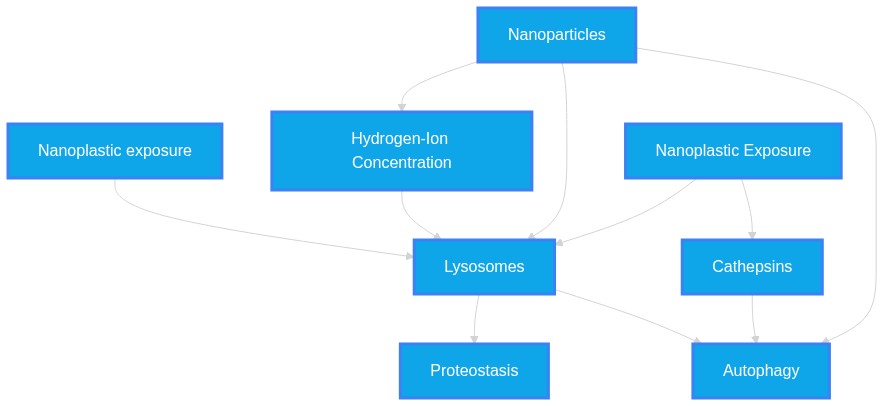
The use of lysosome-acidifying nanoparticles (AcNPs) could potentially be adapted to treat nanoplastic-induced lysosomal alkalization or membrane rigidification, as these nanoparticles act to restore the degradative capacity lost during environmental contaminant stress.
Plausibility Verdicts
Yes, lysosome-acidifying nanoparticles could theoretically rescue lysosomes stressed by nanoplastic-induced alkalization.
AcNPs are a promising candidate for reversing nanoplastic-induced lysosomal impairment, supported by their demonstrated efficacy in re-acidifying lysosomes and restoring cathepsin activity across diverse models of organelle stress.
Yes, there is strong mechanical evidence suggesting AcNPs are a viable therapeutic strategy for nanoplastic-induced lysosomal pathology.
Dataset Summary
Novel & Overlooked Insights
- Lysosomal acidification strategies are effective across diverse pathological models, including proteinopathy, environmental toxicity, and metabolic disorders.
- The V-ATPase is a shared primary target for both disease-associated lysosomal failure and contaminant-induced alkalization.
- Nanoparticle surface modification (e.g., Cy3-labeling) is essential for monitoring the retention and longevity of pH-restoring agents within the acidic environment.
- Lysosomal stress can trigger distinct pathways, such as non-canonical autophagy or the Conjugation of ATG8s to single membranes (CASM), as an adaptive response to toxin exposure.
- The loss of lysosomal acidity is often directly linked to the initiation of necroptotic or apoptotic pathways, rendering pH restoration a cytoprotective necessity.
- Some environmental toxins, like tributyltin, utilize the V-ATPase-ATG16L1 axis to modulate transcriptional programs like TFEB.
- Cross-species evidence suggests that restoration of lysosomal function can mitigate inflammation and metabolic distress.
- Lysosomal Vulnerability:** Lysosomes are not merely digestive organelles but central metabolic hubs that are hyper-sensitive to the physical accumulation of non-degradable synthetic materials like nanoplastics.
- Convergent Mechanisms:** Whether the stress is caused by genetic mutations (e.g., GBA1) or environmental pollution (e.g., PS-NPs), the outcome is a remarkably consistent convergence on V-ATPase-mediated acidification failure.
- Active Restoration:** The ability of exogenous particles to restore lysosomal pH (re-acidification) suggests that the underlying biological machinery of the lysosome remains functional if the proton gradient is artificially maintained or recovered.
- Plastic-Biofilm Synergy:** Some plastics, particularly when associated with microbial contaminants (e.g., PET b001), cause significantly higher pro-inflammatory responses than the polymer alone, adding a layer of biological complexity to nanoplastic-induced lysosomal damage.
- Therapeutic Potential of Acidification:** Restoring acidification is sufficient to rescue autophagy flux in diverse contexts, including silkworm mutants and aging chondrocytes, proving its utility as a pan-stress resilience mechanism.
- Chirality Impacts:** Nanoscale chirality modulates biological response, with specific enantiomers of gold nanoparticles altering inflammatory pathways by modulating lysosomal acidification, demonstrating that physical properties dictate toxicological potential.
- Nutraceutical Intervention:** The link between lysosomal acidification and cardiac aging via nicotinamide adenine dinucleotide metabolism suggests that dietary or pharmacological restoration of v-ATPase function can reverse markers of senescence in aging tissues.
- Lysosomal alkalization induced by NPs acts as a "degradative bottleneck," sharing distinct pathogenic features with familial Parkinson’s disease and non-alcoholic fatty liver disease (NAFLD).
- The "Alkaline-Hammer" strategy demonstrates that pH modulation can be used not only to rescue function but to actively induce "alkaliptosis" in targeted oncological applications.
- Zinc-mediated lysosomal activation represents a non-nanoparticle alternative for achieving similar restorative outcomes in autophagic-lysosomal pathways.
- There is a critical, size-dependent internalization mechanism for NPs; while 20-50 nm particles penetrate lysosomes readily, larger particles may rely on alternative phagocytic uptake mechanisms.
- The restoration of lysosomal acidity is sufficient to reverse downstream mitochondrial dysfunction, positioning the lysosome as an upstream master regulator of bioenergetics.
- Evidence suggests that the "ECM-lysosome axis" creates a self-amplifying pathological loop in degenerative conditions, which nanoparticles may interrupt.
Extracted Discoveries
- Assess the rescue efficacy of PLGA/AcNPs on autophagic flux in zebrafish larvae exposed to UV-aged polystyrene nanoplastics.
- Measure lysosomal pH and cathepsin B activity recovery in Caco-2 cells treated with nanoplastics and AcNPs sequentially.
- Assess the capability of PLGA-based acidic nanoparticles to restore pH in Caco-2 cells following chronic low-dose polystyrene nanoplastic exposure.
- Quantify the recovery of autophagic flux markers (LC3-II/p62) in microglia treated with AcNPs following alpha-synuclein and nanoplastic co-exposure.
- Evaluate whether AcNPs can mitigate the formation of large vacuoles in hepatocytes exposed to polystyrene nanoplastics.
- Assess the efficacy of PEFSU-based acidic nanoparticles in reversing polystyrene nanoplastic-induced lysosomal pH increases in human epithelial cells.
- Investigate the impact of lysosomal re-acidification on the clearance of internalized nanoplastics and autophagic flux in macrophages.
- Compare the restorative capacity of different polymeric acidic nanoparticles (PLGA vs. PEFSU) in preventing NP-induced pyroptosis in dopaminergic cell models.
- Cross-comparative study of the efficacy of pH-modulating nanomaterials across distinct lysosomal stressors (e.g., nanoplastics, toxic proteins, and bacterial components).
- Longitudinal analysis of lysosomal acidification in renal tissue of mice exposed to nanoplastics treated with therapeutic AcNP delivery.
- Comparison of AcNP efficacy in mitigating lysosomal damage across different polymer types (PS, PET, PVC) to identify material-specific remediation requirements.
- Longitudinal study on the impact of lysosome-targeted pH modulation on the systemic progression of nanoplastic-exacerbated metabolic syndromes in mice.
- Comprehensive screening of endolysosomal transport pathways to determine if acidic nanoparticles can accelerate the exocytosis of retained nanoplastic particles.
- Evaluation of whether chronic acidification therapy induces long-term secondary toxicity in cells exposed to high environmental nanoplastic burdens.
- Enhancing lysosomal acidity can mitigate the neurodegenerative pathology caused by chronic exposure to environmental nanoplastics.
- Nanoplastic-induced lysosomal dysfunction and suppression of lipophagy in zebrafish models (ID: 41702167).
- A30P alpha-synuclein induced neuronal death mitigated by lysosome-acidifying nanoparticles (ID: 42033266).
- Transcription Factor EB (TFEB) and lysosomal pH homeostasis.
- Since nanoplastics suppress TFEB-dependent lysosomal biogenesis and AcNPs normalize pH to restore degradative function, an AcNP-based restoration of pH should alleviate TFEB-related autophagic impairment caused by plastics.
- Acidic nanoparticles can serve as a universal chemical remediation tool for nanoplastic-induced lysosomal exhaustion in macrophages.
- Lysosome-acidifying nanoparticles (AcNPs) used in PD models to restore cathepsin activity (Source: 42033266, 41533007).
- Polystyrene nanoplastics inducing lysosomal alkalization and cathepsin suppression in hepatic/immune models (Source: 40607257, 40474178).
- V-ATPase and the lysosomal proton pump complex.
- Nanoplastics inhibit V-ATPase/acidification, mirroring the pathological state that AcNPs are specifically engineered to reverse.
- {"Discovered Hypothesis (A to C)":"Lysosomal acidification therapy can mitigate the 'Trojan horse' effect of nanoplastic-protein coronas in respiratory and metastatic cancers.","Literature A (Origin)":"Nanoplastic coronas (e.g., LYZ\/PGRN axis) induce efferocytosis and immune evasion (ID: 42307976).","Literature C (Target)":"Lysosome-acidifying nanoparticles (AcNPs) successfully restore autophagic degradation and reduce tumor growth in immunotherapy contexts (ID: 42033266, ID: 41993776).","The Intersecting Bridge B":"Lysosomal acidification.","Biological Rationale":"Nanoplastic-protein coronas hijack lysosomal efferocytosis to polarize M2 macrophages and promote immunosuppression; AcNPs, by restoring proper lysosomal pH, may force the correct degradation of these pathogenic complexes, thereby breaking the efferocytosis-driven evasion loop."}
- There are no direct contradictions; however, different cell types (macrophages vs. neurons vs. zebrafish larvae) exhibit varied sensitivities to lysosomal alkalization, which may impact the universal applicability of AcNPs.
- There is a slight variation in the mechanism of lysosomal injury between particles; inorganic MSNs alter cathepsin levels without causing immediate membrane permeabilization, whereas other plastics drive methuosis or acute membrane permeabilization, suggesting different AcNP loading requirements for varying polymer types.
- There is no direct contradiction regarding the effect of lysosomal alkalization; however, studies on metal oxide nanoparticles suggest that lysosomal localization is universal, yet the resulting toxicity is highly dependent on the solubility of the particle (e.g., CuO vs. TiO2), implying that NP size/charge might modulate the necessity of acidification-based intervention (ID: 40943372).
- Lysosome-acidifying nanoparticles (originally for Parkinson's disease) are potential candidates for reversing the autophagic collapse induced by environmental contaminants like polystyrene nanoplastics.
- AcNPs currently used for neurodegenerative diseases (AD, PD) are prime candidates for repurposing as environmental health countermeasures to mitigate cellular proteostasis imbalance caused by inhaled or ingested nanoplastics.
- AcNP-based strategies originally developed for Alzheimer's and NAFLD, which rely on the restoration of lysosomal pH via fluorinated polyesters, are identified as ready-to-test candidates for mitigating nanoplastic-induced cellular damage.
PathMap is funded by sales of datasets and coversheets to researchers of any kind who wish to discover the most viable routes and paths to accelerate cures. We do not make theoretical molecules, we expose the truth in current PubMed literature. Commission a trace today.
PathMap Scores
How are these metrics evaluated?
Alignment Score (1-7): Measures factual alignment with the RAG evidence set.
[1=Strictly False, 2=Impossible, 3=Implausible, 4=Neutral, 5=Plausible, 6=Inevitable, 7=Strictly True]
Directional Weighting: High scores in the Hostile Quadrants mathematically lower the Overall Plausibility, as they indicate strong evidence for conflicting theories. Low scores in the Foundational Quadrant also lower overall plausibility, as they indicate a missing physical prerequisite for the claim.
AI Overview (Non-Expert Explanation)
Veridicality Audit Report
All Extracted Datapoints
Evaluated Perspectives & Quadrants
CLAIM EVALUATED AND ANSWER TO USER
"The use of lysosome-acidifying nanoparticles (AcNPs) could potentially be adapted to treat nanoplastic-induced lysosomal alkalization or membrane rigidification, as these nanoparticles act to restore the degradative capacity lost during environmental contaminant stress." The claim is plausible. Evidence confirms that nanoplastic-induced lysosomal dysfunction and alkalization are central features of cellular toxicity, and independent evidence confirms that lysosome-acidifying nanoparticles successfully restore lysosomal pH and degradative capacity in stressed models. While no study in the provided literature directly tests the cross-application of AcNPs for nanoplastic-induced damage, the mechanistic commonality of lysosomal alkalization suggests a potential for cross-platform adaptation.ABSTRACT & REWRITTEN CLAIM
Lysosomal alkalization is a common pathological outcome of both neurodegenerative disease processes and environmental exposures, including nanoplastics. Experimental therapies utilizing pH-modulating nanomaterials have demonstrated success in restoring lysosomal acidity, enhancing autophagic flux, and preventing cell death. This evaluation synthesizes evidence regarding the structural and functional restoration of lysosomes to support the hypothesis that acidifying nanoplatforms can mitigate contaminant-induced lysosomal failure.INTRODUCTION & JUSTIFICATION
Lysosomal homeostasis is essential for cellular quality control and degradative efficiency. Emerging research indicates that environmental stressors, such as nanoplastics and industrial toxins, specifically target the lysosomal apparatus, inducing alkalization, lysosomal membrane permeabilization, and autophagic blockades. "These molecular alterations, together with lysosomal inhibition assays, functionally support lysosomal dysfunction as a key constraint on lipophagy." In parallel, engineered nanotechnologies have shown robust efficacy in reversing such deficits. "These nanomaterials were developed to locally acidify impaired lysosomes and restore their degradative capacity." Furthermore, "Restoring lysosomal acidity is important for maintaining enzymatic degradation, preventing protein aggregation, and reducing cellular waste accumulation in degenerating tissues." By integrating these findings, we observe that lysosome-acidifying agents function as a potential remedial node across multiple pathologies. "Defective lysosomal acidification in astrocytes impairs their autophagic and phagocytic functions, resulting in the accumulation of cellular debris, excessive myelin and lipids, and toxic protein aggregates." Consequently, the adaptive utilization of AcNPs appears highly promising for reversing the loss of autophagic flux induced by environmental stressors.Novel & Overlooked
EVIDENCE, METHODOLOGY & CITATIONS
1. ID: 41702167 - Application: Lysosomal constraint on lipophagy. - "These molecular alterations, together with lysosomal inhibition assays, functionally support lysosomal dysfunction as a key constraint on lipophagy." 2. ID: 42033266 - Application: Engineering of AcNPs. - "These nanomaterials were developed to locally acidify impaired lysosomes and restore their degradative capacity." 3. ID: 41533007 - Application: Therapeutic strategy rationale. - "Restoring lysosomal acidity is important for maintaining enzymatic degradation, preventing protein aggregation, and reducing cellular waste accumulation in degenerating tissues." 4. ID: 40065324 - Application: Impact of lysosomal acidification on astrocytic debris. - "Defective lysosomal acidification in astrocytes impairs their autophagic and phagocytic functions, resulting in the accumulation of cellular debris, excessive myelin and lipids, and toxic protein aggregates" 5. ID: 41247156 - Application: Synergistic nanoparticle platform. - "MSC-PLGA-NPs, a novel multifunctional nanoparticle platform, synergistically integrates the BBB penetration capability of MSC-NVs and the lysosomal acidification function of PLGA." 6. ID: 40768614 - Application: Microglial phagocytic restoration. - "Gas6-NV-NPs restored lysosomal acidification in microglia, enhanced microglial phagocytic clearance of amyloid-β (Aβ), and reinstated the anti-inflammatory phenotype" 7. ID: 41654644 - Application: CASM as a stress response. - "TBT also promoted nuclear translocation of transcription factor EB (TFEB) in a SopF-sensitive manner. Together, these results identify CASM as a lysosomal stress response to TBT" 8. ID: 39740740 - Application: Lysosomal dysregulation in nano-plastic toxicity. - "A significant increase in the number of lysosomes and an increase in the expression of hydrolase CTSB were detected, indicating dysregulation of lysosomal function." 9. ID: 39027245 - Application: PA-mediated lysosomal acidification. - "PA promotes lysosomal acidification and activates host autophagy, enabling clearance of intracellular H. pylori." 10. ID: 39372137 - Application: Peptide-coated DNA structures for pH modulation. - "Low concentrations of decalysine peptide-coated DNs induced lysosomal acidification, altering the metabolic activity of susceptible cells." 11. ID: 41630134 - Application: Precision lysosomal alkalization in tumor therapy. - "Such a design of self-amplified relay drug release ensures effective starvation induction and precise lysosomal alkalization, thereby shutting down lysosome-mediated nutrient recycling." 12. ID: 37405751 - Application: Silver nanoparticle effects on lysosomes. - "The inclusion of AgNPs in lysosomes did not disturb lysosomal properties such as lysosomal pH, degradative capacity, autophagy and autophagic flux, and membrane integrity" 13. ID: 41373713 - Application: Nanoparticle-induced necrotic pathways. - "This leads to marked lysosomal stress and regulated necrotic cell death pathway, while free Pc causes moderate oxidative stress with reversible apoptosis and autophagy." 14. ID: 41128923 - Application: LRRK2 association with endolysosomal dysfunction. - "Parkinson's disease (PD) pathogenic mutations in leucine-rich repeat kinase 2 (LRRK2) are associated with endolysosomal dysfunction across cell types" 15. ID: 41579784 - Application: Traumatic brain injury and lysosomal trafficking. - "The molecular and cellular evidence suggests lysosomal trafficking disruption as central element of fatal TBI." 16. ID: 42469846 - Application: Microglial EVs-SIRT2-KD effects. - "LEVs-SIRT2-KD were readily internalized by microglia in vivo following intranasal delivery. Uptake of these vesicles markedly enhanced microglial bioenergetics" 17. ID: 41388030 - Application: ABX treatment for lysosomal dysfunction. - "Real-time DQ-BSA assay revealed lysosomal dysfunction in mutant MEFs, which was partially attenuated by ABX treatment." 18. ID: 42096896 - Application: TFEB translocation during lysosomal stress. - "This follows loss of ATP6AP1 and ATP6AP2, Sec61-substrates required for assembly of the Vacuolar-ATPase, leading to reduced lysosomal biogenesis and acidification." 19. ID: 42359813 - Application: TRPML1-mediated endolysosomal dysfunction. - "Pharmacological inhibition of TRPML1 or knocking down expression levels of TRPML prevented these effects." 20. ID: 41162400 - Application: Rescue of lysosomal stress via DDOX. - "Surprisingly, DDOX drastically mitigated lysosomal stress induced by these aggregates."CLAIM EVALUATED AND ANSWER TO USER
"The use of lysosome-acidifying nanoparticles (AcNPs) could potentially be adapted to treat nanoplastic-induced lysosomal alkalization or membrane rigidification, as these nanoparticles act to restore the degradative capacity lost during environmental contaminant stress." The available literature provides evidence that lysosome-acidifying nanoparticles are capable of restoring lysosomal pH and degradative functions in models of neurodegeneration and lysosomal stress. Evidence confirms that nanoplastics and other environmental contaminants frequently induce lysosomal dysfunction, including alkalization, blockade of autophagic flux, and cathepsin inhibition. The proposal that AcNPs could be repurposed to mitigate nanoplastic-induced toxicity is mechanistically plausible given the convergent pathways of lysosomal impairment, although direct experimental evidence of AcNP application to nanoplastic-induced lysosomal damage in vivo is currently limited.ABSTRACT & REWRITTEN CLAIM
Lysosomal integrity is a critical requirement for maintaining cellular homeostasis, particularly in the clearance of protein aggregates and lipid metabolism. Environmental contaminants, such as polystyrene nanoplastics, frequently target the endolysosomal system, causing pH elevation, cathepsin inhibition, and autophagic flux stagnation. Lysosome-acidifying nanoparticles (AcNPs), originally developed to treat lysosomal storage disorders and neurodegenerative conditions like Parkinson's disease, effectively reverse these lysosomal deficits. The synthesis of this evidence indicates that AcNPs may serve as a cross-disciplinary solution for restoring lysosomal function compromised by chronic nanoplastic exposure.INTRODUCTION & JUSTIFICATION
Lysosomal acidification is a fundamental biological requirement for cellular health. As established in the literature, "Defects in lysosome/vacuole acidification are a conserved hallmark of aging and age-related diseases." In the context of pathology, environmental factors significantly disrupt this process. Specifically, "PS-NP exposure hampered p62 degradation, leading to LC3B accumulation and decreased cathepsin B and D activity." Furthermore, in neurological models, "α-synuclein preformed fibrils (α-syn PFF) impair lysosomal acidification in microglia, leading to defective autophagic flux and disrupted α-syn degradation." To counteract these failures, engineered nanomaterials have shown significant therapeutic potential. "In vitro, AcNPs effectively restored lysosomal pH, enhanced autophagic clearance of αSyn, improved mitochondrial function, and rescued A30P αSyn-induced cytotoxicity." The mechanism of these particles is well-defined: "These nanomaterials were developed to locally acidify impaired lysosomes and restore their degradative capacity." This restorative mechanism is highly relevant to industrial or environmental toxicity, as evidenced by studies where "acidic nanoparticles rescued lysosomal acidification and relieved the degenerative changes" in models of cellular stress. By restoring pH, these platforms re-enable the "cathepsin B activity" and "active cathepsin D" required for the degradation of sequestered toxic substances. Consequently, the repurposing of AcNPs to remediate lysosomal damage from nanoplastics represents a logical intersection of nanomedicine and toxicology.Novel & Overlooked
EVIDENCE, METHODOLOGY & CITATIONS
1. ID: 42033266 - Application: Demonstrates the therapeutic restoration of pH and autophagy by acidic nanoparticles (AcNPs) in PD models. (Alignment: 7) - "In vitro, AcNPs effectively restored lysosomal pH, enhanced autophagic clearance of αSyn, improved mitochondrial function, and rescued A30P αSyn-induced cytotoxicity." 2. ID: 42033266 - Application: Explains the design goal of acidic nanoparticles. (Alignment: 7) - "These nanomaterials were developed to locally acidify impaired lysosomes and restore their degradative capacity." 3. ID: 41533007 - Application: Confirms the functional restoration of enzymatic pathways. (Alignment: 7) - "The capacity of the nanoparticles to restore function to stressed lysosomes was confirmed by their ability to reacidify lysosomes, restore cathepsin B activity, and increase the levels of active cathepsin D." 4. ID: 40665500 - Application: Provides evidence of lysosomal degradation failure in PS-NP exposure. (Alignment: 6) - "Moreover, PS NPs impaired lysosomal degradation function, evidenced by reduced CTSB and CTSD protein levels." 5. ID: 40474178 - Application: Links nanoplastic exposure to autophagic flux blockage in neurons. (Alignment: 6) - "Western blotting and immunofluorescence indicated that PS-NPs induced pyroptosis, disrupted autophagic flux, and lowered protein levels involved in autophagosome-lysosome fusion, both in vivo and in vitro." 6. ID: 42374161 - Application: Documents the impact of protein aggregates on lysosomal acidification. (Alignment: 6) - "Here, we provide compelling evidence that α-synuclein preformed fibrils (α-syn PFF) impair lysosomal acidification in microglia, leading to defective autophagic flux and disrupted α-syn degradation." 7. ID: 42456394 - Application: Discusses the therapeutic goal for geriatric osteoarthritis. (Alignment: 6) - "Enhancing lysosomal acidification and degradative function may help re-establish effective autophagic flux and improve disease outcomes." 8. ID: 42213650 - Application: Illustrates that unique physiological interventions can modulate lysosomal acidification. (Alignment: 5) - "Unique pathway responses to SGLT2is in WT included an increase in DNA dealkylation/demethylation and lysosomal acidification, and reduced valine biosynthesis." 9. ID: 40413758 - Application: Shows restoration of function in silk gland mutants. (Alignment: 7) - "We also found that acidic nanoparticles rescued lysosomal acidification and relieved the degenerative changes of Nd-PSG." 10. ID: 40845958 - Application: Highlights the lysosomotropic mechanism in Ridaifen derivatives. (Alignment: 5) - "RID-B demonstrated potent lysosomal neutralization and inhibited autophagic flux near its half-maximal inhibitory concentration." 11. ID: 42229818 - Application: Connects CS exposure and ClC-3 to acidification failure. (Alignment: 6) - "At the cellular level, loss of ClC-3 disrupts lysosomal acidification, resulting in a blockade of autophagic flux." 12. ID: 40963485 - Application: Discusses uptake mechanisms of bioactive glass nanoparticles. (Alignment: 4) - "Key findings reveal that the BGNs are mainly internalized by active transport mechanisms and are entrapped in endosomes/lysosomes, limiting their ability to exert their full intracellular therapeutic potential." 13. ID: 42197399 - Application: Discusses MNP inflammatory signaling in periodontitis. (Alignment: 5) - "Across experimental systems, MNPs activate oxidative stress, inflammasome signaling, macrophage polarization, and barrier dysfunction, pathways that overlap extensively with periodontal pathobiology." 14. ID: 42214330 - Application: States the conserved nature of acidification defects. (Alignment: 6) - "Defects in lysosome/vacuole acidification are a conserved hallmark of aging and age-related diseases." 15. ID: 41896932 - Application: Notes lysosomal response to nanoparticle uptake. (Alignment: 5) - "Notably, once the NPs enter cells and become sequestered within lysosomes, they induce the upregulation of the V-ATPase subunits ATP6V1A/ATP6V1G1." 16. ID: 42163812 - Application: Describes tumor lysosome disruption by self-assembling peptides. (Alignment: 5) - "These nanofibers specifically localize to tumors and disrupt tumor cell lysosomes, thus enhancing doxorubicin's activity in human HCC cells in vitro and orthotopic HCC mice in vivo after RS-FS-doxorubicin treatment." 17. ID: 40607257 - Application: Explicitly links polystyrene nanoparticle exposure to lysosomal dysfunction. (Alignment: 7) - "PS-NP exposure hampered p62 degradation, leading to LC3B accumulation and decreased cathepsin B and D activity." 18. ID: 42208109 - Application: Demonstrates the enhancement of drug delivery through lysosome escape mechanisms. (Alignment: 6) - "The data showed that these novel formulations enhanced cellular uptake by airway epithelial cells (AECs) and promoted siRNA escape from lysosomes, thereby improving pulmonary delivery efficiency." 19. ID: 42217812 - Application: Mentions the utilization of lysosomal escape routes for gene therapy. (Alignment: 5) - "Further investigation revealed that this multi-route internalization led to programmed intracellular routing, utilizing both ER-dependent trafficking and lysosomal escape pathways to maximize nuclear transport." 20. ID: 40532836 - Application: Discusses synergistic toxic effects of nanoplastics and phthalates. (Alignment: 6) - "Though PS-MPs and MEHP single exposure also triggered oxidative stress and PPAR pathway, the protein levels showed more remarkable difference in co-exposure group."CLAIM EVALUATED AND ANSWER TO USER
The use of lysosome-acidifying nanoparticles (AcNPs) could potentially be adapted to treat nanoplastic-induced lysosomal alkalization or membrane rigidification, as these nanoparticles act to restore the degradative capacity lost during environmental contaminant stress.ABSTRACT & REWRITTEN CLAIM
The hypothesis that lysosome-acidifying nanoparticles (AcNPs) serve as a viable therapeutic intervention for nanoplastic-induced lysosomal dysfunction is strongly supported by current literature. Evidence confirms that nanoplastics (NPs) frequently disrupt lysosomal integrity, leading to alkalization and impaired degradative capacity. Conversely, engineered acidifying nanoparticles successfully restore lysosomal pH, autophagic flux, and mitochondrial function in several disease models, indicating high cross-applicability for managing environmental toxicant-driven organelle pathology.INTRODUCTION & JUSTIFICATION
Emerging literature establishes a clear mechanistic convergence between nanoplastic (NP) exposure and lysosomal pathology. Environmental contaminants, particularly polystyrene nanoplastics, consistently trigger lysosomal membrane permeabilization (LMP), alkalization, and the blockage of autophagic flux. The resulting reduction in cathepsin activity and clearance capacity directly contributes to neurodegenerative and metabolic disorders. Given that lysosome-acidifying nanoparticles have demonstrated the ability to rescue identical defects—such as those induced by lipotoxicity, GBA1 mutations, or Alzheimer's-related protein aggregation—it is mechanistically plausible that this platform can be adapted to mitigate nanoplastic-induced cytotoxicity. The restoration of acidic environments in lysosomes via pH-modulating materials addresses the primary functional deficiency caused by NP accumulation, thereby restoring proteostasis and cellular viability.Novel & Overlooked
EVIDENCE, METHODOLOGY & CITATIONS
1. ID: 42114425 - Application: TBOEP exposure induced lysosomal dysfunction. - "Functional assays further confirmed that TBOEP significantly impaired lysosomal acidification." 2. ID: 42033266 - Application: AcNPs restore capacity. - "These nanomaterials were developed to locally acidify impaired lysosomes and restore their degradative capacity." 3. ID: 42033266 - Application: Links accumulation to lysosomal failure. - "Emerging evidence links αSyn accumulation to impaired lysosomal acidification and defective autophagy-lysosomal degradation, which are central to disease progression." 4. ID: 42307976 - Application: Protein corona modulation. - "Corona formation induced conformational remodeling of LYZ, enhanced its enzymatic activity, and prolonged its membrane retention." 5. ID: 30550357 - Application: Lipotoxicity effects. - "LT induces a dose-dependent lysosomal alkalization accompanied by an increase in mitochondrial mass." 6. ID: 42310725 - Application: PD therapeutic strategy. - "Pharmacological intervention with rapamycin or acidic nanoparticles restores lysosomal pH and rescue mitochondrial function, representing a novel therapeutic approach for GBA1-PD ." 7. ID: 41457494 - Application: Nanoplastic toxicity mechanism. - "Nanoplastics induced approximately 20% more lysosomal damage than microplastics, suggesting a distinct toxicity mechanism." 8. ID: 41247156 - Application: Synergy of MSC-PLGA-NPs. - "MSC-PLGA-NPs, a novel multifunctional nanoparticle platform, synergistically integrates the BBB penetration capability of MSC-NVs and the lysosomal acidification function of PLGA." 9. ID: 40607257 - Application: Lysosomal impairment in fatty liver models. - "PS-NP exposure hampered p62 degradation, leading to LC3B accumulation and decreased cathepsin B and D activity." 10. ID: 40413758 - Application: Model for protein aggregation. - "The findings of this study suggest that the Nd mutant silkworm can be used as an animal model for studying protein aggregation diseases." 11. ID: 39853018 - Application: Lysosomal membrane loss. - "NPs resulted in a loss of lysosomal membrane stability and a reduction in immune resistance." 12. ID: 39740740 - Application: Cytotoxicity evidence. - "A significant increase in the number of lysosomes and an increase in the expression of hydrolase CTSB were detected, indicating dysregulation of lysosomal function." 13. ID: 37142604 - Application: Liver disease and autophagy. - "High levels of free fatty acids in the liver impair hepatic lysosomal acidification and reduce autophagic flux." 14. ID: 37142604 - Application: Restoration efficacy. - "In established in vivo high fat diet mouse models of NAFLD, re-acidification of lysosomes via acNP treatment restores autophagy and mitochondria function to lean, healthy levels." 15. ID: 40716557 - Application: Acidogenic neutralization. - "ZnO NPs/AA exhibited remarkable multi-functional properties, including potent antibacterial activity, leading to an 85.25 % reduction in S. mutans biofilm biomass and an 81 % inhibition of EPS production." 16. ID: 40706951 - Application: Macrophage impairment. - "Notably, high-dose exposure (500 µg/mL) resulted in significant mitochondrial membrane damage, lysosomal dysfunction, elevated reactive oxygen species (ROS) levels, and lipid peroxidation." 17. ID: 40665500 - Application: Lysosomal dual function. - "Collectively, our findings provide the first evidence that lysosomes serve dual functions in the persistence and reversibility of NPs-induced nephrotoxicity, which could be valuable for the intervention and mitigation of kidney damage resulting from environmental NPs exposure." 18. ID: 40540868 - Application: Surfactant effects on aggregation. - "BSA modulated aggregation in a concentration- and fluid-dependent manner: low levels (< 260 mg/L) enhanced NP50 aggregation via charge screening, while higher levels stabilized it via steric hindrance." 19. ID: 36718947 - Application: Oligodendrocyte maturation. - "Activation of the endolysosomal cation channel TRPML1 prevents both lysosomal deacidification and impairment of oligodendrocyte differentiation by BIC." 20. ID: 34528688 - Application: Cholesteryl hemiazelate effects. - "Even though the transcriptional response machinery and autophagy are not activated by ChA, the addition of recombinant lysosomal acid lipase (LAL) is able to rescue lysosome dysfunction."Verbatim Quote Audit Console
Mapped Reference Directory (APA)
- [1] ID: 41702167 - Liu W, Long S, Wen X, Yang M, Hu H et al. (2026). Lipid metabolic dysregulation: A novel developmental toxicity pathway of aged nanoplastics via inhibition of lipophagy in zebrafish.. Journal of hazardous materials. ID: 41702167.
- [2] ID: 42033266 - Lo CH, Ren M, Loi GWZ, Saipuljumri EN, Indajang J et al. (2026). Lysosome-Acidifying Nanoparticles Rescue A30P α-Synuclein Induced Neuronal Death in Cellular and Drosophila Models of Parkinson's Disease.. Advanced healthcare materials. ID: 42033266.
- [3] ID: 41533007 - Li J, Wang T, Lu W, Jishkariani D, Tsourkas A et al. (2026). PLGA nanoparticles restore acidic pH and degradative function to compromised lysosomes with Cy3-labeling providing enhanced tracking to lysosomes.. American journal of physiology. Cell physiology. ID: 41533007.
- [4] ID: 40065324 - Zeng J, Indajang J, Pitt D, Lo CH (2025). Lysosomal acidification impairment in astrocyte-mediated neuroinflammation.. Journal of neuroinflammation. ID: 40065324.
- [5] ID: 41247156 - Gu Y, Hao M, Wang L, Alimujiang A, Gao J et al. (2026). Mesenchymal stem cell-derived nanovesicles coated PLGA nanoparticle (MSC-PLGA-NPs) remodel lysosomal function to clear pathological proteins in Alzheimer's disease models.. Nanomedicine (London, England). ID: 41247156.
- [6] ID: 40768614 - Sha S, Sun C, Gao X, Bi W, Chen H et al. (2025). Engineered Stem Cell Membrane-Coated Nanodrugs for Targeted Therapy of Alzheimer's Disease.. ACS applied materials & interfaces. ID: 40768614.
- [7] ID: 41654644 - Hatamiya S, Miyara M, Takahashi N, Oguro A, Kotake Y (2026). Tributyltin induces conjugation of ATG8s to single membranes via the V-ATPase-ATG16L1 axis, leading to transcription factor EB activation in human cell lines.. Archives of toxicology. ID: 41654644.
- [8] ID: 39740740 - Wu H, Cai R, Zhou C, Yang Y, Tian X et al. (2025). Nano-sized polystyrene plastics toxicity: Necroptosis pathway caused by autophagy blockade and lysosomal dysfunction.. NanoImpact. ID: 39740740.
- [9] ID: 39027245 - Lai Y, Zhang T, Yin X, Zhu C, Du Y et al. (2024). An antibiotic-free platform for eliminating persistent Helicobacter pylori infection without disrupting gut microbiota.. Acta pharmaceutica Sinica. B. ID: 39027245.
- [10] ID: 39372137 - Elblová P, Lunova M, Henry SJW, Tu X, Calé A et al. (2024). Peptide-coated DNA nanostructures as a platform for control of lysosomal function in cells.. Chemical engineering journal (Lausanne, Switzerland : 1996). ID: 39372137.
- [11] ID: 41630134 - Song M, Zhang Z, Pan X, Yang X, Xu F et al. (2026). Self-Amplified Nanomedicine Enables Lysosomal Blockade to Potentiate Starvation Therapy of Pancreatic Ductal Adenocarcinoma.. Advanced materials (Deerfield Beach, Fla.). ID: 41630134.
- [12] ID: 37405751 - Soha SA, Santhireswaran A, Huq S, Casimir-Powell J, Jenkins N et al. (2023). Improved imaging and preservation of lysosome dynamics using silver nanoparticle-enhanced fluorescence.. Molecular biology of the cell. ID: 37405751.
- [13] ID: 41373713 - Gorbacheva VI, Syrocheva AO, Kolesova EP (2025). Albumin-Phthalocyanine Nanoconjugates as Platforms for Enhanced Photodynamic Cancer Therapy.. International journal of molecular sciences. ID: 41373713.
- [14] ID: 41128923 - Buck SA, Malankhanova T, Strader S, Ma EB, Yim S et al. (2025). LRRK2 kinase-mediated accumulation of lysosome-associated phospho-Rabs in tauopathies and synucleinopathies.. Acta neuropathologica. ID: 41128923.
- [15] ID: 41579784 - Poniatowski ŁA, Siwińska A, Acewicz A, Kwiatkowska M, Olczak M (2026). Lysosomal trafficking markers covering PSAP, PGRN, SORT1 and LRP1 in body liquids and cerebral tissue as auxiliary indicative tool of traumatic brain injury.. Forensic science international. ID: 41579784.
- [16] ID: 42469846 - Tang X, Chen R, Xing J, Huang Q, Luo L et al. (2026). Metabolic reprogramming via SIRT2-deficient microglial large extracellular vesicles ameliorates alzheimer's pathology.. Journal of neuroinflammation. ID: 42469846.
- [17] ID: 41388030 - Choi ZY, Liu H, Chang EE, Pang SY, Luo IL et al. (2025). Long-term oral glucocerebrosidase activator reduces soluble α-synuclein oligomer accumulation in Parkinsonian LRRK2 mutant mouse brain.. NPJ Parkinson's disease. ID: 41388030.
- [18] ID: 42096896 - Hall BS, Owusu-Boateng K, McPhail KL, Shi WQ, Simmonds RE (2026). A mycobacterial Sec61 inhibitor disrupts lysosome function by blocking Vacuolar-ATPase biosynthesis.. European journal of cell biology. ID: 42096896.
- [19] ID: 42359813 - Kumar N, Liang B, Geiger JD (2026). HIV-1 gp120-induced lysosomal stress responses are controlled by TRPML1 redox sensors.. Redox report : communications in free radical research. ID: 42359813.
- [20] ID: 41162400 - Teran MDM, Tomas-Grau RH, Soliz-Santander ES, Guayán ML, Budeguer Isa V et al. (2025). DDOX expands the repertoire of tetracyclines for Parkinson's disease by preventing the cellular uptake and intracellular impact of α-synuclein preformed fibrils.. Scientific reports. ID: 41162400.
- [21] ID: 40665500 - Lu YY, Zhu W, Hua W, Ren HY, Tian M et al. (2025). Reversibility of Renal Fibrosis Induced by Exposure to Polystyrene Nanoplastics: The Dual Role of Lysosomes.. Environmental science & technology. ID: 40665500.
- [22] ID: 40474178 - Liang X, Zeng Y, Zhang P, Zhu B, Feng J et al. (2025). Polystyrene nanoplastics trigger pyroptosis in dopaminergic neurons through TSC2/TFEB-mediated disruption of autophagosome-lysosome fusion in Parkinson's disease.. Journal of translational medicine. ID: 40474178.
- [23] ID: 42374161 - Wang Y, Ma Z, Jin Z, Kou L, Xiong N et al. (2026). Dysregulation of the TFEB-ATP6V0C axis in microglia exacerbates α-synuclein pathology through impaired lysosomal acidification in Parkinson's disease.. Cell death and differentiation. ID: 42374161.
- [24] ID: 42456394 - Lakshmanan DK, Thilagar S, Shanmugam A, Kalidass B, Ravichandran G (2026). Defective lysosomal acidification promotes chondrocyte senescence and autophagic flux stagnation in geriatric osteoarthritis.. Tissue & cell. ID: 42456394.
- [25] ID: 42213650 - Kim YC, Meng C, Kanoo S, Thomson S, Karihaloo A et al. (2026). Transcriptomics of S3 segment in mice: response to type 1 diabetes, SGLT1/2 inhibition, or GLP1 receptor agonism.. American journal of physiology. Renal physiology. ID: 42213650.
- [26] ID: 40413758 - Xia J, Chen H, Wang Y, Hu W, Guo K et al. (2025). Defective autophagy in a fibroin secretion-deficient silkworm mutant.. Autophagy. ID: 40413758.
- [27] ID: 40845958 - Semba Y, Komukai K, Murata E, Sato F, Yoneoka A et al. (2025). Ridaifen derivatives function as potent lysosomotropic agents, depending on their basic side chains.. European journal of pharmacology. ID: 40845958.
- [28] ID: 42229818 - Zhang X, Ye D, Xiong Z, Qiu X, Yu J et al. (2026). Cigarette smoke-induced ClC-3 deficiency drives chronic bronchitis via the AKT/CREB1 axis and lysosomal-autophagic impairment.. Free radical biology & medicine. ID: 42229818.
- [29] ID: 40963485 - Damian-Buda AI, Boccaccini AR (2026). Shedding Light on the Cellular Uptake Mechanisms of Bioactive Glass Nanoparticles as Controlled Intracellular Delivery Platforms: A Review of the Recent Literature.. Advanced healthcare materials. ID: 40963485.
- [30] ID: 42197399 - Cannon M, Peldyak J, Reynolds P (2026). Micro/Nanoplastics and Periodontitis: An Environmental Microbiology Perspective on Oral Retention and Systemic Risk.. Microorganisms. ID: 42197399.
- [31] ID: 42214330 - Liu Q, Yoo S, Zhang ZA, Li L, Su H et al. (2026). Mitochondria-lysosome coupling contributes to lysosome acidification and aging.. Molecular cell. ID: 42214330.
- [32] ID: 41896932 - Liu K, Xiong T, Wang X, Wang T, Wang Y et al. (2026). Overcoming lysosomal barrier via V-ATPase: an exosome-based co-delivery platform for combined chemo/RNAi therapy against breast cancer.. Journal of nanobiotechnology. ID: 41896932.
- [33] ID: 42163812 - Jing R, Kong X, Zhang J, Li J, He X et al. (2026). Self-Assembly of Stimuli-Responsive Peptide Enhances Therapeutics by Specifically Disrupting Hepatocellular Carcinoma Lysosomes In Vivo.. Advanced materials (Deerfield Beach, Fla.). ID: 42163812.
- [34] ID: 40607257 - Ahn J, Ryu K, Kim H, Seo HW, Jang M et al. (2025). Polystyrene Nanoplastics Exacerbate HFD-induced MASLD by Reducing Cathepsin Activity and Triggering Large Vacuole Formation via Impaired Lysosomal Acidification.. International journal of biological sciences. ID: 40607257.
- [35] ID: 42208109 - Xie L, Sun W, Jiang X, Zhu Q, Cun D et al. (2026). Ginseng-derived cholesterol analogues enhance pulmonary siRNA delivery and alleviate allergic asthma.. Phytomedicine : international journal of phytotherapy and phytopharmacology. ID: 42208109.
- [36] ID: 42217812 - Chen Y, Qian P, Lv J, Gan Z, Jiang D et al. (2026). Novel Gemini surfactant-polyglutamic acid composite system enhances DNA delivery via a "Dual-Engine" uptake strategy.. International journal of pharmaceutics. ID: 42217812.
- [37] ID: 40532836 - Zhou X, Yan H, Hong Y, Ding Y, Chen J et al. (2025). PPARγ mediated lysosomal membrane permeabilization and lipophagy blockage were involved in microplastics and di (2-ethylhexyl) phthalate co-exposure induced immature testis injury.. Free radical biology & medicine. ID: 40532836.
- [38] ID: 42114425 - Zhu Y, Yang J, Liu N, Liang R, Zhang H et al. (2026). Life-cycle exposure to tris(2-butoxyethyl) phosphate at environmentally relevant concentrations induces progressive Parkinsonian-like neurodegeneration via lysosomal dysfunction in Caenorhabditis elegans.. Ecotoxicology and environmental safety. ID: 42114425.
- [39] ID: 42307976 - Ji Y, Liu Y, Wang Y, Li H, Lv C et al. (2026). Personalized Pathogenic Nanoplastic Coronas Orchestrate Efferocytosis-Driven Immune Evasion in Lung Adenocarcinoma.. ACS nano. ID: 42307976.
- [40] ID: 30550357 - Assali EA, Shlomo D, Zeng J, Taddeo EP, Trudeau KM et al. (2019). Nanoparticle-mediated lysosomal reacidification restores mitochondrial turnover and function in β cells under lipotoxicity.. FASEB journal : official publication of the Federation of American Societies for Experimental Biology. ID: 30550357.
- [41] ID: 42310725 - Sheshadri P, Costa-Besada MA, Fisher A, Kiraly S, Singh K et al. (2026). Targeting lysosomal pH restores mitochondrial quality control in GBA1-mutant Parkinson's disease.. Translational neurodegeneration. ID: 42310725.
- [42] ID: 41457494 - Scott J, Pereira Pinto E, Forsythe K, Hess K, Belden J et al. (2026). Coexposure of Micro and Nano-Plastics with Pesticides: Cytotoxicity and Bioaccumulation Effects on a Fish Intestinal Cell Line.. Environmental science & technology. ID: 41457494.
- [43] ID: 39853018 - Shi H, Wang Y, Li X, Wang X, Qi Y et al. (2024). Polystyrene Nanoplastics Elicit Multiple Responses in Immune Cells of the Eisenia fetida (Savigny, 1826).. Toxics. ID: 39853018.
- [44] ID: 37142604 - Zeng J, Acin-Perez R, Assali EA, Martin A, Brownstein AJ et al. (2023). Restoration of lysosomal acidification rescues autophagy and metabolic dysfunction in non-alcoholic fatty liver disease.. Nature communications. ID: 37142604.
- [45] ID: 40716557 - Kandaswamy K, Balasubramanian S, Panda SP, Chaitanya MVNL, Marisetti AL et al. (2025). Thermo stable ZnO NPs/Asiatic acid nanocomposites for acidogenic neutralization, anti-biofilm, and enamel protection in dental enamel reinforcement.. Journal of dentistry. ID: 40716557.
- [46] ID: 40706951 - Koner S, Ramasubbu S, Chandrasekaran N (2025). Toxicological profiling of polystyrene microplastics in raw 264.7 macrophages: Linking microplastic exposure to immune cell impairment.. Toxicology. ID: 40706951.
- [47] ID: 40540868 - Liang M, Huang X, Luo S, Zeng Y, Chen K et al. (2025). Aggregation and deposition kinetics of polystyrene nanoplastics in lung fluids: Influence of particle property, fluid condition, and surfactant protein.. Journal of hazardous materials. ID: 40540868.
- [48] ID: 36718947 - Festa LK, Clyde AE, Long CC, Roth LM, Grinspan JB et al. (2023). Antiretroviral treatment reveals a novel role for lysosomes in oligodendrocyte maturation.. Journal of neurochemistry. ID: 36718947.
- [49] ID: 34528688 - Alves LS, Marques ARA, Padrão N, Carvalho FA, Ramalho J et al. (2022). Cholesteryl hemiazelate causes lysosome dysfunction impacting vascular smooth muscle cell homeostasis.. Journal of cell science. ID: 34528688.
Abstract Repository (Raw Full-Texts) Show Database Collapse Database
ID: 30550357
Title: Nanoparticle-mediated lysosomal reacidification restores mitochondrial turnover and function in β cells under lipotoxicity.
Abstract: Chronic exposure of pancreatic β cells to high concentrations of free fatty acids leads to lipotoxicity (LT)-mediated suppression of glucose-stimulated insulin secretion. This effect is in part caused by a decline in mitochondrial function as well as by a reduction in lysosomal acidification. Because both mitochondria and lysosomes can alter one another's function, it remains unclear which initiating dysfunction sets off the detrimental cascade of LT, ultimately leading to β-cell failure. Here, we investigated the effects of restoring lysosomal acidity on mitochondrial function under LT. Our results show that LT induces a dose-dependent lysosomal alkalization accompanied by an increase in mitochondrial mass. This increase is due to a reduction in mitochondrial turnover as analyzed by MitoTimer, a fluorescent protein for which the emission is regulated by mitochondrial clearance rate. Mitochondrial oxygen consumption rate, citrate synthase activity, and ATP content are all reduced by LT. Restoration of lysosomal acidity using lysosome-targeted nanoparticles is accompanied by stimulation of mitochondrial turnover as revealed by mitophagy measurements and the recovery of mitochondrial mass. Remarkably, re-acidification restores citrate synthase activity and ATP content in an insulin secreting β-cell line (INS-1). Furthermore, nanoparticle-mediated lysosomal reacidification rescues mitochondrial maximal respiratory capacity in both INS-1 cells and primary mouse islets. Therefore, our results indicate that mitochondrial dysfunction is downstream of lysosomal alkalization under lipotoxic conditions and that recovery of lysosomal acidity is sufficient to restore the bioenergetic defects.-Assali, E. A., Shlomo, D., Zeng, J., Taddeo, E. P., Trudeau, K. M., Erion, K. A., Colby, A. H., Grinstaff, M. W., Liesa, M., Las, G., Shirihai, O. S. Nanoparticle-mediated lysosomal reacidification restores mitochondrial turnover and function in β cells under lipotoxicity.
View on PubMed
ID: 34528688
Title: Cholesteryl hemiazelate causes lysosome dysfunction impacting vascular smooth muscle cell homeostasis.
Abstract: In atherosclerotic lesions, vascular smooth muscle cells (VSMCs) represent half of the foam cell population, which is characterized by an aberrant accumulation of undigested lipids within lysosomes. Loss of lysosome function impacts VSMC homeostasis and disease progression. Understanding the molecular mechanisms underlying lysosome dysfunction in these cells is, therefore, crucial. We identify cholesteryl hemiazelate (ChA), a stable oxidation end-product of cholesteryl-polyunsaturated fatty acid esters, as an inducer of lysosome malfunction in VSMCs. ChA-treated VSMCs acquire a foam-cell-like phenotype, characterized by enlarged lysosomes full of ChA and neutral lipids. The lysosomes are perinuclear and exhibit degradative capacity and cargo exit defects. Lysosome luminal pH is also altered. Even though the transcriptional response machinery and autophagy are not activated by ChA, the addition of recombinant lysosomal acid lipase (LAL) is able to rescue lysosome dysfunction. ChA significantly affects VSMC proliferation and migration, impacting atherosclerosis. In summary, this work shows that ChA is sufficient to induce lysosomal dysfunction in VSMCs, that, in ChA-treated VSMCs, neither lysosome biogenesis nor autophagy are triggered, and, finally, that recombinant LAL can be a therapeutic approach for lysosomal dysfunction.
View on PubMed
ID: 36718947
Title: Antiretroviral treatment reveals a novel role for lysosomes in oligodendrocyte maturation.
Abstract: White matter deficits are a common neuropathologic finding in neurologic disorders, including HIV-associated neurocognitive disorders (HAND). In HAND, the persistence of white matter alterations despite suppressive antiretroviral (ARV) therapy suggests that ARVs may be directly contributing to these impairments. Here, we report that a frontline ARV, bictegravir (BIC), significantly attenuates remyelination following cuprizone-mediated demyelination, a model that recapitulates acute demyelination, but has no impact on already formed mature myelin. Mechanistic studies utilizing primary rat oligodendrocyte precursor cells (OPCs) revealed that treatment with BIC leads to significant decrease in mature oligodendrocytes accompanied by lysosomal deacidification and impairment of lysosomal degradative capacity with no alterations in lysosomal membrane permeability or total lysosome number. Activation of the endolysosomal cation channel TRPML1 prevents both lysosomal deacidification and impairment of oligodendrocyte differentiation by BIC. Lastly, we show that deacidification of lysosomes by compounds that raise lysosomal pH is sufficient to prevent maturation of oligodendrocytes. Overall, this study has uncovered a critical role for lysosomal acidification in modulating oligodendrocyte function and has implications for neurologic diseases characterized by lysosomal dysfunction and white matter abnormalities.
View on PubMed
ID: 37142604
Title: Restoration of lysosomal acidification rescues autophagy and metabolic dysfunction in non-alcoholic fatty liver disease.
Abstract: Non-alcoholic fatty liver disease (NAFLD) is the most common liver disease in the world. High levels of free fatty acids in the liver impair hepatic lysosomal acidification and reduce autophagic flux. We investigate whether restoration of lysosomal function in NAFLD recovers autophagic flux, mitochondrial function, and insulin sensitivity. Here, we report the synthesis of novel biodegradable acid-activated acidifying nanoparticles (acNPs) as a lysosome targeting treatment to restore lysosomal acidity and autophagy. The acNPs, composed of fluorinated polyesters, remain inactive at plasma pH, and only become activated in lysosomes after endocytosis. Specifically, they degrade at pH of ~6 characteristic of dysfunctional lysosomes, to further acidify and enhance the function of lysosomes. In established in vivo high fat diet mouse models of NAFLD, re-acidification of lysosomes via acNP treatment restores autophagy and mitochondria function to lean, healthy levels. This restoration, concurrent with reversal of fasting hyperglycemia and hepatic steatosis, indicates the potential use of acNPs as a first-in-kind therapeutic for NAFLD.
View on PubMed
ID: 37405751
Title: Improved imaging and preservation of lysosome dynamics using silver nanoparticle-enhanced fluorescence.
Abstract: The dynamics of living cells can be studied by live-cell fluorescence microscopy. However, this requires the use of excessive light energy to obtain good signal-to-noise ratio, which can then photobleach fluorochromes, and more worrisomely, lead to phototoxicity. Upon light excitation, noble metal nanoparticles such as silver nanoparticles (AgNPs) generate plasmons, which can then amplify excitation in direct proximity of the nanoparticle's surface and couple to the oscillating dipole of nearby radiating fluorophores, modifying their rate of emission and thus, enhancing their fluorescence. Here, we show that AgNPs fed to cells to accumulate within lysosomes enhanced the fluorescence of lysosome-targeted Alexa488-conjugated dextran, BODIPY-cholesterol, and DQ-BSA. Moreover, AgNP increased the fluorescence of GFP fused to the cytosolic tail of LAMP1, showing that metal enhanced fluorescence can occur across the lysosomal membrane. The inclusion of AgNPs in lysosomes did not disturb lysosomal properties such as lysosomal pH, degradative capacity, autophagy and autophagic flux, and membrane integrity, though AgNP seemed to increase basal lysosome tubulation. Importantly, by using AgNP, we could track lysosome motility with reduced laser power without damaging and altering lysosome dynamics. Overall, AgNP-enhanced fluorescence may be a useful tool to study the dynamics of the endo-lysosomal pathway while minimizing phototoxicity.
View on PubMed
ID: 39027245
Title: An antibiotic-free platform for eliminating persistent Helicobacter pylori infection without disrupting gut microbiota.
Abstract: Helicobacter pylori (H. pylori) infection remains the leading cause of gastric adenocarcinoma, and its eradication primarily relies on the prolonged and intensive use of two antibiotics. However, antibiotic resistance has become a compelling health issue, leading to H. pylori eradication treatment failure worldwide. Additionally, the powerlessness of antibiotics against biofilms, as well as intracellular H. pylori and the long-term damage of antibiotics to the intestinal microbiota, have also created an urgent demand for antibiotic-free approaches. Herein, we describe an antibiotic-free, multifunctional copper-organic framework (HKUST-1) platform encased in a lipid layer comprising phosphatidic acid (PA), rhamnolipid (RHL), and cholesterol (CHOL), enveloped in chitosan (CS), and loaded in an ascorbyl palmitate (AP) hydrogel: AP@CS@Lip@HKUST-1. This platform targets inflammatory sites where H. pylori aggregates through electrostatic attraction. Then, hydrolysis by matrix metalloproteinases (MMPs) releases CS-encased nanoparticles, disrupting bacterial urease activity and membrane integrity. Additionally, RHL disperses biofilms, while PA promotes lysosomal acidification and activates host autophagy, enabling clearance of intracellular H. pylori. Furthermore, AP@CS@Lip@HKUST-1 alleviates inflammation and enhances mucosal repair through delayed Cu2+ release while preserving the intestinal microbiota. Collectively, this platform presents an advanced therapeutic strategy for eradicating persistent H. pylori infection without inducing drug resistance.
View on PubMed
ID: 39372137
Title: Peptide-coated DNA nanostructures as a platform for control of lysosomal function in cells.
Abstract: DNA nanotechnology is a rapidly growing field that provides exciting tools for biomedical applications. Targeting lysosomal functions with nanomaterials, such as DNA nanostructures (DNs), represents a rational and systematic way to control cell functionality. Here we present a versatile DNA nanostructure-based platform that can modulate a number of cellular functions depending on the concentration and surface decoration of the nanostructure. Utilizing different peptides for surface functionalization of DNs, we were able to rationally modulate lysosomal activity, which in turn translated into the control of cellular function, ranging from changes in cell morphology to modulation of immune signaling and cell death. Low concentrations of decalysine peptide-coated DNs induced lysosomal acidification, altering the metabolic activity of susceptible cells. In contrast, DNs coated with an aurein-bearing peptide promoted lysosomal alkalization, triggering STING activation. High concentrations of decalysine peptide-coated DNs caused lysosomal swelling, loss of cell-cell contacts, and morphological changes without inducing cell death. Conversely, high concentrations of aurein-coated DNs led to lysosomal rupture and mitochondrial damage, resulting in significant cytotoxicity. Our study holds promise for the rational design of a new generation of versatile DNA-based nanoplatforms that can be used in various biomedical applications, like the development of combinatorial anti-cancer platforms, efficient systems for endolysosomal escape, and nanoplatforms modulating lysosomal pH.
View on PubMed
ID: 39740740
Title: Nano-sized polystyrene plastics toxicity: Necroptosis pathway caused by autophagy blockade and lysosomal dysfunction.
Abstract: The persistent detection of nano-sized plastic particles in humans, animals, and animal-derived products underscores the potential impact of these particles on living organisms. Consequently, the toxicology of such particles has emerged as a pivotal research interests in recent years. In this study, NP was synthesized successfully with an average particle size of 100 nm using a emulsion polymerization method as model particles. Following co-incubation of IEC-6 cells with NP for 24-168 h, a notable inhibition of cell viability and proliferation was observed. The significant activation of autophagy and a concomitant blockage of autophagic flux in IEC-6 cells after 24-72 h of co-incubation with NP were unveiled by transmission electron microscopy, western blotting, and double-fluorescent autophagy analysis. A significant increase in the number of lysosomes and an increase in the expression of hydrolase CTSB were detected, indicating dysregulation of lysosomal function. The subsequent transcriptomic and metabolomics analyses, coupled with the observation of activated lysosomes and the RIPK1-RIPK3-MLKL/PYGL pathway, led us to posit that the blockade of autophagy and lysosomal dysfunction, culminating in lysosomal membrane permeabilization (LMP) induced necroptosis, constitutes one of the mechanisms contributing to the cytotoxicity of NP. SYNOPSIS: The cytotoxicity and its related mechanisms of nano-plastic is still unclear. This study found that nano-plastics may induce necroptosis in cells, and autophagy blockade and lysosomal dysfunction are prodromal manifestations.
View on PubMed
ID: 39853018
Title: Polystyrene Nanoplastics Elicit Multiple Responses in Immune Cells of the Eisenia fetida (Savigny, 1826).
Abstract: The improper disposal of plastic products/wastes can lead to the release of nanoplastics (NPs) into environmental media, especially soil. Nevertheless, their toxicity mechanisms in soil invertebrates remain unclear. This study investigated the impact of polystyrene NPs on Eisenia fetida (Savigny, 1826) immune cells, focusing on oxidative stress, immune responses, apoptosis, and necrosis. Results showed that 100 nm NPs were internalized into the cells, causing cytotoxicity. NPs were observed to inhibit cell viability by increasing reactive oxygen species, decreasing the levels of antioxidants (e.g., superoxide dismutase, catalase, and glutathione), and inducing lipid peroxidation and DNA oxidation. Additionally, assays on neutral red retention time, lysozyme activity, and Ca2⁺ levels demonstrated that NPs resulted in a loss of lysosomal membrane stability and a reduction in immune resistance. The depolarization of the mitochondrial membrane potential and the results of the apoptosis assays confirmed that the NPs induced the onset of early apoptosis. The difficulty of the NP in causing cell death by disrupting the plasma membrane was demonstrated by the results of the lactate dehydrogenase release assays in relation to cell necrosis. This research provides cellular-level insights into the ecological risks of NP exposure on soil fauna.
View on PubMed
ID: 40065324
Title: Lysosomal acidification impairment in astrocyte-mediated neuroinflammation.
Abstract: Astrocytes are a major cell type in the central nervous system (CNS) that play a key role in regulating homeostatic functions, responding to injuries, and maintaining the blood-brain barrier. Astrocytes also regulate neuronal functions and survival by modulating myelination and degradation of pathological toxic protein aggregates. Astrocytes have recently been proposed to possess both autophagic activity and active phagocytic capability which largely depend on sufficiently acidified lysosomes for complete degradation of cellular cargos. Defective lysosomal acidification in astrocytes impairs their autophagic and phagocytic functions, resulting in the accumulation of cellular debris, excessive myelin and lipids, and toxic protein aggregates, which ultimately contributes to the propagation of neuroinflammation and neurodegenerative pathology. Restoration of lysosomal acidification in impaired astrocytes represent new neuroprotective strategy and therapeutic direction. In this review, we summarize pathogenic factors, including neuroinflammatory signaling, metabolic stressors, myelin and lipid mediated toxicity, and toxic protein aggregates, that contribute to lysosomal acidification impairment and associated autophagic and phagocytic dysfunction in astrocytes. We discuss the role of lysosomal acidification dysfunction in astrocyte-mediated neuroinflammation primarily in the context of neurodegenerative diseases along with other brain injuries. We then highlight re-acidification of impaired lysosomes as a therapeutic strategy to restore autophagic and phagocytic functions as well as lysosomal degradative capacity in astrocytes. We conclude by providing future perspectives on the role of astrocytes as phagocytes and their crosstalk with other CNS cells to impart neurodegenerative or neuroprotective effects.
View on PubMed
ID: 40413758
Title: Defective autophagy in a fibroin secretion-deficient silkworm mutant.
Abstract: The silkworm Bombyx mori is an economically important insect for silk production. Its silk glands are responsible for the synthesis and secretion of silk proteins. The naked pupa (Nd), a fibroin heavy chain mutant strain of silkworm, was found to exhibit severe atrophy, degeneration of the posterior silk gland (PSG), and abnormal secretion of fibroin proteins, thereby producing little or no silk. Here, we found that the autophagic marker Atg8-PE was upregulated through the target of rapamycin complex 1 signaling pathway in Nd. However, as autophagy substrates, SQSTM1/p62 and ubiquitinated protein levels increased in Nd. Furthermore, treatment with BafA1 showed no effect on the protein levels of SQSTM1/p62, indicating impaired autophagic flux in Nd. Abnormal acidification of lysosomes was further detected, which resulted in a decreased proportion of matured CtsL1 (cathepsin L1). Thus, the substrate in autolysosomes cannot be degraded within a rapid time frame, resulting in the accumulation of protein aggregates, which cause atrophy and degeneration of the PSG. We also found that acidic nanoparticles rescued lysosomal acidification and relieved the degenerative changes of Nd-PSG. The findings of this study suggest that the Nd mutant silkworm can be used as an animal model for studying protein aggregation diseases.Abbreviations: AD: Alzheimer disease; aNP: acidic nanoparticle; APP: amyloid beta precursor protein; Atg8: autophagy related 8; BACE1: beta-secretase 1; BafA1: bafilomycin A1; CtsL1: cathepsin L1; CRY: crystallin; ER: endoplasmic reticulum; FibH: fibroin heavy chain; FibL: fibroin light chain; FUS: FUS RNA binding protein; HD: Huntington disease; HRP: horseradish peroxidase; Nd: naked pupa; OSBPL2: oxysterol binding protein like 2; PD: Parkinson disease; PE: phosphatidylethanolamine; p-EIF4EBP: phosphorylated eukaryotic initiation factor 4E binding protein; PROM1: prominin 1; p-RPS6KB: phosphorylated ribosomal protein S6 kinase B; PSEN: presenilin; PSG: posterior silk gland; SDS-PAGE: sodium dodecyl sulfate-polyacrylamide gel electrophoresis; SEM: standard error of the mean; SOD1: superoxide dismutase 1; SQSTM1/p62: sequestosome 1; TARDBP: TAR DNA binding protein; TORC1: target of rapamycin complex 1; UBQLN2: ubiquilin 2; V-ATPase: vacuolar-type ATPase.
View on PubMed
ID: 40474178
Title: Polystyrene nanoplastics trigger pyroptosis in dopaminergic neurons through TSC2/TFEB-mediated disruption of autophagosome-lysosome fusion in Parkinson's disease.
Abstract: Parkinson's disease (PD) is a sporadic neurodegenerative disorder with a rising incidence. Environmental toxins are considered the main etiological factor. The increasing use of polystyrene nanoparticles (PS-NPs) has raised concerns about their potential neurotoxic effects in PD. This study aimed to investigate the impact of PS-NPs on the onset and progression of PD and the underlying mechanisms. The breach of the blood-brain barrier (BBB) by PS-NPs was assessed using bioluminescence imaging, fluorescence observation, Pyrolysis-Gas Chromatography-Mass Spectrometry (Py-GCMs), transmission electron microscope (TEM), and Evans blue staining. To evaluate the potential promotion of PD by PS-NPs, a 30-day repeated oral administration study was conducted in vivo, during which behavioral changes and alterations in dopaminergic neurons in the substantia nigra were assessed. In vitro cytotoxicity assays were performed following PS-NPs intervention. Molecular biology techniques, including Western blotting and immunofluorescence, were employed to analyze proteins related to pyroptosis and autophagy-lysosomal pathway in both in vivo and in vitro settings. Additionally, proteomic sequencing was utilized to identify the upstream regulator of the autophagy-lysosomal pathway (ALP), and the effects of modulating this target protein on the ALP-pyroptosis pathway were analyzed. Bioluminescence imaging and Py-GCMs confirmed that PS-NPs entered the brain within 1.5 h. Evans blue staining and TEM showed PS-NPs damaged the BBB. The 30-day oral toxicity revealed that PS-NPs exacerbated behavioral abnormalities and caused dopaminergic neuron loss. Western blotting and immunofluorescence indicated that PS-NPs induced pyroptosis, disrupted autophagic flux, and lowered protein levels involved in autophagosome-lysosome fusion, both in vivo and in vitro. Furthermore, PS-NPs activated the mechanistic target of rapamycin (mTOR) and inhibited the nuclear translocation of Transcription Factor EB (TFEB). Proteomic sequencing identified a deficit of Tuberous Sclerosis Complex (TSC) 2 protein within the mTOR pathway. Immuno-coprecipitation and Coomassie Blue Fast Staining revealed that PS-NPs bound to TSC2 protein, causing disassembly of TSC1-TSC2 complex. These findings underscore how PS-NPs accelerated PD onset and progression by disrupting autophagosome-lysosome fusion through TSC2-mTOR-TFEB axis, which triggered protein degradation disorders and pyroptosis in dopaminergic neurons. The molecular mechanisms could inform environmental safety regulations concerning nanoplastics and inspire therapeutic strategies for PD.
View on PubMed
ID: 40532836
Title: PPARγ mediated lysosomal membrane permeabilization and lipophagy blockage were involved in microplastics and di (2-ethylhexyl) phthalate co-exposure induced immature testis injury.
Abstract: Polystyrene microplastics (PS-MPs) and di (2-ethylhexyl) phthalate (DEHP), two main composites of plastic products, are always exposed to human at the same time. However, most existing research has focused on single exposure, which is not consistent with the actual exposure circumstance. In this study, single and co-exposure animal model were established. C57/BL6J mice were exposed to corn oil, 20 mg/kg PS-MPs, 200 mg/kg DEHP and PS-MPs + DEHP for 28 days. The HE staining showed more serious seminiferous epithelium disorganization in co-exposed mice, indicating that PS-MPs and DEHP co-exposure could aggravate testicular injury. Compared with control group, integrative analysis of transcriptomics and proteomics revealed that PPARγ pathway played a crucial role in PS-MPs and DEHP co-exposure induced testis injury. In vitro, spermatocytes (GC-2) and leydig cells (TM3) were exposed to 50 μM MEHP, 10 mg/L PS-MPs and PS-MPs + MEHP for 48 h. Though PS-MPs and MEHP single exposure also triggered oxidative stress and PPAR pathway, the protein levels showed more remarkable difference in co-exposure group. Furthermore, co-exposure to PS-MPs and MEHP induced lysosomal membrane permeabilization (LMP), which significantly impaired lysosomal-mediated lipid degradation, thereby exacerbating lipid metabolism dysfunction in testicular cells. Treatment with N-Acetylcysteine (NAC) and knockdown of fatty acid-binding protein (FABP4) restored lipophagy flux and reduced lipid droplets deposition. Overall, co-exposure of PS-MPs and DEHP has synergistic toxic effect, inducing oxidative stress, PPARγ activation and lipophagy blockage, finally resulting in unbalanced lipid metabolism and testicular damage.
View on PubMed
ID: 40540868
Title: Aggregation and deposition kinetics of polystyrene nanoplastics in lung fluids: Influence of particle property, fluid condition, and surfactant protein.
Abstract: Nanoplastics (NPs) are emerging atmospheric contaminants that aggregate and deposit in lung fluids post-inhalation, affecting their migration and health risks. This study investigated the aggregation and deposition kinetics of six polystyrene NPs (PSNPs): NP50, NP100, NP500, A-NP50 and A-NP100 (amino-modified), and C-NP100 (carboxyl-modified), in artificial lysosomal fluid (ALF) and Gamble's solution (GMB). In ALF, PSNPs aggregated within 20 min to 132-1066 nm, with rates ranking A-NP50 > NP100 > A-NP100 > C-NP100 > NP50 > NP500. After 24 h, most exceeded 5000 nm, except NP500 (1473 nm). In GMB, only positively charged A-NP50 aggregated substantially (> 5000 nm), while negatively charged PSNPs remained stable. All PSNPs exhibited higher deposition rates in ALF than GMB. Higher particle concentrations promoted aggregation for all PSNPs in ALF, but only A-NP50 in GMB. Opposite pH effects on A-NP50 and NP50 were observed. Na2HPO4, NaHCO3, sodium pyruvate, and trisodium citrate promoted A-NP50 aggregation via electrostatic interactions and adsorption. BSA modulated aggregation in a concentration- and fluid-dependent manner: low levels (< 260 mg/L) enhanced NP50 aggregation via charge screening, while higher levels stabilized it via steric hindrance. For A-NP50, BSA consistently reduced aggregation. These findings provide insights into NP transport and health risks in pulmonary environments.
View on PubMed
ID: 40607257
Title: Polystyrene Nanoplastics Exacerbate HFD-induced MASLD by Reducing Cathepsin Activity and Triggering Large Vacuole Formation via Impaired Lysosomal Acidification.
Abstract: Environmental nanoplastics (NPs) have harmful effects on health. This study investigated the effects of polystyrene (PS) NPs on steatosis and fatty liver disease. PS-NP oral administration, in conjunction with a high-fat diet (HFD), synergistically exacerbated the symptoms of steatosis in mice, leading to increased alanine transaminase, aspartate aminotransferase, and cholesterol levels; no effects were observed with PS-NPs on a normal chow diet. Transcriptome analysis unveiled that PS-NPs interfered with actin organization, cell-cell adhesion, PPAR signaling, and lipid metabolism. In HepaRG cells, PS-NPs rapidly entered by inducing actin rearrangement, resulting in the formation of numerous small cytoplasmic vesicles. This treatment led to an augmented number of acidic organelles, leading to development and buildup of large vacuoles, indicative of enlarged pre-lysosomal and lysosomal compartments. PS-NP exposure hampered p62 degradation, leading to LC3B accumulation and decreased cathepsin B and D activity. Additionally, PS-NP exposure resulted in accumulation of lipid droplets and elevated expression of lipogenesis-, transport-, and storage-related genes. These findings suggest that excessive endocytosis driven by PS-NPs worsens MASLD in HFD through accumulation of lysosomes and large vacuoles with reduced cathepsin activity.
View on PubMed
ID: 40665500
Title: Reversibility of Renal Fibrosis Induced by Exposure to Polystyrene Nanoplastics: The Dual Role of Lysosomes.
Abstract: It has been demonstrated that nanoplastics (NPs) can accumulate in the kidney and induce nephrotoxicity. However, whether NPs induce renal fibrosis remains contentious, and the reversibility of NPs-triggered nephrotoxicity has rarely been reported. This study investigated the role of lysosomes in renal fibrosis induced by low-level polystyrene (PS) NPs with particle sizes of 100 and 500 nm (PS100 and PS500) in mice using Masson staining, immunohistochemistry, Western blotting, fluorescence imaging, and other techniques. The results showed that PS100 induced more pronounced renal fibrosis than PS500. Mechanistically, PS NPs promoted autophagosome formation accompanied by the inhibition of autophagic degradation. Moreover, PS NPs impaired lysosomal degradation function, evidenced by reduced CTSB and CTSD protein levels. This impairment blocked autophagic flux, thereby inducing renal fibrosis, which was further confirmed by in vitro results. Notably, lysosomal exocytosis plays a crucial role in the clearance of NPs from mouse kidneys through activating Mcoln1 expression, which contributes to restoring autophagic flux and alleviating renal fibrosis during recovery. Collectively, our findings provide the first evidence that lysosomes serve dual functions in the persistence and reversibility of NPs-induced nephrotoxicity, which could be valuable for the intervention and mitigation of kidney damage resulting from environmental NPs exposure.
View on PubMed
ID: 40706951
Title: Toxicological profiling of polystyrene microplastics in raw 264.7 macrophages: Linking microplastic exposure to immune cell impairment.
Abstract: The pervasive presence of microplastics (MPs), particularly polystyrene microplastics (PSMPs), has raised urgent concerns regarding their effects on human health. This study investigates the toxicological effects of spherical PSMPs (<0.50 µm) on Raw 264.7 murine macrophages, critical immune cells that actively internalize foreign materials. At exposure concentrations ranging from 50 to 500 µg/mL, PSMPs were rapidly internalized within 2 h, with accumulation increasing over time. Notably, high-dose exposure (500 µg/mL) resulted in significant mitochondrial membrane damage, lysosomal dysfunction, elevated reactive oxygen species (ROS) levels, and lipid peroxidation. These cellular stress responses were accompanied by increased levels of LDH and SOD, as well as the induction of apoptosis and cellular senescence. The findings show that PSMPs disrupt mitochondrial function and contribute to senescence responses, ultimately compromising immune cell viability and function. This study provides new insight into the intracellular fate and toxicity of environmentally relevant PSMPs and emphasizes the need for urgent evaluation of plastic pollution's impact on human health.
View on PubMed
ID: 40716557
Title: Thermo stable ZnO NPs/Asiatic acid nanocomposites for acidogenic neutralization, anti-biofilm, and enamel protection in dental enamel reinforcement.
Abstract: Dental caries, a pervasive oral health issue, is driven by Streptococcus mutans-mediated biofilm formation and acidogenesis, culminating in enamel demineralization and structural degradation. This study evaluates the efficacy of thermostable ZnO NPs/AA nanocomposites in suppressing S.mutans acid production, disrupting its biofilm matrix, and strengthening enamel integrity, with an emphasis on its potential as a novel dental healthcare material. This study encompassed the synthesis of zinc oxide nanoparticles functionalized with Asiatic acid (ZnO NPs/AA) using a co-precipitation method. The physicochemical properties of ZnO NPs/AA were characterized using FE-SEM with EDS, XRD, FT-IR, and UV-DRS, confirming structural integrity and functional modifications. Thermal stability was assessed via TGA and DSC, demonstrating robust performance suitable for biomedical applications. The antibacterial activity, anti-biofilm efficacy of ZnO NPs/AA including, extracellular polymeric substance inhibition, and acidogenic activity modulation were evaluated through microdilution methods, biofilm biomass quantification assays, Congo red binding studies, and pH analysis. In ex-vivo studies, ZnO NPs/AA treated sectioned tooth enamel was exposed to S. mutans to evaluate its effects. The mechanical properties, including microhardness and surface morphology, were analyzed using Vickers microhardness testing and Atomic Force Microscopy (AFM). Additionally, the controlled release kinetics of Asiatic acid were analyzed under physiological (pH 7.4) and acidic (pH 5.0) conditions to elucidate its pH-responsive drug delivery potential. A precisely synthesized ZnO NPs/AA with a sheet-assembled flower-like structure was observed through SEM analysis, while its composition and functionalization were further confirmed by FTIR and UV-DRS. Thermal stability was validated through TGA and DSC analyses, establishing ZnO NPs/AA as a highly thermally stable material for biomedical applications. ZnO NPs/AA exhibited remarkable multi-functional properties, including potent antibacterial activity, leading to an 85.25 % reduction in S. mutans biofilm biomass and an 81 % inhibition of EPS production. pH modulation studies demonstrated effective neutralization of acidogenic activity, maintaining a near-neutral pH (7.01 at 48 h), significantly outperforming ZnO NPs and the untreated control. Enamel treated with ZnO NPs/AA following exposure to S.mutans showed a 72.6 % increase in microhardness and a 80.93 % reduction in surface roughness, highlighting its ability to combat S.mutans induced demineralization and acid formation, thereby preserving the enamel integrity. This study establishes ZnO NPs/AA as a promising biomaterial with potent antibacterial, anti-biofilm, and enamel-protective properties. These findings highlight ZnO NPs/AA as a promising and innovative approach for mitigating enamel demineralization and combating biofilm-associated dental challenges. ZnO NPs/AA is a promising therapeutic option for protecting enamel, combating S. mutans biofilm damage, and improving dental health due to its stability, durability, and pH-responsive drug release.
View on PubMed
ID: 40768614
Title: Engineered Stem Cell Membrane-Coated Nanodrugs for Targeted Therapy of Alzheimer's Disease.
Abstract: The pathological complexity of Alzheimer's disease (AD) necessitates the development of efficient nanomedicine delivery systems. Nanoparticles are considered promising therapeutic candidates for AD owing to their drug-loading capacity. This study introduces an engineered cell membrane coating strategy to enhance nanoparticle functionality in targeting efficiency and susceptivity to immune clearance. We developed an engineered biomimetic nanodrug delivery system by modifying nanoparticles with Gas6-overexpressing neural stem cell membranes for improving microglia targeting, pro-phagocytic properties and immunomodulatory effects, constructing a composite system designated as Gas6-NV-NPs. The system employs poly(lactic-co-glycolic acid) (PLGA) as a carrier to coencapsulate Rapamycin (RAP) and nicotinamide riboside (NR) (referred to as NPs), while leveraging Gas6 protein to specifically bind microglial surface receptors, enabling precise targeting of AD pathological regions. Our findings demonstrated that Gas6-NV-NPs restored lysosomal acidification in microglia, enhanced microglial phagocytic clearance of amyloid-β (Aβ), and reinstated the anti-inflammatory phenotype in BV2 microglial cells. Furthermore, Gas6-NV-NPs exhibited favorable biosafety and robust brain-targeting capability in vivo, effectively promoting Aβ clearance and neuronal repair in 5 × FAD mice model of AD. This "engineered membrane modification-nanodrug delivery" synergistic strategy enhances therapeutic targeting and achieves multitargeted effects, offering a approach to overcoming critical bottlenecks in AD nanotherapy.
View on PubMed
ID: 40845958
Title: Ridaifen derivatives function as potent lysosomotropic agents, depending on their basic side chains.
Abstract: Autophagy plays a key role in cellular homeostasis, but dysregulated autophagy can lead to resistance to chemotherapeutic agents. The Ridaifen (RID) compound series comprises structural analogues of tamoxifen that exhibit more potent anticancer activity and have been implicated in modulating autophagy. Here, we investigated how the RID compounds interact with autophagy and explored the factors contributing to their enhanced cytotoxicity. We synthesized RID derivatives containing varying numbers of basic side chains and evaluated their intracellular behavior. We assessed cell viability using an MTT assay and determined lysosomal pH by flow cytometry. To visualize the subcellular distribution of the RID derivative, we employed a fluorescent dye‒conjugated form of the compound. Additionally, we monitored autophagic and apoptotic markers through immunoblotting. RID-B demonstrated potent lysosomal neutralization and inhibited autophagic flux near its half-maximal inhibitory concentration. This neutralization led to the accumulation of insoluble SQSTM1-containing aggregates, implicating proteotoxic stress in apoptosis. Confocal imaging revealed proton-dependent lysosomal localization of RID-B, followed by partial cytoplasmic translocation. Notably, co-treatment with bafilomycin A1 reduced RID-B‒induced apoptosis, underscoring lysosomal dysfunction initiated apoptotic signaling. Analyses across multiple RID derivatives showed a correlation among the number of basic side chains, lysosomal neutralization, and between lysosomal neutralization and cytotoxicity. Our findings indicate that basic side chains markedly enhance lysosomotropic behavior, enabling sustained autophagy inhibition and apoptosis induction. By revealing a strong link between lysosomal neutralization and proteotoxic cell death, the results suggest that modified tamoxifen analogues, such as RID-B, may offer a promising strategy to overcome autophagy-related drug resistance in cancer therapy.
View on PubMed
ID: 40963485
Title: Shedding Light on the Cellular Uptake Mechanisms of Bioactive Glass Nanoparticles as Controlled Intracellular Delivery Platforms: A Review of the Recent Literature.
Abstract: Recent advancements in nanotechnology have enabled the synthesis of bioactive glass nanoparticles (BGNs), promising multifunctional platforms for the simultaneous delivery of therapeutic ions and biomolecules. However, the intracellular efficiency of BGNs is limited by the internalization mechanism, further dictating the intracellular trafficking and fate. Following a general overview of the main uptake pathways of nanoparticles and the subsequent intracellular localization, a comprehensive analysis of the BGNs' internalization process is presented. Key findings reveal that the BGNs are mainly internalized by active transport mechanisms and are entrapped in endosomes/lysosomes, limiting their ability to exert their full intracellular therapeutic potential. Existing studies in the literature provide valuable data to correlate the uptake process with the intracellular BGN localization, but there is limited research on the fate of BGNs and the released ions once entrapped in intracellular vesicles. Therefore, in the last part, future strategies to either escape the endosome or use the lysosomal degradation as a mechanism for controlled intracellular ion release with implications for targeted modulation of cell behavior are discussed. Going beyond BGNs, this review highlights the need of understanding better the dynamically transforming degradable nanoparticles - an essential step toward achieving their full intracellular therapeutic potential.
View on PubMed
ID: 41128923
Title: LRRK2 kinase-mediated accumulation of lysosome-associated phospho-Rabs in tauopathies and synucleinopathies.
Abstract: Parkinson's disease (PD) pathogenic mutations in leucine-rich repeat kinase 2 (LRRK2) are associated with endolysosomal dysfunction across cell types, and carriers of LRRK2 mutations variably present with phosphorylated tau and α-synuclein deposits in post-mortem analysis. LRRK2 mutations increase the phosphorylation of Rab substrates including Rab12 and Rab10. Rab12 and Rab10 are expressed in neuronal and non-neuronal cells with localization to membranes in the endolysosomal compartment, and lysosomal stress activates LRRK2 phosphorylation of Rabs. In this study, using antibodies directed to the LRRK2-mediated phosphorylation sites on Rab12 at amino acid Ser106 (pS106-Rab12) and Rab10 at amino acid Thr73 (pT73-Rab10), we test whether aberrant LRRK2 phosphorylation is associated with tau and/or α-synuclein pathology across clinically distinct neurodegenerative diseases. Analysis of brain tissue lysates and immunohistochemistry of pathology-susceptible brain regions demonstrate that pS106-Rab12 levels are increased in Alzheimer's disease (AD) and Lewy body disease (LBD), including PD with and without G2019S LRRK2 mutation. At early pathological stages, phosphorylated Rab12 localizes to granulovacuolar degeneration bodies (GVBs), which are thought to be active lysosomal-like structures, in neurons. pS106-Rab12-positive GVBs accumulate with pathological tau across brain tissues in AD and LBD, and in G2019S LRRK2 mutation carriers. In a mouse model of tauopathy, pS106-Rab12 localizes to GVBs during early tau deposition in an age-dependent manner. While GVBs are largely absent in neurons with mature protein pathology, subsets of both tau and α-synuclein inclusions appear to incorporate pS106-Rab12 at later pathological stages. Further, pS106-Rab12 labels GVBs in neurons and shows co-pathology with tau inclusions in primary tauopathies including Pick's disease, progressive supranuclear palsy, and corticobasal degeneration. Finally, pT73-Rab10 is elevated and localizes to GVBs, but not tau and α-synuclein inclusions, in AD and LBD, including G2019S LRRK2 mutation carriers. These results implicate LRRK2 kinase activity and Rab phosphorylation in endolysosomal dysfunction in tau- and α-synuclein-associated neurodegenerative diseases.
View on PubMed
ID: 41162400
Title: DDOX expands the repertoire of tetracyclines for Parkinson's disease by preventing the cellular uptake and intracellular impact of α-synuclein preformed fibrils.
Abstract: The increasing prevalence of Parkinson's disease (PD) requires innovative multi-targeted disease-modifying therapies to counteract the toxicity associated with the amplification, propagation, and accumulation of alpha-synuclein (α-Syn) aggregates in the brain. Tetracyclines, particularly doxycycline, have demonstrated multimodal neuroprotective effects, both in vitro and in vivo. The non-antibiotic derivative of doxycycline 4-dedimethylamino-12a-deoxydoxycycline (DDOX), has been recently shown to rescue neurons from oxidative injury. Here, we demonstrate that DDOX showcases a diverse range of mechanisms targeting α-Syn aggregates. Notably, DDOX inhibited the aggregation of α-Syn and the seeding ability of α-Syn pre-formed fibrils (PFF) in biophysical and cellular assays. In addition, the compound ameliorated the relocalization of total and phospho-α-Syn, triggered by exogenous α-Syn PFF. Surprisingly, DDOX drastically mitigated lysosomal stress induced by these aggregates. Moreover, we determined that DDOX effectively impeded the internalization of fluorescently labeled α-Syn PFF. Biophysical techniques and molecular docking simulations suggest that DDOX binds to hydrophobic patches on α-Syn fibrils. Our findings reveal novel neuroprotective attributes of tetracyclines, wherein a direct extracellular interaction between DDOX and α-Syn aggregated species mitigates their intracellular impact. These results provide a promising foundation for DDOX, a drug that aims to interfere with the intracellular seeding, propagation and uptake of α-Syn fibrils in neurodegenerative conditions.
View on PubMed
ID: 41247156
Title: Mesenchymal stem cell-derived nanovesicles coated PLGA nanoparticle (MSC-PLGA-NPs) remodel lysosomal function to clear pathological proteins in Alzheimer's disease models.
Abstract: To develop a novel multifunctional nanoparticle platform by combining mesenchymal stem cell-derived nanovesicles (MSC-NVs) with poly(lactic-coglycolic acid) (PLGA) nanoparticles for Alzheimer's disease (AD) therapy. Mesenchymal stem cell-derived nanovesicle-poly(lactic-coglycolic acid) nanoparticles (MSC-PLGA-NPs) were prepared via sonication-loading. Blood-brain barrier (BBB) penetration was evaluated using in vitro transwell models and in vivo mouse models. Lysosomal function, autophagy, pathological protein clearance, and anti-inflammatory effects were assessed using various cellular and molecular biology techniques. MSC-PLGA-NPs demonstrated 2.3-fold higher BBB penetration efficiency compared to PLGA alone. In a chloroquine(CQ)-induced lysosomal injury model and mice model, they effectively restored lysosomal pH, enhanced autophagy (reducing LC3-II/I ratio by 0.4-fold and p62 expression by 52%), cleared amyloid precursor protein (APP) and phosphorylated tau (p-tau) proteins, and inhibited IL-6 and TNF-α without hepatorenal toxicity. These results demonstrate that MSC-PLGA-NPs, a novel multifunctional nanoparticle platform, synergistically integrates the BBB penetration capability of MSC-NVs and the lysosomal acidification function of PLGA. The synergistic combination represents a pioneering "delivery-repair-clearance" integrated strategy for AD therapy. Offering significant advantages over single-component approaches, MSC-PLGA-NPs provide a promising preclinical candidate and new insight into lysosome-targeted nanomedicines for neurodegenerative diseases.
View on PubMed
ID: 41373713
Title: Albumin-Phthalocyanine Nanoconjugates as Platforms for Enhanced Photodynamic Cancer Therapy.
Abstract: This study investigates the enhancement of photodynamic therapy (PDT) efficacy through the encapsulation of platinum phthalocyanine (Pc) in albumin nanoparticles (ANP). Encapsulation of Pc in ANP) significantly enhances its biological effects in photodynamic therapy by increasing cellular uptake through receptor-mediated endocytosis and promoting lysosomal accumulation. This leads to marked lysosomal stress and regulated necrotic cell death pathway, while free Pc causes moderate oxidative stress with reversible apoptosis and autophagy. The enhanced phototoxicity of encapsulated Pc was evident across multiple cancer cell lines, especially aggressive phenotypes, whereas resistant lines showed lower sensitivity likely due to efficient ROS scavenging. Despite improved initial uptake, rapid lysosomal release and extracellular extrusion of Pc limit long-term intracellular retention. Morphological and gene expression analyses confirmed distinct cell death mechanisms between free and encapsulated Pc, underscoring the critical role of nanocarrier-mediated delivery in modulating oxidative stress and cellular response. These findings highlight the importance of nanoparticle design in optimizing PDT efficacy by effectively triggering necrotic cell death pathway.
View on PubMed
ID: 41388030
Title: Long-term oral glucocerebrosidase activator reduces soluble α-synuclein oligomer accumulation in Parkinsonian LRRK2 mutant mouse brain.
Abstract: Brain accumulation of toxic soluble α-synuclein (α-syn) oligomers represents a prodromal marker of synucleinopathies in Parkinson's disease (PD), contributing to progressive nigrostriatal neurodegeneration. Dysfunction in beta-glucocerebrosidase (GCase) and leucine-rich repeat kinase 2 (LRRK2) mutation are genetic risks for developing synucleinopathies. However, whether pharmacological GCase activation ameliorated synucleinopathies in LRRK2-PD was unexplored. Here, we showed that long-term treatment of ambroxol (ABX), a brain-penetrant GCase activator, reduced α-syn oligomer accumulation in aged mutant LRRK2R1441G mouse striatum. Acute ABX treatment (50 µM) increased cellular GCase enzymatic activity and reduced Ser129-α-syn phosphorylation in human SH-SY5Y cells and mutant LRRK2 mouse fibroblasts, independent to LRRK2 kinase activity. Real-time DQ-BSA assay revealed lysosomal dysfunction in mutant MEFs, which was partially attenuated by ABX treatment. Lysosomal stress by bafilomycin-A1 induced endogenous GCase activity in wildtype (WT) MEFs, which was not observed in the LRRK2 mutant. Single gavage of ABX (400 mg/kg) in aged mice achieved peak drug level in serum and brain within 6 h post-administration. Ad libitum feeding of ABX (in food pellets) over 18 weeks (average dose: 45.9 mg/kg/day) elevated brain GCase activity in both WT and mutant striatum without affecting body weight. This regimen significantly reduced α-syn oligomer level in mutant striatum to a comparable physiological level in age-matched WT without altering total α-syn and Ser129-phosphorylation levels. This is the first study demonstrating reduced α-syn oligomer accumulation by chronic treatment of GCase activator in aged mouse brains vulnerable to PD, suggesting early intervention to alter progression of synucleinopathies as a key determinant of clinical outcomes of PD.
View on PubMed
ID: 41457494
Title: Coexposure of Micro and Nano-Plastics with Pesticides: Cytotoxicity and Bioaccumulation Effects on a Fish Intestinal Cell Line.
Abstract: Micro- and nanoplastics (MNPs) occur in aquatic environments and accumulate in fish. MNPs can also adsorb other contaminants present in aquatic environments, and there is limited information on exposure scenarios involving MNP and pesticide mixtures. Ultraviolet (UV) radiation and chemical oxidation of MNPs can affect the sorption properties of MNPs and chemicals, thus altering the exposure and effects on fish. Our study investigated the toxicity and bioaccumulation of a lindane and dichlorodiphenyldichloroethylene (DDE) mixture adsorbed onto pristine and weathered polyethylene (PE) MNPs. Three different PE MNP types were used: microplastics (2-10 μm), oxidized microplastics (10-15 μm), and a MNP mixture (0.2-9.9 μm), and additionally each type was UV-aged for comparisons. RTgutGC cells, derived from rainbow trout (Oncorhynchus mykiss) intestine, were used to evaluate the role of the particle type on pesticides bioaccumulation and toxicity. Results showed that UV aging did not affect the agglomeration in solution but decreased the MNP's capacity to adsorb the pesticides (i.e., non-aged adsorbed 35% and 69% and UV-aged adsorbed 9.7% and 63% of lindane and DDE, respectively) likely due to a shift in MNPs hydrophobicity and consequently reduced the cytotoxicity of the pesticide MNPs mixture. Nanoplastics induced approximately 20% more lysosomal damage than microplastics, suggesting a distinct toxicity mechanism. Fluorescently labeled MNPs accumulated in intestinal cells which confirmed the internalization. Finally, bioaccumulation of DDE decreased approximately 2 to 8-fold in cells coexposed with all particle types, although lindane was not detected in the cells. Overall, our study indicated that MP and NPs reduce bioavailability of pesticides, but UV aging and particle fragmentation to nano size increased their bioaccumulation and toxicity in fish intestinal cells.
View on PubMed
ID: 41533007
Title: PLGA nanoparticles restore acidic pH and degradative function to compromised lysosomes with Cy3-labeling providing enhanced tracking to lysosomes.
Abstract: Lysosomal dysfunction and elevated lysosomal pH are hallmark features of age-related neurodegenerative diseases including age-related macular degeneration (AMD), Alzheimer's disease (AD), and Parkinson's disease (PD). Restoring lysosomal acidity is important for maintaining enzymatic degradation, preventing protein aggregation, and reducing cellular waste accumulation in degenerating tissues. Acidic nanoparticles represent a promising therapeutic strategy to normalize lysosomal pH; however, accurate monitoring of their delivery, retention, and dosage is critical for rigorous evaluation. To address this, we developed fluorescently labeled poly(d,l-lactide-co-glycolide) (PLGA) nanoparticles conjugated with Cyanine3 amine (Cy3). Nanoparticle uptake was systematically optimized, achieving over 90% delivery to lysosomes of induced pluripotent stem cell-derived retinal pigment epithelial (iPS-RPE) cells, although uptake rates varied among adjacent cells. Once internalized, nanoparticles demonstrated remarkable stability, with no detectable change in concentration, distribution, or size for at least 28 days. iPS-RPE cells exhibited higher nanoparticle internalization compared with the ARPE-19 cell line and optic nerve head astrocytes. The capacity of the nanoparticles to restore function to stressed lysosomes was confirmed by their ability to reacidify lysosomes, restore cathepsin B activity, and increase the levels of active cathepsin D. The nanoparticles also reduced the levels of LC3II in astrocytes treated with chloroquine, indicating that they can also restore autophagy rates. In summary, this study demonstrates the value of Cy3 labeling for enhanced nanoparticle tracking to lysosomes. The findings also identify PLGA nanoparticles as powerful tools for restoring degradative lysosomal function and autophagy in cells undergoing lysosomal stress.NEW & NOTEWORTHY Tools that restore acidic pH in compromised lysosomes can enhance autophagy and waste clearance in degenerative disorders characterized by excessive accumulation. Here, we describe the synthesis of lysosome-targeted nanoparticles composed of poly(d,l-lactide-co-glycolide) (PLGA) polymers covalently bound to the fluorescent dye Cyanine3 amine (Cy3). These Cy3-PLGA nanoparticles enable precise tracking of lysosomal delivery and demonstrate sustained long-term retention within lysosomes, supporting their potential for future applications aimed at restoring lysosomal pH in aging and degenerating diseases.
View on PubMed
ID: 41579784
Title: Lysosomal trafficking markers covering PSAP, PGRN, SORT1 and LRP1 in body liquids and cerebral tissue as auxiliary indicative tool of traumatic brain injury.
Abstract: Traumatic brain injury (TBI) constitutes the principal cause of disability and death globally. Recently, the group of neurotrophic and lysosomal trafficking-related proteins, including prosaposin (PSAP), progranulin (PGRN), sortilin (SORT1), and low-density lipoprotein receptor-related protein 1 (LRP1), has garnered increasing interest in neuroscience research. The aim of this study was to profile the post-mortem levels of PSAP, PGRN, SORT1 and LRP1, and to determine whether these biomarkers could serve as diagnostic tools for mechanistic stratification in forensic neuropathology and medico-legal investigations. The study involved a total of 40 cases, individuals with head injuries (n = 20) suspected to be the cause of death and control atraumatic cases of sudden death (n = 20) due to cardiopulmonary reasons. Serum and cerebrospinal fluid (CSF), were collected approximately 24 h post-mortem and analyzed through ELISA testing. Brain specimens were obtained during forensic autopsies and subjected to immunohistochemical staining. We observed the elevated concentration level of PSAP in CSF, and the elevated concentration level of PGRN within serum and CSF. In the frontal cortex, anti-SORT1 and anti-LRP1 immunostaining revealed a general homogenization of the reaction in the study group. The molecular and cellular evidence suggests lysosomal trafficking disruption as central element of fatal TBI. The redistribution of SORT1 and LRP1, together with CSF-specific PSAP elevation and systemic PGRN increase, support a model in which neuronal lysosomal stress, receptor trafficking breakdown, and systemic release of lysosomal proteins are intertwined. The potential use of PSAP, PGRN, SORT1, and LRP1 assays offers an novel tool for research regarding TBI diagnosis and pathogenesis.
View on PubMed
ID: 41630134
Title: Self-Amplified Nanomedicine Enables Lysosomal Blockade to Potentiate Starvation Therapy of Pancreatic Ductal Adenocarcinoma.
Abstract: Starvation therapy targeting the metabolic vulnerability of pancreatic ductal adenocarcinoma (PDAC) holds great potential; however, analyses of clinical samples and orthotopic models reveal that its efficacy is undermined by lysosome-mediated metabolic compensation. To disrupt this metabolic adaptability, we herein engineer a homotypic membrane-camouflaged nanomedicine capable of hypoxia-responsive cascade drug release and enhanced tumor accumulation. The resulting nanomedicine performs a hypoxia-induced phase transition that first liberates glucose oxidase to intensify oxygen deprivation and subsequently triggers burst release of chloroquine. Such a design of self-amplified relay drug release ensures effective starvation induction and precise lysosomal alkalization, thereby shutting down lysosome-mediated nutrient recycling. In a xenograft orthotopic PDAC model, this nanomedicine achieves 9.75-fold increase in tumor accumulation, robust tumor inhibition of 92.8%, and an elevated survival rate of 80% with favorable biosafety. Collectively, our findings highlight lysosomal disruption as a therapeutic lever to potentiate starvation therapy and provide a clinically actionable nanoplatform to enhance metabolic interventions for other metabolically vulnerable malignancies.
View on PubMed
ID: 41654644
Title: Tributyltin induces conjugation of ATG8s to single membranes via the V-ATPase-ATG16L1 axis, leading to transcription factor EB activation in human cell lines.
Abstract: Tributyltin (TBT) is an environmental contaminant that induces diverse toxic effects in mammals, but the cellular mechanisms underlying adaptation to TBT stress remain poorly understood. Conjugation of ATG8s to single membranes (CASM) is a noncanonical LC3‑lipidation pathway activated by various stressors, distinct from canonical autophagy. We previously showed that TBT reduces lysosomal acidity and inhibits autophagy in SH-SY5Y cells. Furthermore, we observed TBT-induced LC3-II accumulation, which was reduced by bafilomycin A1, and tubular LC3-positive structures as hallmarks of CASM. In this study, we investigated whether TBT activates CASM. TBT (700 nM) induced LC3-II accumulation, which was completely blocked by bafilomycin A1 in SH-SY5Y and HeLa cells. Unlike autophagy, TBT induced LC3-II accumulation even under class III PI3K inhibition by wortmannin and in FIP200-knockout cells. Salmonella effector protein SopF, which inhibits V-ATPase-ATG16L1 association required for CASM, inhibited TBT-induced LC3-II accumulation. In FIP200-knockout cells, TBT induced LC3 accumulation on lysosomes, the primary CASM target. TBT also promoted nuclear translocation of transcription factor EB (TFEB) in a SopF-sensitive manner. Together, these results identify CASM as a lysosomal stress response to TBT, induced via the V-ATPase-ATG16L1 axis, leading to TFEB activation. This mechanism provides a toxicological framework for understanding xenobiotic-induced lysosomal adaptations.
View on PubMed
ID: 41702167
Title: Lipid metabolic dysregulation: A novel developmental toxicity pathway of aged nanoplastics via inhibition of lipophagy in zebrafish.
Abstract: The widespread occurrence of micro/nanoplastics (MNPs) in ecosystems poses significant environmental challenges. Although environmentally aged MNPs predominate, their developmental toxicity remains poorly understood. We demonstrate that both pristine and aged polystyrene nanoplastics (PSNPs) induce abnormal lipid accumulation and impair early development in zebrafish larvae. Lipidomics revealed aged PSNPs significantly increased triglycerides via disrupted glycerophospholipid metabolism. Mechanistically, aged PSNPs did not alter LC3-II/LC3-I ratios but upregulated RAB7 and p62 while downregulating lysosomal biogenesis regulator TFEB. They also reduced ATG5, essential for autophagosome formation via LC3 lipidation. These molecular alterations, together with lysosomal inhibition assays, functionally support lysosomal dysfunction as a key constraint on lipophagy. This impairment inhibits lipid utilization, promotes accumulation, and disrupts development. Critically, aged PSNPs caused stronger disruption than pristine particles despite both interfering with lipophagy. Our study provides mechanistic insights into the developmental toxicity of UV-aged PSNPs in zebrafish, highlighting the importance of considering aging-related changes in nanoplastic risk evaluation. SYNOPSIS: Aged nanoplastics exacerbate developmental toxicity in zebrafish by suppressing lipophagy to drive lipid accumulation, underscoring ecological risks in aquatic systems.
View on PubMed
ID: 41896932
Title: Overcoming lysosomal barrier via V-ATPase: an exosome-based co-delivery platform for combined chemo/RNAi therapy against breast cancer.
Abstract: Overcoming the lysosomal entrapment of nanotherapeutics remains a pivotal challenge for efficient drug delivery. Herein, we developed a nano-delivery system, designated as CEL-TPP@siSurvivin/TDNP NPs, consisting of a self-assembled nanocore formed by triphenylphosphine (TPP)-modified celastrol (CEL) and siSurvivin, encapsulated within turmeric-derived nanoparticles (TDNPs), for effective tumor treatment through a combined chemotherapy and gene therapy approach. The TPP modification confers mitochondrial targeting capability to CEL, which acts combinedly with siSurvivin-mediated gene silencing to significantly enhance tumor cell apoptosis. Notably, once the NPs enter cells and become sequestered within lysosomes, they induce the upregulation of the V-ATPase subunits ATP6V1A/ATP6V1G1. It hyperactivates lysosomal proton pumps, driving excessive acidification of the lysosomal lumen, which in turn facilitates NPs escape and ultimately enhances the silencing efficiency of the delivered siSurvivin. Furthermore, in vivo studies validated that the nano-delivery system exhibits potent antitumor efficacy in a 4T1 murine breast cancer model while maintaining a favorable biosafety profile. This study presents a novel strategy to overcome the lysosomal escape challenge in nanomedicine, while also establishing an efficient and low-toxicity delivery platform for combined chemotherapy and gene therapy with promising clinical translation prospects.
View on PubMed
ID: 42033266
Title: Lysosome-Acidifying Nanoparticles Rescue A30P α-Synuclein Induced Neuronal Death in Cellular and Drosophila Models of Parkinson's Disease.
Abstract: Parkinson's disease (PD) is the second most common neurodegenerative disorder, affecting over 10 million people worldwide. It is characterized by the progressive loss of dopaminergic neurons in the substantia nigra and the accumulation of misfolded α-synuclein (αSyn) in intracellular inclusions known as Lewy bodies. Emerging evidence links αSyn accumulation to impaired lysosomal acidification and defective autophagy-lysosomal degradation, which are central to disease progression. To address this lysosomal dysfunction, we engineered a novel type of lysosome-targeted acidic nanoparticles (AcNPs) based on a biodegradable copolymer, poly(ethylene tetrafluorosuccinate-co-succinate) (PEFSU). These nanomaterials were developed to locally acidify impaired lysosomes and restore their degradative capacity. We evaluated their therapeutic potential in two familial PD models: SH-SY5Y neuroblastoma cells overexpressing A30P αSyn and A30P αSyn transgenic Drosophila melanogaster. In vitro, AcNPs effectively restored lysosomal pH, enhanced autophagic clearance of αSyn, improved mitochondrial function, and rescued A30P αSyn-induced cytotoxicity. In vivo, AcNPs treatment reduced αSyn burden, preserved dopaminergic neurons, and improved motor function in flies. This study demonstrates the first application of lysosome-acidifying polymeric nanoparticles in familial PD models and highlights the promise of rationally engineered pH-modulating nanomaterials as therapeutic agents for PD and other neurodegenerative diseases driven by lysosomal dysfunction and protein aggregation.
View on PubMed
ID: 42096896
Title: A mycobacterial Sec61 inhibitor disrupts lysosome function by blocking Vacuolar-ATPase biosynthesis.
Abstract: Mycolactone is the virulence toxin of Mycobacterium ulcerans, causative agent of Buruli ulcer. Mycolactone inhibits the Sec61-dependent co-translational translocation of signal peptide-bearing secreted and membrane proteins into the endoplasmic reticulum. Sec61 inhibition leads to accumulation of mislocalised proteins in the cytosol and initially triggers an integrated stress response-dependent activation of autophagy that contributes to cell survival. Here we show sustained exposure to mycolactone blocks late-stage autophagy and induces nuclear translocation of the lysosomal stress marker TFEB. This follows loss of ATP6AP1 and ATP6AP2, Sec61-substrates required for assembly of the Vacuolar-ATPase, leading to reduced lysosomal biogenesis and acidification. These effects are reduced in cells expressing a mycolactone-resistant Sec61α mutant and phenocopied by other Sec61 inhibitors. Loss of lysosomal function compromises the cell's capacity to withstand the proteostatic stress caused by Sec61 inhibition and could impair the ability of phagocytes to combat infection with M. ulcerans and contribute to the tissue necrosis in Buruli ulcer. Furthermore, since Sec61 inhibition is being pursued as a therapeutic target in several diseases, potential drugs should be screened against this activity to avoid unwanted side-effects.
View on PubMed
ID: 42114425
Title: Life-cycle exposure to tris(2-butoxyethyl) phosphate at environmentally relevant concentrations induces progressive Parkinsonian-like neurodegeneration via lysosomal dysfunction in Caenorhabditis elegans.
Abstract: Environmental contaminants are increasingly recognized as key risk factors for chronic diseases, including neurodegenerative disorders. Tris(2-butoxyethyl) phosphate (TBOEP) is a representative organophosphate ester that is widely detected in environmental matrices and human tissues, yet whether chronic exposure to environmentally relevant concentrations of TBOEP drives progressive neurodegenerative pathology remains unclear. Here, using Caenorhabditis elegans as a model organism, we performed a 20-day, time-resolved life-cycle exposure to environmentally relevant concentrations of TBOEP (50-5000 ng/L) to systematically assess chronic neurotoxicity. TBOEP exposure induced progressive, age-dependent neurodegenerative phenotypes. Early effects were characterized by selective impairment of locomotor performance starting at 50 ng/L, followed by broader systemic toxicity, including growth retardation, feeding deficits, and accelerated aging. Consistent with a Parkinson's disease-like trajectory, hallmark pathological features progressively worsened with exposure duration, including dopamine-dependent functional impairment, while α-synuclein aggregation and dopaminergic neuronal impairment were mainly observed at concentrations ≥ 500 ng/L. Mechanistically, time-resolved transcriptomics identified the lysosomal pathway as a central target of TBOEP. Functional assays further confirmed that TBOEP significantly impaired lysosomal acidification. Pharmacological validation with the lysosomal chaperone ambroxol showed that improving lysosomal function mitigated TBOEP-induced neurotoxicity, supporting lysosomal dysfunction as a primary contributor to the observed pathology. Collectively, our findings identify TBOEP as a potential environmental risk factor for neurodegeneration, providing important insights that could inform further studies assessing the environmental health risks of organophosphate esters.
View on PubMed
ID: 42163812
Title: Self-Assembly of Stimuli-Responsive Peptide Enhances Therapeutics by Specifically Disrupting Hepatocellular Carcinoma Lysosomes In Vivo.
Abstract: Lysosome sequestration or drug-triggered autophagic flux curtails antitumor drug potency in hepatocellular carcinoma (HCC) and can potentially be reversed with tumor cell-specific lysosomal disruption. Here, we demonstrate that a chimeric peptide (RS-FS), consisting of HCC-targeting RS and nanostructure-forming motifs (FS), self-assembles into nanospheres at neutral pH and transforms into nanofibers under acidic and reductive conditions. These nanofibers specifically localize to tumors and disrupt tumor cell lysosomes, thus enhancing doxorubicin's activity in human HCC cells in vitro and orthotopic HCC mice in vivo after RS-FS-doxorubicin treatment. Importantly, intravenous RS-FS potentiated oral Lenvatinib's antitumor activity up to 61-fold, and eradicated tumors in orthotopic HCC mice via HCC cell-specific lysosome disruption. Potent antitumor effects were also achieved with intravenous RS-FS and oral Epimedium brevicornu Maxim. -derived extracellular vesicles in orthotopic HCC mice, with markedly reduced tumor growth and increased cytotoxic T infiltration, in which RS-FS-mediated lysosome disruption promoted drug release and autophagic flux blockade. Our study demonstrates that RS-FS self-assembles into nanospheres or nanofibers in response to stimuli and enables tumor cell-specific lysosome disruption, resulting in enhanced drug release, autophagic flux blockade, and antitumor activities of diverse therapeutics in HCC mice, and thus provides a generalizable peptide adjuvant for sensitizing HCC-targeted therapeutics.
View on PubMed
ID: 42197399
Title: Micro/Nanoplastics and Periodontitis: An Environmental Microbiology Perspective on Oral Retention and Systemic Risk.
Abstract: Micro- and nanoplastics (MNPs) have now been detected in human blood, placenta, and arterial tissue, yet the oral cavity has received strikingly little mechanistic attention despite serving as a primary portal of environmental exposure and a local site of polymer generation from dental and oral-care materials. This narrative review addresses that gap from an environmental microbiology perspective, synthesizing recent literature on periodontal disease, chronic low-grade inflammation, oral biofilms, dental materials, microbial-plastic interactions, and systemic chronic disease risk. Unlike prior reviews, we apply an explicit three-tier evidentiary framework (established, plausible, unproven) that distinguishes what is directly demonstrated from what is biologically plausible but unproven, and we situate the periodontal environment specifically as a particle-retention and inflammatory-amplification niche. The strongest direct oral evidence shows that human dental calculus harbors at least 26 microplastic types, dominated by polyamide (41.4%), polyethylene (32.7%), and polyurethane (7.0%). Polyethylene isolated from calculus induces cytotoxicity, apoptosis, impaired migration, NF-κB activation, and upregulation of IL-1β and IL-6 in human gingival fibroblasts. From a microbiological standpoint, oral organisms actively degrade methacrylate dental polymers, and the degradation products of these polymers reciprocally modulate oral bacterial virulence gene expression. Across experimental systems, MNPs activate oxidative stress, inflammasome signaling, macrophage polarization, and barrier dysfunction, pathways that overlap extensively with periodontal pathobiology. Adjacent environmental microbiology demonstrates that plastic-associated biofilms enhance extracellular polymeric substance production, quorum sensing, pathogen persistence, and antibiotic resistance gene transfer, supporting a plausible but not yet validated oral plastisphere within plaque and calculus. We argue that periodontitis should be reconceptualized as a chronically inflamed particle-processing interface that may increase local MNP retention, cellular reactivity, and systemic inflammatory spillover, with implications for cardiovascular, metabolic, and other chronic disease risk pathways. Current evidence does not yet prove that environmental MNP exposure causes human periodontitis, and that evidentiary boundary is maintained throughout. A priority research agenda is proposed, centered on contamination-controlled subgingival biomonitoring stratified by periodontal status, spatially resolved multi-species biofilm models, polymer source attribution, and longitudinal clinical studies linking oral plastic burden to inflammatory and systemic outcomes.
View on PubMed
ID: 42208109
Title: Ginseng-derived cholesterol analogues enhance pulmonary siRNA delivery and alleviate allergic asthma.
Abstract: Asthma patients exhibit elevated airway mucus secretion. Small interfering RNA (siRNA) targeting the mucin MUC5AC delivered by lipid nanoparticles (LNPs) is promising but limited by low transfection efficiency. Protopanaxadiol (PPD), protopanaxatriol (PPT), and ginsenoside Rh2 (GR2) were chosen because their dammarane skeleton preserves membrane-insertion capacity for endosomal escape, whereas bulkier multi-glycosylated ginsenosides adversely affect LNP size and stability. In this study, we designed novel inhaled LNPs incorporating ginseng-derived cholesterol analogs to enhance therapeutic efficacy against asthma. PPD and PPT were used as membrane components to formulate anti-MUC5AC siRNA-loaded LNPs (designated as DLNPs and TLNPs). Flow cytometry and confocal laser scanning microscopy (CLSM) were employed to evaluate the cellular uptake and lysosomal escape of LNPs. An asthmatic mouse model was established to assess therapeutic effects of DLNPs and TLNPs through pathological section analysis and determination of inflammatory cytokine levels. The data showed that these novel formulations enhanced cellular uptake by airway epithelial cells (AECs) and promoted siRNA escape from lysosomes, thereby improving pulmonary delivery efficiency. TLNPs, in particular, demonstrated superior performance. Furthermore, DLNPs and TLNPs exerted multifaceted anti‑asthmatic effects in vivo, as evidenced by significant suppression of MUC5AC overexpression in AECs, attenuation of inflammatory cell infiltration, and reduction in the secretion of the critical cytokines IL‑4 and IL‑13. Overall, our findings indicate that ginseng-derived PPD and PPT effectively enhance siRNA delivery and mitigate asthma symptoms through dual inhibition of MUC5AC overexpression and airway inflammation. These cholesterol analogs represent promising carrier materials for LNP-based pulmonary therapeutics.
View on PubMed
ID: 42213650
Title: Transcriptomics of S3 segment in mice: response to type 1 diabetes, SGLT1/2 inhibition, or GLP1 receptor agonism.
Abstract: Inhibitors of SGLT2 (SGLT2is) and diabetes enhance glucose delivery and reabsorption in late proximal tubule S3 segments. Molecular consequences remain poorly understood. Here, we determined transcriptomic changes in S3 segments of male adult DBA wild-type (WT) and littermate diabetic Akita mice ± Sglt1 knockout (Sglt1-KO) given vehicle or SGLT2i dapagliflozin for 2 wk, and in Akita mice receiving glucagon-like peptide-1 receptor (GLP1R) agonist (GLP1RA) semaglutide. RNA sequencing was performed in S3 segments isolated by immunostaining-guided laser-capture-microdissection in deep cortex/outer medulla. Among 19,068 detected annotated genes, 838 genes were differentially expressed by SGLT2is in WT (differentially expressed genes; DEGs; P < 0.05) and 1,410 genes in Akita vs. WT. Approximately 34% of SGLT2i-sensitive genes changed in the same direction in Akita. Both maneuvers upregulated pathways of cellular proliferation (confirmed by phospho-Ser10 Histone H3 staining) and cellular response to stress, while downregulating pathways of immune/inflammatory response, cytokine production/receptor signaling, and cell adhesion/migration. Both maneuvers also induced unique responses. Unique pathway responses to SGLT2is in WT included an increase in DNA dealkylation/demethylation and lysosomal acidification, and reduced valine biosynthesis. Differences in SGLT1-dependency of responses to Akita vs. SGLT2is in WT suggested different initiating mechanisms. In Akita, SGLT2is, Sglt1-KO, and GLP1R agonism restored 12%, 18%, and 25% of DEGs, respectively; combined SGLT2i/Sglt1-KO was not synergistic. Akita downregulated whole kidney SGLT1 membrane expression, potentially to limit glucose-induced stress. GLP1RA reduced/restored cellular stress response and proliferation in Akita in S3 segments, associated with enhanced/restored kidney membrane expression of SGLT1. Finally, Akita-sensitive genes unresponsive to any of the three maneuvers were identified that may indicate new therapeutic avenues.NEW & NOTEWORTHY Both SGLT2 inhibition and diabetes increase glucose delivery to late proximal tubule S3 segments. Using transcriptomic mapping in mice, we found that both conditions induce cellular proliferation and stress responses while suppressing inflammatory pathways, but also trigger unique responses. Responses differed in their SGLT1-dependency, suggesting different initiating mechanisms. Diabetes suppressed SGLT1 expression, potentially to limit glucose-induced stress. Glucagon-like peptide-1 receptor (GLP1R) agonism reversed many diabetic transcriptomic changes in S3 segments, including stress response, associated with restored SGLT1 expression.
View on PubMed
ID: 42214330
Title: Mitochondria-lysosome coupling contributes to lysosome acidification and aging.
Abstract: Nearly all cellular processes are pH dependent. The acidic pH inside the lysosome (vacuole in yeast) is essential for cellular content degradation, signaling, and autophagy. Defects in lysosome/vacuole acidification are a conserved hallmark of aging and age-related diseases. Traditionally, the lysosome/vacuole is thought to import free protons (H⁺) from the surrounding neutral cytosol. Here, we uncovered a conserved lysosome/vacuole acidification mechanism from yeast to human involving lysosomal/vacuolar uptake of H+ pumped out by mitochondrial electron transport chain through mitochondria-lysosomes/vacuoles membrane contacts. Aging/senescence-associated disruption of mitochondria-lysosome/vacuole contacts causes lysosomal/vacuolar de-acidification, which can be reversed by either expressing an engineered linker to connect these two organelles or through an asymmetry-dependent rejuvenation process in daughter cells. Preserving lysosomal acidification in senescent human cells prevents the induction of major senescence-associated secretory phenotype factors and restores autophagic flux. These findings reshape our current understanding of the mechanisms underlying lysosomal/vacuolar (de-)acidification in both young and aged/senescent cells.
View on PubMed
ID: 42217812
Title: Novel Gemini surfactant-polyglutamic acid composite system enhances DNA delivery via a "Dual-Engine" uptake strategy.
Abstract: Biophysical barriers, including limited cell uptake routes and inefficient intracellular trafficking, critically restrict the efficacy of cationic gene vectors. Herein, we engineered a ternary plasmid DNA delivery platform based on a newly synthesized sulfonyl-functionalized Gemini surfactant (NGS) via electrostatic assembly with anionic γ-polyglutamic acid (γ-PGA). The optimized ternary complexes NGS-pDNA-PGA (N/P/C ratio of 5:1:1), particularly those incorporating low-molecular-weight γ-PGA (10 kDa), exhibited favorable transfection efficiency and biocompatibility both in vitro and in vivo. Unlike conventional binary NGS-pDNA complexes, which were restricted to caveolae-mediated endocytosis (CvME) and subsequent endoplasmic reticulum (ER) trafficking, γ-PGA modification introduced a "dual-engine" uptake profile, with uptake-pathway inhibition studies supporting the involvement of both caveolae-mediated and clathrin-mediated endocytosis. Further investigation revealed that this multi-route internalization led to programmed intracellular routing, utilizing both ER-dependent trafficking and lysosomal escape pathways to maximize nuclear transport. Transcriptomic analysis provided potential regulating molecules in this process. This study not only presented a high transfection efficiency, biocompatible nanocarrier but also offered a proposed framework of uptake-trafficking regulation dependent routing for next-generation nucleic acid delivery. This study provided valuable insights into the mechanisms driving the enhanced efficacy of NGS nanoparticles, offering a promising platform for transporting-regulated gene delivery.
View on PubMed
ID: 42229818
Title: Cigarette smoke-induced ClC-3 deficiency drives chronic bronchitis via the AKT/CREB1 axis and lysosomal-autophagic impairment.
Abstract: Cigarette smoke (CS) exposure disrupts bronchial epithelial redox homeostasis, serving as a primary etiology of chronic bronchitis; however, the specific mechanisms linking ion transport dysregulation to CS-induced cytotoxicity remain poorly understood. This study identifies a critical protective role for the voltage-gated chloride channel ClC-3, a Cl-/H+ exchanger, in maintaining airway epithelial integrity against oxidative insult. We report significant downregulation of ClC-3 in the bronchial epithelium of chronic bronchitis patients and CS-exposed mice. Using transgenic overexpression and conditional knockout mouse models, we demonstrate that ClC-3 deficiency exacerbates, while its overexpression mitigates, CS-induced airway inflammation, systemic oxidative stress (SOD/MDA), and lung injury. Mechanistically, we show that CS exposure suppresses AKT phosphorylation, leading to the inactivation of the transcription factor CREB1. We validate that CREB1 acts as a direct transcriptional activator of CLCN3 by binding to its promoter; thus, the CS-mediated inhibition of the AKT/CREB1 axis results in transcriptional silencing of ClC-3. At the cellular level, loss of ClC-3 disrupts lysosomal acidification, resulting in a blockade of autophagic flux. This impairment prevents the effective clearance of oxidative damage, thereby promoting epithelial cell death and amplifying inflammatory responses. Collectively, these findings delineate a novel "CS-AKT/CREB1-ClC-3-Lysosome" axis, suggesting that restoring ClC-3-mediated lysosomal function represents a promising therapeutic strategy to restore redox balance in chronic bronchitis.
View on PubMed
ID: 42307976
Title: Personalized Pathogenic Nanoplastic Coronas Orchestrate Efferocytosis-Driven Immune Evasion in Lung Adenocarcinoma.
Abstract: Airborne nanoplastic (NP) pollution is an emerging threat to respiratory health. Although inhaled NPs rapidly acquire a protein corona that shapes their bioactivity, the consequences of this process in cancer-susceptible lungs remain unclear. Here, we investigated whether NPs form a disease-specific pathogenic protein corona in lung adenocarcinoma that rewires immune signaling and accelerates tumor progression. Polyethylene terephthalate (PET) NPs were generated by mechanical fragmentation and extensively characterized. In tumor-bearing mice, inhaled PET NPs accelerated tumor growth relative to controls. Proteomic analysis of PET NPs incubated with bronchoalveolar lavage fluid from patients with lung adenocarcinoma identified lysozyme (LYZ) as a selectively enriched corona component associated with tumor stage and metastasis. Corona formation induced conformational remodeling of LYZ, enhanced its enzymatic activity, and prolonged its membrane retention. Mechanistically, corona-bound LYZ engaged Toll-like receptor 4 and activated a PGRN-LXRα signaling axis, thereby increasing lysosomal acidification-dependent efferocytosis, promoting M2 macrophage polarization, and reducing CD8+ T-cell infiltration. In vivo, AAV9-mediated knockdown of LYZ or PGRN attenuated PET NP-induced efferocytosis, reversed immunosuppressive reprogramming, restored CD8+ T-cell infiltration, and suppressed tumor growth, demonstrating the functional requirement for this corona pathway. These findings establish disease-derived PET NP coronas as active nano-bio interfaces that connect environmental PET NP exposure with efferocytosis-driven immune evasion in lung adenocarcinoma. This work provides a mechanistic link between airborne NPs and tumor progression in susceptible hosts and highlights corona-mediated signaling as a potential therapeutic target and environmental health concern.
View on PubMed
ID: 42310725
Title: Targeting lysosomal pH restores mitochondrial quality control in GBA1-mutant Parkinson's disease.
Abstract: Heterozygous mutations in the glucocerebrosidase gene (GBA1), which encodes the lysosomal enzyme β-glucocerebrosidase (GCase), are a genetic risk factor for Parkinson's disease (PD). The pathophysiological consequences of GBA1 mutations on dopaminergic neuronal function, especially their impact on lysosomal function, mitophagy, and mitochondrial bioenergetics, remain unclear. Fibroblasts and dopaminergic neurons generated from induced pluripotent stem cells (iPSCs) derived from patients with GBA1-PD were used in the study. Live-cell imaging was performed to measure lysosomal acidification, protease activity, mitochondrial membrane potential, and mitophagy. Mitochondrial morphology and autophagic vesicles were examined using transmission electron microscopy. Oxygen consumption rate was measured by Seahorse assay. V-ATPase assembly was quantified using fluorescence lifetime imaging with Förster resonance energy transfer (FLIM-FRET), and pharmacological interventions included rapamycin and acidic nanoparticles. GCase activity, lysosomal acidification, protease activity, mitophagy and mitochondrial bioenergetic function were all impaired in GBA1 mutant dopaminergic neurons. Mitochondria were fragmented, with reduced membrane potential and oxygen consumption. Mechanistic target of rapamycin complex 1 (MTORC1) was constitutively phosphorylated and FLIM-FRET measurements confirmed impairment of lysosomal V-ATPase assembly, which was reversed by rapamycin treatment. Rapamycin and lysosome-targeting acidic nanoparticles rescued lysosomal pH and restored mitophagy, mitochondrial membrane potential and mitochondrial oxidative phosphorylation complex level in the GBA1 mutant dopaminergic neurons. We revealed a novel mechanistic link between GBA1 mutations and mitochondrial dysfunction, as the disruption of V-ATPase assembly driven by MTORC1 activation impairs lysosomal acidification. This causes impairment of mitophagy, leading to mitochondrial dysfunction, undermining dopaminergic cell function and fate. Pharmacological intervention with rapamycin or acidic nanoparticles restores lysosomal pH and rescue mitochondrial function, representing a novel therapeutic approach for GBA1-PD .
View on PubMed
ID: 42359813
Title: HIV-1 gp120-induced lysosomal stress responses are controlled by TRPML1 redox sensors.
Abstract: Increased lysosomal stress responses (LSR) are commonly implicated in the pathogenesis of neurodegenerative disorders including HIV-1-associated neurocognitive disorders (HAND). The HIV-1 envelope glycoprotein gp120 causes LSR, increases levels of ferrous iron (Fe2+) in the cytosol and in mitochondria, disrupts the reactive species interactome (RSI), and increases neural cell death. Using SH-SY5Y human neuroblastoma and U87MG human astrocytoma cells treated with gp120 and pharmacological modulators, we evaluated redox signaling and LSR by redox-sensitive fluorescent probes, spinning-disk confocal microscopy, flow cytometry, Western blotting, and immunostaining. Here, we report that TRPML1, an endolysosome redox-sensitive cation channel, is mechanistically involved in gp120-induced neurotoxicity. TRPML1 was activated by gp120-induced increases in cytosolic reactive oxygen species (ROS) and resulted in release of Fe2+ from endolysosomes in levels sufficient to increase cytosolic levels of Fe2+ and ROS as well as decrease levels of hydrogen sulfide (H2S). Reduced glutathione normally buffers intracellular Fe2+, but gp120 decreased endolysosome glutathione levels and disrupted this regulatory control mechanism thereby promoting TRPML1-mediated Fe2+ efflux from endolysosomes. TRPML1 redox activation led to changes to the RSI in endolysosomes including increased ROS, lipid peroxidation, nitric oxide, and sulfane sulfur as well as decreased H2S. These changes were accompanied by increased cysteine oxidation of luminal proteins and endolysosome deacidification. Pharmacological inhibition of TRPML1 or knocking down expression levels of TRPML prevented these effects. Our findings suggest that TRPML1 redox activation controls gp120-induced endolysosome dysfunction and iron/redox imbalance, and further implicates TRPML1 in the pathogenesis of HAND.
View on PubMed
ID: 42374161
Title: Dysregulation of the TFEB-ATP6V0C axis in microglia exacerbates α-synuclein pathology through impaired lysosomal acidification in Parkinson's disease.
Abstract: Emerging evidence suggests that microglia exhibit dual regulatory roles in the pathogenesis of Parkinson's disease (PD); however, their precise function in α-synuclein clearance remains incompletely understood. Here, we provide compelling evidence that α-synuclein preformed fibrils (α-syn PFF) impair lysosomal acidification in microglia, leading to defective autophagic flux and disrupted α-syn degradation. This dysfunction further promotes the secretion of microglial extracellular vesicles (EVs), exacerbating disease pathology. Mechanistic investigations uncover that α-syn PFF directly interacts with ATP6V0C, a pivotal V0 subunit of V-ATPase. This interaction sterically hinders V0-V1 domain assembly, disrupting proton pump complex formation and reducing ATP6V0C expression. Functionally, ATP6V0C overexpression rescues lysosomal acidification deficits and facilitates α-syn degradation in vitro, while in vivo, ATP6V0C overexpression alleviates neurotoxicity and reduces phosphorylated α-syn aggregation in α-syn PFF mouse models. Further investigation identifies the PI3K-AKT-mTOR-TFEB pathway as a key regulatory axis of ATP6V0C-mediated lysosomal acidification in microglia. Notably, both TFEB activation and mTOR inhibition restore lysosomal acidity and upregulate ATP6V0C expression, thereby enhancing α-syn clearance. These findings establish the TFEB-ATP6V0C axis as a key determinant of microglial proteostasis, proposing targeted activation of this pathway as a promising strategy to mitigate PD progression.
View on PubMed
ID: 42456394
Title: Defective lysosomal acidification promotes chondrocyte senescence and autophagic flux stagnation in geriatric osteoarthritis.
Abstract: Geriatric osteoarthritis (G-OA) represents a senescence and metabolism-driven pathobiological phenotype, closely associated with ageing. Although lysosomal dysfunction is increasingly recognized as a cardinal feature of age-related diseases, most current therapeutic strategies primarily target upstream regulators of autophagy, particularly the PI3K/AKT/mTOR pathway. However, this approach may be limited in aged chondrocytes, where the efficiency of autophagic degradation is already compromised. With ageing, reduced vacuolar ATPase activity and the accumulation of intralysosomal lipofuscin may impair lysosomal acidification and degradative capacity. As a result, even when autophagy is pharmacologically stimulated, the clearance of autophagic cargo remains inefficient. This imbalance leads to the accumulation of undegraded autophagosomes, contributing to cellular stress and impaired autophagic flux. Importantly, lysosomal dysfunction under these conditions has increasingly been associated with the amplification of the senescence-associated secretory phenotype (SASP), activation of the NLRP3 inflammasome, and subsequent macrophage dysregulation. These interconnected processes may further exacerbate joint degeneration in G-OA. This review identifies lysosomal restoration as a potential therapeutic intervention point for overcoming downstream autophagic impairment in G-OA. Enhancing lysosomal acidification and degradative function may help re-establish effective autophagic flux and improve disease outcomes. Although several components of this proposed mechanistic framework require direct experimental validation in aged chondrocytes, the model provides a biologically plausible and testable basis for future investigations into lysosome-targeted therapeutic strategies for G-OA.
View on PubMed
ID: 42469846
Title: Metabolic reprogramming via SIRT2-deficient microglial large extracellular vesicles ameliorates alzheimer's pathology.
Abstract: Current therapies for Alzheimer's disease (AD) offer only symptomatic relief, highlighting the urgent need for disease-modifying approaches capable of halting or reversing neurodegeneration. Extracellular vesicles (EVs) have attracted growing interest as therapeutic vehicles owing to their inherent capacity to bypass the blood-brain barrier and deliver complex biological cargo to the central nervous system. Here, we examined whether large EVs (LEVs) derived from microglia with stable Sirtuin-2 knockdown (SIRT2-KD) confer the neuroprotective effects associated with SIRT2 inhibition. LEVs harvested from SIRT2-KD microglia were administered intranasally to APP/PS1 mice. We assessed microglial uptake of LEVs, along with subsequent changes in cellular metabolism, migration toward amyloid-beta (Aβ) plaques, phagocytic activity, and downstream pathological and behavioral outcomes. Proteomic and acetylomic profiling were employed to characterize the molecular cargo of LEVs-SIRT2-KD. LEVs-SIRT2-KD were readily internalized by microglia in vivo following intranasal delivery. Uptake of these vesicles markedly enhanced microglial bioenergetics, driving coordinated upregulation of both oxidative phosphorylation and glycolysis. This metabolic shift was accompanied by improved microglial recruitment to Aβ plaques and increased phagocytic clearance. Consequently, treated mice showed reduced Aβ plaque deposition, restored synaptic integrity, and reversal of cognitive deficits. Proteomic and acetylomic analyses revealed that LEVs-SIRT2-KD are selectively enriched in proteins and acetylation modifications linked to energy metabolism and phagocytic function, offering a mechanistic basis for the observed metabolic reprogramming. Together, these results identify LEVs as a critical vesicle subtype mediating the effects of SIRT2 knockdown and support a cell-free therapeutic strategy for AD centered on EVs-driven metabolic reprogramming of microglia.
View on PubMed
Investigator Profile