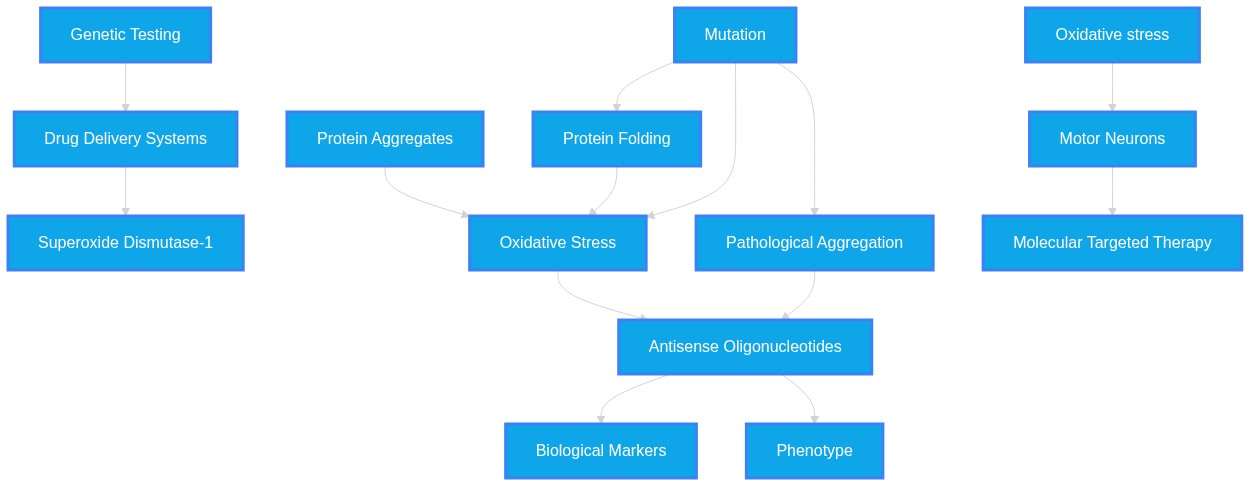
SOD1 Research July 2026
Plausibility Verdicts
SOD1 research has evolved to prioritize universal genetic screening and targeted silencing therapies, supported by high-resolution spatiotemporal mapping of disease progression.
SOD1 research has pivoted toward a refined understanding of biomarker kinetics, multi-genic susceptibility, and novel adjuncts like hydrogen therapy.
SOD1-ALS research has transitioned to a precision medicine model centered on gene-lowering therapies and autophagic restoration.
Dataset Summary
Novel & Overlooked Insights
- Biomarker Evolution:** Neuromuscular ultrasound now provides non-invasive diagnostic capabilities that match or precede traditional electroneurographic markers in SOD1G93A models.
- Mechanism Redefined:** Mutant SOD1 acts as both a Fenton-like catalyst for hydroxyl radical generation and a hydrogenation catalyst for hydrogen scavenging.
- Genetic Prevalence:** Population-specific data, such as that from Indian cohorts, demonstrate that SOD1 is the predominant cause of familial ALS, even when other repeat expansions (e.g., C9orf72) are present at low frequencies.
- Systemic Involvement:** ALS motor neuron disease is increasingly viewed as a multisystem disorder where innate immune crosstalk, specifically between cGAS-STING and NLRP3 inflammasomes, drives progression.
- Proactive Planning:** Nationwide adoption of genetic testing in Canada was significantly accelerated by proactive planning during the clinical trial phase of gene-targeted therapies.
- Microglial Dynamics:** SGK1 has been identified as a key regulator of microglial phagocytosis; its inhibition attenuates motor deficits, suggesting it as a potential therapeutic target.
- Future Demand:** Projections indicate a significant increase in ALS clinic visits among asymptomatic gene carriers, requiring substantial expansion of clinical infrastructure by 2035.
- The application of magnesium-silicide based hydrogen gas release serves as an innovative strategy to intercept the crosstalk between oxidative stress and neuroinflammation.
- The use of Platelet Factor 4 (PF4) demonstrates a selective neuroprotective benefit in SOD1-driven ALS, bypassing PINK1-dependent mechanisms to restore proteostasis.
- The phenomenon of macrophage inclusions ("tofersenophages") in CSF has been identified as a persistent, albeit clinically ambiguous, finding during ASO therapy, which surprisingly correlates with favorable clinical outcomes.
- Neuromuscular ultrasound serves as a high-sensitivity, non-invasive biomarker that detects disease pathology at stages prior to electroneurographic abnormalities.
- Genetic testing for ALS has achieved near-universal integration in clinical practice by 2025, with sponsored, cost-free testing panels significantly increasing diagnostic yields in sporadic cases.
- The identification of the JAK2 gene as a novel genome-wide significant signal in the Indian cohort underscores the importance of population-specific genetic surveying.
- The integration of phase-resolved geometric deep learning (SKALE 2.0) now allows for the constraint-aware design of aggregation suppressors that differentiate between nucleation and elongation phases.
- The existence of oligogenic models (e.g., ATXN2/NEK1) highlights the complexity of ALS, where pathogenicity may be governed by the synergy of multiple low-penetrance variants rather than monogenic drivers.
- Copper Paradox:** High intracellular copper can inhibit SOD1 by disrupting its homodimerization, mediated by COMMD1-dependent mechanisms.
- Catalytic Hydrogen Therapy:** Mutant SOD1 acts as both a Fenton-like agent producing hydroxyl radicals and a catalyst for hydrogen-based free radical scavenging.
- Microglial LAG-3:** This immune checkpoint protein exerts stage-dependent regulation on microglial modules, dissociating inflammatory and phagocytic functions in ALS progression.
- Prion-like Propagation:** Conversion of SOD1 into a misfolded isoform is a targetable biophysical process distinct from aggregation.
- Statin Effects:** While statins can modulate antioxidant genes, they may also inadvertently accelerate prion-like conversion of SOD1 in some experimental contexts.
- Computational Pathology:** Dynamic convolution networks (ODConv) can now distinguish SOD1-associated skeletal muscle pathology from other metabolic disorders using histopathological imagery.
- Pathology-Selective Efficacy:** Therapeutic interventions like PF4 demonstrate robust rescue in SOD1-driven models but remain ineffective in TDP-43 or C9orf72 models.
- Systemic Autophagy:** The discovery of a peripheral platelet-autophagy-neuron axis allows systemic factors to directly influence central proteostatic machinery.
- Temporal Precision:** The identification of "disease-associated motor neurons" (DMs) suggests that motor neuron vulnerability is a staged molecular trajectory, not an abrupt event.
- Hydrogen Therapy:** Mutant SOD1 acts as both a catalyst for hydroxyl radical generation and a potential hydrogenation catalyst, allowing for novel hydrogen-based scavenging therapies.
- Diagnostic Evolution:** The shift from familial-only testing to universal screening for sporadic ALS reflects a clinical standard redefined by the availability of disease-modifying therapies.
- Phenotypic Dissociation:** There is growing clinical recognition of biomarker-clinical dissociation, where functional decline may not always mirror molecular marker trends.
- Targeting the Microenvironment:** Modulating the TREM2-mediated inflammatory state of microglia represents a viable pathway for slowing disease progression.
- Compensatory Homeostasis:** SOD1-G93A spinal motoneurons display "overactive" homeostatic control, suggesting that dysfunction involves failed feedback regulation rather than simple excitability shifts.
- Macrophagic Inclusions:** Clinical monitoring of ASO therapy reveals frequent, persistent inclusions in cerebrospinal fluid, though their functional impact on therapeutic success remains debated.
- Imaging Markers:** Neuromuscular ultrasound can detect structural changes in nerves and muscles at the same time as, or earlier than, conventional electrophysiological tests in SOD1 models.
- Peripheral Autophagy:** Platelet Factor 4 (PF4) serves as a circulating neuroprotective regulator that restores proteostasis specifically in SOD1-driven ALS models.
- Cellular Quality Control:** SGK1 has been identified as a target for modulating microglial phagocytosis, with its inhibition offering survival benefits in SOD1-G93A models.
- Cross-Pathology:** NOP56 downregulation is an early feature of SOD1-G93A models, suggesting a broader involvement in motor neuron protein homeostasis.
Extracted Discoveries
- Assess the efficacy of combined SGK1 inhibition and tofersen treatment in SOD1G93A models to test for synergistic reduction of microglial inflammation.
- Longitudinal neuromuscular ultrasound monitoring in asymptomatic SOD1-mutation carriers to establish predictive thresholds for clinical phenoconversion.
- Test the combination of Mg2Si nanosheet hydrogen therapy with tofersen ASO therapy to observe for synergistic neuroprotection.
- Perform proteomics on CSF of long-term tofersen-treated patients to confirm the functional nature of macrophage inclusions.
- Investigate the effects of long-term antioxidant therapy on copper-COMMD1-SOD1 stoichiometry in patient-derived motor neurons.
- Perform comparative structural analysis of SOD1 aggregates formed in the presence and absence of statin-induced CoQ deficiency to evaluate the acceleration of prion-like conversion.
- Assess the therapeutic synergy of combined hydrogen therapy (Mg2Si) and antisense oligonucleotide treatment in SOD1-G93A models.
- Utilize spatial transcriptomics to compare the DM signature in alpha motor neurons across patients treated with ASOs vs. untreated controls.
- Longitudinal correlation of serum neurofilament light chain levels with neuromuscular ultrasound changes in pre-symptomatic SOD1-mutation carriers.
- Evaluation of the systemic effects of RAG-17 and tofersen on peripheral immune cell phenotypes in human cohorts.
- Multi-center longitudinal observational study of asymptomatic SOD1-mutation carriers to evaluate the clinical utility of annual neurofilament light chain monitoring.
- Comparative analysis of the efficacy of different AAV-based versus ASO-based SOD1-silencing platforms in human clinical trials.
- A prospective multi-analyte biomarker trial correlating GFAP/UCHL-1 trajectories with clinical function in a large SOD1-ALS cohort.
- Investigation of JAK2 inhibitors in patients with SOD1-ALS to mitigate potential inflammatory drivers identified in recent genomic surveys.
- Multi-center longitudinal study assessing whether early LAG-3 modulation in asymptomatic SOD1 mutation carriers prevents or delays clinical onset.
- Genetic screening programs for SOD1 variants to correlate penetration rates with specific environmental markers in geographically diverse populations.
- Longitudinal study of biomarker responses in patients undergoing ASO treatment for SOD1-ALS, incorporating high-resolution neuromuscular ultrasound.
- Comparative proteomic study between SOD1-ALS and TDP-43 models to identify if the DM state signature is fully conserved across non-SOD1 subtypes.
- Retrospective multi-omics analysis of CSF macrophage inclusions in tofersen-treated patients to correlate inclusion burden with functional clinical rating scales.
- Prospective study examining the impact of NOP56 expression modulation on disease progression rates in hSOD1G93A mouse models.
- Discovered Hypothesis (A to C): Modulation of the SGK1-Nrf2 axis could prevent the early-stage mitochondrial dysfunction that precedes overt motor neuron death in ALS.
Literature A (Origin): SGK1-mediated regulation of microglial phagocytosis and lipid accumulation in SOD1G93A models (Source: 42387584).
Literature C (Target): Nrf2-mediated antioxidant protection of hippocampal neurogenesis against glucolipotoxic stress (Source: 42199117).
The Intersecting Bridge B: The Nrf2 pathway (Nfe2l2), a master regulator of redox homeostasis that is suppressed in disease states and activated by therapeutic interventions across both domains.
Biological Rationale: Microglial phagocytic dysfunction is linked to lipid metabolic failure, which mirrors the metabolic stress observed in hippocampal neurogenesis. Enhancing Nrf2 signaling could potentially resolve both the microglial clearance bottleneck and the neuronal redox imbalance through shared transcriptional programs. - Inhibitors of JAK2 signaling may attenuate the neuroinflammatory response and disease progression in SOD1-ALS patients who show elevated IFN scores.
- JAK2 is a novel genome-wide significant signal in ALS pathogenesis (ID: 42384233).
- 56.5% of genetic ALS patients, particularly non-SOD1, exhibit significant interferon (IFN) activation (ID: 42296226).
- JAK-STAT inflammatory pathway activation.
- The IFN signaling pathway is frequently dependent on JAK-STAT activation; since JAK2 is implicated as a driver in ALS, its inhibition could effectively suppress the elevated IFN score and neuroinflammatory milieu common to ALS subtypes.
- Sirtuin-1 (SIRT1) activation can mitigate the prion-like propagation of misfolded SOD1 by maintaining mitochondrial and proteostatic stability.
- SIRT1 is a regulator of oxidative stress and cellular senescence, and SRT1720 (SIRT1 activator) attenuates plastic-induced retinal injury (ID: 42155840).
- Prion-like propagation of SOD1 misfolding as a mechanism for ALS (ID: 41870290).
- Mitochondrial ROS production and proteostatic failure.
- Since SOD1 misfolding propagates in a redox-sensitive, proteostatic-dependent manner, and SIRT1 activation restores mitochondrial function and redox homeostasis (SOD1/SOD2 antioxidant levels), upregulating SIRT1 may increase the threshold for SOD1 nucleation, thereby inhibiting prion-like spread.
- Enhancement of autophagic flux via platelet-derived factors (PF4) could mitigate the 'disease-associated motor neuron' (DM) state transition in SOD1-ALS patients.
- Identification of PF4 as a circulating autophagy regulator rescuing SOD1 aggregates (ID: 42489267).
- Molecular identification of the 'disease-associated motor neuron' state in SOD1-G93A mice (ID: 42335888).
- TBK1-OPTN signaling axis and proteostatic restoration.
- The DM state reflects a catastrophic collapse of proteostatic integrity in motor neurons; PF4-mediated reactivation of the TBK1-OPTN autophagy axis offers a direct mechanism to resolve the pathological protein burdens characterizing the DM signature.
- Discovered Hypothesis (A to C): Modulation of NOP56 levels in the spinal cord may mitigate neurotoxic aggregation in SOD1-related motor neuron disease by restoring protein clearance pathways. - Literature A (Origin): NOP56 is identified as being essential for central nervous system maintenance and shows early downregulation in SOD1G93A transgenic mice (ID 42437952). - Literature C (Target): SOD1-driven ALS pathogenesis characterized by misfolded protein inclusions and motor neuron loss (ID 42437952, 42406382). - The Intersecting Bridge B: Autophagic flux and protein quality control pathways. - Biological Rationale: NOP56's early decline in SOD1 models suggests that its loss may impair the cell's ability to process protein aggregates, thereby serving as a therapeutic target to restore the protein clearance machinery required to prevent neurodegeneration.
- There is a slight divergence in the clinical utility of peripheral indices; while some studies correlate low serum PF4 levels with ALS, others emphasize the need for CSF/serum neurofilament light chain monitoring.
- There is a slight dissonance regarding the role of neurofilament light chain (NfL) as a definitive marker; while NfL is the clearest pharmacodynamic signal in ASO therapy (ID: 42196191), it fails to capture the full scope of biological response, necessitates multi-analyte profiling, and does not serve as a therapeutic response marker in non-SOD1 ALS (ID: 42484074).
- Conflicting roles of statins: while statins enhance SOD1 activity and antioxidant response in atherosclerosis models (42353187, 42353064), they are suggested to accelerate the prion-like conversion of SOD1 in other experimental contexts (41870290).
- There is a noted clinical-biomarker dissociation (ID: 42399593) compared to the generally robust correlation reported in other studies (ID: 42406382).
- There is a notable clinical-biomarker dissociation described in non-SOD1 ALS patients where SOD1-ASO treatment was followed by rising serum NfL and functional decline, contradicting the expected therapeutic profile observed in SOD1-mutation carriers.
- The use of Mg2Si nanosheets for sustained hydrogen release (Source: 42398690) could be repurposed for local hydrogen delivery in other oxidative-stress-associated neurodegenerative disorders beyond SOD1-ALS.
- The repurposing of the small molecule Silymarin (historically for liver health/antioxidant) as an anti-amyloidogenic agent specifically inhibiting P66R-hSOD1 aggregation (ID: 42250707).
- Nanodelivery of existing antioxidants (curcumin, kaempferol, edaravone) via RGD-liposomes to bypass the blood-brain barrier (42252558, 42171198).
- The use of dental pulp stem cell (DPSC) secretomes (ID: 42489248) and hydrogen-based gas delivery (ID: 42398690) are being repurposed from general ischemia and redox signaling studies for neurodegenerative disease application.
- The use of neuromuscular ultrasound, originally developed for human diagnostics, can be repurposed as a high-sensitivity, non-invasive longitudinal outcome marker in preclinical SOD1-ALS drug development models to bridge the translation gap.
PathMap is funded by sales of datasets and coversheets to researchers of any kind who wish to discover the most viable routes and paths to accelerate cures. We do not make theoretical molecules, we expose the truth in current PubMed literature. Commission a trace today.
PathMap Scores
How are these metrics evaluated?
Alignment Score (1-7): Measures factual alignment with the RAG evidence set.
[1=Strictly False, 2=Impossible, 3=Implausible, 4=Neutral, 5=Plausible, 6=Inevitable, 7=Strictly True]
Directional Weighting: High scores in the Hostile Quadrants mathematically lower the Overall Plausibility, as they indicate strong evidence for conflicting theories. Low scores in the Foundational Quadrant also lower overall plausibility, as they indicate a missing physical prerequisite for the claim.
Veridicality Audit Report
All Extracted Datapoints
Evaluated Perspectives & Quadrants
Verbatim Quote Audit Console
Mapped Reference Directory (APA)
Abstract Repository (Raw Full-Texts) Show Database
Investigator Profile