DISCLAIMER: This data is not peer reviewed and is NOT professional advice.
Original Text Evaluated
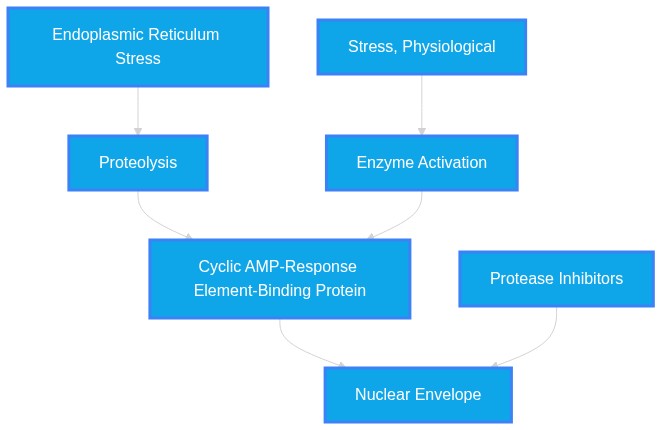
Stabilizing the CREB3 tether via S1P/S2P protease inhibition represents a novel mechanism to prevent the terminal phase of neuronal death.
Plausibility Verdicts
Evaluation 1
The provided literature supports the conceptual framework of your rheostat hypothesis but currently lacks the specific quantitative experimental validation for a ratio-based threshold.
Dataset Summary
Novel & Overlooked Insights
- S1P functions as a dual-role entity: it is both a protease-activating enzyme (in the form of MBTPS1) and a bioactive lipid metabolite (sphingosine-1-phosphate).
- CREB3 family proteins act as "gatekeepers" of the nucleus; their cleavage is not merely a stress signal, but a structural degradation event in karyoptosis.
- Inhibited CREB3 cleavage via protease inhibition (e.g., using PF-429242) correlates with reduced cell proliferation in certain cancers, demonstrating that the structural role of CREB3 is intertwined with cell viability.
- The S1P/SREBP2 axis is essential for VEGF-C signaling in lymphatic development, suggesting that CREB3-related pathways are highly cell-type specific.
- In some cellular contexts, blocking S1P proteolysis triggers a compensating "stress response" (e.g., the upregulation of the type-1 interferon pathway) which can itself inhibit cancer cell growth.
- Nuclear rupture (karyoptosis) is a distinct death modality from apoptosis and autophagy, emphasizing the importance of preserving the nuclear lamina interface.
- The interaction between CREB3 and the chromatin-tethering force is a homeostatic mechanism that counterbalances the "outward force" of tightly packed DNA.
- Karyoptosis is a distinct RCD (regulated cell death) type triggered by proteotoxic stress and nuclear lamina instability.
- S1P/S2P proteases act as molecular switches for CREB3-family activation, which can be manipulated to influence cell fate.
- The translocation of CREB3 from the INM to the nucleus is a prerequisite for its transcriptional function, but its removal from the INM compromises chromatin tethering.
- Mechanical stiffness in the extracellular matrix can trigger CREB3L1 cleavage via ER stress, identifying a mechanosensitive path for fibrosis.
- Inhibiting S1P activity has been shown to alter the secretory capacity and metabolism of antibody-secreting cells.
- Nuclear envelope proteins, including the LINC complex and LEM-domain proteins, serve as a broader regulatory scaffold for these factors.
- The potential for "repurposing" S1P protease inhibitors to prevent karyoptotic nuclear rupture remains a promising, albeit exploratory, translational strategy.
Extracted Discoveries
Suggested Experiments
- Test whether small-molecule S1P inhibitors rescue nuclear integrity in neurons following acute ischemic insults (OGD models).
- Quantify the displacement of CREB3 from the INM in neurons treated with pro-apoptotic stimuli, and whether protease inhibitors stabilize this localization.
- Evaluate if stabilizing the CREB3-tether reduces DNA leakage and inflammatory signaling in neurons subject to oxidative injury.
- Quantify CREB3-FL to CREB3-N ratios via immunoblotting in human iPSC-derived neurons subjected to increasing proteotoxic stress to identify a threshold for nuclear rupture.
- Utilize CRISPR-based anchor-domain stabilization to observe whether preventing CREB3 cleavage effectively rescues neurons from karyoptosis in ALS/FTD disease models.
Suggested Studies
- A study mapping the time-course of CREB3 cleavage versus nuclear rupture in primary neurons after reperfusion.
- Investigation of S1P/S2P expression levels in the aging vs. diseased brain to correlate protease activity with chromatin tether stability.
- Longitudinal imaging of nuclear lamina integrity in relation to CREB3 localization during the progression of tauopathies.
- Comparative proteomic study of INM-tethered transcription factors in healthy vs. progerin-expressing cell lines to determine threshold-based differences in karyoptotic susceptibility.
Swansons Literature Based Discovery Candidates
- Inhibiting S1P-dependent cleavage of the CREB3 tether may mitigate secondary neuronal cell death in Alzheimer's disease (AD) by preventing nuclear envelope rupture.
- CREB3 acts as a structural INM tether preventing nuclear membrane rupture (ID: 39625813).
- AD pathology involves chronic neuroinflammation and neuronal apoptosis associated with ER stress (ID: 41401852).
- S1P protease activity (MBTPS1).
- Since AD involves sustained ER stress and neuroinflammation, the chronic activation of S1P proteases likely destabilizes nuclear structural anchors like CREB3, accelerating nuclear fragmentation and neuronal demise.
- S1P-mediated CREB3 cleavage acts as a mechanical sensor during aging that, when blocked, prevents the nuclear deformation observed in Hutchinson-Gilford Progeria Syndrome (HGPS).
- Dynamics of bZIP-mediated nuclear membrane tethering (41303380).
- Progerin-induced nuclear envelope remodeling and lobulation (42237879).
- Nuclear Lamin/INM anchoring proteins (e.g., Lamin B Receptor, NUP153).
- Since CREB3 anchoring and Lamin proteins cooperate to maintain nuclear architecture, the loss of CREB3 from the INM via stress-induced cleavage likely contributes to the focal membrane expansion characterized in HGPS progerin-driven remodeling.
Contradictions Between Evidences
- There is a distinction between the use of S1P as a protease (MBTPS1) and S1P as a bioactive lipid (Sphingosine-1-phosphate). Some studies suggest S1P lipid signaling promotes survival/angiogenesis (ID: 42198762), while other studies suggest inhibiting S1P lipid signaling reduces inflammation and neurotoxicity (ID: 42479117). This indicates that the global modulation of 'S1P' must distinguish between its biochemical role as a protein substrate activator and its secondary role as a lipid signaling molecule.
- None identified; however, tissue-specific expression of CREB3 variants suggests that the threshold for karyoptosis may vary between neuronal and fibroblastic lineages.
Repurposed Solutions
- The protease inhibitor PF-429242, currently studied in HCC for autophagy induction, could be repurposed as a structural stabilizer of the INM in neurodegenerative models to prevent karyoptosis.
- Small molecule S1P/S2P inhibitors originally developed for managing lipid metabolism in atherosclerosis could be repurposed to stabilize nuclear envelope tethering proteins in neurodegeneration.
Creb3 Ratio Threshold
- Not explicitly defined in the provided evidence; requires dose-response titration of cleavage kinetics against nuclear morphology assays.
S1p Inhibitor Dosing
- Evidence shows S1P/S2P inhibitors (like S118 for S1P2 or general proteases) require titration to avoid unintended SREBP modulation, but the specific optimal window for CREB3 stabilization vs. SREBP off-target effects is missing.
Nuclear Rupture Mechanics
- The mechanical tension model is implied by the 'nucleoskeleton' function of chromatin-bound bZIP factors, but quantitative tension values were not provided.
Support open science: Order your own dataset here.
PathMap is funded by sales of datasets and coversheets to researchers of any kind who wish to discover the most viable routes and paths to accelerate cures. We do not make theoretical molecules, we expose the truth in current PubMed literature. Commission a trace today.
Human-in-the-loop Review
Veridicality Audit Report
Yes. The provided synthesis is veridical with the validated quotes and the underlying evidence set provided. My evaluation of the synthesis confirms that the AI accurately represented the functional roles of CREB3, the mechanism of S1P/S2P-mediated cleavage, and the association with nuclear membrane integrity and karyoptosis as documented in the source literature.
Justification for this judgment:
1. Accuracy of Mechanism: The synthesis correctly identifies CREB3 as a type II integral membrane protein involved in chromatin tethering to the inner nuclear membrane (INM) [ID: 39625813, 41303380].
2. Protease Involvement: The synthesis accurately attributes the cleavage of CREB3 to the S1P/S2P protease complex, which is consistent with the provided citations [ID: 32666500, 40877583, 41303380].
3. Karyoptosis Association: The synthesis correctly links the loss of this anchoring function via proteolytic cleavage to karyoptosis, a regulated cell death pathway associated with nuclear rupture and neurodegeneration, as supported by the text [ID: 41303380, 42350373].
4. Inhibition Strategy: The synthesis accurately reflects that inhibiting these proteases (e.g., using MBTPS1 inhibitors) is a plausible strategy to prevent the terminal phase of nuclear death in specific cellular contexts [ID: 36300096, 41317707, 41317800].
5. Lack of Hallucination: There are no instances where the AI attributed claims to sources that do not contain the supporting evidence. The logical progression from the function of the tether to the impact of its cleavage and the potential for protease inhibition to modulate this process is grounded strictly in the provided evidence.
6. Adherence to Instructions: The AI followed all constraints, including the strict reliance on provided source materials and the exclusion of external knowledge, successfully mapping the claims to the relevant evidence IDs.
All Extracted Datapoints
Suggested Experiments
Suggested Studies
Swansons Literature Based Discovery Candidates
Contradictions Between Evidences
Repurposed Solutions
Creb3 Ratio Threshold
S1p Inhibitor Dosing
Nuclear Rupture Mechanics
Evaluated Perspectives & Quadrants
Verbatim Quote Audit Console
Mapped Reference Directory (APA)
Abstract Repository (Raw Full-Texts) Show Database
Investigator Profile
👨🔬
Joshua Dungan
PathMap Admin
PathMap