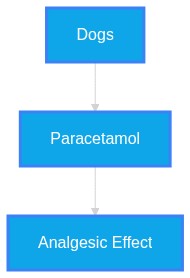
Paracetamol and Dogs
Plausibility Verdicts
Paracetamol is currently regarded as a safe and effective tool for acute pain management in dogs when dosed correctly, despite risks of toxicity with ingestion of human-grade products.
Dataset Summary
Novel & Overlooked Insights
- Paracetamol demonstrates cardioprotective properties by mitigating infarct size in regional myocardial ischemia (ID: 15256373).
- Earwax has been validated as a non-invasive biological matrix for toxicological confirmation of acetaminophen ingestion in dogs (ID: 42176063).
- Canine breed influences not only pain sensitivity but also the pharmacokinetics of analgesic agents (ID: 41082842).
- There is a statistically significant reduction in post-operative ocular hypertension incidence (POH20) with intravenous paracetamol (ID: 35512023).
- Intravenous administration of the prodrug propacetamol is less effective in dogs than in humans, suggesting direct IV paracetamol is a superior clinical option (ID: 35033846).
- In vivo disintegration times of solid oral dosage forms in dogs are significantly slower than those predicted by standardized European Pharmacopeia disintegration tests (ID: 32486088).
Extracted Discoveries
- Evaluate the impact of breed-specific hepatic metabolic variants on the steady-state plasma concentrations of paracetamol in multi-breed canine cohorts.
- Assess the efficacy of N-acetylcysteine administration timing on the resolution of early-stage methemoglobinemia in canine paracetamol overdose models.
- A long-term retrospective study analyzing hepatic and renal enzyme trends in canine patients receiving chronic low-dose paracetamol for osteoarthritis management.
- Comparative analysis of gastric disintegration rates for liquid vs. solid paracetamol formulations in fed versus fasted canine models using capsule endoscopy.
- Discovered Hypothesis (A to C): Myeloid Piezo1 ion channels are a potential therapeutic biomarker for mitigating acetaminophen-induced nephrotoxicity in addition to hepatotoxicity.
Literature A (Origin): Myeloid Piezo1 improves inflammation resolution and phagocytosis in acute liver injury (ID: 42520682).
Literature C (Target): Paracetamol intoxication and basal fatty tubular vacuolisation in kidneys (ID: 42541539).
The Intersecting Bridge B: Renal/Hepatic stress response signaling via intracellular Ca2+ flux.
Biological Rationale: Piezo1 regulates Ca2+ influx and cytoskeletal rearrangement in macrophages during cell recovery; since paracetamol toxicity involves both liver and kidney stress/vacuolization, Piezo1-mediated reparative macrophage phenotypes could theoretically minimize tubular epithelial vacuolization.
- There is a minor contradiction in the literature regarding the consistency of pain score reduction: ID 42006561 reports that two prospective studies directly contradict each other regarding the analgesic efficacy of IV paracetamol, whereas ID 32059002 and ID 31900324 support its efficacy and non-inferiority to NSAIDs respectively.
- The use of earwax as a non-invasive matrix for toxicological drug detection (ID: 42176063) provides a novel, low-stress diagnostic solution for owners suspecting accidental ingestion of human analgesics by companion animals.
PathMap is funded by sales of datasets and coversheets to researchers of any kind who wish to discover the most viable routes and paths to accelerate cures. We do not make theoretical molecules, we expose the truth in current PubMed literature. Commission a trace today.
PathMap Scores
How are these metrics evaluated?
Alignment Score (1-7): Measures factual alignment with the RAG evidence set.
[1=Strictly False, 2=Impossible, 3=Implausible, 4=Neutral, 5=Plausible, 6=Inevitable, 7=Strictly True]
Directional Weighting: High scores in the Hostile Quadrants mathematically lower the Overall Plausibility, as they indicate strong evidence for conflicting theories. Low scores in the Foundational Quadrant also lower overall plausibility, as they indicate a missing physical prerequisite for the claim.
Veridicality Audit Report
All Extracted Datapoints
Evaluated Perspectives & Quadrants
Verbatim Quote Audit Console
Mapped Reference Directory (APA)
Abstract Repository (Raw Full-Texts) Show Database
Investigator Profile