Why do seemingly perfectly healthy infants suddenly pass away in their sleep?
DISCLAIMER: This data is not peer-reviewed and is NOT professional medical advice. It is a programmatic literature audit generated by PathMap™ AI based on currently available scientific datasets.
Primary Synthesis & Clinical Bottom-Line
Sudden Unexpected Death in Infancy (SUDI) remains a complex, multifactorial clinical and forensic challenge. While many cases are labeled Sudden Infant Death Syndrome (SIDS) after extensive investigation, emerging evidence indicates that underlying, previously "hidden" pathological conditions—ranging from metabolic disorders and cardiac channelopathies to subtle neuropathological and immune-metabolic constraints—often contribute to these events. The integration of molecular autopsy and multidisciplinary diagnostic frameworks is essential to uncover these overlooked mechanisms.
Dataset Summary & Discoveries
- The human motor thalamus contains a focal region (VLa/VA nuclei) capable of suppressing automatic breathing without awareness, a potential node in the pathogenesis of central apnea disorders like SIDS.
- "Hidden" causes of death often include myocarditis and inherited arrhythmogenic syndromes, which are frequently missed without molecular autopsy.
- Maternal type 1 diabetes is linked to delayed maturation of the breastmilk microbiome, an external determinant affecting early-life immune development.
- Specific biomarkers, such as UCH-L1 in cord blood, are showing potential as early indicators of fetal cellular stress and neurodevelopmental risk.
- Recent longitudinal research suggests that gut dysbiosis in neonates can persist into adulthood, potentially contributing to neurodevelopmental vulnerability.
- The use of radiofrequency electrical conductivity in MRI imaging reveals a distinct biophysical dimension of perinatal brain development beyond water mobility.
- Post-mortem fundus photographs exhibit specific patterns, such as macular folds, which are associated with longer post-mortem intervals rather than necessarily indicating trauma.
- Noise pollution in the NICU is a major modifiable factor; alarms and staff activity create an acoustic environment often substantially above recommended guidelines.
- The "Metabolic Vulnerability Index" is a new, structured framework allowing for the assessment of five-domain physiologic constraints in infant deaths.
- Socioeconomic deprivation, as indexed by the Area Deprivation Index, is significantly associated with altered white matter myelination trajectories in children from infancy through childhood.
- Genome-wide association studies (GWAS) on sudden unexplained infant death cases using molecular autopsy findings to identify novel susceptibility loci.
- Dual-EEG monitoring of infants in home sleep environments to characterize interbrain synchrony changes during transient airway obstruction episodes.
- Longitudinal fecal proteomics profiling of at-risk infants to correlate milk-specific protein intake with long-term neurocognitive development.
- A prospective multi-center registry evaluating the impact of the Metabolic Vulnerability Index (MVI) on diagnostic outcomes in pediatric forensic autopsies.
- A cross-cultural examination of parental perceptions and sleep safety practices in low- and middle-income countries using qualitative grounded theory.
- A study assessing the association between prenatal exposure to non-optimal maternal immune balance and subsequent neonatal autonomic nervous system regulation.
- Prenatal iron deficiency (ID) exacerbates the risk of sudden infant death syndrome (SIDS) by modulating the expression of the hypothalamic orexin system, impairing homeostatic arousal mechanisms during hypoxia.
- Prenatal iron deficiency (ID) impairs auditory maturation and cochlear synaptic metabolism (PubMed ID: 42404160).
- Elevated orexin activity in SIDS infants indicates homeostatic upregulation due to arousal deficit (PubMed ID: 42332249).
- Hypothalamic energy metabolism (pyruvate/mitochondrial function).
- The hypothalamus requires significant energy to manage arousal. Prenatal PubMed ID: downregulates pyruvate levels and impairs mitochondrial function in supporting cells. A shared metabolic deficit in the cochlea and hypothalamus would link iron deficiency to the failure of the orexin-dependent arousal system.
- There is a notable discrepancy between studies promoting skin-to-skin contact for neonatal stability (PubMed ID: 42404096) and findings suggesting that early, unsupervised skin-to-skin care is associated with higher risks of Sudden Unexpected Postnatal Collapse (SUPC) (PubMed ID: 42444072).
- The 'Metabolic Vulnerability Index' (MVI), originally developed for post-mortem mechanistic analysis of infant deaths, could be repurposed as a clinical prognostic tool for neonates with known metabolic risks to monitor their developmental trajectory in vivo.
Accelerate Your Research with PathMap™
PathMap is a local-first, veridical bioinformatics engine that guarantees source-aligned insights without AI hallucinations. We empower scientists, independent researchers, and enterprises to explore the truth hidden in the literature.
Discover our Tools at PathMap.org •
Evaluated Perspectives & Quadrants
Perspective 1: Run1 Eval1 Synthesis
Evidence Set: Unknown Evidence |
Alignment Score: 5/7 |
Consilience Score: 6/7
Even though this fact check looked at unique up-to-date abstracts, new evidence may refute this answer in the future. Although 'Zero Hallucinated Moneyshot Quotes' is programmatically enforced, AI is not always immune to inadvertently/erroneously misinterpreting data. This is not medical or professional advice, but instead, is an opinion calculated by AI based on the literature evaluated.
"Why do seemingly perfectly healthy infants suddenly pass away in their sleep?"
Sudden Unexpected Death in Infancy (SUDI) remains a complex, multifactorial clinical and forensic challenge. While many cases are labeled Sudden Infant Death Syndrome (SIDS) after extensive investigation, emerging evidence indicates that underlying, previously "hidden" pathological conditions—ranging from metabolic disorders and cardiac channelopathies to subtle neuropathological and immune-metabolic constraints—often contribute to these events. The integration of molecular autopsy and multidisciplinary diagnostic frameworks is essential to uncover these overlooked mechanisms.
The phenomenon of Sudden Unexpected Death in Infancy (SUDI) is defined by its unexpected nature and its complex diagnostic path, often involving "Sudden Infant Death Syndrome (SIDS)" as a diagnosis of exclusion. "Sudden Unexpected Death in Infancy (SUDI) is the term given to all unexpected infant deaths, comprising accidental, non-accidental and natural deaths including Sudden Infant Death Syndrome (SIDS)." Mechanistically, SIDS occurs during a vulnerable developmental window, where "Sudden infant death syndrome (SIDS) occurs predominantly during sleep between 2 and 6 months of age, suggesting impaired maturation of arousal pathways." Research into the biological basis of these deaths reveals that "Increasing evidence suggests that a proportion of these deaths may be due to "hidden" causes not detectable through routine post-mortem examination." These may involve genetic, infectious, or metabolic substrates. For instance, "Inborn errors of metabolism, especially fatty acPubMed ID: oxidation defects, may lead to sudden death in the absence of specific autopsy findings, highlighting the role of biochemical analyses." Furthermore, environmental and behavioral factors, including sleep position, co-sleeping, and soft bedding, can contribute to asphyxia. "Approximately half of all SUPC cases involved possible or definite airway obstruction, which - compared with other aetiologies - was more often related to preventable factors like reduced maternal vigilance and covering of the infant's nose and mouth." Neuropathological assessment is critical as "Neuropathological abnormalities involving brainstem regulatory systems may contribute to impaired autonomic control." Given these complexities, a multidisciplinary approach incorporating molecular diagnostics and forensic neuropathology is necessary to transition from "unexplained" to identified, preventable causes.
* The human motor thalamus contains a focal region (VLa/VA nuclei) capable of suppressing automatic breathing without awareness, a potential node in the pathogenesis of central apnea disorders like SIDS.
* "Hidden" causes of death often include myocarditis and inherited arrhythmogenic syndromes, which are frequently missed without molecular autopsy.
* Maternal type 1 diabetes is linked to delayed maturation of the breastmilk microbiome, an external determinant affecting early-life immune development.
* Specific biomarkers, such as UCH-L1 in cord blood, are showing potential as early indicators of fetal cellular stress and neurodevelopmental risk.
* Recent longitudinal research suggests that gut dysbiosis in neonates can persist into adulthood, potentially contributing to neurodevelopmental vulnerability.
* The use of radiofrequency electrical conductivity in MRI imaging reveals a distinct biophysical dimension of perinatal brain development beyond water mobility.
* Post-mortem fundus photographs exhibit specific patterns, such as macular folds, which are associated with longer post-mortem intervals rather than necessarily indicating trauma.
* Noise pollution in the NICU is a major modifiable factor; alarms and staff activity create an acoustic environment often substantially above recommended guidelines.
* The "Metabolic Vulnerability Index" is a new, structured framework allowing for the assessment of five-domain physiologic constraints in infant deaths.
* Socioeconomic deprivation, as indexed by the Area Deprivation Index, is significantly associated with altered white matter myelination trajectories in children from infancy through childhood.
1. PubMed ID:
41582236- Application: Definitions of infant mortality - "Sudden Unexpected Death in Infancy (SUDI) is the term given to all unexpected infant deaths, comprising accidental, non-accidental and natural deaths including Sudden Infant Death Syndrome (SIDS)."
2. PubMed ID:
42332249- Application: Epidemiological timing - "Sudden infant death syndrome (SIDS) occurs predominantly during sleep between 2 and 6 months of age, suggesting impaired maturation of arousal pathways."
3. PubMed ID:
42279599- Application: Diagnostic limitations - "Increasing evidence suggests that a proportion of these deaths may be due to "hidden" causes not detectable through routine post-mortem examination."
4. PubMed ID:
42279599- Application: Metabolic causes - "Inborn errors of metabolism, especially fatty acPubMed ID: oxidation defects, may lead to sudden death in the absence of specific autopsy findings, highlighting the role of biochemical analyses."
5. PubMed ID:
42279599- Application: Neuropathology - "Neuropathological abnormalities involving brainstem regulatory systems may contribute to impaired autonomic control."
6. PubMed ID:
42196581- Application: Pathogenesis knowledge - "The pathogenetic mechanisms underlying the fulminant course of infection in infants leading to fatal outcomes remain insufficiently understood."
7. PubMed ID:
42003135- Application: Breathing control - "This study identifies a focal site in the human motor thalamus where electrical stimulation suppresses involuntary, automatic breathing and induces apnea without awareness."
8. PubMed ID:
41508915- Application: Hippocampal development - "An altered reelin expression is hypothesized as a contributor to altered DG morphology."
9. PubMed ID:
42444072- Application: Sleep and skin-to-skin - "SUPC was associated with early unsupervised skin-to-skin care and bed sharing."
10. PubMed ID:
42196581- Application: COVID-19 differences - "The obtained data demonstrate substantial differences between the observed changes and the classic presentation of COVID-19 in older children."
11. PubMed ID:
42061094- Application: Post-mortem imaging - "The normal post-mortem fundus in children under two years old shows a "central retinal artery occlusion" pattern, followed by the appearance of macular or peripheral white radial retinal folds"
12. PubMed ID:
42349911- Application: Literature scope - "The grey literature component aimed to expand understanding beyond built food environments and food retail and to promote epistemic justice by including traditionally excluded voices, knowledge and experiences."
13. PubMed ID:
41938522- Application: Metabolic Index - "The Metabolic Vulnerability Index (MVI) operationalizes the TCF as a five-domain ordinal scoring system (0-15)."
14. PubMed ID:
42373621- Application: Pancreatic maturation - "Human endocrine cell differentiation and islet morphogenesis play critical roles in determining islet cell mass and function, but the events and timeline of these processes are incompletely defined."
15. PubMed ID:
42368283- Application: NICU sound - "NICU noise is a modifiable risk factor with significant developmental implications."
16. PubMed ID:
42047799- Application: Molecular autopsy - "Recent development and application of molecular autopsy have provided crucial support for addressing this problem."
17. PubMed ID:
42446880- Application: Socioeconomic factors - "Children born in areas with the most deprivation had a higher risk of underattainment compared with those in areas with the least deprivation"
18. PubMed ID:
41911090- Application: Airway obstruction - "Approximately half of all SUPC cases involved possible or definite airway obstruction, which - compared with other aetiologies - was more often related to preventable factors like reduced maternal vigilance and covering of the infant's nose and mouth."
19. PubMed ID:
42279599- Application: Infectious diseases - "Infectious diseases, often presenting with minimal or nonspecific findings, represent another important category, particularly viral and bacterial infections."
20. PubMed ID:
42124028- Application: Dietary beliefs - "Participants believed that (1) unhealthy diets of processed and chemically treated foods contribute to poor mental health and that (2) food insecurity is a key threat to mental health, but they also believed that (3) consumption of locally produced foods and (4) residing in agricultural communities can be beneficial to mental health."
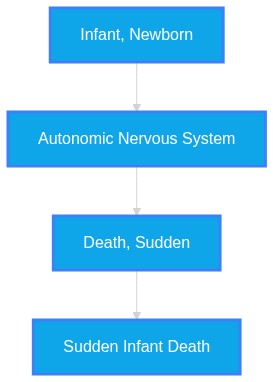
Systemic Logic Chain
-
Infant, Newborn
-->
Autonomic Nervous System
(Align: 6)
Rationale: SIDS is associated with specific developmental windows where arousal pathways are maturation-sensitive.
-
Autonomic Nervous System
-->
Death, Sudden
(Align: 5)
Rationale: Many 'unexplained' deaths are attributable to non-detected conditions like fatty acid oxidation defects or channelopathies.
-
Death, Sudden
-->
Sudden Infant Death
(Align: 6)
Rationale: Cumulative risks from environmental, physiological, and occult genetic factors drive SUID outcomes.
Accelerate Your Research with PathMap™
PathMap is a local-first, veridical bioinformatics engine that guarantees source-aligned insights without AI hallucinations. We empower scientists, independent researchers, and enterprises to explore the truth hidden in the literature.
Discover our Tools at PathMap.org •
Verbatim Quote Audit Log
"Sudden infant death syndrome (SIDS) occurs predominantly during sleep between 2 and 6 months of age, suggesting impaired maturation of arousal pathways."
"The pathogenetic mechanisms underlying the fulminant course of infection in infants leading to fatal outcomes remain insufficiently understood."
"Increasing evidence suggests that a proportion of these deaths may be due to "hidden" causes not detectable through routine post-mortem examination."
"Neuropathological abnormalities involving brainstem regulatory systems may contribute to impaired autonomic control."
"Sudden Unexpected Death in Infancy (SUDI) is the term given to all unexpected infant deaths, comprising accidental, non-accidental and natural deaths including Sudden Infant Death Syndrome (SIDS)."
"Infectious diseases, often presenting with minimal or nonspecific findings, represent another important category, particularly viral and bacterial infections."
"Inborn errors of metabolism, especially fatty acPubMed ID: oxidation defects, may lead to sudden death in the absence of specific autopsy findings, highlighting the role of biochemical analyses."
"This study identifies a focal site in the human motor thalamus where electrical stimulation suppresses involuntary, automatic breathing and induces apnea without awareness."
"An altered reelin expression is hypothesized as a contributor to altered DG morphology."
"SUPC was associated with early unsupervised skin-to-skin care and bed sharing."
"The obtained data demonstrate substantial differences between the observed changes and the classic presentation of COVID-19 in older children."
"The normal post-mortem fundus in children under two years old shows a "central retinal artery occlusion" pattern, followed by the appearance of macular or peripheral white radial retinal folds"
"The grey literature component aimed to expand understanding beyond built food environments and food retail and to promote epistemic justice by including traditionally excluded voices, knowledge and experiences."
"The Metabolic Vulnerability Index (MVI) operationalizes the TCF as a five-domain ordinal scoring system (0-15)."
"Sudden infant death syndrome (SIDS) occurs predominantly during sleep between 2 and 6 months of age, suggesting impaired maturation of arousal pathways."
"Increasing evidence suggests that a proportion of these deaths may be due to "hidden" causes not detectable through routine post-mortem examination."
"Neuropathological abnormalities involving brainstem regulatory systems may contribute to impaired autonomic control."
"The pathogenetic mechanisms underlying the fulminant course of infection in infants leading to fatal outcomes remain insufficiently understood."
"Sudden Unexpected Death in Infancy (SUDI) is the term given to all unexpected infant deaths, comprising accidental, non-accidental and natural deaths including Sudden Infant Death Syndrome (SIDS)."
"Infectious diseases, often presenting with minimal or nonspecific findings, represent another important category, particularly viral and bacterial infections."
"Inborn errors of metabolism, especially fatty acPubMed ID: oxidation defects, may lead to sudden death in the absence of specific autopsy findings, highlighting the role of biochemical analyses."
"This study identifies a focal site in the human motor thalamus where electrical stimulation suppresses involuntary, automatic breathing and induces apnea without awareness."
"An altered reelin expression is hypothesized as a contributor to altered DG morphology."
"SUPC was associated with early unsupervised skin-to-skin care and bed sharing."
"The obtained data demonstrate substantial differences between the observed changes and the classic presentation of COVID-19 in older children."
"The normal post-mortem fundus in children under two years old shows a "central retinal artery occlusion" pattern, followed by the appearance of macular or peripheral white radial retinal folds"
"The grey literature component aimed to expand understanding beyond built food environments and food retail and to promote epistemic justice by including traditionally excluded voices, knowledge and experiences."
"The Metabolic Vulnerability Index (MVI) operationalizes the TCF as a five-domain ordinal scoring system (0-15)."
"Human endocrine cell differentiation and islet morphogenesis play critical roles in determining islet cell mass and function, but the events and timeline of these processes are incompletely defined."
"NICU noise is a modifiable risk factor with significant developmental implications."
"Recent development and application of molecular autopsy have provided crucial support for addressing this problem."
"Children born in areas with the most deprivation had a higher risk of underattainment compared with those in areas with the least deprivation"
"Approximately half of all SUPC cases involved possible or definite airway obstruction, which - compared with other aetiologies - was more often related to preventable factors like reduced maternal vigilance and covering of the infant's nose and mouth."
"Sudden infant death syndrome (SIDS) occurs predominantly during sleep between 2 and 6 months of age, suggesting impaired maturation of arousal pathways."
"Increasing evidence suggests that a proportion of these deaths may be due to "hidden" causes not detectable through routine post-mortem examination."
"Neuropathological abnormalities involving brainstem regulatory systems may contribute to impaired autonomic control."
"The pathogenetic mechanisms underlying the fulminant course of infection in infants leading to fatal outcomes remain insufficiently understood."
"Sudden Unexpected Death in Infancy (SUDI) is the term given to all unexpected infant deaths, comprising accidental, non-accidental and natural deaths including Sudden Infant Death Syndrome (SIDS)."
"Infectious diseases, often presenting with minimal or nonspecific findings, represent another important category, particularly viral and bacterial infections."
"Inborn errors of metabolism, especially fatty acPubMed ID: oxidation defects, may lead to sudden death in the absence of specific autopsy findings, highlighting the role of biochemical analyses."
"This study identifies a focal site in the human motor thalamus where electrical stimulation suppresses involuntary, automatic breathing and induces apnea without awareness."
"An altered reelin expression is hypothesized as a contributor to altered DG morphology."
"SUPC was associated with early unsupervised skin-to-skin care and bed sharing."
"The obtained data demonstrate substantial differences between the observed changes and the classic presentation of COVID-19 in older children."
"The normal post-mortem fundus in children under two years old shows a "central retinal artery occlusion" pattern, followed by the appearance of macular or peripheral white radial retinal folds"
"The grey literature component aimed to expand understanding beyond built food environments and food retail and to promote epistemic justice by including traditionally excluded voices, knowledge and experiences."
"The Metabolic Vulnerability Index (MVI) operationalizes the TCF as a five-domain ordinal scoring system (0-15)."
"Human endocrine cell differentiation and islet morphogenesis play critical roles in determining islet cell mass and function, but the events and timeline of these processes are incompletely defined."
"NICU noise is a modifiable risk factor with significant developmental implications."
"Recent development and application of molecular autopsy have provided crucial support for addressing this problem."
"Children born in areas with the most deprivation had a higher risk of underattainment compared with those in areas with the least deprivation"
"Approximately half of all SUPC cases involved possible or definite airway obstruction, which - compared with other aetiologies - was more often related to preventable factors like reduced maternal vigilance and covering of the infant's nose and mouth."
"Participants believed that (1) unhealthy diets of processed and chemically treated foods contribute to poor mental health and that (2) food insecurity is a key threat to mental health, but they also believed that (3) consumption of locally produced foods and (4) residing in agricultural communities can be beneficial to mental health."
Self-Correction & Hallucination Pruning Log
The following quotes were generated by the AI but rejected by the strict verification system for failing to match the source material perfectly.
MISMATCH PRUNED (Attempt 1)
"Sudden unexpected death in infancy is a multifactorial entity in which many unexplained deaths may be attributable to identifiable but overlooked conditions."
Validator Flag: Strict Misquote Detected! The exact character sequence "Sudden unexpected death in infancy ..." was NOT found in the provided text. Do NOT truncate, paraphrase, or edit quotes.
MISMATCH PRUNED (Attempt 1)
"Forensic investigation of sudden unexplained death has long been a challenging issue due to its insidiousness and complex pathological basis."
Validator Flag: Strict Misquote Detected! The exact character sequence "Forensic investigation of sudden un..." was NOT found in the provided text. Do NOT truncate, paraphrase, or edit quotes.
MISMATCH PRUNED (Attempt 1)
"SIDS is associated with increased orexin neuronal activity during the peak risk period, possibly reflecting a homeostatic upregulation in response to arousal deficit or repeated stress or hypoxia."
Validator Flag: Strict Misquote Detected! The exact character sequence "SIDS is associated with increased o..." was NOT found in the provided text. Do NOT truncate, paraphrase, or edit quotes.
MISMATCH PRUNED (Attempt 1)
"Cardiac disorders—such as myocarditis, cardiomyopathies, and inherited arrhythmogenic syndromes—are frequently implicated and may require molecular autopsy for detection."
Validator Flag: Strict Misquote Detected! The exact character sequence "Cardiac disorders—such as myocardit..." was NOT found in the provided text. Do NOT truncate, paraphrase, or edit quotes.
MISMATCH PRUNED (Attempt 1)
"Environmental, toxicological, and medico-legal factors—including unsafe sleep conditions, toxic exposures, and inflicted injury—must also be considered."
Validator Flag: Strict Misquote Detected! The exact character sequence "Environmental, toxicological, and m..." was NOT found in the provided text. Do NOT truncate, paraphrase, or edit quotes.
MISMATCH PRUNED (Attempt 1)
"Maternal anxiety partially mediates the relationship between SIDS awareness and parenting self-efficacy."
Validator Flag: Strict Misquote Detected! The exact character sequence "Maternal anxiety partially mediates..." was NOT found in the provided text. Do NOT truncate, paraphrase, or edit quotes.
MISMATCH PRUNED (Attempt 2)
"Participants believe that (1) unhealthy diets of processed and chemically treated foods contribute to poor mental health and that (2) food insecurity is a key threat to mental health"
Validator Flag: Strict Misquote Detected! The exact character sequence "Participants believe that (1) unhea..." was NOT found in the provided text. Do NOT truncate, paraphrase, or edit quotes.
Mapped Reference Directory (APA)
-
[1]
PubMed ID: 42332249 - Zhao Y, Cui GF, Plancoulaine S, Comajuan M, Bersault M et al. (2026). A quest for a histaminergic or orexinergic biomarker for sudden infant death syndrome.. Pediatric research. ID: 42332249.
-
[2]
PubMed ID: 42279599 - Camatti J, Santunione AL, Cecchi R, Radheshi E, Carretto E et al. (2026). Hidden and Under-Recognized Causes of Sudden Unexpected Death in Infancy (SUDI): A Comprehensive Review of Autopsy Findings.. Diagnostics (Basel, Switzerland). ID: 42279599.
-
[3]
PubMed ID: 42196581 - Galichina VA, Nasyrov RA, Davydova ZV, Gabaraev SE, Yagmurov OD (2026). A Case of Sudden Unexpected Infant Death with Presumptive SARS-CoV-2 Infection.. International journal of molecular sciences. ID: 42196581.
-
[4]
PubMed ID: 41582236 - Thomson N, Fronczek J, Lynch M, Schumann JL (2026). Characteristics of infant deaths with positive hair toxicology.. Forensic science, medicine, and pathology. ID: 41582236.
-
[5]
PubMed ID: 42003135 - Kumar S, Rhone AE, Kovach CK, Mowla MR, Chan AC et al. (2026). A motor thalamic site in humans that suppresses involuntary breathing without awareness.. Journal of neurophysiology. ID: 42003135.
-
[6]
PubMed ID: 41508915 - Despotovski V, Vivekanandarajah A, Waters KA, Machaalani R (2026). Reelin in the Infant Hippocampus, and Relationship to Sudden Infant Death Syndrome (SIDS) and Dentate Gyrus Morphology.. Hippocampus. ID: 41508915.
-
[7]
PubMed ID: 42444072 - Forsberg D, Steinhoff L, Drevin G, Idborg H, Pejovic NJ et al. (2026). Sudden Unexpected Postnatal Collapse: A Retrospective Cohort Study Describing Incidence, Risk Factors and Role of Perinatal Transition.. Acta paediatrica (Oslo, Norway : 1992). ID: 42444072.
-
[8]
PubMed ID: 42061094 - Ducloyer JB, Le Meur G, Lebranchu P, Khanna RK, Ducloyer M (2026). Post-mortem fundus photographs in sudden unexpected death in infancy: An overview of the typical findings.. Child abuse & neglect. ID: 42061094.
-
[9]
PubMed ID: 42349911 - Brugulat-Panés A, Martín-Pintado C, Guell C, Unwin N, Iese V et al. (2026). The value of adding 'grey literature' in evidence synthesis for equity-driven global health: a case study from Small Island Developing States.. BMJ global health. ID: 42349911.
-
[10]
PubMed ID: 41938522 - Goldman GS (2026). CYP450 Constraints in Infants: A Multidomain Convergence Framework for Investigating Mechanistic Vulnerability.. International journal of medical sciences. ID: 41938522.
-
[11]
PubMed ID: 42373621 - Saunders DC, Feng F, Hopkirk AL, Aamodt KI, Hart N et al. (2026). Mapping histologic and functional maturation of human endocrine pancreas across early postnatal periods.. Nature communications. ID: 42373621.
-
[12]
PubMed ID: 42368283 - Giordano V, Mandl S, Bartha-Doering L, Reuter C, Bertsch M et al. (2026). What's that noise-tackling sound pollution in the NICU: a systematic review.. Frontiers in pediatrics. ID: 42368283.
-
[13]
PubMed ID: 42047799 - Shen Q, Tao R, Gao Y, Li C, Wang S (2026). Molecular mechanisms of sudden unexplained death and recent updates on molecular autopsy strategies for forensic investigation.. International journal of legal medicine. ID: 42047799.
-
[14]
PubMed ID: 42446880 - Haider S, Tsanas A, Batty GD, Reynolds RM, Roffe M et al. (2026). Health and Socioeconomic Factors in School Readiness and Achievement Among Children Born Very Preterm.. JAMA network open. ID: 42446880.
-
[15]
PubMed ID: 41911090 - Bergman KA, Rosman AN, Reiss IKM, Semmekrot BA, Matthijsse RP et al. (2026). Sudden Unexpected Postnatal Collapse in the Netherlands: A National Registry Study.. Neonatology. ID: 41911090.
-
[16]
PubMed ID: 42124028 - Brown CR, Guell C, Murphy MM (2026). Understanding the Connection Between Diet, Food Systems and Mental Health: A Qualitative Exploration of a Caribbean Small Island Developing State.. Nutrients. ID: 42124028.
Abstract Repository (Raw Full-Texts)
ID: 41508915
Title: Reelin in the Infant Hippocampus, and Relationship to Sudden Infant Death Syndrome (SIDS) and Dentate Gyrus Morphology.
Abstract: Morphological features within the hippocampal dentate gyrus (DG) granule cell layer (GCL) have been identified in some cases of sudden unexpected infant death (SUDI), including sudden infant death syndrome (SIDS). Reelin, an extracellular matrix protein, is critical in neuronal migration and cell positioning. An altered reelin expression is hypothesized as a contributor to altered DG morphology. This study aimed to determine whether the number of reelin-expressing cells within the infant hippocampus is altered in (1) SIDS, and according to the presence of (2) SIDS risk factors (age, cigarette smoke exposure [CSE], sleep position, bed sharing, and upper respiratory tract infection [URTI]), and (3) DG morphology. Immunohistochemical staining of reelin was quantified (measured as the number of positive reelin cells/mm2) within the layers of the DG, CA4/Hilus, CA3-CA1, and subiculum in cases of explained SUDI (eSUDI, n = 12), SIDS I (n = 7), and SIDS II (n = 33). Reelin was highly correlated with age. After adjusting for age, SIDS II infants had a lower number of reelin immunopositive cells in the CA1, a finding that was more pronounced in bed sharers. Analysis of risk factors indicated lower reelin in the DG and CA3 of males, and in the DG of infants with URTI (when excluding bed sharers). The presence of the DG morphological feature of cluster ectopic cells was associated with a lower number of reelin cells across several hippocampal layers, whereas gaps were associated with higher numbers, with layers predominantly affected being the DG molecular layer and CA2 stratum radiatum.
ID: 41582236
Title: Characteristics of infant deaths with positive hair toxicology.
Abstract: Sudden Unexpected Death in Infancy (SUDI) is the term given to all unexpected infant deaths, comprising accidental, non-accidental and natural deaths including Sudden Infant Death Syndrome (SIDS). As in other developed countries, Australian SUDI rates are relatively low, but incidence rates have remained essentially unchanged since 2004. To increase our understanding of these deaths, we reviewed a cohort of SUDI cases with positive hair toxicology, focussing on toxicology results, pathology findings, and SIDS risk factors. All infant deaths between 1st January 2014 and 31st of December 2023 with positive hair toxicology in the state of Victoria, Australia, were reviewed for toxicology results, pathology findings and SIDS risk factors. A total of 99 infant deaths met the selection criteria. At least one SIDS risk factor was reported in every case, with a median of 5 per case, highlighting that these infants likely had a high cumulative risk for SIDS. Co-sleeping was most common, reported in over 75% of cases. Polysubstance use was high (87%), with a median of 4 drugs detected per case. Methylamphetamine was detected in hair in over half of cases (n = 57, 58%). Postmortem findings including serious illnesses, like pneumonia (p = 0.002), significant neuropathology (p = 0.002 and p = 0.035), low head circumference (< 15th percentile) (p = 0.035) and low body weight (< 15th percentile) (p = 0.022 and p = 0.011) were all positively correlated with drug exposure in hair. Infants with positive hair toxicology appear to have a high cumulative risk for SIDS, which may reflect a chaotic home environment. Most postmortem findings were positively correlated with drug exposure.
ID: 41911090
Title: Sudden Unexpected Postnatal Collapse in the Netherlands: A National Registry Study.
Abstract: Sudden unexpected postnatal collapse (SUPC) is a rare and potentially life-threatening event with variable reported incidences, mostly derived from in-hospital data. This study investigated the incidence, aetiology, and circumstances of SUPC in the Netherlands and assessed differences between in-hospital and home settings. Data concerning SUPC cases were obtained through a web-based registry managed by the Dutch Paediatric Surveillance Unit from April 2019 to April 2022. SUPC was defined as a collapse within 24 h of birth requiring resuscitation with at least positive pressure ventilation in infants born at ≥35 weeks of gestation and with a 5-min Apgar score ≥8. Of 94 registered SUPC cases, 60 met inclusion criteria: 52 cases occurred in hospital and 8 at home. The annual incidence ranged between 7 and 17 per 100,000 live births, with an average of 11 per 100,000. Median time to collapse was 64 min, with over two-thirds occurring within 2 h of birth. Collapses occurring at home occurred significantly later than those in hospital (165 min vs. 60 min; p < 0.05) and were associated with substantially higher mortality rates (37.5% vs. 6%; p < 0.05). Approximately half of all SUPC cases involved possible or definite airway obstruction, which - compared with other aetiologies - was more often related to preventable factors like reduced maternal vigilance and covering of the infant's nose and mouth. SUPC occurs in hospitals and at home, with later onset and higher mortality outside the hospital. Greater awareness and prevention are needed in both settings.
ID: 41938522
Title: CYP450 Constraints in Infants: A Multidomain Convergence Framework for Investigating Mechanistic Vulnerability.
Abstract: Cytochrome P450 (CYP450) enzymes are the primary hepatic Phase I oxidative biotransformation system for many drugs and xenobiotics; variability in CYP capacity is therefore a key determinant of metabolic reserve. Reserve varies with developmental ontogeny, genotype, and acquired suppression (e.g., cytokine-mediated phenoconversion). Early infancy represents a developmental window in which clearance capacity and redox/energetic buffering may be comparatively constrained. We introduce a hypothesis-generating Three-Axis Convergence Framework (TCF) modeling interacting effects of (i) developmental/genetic reserve limits, (ii) immune-cytokine modulation of metabolism, and (iii) exposure/disposition context, and translate this synthesis into a structured postmortem interpretive tool integrated into the primary medicolegal autopsy, using an enhanced analytic panel applied selectively based on case context and specimen validity/QC to support mechanistic characterization of infant deaths remaining unexplained (often SUID/SIDS). A structured narrative synthesis was conducted spanning developmental pharmacology, pharmacogenetics, immunology, redox biology, neuropathology, and toxicology. Routine medicolegal postmortem practices used in SUID investigations were reviewed to identify measurement gaps that may limit mechanistic resolution in unexplained cases. The synthesis was formalized into five analytic domains: CYP450 capacity, immune/cytokine load, redox balance/energetics, neurochemical integrity, and xenobiotic/metal burden. The Metabolic Vulnerability Index (MVI) operationalizes the TCF as a five-domain ordinal scoring system (0-15). Domain 1 is anchored by hepatic CYP protein abundance (a more postmortem-stable proxy than CYP activity assays, which are generally constrained by rapid functional decay and QC limitations), normalized to adult reference and interpreted against age-matched developmental expectations. Domain-combination lookup tables route users to 14 mechanistically defined archetypes and specify modifier/exposure-context documentation. Appendices define an operational postmortem workflow, specimen validity rules, analytic QC constraints, detection limits, and a worked example. A Cytokine-Metabolic Suppression Profile (CMSP) is presented as an interpretive coherence summary and does not modify MVI scoring or certification. The MVI provides a structured framework for describing multidomain physiologic constraints in unexplained infant deaths alongside standard forensic practice. In this way, the TCF, MVI, and CMSP together offer a disciplined response to long-standing mechanistic uncertainty in early life-by enabling systematic measurement, coherent interpretation, and transparent identification of evidence gaps, rather than asserting new causes.
ID: 42003135
Title: A motor thalamic site in humans that suppresses involuntary breathing without awareness.
Abstract: Breathing is generated by brainstem respiratory networks but can be controlled and modulated by forebrain activity. The recent clinical adoption of thalamic electrode implantation during intracranial electroencephalography (iEEG) provides a rare opportunity to examine the role of the human thalamus in respiratory control. Here, we tested whether thalamic stimulation alters breathing in 11 patients undergoing iEEG for epilepsy monitoring. Across 412 stimulation trials at 108 thalamic sites, thalamic stimulation induced central apnea in every participant. Apnea occurred in isolation without sensory or motor effects and without awareness of breathing cessation. Apnea occurred with stimulation of either the right or left thalamus and was observed across all ages, including participants as young as 22 mo. Volitional breathing and speech were preserved, indicating that respiratory motor pathways remained functional. In contrast, except for the amygdala, stimulation of other forebrain regions, including the hippocampus, insula, cingulate, and frontal, temporal, and parietal cortices, did not affect breathing. Respiratory inhibition depended on thalamic location, occurring most consistently with stimulation of the ventral lateral anterior (VLa) and ventral anterior (VA) nuclei. A machine learning algorithm localized the focal apneic region within the anterior motor thalamus, centered in VLa and extending into VA. Identification of a focal apneic site in the VLa/VA motor thalamus expands thalamic function, revealing a forebrain node capable of overriding brainstem respiratory control. This circuit may coordinate breathing with volitional behaviors such as speech, and dysfunction of this circuit may play a role in central apnea disorders, including sleep apnea, SUDEP, and SIDS.NEW & NOTEWORTHY This study identifies a focal site in the human motor thalamus where electrical stimulation suppresses involuntary, automatic breathing and induces apnea without awareness. Using intracranial recordings in pediatric and adult patients, we found that this effect localizes to the ventral anterior/ventral lateral anterior nuclei. These findings reveal a previously unrecognized thalamic function in the forebrain control of breathing.
ID: 42047799
Title: Molecular mechanisms of sudden unexplained death and recent updates on molecular autopsy strategies for forensic investigation.
Abstract: Forensic investigation of sudden unexplained death (SUD) has long been a challenging issue due to its insidiousness and complex pathological basis. Comprehensive understanding of the cause of death in SUD cases could not only provide scientific guidance for judicial investigations, but also help to prevent such tragedies from recurring by identifying at-risk individuals. Recent development and application of molecular autopsy have provided crucial support for addressing this problem. In such a context, this review systematically collates the potential molecular mechanisms underlying SUD with a focus on its genetic background. In addition, the progress and challenges of existing molecular autopsy strategies were elaborated in detail, in order to guide the multidisciplinary management of SUD from the perspective of forensic geneticists.
ID: 42061094
Title: Post-mortem fundus photographs in sudden unexpected death in infancy: An overview of the typical findings.
Abstract: To show post-mortem fundus photograph (PMFP) features seen in sudden unexpected death in infancy (SUDI), to detect retinal hemorrhages, which are a crucial hallmark for abusive head trauma (AHT). Single-center, retrospective study with SUDI cases included by a French SUDI referral center in the French national registry for SUDI cases between 2017 and 2025. All available PMFP, the final diagnosis and the post-mortem interval between death and PMFP were collected. Of the 78 SUDI cases recorded in Nantes, 65 underwent a fundus examination, of which 46 had PMFP available. The mean age at death was 4.5 ± 4.9 months, 30 children were male (65%). The main PMFP features were retinal changes resembling central retinal artery occlusion and macular and/or peripheral white radial retinal folds. The presence of a macular fold was associated with a longer post-mortem interval (presence versus absence of a macular fold: 12.2 ± 7.2 h [range: 4-30] versus 4.5 ± 1.6 h [range: 3-9], p < 0.001). Retinal hemorrhages were found in four non-abusive cases with non-specific fundus features and in two confirmed AHT cases, with AHT-suggestive features. The normal post-mortem fundus in children under two years old shows a "central retinal artery occlusion" pattern, followed by the appearance of macular or peripheral white radial retinal folds, that should not be mistaken for circumferential perimacular retinal folds and hemorrhagic retinoschisis cavities that have been described in AHT cases. PMFP allow detecting and documenting retinal hemorrhages, which may be indicative of infanticide.
ID: 42124028
Title: Understanding the Connection Between Diet, Food Systems and Mental Health: A Qualitative Exploration of a Caribbean Small Island Developing State.
Abstract: Diet is implicated in the high burden of mental health on society, and research examining associations between these two fields is growing. However, qualitative explorations are lacking, especially within culturally diverse settings. This study aims to explore the beliefs on the mechanisms of the relationship between diet, food systems, and mental health, and the lived experience of such, through a case study of one Caribbean Small Island Developing State, to inform culturally grounded public health strategies that integrate nutritional and psychological well-being. Fifteen interviews with food system stakeholders and five focus groups with the general public were conducted. Transcripts were analyzed using a grounded theory approach with a critical realist epistemological stance. Four major categories centered on beliefs of mechanistic effects of diet on mental health, as well as broader perspectives of the relationship between food systems, food experiences, and mental health. Participants believed that (1) unhealthy diets of processed and chemically treated foods contribute to poor mental health and that (2) food insecurity is a key threat to mental health, but they also believed that (3) consumption of locally produced foods and (4) residing in agricultural communities can be beneficial to mental health. Participants recognize that diet influences mental health through physiological, social, and structural pathways, but this connection is threatened by rising dependence on imported, processed foods. Along with complementary quantitative research, the findings highlight the potential of expanding nutritional health literacy and clinical guidance and strengthening local food systems and traditional diets for mental well-being among Caribbean Small Island Developing States.
ID: 42196581
Title: A Case of Sudden Unexpected Infant Death with Presumptive SARS-CoV-2 Infection.
Abstract: COVID-19 remains a challenge to the global healthcare despite the end of the pandemic, including due to the significant involvement of children in the epidemic process. During the pandemic period, an increase in the incidence of Sudden Unexpected Infant Death (SUID) and Sudden Infant Death Syndrome (SIDS) was observed. Currently, their rates remain elevated compared to the prepandemic period. The pathogenetic mechanisms underlying the fulminant course of infection in infants leading to fatal outcomes remain insufficiently understood. In this study, we report for the first time the results of histological and immunohistochemical examination of the lungs in a case of COVID-19-associated SUID in a 2-month-old infant. The absence of similar studies in the available literature limits opportunities for analyzing the pathogenesis of SUID. Our data allow a detailed characterization of the histological changes in the lungs, the localization and range of SARS-CoV-2 nucleocapsid protein expression, the identification of molecular mechanisms underlying apoptosis in the pulmonary microvascular endothelium, and the elucidation of the role of endothelial dysfunction. Particular attention in this article is devoted to the role of cytokines (IL-6, TNF-α, and IFN-γ) in the pathogenesis of hyperacute viral infection. The obtained data demonstrate substantial differences between the observed changes and the classic presentation of COVID-19 in older children. These findings offer prospects for improving prevention strategies and developing targeted therapy for fulminant forms of COVID-19, while also contributing to the understanding of SIDS pathogenesis.
ID: 42279599
Title: Hidden and Under-Recognized Causes of Sudden Unexpected Death in Infancy (SUDI): A Comprehensive Review of Autopsy Findings.
Abstract: Sudden unexpected death in infancy (SUDI) remains a major challenge in pediatric pathology and forensic medicine. Despite advances in diagnostic techniques, many cases are still classified as unexplained and labeled as sudden infant death syndrome (SIDS). Increasing evidence suggests that a proportion of these deaths may be due to "hidden" causes not detectable through routine post-mortem examination. A narrative review of the literature (2000-2026) was conducted using PubMed and Scopus, focusing on under-recognized causes of SUDI and their diagnostic implications. Relevant studies were selected and organized into major pathological and forensic categories. Hidden causes of SUDI include a wide spectrum of conditions. Cardiac disorders-such as myocarditis, cardiomyopathies, and inherited arrhythmogenic syndromes-are frequently implicated and may require molecular autopsy for detection. Infectious diseases, often presenting with minimal or nonspecific findings, represent another important category, particularly viral and bacterial infections. Inborn errors of metabolism, especially fatty acid oxidation defects, may lead to sudden death in the absence of specific autopsy findings, highlighting the role of biochemical analyses. Neuropathological abnormalities involving brainstem regulatory systems may contribute to impaired autonomic control. Environmental, toxicological, and medico-legal factors-including unsafe sleep conditions, toxic exposures, and inflicted injury-must also be considered. SUDI is a multifactorial entity in which many unexplained deaths may be attributable to identifiable but overlooked conditions. A standardized, multidisciplinary approach integrating autopsy, ancillary investigations, and molecular diagnostics is essential to improve diagnostic accuracy and support prevention strategies.
ID: 42332249
Title: A quest for a histaminergic or orexinergic biomarker for sudden infant death syndrome.
Abstract: Sudden infant death syndrome (SIDS) occurs predominantly during sleep between 2 and 6 months of age, suggesting impaired maturation of arousal pathways. The neurobiological mechanisms involved remain unclear. We investigated the role of wake-promoting Orexin (Ox) and Histamine (HA) neurons in SIDS. Cerebrospinal fluid (CSF) Ox levels were measured in 61 living controls and 70 Sudden Unexpected Death Infants (SUDI: 38 SIDS, 32 explained deaths (ED)). HA and tele-methylhistamine (t-MeHA) were analyzed in an additional 46 SUDI (34 SIDS, 12 ED) and 42 controls. Immunohistochemistry was performed on hypothalamic tissue from 11 SIDS and 8 ED cases to quantify Ox and HA neuron numbers. CSF Ox levels did not differ overall between groups but were higher in SUDI infants aged 2-6 months. HA and t-MeHA levels were elevated in SUDI, likely reflecting postmortem release. Ox neuron numbers were increased in rostral hypothalamic region in SIDS compared with EDs, whereas HA neuron numbers were unchanged. SIDS is associated with increased Ox neuronal activity during the peak risk period, possibly reflecting a homeostatic upregulation in response to arousal deficit or repeated stress or hypoxia, while the role of HA system remains to be clarified with more sensitive biomarkers. First study evaluating orexin and histamine systems in SIDS using CSF and postmortem brain tissue. Identifies elevated orexin activity in SIDS infants, particularly in the 2-6 month risk window. No evidence to date for direct histamine involvement; need for more sensitive biomarkers. Suggests orexin system as a potential biomarker for SIDS risk stratification. Highlights the importance of combined neurobiological approaches for prevention.
ID: 42349911
Title: The value of adding 'grey literature' in evidence synthesis for equity-driven global health: a case study from Small Island Developing States.
Abstract: Grey literature, defined as evidence 'not controlled by commercial publishers', can enhance the comprehensiveness, timeliness and balance of evidence reviews. It may be particularly important in global health research, where funding inequities and under-representation of local expertise in peer-reviewed research articles-often published by commercial publishers for substantial fees-can lead to evidence gaps in systematic reviews. However, searching, reporting and analysing grey literature poses conceptual and methodological challenges. We conducted a systematic scoping review of commercially published and grey literature examining food sources in Small Island Developing States (SIDS). The grey literature component aimed to expand understanding beyond built food environments and food retail and to promote epistemic justice by including traditionally excluded voices, knowledge and experiences. This might be especially important in SIDS, which, due to their small size, remote locations and limited global visibility, might not be well represented in commercially published literature. In this paper, we discuss how grey literature enriched our findings, offering detailed descriptions of diverse food sources, regional data and country comparisons less present in commercially published sources. These documents frequently reflected multisectoral initiatives and were developed through partnerships involving local stakeholders. Beyond highlighting the value of grey literature, we also provide practical guidance for its use in evidence synthesis. This includes key principles for effective searching and screening to support researchers aiming to incorporate grey literature in a systematic and transparent way. Our findings underline the importance of including grey literature to avoid excluding valuable perspectives and perpetuating structural imbalances in global health knowledge.
ID: 42368283
Title: What's that noise-tackling sound pollution in the NICU: a systematic review.
Abstract: Preterm infants are highly susceptible to environmental influences due to the immaturity of their sensory and neurological systems. In neonatal intensive care units (NICUs), ambient noise frequently exceeds recommended thresholds and may interfere with auditory and neurodevelopmental maturation. During a critical period of sensory refinement, infants are exposed to unpredictable, high-intensity soundscapes generated by alarms, respiratory devices, and staff activity, contrasting sharply with the regulated acoustic environment of the womb. This systematic review aimed to identify, describe, and categorize noise sources in the NICU and to examine their potential impact on preterm infants. A systematic search across six major databases [MEDLINE, Embase, APA Psychinfo, CINHAL, Scopus, Web of Science (WOS); 2000-2026] identified studies reporting 24-h noise levels, day-night variation, and differences between incubator-internal and external sound. Eligible studies were synthesized and visualized using forest, strip, and dot plots, interpreted relative to American Academy of Pediatrics (AAP) recommendations. From 113 included studies, most reported sound levels substantially above recommended limits. Alarms, staff conversations, and incubator-associated equipment were consistently identified as major contributors. Respiratory support devices produced the highest internal noise levels, at times exceeding overall NICU ambient noise. Interventions such as staff training, behavioral adjustments, and environmental modifications yielded short-term improvements but rarely produced sustained reductions. NICU noise is a modifiable risk factor with significant developmental implications. Future strategies should integrate environmental design, technological innovation, and infant-focused interventions at the incubator-device interface to create safer, developmentally supportive acoustic conditions. Evidence also suggests that excessive shielding may reduce meaningful auditory input, raising concerns about potential auditory deprivation.
ID: 42373621
Title: Mapping histologic and functional maturation of human endocrine pancreas across early postnatal periods.
Abstract: Human endocrine cell differentiation and islet morphogenesis play critical roles in determining islet cell mass and function, but the events and timeline of these processes are incompletely defined. To better understand early human islet cell development and maturation, we collected 123 pediatric pancreata and mapped morphological and spatiotemporal changes from birth through the first ten years of life. Using quantitative analyses and a combination of complementary tissue imaging approaches, including confocal microscopy and whole-slide multiplex imaging, we developed an integrated model for endocrine cell formation and islet architecture, including endocrine cell type heterogeneity and abundance, endocrine cell proliferation, and islet vascularization and innervation. We also assessed insulin and glucagon secretory profiles in isolated islet preparations from pediatric donors aged 2 months to 10 years and found a temporal difference in the maturation of insulin secretion compared to glucagon secretion. This comprehensive summary of postnatal and pediatric pancreatic islet development provides a framework for future studies and for integrating emerging genetic and genomic data related to islet biology and diabetes risk.
ID: 42444072
Title: Sudden Unexpected Postnatal Collapse: A Retrospective Cohort Study Describing Incidence, Risk Factors and Role of Perinatal Transition.
Abstract: This study aimed to investigate the incidence, risk factors and possible aetiology of sudden unexpected postnatal collapse (SUPC), a potentially fatal yet poorly understood event. In a retrospective cohort, patient records from 483 284 infants born in Stockholm, Sweden, between 2002 and 2022 were screened for SUPC-related diagnoses. SUPC was defined as a collapse within the first 7 days of life in near-term infants with good postnatal adaptation. Maternal, infant and event characteristics were collected. Urine was analysed for prostaglandin E2 (PGE2) metabolites in a subgroup of cases. We identified 149 cases of SUPC, corresponding to an incidence of 31 per 100 000 live births, exceeding that of early onset sepsis caused by Group B Streptococcus. Half the SUPC cases occurred during the first four postnatal hours. The mortality was 7% and 26% suffered from neurological sequelae. The highest risk of SUPC coincided with the postnatal peak in PGE2 levels. All newborn infants were at risk of SUPC, especially within 24 h of birth. SUPC was associated with early unsupervised skin-to-skin care and bed sharing. Guidelines promoting safe sleep and skin-to-skin care should be implemented to prevent SUPC and save the lives of newborn babies.
ID: 42446880
Title: Health and Socioeconomic Factors in School Readiness and Achievement Among Children Born Very Preterm.
Abstract: Preterm birth is a leading cause of atypical brain development and cognitive impairment; however, there are sparse data on its association with statutory educational assessments. To evaluate school readiness at age 5 years and educational attainment at age 6 to 7 years in children born very preterm and to identify the early-life, neonatal, and socioeconomic factors associated with attainment. This retrospective cohort study included all infants born before gestational age (GA) 32 weeks in England who received care in a neonatal unit and survived to discharge. A linkage between the National Neonatal Research Database and the National Pupil Database was created to integrate neonatal clinical data with educational outcomes. The data analysis was performed between October 1, 2024, and October 31, 2025. Gestational age and area-level socioeconomic deprivation. The main outcome was school readiness at age 5 years (as measured by the Early Years Foundation Stage Profile [EYFSP]) and attainment in reading, writing, mathematics, and science at age 6 to 7 years. For each outcome, prevalence of not meeting the expected level of attainment across indices of socioeconomic deprivation and GA stratified by 23 to 26 weeks and 27 to 31 weeks were calculated. Of a total of 15 857 children included (2595 born at GA 23-26 weeks [16.3%] and 13 262 born at GA 27-31 weeks [83.7%]; 8449 boys [53.3%]), 8602 (56.6%) did not meet the school readiness level at age 5 years, and 7789 (51.8%) did not meet expected attainment at age 6 to 7 years for writing, 7216 (48.1%) for math, 6354 (41.9%) for reading, and 5449 (36.0%) for science. Children born at GA 23 to 24 weeks had a higher odds of not meeting expected school readiness levels compared with those born at 31 weeks (adjusted odds ratio [AOR], 2.86 [95% CI, 2.19-3.73]). Children born in areas with the most deprivation had a higher risk of underattainment compared with those in areas with the least deprivation (EYFSP: AOR, 1.27 [95% CI, 1.11-1.45]). In adjusted models, male sex and season of birth were associated with increased risk (EYFSP: AOR, 1.96 [95% CI, 1.82-2.11] and 2.64 [95% CI, 2.41-2.90], respectively) alongside several potentially modifiable risk factors, including smoking during pregnancy (AOR range from 1.19 [95% CI, 1.08-1.31] for math to 1.31 [95% CI, 1.19-1.44] for reading); exposure to postnatal corticosteroids (EYFSP: AOR, 1.37 [95% CI, 1.13-1.65]); severe acquired neonatal brain injuries, particularly periventricular leukomalacia (EYFSP: AOR, 3.05 [95% CI, 2.04-4.58]) and hydrocephalus (EYFSP: AOR, 2.47 [95% CI, 1.48-4.13]); comorbidities of preterm birth, including necrotizing enterocolitis (EYFSP: AOR, 1.60 [95% CI, 1.20-2.14], retinopathy of prematurity (EYFSP: AOR, 1.46 [95% CI, 1.10-1.93], and bronchopulmonary dysplasia (EYFSP: AOR, 1.30 [95% CI, 1.18-1.44]); and nutrition during neonatal care (EYFSP: AOR, 1.19 [95% CI, 1.07-1.33] and 1.51 [95% CI, 1.37-1.66] for mixed feeding and exclusive formula feeding, respectively, vs breastfeeding). This cohort study of children born before GA 32 weeks found that preterm birth was associated with a substantial and persistent risk for educational underattainment across early school years, especially when combined with socioeconomic deprivation. Improving outcomes for children born preterm may require reducing social inequalities and minimizing comorbidities of preterm birth. Several modifiable early-life exposures offer practical targets for intervention, including maternal nonsmoking, appropriate corticosteroid use, and breastfeeding. Deferred school entry or targeted academic support may benefit children born very preterm, depending on birth season. These strategies may help parents, clinicians, educators, and policymakers improve long-term educational attainment for children born preterm.
Accelerate Your Research with PathMap™
PathMap is a local-first, veridical bioinformatics engine that guarantees source-aligned insights without AI hallucinations. We empower scientists, independent researchers, and enterprises to explore the truth hidden in the literature.
Discover our Tools at PathMap.org •