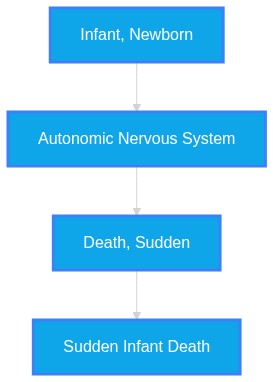
Why do seemingly perfectly healthy infants suddenly pass away in their sleep?
Dataset Summary
Novel & Overlooked Insights
- The human motor thalamus contains a focal region (VLa/VA nuclei) capable of suppressing automatic breathing without awareness, a potential node in the pathogenesis of central apnea disorders like SIDS.
- "Hidden" causes of death often include myocarditis and inherited arrhythmogenic syndromes, which are frequently missed without molecular autopsy.
- Maternal type 1 diabetes is linked to delayed maturation of the breastmilk microbiome, an external determinant affecting early-life immune development.
- Specific biomarkers, such as UCH-L1 in cord blood, are showing potential as early indicators of fetal cellular stress and neurodevelopmental risk.
- Recent longitudinal research suggests that gut dysbiosis in neonates can persist into adulthood, potentially contributing to neurodevelopmental vulnerability.
- The use of radiofrequency electrical conductivity in MRI imaging reveals a distinct biophysical dimension of perinatal brain development beyond water mobility.
- Post-mortem fundus photographs exhibit specific patterns, such as macular folds, which are associated with longer post-mortem intervals rather than necessarily indicating trauma.
- Noise pollution in the NICU is a major modifiable factor; alarms and staff activity create an acoustic environment often substantially above recommended guidelines.
- The "Metabolic Vulnerability Index" is a new, structured framework allowing for the assessment of five-domain physiologic constraints in infant deaths.
- Socioeconomic deprivation, as indexed by the Area Deprivation Index, is significantly associated with altered white matter myelination trajectories in children from infancy through childhood.
Extracted Discoveries
- Genome-wide association studies (GWAS) on sudden unexplained infant death cases using molecular autopsy findings to identify novel susceptibility loci.
- Dual-EEG monitoring of infants in home sleep environments to characterize interbrain synchrony changes during transient airway obstruction episodes.
- Longitudinal fecal proteomics profiling of at-risk infants to correlate milk-specific protein intake with long-term neurocognitive development.
- A prospective multi-center registry evaluating the impact of the Metabolic Vulnerability Index (MVI) on diagnostic outcomes in pediatric forensic autopsies.
- A cross-cultural examination of parental perceptions and sleep safety practices in low- and middle-income countries using qualitative grounded theory.
- A study assessing the association between prenatal exposure to non-optimal maternal immune balance and subsequent neonatal autonomic nervous system regulation.
- Prenatal iron deficiency (ID) exacerbates the risk of sudden infant death syndrome (SIDS) by modulating the expression of the hypothalamic orexin system, impairing homeostatic arousal mechanisms during hypoxia.
- Prenatal iron deficiency (ID) impairs auditory maturation and cochlear synaptic metabolism (ID 42404160).
- Elevated orexin activity in SIDS infants indicates homeostatic upregulation due to arousal deficit (ID 42332249).
- Hypothalamic energy metabolism (pyruvate/mitochondrial function).
- The hypothalamus requires significant energy to manage arousal. Prenatal ID downregulates pyruvate levels and impairs mitochondrial function in supporting cells. A shared metabolic deficit in the cochlea and hypothalamus would link iron deficiency to the failure of the orexin-dependent arousal system.
- There is a notable discrepancy between studies promoting skin-to-skin contact for neonatal stability (ID 42404096) and findings suggesting that early, unsupervised skin-to-skin care is associated with higher risks of Sudden Unexpected Postnatal Collapse (SUPC) (ID 42444072).
- The 'Metabolic Vulnerability Index' (MVI), originally developed for post-mortem mechanistic analysis of infant deaths, could be repurposed as a clinical prognostic tool for neonates with known metabolic risks to monitor their developmental trajectory in vivo.
PathMap is funded by sales of datasets and coversheets to researchers of any kind who wish to discover the most viable routes and paths to accelerate cures. We do not make theoretical molecules, we expose the truth in current PubMed literature. Commission a trace today.
PathMap Scores
How are these metrics evaluated?
Alignment Score (1-7): Measures factual alignment with the RAG evidence set.
[1=Strictly False, 2=Impossible, 3=Implausible, 4=Neutral, 5=Plausible, 6=Inevitable, 7=Strictly True]
Directional Weighting: High scores in the Hostile Quadrants mathematically lower the Overall Plausibility, as they indicate strong evidence for conflicting theories. Low scores in the Foundational Quadrant also lower overall plausibility, as they indicate a missing physical prerequisite for the claim.
Veridicality Audit Report
All Extracted Datapoints
Evaluated Perspectives & Quadrants
Verbatim Quote Audit Console
Mapped Reference Directory (APA)
Abstract Repository (Raw Full-Texts) Show Database
Investigator Profile