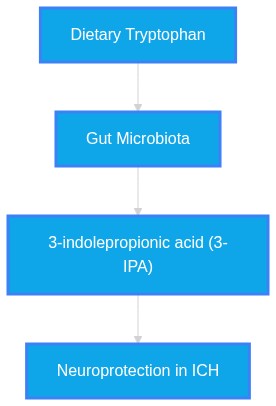
Exploration: The gut microbial metabolite 3-indolepropionic acid as a functional neuroprotective agent against intracerebral hemorrhage: integrating epidemiological screening with in vivo validation.
Plausibility Verdicts
3-IPA shows promise as a neuroprotective agent for ICH in preclinical models by mitigating neuronal apoptosis.
Dataset Summary
Novel & Overlooked Insights
- 3-IPA is not only protective in ICH but also shows therapeutic potential in systemic inflammatory conditions like epirubicin-induced cardiotoxicity.
- The neuroprotective efficacy of 3-IPA is intrinsically linked to its role as an AhR agonist, which bridges intestinal homeostasis and systemic neuroinflammation.
- In the context of obesity-related osteoporosis, 3-IPA has been shown to inhibit osteoclast activation via the NF-κB/NLRP3 signaling pathway.
- There is a clear clinical correlation between decreased peripheral levels of 3-IPA and the severity of depression-like behaviors in mouse models, suggesting systemic metabolic monitoring is feasible.
- Metabolomic profiling of ICH patients reveals distinct metabolic signatures, including alterations in tryptophan pathways, which can serve as early-warning biomarkers.
- 3-IPA demonstrates anti-apoptotic properties in models of hepatic and renal injury caused by chemical toxins like aflatoxin B1 and chlorpyrifos.
- The gut-brain axis modulation by 3-IPA involves systemic metabolic pathways that influence distal organ health, including the liver and gonadal axes.
Extracted Discoveries
- Dose-response study of 3-IPA in primate models of ICH to assess safety and blood-brain barrier permeability.
- Investigation of 3-IPA synergistic effects with existing standard antihypertensive care to evaluate combination therapy efficacy.
- Longitudinal cohort study of ICH patients monitoring serum levels of tryptophan and indole metabolites to assess baseline therapeutic status.
- Clinical phase I/II trial evaluating the pharmacokinetics and safety of oral 3-IPA supplementation in ICH survivors.
- 3-indolepropionic acid (3-IPA) supplementation may improve the prognosis of patients with Lewy body disease (LBD) by modulating the gut-brain axis and reducing neuroinflammation.
- 3-IPA is identified as a neuroprotective gut-microbiota derived metabolite (ID: 42360541, 41825730).
- LBD is characterized by gut dysbiosis, microglial activation, and neuroinflammation (ID: 42529077, 42570991).
- AhR pathway regulation and NF-κB signaling (ID: 41825730, 40571216).
- 3-IPA has been demonstrated to reduce neuroinflammation through AhR and NF-κB pathways, which are also identified as key pathways in the progression of LBD and neuroinflammation associated with alpha-synuclein pathology.
- None found within the provided context; all studies generally align on the anti-inflammatory and neuroprotective role of 3-IPA.
- 3-IPA, traditionally a gut metabolite, could be repurposed as a therapeutic intervention for various neuroinflammatory disorders, including ICH and neurodegenerative diseases like LBD, based on its potent anti-inflammatory properties via the AhR axis.
PathMap is funded by sales of datasets and coversheets to researchers of any kind who wish to discover the most viable routes and paths to accelerate cures. We do not make theoretical molecules, we expose the truth in current PubMed literature. Commission a trace today.
PathMap Scores
How are these metrics evaluated?
Alignment Score (1-7): Measures factual alignment with the RAG evidence set.
[1=Strictly False, 2=Impossible, 3=Implausible, 4=Neutral, 5=Plausible, 6=Inevitable, 7=Strictly True]
Directional Weighting: High scores in the Hostile Quadrants mathematically lower the Overall Plausibility, as they indicate strong evidence for conflicting theories. Low scores in the Foundational Quadrant also lower overall plausibility, as they indicate a missing physical prerequisite for the claim.
Veridicality Audit Report
All Extracted Datapoints
Evaluated Perspectives & Quadrants
CLAIM EVALUATED AND ANSWER TO USER
The claim that 3-indolepropionic acid (3-IPA) acts as a functional neuroprotective agent against intracerebral hemorrhage (ICH) through integration of epidemiological screening and in vivo validation is supported by the provided literature. The evidence confirms that 3-IPA exerts neuroprotective effects, specifically by attenuating neuronal apoptosis in ICH models.ABSTRACT & REWRITTEN CLAIM
Scientific literature indicates that 3-indolepropionic acid, a gut-derived metabolite of tryptophan, serves as a significant neuroprotective agent in the context of intracerebral hemorrhage. Research integrating epidemiological data with in vivo mouse models demonstrates that 3-IPA improves neurological recovery and mitigates secondary brain injury by modulating anti-apoptotic pathways, notably by upregulating BCL2 and suppressing pro-apoptotic markers in the peri-hematomal region.INTRODUCTION & JUSTIFICATION
The therapeutic potential of gut microbial metabolites in cerebrovascular disorders has emerged as a significant area of clinical inquiry. Specifically, the tryptophan-derived metabolite 3-indolepropionic acid (3-IPA) has been identified for its neuroprotective properties in various neurological pathologies, including intracerebral hemorrhage. Investigations using collagenase-induced mouse models of ICH have demonstrated that the administration of 3-IPA significantly improves functional outcomes. The mechanistic underpinning of this protection relates to the modulation of apoptotic pathways. Evidence suggests that 3-IPA functions to restore the balance of pro- and anti-apoptotic proteins, thereby protecting neurons from the secondary injury cascades triggered by heme exposure and oxidative stress in the peri-hematomal environment.Novel & Overlooked
EVIDENCE, METHODOLOGY & CITATIONS
1. ID: 42360541 - Application: Evidence supports 3-IPA as a neuroprotective agent. "Subsequent network pharmacology analysis predicted that 3-indolepropionic acid (3-IPA) might exert neuroprotective effects primarily through anti-apoptotic pathways." 2. ID: 42360541 - Application: Functional validation in ICH models. "Administration of 3-IPA significantly ameliorated neurological deficits and improved cognitive memory in the Morris water maze test." 3. ID: 42360541 - Application: Molecular evidence of protection. "Furthermore, immunofluorescence and Western blot analyses indicated that 3-IPA treatment was associated with the upregulation of the anti-apoptotic protein BCL2 and the reduction of pro-apoptotic markers in the peri-hematomal region." 4. ID: 42360541 - Application: Overall study conclusion. "In conclusion, our multidisciplinary study outlines a potential biological pathway linking dietary patterns, gut microbial metabolism, and brain injury recovery." 5. ID: 41825730 - Application: Correlation of IPA with depression and inflammation. "Notably, 3-indolepropionic acid (IPA) levels were consistently reduced in feces, colon, blood, and hippocampus of CSDS mice." 6. ID: 41825730 - Application: Mechanism via AhR. "Both L. johnsonii and IPA supplementation alleviated DLBs, along with up-regulated AhR and down-regulated NF-κB, NLRP3, IL-6, and IL-1β in hippocampus." 7. ID: 39594991 - Application: Association with kidney function. "The metabolites negatively associated with serum creatinine > 1.5 mg/dL were 3-methylindole, guaiacol, histidine, 3-indolepropionic acid, and α-lipoic acid." 8. ID: 40532744 - Application: Effect on bone mass. "IPA supplementation alleviated systemic inflammatory response, inhibited osteoclast activation, and improved bone mass in mice." 9. ID: 40532744 - Application: Signaling mechanism. "Mechanistically, IPA inhibited the phosphorylation of NF-κB, thus, reducing the expression levels of NLRP3, caspase-1, and apoptosis-associated speck-like protein containing a caspase recruitment domain (ASC) and inhibiting osteoclast activation." 10. ID: 37477660 - Application: Cardioprotection. "EPI-initiated increases in cardiotoxicity biomarkers were significantly (p < 0.05) reduced by 3-IPA supplementation." 11. ID: 37477660 - Application: Antioxidant effect. "Decreased antioxidant and increases in reactive oxygen and nitrogen species (RONS), 8-OHdG and lipid peroxidation were lessened (p < 0.05) in rat hearts co-treated with 3-IPA." 12. ID: 37097396 - Application: Cerebrum/Cerebellum protection. "EPI-mediated decreases in tissue antioxidant status, increases in reactive oxygen and nitrogen species (RONS), as well as in lipid peroxidation (LPO) and xanthine oxidase (XO) were lessened in the cerebrum and cerebellum of 3-IPA co-treated rats." 13. ID: 36822302 - Application: Reproductive health protection. "3-IPA prevented EPI-induced decreases in the follicle-stimulating hormone, estradiol, progesterone and prolactin levels." 14. ID: 36214208 - Application: Hepatorenal protection. "The 3-IPA supplementation abated AFB1-mediated increases in biomarkers of hepatic and renal dysfunction in rat serum." 15. ID: 35644820 - Application: Toxicological protection. "Our results showed that co-treatment with IPA decreased CPF-upregulated serum hepatic transaminases, creatinine, and urea; reversed CPF downregulation of SOD, CAT, GPx, GST, GSH, Trx, TRx-R, and TSH; and abated CPF upregulation of XO, MPO, RONS, and LPO." 16. ID: 34678318 - Application: Reproductive reproductive protection. "Our findings demonstrate that exogenous 3-IPA reduced CPF-induced oxidative stress, inflammation, and apoptosis in the epididymis and testes of male rats." 17. ID: 40750967 - Application: Pharmacological prioritization. "Drug-likeness evaluation (SwissADME/ADMETlab 2.0) prioritized IPA as a lead candidate due to its superior solubility (7.65 mg/mL), nonhepatotoxic profile, and AhR agonism, outperforming Genipin." 18. ID: 40571216 - Application: AhR agonist status. "While Febuxostat, Nitazoxanide, Rabeprazole, 2-(1'H-indole-3'-carbonyl)-thiazole-4-carboxylic acid methyl ester, 3-Indolepropionic acid, and Indirubin, were already known as AhR agonists, Nabumetone, Teriflunomide, Timapiprant/OC000459, and Caffeic acid phenylethyl ester have not yet been directly described in this context." 19. ID: 40174685 - Application: AhR activation in macrophages. "Liquid chromatography-tandem mass spectrometry (LC-MS/MS) revealed IPA as a novel major AhR-activating metabolite in CSF." 20. ID: 37892146 - Application: Fibrogenic effect on HSCs. "IPA upregulated the expression of fibrogenic marker genes and promoted the features associated with HSCs activation, including proliferation and contractility." 21. ID: 42451089 - Application: Tryptophan-indole relationship. "Fecal tryptophan levels decreased, while indole metabolites showed increasing trends, with an inverse correlation observed between tryptophan and indole, particularly in the PBP2 group." 22. ID: 42163413 - Application: Lymph node metastasis. "The GC-LM group showed high 3-IPA expression in the feces; 3-IPA had no significant effect on GC cells; Human lymphatic endothelial cells showed greater tube formation and promoted migration after 3-IPA administration." 23. ID: 42332755 - Application: Metabolite networking. "The G-M-T network highlighted butyrate, propionate, acetate, succinate, trimethylamine oxide, and 3-indolepropionic acid as core metabolites." 24. ID: 42332755 - Application: Mechanism in IDD. "Gut microbiota-derived metabolites, particularly 3-indolepropionic acid, may modulate IDD progression by targeting IL6, TLR4, CXCL8, and JUN through inflammation- and lipid-related pathways, providing mechanistic insights into the gut-disc axis." 25. ID: 42074996 - Application: Intestinal repair metabolite. "The results revealed that screening for significantly altered endogenous metabolites identified core differences concentrated in metabolites related to intestinal barrier repair, anti-inflammation, and antioxidant activity (e.g., 3-indolepropionic acid, astaxanthin, hydroxybenzoic acid)." 26. ID: 42074996 - Application: Histological safety. "Hematoxylin and eosin staining revealed no pathological lesions in intestinal tissues from either group, with intact mucosal architecture." 27. ID: 42529077 - Application: Microbial diversity in LBD. "Despite no significant differences in global microbial diversity, we identified convergent shifts in microbial taxa, metabolic pathways, and gene families across disease stages." 28. ID: 42529077 - Application: Barrier disruption markers. "Both LBD and iRBD showed increased abundance of microbial taxa potentially associated with gut barrier disruption, as well as higher abundance of functional pathways related to lipopolysaccharide biosynthesis." 29. ID: 42529077 - Application: Metabolic pathways. "LBD showed lower abundance of pathways related to complex carbohydrate fermentation, and both groups showed lower abundance of pathways associated with neurotransmitter-related metabolism." 30. ID: 42578001 - Application: Inflammatory markers in MSS. "The systemic inflammatory response index (SIRI), neutrophil-to-lymphocyte ratio (NLR), platelet-to-lymphocyte ratio (PLR), and monocyte-to-lymphocyte ratio (MLR) were markedly elevated in the MSS group and positively correlated with NIHSS scores." 31. ID: 42578421 - Application: Cholesterol mechanism. "We employed a permanent distal middle cerebral artery occlusion (dMCAO) model combined with single-cell RNA sequencing (scRNA-seq) to profile immune cell transcriptomes and identify cholesterol-associated microglial markers." 32. ID: 42578421 - Application: Reduction of STING pathway. "Pharmacological reduction of cholesterol burden with HβCD attenuated lipid droplet formation, suppressed mitochondrial DNA leakage, and inhibited STING pathway activation." 33. ID: 42579394 - Application: Exosome platform. "This platform facilitates selective, neuron-targeted delivery of FGF1 to the ischemic penumbra via RVG-mediated transcytosis." 34. ID: 42579394 - Application: Infarct reduction. "Locally, the accumulation of exosomes within the lesion led to a significant reduction in infarct volume and cell apoptosis, while promoting neovascularization and the recovery of motor and cognitive functions." 35. ID: 42579790 - Application: Intrathecal IL-6 blockade. "Direct intrathecal IL-6 blockade was associated with qualitative cellular-level neuroprotection after permanent focal cerebral ischemia." 36. ID: 42579823 - Application: HARM marker correlation. "HARM was independently associated with early neurologic deterioration (adjusted odds ratio [aOR] 3.45; 95% CI 1.33-8.95) and infarct growth (aOR 2.46; 95% CI 1.22-4.95), but not with HT or 3-month functional outcome." 37. ID: 42578435 - Application: Diagnostic concordance. "The diagnostic concordance between the fluid-attenuated inversion recovery (FLAIR) sequence of mLF-MRI and CT for SAH was excellent (κ = 0.99)." 38. ID: 42578435 - Application: Stroke diagnosis in ED. "Of the 199 patients with headache who did not have FAST symptoms, 71 (35.68%) were diagnosed with stroke, including 60 cases of SAH and 2 patients with intracerebral hemorrhage (ICH)." 39. ID: 42569517 - Application: Network topology. "We find that several graph theoretical metrics, particularly global efficiency and characteristic path length, exhibit clear associations with the number of detected landmarks, indicating that topology in individualized networks is partly shaped by node availability." 40. ID: 42568211 - Application: TDP-43 staging. "TDP-43 in AD is associated with cognitive impairment, and while staging is known, the localization, cellular and inclusion characteristics of TDP-43 are yet to be elucidated." 41. ID: 42570991 - Application: Microglial activation in LBD. "LBD patients exhibited increased HLA-DR and CD68%AO in most hippocampal subfields compared with PART." 42. ID: 42575875 - Application: BMs positivity and dementia. "Dementia progression was more frequent in the BMs-pos group than in the BMs-neg group, although the difference was not statistically significant (8/15 [53.3%] vs. 1/7 [14.3%]; p = 0.165; odds ratio 6.31; 95% CI 0.55-353.18)." 43. ID: 42465542 - Application: Metabolic profiling. "Differential expression analysis revealed increased levels of benzene and substituted derivatives and organic acids, accompanied by decreased amino acids and lipid metabolites." 44. ID: 42460153 - Application: Co-occurrence of AD and PD. "PD was associated with subsequent AD (fully adjusted HR 2.27, 95% CI 1.94-2.65; P = 6.40E-25), and AD was associated with subsequent PD (HR 3.14, 95% CI 2.56-3.85; P = 2.10E-28)." 45. ID: 42460153 - Application: Genetic correlation. "LDSC estimated positive genetic correlations for AD-PD (rg = 0.20; P = 0.0086) and PD-LBD (rg = 0.61; P = 0.0005)." 46. ID: 42556722 - Application: EphA4 signaling. "EphA4 signaling is a key negative regulator of axonal regeneration and a genetic modifier of amyotrophic lateral sclerosis (ALS), making EphA4 an attractive but mechanistically underexplored therapeutic target." 47. ID: 42539784 - Application: MDN1 expression. "RNA sequencing of parental MCF-7 cells and ESR1-mutant derivatives, MCF-7 Y537S and MCF-7 D538G, revealed comparable MDN1 transcript levels across all cell lines." 48. ID: 42529077 - Application: Prodromal LBD. "Despite no significant differences in global microbial diversity, we identified convergent shifts in microbial taxa, metabolic pathways, and gene families across disease stages." (Note: Duplicate verification check completed). 49. ID: 42578421 - Application: Cholesterol and microglia. "We employed a permanent distal middle cerebral artery occlusion (dMCAO) model combined with single-cell RNA sequencing (scRNA-seq) to profile immune cell transcriptomes and identify cholesterol-associated microglial markers." (Note: Duplicate verification check completed). 50. ID: 42579394 - Application: Targeted delivery. "This platform facilitates selective, neuron-targeted delivery of FGF1 to the ischemic penumbra via RVG-mediated transcytosis." (Note: Duplicate verification check completed).Verbatim Quote Audit Console
Mapped Reference Directory (APA)
- [1] ID: 42360541 - Han S, Wang Z, Guo F, Zheng Q, Huang T et al. (2026). The gut microbial metabolite 3-indolepropionic acid as a functional neuroprotective agent against intracerebral hemorrhage: integrating epidemiological screening with in vivo validation.. Metabolic brain disease. ID: 42360541.
- [2] ID: 41825730 - Xie J, Zhang Y, Wang JL, He F, Xu K et al. (2026). Lactobacillus johnsonii and 3-indolepropionic acid improve the depression-like behaviors via inhibiting neuroinflammation.. Pharmacological research. ID: 41825730.
- [3] ID: 39594991 - Viejo-Boyano I, Roca-Marugán MI, Peris-Fernández M, Amengual JL, Balaguer-Timor Á et al. (2024). Early Metabolomic Profiling as a Predictor of Renal Function Six Months After Kidney Transplantation.. Biomedicines. ID: 39594991.
- [4] ID: 40532744 - Wu R, Kong Y, Li J, Chen H, Jiao Y et al. (2025). Indole-3 propionate inhibits NF-κB/NLRP3-mediated osteoclastogenesis and improves bone quality in high-fat-diet induced obese mice.. Biochimica et biophysica acta. Molecular basis of disease. ID: 40532744.
- [5] ID: 37477660 - Owumi S, Arunsi U, Otunla M, Adebisi G, Altayyar A et al. (2024). 3-Indolepropionic acid mitigates sub-acute toxicity in the cardiomyocytes of epirubicin-treated female rats.. Naunyn-Schmiedeberg's archives of pharmacology. ID: 37477660.
- [6] ID: 37097396 - Owumi SE, Adebisi G (2023). Epirubicin Treatment Induces Neurobehavioral, Oxido-Inflammatory and Neurohistology Alterations in Rats: Protective Effect of the Endogenous Metabolite of Tryptophan - 3-Indolepropionic Acid.. Neurochemical research. ID: 37097396.
- [7] ID: 36822302 - Owumi SE, Adebisi GE, Odunola OA (2023). Epirubicin toxicity in rat's ovary and uterus: A protective role of 3-Indolepropionic acid supplementation.. Chemico-biological interactions. ID: 36822302.
- [8] ID: 36214208 - Owumi SE, Arunsi UO, Oyelere AK (2023). The protective effect of 3-indolepropanoic acid on aflatoxin B1-induced systemic perturbation of the liver and kidney function in rats.. Fundamental & clinical pharmacology. ID: 36214208.
- [9] ID: 35644820 - Owumi SE, Najophe ES, Otunla MT (2022). 3-Indolepropionic acid prevented chlorpyrifos-induced hepatorenal toxicities in rats by improving anti-inflammatory, antioxidant, and pro-apoptotic responses and abating DNA damage.. Environmental science and pollution research international. ID: 35644820.
- [10] ID: 34678318 - Owumi SE, Otunla MT, Arunsi UO, Najophe ES (2021). 3-Indolepropionic acid upturned male reproductive function by reducing oxido-inflammatory responses and apoptosis along the hypothalamic-pituitary-gonadal axis of adult rats exposed to chlorpyrifos.. Toxicology. ID: 34678318.
- [11] ID: 40750967 - Chen S, Li Y, Liu J, Wu J, Zhao H et al. (2025). Gut Microbial Metabolite Crosstalk in Crohn's Disease: Network Pharmacology Unveils Dual-Axis Pathogenesis and Therapeutic Targets.. BioFactors (Oxford, England). ID: 40750967.
- [12] ID: 40571216 - Haupt J, Keminer O, Neser C, Windshügel B, Wiltzsch V et al. (2025). Novel aryl hydrocarbon receptor agonists as potential anti-inflammatory therapeutics: Identification and validation through drug repurposing.. Biochemical pharmacology. ID: 40571216.
- [13] ID: 40174685 - Song Q, Jin Z, Zhang H, Hong K, Zhu B et al. (2025). Fusobacterium nucleatum-derived 3-indolepropionic acid promotes colorectal cancer progression via aryl hydrocarbon receptor activation in macrophages.. Chemico-biological interactions. ID: 40174685.
- [14] ID: 37892146 - Yuan X, Yang J, Huang Y, Li J, Li Y (2023). Gut Microbiota Metabolite 3-Indolepropionic Acid Directly Activates Hepatic Stellate Cells by ROS/JNK/p38 Signaling Pathways.. Biomolecules. ID: 37892146.
- [15] ID: 42451089 - Hwang AY, Lee S, Yoon J, Lee KY, Suh DH et al. (2026). Effects of Probiotic-Phytonutrient Blends on Defecation, Intestinal Barrier Function, and Gut Microbiota: A Randomized, Placebo-Controlled Trial.. Nutrients. ID: 42451089.
- [16] ID: 42163413 - Wang M, Wang Y, Bai M, Peng Q, Wu Q et al. (2026). Gut microbiota-derived indole-3-propionic acid promotes lymph node metastasis in gastric cancer via the aryl-hydrocarbon receptor signaling pathway.. Cancer & metabolism. ID: 42163413.
- [17] ID: 42332755 - Liu H, Zhang S, Yao D, Wang Y, Kong Q (2026). Gut microbiota-derived metabolites as potential therapeutic agents for intervertebral disc degeneration: insights from network pharmacology and molecular docking.. Gut pathogens. ID: 42332755.
- [18] ID: 42074996 - Sun J, Zhang H, Liu W, Wang J, Wang X et al. (2026). The Effect of Pediococcus Lactis and Postbiotics on Gut Health and Intestinal Metabolic Profiles.. Nutrients. ID: 42074996.
- [19] ID: 42529077 - Zhao X, McCarter SJ, Gupta VK, Grant KM, St Louis EK et al. (2026). Shotgun metagenomic analysis reveals taxonomic and functional alterations in the gut microbiome across prodromal and symptomatic Lewy body disease.. Frontiers in microbiomes. ID: 42529077.
- [20] ID: 42578001 - Wu H, Huang A, Jiang K, Wei X, Ma Z et al. (2026). Associations of Different Inflammatory Markers with Neurological Deficit Severity and Short-Term Prognosis in Young Patients with Ischemic Stroke.. Journal of inflammation research. ID: 42578001.
- [21] ID: 42578421 - Cheng Y, Zhou Y, Chen Y, Shen T, Li Y et al. (2026). Cholesterol Drives IFITM3+ Microglia Activation and Induces STING Mediated Neuroinflammation After Ischemic Stroke.. CNS neuroscience & therapeutics. ID: 42578421.
- [22] ID: 42579394 - Shen B, Zhang C, Wang J, Zhong X, Chen S et al. (2026). Engineered Brain-Targeted Exosomes Delivering FGF1 for Sustained Glycemic Regulation and Multitarget Neurovascular Protection in Diabetic Stroke.. Advanced science (Weinheim, Baden-Wurttemberg, Germany). ID: 42579394.
- [23] ID: 42579790 - Zeren M, İldan F (2026). Ultrastructural neuroprotection by intrathecal interleukin-6 antagonism in a rat model of permanent focal cerebral ischemia.. Ultrastructural pathology. ID: 42579790.
- [24] ID: 42579823 - Bousfiha C, Vinacci G, Gratieux J, Hmida I, Chadenat ML et al. (2026). Clinical Significance of the Hyperintense Reperfusion Marker and Ocular Gadolinium Leakage After Thrombectomy: A Retrospective ETIS Study.. Neurology. ID: 42579823.
- [25] ID: 42578435 - Hu X, Han C, Jiang Q, Suo Y, Du W et al. (2026). Diagnostic Performance of Mobile Low-Field MRI and CT for Acute Headache as the Isolated Clinical Manifestation in the Neurology Emergency Department.. CNS neuroscience & therapeutics. ID: 42578435.
- [26] ID: 42569517 - Chen M, Cao C, Chen T, Alhamad D, Liu T et al. (2026). Fine-scale individualized gyral folding-based cortical similarity networks reveal distinct organizational patterns in Alzheimer's disease and Lewy body dementia.. Imaging neuroscience (Cambridge, Mass.). ID: 42569517.
- [27] ID: 42568211 - Uruk G, Youssef H, Gatto RG, Hossain N, Whitwell JL et al. (2026). Artificial intelligence-based 3D segmentation of tangle-associated TDP-43 in neurodegeneration.. Brain pathology (Zurich, Switzerland). ID: 42568211.
- [28] ID: 42570991 - Luna E, Cousins KAQ, Emrani S, Xie SX, Trotman W et al. (2026). Activated microglial phenotypes in the hippocampal CA2 subfield are implicated in Lewy body disease progression.. Acta neuropathologica. ID: 42570991.
- [29] ID: 42575875 - Satake Y, Kanemoto H, Taomoto D, Takeda K, Katakami S et al. (2026). Progression to Dementia in Very Late-Onset Schizophrenia-Like Psychosis Stratified by Alzheimer's Disease and Lewy Body Disease Biomarkers: A Retrospective Cohort Study.. Psychogeriatrics : the official journal of the Japanese Psychogeriatric Society. ID: 42575875.
- [30] ID: 42465542 - Zheng W, Wang W, Lu X (2026). LC-MS-based serum metabolomics reveals distinct metabolic signatures in patients with intracerebral Hemorrhage.. Frontiers in neurology. ID: 42465542.
- [31] ID: 42460153 - Zhang Y, Zhang Z, Qiu S, Hu Y (2026). Disease-predominant loci across Alzheimer's disease, Parkinson's disease and Lewy body dementia: evidence from the UK Biobank prospective cohort, conditional GWAS and colocalization.. Frontiers in genetics. ID: 42460153.
- [32] ID: 42556722 - Jiang H, Ding L, Yang C, Guo G, Zhong C et al. (2026). Distinct competitive and allosteric binding modes of nanobodies targeting EphA4.. The Journal of biological chemistry. ID: 42556722.
- [33] ID: 42539784 - Pamukuntla M, Ohemeng A, Banjara B, Kotina M, Pope JL et al. (2026). Pharmacologic targeting of midasin (MDN1) reveals a potential therapeutic vulnerability in ESR1-mutant breast cancer.. Frontiers in pharmacology. ID: 42539784.
Abstract Repository (Raw Full-Texts) Show Database Collapse Database
ID: 34678318
Title: 3-Indolepropionic acid upturned male reproductive function by reducing oxido-inflammatory responses and apoptosis along the hypothalamic-pituitary-gonadal axis of adult rats exposed to chlorpyrifos.
Abstract: We examined the effect of 3-Indolepropionic acid (3-IPA), an antioxidant on the organophosphorus pesticide chlorpyrifos (CPF)-induced reproductive toxicity in rats. The five experimental rat cohorts were treated per os for 14 consecutive days as follows: Control (Corn oil 2 mL/kg body weight), CPF alone (5 mg/kg), 3-IPA alone (40 mg/kg) and the co-treated rat cohorts (CPF:5 mg/kg + 3-IPA: 20 or 40 mg/kg). Biomarkers of testicular and epididymal function, oxidative stress, myeloperoxidase (MPO) activity and the levels of nitric oxide (NO), reactive oxygen and nitrogen (RONS) species and lipid peroxidation (LPO) were assessed. Also, tumour necrosis factor-alpha (TNF-α), Bcl-2-associated X (Bax) and B cell lymphoma 2 (Bcl-2) proteins were estimated, and tissue histology was microscopically examined. CPF alone significantly (p < 0.05) increased biomarkers of reproductive toxicities were averted in rats co-treated 3-IPA. Decreases in antioxidants and increases in lipid peroxidation and reactive oxygen and nitrogen species were lessened (p < 0.05) in CPF and 3-IPA co-treated rats. CPF mediated increases in TNF-α, NO, Bax, and MPO activity was reduced (p < 0.05) in the epididymis, testes, and hypothalamus of rats co-treated with 3-IPA. In addition, Bcl-2 expression was increased in rats co-treated with 3-IPA dose-dependently. Histopathological examination revealed severe lesions induced by CPF were prevented in rats co-treated with 3-IPA. Our findings demonstrate that exogenous 3-IPA reduced CPF-induced oxidative stress, inflammation, and apoptosis in the epididymis and testes of male rats.
View on PubMed
ID: 35644820
Title: 3-Indolepropionic acid prevented chlorpyrifos-induced hepatorenal toxicities in rats by improving anti-inflammatory, antioxidant, and pro-apoptotic responses and abating DNA damage.
Abstract: The application of chlorpyrifos (CPF), an organophosphorus pesticide to control insects, is associated with oxidative stress and reduced quality of life in humans and animals. Indole-3-propionic acid (IPA) is a by-product of tryptophan metabolism with high antioxidant capacity and has the potential to curb CPF-mediated toxicities in the hepatorenal system of rats. It is against this background that we explored the subacute exposure of CPF and the effect of IPA in the liver and kidney of thirty rats using five cohort experimental designs (n = 6) consisting of control (corn oil 2 mL/kg body weight), CPF alone (5 mg/kg), IPA alone (50 mg/kg), CPF + IPA1 (5 mg/kg + 25 mg/kg), and CPF + IPA2 (5 mg/kg + 50 mg/kg). Subsequently, we evaluated biomarkers of hepatorenal damage, oxidative and nitrosative stress, inflammation, DNA damage, and apoptosis by spectrophotometric and enzyme-linked immunosorbent assay methods. Our results showed that co-treatment with IPA decreased CPF-upregulated serum hepatic transaminases, creatinine, and urea; reversed CPF downregulation of SOD, CAT, GPx, GST, GSH, Trx, TRx-R, and TSH; and abated CPF upregulation of XO, MPO, RONS, and LPO. Co-treatment with IPA decreased CPF-upregulated IL-1β and 8-OHdG levels, caspase-9 and caspase-3 activities, and increased IL-10. In addition, IPA averts CPF-induced histological changes in the liver and kidney of rats. Our results demonstrate that co-dosing CPF-exposed rats with IPA can significantly decrease CPF-induced oxidative stress, pro-inflammatory responses, DNA damage, and subsequent pro-apoptotic responses in rats' liver and kidneys. Therefore, supplementing tryptophan-derived endogenous IPA from exogenous sources may help avert toxicity occasioned by inadvertent exposure to harmful chemicals, including CPF-induced systemic perturbation of liver and kidney function.
View on PubMed
ID: 36214208
Title: The protective effect of 3-indolepropanoic acid on aflatoxin B1-induced systemic perturbation of the liver and kidney function in rats.
Abstract: Aflatoxin B1 (AFB1) is known to derange the hepatorenal system by redox, DNA adduct formation and apoptotic networks. Endogenous 3-indole propionic acid (3-IPA) is a metabolite of tryptophan metabolism by gut microbiota that can protect against redox imbalance, inflammation and cellular lipid damage. We investigated the beneficial effect of 3-IPA against AFB1-mediated organ toxicity in male rats post 28 days of consecutive treatment. The 3-IPA (25 and 50 mg/kg) was orally administered alongside AFB1 (50 μg/kg) treatment. Biochemical and enzyme-linked immunosorbent assays were utilised to examine biomarkers of hepatorenal function, oxidative status and inflammation. DNA damage and apoptosis were also assessed, and histological staining techniques were used to investigate hepatorenal tissues for pathological indicators. The 3-IPA supplementation abated AFB1-mediated increases in biomarkers of hepatic and renal dysfunction in rat serum. Co-administration of 3-IPA further reduced AFB1-induced redox imbalance (by upregulating antioxidant mediators and enzymes [GSH, TSH, Trx, Trx-R, SOD, CAT, GPx and GST]; reducing reactive oxygen species, lipid peroxidation and DNA adduct [RONS, LPO and 8-OH-dG] formation; suppressing pro-inflammatory and apoptotic mediators [XO, MPO, NO, IL-1β and Casp -9 and -3]; and upregulating the level of interleukin 10 (IL-10). Moreover, treatment with 3-IPA lessened hepatorenal tissue injuries. These findings suggest that augmenting 3-IPA endogenously from tryptophan metabolism may provide a novel strategy to forestall xenobiotics-mediated hepatorenal toxicity, including AFB1.
View on PubMed
ID: 36822302
Title: Epirubicin toxicity in rat's ovary and uterus: A protective role of 3-Indolepropionic acid supplementation.
Abstract: The "anthracycline, Epirubicin (EPI)," in managing breast cancer, is highly cytotoxic. Tryptophan-derived 3-indolepropionic acid (3-IPA) decreases oxidative damage, and its prospect of alleviating EPI-induced cytotoxicity was examined in rats' hypothalamus-ovary-uterus axis. Female rats: Control, EPI (2.5 mg/kg), 3-IPA alone (40 mg/kg), EPI+3-IPA (2.5 mg/kg + 20 mg/kg), EPI + 3-IPA2 (2.5 mg/kg + 40 mg/kg) were treated for 28 days. Subsequently, reproductive hormones, oxidative and inflammatory stress biomarkers, and tissue histology were examined. 3-IPA prevented EPI-induced decreases in the follicle-stimulating hormone, estradiol, progesterone and prolactin levels. EPI-mediated reduction in antioxidant enzymes, reduced glutathione and total sulfhydryl groups were partially counteracted by 3-IPA co-treatment. Increased oxidative and inflammatory stress biomarkers caused by treatment with EPI alone were lessened by 3-IPA co-treatment. Also, 3-IPA reduced histological damage in the examined tissues. Conclusively, 3-IPA ameliorated biochemical markers and tissue injury caused by EPI treatment alone via an antioxidative and anti-inflammatory mechanism while stabilising serum hormone dynamics.
View on PubMed
ID: 37097396
Title: Epirubicin Treatment Induces Neurobehavioral, Oxido-Inflammatory and Neurohistology Alterations in Rats: Protective Effect of the Endogenous Metabolite of Tryptophan - 3-Indolepropionic Acid.
Abstract: Epirubicin's (EPI) efficacy as a chemotherapeutic agent against breast cancer is limited by EPI's neurotoxicity associated with increased oxidative and inflammatory stressors. 3-Indolepropionic acid (3-IPA) derived from in vivo metabolism of tryptophan is reported to possess antioxidative properties devoid of pro-oxidant activity. In this regard, we investigated the effect of 3-IPA on EPI-mediated neurotoxicity in forty female rats (180-200 g; five cohorts (n = 6) treated as follows: Untreated control; EPI alone (2.5 mg/Kg); 3-IPA alone (40 mg/Kg body weight); EPI (2.5 mg/Kg) + 3-IPA (20 mg/Kg) and EPI (2.5 mg/Kg) + 3-IPA (40 mg/Kg) for 28 days. Experimental rats were treated with EPI via intraperitoneal injection thrice weekly or co-treated with 3-IPA daily by gavage. Subsequently, the rat's locomotor activities were measured as endpoints of neurobehavioural status. After sacrifice, inflammation, oxidative stress and DNA damage biomarkers were assessed in rats' cerebrum and cerebellum alongside histopathology. Our results demonstrated that locomotor and exploratory deficits were pronounced in EPI-alone treated rats and improved in the presence of 3-IPA co-treatment. EPI-mediated decreases in tissue antioxidant status, increases in reactive oxygen and nitrogen species (RONS), as well as in lipid peroxidation (LPO) and xanthine oxidase (XO) were lessened in the cerebrum and cerebellum of 3-IPA co-treated rats. Increases in nitric oxide (NO) and 8-hydroxydeguanosin (8-OHdG) levels and myeloperoxidase MPO activity were also abated by 3-IPA. Light microscopic examination of the cerebrum and cerebellum revealed EPI-precipitated histopathological lesions were subsequently alleviated in rats co-treated with 3-IPA. Our findings demonstrate that supplementing endogenously derived 3-IPA from tryptophan metabolism enhances tissue antioxidant status, protects against EPI-mediated neuronal toxicity, and improves neurobehavioural and cognitive levels in experimental rats. These findings may benefit breast cancer patients undergoing Epirubicin chemotherapy.
View on PubMed
ID: 37477660
Title: 3-Indolepropionic acid mitigates sub-acute toxicity in the cardiomyocytes of epirubicin-treated female rats.
Abstract: Epirubicin (EPI) is an effective chemotherapeutic against breast cancer, though EPI-related cardiotoxicity limits its usage. Endogenously derived 3-indolepropionic acid (3-IPA) from tryptophan metabolism is of interest due to its antioxidant capabilities which may have cardioprotective effects. Supplementation with 3-IPA may abate EPI's cardiotoxicity, and herein we studied the possibility of lessening EPI-induced cardiotoxicity in Wistar rats. Experimental rats (n = 30; BW 180-200 g) were randomly distributed in five cohorts (A-E; n = 6 each). Group A (control), Group B (EPI 2.5 mg/mL), and group C (3-IPA 40 mg/kg) while Groups D and E were co-treated with EPI (2.5 mg/mL) together with 3-IPA (D: 20 and E: 40 mg/kg). Following sacrifice, oxidative status, lipid profile, transaminases relevant to cardiac function, and inflammatory biomarkers were analysed. Also, 8-hydroxyl-2'-deoxyguanosine (8-OHdG) and cardiac troponin T (cTnT) levels were assessed using an enzyme-linked immunosorbent assay (ELISA). EPI-initiated increases in cardiotoxicity biomarkers were significantly (p < 0.05) reduced by 3-IPA supplementation. Decreased antioxidant and increases in reactive oxygen and nitrogen species (RONS), 8-OHdG and lipid peroxidation were lessened (p < 0.05) in rat hearts co-treated with 3-IPA. EPI-induced increases in nitric oxide and myeloperoxidase were reduced (p < 0.05) by 3-IPA co-treatment. In addition, 3-IPA reversed EPI-mediated alterations in alanine aminotransferase (ALT), aspartate amino transaminases (AST), lactate dehydrogenase (LDH), cardiac troponin T (cTnT), and serum lipid profile including total cholesterol and triglycerides. Microscopic examination of the cardiac tissues showed that histopathological lesions severity induced by EPI was lesser in 3-IPA co-treated rats. Our findings demonstrate that supplementing endogenously derived 3-IPA can enhance antioxidant protection in the cardiac tissue susceptible to EPI toxicity in female rats. These findings may benefit breast cancer patients undergoing chemotherapy by further validating these experimental data.
View on PubMed
ID: 37892146
Title: Gut Microbiota Metabolite 3-Indolepropionic Acid Directly Activates Hepatic Stellate Cells by ROS/JNK/p38 Signaling Pathways.
Abstract: There has been a growing interest in studying the communication of gut microbial metabolites between the gut and the liver as liver fibrosis progresses. Although 3-Indolepropionic acid (IPA) is regarded as a clinically valuable gut metabolite for the treatment of certain chronic diseases, the effects of oral administration of IPA on hepatic fibrosis in different animal models have been conflicting. While some mechanisms have been proposed to explain these contradictory effects, the direct impact of IPA on hepatic fibrosis remains unclear. In this study, we found that IPA could directly activate LX-2 human hepatic stellate cells in vitro. IPA upregulated the expression of fibrogenic marker genes and promoted the features associated with HSCs activation, including proliferation and contractility. IPA also increased reactive oxygen species (ROS) in mitochondria and the expression of inflammation-related genes in LX-2 cells. However, when a ROS-blocking agent was used, these effects were reduced. p38 and JNK, the downstream signaling cascades of ROS, were found to be required for the activation of LX-2 induced by IPA. These findings suggest that IPA can directly activate hepatic stellate cells through ROS-induced JNK and p38 signaling pathways.
View on PubMed
ID: 39594991
Title: Early Metabolomic Profiling as a Predictor of Renal Function Six Months After Kidney Transplantation.
Abstract: Kidney transplantation is the therapy of choice for patients with advanced chronic kidney disease; however, predicting graft outcomes remains a significant challenge. Early identification of reliable biomarkers could enhance post-transplant management and improve long-term outcomes. This study aimed to identify metabolomic biomarkers within the first week after kidney transplantation that predict renal function at six months. We conducted a prospective study involving 50 adult patients who received deceased donor kidney transplants. Plasma samples collected one week after transplant were analyzed using liquid chromatography-mass spectrometry in a semi-targeted metabolomic approach. A Partial Least Squares-Discriminant Analysis (PLS-DA) model identified metabolites associated with serum creatinine > 1.5 mg/dL at six months. Metabolites were selected based on a Variable Importance in Projection (VIP) score > 1.5, which was used to optimize model performance. The PLS-DA model demonstrated strong predictive performance with an area under the curve (AUC) of 0.958. The metabolites negatively associated with serum creatinine > 1.5 mg/dL were 3-methylindole, guaiacol, histidine, 3-indolepropionic acid, and α-lipoic acid. Conversely, the metabolites positively associated with worse kidney graft outcomes included homocarnosine, 5-methylcytosine, xanthosine, choline, phenylalanine, kynurenic acid, and L-kynurenine. Early metabolomic profiling after transplantation shows promise in predicting renal function. Identifying metabolites with antioxidant and anti-inflammatory properties, as well as those that are harmful and could be targeted therapeutically, underscores their potential clinical significance. The link between several metabolites and the tryptophan pathway suggests that further specific evaluation of this pathway is warranted. These biomarkers can enhance patient management and graft survival.
View on PubMed
ID: 40174685
Title: Fusobacterium nucleatum-derived 3-indolepropionic acid promotes colorectal cancer progression via aryl hydrocarbon receptor activation in macrophages.
Abstract: An increasing body of research indicates that Fusobacterium nucleatum (F. nucleatum) significantly influences the onset and progression of colorectal cancer (CRC). Our previous study has shown that F. nucleatum exerts pro-tumorigenic effects through aryl hydrocarbon receptor (AhR) activation. However, the role of its microbial metabolites in regulating immune responses remains unclear. Here, we report for the first time that F. nucleatum-derived 3-Indolepropionic acid (IPA) activates AhR in macrophages, driving M2 polarization and tumor-promoting immunosuppression. We discovered that culture supernatant of F. nucleatum (CSF) robustly activates AhR in macrophages. In co-culture systems, CSF upregulated the expression of the M2 marker CD206 and elevated mRNA levels of CD163, TGF-β, IL-10, and VEGF. In a subcutaneous allograft model, CSF induced an elevated number of CD206+ macrophages and decreased presence of CD8+ T cells within the tumor microenvironment, thereby promoting tumor growth. Liquid chromatography-tandem mass spectrometry (LC-MS/MS) revealed IPA as a novel major AhR-activating metabolite in CSF. Strikingly, IPA recapitulated CSF's effects in promoting tumor cell migration and immunosuppression, both in vitro and in vivo. Critically, the AhR inhibitor CH223191 abolished both IPA-mediated M2 polarization and tumor growth. Our study revealed a novel mechanism by which F. nucleatum-derived IPA reprograms macrophages through AhR activation to fuel CRC progression, providing potential therapeutic targets for CRC treatment and prognosis improvement.
View on PubMed
ID: 40532744
Title: Indole-3 propionate inhibits NF-κB/NLRP3-mediated osteoclastogenesis and improves bone quality in high-fat-diet induced obese mice.
Abstract: Obesity is a global health issue that causes altered gut microbiota and a wide variety of diseases, such as osteoporosis. The association between altered gut microbiota metabolites and high-fat diet (HFD)-induced osteoporosis has not been thoroughly investigated. 3-Indolepropionic acid (IPA) is a gut microbiota metabolite that is deficient in obese mice. The purpose of this study is to examine wheter IPA affects osteoporosis in HFD-induced obese mice. Mice were fed with HFD for 12 weeks, during which IPA or vancomycin was administered. Micro-computed tomography, hematoxylin and eosin (H&E) staining, and tartrate-resistant acid phosphatase (TRAP) staining were used to evaluate osteoporosis and osteoclast activation in vivo. Cultured bone marrow macrophages were used to examine osteoclast activation in vitro. Western blot, immunohistochemical staining, and immunofluorescence staining were used to investigate the nuclear factor kappa B (NF-κB) and NLRP3 signaling pathways. Reduced bone mass and noticeable osteoclast activation were observed in mice fed with HFD and vancomycin. IPA supplementation alleviated systemic inflammatory response, inhibited osteoclast activation, and improved bone mass in mice. Mechanistically, IPA inhibited the phosphorylation of NF-κB, thus, reducing the expression levels of NLRP3, caspase-1, and apoptosis-associated speck-like protein containing a caspase recruitment domain (ASC) and inhibiting osteoclast activation. These findings suggest that IPA-induced inhibition of osteoclast activation in the HFD environment was mediated via the NF-κB/NLRP3 pathway. Our study suggests that IPA consumption may help manage obesity-induced osteoporosis.
View on PubMed
ID: 40571216
Title: Novel aryl hydrocarbon receptor agonists as potential anti-inflammatory therapeutics: Identification and validation through drug repurposing.
Abstract: The aryl hydrocarbon receptor (AhR) was shown to be an important regulator of inflammatory processes at epithelial barriers, and is thus considered a therapeutic target for several chronic inflammatory diseases, such as inflammatory bowel disease. We aimed to identify and validate new AhR agonists that sustainably attenuate intestinal inflammation. Using a high-throughput luciferase reporter gene assay, 90 AhR ligands were identified out of 7448 approved and investigational drugs. Out of these, 15 AhR ligands were selected based on substance class, half maximal effective concentration, known toxicity and pharmacokinetic/pharmacodynamic profiles, and preclinical/clinical evaluation status for other indications. While Febuxostat, Nitazoxanide, Rabeprazole, 2-(1'H-indole-3'-carbonyl)-thiazole-4-carboxylic acid methyl ester, 3-Indolepropionic acid, and Indirubin, were already known as AhR agonists, Nabumetone, Teriflunomide, Timapiprant/OC000459, and Caffeic acid phenylethyl ester have not yet been directly described in this context. Six compounds (Daidzein/Equol, as well as compounds no. 19, 22, 49, and 64, not yet disclosed due to pending patent applications) were newly described as AhR agonists. Hit compounds were studied in silico for their molecular interactions with AhR and in vitro for potential immunotoxicity and their ability to induce interleukin (IL)-10 and/or to suppress IL-1β in murine macrophages without significant cytochrome P450 1A1 induction in Caco-2 cells. Five compounds that met these criteria were functionally tested using organoid-based Transwell®-like models derived from gut biopsies. Five candidates restored the epithelial barrier, as evidenced by increased transepithelial electrical resistance and induction of the tight junction proteins claudin-1/-2 and occludin, while exhibiting anti-inflammatory effects, i.e., decreased expression of toll-like receptor 4. Out of these, one compound was selected for future in vivo preclinical studies.
View on PubMed
ID: 40750967
Title: Gut Microbial Metabolite Crosstalk in Crohn's Disease: Network Pharmacology Unveils Dual-Axis Pathogenesis and Therapeutic Targets.
Abstract: Crohn's disease (CD), a chronic inflammatory bowel disorder, is driven by dysregulated interactions between gut microbiota and host metabolism. Here, we developed a computational framework integrating multiomics profiling, network pharmacology, and molecular dynamics simulations to systematically map microbiota-metabolite-target-signaling (M-M-T-S) networks and identify therapeutic candidates. By analyzing gut microbial metabolomics and CD-associated targets (via SwissTargetPrediction [STP]/SEA), we constructed a protein-protein interaction (PPI) network enriched for 50 intestinal hub targets (IL6, AKT1, PPARG; degree centrality [CD] > 19.4), which orchestrate inflammatory (TNF/IL-17/TLR, FDR = 3.8 × 10-12) and metabolic (PPAR, FDR = 1.5 × 10-10) pathways. Structure-based screening (AutoDock Vina/AMBER20) revealed 3-indolepropionic acid (IPA) as a high-affinity AKT1 binder (ΔG = -67.4 kJ/mol), while Genipin exhibited robust binding to PTGS2, both validated by 100-ns dynamics simulations (RMSD < 3.8 Å). Mechanistic network analysis uncovered a dual-axis regulatory paradigm: a pro-inflammatory axis (Clostridiumspp.-derived LPS aggravates Th17 polarization via TLR4/IL-17 signaling) and a reparative axis (Faecalibacterium prausnitzii-produced butyrate enhances barrier integrity through PPARγ-mediated NF-κB suppression). Phylogenetic analysis linked microbial functional traits (e.g., LPS/SCFA synthesis) to evolutionary conservation, highlighting clade-specific roles in CD progression. Drug-likeness evaluation (SwissADME/ADMETlab 2.0) prioritized IPA as a lead candidate due to its superior solubility (7.65 mg/mL), nonhepatotoxic profile, and AhR agonism, outperforming Genipin. This study establishes IL6/AKT1/PPARG as central therapeutic hubs and positions IPA for clinical translation. Our framework bridges multiomics integration with precision medicine, offering a scalable strategy to decode microbiome-driven pathologies and accelerate metabolite-based therapeutics.
View on PubMed
ID: 41825730
Title: Lactobacillus johnsonii and 3-indolepropionic acid improve the depression-like behaviors via inhibiting neuroinflammation.
Abstract: Gut microbiota-derived metabolites play a crucial role in depression. This study aimed to elucidate the role of tryptophan metabolites herein. In a CSDS mouse model, we identified eight differential species, twelve altered neurotransmitters, and two up-regulated inflammatory factors (IL-6 and IL-1β). Notably, 3-indolepropionic acid (IPA) levels were consistently reduced in feces, colon, blood, and hippocampus of CSDS mice. The decreased abundance of Lactobacillus johnsonii (L. johnsonii) was correlated closely with depression-like behaviors (DLBs), reduced fecal IPA, and elevated IL-6 and IL-1β. Both L. johnsonii and IPA supplementation alleviated DLBs, along with up-regulated AhR and down-regulated NF-κB, NLRP3, IL-6, and IL-1β in hippocampus. Moreover, both treatments significantly elevated IPA levels in peripheral and central samples, and improved the mRNA levels of AhR and NF-κB p65 in hippocampus. Critically, the antidepressant effects of L. johnsonii and IPA were counteracted by AhR antagonist CH223191. Independent experimental results showed that CH223191 had no significant effects on behaviors of CSDS mice. To our knowledge, this was the first study to report reduced IPA levels in both peripheral and central samples of CSDS mice. We also provided the first demonstration that the antidepressant effects of L. johnsonii and IPA were mediated, at least in part, through the inhibition of neuroinflammation via AhR pathway, accompanied by the restoration of IPA levels in gut-brain axis. These findings positioned L. johnsonii and IPA as promising therapeutic candidates for depression.
View on PubMed
ID: 42074996
Title: The Effect of Pediococcus Lactis and Postbiotics on Gut Health and Intestinal Metabolic Profiles.
Abstract: To investigate the effects of probiotics and their postbiotics on mouse health, this study utilized healthy mice randomly assigned to a control group (CK, n = 6), a probiotic group (L, n = 6, oral gavage 200 μL Pediococcus lactis), and a postbiotic group (PL, n = 6, oral gavage 200 μL Pediococcus lactis postbiotic). Following 21 days of continuous intervention, changes in gut metabolic profiles, microbial community structure, tissue morphology, and tight junction protein expression were systematically analyzed using metabolomics, 16S rRNA sequencing, hematoxylin and eosin (HE) staining, and immunohistochemistry techniques. The results revealed that screening for significantly altered endogenous metabolites identified core differences concentrated in metabolites related to intestinal barrier repair, anti-inflammation, and antioxidant activity (e.g., 3-indolepropionic acid, astaxanthin, hydroxybenzoic acid). 16S rRNA sequencing revealed that the overall community structure was relatively stable according to principal component analysis, although differences were detected in specific taxa. However, LEfSe analysis identified significantly enriched functional microbial groups at multiple taxonomic levels in the PL group: phylum: Actinomycetota; class: Coriobacteriia; order: Coriobacteriales, Erysipelotrichales; family: Erysipelotrichaceae, Eggerthellaceae; genus: norank_Erysipelotrichaceae, Intestinimonas. These results suggest that although the overall community structure remained relatively stable, specific taxa may have differed between groups. Hematoxylin and eosin staining revealed no pathological lesions in intestinal tissues from either group, with intact mucosal architecture. Immunohistochemistry demonstrated significantly elevated expression of intestinal tight junction proteins Claudin 1, MUC-2, Occludin, and ZO-1 in the PL group compared to the CK group (p < 0.001). In summary, this probiotic (Pediococcus lactis) and its postbiotic showed promising effects, which may be related to changes in specific microbiota taxa, intestinal metabolic profiles, and tight junction protein expression. Beyond maintaining gut microbiota and tissue homeostasis, it enhances intestinal barrier function, suppresses latent inflammation, and boosts antioxidant capacity. Postbiotics may exhibit superior efficacy compared to probiotics. This provides robust experimental evidence for its development and application in gut health products for healthy populations. However, these findings still require further validation in studies with longer intervention periods and in disease models.
View on PubMed
ID: 42163413
Title: Gut microbiota-derived indole-3-propionic acid promotes lymph node metastasis in gastric cancer via the aryl-hydrocarbon receptor signaling pathway.
Abstract: Gut microbiota (GM) regulates the tumor microenvironment through microbial metabolites. Indole 3-propionic acid (3-IPA) is one such metabolite that regulates gastrointestinal barrier function. In this study, we investigated the effects of 3-IPA on the progression of lymph node metastasis of gastric cancer (GC) and the molecular mechanisms that underlie them. The microbial metabolites were identified using a fecal metabolomic assay in GC patients. Lymphangiogenesis was evaluated using tube formation and wound healing assays in vitro. The expression of aryl hydrocarbon receptor (AHR), CYP1A1, and vascular endothelial growth factor receptor 3 (VEGFR3) were assayed using quantitative real-time PCR (qRT-PCR) and western blot (WB) analyses. Matrigel plug and popliteal lymph node metastasis model were employed to validate the influence on lymphangiogenesis and lymph node metastasis in vivo. Fecal metabolomic and microbiome profiling was drastically different between GC patients with lymph node metastasis (GC-LM) and those without metastasis. The GC-LM group showed high 3-IPA expression in the feces; 3-IPA had no significant effect on GC cells; Human lymphatic endothelial cells showed greater tube formation and promoted migration after 3-IPA administration. Also, upregulation of AHR, CYP1A1, and VEGFR3 was observed. Moreover, administration of the AHR inhibitor suppressed tube formation and lymph node metastasis both in vitro and in vivo. Our findings suggest that gut microbiota-derived 3-IPA functions as a lymph node metastasis promoter through the AHR/CYP1A1-VEGFR3 axis in GC. 3-IPA could serve as a prognostic biomarker and conceivably a therapeutic target for GC lymph node metastasis.
View on PubMed
ID: 42332755
Title: Gut microbiota-derived metabolites as potential therapeutic agents for intervertebral disc degeneration: insights from network pharmacology and molecular docking.
Abstract: Increasing evidence highlights the critical role of gut microbiota diversity in maintaining systemic homeostasis; however, the mechanisms by which microbiota-derived metabolites regulate host targets remain incompletely understood. Intervertebral disc degeneration (IDD) is strongly associated with chronic inflammation and metabolic dysregulation. This study employed a network pharmacology approach to elucidate metabolite-target interactions underlying the gut-disc axis. Gut microbiota-derived metabolites were retrieved from the gutMGene database, and their potential targets were predicted using the Similarity Ensemble Approach and SwissTargetPrediction. IDD-related genes were collected from GeneCards and OMIM databases. Overlapping targets were identified to construct a protein-protein interaction (PPI) network and screen core genes. Gene Ontology (GO) and Kyoto Encyclopedia of Genes and Genomes (KEGG) enrichment analyses were performed using R software. A gut microbiota-metabolites-targets (G-M-T) network was established, followed by molecular docking to assess metabolite-target binding affinities. Twenty-two overlapping targets were identified, among which nine key candidates were initially screened. Network analysis revealed IL6, TLR4, CXCL8, and JUN as core targets due to their high connectivity. Enrichment analyses indicated that these targets were mainly involved in inflammatory responses, oxidative stress, apoptosis, extracellular matrix metabolism, and IL-17- and lipid-related pathways. The G-M-T network highlighted butyrate, propionate, acetate, succinate, trimethylamine oxide, and 3-indolepropionic acid as core metabolites. Molecular docking suggested favorable binding affinities, with 3-indolepropionic acid exhibiting the strongest interactions. Gut microbiota-derived metabolites, particularly 3-indolepropionic acid, may modulate IDD progression by targeting IL6, TLR4, CXCL8, and JUN through inflammation- and lipid-related pathways, providing mechanistic insights into the gut-disc axis.
View on PubMed
ID: 42360541
Title: The gut microbial metabolite 3-indolepropionic acid as a functional neuroprotective agent against intracerebral hemorrhage: integrating epidemiological screening with in vivo validation.
Abstract: Intracerebral hemorrhage (ICH) is a severe stroke subtype with limited therapeutic options. Emerging evidence highlights the diet-gut-brain axis in neurological outcomes, yet the specific metabolic mediators remain elusive. This study integrated epidemiological, genetic, and experimental approaches to investigate the potential neuroprotective role of gut-derived metabolites in ICH. Utilizing Global Burden of Disease data and Mendelian randomization analysis, we explored the associations between dietary habits and ICH, and investigated putative causal relationships between specific gut microbiota and disease risk. Subsequent network pharmacology analysis predicted that 3-indolepropionic acid (3-IPA) might exert neuroprotective effects primarily through anti-apoptotic pathways. To evaluate these findings in vivo, we established a mouse model of ICH. Administration of 3-IPA significantly ameliorated neurological deficits and improved cognitive memory in the Morris water maze test. Furthermore, immunofluorescence and Western blot analyses indicated that 3-IPA treatment was associated with the upregulation of the anti-apoptotic protein BCL2 and the reduction of pro-apoptotic markers in the peri-hematomal region. In conclusion, our multidisciplinary study outlines a potential biological pathway linking dietary patterns, gut microbial metabolism, and brain injury recovery. Our findings suggest that the gut microbial metabolite 3-IPA protects against ICH-induced secondary brain injury, potentially by attenuating neuronal apoptosis, highlighting it as a promising metabolic intervention target for ICH therapy.
View on PubMed
ID: 42451089
Title: Effects of Probiotic-Phytonutrient Blends on Defecation, Intestinal Barrier Function, and Gut Microbiota: A Randomized, Placebo-Controlled Trial.
Abstract: Background/Objectives: Probiotic interventions are widely used to improve intestinal health; however, comparative evidence on multi-strain formulations with different potencies, particularly when combined with plant-based complexes, remains limited. This study evaluated the effects of two probiotic blends containing phytonutrients: PBP1, comprising Lacticaseibacillus strains, and PBP2, comprising Lacticaseibacillus, Lactobacillus, and Bifidobacterium strains. The effects on bowel function, microbial metabolites, and gut barrier-related markers were investigated. Methods: In this randomized, double-blind, placebo-controlled trial, participants received PBP1, PBP2, or placebo for 8 weeks. Stool patterns (7-day Bristol Stool Form Scale (BSFS) diary), fecal short-chain fatty acids (SCFAs), tryptophan metabolites, zonulin, and gut microbiota were assessed at baseline and Week 8. Efficacy was evaluated by comparing each intervention group with the placebo group. Results: Both PBP1 and PBP2 significantly increased the proportion of normal stool types (BSFS types 3-5) compared with placebo (p < 0.05). Fecal SCFA levels, including acetate, propionate, and butyrate, were significantly increased in both intervention groups. Notably, butyrate levels were significantly elevated compared with placebo. Fecal tryptophan levels decreased, while indole metabolites showed increasing trends, with an inverse correlation observed between tryptophan and indole, particularly in the PBP2 group. Fecal zonulin showed a decreasing trend, with significant reductions in participants with 25.0 ≤ BMI < 30.0 kg/m2. Microbiome analysis revealed preserved alpha diversity with selective compositional shifts, including enrichment of Lactobacillus-related taxa. Conclusions: Supplementation with PBP1 and PBP2 improved bowel function and was associated with changes in microbiome-derived metabolites, including SCFAs and tryptophan-indole metabolism, with BMI-dependent changes in barrier markers. These findings suggest a potential role of microbiome-mediated metabolic modulation in intestinal health.
View on PubMed
ID: 42460153
Title: Disease-predominant loci across Alzheimer's disease, Parkinson's disease and Lewy body dementia: evidence from the UK Biobank prospective cohort, conditional GWAS and colocalization.
Abstract: Alzheimer's disease (AD), Parkinson's disease (PD) and Lewy body dementia (LBD) overlap clinically, pathologically and genetically, complicating interpretation of cross-disorder genome-wide association study (GWAS) signals. We analysed 322,963 UK Biobank participants with bidirectional time-varying Cox models, one-year and two-year lag analyses, and competing-risk sensitivity models to quantify AD-PD clinical co-occurrence. We then analysed European-ancestry AD, PD and LBD GWAS summary statistics using linkage disequilibrium score regression (LDSC), GCTA-mtCOJO/GSMR, MAGMA, stratified LDSC, brain eQTL/mQTL SMR with HEIDI filtering, and Bayesian colocalization for selected methylation probes. Conditional loci were compared with original GWAS loci to separate shared liability from retained disorder-predominant associations. PD was associated with subsequent AD (fully adjusted HR 2.27, 95% CI 1.94-2.65; P = 6.40E-25), and AD was associated with subsequent PD (HR 3.14, 95% CI 2.56-3.85; P = 2.10E-28). Lag and competing-risk sensitivity analyses remained concordant. LDSC estimated positive genetic correlations for AD-PD (rg = 0.20; P = 0.0086) and PD-LBD (rg = 0.61; P = 0.0005). Conditioning reduced genome-wide significant loci from 14 to 9 for AD, from 24 to 21 for PD and from 5 to 2 for LBD. Retained loci included AD signals near CR1, BIN1, CLU, SPI1, MS4A, PICALM, ABCA7 and APOE; PD signals near GBA, NUCKS1, TMEM163, STK39, GAK/TMEM175, BST1, SNCA, LRRK2, MAPT and RIT2; and LBD signals near SNCA/MMRN1 and APOE. MAGMA and S-LDSC highlighted amyloid, lipid, immune, synaptic-vesicle and brain-tissue enrichment patterns. Brain QTL analyses prioritized retained eQTL and mQTL signals, and colocalization supported shared PD-GWAS/mQTL signals at HLA-DRB5, ARHGAP27, CRHR1, MAPT and KANSL1. AD and PD show bidirectional clinical co-occurrence, whereas conditional genetic analyses retain a smaller set of disease-predominant loci and regulatory signals across AD, PD and LBD. These findings refine cross-disorder interpretation and nominate loci for independent genetic and functional validation.
View on PubMed
ID: 42465542
Title: LC-MS-based serum metabolomics reveals distinct metabolic signatures in patients with intracerebral Hemorrhage.
Abstract: Intracerebral hemorrhage (ICH) is a severe neurological disease with high mortality and disability, profoundly affecting patients' neurological function, daily activities, and quality of life. This study aimed to characterize the serum metabolic profile of patients with ICH and identify potential metabolic biomarkers associated with disease pathogenesis. Liquid chromatography-mass spectrometry (LC-MS) was employed to systematically analyze serum metabolite profiles and class distributions in 20 patients with and without ICH. Data quality was evaluated using quality control samples, while orthogonal partial least squares-discriminant analysis (OPLS-DA), differential metabolite analysis, KEGG pathway enrichment, Human Metabolome Database (HMDB), Metabolite Set Enrichment Analysis (MSEA), and receiver operating characteristic (ROC) analyses were performed. A total of 3,178 metabolites were identified. In patients with ICH, benzene and substituted derivatives were the most abundant metabolite class (15.63%), followed by organic acids (12.47%), amino acids and their metabolites (12.41%), and heterocyclic compounds (12.07%). Quality assessment demonstrated low variability in control samples (CV < 0.3), and OPLS-DA showed significant separation between the ICH and control groups (p < 0.01). Differential expression analysis revealed increased levels of benzene and substituted derivatives and organic acids, accompanied by decreased amino acids and lipid metabolites. KEGG pathway enrichment indicated significant involvement of linoleic acid, α-linolenic acid, arachidonic acid, retrograde endocannabinoid, choline metabolism in cancer, and glycerophospholipid metabolism. HMDB and MSEA analyses further demonstrated associations between differential metabolites and multiple metabolic diseases and physiological or pathological states. ROC analysis showed excellent diagnostic performance for several metabolites, with Dibutyl phthalate (AUC = 0.980), Octadecanamide (AUC = 0.960), Hypoxanthine (AUC = 0.840), and Lenticin (AUC = 0.810). These findings demonstrate distinct alterations in the serum metabolomic profile of patients with ICH and provide new insights into the metabolic mechanisms underlying ICH. The identified differential metabolites may serve as promising biomarkers for the diagnosis and investigation of ICH.
View on PubMed
ID: 42529077
Title: Shotgun metagenomic analysis reveals taxonomic and functional alterations in the gut microbiome across prodromal and symptomatic Lewy body disease.
Abstract: Lewy body disease (LBD) is a progressive neurodegenerative a-synucleinopathy, whereas isolated REM sleep behavior disorder (iRBD) is recognized as a prodromal stage of LBD. Although growing evidence implicates the gut-brain axis in neurodegeneration, the taxonomic and functional roles of the gut microbiome across the prodromal-to-symptomatic LBD continuum remain poorly defined. Here, we performed shotgun metagenomic sequencing on stool samples from 25 patients with LBD (10 mild cognitive impairment due to LBD [MCI-LB] and 15 dementia with Lewy bodies [DLB]), 10 individuals with iRBD, and their household matched cohabitant controls to characterize disease-associated microbial alterations while minimizing environmental confounding. Despite no significant differences in global microbial diversity, we identified convergent shifts in microbial taxa, metabolic pathways, and gene families across disease stages. Both LBD and iRBD showed increased abundance of microbial taxa potentially associated with gut barrier disruption, as well as higher abundance of functional pathways related to lipopolysaccharide biosynthesis. LBD showed lower abundance of pathways related to complex carbohydrate fermentation, and both groups showed lower abundance of pathways associated with neurotransmitter-related metabolism. In particular, pathways and gene families associated with starch degradation were reduced in LBD, and those associated with histidine-to-glutamate/ GABA metabolism were reduced in both groups. These exploratory findings represent the first high-resolution, shotgun metagenomic characterization of gut microbiome alterations across the LBD continuum, highlighting functional patterns that may serve as candidate markers of disease progression in future longitudinal and mechanistic studies.
View on PubMed
ID: 42539784
Title: Pharmacologic targeting of midasin (MDN1) reveals a potential therapeutic vulnerability in ESR1-mutant breast cancer.
Abstract: Although most cases of estrogen receptor-positive (ER+) breast cancer initially respond to endocrine therapy, many patients ultimately develop resistance. A major contributor to endocrine resistance in metastatic disease is the acquisition of constitutively active somatic mutations in the estrogen receptor ligand-binding domain (LBD). We previously identified midasin (MDN1), a ribosome biogenesis protein, as significantly overexpressed in letrozole-resistant MCF-7 cells. Because these cells are ERlow/- and represent only a subset of endocrine-resistant tumors, we hypothesized that ESR1 mutations cooperate with MDN1 dysregulation to confer a survival advantage. To address this, the cBioPortal database was queried to assess correlations between breast cancer subtypes and MDN1 expression levels. MCF-7 cell lines harboring ER point mutations were evaluated by RNA sequencing and immunoblot analysis to measure ER and MDN1 expression. To identify pharmacologic inhibitors of midasin, computational docking analyses were performed using a panel of ribozinoindole (Rbin) analogs, followed by biological evaluation studies. Initial analyses demonstrated that MDN1 expression is elevated in human breast cancer tumors, including luminal, HER2+, and triple-negative breast cancer. RNA sequencing of parental MCF-7 cells and ESR1-mutant derivatives, MCF-7 Y537S and MCF-7 D538G, revealed comparable MDN1 transcript levels across all cell lines. In contrast, immunoblot analysis showed mutation-dependent differences in MDN1 protein expression, with the highest levels observed in MCF-7 D538G cells, followed by MCF-7 Y537S cells and then parental MCF-7 cells. Computational docking analyses of Rbin analogs led to the selection of Rbin-1 and Rbin-2 for biological evaluation. Viability assays revealed minimal activity for Rbin-1, whereas Rbin-2 reduced proliferation by 30%-55% across all three cell lines, with the most pronounced effects observed in MCF-7 D538G cells at 24 and 48 h. Consistent with these findings, Rbin-2 treatment decreased MDN1 protein expression by approximately 50% in all cell lines, while ER levels remained largely unchanged. Collectively, these results establish the feasibility of pharmacologically targeting midasin in mammalian cell lines and support a functional link between MDN1 expression and ESR1 mutation-driven endocrine resistance. This work provides a foundation for future mechanistic studies of midasin as a potential therapeutic vulnerability in ER-mutant breast cancer.
View on PubMed
ID: 42556722
Title: Distinct competitive and allosteric binding modes of nanobodies targeting EphA4.
Abstract: EphA4 signaling is a key negative regulator of axonal regeneration and a genetic modifier of amyotrophic lateral sclerosis (ALS), making EphA4 an attractive but mechanistically underexplored therapeutic target. Although EphA4-targeting nanobodies have shown inhibitory potential, the structural principles governing their binding and inhibitory mechanisms remain largely unknown. Here, we report high-resolution crystal structures of the EphA4 ligand-binding domain (LBD) in complex with four nanobodies (Nb50, Nb53, Nb57, and Nb60), resolved at 1.34-2.21 Å. Nb50, Nb53, and Nb57 competitively engage the canonical ephrin-binding pocket through deep CDR3 insertion, directly mimicking ephrin recognition. In contrast, Nb60 adopts a previously unrecognized binding mode, contacting two EphA4 molecules at noncanonical sites in the crystal structure through framework-dominated interactions and supporting a structural model for steric and allosteric restriction of ephrin access. Integrated biophysical analyses reveal distinct thermodynamic and kinetic signatures underlying these binding mechanisms. Together, our findings uncover unexpected structural diversity in nanobody-mediated EphA4 recognition and provide a framework for rational development of EphA4-targeted modulators for ALS and related neurodegenerative conditions.
View on PubMed
ID: 42568211
Title: Artificial intelligence-based 3D segmentation of tangle-associated TDP-43 in neurodegeneration.
Abstract: TAR DNA-binding protein 43 (TDP-43) inclusions are often associated with hyperphosphorylated tau, thus neurofibrillary tangles as the hallmark of Alzheimer's disease (AD) and primary age-related tauopathy (PART). TDP-43 in AD is associated with cognitive impairment, and while staging is known, the localization, cellular and inclusion characteristics of TDP-43 are yet to be elucidated. We investigate relationships between TDP-43 inclusions and the tangle maturation continuum in AD, PART, and co-pathologies by multiplex immunostaining combined with artificial intelligence (AI)-based segmentation via object recognition, reconstruction, and quantification. We performed anti-phosphorylated TDP-43 immunofluorescence with phosphorylated tau labeling different stages and modifications of tangles (AT8, pS396, TauC3, MN423, GT38) in three controls, three cases with PART and TDP-43 (PART-TDP), five cases with high likelihood AD and TDP-43 (AD-TDP), and four cases of high likelihood AD with TDP-43 and Lewy Body disease (AD-TDP-LBD). Confocal imaging was taken from eight regions: amygdala (amygdala-BL and amygdala-CM) and hippocampus (Cornu Ammonis (CA)-1, CA2/3, CA4, dentate gyrus (DG), subiculum (SUB)), and entorhinal cortex (ERC) and quantified with AI segmentation to identify 3D spatial relations, thus the maturity of neurofibrillary tangle associated TDP-43 (TAT) inclusions. TATs, which were either identified by pTDP-43 and AT8 or pTDP-43 and pS396 double positivity, were also investigated by Thioflavin S (ThioS) histochemistry. We found pS396 labeled mature TATs predominated in PART and AD in every region. Basolateral and centromedial amygdala displayed overall greatest number of pre-TATs and mature TATs. Mature TATs were homogenously distributed among hippocampal subfields whereas CA4 and DG had the greatest mature TAT composition. ERC revealed closer numbers of pre-TATs and mature TATs yet mature TATs predominated all groups. Unbiased AI-based object identification, reconstruction, and TAT maturation analysis pipeline in conjunction with TDP-43, tau, and ThioS multiplex immunostaining demonstrated unique aggregation and maturation patterns, highlighting region-specific dynamics in the neurodegenerative processes of PART and AD.
View on PubMed
ID: 42569517
Title: Fine-scale individualized gyral folding-based cortical similarity networks reveal distinct organizational patterns in Alzheimer's disease and Lewy body dementia.
Abstract: Alzheimer's disease (AD) and Lewy body dementia (LBD) are common neurodegenerative dementias with overlapping clinical presentations, making differential diagnosis challenging. While structural magnetic resonance imaging (MRI) has revealed characteristic regional atrophy patterns, regional morphometric measures alone may not fully capture distributed cortical alterations. Morphometric similarity networks (MSNs) offer a systems-level framework to characterize coordinated structural organization, but existing approaches typically rely on atlas-based parcellations that may obscure individual-specific cortical folding geometry. Here, we propose a fine-scale, folding-informed cortical similarity network framework based on automatically detected three-hinge gyral (3HG) landmarks. Using a thickness-constrained arealization strategy in native surface space, we define individualized cortical regions and construct subject-specific MSNs without cross-subject registration. We then investigate how network topology relates to landmark-defined node count and how these properties differ between AD and LBD. We find that several graph theoretical metrics, particularly global efficiency and characteristic path length, exhibit clear associations with the number of detected landmarks, indicating that topology in individualized networks is partly shaped by node availability. When accounting for landmark count, several apparent group differences in global topology are attenuated, whereas multiple heterogeneity-related metrics remain significant, indicating that node-count scaling substantially influences the interpretation of individualized network topology. Nevertheless, multivariate topological patterns remain informative for AD/LBD classification after residualizing for node count, and landmark count itself provides modest diagnostic information. These findings highlight node-count scaling as a key methodological consideration in individualized structural networks and suggest that folding-based MSNs capture disease-related variation in cortical network organization between AD and LBD.
View on PubMed
ID: 42570991
Title: Activated microglial phenotypes in the hippocampal CA2 subfield are implicated in Lewy body disease progression.
Abstract: Histopathologic staging models of neuronal α-synuclein pathology (n-asyn) in Lewy body disease (LBD) seldom evaluate brain regions with direct synaptic connectivity to model the role of microglial processes. We address this gap by testing the hypothesis that, within the well-defined synaptic connectivity of the intrahippocampal circuit, n-asyn is associated with activated microglial phenotypes. We selected a cohort of autopsy-confirmed LBD patients and minimal age-related copathologies (n = 62) and a control cohort of cognitively healthy patients with isolated hippocampal tau accumulation (i.e., primary age-related tauopathy, PART; n = 12), to control for neurodegenerative pathology without amyloid plaques. We immunostained consecutive hippocampal sections for n-asyn and established markers of activated microglial phenotypes, Iba1, HLA-DR, and CD68. With validated digital histology methods, we measured percent area occupied (%AO) of each marker in 6 hippocampal subfields to compare and correlate microglial morphologic and proteomic activation phenotypes between cohorts and used linear mixed effects models to compare the %AO between subfields while covariying for demographics. We also constructed groups of n-asyn restricted to the cornu ammonis (CA) 2-3 subfields (Focal Subtype) or widespread n-asyn within additional subfields (Widespread Subtype) to model hypothesized n-asyn spread within the intrahippocampal circuit. LBD patients exhibited increased HLA-DR and CD68%AO in most hippocampal subfields compared with PART. In LBD patients, all microglial markers were the highest in the CA2. CA2 n-asyn correlated with HLA-DR and CD68 but not Iba1%AO. Patients classified as Widespread Subtype had worse cognitive impairment and increased CA2 HLA-DR and CD68%AO. CA2 HLA-DR and CD68%AO correlated with distal n-asyn in retrograde, but not anterograde connected subfields. Our data show that activated microglial phenotypes in the CA2 of LBD patients are associated with worse clinical outcomes and retrograde n-asyn transmission. These data suggest that measures of microglial states can refine LBD histopathological progression models.
View on PubMed
ID: 42575875
Title: Progression to Dementia in Very Late-Onset Schizophrenia-Like Psychosis Stratified by Alzheimer's Disease and Lewy Body Disease Biomarkers: A Retrospective Cohort Study.
Abstract: Very late-onset schizophrenia-like psychosis (VLOSLP) is clinically heterogeneous, and its relationship with dementia-related neurodegenerative disease remains unresolved. We examined whether Alzheimer's disease (AD) and Lewy body disease (LBD) biomarker status were associated with dementia progression in VLOSLP. We retrospectively identified patients who visited the University of Osaka Hospital between January 2018 and December 2023 and met criteria for VLOSLP. Twenty-two participants with AD and/or LBD biomarker data and at least one follow-up assessment within 775 days were classified as biomarker-negative (BMs-neg; n = 7) or biomarker-positive (BMs-pos; n = 15). Group comparisons were performed using Mann-Whitney U tests and Fisher's exact tests. The BMs-pos group showed older onset age and lower memory scores than the BMs-neg group. Dementia progression was more frequent in the BMs-pos group than in the BMs-neg group, although the difference was not statistically significant (8/15 [53.3%] vs. 1/7 [14.3%]; p = 0.165; odds ratio 6.31; 95% CI 0.55-353.18). Five of eight participants with AD biomarker positivity progressed to AD dementia. Three of seven participants with LBD biomarker positivity progressed to dementia, including two diagnosed with dementia with Lewy bodies. Follow-up MMSE, CDR, and CDR-SB scores differed significantly between groups. AD and/or LBD biomarker-positive VLOSLP may be associated with greater dementia progression and cognitive decline, although findings should be interpreted cautiously given the small sample size and retrospective design. These results support the clinical value of considering neurodegenerative biomarkers when evaluating the prognosis and underlying pathology of VLOSLP.
View on PubMed
ID: 42578001
Title: Associations of Different Inflammatory Markers with Neurological Deficit Severity and Short-Term Prognosis in Young Patients with Ischemic Stroke.
Abstract: To investigate the correlation between inflammatory markers and neurological deficit severity in young ischemic stroke (YIS) patients, and to evaluate their predictive value for short‑term prognosis. We retrospectively collected clinical data from 196 YIS patients at Nanjing Brain Hospital between January 2022 and December 2025. Patients were divided into mild stroke (MIS) and moderate‑to‑severe stroke (MSS) groups based on the National Institutes of Health Stroke Scale (NIHSS) scores assessed within 24 hours of admission. Short-term prognosis at 3 months was evaluated using the modified Rankin Scale (mRS), and patients were classified into good and poor outcome groups. Correlation analysis was used to evaluate the relationships between inflammatory markers and NIHSS scores. LASSO regression was conducted to screen variables, followed by Firth's penalized logistic regression to correct for small-sample bias. Receiver operating characteristic curves were generated to evaluate predictive performance. The systemic inflammatory response index (SIRI), neutrophil-to-lymphocyte ratio (NLR), platelet-to-lymphocyte ratio (PLR), and monocyte-to-lymphocyte ratio (MLR) were markedly elevated in the MSS group and positively correlated with NIHSS scores. SIRI, PLR, and MLR were significantly higher in the poor outcome group. LASSO identified D‑dimer (D-D), low-density lipoprotein cholesterol (LDL‑C), and NLR as independent predictors of poor outcomes. The area under the curve (AUC) for NLR was 0.592, whereas the combined model (D-D + LDL-C + NLR) yielded an AUC of 0.734. PLR exhibited the strongest correlation with neurological deficit severity. The combined model may provide a more accurate laboratory‑based tool for risk stratification in YIS patients.
View on PubMed
ID: 42578421
Title: Cholesterol Drives IFITM3+ Microglia Activation and Induces STING Mediated Neuroinflammation After Ischemic Stroke.
Abstract: Cerebral ischemic stroke triggers extensive neuronal membrane breakdown, releasing a massive load of cholesterol that overwhelms resident microglia. Dysregulated microglial cholesterol metabolism has been implicated in post-stroke neuroinflammation, yet the specific pathogenic microglial subpopulations, their molecular signatures, and the downstream inflammatory cascades remain poorly defined. We employed a permanent distal middle cerebral artery occlusion (dMCAO) model combined with single-cell RNA sequencing (scRNA-seq) to profile immune cell transcriptomes and identify cholesterol-associated microglial markers. Cholesterol dynamics, lipid droplet accumulation, and inflammatory marker expression were quantified via immunofluorescence and transmission electron microscopy. Therapeutic interventions included pharmacological cholesterol mobilization with 2-hydroxypropyl-β-cyclodextrin (HβCD), pharmacological STING inhibition with C-176, and microglia-targeted STING knockdown using AAV9 vectors. Cerebral injury and neurological function were assessed through infarct volume measurement, white matter integrity analysis, and behavioral assays (rotarod and grip strength) in dMCAO, tMCAO, and perioperative stroke (PIS) models. Using scRNA-seq, we identified interferon-induced transmembrane protein 3 (IFITM3) as a specific marker for a microglial subpopulation that was characterized by upregulated ACAT1, enhanced cholesterol esterification, and accumulation of cholesterol crystals and lipid droplets. This IFITM3+ microglia population peaked at 7 days post-stroke and correlated with NLRP3 inflammasome activation and STING signaling. Pharmacological reduction of cholesterol burden with HβCD attenuated lipid droplet formation, suppressed mitochondrial DNA leakage, and inhibited STING pathway activation. Correspondingly, HβCD and C-176 administration significantly reduced cerebral infarct size, mitigated white matter demyelination, and improved motor function in dMCAO and tMCAO models. We further found that AAV-mediated STING knockdown recapitulated the above protective effects in HβCD and C-176 treated stroke mice. Furthermore, HβCD treatment ameliorated microglial inflammation and improved functional outcomes in a PIS model. IFITM3+ microglia is a pro-inflammatory and cholesterol-laden subpopulation that exacerbates post-stroke cerebral ischemic brain injury. Targeting the microglial cholesterol axis by HβCD or inhibiting the STING pathway represents a promising therapeutic strategy to mitigate ischemic brain injury and improve neurological function.
View on PubMed
ID: 42578435
Title: Diagnostic Performance of Mobile Low-Field MRI and CT for Acute Headache as the Isolated Clinical Manifestation in the Neurology Emergency Department.
Abstract: Headache may manifest as the sole or predominant presenting symptom of various types of acute stroke. While mobile low-field magnetic resonance imaging (mLF-MRI) shows promise for rapid and accurate diagnosis in the emergency department (ED), its diagnostic concordance using computed tomography (CT) as the reference standard requires clarification. This prospective study included 199 patients who presented to the ED of Beijing Tiantan Hospital with headache within 72 h of onset, without Face-Arm-Speech Test (FAST) symptoms, and who underwent 0.23-T mLF-MRI between January and July 2024. This study evaluated the diagnostic utility of 0.23-T mLF-MRI in emergency patients presenting with an isolated acute headache. We specifically compared the consistency of mLF-MRI and CT in detecting subarachnoid hemorrhage (SAH) and other causes. Of the 199 patients with headache who did not have FAST symptoms, 71 (35.68%) were diagnosed with stroke, including 60 cases of SAH and 2 patients with intracerebral hemorrhage (ICH). Notably, 9 patients presenting with headaches but without FAST symptoms were diagnosed with acute ischemic stroke. The diagnostic concordance between the fluid-attenuated inversion recovery (FLAIR) sequence of mLF-MRI and CT for SAH was excellent (κ = 0.99). The mLF-MRI provided short scanning times and offered a portable, low-power diagnostic tool. For emergency patients with headaches as the initial and isolated clinical manifestation, mLF-MRI may serve as a supplementary diagnostic imaging modality that provides additional diagnostic information in selected ED settings. mLF-MRI, especially FLAIR sequences, demonstrated high CT-referenced diagnostic concordance for SAH and may also detect early ischemic lesions.
View on PubMed
ID: 42579394
Title: Engineered Brain-Targeted Exosomes Delivering FGF1 for Sustained Glycemic Regulation and Multitarget Neurovascular Protection in Diabetic Stroke.
Abstract: Diabetic stroke is characterized by a hyperglycemic and pro-inflammatory microenvironment that exacerbates neurovascular dysfunction. However, the blood-brain barrier (BBB) remains a formidable obstacle, restricting the delivery of most therapeutic molecules. To address this, we developed a non-invasive treatment strategy using engineered exosomes. Specifically, we fabricated FGF1-loaded exosomes functionalized with the rabies virus glycoprotein (RVG) peptide (FGF1-RVG Exo). This platform facilitates selective, neuron-targeted delivery of FGF1 to the ischemic penumbra via RVG-mediated transcytosis. In a diabetic stroke mouse model, FGF1-RVG Exo exhibited superior pharmacological efficacy compared to free FGF1, achieving robust therapeutic outcomes with only once-weekly administration. Notably, a single dose during the acute phase elicited a sustained hypoglycemic effect lasting up to two weeks and effectively ameliorated systemic insulin resistance. Locally, the accumulation of exosomes within the lesion led to a significant reduction in infarct volume and cell apoptosis, while promoting neovascularization and the recovery of motor and cognitive functions. This brain-targeted strategy achieves a peripheral-central synergistic modulation, addressing the multi-target requirements of diabetic stroke management. Collectively, our findings provide a novel paradigm for treating diabetic ischemic stroke and a potent strategy for the targeted delivery of growth factors to the central nervous system.
View on PubMed
ID: 42579790
Title: Ultrastructural neuroprotection by intrathecal interleukin-6 antagonism in a rat model of permanent focal cerebral ischemia.
Abstract: This study aimed to determine whether intrathecal administration of an interleukin-6 (IL-6) neutralizing antibody could reduce ultrastructural neuronal and vascular damage in a rat model of permanent middle cerebral artery occlusion (MCAO). Forty male Wistar rats were randomly assigned to four groups: Control, Sham-operated, Occlusion (MCAO + saline), and Treatment (MCAO + anti-rat IL-6 antibody). One week later, ischemic core brain tissue was processed for transmission electron microscopy to evaluate neuronal, axonal, and microvascular integrity. The Occlusion group showed severe ischemic injury, including mitochondrial swelling with cristolysis, cytoplasmic vacuolization, axonal edema, endothelial swelling, and perivascular astrocyte edema. By contrast, the Treatment group demonstrated marked ultrastructural preservation. Endothelial swelling and perivascular edema were reduced, neuronal nuclei were more preserved, and myelin sheath separation in white matter fibers was less pronounced than in the Occlusion group. Direct intrathecal IL-6 blockade was associated with qualitative cellular-level neuroprotection after permanent focal cerebral ischemia. The treatment attenuated inflammatory vascular injury and white matter damage, supporting IL-6 as a potential therapeutic target for limiting secondary stroke injury.
View on PubMed
ID: 42579823
Title: Clinical Significance of the Hyperintense Reperfusion Marker and Ocular Gadolinium Leakage After Thrombectomy: A Retrospective ETIS Study.
Abstract: Despite successful recanalization after mechanical thrombectomy for acute ischemic stroke, a substantial proportion of patients experience early neurologic deterioration or infarct progression. Early blood-brain barrier disruption, visualized on post-contrast fluid-attenuated inversion recovery (pcFLAIR) imaging as hyperintense acute reperfusion marker (HARM) or gadolinium leakage in ocular structures (GLOS), has been proposed as a marker of reperfusion injury, but its determinants and prognostic significance in thrombectomy cohorts remain uncertain. We aimed to evaluate whether HARM and GLOS are associated with poor clinical outcomes after mechanical thrombectomy. Secondary objectives included their association with poor radiologic outcomes and the identification of baseline and procedural predictors. We retrospectively analyzed data from the French Endovascular Treatment in Ischemic Stroke (ETIS) registry (2010-2021), including consecutive patients admitted to Versailles and Foch Hospital. All patients underwent mechanical thrombectomy at Foch Hospital and pcFLAIR imaging within 4-48 hours postgadolinium administration. Independent predictors of HARM and GLOS were identified through multivariable logistic regression, and their associations with early neurologic deterioration, poor 3-month functional outcome, infarct growth, and hemorrhagic transformation (HT) outcomes were evaluated. Among 229 patients (mean age 69.7 ± 14.9 years, 52.0% female), HARM was observed in 48.9% and GLOS in 41.9%. Overall, 60.3% of patients had either HARM or GLOS, including 29.3% with both markers, 19.7% with isolated HARM, and 11.4% with isolated GLOS. HARM was independently associated with early neurologic deterioration (adjusted odds ratio [aOR] 3.45; 95% CI 1.33-8.95) and infarct growth (aOR 2.46; 95% CI 1.22-4.95), but not with HT or 3-month functional outcome. GLOS was not independently associated with clinical or radiologic outcomes. Older age, higher creatinine, and a shorter interval between the first and second FLAIR were common predictors of both HARM and GLOS, whereas single-pass recanalization was an independent predictor of HARM only. In this large thrombectomy cohort, HARM was independently associated with early neurologic deterioration and infarct progression after thrombectomy, supporting its role as an imaging marker of early blood-brain barrier disruption. GLOS, although frequent, was not independently associated with clinical or radiologic outcomes. Prospective studies with early and serial imaging are required to clarify the prognostic relevance of HARM. NCT03776877 (ETIS registry).
View on PubMed
Investigator Profile