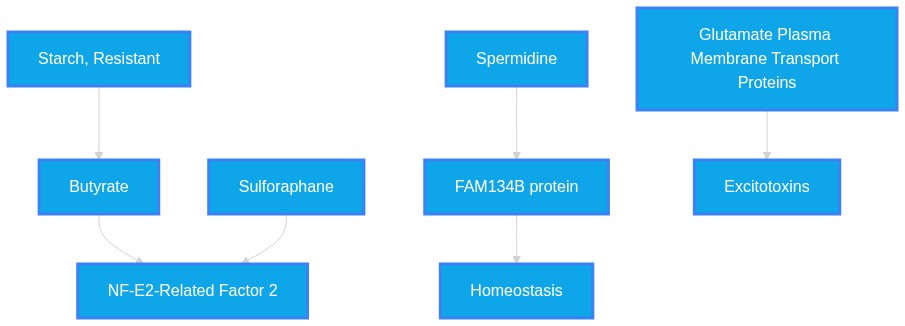
Dietary butyrate from resistant starch may synergize with sulforaphane-driven Nrf2 activation and spermidine-mediated FAM134B ER-phagy in order to restore astrocytic EAAT2 membrane trafficking and potentially clear synaptic glutamate excitotoxicity in neurodegeneration. (Literature Based Discovery)
Plausibility Verdicts
The suggested therapeutic strategy is mechanistically supported by overlapping antioxidant and autophagic pathways, though clinical trials directly combining these specific agents are currently lacking.
Dataset Summary
Novel & Overlooked Insights
- Butyrate and resistant starch are not merely metabolic fuels but active modulators of the gut-brain axis, impacting both Nrf2 signaling and microbiota composition.
- FAM134B-mediated ER-phagy is emerging as a critical nexus for both viral restriction and cellular quality control in AD, with its downregulation serving as an early pathogenic event.
- Spermidine does not only induce autophagy but also impacts hypusination of EIF5A, a process essential for regulating placental and potentially astrocytic protein synthesis.
- Sulforaphane shows consistent photoprotective and neuroprotective effects, but its clinical utility remains constrained by variability in gut microbiome-mediated conversion.
- T-2 toxin and cadmium toxicity share a common mechanism of suppressing FAM134B-mediated ER-phagy, linking environmental pollution to homeostatic decline.
- Spermidine and sulforaphane independently stabilize mitochondrial and ER function, providing a combined metabolic and proteostatic shield for glial cells.
- The cGAS-STING inflammatory axis is directly repressed by spermidine-mediated mitophagy, highlighting an immunological dimension to its neuroprotective profile.
Extracted Discoveries
- Assess the combined effect of butyrate, sulforaphane, and spermidine on astrocytic EAAT2 protein stability and surface trafficking using high-resolution microscopy in a glutamate-challenged neuronal-astrocyte co-culture model.
- Utilize CRISPR-Cas9 knockdown of FAM134B in primary astrocytes to determine if the neuroprotective effects of the tripartite combination (butyrate + SFN + spermidine) are dependent on functional ER-phagy.
- Measure synaptic glutamate levels and neuronal survival in an AD-model (e.g., 5XFAD) following chronic combined supplementation of these three agents to establish in vivo efficacy.
- A longitudinal study evaluating the correlation between dietary intake of polyamine-rich, resistant starch-containing foods and cognitive decline indices in at-risk aging populations.
- A randomized controlled pilot trial to assess the safety and biomarker efficacy (EAAT2 trafficking/oxidative stress) of combined prebiotic (butyrate-producing fiber) and nutraceutical (SFN/SPD) therapy in prodromal Alzheimer's patients.
- Enhancement of astrocytic EAAT2 expression can be achieved by targeting the FAM134B/ER-phagy axis, which is otherwise suppressed by T-2 toxin or cadmium exposure, through the use of spermidine and SFN.
- Cadmium/T-2 toxin exposure triggers liver/testis injury by suppressing FAM134B-mediated ER-phagy (Source: 41797117, 42107477)
- Astrocytic EAAT2 expression and membrane trafficking are critical for clearing synaptic glutamate excitotoxicity in neurodegenerative disease models (Source: 42128064, 42051019)
- FAM134B-mediated ER-phagy maintains ER quality control and protein homeostasis, which is necessary for stable trafficking of membrane proteins like EAAT2.
- Since ER-phagy (FAM134B) is required to remove misfolded proteins that cause ER stress, and ER stress is a known inhibitor of membrane protein trafficking (including EAAT2), restoring FAM134B through spermidine or SFN should directly rescue the EAAT2-dependent glutamate buffering capacity of astrocytes.
- No direct contradictions found; evidence across fields (toxicology vs neurobiology) appears largely convergent on the importance of Nrf2 and ER-phagy for cellular resilience.
- Repurposing spermidine and sulforaphane as adjunctive agents to standard cholinergic therapies (donepezil/memantine) could potentially stabilize the glutamate-handling phenotype of astrocytes, which currently lacks effective clinical intervention.
PathMap is funded by sales of datasets and coversheets to researchers of any kind who wish to discover the most viable routes and paths to accelerate cures. We do not make theoretical molecules, we expose the truth in current PubMed literature. Commission a trace today.
PathMap Scores
How are these metrics evaluated?
Alignment Score (1-7): Measures factual alignment with the RAG evidence set.
[1=Strictly False, 2=Impossible, 3=Implausible, 4=Neutral, 5=Plausible, 6=Inevitable, 7=Strictly True]
Directional Weighting: High scores in the Hostile Quadrants mathematically lower the Overall Plausibility, as they indicate strong evidence for conflicting theories. Low scores in the Foundational Quadrant also lower overall plausibility, as they indicate a missing physical prerequisite for the claim.
Veridicality Audit Report
All Extracted Datapoints
Evaluated Perspectives & Quadrants
CLAIM EVALUATED AND ANSWER TO USER
"Dietary butyrate from resistant starch may synergize with sulforaphane-driven Nrf2 activation and spermidine-mediated FAM134B ER-phagy in order to restore astrocytic EAAT2 membrane trafficking and potentially clear synaptic glutamate excitotoxicity in neurodegeneration." Based on the provided literature, this hypothesis is mechanistically plausible. The evidence indicates that (1) dietary resistant starch increases butyrate production; (2) butyrate, sulforaphane, and spermidine independently activate Nrf2 and antioxidant defenses; (3) FAM134B-mediated ER-phagy is a mechanism for maintaining ER and cellular homeostasis; and (4) restoring astrocytic EAAT2 function is a critical strategy for mitigating glutamate excitotoxicity. While no single study describes this precise tripartite synergy, the individual components and pathways are well-documented as overlapping regulators of neuronal and glial survival in neurodegenerative models.ABSTRACT & REWRITTEN CLAIM
This assessment synthesizes evidence regarding the modulation of redox homeostasis (via Nrf2), protein quality control (via ER-phagy), and glutamate uptake (via EAAT2). The proposed synergy between dietary butyrate, sulforaphane, and spermidine offers a novel, multi-target approach to neuroprotection by converging on these shared homeostatic nodes.INTRODUCTION & JUSTIFICATION
Neurodegenerative processes such as Alzheimer’s and Parkinson’s diseases are driven by convergent pathologies: oxidative stress, neuroinflammation, and glutamate excitotoxicity. Astrocytic EAAT2, the primary glutamate transporter, is frequently downregulated in these conditions, leading to synaptic glutamate accumulation and subsequent neuronal death. The literature demonstrates that dietary fiber/resistant starch promotes the production of SCFAs like butyrate, which serves as a major energy source for colonocytes and supports gut-brain axis homeostasis. Mechanistically, butyrate regulates Nrf2 and antioxidant pathways. Sulforaphane functions as a potent Nrf2 inducer, while spermidine enhances autophagic flux—specifically FAM134B-mediated ER-phagy. Given that EAAT2 expression and membrane trafficking are susceptible to oxidative and ER stress, the combination of these agents potentially stabilizes the astrocytic proteome and redox environment, thereby preventing the collapse of glutamate buffering.Novel & Overlooked
EVIDENCE, METHODOLOGY & CITATIONS
1. ID: 42610256 - Application: Demonstrates butyrate's role in the gut-brain axis and Nrf2 modulation. - "Mechanistically, butyrate was associated with upregulated expression of nuclear factor erythroid 2-related factor 2 (Nrf2) and its downstream antioxidant effectors (heme oxygenase 1 [HO-1] and NQO1), while inhibiting phosphorylation of NF-κB p65 and the secretion of proinflammatory cytokines (interleukin-1β [IL-1β], interleukin-6 [IL-6], and tumor necrosis factor-α [TNF-α]) in human cortical microvessels endothelial cells/D3 (hCMEC/D3) cells." 2. ID: 42192129 - Application: Establishes FAM134B as a specific receptor for APP degradation in AD. - "FAM134B/RETREG1 as a specific ER-phagy receptor mediating amyloid precursor protein (APP) degradation." 3. ID: 42051019 - Application: Shows astrocyte-targeted EAAT2 modulation. - "Western blot analysis in C8-D1A astrocytic cells demonstrated increased expression of excitatory amino acid transporter 2 (EAAT2) following HCM-01 treatment compared with control and reference drug-treated groups" 4. ID: 42128064 - Application: Defines the AOP for glutamate excitotoxicity in neurodegeneration. - "glutamate excitotoxicity (mediated by GluN2B-NMDAR subunit shifts, Ca²⁺ overload, and astrocytic EAAT2/GLT-1 downregulation)." 5. ID: 42013738 - Application: SPD's role in mitochondrial quality and mitophagy. - "SPD mitigates SICM by orchestrating the restoration of mitochondrial quality control, normalization of mitophagic flux, and stabilization of cellular redox homeostasis." 6. ID: 42491593 - Application: ERS inhibitor efficacy in cadmium hepatotoxicity. - "The ERS inhibitor 4-PBA markedly attenuated Cd-induced hepatic injury." 7. ID: 41797117 - Application: Crosstalk between mitophagy and ER-phagy in toxin models. - "T-2 toxin was found to concurrently activate PINK1/Parkin-mediated mitophagy and suppress Keap1-mediated FAM134B ubiquitination-dependent ER-phagy, thereby triggering ER stress." 8. ID: 42465275 - Application: Mechanism of slingshot protein phosphatase in DU toxicity. - "The most enriched transcript in DU-exposed larvae coded for slingshot protein phosphatase ( ssh ), further exploration revealed ssh1b as the zebrafish-specific ortholog activated in response to DU" 9. ID: 42525741 - Application: Nrf2 activation as a rescue mechanism in astrocyte redox imbalance. - "Sulforaphane, which activates the NRF2 antioxidant pathway, restored prelimbic neuronal activity and rescued maladaptive affective behaviors in ALDH7A1 knockout mice but did not prevent seizures." 10. ID: 42217339 - Application: Spermidine’s role in regulating cGAS-STING via AMPK-mitophagy. - "spermidine activated AMPK-mediated mitophagy to directly inhibit the hyperactivation of cGAS-STING inflammatory axis" 11. ID: 42212335 - Application: VDR-Spermidine axis role in aging. - "supplementation with either SPD or its upstream methyl donor S-adenosylmethionine (SAM) rescued cVKO and VKO cell aging, improved hormonal profiles and promoted follicular development in cVKO mice." 12. ID: 42426148 - Application: SFN potential in multiple sclerosis models. - "SFN3 demonstrated significant improvement in motor function, cognitive performance, neurotransmitter levels antioxidant enzymes and alleviated neuroinflammation by modulating inflammatory cytokines." 13. ID: 42468217 - Application: Spermidine's regulation of autophagy in toxicity. - "Spermidine alleviates 2,2-dichloroacetamide/ 2,2-dibromoacetamide-exposed mouse oocyte toxicity by restoring autophagic homeostasis." 14. ID: 41932312 - Application: Mechanosensory channel involvement in ER-phagy. - "The ER-localized cation channels PIEZO1 and TRPV1 are enriched at and mediate Ca2+ transients from high-Ca2+-containing ER sheets, triggering liquid-liquid phase separation of the autophagosome-initiating FIP200 complex to initiate ER-phagy." 15. ID: 42352383 - Application: Prebiotic effects of AOS on SAP and gut homeostasis. - "AOS exerts comprehensive protective effects against SAP through suppression of inflammatory signaling and oxidative stress, as well as restoring gut homeostasis." 16. ID: 42169618 - Application: Spermidine effect on immune aging. - "Spermidine reversed these features and significantly enhanced spike-specific IgG secretion, memory B cell recall responses and neutralising antibody activity, specifically in non-responders." 17. ID: 42563439 - Application: Microbial butyrate's role in mitochondrial health. - "Butyrate generally enhances mitochondrial biogenesis, ATP generation, and electron transport chain activity across multiple experimental models." 18. ID: 41754095 - Application: Diet-Microbiota-Polyamine axis framework. - "dietary components and functional foods shape gut microbial ecology and, in turn, regulate microbial polyamine biosynthetic pathways that impact intestinal health." 19. ID: 42161229 - Application: Upregulation of FAM134B in response to ER stress in cancer. - "ER-phagy induction is associated with upregulation of the ER-phagy receptor FAM134B and depends on ER stress signalling" 20. ID: 41661358 - Application: MARCH6 regulation of FAM134B in glioma. - "MARCH6 exerts a repressive effect on ERS responses and ER-phagy in glioma cells by destabilizing FAM134B." 21. ID: 42107477 - Application: Nano-Se inhibition of Cd-activated ER-phagy. - "Nano-Se notably restrained Cd-activated ER-phagy and excessive lysosomal acidification. Mechanistically, such protective effects were achieved by blocking TFEB nuclear translocation and preventing the downregulation of FAM134B." 22. ID: 42104568 - Application: PACS2 role in MAM integrity and FAM134B-ER-phagy. - "PACS2 plays a critical role in maintaining MAM structural integrity and regulating FAM134B-mediated ER-phagy through the ERK-MAPK-TFEB signalling axis" 23. ID: 41612464 - Application: SS-31 protection of oocytes via spermidine. - "SS-31 increased the levels of spermidine and GSH, which were critical metabolites to protect oocytes against aging." 24. ID: 42045046 - Application: Resistant starch effects on GLP-1/PYY and gut-brain axis. - "the gut microbiota-gut-brain axis by activating the AMPK/ACC pathway to reduce fat accumulation" 25. ID: 41593210 - Application: Summary of ER-phagy receptor advances. - "The identification of specific ER-phagy receptors including FAM134A, FAM134B, FAM134C, TEX264, SEC62, RTN3L, CCPG1, ATL3, CALCOCO1 and others has significantly advanced our understanding of ER quality control mechanisms." 26. ID: 41564102 - Application: FMT efficacy in radiation-induced lung injury via FAM134B. - "Transcriptomic and ultrastructural analyses indicated that RILI suppressed endoplasmic reticulum (ER) protein processing and induced ER swelling, while FMT promoted protective ER-phagy and facilitated restoration of ER morphology." 27. ID: 42346630 - Application: SFN photoprotective scoping review. - "The included studies suggest that SFN exerts photoprotective effects across multiple experimental models. In murine studies, SFN and SFN-rich extracts were associated with a reduction in tumour incidence, multiplicity, and volume following UV exposure." 28. ID: 42359648 - Application: Nephroprotective Nrf2 mechanism of SFN. - "The present study indicated that SFN exerted its nephroprotective effect through NRF2‑mediated anti‑inflammatory, antioxidant and anti‑apoptotic mechanisms" 29. ID: 42217339 - Application: Codonopsis pilosula polysaccharides mechanism in UC. - "Codonopsis pilosula polysaccharides were essential for the anti-ulcerative colitis efficacy of Shenling Baizhu Formula: removal of Codonopsis pilosula significantly aggravated colonic pathological lesions, intestinal inflammatory responses and oxidative stress in ulcerative colitis mice" 30. ID: 42343845 - Application: Protective role of TTM in PSCI. - "TTM modulates ER-phagy, alleviates ERS, reduces neuroinflammation and apoptosis, protects dendritic spines, and improves cognitive function in rats with PSCI." 31. ID: 42197044 - Application: Dietary polyamine distribution in Spain. - "Growing evidence, particularly for SPD, suggests that polyamine-rich diets may protect against age-related conditions such as cardiovascular disease, metabolic syndrome, and neurodegenerative disorders." 32. ID: 42610256 - Application: Restoration of microbial homeostasis. - "Butyrate intervention restored microbial homeostasis and enriched SCFA-producing communities." 33. ID: 42610256 - Application: BBB integrity and tight junctions. - "Butyrate prophylaxis was associated with lower bacterial loads in the blood and brain tissue, preserved expression of tight junction proteins (ZO-1, Claudin-5, and Occludin) in the brain, and maintained blood-brain barrier (BBB) integrity and permeability." 34. ID: 41413198 - Application: CD97 modulation of STING/ER-phagy. - "CD97 facilitates the recruitment of the ER-phagy receptor, FAM134B (family with sequence similarity 134, member B), to initiate ER-phagy, resulting in the degradation of STING subsequent to DNA virus infection." 35. ID: 41438769 - Application: Micro-ER-phagy role of RETREG1 in Ebola. - "RETREG1 knockout abolishes degradation of ER-retained SERINC5, whereas endolysosomal turnover of surface SERINC5 remains partially intact, demonstrating that glycoGag utilizes dual ER-phagy and endolysosomal routes to suppress SERINC5." 36. ID: 42620616 - Application: PRRSV suppression of FAM134B. - "PRRSV employs its Nsps to inhibit the expression of FAM134B." 37. ID: 42607684 - Application: Interaction of PRKAR1A and FAM134B. - "At a molecular level, an amphipathic helix in the otherwise-disordered C terminus of FAM134B directly binds PRKAR1A dimers." 38. ID: 42576627 - Application: SVA cleavage of FAM134B. - "By screening viral proteins, we identified the SVA 3C protease (3C[pro]) as the executor of this cleavage event." 39. ID: 42318785 - Application: Cholesterol role in RETREG1 sequestration. - "Cholesterol directly binds to RETREG1 and SCAP, facilitating the formation of the RETREG1-SCAP complex." 40. ID: 42295516 - Application: CLN8 impact on ER-phagy. - "At later disease stages pancreatic injury increased along with an upregulation of ER-phagy shown by an overexpression of LC3B and the ER-phagy receptor FAM134B" 41. ID: 42525741 - Application: NRF2 activation restoring neuronal activity in epilepsy. - "Sulforaphane, which activates the NRF2 antioxidant pathway, restored prelimbic neuronal activity" 42. ID: 42515140 - Application: PFOS toxicity and SFN rescue in BMSCs. - "pharmacological activation using the Nrf2 agonist sulforaphane (SFN) effectively mitigated the senescent phenotype and restored the chondrogenic potential of PFOS-exposed BMSCs." 43. ID: 42487586 - Application: NTF formula via Nrf2/TFAM in stroke. - "Both sulforaphane and NTF treatment reversed these effects; NTF treatment effectively increased the expression of Nrf2, TFAM, FtMt, CISD1, CISD2, FPN, and GPX4 while inhibiting the levels of Fe2+, ROS, and LPO." 44. ID: 42473985 - Application: SFN potential in ASD pathways. - "SFN's physiological activities─including antioxidant, neuroprotective, and anti-inflammatory properties are gaining heightened attention." 45. ID: 42445252 - Application: Biotechnology education model for Nrf2. - "The intervention may provide a transferable model for integrating experiential, research-oriented and competency-based learning in undergraduate biotechnology education." 46. ID: 42442915 - Application: Nrf2 pathways in Parkinson's disease. - "Pharmacological agents such as sulforaphane, curcumin, and resveratrol have been shown to activate Nrf2 and upregulate the expression of antioxidant genes in preclinical PD models." 47. ID: 42426148 - Application: Consistent modulation of MS markers by SFN. - "While DIMF50 showed the highest overall efficacy, SFN3 showed consistent modulation of pathological markers, neuroprotective effects, and safety profile." 48. ID: 42413380 - Application: β-sitosterol and multi-target pathways. - "β-Sitosterol exhibits broad activity by regulating cholesterol metabolism, suppressing neuroinflammation, restoring redox balance, preserving mitochondrial function, and inhibiting important Alzheimer's diseases targets" 49. ID: 42407371 - Application: Mupirocin downregulation of CLDN14. - "Sulforaphane, an Nrf2 activator, attenuated the MUP-induced enhancement of anticancer efficacy." 50. ID: 42092427 - Application: Probiotic C. butyricum and SPD. - "Clostridium butyricum (C. butyricum), a probiotic, can alleviate cognitive decline in individuals with various neurodegenerative diseases, and C. butyricum might generate SPD."Verbatim Quote Audit Console
Mapped Reference Directory (APA)
- [1] ID: 42610256 - Yao W, Chen M, Pan H, Kulyar MF, Zhang J et al. (2026). Gut Microbiota-Derived Butyrate Strengthens Blood-Brain Barrier Integrity and Attenuates Streptococcus suis SC19-Induced Meningitis: Involvement of the Gut-Brain Axis.. Transboundary and emerging diseases. ID: 42610256.
- [2] ID: 42192129 - Zhang Y, Sun J, Cai Y, Xu Z, Li X et al. (2026). FAM134B-mediated ER-phagy degrades APP and suppresses Alzheimer's disease pathology.. The EMBO journal. ID: 42192129.
- [3] ID: 42051019 - Hacımüftüoğlu A, Saraçoğlu N, Saffour S, Abad N, Kesgun Y et al. (2026). Multi-Target Neuroprotective Compound Exhibits EAAT2-Modulating and Alzheimer's Pathology-Attenuating Effects in In Vitro and In Vivo Models.. ACS chemical neuroscience. ID: 42051019.
- [4] ID: 42128064 - Seyedi F, Hedayati-Moghadam M, Heidari M, Golkar A, Baghcheghi Y (2026). Disruption of hippocampal synaptic plasticity by chronic ethanol exposure: A narrative review of neurotoxic adverse outcome pathways.. Neurotoxicology. ID: 42128064.
- [5] ID: 42013738 - Long S, Sun J, Wu Y, Yi J, Ren S et al. (2026). Spermidine alleviates sepsis-induced cardiomyopathy by improving mitochondrial quality and quantity via a Metallothionein 1-dependent antioxidant pathway.. Phytomedicine : international journal of phytotherapy and phytopharmacology. ID: 42013738.
- [6] ID: 42491593 - Guo C, Ling H, Mao J, Dong J, Zhang C et al. (2026). The role of endoplasmic reticulum stress-mediated autophagy in cadmium-induced liver injury in rats.. Frontiers in veterinary science. ID: 42491593.
- [7] ID: 41797117 - Xu Q, Deng L, Xu J, Wu Z, Lin R et al. (2026). T-2 toxin induces ER stress-dependent liver injury via mitophagy-mediated ER-phagy suppression: Berbamine blocks SNARE complex for hepatoprotection.. Journal of hazardous materials. ID: 41797117.
- [8] ID: 42465275 - Kalaniopio PH, Gibbons LB, Allen RS, Matthews SM, Lujan OR et al. (2026). Environmentally relevant depleted uranium exposure damages mitochondria, decreases cytosolic reductive capacity, and increases global DNA damage accumulation through a ROS-independent mechanism involving slingshot protein phosphatase 1b enrichment.. bioRxiv : the preprint server for biology. ID: 42465275.
- [9] ID: 42525741 - Faust TE, Saito A, Ishikawa S, Yang K, Xin W et al. (2026). Astrocyte redox imbalance underlies prelimbic neuronal hypoactivity and maladaptive affective behaviors in epilepsy.. Science advances. ID: 42525741.
- [10] ID: 42217339 - Xi X, Li J, Wang Y, Ni Y, Zhou J et al. (2026). Codonopsis pilosula as the sovereign herb in Shenling Baizhu formula ameliorates DSS-induced ulcerative colitis via spermidine-AMPK-mediated mitophagy to inhibit the cGAS-STING inflammatory axis.. International immunopharmacology. ID: 42217339.
- [11] ID: 42212335 - Chen H, Geng Q, Wang Q, Li Y, Shangguan L et al. (2026). VDR-Spermidine Axis Protects Against Age-Related Granulosa Cell Dysfunction and Follicular Decline via DNMTs-Mediated p53 Methylation.. International journal of biological sciences. ID: 42212335.
- [12] ID: 42426148 - Choudhary D, Mehan S, Mukherjee R, Khan MN, Gupta GD et al. (2026). Multitarget therapeutic potential of sulforaphane in ethidium bromide-induced neurotoxicity in multiple sclerosis-like pathology: comparison with omaveloxolone and dimethyl fumarate on neuroprotection and systemic recovery.. Scientific reports. ID: 42426148.
- [13] ID: 42468217 - Zhang YR, Ding YW, Yin Y, Zhou LQ, Guo YX et al. (2026). Spermidine alleviates 2,2-dichloroacetamide/ 2,2-dibromoacetamide-exposed mouse oocyte toxicity by restoring autophagic homeostasis.. Ecotoxicology and environmental safety. ID: 42468217.
- [14] ID: 41932312 - Ma X, Cheng Z, Zhao H, Zhang H, Xiao K et al. (2026). Mechanosensory channels mediate ER Ca2+ transients to trigger assembly of autophagosome initiation sites for degradation of ER subdomains.. Molecular cell. ID: 41932312.
- [15] ID: 42352383 - Ou X, Dai Y, Hu X, Liu Y, Yuan S et al. (2026). Alginate Oligosaccharide Alleviates Severe Acute Pancreatitis in Mice via Suppression of Oxidative Stress, Inflammation and Modulation of Intestinal Epithelial Barrier Integrity.. Biomolecules. ID: 42352383.
- [16] ID: 42169618 - Alsaleh G, Ali M, Kayvanjoo AH, Liu F, Moreau T et al. (2026). Spermidine Mitigates Immune Cell Senescence and Boosts Vaccine Responses in Healthy Older Adults-A Pilot Study.. Aging cell. ID: 42169618.
- [17] ID: 42563439 - Frye RE, Rossignol DA (2026). Mechanistic pathways linking gut microbial metabolites, microbial structural products, and host-microbe co-metabolites to mitochondrial function.. Gut microbes. ID: 42563439.
- [18] ID: 41754095 - Mafe AN, Büsselberg D (2026). The Diet-Microbiota-Polyamine Axis in Intestinal Aging: Microbial Pathways, Functional Foods, and Physiological Implications.. Nutrients. ID: 41754095.
- [19] ID: 41612464 - Xiong D, Zhang Y, Wei J, Wang L, Zhang G et al. (2026). SS-31 improves the quality of maternally aged oocytes by ameliorating mitochondrial function and metabolism.. Journal of ovarian research. ID: 41612464.
- [20] ID: 42161229 - Bogucka A, Korewo-Labelle D, Gimła M, Smolińska-Fijołek E, Herman-Antosiewicz A et al. (2026). ER-phagy drives resistance to mitochondria-targeted therapy in breast cancer.. Biomedicine & pharmacotherapy = Biomedecine & pharmacotherapie. ID: 42161229.
- [21] ID: 42045046 - Liu K, Li X, Zhang Y, Sun J, Liao W (2026). [Research progress in mechanisms of dietary resistant starch for regulating glucose and lipid metabolism].. Nan fang yi ke da xue xue bao = Journal of Southern Medical University. ID: 42045046.
- [22] ID: 42515140 - Zheng H, Zhou H, Liu H, Hua S, Wang Y (2026). PFOS Exposure Triggers NRF2-Mediated Senescence in Bone Marrow Mesenchymal Stem Cells to Attenuate Their Chondrogenic Potential.. Toxics. ID: 42515140.
- [23] ID: 42104568 - Li X, Shi ZA, He F, Mu G, Wang F et al. (2026). PACS2 Alleviates Sepsis-Induced Myopathy by Activating ERK-MAPK Signalling Pathway to Suppress ER-Phagy.. Journal of cachexia, sarcopenia and muscle. ID: 42104568.
- [24] ID: 41844133 - Kim DW, Koo DB, Park HJ (2026). IRE1/FAM134B-mediated ER-phagy alleviates zearalenone-induced ER stress and developmental defects in porcine embryos.. Ecotoxicology and environmental safety. ID: 41844133.
- [25] ID: 41593210 - Yang WJ, Sheng R (2026). ER-phagy receptors: structural mechanisms in selective ER degradation and disease implications.. Acta pharmacologica Sinica. ID: 41593210.
- [26] ID: 41564102 - Pu X, Liu B, Dong L, Yuan M, Jin S et al. (2026). Fecal microbiota transplantation ameliorates radiation-induced lung injury by reshaping gut metabolic homeostasis to activate FAM134B-mediated ER-phagy.. PLoS pathogens. ID: 41564102.
- [27] ID: 42197044 - Toro-Funes N, Comas-Basté O, Latorre-Moratalla M, Veciana-Nogués MT, Vidal-Carou MC (2026). Dietary Polyamine Intake Across Age Groups in Spain: A Comprehensive Assessment.. Nutrients. ID: 42197044.
- [28] ID: 42346630 - Di Filippo M, Paolino G, Di Nicola MR, Kiss N, Bánvölgyi A et al. (2026). Sulforaphane as a Photoprotective Agent Against UV-Induced Skin Damage and Carcinogenesis: A Scoping Review.. Journal of personalized medicine. ID: 42346630.
- [29] ID: 42359648 - Wu Z, Lu M, Xu L, Luo M, Shan L et al. (2026). Sulforaphane attenuates cisplatin‑induced acute kidney injury by inhibiting oxidative stress, inflammation and apoptosis via regulation of NRF2.. Molecular medicine reports. ID: 42359648.
- [30] ID: 42343845 - Yang D, Zhao F, He Y, Zhu H, Liu X et al. (2026). [Trillium tschonoskii Maxim saponin protects neurological function in rats with post-stroke cognitive impairment by promoting ER-phagy].. Nan fang yi ke da xue xue bao = Journal of Southern Medical University. ID: 42343845.
- [31] ID: 41953939 - Zhang J, Wang T, Wen J, Lan J, Li S et al. (2026). FAM134B isoform 2/RETREG1-2 defines a calnexin-TOLLIP-coupled ER-phagy pathway that restricts Ebola virus glycoprotein and is antagonized by VP40 through macro-autophagy.. bioRxiv : the preprint server for biology. ID: 41953939.
- [32] ID: 41413198 - Chang H, Yang R, Qi W, Hou P, Xiang A et al. (2025). Inhibition of STING-mediated antiviral innate immunity activation by CD97 via modulation of ER-phagy.. Communications biology. ID: 41413198.
- [33] ID: 42092427 - Wu S, Zhang J, Yin Y, Li E, Zhang Y et al. (2026). Clostridium butyricum and its metabolite spermidine delay cognitive decline during natural brain aging by reducing inflammation and oxidative stress.. Behavioural brain research. ID: 42092427.
- [34] ID: 42413380 - Sivalingam AM (2026). β-sitosterol and next-generation neuroprotection for multi-target strategies and the gut-brain axis in neurodegenerative diseases.. The Journal of steroid biochemistry and molecular biology. ID: 42413380.
- [35] ID: 42445252 - García-Bonillo C, Atienzar-Aroca S, Pérez-Leal M (2026). A curriculum-integrated learning experience linking experimental pharmacology, cell culture and Nrf2-related gene expression analysis in undergraduate biotechnology education.. Frontiers in pharmacology. ID: 42445252.
- [36] ID: 42442915 - Bougea A (2026). Activation of Nrf2 neuroprotective pathways for treatment of Parkinson's disease: A state of art review.. International review of neurobiology. ID: 42442915.
- [37] ID: 42407371 - Mizukami Y, Ando T, Tosaki S, Ishikawa Y, Shinoda T et al. (2026). Mupirocin-mediated downregulation of claudin-14 enhances chemosensitivity in human colorectal cancer cells.. Biochimica et biophysica acta. Molecular cell research. ID: 42407371.
- [38] ID: 42487586 - Wei M, Liu D, Du Q, Mei Z, Liao J (2026). Naotaifang Formula Suppresses Ferroptosis by Ameliorating Mitochondrial Biogenesis Through the Nrf2/TFAM Pathway in Ischemic Stroke.. Current neuropharmacology. ID: 42487586.
- [39] ID: 42473985 - Zhang X, He Q, Zhu YY, Lorimer GH, Bayram H et al. (2026). Emerging Promise of Sulforaphane in Autism: A Comprehensive Review of Its Therapeutic Potential and Mechanisms.. ACS chemical neuroscience. ID: 42473985.
- [40] ID: 41661358 - Zhou Y, Chen R, Liu G, Zhang L, Zheng H et al. (2026). MARCH6 Confers Protection Against Endoplasmic Reticulum Autophagy in Gliomas by Destabilizing FAM134B.. Neurochemical research. ID: 41661358.
Abstract Repository (Raw Full-Texts) Show Database Collapse Database
ID: 41413198
Title: Inhibition of STING-mediated antiviral innate immunity activation by CD97 via modulation of ER-phagy.
Abstract: Endoplasmic reticulum (ER) autophagy (ER-phagy) is a vital homeostatic process triggered by multiple signals and plays a crucial role in regulating innate immunity and viral replication. However, the mechanisms by which host proteins utilize ER-phagy to regulate innate immune response during viral infection remains largely unclear. Here, we uncover the regulatory crosstalk between innate immune adapter, ER retention protein Stimulator of Interferon Genes (STING), and the G protein-coupled receptor ADGRE5/CD97 (Cluster of Differentiation 97). Our results demonstrate that CD97 suppresses the STING-mediated type-I interferon (IFN-I) response against DNA virus and cytosolic DNA, thereby promoting herpes simplex virus type 1 (HSV-1) replication in both cells and mice. CD97 facilitates the recruitment of the ER-phagy receptor, FAM134B (family with sequence similarity 134, member B), to initiate ER-phagy, resulting in the degradation of STING subsequent to DNA virus infection. Furthermore, Cd97-deficient mice exhibit higher IFN-I response and greater resistance to HSV-1 infection. Additionally, our findings reveal that inhibiting CD97 with sanguinarine effectively disrupts HSV-1 replication. These findings shed light on the role of CD97 in the innate immune response against DNA virus infections and offer valuable checkpoint for anti-viral STING activation.
View on PubMed
ID: 41564102
Title: Fecal microbiota transplantation ameliorates radiation-induced lung injury by reshaping gut metabolic homeostasis to activate FAM134B-mediated ER-phagy.
Abstract: Radiation-induced lung injury (RILI) is a serious complication of thoracic radiotherapy, with limited effective treatment options. This study demonstrates that fecal microbiota transplantation (FMT) confers protection against RILI through modulation of the gut-lung axis. In a total lung irradiation (TLI) mouse model, FMT significantly alleviated pulmonary histopathological injury, inflammatory responses, oxidative stress, and collagen deposition during fibrogenesis. Concurrently, FMT improved intestinal motility, enhanced mucosal barrier integrity, and restored TLI-induced dysbiosis in gut microbiota diversity and community structure. Metabolomic analysis revealed that TLI significantly disrupted the metabolism of unsaturated fatty acids and arachidonic acid (AA), whereas FMT partially restored these metabolic networks. Transcriptomic and ultrastructural analyses indicated that RILI suppressed endoplasmic reticulum (ER) protein processing and induced ER swelling, while FMT promoted protective ER-phagy and facilitated restoration of ER morphology. Integrated multi-omics analysis further identified the AA metabolism as a key component of FMT-mediated protection, with its alterations closely associated with pulmonary tissue repair. Further in vivo and in vitro experiments demonstrated that AA binds to and activates the nuclear receptor PPARγ, leading to transcriptional upregulation of FAM134B, promoting protective ER-phagy and ameliorating RILI. In summary, this study highlights the bidirectional gut-lung axis as a therapeutic target in RILI progression and intervention, and reveals that FMT confers protection through metabolic remodeling and activation of the PPARγ-FAM134B-mediated ER-phagy pathway, providing a mechanistic basis for potential clinical translation.
View on PubMed
ID: 41593210
Title: ER-phagy receptors: structural mechanisms in selective ER degradation and disease implications.
Abstract: The endoplasmic reticulum (ER) is a central organelle for protein synthesis and folding, lipid metabolism and calcium signaling, etc. To maintain ER homeostasis, cells employ a specific autophagy process termed ER-phagy (reticulophagy), which depredates ER components via three forms: macro-ER-phagy (involving bulk ER sequestration), micro-ER-phagy (lysosome-direct), and ER-to-lysosome-associated degradation (ERLAD). The identification of specific ER-phagy receptors including FAM134A, FAM134B, FAM134C, TEX264, SEC62, RTN3L, CCPG1, ATL3, CALCOCO1 and others has significantly advanced our understanding of ER quality control mechanisms. In this review we summarize the current knowledge on ER-phagy receptors, and emerging evidence linking ER-phagy dysfunction to various disease pathologies including neurological disorders, cancer, metabolic diseases, cardiovascular diseases, infections and immune disorders. Recent evidence shows that ER-phagy receptors can form novel ER-derived structures, such as ER-tubular bodies (ER-TBs) consisted of ATL3 and RTN3L, which mediate Golgi-bypassing unconventional protein secretion under stress conditions, revealing non-degradative functions of these receptors beyond quality control. Targeting ER-phagy receptors may provide insights into potential therapeutic strategies for diseases associated with this fundamental cellular process.
View on PubMed
ID: 41612464
Title: SS-31 improves the quality of maternally aged oocytes by ameliorating mitochondrial function and metabolism.
Abstract: Reproductive aging is closely associated with poor oocyte quality in vitro maturation, but effective approaches to ameliorate it have still not been fully determined. Here, we found that SS-31 supplementation efficaciously improved oocyte maturation and early embryonic development from aged mice. Specifically, SS-31 remarkably restored the normal spindle/chromosome structure, fertilization ability, mitochondrial distribution, ΔΨm and mitophagy in aged oocytes. In contrast, SS-31 reduced oocyte aneuploidy, ROS accumulation and DNA damage. Mechanistically, single-cell transcriptome analysis reveals that SS-31 increased the maternal mRNA degradation, and the levels of genes associated with mitochondrial function and mitophagy in aged oocytes, such as Pink1, Rps27a, Tomm7 and Map1lc3b. In addition, SS-31 suppressed chromatin organization, histone modification and chromatin remodeling pathways. Moreover, we applied the single-cell untargeted metabolomics to identify that SS-31 increased the levels of spermidine and GSH, which were critical metabolites to protect oocytes against aging. Our data reveal that the beneficial effect of SS-31 on oocyte quality from advanced age is mainly mediated by restoration of mitochondrial function, mitophagy and anti-aging metabolites. It provides a potential strategy for improving oocyte quality to extend the reproductive lifespan of female animals.
View on PubMed
ID: 41661358
Title: MARCH6 Confers Protection Against Endoplasmic Reticulum Autophagy in Gliomas by Destabilizing FAM134B.
Abstract: This study probed the mechanism of MARCH6 in endoplasmic reticulum autophagy (ER-phagy) during glioma development by regulating FAM134B stability. MARCH6 and FAM134B expression levels were measured in glioma tissues. A comparative analysis was conducted on the correlation between clinical parameters and FAM134B expression in 46 glioma patients. FAM134B and MARCH6 were knocked down in glioma cells, followed by detection of cell viability and apoptosis, typical ER stress (ERS) markers (PERK, IRE1α, eIF2α, and CHOP), autophagy-related proteins (P62 and LC3B), and autophagosome cytoplasmic accumulation. A mouse glioma model was established for in vivo validation. MARCH6-FAM134B interaction, FAM134B ubiquitination levels, and protein stability were examined. FAM134B expression was high and MARCH6 expression was low in glioma tissues. MARCH6 induced FAM134B protein ubiquitination and degradation, reducing its stability in glioma cells. Knockdown of FAM134B reduced glioma cell survival, inhibited PERK, IRE1α, eIF2α, and CHOP expression, decreased LC3I to LC3II conversion, lowered LC3B fluorescence expression, and reduced the accumulation of autophagosomes with continuous ER structures in the cytoplasm, while enhancing apoptosis and P62 expression. This effect can be reversed by knocking down MARCH6. In vivo, FAM134B knockdown suppressed tumorigenesis in mice. MARCH6 exerts a repressive effect on ERS responses and ER-phagy in glioma cells by destabilizing FAM134B.
View on PubMed
ID: 41754095
Title: The Diet-Microbiota-Polyamine Axis in Intestinal Aging: Microbial Pathways, Functional Foods, and Physiological Implications.
Abstract: Intestinal aging is characterized by a gradual decline in epithelial renewal capacity, barrier function, immune balance, and metabolic regulation, often accompanied by shifts in gut microbial composition. Polyamines, including putrescine, spermidine, and spermine, are vital microbial-host metabolites that support intestinal cell growth, autophagy, immune modulation, and mucosal repair. With advancing age, both host-derived and microbiota-mediated polyamine production declines, contributing to intestinal dysfunction and heightened vulnerability to inflammation and age-related disorders. This review explores the diet-microbiota-polyamine axis as a key biological framework influencing intestinal aging. It aims to integrate evidence on how dietary components and functional foods shape gut microbial ecology and, in turn, regulate microbial polyamine biosynthetic pathways that impact intestinal health. The review highlights major microbial contributors to polyamine metabolism, particularly lactic acid bacteria, and outlines mechanistic pathways linking polyamines to epithelial regeneration, inflammatory control, and gut barrier maintenance. It further discusses how age-associated dysbiosis disrupts these interactions and evaluates nutritional and microbial-based strategies such as fermented foods, prebiotics, and probiotics that may enhance polyamine availability and restore gut homeostasis. From the standpoint of food microbiology and human physiology, this synthesis underscores the translational potential of targeting microbial polyamine production through diet-based interventions. This article presents a narrative review synthesizing experimental, animal, and emerging human evidence on microbial and dietary polyamines in intestinal aging. In conclusion, modulating the diet-microbiota-polyamine axis represents a promising strategy to promote healthy intestinal aging, meriting deeper mechanistic exploration and validation through clinical studies.
View on PubMed
ID: 41797117
Title: T-2 toxin induces ER stress-dependent liver injury via mitophagy-mediated ER-phagy suppression: Berbamine blocks SNARE complex for hepatoprotection.
Abstract: T-2 toxin is a persistent, bioaccumulative environmental contaminant that poses major health threats to humans and animals. Endoplasmic reticulum (ER) stress and autophagy are two interconnected stress responses critical for maintaining cellular homeostasis. Berbamine (BBM) is an important member of bis-benzy lisoquinoline alkaloid with diverse biological activities. This study aimed to identify the molecular target of BBM against T-2 toxin-induced hepatotoxicity, focusing on autophagy-ER stress crosstalk. We systematically evaluated autophagy and ER stress in human HepaRG cells using immunoblotting, transmission electron microscopy and an autophagy reporter assay. T-2 toxin was found to concurrently activate PINK1/Parkin-mediated mitophagy and suppress Keap1-mediated FAM134B ubiquitination-dependent ER-phagy, thereby triggering ER stress. Integrated evidence from molecular dynamics and western blot demonstrated that BBM upregulated and stabilized BNIP3, blocking the VAMP8-SNAP29 interaction to inhibit T-2 toxin-induced autophagy and subsequent ER stress. Moreover, in vivo mouse experiments demonstrated that 30 mg/kg BBM significantly alleviated T-2 toxin-induced liver injury by suppressing both autophagic flux and ER stress; BBM significantly reduced serum levels of liver enzymes, ALT, and AST. Collectively, our findings elucidate a novel mechanism wherein T-2 toxin-induced mitophagy inhibits ER-phagy to drive ER stress-mediated liver injury and highlight the therapeutic potential of BBM in alleviating T-2 toxin-induced liver injury.
View on PubMed
ID: 41844133
Title: IRE1/FAM134B-mediated ER-phagy alleviates zearalenone-induced ER stress and developmental defects in porcine embryos.
Abstract: Zearalenone (ZEN), a mycotoxin commonly found in animal feed, impairs the female reproductive function owing to its estrogen-mimicking ability. ZEN exposure induces endoplasmic reticulum (ER) stress, oxidative stress, and autophagy activation. However, the involvement of inositol-requiring enzyme 1 (IRE1)-mediated ER-phagy in ZEN-induced ER stress and embryonic competence during in vitro culture (IVC) remains unclear. Porcine embryos were cultured with 2.5, 5, and 10 μM ZEN for two days after in vitro fertilization (IVF) to assess blastocyst development. ZEN exposure caused a significant dose-dependent decrease in blastocyst formation, expanded blastocysts, and total cell number (p < 0.05). ZEN-treated embryos exhibited increased DNA fragmentation along with elevated mitochondrial and intracellular Ca²⁺ levels (p < 0.001), as confirmed using terminal deoxynucleotidyl transferase dUTP nick-end labeling assay and Rhod-2 and Fluo-4 AM staining. ER-tracker analysis revealed decreased ER fluorescence intensity and increased uneven cytoplasmic ER distribution in blastocysts exposed to 5 and 10 μM ZEN (p < 0.001). Western blotting showed activation of the unfolded protein response (UPR) with increased expression of glucose-regulated protein 78 (GRP78), p-IRE1, IRE1, p-c-Jun N-terminal kinase (JNK), JNK, C/EBP homologous protein (CHOP), and the autophagy marker microtubule-associated protein 1 light chain 3 beta (LC3B) (p < 0.05), whereas the ER-phagy receptor family with sequence similarity 134, member B was downregulated. Tauroursodeoxycholic acid (TUDCA) alleviated ZEN-induced ER stress, restoring ER distribution and calcium homeostasis, reducing DNA damage, and improving blastocyst development. These findings suggest that ZEN disrupts IRE1 signaling and suppresses ER-phagy during early porcine embryo development, whereas TUDCA alleviates ER stress and improves embryonic competence during IVC.
View on PubMed
ID: 41932312
Title: Mechanosensory channels mediate ER Ca2+ transients to trigger assembly of autophagosome initiation sites for degradation of ER subdomains.
Abstract: ER-phagy involves the selective autophagosomal engulfment of ER fragments, but the signaling events, selection mechanisms, and membrane source of ER-phagic autophagosomes remain elusive. Here, using state-of-the-art super-resolution multi-SIM imaging, we reveal that stresses (prolonged starvation, cholesterol dyshomeostasis, and high-Ca2+ insults) trigger the expansion of sheet ER subdomains containing high levels of luminal Ca2+ in mammalian cells, which are subsequently degraded by ER-phagy. Autophagosome formation and sequestration of ER sheets require the concerted actions of FAM134B and lipidated LC3, whereas the autophagy proteins ATG14 and ATG9 are partially dispensable. Electron microscopy and cryo-electron tomography show that the membranes of autophagosomes enclosing high-Ca2+-containing ER sheets are directly remodeled from the ER. The ER-localized cation channels PIEZO1 and TRPV1 are enriched at and mediate Ca2+ transients from high-Ca2+-containing ER sheets, triggering liquid-liquid phase separation of the autophagosome-initiating FIP200 complex to initiate ER-phagy. Thus, distinct mechanisms are employed for the formation of high-Ca2+-containing ER-enclosing autophagosomes and non-selective autophagosomes.
View on PubMed
ID: 41953939
Title: FAM134B isoform 2/RETREG1-2 defines a calnexin-TOLLIP-coupled ER-phagy pathway that restricts Ebola virus glycoprotein and is antagonized by VP40 through macro-autophagy.
Abstract: Selective autophagy of the endoplasmic reticulum (ER-phagy) is critical for ER proteostasis and host defense, yet how ER quality-control pathways interface with ER-phagy to restrict viral glycoproteins remains poorly defined. Previously, the 1st known ER-phagy receptor gene RETREG1 (RETR1)/FAM134B gene was reported to restrict Ebola virus (EBOV) replication in vivo by inhibiting the viral glycoprotein (GP) and viral protein 40 kDa (VP40) expression, but this mechanism remains unknown. Here, we identify the truncated RETR1/FAM134B isoform 2 (RETR1-2), but not its full-length protein RETR1, as an ER-phagy receptor that targets EBOV-GP for degradation. RETR1-2 broadly triggers GP degradation across ebolavirus species but not Marburg virus and inhibits EBOV replication. Mechanistically, RETR1-2 recognizes EBOV-GP via its luminal domain, undergoes GP-induced oligomerization, and directs GP-containing ER membranes to lysosomes through canonical macro-autophagy. Using unbiased mass spectrometry, we identified TOLLIP as the key cytoplasm adaptor for RETR1-2, which also requires cooperation with the ER chaperone calnexin for EBOV-GP degradation. Notably, the PI3P-binding C2 domain of TOLLIP mediates its interaction with RETR1-2, and the EBOV-GP degradation occurs independently of ubiquitination, revealing an unexpected role for TOLLIP in ER-phagy. Furthermore, EBOV-VP40 antagonizes this pathway by selectively targeting RETR1-2 for macroautophagic degradation independently of TOLLIP, thereby restoring GP expression and viral infectivity. Nevertheless, RETR1-2 reciprocally degrades VP40 via a similar mechanism. Together, these findings define a calnexin-TOLLIP-RETR1-2 axis that links ER quality control to ER-phagy-mediated antiviral restriction and uncover a reciprocal host-virus arms race centered on selective macro-autophagy.
View on PubMed
ID: 42013738
Title: Spermidine alleviates sepsis-induced cardiomyopathy by improving mitochondrial quality and quantity via a Metallothionein 1-dependent antioxidant pathway.
Abstract: Sepsis-induced cardiomyopathy (SICM) is characterized by mitochondrial dysfunction, impaired mitophagic flux, and overwhelming oxidative stress. Spermidine (SPD), a natural polyamine known to enhance autophagy and preserve cardiac function in aging and metabolic disorders, has not been systematically evaluated in the context of septic cardiomyopathy. To determine the therapeutic potential and mechanistic basis of SPD in septic cardiac dysfunction. Network pharmacology, RNA sequencing, a cecal ligation and puncture (CLP) mouse model, and multiple cellular assays were integrated to assess the protective actions of SPD. Mitochondrial function, mitophagy flux, and oxidative stress were evaluated using transmission electron microscopy (TEM), immunohistochemistry (IHC), Western blotting, structured illumination microscopy (SIM), mitochondrial membrane potential assays, oxygen consumption rate (OCR) analysis, and mitochondrial DNA (mtDNA) quantification. Transcriptomic clustering and pathway enrichment identified molecular targets, which were validated through siRNA-mediated gene silencing. SPD markedly attenuated SICM in vivo and in vitro by improving both mitochondrial quantity and quality. It restored sepsis-impaired mitophagy by upregulating LC3B and ATG7, promoting autophagosome maturation, and enhancing cellular ubiquitination. Transcriptomic profiling highlighted metallothionein-1 (MT1) as a key node in metal-ion response pathways. SPD activated the NRF2-MT1-SOD2 antioxidant axis, reduced mitochondrial reactive oxygen species (mtROS) under lipopolysaccharide (LPS) stimulation, and reversed sepsis-induced suppression of SOD2. MT1 knockdown abolished SPD-mediated SOD2 stabilization and mtROS clearance, confirming its essential role in SPD's cardioprotective effects. SPD mitigates SICM by orchestrating the restoration of mitochondrial quality control, normalization of mitophagic flux, and stabilization of cellular redox homeostasis. These findings support SPD as a promising therapeutic candidate for septic cardiomyopathy.
View on PubMed
ID: 42045046
Title: [Research progress in mechanisms of dietary resistant starch for regulating glucose and lipid metabolism].
Abstract: The global prevalence of metabolic diseases such as obesity, diabetes, and cardiovascular diseases is closely related to overnutrition and imbalanced dietary patterns. As an important carbohydrate, starch directly affects the homeostasis of glucose and lipid metabolism due to its digestion characteristics. Resistant starch (RS) with unique anti-digestive properties and prebiotic functions has become the current hotspot in dietary nutrition research for improving glucose and lipid metabolism disorders. This review summarizes the digestive characteristics of starch and the comprehensive effects of RS and its mechanisms for ameliorating metabolic diseases. Diets with high RS content not only optimize glucose homeostasis by delaying glucose release, the undigested fractions entering the colon also drive the metabolic regulatory network of the gut microbiota-gut-brain axis by activating the AMPK/ACC pathway to reduce fat accumulation, enhancing intestinal barrier function mediated by short-chain fatty acids (SCFAs), and promoting GLP-1/PYY neural signal transduction. These insights facilitate the design of new healthy foods and inspire new strategies for optimizing dietary nutrition and regulating glucose and lipid metabolism disorders caused by high-carbohydrate diets. 代谢性疾病如肥胖、糖尿病、心血管疾病的全球流行与营养过剩及饮食模式失衡密切相关。淀粉作为人类主要能量来源的碳水化合物,其消化特性直接影响糖脂代谢稳态。抗消化性淀粉(RS)因其独特的抗消化特性与益生元功能,成为当前改善糖脂代谢紊乱的膳食营养研究的热点。本文综述了淀粉消化特性以及RS改善代谢性疾病的综合作用及相关机制。高RS的膳食不仅通过延缓葡萄糖释放优化血糖稳态,而且未消化的部分进入结肠通过驱动肠道菌群-肠-脑轴代谢调控网络,其中包括激活腺苷酸活化蛋白激酶/乙酰辅酶A羧化酶(AMPK/ACC)通路减少脂肪蓄积、提升短链脂肪酸(SCFAs)介导的肠屏障功能与胰高血糖素样肽-1/肽YY(GLP-1/PYY)神经信号传导。这不仅将为新型健康食品设计提供研究基础,也为优化膳食营养,调控高碳水饮食引起的糖脂代谢紊乱提供了新的研究思路。.
View on PubMed
ID: 42051019
Title: Multi-Target Neuroprotective Compound Exhibits EAAT2-Modulating and Alzheimer's Pathology-Attenuating Effects in In Vitro and In Vivo Models.
Abstract: Alzheimer's disease (AD) is a debilitating neurodegenerative disorder characterized by cognitive decline and memory loss. Current treatments offer limited efficacy, necessitating the development of innovative multitarget therapeutic strategies. Here, we present N3,N5-bis(2-(5-methoxy-1H-indol-3-yl)ethyl)-2,6-dimethyl-4-(2-nitrophenyl)pyridine-3,5-dicarboxamide (HCM-01), a novel compound developed to target multiple neurodegenerative pathways implicated in AD. In vitro assays included MTT-based cell viability analyses performed in two complementary experimental settings: primary neuronal cultures and astrocyte-based in vitro cell culture models exposed to glutamate. In primary hippocampal neuronal cultures, glutamate exposure induced a statistically significant reduction in cell viability compared with vehicle-treated controls, consistent with glutamate-induced excitotoxicity. Under these conditions, HCM-01 treatment resulted in a statistically significant improvement in neuronal viability, showing a greater protective effect compared with donepezil and memantine. In contrast, in astrocyte-based in vitro cultures, the applied glutamate concentration did not induce overt cytotoxicity, in line with the intrinsic neuroprotective and glutamate-buffering role of astrocytes. Accordingly, astrocytic experiments were designed to assess functional modulation of glutamate-handling mechanisms rather than cell survival. Western blot analysis in C8-D1A astrocytic cells demonstrated increased expression of excitatory amino acid transporter 2 (EAAT2) following HCM-01 treatment compared with control and reference drug-treated groups, suggesting modulation of astrocyte-mediated glutamate homeostasis. In parallel, redox analyses revealed that HCM-01 improved oxidative/antioxidative balance, as evidenced by increased total antioxidant capacity (TAC) and reduced total oxidant status (TOS), supporting an indirect antioxidant contribution to its functional effects. In vivo behavioral assessment of HCM-01 in a streptozotocin (STZ)-induced Alzheimer's model in female Sprague-Dawley rats demonstrated that administration of HCM-01 at doses of 50 mg/kg orally (oral, P.O. and intraperitoneal, I.P.) and 100 mg/kg (P.O.), significantly improved cognitive and memory functions in the passive avoidance (PA), Morris water maze (MWM), and locomotor activity tests. Moreover, histopathological and immunohistochemical analyses of different hippocampal regions revealed reduced neuronal damage, attenuation of tau pathology, antiamyloidogenic effect, and restoration of cholinergic function. Complementary in silico studies, including molecular docking, molecular dynamics simulations (MDS), and free energy calculations, suggested potential interactions of HCM-01 with the allosteric site of EAAT2. Taken together, these findings suggest that HCM-01 exerts neuroprotective effects against glutamate-induced excitotoxicity in primary hippocampal neurons while additionally modulating glutamatergic homeostasis and redox balance through functional mechanisms in astrocyte-based models, supporting its relevance as a multitarget preclinical candidate for early stage AD mechanisms.
View on PubMed
ID: 42092427
Title: Clostridium butyricum and its metabolite spermidine delay cognitive decline during natural brain aging by reducing inflammation and oxidative stress.
Abstract: Brain aging primarily manifests as cognitive decline. Spermidine (SPD) is known to ameliorate age-related cognitive decline, and the gut microbiota is an important source of SPD. Clostridium butyricum (C. butyricum), a probiotic, can alleviate cognitive decline in individuals with various neurodegenerative diseases, and C. butyricum might generate SPD. However, the role of C. butyricum in natural brain aging and the efficacy of C. butyricum and the metabolite SPD in ameliorating age-related cognitive decline remain unclear. Here, we investigated the effects of C. butyricum and its metabolite SPD on cognitive decline during natural brain aging and the mechanisms underlying these effects. Aged rats (aged 17 months, n = 12 per group) were randomly divided into normal saline (NS), C. butyricum (1 ×108∼109 CFU/ml, by gavage for two months) and SPD (6.5 mg/kg/d, by gavage for one month) groups. Compared with the NS group, the C. butyricum and SPD groups presented improved spatial reference and recognition memory, reduced aging marker levels by immunohistochemical staining, improved synaptic plasticity-related tissue structure by transmission electron microscopy and Golgi staining, and increased level of synaptophysin and BDNF by immunofluorescence staining and western blotting in the brain. Furthermore, treatment with C. butyricum and SPD enhanced intestinal barrier function and decreased serum proinflammatory factor levels and brain tissue damage due to oxidative stress. There were no significant differences in relevant indicators between the C. butyricum and SPD groups. In conclusion, C. butyricum and its metabolite SPD may delay the cognitive decline caused by normal brain aging by reducing oxidative stress and inflammation.
View on PubMed
ID: 42104568
Title: PACS2 Alleviates Sepsis-Induced Myopathy by Activating ERK-MAPK Signalling Pathway to Suppress ER-Phagy.
Abstract: Sepsis-induced myopathy (SIM) is a common and life-threatening complication, but its underlying mechanisms remain poorly understood. PACS2, a key resident protein at mitochondria-associated endoplasmic reticulum membranes (MAMs), regulates ER homeostasis under various pathological conditions. However, whether sepsis disrupts PACS2-dependent MAM integrity, thereby triggering ER dysfunction and muscle wasting, remains unexplored. We established a sepsis mouse model via cecal ligation and puncture (CLP) and assessed muscle function using compound muscle action potential (CMAP) recording and grip strength measurements. Muscle atrophy was evaluated by H&E staining and Western blotting. PACS2 expression was determined by Western blotting, immunohistochemistry and qRT-PCR. MAM integrity was assessed by immunofluorescence co-localization of IP3R and VDAC1, and ER-phagy (reticulophagy) activation was evaluated by transmission electron microscopy, Western blotting and fluorescence microscopy. To investigate the functional role of PACS2, adeno-associated virus (AAV)-mediated PACS2 overexpression was performed in mouse tibialis anterior muscle and gastrocnemius muscles, followed by RNA-sequencing analysis. The MAPK pathway proteins p-ERK, p-P38 and p-JNK levels were assessed by Western blotting, and the involvement of ERK-MAPK signalling was tested pharmacologically via intraperitoneal injection of the ERK inhibitor SCH772984. Septic mice developed progressive skeletal muscle atrophy (p < 0.001) and dysfunction (p < 0.01), accompanied by 56% reduction in PACS2 expression at 96 h post-CLP (p < 0.01), 25% decrease in MAM integrity (p < 0.05) and subsequent activation of FAM134B-mediated ER-phagy (p < 0.01). AAV-mediated PACS2 overexpression significantly alleviated muscle atrophy by restoring MAM integrity by 28% (p < 0.01), reducing FAM134B expression by 43% (p < 0.01) and attenuating ER-phagy (p < 0.01). Co-immunoprecipitation revealed no detectable direct protein-protein interaction between PACS2 and FAM134B. Transcriptome sequencing and Western blotting analysis demonstrated that PACS2 overexpression specifically activated the ERK-MAPK signalling pathway (55% increase in p-ERK, p < 0.01) without affecting p-P38 or p-JNK levels (p>0.05), which suppressed FAM134B-mediated ER-phagy (p < 0.05) and ameliorated muscle atrophy (p < 0.05) by inhibiting nuclear translocation of TFEB (p < 0.01). Pharmacological ERK inhibition with SCH772984 abolished the protective effects of PACS2 by promoting TFEB nuclear translocation (p < 0.001) and TFEB-mediated FAM134B expression (p < 0.001). Our findings demonstrate that SIM is closely associated with disrupted MAM integrity. PACS2 plays a critical role in maintaining MAM structural integrity and regulating FAM134B-mediated ER-phagy through the ERK-MAPK-TFEB signalling axis, thereby providing novel mechanistic insights and potential therapeutic targets for SIM.
View on PubMed
ID: 42128064
Title: Disruption of hippocampal synaptic plasticity by chronic ethanol exposure: A narrative review of neurotoxic adverse outcome pathways.
Abstract: Chronic is a major neurotoxicant that disrupts hippocampal synaptic plasticity, leading to persistent cognitive deficits. This narrative review maps the adverse outcome pathways (AOPs) through which ethanol impairs synaptic function, primarily via interconnected cascades: TLR4/NF-κB-mediated neuroinflammation (triggering microglial activation and pro-inflammatory cytokines TNF-α, IL-1β), CYP2E1-driven oxidative stress (generating ROS/RNS, 4-HNE, causing protein carbonylation and mitochondrial dysfunction), and glutamate excitotoxicity (mediated by GluN2B-NMDAR subunit shifts, Ca²⁺ overload, and astrocytic EAAT2/GLT-1 downregulation). These pathways converge to suppress BDNF/TrkB signaling (via miR-206 and impaired proBDNF cleavage), leading to deficits in synaptic protein synthesis (e.g., Arc) and trafficking (e.g., GluA1 endocytosis via STEP, impaired forward trafficking). Critically, these insults potentiate neuronal apoptosis through intrinsic (ROS/mitochondrial permeabilization, caspase-9/-3) and extrinsic (TNF-α/TNF-R1, caspase-8) pathways, executing irreversible synaptic loss via caspase-3 cleavage of PSD-95, spectrin, and cytoskeletal collapse. The structural consequences-dendritic simplification, reduced mature spine density, and PSD-95 nano-domain disorganization-manifest functionally as attenuated LTP, potentiated mGluR-LTD, and impaired STDP. This synaptic decay directly underpins cognitive impairments in pattern separation, contextual memory, and cognitive flexibility. Neuroinflammation (TLR4/NF-κB) acts as a central amplifier, linking oxidative damage, excitotoxicity, and BDNF collapse to apoptotic synaptic deletion. Future research must address dose-dependency, subfield vulnerability, epigenetic regulation, and therapeutic strategies targeting TLR4, TrkB, mitochondrial antioxidants, and anti-apoptotic pathways.
View on PubMed
ID: 42161229
Title: ER-phagy drives resistance to mitochondria-targeted therapy in breast cancer.
Abstract: Endoplasmic reticulum stress and ER-phagy are emerging regulators of cancer cell adaptation to metabolic and oxidative stress, yet their integration with mitochondrial dysfunction remains poorly understood. Here, we identify ER-phagy as a previously unrecognized adaptive response to ISOXUS, an isoxazole derivative of usnic acid with selective anticancer activity. ISOXUS, a mitochondrial respiratory complex II inhibitor, induces bioenergetic collapse, reactive oxygen species accumulation, and extensive ER-derived vacuolization. Using integrated transcriptomic and metabolomic analyses, we demonstrate that ISOXUS selectively triggers ER-phagy in mitochondria-dependent MCF-7 breast cancer cells, but not in more glycolytic triple-negative MDA-MB-231 cells, revealing a cell-type-specific stress adaptation program. ER-phagy induction is associated with upregulation of the ER-phagy receptor FAM134B and depends on ER stress signalling, as pharmacological ER stress inhibition suppresses this process. Multi-omics profiling uncovers coordinated repression of mitochondrial gene expression together with activation of ER-centered metabolic pathways, including amino acid metabolism, the tricarboxylic acid cycle, and one-carbon folate metabolism. Notably, we also identify UFMylation-related genes (CDK5RAP3, DDRGK1) as novel candidates involved in ER-phagy induced by ISOXUS. Moreover, mitochondrial inhibitors, rotenone and oligomycin, unexpectedly promote, while antioxidant a-tocopherol blocks ISOXUS-induced ER-phagy, and all compounds partially improve cell viability under ISOXUS treatment, implicating ROS-driven ER-phagy as a cytoprotective mechanism. Integrated analyses further reveal activation of the integrated stress response (ISR), dominated by the PERK-ATF4 axis, driving glutamine-dependent metabolic reprogramming and suppression of apoptosis-related pathways. The late-stage autophagy inhibition lowered the glutathione synthesis after ISOXUS treatment. Collectively, our findings uncover a previously unappreciated mitochondria-ER-ISR axis that governs metabolic adaptation to ISOXUS and identifies ER-phagy as a potential therapeutic vulnerability in breast cancer.
View on PubMed
ID: 42169618
Title: Spermidine Mitigates Immune Cell Senescence and Boosts Vaccine Responses in Healthy Older Adults-A Pilot Study.
Abstract: Older adults are highly vulnerable to infectious diseases, and vaccines are often less effective in this population because of diminished B and T cell memory responses driven by impaired autophagy, immunosenescence, and chronic low-grade inflammation. Spermidine has been shown to counteract immunosenescence and induce autophagy in preclinical models, and its levels decline with age in humans. We conducted a double-blind, randomised, placebo-controlled pilot study in 40 adults over 65 years of age following their third SARS-CoV-2 vaccine dose to assess the safety of Spermidine and its effects on vaccine-induced immunity. Daily oral supplementation (6 mg, 13 weeks) was well-tolerated. Vaccine non-responsiveness was common, and non-responders exhibited a distinct immune-senescence signature marked by elevated p16, mTOR signalling, and γ-H2AX+ DNA damage in lymphocytes. Spermidine reversed these features and significantly enhanced spike-specific IgG secretion, memory B cell recall responses and neutralising antibody activity, specifically in non-responders. Single-cell RNA-seq after treatment revealed increased expression of TFEB targets and autophagy-related genes in B cells, in line with elevated autophagic flux. These findings suggest that targeting immune cell senescence with Spermidine may improve vaccine responsiveness in older adults and highlight immune-senescence markers as potential predictors of vaccine failure in ageing populations.
View on PubMed
ID: 42192129
Title: FAM134B-mediated ER-phagy degrades APP and suppresses Alzheimer's disease pathology.
Abstract: Endoplasmic reticulum autophagy (ER-phagy) is a selective autophagy pathway in which receptor proteins target ER membranes and proteins for degradation, yet its role in Alzheimer's disease (AD) remains unclear. Here, we identify FAM134B/RETREG1 as a specific ER-phagy receptor mediating amyloid precursor protein (APP) degradation. FAM134B directly interacts with ER-localized wild-type and familial mutant APP via their C-terminal domains and recruits LC3 through its LC3-interacting region (LIR) to promote APP delivery to phagophores for lysosomal degradation. In AD, epigenetic silencing at the FAM134B promoter suppresses its transcription by limiting TFEB/TFE3 binding despite their nuclear enrichment. This transcriptional suppression impairs ER-phagy, leading to APP accumulation and exacerbated AD pathology. AAV-mediated hippocampal expression of wild-type, but not LIR-mutant, FAM134B in 5XFAD mice restores ER-phagy, enhances APP clearance, reduces Aβ deposition, preserves synaptic and myelin integrity, and improves cognitive performance. These findings establish FAM134B downregulation as an upstream pathogenic event in AD, suggesting ER-phagy enhancement as a promising strategy to suppress Aβ generation at its source.
View on PubMed
ID: 42197044
Title: Dietary Polyamine Intake Across Age Groups in Spain: A Comprehensive Assessment.
Abstract: Polyamines, including putrescine (PU), spermidine (SPD), and spermine (SPM), are ubiquitous bioactive compounds essential for cell proliferation, genomic stability, autophagy, and the regulation of oxidative and inflammatory responses. Growing evidence, particularly for SPD, suggests that polyamine-rich diets may protect against age-related conditions such as cardiovascular disease, metabolic syndrome, and neurodegenerative disorders. As endogenous polyamine synthesis declines with age, dietary intake becomes increasingly important, especially in older adults. This study estimated each polyamine (PU, SPD and SPM) and total polyamine intake in the Spanish population using food consumption data from the Spanish Ministry of Agriculture, Fisheries and Food. Intakes were evaluated across four age groups, and major dietary sources were identified. Total polyamine intake increased with age, reaching 393 µmol/day in adults over 65 years. PU accounted for 49% of total intake, followed by SPD (29%) and SPM (22%). Plant-based foods were the primary contributors to SPD intake, particularly vegetables (36%), fruits (26%), and cereals (18%). PU intake was also predominantly plant-derived, mainly from fruits (58%) and vegetables (23%), whereas SPM intake was largely associated with meat products (59%). A theoretical Mediterranean diet model yielded a slightly higher total polyamine intake of 406.6 µmol/day and a substantially greater SPD intake than that observed in older adults (193.99 µmol/day versus 121.62 µmol/day). Overall, estimated polyamine intake in the Spanish population fell below the optimal level of 540 µmol/day proposed in the literature. These findings highlight the need for public health strategies promoting consumption of polyamine-rich foods, particularly vegetables, legumes, whole grains, and fruits, to support healthy aging and reduce the risk of age-related diseases.
View on PubMed
ID: 42212335
Title: VDR-Spermidine Axis Protects Against Age-Related Granulosa Cell Dysfunction and Follicular Decline via DNMTs-Mediated p53 Methylation.
Abstract: Ovarian aging, marked by a decline in follicle quantity and quality, is a complex process whose underlying mechanisms remain elusive. Here, we identify the vitamin D receptor (Vdr) as a key anti-aging transcription factor whose expression in granulosa cells (GCs) declines with age. Using GCs-specific Vdr knockout (cVKO) mice and a Vdr-knockout (VKO) human granulosa-like cell line, we demonstrate that loss of Vdr triggers GCs aging and disrupts ovarian function. Integrated transcriptomic and metabolomic analyses from VKO and WT cells revealed that Vdr loss downregulates the de novo spermidine (SPD) biosynthesis by directly suppressing the transcription of ornithine decarboxylase (ODC1). This led to SPD depletion, which in turn inhibited DNA methyltransferase (DNMTs) activity, resulting in hypomethylation of the p53 promoter and activation of the p53/p21 pathway. Crucially, supplementation with either SPD or its upstream methyl donor S-adenosylmethionine (SAM) rescued cVKO and VKO cell aging, improved hormonal profiles and promoted follicular development in cVKO mice. Furthermore, both supplements effectively delayed ovarian aging and improved fertility in naturally aged mice. Our study unveils the Vdr-spermidine-DNMTs axis as a fundamental mechanism safeguarding against ovarian aging, highlighting SPD and SAM as promising therapeutic agents for age-related female infertility.
View on PubMed
ID: 42217339
Title: Codonopsis pilosula as the sovereign herb in Shenling Baizhu formula ameliorates DSS-induced ulcerative colitis via spermidine-AMPK-mediated mitophagy to inhibit the cGAS-STING inflammatory axis.
Abstract: Dextran sulfate sodium-induced ulcerative colitis is featured by excessive intestinal inflammation and disrupted mucosal immune homeostasis. Codonopsis pilosula is the sovereign herb in Shenling Baizhu Formula for ulcerative colitis therapy, and Codonopsis pilosula polysaccharides are its key active components, while their immunomodulatory effects and molecular mechanisms in Shenling Baizhu Formula against ulcerative colitis remain elusive. This study explored the critical role of Codonopsis pilosula polysaccharides and the spermidine-AMPK-mediated mitophagy-cGAS-STING inflammatory axis in regulating intestinal inflammation and ameliorating ulcerative colitis. A dextran sulfate sodium-induced ulcerative colitis mouse model was established to evaluate the indispensable role of Codonopsis pilosula polysaccharides in Shenling Baizhu Formula. Ultra-high performance liquid chromatography metabolomics and 16S ribosomal RNA sequencing were performed to identify key metabolites and gut microbiota. In vitro dextran sulfate sodium-induced ulcerative colitis cellular models (human colorectal adenocarcinoma Caco-2 and human normal colonic epithelial NCM460 cells) were constructed to validate the regulatory mechanism of spermidine on AMPK-mediated mitophagy, inflammatory balance and intestinal epithelial injury. Codonopsis pilosula polysaccharides were essential for the anti-ulcerative colitis efficacy of Shenling Baizhu Formula: removal of Codonopsis pilosula significantly aggravated colonic pathological lesions, intestinal inflammatory responses and oxidative stress in ulcerative colitis mice, whereas Codonopsis pilosula polysaccharides supplementation reversed these abnormal phenotypes (P < 0.05). Metabolomics and microbiomics confirmed that Codonopsis pilosula polysaccharides exerted therapeutic effects via spermidine (a key metabolite in glutamate metabolism pathway) and Muribaculaceae. Critically, in vitro dual-cell experiments verified that spermidine activated AMPK-mediated mitophagy to directly inhibit the hyperactivation of cGAS-STING inflammatory axis, thereby restoring intestinal inflammatory homeostasis and alleviating epithelial cell injury in ulcerative colitis. Codonopsis pilosula polysaccharides extracted from the sovereign herb Codonopsis pilosula in Shenling Baizhu Formula ameliorate dextran sulfate sodium-induced ulcerative colitis, and the core mechanism depends on spermidine-triggered AMPK-mediated mitophagy to suppress the cGAS-STING inflammatory signaling axis, which plays a pivotal role in regulating intestinal immunity and repairing mucosal epithelial damage.
View on PubMed
ID: 42343845
Title: [Trillium tschonoskii Maxim saponin protects neurological function in rats with post-stroke cognitive impairment by promoting ER-phagy].
Abstract: To investigate the mechanism that mediates the neuroprotective effects of Trillium tschonoskii Maxim (TTM) against post-stroke cognitive impairment (PSCI) in rats. Adult SD rats were randomized into Sham operation, PSCI model, TTM, rapamycin (an autophagy inducer), 3-methyladenine (an autophagy inhibitor), and TTM+3-MA groups, and rat models of cognitive impairment were established using a modified thread occlusion method. Cognitive function of the rats was assessed using Morris water maze test. Histopathological changes, neuronal apoptosis, dendritic spines, and protein expressions of FAM134B, LC3, ATG5, P62, GRP78, Bax, Bcl-2, IL-10, IL-1β, and TNF-α were evaluated using HE, Nissl, TUNEL, Golgi staining, immunohistochemistry, immunofluorescence staining, and Western blotting. Compared with the sham-operated rats, the rat models of PSCI showed significantly prolonged escape latency, reduced target quadrant time and platform crossings, severe hippocampal damage, increased ATG5 and GRP78 expression, elevated apoptosis, increased IL-1β, TNF-α, Bax, GRP78, and P62 expressions, and decreased IL-10, Bcl-2, and LC3 expressions, with slightly increased FAM134B-LC3 and calnexin-LC3 co-localization. Compared with those in the model group, the rats receiving TTM treatment showed significantly shortened escape latency, increased target quadrant time and platform crossings, increased ATG5 and dendritic spines, decreased GRP78 expression, enhanced FAM134B-LC3 and calnexin-LC3 co-localization, reduced IL-1β, TNF-α, Bax, GRP78, and P62 expressions, and increased FAM134B, ATG5, LC3, IL-10, and Bcl-2 expressions; the rats treated with 3-MA showed the opposite changes. Excessive ER stress is activated early after stroke, shifting from adaptive to pro-apoptotic signaling, with insufficient ER-phagy flux. TTM modulates ER-phagy, alleviates ERS, reduces neuroinflammation and apoptosis, protects dendritic spines, and improves cognitive function in rats with PSCI. 目的: 探讨头顶一颗珠(TTM)通过调节内质网自噬对卒中后认知障碍(PSCI)大鼠的神经保护作用。方法: 通过改良线栓法建立卒中后认知障碍大鼠模型,分为Sham组、Model组、TTM组、自噬诱导剂雷帕霉素组(Rap)、自噬抑制剂3-甲基-3H-嘌呤-6-胺组(3-MA)及TTM+3-MA组,10只/组,对应处理各组大鼠。采用HE染色、Nissl染色观察各组大鼠脑组织病理学变化,TUNEL染色观察各组大鼠神经元凋亡情况,Western blotting法检查各组大鼠内质网自噬相关蛋白及凋亡蛋白的表达。采用Morris水迷宫观察各组大鼠学习记忆功能,采用免疫组织化学法观察自噬相关5(ATG5)与葡萄糖调节蛋白78 (GRP78)的阳性表达;采用高尔基染色观察神经元树突棘数量;采用免疫荧光观察各组大鼠脑组织中NeuN的表达及网状吞噬调节剂 1(FAM134B)、钙连蛋白Calnexin与微管相关蛋白轻链 3(LC3)的共定位表达;采用Western blotting检测各组大鼠海马组织中FAM134B、ATG5、鳌合体1(P62)、LC3、GRP78、Bcl-2相关X蛋白(Bax)、B淋巴细胞瘤-2基因(BCL-2)、白介素-10 (IL-10)、白细胞介素-1β (IL-1β)、肿瘤坏死因子-α(TNF-α)蛋白的表达。结果: 与Sham组对比,Model组大鼠逃避潜伏的过程中时间明显增加,在目标区域停留时间则有所缩短,穿越该平台次数有所减少(P<0.05);组织病理学示大鼠海马组织细胞数量减少,排列稀疏、紊乱,核固缩,空泡化严重;尼氏小体数量减少;脑组织中ATG5与GRP78阳性表达增加;神经元凋亡增加(P<0.05),FAM134B与LC3、Calnexin与LC3共定位稍增加。Western blotting结果显示海马组织中IL-1β、TNF-α、Bax蛋白表达升高(P<0.05),IL-10、BCL-2蛋白表达下降(P<0.05),GRP78、FAM134B、P62蛋白表达上调(P<0.05),LC3表达下调。与Model组对比,TTM组大鼠逃避潜伏时间有所缩短,在目标象限停留时间增加,穿越平台次数增多(P<0.05);组织病理学示ATG5表达进一步增加,而GRP78表达减少;神经元树突棘增加,FAM134B与LC3、Calnexin与LC3共定位增加。Western blotting结果显示IL-1β、TNF-α、Bax、GRP78及P62蛋白表达下降(P<0.05),FAM134B、ATG5、LC3、IL-10和BCL-2蛋白表达升高(P<0.05);3-MA组与TTM组趋势相反。结论: 卒中早期细胞内质网应激被过度激活,适应性信号转变为促凋亡信号,内质网自噬虽被激活但通量不足,无法减轻细胞组织损伤、神经元凋亡,导致神经功能下降伤。TTM可通过调节内质网自噬,缓解过度激活的内质网应激,减轻大鼠脑组织病理损伤,减轻炎症反应与凋亡,减少神经元树突棘丢失,从而对卒中后认知障碍大鼠认知功能起保护作用。.
View on PubMed
ID: 42346630
Title: Sulforaphane as a Photoprotective Agent Against UV-Induced Skin Damage and Carcinogenesis: A Scoping Review.
Abstract: Background/Objectives: Ultraviolet (UV) radiation is a major environmental carcinogen responsible for skin damage through oxidative stress, DNA damage, and inflammation. The nuclear factor erythroid 2-related factor 2 (Nrf2) pathway plays a central role in regulating cellular antioxidant defences against UV-induced damage. This scoping review aims to evaluate the potential role of sulforaphane (SFN), a known Nrf2 inducer, in protecting against UV-induced skin damage and photocarcinogenesis. Methods: A literature search was conducted in PubMed and Scopus from inception to 27 January 2026, to identify original experimental studies investigating SFN, glucoraphanin, or broccoli sprout extracts in the context of UV-induced skin damage. Eligible studies included in vitro, ex vivo, in vivo, and human models assessing outcomes related to oxidative stress, inflammation, molecular signalling pathways, and tumour development. Following screening and eligibility assessment, twelve studies were included in the qualitative synthesis. Results: The included studies suggest that SFN exerts photoprotective effects across multiple experimental models. In murine studies, SFN and SFN-rich extracts were associated with a reduction in tumour incidence, multiplicity, and volume following UV exposure. In human studies, topical SFN application reduced UV-induced erythema and induced cytoprotective enzyme expression, although clinical evidence remains limited. Mechanistically, SFN consistently activated the Nrf2 pathway, leading to increased expression of antioxidant and phase II detoxifying enzymes, and was associated with modulation of inflammatory responses and inhibition of MAPK/AP-1 signalling. Emerging evidence also indicates potential effects on UV-induced metabolic and epigenetic alterations. Conclusions: Current evidence supports a potential role for sulforaphane in mitigating UV-induced skin damage through activation of endogenous defence pathways. However, the available data are predominantly preclinical, and further well-designed clinical studies are needed to clarify its efficacy and translational relevance in humans.
View on PubMed
ID: 42352383
Title: Alginate Oligosaccharide Alleviates Severe Acute Pancreatitis in Mice via Suppression of Oxidative Stress, Inflammation and Modulation of Intestinal Epithelial Barrier Integrity.
Abstract: Severe acute pancreatitis (SAP) is a life-threatening inflammatory disorder characterized by high mortality and limited therapeutic options. Alginate oligosaccharide (AOS), a marine-derived bioactive polysaccharide, exhibits prebiotic, anti-inflammatory and antioxidant properties that are effective against various inflammatory diseases. In this study, a mouse model of SAP was established by intraperitoneal injection of cerulein (100 μg/kg) and lipopolysaccharide (5 mg/kg), and the mice were pretreated with AOS (200 mg/kg) by gavage for 4 consecutive weeks to explore the potential protective efficacy and underlying mechanisms. The results shown that AOS attenuated the severity of SAP, as evidenced by reduced serum amylase and lipase levels, as well as alleviated histopathological injury in both pancreatic and ileal tissues. AOS suppressed the overproduction of pro-inflammatory cytokines (IL-1β, IL-6, TNF-α) in serum, pancreas, and ileum at protein or mRNA levels. Moreover, AOS effectively diminished pancreatic and ileal inflammatory infiltration and oxidative stress in SAP mice, accompanied by inhibited the TLR4/MyD88/NF-κB pathway and activated the Nrf2/HO-1 antioxidant axis. Furthermore, AOS restored intestinal barrier integrity, as manifested by upregulated expression of tight junction proteins (claudin-1, occludin, ZO-1), reduced serum diamine oxidase, and decreased bacterial translocation from the gut to the pancreas. It was revealed by 16S rRNA sequencing that AOS ameliorated SAP-induced gut dysbiosis by restoring microbial diversity, normalizing the Firmicutes/Bacteroidetes ratio, enriching beneficial genera (Lactobacillus, Blautia), and enhancing cecal short-chain fatty acid (acetic, propionic, butyric acid) production. Collectively, our findings demonstrate that AOS exerts comprehensive protective effects against SAP through suppression of inflammatory signaling and oxidative stress, as well as restoring gut homeostasis. These results suggest that AOS may serve as a promising prebiotic-based nutritional strategy for the management of SAP.
View on PubMed
ID: 42359648
Title: Sulforaphane attenuates cisplatin‑induced acute kidney injury by inhibiting oxidative stress, inflammation and apoptosis via regulation of NRF2.
Abstract: Cisplatin‑induced acute kidney injury (CI‑AKI) is one of the most common comorbidities in patients undergoing chemotherapy, notably limiting the clinical use of cisplatin. However, the pathogenesis of CI‑AKI remains to be fully elucidated. Sulforaphane (SFN), a NRF2 agonist, exhibits anti‑inflammatory, antioxidant and anti‑apoptotic effects, thus SFN exerts protective effects in kidney injury diseases. However, the possible role and underlying mechanisms of SFN in CI‑AKI remain ambiguous. An in vivo model of CI‑AKI was constructed using C57BL/6 mice that were administered a single intraperitoneal cisplatin injection (20 mg/kg) and conditionally treated with SFN (10 mg/kg). Serum creatinine (Scr) and blood urea nitrogen (BUN) levels were detected by biochemical analysis. Western blotting was performed to assess the expression of renal injury markers, as well as the apoptosis‑related proteins cleaved caspase‑3, caspase‑3, Bax and Bcl‑2. Furthermore, hematoxylin and eosin and periodic acid‑Schiff staining were employed to detect renal tissue lesions in mice, and TUNEL staining was used to evaluate the apoptosis of renal tissues in each group in vivo. Immunohistochemistry was used to assess the expression of inflammatory marker F4/80 in mouse renal tissues, and ELISA was used to detect the expressions of the inflammatory markers IL)‑1β, IL‑6 and tumor necrosis factor‑α (TNF‑α) in the serum of mice in each group. DCFH‑DA) analysis was used to detect reactive oxygen species (ROS) levels and biochemical analysis was used to evaluate the expression levels of malondialdehyde, superoxide dismutase and glutathione. Finally, western blotting and immunohistochemistry were performed to evaluate the expression of NRF2. An in vitro model of CI‑AKI was constructed using HK‑2 cells induced by cisplatin (10 µg/ml) that were conditionally treated with one or both of SFN (5 µM) and the NRF2 inhibitor ML385 (1.9 µM). Reverse transcription‑quantitative PCR was performed to evaluate the expression of NRF2. Cell Counting Kit‑8 assay was performed to assess the viability of HK‑2 cells in different groups, whereas flow cytometry was used to assess the apoptosis of HK‑2 cells in different groups. DCFH‑DA analysis was performed to evaluate the expression of ROS in different treatment groups. Furthermore, ELISA was used to evaluate the expressions of IL‑1β, IL‑6 and TNF‑α in each group. SFN notably decreased the serum levels of Scr and BUN and decreased the expression levels of kidney injury molecule‑1 and neutrophil gelatinase‑associated lipocalin in the cisplatin‑induced model group. Histopathological examination revealed attenuated renal structural damage and preserved tubular architecture in the SFN intervention group. Furthermore, SFN notably inhibited the apoptosis, inflammation and oxidative stress of renal tissues induced with cisplatin. Additionally, SFN markedly upregulated NRF2. In vitro, the NRF2 inhibitor ML385 partially attenuated the effects of SFN on the viability, apoptosis, inflammation and oxidative stress of HK‑2 model cells. The present study indicated that SFN exerted its nephroprotective effect through NRF2‑mediated anti‑inflammatory, antioxidant and anti‑apoptotic mechanisms, positioning SFN as a promising therapeutic candidate for clinical management of chemotherapy‑associated kidney injury.
View on PubMed
ID: 42407371
Title: Mupirocin-mediated downregulation of claudin-14 enhances chemosensitivity in human colorectal cancer cells.
Abstract: Claudin-14 (CLDN14), a tight junction protein, contributes to cell proliferation and chemoresistance in human colorectal cancer (CRC)-derived DLD-1 cells. However, small molecules targeting CLDN14 remain unexplored. Here, we identified mupirocin (MUP), a clinically approved topical antibiotic, as a modulator of CLDN14 protein expression. Quartz crystal microbalance analysis revealed interaction between MUP and recombinant CLDN14 protein with a dissociation constant (Kd) of 2.59 ± 0.54 μM. MUP did not alter CLDN14 mRNA levels but reduced CLDN14 protein stability. Pharmacological inhibition of clathrin-mediated endocytosis and lysosomal degradation significantly reversed the MUP-induced reduction of CLDN14 protein. These results suggest MUP accelerates endocytosis-lysosomal degradation of CLDN14 protein. Other antibiotics failed to decrease CLDN14 expression. Functionally, MUP increased paracellular permeability to mineral ions and enhanced the transepithelial flux of doxorubicin (DXR), an anthracycline anticancer drug, and lucifer yellow, an aqueous small compound. In DLD-1 spheroids, MUP reduced intracellular oxidative stress and nuclear factor erythroid 2-related factor 2 (Nrf2) expression. Consequently, MUP promoted intracellular accumulation of DXR and significantly potentiated its cytotoxic effects in spheroids. Moreover, MUP enhanced the antitumor efficacy of other chemotherapeutic agent oxaliplatin. Sulforaphane, an Nrf2 activator, attenuated the MUP-induced enhancement of anticancer efficacy. These findings suggest that MUP enhances anticancer drug sensitivity in CRC through lysosome-dependent downregulation of CLDN14 protein and suppression of oxidative stress signaling.
View on PubMed
ID: 42413380
Title: β-sitosterol and next-generation neuroprotection for multi-target strategies and the gut-brain axis in neurodegenerative diseases.
Abstract: Neurodegenerative disorders such as Alzheimer's and Parkinson's diseases arise from complex interactions among oxidative stress, neuroinflammation, metabolic dysfunction, and dysregulated signaling networks. This review aim of the synthesize mechanistic evidence on β-sitosterol as a multi-target phytochemical and clarify how its actions connect to gut-brain axis modulation in neurodegeneration. The integrated mechanistic framework linking β-sitosterol's effects on cholesterol homeostasis, neuroinflammation, mitochondrial function, cholinergic signaling, and microbiota-barrier integrity to cognitive outcomes. Scope: preclinical and early translational evidence on β-sitosterol alone and with complementary phytochemicals, including nano-delivery strategies. Increasing evidence highlights phytochemicals as promising multi-target therapeutic agents capable of modulating these interconnected pathological processes. β-Sitosterol exhibits broad activity by regulating cholesterol metabolism, suppressing neuroinflammation, restoring redox balance, preserving mitochondrial function, and inhibiting important Alzheimer's diseases targets, including acetylcholinesterase and butyrylcholinesterase. The mechanisms action of β-sitosterol may (i) dampen microglial activation via TLR4/NF-κB signaling, (ii) activate Nrf2-dependent antioxidant responses (Nrf2/HO-1), (iii) support mitochondrial function and reduce ROS, (iv) stabilize membrane cholesterol and modulate amyloidogenic processing, and (v) inhibit acetylcholinesterase/butyrylcholinesterase to restore cholinergic tone. Complementary showing a neuroprotective effect actions of other phytochemicals such as curcumin, resveratrol, sulforaphane, and sinapic acid further enhance neuroprotection by modulating pathways like Nrf2/HO-1, TLR4/NF-κB, PI3K/Akt, and autophagy. Collectively, preclinical studies demonstrate that diverse botanical extracts significantly improve cognitive performance, reduce amyloid burden, restore cholinergic function, and attenuate neuroinflammation and oxidative damage. Emerging preclinical evidence suggests in rodent models of amyloid pathology, β-sitosterol (5-50 mg/kg) has been reported to improve memory in behavioral tests and reduce markers of neuroinflammation and oxidative stress; gut-brain effects include microbiota remodeling and enhanced barrier integrity, which correlate with reduced neuroimmune activation. Advances in nano-delivery systems and functional food formulations substantially improve phytochemical stability, bioavailability, and brain targeting. Available evidence is chiefly preclinical; clinical translation will require standardized dosing, pharmacokinetic and blood-brain barrier penetration studies, and randomized trials with microbiome and cognitive endpoints. Collectively, these findings position phytochemicals as promising candidates for multi-target disease modification and the development of next-generation neurotherapeutic strategies.
View on PubMed
ID: 42426148
Title: Multitarget therapeutic potential of sulforaphane in ethidium bromide-induced neurotoxicity in multiple sclerosis-like pathology: comparison with omaveloxolone and dimethyl fumarate on neuroprotection and systemic recovery.
Abstract: Multiple sclerosis (MS) is a chronic autoimmune disorder characterized by demyelination, neuroinflammation, and neurodegeneration. This study investigates the neuroprotective potential of Sulforaphane (SFN) in ameliorating ethidium bromide (EBRM)-induced MS-like pathology in Wistar rats. The efficacy of SFN at two doses (SFN1.5 and SFN3) was compared to FDA-approved Nrf2 activator drugs, omaveloxolone (OMV15) and dimethyl fumarate (DIMF50). EBRM administration caused neurobehavioral deficits, demyelination, oxidative stress, axonal degeneration, and inflammation. It disrupted key cellular pathways, including Nrf2/HO-1/SIRT-1, JAK/STAT-3/mTOR, and BACE-1/Gamma-secretase/MAPT, as well as caused neurotransmitter imbalances. SFN3 demonstrated significant improvement in motor function, cognitive performance, neurotransmitter levels antioxidant enzymes and alleviated neuroinflammation by modulating inflammatory cytokines. Molecular analyses showed that SFN3 increased Nrf2/HO-1/SIRT-1 levels while decreased pro-inflammatory and neurodegenerative markers such as STAT-3, mTOR, and BACE-1 levels. Gross pathological, Histopathological, and LFB studies indicated reduced demyelination and liver damage. SFN3 also demonstrated favourable systemic safety compared to OMV15. While DIMF50 showed the highest overall efficacy, SFN3 showed consistent modulation of pathological markers, neuroprotective effects, and safety profile. These findings suggest that SFN3 may have therapeutic potential for further translational research in MS. Future studies should validate its clinical relevance and explore combinatorial therapies with existing MS treatments to enhance therapeutic outcomes.
View on PubMed
ID: 42442915
Title: Activation of Nrf2 neuroprotective pathways for treatment of Parkinson's disease: A state of art review.
Abstract: The regulation of Nuclear Factor-Erythroid 2 Like 2 (NRF2) signaling has been shown to be a promising strategy to modulate the progression of the neurodegeneration associated to Parkinson's Disease (PD). Aim of this review is to update the knowledge of Nrf2 as neuroprotective agent of PD. Activation of Nrf2, a transcription factor that regulates the expression of antioxidant and cytoprotective genes, has emerged as a promising therapeutic strategy for PD. Nrf2 is a master regulator of the cellular antioxidant response and is responsible for activating the expression of genes that encode antioxidant enzymes such as superoxidedismutase, catalase, and glutathione peroxidase. Pharmacological agents such as sulforaphane, curcumin, and resveratrol have been shown to activate Nrf2 and upregulate the expression of antioxidant genes in preclinical PD models. Clinical trials are currently underway to evaluate the efficacy of these pharmacological agents in patients with PD. While the neuroprotective role of Nrf2 in PD holds great promise for the development of novel therapies, there are several challenges and limitations that need to be addressed in order to harness the full potential of this pathway in the clinic. Overcoming these obstacles will require interdisciplinary collaborations, innovative research approaches, and a greater understanding of the complex pathophysiology of PD. By addressing these challenges, we can move closer to developing effective neuroprotective therapies that can slow or stop the progression of PD and improve the quality of life for patients with this devastating disease.
View on PubMed
ID: 42445252
Title: A curriculum-integrated learning experience linking experimental pharmacology, cell culture and Nrf2-related gene expression analysis in undergraduate biotechnology education.
Abstract: Undergraduate biotechnology education requires integrated, experiential approaches that help students connect pharmacological modulation, cellular models, molecular analysis and data interpretation within coherent biological problems. This study describes and evaluates a curriculum-integrated learning experience linking experimental pharmacology, cell culture and Nrf2-related gene expression analysis in third-year Biotechnology students. A total of 32 students participated in the survey-based evaluation. The activity used A549 cells, sulforaphane as an Nrf2-activating compound and tert-butyl hydroperoxide as a pro-oxidant stimulus. Students followed an integrated workflow combining treatment design, cell culture handling, Nrf2-related gene selection, PCR-based gene expression analysis and scientific writing. Perceived learning was assessed using paired pre-post Likert-scale items and analyzed with the Wilcoxon matched-pairs signed-rank test. Post-intervention perceptions, satisfaction and open-ended feedback were analyzed descriptively. Students showed significant improvements in all five pre-post items assessing perceived confidence or familiarity (p value < 0.0001). The proportion of students showing improvement ranged from 81.3% to 100%. Post-intervention responses indicated positive perceptions of interdisciplinary integration, technical competencies, digital competencies, data interpretation and research/professional development. Overall satisfaction was high, with a mean score of 8.50 ± 1.10 out of 10; 87.5% of students rated the activity with a score of 8 or higher. Qualitative feedback highlighted interdisciplinary integration and global understanding of the experimental workflow as key strengths. This curriculum-integrated learning experience was associated with perceived gains across pharmacological, cellular and molecular components of a biotechnology workflow. The intervention may provide a transferable model for integrating experiential, research-oriented and competency-based learning in undergraduate biotechnology education.
View on PubMed
ID: 42465275
Title: Environmentally relevant depleted uranium exposure damages mitochondria, decreases cytosolic reductive capacity, and increases global DNA damage accumulation through a ROS-independent mechanism involving slingshot protein phosphatase 1b enrichment.
Abstract: Depleted uranium (DU) is an environmental contaminant with a 30 µg/L (ppb; parts per billion) EPA maximum contaminant level (MCL) for drinking water. The mining of uranium and use of DU in modern weapons underly human exposure that disproportionally impacts military and tribal communities in the United States. Uranium's radiotoxic characteristics are understood, but its chemical hazards much less so. In zebrafish ( Danio rerio ) and human cell cultures we test the hypothesis that exposure to DU negatively impacts cellular function and development through disruption of mitochondrial metabolism. Using a novel shrapnel model with TEM/SEM+EDS, we showed uranium microparticles caused proximity-dependent mitochondrial disruption. In waterborne exposure paradigms, larval movement was reduced and hatching delayed as a result of reduced movement and not enzyme deficiencies in response to 18 ppb DU, below the MCL. Increased DNA damage accumulation was detected in exposed larva and cells. DNA-damage quantitative PCR of DU-exposed larvae showed increased damage in the ahr1 locus (nuclear gene) and decreased mitochondrial DNA (mtDNA) copy number, but mtDNA damage levels varied across experiments. Mitochondrial function was assessed using a resazurin-based assay in the presence and absence of antioxidants and showed diminished cytoplasmic reductive capacity. DU exposure alone did not enrich antioxidant gene expression, contrasting with arsenic exposure, a known ROS-inducer and Nrf2-activator. Sulforaphane (SFN), a potent Nrf2-activator, did not blunt the effects of DU exposure, despite activation of antioxidant response element (ARE) genes ( gstp and gss) , but did blunt the effects of arsenic exposure. The most enriched transcript in DU-exposed larvae coded for slingshot protein phosphatase ( ssh ), further exploration revealed ssh1b as the zebrafish-specific ortholog activated in response to DU, and inhibition using an identified SSH1 inhibitor, Sennoside A, partially rescued the metabolic and hatching defects observed. Our data points to a cytotoxic mechanism in which DU disrupts mitochondrial function through ssh1b enrichment that impairs normal mitophagy, leading to decreased cellular reductive potential independent of either ROS production or ARE-activation. Our results suggest that health impacts from DU exposure may be directly linked to impaired mitochondrial functions.
View on PubMed
ID: 42468217
Title: Spermidine alleviates 2,2-dichloroacetamide/ 2,2-dibromoacetamide-exposed mouse oocyte toxicity by restoring autophagic homeostasis.
Abstract: Environmental toxicants pose a major threat to human health, yet the reproductive toxicity of haloacetamide disinfection byproducts remains largely unclear. Here, we examined the effects of two haloacetamides, 2,2-dichloroacetamide (DCAcAm) and 2,2-dibromoacetamide (DBAcAm), on mouse oocyte maturation and identified the underlying mechanisms of toxicity. Both compounds markedly impaired meiotic spindle assembly and compromised the function of multiple organelles, including mitochondria, the endoplasmic reticulum, and the Golgi apparatus, primarily through autophagy dysregulation at specific exposure concentrations, as evidenced by the observation that more than half of the oocytes failed to progress beyond the MII stage. Spermidine supplementation effectively restored autophagic activity and rescued the associated cellular defects, thereby improving both nuclear and cytoplasmic maturation in oocytes. Collectively, these findings demonstrate that spermidine alleviates toxicant-induced deterioration of oocyte quality by regulating autophagy and highlight its potential therapeutic value for reproductive protection and clinical application.
View on PubMed
ID: 42473985
Title: Emerging Promise of Sulforaphane in Autism: A Comprehensive Review of Its Therapeutic Potential and Mechanisms.
Abstract: Autism spectrum disorder (ASD) is a complex neurodevelopmental disorder that emerges in early childhood and significantly impacts the quality of life for individuals and families. Currently, there are no specific medications available for ASD. Increasing attention is now focused on bioactive compounds with anti-inflammatory and antioxidant properties. Sulforaphane (SFN), a key member of the isothiocyanate family, is abundant in cruciferous vegetables. It exhibits potent antioxidant and anti-inflammatory effects with minimal side effects, while oxidative stress and inflammation are recognized triggers in ASD pathogenesis. As research deepens, SFN's physiological activities─including antioxidant, neuroprotective, and anti-inflammatory properties are gaining heightened attention. Building on prior studies, this review comprehensively summarizes seven potential pathways through which SFN protects neurodevelopment or reverses ASD-related neural damage, including Keap1/Nrf2/ARE; MAPKs; NF-κB; HSR; AhR/CYP1; Sirtuin-FOXO; and mTOR/autophagy signaling pathways, elucidating the potential mechanisms underlying its multifaceted actions. This review offers new insights for the comprehensive utilization of sulforaphane and the treatment of ASD.
View on PubMed
ID: 42487586
Title: Naotaifang Formula Suppresses Ferroptosis by Ameliorating Mitochondrial Biogenesis Through the Nrf2/TFAM Pathway in Ischemic Stroke.
Abstract: This study aimed to investigate whether activating the Nrf2/TFAM pathway boosts mitochondrial biogenesis, reduces ferroptosis in ischemic stroke (IS), and evaluates Naotaifang (NTF) formula's therapeutic potential. Ferroptosis and mitochondrial biogenesis indicators were measured at various time points following MCAO. Various methods, including transmission electron microscopy, immunofluorescence assay, enzyme-linked immunosorbent assay, Western blotting assays, and real-time quantitative reverse transcription polymerase chain reaction (RT-qPCR), were employed to evaluate the impact of NTF on mitochondrial biogenesis and ferroptosis in vivo and in vitro. IS significantly inhibits mitochondrial biogenesis and increases neuronal ferroptosis, with brain damage worsening over time. MCAO groups showed reduced expression of Nrf2, TFAM, ATP, CISD2, FPN, GPX4, SOD, and HO-1, alongside elevated Fe²⁺, ROS, and LPO (P < 0.05) compared to the control group. Both sulforaphane and NTF treatment reversed these effects; NTF treatment effectively increased the expression of Nrf2, TFAM, FtMt, CISD1, CISD2, FPN, and GPX4 while inhibiting the levels of Fe2+, ROS, and LPO. (P < 0.05). This finding clarifies mitochondrial biogenesis's crucial role, proposes a new "pathway + molecule" strategy for IS treatment, and supports NTF's clinical potential, though larger animal models and long-term safety studies are needed. In the context of IS, reduced mitochondrial biogenesis plays an important role in ferroptosis. Targeting the Nrf2/TFAM signaling pathway may improve mitochondrial biogenesis in IS. Furthermore, NTF can mitigate ferroptosis by promoting mitochondrial biogenesis through the Nrf2/TFAM signaling pathway.
View on PubMed
ID: 42491593
Title: The role of endoplasmic reticulum stress-mediated autophagy in cadmium-induced liver injury in rats.
Abstract: Cadmium (Cd) is a widespread toxicant with high bioaccumulation potential. This study explores the interplay of endoplasmic reticulum stress (ERS), autophagy, and apoptosis in Cd-induced hepatotoxicity, focusing on whether ERS-driven autophagy protects against liver injury. Male SD rats (4 weeks old, n = 24) were acclimatized for 7 days and randomized into four groups receiving CdCl₂ at doses of 0, 0.5, 1, or 2 mg/kg for 14 consecutive days. A second cohort (n = 36) was similarly allocated to six groups: control, Cd, 4-PBA, Cd + 4-PBA, CQ and Cd + CQ. All treatments were administered via daily intraperitoneal injection throughout the study. On day 14, blood and liver tissues were collected for analyses of liver function, hematological parameters, and histopathology. The expression of target factors was analyzed via qRT-PCR and Western blotting. Results indicate that Cd exposure causes liver injury and disordered hepatocyte morphology. ERS markers Grp78 and Caspase-12 and autophagy-related factors Beclin-1, Atg5, P62 and LC3 are upregulated at both mRNA and protein levels. The endoplasmic reticulum-phagy (ER-phagy) receptor FAM134B and the apoptosis effector cleaved Caspase3 are upregulated at the protein level. These findings indicate that Cd induces ERS, UPR activation, autophagy, reticulophagy, and apoptosis. The ERS inhibitor 4-PBA markedly attenuated Cd-induced hepatic injury. Compared with the Cd group, the Cd + 4-PBA group showed decreased serum ALT and AST levels, as well as reduced RBC, WBC, MCH, and MCV counts. At the molecular level, mRNA and protein expression of ER stress markers Grp78, Caspase-12, PERK, eIF2α, ATF4, IRE1α, JNK, and ATF6 were all downregulated. Protein levels of the ER-phagy receptor FAM134B and the apoptosis effector cleaved Caspase-3 were also decreased. The autophagy inhibitor CQ aggravated such injury. Compared with the Cd group, the Cd + CQ group showed increased serum ALT and AST levels, as well as elevated RBC, MCH, and MCV counts. At the protein level, expression of the autophagy-related factors P62 and LC3, and the apoptosis effector cleaved Caspase-3 was significantly increased. These results show that Cd-induced ERS activates autophagy and reticulophagy mainly via the PERK, IRE1α, and ATF6 pathways, and this adaptive response clears autophagic substrates to alleviate hepatocyte damage.
View on PubMed
ID: 42515140
Title: PFOS Exposure Triggers NRF2-Mediated Senescence in Bone Marrow Mesenchymal Stem Cells to Attenuate Their Chondrogenic Potential.
Abstract: The widespread application of per- and polyfluoroalkyl substances (PFASs) has established perfluorooctanesulfonic acid (PFOS), a representative PFAS, as a critical environmental pollutant. Although PFOS exposure causes significant bioaccumulation and potential myelotoxicity, its specific impact on the chondrogenic differentiation of bone marrow mesenchymal stem cells (BMSCs) remains to be elucidated. In this study, we established a murine model of PFOS exposure to isolate primary BMSCs and investigated this issue through in vitro differentiation assays, cellular senescence evaluations, and an in vivo subcutaneous implantation model using gelatin methacryloyl (GelMA) hydrogel scaffolds. Our results demonstrated that PFOS exposure triggered intracellular reactive oxygen species (ROS) accumulation and induced a senescent phenotype in BMSCs, characterized by restricted cellular proliferation and the release of senescence-associated secretory phenotype (SASP) factors, thereby markedly suppressing their chondrogenic capacity. Mechanistically, the inhibition of the Nrf2 signaling pathway by PFOS was identified as the principal driver of this process. Furthermore, both in vitro and in vivo assays confirmed that pharmacological activation using the Nrf2 agonist sulforaphane (SFN) effectively mitigated the senescent phenotype and restored the chondrogenic potential of PFOS-exposed BMSCs. Altogether, these findings elucidate the specific mechanisms of PFOS-induced stem cell toxicity and offer a potential strategy to overcome the resulting limitations in BMSC-based cartilage regeneration.
View on PubMed
ID: 42525741
Title: Astrocyte redox imbalance underlies prelimbic neuronal hypoactivity and maladaptive affective behaviors in epilepsy.
Abstract: A fundamental but unanswered question in neuropsychiatry is whether the psychiatric symptoms of epilepsy are caused by the same or a separate pathophysiology as seizures. To address this question, we investigated a monogenic form of epilepsy (pyridoxine-dependent epilepsy) caused by aldehyde dehydrogenase 7 family member A1 (ALDH7A1) mutations. ALDH7A1 global knockout mice exhibited both seizure-associated and maladaptive affective behavioral phenotypes. However, seizure phenotypes were caused by ALDH7A1 deletion in hepatocytes whereas maladaptive affective behaviors were caused by ALDH7A1 deletion in astrocytes. Deletion in astrocytes disrupted astrocyte redox homeostasis, impairing regulation of extracellular ion concentrations and reducing neuronal activity in the prelimbic cortex. Sulforaphane, which activates the NRF2 antioxidant pathway, restored prelimbic neuronal activity and rescued maladaptive affective behaviors in ALDH7A1 knockout mice but did not prevent seizures. These studies implicate astrocyte redox homeostasis and prelimbic hypoactivity in maladaptive affective behavioral phenotypes in a congenital form of epilepsy, which are mechanistically and therapeutically dissociable from seizure pathophysiology.
View on PubMed
ID: 42563439
Title: Mechanistic pathways linking gut microbial metabolites, microbial structural products, and host-microbe co-metabolites to mitochondrial function.
Abstract: Gut-derived microbial metabolites modulate host mitochondrial function. To our knowledge, no prior systematic review has synthesized evidence linking these metabolites to direct mitochondrial endpoints across all major metabolite classes. PubMed, Scopus, and Web of Science were systematically searched through March 2026 for studies examining direct mitochondrial endpoints in relation to ten classes of gut-derived metabolites. Gut-derived microbial metabolites exert diverse effects on mitochondrial function, ranging from bioenergetic enhancement to direct toxicity. After contextual evidence was excluded from the certainty assessment, four metabolite-mitochondrial outcome groupings had moderate certainty: butyrate, propionate, indoxyl sulfate, and lipopolysaccharide. Evidence for p-cresyl sulfate, H₂S, and urolithin A was rated low; evidence for the remaining metabolite classes was low or very low. Butyrate generally enhances mitochondrial biogenesis, ATP generation, and electron transport chain activity across multiple experimental models. Indoxyl sulfate generally impaired mitochondrial function, whereas p-cresyl sulfate produced concentration- and model-dependent effects. PGC-1α emerges as a central regulatory node, integrating microbial metabolic signals to control mitochondrial biogenesis and oxidative metabolism. Many microbial metabolites demonstrate concentration-dependent biphasic effects. These findings support a mechanistic microbiome-mitochondrial framework in which diverse gut-derived molecules converge on a limited set of mitochondrial control nodes: electron transport chain activity, reactive oxygen species handling, biogenesis, and mitophagy. The evidence base is predominantly preclinical; these insights should be considered hypothesis-generating.
View on PubMed
ID: 42610256
Title: Gut Microbiota-Derived Butyrate Strengthens Blood-Brain Barrier Integrity and Attenuates Streptococcus suis SC19-Induced Meningitis: Involvement of the Gut-Brain Axis.
Abstract: Streptococcus suis serotype 2 (SS2) is a major zoonotic pathogen that causes severe meningitis and high mortality in both humans and swine. Growing evidence shows that metabolites generated along the gut-brain axis regulate neuroinflammation. In this study, we demonstrate that oral administration of sodium butyrate (NaB) (300 or 600 mg/kg/day) for 28 days lowered mortality and lessened neuropathological signs in mice infected with SS2 (SC19 strain). Butyrate prophylaxis was associated with lower bacterial loads in the blood and brain tissue, preserved expression of tight junction proteins (ZO-1, Claudin-5, and Occludin) in the brain, and maintained blood-brain barrier (BBB) integrity and permeability. 16S rRNA sequencing analysis revealed that SC19 infection significantly diminished the diversity and richness of the gut microbiota, notably depleting key short-chain fatty acid (SCFA)-producing bacterial taxa. Butyrate intervention restored microbial homeostasis and enriched SCFA-producing communities. Mechanistically, butyrate was associated with upregulated expression of nuclear factor erythroid 2-related factor 2 (Nrf2) and its downstream antioxidant effectors (heme oxygenase 1 [HO-1] and NQO1), while inhibiting phosphorylation of NF-κB p65 and the secretion of proinflammatory cytokines (interleukin-1β [IL-1β], interleukin-6 [IL-6], and tumor necrosis factor-α [TNF-α]) in human cortical microvessels endothelial cells/D3 (hCMEC/D3) cells. Critically, these protective effects were abrogated upon pharmacological inhibition of Nrf2, indicating the critical role of Nrf2 in butyrate-mediated attenuation of neuroinflammation and oxidative stress. Our findings highlight the prophylactic potential of modulating the gut-brain axis as a novel strategy to mitigate central nervous system (CNS) infections associated with foodborne pathogens.
View on PubMed
Investigator Profile