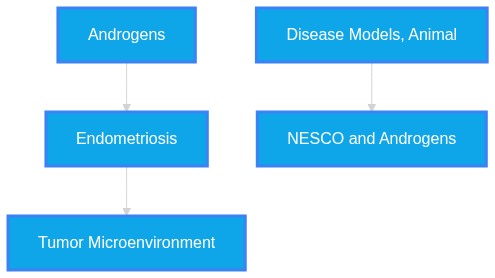
NESCO-induced pyroptosis in the peritoneal microenvironment might be attenuated by the upregulation of 11-oxygenated androgens in the systemic circulation.
Plausibility Verdicts
No evidence links NESCO-induced pyroptosis in the peritoneal microenvironment to the systemic upregulation of 11-oxygenated androgens.
Dataset Summary
Novel & Overlooked Insights
- NESCO is explicitly identified as an immunogenic programmed cell death pattern that may inhibit NK cell activation in the endometriosis microenvironment.
- 11-oxygenated androgens are distinct from conventional androgens and demonstrate high androgenic potency.
- Endometriosis sub-phenotypes show inverse associations with genetically predicted androgen levels, yet no specific link to NESCO-mediated pyroptosis is established.
- YQHXF is effective in reducing ectopic lesion volumes by suppressing NF-κB p65/NLRP3-mediated pyroptosis in endometriosis models.
- PD-1 expression is significantly decreased in peritoneal fluid NK and T cell populations of endometriosis patients.
- Caspase-3 acts as a negative feedback brake in GSDMD-mediated pyroptosis, providing a molecular basis for regulating intensity.
- Mitochondrial damage and mtDNA release are established triggers for the cGAS-STING axis in macrophage pyroptosis.
Extracted Discoveries
- Assess the effect of 11-oxygenated androgens on NESCO markers in peritoneal mesothelial cell cultures under sodium overload stress.
- Perform RNA-seq on NESCO-positive and negative endometriotic tissue to correlate androgen receptor expression profiles.
- Clinical longitudinal study quantifying 11-oxygenated androgen metabolites in patients diagnosed with NESCO-signature endometriosis.
- In vitro validation of whether androgen receptor activation mitigates NESCO-induced inflammatory cytokine release in primary peritoneal cells.
- Discovered Hypothesis (A to C): 11-oxygenated androgens regulate the cellular sensitivity to Necrosis by Sodium Overload (NESCO) in the peritoneum. - Literature A (Origin): 11-oxygenated androgens demonstrate distinct androgenic potency and endocrine signaling capabilities (Source: 39273637). - Literature C (Target): NESCO acts as an immunogenic cell death pathway modulating NK cell infiltration in peritoneal endometriosis (Source: 42196513). - The Intersecting Bridge B: The NF-κB/NLRP3/pyroptosis axis (Common mechanism in sources 42447973, 42392288, 42438788). - Biological Rationale: Androgens are known to modulate the NF-κB/NLRP3 signaling pathway which serves as a molecular mediator for various cell death patterns; therefore, androgens may influence the threshold for NESCO activation by modulating these upstream inflammatory gates.
- None identified within the provided context regarding this specific interaction.
- 11-oxygenated androgens could potentially be investigated as therapeutic modulators of pyroptotic pathways in endometriosis, given their role in inflammatory signaling.
PathMap is funded by sales of datasets and coversheets to researchers of any kind who wish to discover the most viable routes and paths to accelerate cures. We do not make theoretical molecules, we expose the truth in current PubMed literature. Commission a trace today.
PathMap Scores
How are these metrics evaluated?
Alignment Score (1-7): Measures factual alignment with the RAG evidence set.
[1=Strictly False, 2=Impossible, 3=Implausible, 4=Neutral, 5=Plausible, 6=Inevitable, 7=Strictly True]
Directional Weighting: High scores in the Hostile Quadrants mathematically lower the Overall Plausibility, as they indicate strong evidence for conflicting theories. Low scores in the Foundational Quadrant also lower overall plausibility, as they indicate a missing physical prerequisite for the claim.
Veridicality Audit Report
All Extracted Datapoints
Evaluated Perspectives & Quadrants
Verbatim Quote Audit Console
Mapped Reference Directory (APA)
Abstract Repository (Raw Full-Texts) Show Database
Investigator Profile