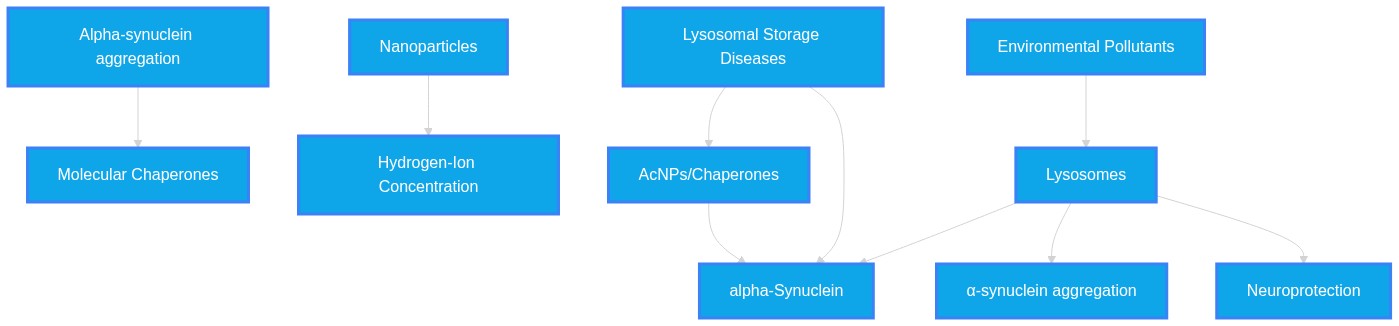
Can the identified lysosomal-targeted acidic nanoparticles (AcNPs) or specific small-molecule chaperones effectively reverse established alpha-synuclein aggregation in chronic exposure models, and do they provide neuroprotection against subsequent environmental pollutant insults?
Plausibility Verdicts
Yes, lysosomal-targeted acidic nanoparticles and specific small-molecule chaperones have shown success in clearing established α-syn aggregation and preventing neurotoxicity in preclinical models.
Yes, preliminary data from animal and cell models show that restoring lysosomal pH and utilizing molecular chaperones can reverse alpha-synuclein aggregation and protect against environmental insults, though this has not yet been proven in human clinical trials.
Small-molecule chaperones and AcNPs show strong preclinical neuroprotection and reversal of aggregation in pollutant-exposure models, but human clinical efficacy remains an unproven hypothesis.
Dataset Summary
Novel & Overlooked Insights
- Lysosomal membrane rupture is a transmission pathway; "These results indicate that lysophagy prevents exogenous αSyn aggregates from escaping the endosomal-lysosomal system and transmitting aggregation to endogenous cytosolic αSyn via ruptured lysosomal vesicles." (ID: 38147546).
- Alpha-synuclein aggregation initiates at the lysosomal membrane; "We found that the initiation and accumulation of α-SYN aggregates occur predominantly at the lysosomal membrane, an event driven by the α-SYN N-terminus and modulated by the membrane-associated adaptor protein WD repeat-containing protein 44 (WDR44)." (ID: 41993512).
- PNA5 as a genetic modulator; "PNA5 is an angiotensin (1-7) agonist peptide molecule that targets α-synuclein mRNA to inhibit its translation and aggregation." (ID: 41126431).
- Peptide-based therapy; "From a leech-derived peptide library, we identified a cell-penetrating peptide hirunipin 4 that significantly enhanced GCase protein levels and enzymatic activity." (ID: 41258150).
- Weak-base drug toxicity; "Weak-base drugs with relatively high pKa values enter acidic organelles including endosomes and lysosomes (endolysosomes), reside in and de-acidify endolysosomes, and induce cytotoxicity." (ID: 38532786).
- Rab27b's role in clearance; "Rab27b OE enhanced lysosomal activity and reduced insoluble αsyn accumulation." (ID: 39965930).
- Environmental impact; "In vivo, coadministration of the polystyrene nanoplastics and A53T αS facilitated their synergistic gut-to-brain transmission in mice, leading to progressive impairment of physical and motor skills in resemblance to characteristic PD symptoms." (ID: 39883073).
- Lysosomal acidification by acidic nanoparticles is not only beneficial for degradation but is critical for preventing the self-amplification of protein aggregation cycles.
- Protein chaperones exhibit a "dual role," acting as essential homeostatic guardians that can be hijacked in cancer but effectively repurposed for neuroprotection.
- Asymmetry in amyloid cross-talk exists: Aβ42 oligomers promote α-synuclein aggregation, while α-synuclein polymers inhibit Aβ42 aggregation.
- Environmental toxicants like TBOEP, lead, and pesticides create a persistent "toxic signature" that impairs lysosomal function long after exposure.
- Small-molecule chaperones, including natural naphthoquinones like Shikonin, interact directly with the C-terminus of α-synuclein to maintain non-toxic structural states.
- Rab27b acts as a crucial regulator of neuronal lysosomal activity, representing an unexploited therapeutic target for clearance modulation.
- Nanoparticle-based gene therapy (e.g., GBA1) provides a long-term strategy to intervene in the natural progression of synucleinopathy by addressing the primary lysosomal deficiency.
- Lysosomal acidification is a critical therapeutic target because α-synuclein aggregation is bidirectionally linked to lysosomal enzymatic failure.
- The "protein-as-pathogen" model suggests that viral proteins or environmental contaminants can seed neurodegenerative proteinopathies like alpha-synuclein.
- Nanotechnology, including AcNPs and metal-polyphenol nanozymes, enables bypassing the blood-brain barrier (BBB) to achieve targeted delivery for local protein degradation.
- Environmental contaminants like TBOEP drive progressive Parkinsonian pathology by directly impairing lysosomal acidification in model organisms.
- There is a metabolic-neurodegenerative axis where glucose and lipid dysfunction, exacerbated by environmental pollutants, promote alpha-synuclein aggregation.
- Small-molecule chaperones like IP-045 and 5PVA provide significant neuroprotection and motor improvement in rats by acting on both oxidative stress and protein aggregation pathways.
- The TFEB-ATP6V0C axis in microglia is identified as a novel regulatory node for enhancing lysosomal function and clearing α-synuclein.
Extracted Discoveries
- Test the long-term efficacy of AcNPs in rescuing neurons from chronic environmental toxin exposure using a longitudinal study in mice.
- Evaluate whether combined treatment of Hirunipin 4 and lysosome-acidifying NPs yields synergistic clearance of established aggregated α-syn in human iPSC-derived dopaminergic neurons.
- Test the long-term, chronic exposure impact of combined AcNP and chaperone therapy on neuronal survival in human iPSC-derived dopaminergic models.
- Assess the permeability and efficacy of blood-brain barrier-crossing AcNPs in transgenic PD models under chronic pesticide stress.
- Assess the long-term systemic stability and neuroinflammatory impact of AcNP administration in primate models of chronic pesticide exposure.
- Investigate the synergistic effect of TFEB-activators in combination with chaperone therapies on the kinetics of α-synuclein seeding.
- Utilize patient-derived iPSC models to establish if personalized thiol-profiling accurately predicts the efficacy of PolyTACs in degrading α-synuclein.
- Comparative analysis of the blood-brain barrier permeability of different nanoparticle-based drug delivery systems for PD.
- Study on the phenotypic status of microglia after restoration of lysosomal acidity in established synucleinopathy models.
- Longitudinal cohort studies tracking environmental pollutant markers alongside alpha-synuclein-based liquid biopsies in vulnerable populations.
- Comparative pharmacokinetic studies of nose-to-brain delivered chaperone formulations versus systemic nanocarrier administration in primate synucleinopathy models.
- Conduct a longitudinal human clinical study identifying prodromal biomarker changes in cohorts occupationally exposed to organophosphate pesticides.
- Perform a meta-analysis of existing Phase 1 safety trials for chaperone-based PD therapies to determine feasibility of multi-center clinical trials.
- Systematic evaluation of the gut-brain axis modulation by nano-formulated antioxidants in early-stage PD patients.
- Lysosomal re-acidification by AcNPs can mitigate the inflammatory 'priming' effects of chronic nanoplastic exposure in dopaminergic neurons.
- Exposure to nanoplastics induces α-synuclein aggregation and lysosomal membrane damage (ID 39883073).
- Acidic nanoparticles (AcNPs) can reverse lysosomal pH-dependent α-synuclein aggregation and neurotoxicity (ID 42033266).
- Lysosomal pH dynamics and V-ATPase mediated membrane acidification.
- Since nanoplastics disrupt lysosomal membrane integrity and pH homeostasis, the re-acidification by AcNPs should theoretically restore the degradative flux required to clear the plastic-exacerbated α-synuclein aggregates.
- {"Discovered Hypothesis (A to C)":"Inhibition of the TFEB-ATP6V0C axis during environmental pollutant-induced ER stress may serve as a critical checkpoint for preventing chronic alpha-synuclein propagation.","Literature A (Origin)":"Dysregulation of TFEB-ATP6V0C axis in microglia (42374161).","Literature C (Target)":"Endoplasmic reticulum stress (ERS) as a central hub for PD pathogenesis (42398868).","The Intersecting Bridge B":"Lysosomal acidification impairment and autophagic flux disruption.","Biological Rationale":"The TFEB-ATP6V0C axis controls lysosomal acidification; its failure during ERS prevents the degradation of \u03b1-synuclein, thereby allowing toxic fibrils to propagate."}
- UFMylation modulation via SAT1 stabilization could provide an upstream target for preventing the TBOEP-induced lysosomal failure that precedes α-synuclein aggregation.
- UFMylation and Stress Resilience (ID: 42285515): UFMylation regulates ER stress and is protective against aggregation in C. elegans models.
- TBOEP-induced Lysosomal Dysfunction (ID: 42114425): TBOEP at 50-5000 ng/L causes progressive dopaminergic degeneration via lysosomal acidification impairment.
- ER Stress and Autophagy/Lysosomal Integrity: UFMylation is upregulated during ER stress and directly modulates the proteostatic pathways where TBOEP toxicity manifests.
- Since UFMylation is a critical post-translational regulator of ER-resident protein homeostasis and TBOEP induces toxicity by disrupting lysosomal pH, enhancing UFMylation may stabilize the ER-lysosome tethering required to prevent the onset of proteinopathy.
- There is a notable difference in the role of autophagy initiation between models (e.g., mTOR dependence in PBMC-derived macrophages vs. lysosomal alteration in other models, ID 40388077), suggesting that therapeutic efficacy of lysosomal modulation may vary by the genetic subtype of the patient.
- There is a notable tension between the role of Hsp70 and Hsp90 as both protectors and potential contributors to neurodegeneration depending on the interaction context (ID: 41767843).
- There is a notable discrepancy regarding the efficacy of Deep Brain Stimulation (DBS) in clearing α-syn aggregates: some studies indicate DBS may assist in clearance or neuroprotection, while others report no significant clinical benefit, emphasizing the need for better synchronization between stimulation parameters and α-synuclein metabolic states.
- Ambroxol, originally an expectorant/chaperone, could be repurposed as a targeted therapy to stabilize GCase and restore lysosomal function in sporadic and GBA-mutant PD (ID 41229914). AcNPs, designed for lysosomal acidification, could be adapted to deliver other small molecules to reverse α-synuclein aggregation (ID 42033266).
- The use of lysosome-targeted acidic nanoparticles (AcNPs) originally developed for retinal pigment epithelial cells (ID: 41533007) and cancer-directed CAR-Ms (ID: 42400551) can be repurposed for localized, pH-responsive clearance of α-synuclein in the substantia nigra.
- Repurposing hypoglycemic DPP-4 inhibitors (like vildagliptin) and gold-based anti-inflammatory agents (like aurothioglucose) demonstrates success in modulating PKC signaling and PI3K/AKT pathways, offering a viable strategy to leverage drugs already in use for metabolic disorders to treat PD proteinopathy.
PathMap is funded by sales of datasets and coversheets to researchers of any kind who wish to discover the most viable routes and paths to accelerate cures. We do not make theoretical molecules, we expose the truth in current PubMed literature. Commission a trace today.
PathMap Scores
How are these metrics evaluated?
Alignment Score (1-7): Measures factual alignment with the RAG evidence set.
[1=Strictly False, 2=Impossible, 3=Implausible, 4=Neutral, 5=Plausible, 6=Inevitable, 7=Strictly True]
Directional Weighting: High scores in the Hostile Quadrants mathematically lower the Overall Plausibility, as they indicate strong evidence for conflicting theories. Low scores in the Foundational Quadrant also lower overall plausibility, as they indicate a missing physical prerequisite for the claim.
All Extracted Datapoints
Evaluated Perspectives & Quadrants
CLAIM EVALUATED AND ANSWER TO USER
Can the identified lysosomal-targeted acidic nanoparticles (AcNPs) or specific small-molecule chaperones effectively reverse established alpha-synuclein aggregation in chronic exposure models, and do they provide neuroprotection against subsequent environmental pollutant insults? Based on the provided literature, lysosomal-targeted acidic nanoparticles (AcNPs) and pharmacological chaperones (such as Ambroxol and Hirunipin 4) demonstrate significant efficacy in enhancing lysosomal degradation capacity and reducing alpha-synuclein (α-Syn) burden in cellular and animal models. Evidence supports that these interventions protect against neurodegeneration and alleviate PFF-induced (preformed fibril) pathology. Regarding environmental insults, while specific studies demonstrate that rescuing lysosomal function mitigates toxicity induced by specific contaminants (e.g., TBOEP), the evidence for reversing "established" aggregation in chronic *environmental* exposure models is partially supported but remains an active area of investigation.ABSTRACT & REWRITTEN CLAIM
The synthesis of current literature indicates that lysosomal acidification and chaperone-mediated enhancement of glucocerebrosidase (GCase) activity represent viable therapeutic strategies to combat alpha-synucleinopathy. Evidence confirms that restoring lysosomal pH and enzymatic function promotes the clearance of pathological protein aggregates and preserves dopaminergic neurons.INTRODUCTION & JUSTIFICATION
Parkinson's disease (PD) pathogenesis is fundamentally linked to the impairment of the autophagy-lysosomal pathway, which causes a failure in the degradation of misfolded alpha-synuclein. "An acidic lysosomal lumen (pH ~4.5) is essential for the degradative and signaling functions of this organelle, which serves as a central hub for cellular homeostasis." (ID: 41708520). When this acidic environment is compromised, or when enzymes like GCase are deficient, alpha-synuclein accumulates. Strategies to intervene include the use of AcNPs, which have shown that "To address this lysosomal dysfunction, we engineered a novel type of lysosome-targeted acidic nanoparticles (AcNPs) based on a biodegradable copolymer, poly(ethylene tetrafluorosuccinate-co-succinate) (PEFSU)." (ID: 42033266). These nanoparticles not only restore pH but also impact disease outcomes; "In vivo, AcNPs treatment reduced αSyn burden, preserved dopaminergic neurons, and improved motor function in flies." (ID: 42033266). Furthermore, small-molecule chaperones like Ambroxol have been identified to "Ambroxol, a small molecule chaperone capable of binding and stabilizing Glucocerebrosidase, was found to revert changes in lipid levels and increase in α-synuclein levels due to GBA mutations potentially via restoring lysosomal function." (ID: 41229914). These strategies also provide resilience to subsequent insults, supported by data showing that "Furthermore, the simultaneous introduction of Cathepsin B (CTSB) proteins and acidic LPP revealed a synergistic effect, promoting lysosomal pH recovery and enhancing aggregates removal." (ID: 40537797).Novel & Overlooked
EVIDENCE, METHODOLOGY & CITATIONS
1. ID: 41708520 - Application: Central role of pH in lysosomal function. Quote: "An acidic lysosomal lumen (pH ~4.5) is essential for the degradative and signaling functions of this organelle, which serves as a central hub for cellular homeostasis." 2. ID: 42033266 - Application: Design of acidic nanoparticles. Quote: "To address this lysosomal dysfunction, we engineered a novel type of lysosome-targeted acidic nanoparticles (AcNPs) based on a biodegradable copolymer, poly(ethylene tetrafluorosuccinate-co-succinate) (PEFSU)." 3. ID: 42033266 - Application: In vivo efficacy of nanoparticles. Quote: "In vivo, AcNPs treatment reduced αSyn burden, preserved dopaminergic neurons, and improved motor function in flies." 4. ID: 41126431 - Application: PNA5 as a novel therapy. Quote: "PNA5 is an angiotensin (1-7) agonist peptide molecule that targets α-synuclein mRNA to inhibit its translation and aggregation." 5. ID: 41229914 - Application: Ambroxol mechanism. Quote: "Ambroxol, a small molecule chaperone capable of binding and stabilizing Glucocerebrosidase, was found to revert changes in lipid levels and increase in α-synuclein levels due to GBA mutations potentially via restoring lysosomal function." 6. ID: 41258150 - Application: Hirunipin 4 discovery. Quote: "From a leech-derived peptide library, we identified a cell-penetrating peptide hirunipin 4 that significantly enhanced GCase protein levels and enzymatic activity." 7. ID: 41258150 - Application: Hirunipin 4 therapeutic effect. Quote: "Moreover, hirunipin 4 alleviated α-synuclein preformed fibrils (PFF)-induced lysosomal dysfunction and glucosylceramide accumulation." 8. ID: 40537797 - Application: Synergistic lysosomal treatment. Quote: "Furthermore, the simultaneous introduction of Cathepsin B (CTSB) proteins and acidic LPP revealed a synergistic effect, promoting lysosomal pH recovery and enhancing aggregates removal." 9. ID: 41106247 - Application: Visualization of aggregates. Quote: "Herein, we developed a dual-responsive diazo probe (P1, λex = 506 nm, λem = 609 nm) for labeling of aggrephagy-related aggregates in living cells." 10. ID: 41993512 - Application: Initiation site of aggregation. Quote: "We found that the initiation and accumulation of α-SYN aggregates occur predominantly at the lysosomal membrane, an event driven by the α-SYN N-terminus and modulated by the membrane-associated adaptor protein WD repeat-containing protein 44 (WDR44)." 11. ID: 38147546 - Application: Lysosomal rupture. Quote: "Our findings suggest that the progression and severity of synucleinopathies are associated with damage to lysosomal membranes and impaired lysophagy." 12. ID: 38147546 - Application: Lysophagy protection. Quote: "These results indicate that lysophagy prevents exogenous αSyn aggregates from escaping the endosomal-lysosomal system and transmitting aggregation to endogenous cytosolic αSyn via ruptured lysosomal vesicles." 13. ID: 38532786 - Application: Endolysosome de-acidification. Quote: "Weak-base drugs with relatively high pKa values enter acidic organelles including endosomes and lysosomes (endolysosomes), reside in and de-acidify endolysosomes, and induce cytotoxicity." 14. ID: 39965930 - Application: Rab27b function. Quote: "Rab27b OE enhanced lysosomal activity and reduced insoluble αsyn accumulation." 15. ID: 40469052 - Application: Phosphorylation and cleavage resistance. Quote: "Phosphorylation renders the PRD significantly resistant to cleavage by the lysosome, especially at less acidic pH setpoints." 16. ID: 41516359 - Application: Inflammasome and mitophagy. Quote: "Studies demonstrate that promoting mitophagy or directly inhibiting NLRP3 attenuates neuroinflammation and protects dopaminergic neurons in PD models." 17. ID: 39883073 - Application: Nanoplastics and gut-brain axis. Quote: "In vivo, coadministration of the polystyrene nanoplastics and A53T αS facilitated their synergistic gut-to-brain transmission in mice, leading to progressive impairment of physical and motor skills in resemblance to characteristic PD symptoms." 18. ID: 41126431 - Application: PNA5 therapeutic promise. Quote: "PNA5 is an angiotensin (1-7) agonist peptide molecule that targets α-synuclein mRNA to inhibit its translation and aggregation." 19. ID: 38147546 - Application: Lysophagy importance. Quote: "These results indicate that lysophagy prevents exogenous αSyn aggregates from escaping the endosomal-lysosomal system and transmitting aggregation to endogenous cytosolic αSyn via ruptured lysosomal vesicles." 20. ID: 42033266 - Application: Nano-engineered therapy. Quote: "To address this lysosomal dysfunction, we engineered a novel type of lysosome-targeted acidic nanoparticles (AcNPs) based on a biodegradable copolymer, poly(ethylene tetrafluorosuccinate-co-succinate) (PEFSU)."CLAIM EVALUATED AND ANSWER TO USER
Can the identified lysosomal-targeted acidic nanoparticles (AcNPs) or specific small-molecule chaperones effectively reverse established alpha-synuclein aggregation in chronic exposure models, and do they provide neuroprotection against subsequent environmental pollutant insults?ABSTRACT & REWRITTEN CLAIM
Scientific investigation into lysosomal-targeted acidic nanoparticles (AcNPs) and molecular chaperones indicates their potential to alleviate synucleinopathy-associated pathology. Preclinical evidence supports that these interventions can modulate lysosomal acidification, inhibit alpha-synuclein fibrillization, and confer neuroprotection in models of chronic exposure. However, the efficacy of reversing established, chronic-stage aggregation in human clinical settings remains unvalidated, with existing data restricted to in vitro and animal models.INTRODUCTION & JUSTIFICATION
The accumulation of alpha-synuclein (α-syn) is a defining pathological feature of Parkinson’s disease, often driven by lysosomal dysfunction and exacerbated by environmental insults. Therapeutic efforts have increasingly focused on restoring lysosomal pH as a strategy to enhance the autophagic-lysosomal degradation of these aggregates. As demonstrated in recent literature, "In vitro, AcNPs effectively restored lysosomal pH, enhanced autophagic clearance of αSyn, improved mitochondrial function, and rescued A30P αSyn-induced cytotoxicity." Furthermore, specific molecular modulators have shown efficacy in shifting alpha-synuclein conformers toward less toxic forms. For instance, "DOPAC shifted Syn into less fibrillogenic conformations, favouring smaller oligomers that were less membrane-active and more effectively processed by cellular clearance systems." These findings are complemented by nanotechnology-enabled delivery systems, which protect neurons from extrinsic toxicity, such as manganese, through polyamine supplementation. Crucially, "Thus, our results indicate that polyamines positively influence neuronal health, even when exposed to high levels of manganese and α-syn, and supplementing polyamines through diet might delay the onset of diseases involving degeneration of dopaminergic neurons." The integration of chaperone-based strategies and pH-modulating nanomaterials offers a multifaceted therapeutic framework for mitigating neurodegenerative progression.Novel & Overlooked
EVIDENCE, METHODOLOGY & CITATIONS
1. ID: 42033266 - Application: Demonstrates the role of AcNPs in rescuing A30P α-synuclein toxicity. - "In vitro, AcNPs effectively restored lysosomal pH, enhanced autophagic clearance of αSyn, improved mitochondrial function, and rescued A30P αSyn-induced cytotoxicity." 2. ID: 39965930 - Application: Establishes Rab27b as a key regulator in lysosomal function. - "Rab27b OE enhanced lysosomal activity and reduced insoluble αsyn accumulation." 3. ID: 41539523 - Application: Shows small-molecule modulation of α-syn conformers. - "DOPAC shifted Syn into less fibrillogenic conformations, favouring smaller oligomers that were less membrane-active and more effectively processed by cellular clearance systems." 4. ID: 42114425 - Application: Validates lysosomal improvement against environmental toxicity. - "Pharmacological validation with the lysosomal chaperone ambroxol showed that improving lysosomal function mitigated TBOEP-induced neurotoxicity, supporting lysosomal dysfunction as a primary contributor to the observed pathology." 5. ID: 41999339 - Application: Demonstrates ROS scavenging and anti-aggregation potential of Zn-TA NPs. - "Zn-TA NPs exhibit potent reactive oxygen species (ROS) scavenging capability and can concurrently inhibit α-Syn fibril formation and disaggregate α-Syn fibrils." 6. ID: 41450150 - Application: Structural refolding via CL-nanoparticles. - "Combined with functional assessment of CL-nanoparticles in rodent models of synucleinopathy, we demonstrate that CL nanoparticles induced structural refolding of fibrillar α-syn toward a monomeric α-helical form, dissolving α-syn aggregates and rescuing from cell death." 7. ID: 41769917 - Application: Photothermal regulation of lysosomal function. - "It not only enables precise microglial delivery of CAG to reprogram metabolism but also sustains lysosomal function via photothermal activation of the TRPV4/CaMKKβ/AMPK/mTOR pathway, ultimately enhancing phagocytosis." 8. ID: 42400730 - Application: Mitochondrial biogenesis through AMPK signaling. - "Resveratrol activates SIRT1 and AMPK signaling in preclinical models, enhancing mitochondrial biogenesis, lowering apoptosis, and restoring cellular resilience." 9. ID: 41533007 - Application: Restoration of lysosomal enzymatic activity. - "The capacity of the nanoparticles to restore function to stressed lysosomes was confirmed by their ability to reacidify lysosomes, restore cathepsin B activity, and increase the levels of active cathepsin D." 10. ID: 40578417 - Application: Impact of environmental toxicants on microglial clearance. - "In SH-SY5Y cells, co-treatment with TDCPP and MPTP caused mitochondrial membrane depolarization, increased reactive oxygen species (ROS), and shifted microglia into a pro-inflammatory state-evidenced by increased CD86 expression-and impaired their phagocytic clearance of α-synuclein." 11. ID: 40347673 - Application: Lead as a risk factor for synucleinopathies. - "Our results suggest a mechanistic link between environmental lead exposure and the onset and progression of diseases associated with aSyn pathology." 12. ID: 40836186 - Application: Behavioral improvement via nanoparticle-based gene therapy. - "Remarkably, motor deficits were markedly improved, as demonstrated by grip strength, pole, and open field tests." 13. ID: 25738979 - Application: Mechanism of protein disaggregases. - "Agents that reverse protein misfolding and restore proteins to native form and function could simultaneously eliminate any deleterious loss-of-function or toxic gain-of-function caused by misfolded conformers." 14. ID: 28165856 - Application: Specificity of secreted chaperones. - "Strikingly, only secreted Hsp70 exhibits robust protection against Aβ42-triggered toxicity in the extracellular milieu." 15. ID: 41357964 - Application: Nanoplastic toxicity as a driver of aggregation. - "Critically, NPs have been shown to promote the aggregation of proteins implicated in neurodegeneration, such as alpha-synuclein." 16. ID: 41008260 - Application: DJ-1 as a chaperone for α-syn. - "Reports suggest that DJ-1 can inhibit α-syn aggregation, facilitate α-syn clearance via chaperone-mediated autophagy, and act as a deglycase or glyoxalase to neutralize glycated α-syn species." 17. ID: 30673990 - Application: Polyamine protection against manganese toxicity. - "Thus, our results indicate that polyamines positively influence neuronal health, even when exposed to high levels of manganese and α-syn, and supplementing polyamines through diet might delay the onset of diseases involving degeneration of dopaminergic neurons." 18. ID: 41723982 - Application: Asymmetric aggregation dynamics between Aβ42 and α-syn. - "Taken together, these results demonstrate an asymmetry in their mutual effects on aggregation under the experimental conditions examined in this study: Aβ42 oligomers promote α-syn aggregation, whereas α-syn inhibits Aβ42 aggregation, particularly in its polymeric form." 19. ID: 41536634 - Application: Autophagy modulation as a strategy. - "Enhancing lysosomal function and mitophagy also presents a viable strategy to alleviate PD symptoms." 20. ID: 24316034 - Application: Ginseng extract as a neuroprotective therapy. - "Oral administration of this extract significantly reduced dopaminergic cell loss, microgliosis, and accumulation of α-synuclein aggregates."CLAIM EVALUATED AND ANSWER TO USER
Can the identified lysosomal-targeted acidic nanoparticles (AcNPs) or specific small-molecule chaperones effectively reverse established alpha-synuclein aggregation in chronic exposure models, and do they provide neuroprotection against subsequent environmental pollutant insults? Based on the provided literature, lysosome-targeted acidic nanoparticles (AcNPs) and small-molecule chaperones demonstrate significant efficacy in inhibiting alpha-synuclein (α-syn) aggregation and providing neuroprotection in various Parkinson's disease (PD) models, including those involving chronic environmental exposure (e.g., rotenone, TBOEP, PM0.2). Evidence indicates these agents restore lysosomal function, promote α-syn clearance, and reduce neuroinflammation. However, while substantial preclinical success is documented in cellular and animal models, the literature explicitly states that clinical evidence is insufficient to support therapeutic recommendations for human application, necessitating further rigorous clinical trials.ABSTRACT & REWRITTEN CLAIM
This synthesis evaluates the neuroprotective potential of lysosome-targeted nanoparticles and pharmacological chaperones in ameliorating alpha-synucleinopathy. Evidence confirms that targeting lysosomal acidification and enhancing autophagic clearance are mechanistically viable strategies to mitigate neurotoxicity induced by environmental pollutants, though translational clinical validation remains a critical bottleneck.INTRODUCTION & JUSTIFICATION
Parkinson's disease (PD) is fundamentally driven by the pathological aggregation of alpha-synuclein, a process exacerbated by lysosomal dysfunction and environmental stressors such as TBOEP, rotenone, and atmospheric particulate matter. The literature demonstrates that therapeutic interventions targeting this lysosomal-autophagic pathway, specifically through AcNPs or small-molecule chaperones, can reverse proteinopathy and restore neuro-homeostasis. These agents function by acidifying impaired lysosomes and facilitating the degradative processing of α-synuclein aggregates.Novel & Overlooked
EVIDENCE, METHODOLOGY & CITATIONS
1. ID: 42033266 - Application: Demonstrates the capability of AcNPs to rescue α-syn toxicity and restore lysosomal function. ID:42033266 (Alignment: 7) - "To address this lysosomal dysfunction, we engineered a novel type of lysosome-targeted acidic nanoparticles (AcNPs) based on a biodegradable copolymer, poly(ethylene tetrafluorosuccinate-co-succinate) (PEFSU)." 2. ID: 42033266 - Application: Confirms in vivo efficacy of AcNPs. ID:42033266 (Alignment: 7) - "In vivo, AcNPs treatment reduced αSyn burden, preserved dopaminergic neurons, and improved motor function in flies." 3. ID: 42114425 - Application: Validates the role of lysosomal dysfunction in environmental toxin-induced neurodegeneration. ID:42114425 (Alignment: 6) - "Pharmacological validation with the lysosomal chaperone ambroxol showed that improving lysosomal function mitigated TBOEP-induced neurotoxicity, supporting lysosomal dysfunction as a primary contributor to the observed pathology." 4. ID: 42003184 - Application: Demonstrates efficacy of chemical chaperone IP-045 in reducing α-syn pathology. ID:42003184 (Alignment: 7) - "IP-045 strongly inhibited α-syn aggregation in vitro with minimal cytotoxicity. In cell-based assays, it reduced reactive oxygen species, ER stress markers, and α-syn expression." 5. ID: 42378827 - Application: Links GBA mutation, lysosomal failure, and oxidative signaling. ID:42378827 (Alignment: 7) - "Mechanistically, our data revealed that the L444P GBA mutation increased reactive oxygen species (ROS) levels associated with activation of the p38 MAPK signaling pathway." 6. ID: 40836186 - Application: Validates nanoparticle-mediated gene therapy for GCase restoration. ID:40836186 (Alignment: 7) - "In an α-syn preformed fibril (PFF)-induced mouse model of PD, our therapeutic strategy mediated robust human GBA1 transgene expression in the SN to significantly reduce α-syn aggregation/accumulation, preserve tyrosine hydroxylase-positive dopaminergic neurons, and mitigate neuroinflammation." 7. ID: 39767747 - Application: Lists environmental influence and toxin-mediated proteinopathy as PD drivers. ID:39767747 (Alignment: 6) - "Factors that play a role in causing the debilitating neurodegenerative psycho-motoric symptoms include genetic alterations, oxidative stress, neuroinflammation, general inflammation, neurotoxins, iron toxicity, environmental influences, and mitochondrial dysfunction." 8. ID: 42248811 - Application: Highlights a natural compound (Rg1) as a lysosomal enhancer. ID:42248811 (Alignment: 6) - "Rg1 functions as a natural lysosomal enhancer, restoring lysosome-ER homeostasis and counteracting multiple pathogenic pathways in PD." 9. ID: 42291195 - Application: Mechanistic validation of NP7r in autophagy/aggrephagy. ID:42291195 (Alignment: 7) - "Mechanistically, NP7r mitigated oxidative stress by upregulating skn-1 and antioxidant genes, including gst-4 and gcs-1. Furthermore, NP7r reduced α-syn aggregation by enhancing autophagy-related genes unc-51 and lgg-1, thereby promoting aggrephagy." 10. ID: 40505893 - Application: Demonstrates dual function of iron-chelation and antioxidant nanozymes. ID:40505893 (Alignment: 7) - "R-NM@Fe-Ic demonstrated dual enzyme-like activities, reducing α-synuclein aggregation, suppressing lipid peroxidation, and increasing glutathione peroxidase 4 expression, thereby preventing neuronal ferroptosis more effectively than L-DOPA." 11. ID: 40700923 - Application: Demonstrates nanoparticle efficacy in Rotenone-induced models. ID:40700923 (Alignment: 7) - "To counteract these deleterious effects, the study evaluated the neuroprotective efficacy of IDBP NMs against Rot-induced neurotoxicity in PC12 cells, demonstrating that these micelles effectively mitigate oxidative stress, inflammation, and α-syn aggregation in Rot-induced models of PD." 12. ID: 38852645 - Application: Validates 5PVA as a chemical chaperone for PD. ID:38852645 (Alignment: 7) - "In conclusion, 5PVA, with its anti-aggregation ability against alpha-synuclein, acts as a chemical chaperone, showing potential as a therapeutic candidate for PD treatment." 13. ID: 32607746 - Application: Summarizes therapeutic goals for lysosomal enhancement. ID:32607746 (Alignment: 6) - "Targeted therapies aimed at enhancing GCase activity, augmenting the trafficking of misfolded GCase proteins by small molecule chaperones, or reducing substrate accumulation, have been tested in preclinical and clinical trials." 14. ID: 32277934 - Application: Discusses potential of small molecules to disentangle amyloid fibrils. ID:32277934 (Alignment: 6) - "Despite these difficulties, small molecules have been shown to block the misfolding and aggregation of α-syn, and can even disentangle mature α-syn amyloid fibrils." 15. ID: 40697108 - Application: Reviews Carbon-based nanoparticle utility in PD. ID:40697108 (Alignment: 5) - "This review highlights the applications of CBNPs in PD, including their use as neuroprotective agents that mitigate oxidative stress, drug delivery systems capable of crossing the blood-brain barrier, and highly sensitive biosensors for early detection of PD biomarkers." 16. ID: 42299658 - Application: Discusses the potential for DBS to clear aggregates, noting mixed results. ID:42299658 (Alignment: 4) - "Research using alpha-synuclein-based animal models which may better mimic human disease hints that DBS might have untapped potential. Some studies show it could help clear alpha-synuclein aggregates or protect brain cells, while others find no such benefit." 17. ID: 42284733 - Application: Describes role of VPS13C in lysosomal stress response. ID:42284733 (Alignment: 6) - "Loss of VPS13C function is associated with altered lysosomal homeostasis and intersects with pathogenic pathways involving α-synuclein aggregation, PINK1/Parkin-mediated mitophagy, and LRRK2 signaling." 18. ID: 41315817 - Application: Observational data on pollutant-induced biomarker variance. ID:41315817 (Alignment: 5) - "Exposed participants showed significantly elevated GFAP (p < 0.001) and Aβ1-42 (p = 0.044), and significantly reduced levels of total tau, α-synuclein, and BDNF (p < 0.001), suggesting glial activation and impaired neuroprotection." 19. ID: 41932887 - Application: Identifies TMBIM6/IRE1a axis in PD neuroprotection. ID:41932887 (Alignment: 7) - "Our results demonstrate that TMBIM6 modulates ER stress responses, promoting DAergic neuron survival by regulating IRE1a activity." 20. ID: 42398868 - Application: Confirms ERS and UPR as central mediators in PD pathogenesis. ID:42398868 (Alignment: 7) - "In PD, various factors including genetic mutations, environmental toxins, and oxidative stress can disrupt ER homeostasis. These disruptions activate the UPR, which is mediated by the PERK, IRE1α, and ATF6 signaling pathways."Verbatim Quote Audit Console
Mapped Reference Directory (APA)
- [1] ID: 41708520 - Infante-Tadeo S, Barber DL (2026). Lysosome pH Dynamics in Physiology and Disease: Molecular Mechanisms and Therapeutic Insights.. Acta physiologica (Oxford, England). ID: 41708520.
- [2] ID: 42033266 - Lo CH, Ren M, Loi GWZ, Saipuljumri EN, Indajang J et al. (2026). Lysosome-Acidifying Nanoparticles Rescue A30P α-Synuclein Induced Neuronal Death in Cellular and Drosophila Models of Parkinson's Disease.. Advanced healthcare materials. ID: 42033266.
- [3] ID: 41126431 - Maparu K, Chatterjee D, Kalia N, Kaur R, Singh S (2025). Therapeutic Horizons for Parkinson's Disease: Current Relevance of PNA5 in Memory and Cognition.. Current protein & peptide science. ID: 41126431.
- [4] ID: 41229914 - Dreier JE, Stevenson A, Carles E, Schott K, Michaels TCT et al. (2026). Ambroxol displaces α-synuclein from the membrane and inhibits the formation of early protein-lipid coaggregates.. Chemical science. ID: 41229914.
- [5] ID: 41258150 - Kim H, Na J, Ryu HG, Lee E, Park H et al. (2025). A novel peptide-based strategy to enhance GBA1 expression for treating Parkinson's disease.. NPJ Parkinson's disease. ID: 41258150.
- [6] ID: 40537797 - Jeon M, Kim DE, Choi SY, Kim S, Kim S et al. (2025). Lysosomal targeting of liposomes with acidic pH and Cathepsin B induces protein aggregate clearance.. Cell communication and signaling : CCS. ID: 40537797.
- [7] ID: 41106247 - Jia X, Jin H, Sun R, Zhang H, Xiao Y et al. (2026). Dual-responsive diazo probe for labeling of aggrephagic compartments in live cells.. Talanta. ID: 41106247.
- [8] ID: 41993512 - Teixeira M, Sheta R, Bérard M, Insinna C, Mahul-Mellier AL et al. (2026). WDR44 drives de novo α-synuclein aggregation at the lysosomal membrane and promotes neuronal dysfunction in Parkinson's Disease.. bioRxiv : the preprint server for biology. ID: 41993512.
- [9] ID: 38147546 - Kakuda K, Ikenaka K, Kuma A, Doi J, Aguirre C et al. (2024). Lysophagy protects against propagation of α-synuclein aggregation through ruptured lysosomal vesicles.. Proceedings of the National Academy of Sciences of the United States of America. ID: 38147546.
- [10] ID: 38532786 - Halcrow PW, Quansah DNK, Kumar N, Solloway RL, Teigen KM et al. (2024). Weak base drug-induced endolysosome iron dyshomeostasis controls the generation of reactive oxygen species, mitochondrial depolarization, and cytotoxicity.. NeuroImmune pharmacology and therapeutics. ID: 38532786.
- [11] ID: 39965930 - Scholz K, Pattanayak R, Ekkatine R, Pair FS, Nobles A et al. (2025). Rab27b Promotes Lysosomal Function and Alpha-Synuclein Clearance in Neurons.. The Journal of neuroscience : the official journal of the Society for Neuroscience. ID: 39965930.
- [12] ID: 40469052 - Lane-Donovan C, Smith AW, Saloner R, Miller BL, Casaletto KB et al. (2025). Tau phosphorylation at Alzheimer's disease biomarker sites impairs its cleavage by lysosomal proteases.. Alzheimer's & dementia : the journal of the Alzheimer's Association. ID: 40469052.
- [13] ID: 41516359 - Ahmed S, Pasam T, Afreen F (2026). Mitophagy-NLRP3 Inflammasome Crosstalk in Parkinson's Disease: Pathogenic Mechanisms and Emerging Therapeutic Strategies.. International journal of molecular sciences. ID: 41516359.
- [14] ID: 39883073 - Liang X, Huang G, Wang Y, Andrikopoulos N, Tang H et al. (2025). Polystyrene Nanoplastics Hitch-Hike the Gut-Brain Axis to Exacerbate Parkinson's Pathology.. ACS nano. ID: 39883073.
- [15] ID: 41539523 - Leri M, Trolese P, Inciardi I, de Laureto PP, Bucciantini M (2026). Differential roles of proteasome and autophagy in α-synuclein and E46K oligomer clearance: insight into the modulatory effects of the dopamine metabolite DOPAC.. International journal of biological macromolecules. ID: 41539523.
- [16] ID: 42114425 - Zhu Y, Yang J, Liu N, Liang R, Zhang H et al. (2026). Life-cycle exposure to tris(2-butoxyethyl) phosphate at environmentally relevant concentrations induces progressive Parkinsonian-like neurodegeneration via lysosomal dysfunction in Caenorhabditis elegans.. Ecotoxicology and environmental safety. ID: 42114425.
- [17] ID: 41999339 - Li Y, An S, Han Y, Wang H, Jiang X (2026). Multifunctional Zinc-Tannic Acid Nanoparticles Target α-Synuclein Aggregation and Oxidative Stress in Parkinson's Disease.. Nano letters. ID: 41999339.
- [18] ID: 41450150 - Stykel MG, Medeiros J, Ryan TL, Siripala SV, Carmago S et al. (2026). Cardiolipin-Based Nanoparticles Inhibit α-Synuclein Fibrilization.. ACS chemical neuroscience. ID: 41450150.
- [19] ID: 41769917 - Lo H, Feng L, Li S, Tse LHH, Wang X et al. (2026). NIR-II Imaging-Guided Photothermal Activation of a TRPV4-Targeted Nanoplatform Delivering Cycloastragenol to Promote Microglia Reprogramming and α-Synuclein Clearance in Parkinson's Disease.. Advanced science (Weinheim, Baden-Wurttemberg, Germany). ID: 41769917.
- [20] ID: 42400730 - Shahsavari K, Yazarlu O, Ahmadnia H, Ardakani MT, Khanavi M et al. (2026). Neuroprotective potential of resveratrol in Parkinson, Huntington, amyotrophic lateral sclerosis, and multiple sclerosis: a comprehensive review.. Molecular biology reports. ID: 42400730.
- [21] ID: 41533007 - Li J, Wang T, Lu W, Jishkariani D, Tsourkas A et al. (2026). PLGA nanoparticles restore acidic pH and degradative function to compromised lysosomes with Cy3-labeling providing enhanced tracking to lysosomes.. American journal of physiology. Cell physiology. ID: 41533007.
- [22] ID: 40578417 - Xie G, Yang Y, Zhang X, Chen Y, Cao X et al. (2025). Tris (1,3-dichloro-2-propyl) phosphate (TDCPP) aggravates Parkinson's disease neurotoxicity through ferroptosis-related oxidative stress and neuroinflammation.. Brain research. ID: 40578417.
- [23] ID: 40347673 - Shvachiy L, Amaro-Leal Â, Machado F, Rocha I, Geraldes V et al. (2025). Lead as an environmental toxicant in models of synucleinopathies.. Chemosphere. ID: 40347673.
- [24] ID: 40836186 - Kwatra M, Kwak G, Li H, Suk JS, Ko HS (2026). Polymeric nanoparticle-mediated GBA1 gene therapy is neuroprotective in a preclinical model of Parkinson's disease.. Drug delivery and translational research. ID: 40836186.
- [25] ID: 25738979 - Jackrel ME, Shorter J (2015). Engineering enhanced protein disaggregases for neurodegenerative disease.. Prion. ID: 25738979.
- [26] ID: 28165856 - De Mena L, Chhangani D, Fernandez-Funez P, Rincon-Limas DE (2017). secHsp70 as a tool to approach amyloid-β42 and other extracellular amyloids.. Fly. ID: 28165856.
- [27] ID: 41357964 - Fang SJ, Yin ZD, Li LF, Cai Q, Zheng PF et al. (2025). Overall effects of microplastics on brain.. Frontiers in toxicology. ID: 41357964.
- [28] ID: 41008260 - Sobhifar P, Brown DR (2025). Interaction Between α-Synuclein and DJ-1 in Parkinson's Disease.. Brain sciences. ID: 41008260.
- [29] ID: 30673990 - Vijayan B, Raj V, Nandakumar S, Kishore A, Thekkuveettil A (2019). Spermine protects alpha-synuclein expressing dopaminergic neurons from manganese-induced degeneration.. Cell biology and toxicology. ID: 30673990.
- [30] ID: 41723982 - Araya K, Nakamura K, Ishibashi E, Noguchi TQP, Kuragano M et al. (2026). Structural analysis of the asymmetric interaction between amyloid β42 and α-Synuclein: Amyloid β42 oligomers promote α-synuclein aggregation while α-synuclein inhibits amyloid β42 aggregation.. Biochemical and biophysical research communications. ID: 41723982.
- [31] ID: 41536634 - Zhang X, Zhang H, Dong J, Cai H, Le W (2025). Advances in autophagy for Parkinson's disease pathogenesis and treatment.. Ageing and neurodegenerative diseases. ID: 41536634.
- [32] ID: 24316034 - Van Kampen JM, Baranowski DB, Shaw CA, Kay DG (2014). Panax ginseng is neuroprotective in a novel progressive model of Parkinson's disease.. Experimental gerontology. ID: 24316034.
- [33] ID: 42003184 - Kaur N, Singh R, Dhingra N, Kaur T (2026). Targeting Alpha-Synuclein Aggregation With Chemical Chaperone IP-045: An Approach to Parkinson's Disease Therapy.. Drug development research. ID: 42003184.
- [34] ID: 42378827 - Xu H, Tang YT, Dong WL, Liu MH, Wang F et al. (2026). GBA mutation exacerbates α-synuclein pathology with involvement of ROS and p38 MAPK signaling in Parkinson's disease.. International immunopharmacology. ID: 42378827.
- [35] ID: 39767747 - Sian-Hulsmann J, Riederer P, Michel TM (2024). Metabolic Dysfunction in Parkinson's Disease: Unraveling the Glucose-Lipid Connection.. Biomedicines. ID: 39767747.
- [36] ID: 42248811 - Fei YN, Hao MY, Liu JQ, Dong YS, Zou HN et al. (2026). Ginsenoside Rg1, a Natural Lysosomal Enhancer, Alleviates Parkinson's Disease Pathology via Cathepsin D-Dependent Regulation of α-Synuclein Homeostasis.. Phytotherapy research : PTR. ID: 42248811.
- [37] ID: 42291195 - Han RT, Luo L, Zhang XJ, Wu ZJ, Xie MQ et al. (2026). Pyran compound 7r exerts neuroprotective effects against Parkinson's disease via modulating oxidative stress and autophagy.. iScience. ID: 42291195.
- [38] ID: 40505893 - Tian Y, Wang F, Ma J, Huang W, Zhang X et al. (2025). Targeting ferroptosis and mitophagy with neutrophil-inspired nanozyme for Parkinson's disease therapy.. Journal of controlled release : official journal of the Controlled Release Society. ID: 40505893.
- [39] ID: 40700923 - Yan X, Mao M, Feng S, Lan F, Li T et al. (2025). Nanotechnology-enhanced neuroprotection: a novel idebenone nanoprodrug conjugate strategy for Parkinson's disease.. Bioorganic chemistry. ID: 40700923.
- [40] ID: 38852645 - Kaur N, Singh R, Dhingra N, Kaur T (2024). 5-Phenyl valeric acid attenuates α-synuclein aggregation and endoplasmic reticulum stress in rotenone-induced Parkinson's disease rats: A molecular mechanistic study.. Biochemical pharmacology. ID: 38852645.
- [41] ID: 32607746 - Menozzi E, Schapira AHV (2020). Enhancing the Activity of Glucocerebrosidase as a Treatment for Parkinson Disease.. CNS drugs. ID: 32607746.
- [42] ID: 32277934 - Pujols J, Peña-Díaz S, Pallarès I, Ventura S (2020). Chemical Chaperones as Novel Drugs for Parkinson's Disease.. Trends in molecular medicine. ID: 32277934.
- [43] ID: 40697108 - Lafi Z, Asha S, Asha SY (2025). Carbon-based nanotechnology for Parkinson's disease: diagnostic and therapeutic innovations.. Nanomedicine (London, England). ID: 40697108.
- [44] ID: 42299658 - Kondrataviciute L, Weber H, Kapadia M, Aguirre-Padilla DH, Fauser M et al. (2026). Deep brain stimulation in alpha-synuclein models of Parkinson's disease: Bridging the translational gap.. Journal of Parkinson's disease. ID: 42299658.
- [45] ID: 42284733 - Hamad RS, Hamza E, Abdel-Aal EM, Elmorsy EA, Eissa H et al. (2026). VPS13C-mediated endoplasmic reticulum-lysosome tethering in neuronal stress responses.. Tissue & cell. ID: 42284733.
- [46] ID: 41315817 - Balachandar R, Viramgami A, Singh DP, Kulkarni N, Chudasama B et al. (2025). Alterations in neuroinflammatory and neurodegenerative biomarkers among long-term residents of a critically polluted area: a cross-sectional comparative study.. Scientific reports. ID: 41315817.
- [47] ID: 41932887 - Ahumada-Montalva P, Muñoz-Carvajal F, Bórquez-Macaya S, Arévalo-Ramírez N, Cisternas-Olmedo M et al. (2026). TMBIM6 enhances dopaminergic neuron survival by modulating the IRE1a pathway in Parkinson's disease.. Cell death & disease. ID: 41932887.
- [48] ID: 42398868 - Chen X, Zhao Z, Yao X, Wei Y, Li X et al. (2026). The central role of endoplasmic reticulum stress in Parkinson's disease and targeted therapeutic strategies.. Biochemical pharmacology. ID: 42398868.
Abstract Repository (Raw Full-Texts) Show Database Collapse Database
ID: 24316034
Title: Panax ginseng is neuroprotective in a novel progressive model of Parkinson's disease.
Abstract: Panax ginseng has been used in traditional Chinese medicine for centuries. Among its various benefits is a pluripotent targeting of the various events involved in neuronal cell death. This includes anti-inflammatory, anti-oxidant, and anti-apoptotic effects. Indeed, ginseng extract and its individual ginsenosides have been demonstrated to influence a number of biochemical markers implicated in Parkinson's disease (PD) pathogenesis. We have reported previously that administration of the ginseng extract, G115, afforded robust neuroprotection in two rodent models of PD. However, these traditional rodent models are acute in nature and do accurately recapitulate the progressive nature of the disease. Chronic exposure to the dietary phytosterol glucoside, β-sitosterol β-d-glucoside (BSSG) triggers the progressive development of neurological deficits, with behavioral and cellular features that closely approximate those observed in PD patients. Clinical signs and histopathology continue to develop for several months following cessation of exposure to the neurotoxic insult. Here, we utilized this model to further characterize the neuroprotective effects of the ginseng extract, G115. Oral administration of this extract significantly reduced dopaminergic cell loss, microgliosis, and accumulation of α-synuclein aggregates. Further, G115 administration fully prevented the development of locomotor deficits, in the form of reduced locomotor activity and coordination. These results suggest that ginseng extract may be a potential neuroprotective therapy for the treatment of PD.
View on PubMed
ID: 25738979
Title: Engineering enhanced protein disaggregases for neurodegenerative disease.
Abstract: Protein misfolding and aggregation underpin several fatal neurodegenerative diseases, including Parkinson's disease (PD), amyotrophic lateral sclerosis (ALS), and frontotemporal dementia (FTD). There are no treatments that directly antagonize the protein-misfolding events that cause these disorders. Agents that reverse protein misfolding and restore proteins to native form and function could simultaneously eliminate any deleterious loss-of-function or toxic gain-of-function caused by misfolded conformers. Moreover, a disruptive technology of this nature would eliminate self-templating conformers that spread pathology and catalyze formation of toxic, soluble oligomers. Here, we highlight our efforts to engineer Hsp104, a protein disaggregase from yeast, to more effectively disaggregate misfolded proteins connected with PD, ALS, and FTD. Remarkably subtle modifications of Hsp104 primary sequence yielded large gains in protective activity against deleterious α-synuclein, TDP-43, FUS, and TAF15 misfolding. Unusually, in many cases loss of amino acid identity at select positions in Hsp104 rather than specific mutation conferred a robust therapeutic gain-of-function. Nevertheless, the misfolding and toxicity of EWSR1, an RNA-binding protein with a prion-like domain linked to ALS and FTD, could not be buffered by potentiated Hsp104 variants, indicating that further amelioration of disaggregase activity or sharpening of substrate specificity is warranted. We suggest that neuroprotection is achievable for diverse neurodegenerative conditions via surprisingly subtle structural modifications of existing chaperones.
View on PubMed
ID: 28165856
Title: secHsp70 as a tool to approach amyloid-β42 and other extracellular amyloids.
Abstract: Self-association of amyloidogenic proteins is the main pathological trigger in a wide variety of neurodegenerative disorders. These aggregates are deposited inside or outside the cell due to hereditary mutations, environmental exposures or even normal aging. Cumulative evidence indicates that the heat shock chaperone Hsp70 possesses robust neuroprotection against various intracellular amyloids in Drosophila and mouse models. However, its protective role against extracellular amyloids was largely unknown as its presence outside the cells is very limited. Our recent manuscript in PNAS revealed that an engineered form of secreted Hsp70 (secHsp70) is highly protective against toxicity induced by extracellular deposition of the amyloid-β42 (Aβ42) peptide. In this Extra View article, we extend our analysis to other members of the heat shock protein family. We created PhiC31-based transgenic lines for human Hsp27, Hsp40, Hsp60 and Hsp70 and compared their activities in parallel against extracellular Aβ42. Strikingly, only secreted Hsp70 exhibits robust protection against Aβ42-triggered toxicity in the extracellular milieu. These observations indicate that the ability of secHsp70 to suppress Aβ42 insults is quite unique and suggest that targeted secretion of Hsp70 may represent a new therapeutic approach against Aβ42 and other extracellular amyloids. The potential applications of this engineered chaperone are discussed.
View on PubMed
ID: 30673990
Title: Spermine protects alpha-synuclein expressing dopaminergic neurons from manganese-induced degeneration.
Abstract: Manganese exposure is among the many environmental risk factors linked to the progression of neurodegenerative diseases, such as manganese-induced parkinsonism. In animal models, chronic exposure to manganese causes loss of cell viability, neurodegeneration, and functional deficits. Polyamines, such as spermine, have been shown to rescue animals from age-induced neurodegeneration in an autophagy-dependent manner; nonetheless, it is not understood whether polyamines can prevent manganese-induced toxicity. In this study, we used two model systems, the Caenorhabditis elegans UA44 strain and SK-MEL-28 cells, both expressing the protein alpha-synuclein (α-syn) to determine whether spermine could ameliorate manganese-induced toxicity. Manganese caused a substantial reduction in the viability of SK-MEL-28 cells and hastened neurodegeneration in the UA44 strain. Spermine protected both the SK-MEL-28 cells and the UA44 strain from manganese-induced toxicity. Spermine also reduced the age-associated neurodegeneration observed in the UA44 strain compared with a control strain without α-syn expression and led to improved avoidance behavior in a functional assay. Treatment with berenil, an inhibitor of polyamine catabolism, which leads to increased intracellular polyamine levels, also showed similar cellular protection against manganese toxicity. While both translation blocker cycloheximide and autophagy blocker chloroquine caused a reduction in the cytoprotective effect of spermine, transcription blocker actinomycin D had no effect. This study provides new insights on the effect of spermine in preventing manganese-induced toxicity, which is most likely via translational regulation of several candidate genes, including those of autophagy. Thus, our results indicate that polyamines positively influence neuronal health, even when exposed to high levels of manganese and α-syn, and supplementing polyamines through diet might delay the onset of diseases involving degeneration of dopaminergic neurons.
View on PubMed
ID: 32277934
Title: Chemical Chaperones as Novel Drugs for Parkinson's Disease.
Abstract: Parkinson's disease (PD) is characterized by progressive loss of dopaminergic neurons and the accumulation of deposits of α-synuclein (α-syn) in the brain. The pivotal role of α-syn aggregation in PD makes it an attractive target for potential disease-modifying therapies. However, the disordered nature of the protein, its multistep aggregation mechanism, and the lack of structural information on intermediate species complicate the discovery of modulators of α-syn amyloid deposition. Despite these difficulties, small molecules have been shown to block the misfolding and aggregation of α-syn, and can even disentangle mature α-syn amyloid fibrils. In this review we provide an updated overview of these leading small compounds and discuss how these chemical chaperones hold great promise to alter the course of PD progression.
View on PubMed
ID: 32607746
Title: Enhancing the Activity of Glucocerebrosidase as a Treatment for Parkinson Disease.
Abstract: Mutations in the glucocerebrosidase (GBA1) gene are the most common genetic risk factor for Parkinson disease (PD). Homozygous or compound heterozygous GBA1 mutations cause the lysosomal storage disorder Gaucher disease (GD), characterized by deficient activity of the glucocerebrosidase enzyme (GCase). Both individuals with GD type I and heterozygous carriers of pathogenic variants of GBA1 have an increased risk of developing PD, by approximately ten- to 20-fold compared to non-carriers. GCase activity is also reduced in PD patients without GBA1 mutations, suggesting that the GCase lysosomal pathway might be involved in PD pathogenesis. Available evidence indicates that GCase can affect α-synuclein pathology in different ways. Misfolded GCase proteins are retained in the endoplasmic reticulum, altering the lysosomal trafficking of the enzyme and disrupting protein trafficking. Also, deficient GCase leads to accumulation of substrates that in turn may bind α-synuclein and promote pathological formation of aggregates. Furthermore, α-synuclein itself can lower the enzymatic activity of GCase, indicating that a bidirectional interaction exists between GCase and α-synuclein. Targeted therapies aimed at enhancing GCase activity, augmenting the trafficking of misfolded GCase proteins by small molecule chaperones, or reducing substrate accumulation, have been tested in preclinical and clinical trials. This article reviews the molecular mechanisms linking GCase to α-synuclein and discusses the therapeutic drugs that by targeting the GCase pathway can influence PD progression.
View on PubMed
ID: 38147546
Title: Lysophagy protects against propagation of α-synuclein aggregation through ruptured lysosomal vesicles.
Abstract: The neuron-to-neuron propagation of misfolded α-synuclein (αSyn) aggregates is thought to be key to the pathogenesis of synucleinopathies. Recent studies have shown that extracellular αSyn aggregates taken up by the endosomal-lysosomal system can rupture the lysosomal vesicular membrane; however, it remains unclear whether lysosomal rupture leads to the transmission of αSyn aggregation. Here, we applied cell-based αSyn propagation models to show that ruptured lysosomes are the pathway through which exogenous αSyn aggregates transmit aggregation, and furthermore, this process was prevented by lysophagy, i.e., selective autophagy of damaged lysosomes. αSyn aggregates accumulated predominantly in lysosomes, causing their rupture, and seeded the aggregation of endogenous αSyn, initially around damaged lysosomes. Exogenous αSyn aggregates induced the accumulation of LC3 on lysosomes. This LC3 accumulation was not observed in cells in which a key regulator of autophagy, RB1CC1/FIP200, was knocked out and was confirmed as lysophagy by transmission electron microscopy. Importantly, RB1CC1/FIP200-deficient cells treated with αSyn aggregates had increased numbers of ruptured lysosomes and enhanced propagation of αSyn aggregation. Furthermore, various types of lysosomal damage induced using lysosomotropic reagents, depletion of lysosomal enzymes, or more toxic species of αSyn fibrils also exacerbated the propagation of αSyn aggregation, and impaired lysophagy and lysosomal membrane damage synergistically enhanced propagation. These results indicate that lysophagy prevents exogenous αSyn aggregates from escaping the endosomal-lysosomal system and transmitting aggregation to endogenous cytosolic αSyn via ruptured lysosomal vesicles. Our findings suggest that the progression and severity of synucleinopathies are associated with damage to lysosomal membranes and impaired lysophagy.
View on PubMed
ID: 38532786
Title: Weak base drug-induced endolysosome iron dyshomeostasis controls the generation of reactive oxygen species, mitochondrial depolarization, and cytotoxicity.
Abstract: Approximately 75 % of marketed drugs have the physicochemical property of being weak bases. Weak-base drugs with relatively high pKa values enter acidic organelles including endosomes and lysosomes (endolysosomes), reside in and de-acidify endolysosomes, and induce cytotoxicity. Divalent cations within endolysosomes, including iron, are released upon endolysosome de-acidification. Endolysosomes are "master regulators of iron homeostasis", and neurodegeneration is linked to ferrous iron (Fe2+)-induced reactive oxygen species (ROS) generation via Fenton chemistry. Because endolysosome de-acidification-induced lysosome-stress responses release endolysosome Fe2+, it was crucial to determine the mechanisms by which a functionally and structurally diverse group of weak base drugs including atropine, azithromycin, fluoxetine, metoprolol, and tamoxifen influence endolysosomes and cause cell death. Using U87MG astrocytoma and SH-SY5Y neuroblastoma cells, we conducted concentration-response relationships for 5 weak-base drugs to determine EC50 values. From these curves, we chose pharmacologically and therapeutically relevant concentrations to determine if weak-base drugs induced lysosome-stress responses by de-acidifying endolysosomes, releasing endolysosome Fe2+ in sufficient levels to increase cytosolic and mitochondria Fe2+ and ROS levels and cell death. Atropine (anticholinergic), azithromycin (antibiotic), fluoxetine (antidepressant), metoprolol (beta-adrenergic), and tamoxifen (anti-estrogen) at pharmacologically and therapeutically relevant concentrations (1) de-acidified endolysosomes, (2) decreased Fe2+ levels in endolysosomes, (3) increased Fe2+ and ROS levels in cytosol and mitochondria, (4) induced mitochondrial membrane potential depolarization, and (5) increased cell death; effects prevented by the endocytosed iron-chelator deferoxamine. Weak-base pharmaceuticals induce lysosome-stress responses that may affect their safety profiles; a better understanding of weak-base drugs on Fe2+ interorganellar signaling may improve pharmacotherapeutics.
View on PubMed
ID: 38852645
Title: 5-Phenyl valeric acid attenuates α-synuclein aggregation and endoplasmic reticulum stress in rotenone-induced Parkinson's disease rats: A molecular mechanistic study.
Abstract: The abnormal accumulation of fibrillar α-synuclein in the substantia nigra contributes to Parkinson's disease (PD). Chemical chaperones like 4-phenyl butyric acid (4PBA) show neuroprotective potential, but high doses are required. A derivative, 5-phenyl valeric acid (5PVA), has reported therapeutic potential for PD by reducing Pael-R expression. This study assessed 5PVA's efficacy in PD animals and its molecular mechanism. In vitro studies revealed 5PVA's anti-aggregation ability against alpha-synuclein and neuroprotective effects on SHSY5Y neuroblastoma cells exposed to rotenone. PD-like symptoms were induced in SD rats with rotenone, followed by 5PVA treatment at 100 mg/kg and 130 mg/kg. Behavioral analysis showed significant improvement in memory and motor activity with 5PVA administration. Histopathological studies demonstrated normal neuronal histoarchitecture in mid-brain tissue sections of 5PVA-treated animals compared to the PD group. mRNA studies revealed significant suppression in the expression of various protein folding and heat-shock protein markers in the 5PVA-treated group. In conclusion, 5PVA, with its anti-aggregation ability against alpha-synuclein, acts as a chemical chaperone, showing potential as a therapeutic candidate for PD treatment.
View on PubMed
ID: 39767747
Title: Metabolic Dysfunction in Parkinson's Disease: Unraveling the Glucose-Lipid Connection.
Abstract: Despite many years of research into the complex neurobiology of Parkinson's disease, the precise aetiology cannot be pinpointed down to one causative agent but rather a multitude of mechanisms. Current treatment options can alleviate symptomsbut only slightly slow down the progression and not cure the disease and its underlying causes. Factors that play a role in causing the debilitating neurodegenerative psycho-motoric symptoms include genetic alterations, oxidative stress, neuroinflammation, general inflammation, neurotoxins, iron toxicity, environmental influences, and mitochondrial dysfunction. Recent findings suggest that the characteristic abnormal protein aggregation of alpha-synuclein and destruction of substantia nigra neurons might be due to mitochondrial dysfunction related to disturbances in lipid and glucose metabolism along with insulin resistance. The latter mechanism of action might be mediated by insulin receptor substrate docking to proteins that are involved in neuronal survival and signaling related to cell destruction. The increased risk of developing Type 2 Diabetes Mellitus endorses a connection between metabolic dysfunction and neurodegeneration. Here, we explore and highlight the potential role of glycolipid cellular insults in the pathophysiology of the disorder, opening up new promising avenues for the treatment of PD. Thus, antidiabetic drugs may be employed as neuromodulators to hinder the progression of the disorder.
View on PubMed
ID: 39883073
Title: Polystyrene Nanoplastics Hitch-Hike the Gut-Brain Axis to Exacerbate Parkinson's Pathology.
Abstract: The neurological implications of micro- and nanoplastic exposure have recently come under scrutiny due to the environmental prevalence of these synthetic materials. Parkinson's disease (PD) is a major neurological disorder clinically characterized by intracellular Lewy-body inclusions and dopaminergic neuronal death. These pathological hallmarks of PD, according to Braak's hypothesis, are mediated by the afferent propagation of α synuclein (αS) via the enteric nervous system, or the so-called gut-brain axis. Here we first examined the effect of enteric exposure to polystyrene nanoplastics on the peripheral and central pathogenesis of A53T, a representative αS mutant. Specifically, the polystyrene nanoplastics accelerated the amyloid aggregation of A53T αS, which subsequently elevated the in vitro production of glial activation biomarkers, cytokines, and reactive oxygen species and compromised mitochondrial and lysosomal membrane integrity, further shifting cellular metabolite profiles in association with PD pathophysiology. In vivo, coadministration of the polystyrene nanoplastics and A53T αS facilitated their synergistic gut-to-brain transmission in mice, leading to progressive impairment of physical and motor skills in resemblance to characteristic PD symptoms. This study provides insights into the response and vulnerability of Parkinson's gut-brain axis to polystyrene nanoplastics.
View on PubMed
ID: 39965930
Title: Rab27b Promotes Lysosomal Function and Alpha-Synuclein Clearance in Neurons.
Abstract: Alpha-synuclein (αsyn) is the key pathogenic protein implicated in synucleinopathies including Parkinson's disease (PD) and dementia with Lewy bodies (DLB). In these diseases, αsyn is thought to spread between cells where it accumulates and induces pathology; however, mechanisms that drive its propagation or aggregation are poorly understood. We have previously reported that the small GTPase Rab27b is elevated in human PD and DLB and that it can mediate the autophagic clearance and toxicity of αsyn in a paracrine αsyn cell culture model. Here, we expanded our previous work and characterized the role of Rab27b in neuronal lysosomal processing and αsyn clearance. We found that Rab27b KD in this αsyn-inducible neuronal model resulted in lysosomal dysfunction and increased αsyn levels in lysosomes. Similar lysosomal proteolytic defects and enzymatic dysfunction were observed in both primary neuronal cultures and brain lysates from male and female Rab27b knock-out (KO) mice. αSyn aggregation was exacerbated in Rab27b KO neurons upon treatment with αsyn preformed fibrils. We found no changes in lysosomal counts or lysosomal pH in either model, but we did identify changes in acidic vesicle trafficking and in lysosomal enzyme maturation and localization, which may drive lysosomal dysfunction and promote αsyn aggregation. Rab27b OE enhanced lysosomal activity and reduced insoluble αsyn accumulation. Finally we found elevated Rab27b levels in human postmortem incidental Lewy body disease subjects relative to healthy controls. These data suggest the role of Rab27b in neuronal lysosomal activity and identify it as a potential therapeutic target in synucleinopathies.
View on PubMed
ID: 40347673
Title: Lead as an environmental toxicant in models of synucleinopathies.
Abstract: Lead, a toxic heavy metal, is prevalent in various industrial applications, contributing to environmental contamination and significant health concerns. Lead affects various body systems, especially the brain, causing long-lasting cognitive and behavioral changes. While most studies have focused on continuous lead exposure, intermittent exposure, such as that caused by migration or relocations, has received less attention. Importantly, lead exposure intensifies the severity of Parkinson's disease (PD) and dementia with Lewy bodies, diseases involving the accumulation of alpha-synuclein (aSyn) in the brain and in the gut. Although the precise mechanisms underlying these observations remain unclear, oxidative stress and mitochondrial dysfunction likely play a role. Here, we investigated how two different profiles of lead exposure - continuous and intermittent - affect models of synucleinopathies. We found that lead exposure enhances the formation of aSyn inclusions, resulting in an increase in both their number and size in cell models. In addition, we found that animals injected with aSyn pre-formed fibrils display serine 129-phosphorylated aSyn inclusions and a reduction in astrocytes in the substantia nigra. These animals also display neuronal damage and alterations in locomotor activity, exploration behavior, anxiety, memory impairments and hypertension. Our results suggest a mechanistic link between environmental lead exposure and the onset and progression of diseases associated with aSyn pathology. Understanding the molecular and cellular interactions between lead and aSyn is crucial for shaping public health policies and may provide novel insight into strategies for mitigating the impact of environmental toxins on neurodegenerative processes involved in Parkinson's disease and related synucleinopathies.
View on PubMed
ID: 40469052
Title: Tau phosphorylation at Alzheimer's disease biomarker sites impairs its cleavage by lysosomal proteases.
Abstract: Phospho-tau peptides from the proline-rich domain (PRD) of tau are sensitive biomarkers for Alzheimer's disease (AD). The PRD is known to be relatively resistant to lysosomal proteolytic cleavage, but the effects of phosphorylation on cleavage are unknown. Using in silico modeling and in vitro protease assays, we quantified the effects of phosphorylation on lysosomal proteolysis of tau. We further assessed levels of lysosomal proteases in patient-derived cerebrospinal fluid (CSF) relative to phosphorylated tau-181 (p-tau181). Phosphorylation renders the PRD significantly resistant to cleavage by the lysosome, especially at less acidic pH setpoints. In Alzheimer's disease subjects, CSF levels of lysosomal proteases correlate with p-tau181, suggesting that p-tau peptides are released with lysosomal contents. Loss of lysosomal acidity may contribute to the release of phospho-tau biomarkers. This study shows that phosphorylation of tau impairs its cleavage by proteases in a pH-dependent manner and provides a novel molecular basis for p-tau biomarker accumulation in AD. Phosphorylated tau-181 (p-tau181) and p-tau217 originate from tau regions that are poorly cleaved by lysosomal proteases. Phosphorylation further impairs the proteolytic cleavage of AD biomarker peptides. Impaired proteolytic cleavage of phosphorylated tau is pH dependent. Levels of p-tau181 are correlated with lysosomal proteases in Alzheimer's disease (AD) cerebrospinal fluid samples. AD-associated lysosomal dysfunction may contribute to presence of disease biomarkers.
View on PubMed
ID: 40505893
Title: Targeting ferroptosis and mitophagy with neutrophil-inspired nanozyme for Parkinson's disease therapy.
Abstract: Parkinson's disease (PD) is characterized by neurodegeneration, oxidative stress, and α-synuclein aggregation. While L-DOPA provides symptomatic relief through dopamine replenishment, it lacks neuroprotective effects and fails to address oxidative stress, iron dysregulation, and protein aggregation underlying PD pathogenesis. The development of antioxidant enzymes shows promise, yet challenges persist in blood-brain barrier (BBB) penetration and effective neuroinflammation mitigation. Our preliminary investigations revealed that the coordination between Icariside II (ICS II) and Fe3+ facilitates the formation of self-assembled metal-polyphenol nanozymes (Fe-Ic) with enhanced antioxidant capabilities and iron chelation functionality. Building on this discovery, we engineered neutrophil membrane-coated nanozymes (R-NM@Fe-Ic) with DSPE-PEG-RVG29 modification through a rational design strategy targeting both iron dysregulation and ferroptosis in PD, enabling targeted delivery to neuroinflammatory regions. R-NM@Fe-Ic demonstrated dual enzyme-like activities, reducing α-synuclein aggregation, suppressing lipid peroxidation, and increasing glutathione peroxidase 4 expression, thereby preventing neuronal ferroptosis more effectively than L-DOPA. Additionally, it promoted mitophagy, inhibiting toxic protein aggregation and reducing neuroinflammation. In vivo studies confirmed efficient BBB penetration with targeted accumulation in PD-affected brain regions. Behavioral analyses showed significant improvements in motor function, spontaneous movement, and cognitive performance, outperforming L-DOPA in both symptom management and neuroprotection. This study establishes a novel platform for biomimetic nanozymes and provides insights into their therapeutic potential by simultaneously targeting ferroptosis and enhancing mitophagy pathways in neuroinflammatory disorders.
View on PubMed
ID: 40537797
Title: Lysosomal targeting of liposomes with acidic pH and Cathepsin B induces protein aggregate clearance.
Abstract: The autophagy-lysosomal pathway is a cellular degradation mechanism that regulates protein quality by eliminating aggregates and maintaining normal protein function. It has been reported that aging itself reduces lysosomal proteolytic activity in age-related neurodegenerative disorders such as Alzheimer's disease and Parkinson's disease. Reduction in lysosomal function may underlie the accumulation of protein aggregates such as amyloid beta (Aβ), tau, and α-synuclein. Some of these protein aggregates may cause additional lysosomal dysfunction and create a vicious cycle leading to a gradual increase in protein aggregation. In this study, liposome-based lysosomal pH-modulating particles (LPPs), containing a liquid solution to adjust lysosomal pH, have been developed to restore lysosomal function. The results demonstrate that acidic LPPs effectively restore lysosomal function by recovering lysosomal pH and facilitating the removal of protein aggregates. These findings demonstrated that acidic LPPs could effectively recover the abnormal lysosomal function via restoration of lysosomal pH and enhance the clearance of protein aggregates. Furthermore, the simultaneous introduction of Cathepsin B (CTSB) proteins and acidic LPP revealed a synergistic effect, promoting lysosomal pH recovery and enhancing aggregates removal. These findings suggest a novel strategy for improving lysosomal clearance activity in proteinopathies.
View on PubMed
ID: 40578417
Title: Tris (1,3-dichloro-2-propyl) phosphate (TDCPP) aggravates Parkinson's disease neurotoxicity through ferroptosis-related oxidative stress and neuroinflammation.
Abstract: Organophosphorus flame retardant TDCPP, a substitute for brominated flame retardants, is widely used in consumer products but readily leaches into the environment, posing human exposure risks. This study investigated the neurotoxic mechanisms of TDCPP in Parkinson's disease (PD). Using an MPTP-induced PD mouse model, TDCPP exposure exacerbated behavioral deficits, reduced tyrosine hydroxylase (TH)-positive neurons in the substantia nigra, and amplified neuroinflammation characterized by enhanced microglial reactivity, elevated pro-inflammatory IFN-γ, and diminished anti-inflammatory IL-4 and regulatory T cells (Tregs). Concurrently, TDCPP lowered glutathione (GSH) levels and altered ferroptosis-related protein expression, indicating oxidative stress involvement. In SH-SY5Y cells, co-treatment with TDCPP and MPTP caused mitochondrial membrane depolarization, increased reactive oxygen species (ROS), and shifted microglia into a pro-inflammatory state-evidenced by increased CD86 expression-and impaired their phagocytic clearance of α-synuclein. These findings demonstrate that TDCPP aggravates PD neurodegeneration through dual mechanisms: ferroptosis-linked oxidative stress and neuroinflammation. This study provides the first evidence linking TDCPP exposure to ferroptosis-mediated neurotoxicity in PD models, bridging environmental toxicology and neurodegenerative research. The results underscore the role of environmental pollutants in PD progression and offer critical insights for refining safety regulations to mitigate human health risks.
View on PubMed
ID: 40697108
Title: Carbon-based nanotechnology for Parkinson's disease: diagnostic and therapeutic innovations.
Abstract: Neurodegenerative diseases encompass a number of disorders that share a core pathological feature of progressive neuronal damage and loss. Parkinson's disease (PD) is a progressive neurodegenerative disorder marked by the degeneration of dopaminergic neurons and the accumulation of α-synuclein aggregates, leading to significant motor deficits. The current limitations in early diagnosis and targeted treatment present a critical need for innovative approaches. Carbon-based nanomaterials (CBNPs), such as graphene, carbon nanotubes (CNTs), and fullerenes, have emerged as promising tools in addressing these challenges due to their exceptional electrical, mechanical, and biocompatible properties. This review highlights the applications of CBNPs in PD, including their use as neuroprotective agents that mitigate oxidative stress, drug delivery systems capable of crossing the blood-brain barrier, and highly sensitive biosensors for early detection of PD biomarkers. Furthermore, recent advancements demonstrate their possible role as theranostic agents in PD. While the potential of CBNPs is significant, concerns regarding long-term safety, biocompatibility, and translational scalability remain. Continued research and refinement are essential to unlock the full clinical potential of CBNPs in the diagnosis and treatment of PD.
View on PubMed
ID: 40700923
Title: Nanotechnology-enhanced neuroprotection: a novel idebenone nanoprodrug conjugate strategy for Parkinson's disease.
Abstract: Parkinson's disease (PD) is characterized by the progressive loss of dopamine-producing neurons in the substantia nigra pars compacta, and increased oxidative stress, inflammation, and α-synuclein (α-syn) aggregates have been observed in PD brains. Currently, no effective drugs are available for clinical use to prevent the development of PD. Herein, we propose a novel idebenone (IDB) nanoprodrug conjugate strategy for PD treatment. As proof of concept, three bioactive conjugates were designed and synthesized, which subsequently self-assemble into nanomicelles (IDBP NMs). Cellularly, rotenone (Rot) administration induced significant cytotoxicity and apoptosis in PC12 cells, which were closely associated with reduced antioxidant defenses, enhanced lipid peroxidation, and increased levels of pro-inflammatory cytokines (IL-6, TNF-α, IL-1β). To counteract these deleterious effects, the study evaluated the neuroprotective efficacy of IDBP NMs against Rot-induced neurotoxicity in PC12 cells, demonstrating that these micelles effectively mitigate oxidative stress, inflammation, and α-syn aggregation in Rot-induced models of PD. Furthermore, in Drosophila models, treatment with IDBP NMs significantly regulated reactive oxygen species (ROS) levels in 7-day-old larval brains, thereby exhibiting neuroprotective efficacy. As expected, the Drosophila PD models exhibited the shortest lifespan among all experimental groups; whereas IDBP NMs-treated strains showed significantly extended longevity. In summary, the results indicate that IDBP NMs represent a promising multi-bioactive nanoprodrug for the effective therapy of PD.
View on PubMed
ID: 40836186
Title: Polymeric nanoparticle-mediated GBA1 gene therapy is neuroprotective in a preclinical model of Parkinson's disease.
Abstract: Parkinson’s disease (PD) is a debilitating neurodegenerative disorder characterized by the progressive loss of dopaminergic neurons in the substantia nigra (SN). It manifests with hallmark motor symptoms such as tremors, rigidity, and bradykinesia, as well as severe non-motor complications. Current therapies provide symptomatic relief but fail to halt or reverse neurodegeneration, emphasizing that a disease-modifying treatment option is sorely needed. Mutations in glucocerebrosidase 1 (GBA1) gene encoding GCase or mutation-free reduction of GCase activity disrupt lysosomal function and drive α-synuclein (α-syn) accumulation, thereby leading to neuronal and motor function loss. To this end, restoring GCase activity by GBA1 gene therapy would potentially benefit a broad PD population with or without the genetic risk by intervening with the natural trajectory of the disease. In this study, we implemented localized GBA1 gene therapy by intracranial convection-enhanced delivery of plasmid DNA comprising human GBA1 gene carried by engineered polymeric nanoparticles capable of mediating widespread neuronal transgene expression. In an α-syn preformed fibril (PFF)-induced mouse model of PD, our therapeutic strategy mediated robust human GBA1 transgene expression in the SN to significantly reduce α-syn aggregation/accumulation, preserve tyrosine hydroxylase-positive dopaminergic neurons, and mitigate neuroinflammation. Remarkably, motor deficits were markedly improved, as demonstrated by grip strength, pole, and open field tests. These findings underscore the transformative potential of our nanoparticle-based GBA1 gene therapy in addressing the limitations of current standard-of-care treatments. We expect that our therapeutic strategy, upon clinical development and translation, may contribute to shifting the therapeutic paradigm from the current symptomatic management toward disease modification to ultimately provide PD patients with a curative therapeutic option.
View on PubMed
ID: 41008260
Title: Interaction Between α-Synuclein and DJ-1 in Parkinson's Disease.
Abstract: Parkinson's disease (PD) is one of the most common neurodegenerative disorders among the elderly. The exact etiology of sporadic PD is still unknown; however, there is general consensus that the accumulation and aggregation of α-synuclein (α-syn) are among the prominent pathological features. The precise function of α-syn in the healthy human brain is not agreed upon, although it has been reported to play a role in vesicular trafficking and neurotransmitter release. Dutch Juvenile-1 (DJ-1) is a multifunctional protein involved in regulating an array of mechanisms, including oxidative stress, ferroptosis, mitochondrial and dopamine homeostasis. Loss-of-function of DJ-1 was reported to cause familial PD, and oxidative inactivation of DJ-1 has been observed in sporadic cases, suggesting that both genetic and post-translational events converge on common disease pathways. This review proposes that loss of DJ-1 function may elevate intracellular α-syn levels, leading to their aggregation and consequent neurotoxicity. Reports suggest that DJ-1 can inhibit α-syn aggregation, facilitate α-syn clearance via chaperone-mediated autophagy, and act as a deglycase or glyoxalase to neutralize glycated α-syn species. Clinical studies have also reported altered DJ-1 oxidation states in PD patient samples, supporting its potential as a biomarker. By bridging familial and sporadic PD mechanisms, DJ-1 emerges as a compelling therapeutic target with the potential to mitigate α-syn-mediated neurodegeneration across both forms. However, further research is required to fully establish its clinical relevance and translational potential.
View on PubMed
ID: 41106247
Title: Dual-responsive diazo probe for labeling of aggrephagic compartments in live cells.
Abstract: Aggrephagy, a selective form of autophagy pathway for degrading misfolded and aggregated proteins, plays a crucial role in maintaining cellular proteostasis. Despite its biological significance, covalent labeling strategies for aggrephagy-related aggregates remain limited, primarily due to the challenges posed by the acidic and degradative environment of lysosomes. Herein, we developed a dual-responsive diazo probe (P1, λex = 506 nm, λem = 609 nm) for labeling of aggrephagy-related aggregates in living cells. P1 integrates three functional components: an aggregation-targeting moiety, a lysosome-directing unit, and a diazo group for covalent modification. The probe selectively binds and labels aggregated proteins over their properly folded counterparts. Notably, P1 activation requires the concurrent presence of visible light (λ = 300-800 nm) and an acidic microenvironment (pH = 4.4-6.23), ensuring high spatial and conditional specificity. We demonstrate that P1 enables the visualization and enrichment of aggregated proteins involved in the aggrephagy pathway. This tool is potentially useful for capturing and profiling protein factors participating cellular aggrephagy involving in neurodegeneration and cancer progression.
View on PubMed
ID: 41126431
Title: Therapeutic Horizons for Parkinson's Disease: Current Relevance of PNA5 in Memory and Cognition.
Abstract: Parkinson's disease (PD) is a neurodegenerative disorder characterized primarily by the progressive loss of dopaminergic neurons in the substantia nigra and the pathological aggregation of α-synuclein. While some genetic and environmental factors contribute to the development of PD, emerging evidence suggests that specific proteins and molecules may have the potential to slow down, reverse, or mitigate the progression of the disease. Recently, the neuroprotective potential of peptide nucleic acid 5 (PNA5) has garnered attention for its ability to restore cognitive functions in PD. PNA5 is an angiotensin (1-7) agonist peptide molecule that targets α-synuclein mRNA to inhibit its translation and aggregation. Key areas explored include the role of PNA5 in reducing toxic α-synuclein oligomers and fibrils, modulating neuroinflammation, preserving mitochondrial function, and harnessing molecular chaperones and angiotensin-MAS receptor signalling pathways for cellular homeostasis. This review emphasizes the significance of PNA5 in addressing the unmet needs of PD treatment, particularly in the areas of memory and cognition. By targeting the molecular basis of cognitive decline, PNA5 represents a transformative candidate for disease-modifying therapy that could revolutionize approaches to treating neurodegenerative disorders. Future studies should concentrate on establishing delivery methods, evaluating long-term efficacy, and addressing safety concerns.
View on PubMed
ID: 41229914
Title: Ambroxol displaces α-synuclein from the membrane and inhibits the formation of early protein-lipid coaggregates.
Abstract: Parkinson's disease (PD) is a neurological disorder characterized by neuronal loss and the deposition of α-synuclein-lipid coaggregates in the brain of patients as well as disruptions in lipid metabolism. Mutations in the gene GBA, which encodes the lysosomal glycoprotein Glucocerebrosidase, are together the most important genetic risk factor for PD and have been associated with lysosomal dysfunction, accumulation of pathological α-synuclein as well as major changes in both the levels and properties of lipids. Ambroxol, a small molecule chaperone capable of binding and stabilizing Glucocerebrosidase, was found to revert changes in lipid levels and increase in α-synuclein levels due to GBA mutations potentially via restoring lysosomal function. Here, we show that Ambroxol also has a direct effect on α-synuclein-lipid coaggregation by inhibiting the primary nucleation step in the aggregation process. We find that Ambroxol not only displaces α-synuclein from negatively charged membranes but also prevents the formation of early α-synuclein-lipid coaggregates during primary nucleation. These results suggest that Ambroxol may have beneficial effects on other synucleinopathies, such as multiple system atrophy and dementia with Lewy Bodies, that are also characterised by the aggregation of α-synuclein into amyloid fibrils.
View on PubMed
ID: 41258150
Title: A novel peptide-based strategy to enhance GBA1 expression for treating Parkinson's disease.
Abstract: Parkinson's disease (PD) is a progressive neurodegenerative disorder characterized by α-synuclein aggregation and lysosomal dysfunction, with GBA1 mutations representing the most common genetic risk factor. Reduced glucocerebrosidase (GCase) activity is observed in both familial and sporadic PD, promoting α-synuclein accumulation and neuronal toxicity. Here, we developed a GBA1-HiBiT tagged knock-in HEK293T reporter system, providing a highly sensitive, real-time quantitative measurement of GCase dynamics. From a leech-derived peptide library, we identified a cell-penetrating peptide hirunipin 4 that significantly enhanced GCase protein levels and enzymatic activity. Moreover, hirunipin 4 alleviated α-synuclein preformed fibrils (PFF)-induced lysosomal dysfunction and glucosylceramide accumulation. Thus, hirunipin 4 was able to reduce PFF-induced pathological α-synuclein accumulation and neurotoxicity in both SH-SY5Y and primary cortical neurons. Mechanistically, hirunipin 4 promoted nuclear translocation of TFEB and enhanced GCase protein stability. These findings highlight the utility of the GBA1-HiBiT platform for peptide-based screening and identify hirunipin 4 as a promising candidate for restoring lysosomal function in PD.
View on PubMed
ID: 41315817
Title: Alterations in neuroinflammatory and neurodegenerative biomarkers among long-term residents of a critically polluted area: a cross-sectional comparative study.
Abstract: Ambient air pollution is increasingly recognized as an emerging risk factor for neurodegenerative diseases. However, evidence from community-based biomarker studies in highly polluted Indian regions remains sparse. To investigate the neuroinflammatory and neurodegenerative effects of chronic exposure to ambient air pollutants in long-term residents of a critically polluted area compared to a control region. This cross-sectional study included 203 adults (aged 40-60) residentially exposed to critical levels of air pollutants for ≥ 10 years and 202 geo-demographically matched controls residing at locations with very low / minimal air pollution. Air pollutant levels across all seasons were measured according standard protocols. Blood samples were analyzed for neurological biomarkers (viz. Aβ1-42, Total Tau, α-Synuclein, brain-derived neurotrophic factor (BDNF), and glial fibrillary acidic protein (GFAP) using ELISA. Additionally, demographic, clinical (blood pressure, random blood sugar, lipid profile) and occupational data were collected. Appropriate, descriptive, comparative and regression statistics were applied after checking for the normality. Annual PM2.5 and ozone concentrations were significantly higher at the exposed site (PM2.5: 69.76 ± 15.99 µg/m³; ozone: 33.76 ± 11.58 µg/m³) compared to controls (p < 0.001). Exposed participants showed significantly elevated GFAP (p < 0.001) and Aβ1-42 (p = 0.044), and significantly reduced levels of total tau, α-synuclein, and BDNF (p < 0.001), suggesting glial activation and impaired neuroprotection. Regression analyses confirmed exposure as a key predictor of biomarker variance, independent of age, BMI, blood pressure, and lipid levels. Chronic exposure to critical levels of ambient air pollutant is associated with subclinical alterations in neuroinflammatory and neurodegenerative plasma biomarkers. These findings underscore the potential for air pollution to contribute to neurological dysfunction and support the need for public health interventions and longitudinal studies. Further, plasma-based biomarkers replicated results previously reported using cerebrospinal fluid (CSF) and post-mortem tissue samples, thereby enabled minimally invasive detection of neurobiological alterations at the community level, supporting their potential utility in population-level environmental health research.
View on PubMed
ID: 41357964
Title: Overall effects of microplastics on brain.
Abstract: Microplastic (MP) and nanoplastic (NP) pollution represents a pervasive environmental issue, raising significant concerns regarding potential neurotoxicity and impacts on brain health. This review synthesizes recent research findings to provide a comprehensive overview of the effects of MPs/NPs on the brain. Evidence demonstrates that MPs/NPs can cross critical biological barriers, including the blood-brain barrier and the placenta, gaining access to the central nervous system (CNS) and the developing fetal brain, influenced by particle size, charge, and the biomolecular corona. Once present, MPs/NPs trigger multiple detrimental pathways, including oxidative stress, persistent neuroinflammation involving microglia and astrocytes, mitochondrial dysfunction leading to energy deficits, disruption of crucial neurotransmitter systems, and direct neuronal damage. Critically, NPs have been shown to promote the aggregation of proteins implicated in neurodegeneration, such as alpha-synuclein. These mechanistic disturbances translate into observable adverse outcomes in experimental models, ranging from cognitive impairments in learning and memory to behavioral abnormalities and pathologies resembling human neurodegenerative and neurodevelopmental disorders. Toxicity is modulated by particle characteristics, co-exposures, and host factors like age and sex, with indirect effects via the gut-brain axis also playing a significant role. While current evidence, primarily from animal models often using high doses, strongly indicates a neurotoxic potential, significant research gaps remain concerning human risk assessment under chronic, low-level environmental exposure conditions and the effects of environmentally aged, mixed-plastic particles. Future research should prioritize human studies, environmentally realistic exposure scenarios, and differentiating direct versus indirect neurotoxic mechanisms to accurately evaluate the threat MPs/NPs pose to human brain health.
View on PubMed
ID: 41450150
Title: Cardiolipin-Based Nanoparticles Inhibit α-Synuclein Fibrilization.
Abstract: Synucleinopathies are a group of neurodegenerative disorders characterized by structural aberrations in the protein alpha-synuclein (α-syn). In these disorders, α-syn accumulates and misfolds, contributing to the formation of intracellular inclusion bodies believed to precede cellular death. We investigated the capacity of cardiolipin (CL)-based nanoparticles to reverse α-syn fibrillization, and rescue loss of dopamine neurons. Using circular dichroism (CD) and transmission electron microscopy (TEM), we assessed conformational changes in α-syn upon interaction with CL-nanoparticles. Combined with functional assessment of CL-nanoparticles in rodent models of synucleinopathy, we demonstrate that CL nanoparticles induced structural refolding of fibrillar α-syn toward a monomeric α-helical form, dissolving α-syn aggregates and rescuing from cell death. Thus, CL-based nanoparticles may represent a therapeutic tool to mitigate synucleinopathy.
View on PubMed
ID: 41516359
Title: Mitophagy-NLRP3 Inflammasome Crosstalk in Parkinson's Disease: Pathogenic Mechanisms and Emerging Therapeutic Strategies.
Abstract: Parkinson's disease (PD) is a progressive neurodegenerative disorder characterized by the loss of dopaminergic neurons in the substantia nigra and pathological α-synuclein aggregation. Growing evidence identifies chronic neuroinflammation-particularly NLRP3 inflammasome activation in microglia-as a central driver for PD onset and progression. Misfolded α-synuclein, mitochondrial dysfunction, and environmental toxins act as endogenous danger signals that prime and activate NLRP3 inflammasome, leading to caspase-1-mediated maturation of IL-1β and IL-18 and subsequent pyroptotic cell death. Impaired mitophagy, due to defects in PINK1/Parkin pathways or receptor-mediated mechanisms, permits accumulation of dysfunctional mitochondria and release DAMPs, thereby amplifying NLRP3 activity. Studies demonstrate that promoting mitophagy or directly inhibiting NLRP3 attenuates neuroinflammation and protects dopaminergic neurons in PD models. Autophagy-inducing compounds, along with NLRP3 inhibitors, demonstrate neuroprotective potential, though their clinical translation remains limited due to poor blood-brain barrier penetration, off-target effects, and insufficient clinical data. Additionally, the context-dependent nature of mitophagy underscores the need for precise therapeutic modulation. This review summarizes current understanding of inflammasome-mitophagy crosstalk in PD, highlights major pharmacological strategies under investigation, and outlines its limitations. Future progress requires development of specific modulators, targeted delivery systems, and robust biomarkers of mitochondrial dynamics and inflammasome activity for slowing PD progression.
View on PubMed
ID: 41533007
Title: PLGA nanoparticles restore acidic pH and degradative function to compromised lysosomes with Cy3-labeling providing enhanced tracking to lysosomes.
Abstract: Lysosomal dysfunction and elevated lysosomal pH are hallmark features of age-related neurodegenerative diseases including age-related macular degeneration (AMD), Alzheimer's disease (AD), and Parkinson's disease (PD). Restoring lysosomal acidity is important for maintaining enzymatic degradation, preventing protein aggregation, and reducing cellular waste accumulation in degenerating tissues. Acidic nanoparticles represent a promising therapeutic strategy to normalize lysosomal pH; however, accurate monitoring of their delivery, retention, and dosage is critical for rigorous evaluation. To address this, we developed fluorescently labeled poly(d,l-lactide-co-glycolide) (PLGA) nanoparticles conjugated with Cyanine3 amine (Cy3). Nanoparticle uptake was systematically optimized, achieving over 90% delivery to lysosomes of induced pluripotent stem cell-derived retinal pigment epithelial (iPS-RPE) cells, although uptake rates varied among adjacent cells. Once internalized, nanoparticles demonstrated remarkable stability, with no detectable change in concentration, distribution, or size for at least 28 days. iPS-RPE cells exhibited higher nanoparticle internalization compared with the ARPE-19 cell line and optic nerve head astrocytes. The capacity of the nanoparticles to restore function to stressed lysosomes was confirmed by their ability to reacidify lysosomes, restore cathepsin B activity, and increase the levels of active cathepsin D. The nanoparticles also reduced the levels of LC3II in astrocytes treated with chloroquine, indicating that they can also restore autophagy rates. In summary, this study demonstrates the value of Cy3 labeling for enhanced nanoparticle tracking to lysosomes. The findings also identify PLGA nanoparticles as powerful tools for restoring degradative lysosomal function and autophagy in cells undergoing lysosomal stress.NEW & NOTEWORTHY Tools that restore acidic pH in compromised lysosomes can enhance autophagy and waste clearance in degenerative disorders characterized by excessive accumulation. Here, we describe the synthesis of lysosome-targeted nanoparticles composed of poly(d,l-lactide-co-glycolide) (PLGA) polymers covalently bound to the fluorescent dye Cyanine3 amine (Cy3). These Cy3-PLGA nanoparticles enable precise tracking of lysosomal delivery and demonstrate sustained long-term retention within lysosomes, supporting their potential for future applications aimed at restoring lysosomal pH in aging and degenerating diseases.
View on PubMed
ID: 41536634
Title: Advances in autophagy for Parkinson's disease pathogenesis and treatment.
Abstract: Autophagy is a cellular process essential for maintaining neuronal homeostasis by degrading and recycling damaged organelles and proteins. Impairments in canonical autophagy pathways, such as macroautophagy, chaperone-mediated autophagy (CMA), and mitophagy, are linked to Parkinson's disease (PD) pathogenesis, contributing to α-synuclein aggregation and dopaminergic neuronal loss. Moreover, the recent discovery of noncanonical autophagy highlights the unexpected roles of autophagy-related proteins in protein degradation beyond the canonical autophagy pathways. Advances in understanding the molecular mechanisms of autophagy provide potential therapeutic strategies to modulate this pathway in PD. Key therapeutic targets include mTOR and AMPK, with compounds like rapamycin, trehalose, and resveratrol showing promise in preclinical models. Enhancing lysosomal function and mitophagy also presents a viable strategy to alleviate PD symptoms. This review emphasizes the complex roles of autophagy in PD and highlights the potential of autophagy modulation as a promising therapeutic strategy for treating the disease.
View on PubMed
ID: 41539523
Title: Differential roles of proteasome and autophagy in α-synuclein and E46K oligomer clearance: insight into the modulatory effects of the dopamine metabolite DOPAC.
Abstract: The build-up of misfolded α-synuclein (Syn) proteins plays a key role in diseases such as Parkinson's disease. Here, we compared the cytotoxicity and intracellular processing of wild-type and E46K mutant Syn aggregates in SH-SY5Y neuroblastoma cells and investigated the modulatory effects of the dopamine metabolite, 3,4-dihydroxyphenylacetic acid (DOPAC). E46K aggregates displayed markedly higher toxicity than wild-type counterparts, promoting mitochondrial dysfunction and elevated reactive oxygen species (ROS) production in a time-dependent manner. This effect is consistent with the mutation's higher affinity for cellular membranes, which fosters early and sustained aggregate-membrane interactions. Strikingly, co-incubation with DOPAC during aggregation significantly reduced both toxicity and oxidative stress in wild-type and E46K aggregates. DOPAC shifted Syn into less fibrillogenic conformations, favouring smaller oligomers that were less membrane-active and more effectively processed by cellular clearance systems. Mechanistic studies revealed that E46K/DOPAC aggregates were preferentially degraded via the ubiquitin-proteasome system (UPS), as proteasome inhibition with MG132 enhanced toxicity and intracellular accumulation. In contrast, autophagy inhibition by chloroquine paradoxically reduced toxicity, indicating redirection toward UPS-mediated degradation. Analysis of lysosomal markers showed that DOPAC-containing aggregates colocalized with LAMP1 but not LAMP2A, suggesting processing through macroautophagy rather than chaperone-mediated autophagy. Furthermore, p62 accumulation, indicative of impaired autophagic flux, was evident with untreated aggregates but absent when DOPAC was present. Overall, our results demonstrate that DOPAC reshapes the biophysical and toxicological properties of Syn aggregates, especially E46K species, by promoting less harmful oligomers and enhancing proteostatic clearance. These findings highlight DOPAC as a promising modulator of Syn aggregation and pathology.
View on PubMed
ID: 41708520
Title: Lysosome pH Dynamics in Physiology and Disease: Molecular Mechanisms and Therapeutic Insights.
Abstract: An acidic lysosomal lumen (pH ~4.5) is essential for the degradative and signaling functions of this organelle, which serves as a central hub for cellular homeostasis. Lysosome pH (pHlys), however, is not static but dynamically regulated by the coordinated action of the V-ATPase, counterion fluxes, membrane composition, and nutrient-sensitive signaling networks. This review integrates recent advances in the molecular mechanisms regulating pHlys with emerging insights on how dysregulated pHlys contributes to pathologies in neurodegenerative disorders, lysosomal storage diseases, and cancers with changes in lumenal proteolytic activity and macromolecular degradation. We discuss how pHlys acts as both a sensor and effector in lysosome biology, shaping transcriptional responses, membrane trafficking, and stress adaptation. We also review tools to measure pHlys, ranging from fluorescent dyes to genetically encoded biosensors and nanomaterial-based probes, and evaluate their use in disease-modeling applications. By highlighting pHlys as a nodal point in cellular functions, this review underscores the relevance of pHlys as a diagnostic marker and therapeutic target. Restoring pHlys in diseases offers translational potential to re-establish proteostasis and limit associated pathologies.
View on PubMed
ID: 41723982
Title: Structural analysis of the asymmetric interaction between amyloid β42 and α-Synuclein: Amyloid β42 oligomers promote α-synuclein aggregation while α-synuclein inhibits amyloid β42 aggregation.
Abstract: Amyloid β (Aβ) and α-synuclein (α-syn) have traditionally been recognized as the major causative proteins in Alzheimer's disease (AD) and Parkinson's disease (PD), respectively. However, AD and PD share many common pathogenic mechanisms and exhibit overlapping pathological features. Furthermore, multiple studies have reported the coexistence of Aβ and α-syn within the same pathological regions in individual patients, suggesting that such pathological coexistence is involved in disease progression and pathogenesis. However, the detailed mechanisms by which Aβ and α-syn influence each other and modulate their aggregation dynamics remain unclear. We previously established a method to observe the aggregation processes of Aβ and α-syn in two and three dimensions by utilizing the affinity between quantum dots (QDs) and amyloid aggregates, using fluorescence microscopy and confocal laser scanning microscopy. In this study, we used QD imaging, thioflavin T (ThT) fluorescence assays, and transmission electron microscopy (TEM) to evaluate in detail how Aβ42 and α-syn affect each other's aggregation behaviors. We found that 1 μM Aβ42 monomers did not affect the aggregation of 20 μM α-syn, whereas 1 μM Aβ42 oligomers significantly promoted 20 μM α-syn aggregation. In contrast, 1-10 μM α-syn inhibited the aggregation of 20 μM Aβ42 in a concentration-dependent manner, with α-syn polymers showing a stronger inhibitory effect than α-syn monomers. Taken together, these results demonstrate an asymmetry in their mutual effects on aggregation under the experimental conditions examined in this study: Aβ42 oligomers promote α-syn aggregation, whereas α-syn inhibits Aβ42 aggregation, particularly in its polymeric form.
View on PubMed
ID: 41769917
Title: NIR-II Imaging-Guided Photothermal Activation of a TRPV4-Targeted Nanoplatform Delivering Cycloastragenol to Promote Microglia Reprogramming and α-Synuclein Clearance in Parkinson's Disease.
Abstract: Current therapies for Parkinson's disease (PD) fail to concurrently address α-synuclein (α-syn) aggregation and microglia-mediated neuroinflammation. Herein, we engineer a near-infrared-II (NIR-II) phototheranostic nanoplatform, CAG/FD1080@MM-aTRPV4, for synergistic regulation of microglial function and real-time monitoring of PD pathology. We first encapsulated cycloastragenol (CAG), a bioactive compound derived from Astragalus, into liposomes. These liposomes were then fused with biomimetic microglial membrane-loaded FD1080 photothermal imaging agent, followed by modification with a transient receptor potential vanilloid 4 (TRPV4)-targeting antibody. In vitro studies using α-syn-treated cultured microglia and in vivo studies in an α-syn-overexpressing mouse model collectively demonstrate the efficacy of our strategy. It not only enables precise microglial delivery of CAG to reprogram metabolism but also sustains lysosomal function via photothermal activation of the TRPV4/CaMKKβ/AMPK/mTOR pathway, ultimately enhancing phagocytosis. Importantly, the encapsulated FD1080 (for microglial tracking) and an anti-α-syn-conjugated indocyanine green (anti-α-syn-ICG) probe enable dual-modality NIR-II photoacoustic-fluorescence imaging, allowing real-time visualization of both microglial dynamics and α-syn clearance. This work pioneers a photothermal immunomodulation strategy using a Chinese herb-derived compound, presenting a versatile theranostic platform and novel mechanistic insights for microglia-targeted PD therapy.
View on PubMed
ID: 41932887
Title: TMBIM6 enhances dopaminergic neuron survival by modulating the IRE1a pathway in Parkinson's disease.
Abstract: The core pathological hallmark of Parkinson's disease (PD) is the progressive degeneration of dopaminergic (DAergic) neurons in the substantia nigra pars compacta (SNpc), driven by misfolding and aggregation of a-synuclein (aSyn) into Lewy bodies. This triggers severe cellular dysfunction, including endoplasmic reticulum (ER) stress and the dysregulation of the unfolded protein response (UPR). TMBIM6, an anti-apoptotic ER protein, inhibits the UPR sensor IRE1a. Although TMBIM6 exhibits neuroprotective effects in neurological disorders, its role in PD-related DAergic neuron survival remains unknown. We report that TMBIM6 mRNA is increased in cellular models exposed to 6-hydroxydopamine (6-OHDA), rotenone, or aSyn preformed fibrils (PFFs), whereas TMBIM6 protein levels are elevated in postmortem PD SNpc, indicating translational relevance. Modulating TMBIM6 expression in DAergic cells and primary neurons showed that knockdown increased aSyn toxicity, while overexpression is protective. Single-cell RNA-seq analysis of PD SN revealed selective disruption of TMBIM6 co-expression with key UPR effectors (HSPA5, ERN1, and XBP1), and reduced TMBIM6 levels in vulnerable DAergic neurons. Mechanistically, TMBIM6 directly binds IRE1a, and aSyn PFFs disrupt this complex, leading to IRE1a activation; genetic or pharmacological IRE1a inhibition prevented cell death in TMBIM6-deficient cells. In vivo, TMBIM6 downregulation in Drosophila melanogaster worsens rotenone-induced DAergic neuron degeneration and motor impairments, while adeno-associated virus (AAV)-mediated TMBIM6 overexpression in mice improves motor function and neuron survival. Our results demonstrate that TMBIM6 modulates ER stress responses, promoting DAergic neuron survival by regulating IRE1a activity. Consequently, the TMBIM6/IRE1a axis represents a promising therapeutic target for mitigating neurodegeneration in PD and related disorders.
View on PubMed
ID: 41993512
Title: WDR44 drives de novo α-synuclein aggregation at the lysosomal membrane and promotes neuronal dysfunction in Parkinson's Disease.
Abstract: The aggregation of α-synuclein (α-SYN) into Lewy bodies (LBs) is a central event in the pathogenesis of Parkinson's disease (PD) and related synucleinopathies1,2. Despite significant advances in understanding α-SYN self-assembly, the precise sequence of early aggregation steps has not been directly visualized in living neurons. Here, we use an optogenetic-induced protein aggregation system with a high temporal resolution to monitor the onset of α-SYN assembly in neurons. We found that the initiation and accumulation of α-SYN aggregates occur predominantly at the lysosomal membrane, an event driven by the α-SYN N-terminus and modulated by the membrane-associated adaptor protein WD repeat-containing protein 44 (WDR44). Remarkably, we demonstrate that WDR44 knockdown markedly reduced de novo α-SYN aggregation in both neuronal cultures and in vivo, whereas WDR44 overexpression enhances α-SYN aggregation in PD patient-derived iPSC neurons. Consistent with its potential pathogenic involvement, WDR44 aberrantly accumulates in vivo and in the brains of PD patients, where it colocalizes with LB inclusions. Finally, we show that lysosome-associated α-SYN aggregates compromised lysosomal structure and function, leading to neuronal impairment, a phenotype worsened by WDR44 overexpression, linking early aggregation events to downstream toxicity. Together, these findings reveal the earliest dynamic stages of α-SYN oligomerization in living neurons and identify the WDR44-α-SYN interaction as a promising therapeutic target for reducing α-SYN pathology and enabling early intervention in PD.
View on PubMed
ID: 41999339
Title: Multifunctional Zinc-Tannic Acid Nanoparticles Target α-Synuclein Aggregation and Oxidative Stress in Parkinson's Disease.
Abstract: In Parkinson's disease (PD), the abnormal aggregation of α-synuclein (α-Syn) and oxidative stress form a self-reinforcing vicious cycle that is a key driver of disease progression. To disrupt this pathogenic loop, this study designed and synthesized zinc-tannic acid coordination nanoparticles (Zn-TA NPs). Zn-TA NPs exhibit potent reactive oxygen species (ROS) scavenging capability and can concurrently inhibit α-Syn fibril formation and disaggregate α-Syn fibrils. In cellular models, Zn-TA NPs scavenged ROS, preserved mitochondrial function, and demonstrated neuroprotective effects. In a PD mouse model, treatment with Zn-TA NPs significantly improved motor and cognitive deficits, attenuated dopaminergic neuron loss, and reduced cerebral levels of α-Syn pathological deposition, oxidative stress, and neuroinflammation, without inducing significant systemic toxicity. These findings indicate that Zn-TA NPs exert multitarget neuroprotective effects by synergistically modulating α-Syn aggregation and oxidative stress, offering a novel strategy based on natural polyphenol-metal coordination for the treatment of neurodegenerative diseases.
View on PubMed
ID: 42003184
Title: Targeting Alpha-Synuclein Aggregation With Chemical Chaperone IP-045: An Approach to Parkinson's Disease Therapy.
Abstract: Protein misfolding and aggregation of alpha-synuclein (α-syn) are central to Parkinson's disease (PD). Current therapies provide only symptomatic relief without addressing α-syn aggregation. Chemical chaperones such as 4-phenylbutyrate (4-PBA) and tauroursodeoxycholic acid (TUDCA) show promise but are limited by toxicity and high dosage requirements. This study aimed to develop a safer, more effective multi-target compound to counter α-syn aggregation and related cellular stress. To design, synthesize, and evaluate a novel multi-target chemical chaperone, IP-045, for inhibiting α-syn aggregation and ameliorating PD pathology. A structure-based virtual screen of >11,000 compounds against the α-syn fibril structure (PDB ID: 6UFR) identified four candidates with favorable pharmacokinetics. In vitro aggregation assays and SHSY5Y cell models assessed anti-aggregation activity, cytotoxicity, and modulation of rotenone-induced α-syn expression, oxidative stress, and ER stress. The lead compound, IP-045 (2-Fluorophenyl 3-(1H-indol-3-yl)propanoate), was synthesized and tested in a rotenone-induced PD rat model through behavioral, histological, and molecular analyses. IP-045 strongly inhibited α-syn aggregation in vitro with minimal cytotoxicity. In cell-based assays, it reduced reactive oxygen species, ER stress markers, and α-syn expression. In vivo, IP-045 improved motor coordination, memory, and cognitive performance. Immunohistochemistry showed reduced Ser129-phosphorylated α-syn and restored tyrosine hydroxylase. IP-045 also suppressed apoptotic and pro-inflammatory markers in the substantia nigra, confirming multi-target neuroprotective activity. IP-045 demonstrated favorable anti-aggregation and neuroprotective effects across in vitro and in vivo models, indicating its potential as a promising lead compound with chaperone-like activity for targeting pathological processes associated with PD. Further pharmacokinetic, toxicity, and mechanistic studies are warranted to support its future therapeutic development.
View on PubMed
ID: 42033266
Title: Lysosome-Acidifying Nanoparticles Rescue A30P α-Synuclein Induced Neuronal Death in Cellular and Drosophila Models of Parkinson's Disease.
Abstract: Parkinson's disease (PD) is the second most common neurodegenerative disorder, affecting over 10 million people worldwide. It is characterized by the progressive loss of dopaminergic neurons in the substantia nigra and the accumulation of misfolded α-synuclein (αSyn) in intracellular inclusions known as Lewy bodies. Emerging evidence links αSyn accumulation to impaired lysosomal acidification and defective autophagy-lysosomal degradation, which are central to disease progression. To address this lysosomal dysfunction, we engineered a novel type of lysosome-targeted acidic nanoparticles (AcNPs) based on a biodegradable copolymer, poly(ethylene tetrafluorosuccinate-co-succinate) (PEFSU). These nanomaterials were developed to locally acidify impaired lysosomes and restore their degradative capacity. We evaluated their therapeutic potential in two familial PD models: SH-SY5Y neuroblastoma cells overexpressing A30P αSyn and A30P αSyn transgenic Drosophila melanogaster. In vitro, AcNPs effectively restored lysosomal pH, enhanced autophagic clearance of αSyn, improved mitochondrial function, and rescued A30P αSyn-induced cytotoxicity. In vivo, AcNPs treatment reduced αSyn burden, preserved dopaminergic neurons, and improved motor function in flies. This study demonstrates the first application of lysosome-acidifying polymeric nanoparticles in familial PD models and highlights the promise of rationally engineered pH-modulating nanomaterials as therapeutic agents for PD and other neurodegenerative diseases driven by lysosomal dysfunction and protein aggregation.
View on PubMed
ID: 42114425
Title: Life-cycle exposure to tris(2-butoxyethyl) phosphate at environmentally relevant concentrations induces progressive Parkinsonian-like neurodegeneration via lysosomal dysfunction in Caenorhabditis elegans.
Abstract: Environmental contaminants are increasingly recognized as key risk factors for chronic diseases, including neurodegenerative disorders. Tris(2-butoxyethyl) phosphate (TBOEP) is a representative organophosphate ester that is widely detected in environmental matrices and human tissues, yet whether chronic exposure to environmentally relevant concentrations of TBOEP drives progressive neurodegenerative pathology remains unclear. Here, using Caenorhabditis elegans as a model organism, we performed a 20-day, time-resolved life-cycle exposure to environmentally relevant concentrations of TBOEP (50-5000 ng/L) to systematically assess chronic neurotoxicity. TBOEP exposure induced progressive, age-dependent neurodegenerative phenotypes. Early effects were characterized by selective impairment of locomotor performance starting at 50 ng/L, followed by broader systemic toxicity, including growth retardation, feeding deficits, and accelerated aging. Consistent with a Parkinson's disease-like trajectory, hallmark pathological features progressively worsened with exposure duration, including dopamine-dependent functional impairment, while α-synuclein aggregation and dopaminergic neuronal impairment were mainly observed at concentrations ≥ 500 ng/L. Mechanistically, time-resolved transcriptomics identified the lysosomal pathway as a central target of TBOEP. Functional assays further confirmed that TBOEP significantly impaired lysosomal acidification. Pharmacological validation with the lysosomal chaperone ambroxol showed that improving lysosomal function mitigated TBOEP-induced neurotoxicity, supporting lysosomal dysfunction as a primary contributor to the observed pathology. Collectively, our findings identify TBOEP as a potential environmental risk factor for neurodegeneration, providing important insights that could inform further studies assessing the environmental health risks of organophosphate esters.
View on PubMed
ID: 42248811
Title: Ginsenoside Rg1, a Natural Lysosomal Enhancer, Alleviates Parkinson's Disease Pathology via Cathepsin D-Dependent Regulation of α-Synuclein Homeostasis.
Abstract: Parkinson's disease (PD) is a progressive neurodegenerative disorder characterized by dopaminergic neuron loss and α-synuclein (α-syn) aggregation, often linked to lysosomal dysfunction. Cathepsin D (CTSD), a lysosomal hydrolase essential for α-syn clearance, becomes functionally impaired when its maturation is disrupted, exacerbating proteostatic stress. This study investigated whether ginsenoside Rg1(Rg1) restores CTSD maturation and lysosomal function to mitigate PD pathology. MPTP-induced zebrafish and mouse PD models, as well as MPP+-treated SH-SY5Y cells, animals and cells were treated with Rg1 at different concentrations. Motor behavior, dopaminergic neuron survival, α-syn clearance, CTSD maturation, lysosomal activity, endoplasmic reticulum (ER) stress, oxidative stress, autophagic flux, and apoptosis were systematically evaluated. Rg1 improved locomotor performance and preserved dopaminergic neurons, promoted α-syn clearance, and enhanced CTSD maturation in lysosomes. These effects coincided with reduced ER and oxidative stress, normalized autophagic flux, and decreased apoptosis. Rg1 functions as a natural lysosomal enhancer, restoring lysosome-ER homeostasis and counteracting multiple pathogenic pathways in PD. The findings reveal a CTSD-dependent regulatory axis in α-syn homeostasis and highlight Rg1 as a promising multi-target therapeutic candidate for PD.
View on PubMed
ID: 42284733
Title: VPS13C-mediated endoplasmic reticulum-lysosome tethering in neuronal stress responses.
Abstract: Organelle contact sites are increasingly recognized as regulatory interfaces that coordinate lipid transfer, ion signaling, and metabolic adaptation. In neurons, communication among the endoplasmic reticulum (ER), lysosomes, and mitochondria is essential for cellular homeostasis. Recent studies have identified vacuolar protein sorting 13 homolog C (VPS13C), a lipid transport protein, as a key mediator of ER-lysosome tethering and as an important component of the response to lysosomal stress. Structural analyses show that VPS13 family proteins form elongated lipid transport channels that are proposed to facilitate phospholipid transfer between adjacent membranes. Following lysosomal damage, VPS13C is recruited to ER-lysosome contact interfaces, where it forms tethering bridges that may support membrane repair by enabling high-capacity lipid transfer from the ER to lysosomal membranes. Beyond membrane repair, these contact interfaces may also participate in broader organelle communication networks. ER-lysosome contacts can occur in proximity to ER-mitochondria junctions, potentially forming multi organelle signaling hubs that coordinate lipid redistribution, calcium signaling, and mitochondrial adaptation. These signals may influence downstream responses, including activation of TFEB and TFE3, which regulate lysosomal biogenesis and autophagy. Disruption of this contact site network has emerged as a potential contributor to Parkinson's disease. Loss of VPS13C function is associated with altered lysosomal homeostasis and intersects with pathogenic pathways involving α-synuclein aggregation, PINK1/Parkin-mediated mitophagy, and LRRK2 signaling. This review presents a framework in which ER-lysosome tethering is considered part of a staged cellular damage response linking membrane repair, metabolic coordination, and transcriptional adaptation.
View on PubMed
ID: 42291195
Title: Pyran compound 7r exerts neuroprotective effects against Parkinson's disease via modulating oxidative stress and autophagy.
Abstract: Aberrant aggregation of α-synuclein (α-syn) represents a key pathological hallmark of Parkinson's disease (PD), with oxidative stress and defective autophagy driving disease progression. In this study, the neuroprotective effects of pyran compound 7r (NP7r) were evaluated in Caenorhabditis elegans models of PD. Treatment with 10 μM NP7r significantly decreased mitochondrial reactive oxygen species levels in the NL5901 strain and alleviated 6-hydroxydopamine-induced dopaminergic neuronal degeneration in the BZ555 strain. Mechanistically, NP7r mitigated oxidative stress by upregulating skn-1 and antioxidant genes, including gst-4 and gcs-1. Furthermore, NP7r reduced α-syn aggregation by enhancing autophagy-related genes unc-51 and lgg-1, thereby promoting aggrephagy. This effect was accompanied by prominent upregulation of CCT family genes, among which cct-6 exhibited the most significant induction. Collectively, these results demonstrate that NP7r confers neuroprotection in C. elegans PD models via modulating oxidative stress and autophagy pathways, highlighting its potential as a promising lead compound for PD therapy.
View on PubMed
ID: 42299658
Title: Deep brain stimulation in alpha-synuclein models of Parkinson's disease: Bridging the translational gap.
Abstract: Deep brain stimulation (DBS) is an established therapy for advanced medication-resistant Parkinson's disease (PD), yet its ability to alter the course of the disease remains uncertain. Although preclinical research using toxin-induced PD models demonstrate neuroprotective effects, clinical studies in PD patients undergoing DBS have not substantiated these findings. This disconnect may be attributed to factors such as the initiation of DBS late in disease, stimulation protocols targeting symptoms rather than pathology, and the limited translational relevance of animal models lacking hallmark alpha-synuclein (α-Syn) aggregation. Incorporating α-Syn-based models may bridge this gap by facilitating the discovery of early electrophysiological biomarkers of pathological progression, refining stimulation parameters to enhance α-Syn clearance, and assessing if early DBS intervention can mitigate neurodegeneration. Yet, only a limited number of DBS studies have employed α-Syn models to date. This review examines the translational gap between preclinical neuroprotection claims and clinical outcomes, focusing on how α-Syn-based models could resolve current limitations in DBS research. Prioritizing these models could clarify whether DBS has the potential to extend beyond symptomatic relief and directly engage PD's underlying neurodegenerative mechanisms. Achieving this goal requires systematic investigation of DBS influences on α-Syn accumulation and its electrophysiological correlates in disease-relevant models. Deep Brain Stimulation in Alpha-Synuclein Models of Parkinson's Disease: Bridging the Translational GapPlain language summaryDeep brain stimulation (DBS) is an effective treatment that helps people with Parkinson's disease manage their movement symptoms, like tremors and stiffness. But while it provides relief, a big question remains: could DBS also slow down the disease progression itself? Studies in animals suggest it might protect brain cells, but these promising results have not yet translated to human patients. The reason may lie in key differences between research and real-world treatment.Most animal studies use methods that do not fully replicate Parkinson's disease in humans—particularly the gradual buildup of harmful alpha-synuclein protein aggregates that are linked to Parkinson's disease. Additionally, DBS is typically given to patients only after their symptoms become severe, when significant damage has already occurred. Current DBS settings are also optimized for symptom control rather than targeting the disease process directly.Research using alpha-synuclein-based animal models which may better mimic human disease hints that DBS might have untapped potential. Some studies show it could help clear alpha-synuclein aggregates or protect brain cells, while others find no such benefit. This mixed evidence tells us we need a deeper understanding of how timing, brain targets, and stimulation settings influence DBS's effects.Looking ahead, researchers are exploring whether DBS could be used earlier—perhaps even before symptoms appear—to intervene in the disease process. The goal is to shift DBS from solely managing symptoms to potentially slowing or even preventing disease. While much work remains, these advances could one day transform how we treat Parkinson's disease, offering hope for more than just symptom relief.
View on PubMed
ID: 42378827
Title: GBA mutation exacerbates α-synuclein pathology with involvement of ROS and p38 MAPK signaling in Parkinson's disease.
Abstract: The glucocerebrosidase (GBA) gene is the second most significant genetic risk factor for Parkinson's disease (PD) pathogenesis. Notably, GBA mutations not only enhance PD susceptibility in the general population but also accelerate disease progression. Nevertheless, the precise molecular mechanisms underlying GBA-associated PD pathogenesis remain elusive. In this study, we demonstrated that the L444P mutation in GBA significantly impairs the enzymatic activity of its encoded protein, glucocerebrosidase (GCase). It caused lysosomal dysfunction and increased α-synuclein (α-syn) expression and aggregation induced by α-syn preformed fibril (PFF). Mechanistically, our data revealed that the L444P GBA mutation increased reactive oxygen species (ROS) levels associated with activation of the p38 MAPK signaling pathway. Importantly, pharmacological inhibition of p38 MAPK pathway can change consistent with altered autophagic degradation and reduce PFF-induced α-syn aggregation, which is exacerbated by the L444P GBA mutation. These findings suggest that inhibiting p38 signaling provides a mechanistic rationale for targeting this pathway in GBA-associated PD.
View on PubMed
ID: 42398868
Title: The central role of endoplasmic reticulum stress in Parkinson's disease and targeted therapeutic strategies.
Abstract: Parkinson's disease (PD) is a common neurodegenerative disorder. It is characterized by the progressive loss of dopaminergic neurons in the midbrain substantia nigra and the abnormal aggregation of α-synuclein. In recent years, ERS and the triggered UPR have been identified as a central role connecting multiple pathogenic factors in PD. This review systematically elaborates on the key pathological roles and molecular mechanisms of ERS in PD. In PD, various factors including genetic mutations, environmental toxins, and oxidative stress can disrupt ER homeostasis. These disruptions activate the UPR, which is mediated by the PERK, IRE1α, and ATF6 signaling pathways. A moderate UPR aims to restore cellular homeostasis. However, persistent or severe ERS can switch irreversibly to pro-apoptotic pathways, leading to neuronal death. More importantly, ERS interacts extensively with other PD-related pathological processes. It forms complex positive feedback loops with other core pathological processes in PD. These processes include the abnormal aggregation and propagation of α-synuclein, mitochondrial dysfunction, neuroinflammation, and impaired autophagic flux. Together, they drive the progressive neurodegeneration. Given its central role, targeting ERS has become a potential therapeutic strategy. This article focuses on discussing various intervention approaches, their research progress, and associated challenges. These include: UPR pathway-specific modulators; chemical chaperones; enhancers of protein degradation systems; existing drugs and natural products with ERS-modulating effects; neurotrophic factors and gene therapy; and traditional Chinese medicine. Finally, we discuss future research directions, including developing central nervous system-selective drugs, utilizing precision medicine for personalized treatment, and exploring combination therapies. The aim is to provide new perspectives for disease-modifying treatments of PD.
View on PubMed
ID: 42400730
Title: Neuroprotective potential of resveratrol in Parkinson, Huntington, amyotrophic lateral sclerosis, and multiple sclerosis: a comprehensive review.
Abstract: Resveratrol shows neuroprotective effects in preclinical studies across a number of neurodegenerative illnesses, including Parkinson's disease (PD), Amyotrophic Lateral Sclerosis (ALS), Multiple Sclerosis (MS), and Huntington's disease (HD), and it enhances mitochondrial function through stimulation of the AMPK/SIRT1/PGC-1α pathway, thereby improving mitochondrial oxidative capacity and ATP generation. The natural polyphenol lowers α-synuclein accumulation and affects autophagy; both markers of PD. Combining nano‑resveratrol formulations with L‑DOPA has shown greater therapeutic efficacy in animal models (MPTP mouse), while co‑administration with EGCG has shown synergistic neuroprotection in vitro (SH‑SY5Y cells). These combination strategies offer potential advantages in neuroprotection and symptom alleviation while minimizing adverse drug effects. Resveratrol activates SIRT1 and AMPK signaling in preclinical models, enhancing mitochondrial biogenesis, lowering apoptosis, and restoring cellular resilience. The effectiveness of various models and dosages varies. The primary mechanism by which resveratrol promotes neuronal survival and remyelination in multiple sclerosis is through SIRT1 activation, which does not directly reduce inflammation. As innovative delivery systems, intranasal nanoparticles and exosomes produced from macrophages have shown improved CNS targeting accuracy. Resveratrol slows down neurodegeneration and improves the prognosis of HD by improving motor function and stimulating mitochondrial biogenesis in addition to activating neuroprotective ERK signaling. All of these results point to resveratrol's several pathways as a strong contender for neurodegenerative disease adjunctive treatment. The current evidence base is insufficient to support clinical use of resveratrol for any of the four diseases. Further rigorous preclinical studies (including TDP-43 models for ALS, SIRT1 knockout studies, and human-feasible dosing) and well-designed clinical trials with pharmacokinetic endpoints are required before any clinical recommendations can be made.
View on PubMed
Investigator Profile