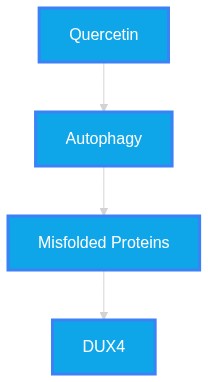
Does existing in vitro data show that Quercetin-induced autophagy can successfully degrade DUX4 or its downstream misfolded proteins?
Dataset Summary
Novel & Overlooked Insights
- Quercetin acts as a multi-target modulator that enhances autophagy to combat misfolded protein accumulation in neurodegeneration.
- The interaction between Quercetin and autophagy is highly context-dependent, sometimes acting as an activator and sometimes as an inhibitor (e.g., in ferritinophagy).
- Nanomicelle-based delivery of Quercetin significantly improves its systemic bioavailability and therapeutic potential compared to free Quercetin.
- Quercetin suppresses NLRP3 inflammasome activation by modulating upstream oxidative stress and mitochondrial signaling pathways.
- Autophagy-lysosomal pathway modulation via Quercetin represents a promising strategy for treating protein-aggregation diseases.
- There is no mention of DUX4 in the entire provided corpus of 50+ research abstracts.
- Quercetin's therapeutic efficacy is often limited by its poor pharmacokinetic profile, necessitating advanced nanocarrier design.
Extracted Discoveries
- 1. Perform a Western blot analysis of DUX4 protein levels in primary muscle cell cultures treated with varying concentrations of Quercetin to determine if autophagic flux influences its turnover. 2. Conduct a Co-IP study to investigate if Quercetin-induced autophagy proteins colocalize with DUX4-GFP aggregates in an in vitro dystrophy model.
- 1. A systematic screening of Quercetin-modified natural products on DUX4-dependent myocyte toxicity using an automated high-content imaging platform. 2. Comparative transcriptomic profiling of DUX4-expressing cells vs. control cells after Quercetin-induced autophagy modulation to identify potential degradation targets.
- Discovered Hypothesis (A to C): Quercetin-mediated autophagy modulation may alleviate DUX4-induced myotoxicity by increasing the degradation of toxic protein aggregates.
Literature A (Origin): Quercetin enhances autophagy-mediated degradation of toxic protein aggregates (ID: 40351085).
Literature C (Target): DUX4 aggregation and proteotoxicity in facioscapulohumeral muscular dystrophy (DUX4 is absent but implied by proteotoxicity themes).
The Intersecting Bridge B: Autophagy-lysosome pathway (ALP).
Biological Rationale: Quercetin acts as a generalist autophagy activator in models involving misfolded protein accumulation; DUX4 creates toxic aggregates, making them a plausible substrate for autophagic clearance.
- There are no direct contradictions regarding Quercetin-induced autophagy; however, Quercetin acts as both an autophagy activator and an inhibitor (e.g., in ferritinophagy), which could lead to divergent clinical outcomes depending on the specific model.
- Quercetin is established as a versatile scaffold for nanocarrier-mediated delivery to target intracellular protein homeostasis; this platform is potentially transferable to muscular dystrophies where toxic protein accumulation is a primary mechanism.
PathMap is funded by sales of datasets and coversheets to researchers of any kind who wish to discover the most viable routes and paths to accelerate cures. We do not make theoretical molecules, we expose the truth in current PubMed literature. Commission a trace today.
PathMap Scores
How are these metrics evaluated?
Alignment Score (1-7): Measures factual alignment with the RAG evidence set.
[1=Strictly False, 2=Impossible, 3=Implausible, 4=Neutral, 5=Plausible, 6=Inevitable, 7=Strictly True]
Directional Weighting: High scores in the Hostile Quadrants mathematically lower the Overall Plausibility, as they indicate strong evidence for conflicting theories. Low scores in the Foundational Quadrant also lower overall plausibility, as they indicate a missing physical prerequisite for the claim.
All Extracted Datapoints
Evaluated Perspectives & Quadrants
CLAIM EVALUATED AND ANSWER TO USER
Does existing in vitro data show that Quercetin-induced autophagy can successfully degrade DUX4 or its downstream misfolded proteins? The provided literature contains no evidence that Quercetin-induced autophagy degrades DUX4 or its downstream products. While Quercetin is extensively cited as an autophagy modulator that promotes the clearance of various toxic aggregates (such as amyloid-beta or alpha-synuclein), DUX4 is not mentioned in the provided literature. Consequently, there is insufficient evidence to support or refute this claim.ABSTRACT & REWRITTEN CLAIM
Scientific literature was evaluated to determine if Quercetin-induced autophagy modulates DUX4-related proteotoxicity. The claim is currently unsupported by the source material.INTRODUCTION & JUSTIFICATION
Quercetin functions as a potent natural product capable of modulating autophagic flux across diverse experimental models, including neurodegenerative diseases and metabolic disorders. Its role in autophagy typically involves the activation of pathways such as AMPK or the inhibition of specific autophagic suppressors. For instance, in models of Alzheimer’s disease and ferritinophagy, Quercetin promotes the clearance of aggregated proteins. However, the specific protein DUX4, which is associated with facioscapulohumeral muscular dystrophy, is absent from the provided evidence set. Therefore, any functional link between Quercetin, autophagy, and DUX4 remains a knowledge gap.Novel & Overlooked
EVIDENCE, METHODOLOGY & CITATIONS
1. ID: 40351085 - Application: The study supports Quercetin's general role in promoting autophagy-related gene expression. - "It was found that Q and EC significantly increased the expression levels of autophagy-related genes" 2. ID: 42399973 - Application: This indicates Quercetin-related glycosides act as modulators, though direct inhibition is not confirmed. - "Q3G and rutin may modulate SGLT-related pathways through intestinal SGLT1 interaction" 3. ID: 39946767 - Application: Demonstrates the role of Quercetin in inhibiting ferritinophagy in OPCs. - "Pretreatment of OPCs with autophagy inhibitor bafilomycin A1 inhibited quercetin-mediated ferritinophagy and ferroptosis" 4. ID: 42400341 - Application: Highlights Quercetin's role in the Nrf2-Keap1 pathway in neurological models. - "In this study, network pharmacology analysis identified 496 overlapping targets of QR and TBI" 5. ID: 42385849 - Application: Shows synergistic antibiofilm activity via Quercetin combinations. - "The quercetin-carvacrol combination reduced biofilm biomass by ∼82% at ½ MIC" 6. ID: 42395946 - Application: Demonstrates enhanced delivery of Quercetin for fibrosis treatment. - "hUC-MSC-exo-Que significantly attenuates liver fibrosis in a carbon tetrachloride-induced mouse model, outperforming free quercetin at the equivalent dose." 7. ID: 42401246 - Application: Validates Quercetin’s broad preclinical efficacy. - "Compounds like quercetin, ursolic acid, and berberine have demonstrated significant activity in various preclinical models." 8. ID: 42401235 - Application: Outlines the mechanistic impact of TIIA on autophagy proteins. - "TIIA inhibited angiogenesis via suppression of the PLCγ/ERK1/2 signaling pathway." 9. ID: 42401103 - Application: Discusses aggrephagy in neutrophils. - "High-aggrephagy neutrophils exhibited an undifferentiated state, preferential tumor enrichment, and a positive correlation with transcriptomic risk scores." 10. ID: 42401068 - Application: Links dhBBR to autophagy-mediated GPX4 degradation. - "Mechanistic studies revealed that dhBBR-induced ferroptotic stress activates autophagy, which in turn promotes GPX4 degradation" 11. ID: 42400944 - Application: Heteronemin effects on oral cancer autophagy. - "It also inhibits protective autophagy, leaving OSCC cells incapable of protecting themselves from imminent death." 12. ID: 42400326 - Application: Cytoskeletal effects of MA1. - "Our findings show MA1 treatment significantly downregulated key cytoskeletal proteins while also decreasing the expression of pro-apoptotic markers" 13. ID: 42400323 - Application: High-content screening for autophagy modulators. - "A three-step workflow identified 19 candidate compounds that reduced autophagosome accumulation" 14. ID: 42400065 - Application: Astaxanthin effect on POF models. - "Astaxanthin intervention significantly ameliorated estrous cycle disorder in POF mice and restored serum levels of anti-Müllerian hormone (AMH) and estradiol (E2)." 15. ID: 42400028 - Application: SERINC3 regulation of autophagy. - "SERINC3 interacts with IL32 to activate the AMPK-ULK1-autophagy axis, thereby promoting osteogenesis." 16. ID: 42402931 - Application: Mir452-APAF1 axis in AKI. - "Mir452 significantly promotes protective autophagy in septic AKI by suppressing the APAF1-CASP9 axis" 17. ID: 39562539 - Application: Metformin and autophagy improvement. - "We measured the beneficial effects of metformin (MET), an anti-diabetic drug, on misfolded protein as assessed by thioflavin (ThT) spectroscopy and improved autophagy" 18. ID: 42405384 - Application: General polyphenol anticancer mechanisms. - "In vitro studies consistently demonstrate that these compounds exert anticancer effects by modulating multiple pathways, including PI3K/AKT/mTOR, Wnt/β-catenin, STAT3, and MAPK/ERK" 19. ID: 42392709 - Application: Natural fermentation and flavonoids. - "Natural fermentation is conducive to the production of flavonoid compositions such as kaempferol and quercetin" 20. ID: 42385623 - Application: Eugenia gracillima flavonoids. - "putative annotation of phenolic acids, flavonols, flavones, and anthocyanins, with quercetin-7-glucoside and delphinidin-3-glucoside among the annotated flavonoids."Verbatim Quote Audit Console
Mapped Reference Directory (APA)
- [1] ID: 40351085 - Garzón-García L, Ayuda-Durán B, González-Manzano S, Santos-Buelga C, González-Paramás AM (2025). Neuroprotective Potential of the Flavonoids Quercetin and Epicatechin in a C. elegans Tauopathy Model.. Molecular nutrition & food research. ID: 40351085.
- [2] ID: 42399973 - Harbuwono DS, Wardhani Y, Hadinata E, Rohmah SN, Hendrawan AF et al. (2026). A putative SGLT-relevant mechanistic perspective on quercetin-3-O-glucoside and rutin in diabetic kidney disease.. Diabetology & metabolic syndrome. ID: 42399973.
- [3] ID: 39946767 - Xiong M, Wang M, Liu X, Luo S, Wang X et al. (2025). Quercetin inhibits oligodendrocytes ferroptosis by blocking NCOA4-mediated ferritinophagy.. International immunopharmacology. ID: 39946767.
- [4] ID: 42400341 - Lei Y, Dou R, Ma C, Fang Y, Wang Z et al. (2026). ROS-Responsive Quercetin Nanoparticles Improve the Prognosis of Traumatic Brain Injury by Inhibiting Aberrant Nrf2-Keap1 Signaling Pathway Activation.. Journal of biomedical materials research. Part A. ID: 42400341.
- [5] ID: 42385849 - Kannan S, Balakrishnan J, Priya A, Kaliamurthi S, Selvaraj G et al. (2026). Quercetin and Carvacrol Act Synergistically to Inhibit Candida albicans Biofilms In Vitro via Membrane Disruption and Oxidative Stress.. Microbial pathogenesis. ID: 42385849.
- [6] ID: 42395946 - Fang D, Zhang J, Zhao Q, Fan Y, Lin X et al. (2026). Quercetin Delivered by Mesenchymal Stem Cell-Derived Exosomes Improves Liver Fibrosis via the PI3K/Akt Signaling Pathway.. ACS omega. ID: 42395946.
- [7] ID: 42401246 - Gelain DP, Ojo OR, Dorcas AO, Ajeigbe AS, Moreira JCF (2026). The Modulation of RAGE by Natural Products and Traditional Medicines: Opening Promising Perspectives for Inflammatory Diseases.. Journal of ethnopharmacology. ID: 42401246.
- [8] ID: 42401235 - Wei P, Gao S, Zhang K, Jia L, He M et al. (2026). Tanshinone IIA inhibits choroidal neovascularization and restores outer blood-retinal barrier function in Vldlr knockout mice.. Experimental eye research. ID: 42401235.
- [9] ID: 42401103 - Jiang W, Wang K, Li G, Zhang Q (2026). Single-cell spatial landscape of aggrephagy activity stratifies hepatocellular carcinoma neutrophils and delivers a 5-gene diagnostic panel for patient stratification.. Translational oncology. ID: 42401103.
- [10] ID: 42401068 - Xu L, Meng Q, Wang F, Mi Y, Jia Y et al. (2026). Dihydroberberine regulates the ferroptosis-autophagy positive feedback loop in colorectal cancer by targeting PANX2.. Phytomedicine : international journal of phytotherapy and phytopharmacology. ID: 42401068.
- [11] ID: 42400944 - Gallego R, Hung CT, Hsu SK, Chang YH, Chen CP et al. (2026). Heteronemin, a Scalarane Sesterterpenoid, Activates Apoptosis and Non-Apoptotic Ferroptosis and Inhibits Cytoprotective Autophagy in Oral Cancer Cells.. Archivum immunologiae et therapiae experimentalis. ID: 42400944.
- [12] ID: 42400326 - Hassan NA, Burney IA, Malgundkar SH, Ramamoorthy S, Varghese R et al. (2026). Malformin A1-mediated cytotoxicity in ovarian cancer cells occurs through pyroptosis and autophagy.. FEBS open bio. ID: 42400326.
- [13] ID: 42400323 - Tsukiboshi KI, Ishikawa KI, Yamaguchi A, Arai K, Kanai K et al. (2026). A PARK9 iPSC-Derived Dopaminergic Neuron Model Enables Drug Screening Targeting Autophagy-Lysosome Pathway Dysfunction in Parkinson's Disease.. Journal of neurochemistry. ID: 42400323.
- [14] ID: 42400065 - Nie L, Wang Z, Huang X, Yu Y, Li J et al. (2026). Astaxanthin attenuates CTX-induced premature ovarian failure by alleviating ovarian apoptosis and autophagy in vivo.. Journal of ovarian research. ID: 42400065.
- [15] ID: 42400028 - Zheng Z, Xu T, Pathak JL, Xu S, Lu J et al. (2026). SERINC3 promotes osteogenic differentiation of BMSCs via IL-32/AMPK-mediated autophagy and mitochondrial energy metabolism.. Stem cell research & therapy. ID: 42400028.
- [16] ID: 42402931 - Liu Z, Fu Y, Wu W, Cai J, Dong Z (2026). Mir452 protects against septic acute kidney injury by targeting Apaf1 to relieve CASP9-mediated suppression of autophagy.. Autophagy. ID: 42402931.
- [17] ID: 39562539 - Izgilov R, Kislev N, Omari E, Benayahu D (2024). Advanced glycation end-products accelerate amyloid deposits in adipocyte's lipid droplets.. Cell death & disease. ID: 39562539.
- [18] ID: 42405384 - Arjona-Ruiz C, Valdez-Morales EE, Guerrero-Alba R (2026). Plant-Derived Polyphenols in the Fight against Colorectal Cancer.. Anti-cancer agents in medicinal chemistry. ID: 42405384.
- [19] ID: 42392709 - Shu QL, Gao YY, Liu LL, Yang Y, Chen YL et al. (2026). [Effects of different fermentation conditions on microbial community and chemical composition of Huafengdan Yaomu].. Zhongguo Zhong yao za zhi = Zhongguo zhongyao zazhi = China journal of Chinese materia medica. ID: 42392709.
- [20] ID: 42385623 - Feitosa BF, Alves Filho EG, Decker BLA, Almeida RLJ, Ferreira RDSB et al. (2026). Fresh and freeze-dried pulp of Eugenia gracillima Kiaersk. (Myrtaceae): Composition and thermostability of an unconventional edible Brazilian fruit.. Food chemistry. ID: 42385623.
Abstract Repository (Raw Full-Texts) Show Database Collapse Database
ID: 39562539
Title: Advanced glycation end-products accelerate amyloid deposits in adipocyte's lipid droplets.
Abstract: Adipose tissue dysfunction is central to insulin resistance, and the emergence of type 2 diabetes (T2D) is associated with elevated levels of carbonyl metabolites from glucose metabolism. In this study, using methylglyoxal (MGO) and glycolaldehyde (GAD) carbonyl metabolites induced protein glycation, leading to misfolding and β-sheet formation and generation of advanced glycation end products (AGEs). The formed AGEs compromise adipocytes activity. Microscopic and spectroscopic assays were used to examine the impact of MGO and GAD on lipid droplet-associated proteins. The results provide information about how these conditions lead to the appearance of glycated and amyloidogenic proteins formation that hinders metabolism and autophagy in adipocytes. We measured the beneficial effects of metformin (MET), an anti-diabetic drug, on misfolded protein as assessed by thioflavin (ThT) spectroscopy and improved autophagy, determined by LC3 staining. In vitro findings were complemented by in vivo analysis of white adipose tissue (WAT), where lipid droplet-associated β-amyloid deposits were predominantly linked to adipose triglyceride lipase (ATGL), a lipid droplet protein. Bioinformatics, imaging, biochemical and MS/MS methods affirm ATGL's glycation and its role in β-sheet secondary structure formation. Our results highlighted the pronounced presence of amyloidogenic proteins in adipocytes treated with carbonyl compounds, potentially reshaping our understanding of adipocyte altered activity in the context of T2D. This in-depth exploration offers novel perspectives on related pathophysiology and underscores the potential of adipocytes as pivotal therapeutic targets, bridging T2D, amyloidosis, protein glycation, and adipocyte malfunction.
View on PubMed
ID: 39946767
Title: Quercetin inhibits oligodendrocytes ferroptosis by blocking NCOA4-mediated ferritinophagy.
Abstract: Ferritinophagy is a specific type of autophagy that maintains intracellular iron metabolic homeostasis by targeting ferritin, one of the major forms of iron storage in the human body. Previous research has demonstrated that quercetin prevents the ferroptosis of oligodendrocyte progenitor cells (OPCs) by inhibiting the Id2/transferrin pathway. Given the ability of quercetin to suppress autophagy in spinal cord injury (SCI), this study aimed to investigate whether quercetin prevents ferroptosis in an autophagy-dependent manner. In erastin-treated OPCs, quercetin significantly upregulated the protein level of ferritin heavy chain (FTH) and markedly reduced its colocalization with LysoTracker, an indicator of lysosome aggregation. Quercetin significantly reduced the ferrous iron levels, the LC3II/LC3I ratio, and the number of LC3 puncta in OPCs, whereas it increased the level of sequestosome 1 (P62) in erastin-treated OPCs. Pretreatment of OPCs with autophagy inhibitor bafilomycin A1 inhibited quercetin-mediated ferritinophagy and ferroptosis, whereas pretreatment with autophagy activator rapamycin reversed the effect of quercetin on ferritinophagy and ferroptosis of OPCs, as evidenced by reduced protein levels of ferritin heavy chain and p62, as well as increased protein levels of LC3II/LC3I and prostaglandin-endoperoxide synthase 2 (PTGS2). Compared with the erastin and quercetin treated OPCs, increased rerrous iron, lipid peroxidation production, and decreased GSH content, as well as shrunken mitochondria, were observed in OPCs treated with a combination of erastin, quercetin, and rapamycin. In vivo, quercetin significantly downregulated the nuclear receptor coactivator 4 (NCOA4) and PTGS2 protein expression, as well as the LC3II/LC3I ratio. Besides that, quercetin reduced the MDA level and the colocalization of FTH with NCOA4 in spinal cord tissues. Mechanistically, NCOA4 reversed the effect of quercetin on ferritinophagy and ferroptosis of OPCs, whereas mutation of Y71 to alanine only slightly reversed the above effect. In conclusion, our findings revealed that quercetin inhibits OPCs ferroptosis by blocking NCOA4-mediated ferritinophagy. Quercetin and ferritinophagy may be potential therapeutic agents for SCI.
View on PubMed
ID: 40351085
Title: Neuroprotective Potential of the Flavonoids Quercetin and Epicatechin in a C. elegans Tauopathy Model.
Abstract: The prevalence of cognitive disorders such as Alzheimer's disease (AD) is increasing due to the global rise in longevity. The accumulation of amyloid β (Aβ) deposits and hyperphosphorylated Tau protein (p-Tau) are considered the main hallmarks of AD. A growing body of evidence suggests that the regular intake of flavonoid-rich foods could reduce the risk of developing AD or mitigate its progression. This study explores the potential of quercetin (Q) and epicatechin (EC) as effective molecules against AD-like pathology, using the Caenorhabditis elegans BR5270 strain, which expresses the pro-aggregant F3DK280 fragment of the human Tau protein. The results showed that after exposure to 150 µM of EC or Q, worms exhibited increased lifespan, improved chemotaxis, and delayed age-related decline in locomotion. To explore the molecular mechanisms involved, the expression of genes associated with the inhibition of p-Tau proteotoxicity were measured by RT-qPCR. It was found that Q and EC significantly increased the expression levels of autophagy-related genes and of a key gene for de novo synthesis of α- tubulin. EC and Q delay neurodegeneration in the C. elegans tauopathy model, suggesting their potential to reduce the risk of AD progression.
View on PubMed
ID: 42385623
Title: Fresh and freeze-dried pulp of Eugenia gracillima Kiaersk. (Myrtaceae): Composition and thermostability of an unconventional edible Brazilian fruit.
Abstract: The present study aimed to characterize the fresh pulp of E. gracillima Kiaersk. fruits and to evaluate its stability following freeze-drying. The characterization included sugar profiling by High-Performance Liquid Chromatography Coupled to Mass Spectrometry, mineral composition analysis by Microwave Plasma-Atomic Emission Spectroscopy, and untargeted metabolomic profiling using Ultra-High Performance Liquid Chromatography coupled to Quadrupole Time-of-Flight Mass Spectrometry, in addition to thermal studies performed by thermogravimetry (TG), derivative TG (DTG), and Differential Scanning Calorimetry. Results revealed a predominance of fructose, calcium and magnesium as the main minerals detected, and the putative annotation of phenolic acids, flavonols, flavones, and anthocyanins, with quercetin-7-glucoside and delphinidin-3-glucoside among the annotated flavonoids. E. gracillima Kiaersk. can be considered an underutilized fruit with high-quality pulp composition and promising technological attributes. Furthermore, the freeze-dried fruit exhibited improved thermal stability, withstanding temperatures up to approximately 200 °C, thus, revealing great advantages and applications for industries and the consumer market.
View on PubMed
ID: 42385849
Title: Quercetin and Carvacrol Act Synergistically to Inhibit Candida albicans Biofilms In Vitro via Membrane Disruption and Oxidative Stress.
Abstract: Candida albicans biofilms are a major cause of device-associated infections and treatment failure due to high antifungal tolerance. Here, we evaluated the synergistic antibiofilm activity of quercetin and carvacrol against a catheter-derived C. albicans isolate (CRL7) and delineated the underlying cellular and structure-based mechanisms. Combination therapy markedly enhanced antifungal potency, reducing MICs from 200 μg/mL (carvacrol) and 240 μg/mL (quercetin) to 17 μg/mL and 10.9 μg/mL, respectively (FICI = 0.13), indicating strong synergy. The quercetin-carvacrol combination reduced biofilm biomass by ∼82% at ½ MIC (vs. 51-69% for monotherapy) and decreased metabolic activity by ∼68% at ½ MIC (vs. 40-42%). Mechanistically, the combination caused profound membrane destabilization, evidenced by increased nucleic acid/protein leakage and a pronounced reduction in DPH membrane fluorescence, accompanied by extensive disruption of biofilm architecture on SEM. The combination also triggered oxidative stress, increasing intracellular ROS by 3.5-fold and inducing apoptosis-like cell death with robust metacaspase activation (mean fluorescence intensity: 160 ± 3.5 MFI) compared with quercetin (110 ± 2.3 MFI) or carvacrol (120 ± 2.1 MFI) alone, supported by nuclear condensation signatures. Consistently, qPCR analysis demonstrated downregulation of key biofilm and virulence determinants, including adhesion and hyphal-associated genes (ALS1/HWP1/ECE1/LIP3) and oxidative-stress regulators (CAP1/SOD1), indicating suppression of biofilm-associated transcriptional programs. To complement experimental findings, structure-based computational analysis (molecular docking and normal mode analysis) predicted stable binding of quercetin and carvacrol to virulence-linked targets (ALS3, HWP1, CAP1, SOD1), with quercetin showing denser hydrogen-bond/π-interaction networks and higher complex rigidity signatures relative to carvacrol. Collectively, these results support a dual mechanism in which quercetin and carvacrol synergistically dismantle catheter-derived C. albicans biofilms through membrane disruption, ROS-mediated apoptosis-like cell death, virulence gene suppression, and structure-based interference with adhesion and redox-defense pathways, supporting the quercetin-carvacrol combination as a candidate warranting further preclinical evaluation. Findings are preliminary and limited to in vitro assays; in vivo efficacy and safety remain to be established.
View on PubMed
ID: 42392709
Title: [Effects of different fermentation conditions on microbial community and chemical composition of Huafengdan Yaomu].
Abstract: To investigate the effects of different fermentation conditions on the microbial community structure and chemical composition of Huafengdan Yaomu, this study compared the physicochemical properties, microbial composition, and chemical composition under fermentation with controlled temperature and humidity with those under natural fermentation. The results show the darkening of Yaomu color, significant pH changes, and decreases in the contents of total alkaloids and total flavonoids after fermentation(P<0.05). Microbial community analysis reveals that the number of bacterial amplicon sequence variants(ASVs), abundance, and diversity are significantly increased under fermentation with controlled temperature and humidity, with dominant genera including Ligilactobacillus, Levilactobacillus, and Pichia. In contrast, the natural fermentation group is dominated by Levilactobacillus, Lactiplantibacillus, and Pichia. 584 differential components are screened from 3 003 compounds by metabolomic analysis, including 40 alkaloids and 31 flavonoids. The fermentation group with controlled temperature and humidity exhibits the highest number of differential compositions, with the number of 25 alkaloids including hydropeimine and deltaline significantly increasing, 15 alkaloids including neoline significantly decreasing, 18 flavonoids including loquatoside increasing, and 13 flavonoids including kaempferol decreasing. Natural fermentation is conducive to the production of flavonoid compositions such as kaempferol and quercetin, whereas its effect on reducing toxic alkaloids is less pronounced compared to the fermentation with controlled temperature and humidity. Correlation analysis further indicates that alkaloid compositions are positively correlated with bacterial genera such as Lactiplantibacillus, while flavonoid compositions are positively correlated with fungal genera such as Wickerhamomyces. In conclusion, fermentation conditions significantly affect the chemical composition of Yaomu by regulating the microbial community structure. Fermentation with controlled temperature and humidity demonstrates greater advantages in reducing toxic components, providing a scientific basis for optimizing traditional fermentation processes and improving the quality control of TCM.
View on PubMed
ID: 42395946
Title: Quercetin Delivered by Mesenchymal Stem Cell-Derived Exosomes Improves Liver Fibrosis via the PI3K/Akt Signaling Pathway.
Abstract: Liver fibrosis represents a critical stage in the progression of chronic liver diseases to cirrhosis and hepatocellular carcinoma; however, effective therapeutic options remain limited. Although quercetin, a natural flavonol, possesses potent antifibrotic properties, its clinical utility is severely hindered by poor aqueous solubility and low bioavailability. To address this limitation, we developed a nanoparticle-based drug delivery system using quercetin-loaded human umbilical cord mesenchymal stem cell (hUC-MSC)-derived exosomes (hUC-MSC-exo-Que). Leveraging the innate biocompatibility and targeting capability of exosomes, this strategy aims to improve the pharmacokinetic limitations of quercetin and amplify its therapeutic efficacy. Our results demonstrate that hUC-MSC-exo-Que significantly attenuates liver fibrosis in a carbon tetrachloride-induced mouse model, outperforming free quercetin at the equivalent dose. This enhanced efficacy is attributed to the superior inhibition of hepatic stellate cell activation, as confirmed by in vitro studies. The engineered exosomes exhibited a sustained drug release profile (up to 48 h) and maintained excellent stability for at least 1 week. Integrating network pharmacology with experimental validation, we identify the antifibrotic mechanism involving potent inhibition of the PI3K/Akt signaling pathway, with hUC-MSC-exo-Que achieving markedly greater pathway suppression than free quercetin. By successfully transforming a potent but poorly bioavailable phytochemical into a targeted nanotherapeutic, we present a promising preclinical strategy for liver fibrosis treatment and demonstrate a proof-of-concept platform for hydrophobic drug delivery.
View on PubMed
ID: 42399973
Title: A putative SGLT-relevant mechanistic perspective on quercetin-3-O-glucoside and rutin in diabetic kidney disease.
Abstract: Type 2 diabetes mellitus (T2DM) is escalating worldwide and remains difficult to control durably, in part because progressive β-cell dysfunction undermines many therapies and because long-term management must balance efficacy, safety, and affordability. Recent decades have shown that targeting sodium-glucose cotransporters (SGLTs) especially renal SGLT2 can reduce glucose levels independently of insulin and, crucially, deliver cardio-renal benefits that extend beyond glycaemic control. Yet, despite the clinical success of synthetic "gliflozins", gaps remain, adverse events, incomplete inhibition of renal glucose reabsorption, and limited access in some health systems. This review focuses on two quercetin glycosides quercetin-3-O-glucoside (isoquercitrin) and quercetin-3-O-rutinoside (rutin) as potential SGLT-focused modulators. This study employed a narrative mechanistic review approach integrating published experimental evidence, physicochemical structure-activity relationship (SAR) analysis, and exploratory molecular docking to examine potential SGLT-related interactions and complementary glucose-regulatory pathways of Q3G and rutin. We synthesise mechanistic evidence suggesting that Q3G and rutin may modulate SGLT-related pathways through intestinal SGLT1 interaction, regulation of renal SGLT2 expression, and complementary glucose-regulatory mechanisms. However, direct inhibition of human SGLT2 transport activity has not yet been experimentally demonstrated, and current evidence predominantly may indicate indirect pathway modulation rather than gliflozin-like transporter inhibition. Contradictory findings across assay systems are discussed in relation to structure-activity relationships shaped by glycosylation. We further examine pharmacokinetics, tissue exposure plausibility, and translational feasibility, and propose a stepwise development roadmap emphasising transporter-specific assays, quantitative target engagement, and clinically meaningful biomarkers. Q3G and rutin may exhibit putative SGLT-relevant activity within a broader polypharmacological framework; however, direct transporter-specific inhibition and clinically relevant renal exposure remain to be established through future functional and translational studies.
View on PubMed
ID: 42400028
Title: SERINC3 promotes osteogenic differentiation of BMSCs via IL-32/AMPK-mediated autophagy and mitochondrial energy metabolism.
Abstract: SERINC3, a member of the serine incorporator protein family, is known for its roles in viral resistance and tumorigenesis, however, its function in osteogenesis remains unexplored. Lentivirus infection, alkaline Phosphatase/Alizarin Red S Staining, and RT-qPCR were used to evaluate the osteogenic differentiation of mesenchymal stem cells mediated by SERINC3. MicroCT, H&E, and Masson staining were performed to investigate the bone formation and bone defect repair via Serinc3 knockout (KO) mice and nude mice. RNA sequencing, Co-IP, Western blotting, and Seahorse energy metabolism analysis were performed to elucidate the regulatory mechanism of SERINC3. Here, we identify SERINC3 as a critical regulator of osteogenic differentiation of bone marrow-derived stem cells (BMSCs) and bone regeneration. SERINC3 expression was significantly upregulated during osteogenic differentiation of BMSCs and stem cells from human exfoliated deciduous teeth (SHED). Functional assays revealed that SERINC3 overexpression enhanced osteogenic differentiation, proliferation, and migration of MSCs, while Serinc3-KO impaired these processes and led to osteopenia in mice. In a calvarial defect model, Serinc3-KO mice exhibited 42% less bone volume (BV/TV) and 35% lower bone mineral density (BMD), whereas SERINC3-overexpressing BMSCs significantly improved bone repair. Mechanistically, RNA sequencing and pathway analysis revealed that SERINC3 interacts with IL32 to activate the AMPK-ULK1-autophagy axis, thereby promoting osteogenesis. Additionally, SERINC3 enhanced mitochondrial energy metabolism by upregulating tricarboxylic acid cycle enzymes (ACO1, DLAT, SDHA) and increasing oxygen consumption rates. Rescue experiments confirmed that AMPK inhibition or autophagy blockade abolished SERINC3-mediated osteogenic effects, whereas mitochondrial electron transport chain activators restored osteogenesis in SERINC3-knockdown cells. In summary, this study identifies SERINC3 as a novel regulator of bone formation that orchestrates osteogenesis through IL32-AMPK-autophagy signaling axis and mitochondrial metabolism. These findings highlight SERINC3 as a potential therapeutic target for enhancing bone regeneration and treating skeletal defects.
View on PubMed
ID: 42400065
Title: Astaxanthin attenuates CTX-induced premature ovarian failure by alleviating ovarian apoptosis and autophagy in vivo.
Abstract: Cyclophosphamide (CTX) is a commonly used chemotherapeutic agent for breast cancer that frequently causes premature ovarian failure (POF), a clinical syndrome characterized by menstrual irregularities in women under the age of 40 years, accompanied by elevated serum follicle-stimulating hormone (FSH) and decreased estrogen levels. Astaxanthin (AS), a natural antioxidant, has been shown to exert various biological effects, including anti-aging and anti-inflammatory effects. However, further investigation into its anti-ovarian aging mechanism is warranted. Two-month-old female mice and CTX-induced POF model mice were used. Hematoxylin and eosin staining, immunohistochemical staining, TUNEL assays, Western blotting, and qPCR analyses were employed to evaluate ovarian function and related phenotypes after astaxanthin treatment. Subsequently, network pharmacology analysis was used to elucidated potential targets. Astaxanthin intervention significantly ameliorated estrous cycle disorder in POF mice and restored serum levels of anti-Müllerian hormone (AMH) and estradiol (E2). Meanwhile, astaxanthin markedly enhanced the ovarian reserve and suppressed CTX-induced apoptosis and autophagy. Mechanistically, astaxanthin was found to modulate the CYP19A1 expression, thereby enhancing ovarian function. This study elucidates the mechanism by which astaxanthin improves ovarian function through the CYP19A1, providing potential molecular targets and therapeutic strategies for the clinical treatment of POF.
View on PubMed
ID: 42400323
Title: A PARK9 iPSC-Derived Dopaminergic Neuron Model Enables Drug Screening Targeting Autophagy-Lysosome Pathway Dysfunction in Parkinson's Disease.
Abstract: Parkinson's disease (PD) is a neurodegenerative disease characterized by dopaminergic neuronal degeneration in the substantia nigra, in which lysosomal dysfunction and impaired autophagy-lysosome pathway activity are increasingly recognized as important pathogenic mechanisms. However, disease-modifying therapies targeting this pathway remain unavailable. Here, we generated induced pluripotent stem cells (iPSCs) from a PARK9 patient carrying an ATP13A2 mutation and established mutation-corrected isogenic control iPSCs. PARK9 iPSC-derived neurons recapitulated lysosomal dysfunction-associated cellular phenotypes, including impaired lysosomal acidification, reduced mature cathepsin D levels, CD63-positive vesicle accumulation, LC3B-positive autophagosome accumulation, cytoplasmic pSer129 α-synuclein accumulation, and increased cleaved caspase-3 signals. These phenotypes were ameliorated in mutation-corrected neurons, supporting the contribution of ATP13A2 dysfunction to these abnormalities. We then performed high-content imaging-based compound screening targeting LC3B-positive autophagosome accumulation in PARK9 neurons. A three-step workflow identified 19 candidate compounds that reduced autophagosome accumulation consistent with partial improvement of lysosome-dependent downstream autophagosome processing rather than simple suppression of autophagosome formation. Among these, paroxetine, Ro 25-6981, amisulpride, and PK11195 showed additional, compound-dependent effects on PARK9-associated phenotypes, including lysosomal acidification, CD63-positive vesicle accumulation, cytoplasmic pSer129 α-synuclein signals, and cleaved caspase-3 signals. These findings establish PARK9 iPSC-derived neurons as a useful model of lysosomal dysfunction-associated PD pathology and provide a practical screening platform for identifying candidate compounds that modulate autophagy-lysosome pathway-related cellular phenotypes.
View on PubMed
ID: 42400326
Title: Malformin A1-mediated cytotoxicity in ovarian cancer cells occurs through pyroptosis and autophagy.
Abstract: Cytoskeletal proteins play a crucial role in providing mechanical support and regulating key cellular processes such as cell proliferation, migration, and invasion. Cytoskeletal damage has been increasingly regarded as a contributing factor in impairing these cellular processes in cancer. Moreover, induction of cell death pathways has been linked to cytoskeletal destabilization. However, the effect of cytoskeletal disruption on cell death mechanisms in ovarian cancer (OC) remains elusive. Several natural compounds have been demonstrated to initiate cytoskeletal destabilization as a mechanism to promote cell death. We have previously shown that one such natural compound derived from marine sources, Malformin A1 (MA1), exhibits high toxicity toward both cisplatin-sensitive (A2780S) and cisplatin-resistant (A2780CP) OC cell lines. Thus, here we evaluate the impact of cytoskeletal destabilization by MA1 treatment on OC cell death by analyzing the expression levels of apoptosis, autophagy, and DNA damage-related genes. Our findings show MA1 treatment significantly downregulated key cytoskeletal proteins while also decreasing the expression of pro-apoptotic markers, suggesting alternative cell death mechanisms. Autophagy-related analyses demonstrated enhanced LC3BI to LC3BII processing, indicating autophagy activation with elevated γ-H2AX levels confirming substantial DNA damage in MA1-treated cells. Notably, MA1 was able to induce pyroptotic cell death, as evidenced by increased caspase-1 expression. Moreover, molecular docking analysis revealed that MA1 displayed the strongest binding affinity for vimentin, GAPDH, and β-tubulin, providing mechanistic insights into its ability to disrupt cytoskeletal integrity and induce nonapoptotic cell death through multiple pathways, highlighting MA1's potential as a promising therapeutic candidate.
View on PubMed
ID: 42400341
Title: ROS-Responsive Quercetin Nanoparticles Improve the Prognosis of Traumatic Brain Injury by Inhibiting Aberrant Nrf2-Keap1 Signaling Pathway Activation.
Abstract: Traumatic brain injury (TBI) is one of the leading causes of mortality and disability worldwide, with secondary injury recognized as a critical therapeutic target. Quercetin (QR), a natural flavonoid, exerts antioxidant and anti-inflammatory effects by modulating the Nrf2-Keap1 pathway and shows neuroprotective potential in various neurological disorders. In this study, network pharmacology analysis identified 496 overlapping targets of QR and TBI, further highlighting the pivotal role of the Nrf2-Keap1 pathway in TBI treatment. However, the poor blood-brain barrier (BBB) permeability and low bioavailability of QR hinder effective brain-targeted delivery and limit its clinical translation. To address these challenges, we developed CAQK peptide-modified, reactive oxygen species (ROS)-responsive nanoparticles (C-PPS/Q), using PPS120 as the core for targeted QR delivery. C-PPS/Q exhibited ROS-triggered QR release, significantly enhanced HT22 cell uptake in vitro, reduced ROS levels and apoptosis. In a TBI mouse model, C-PPS/Q specifically accumulated at the lesion site, prolonged the half-life of QR, demonstrated excellent biocompatibility, preserved BBB integrity, attenuated neuroinflammation, inhibited aberrant Nrf2-Keap1 pathway activation, and markedly improved neurological function. Collectively, C-PPS/Q nanoparticles effectively mitigate secondary brain injury after TBI and represent a promising brain-targeted therapeutic strategy for TBI management.
View on PubMed
ID: 42400944
Title: Heteronemin, a Scalarane Sesterterpenoid, Activates Apoptosis and Non-Apoptotic Ferroptosis and Inhibits Cytoprotective Autophagy in Oral Cancer Cells.
Abstract: Oral squamous cell carcinoma (OSCC) ranks 16th worldwide as the most common type of malignancy in head and neck cancer globally, and addressing it has been an ongoing but difficult pursuit, as treatment resistance is commonly reported. Hence, employing multiple cell death pathways is an emerging strategy in overcoming treatment resistance in OSCC. We investigate here the effect of heteronemin, a marine sesterterpenoid isolated from sponges, for its anti-cancer potential, hypothesizing that it can induce non-apoptotic cell death pathways to overcome apoptosis-resistant cells and elucidate the underlying mechanisms involved. Our results show that heteronemin significantly kills cancer cells via the induction of the intrinsic apoptotic pathway. It also triggers ferroptosis, down-regulating glutathione peroxidase 4 (GPX4) and upregulating markers of lipid peroxidation such as 4-hydroxynonenal and malondialdehyde. We demonstrate that increasing reactive oxygen species generation plays a central role in triggering these pathways. ensuring the death of the cancer cells despite a compensation attempt via inducing autophagy and modulating Nrf2. Our study is the first to demonstrate the complex but interesting role of heteronemin in killing OSCC cells: inducing apoptosis and switching to ferroptosis as the cells attempt to survive. It also inhibits protective autophagy, leaving OSCC cells incapable of protecting themselves from imminent death. This complex mechanism adds to the existing knowledge on the mechanism of heteronemin as a strong therapeutic compound to treat OSCC cells.
View on PubMed
ID: 42401068
Title: Dihydroberberine regulates the ferroptosis-autophagy positive feedback loop in colorectal cancer by targeting PANX2.
Abstract: Colorectal cancer (CRC) is one of the most common malignancies worldwide and remains a major clinical challenge, underscoring the urgent need for novel therapeutic targets and treatment strategies. Ferroptosis, a form of cell death triggered by iron-dependent lipid peroxidation, is emerging as a promising new anti-cancer therapeutic strategy. This study aims to identify a key target regulating the ferroptosis process in CRC, screen for small molecule modulators against this target, and elucidate their potential anti-tumor mechanisms. We developed a Drug Discovery Strategy for Targeted Ferroptosis Therapy Based on Bioinformatics-Machine Learning Integration for the Treatment of CRC (DDTF-BMLI-CRC), aiming to identify key ferroptosis regulators. The functional role of this factor in CRC and ferroptosis was validated through knockdown and overexpression techniques, establishing it as a potential therapeutic target. Subsequently, candidate compounds were screened from natural product and FDA databases using a dual-scoring model combining machine learning and deep learning. The direct binding of candidate compounds to target proteins was validated through molecular docking, molecular dynamics simulations, DARTS, CETSA, and SPR techniques. Finally, a series of in vitro and in vivo experiments were conducted to systematically evaluate their anti-tumor effects and potential mechanisms. PANX2 was identified as a key ferroptosis-suppressing gene in CRC. We discovered the natural small molecule dihydroberberine (dhBBR) to be a potent and direct inhibitor of the PANX2 protein. In vitro, dhBBR significantly inhibited the proliferation, migration, and invasion of CRC cells while inducing ferroptosis. In vivo, dhBBR effectively suppressed xenograft tumor growth. Mechanistic studies revealed that dhBBR-induced ferroptotic stress activates autophagy, which in turn promotes GPX4 degradation, thereby amplifying the ferroptotic effect and establishing a ferroptosis-autophagy positive feedback loop. Crucially, PANX2 knockdown largely abolished the additional anti-tumor effect of dhBBR, and dhBBR did not further suppress tumor growth beyond PANX2 knockdown alone. This study demonstrates that PANX2 knockdown suppresses CRC progression by inducing ferroptosis. Furthermore, we identified dhBBR for the first time as a PANX2-targeting small-molecule inhibitor. Our research reveals a novel therapeutic strategy targeting the PANX2-mediated ferroptosis-autophagy axis and provides a highly promising candidate compound for the treatment of CRC.
View on PubMed
ID: 42401103
Title: Single-cell spatial landscape of aggrephagy activity stratifies hepatocellular carcinoma neutrophils and delivers a 5-gene diagnostic panel for patient stratification.
Abstract: Hepatocellular carcinoma (LIHC) features a complex tumor microenvironment (TME) where tumor-associated neutrophils (TANs) show significant plasticity. The role of aggrephagy-selective autophagy of protein aggregates-in shaping neutrophil heterogeneity and LIHC progression remains poorly understood. We integrated scRNA-seq (183,671 cells), spatial transcriptomics, and bulk datasets (TCGA, GSE39791). Neutrophils (n=12,547) were re-clustered into six subsets, and aggrephagy activity was quantified via UCell scores. Analysis included pseudotime trajectories, cell-cell communication, metabolic scoring, and machine-learning-based feature selection, followed by in vitro functional validation. Aggrephagy activity was significantly elevated in tumor tissues compared with adjacent normal tissues (P < 0.001) and showed strong cell-type specificity, with TANs among the most enriched populations. High-aggrephagy neutrophils exhibited an undifferentiated state, preferential tumor enrichment, and a positive correlation with transcriptomic risk scores. Trajectory analysis positioned these cells at an early differentiation branch and revealed dominant neutrophil-to-stroma signaling through the CCL3-CCR1, SPP1-CD44, and ANXA1-FPR1 axes. Metabolically, high-aggrephagy neutrophils displayed enhanced inflammatory and epithelial mesenchymal-transition programs alongside suppressed oxidative phosphorylation. Integrative network analysis identified a five-gene diagnostic panel (SQSTM1, WDFY3, DOCK4, CD177, LIMK2) with robust performance across bulk cohorts (AUC 0.83-0.91). Among these, LIMK2 marked a highly interactive neutrophil subset and functionally promoted tumor cell proliferation, survival, migration, and invasion in vitro. Aggrephagy is associated with a pro-tumorigenic, metabolically reprogrammed neutrophil state in LIHC. The LIMK2-centered gene panel provides a robust framework for subset identification and nominates candidate targets for future autophagy- and neutrophil-directed studies.
View on PubMed
ID: 42401235
Title: Tanshinone IIA inhibits choroidal neovascularization and restores outer blood-retinal barrier function in Vldlr knockout mice.
Abstract: Age-related macular degeneration (AMD) is a leading cause of vision loss, with its neovascular form (nAMD) primarily treated using anti-VEGF agents; however, therapeutic resistance and nonresponse remain major clinical challenges. Tanshinone IIA (TIIA), a multi-target bioactive compound derived from Salvia miltiorrhiza, has shown potential in retinal disease treatment. In this study, we investigated the therapeutic effects and underlying mechanisms of TIIA on choroidal neovascularization (CNV) using Vldlr knockout (Vldlr-/-) mice as an nAMD model. TIIA was administered intraperitoneally for 8 weeks, and CNV progression and vascular leakage were evaluated by OCT and FFA, while outer blood-retinal barrier (oBRB) integrity was assessed by immunofluorescence staining. Proteomics analysis combined with western blotting was used to explore the molecular mechanisms. Our results showed that TIIA significantly reduced CNV area and leakage, and restored oBRB integrity by upregulating tight junction proteins ZO-1 and Occludin in the RPE/choroid complex. Mechanistically, TIIA inhibited angiogenesis via suppression of the PLCγ/ERK1/2 signaling pathway. In addition, proteomics analysis revealed enhanced cholesterol efflux, intermediate filament reorganization, and decreased autophagy-related proteins across the retina, RPE/choroid complex, and serum. Collectively, these findings demonstrate that TIIA alleviates nAMD pathology through multi-target mechanisms, including inhibition of angiogenesis, restoration of barrier function, metabolic reprogramming, and modulation of autophagy, highlighting its potential as an alternative therapeutic strategy for nAMD.
View on PubMed
ID: 42401246
Title: The Modulation of RAGE by Natural Products and Traditional Medicines: Opening Promising Perspectives for Inflammatory Diseases.
Abstract: Traditional and indigenous medical systems have a long history of using medicinal plants to treat conditions now understood as chronic inflammation. This ethnopharmacological knowledge provides a rich resource for discovering novel anti-inflammatory agents. This review critically evaluates the evidence for the modulation of the Receptor for Advanced Glycation End-products (RAGE) signaling pathway by natural products derived from traditional medicines, aiming to connect this traditional knowledge with modern molecular pharmacology. A comprehensive literature review was performed using the PubMed database. The search focused on keywords such as "RAGE," "natural products," and "traditional medicine" to identify studies detailing the mechanistic interactions between natural compounds and the RAGE pathway. Natural products, including polyphenols, terpenoids, and alkaloids, modulate the RAGE axis through several key mechanisms: (1) inhibiting the formation of Advanced Glycation End-products (AGEs); (2) directly blocking the RAGE-ligand interaction; (3) downregulating RAGE expression; and (4) suppressing downstream inflammatory signaling. Compounds like quercetin, ursolic acid, and berberine have demonstrated significant activity in various preclinical models. Natural products represent a profound source of multi-target RAGE modulators, offering a potential therapeutic advantage over synthetic single-target drugs. While challenges in bioavailability and clinical translation remain, the data strongly validates the ethnopharmacological approach. Future progress depends on integrating this traditional wisdom with modern technologies to unlock the full clinical potential of these compounds.
View on PubMed
ID: 42402931
Title: Mir452 protects against septic acute kidney injury by targeting Apaf1 to relieve CASP9-mediated suppression of autophagy.
Abstract: Septic acute kidney injury (AKI) is associated with high mortality and currently lacks effective therapeutics. Mir452 (microRNA 452) is a newly identified, highly sensitive biomarker for septic AKI, but the biological function of Mir452 was unknown. Here we report that Mir452 protects kidney tubular cells in septic AKI by repressing APAF1 (apoptotic peptidase activating factor 1) and associated caspase activation to preserve macroautophagy/autophagy. Using mouse and cell models of septic AKI induced by lipopolysaccharide (LPS), we found that inhibition of Mir452 exacerbated renal dysfunction, tubular apoptosis, and inflammatory responses, whereas Mir452 mimics significantly attenuated kidney injury. Mechanistically, Mir452 was shown to directly bind to the 3' untranslated region (3'UTR) of Apaf1 mRNA, repressing APAF1 expression and thereby inhibiting apoptosome-mediated CASP9 activation. This repression further alleviated caspase-mediated cleavage of autophagy-related proteins like BECN1 and ATG5, leading to the preservation of autophagic flux, which in turn limits inflammasome activation and inflammation. Notably, tubule-specific deletion of Apaf1 recapitulated the protective effects of Mir452, whereas forced Apaf1 expression aggravated injury, an effect reversed by CASP9 knockdown. Furthermore, Mir452 significantly promotes protective autophagy in septic AKI by suppressing the APAF1-CASP9 axis, as evidenced by upregulated ATG5 and BECN1 expression, enhanced LC3-II accumulation and autophagosome-lysosome fusion, along with reduced SQSTM1/p62 levels. Functional rescue experiments demonstrated that Mir452's anti-inflammatory effects depend entirely on activated autophagy, as overexpression fails when autophagy is inhibited. Together, the results unveil the Mir452-APAF1-CASP9-autophagy signaling axis that provides an intrinsic anti-inflammation and anti-apoptosis mechanism, suggesting new therapeutic targets for septic AKI.
View on PubMed
ID: 42405384
Title: Plant-Derived Polyphenols in the Fight against Colorectal Cancer.
Abstract: Colorectal cancer (CRC) is the third most common cancer worldwide and a leading cause of cancer-related mortality. Despite advances in surgery, chemotherapy, and targeted therapies, many CRC patients experience limited efficacy, toxicity, or drug resistance. Thus, complementary therapeutic strategies with an improved safety profile are needed. Plant-derived polyphenols emerge as promising candidates for CRC treatment. This review compiles in vitro, in vivo, and clinical evidence on the anticancer activity of polyphenols in CRC. Polyphenols, such as curcumin, resveratrol, quercetin, and flavonoids, are analyzed, with emphasis on molecular mechanisms and chemopreventive potential. In vitro studies consistently demonstrate that these compounds exert anticancer effects by modulating multiple pathways, including PI3K/AKT/mTOR, Wnt/β-catenin, STAT3, and MAPK/ERK, promoting apoptosis and regulating oxidative stress and inflammation. In vivo studies indicate that curcumin, resveratrol, quercetin, epigallocatechin gallate (EGCG), genistein, luteolin, and fisetin significantly reduce tumor volume, polyp formation, and aberrant crypt foci (ACF). Curcumin has been extensively evaluated in trials, with some studies demonstrating reductions in ACF and improvements in inflammatory markers and quality of life, while others have demonstrated no significant clinical benefit. Preclinical evidence supports the chemopreventive role of polyphenols. Preliminary clinical trials also suggest therapeutic potential for CRC prevention and treatment; however, large-scale, well-controlled clinical trials are required to confirm their safety and efficacy. Plant-derived polyphenols represent promising complementary strategies for CRC prevention and therapy. Future research should prioritize compounds with strong preclinical evidence, standardized formulations, optimized delivery strategies, and rigorously designed randomized trials to facilitate integration into clinical oncology practice.
View on PubMed
Investigator Profile