PathMap
☰
Curation Policy
FAQ
About
Contact
Legal
GitHub
PathMap Literature Based Discovery Engine
Share your Discovery:
Guaranteed to find unpublished literature based discoveries.
Clear Search
Experiment #00000129
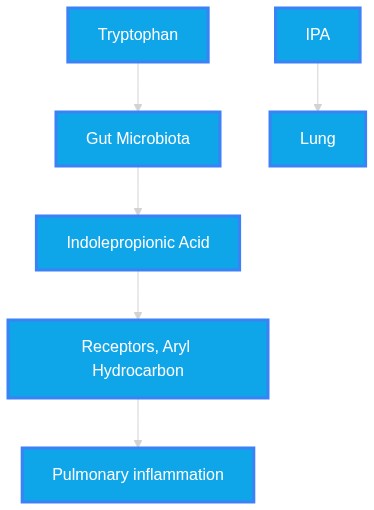
COPD Dietary Idea: According to PubMed literature, he following lunchtime meal plan provides nutrients needed for production and regulation of tryptophan and 3-IPA and may help reduce COPD flare-ups, while also providing mucosal support for clearance of debris from the lungs: -2x slices sourdough bread, lightly spread with extra virgin olive oil, garlic, and ginger, with 2x slices of cooked turkey and spinach, with nutritional yeast and hi-maize corn starch mixed into the EVOO (for mucosal system support) -a spinach-based salad with 1 Tbsp EVOO -3 oz pomegranate juice mixed with 3 oz cherry juice
Tryptophan
_gates_from_tryptophan
Gut Microbiota
_gates_to_gut_microbiota
_gates_from_gut_microbiota
Indolepropionic Acid
_gates_to_indolepropionic_acid
IPA
_gates_from_ipa
Lung
_gates_to_lung
_gates_from_indolepropionic_acid
Receptors, Aryl Hydrocarbon
_gates_to_receptors__aryl_hydrocarbon
_gates_from_receptors__aryl_hydrocarbon
Pulmonary inflammation
_gates_to_pulmonary_inflammation
+7 more
View Results
Experiment #00000015
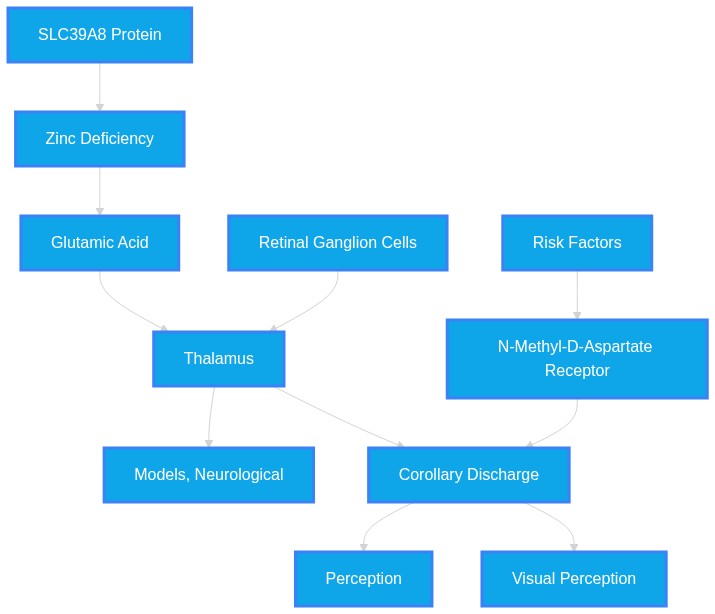
Given that schizophrenia is characterized by a deficit in the attenuation of sensory input via corollary discharge, how might pathologically elevated RGC signaling—potentially caused by synaptic glutamate overflow without zinc modulation—interfere with the thalamic integration of extra-retinal CD signals to effectively reverse the predictive timing of visual stability?
SLC39A8 Protein
_gates_from_slc39a8_protein
Zinc Deficiency
_gates_to_zinc_deficiency
_gates_from_zinc_deficiency
Glutamic Acid
_gates_to_glutamic_acid
_gates_from_glutamic_acid
Thalamus
_gates_to_thalamus
_gates_from_thalamus
Models, Neurological
_gates_to_models__neurological
Retinal Ganglion Cells
_gates_from_retinal_ganglion_cells
Corollary Discharge
_gates_to_corollary_discharge
_gates_from_corollary_discharge
Perception
_gates_to_perception
Risk Factors
_gates_from_risk_factors
N-Methyl-D-Aspartate Receptor
_gates_to_n_methyl_d_aspartate_receptor
_gates_from_n_methyl_d_aspartate_receptor
Visual Perception
_gates_to_visual_perception
+17 more
View Results
Experiment #00000013
Can BMAA, a known glutamate mimic, cause hyperexcited retinal ganglion cells and cause them to "misfire" corollary discharge?
Amino Acids, Diamino
_gates_from_amino_acids__diamino
Retina
_gates_to_retina
_gates_from_retina
Corollary Discharge
_gates_to_corollary_discharge
NMDA receptors
_gates_to_nmda_receptors
NMDA receptor activation
_gates_from_nmda_receptor_activation
Reactive Oxygen Species
_gates_to_reactive_oxygen_species
_gates_from_reactive_oxygen_species
Cell Death
_gates_to_cell_death
_gates_from_cell_death
Receptors, N-Methyl-D-Aspartate
_gates_to_receptors__n_methyl_d_aspartate
_gates_from_receptors__n_methyl_d_aspartate
Retinal Ganglion Cells
_gates_to_retinal_ganglion_cells
+12 more
View Results
Experiment #00000012
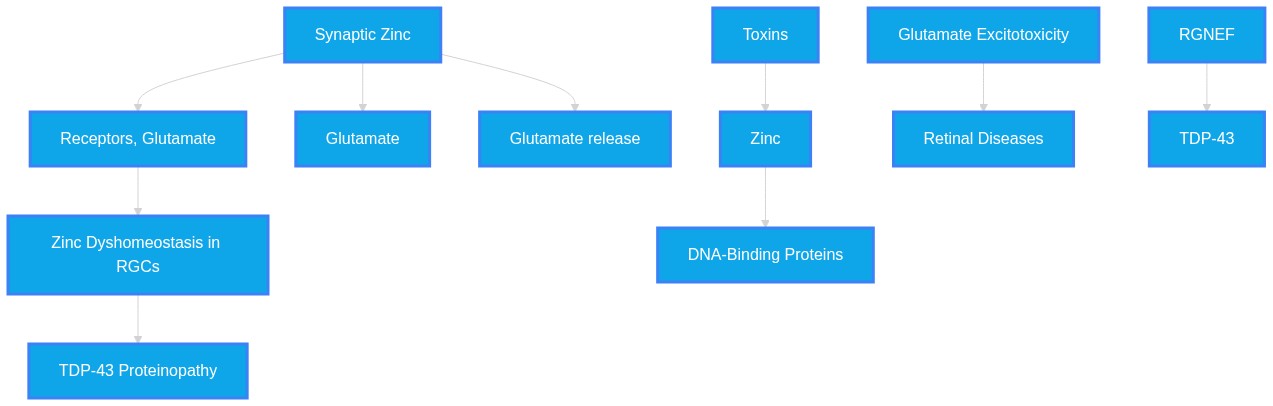
If a toxin with a thermodynamic affinity for Zinc GREATER THAN that of Glutamate AND LESS THAN that of RGNEF, under certain conditions a pathway exists wherein the toxin could shuttle synaptic retinal zinc to RGNEF, thus potentially ultimately resulting in the retinal TDP-43 proteinopathy seen in the retina post mortem in Sporadic Amyotrophic Lateral Sclerosis
Synaptic Zinc
_gates_from_synaptic_zinc
Receptors, Glutamate
_gates_to_receptors__glutamate
_gates_from_receptors__glutamate
Zinc Dyshomeostasis in RGCs
_gates_to_zinc_dyshomeostasis_in_rgcs
_gates_from_zinc_dyshomeostasis_in_rgcs
TDP-43 Proteinopathy
_gates_to_tdp_43_proteinopathy
Glutamate
_gates_to_glutamate
Zinc
_gates_from_zinc
DNA-Binding Proteins
_gates_to_dna_binding_proteins
Glutamate release
_gates_to_glutamate_release
Glutamate Excitotoxicity
_gates_from_glutamate_excitotoxicity
Retinal Diseases
_gates_to_retinal_diseases
RGNEF
_gates_from_rgnef
TDP-43
_gates_to_tdp_43
Toxins
_gates_from_toxins
_gates_to_zinc
+19 more
View Results
Reference Abstract
Loading...
Source: PubMed
View on PubMed